Line and Curve Tracing Worksheet Focused on Cognitive Skill Building for Kindergarten

📅 Jun 9, 2025 👤 Nylen Smith

Line and curve tracing activities enhance fine motor skills and hand-eye coordination essential for kindergarten learners. These exercises promote early writing abilities by encouraging precision in following different shapes and patterns. Explore the available worksheets to support your child's cognitive development through engaging tracing practice.

Line Tracing Worksheet for Hand Eye Coordination Development
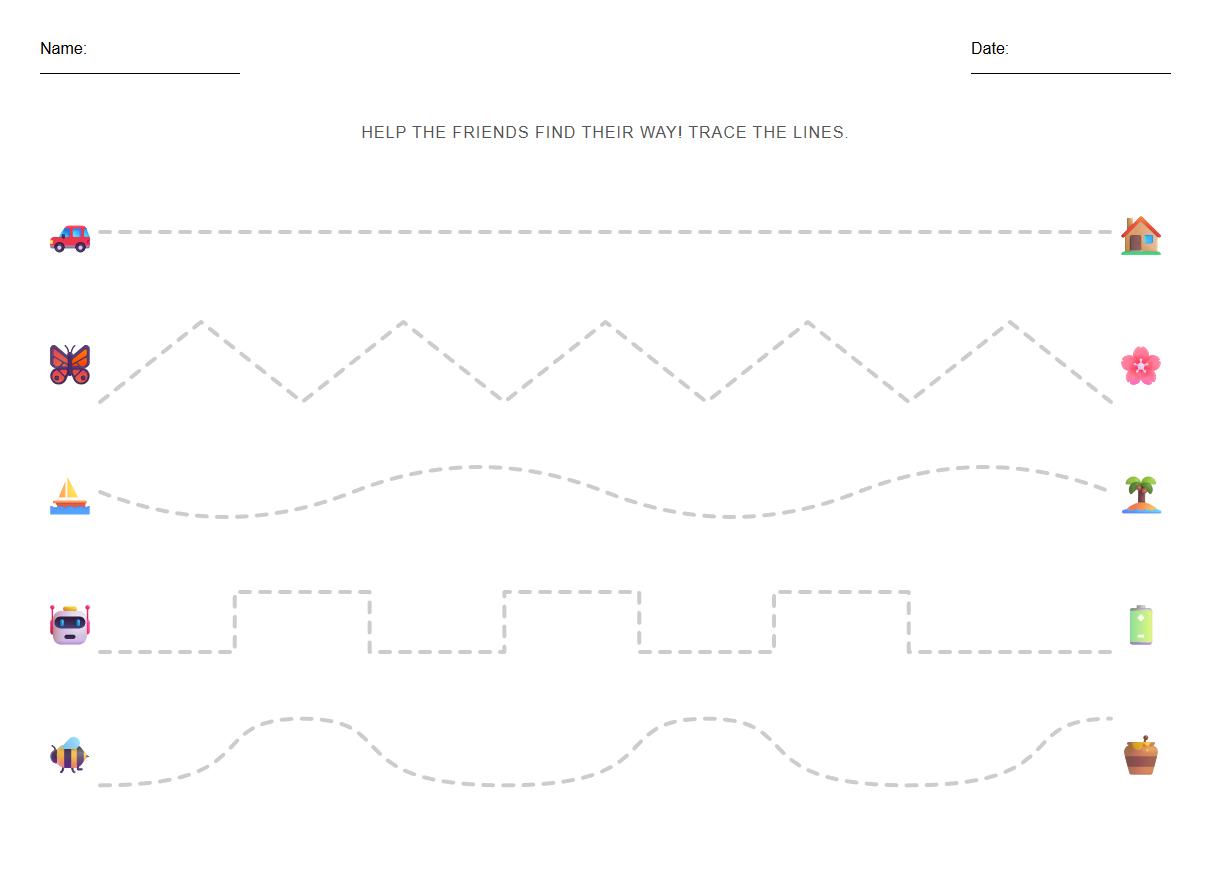
Line Tracing Worksheet for Hand Eye Coordination Development

Download PDF     Pin it

Curved Line Tracing Activity Emphasizing Fine Motor Skills
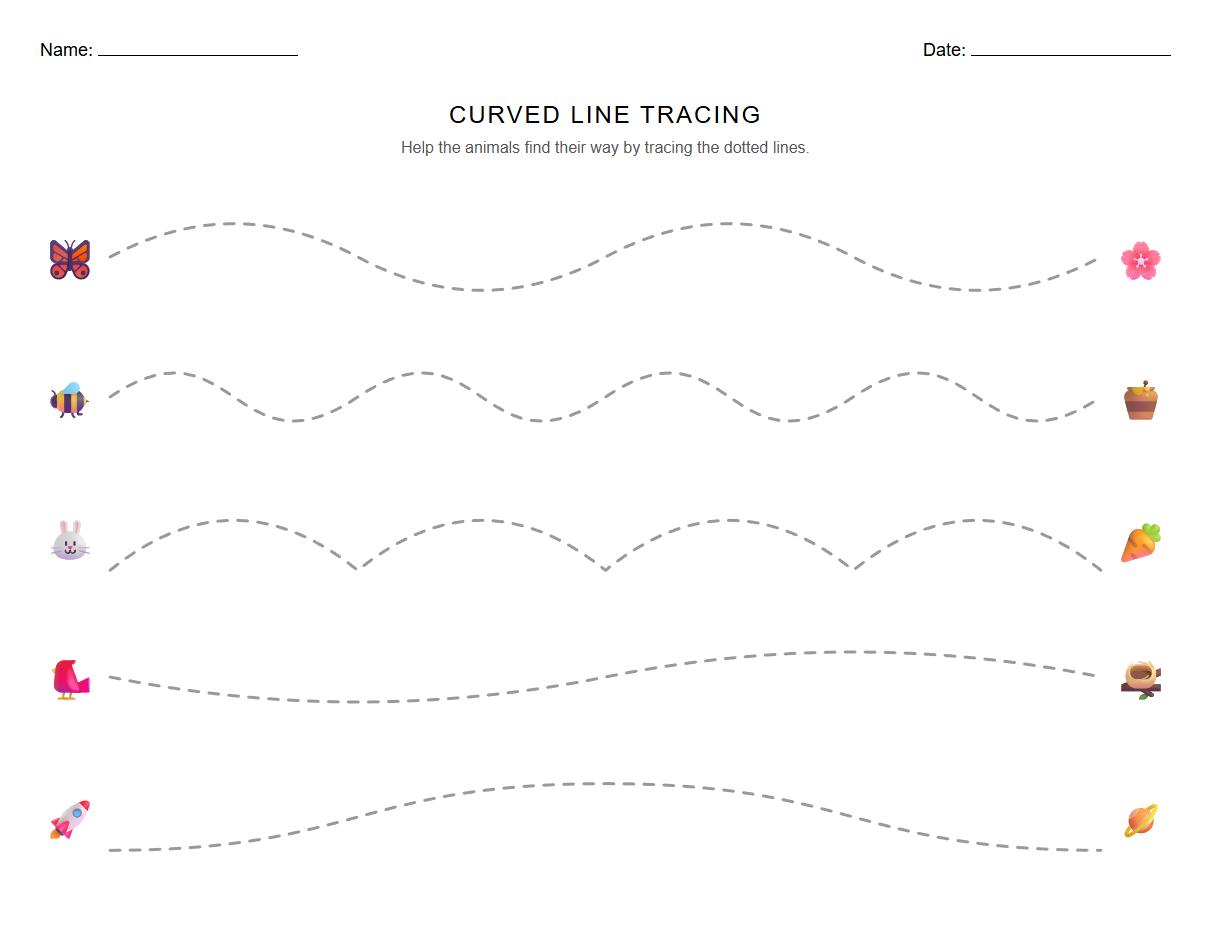
Curved Line Tracing Activity Emphasizing Fine Motor Skills

Download PDF     Pin it

Zigzag Line Tracing Sheet for Visual Perception Enhancement
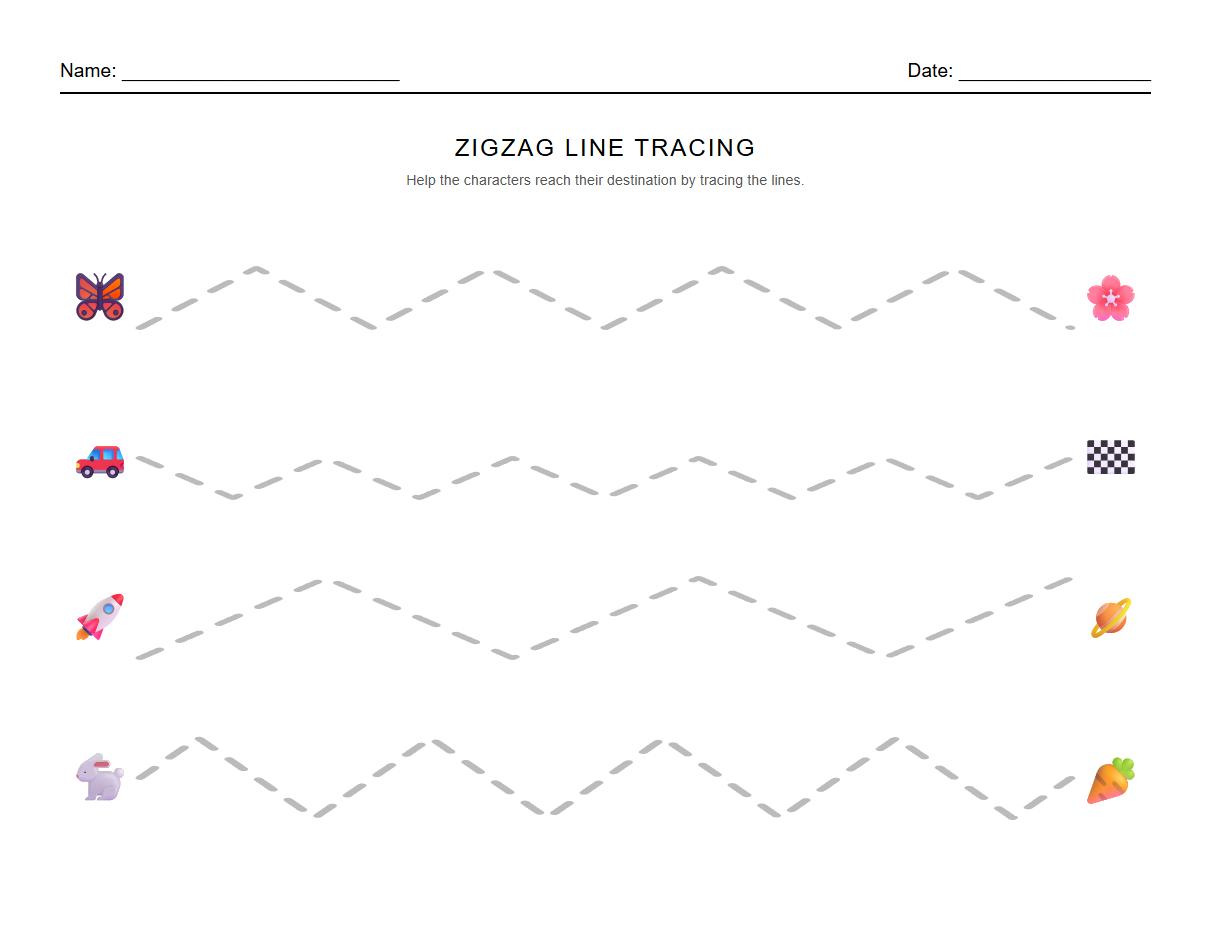
Zigzag Line Tracing Sheet for Visual Perception Enhancement

Download PDF     Pin it

Wavy Line Tracing Worksheet Targeting Cognitive Planning
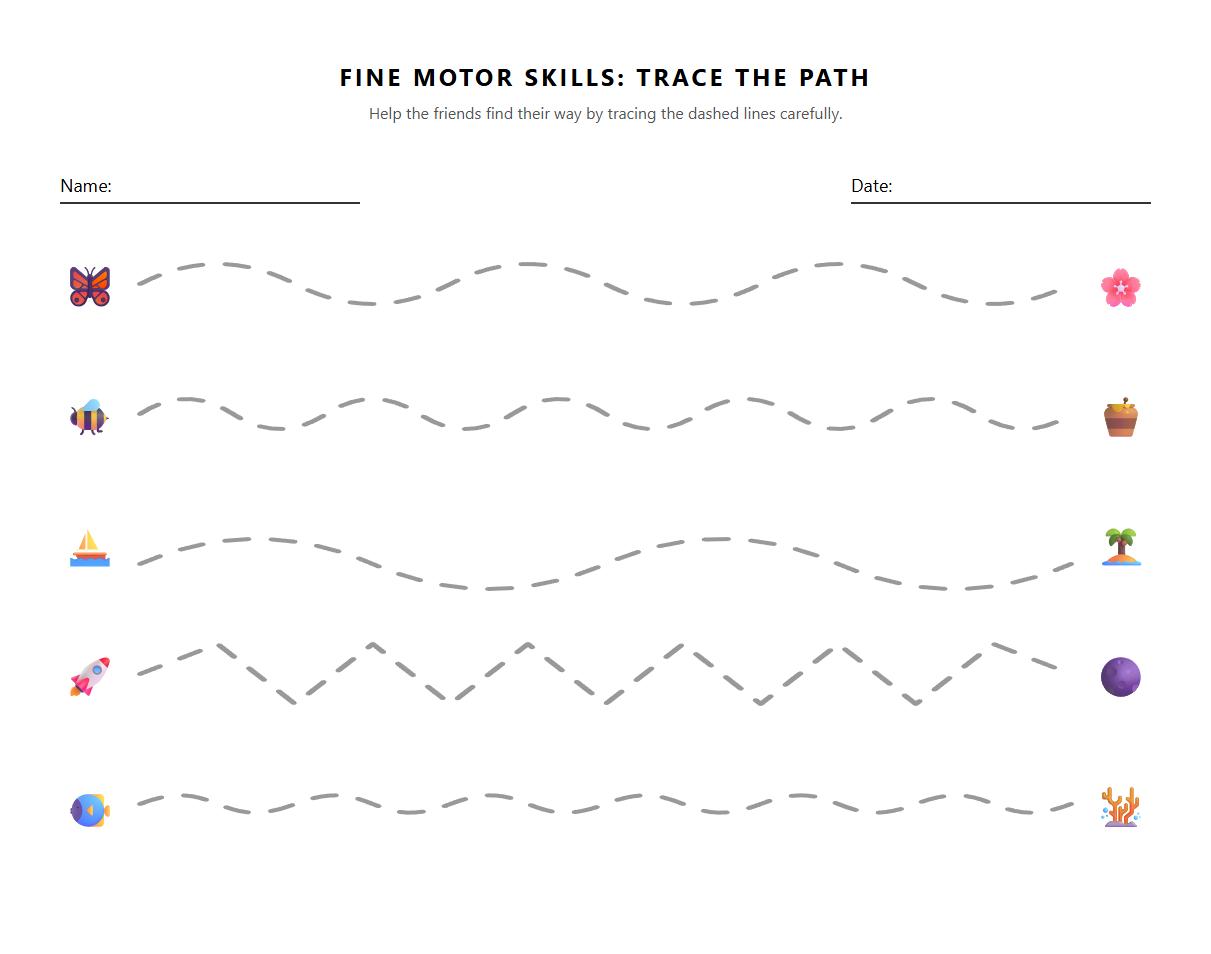
Wavy Line Tracing Worksheet Targeting Cognitive Planning

Download PDF     Pin it

Spiral Curve Tracing Page for Spatial Awareness Practice
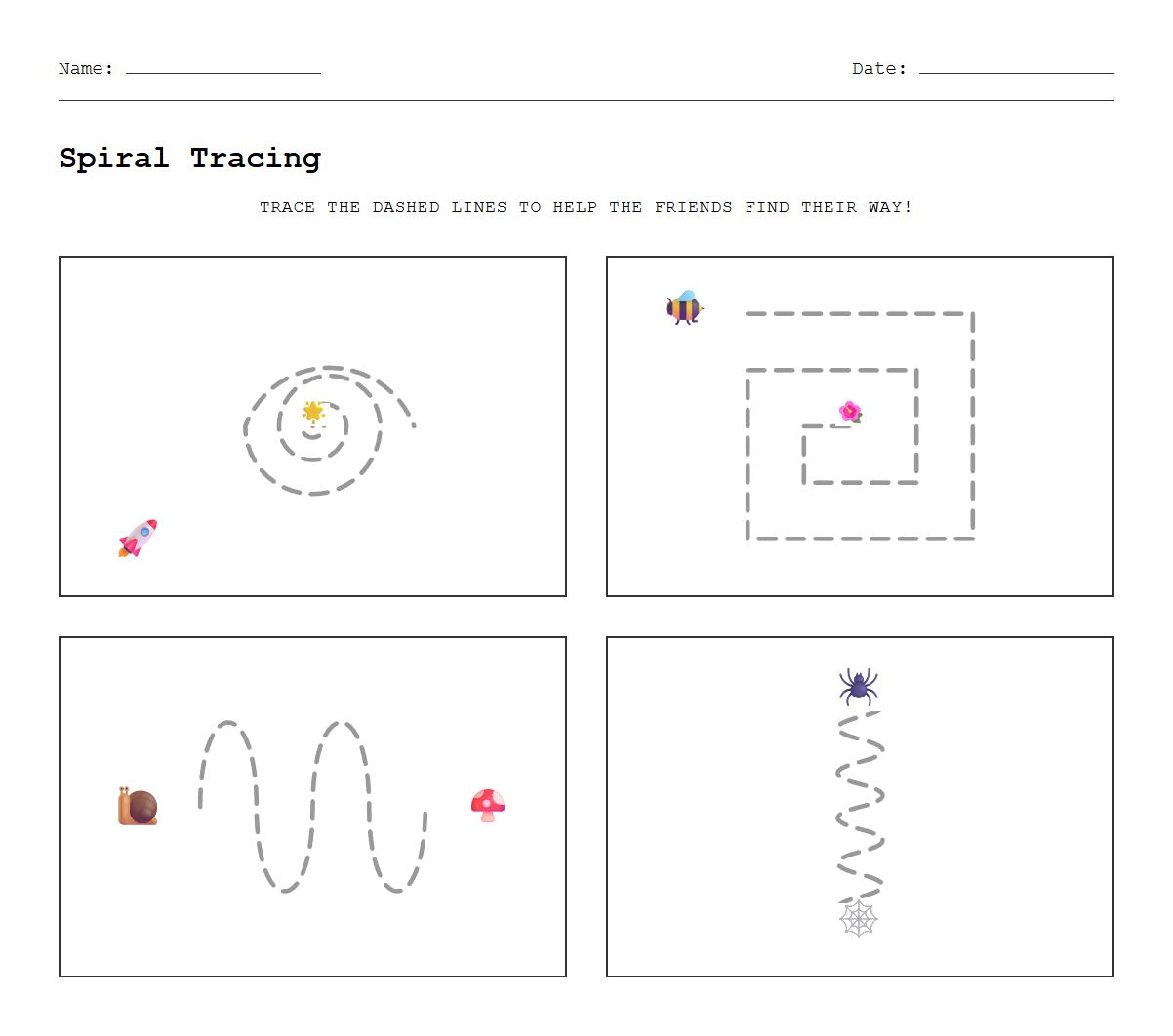
Spiral Curve Tracing Page for Spatial Awareness Practice

Download PDF     Pin it

Straight and Curved Line Tracing for Bilateral Coordination
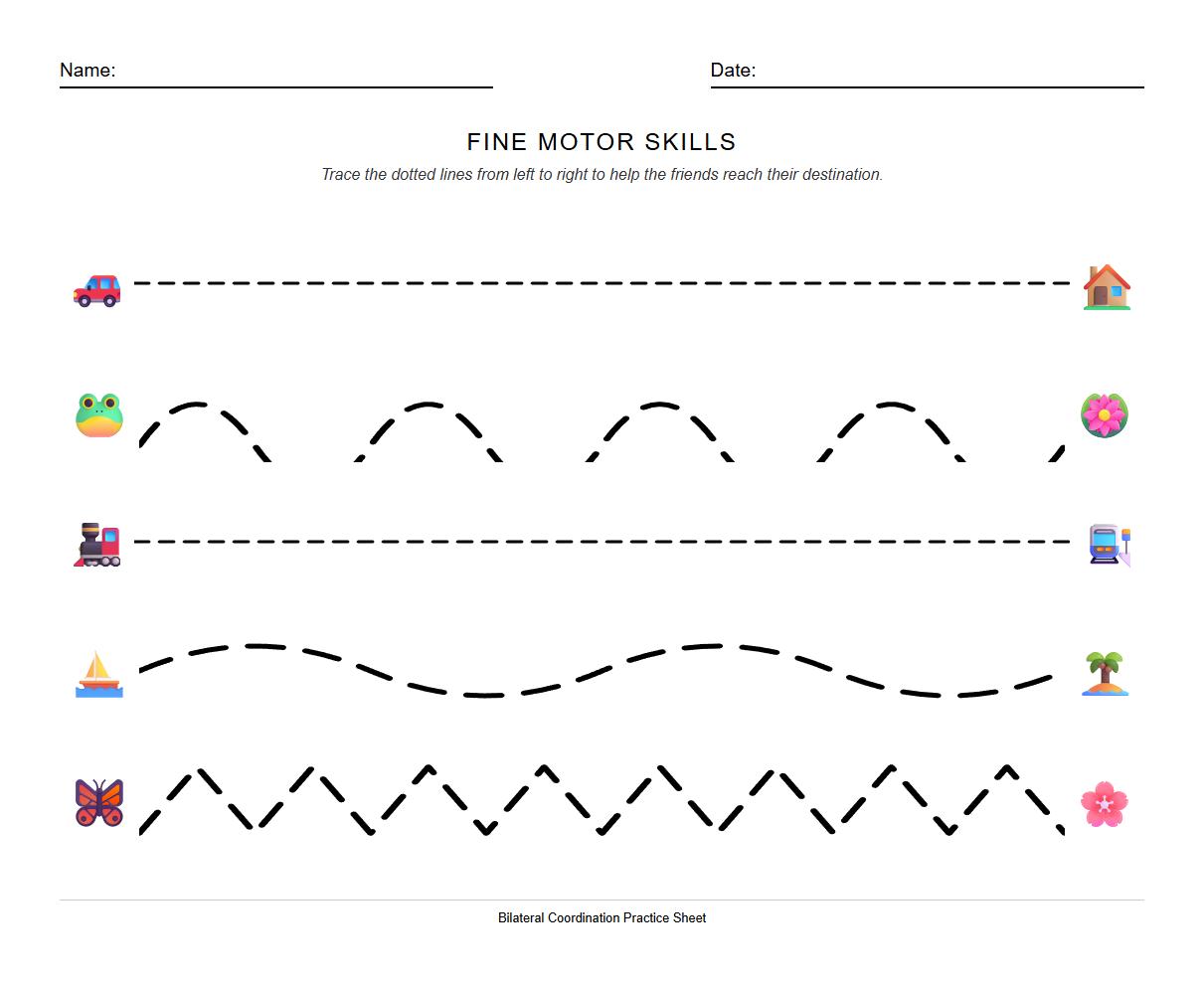
Straight and Curved Line Tracing for Bilateral Coordination

Download PDF     Pin it

Shape Outlining Worksheet with Lines and Curves for Problem Solving
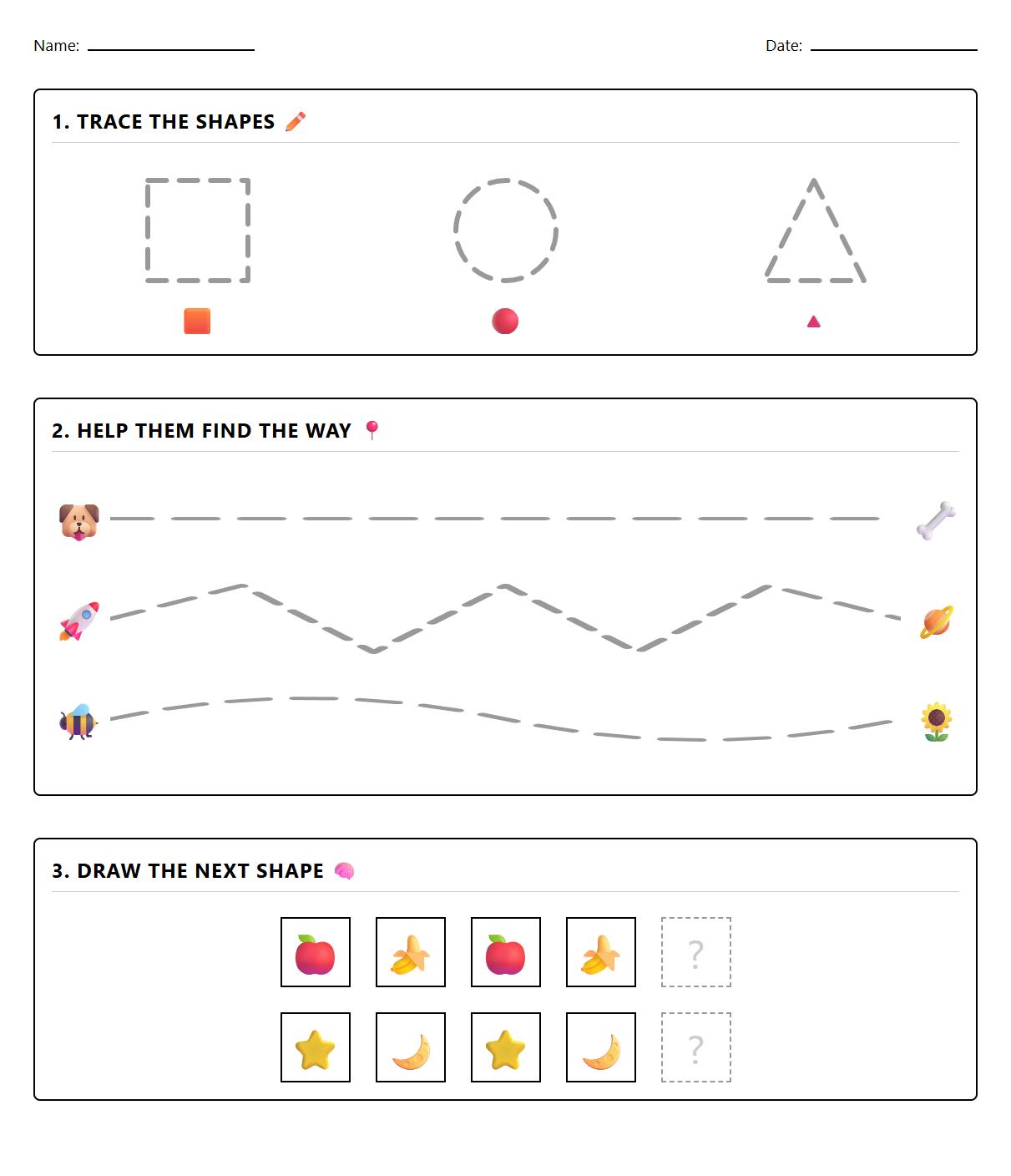
Shape Outlining Worksheet with Lines and Curves for Problem Solving

Download PDF     Pin it

Pattern Tracing Sheet Utilizing Vertical and Curved Lines for Sequencing Skills
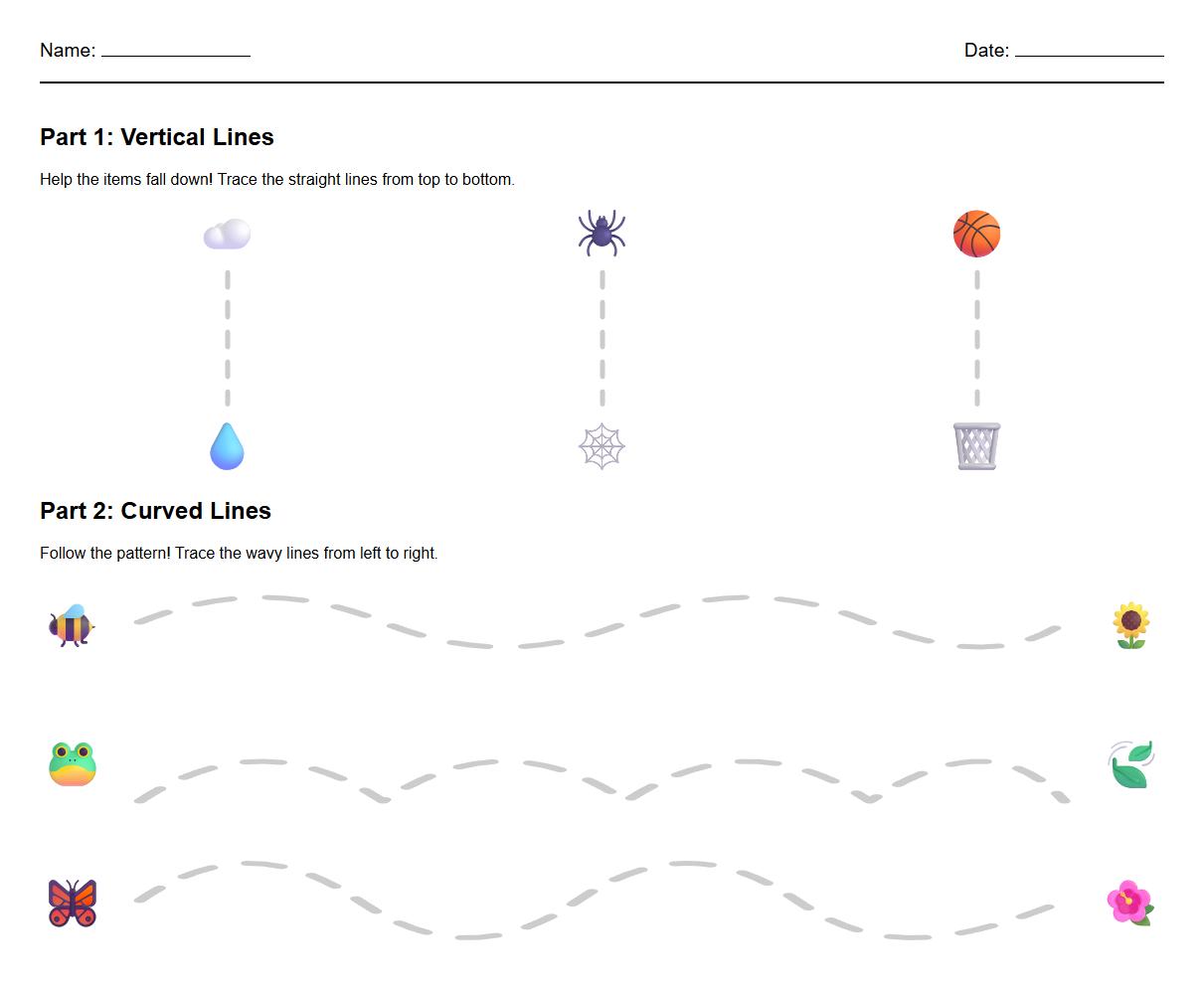
Pattern Tracing Sheet Utilizing Vertical and Curved Lines for Sequencing Skills

Download PDF     Pin it

Complex Path Tracing Exercise Enhancing Executive Function
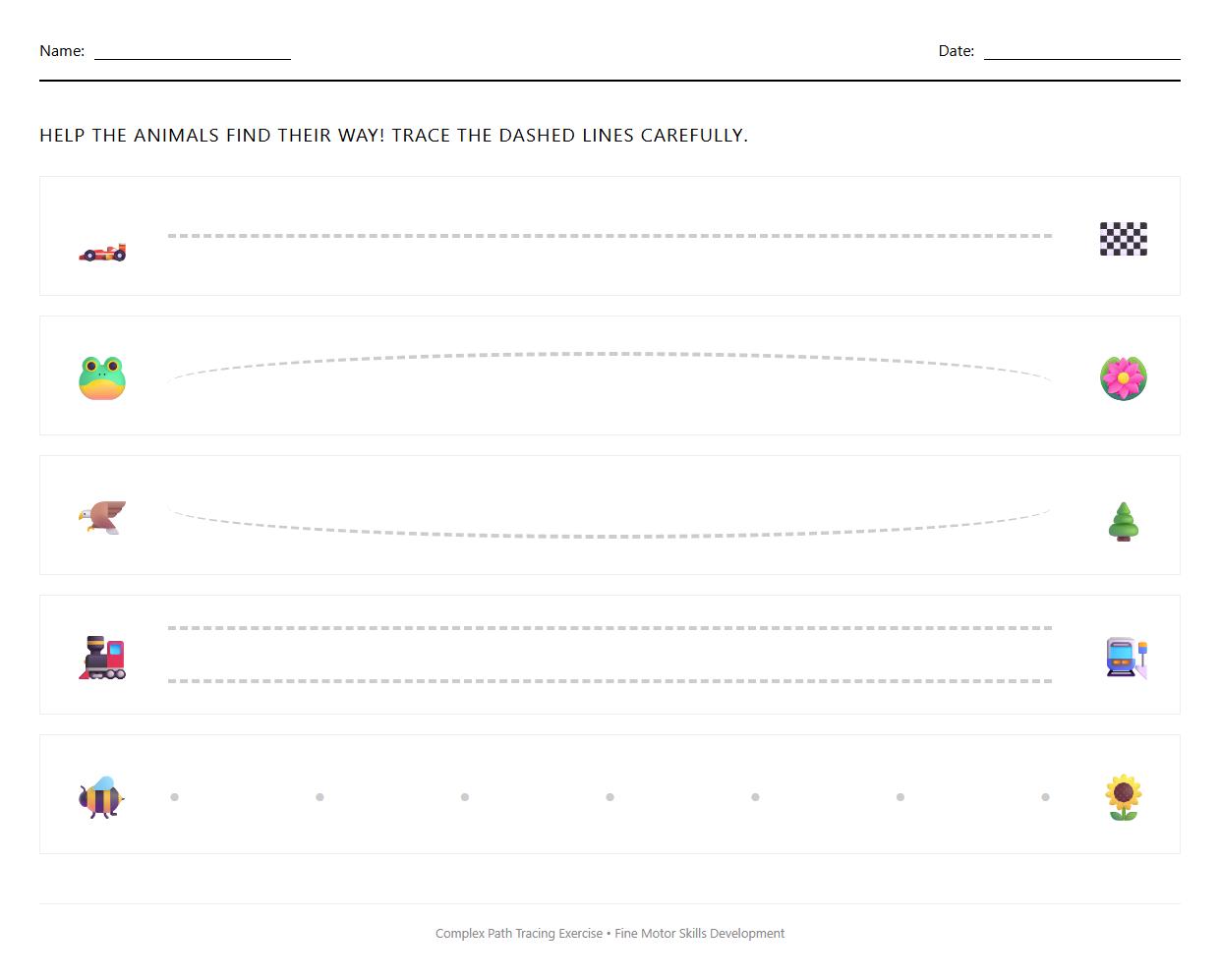
Complex Path Tracing Exercise Enhancing Executive Function

Download PDF     Pin it

Phonics Letter Formation Tracing Including Lines and Curves for Literacy Readiness
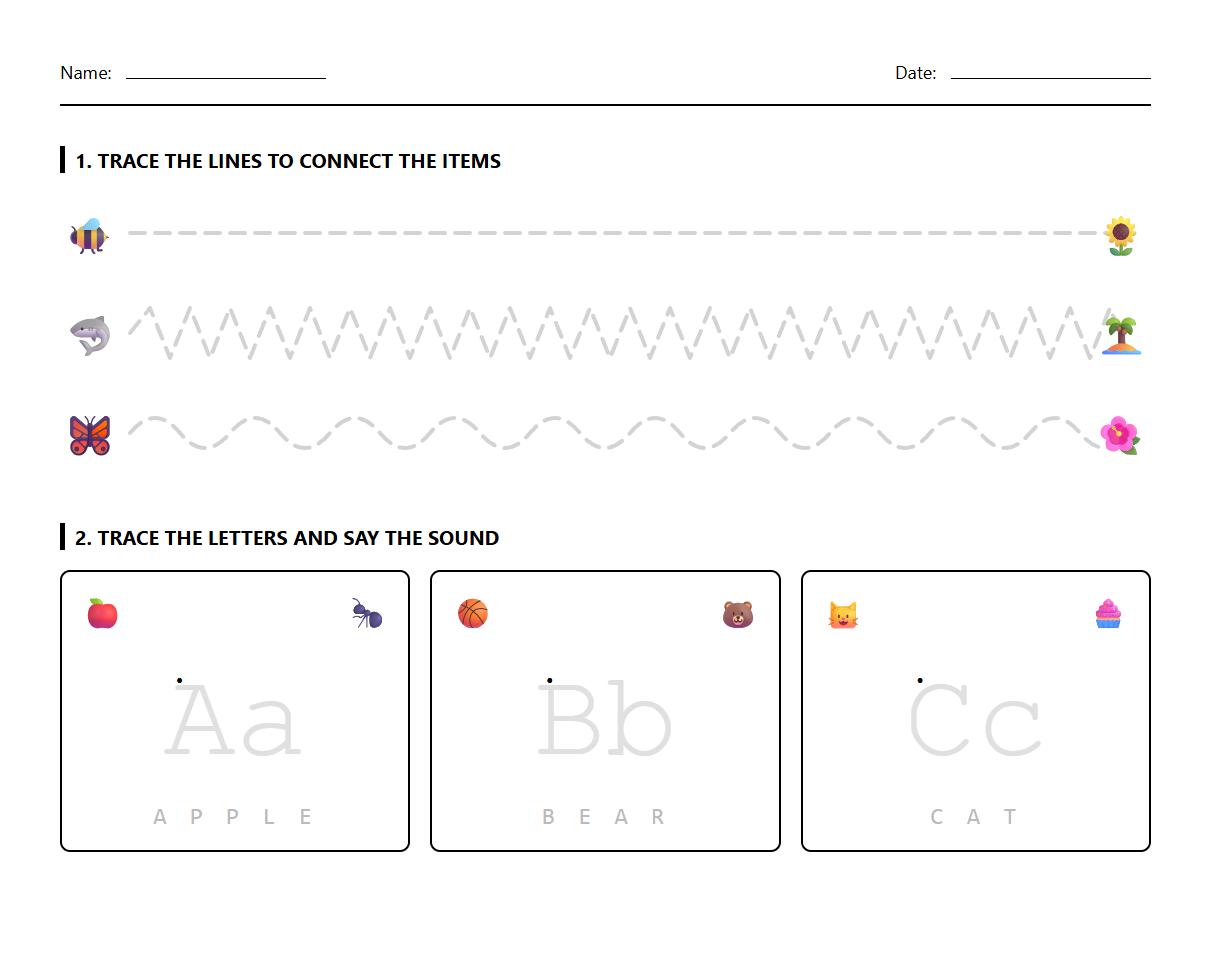
Phonics Letter Formation Tracing Including Lines and Curves for Literacy Readiness

Download PDF     Pin it

How Does Line and Curve Tracing Improve Fine Motor Skills in Kindergarten Children?

Line and curve tracing activities help kindergarten children develop fine motor skills by strengthening hand muscles and improving finger dexterity. These exercises promote controlled hand movements essential for writing. Regular practice also enhances hand stability, allowing children to grip pencils more effectively. This foundation is crucial for later academic tasks like drawing and writing.

What Cognitive Skills Are Enhanced Through Line and Curve Tracing Worksheets?

Tracing worksheets enhance important cognitive skills such as visual discrimination, spatial awareness, and memory. Children learn to recognize shapes and patterns, boosting their ability to differentiate between letters and numbers. These activities also support sequential thinking and improve problem-solving abilities. Cognitive benefits gained here lay the groundwork for literacy and numeracy success.

Why Are Repetitive Tracing Activities Important for Brain Development at the Kindergarten Level?

Repetition in tracing activities strengthens neural pathways in the brain, aiding motor planning and coordination. Consistent practice helps children internalize the shapes and movements necessary for writing. It also enhances muscle memory, allowing for smoother, more precise hand motions over time. These activities stimulate brain plasticity, essential for learning new skills during early childhood.

How Can Tracing Lines and Curves Help with Early Handwriting Readiness?

Tracing lines and curves prepares children for handwriting by teaching them to control pencil pressure and direction. It introduces basic shapes found in letters and numbers, fostering familiarity. This foundation supports the development of proper pencil grips and writing posture. Ultimately, these skills ease the transition to freehand writing tasks.

What Strategies Can Teachers Use to Make Line and Curve Tracing Engaging for Young Learners?

Teachers can increase engagement by incorporating colorful worksheets and using playful themes related to children's interests. Adding rewards and positive reinforcement encourages persistence and enjoyment. Integrating technology, such as interactive tracing apps, adds variety and excitement. Group activities and storytelling can also motivate children to participate actively.

How Does Tracing Influence Visual-Motor Integration in Kindergarten Students?

Tracing activities enhance visual-motor integration by linking what children see with how they move their hands. This coordination is crucial for accurate drawing and writing. Improved visual-motor skills lead to better precision in school tasks. Consistent tracing practice strengthens the connection between visual input and motor output.

What Role Does Hand-Eye Coordination Play in Successful Line and Curve Tracing?

Hand-eye coordination is essential for guiding hand movements along lines and curves accurately. It allows children to adjust their actions based on visual feedback, improving control. Strong hand-eye coordination contributes to smoother tracing and faster skill acquisition. Developing this coordination early supports overall academic performance.

How Can Progress in Tracing Skills Be Assessed in Kindergarten Education?

Progress can be assessed through observation of accuracy, speed, and consistency while tracing various shapes. Teachers and parents can use checklists to monitor improvement in grip, control, and line conformity. Digital tools may offer measurable feedback on tracing precision. Regular assessment helps tailor instruction to individual student needs.

What Are Some Creative Variations of Tracing Worksheets for Cognitive Skill Building?

Creative variations include tracing with dots, dashes, or textures to engage different sensory modalities. Worksheets that combine tracing with pattern recognition or matching tasks stimulate cognitive flexibility. Incorporating mazes or connect-the-dots challenges problem-solving and planning skills. Such variations keep tracing activities stimulating and diverse.

How Can Tracing Activities Support the Development of Attention and Concentration in Young Children?

Tracing requires sustained focus, helping children improve their attention span and concentration. It teaches patience and the ability to complete tasks step-by-step. Engaging tracing exercises can reduce distractibility by promoting mindfulness in young learners. Enhanced concentration skills gained here benefit academic and social development.


More in Fine Motor and Cognitive Skills Category


About the author. Nylen Smith is a dedicated educator and cofounder of KWorksheet.com, a popular platform specializing in high-quality kindergarten worksheets and printable activities.

Disclaimer. The information provided in this document is for general informational purposes and/or document sample only and is not guaranteed to be factually right or complete. Please report to us via contact-us page if you find and error in this page, thanks.

Comments

No comment yet