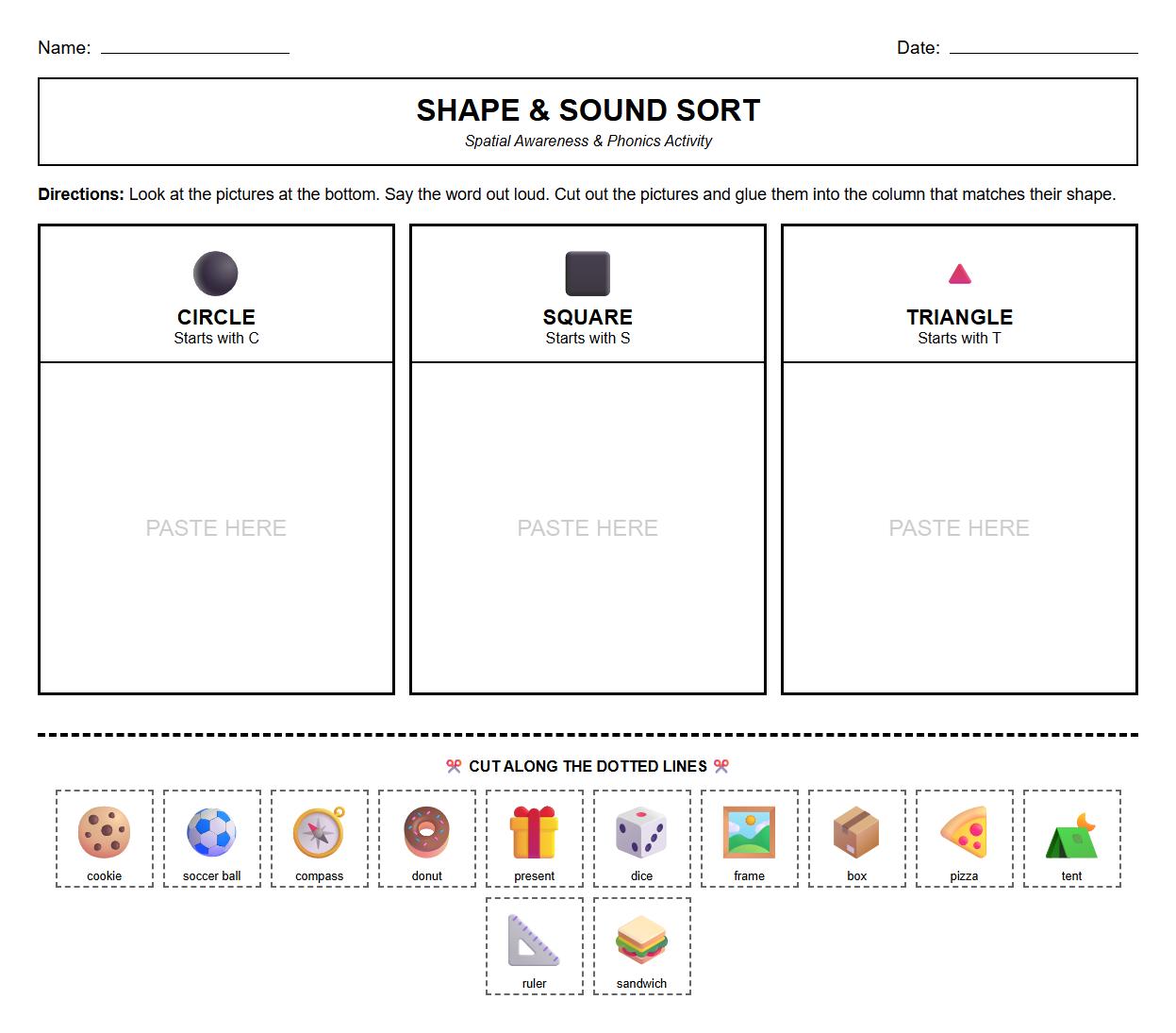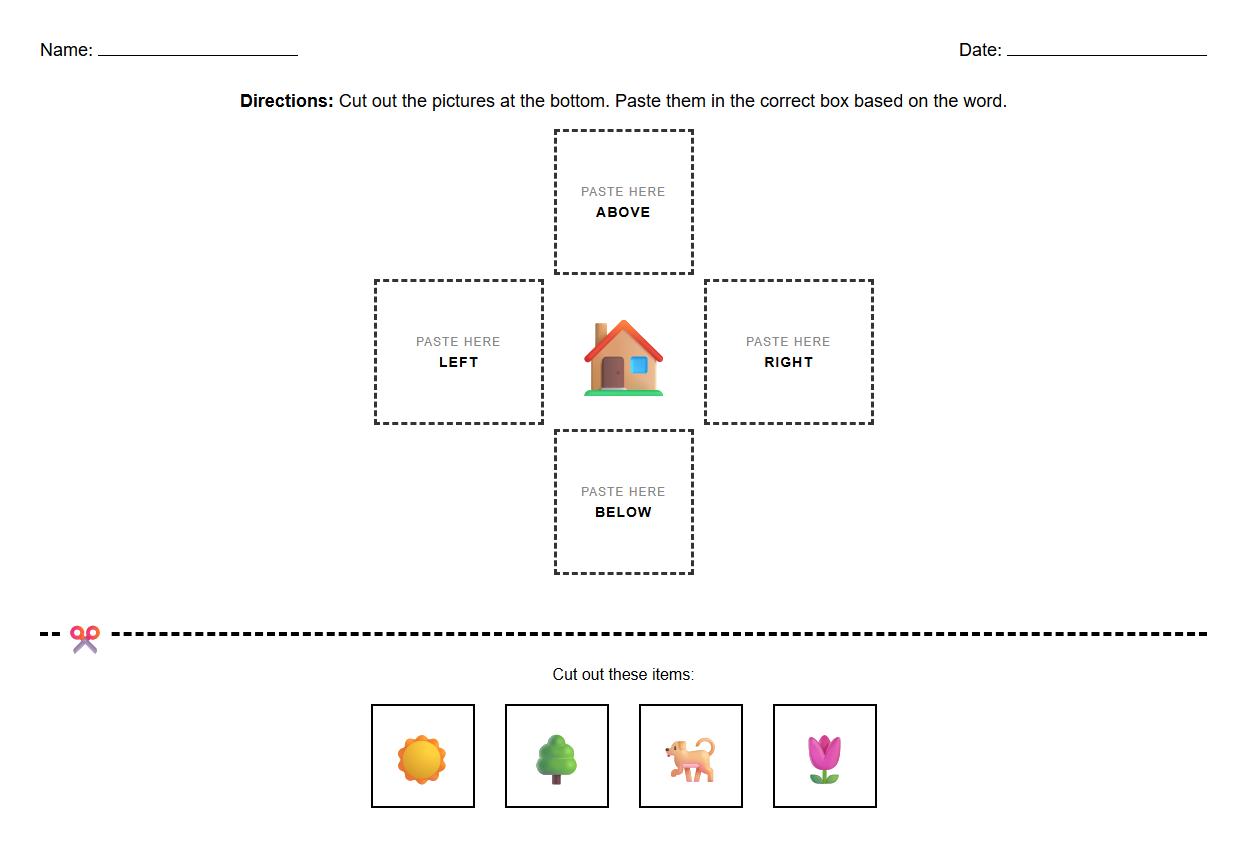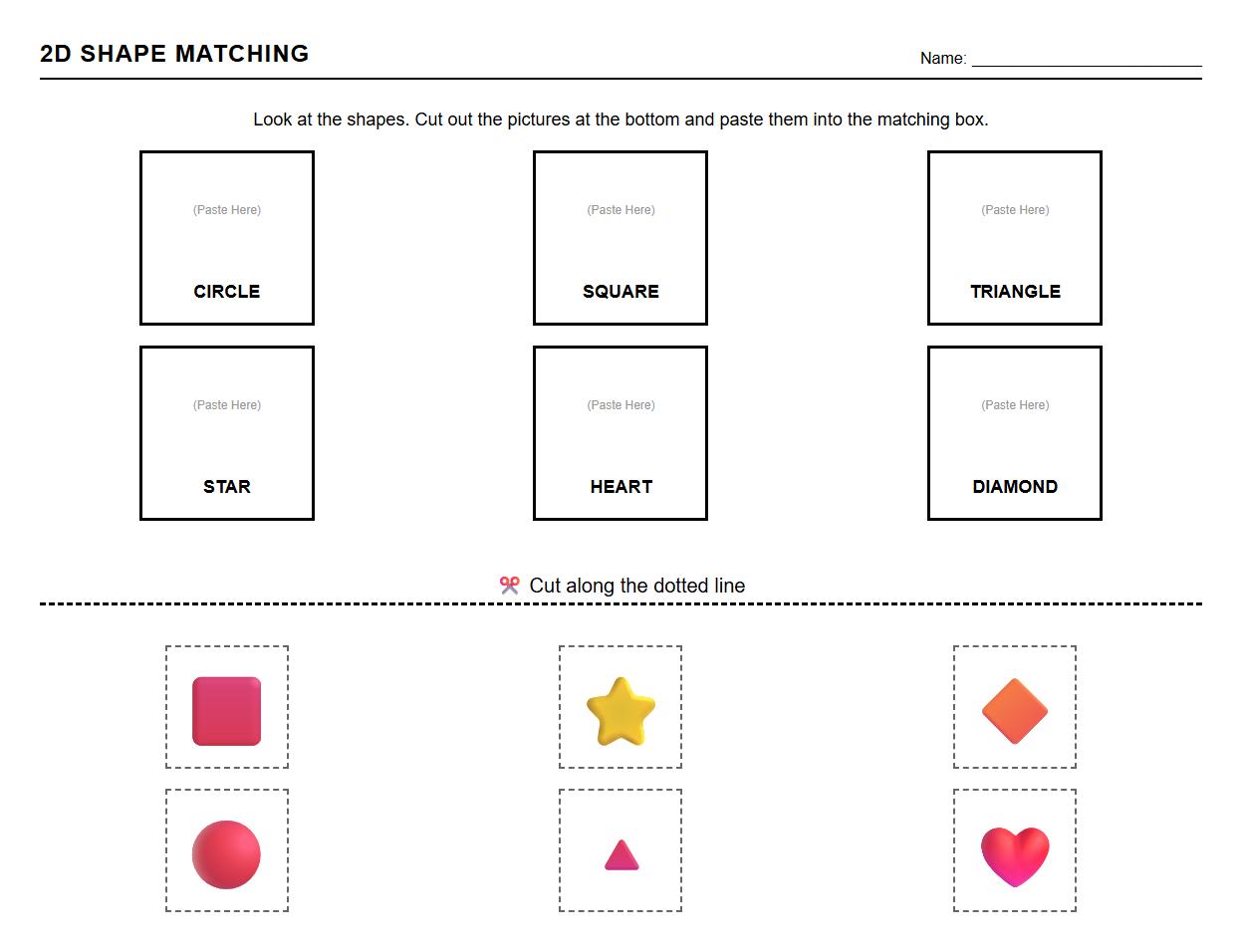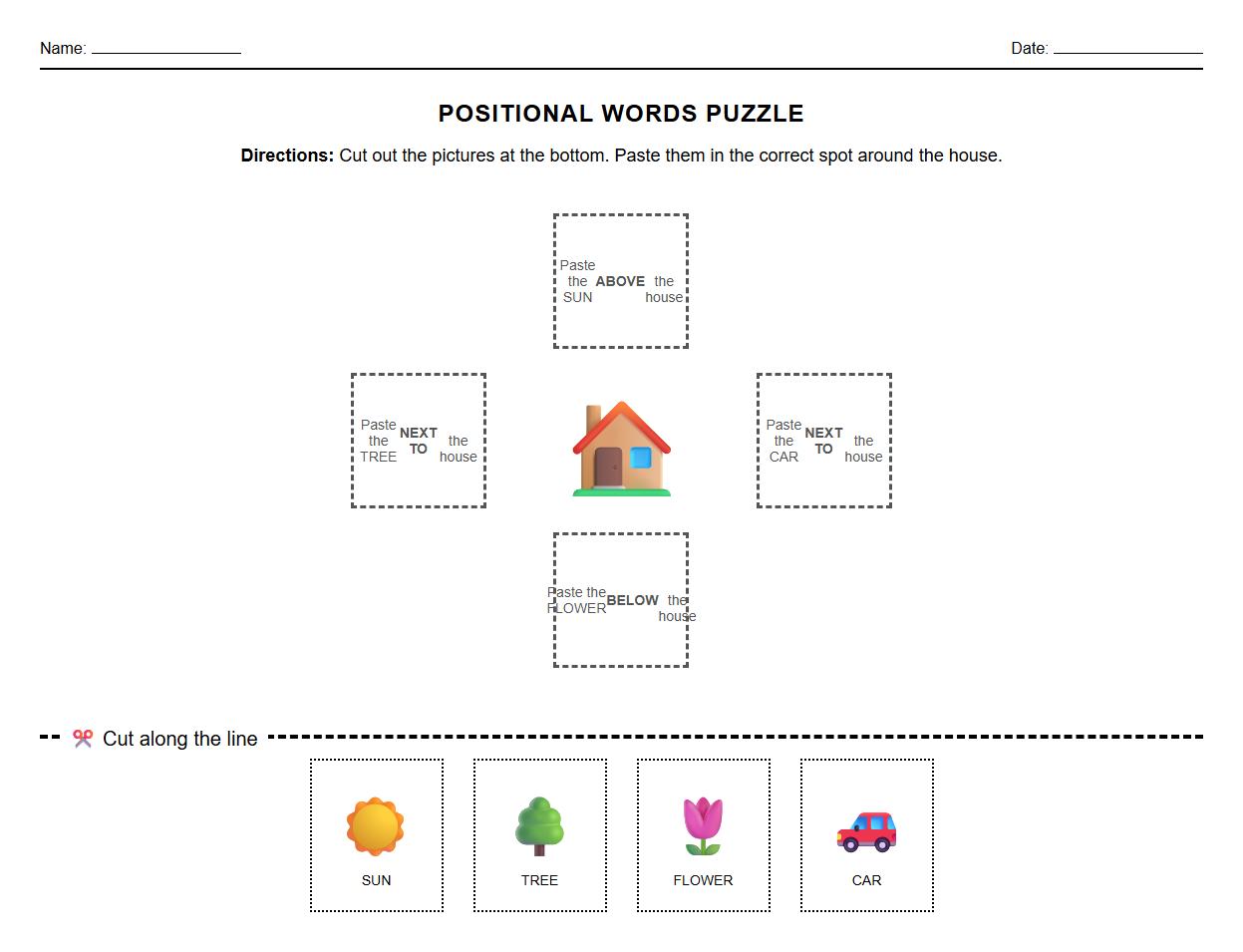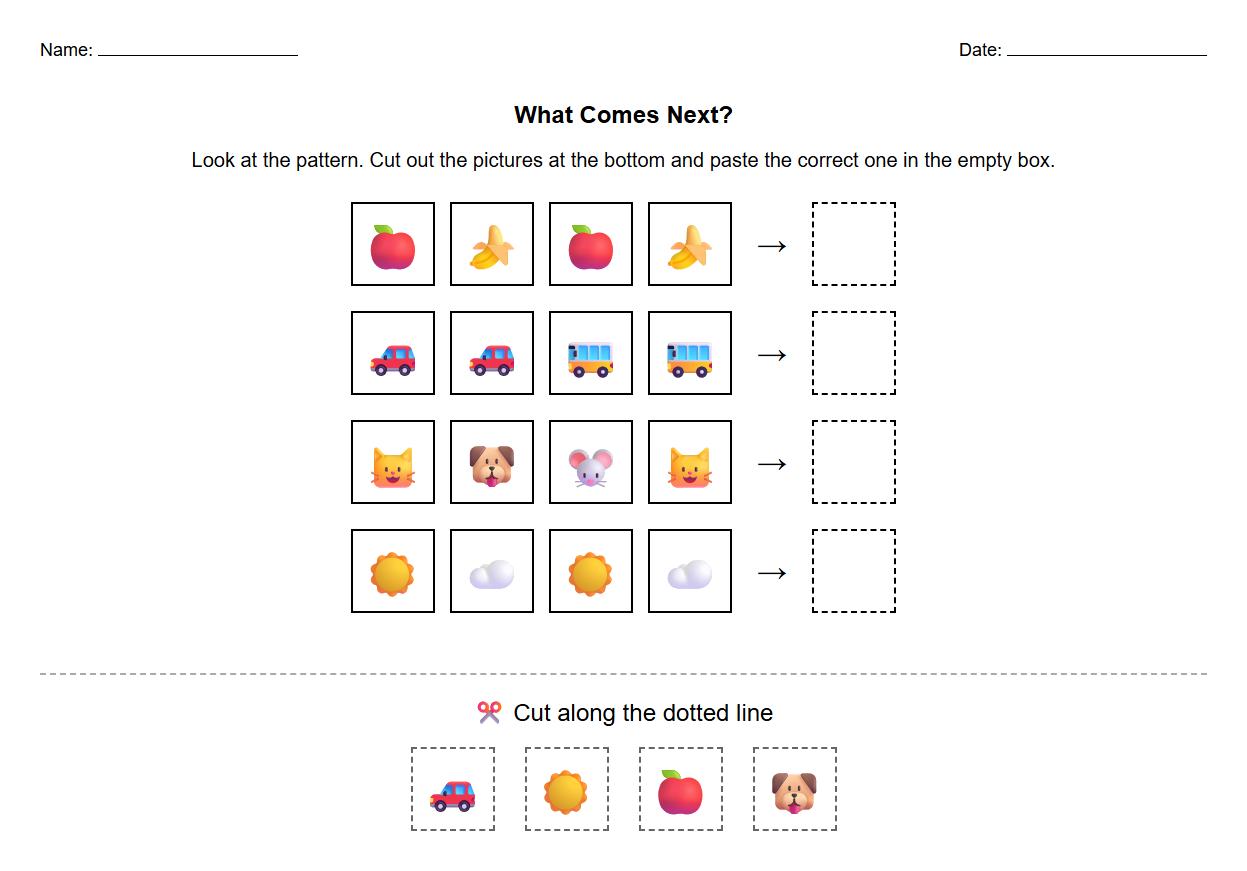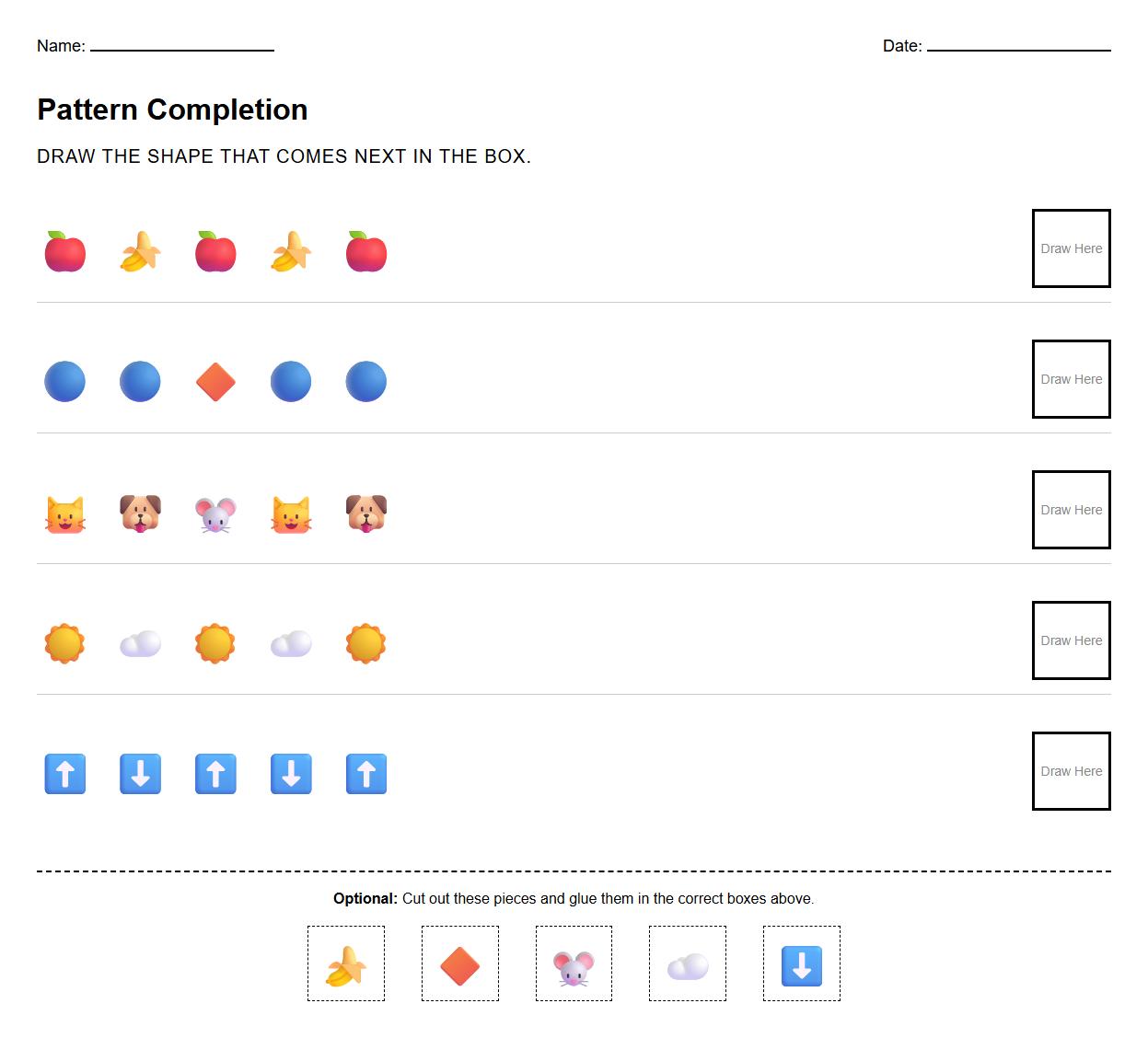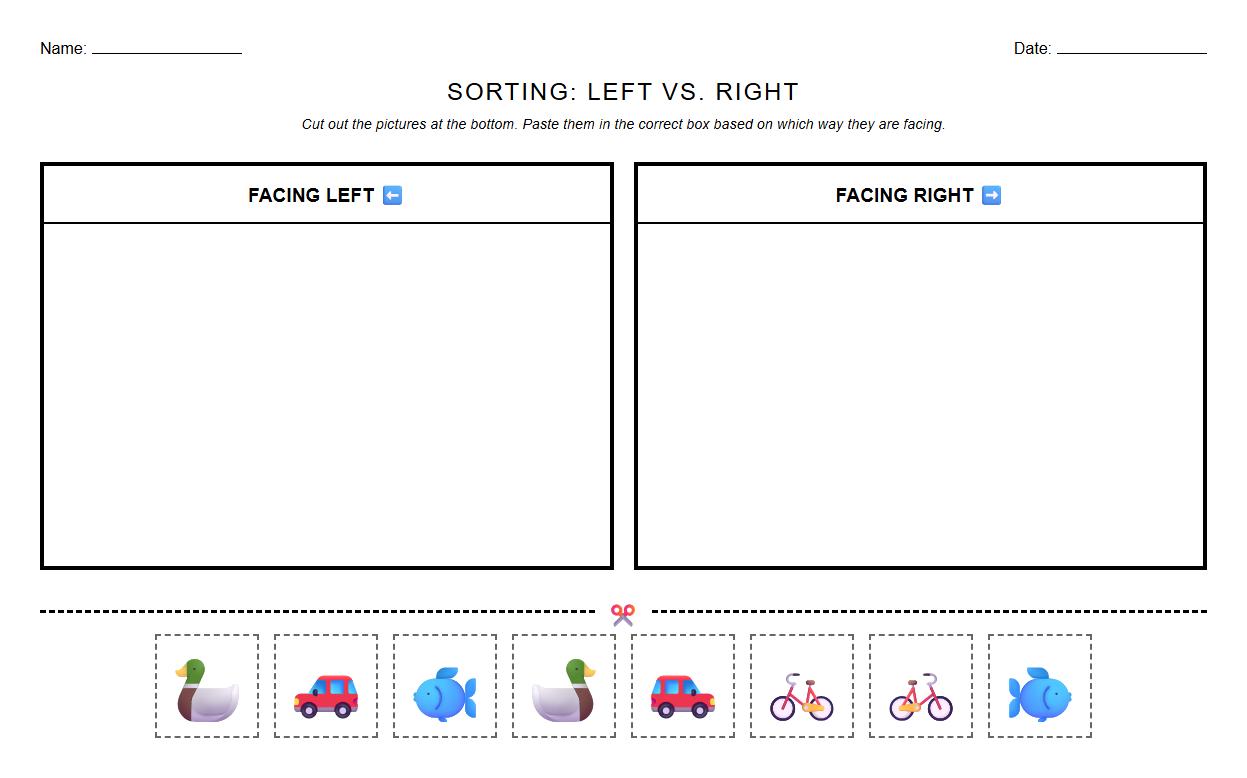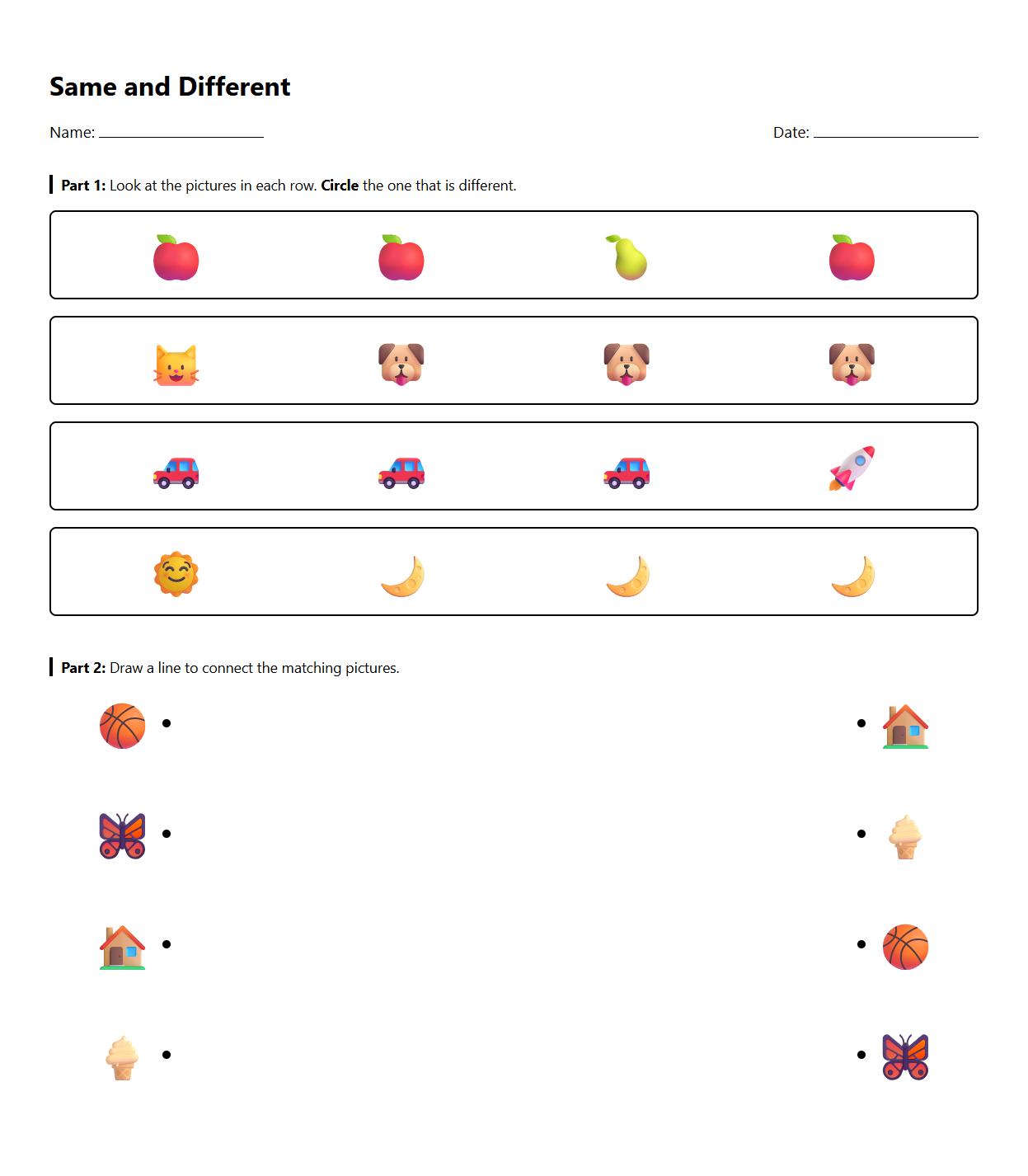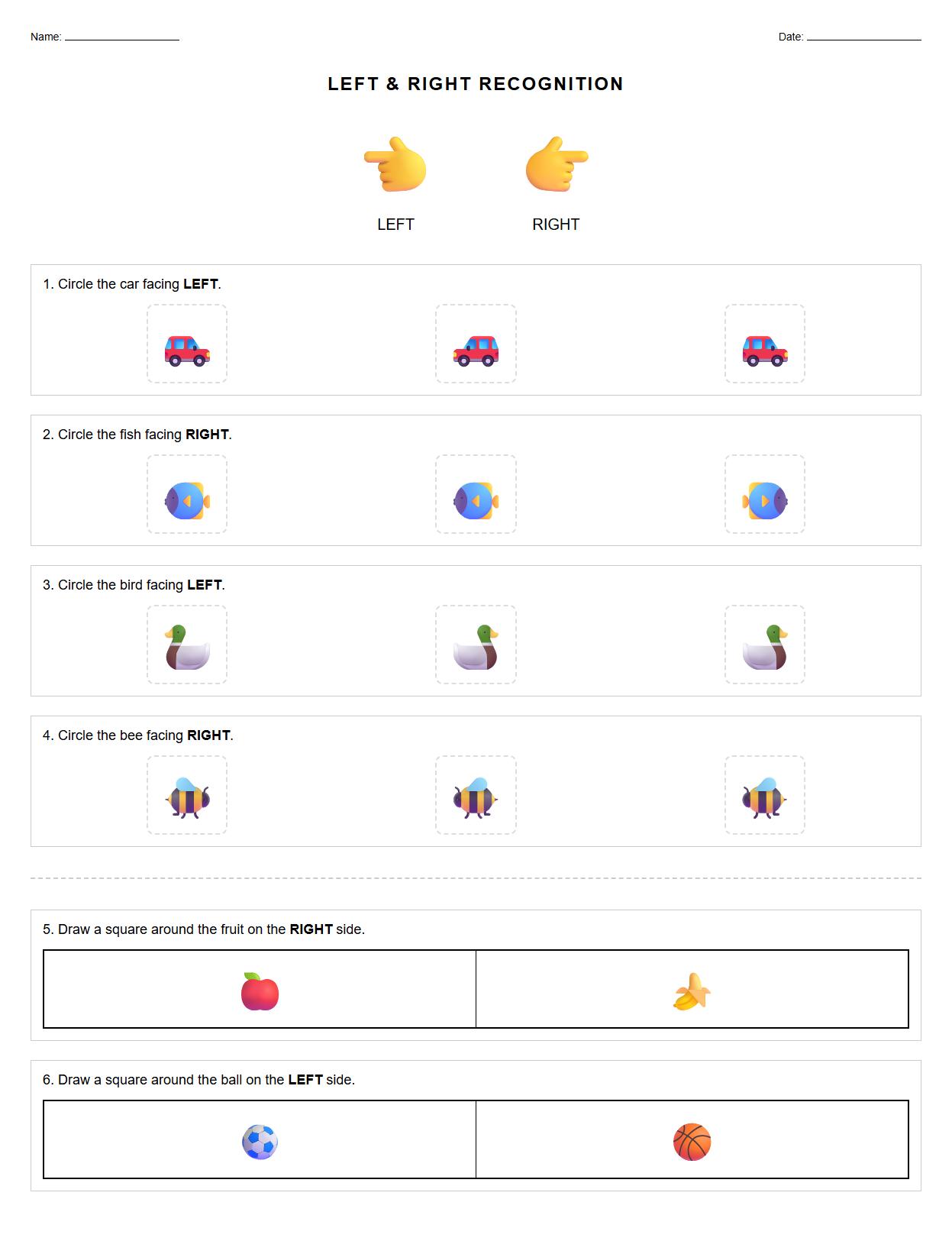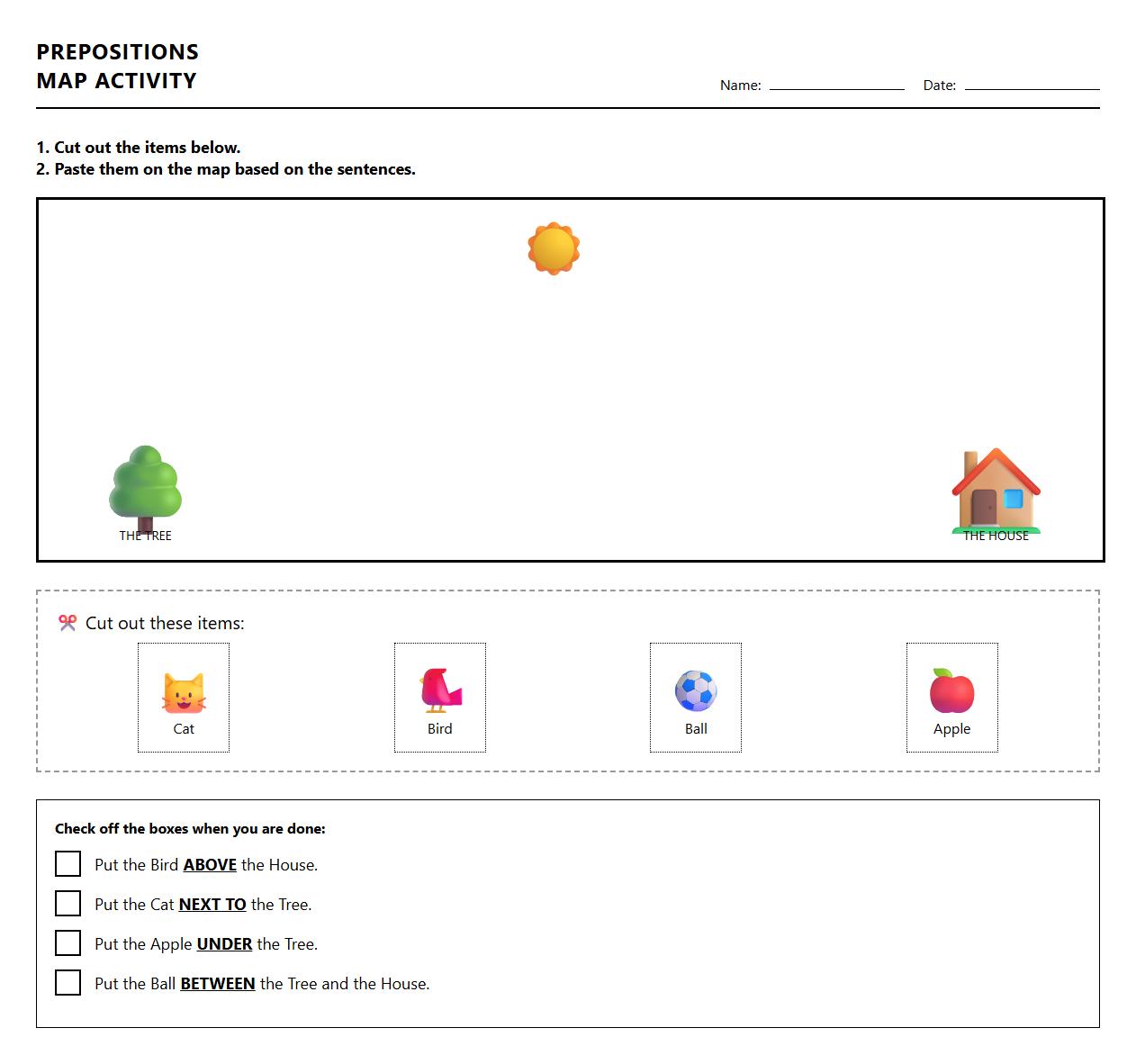
Spatial Awareness Puzzle Cut and Paste Worksheets for Kindergarten enhance children's ability to recognize shapes, understand spatial relationships, and improve fine motor skills through engaging hands-on activities. These worksheets encourage problem-solving and critical thinking by having young learners match, cut, and arrange puzzle pieces in correct positions. Explore our collection of worksheets designed to boost spatial reasoning and creativity in kindergarten students.
How Spatial Awareness Puzzle Cut and Paste Worksheets Help Develop Problem-Solving Skills in Kindergarten Students
Spatial awareness puzzles encourage children to recognize shapes, patterns, and positions, fostering critical thinking. By figuring out where each piece fits, students practice problem-solving through trial and error. These activities enhance their ability to plan and execute tasks, essential in cognitive development. The hands-on nature keeps young learners actively engaged.
Key Spatial Concepts Introduced Using Cut and Paste Activities
Cut and paste worksheets teach fundamental spatial concepts such as above/below, next to, inside/outside, and left/right. These activities also introduce shapes, sizes, and directions, helping children understand how objects relate in space. Mastery of these concepts builds a foundation for more complex skills in geometry and navigation. Using manipulatives in cut and paste projects solidifies these ideas practically.
How Teachers Can Make Puzzle Worksheets Engaging for Young Children
Incorporating colorful images, familiar themes, and interactive instructions makes puzzles attractive for kindergarteners. Teachers can use storytelling and role-playing to connect the activity with real-life scenarios. Providing positive reinforcement and opportunities for collaboration boosts motivation and social skills. Regularly varying the challenges maintains children's interest and enthusiasm.
Materials Needed for Effective Cut and Paste Spatial Awareness Exercises
Essential materials include safety scissors, non-toxic glue sticks, colorful construction paper, and printed puzzle templates. Using child-friendly tools ensures safety and ease during activities. Additional resources like stickers and textured paper can add sensory engagement. A well-prepared workspace helps keep students organized and focused.
Fine Motor Skills Enhanced Through Puzzle Cut and Paste Worksheets
These worksheets strengthen hand-eye coordination, dexterity, and bilateral hand use. Cutting shapes and pasting them precisely improves finger strength and control. This practice supports daily tasks such as writing, buttoning clothes, and using utensils. Consistent use of puzzles promotes muscle development vital for academic success.
How Often Spatial Awareness Puzzles Should Be Incorporated Into the Kindergarten Curriculum
Integrating spatial awareness puzzles 2-3 times per week offers consistent practice without causing fatigue. Frequent exposure improves retention and skill progression over time. Aligning these puzzles with other subjects enriches overall learning outcomes. Flexibility in scheduling allows adaptation to each class's pace and needs.
Creative Themes for Spatial Awareness Cut and Paste Worksheets
Popular themes include animals, vehicles, seasons, and community helpers, linking puzzles to children's interests. Nature, space, and holiday motifs add variety and cultural relevance. Themed scenes encourage imaginative thinking and contextual understanding of spatial concepts. Customizing themes based on classroom topics enhances relevance and excitement.
How Teachers Can Assess Student Progress Using Puzzle Worksheets
Observing children's ability to complete puzzles independently indicates comprehension of spatial relationships. Teachers can track accuracy, speed, and problem-solving strategies through regular assessments. Informal checklists or digital portfolios document improvements and areas needing support. Feedback sessions with parents keep both stakeholders informed and involved.
Safety Tips When Using Scissors and Glue for These Activities
Use blunt-tipped scissors and supervise cutting at all times to prevent injuries. Teach children safe handling habits such as passing scissors handle-first and keeping fingers clear. Opt for non-toxic, washable glue to avoid accidents and ease cleanup. Establish clear rules and monitor children closely during the activity.
How Spatial Awareness Worksheets Support Early Math Learning Skills
Spatial worksheets build foundational math skills including shape recognition, measurement, and patterning. Understanding spatial relationships aids comprehension of geometry, number lines, and problem-solving. Early mastery of these concepts supports success in addition, subtraction, and reasoning tasks. Integrating math vocabulary strengthens language linking to numeracy.