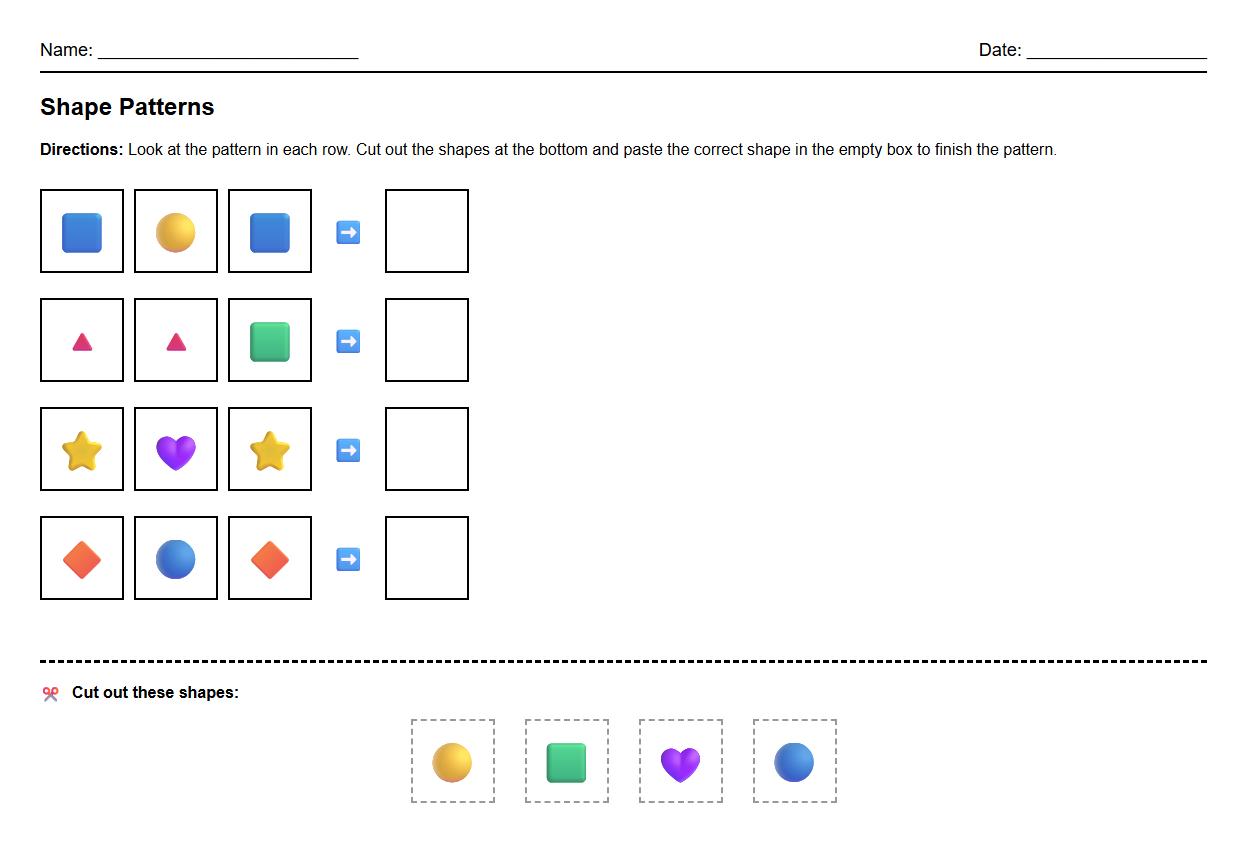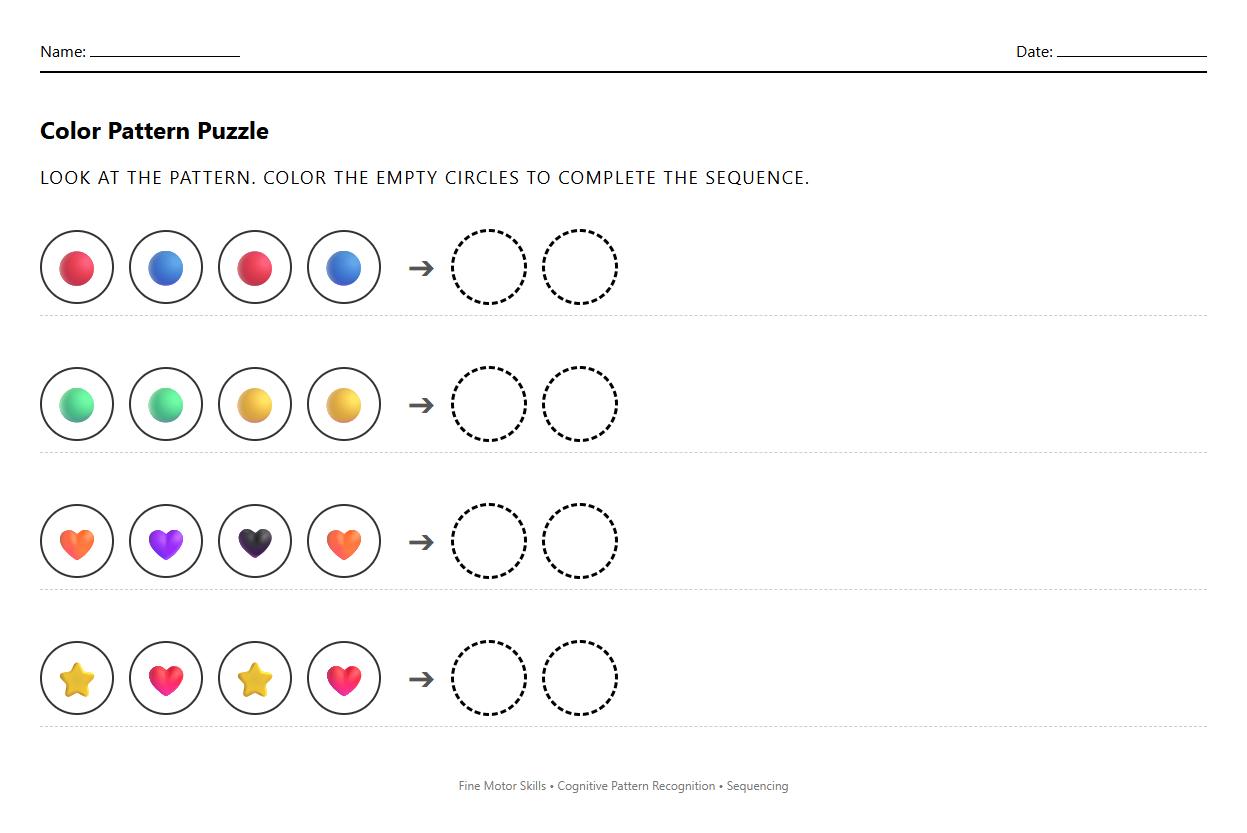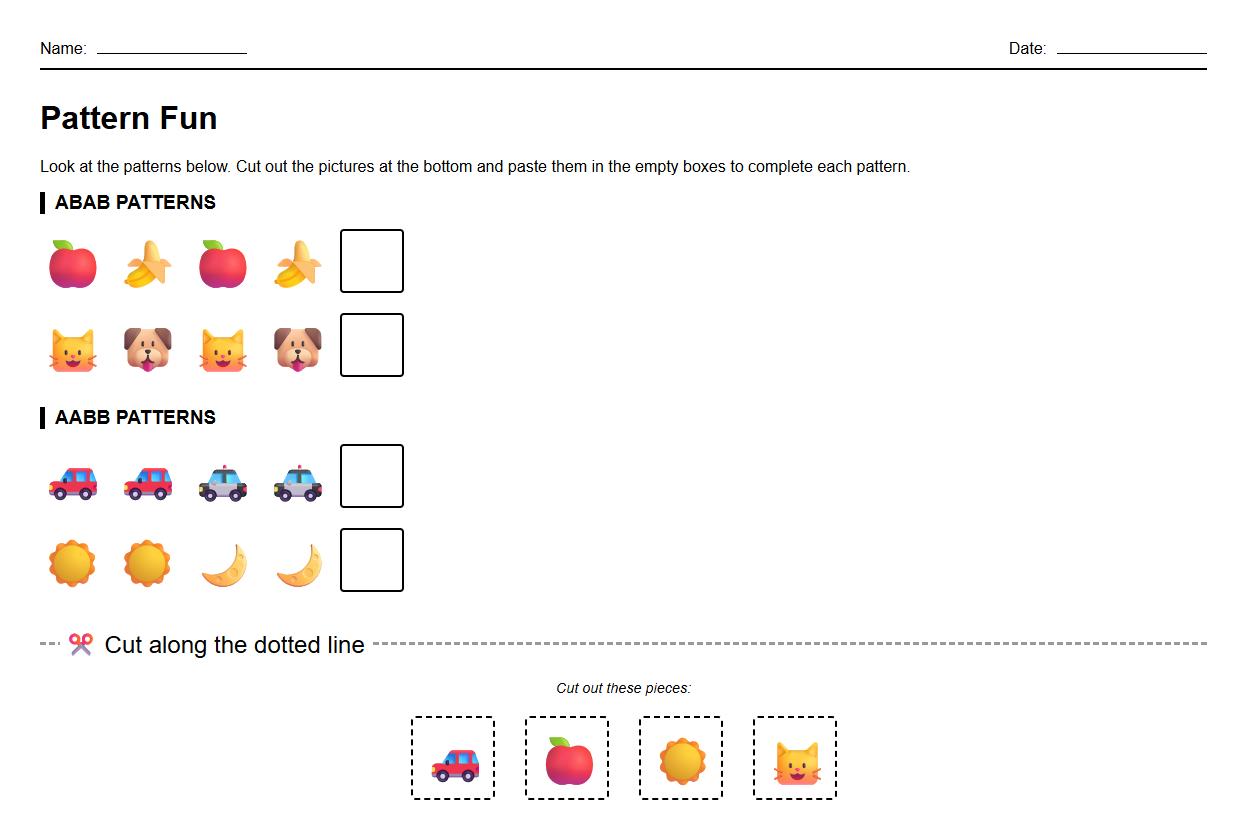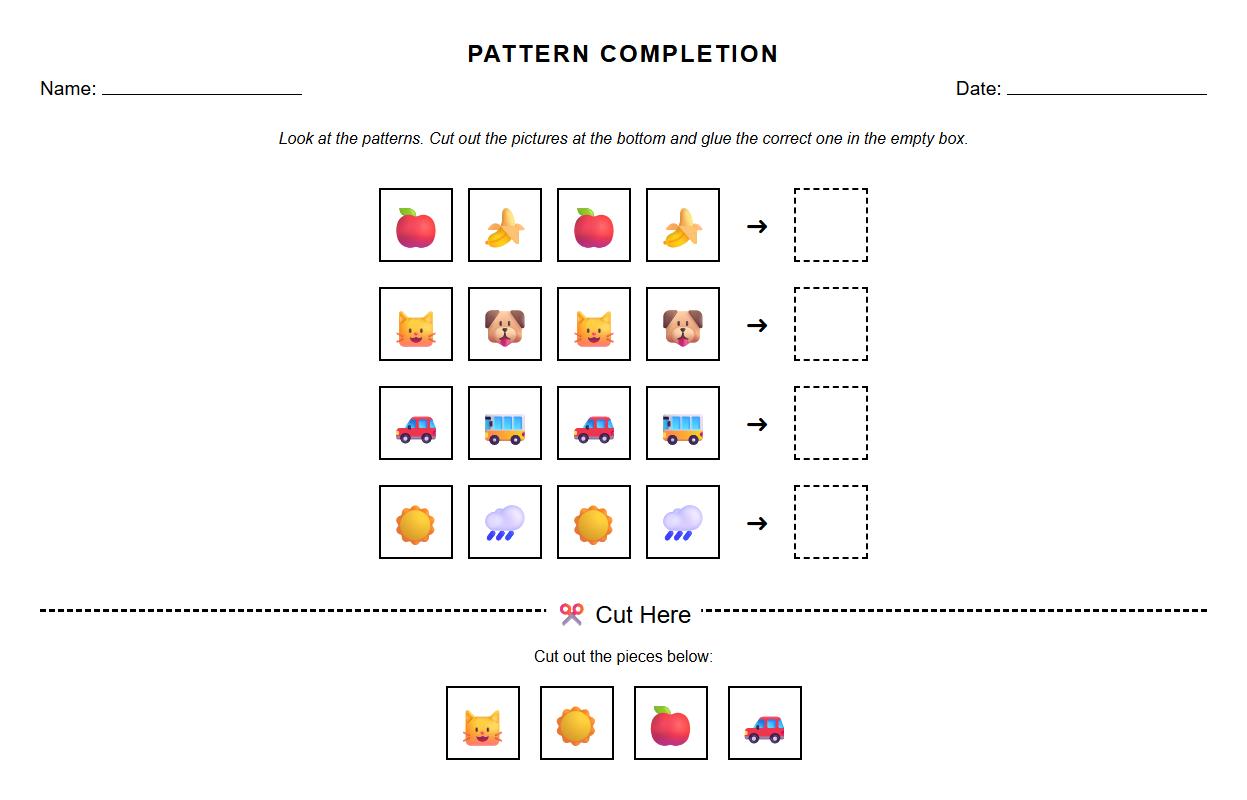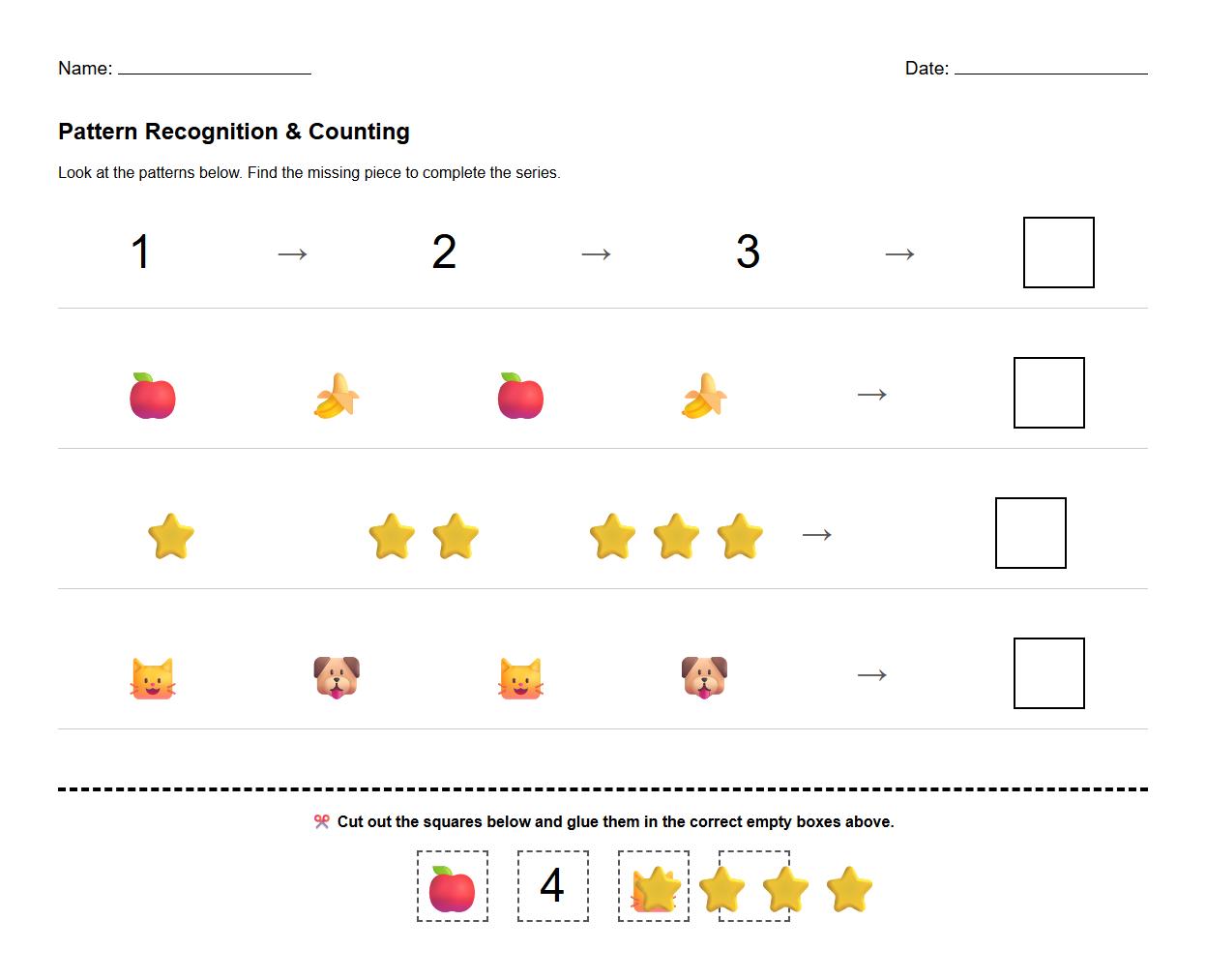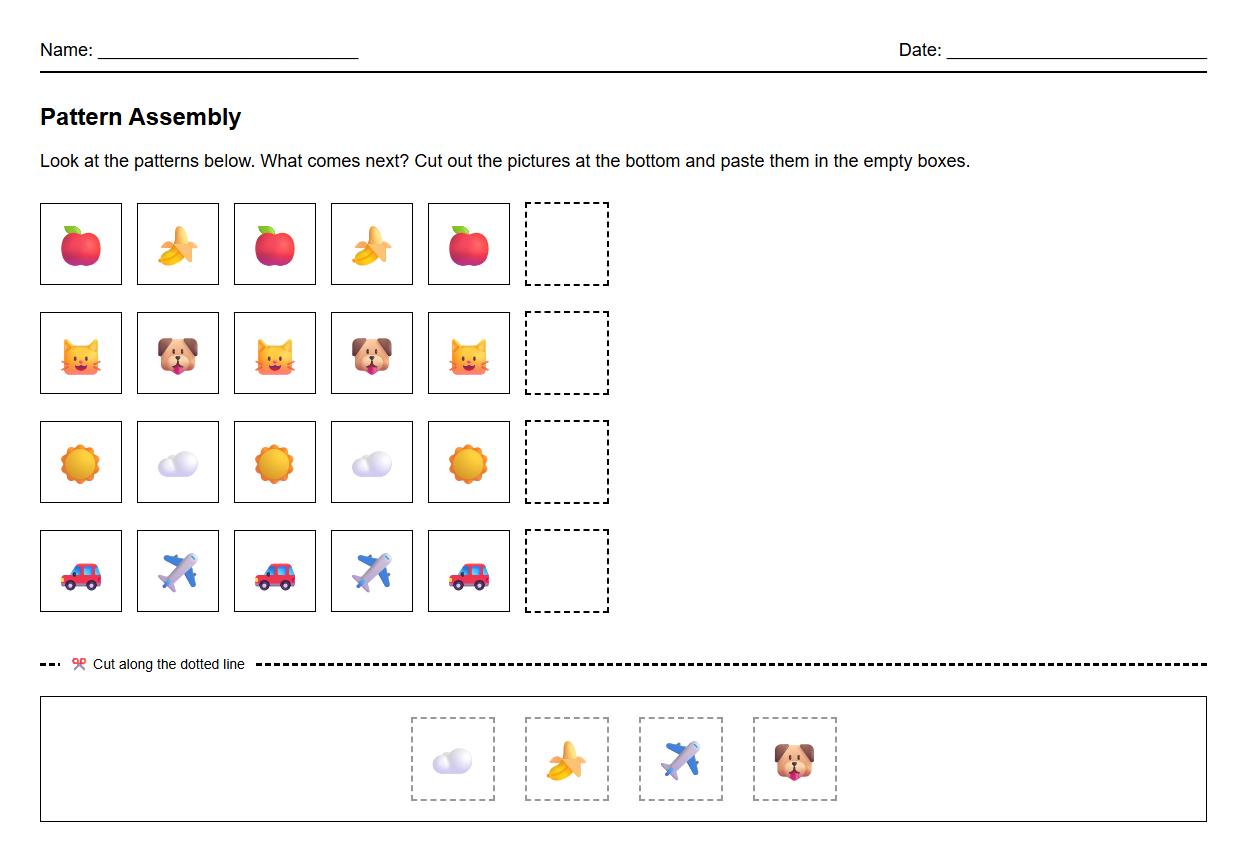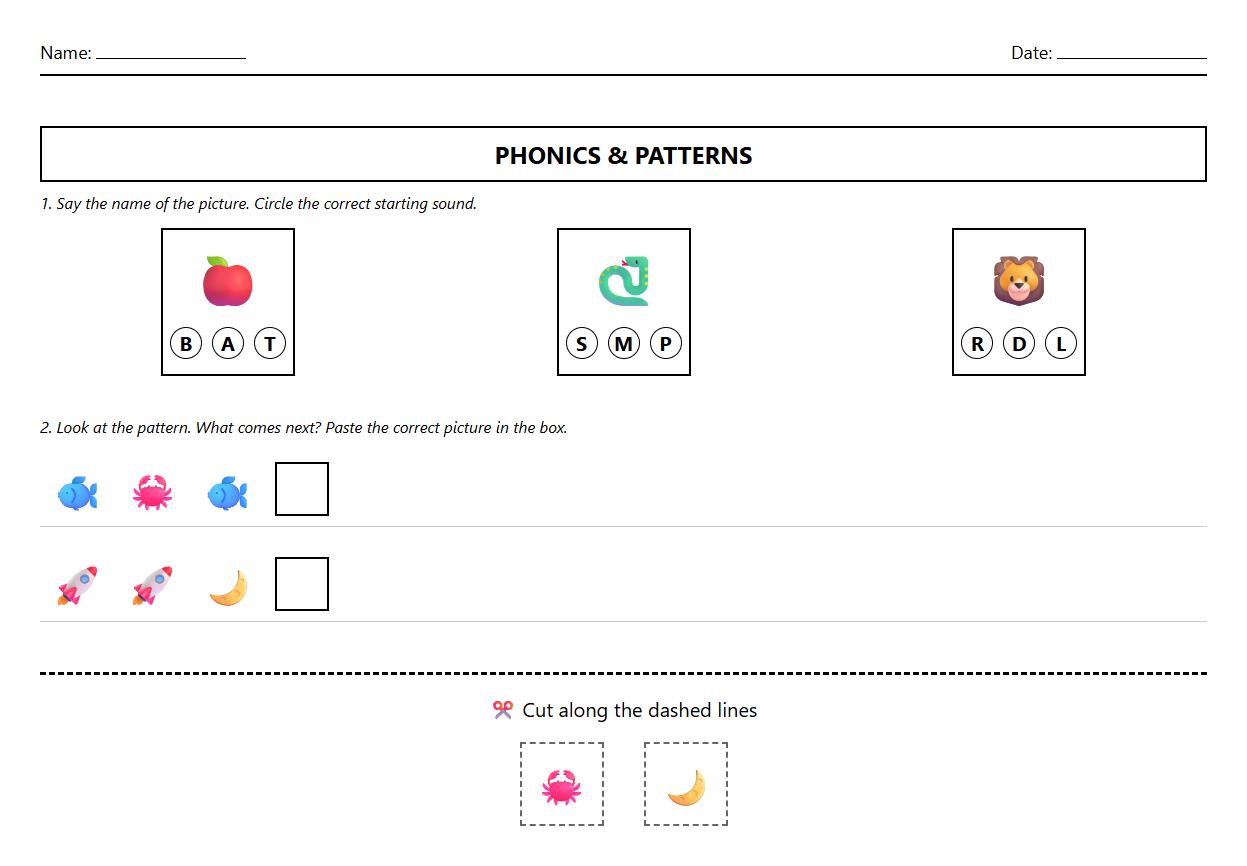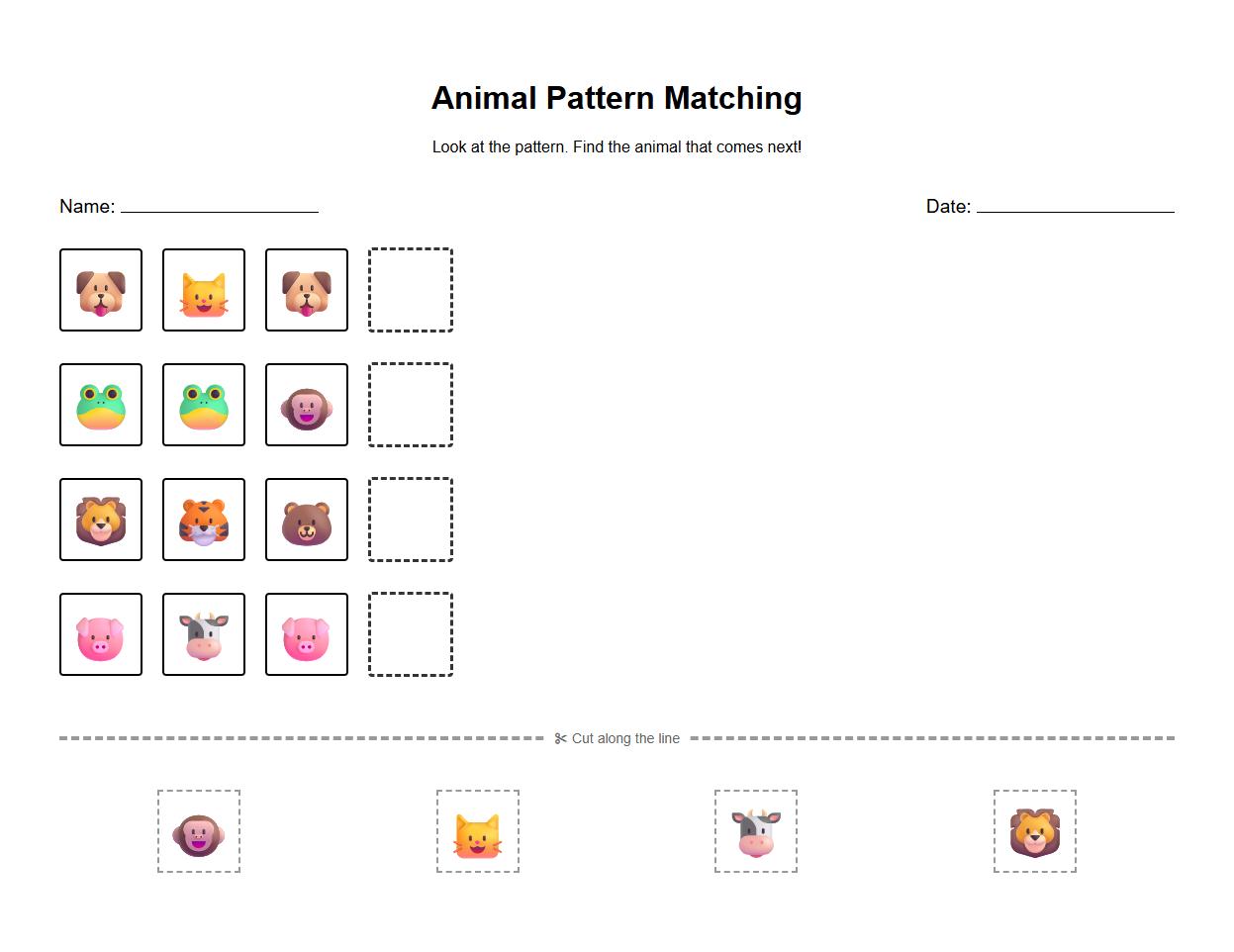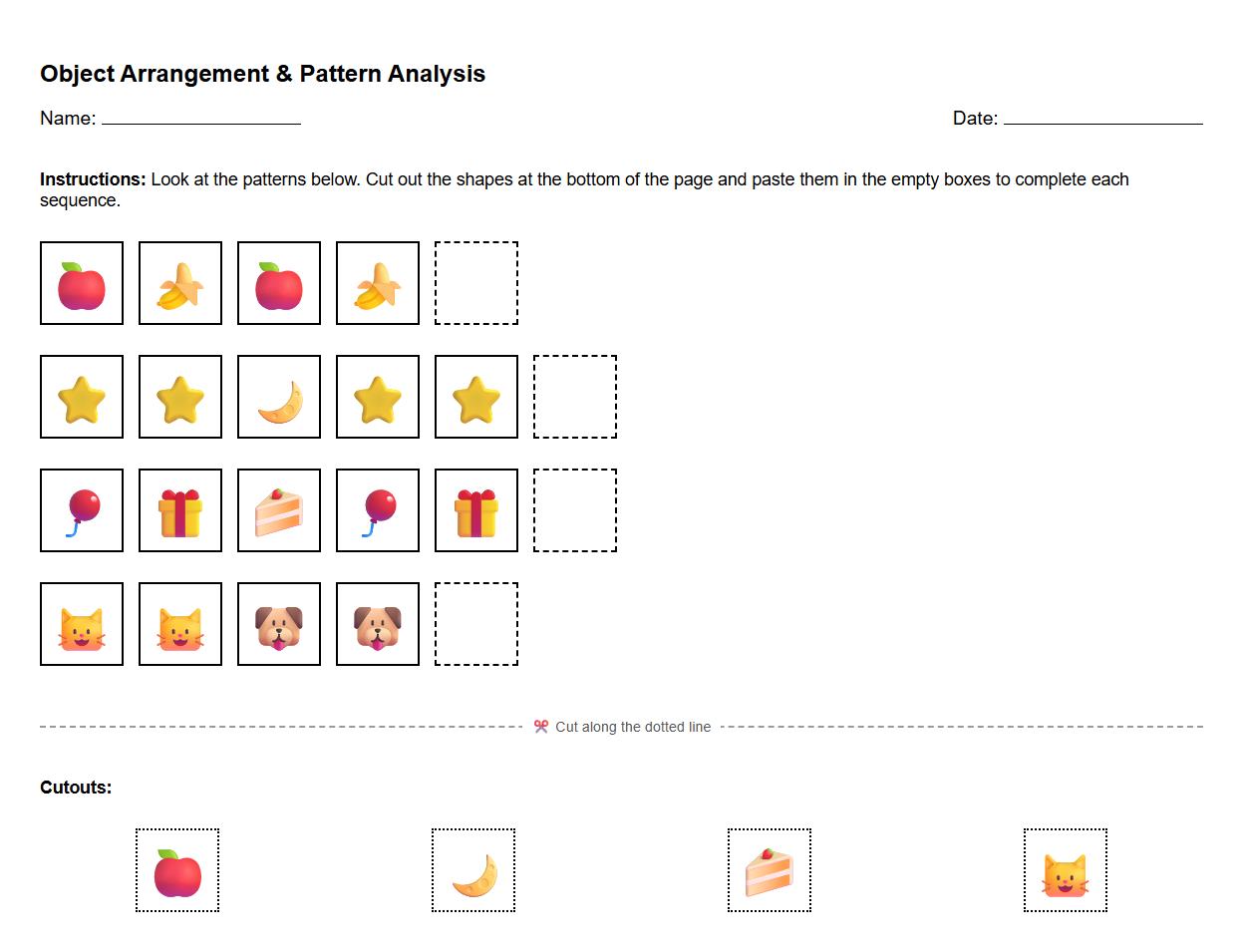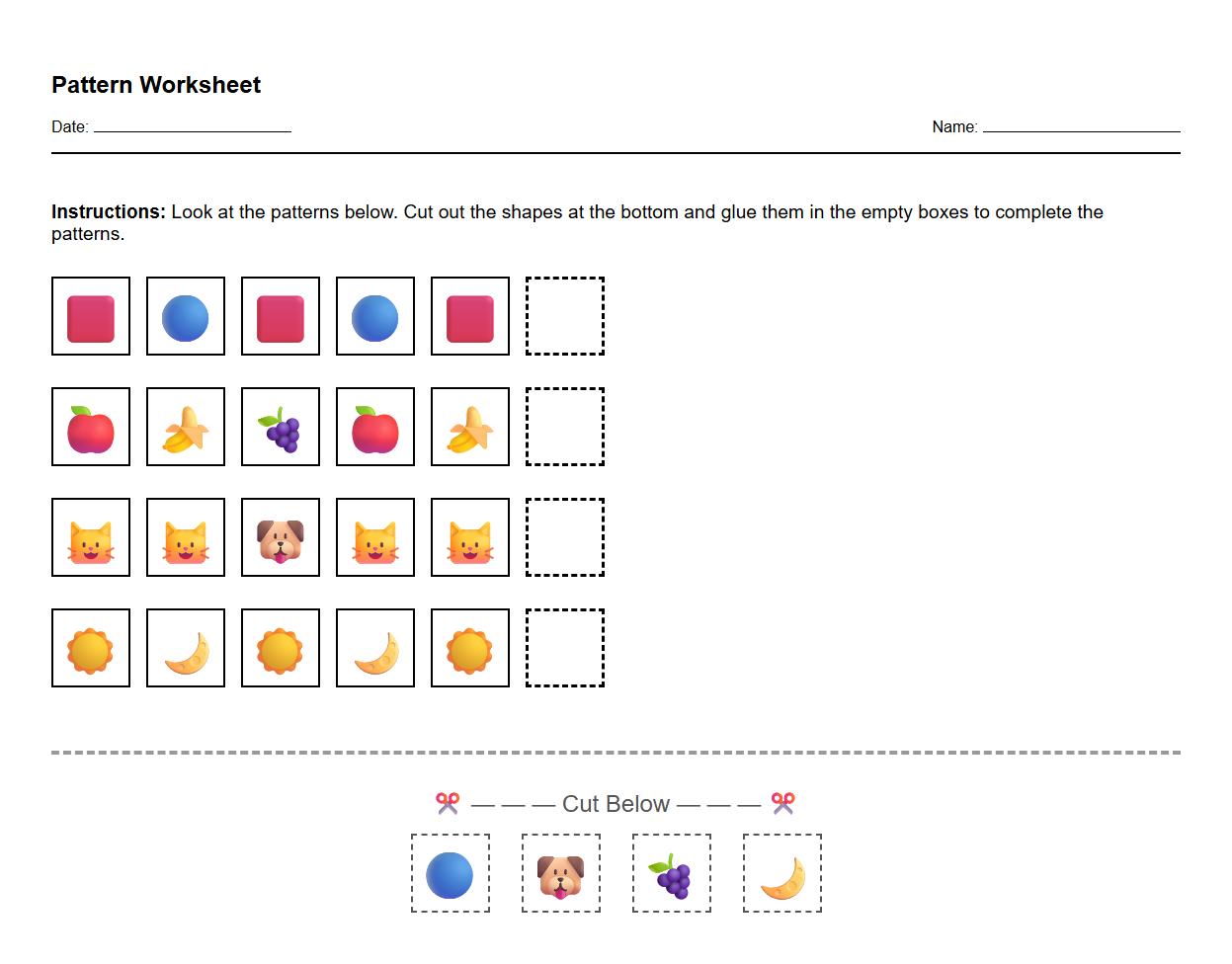
Pattern recognition puzzles help kindergarten students develop critical thinking and early math skills by identifying and completing sequences using shapes, colors, and objects. These engaging activities boost memory retention and enhance problem-solving abilities while fostering creativity. Explore the available worksheets designed to make learning pattern recognition fun and effective for young learners.
Which Shape Comes Next in the Pattern?
Encourage children to observe the sequence and predict the next shape in the pattern. This activity enhances their critical thinking and pattern recognition skills. Use simple shapes like circles, squares, and triangles to make it engaging. Ask students to explain their reasoning to deepen understanding.
How Many Times Do You See the Same Color Repeated in This Row?
Help children count the number of times a color appears in a sequence. This exercise promotes color recognition and counting skills. Encourage them to point and count aloud to reinforce learning. Use rows with vibrant colors to maintain their interest.
Can You Circle All the Triangles in the Pattern?
Ask children to identify and circle all triangles within a pattern. This activity supports shape identification and fine motor skills. Provide clear, simple images to make it accessible. Praise their efforts to build confidence.
What is the Sequence of Colors Shown in the First Pattern?
Guide children to observe and describe the color sequence in a given pattern. They learn to articulate their observations clearly, improving verbal skills. This also fosters their ability to remember and replicate color orders. Use repetitive patterns for better retention.
Which Piece Fits to Complete the Puzzle?
Encourage problem-solving by asking children to find the puzzle piece that completes the image. This develops spatial awareness and logical thinking. Provide pieces with distinct shapes and colors for easier matching. Celebrate their success to motivate continued learning.
Can You Spot Where the Missing Piece Should Go?
Help children identify the space where a missing puzzle piece belongs. This enhances their observational skills and attention to detail. Use visual clues to guide their thinking. This interactive task stimulates curiosity and focus.
How Many Different Shapes Do You See in the Pattern?
Ask children to count the number of different shapes in a pattern. This activity boosts shape identification and categorization abilities. Use simple shapes to avoid confusion and build confidence. Encourage verbalizing their answers for language development.
What is the Rule of the Pattern Shown?
Challenge children to understand and explain the rule governing the pattern. This strengthens analytical thinking and sequencing skills. Help them notice repeated elements or changes. Use guiding questions to support their discovery process.
Which Puzzle Piece Has a Star on It?
Ask children to find the puzzle piece with a star symbol. This focuses attention and encourages detailed observation. Use colorful pieces to make the activity visually stimulating. Reinforce learning by discussing the find together.
Can You Draw the Next Item in the Pattern Sequence?
Invite children to draw the next item in a pattern sequence. This merges creativity with pattern recognition and fine motor skills. Provide examples and tools like colored pencils or crayons. Encourage them to explain their choice to enhance communication skills.


Spatial Awareness Puzzle Cut and Paste Worksheets for Kindergarten