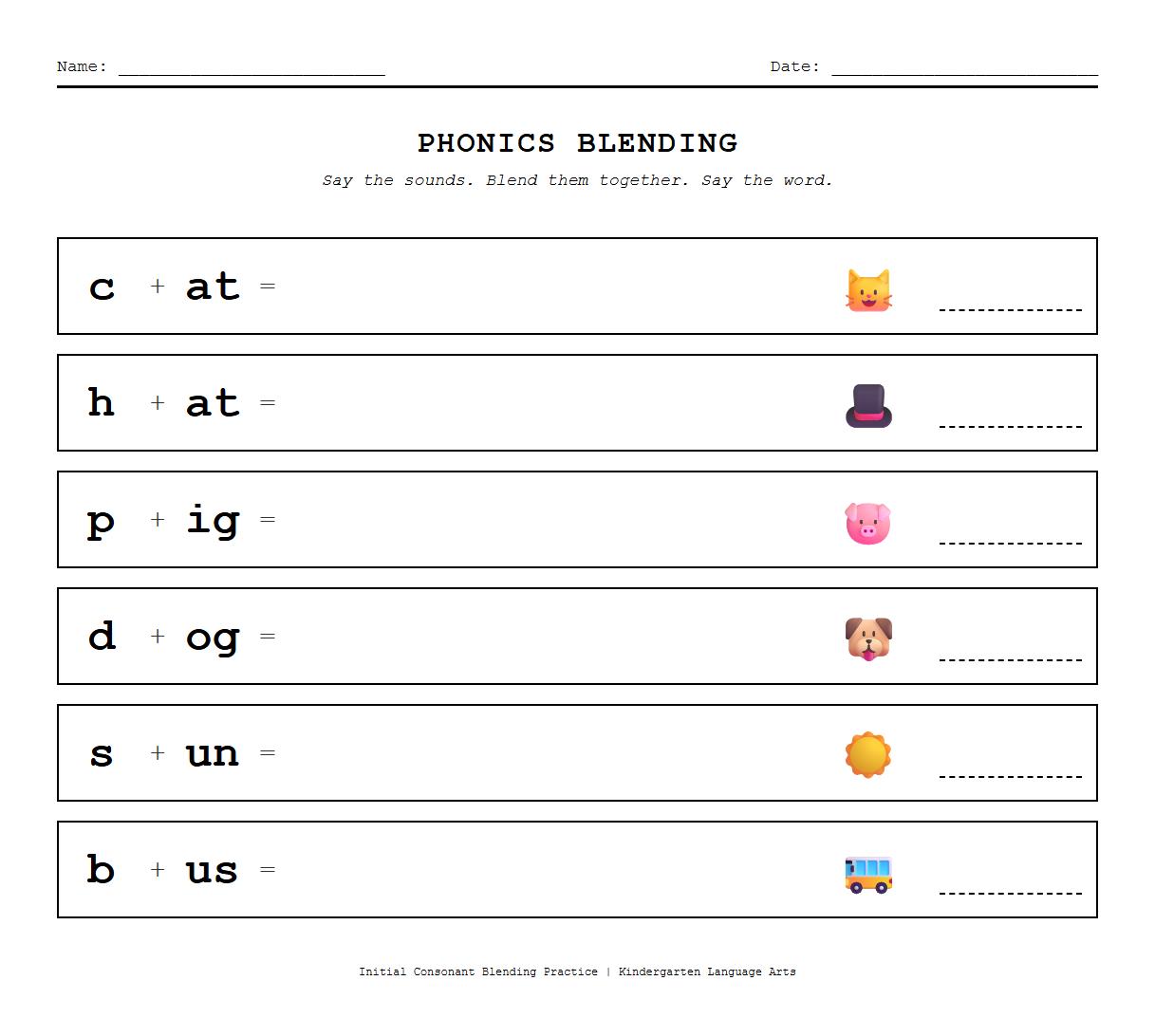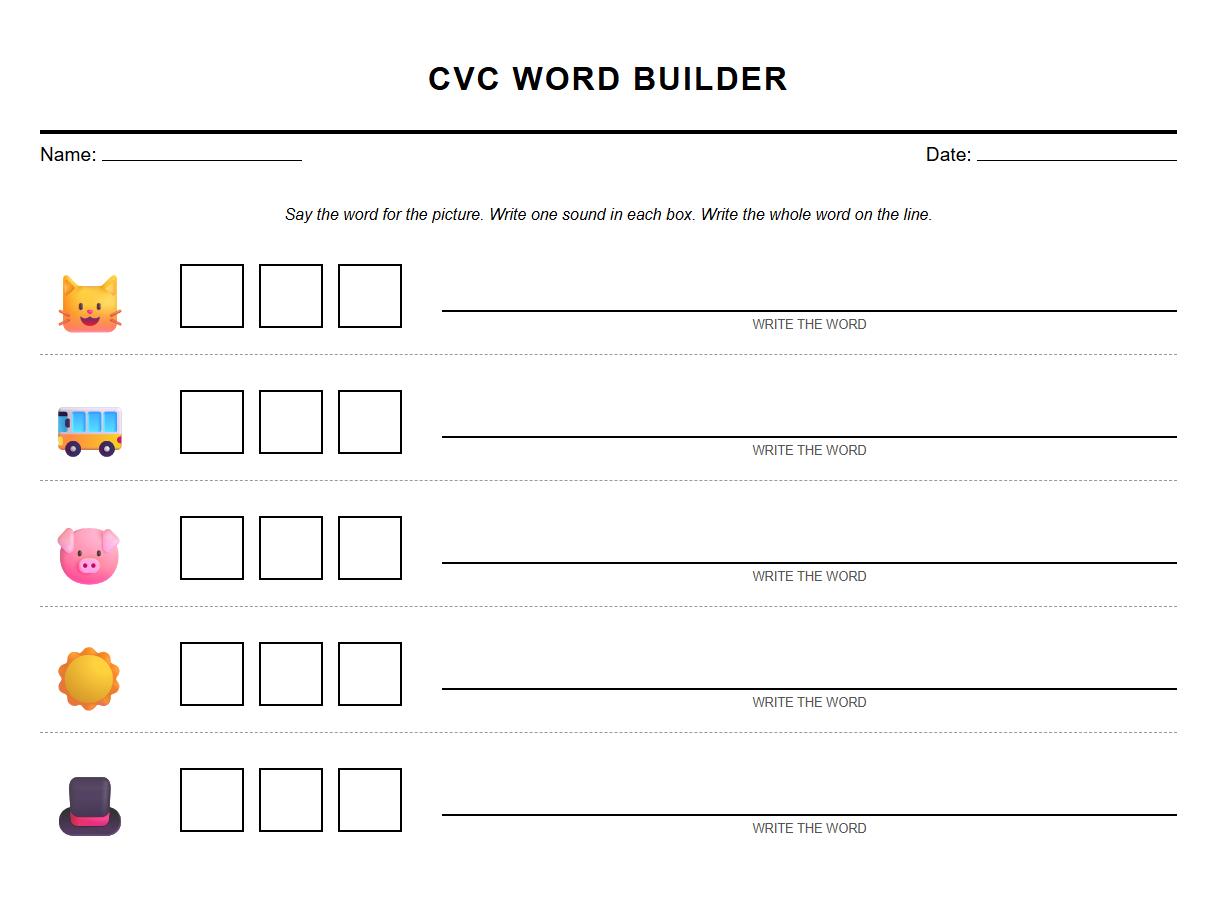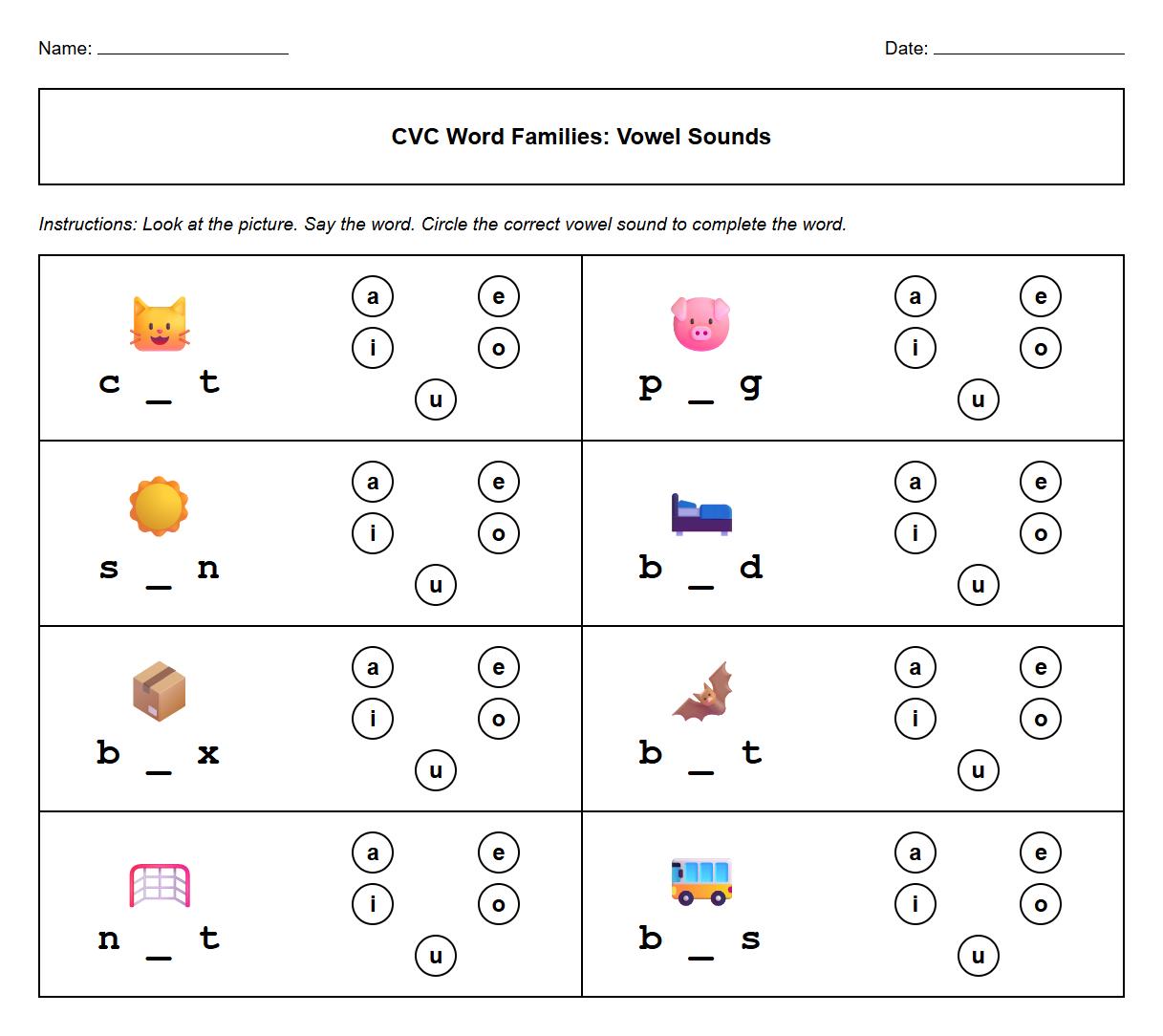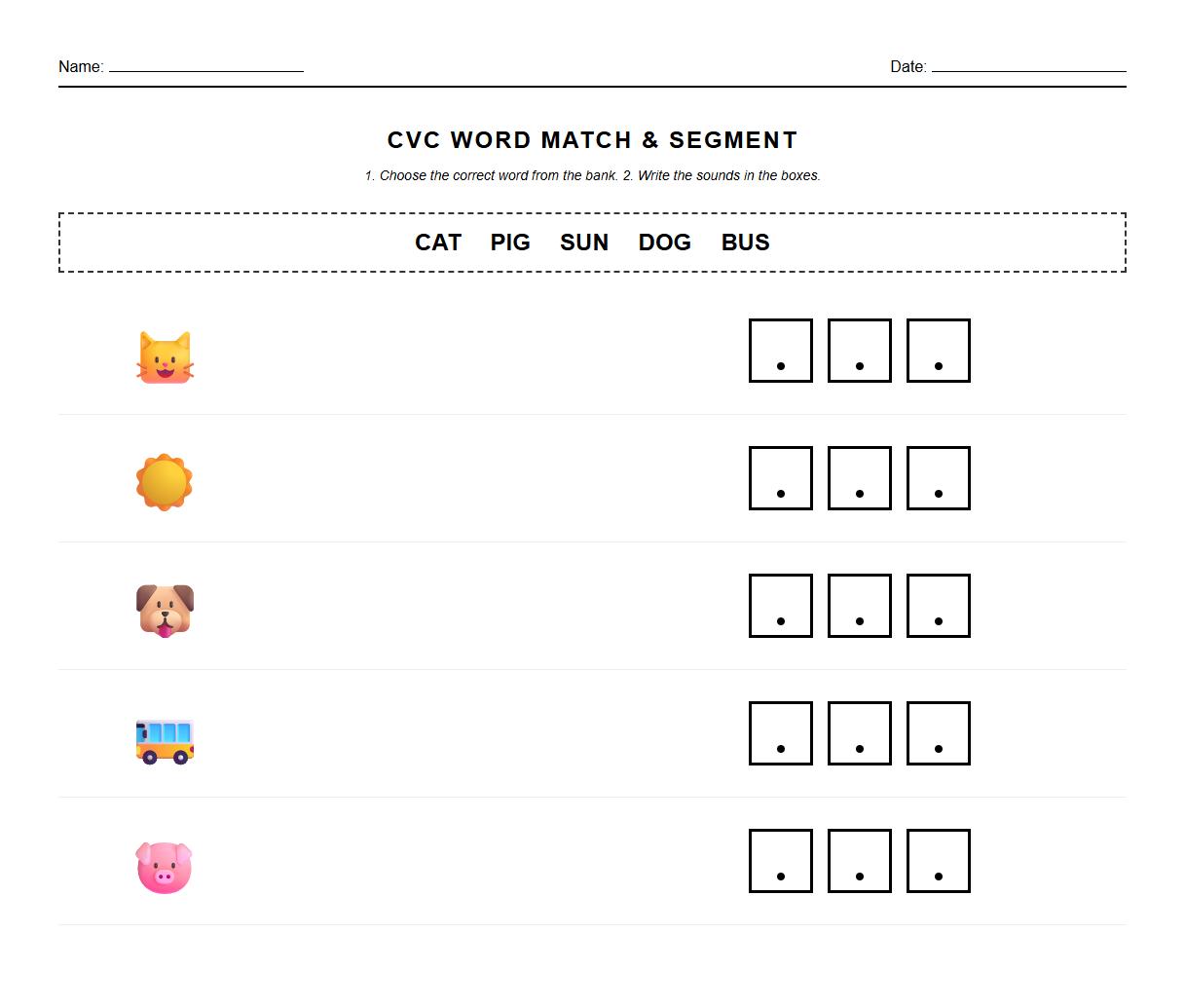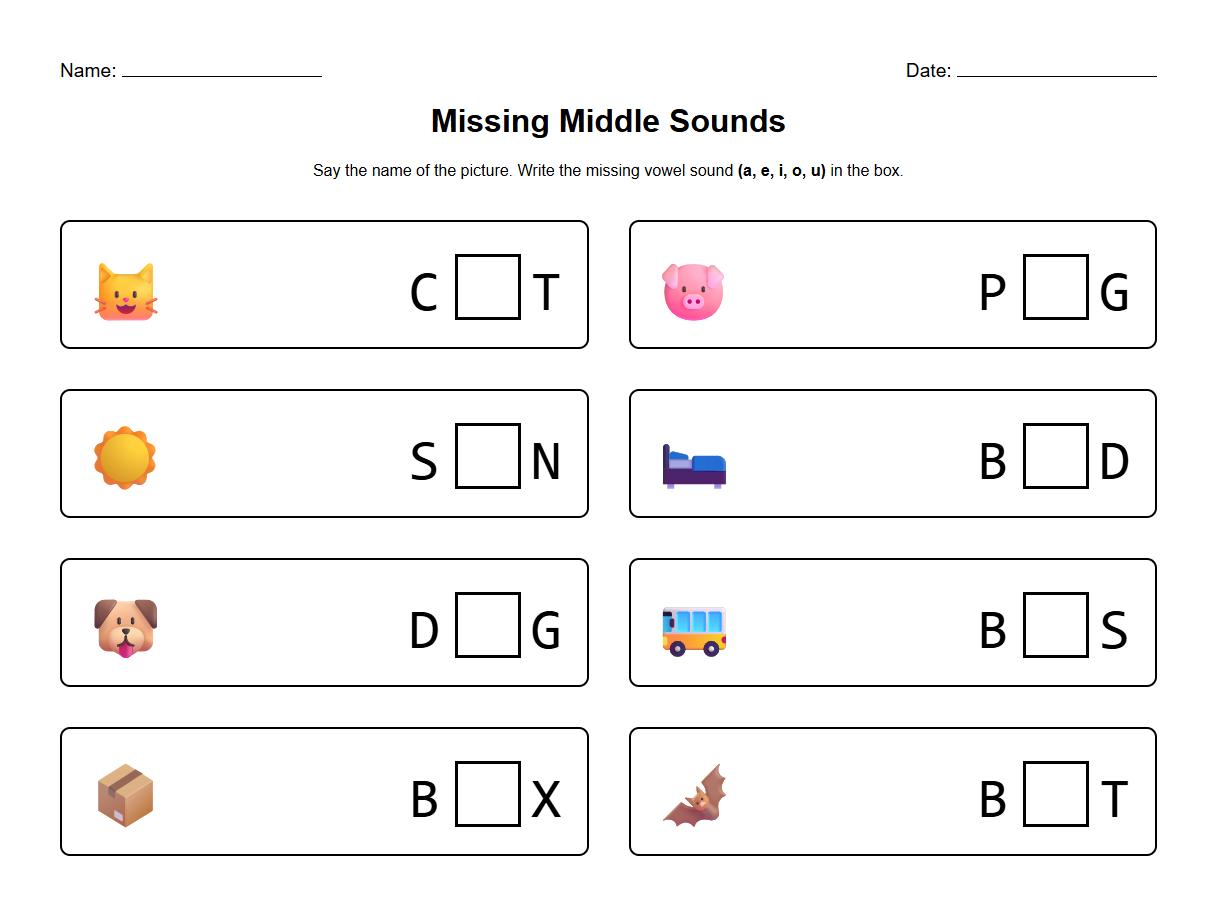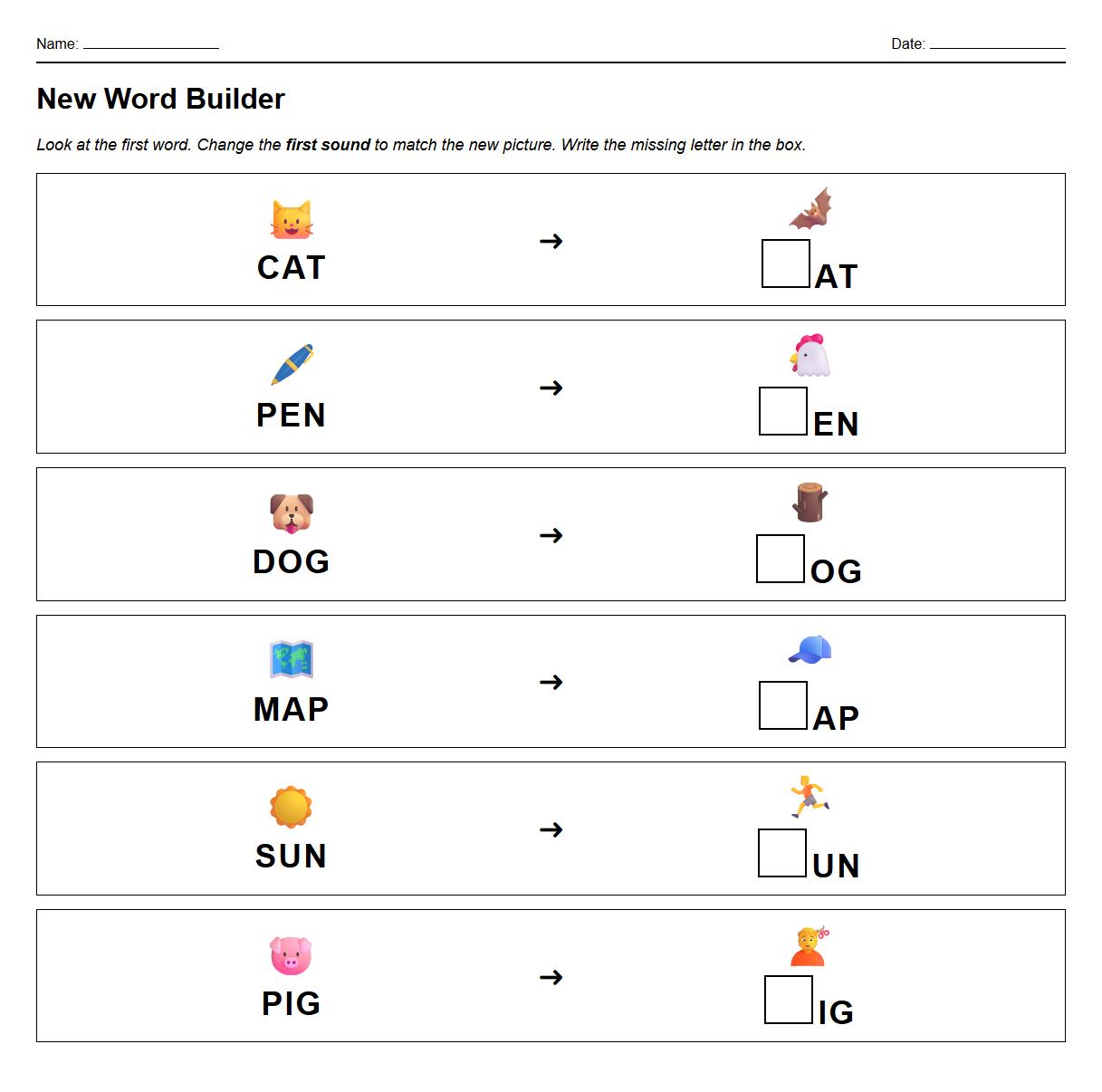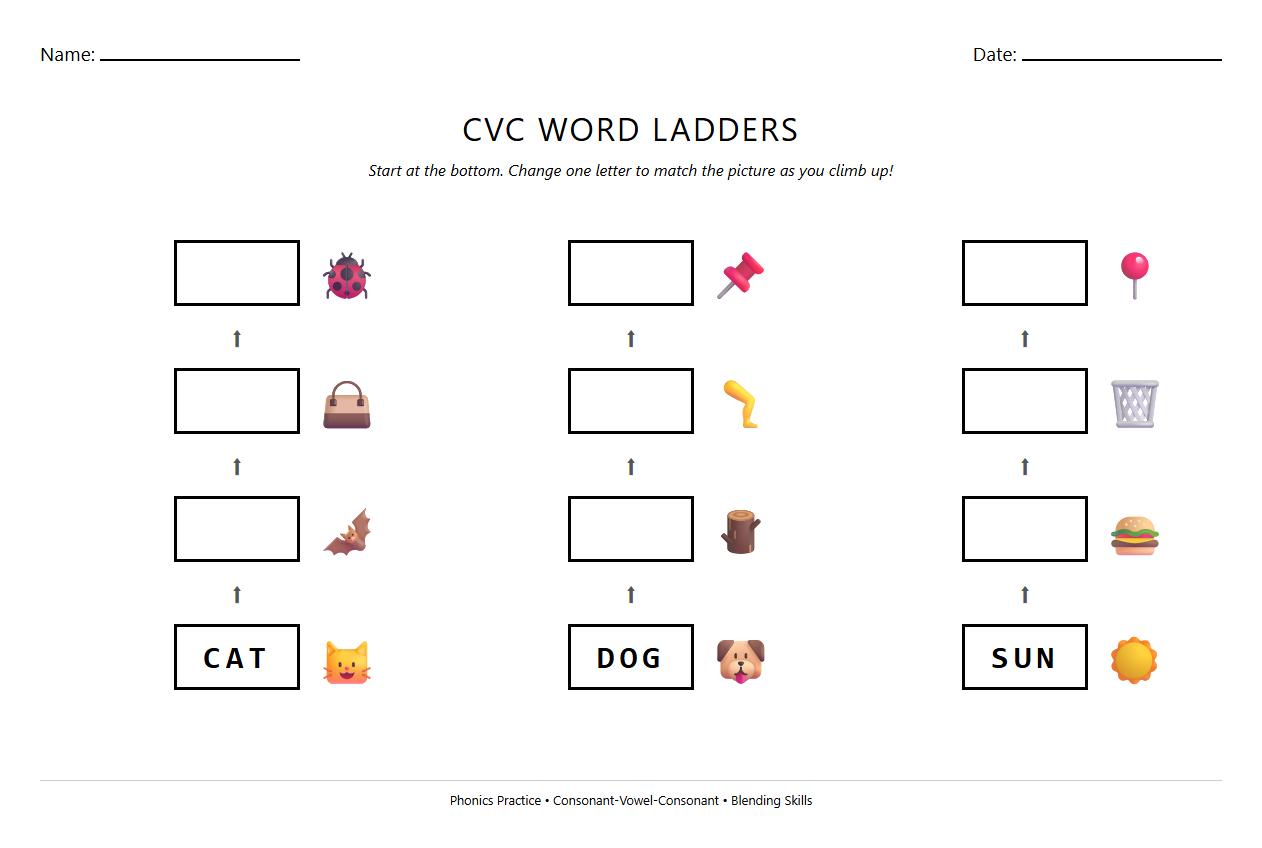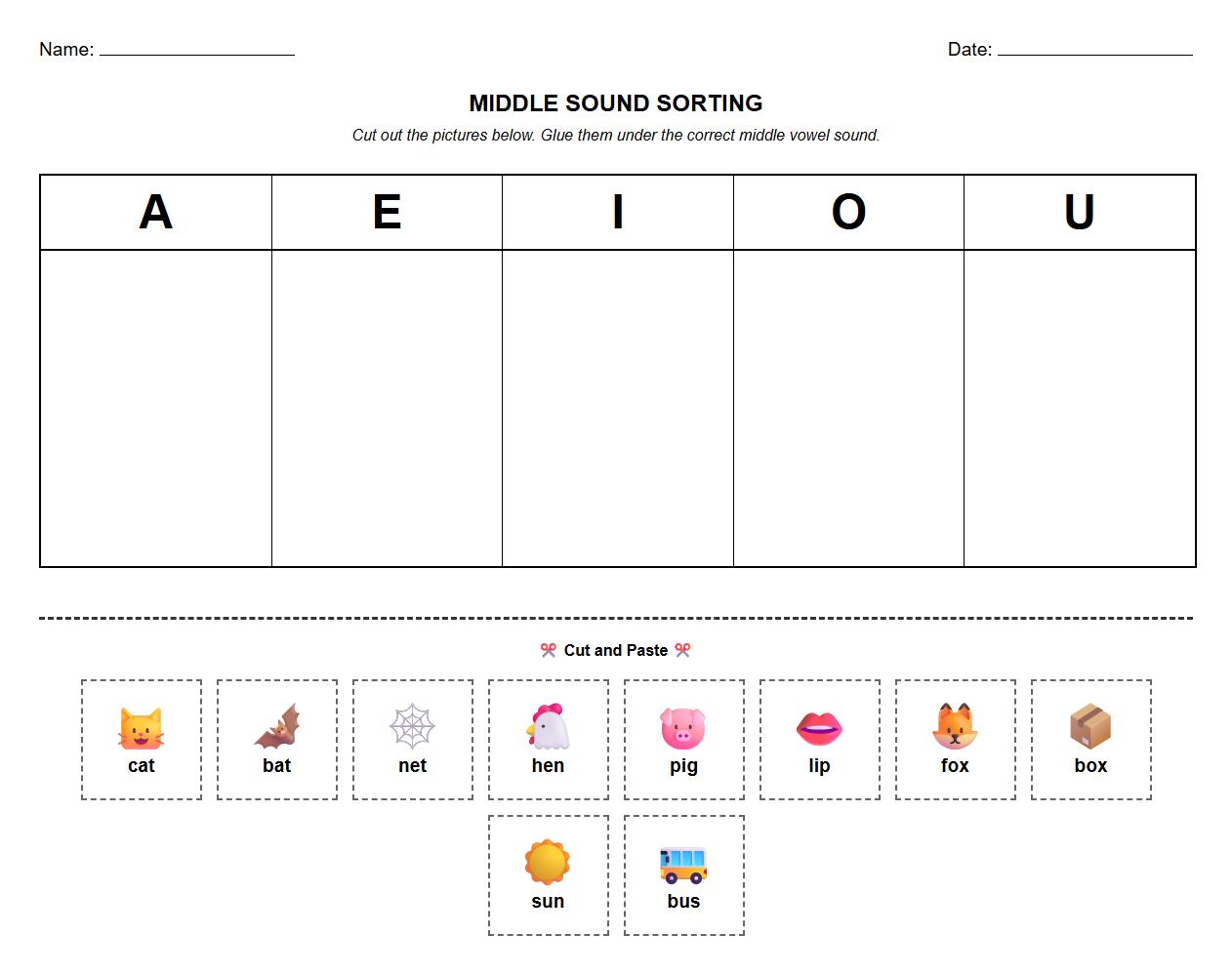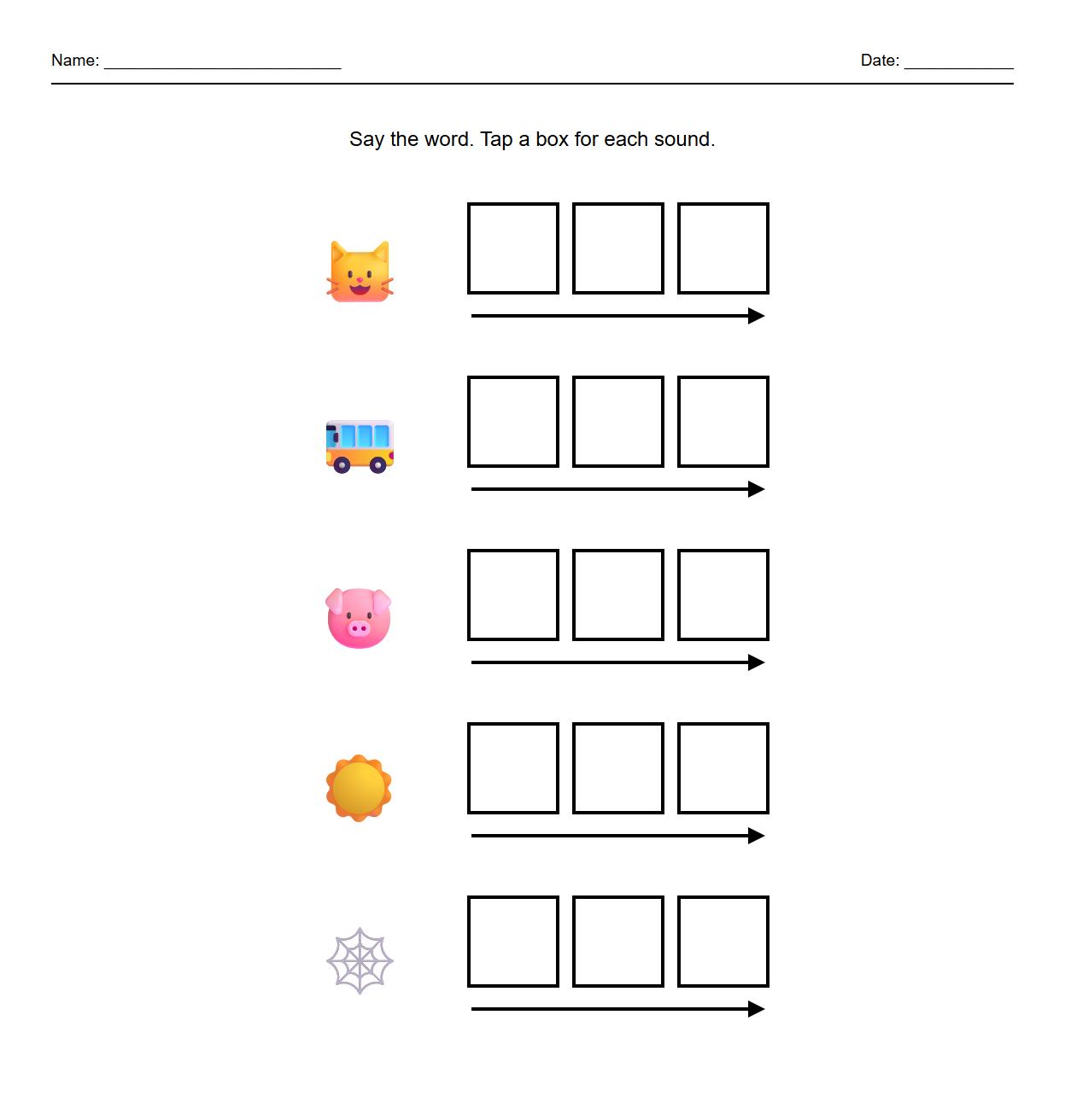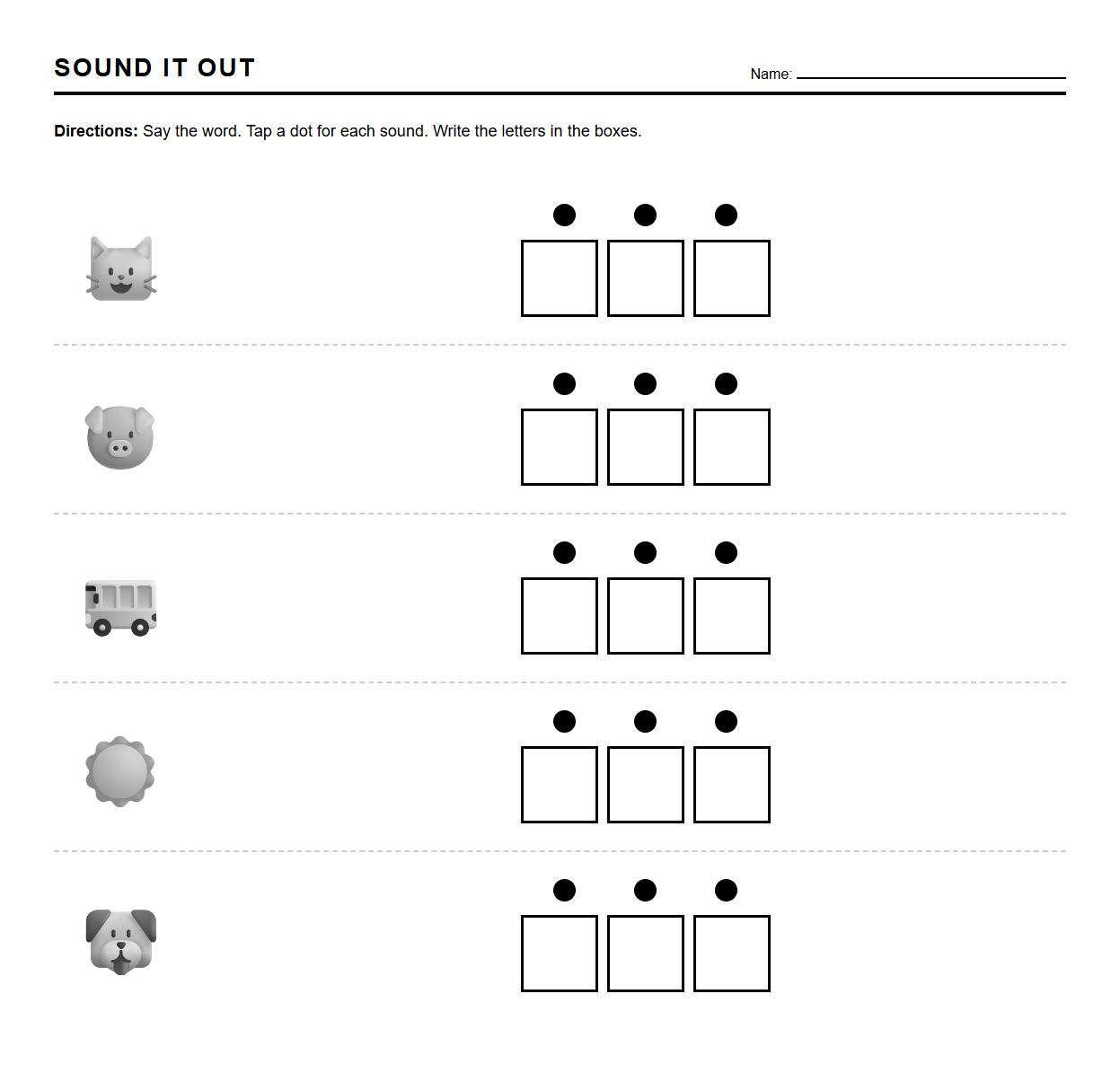
Phonics blending exercises are essential for developing early reading skills by helping children combine individual sounds to form CVC words. These worksheets focus on practicing sound segmentation and blending, reinforcing letter-sound relationships for improved word recognition. Explore the available worksheets to support your child's journey to CVC word mastery.
What is phonics blending and why is it important for early reading skills
Phonics blending is the process of combining individual sounds (phonemes) to form words. It helps young learners decode words by sounding out each part before blending them smoothly. This skill is crucial for developing fluent reading abilities and building confidence in early readers. Early mastery of blending sets the foundation for more complex reading tasks.
How do CVC words support phonics instruction in kindergarten
CVC words (consonant-vowel-consonant) are simple, phonetically regular words that are ideal for beginning readers. These words reinforce letter-sound relationships and help children practice blending sounds in a manageable way. Using CVC words supports phonics instruction by providing clear examples of decoding in action. This approach strengthens learners' ability to read and spell basic words independently.
What activities are effective for teaching CVC word blending
Effective activities include using magnetic letters, sound boxes, and blending boards to isolate and combine sounds. Interactive games where children manipulate sounds to form new CVC words enhance engagement. Pairing visual cues with oral practice boosts phonemic awareness and retention. These hands-on exercises make phonics blending both fun and educational.
How can worksheets reinforce CVC word mastery in young learners
Worksheets provide structured opportunities for repeated practice of CVC words. They can include exercises such as matching sounds to letters, word building, and fill-in-the-blank tasks. Printable worksheets encourage independent work and allow for assessment of understanding. Frequent practice through worksheets helps solidify blending skills in young learners.
Which common consonant vowel consonant word families should kindergarteners practice
Kindergarteners should practice common CVC word families such as -at, -an, -ap, -it, -in, and -ip. These word families share similar ending sounds, making it easier to predict and decode new words. Familiarity with these groups aids in rapid word recognition and confidence-building. Integrating these word families into lessons accelerates phonics development.
What visual aids can enhance phonics blending worksheets
Visual aids like pictures, color-coded letters, and phoneme segmentation charts support understanding and retention. Using images that correspond to target words helps link sounds to meaning. Color-coding vowels and consonants highlights sound patterns, promoting easier blending. These aids make worksheets more engaging and effective for phonics learning.
How often should students practice CVC word blending exercises
Students should practice CVC blending exercises daily or several times a week for consistent progress. Short, frequent sessions optimize skill retention without overwhelming young learners. Regular practice embeds phonics skills into long-term memory. Scheduling blending practice as part of a balanced literacy routine ensures steady improvement.
What assessment strategies can monitor CVC word mastery
Formative assessments like one-on-one reading checks and running records help monitor student progress in CVC mastery. Teachers can use quick oral blending drills and written word recognition tests. Tracking accuracy and fluency over time identifies strengths and areas needing reinforcement. These assessments inform tailored instruction and support student success.
How can teachers differentiate CVC blending exercises for varying skill levels
Teachers can offer simpler CVC words or provide more visual support for beginners, while challenging advanced students with CVC words in sentences. Grouping students by ability allows for targeted instruction. Using scaffolded worksheets and varying activity complexity ensures all learners receive appropriate challenges. Differentiation fosters growth at each student's unique pace.
What are effective ways to engage kindergarteners with phonics blending activities
Incorporating games, songs, and hands-on manipulatives keeps phonics blending engaging for kindergarteners. Storytelling and role-playing with CVC words make learning enjoyable and meaningful. Positive reinforcement and interactive group activities enhance motivation. Creating a playful learning environment supports active participation and phonics mastery.


CVC Word Families Sorting Activity Worksheet Bundle