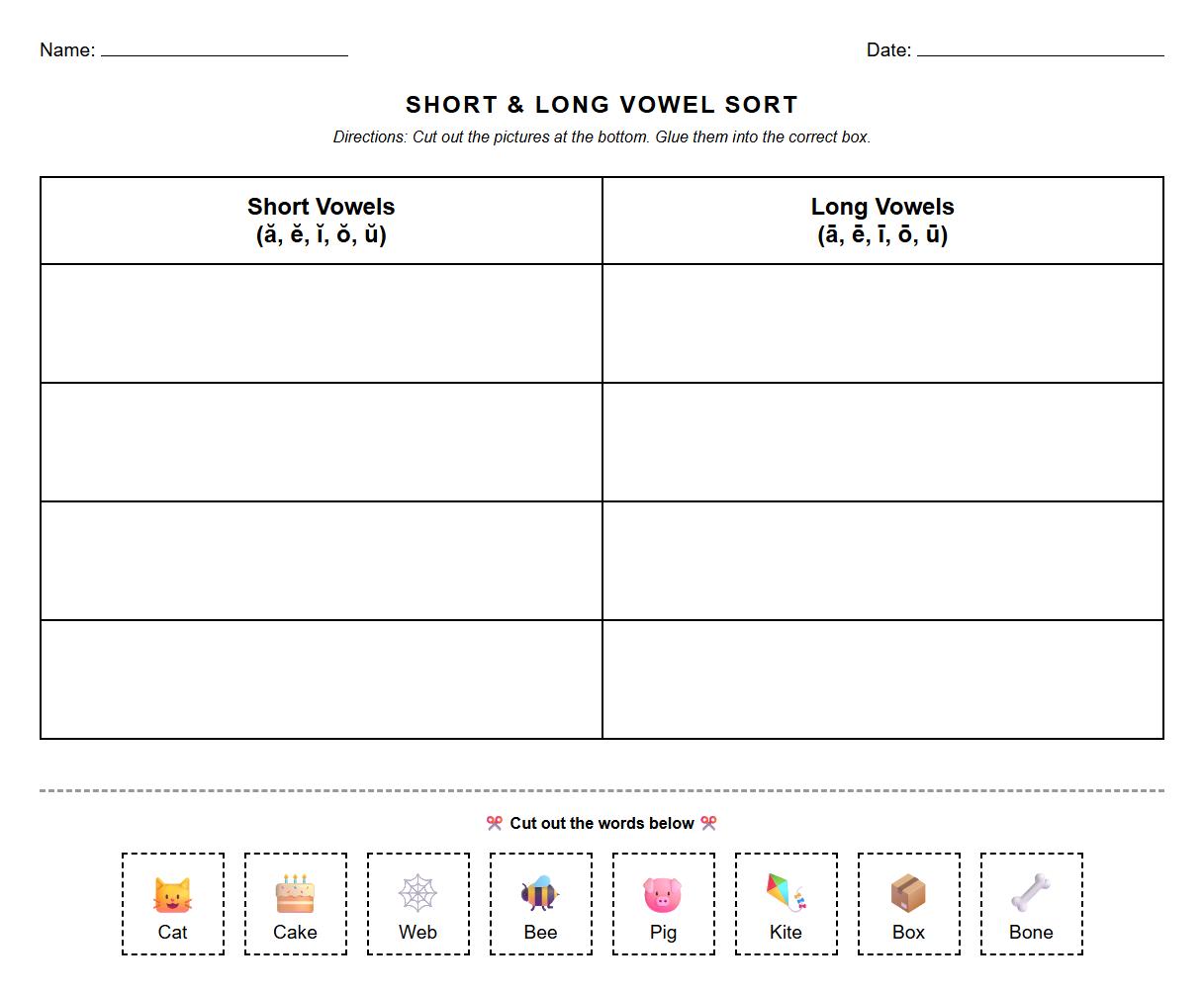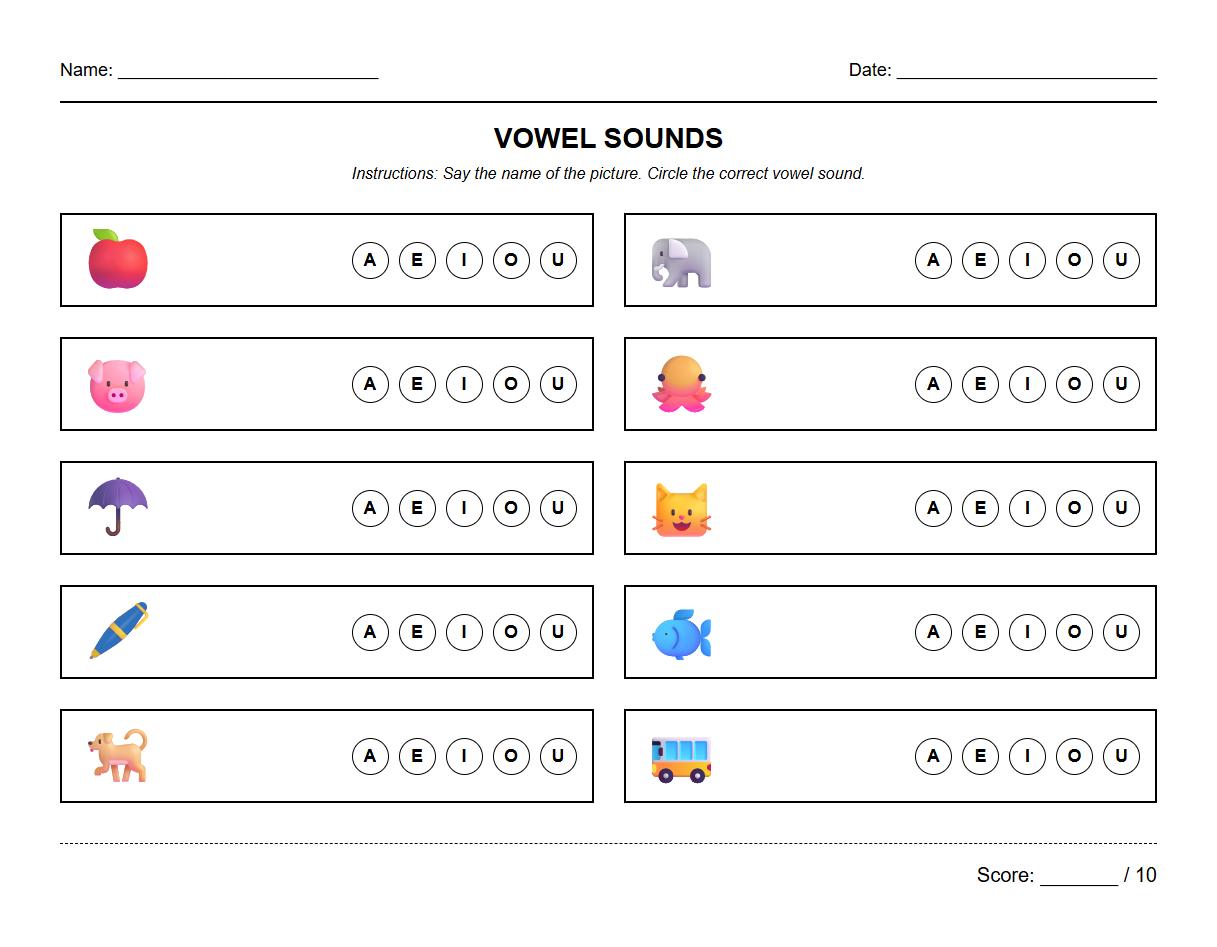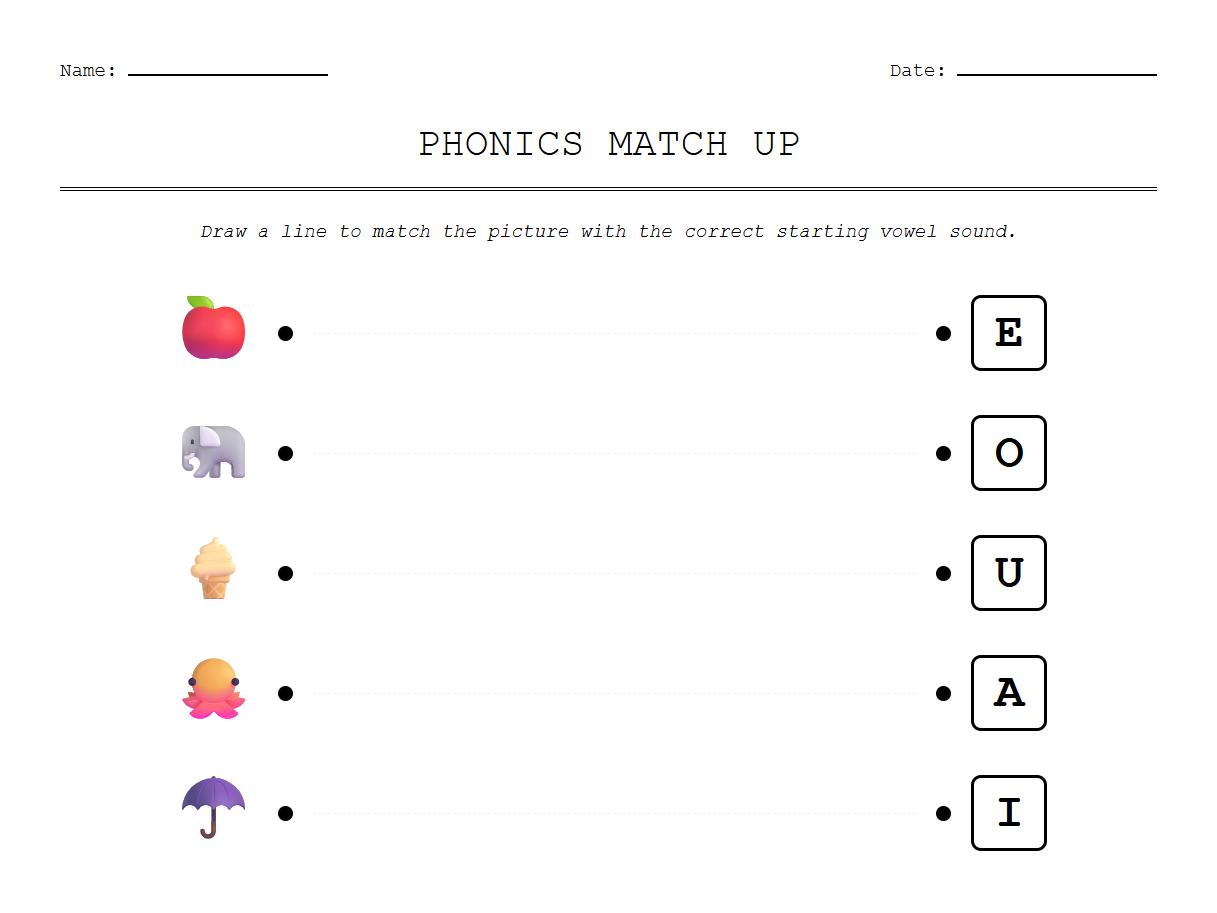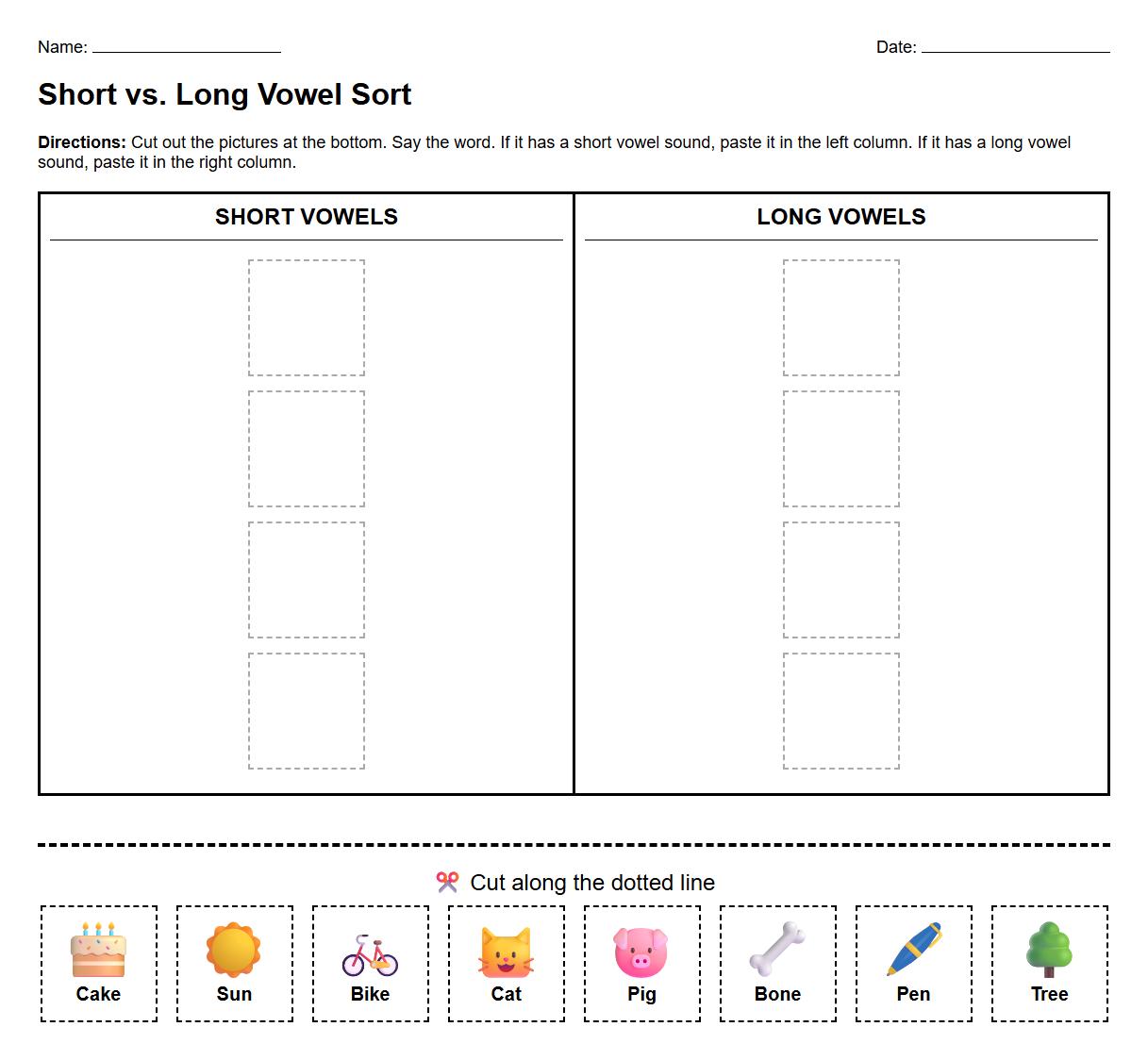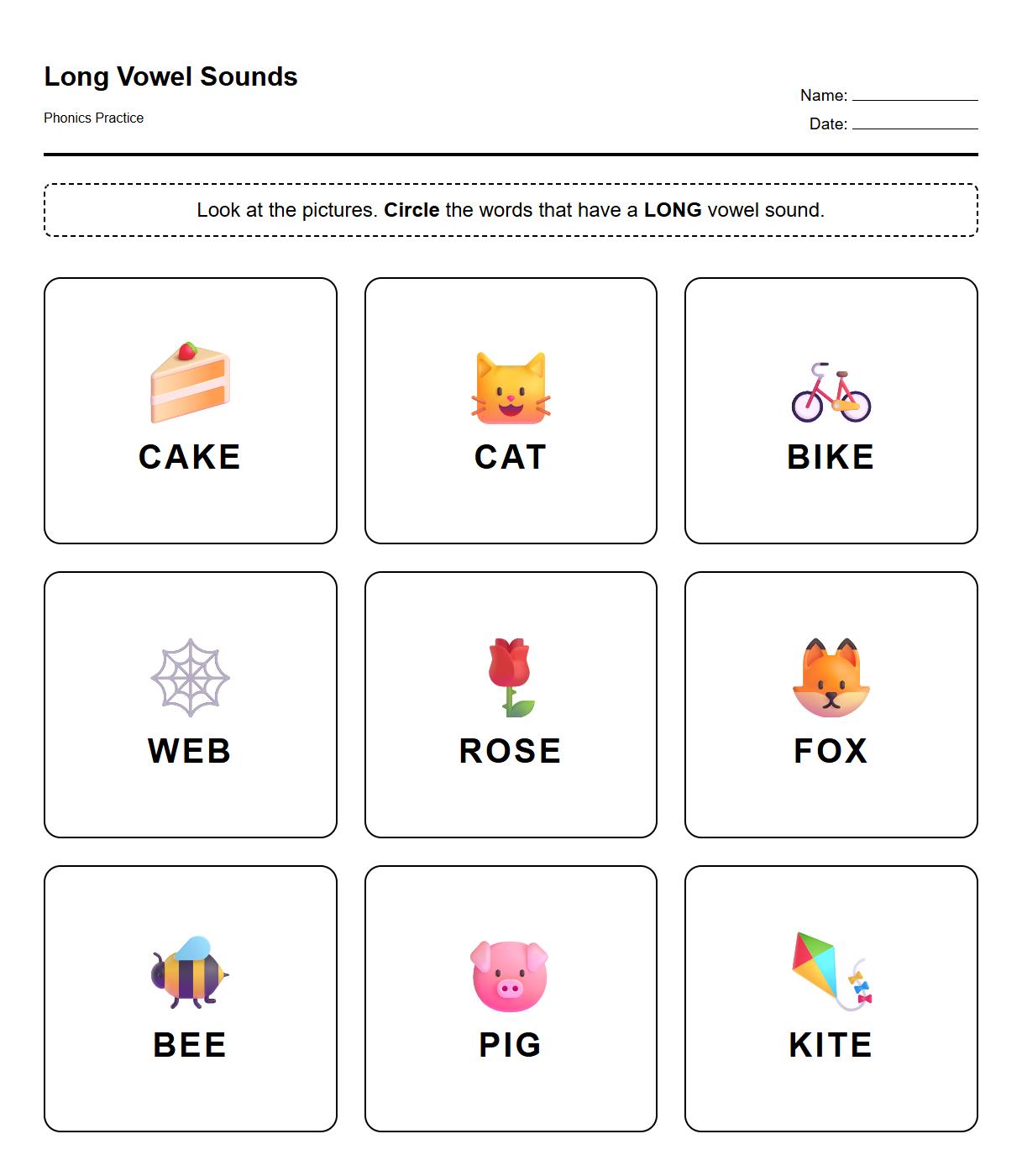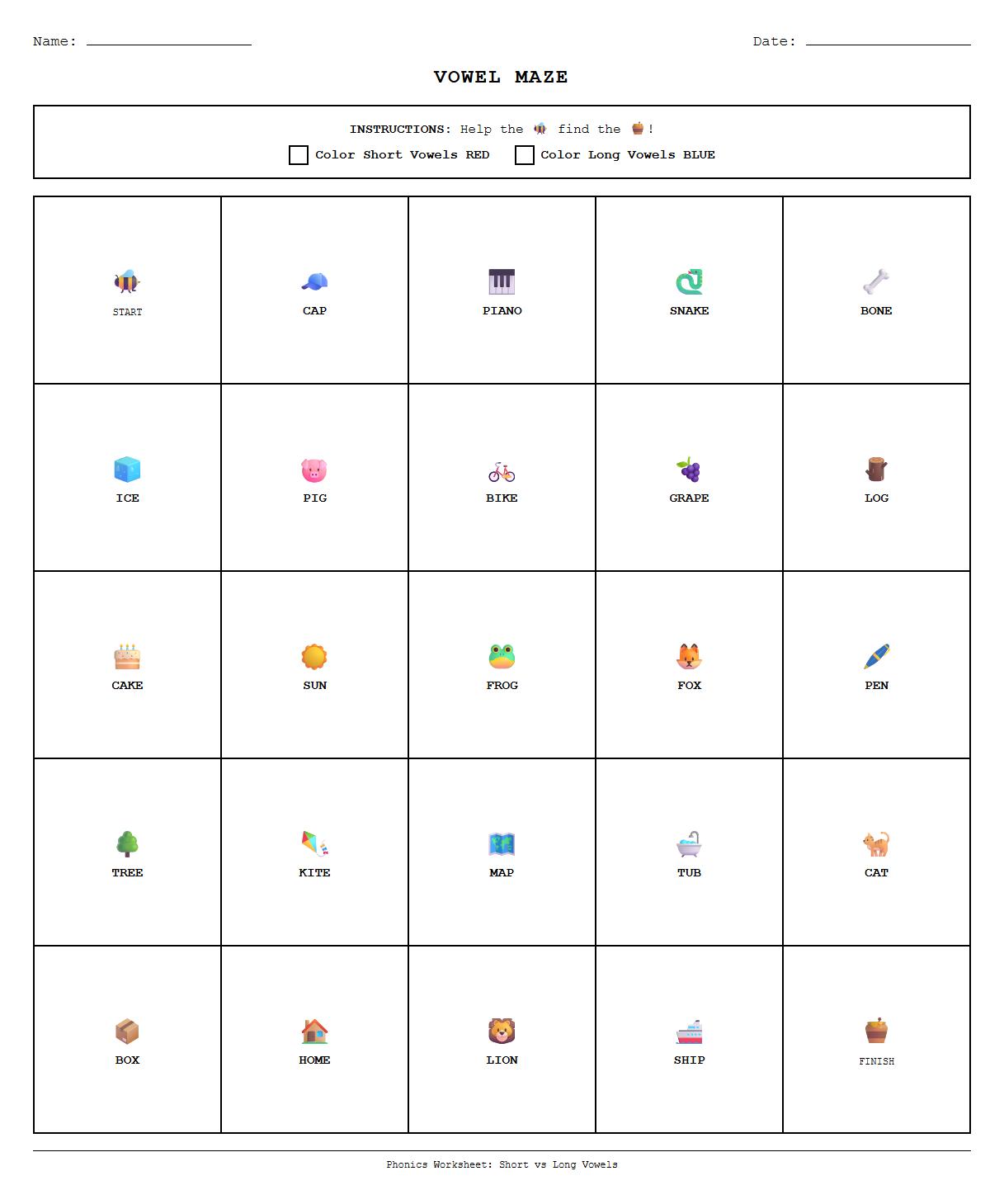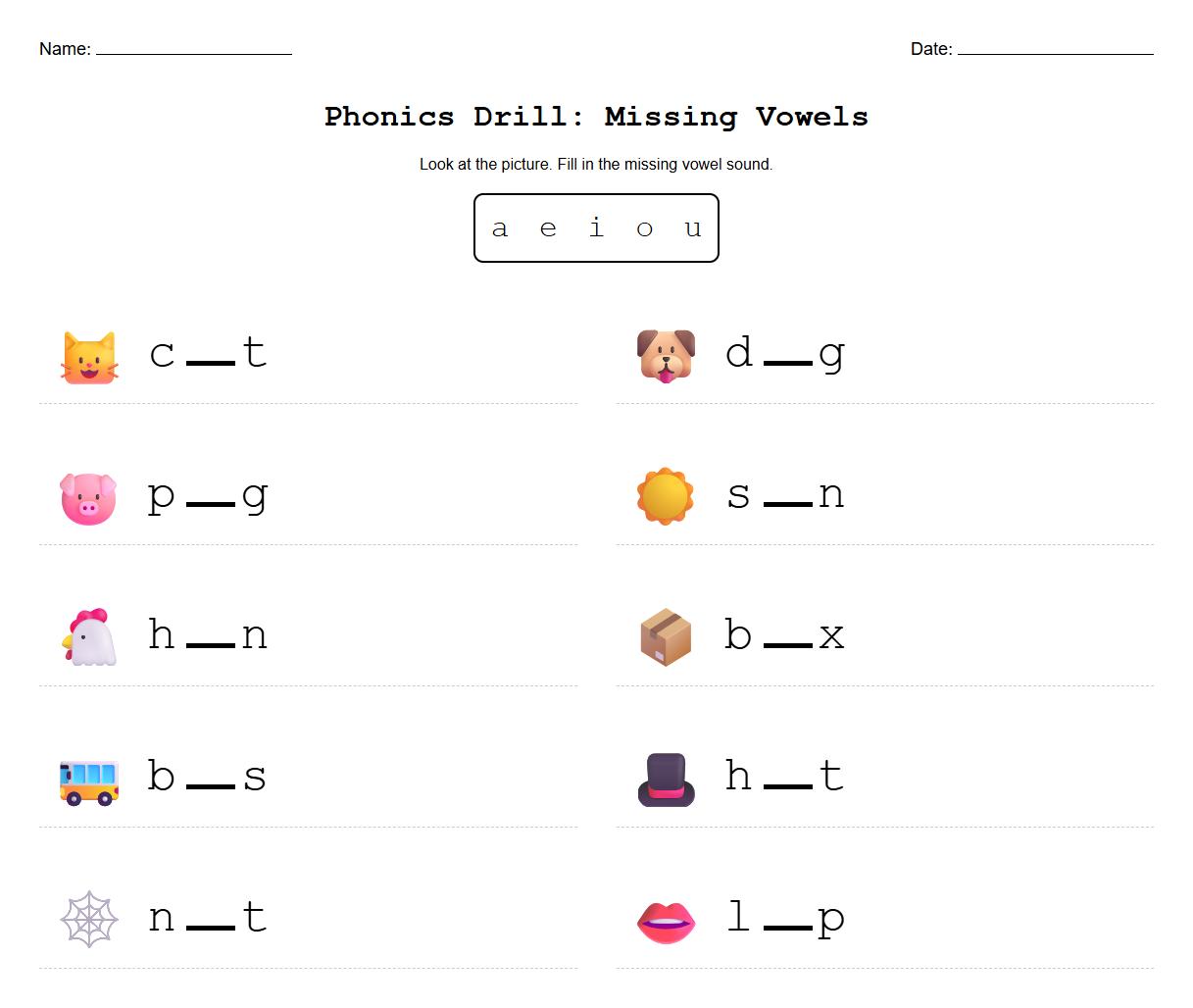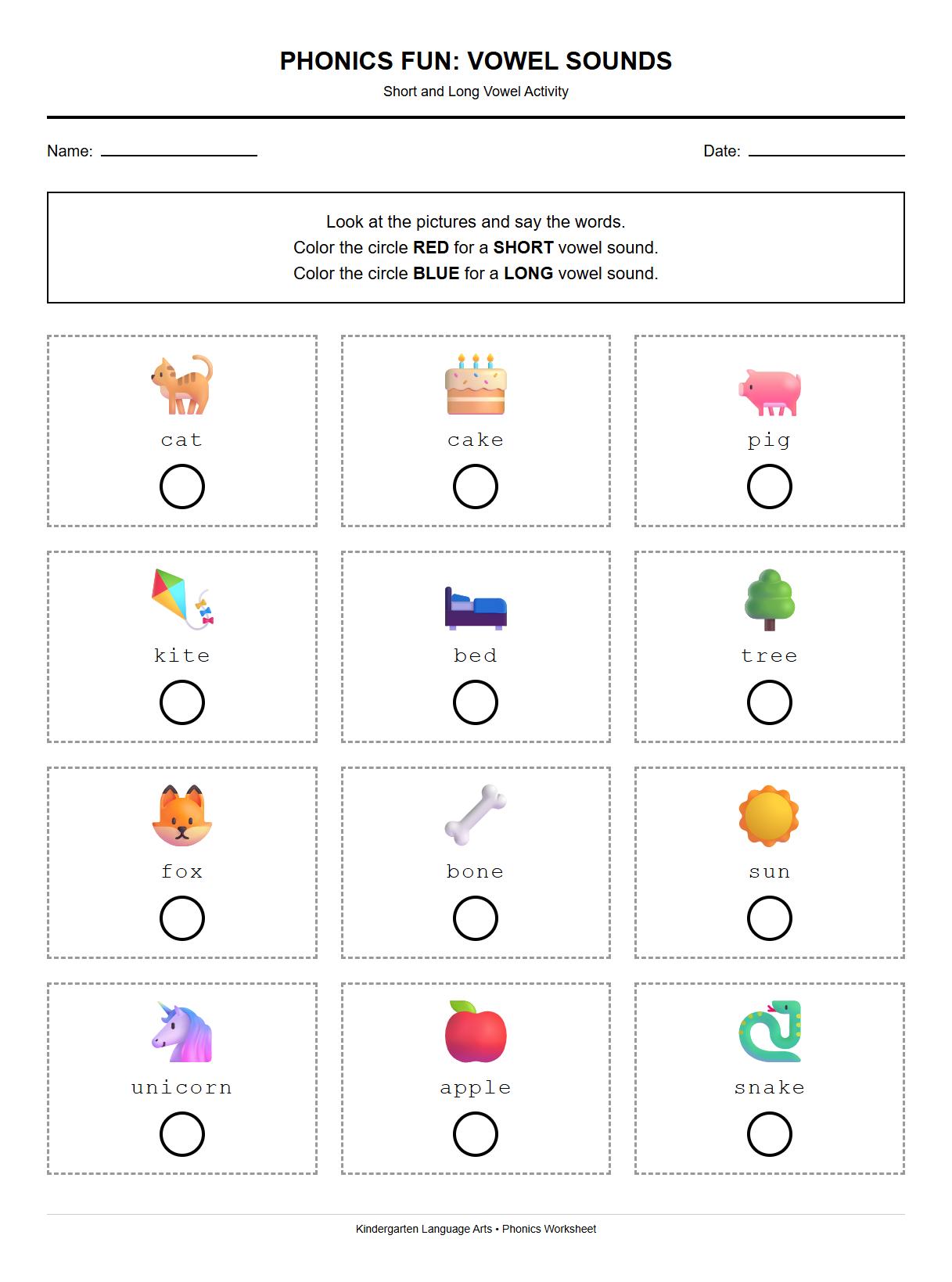
Mastering the difference between short and long vowel sounds is essential for early reading success in kindergarten. Engaging and repetitive phonics practice helps young learners recognize and pronounce vowels accurately, building a strong foundation for literacy. Explore our variety of worksheets designed to make distinguishing between short and long vowels fun and effective.
Identifying Short and Long Vowel Sounds
In the pair "cat" and "cake," the word cat contains a short vowel sound, while "cake" has a long vowel sound. This distinction helps young learners recognize vowel sound patterns in words.
The word sit features a short vowel sound. Teaching this can assist children in differentiating between short and long vowel pronunciations in simple words.
Understanding Vowel Sounds in Common Words
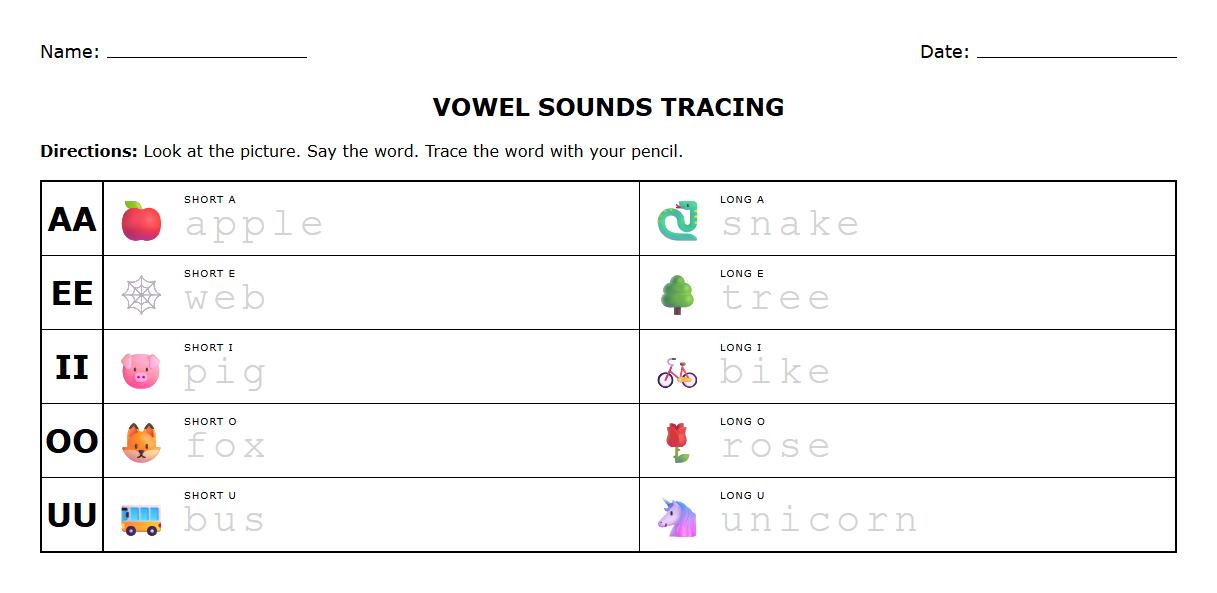
In the word "bike," the letter i represents a long vowel sound, pronounced as its name. This example demonstrates how vowel sounds change with word context and spelling.
Between "home" and "hop," the word home contains the long vowel sound, making it a key example for recognizing long vowels in single-syllable words.
Practicing Short Vowel Recognition
The vowel sound in "dog" is short, which is typical for many CVC (consonant-vowel-consonant) words. Highlighting words like "dog" can improve phonemic awareness.
Choosing between "pan" and "pane," the word pan has the short vowel sound. This contrast supports teaching the effect of silent 'e' on vowel sounds.
Long and Short Vowels in Everyday Words
The vowel "a" in "made" is pronounced with a long vowel sound, influenced by the silent 'e' at the end. This pattern encourages kids to recognize spelling rules linked to vowel sounds.
In the word "cup," the vowel has a short vowel sound, important for understanding basic vowel pronunciations in kindergarten phonics.
Choosing Long Vowel Sounds
Between "nose" and "not," the word nose contains the long vowel sound. This helps kids identify how vowels can change with spelling variations.
The vowel 'e' in "bed" is a short vowel sound. Teaching this word assists children in recognizing common short vowel patterns in everyday vocabulary.


Short Vowel Identification Worksheet for Beginning Readers