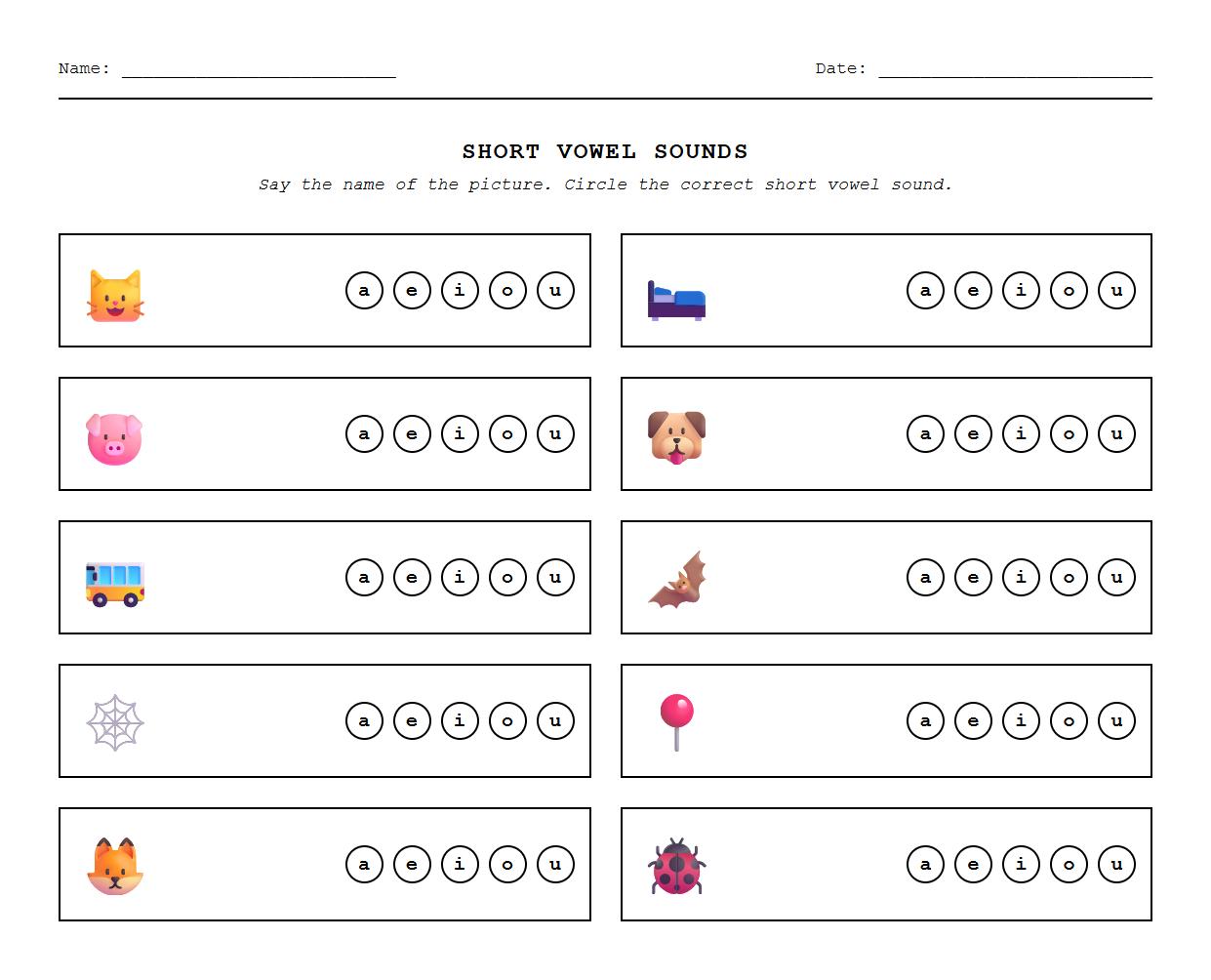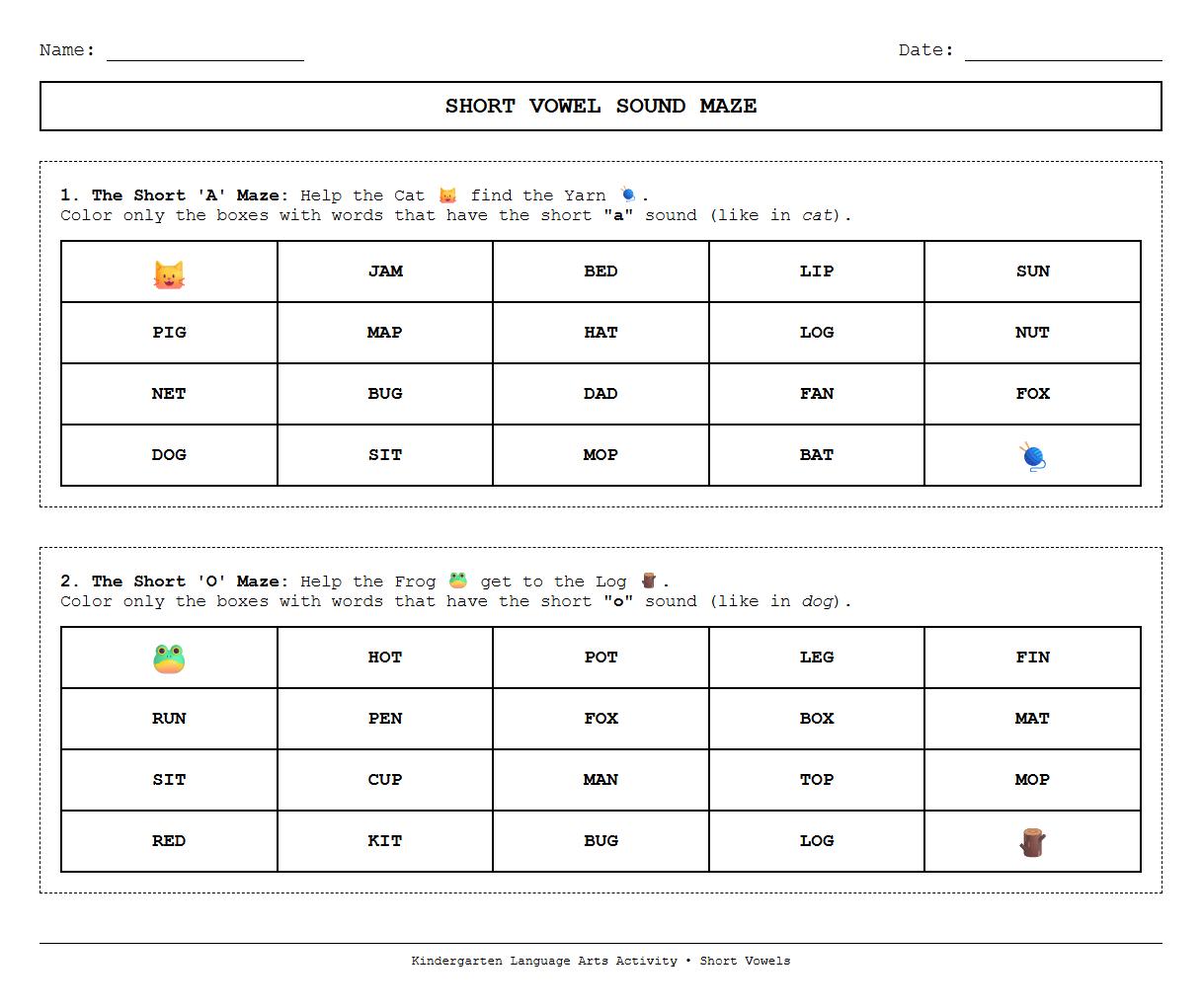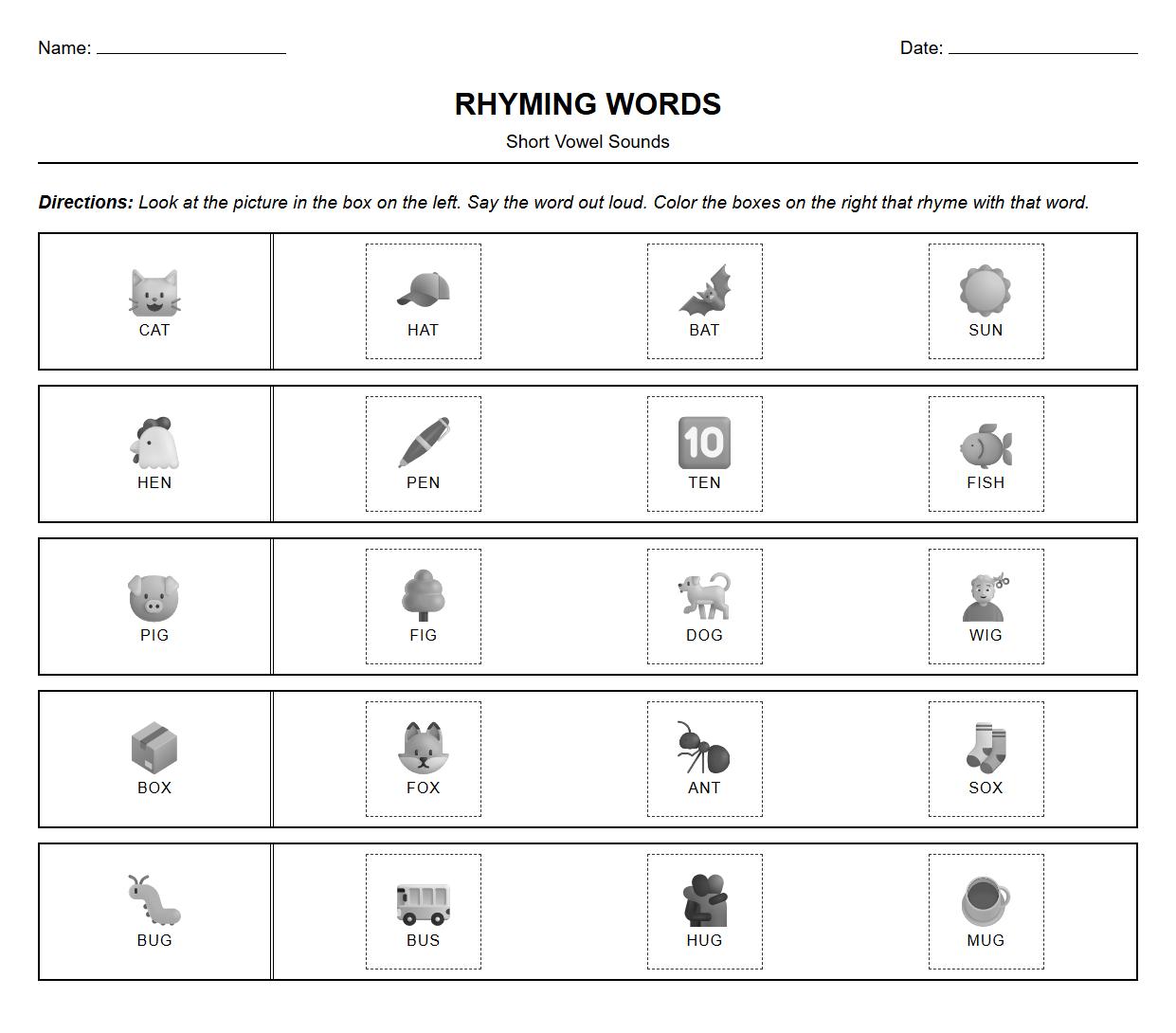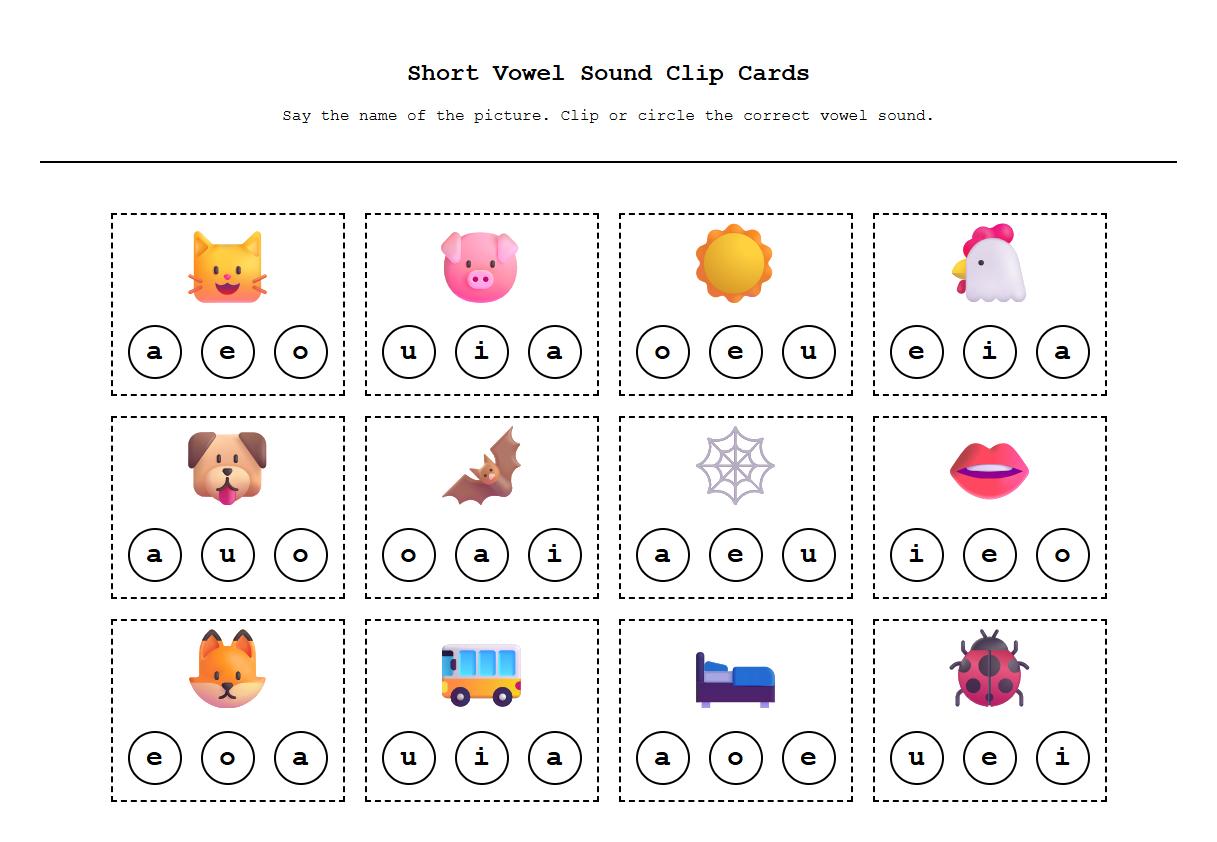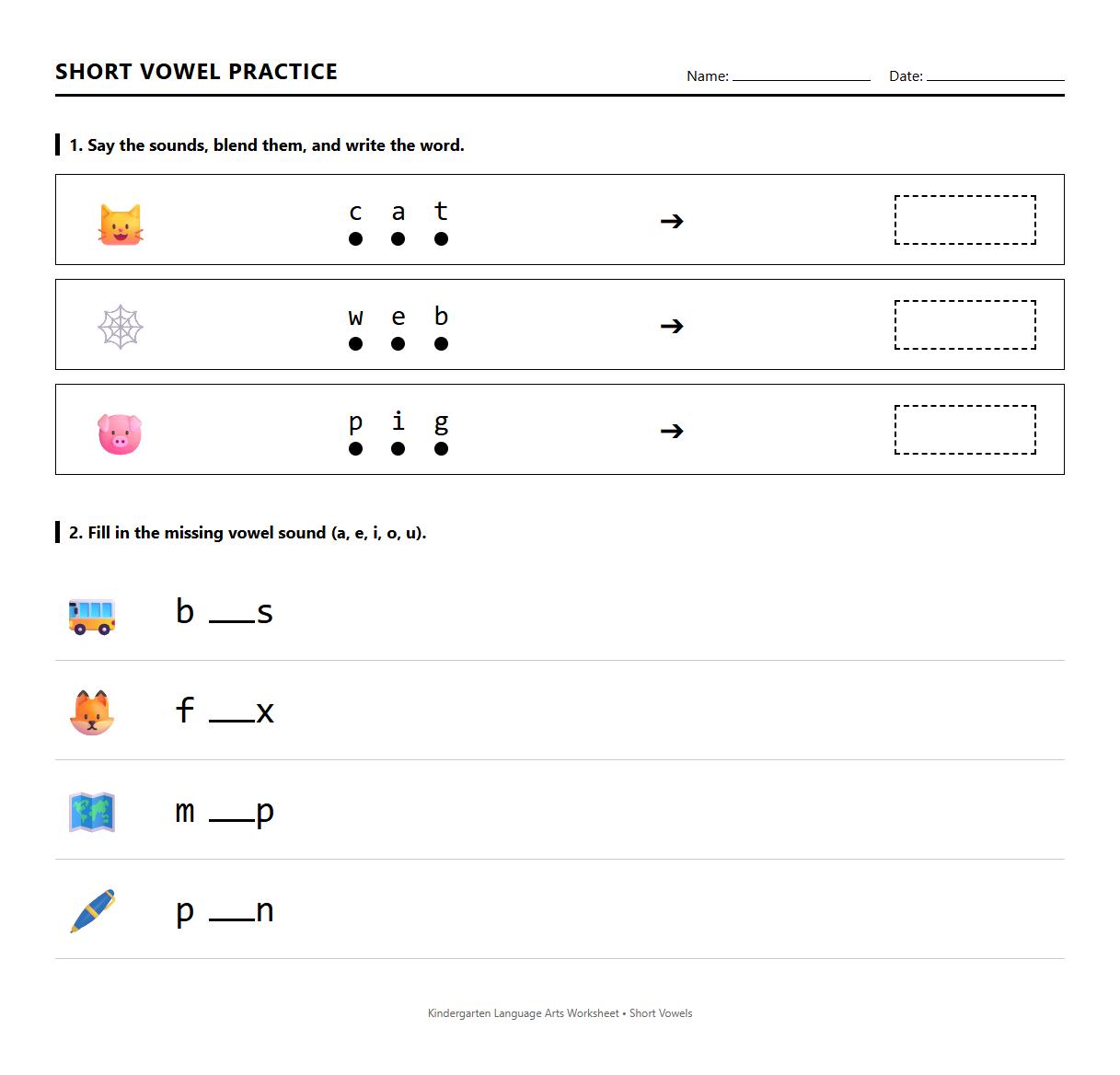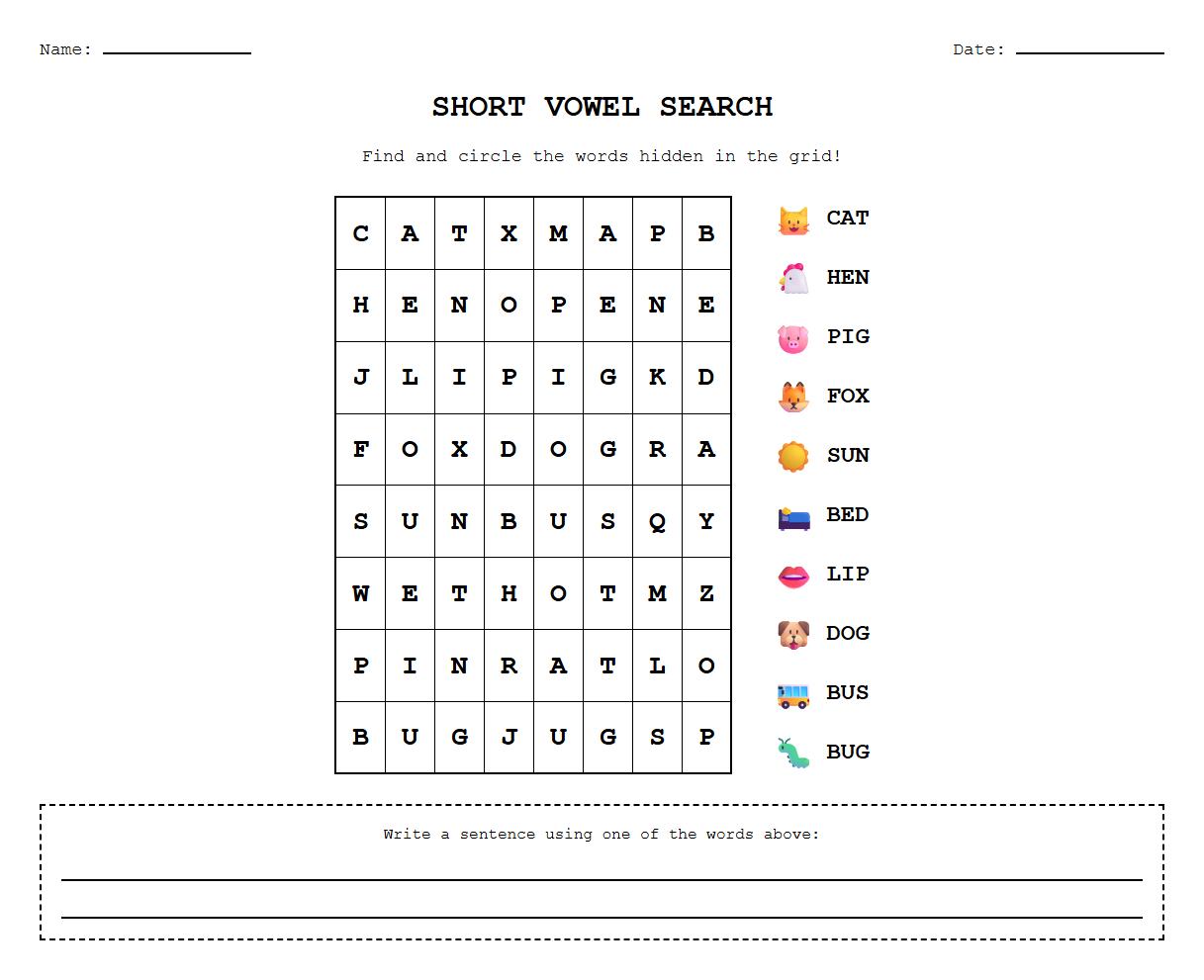
Kindergarten students develop essential reading skills through hands-on phonics worksheet activities focused on short vowels. These worksheets emphasize letter recognition, sound identification, and simple word formation to build strong foundational literacy. Explore our collection of engaging worksheets designed to make learning short vowels fun and effective.
Fun Short Vowel Games for Kindergarten Phonics Worksheets
Incorporate short vowel bingo or memory card games where children match words with the same short vowel sounds. Another engaging activity is the vowel hopscotch game, where kids jump to spaces marked with vowel letters as they say words aloud. These games make phonics practice interactive and enjoyable for young learners.
Using Coloring Activities to Reinforce Short Vowel Sounds
Coloring pictures that represent short vowel words helps children associate sounds with visual imagery. For example, coloring a cat for the short "a" sound embeds the vowel learning in a creative task. This multisensory approach strengthens memory and makes sound recognition more concrete.
Matching Exercises for Recognizing Short Vowel Words
Worksheets with word-to-picture matching tasks support visual recognition of short vowel words. Matching pairs like "bat" and an image of a bat reinforce correct vowel sounds. These exercises build auditory and visual connections crucial for early reading skills.
Tracing Activities to Assist with Short Vowel Word Learning
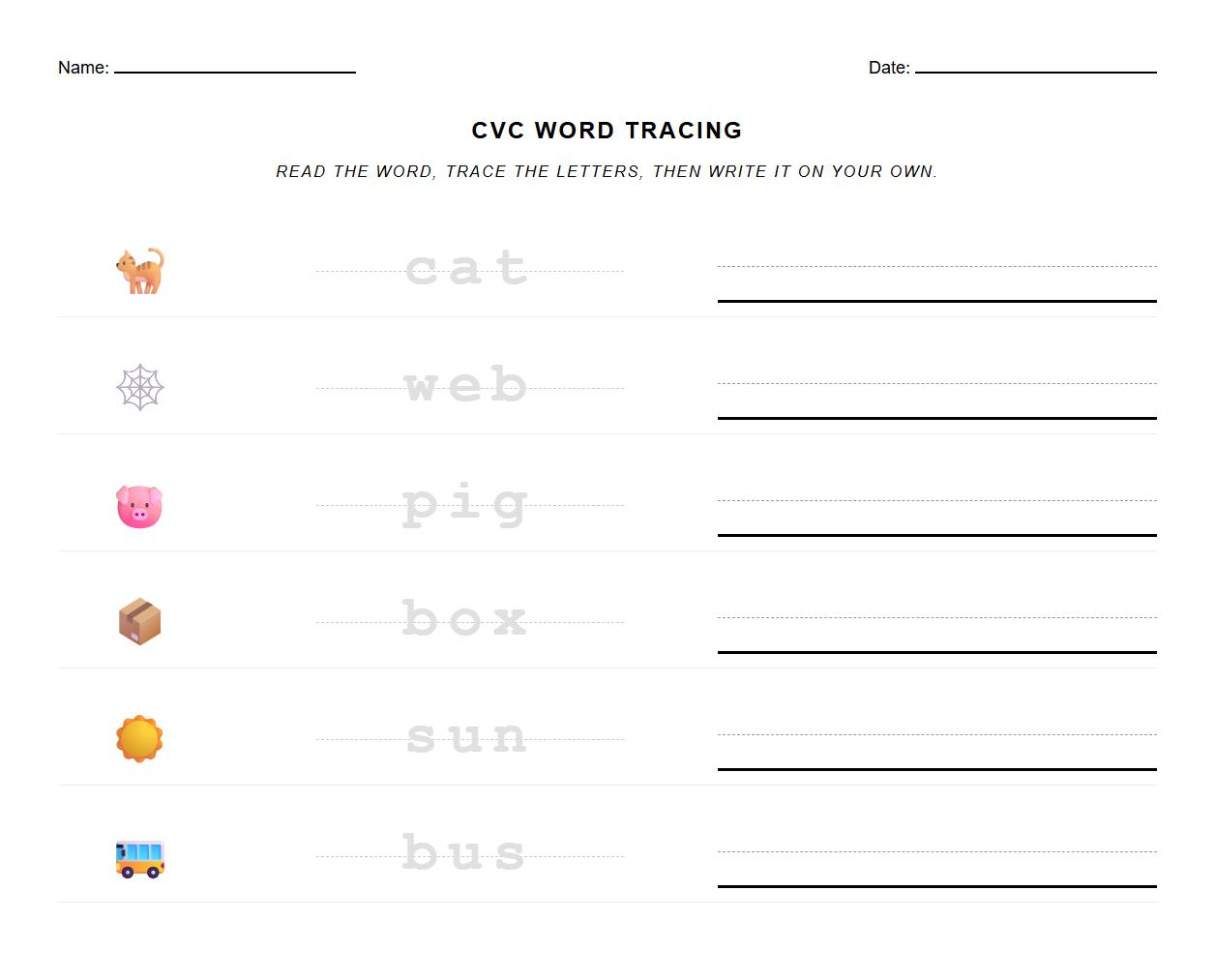
Tracing words containing short vowels allows children to practice letter formation and sound awareness simultaneously. Tracing examples like "hat," "pig," or "sun" helps develop fine motor skills while reinforcing phoneme-grapheme correspondence. This dual focus improves both writing and decoding ability with alphabet mastery.
Picture Sorting Tasks for Short Vowel Teaching
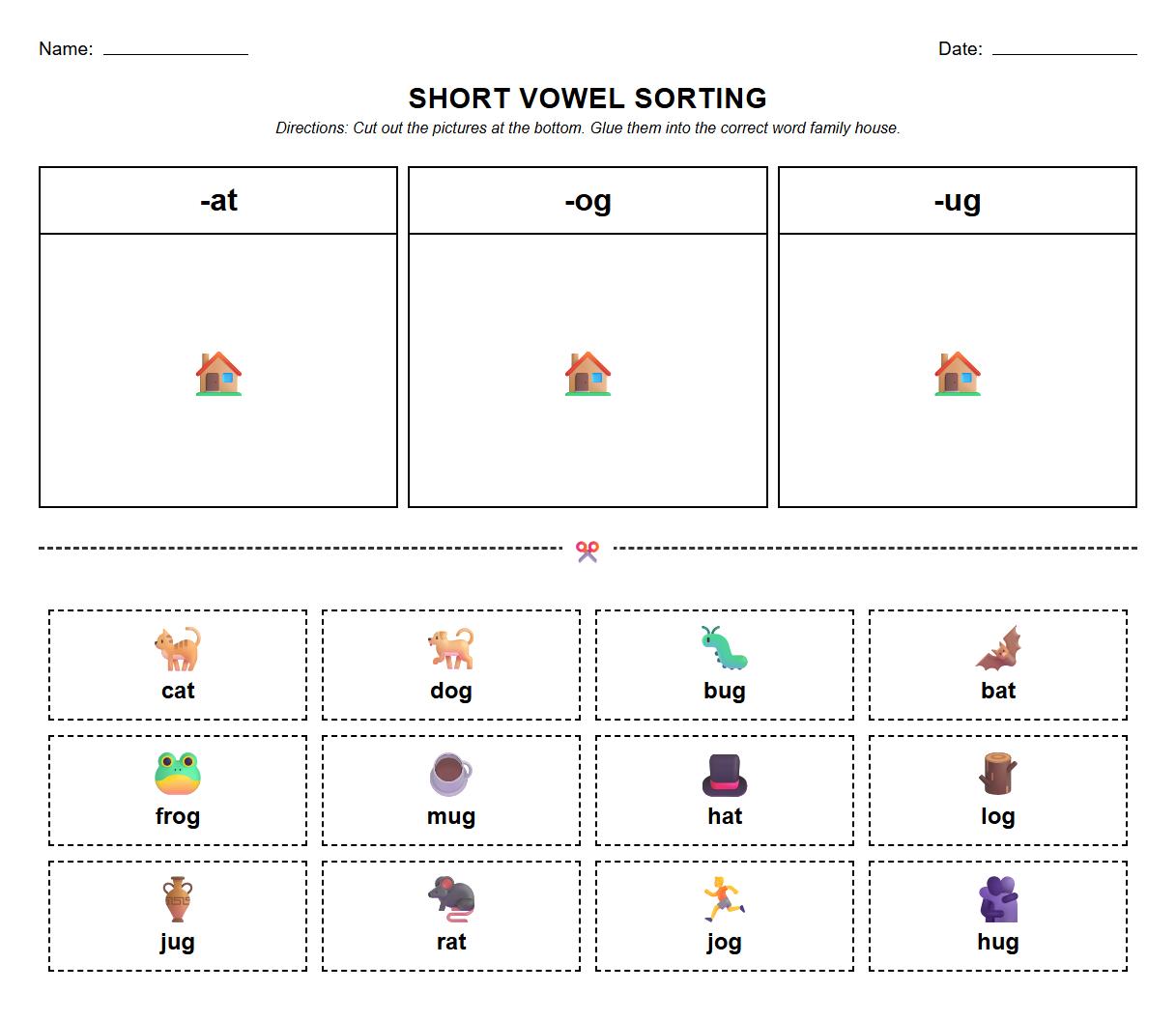
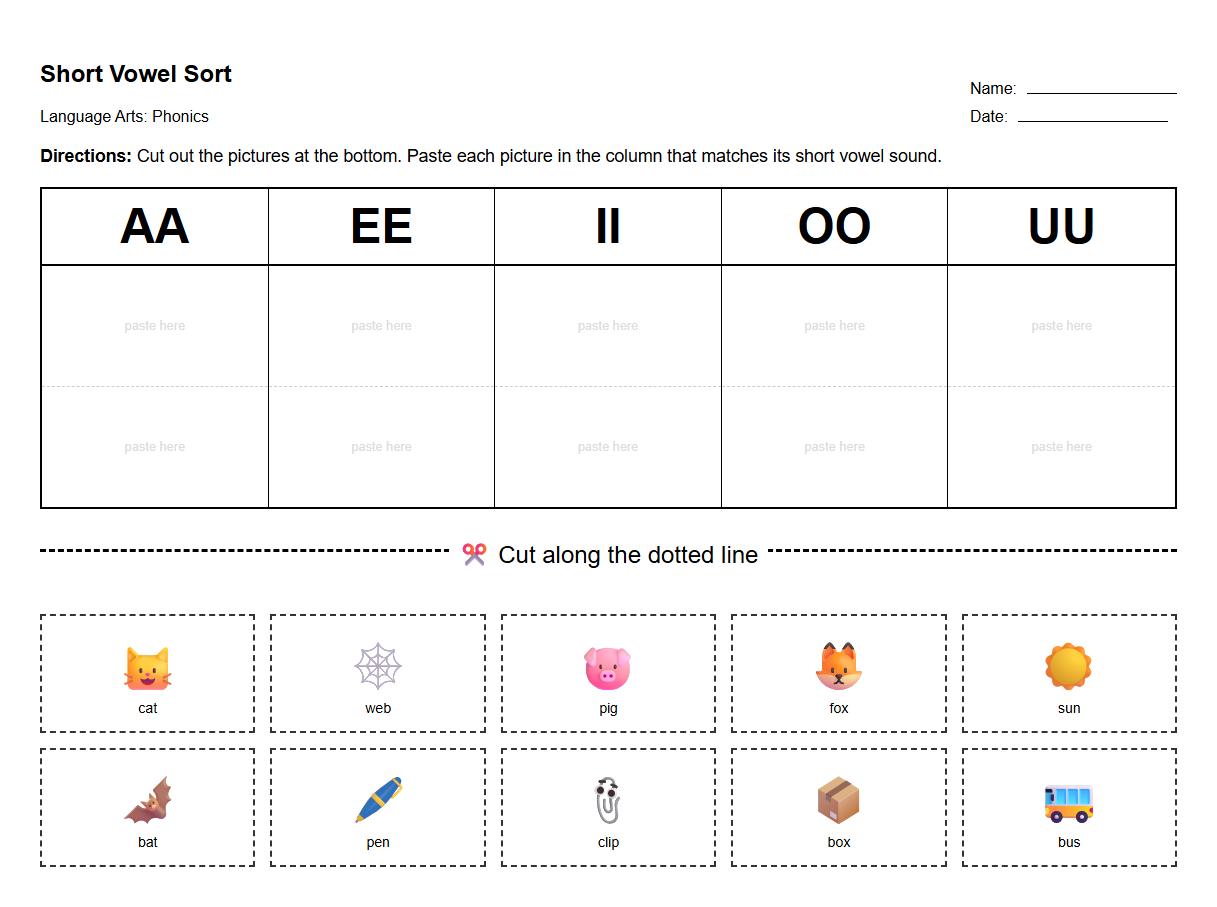
Sorting pictures by their short vowel sounds on worksheets encourages phonemic discrimination. Children group images like "pen," "pig," and "pan" under the correct vowel category. This hands-on sorting supports auditory processing and categorical thinking.
Cut and Paste Activities for Practicing Short Vowel Sounds
Cutting out words or pictures and pasting them under the correct short vowel column engages kinesthetic learners. This tactile task reinforces vowel sound identification and classification in a fun, interactive way. It also enhances fine motor coordination important for foundational letter skills.
Fill-in-the-Blank Exercises for Identifying Short Vowel Words
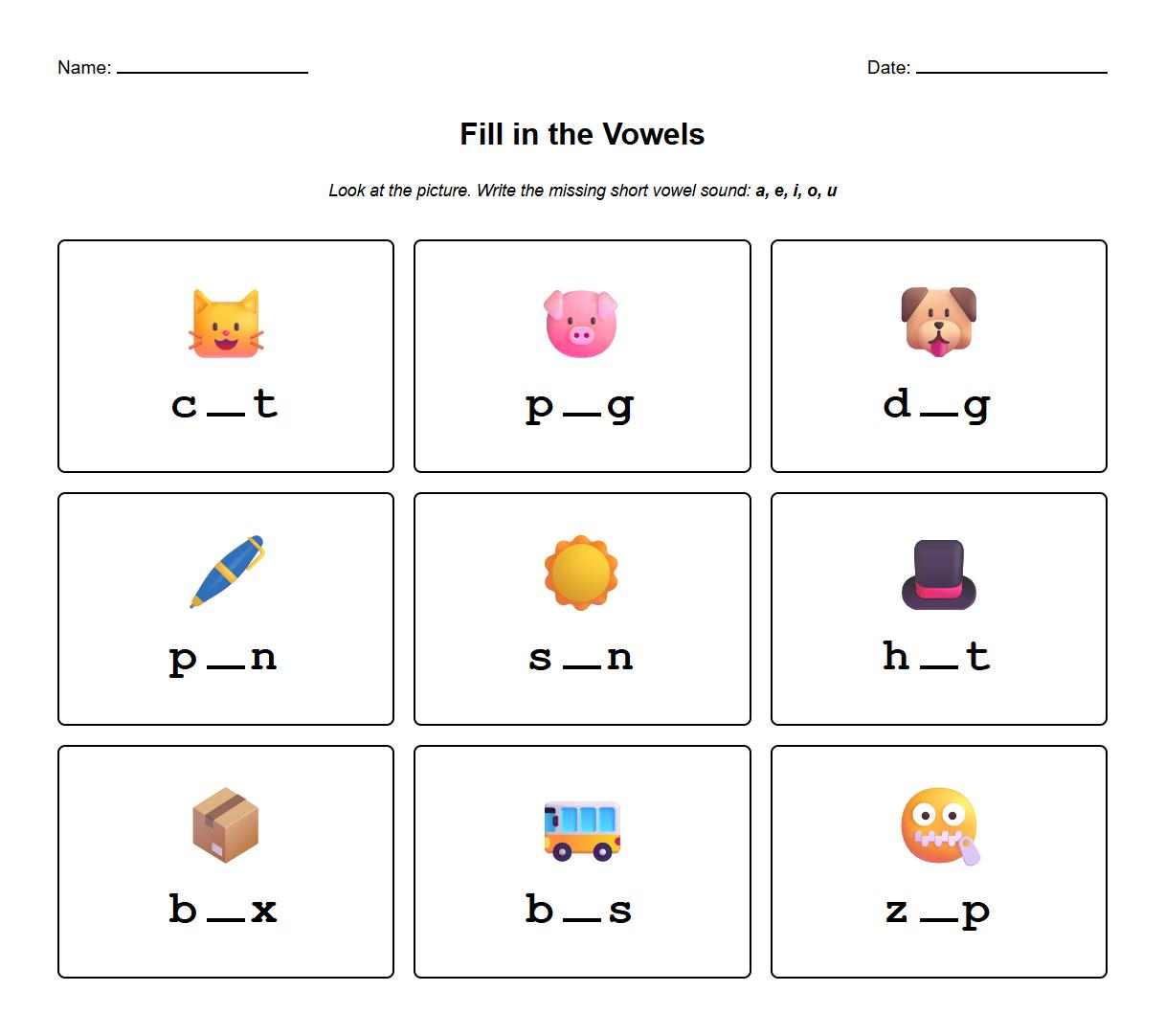
Worksheets with blanks for missing short vowels empower children to apply their phonics knowledge practically. For example, filling "_at" with "a" to form "cat" fosters active decoding skills. These tasks promote critical thinking and reinforce letter-sound relationships.
How Rhyme Identification Improves Short Vowel Learning
Rhyme identification activities, where children find or generate words that rhyme with a given short vowel word, build phonological awareness. Recognizing patterns like "cat," "bat," and "hat" highlights the vowel sound consistency. This strengthens auditory discrimination and vocabulary expansion.
Simple Puzzle Formats to Engage Kindergarteners in Short Vowel Practice
Word puzzles such as jigsaw pieces that form short vowel words or crosswords adapted for young learners provide an enjoyable challenge. These puzzles encourage problem-solving and reinforce phonics skills through repetition. They are effective at maintaining engagement during practice.
Using Story-Based Worksheets to Teach Short Vowel Sounds
Story-based worksheets incorporating short vowel words in simple narratives help contextualize phonics learning. Children read or listen to stories, then complete tasks like highlighting or circling short vowel words. This approach connects phonics practice to comprehension and real-world language use.


Interactive Long Vowel Phonics Worksheet Tasks for Early Learners