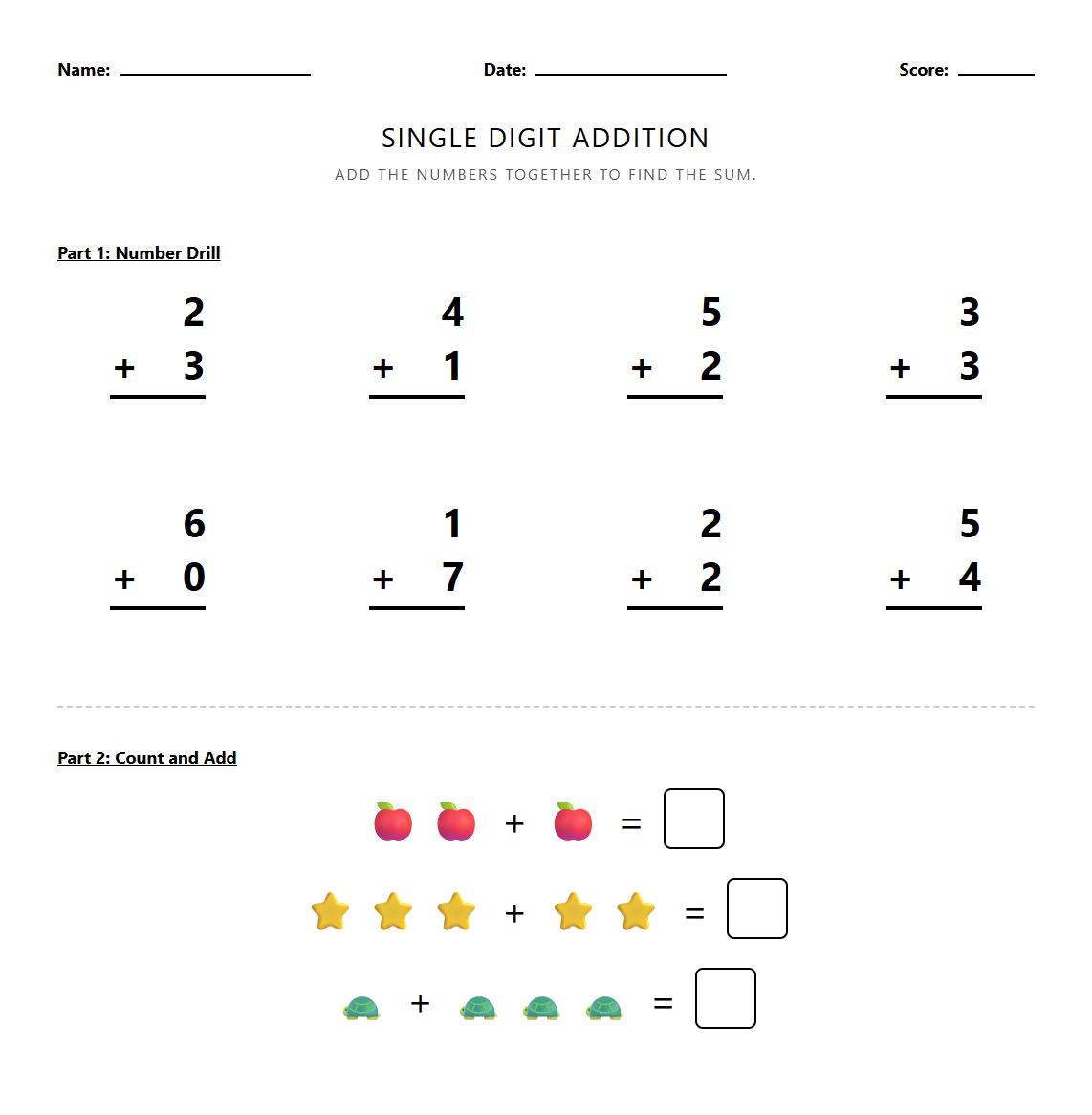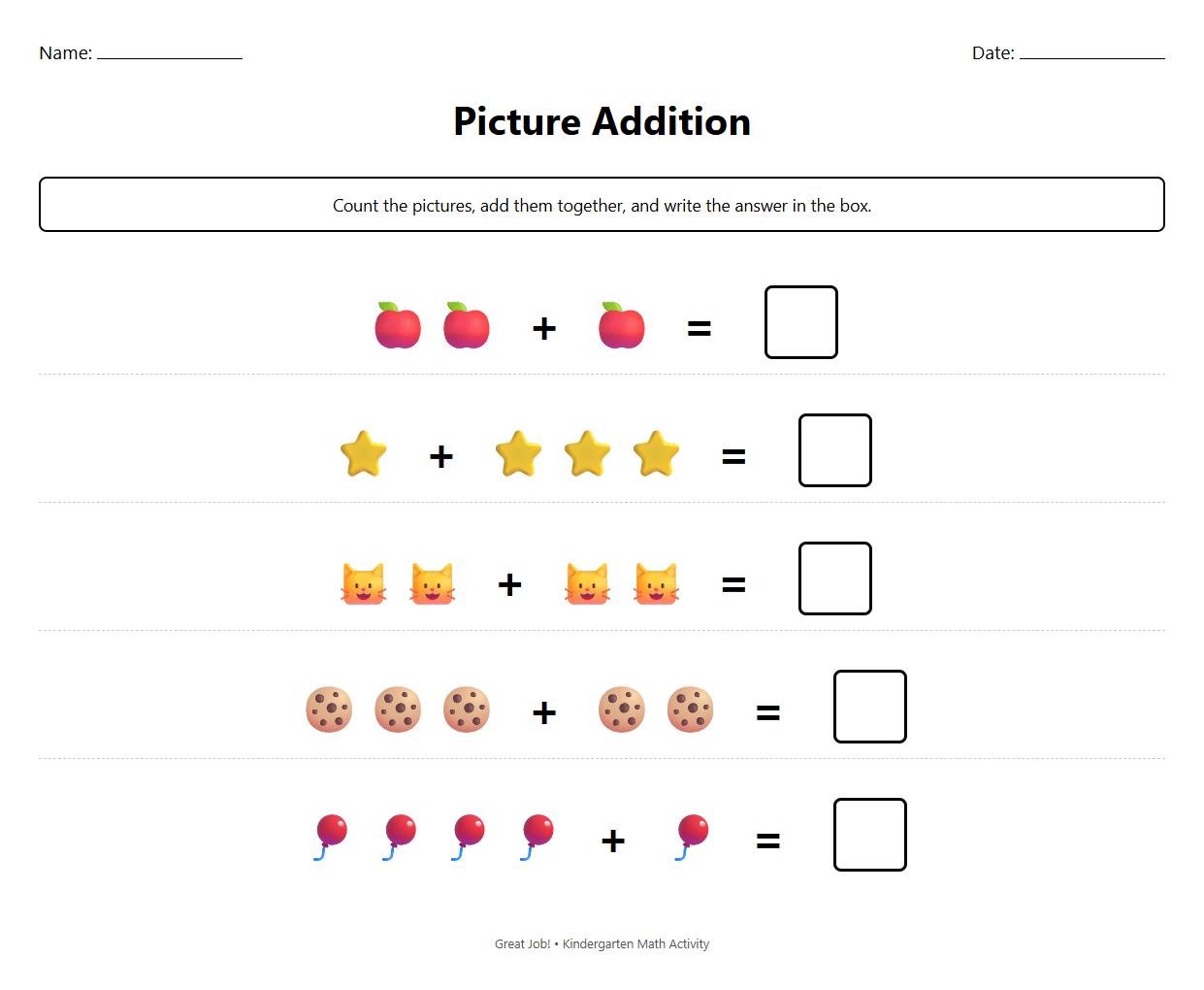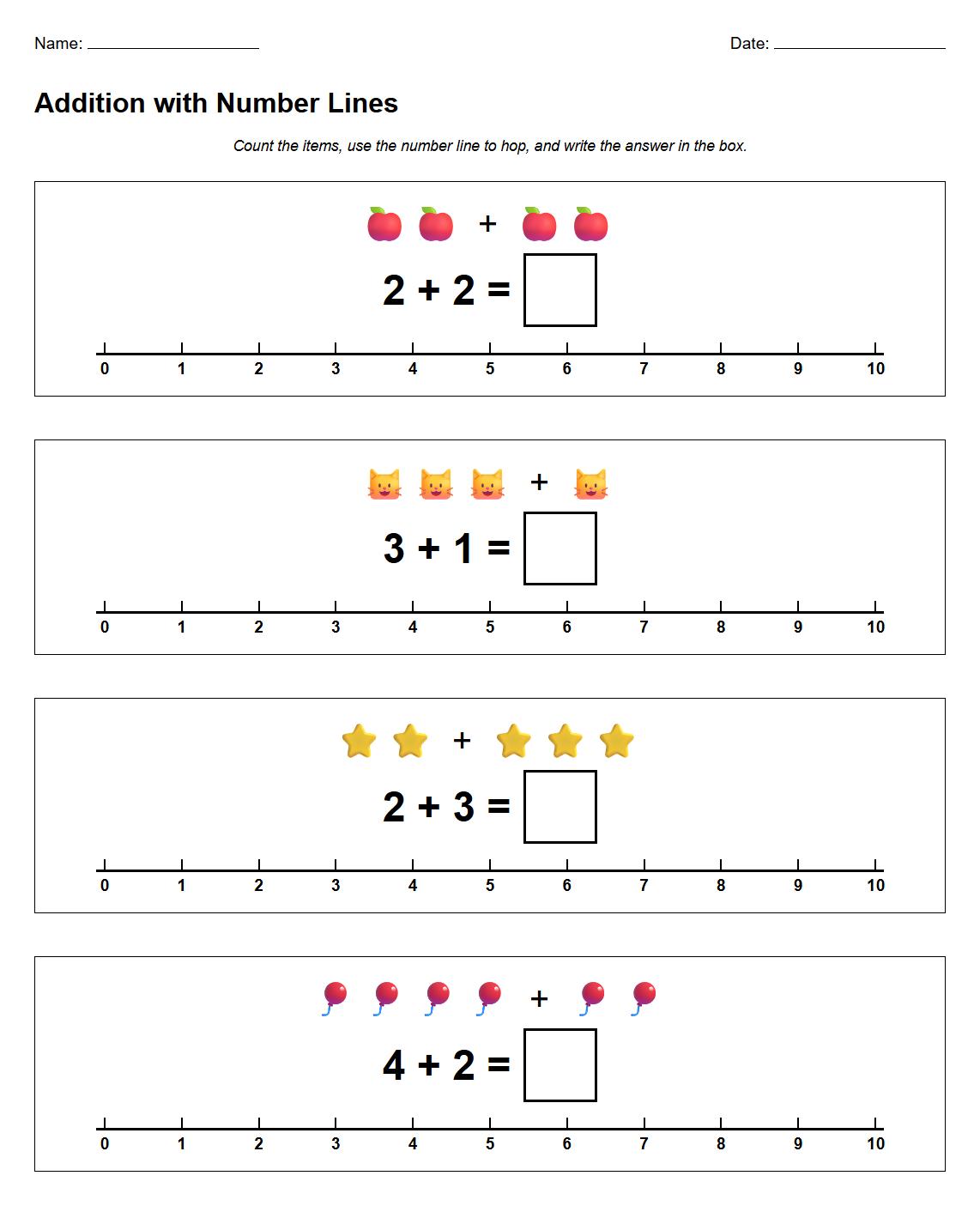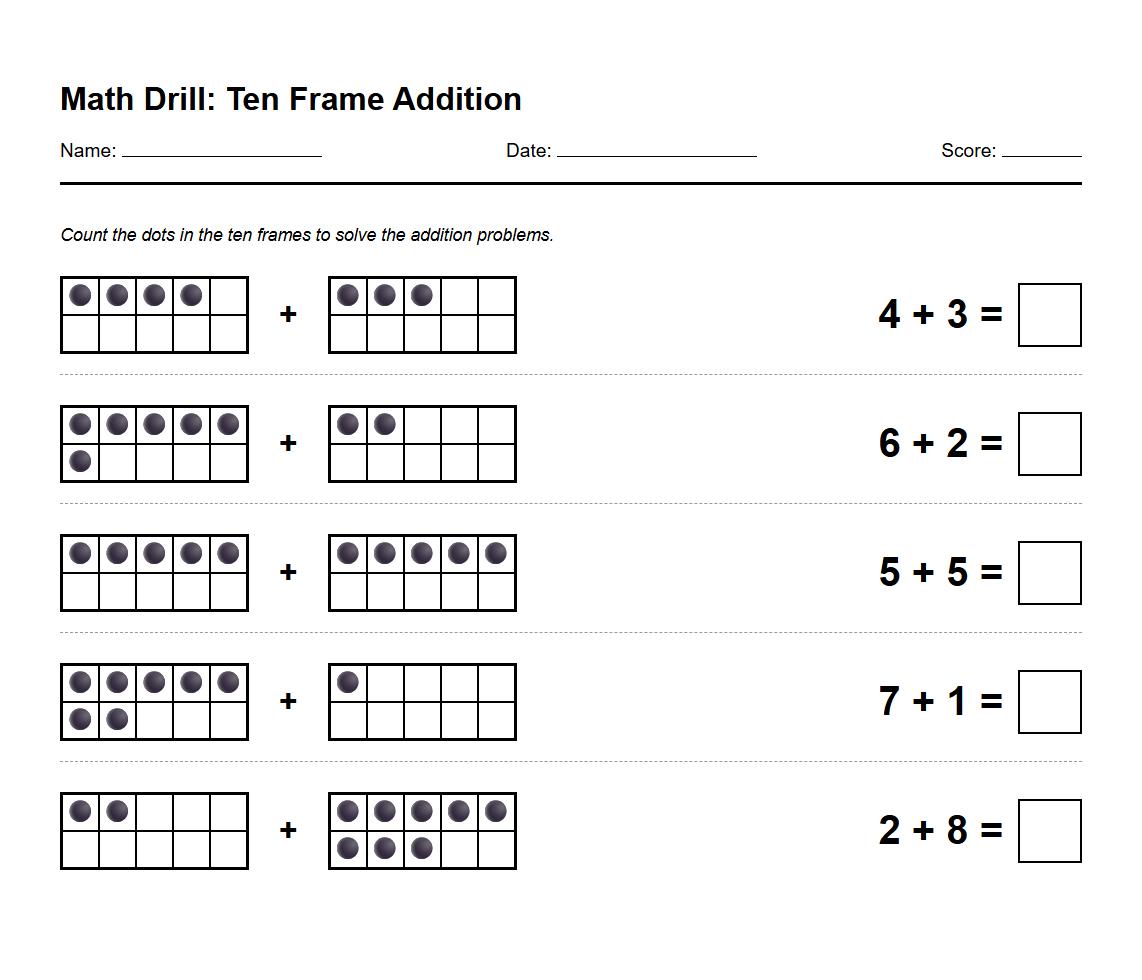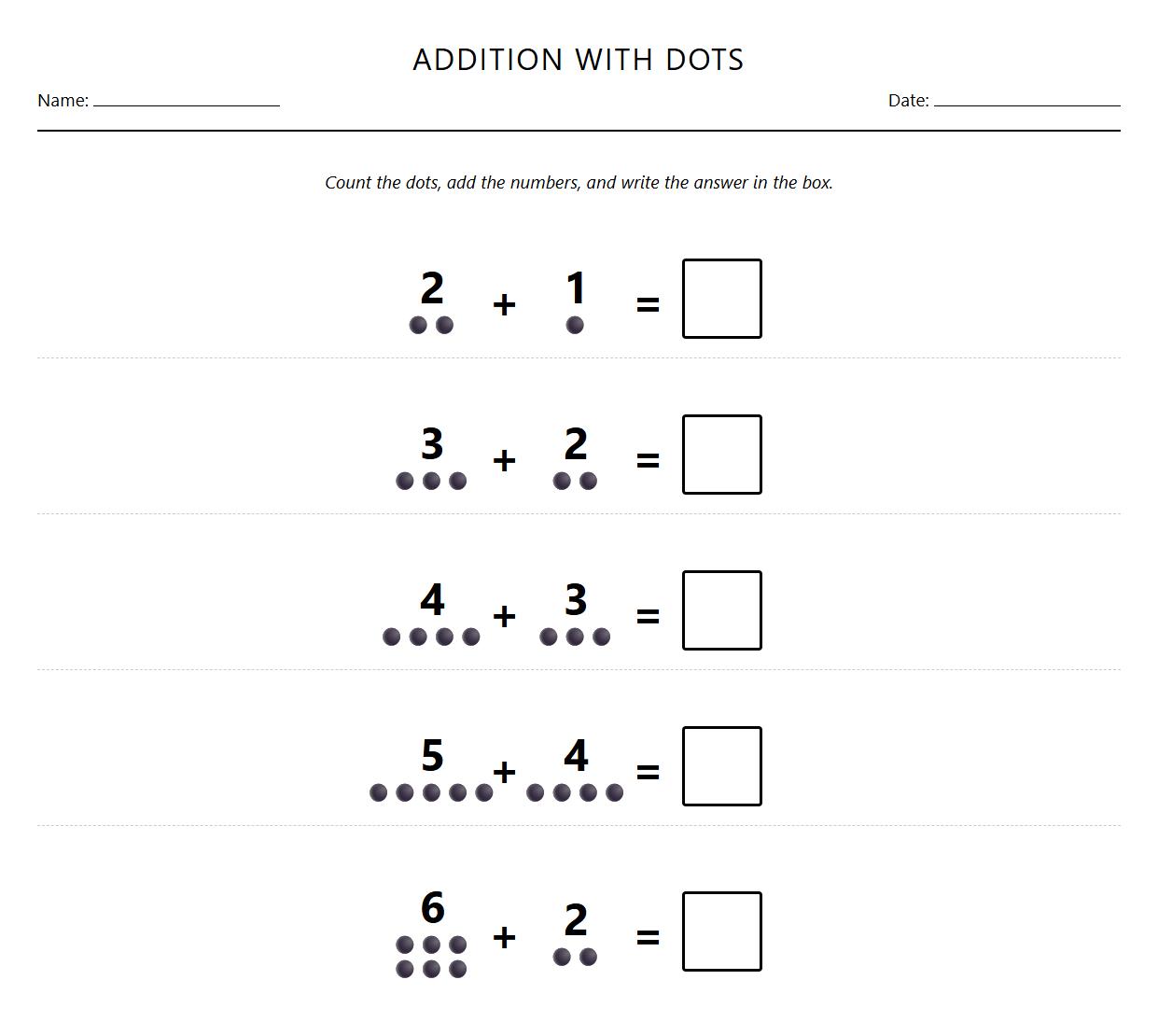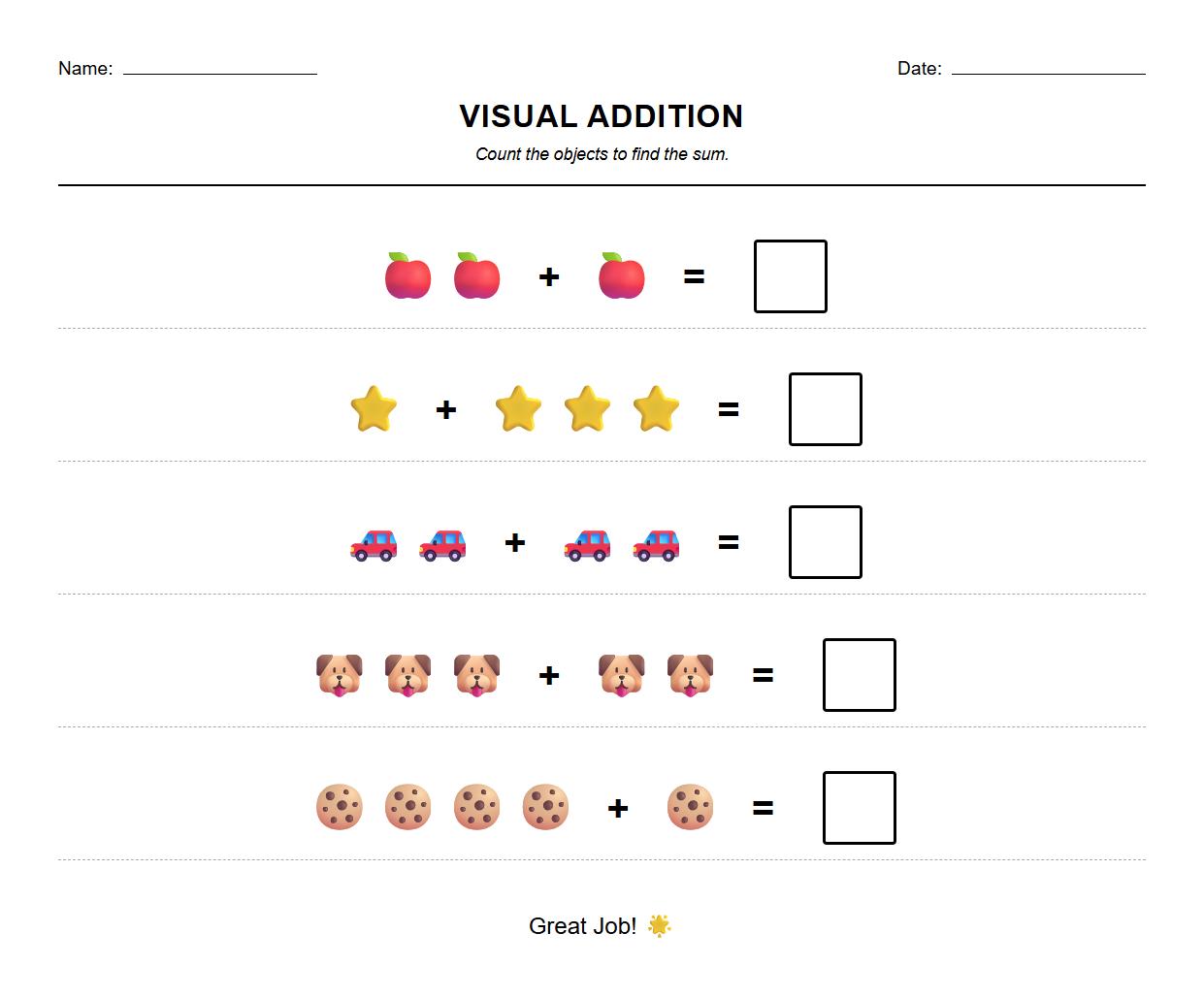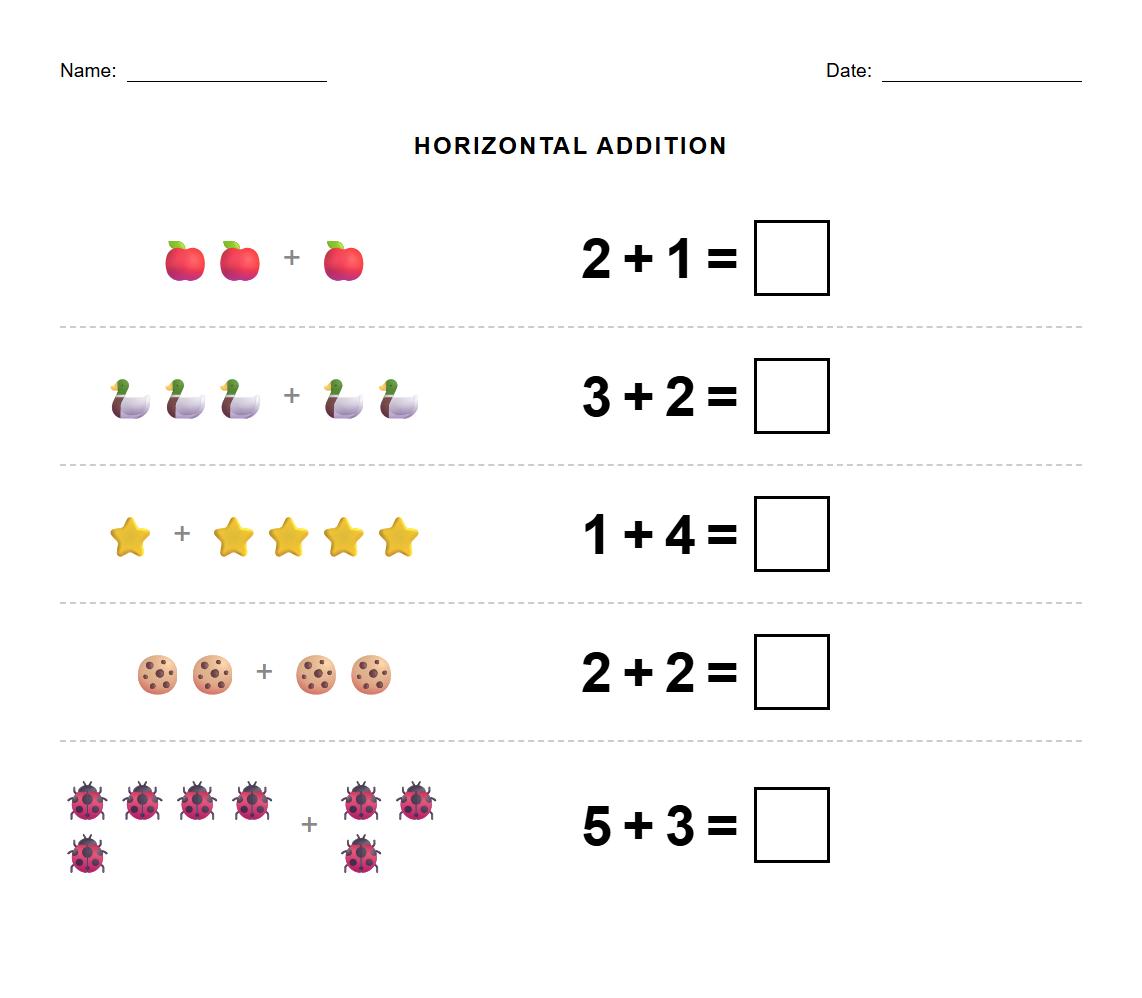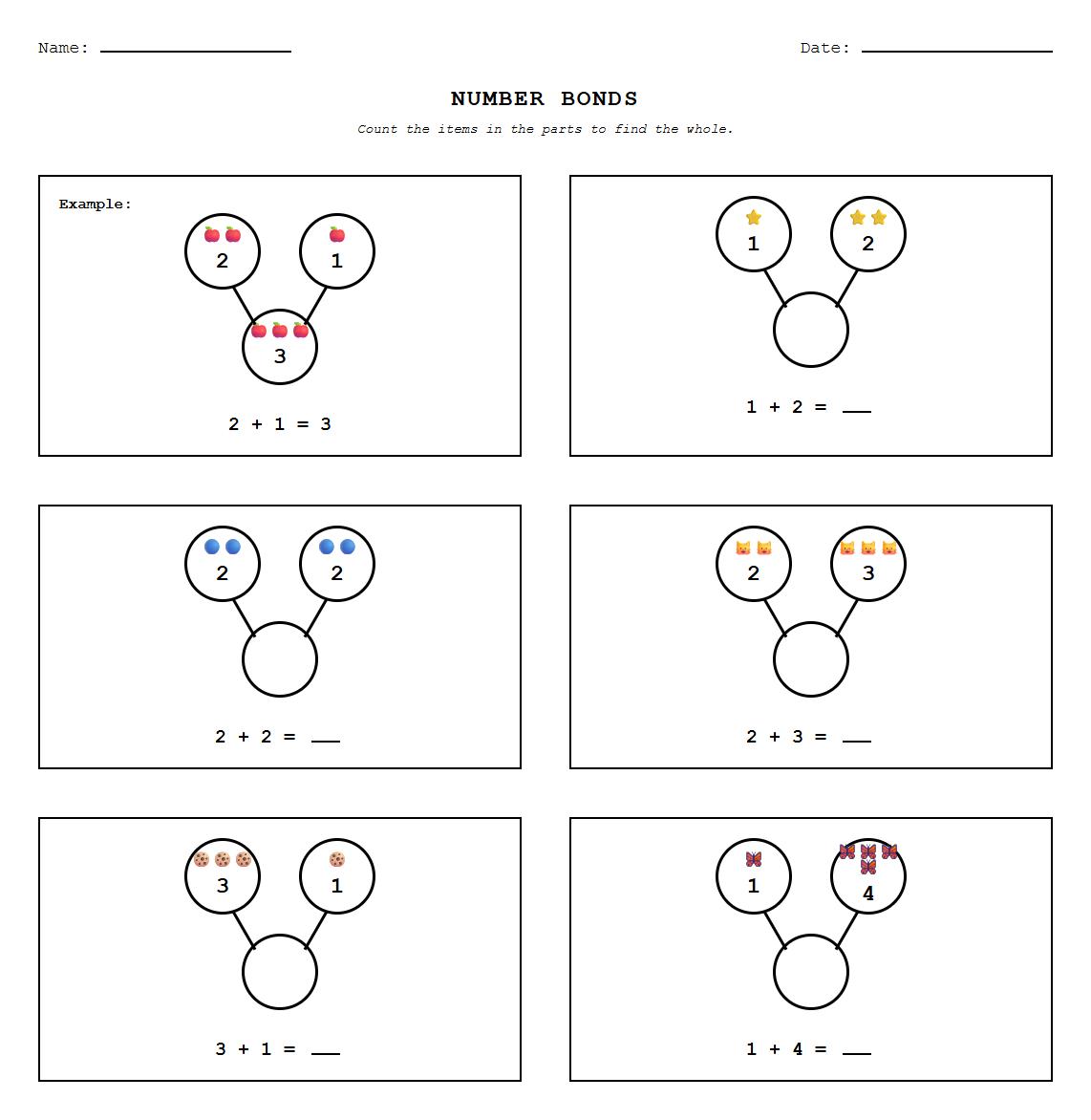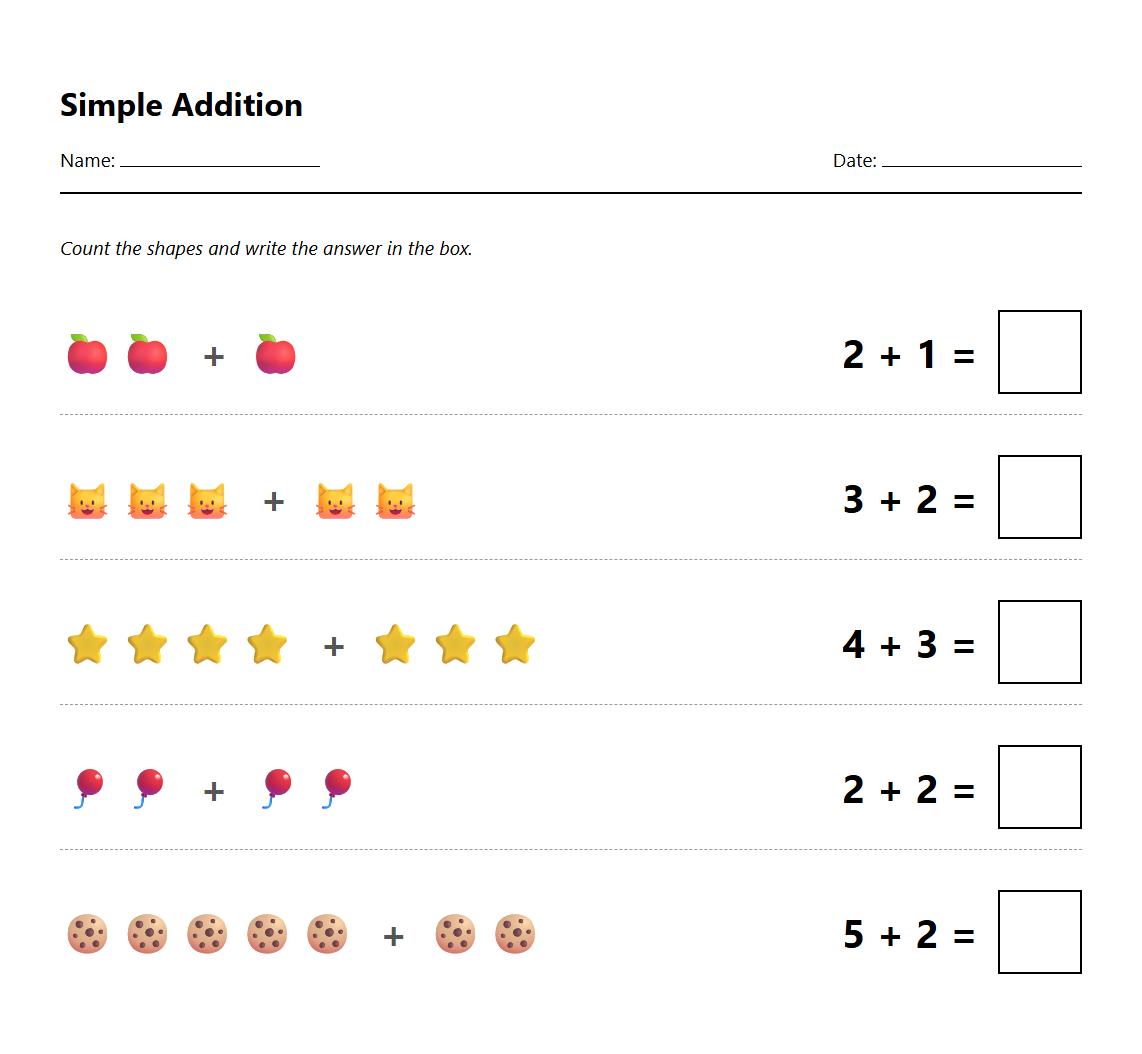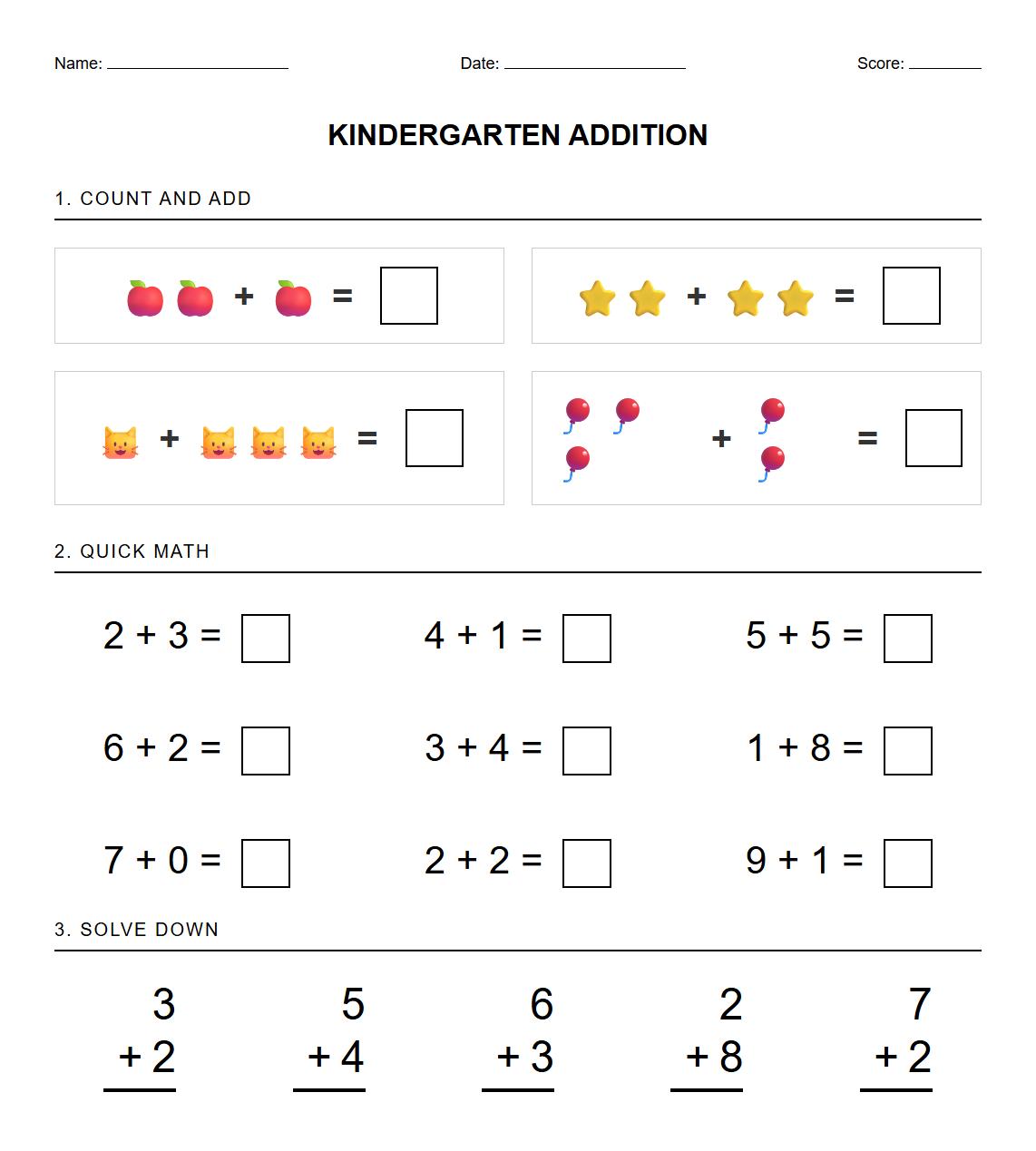
Kindergarten math drill worksheets focusing on basic addition help young learners develop essential arithmetic skills through repetitive practice and visual aids. These exercises enhance number recognition and build a strong foundation for more advanced math concepts. Explore the available worksheets to support your child's early math success.
What Does the Plus Sign Mean in Addition Problems?
The plus sign (+) is a symbol used in addition to indicate that numbers are being combined or joined together. It tells children to add the numbers that appear before and after it. Teaching this helps young learners understand the concept of putting quantities together. Recognizing the plus sign is fundamental in solving addition problems.
How Do You Add Single-Digit Numbers Together?
To add single-digit numbers, you simply count forward starting from the first number by the amount of the second number. For example, to add 3 + 4, start at 3 and count up four more numbers: 4, 5, 6, 7. Using objects or fingers makes it easier and helps visualize the process. This builds a strong foundation in early math skills.
What Is the Sum of Two and Three?
The sum of two and three is five. This means if you combine 2 objects with 3 more, you will have 5 objects in total. Understanding sums helps children solve simple addition problems confidently. Encouraging hands-on activities makes learning fun and effective.
How Can You Use Your Fingers to Solve Basic Addition?
Using fingers is a helpful physical tool for young children to count and add numbers. For example, to add 4 + 2, children can hold up 4 fingers on one hand and 2 on the other, then count all fingers together. This tactile method strengthens their number sense and accuracy. Try this and other visual math activities for extra practice.
What Number Comes After You Add One and Four?
When you add one and four, the number that comes after adding is five. This illustrates that adding numbers increases quantity. Teaching this concept shows how numbers grow through addition. It's a stepping stone to understanding more complex math operations.
How Many in Total If You Have Five Apples and Get Two More?
If you have five apples and get two more, you have a total of seven apples. Adding real objects, like apples, helps children connect math to everyday life. This practical approach encourages engagement and comprehension. It also reinforces the concept of addition as putting things together.
Can You Match Numbers to Their Correct Addition Result?
Matching numbers to their correct addition results supports memory and recognition skills. Children can practice by pairing sums like 4 + 3 with the number 7. This activity strengthens understanding of number relationships and addition facts. It also cultivates problem-solving abilities.
How Do You Write an Addition Equation Using Pictures?
Writing an addition equation with pictures involves drawing objects to represent numbers and using the plus sign (+) and equals sign (=). For example, three apples + two apples = five apples. This visual method helps young learners associate numbers with quantities. It makes abstract ideas more concrete and understandable, similar to the color-shape concept worksheets.
What Is the Answer to Three Plus Six?
The answer to three plus six is nine. Adding these numbers shows that combining smaller numbers results in a larger sum. Practicing such problems builds confidence and fluency in basic math. It also prepares children for future math challenges.
How Do You Check Your Work After Adding Numbers?
To check addition work, children can count the total again or use objects and fingers to verify the sum. They may also reverse the operation by subtracting to see if the result matches the original numbers. Teaching this habit promotes accuracy and critical thinking skills, much like using a subtraction worksheet with a number line. It encourages independent learning and self-correction.


Early Numeracy Building Basic Addition Worksheet for Kindergarten