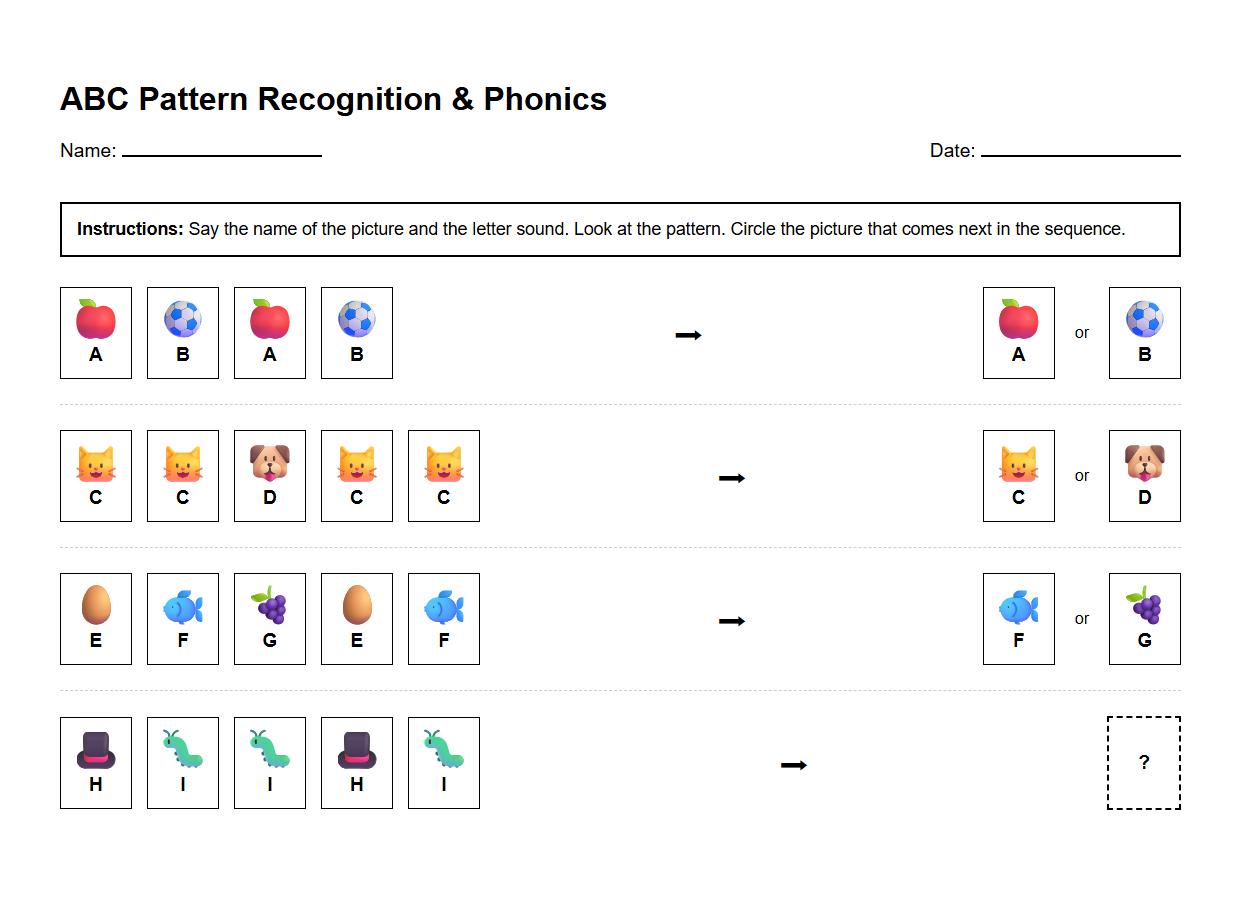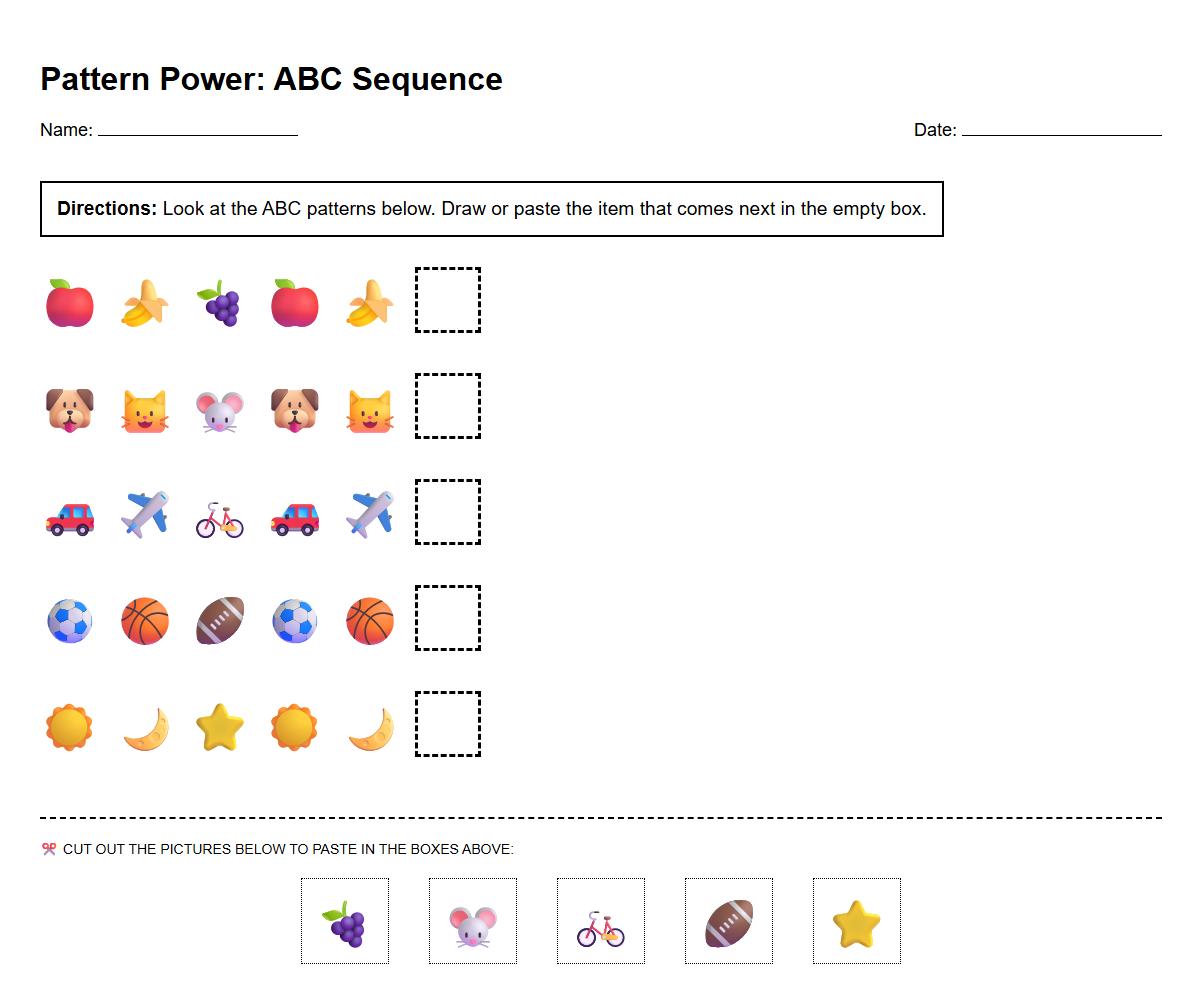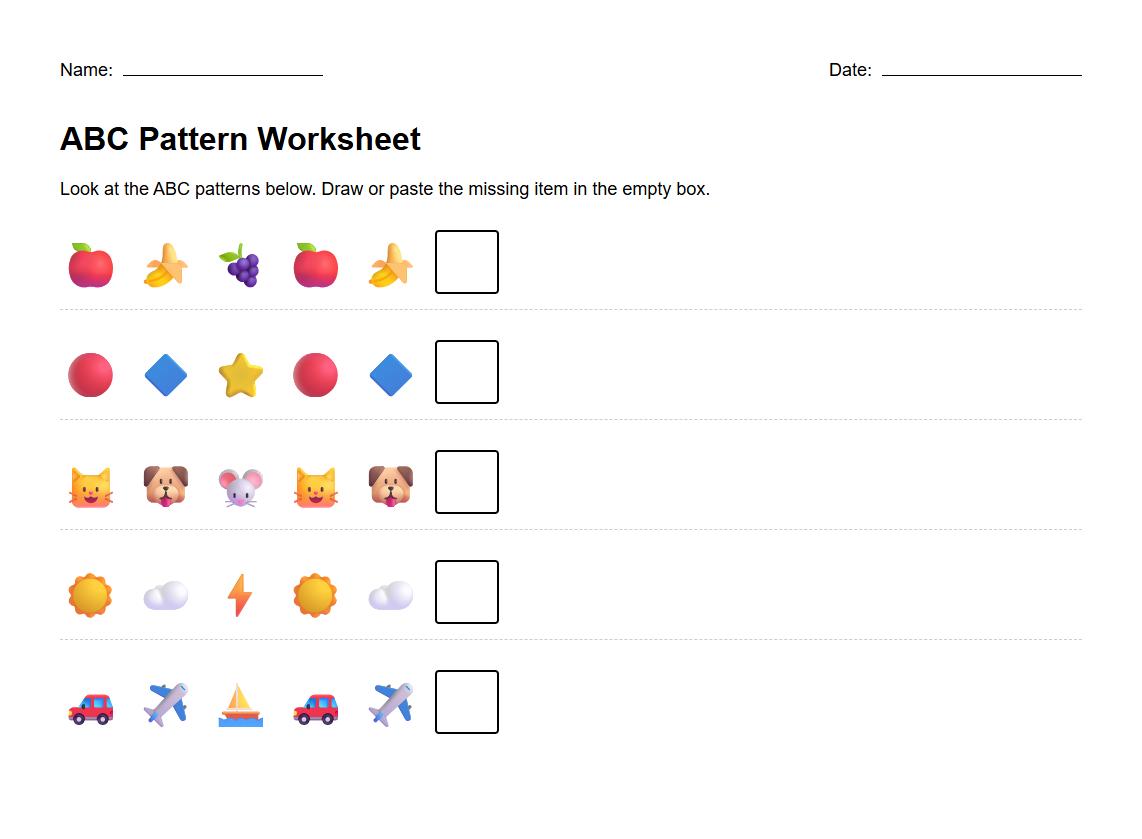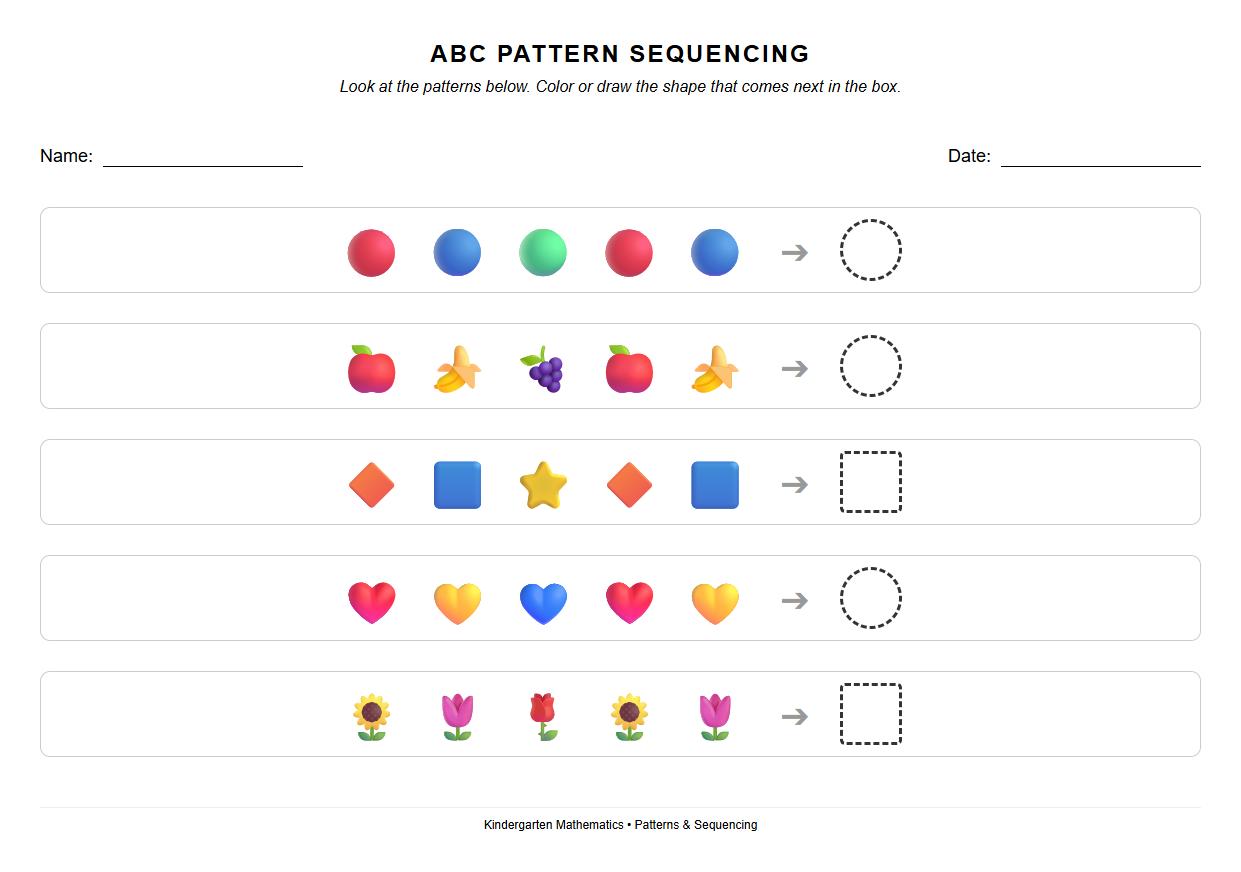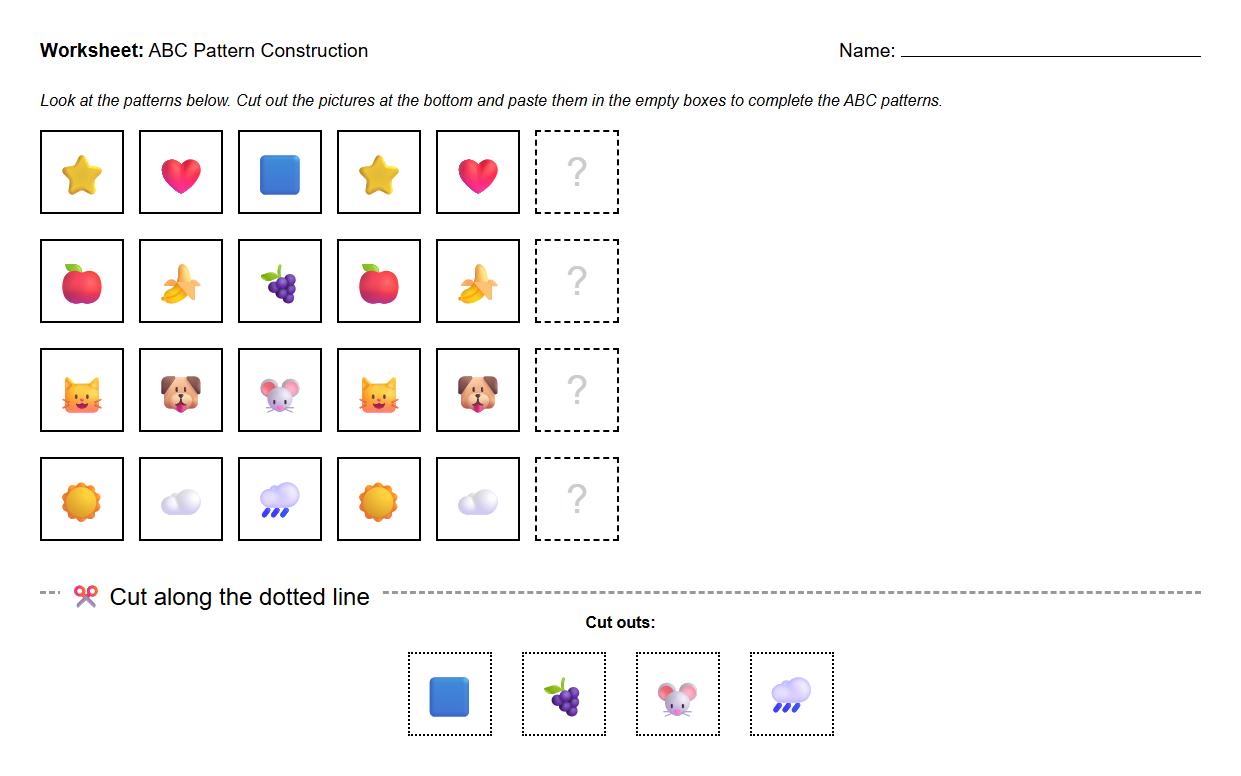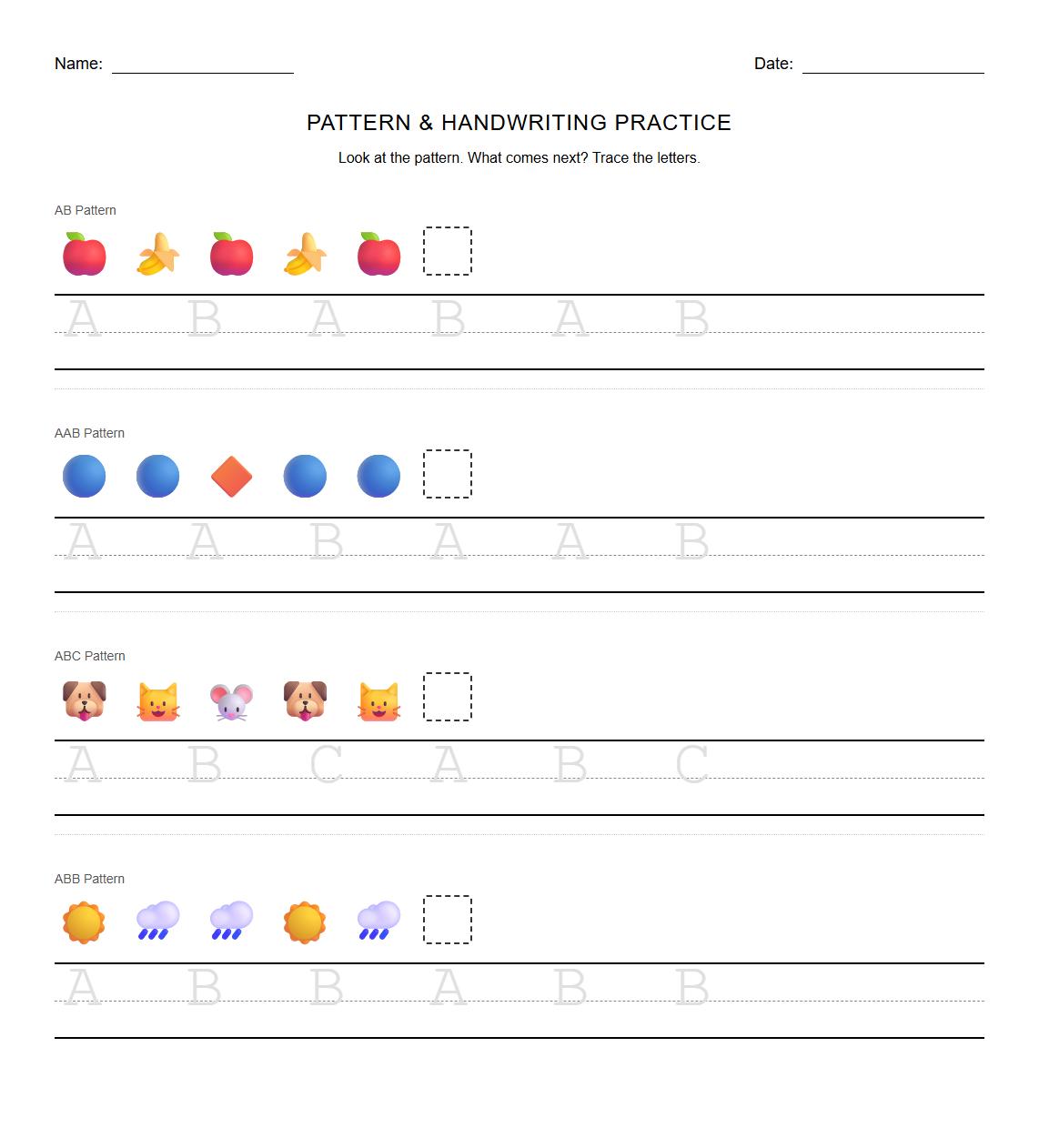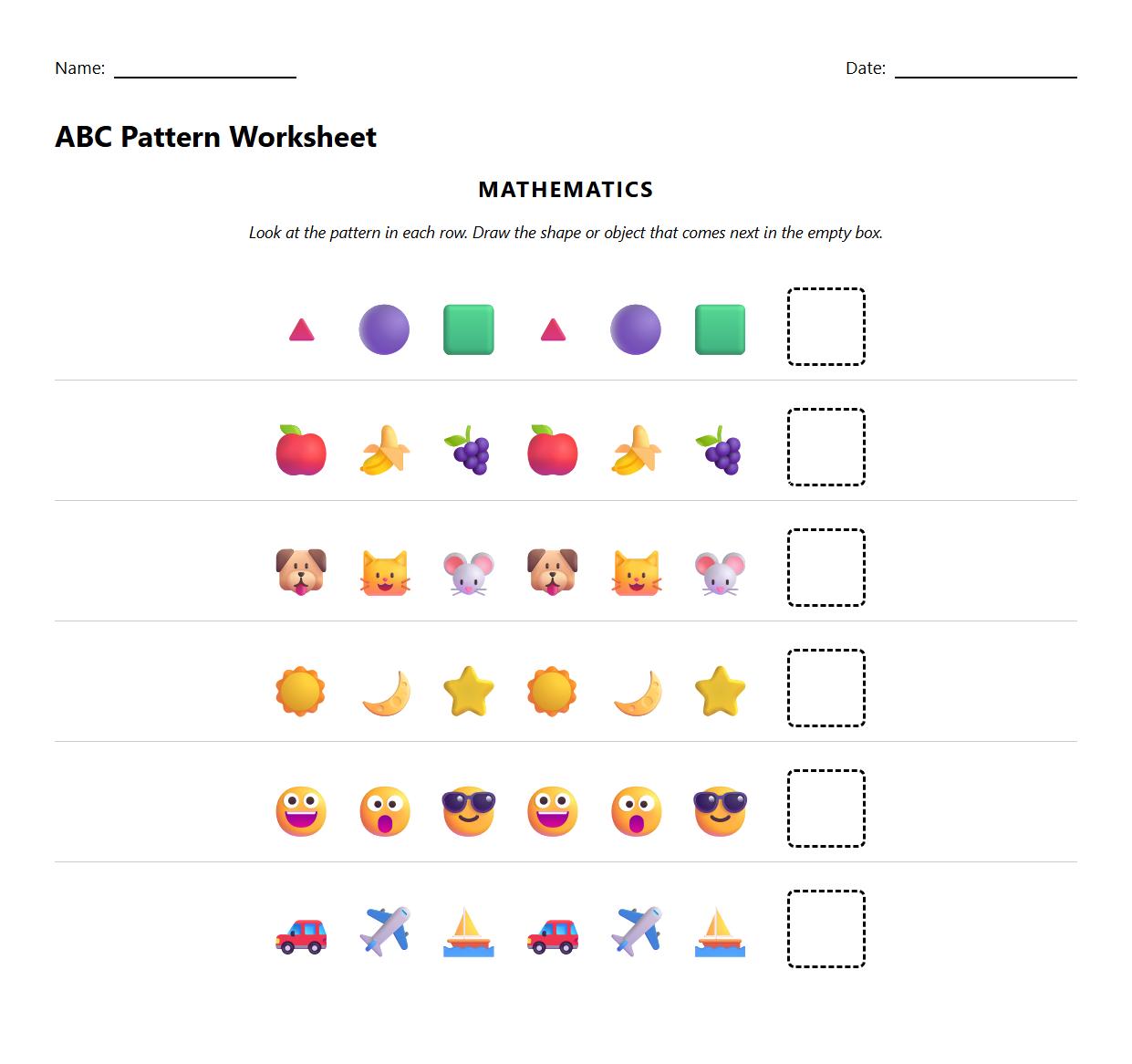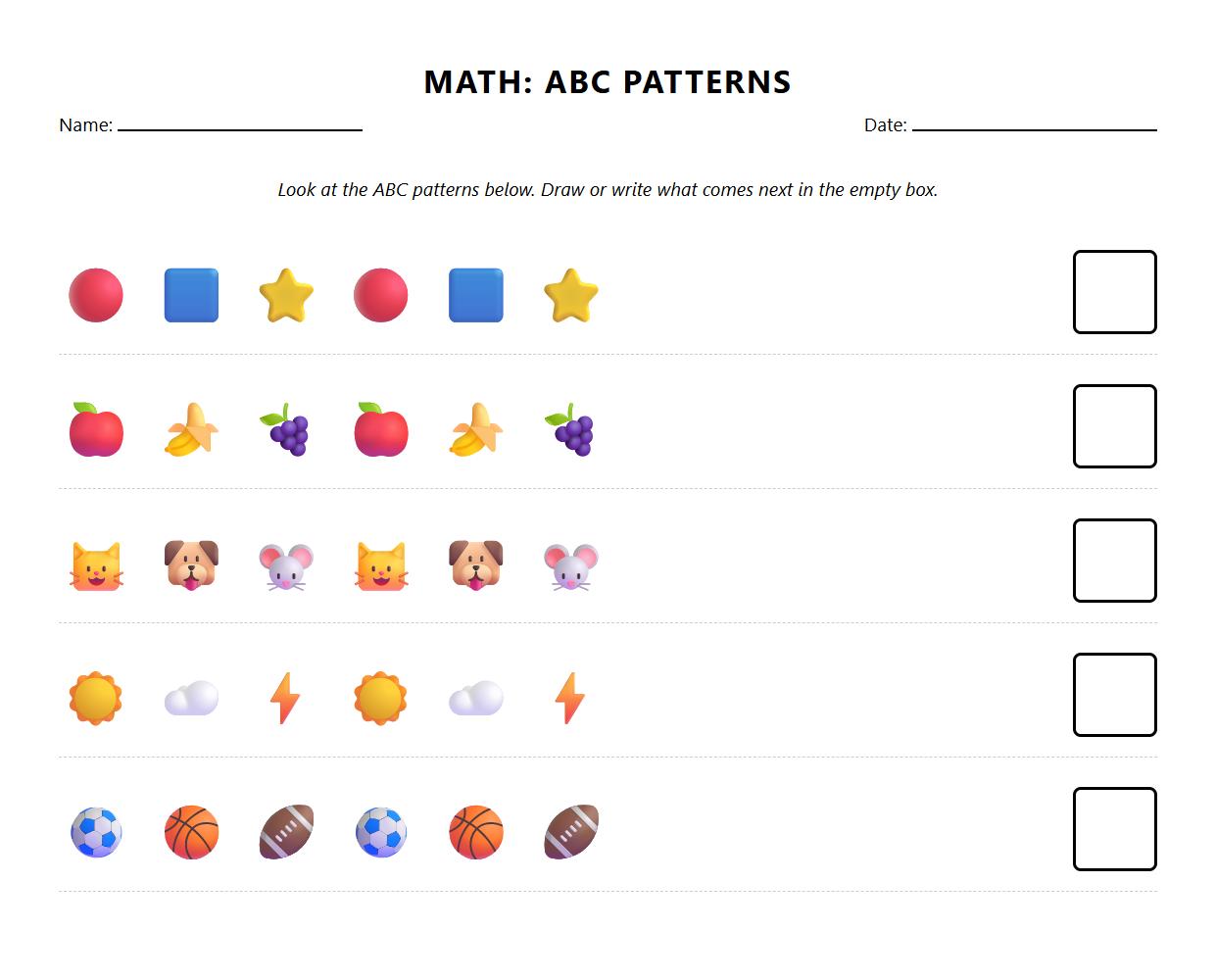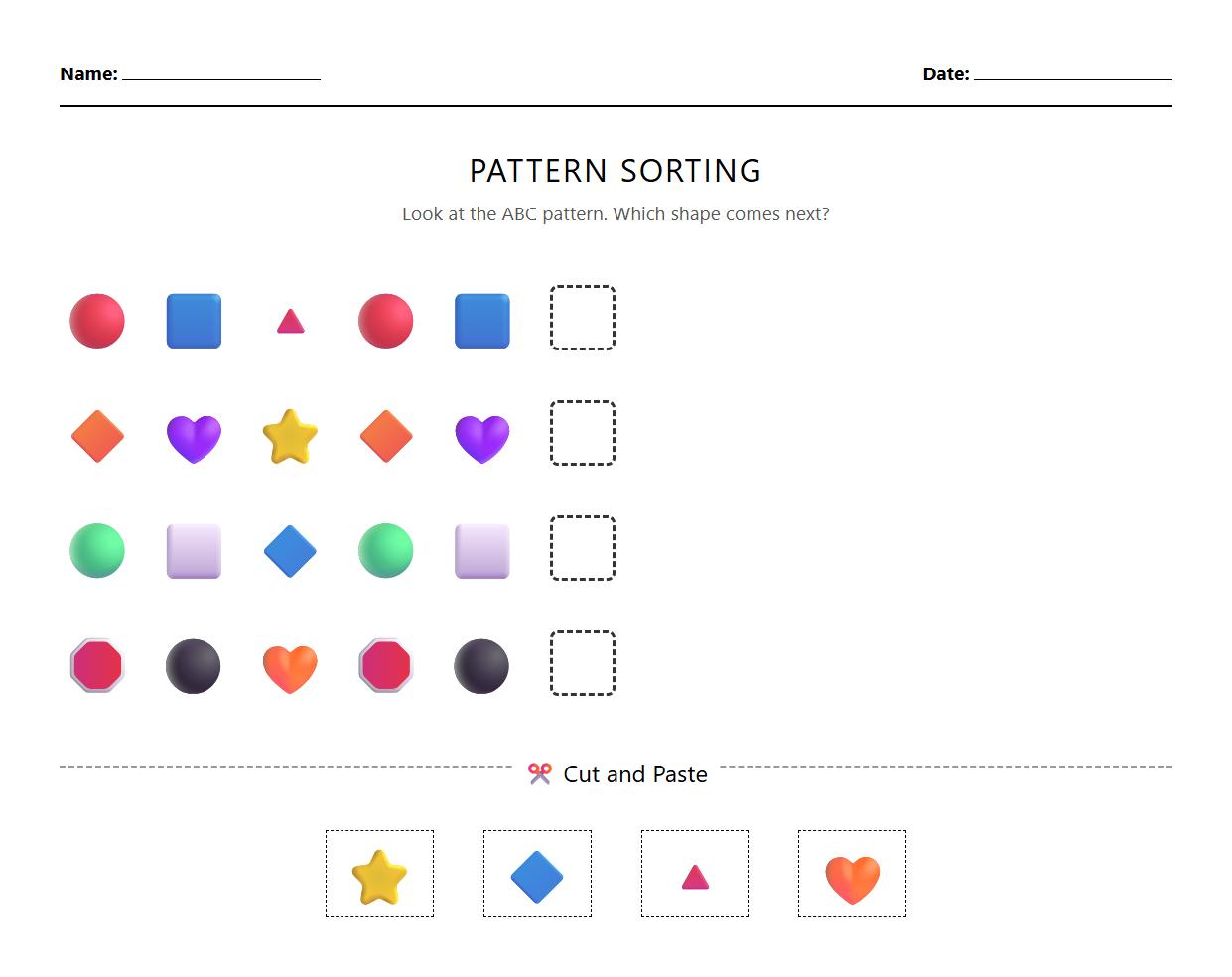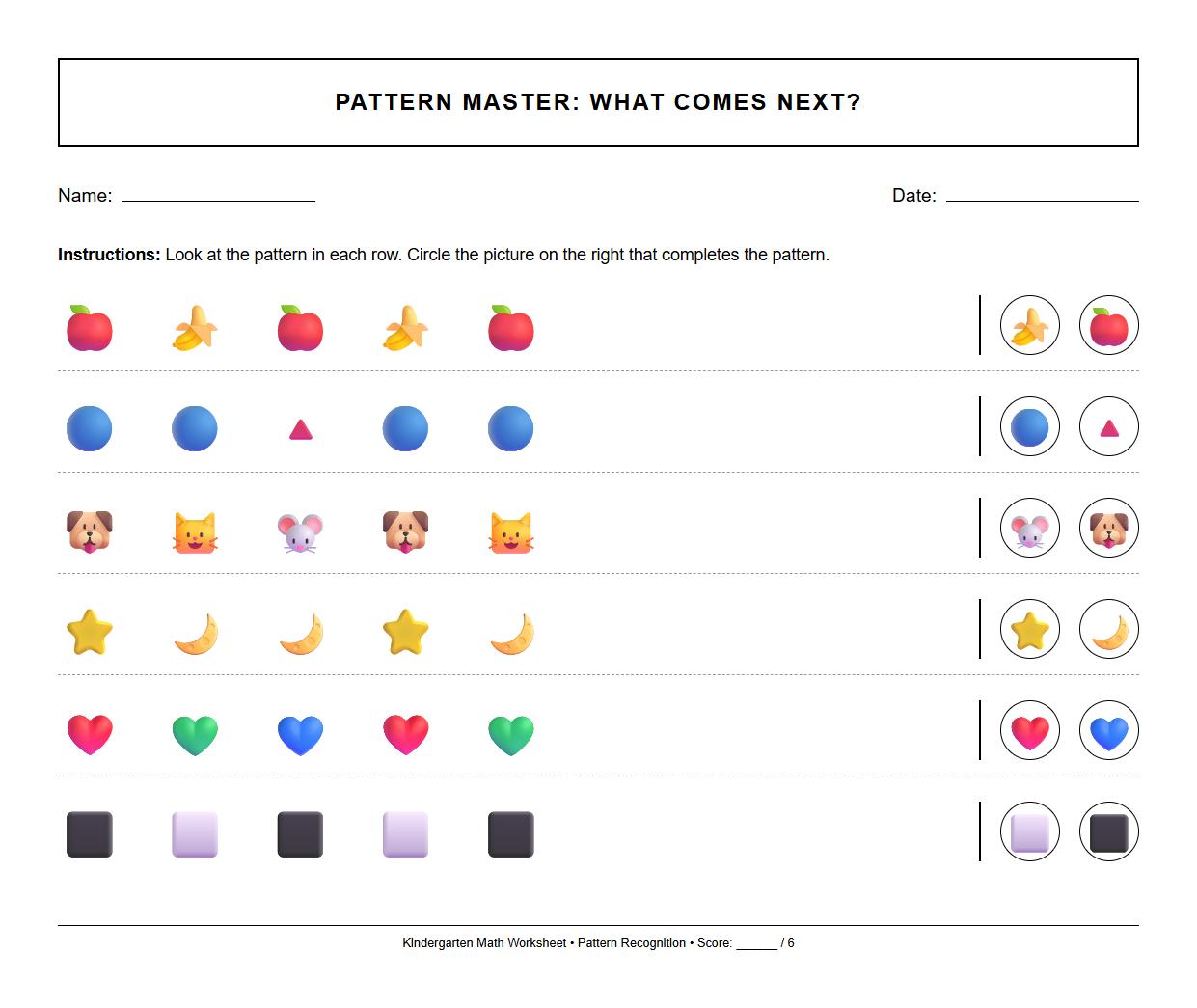
Kindergarten students develop critical thinking by recognizing and extending ABC patterns in this engaging worksheet. Activities focus on identifying sequences using colors, shapes, and objects to strengthen early math skills. Explore the available worksheets to support your child's pattern recognition journey.
What Comes Next in the ABC Pattern?
Help children recognize sequences by asking, "What comes next in this ABC pattern: apple, ball, cat, apple, ball, __?" Encourage them to observe the repeating pattern and predict the next item. This exercise strengthens their ability to identify and extend sequences, an essential early skill explored in the shape patterns and sequencing worksheet for kindergarten.
Circle the Picture That Completes the Pattern
Present a set of images such as dog, elephant, fish, dog, elephant, __ and ask children to circle the image that completes the pattern. This activity improves visual discrimination and pattern recognition skills, essential for early literacy and math development, as shown in the kindergarten worksheet collection on sorting and classifying objects.
Color the Shapes to Continue the ABC Pattern
Provide shapes colored red, blue, yellow, red, blue, __ and encourage children to color the next shape in the sequence. This task helps reinforce knowledge of color patterns and sequencing, promoting cognitive development through hands-on learning.
Draw the Next Symbol to Extend This ABC Pattern
Show symbols like star, heart, square, star, heart, __ and have children draw the next symbol. Drawing encourages fine motor skills while deepening their understanding of patterns and sequences in a fun and creative way, similar to engaging phonics worksheet activities for sorting and classifying.
Which Object Follows the ABC Pattern?
Use everyday objects such as spoon, fork, knife, spoon, fork, __ and ask, "Which object follows?" This activity connects pattern recognition with real-world items, enhancing memory and categorization abilities critical for kindergarten readiness, as further developed through number writing and recognition worksheets.
Continue the Pattern: Clap, Snap, Stomp
Introduce movement-based patterns like clap, snap, stomp, clap, snap, __ to combine physical activity with learning. This kinesthetic approach helps children remember sequences better and supports motor skill development alongside cognitive growth.
Point to the Image That Comes Next
Display a sequence of images such as sun, moon, cloud, sun, moon, __ and ask children to point to the next image. This visual exercise sharpens observation skills and reinforces the concept of repeating patterns in a colorful and engaging way, much like activities in subtraction worksheets using counting objects.
Choose the Letter to Finish the ABC Pattern
Ask children to complete letter sequences like A, B, C, A, B, __ to build letter recognition and sequencing competence. Understanding ABC patterns lays the foundation for reading readiness and early literacy development, as emphasized in the phonics and coin naming worksheet collection.
Fill in the Blank to Extend This Pattern
Offer a pattern involving vehicles: truck, car, bike, truck, car, __ and encourage children to fill in the blank. This helps strengthen their understanding of sequences and promotes logical thinking necessary for problem-solving, which also aids in money counting skills for young learners.
Mark the Shape That Keeps the ABC Sequence Going
Use shapes like triangle, circle, square, triangle, circle, __ and have children mark the next shape to continue the pattern. Recognizing and creating shape patterns supports spatial awareness and early math skills for young learners.


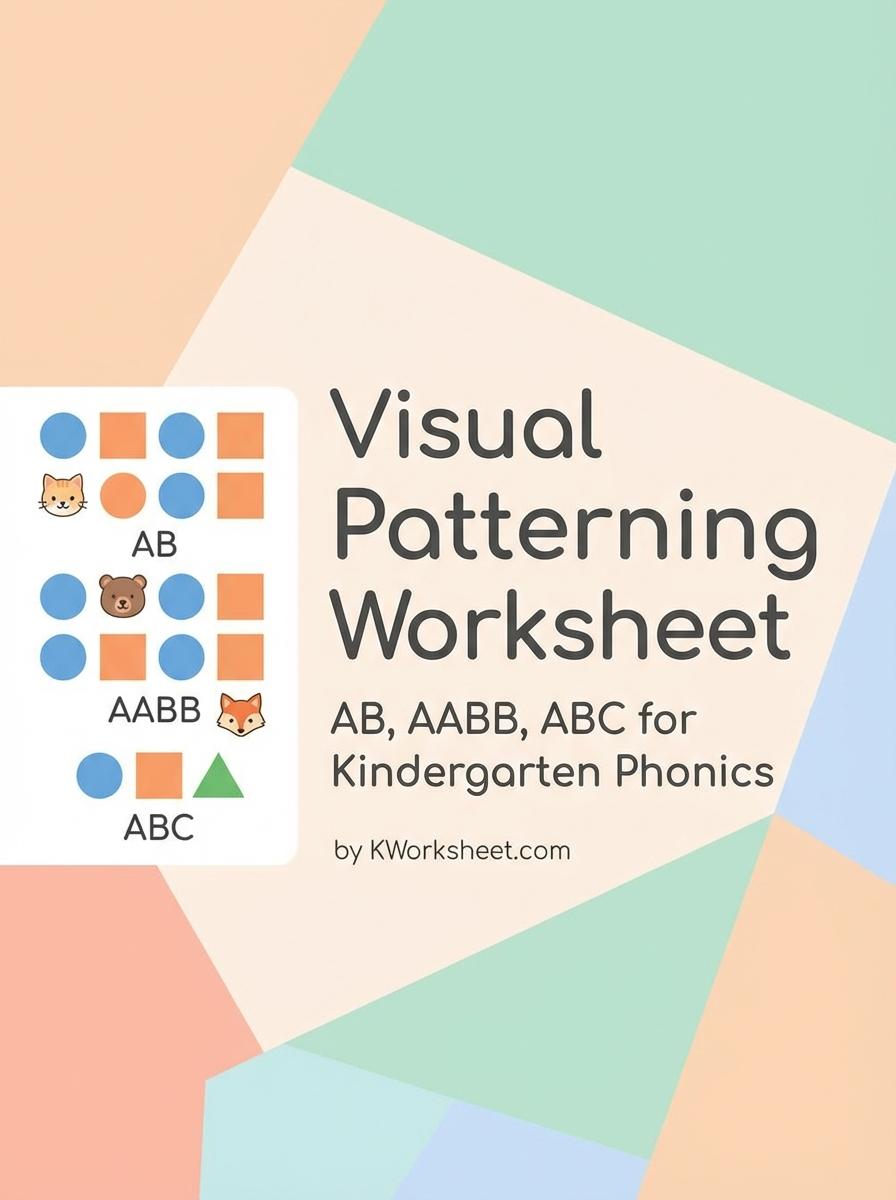
Visual Patterning Worksheet AB, AABB, ABC for Kindergarten Phonics