Early Numeracy Building Basic Addition Worksheet for Kindergarten

📅 May 21, 2025 👤 Nylen Smith

Mastering basic addition is a crucial step in early numeracy development for kindergarten learners. This worksheet focuses on building foundational skills through simple, engaging exercises that enhance number recognition and counting abilities. Explore the available Early Numeracy Building Basic Addition Worksheets to support your child's math journey.

Basic Addition with Visual Aids Worksheet
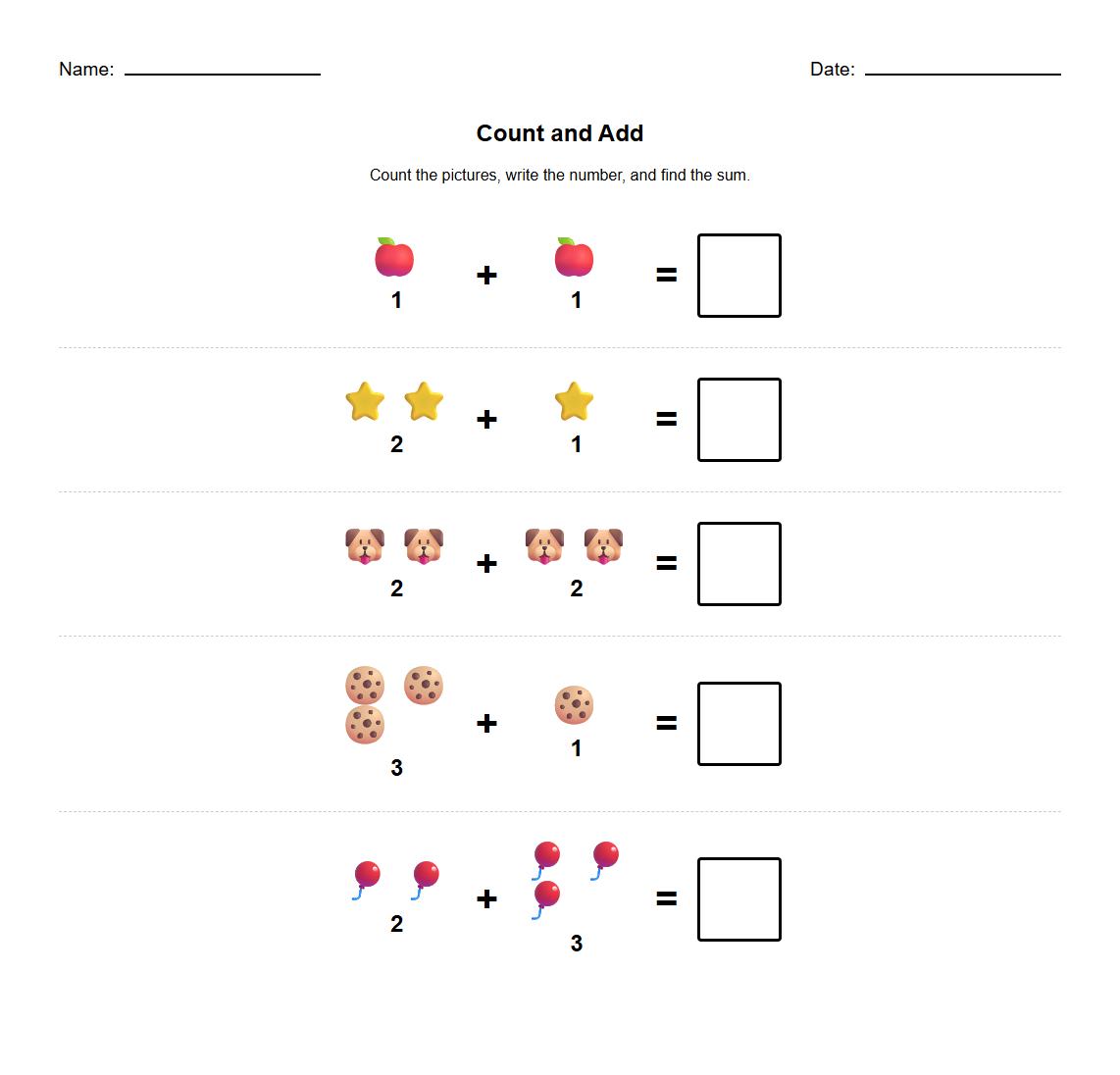
Basic Addition with Visual Aids Worksheet

Download PDF     Pin it

Single Digit Sums Number Sentence Worksheet
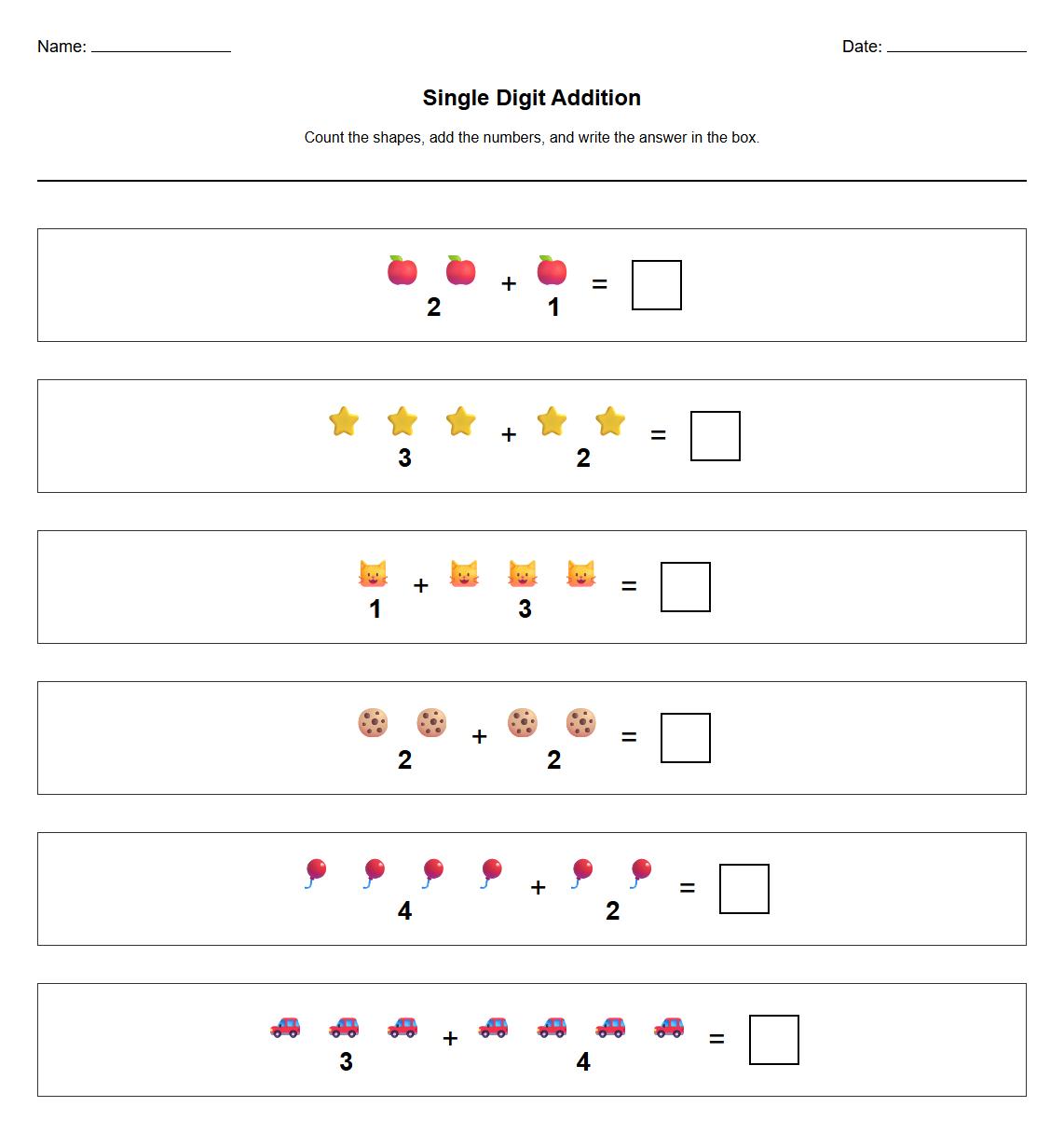
Single Digit Sums Number Sentence Worksheet

Download PDF     Pin it

Count and Add with Ten Frames Worksheet
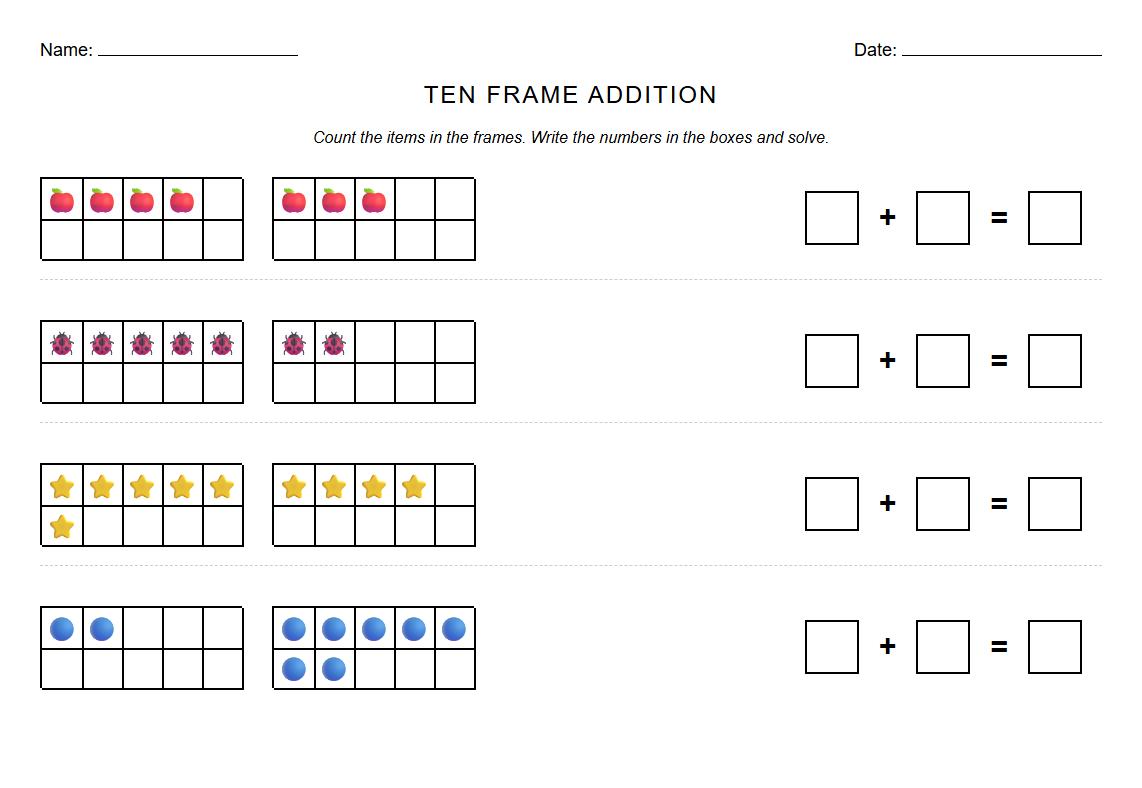
Count and Add with Ten Frames Worksheet

Download PDF     Pin it

Picture-based Addition using Manipulatives Worksheet
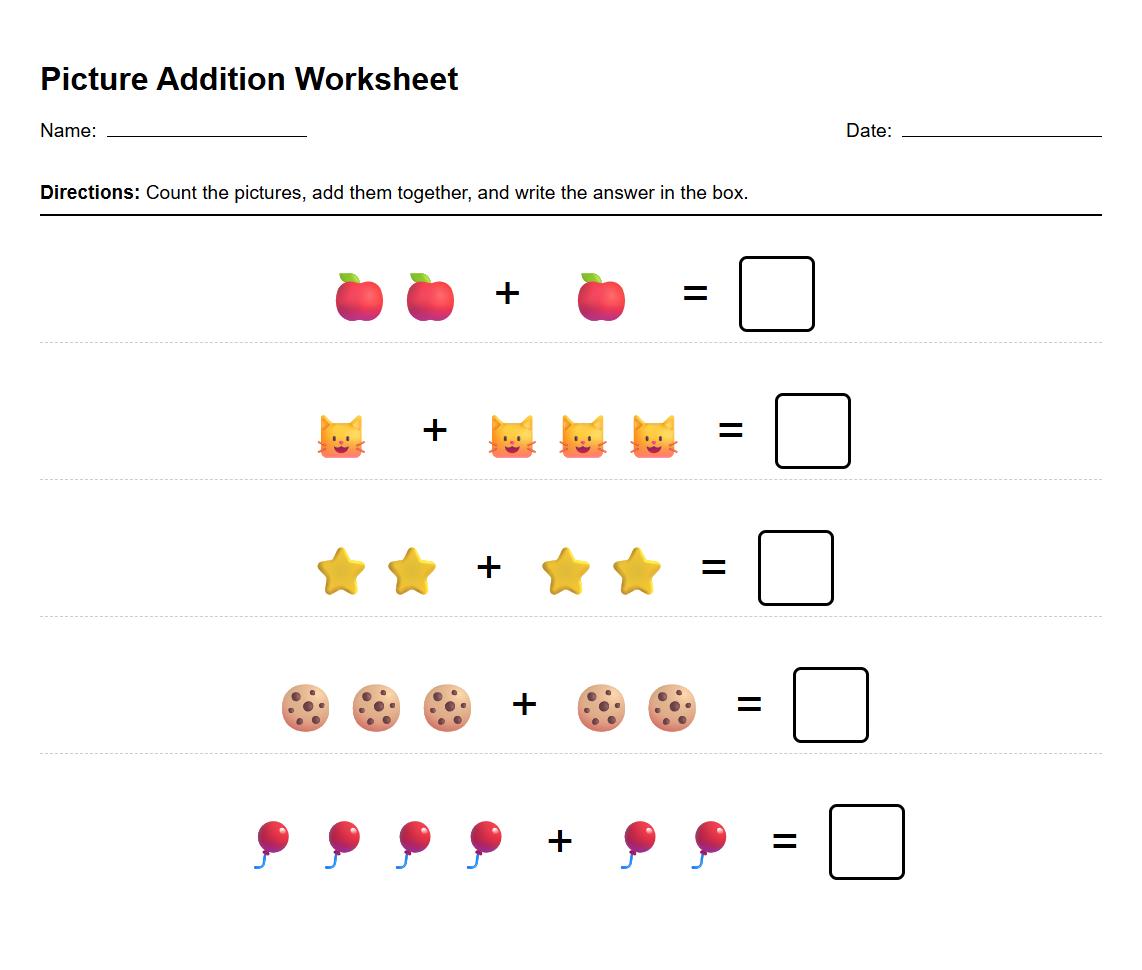
Picture-based Addition using Manipulatives Worksheet

Download PDF     Pin it

Addition with Domino Representation Worksheet
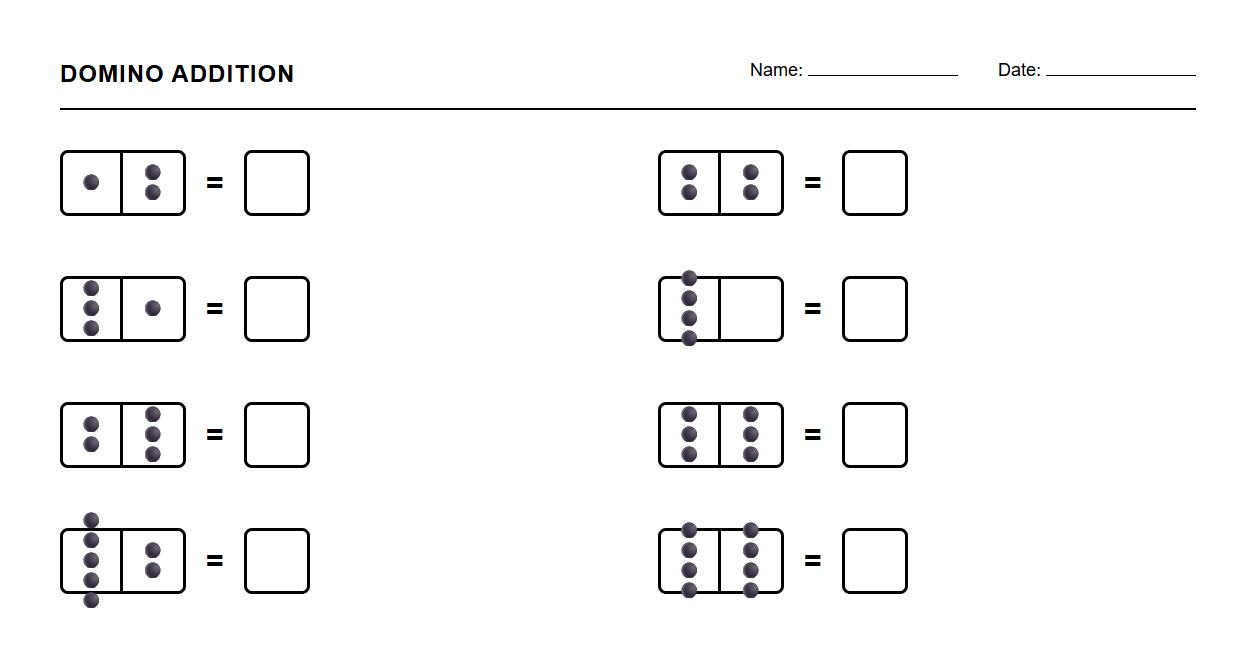
Addition with Domino Representation Worksheet

Download PDF     Pin it

Fill in the Missing Addend Math Worksheet
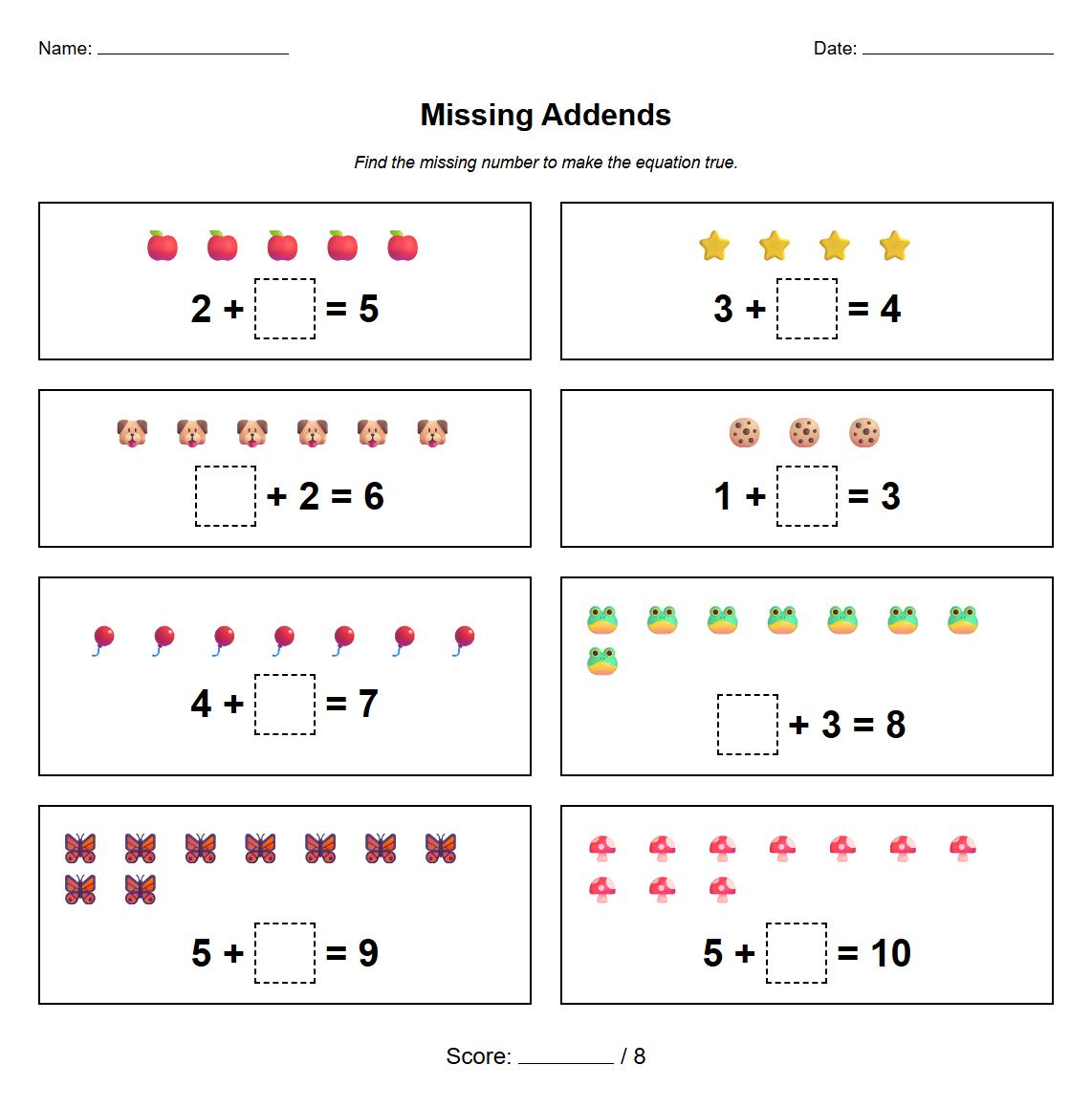
Fill in the Missing Addend Math Worksheet

Download PDF     Pin it

Number Line Strategy Addition Worksheet
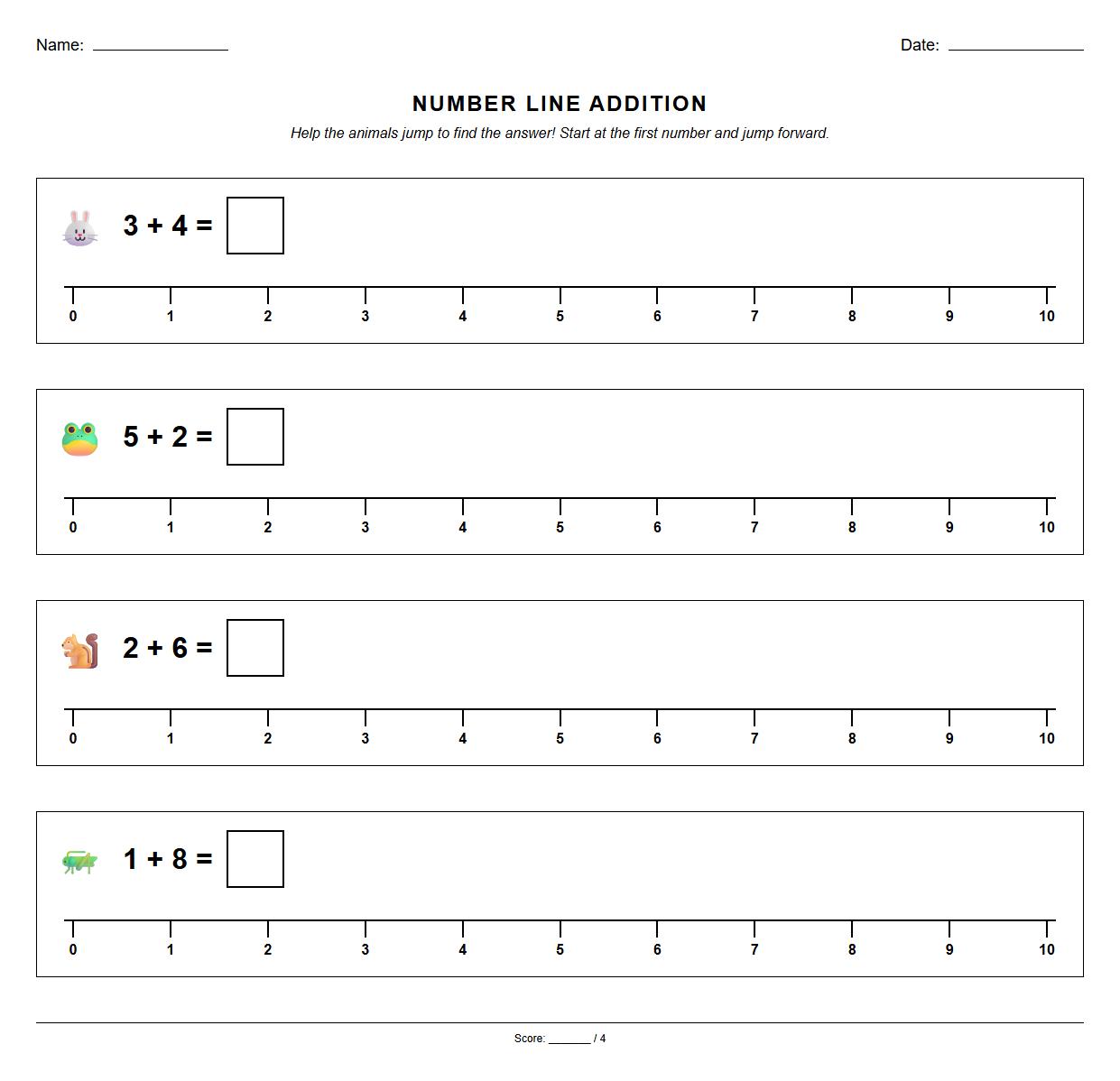
Number Line Strategy Addition Worksheet

Download PDF     Pin it

Addition with Dice Pattern Recognition Worksheet
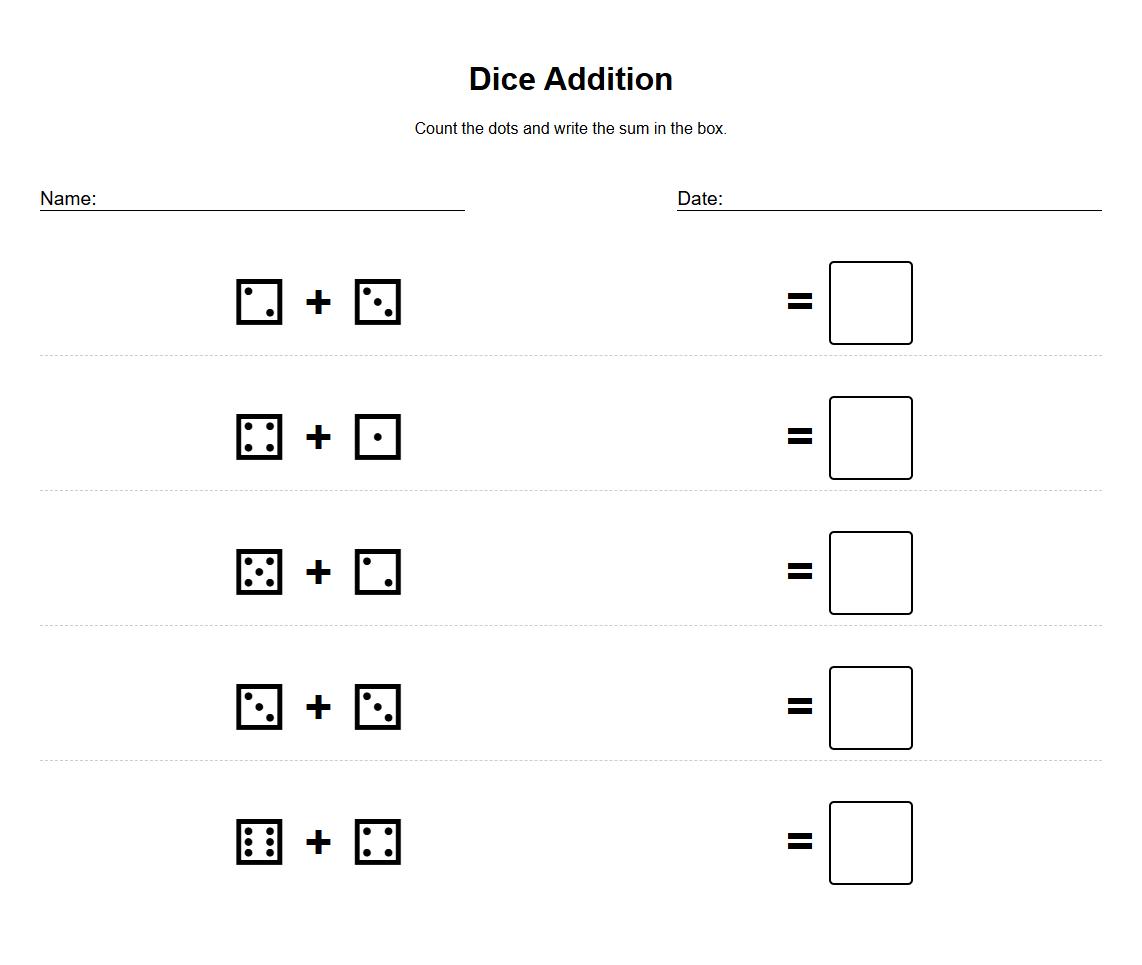
Addition with Dice Pattern Recognition Worksheet

Download PDF     Pin it

Color by Number Simple Addition Worksheet
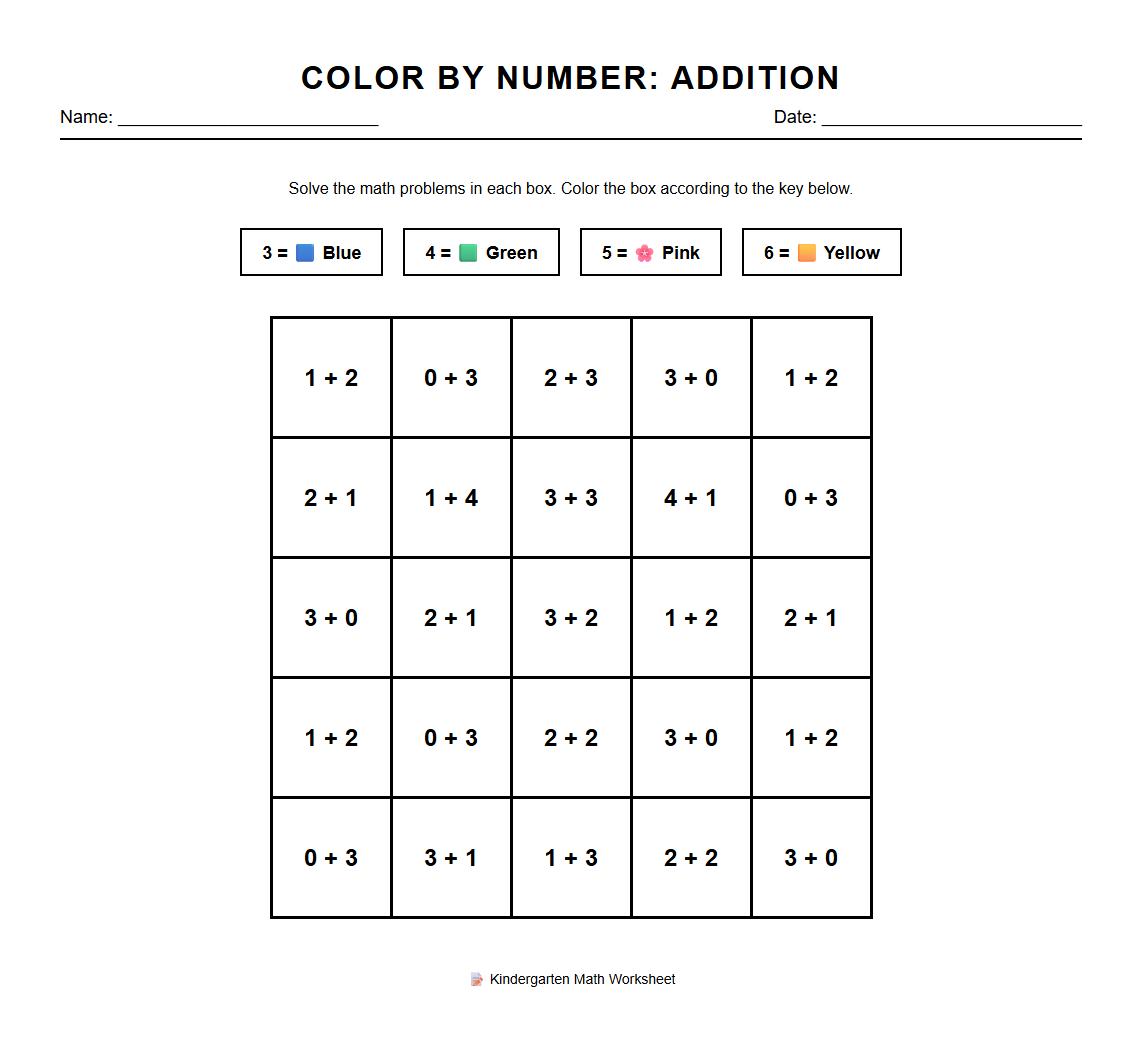
Color by Number Simple Addition Worksheet

Download PDF     Pin it

Phonics and Numbers Cross-Addition Worksheet
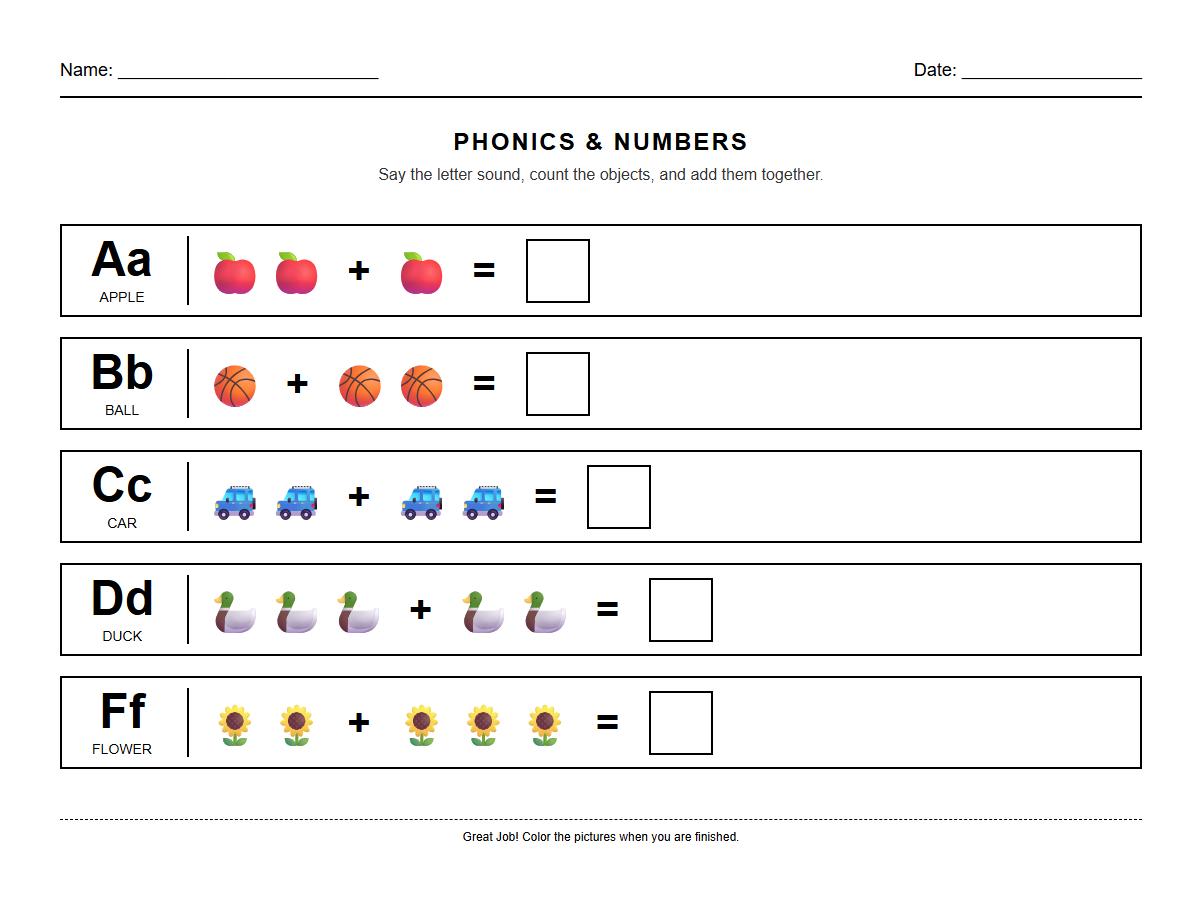
Phonics and Numbers Cross-Addition Worksheet

Download PDF     Pin it

Understanding Basic Addition

Adding numbers like two and three helps children grasp fundamental math skills. The sum of two and three is five, which introduces the concept of combining quantities. Teachers and parents can use objects or visuals to make this lesson more engaging. This reinforces the idea of numbers representing real items.

Counting Apples and Other Items

When adding four apples and one apple, children learn to find the total number of items, which is five. Physical objects like apples help young learners connect numbers to everyday items. This practice enhances both counting and addition skills. Encourage using real fruits or pictures for better understanding.

Simple Addition with Blocks and Stars

Adding one and five teaches children about increasing quantities, with a total of six. If you have three blocks and add two more, the new total is five blocks, illustrating addition practically. Combining three stars and one star shows that adding star quantities results in four stars. Using various objects keeps lessons interesting and relatable.

Summing Different Groups of Items

Adding five birds and two birds results in seven birds altogether, showing how addition combines groups. Similarly, two cars plus three more equals five cars, teaching children to sum groups physically present. Adding zero and four introduces the idea that adding zero does not change the total, which is four. These examples help children understand the effects of addition in diverse contexts.


More in Mathematics Category


About the author. Nylen Smith is a dedicated educator and cofounder of KWorksheet.com, a popular platform specializing in high-quality kindergarten worksheets and printable activities.

Disclaimer. The information provided in this document is for general informational purposes and/or document sample only and is not guaranteed to be factually right or complete. Please report to us via contact-us page if you find and error in this page, thanks.

Comments

No comment yet