Simple Number Bonds and Basic Addition Worksheet for Kindergarten

📅 Feb 19, 2025 👤 Nylen Smith

Simple number bonds and basic addition worksheets help kindergarten students build foundational math skills by visualizing number relationships and improving their ability to add small numbers. These exercises promote number sense and reinforce addition through engaging activities tailored for young learners. Explore the available worksheets to support your child's early math development.

Number Bonds to 10 worksheet using pictorial representations
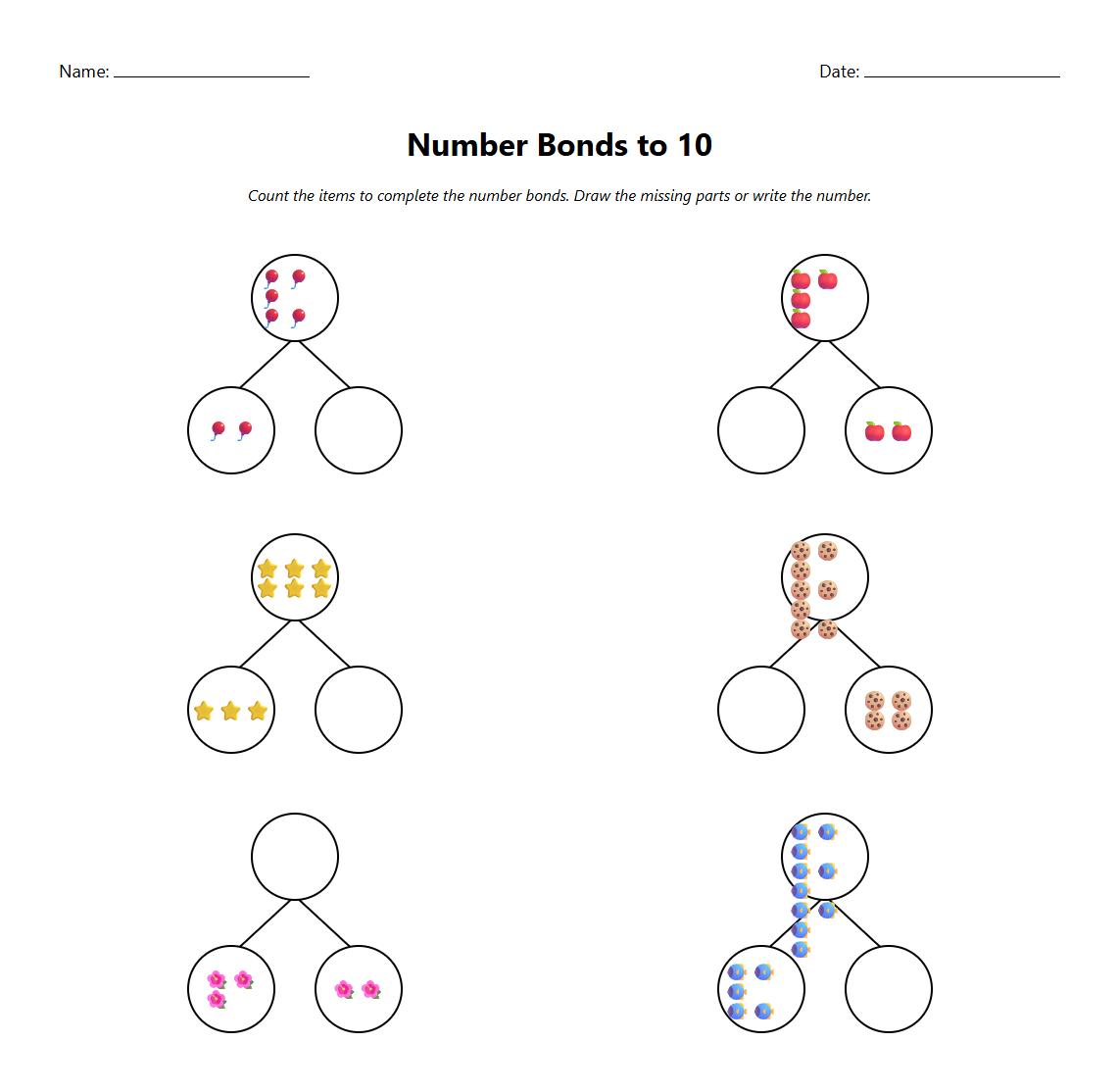
Number Bonds to 10 worksheet using pictorial representations

Download PDF     Pin it

Basic Addition worksheet with sum within 5 using ten frames
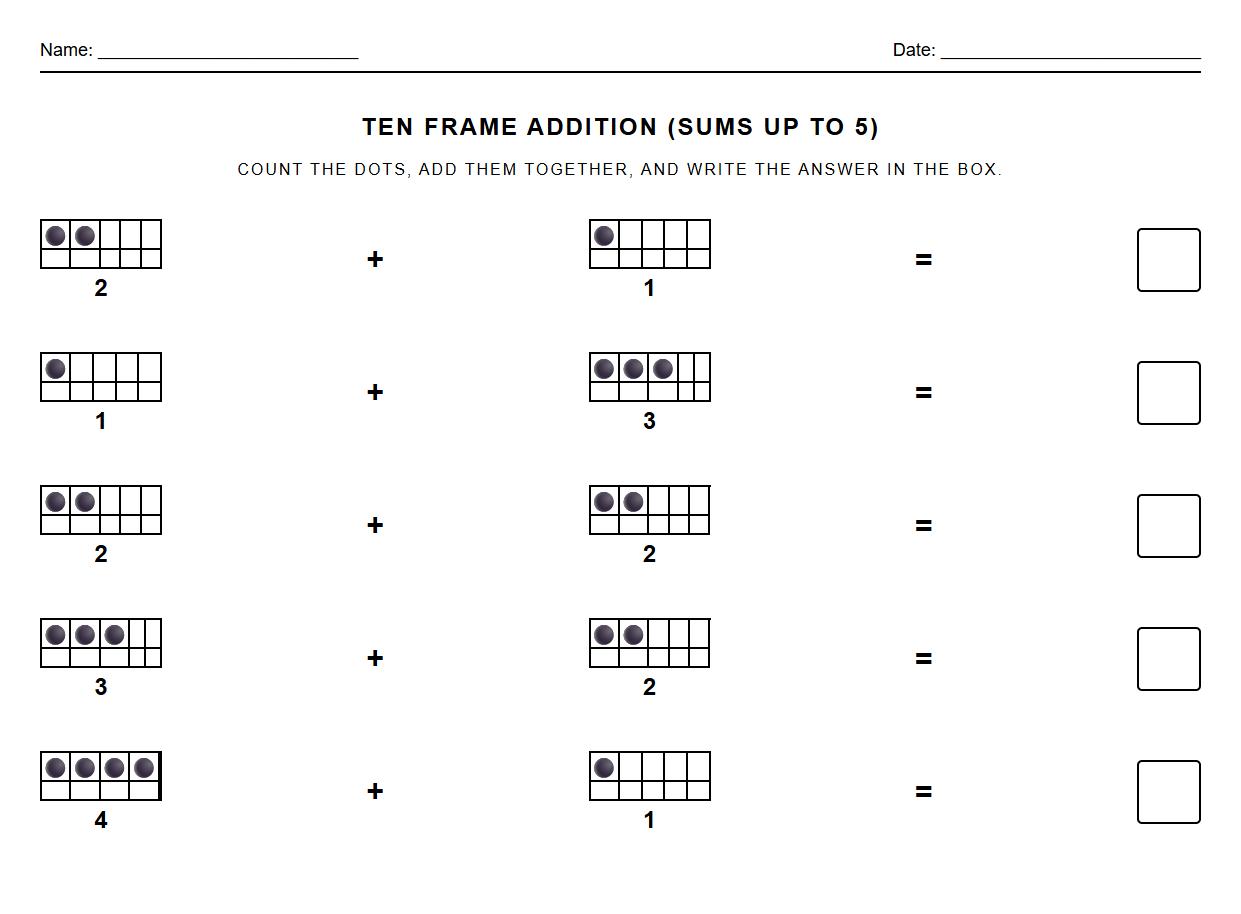
Basic Addition worksheet with sum within 5 using ten frames

Download PDF     Pin it

Number Bonds with missing parts using part-part-whole models
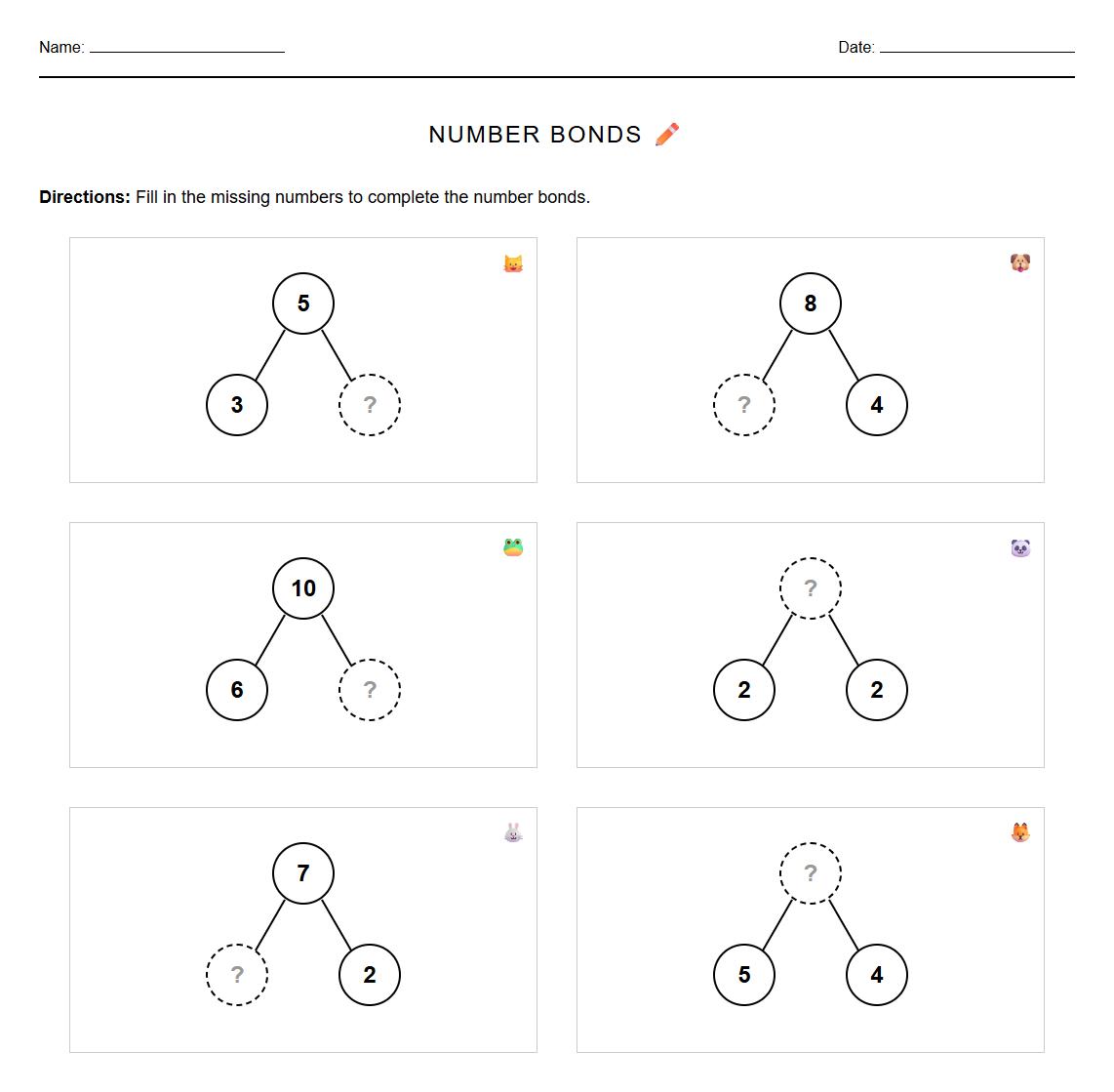
Number Bonds with missing parts using part-part-whole models

Download PDF     Pin it

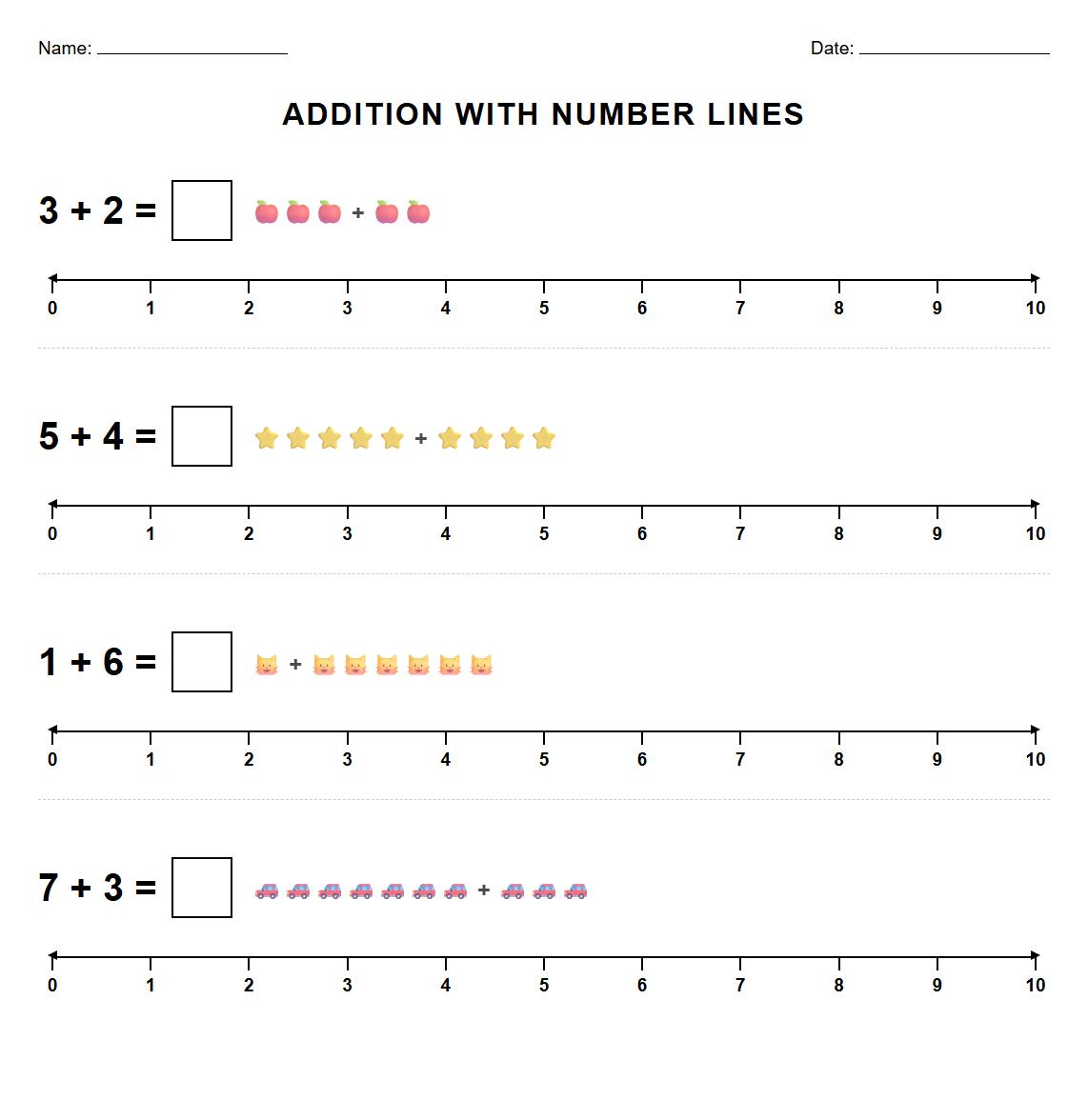
Addition with number lines up to 10

Addition with number lines up to 10

Download PDF     Pin it

Domino addition worksheet for number bonds
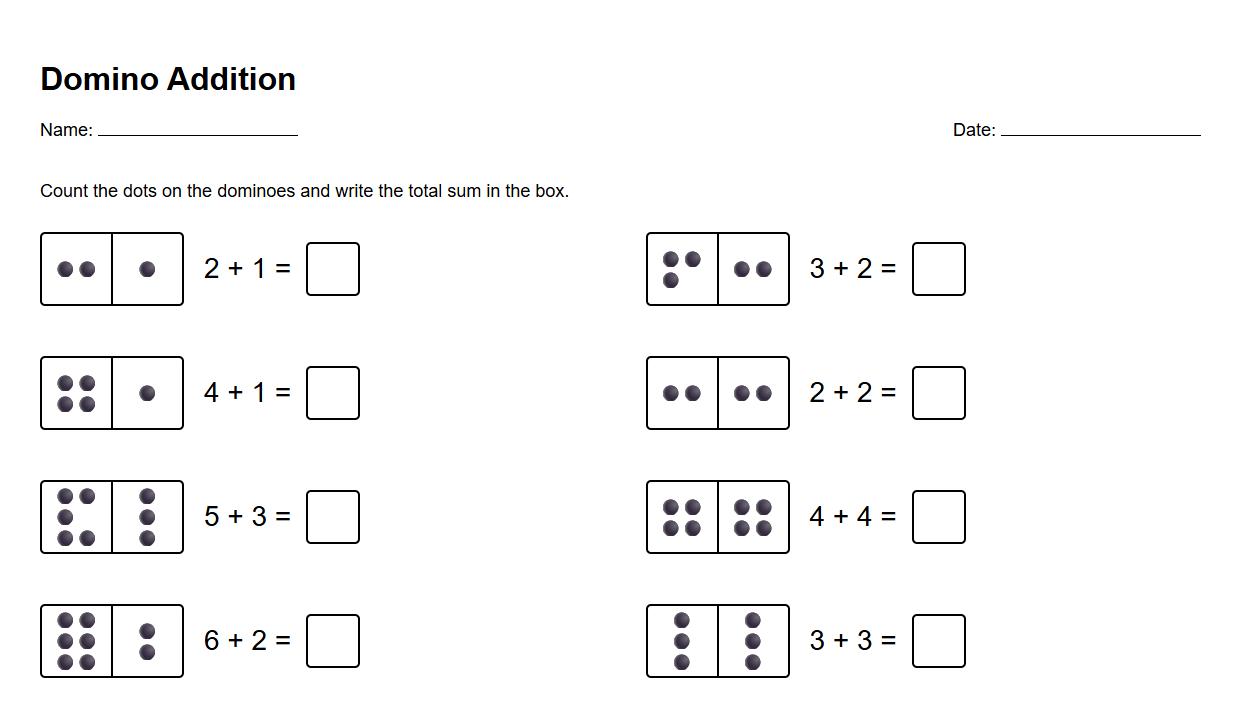
Domino addition worksheet for number bonds

Download PDF     Pin it

Fill-in-the-blank addition equations with visual aids
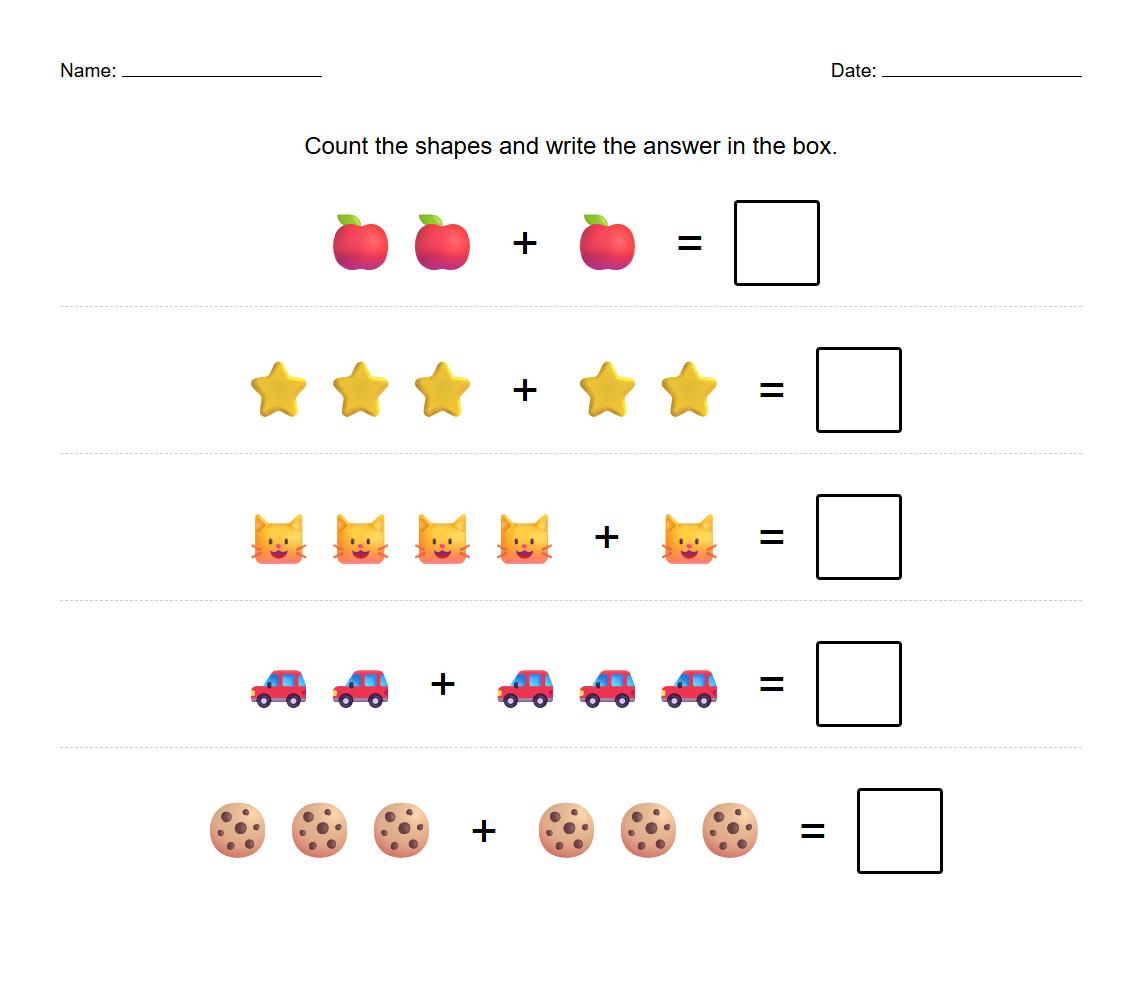
Fill-in-the-blank addition equations with visual aids

Download PDF     Pin it

Number Bond matching activity with counters and objects
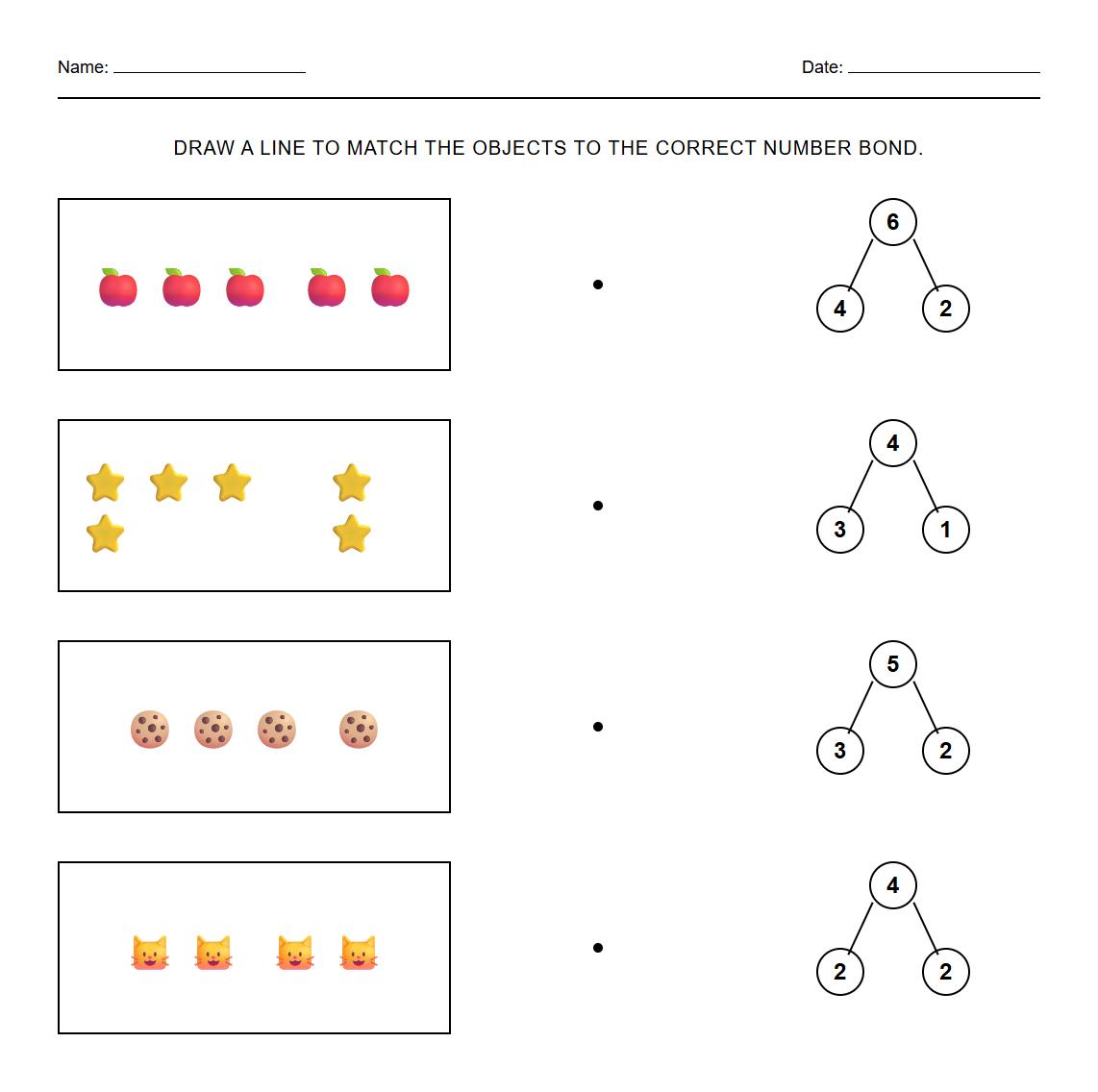
Number Bond matching activity with counters and objects

Download PDF     Pin it

Color by sum addition practice emphasizing mental math
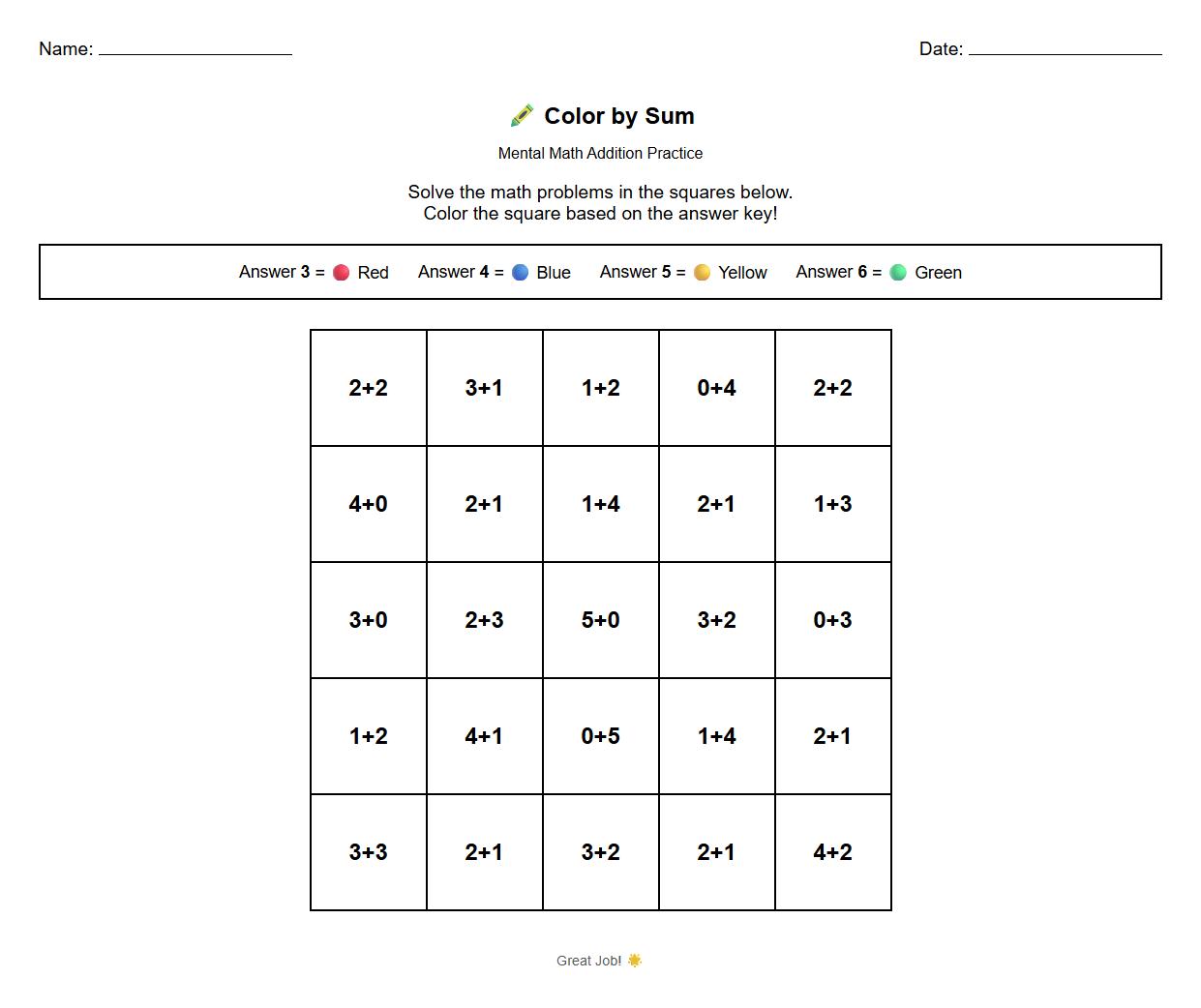
Color by sum addition practice emphasizing mental math

Download PDF     Pin it

Cut and paste sets for completing number bonds
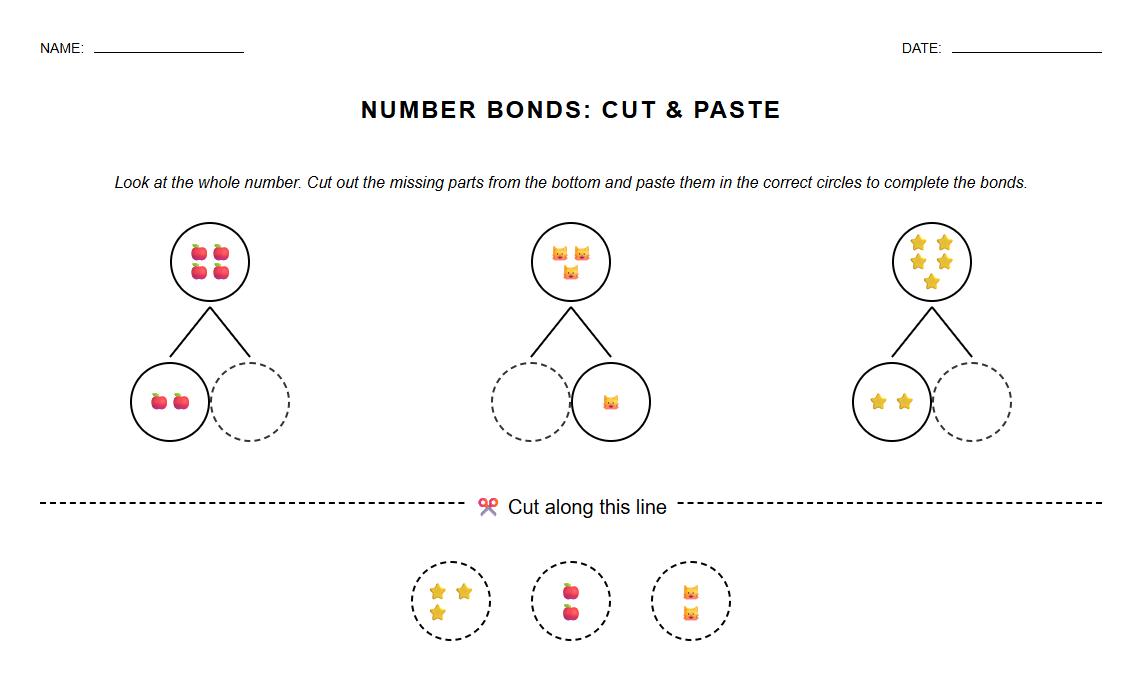
Cut and paste sets for completing number bonds

Download PDF     Pin it

Addition stories worksheet with real life scenarios and manipulatives
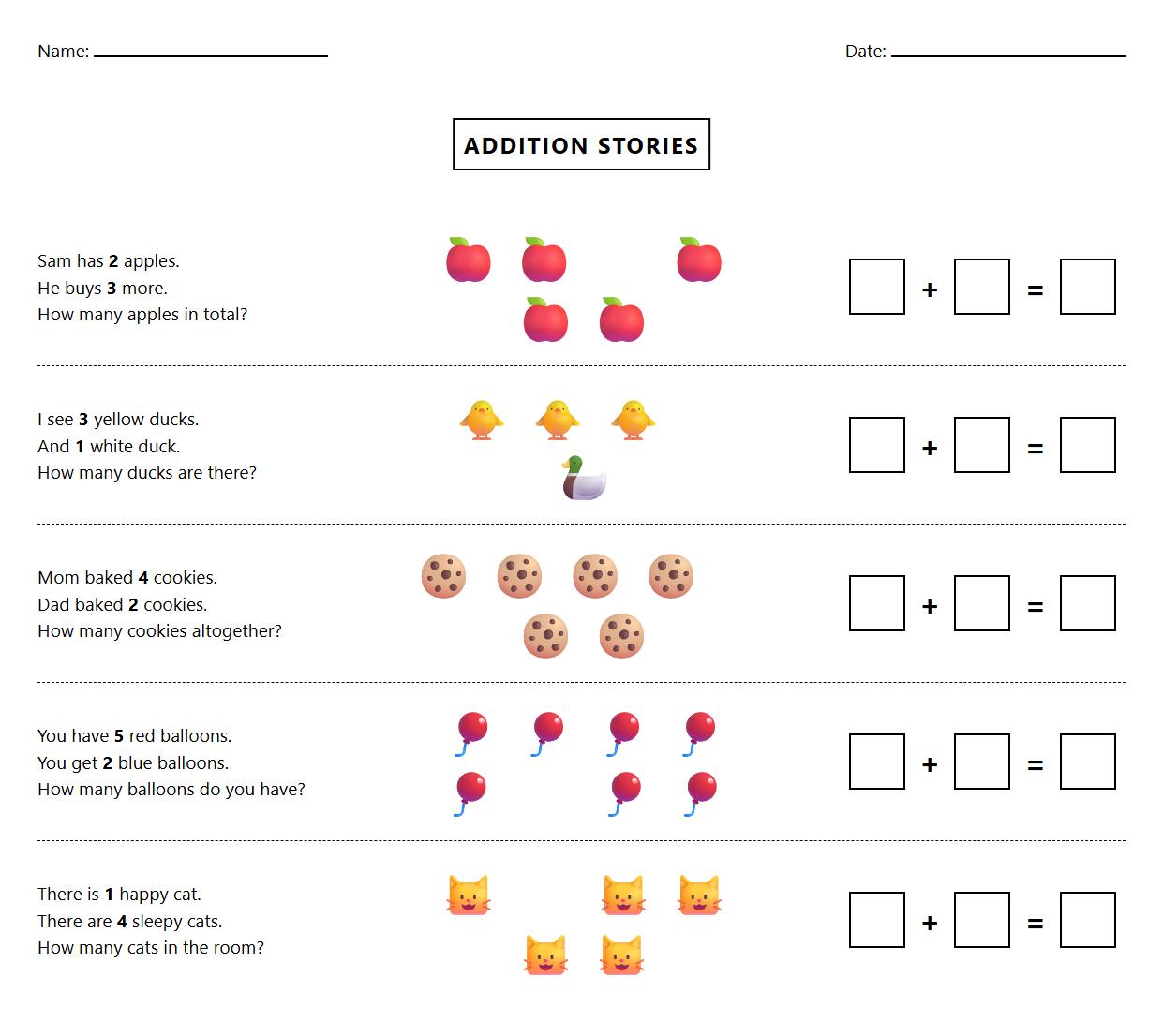
Addition stories worksheet with real life scenarios and manipulatives

Download PDF     Pin it

Understanding Number Bonds to Five

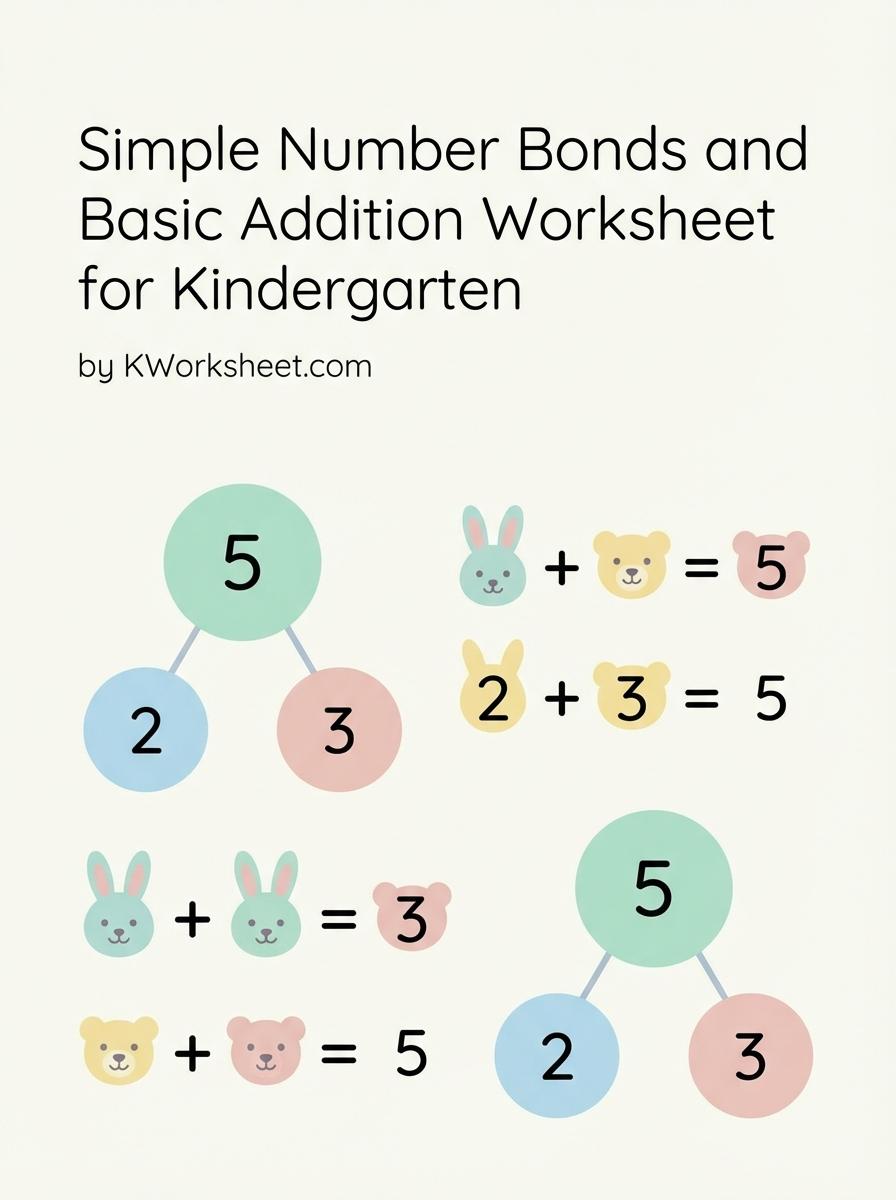
Teaching number bonds that make five helps children grasp basic addition facts. Guide children to find pairs like 2 + 3 or 1 + 4, which add up to five. This reinforces foundational math skills and boosts confidence in simple addition.

Exploring Addition Combinations for Four

Encourage learners to discover all the ways to make the number four using addition, such as 1+3, 2+2, or 0+4. This activity enhances their understanding of number relationships and flexibility with numbers. It also prepares them for more complex math concepts.

Practicing Simple Addition Equations

Ask children, "Which number plus three equals six?" to help them practice solving for missing addends. This strengthens their problem-solving skills and number sense. Using visual aids like number lines or counters can support their learning.

Interactive Fill-in-the-Blank Exercises

Fill-in-the-blank questions like "two plus ___ equals five" stimulate critical thinking and recall of addition facts. They promote active participation from both teachers and parents, making learning more engaging. Encourage children to explain their answers for deeper understanding.

Understanding One More Than a Number

Questions such as "What is one more than four?" help build the concept of incremental counting. Children learn to add one to a given number, which is crucial for developing mental math skills. Visual counting objects can be useful to illustrate this idea.

Finding All Addition Pairs for Three

Challenge children to identify all pairs of numbers that add up to three, like 0+3, 1+2, or 3+0. This activity encourages exploration and reinforces their understanding of addition combinations. It also aids memory retention of basic math facts.

Simple Addition Practice: Two Plus Two

Practicing addition with problems such as "Add two and two" introduces children to the concept of sum calculation. Repetition of these simple sums builds fluency and confidence in math skills. Using physical objects like blocks can make this more tangible.

Identifying Missing Numbers in Addition

Ask, "What number do you need to add to one to make four?" to help children practice finding the missing addend. This strengthens their ability to solve addition problems flexibly. Encouraging them to use counting strategies supports learning.

Applying Addition in Real-Life Scenarios

Use practical examples like, "If you have three apples and get two more, how many apples do you have?" to demonstrate addition in everyday contexts. This helps children connect math to real life, making learning meaningful and relevant. Visual aids like pictures of apples are beneficial here.

Choosing the Correct Number to Complete an Addition

Provide exercises such as "Circle the correct answer: one plus ___ equals three" to engage children in selecting the right addend. This boosts decision-making skills and understanding of addition facts. Multiple choice format makes it fun and interactive.


More in Mathematics Category


About the author. Nylen Smith is a dedicated educator and cofounder of KWorksheet.com, a popular platform specializing in high-quality kindergarten worksheets and printable activities.

Disclaimer. The information provided in this document is for general informational purposes and/or document sample only and is not guaranteed to be factually right or complete. Please report to us via contact-us page if you find and error in this page, thanks.

Comments

No comment yet