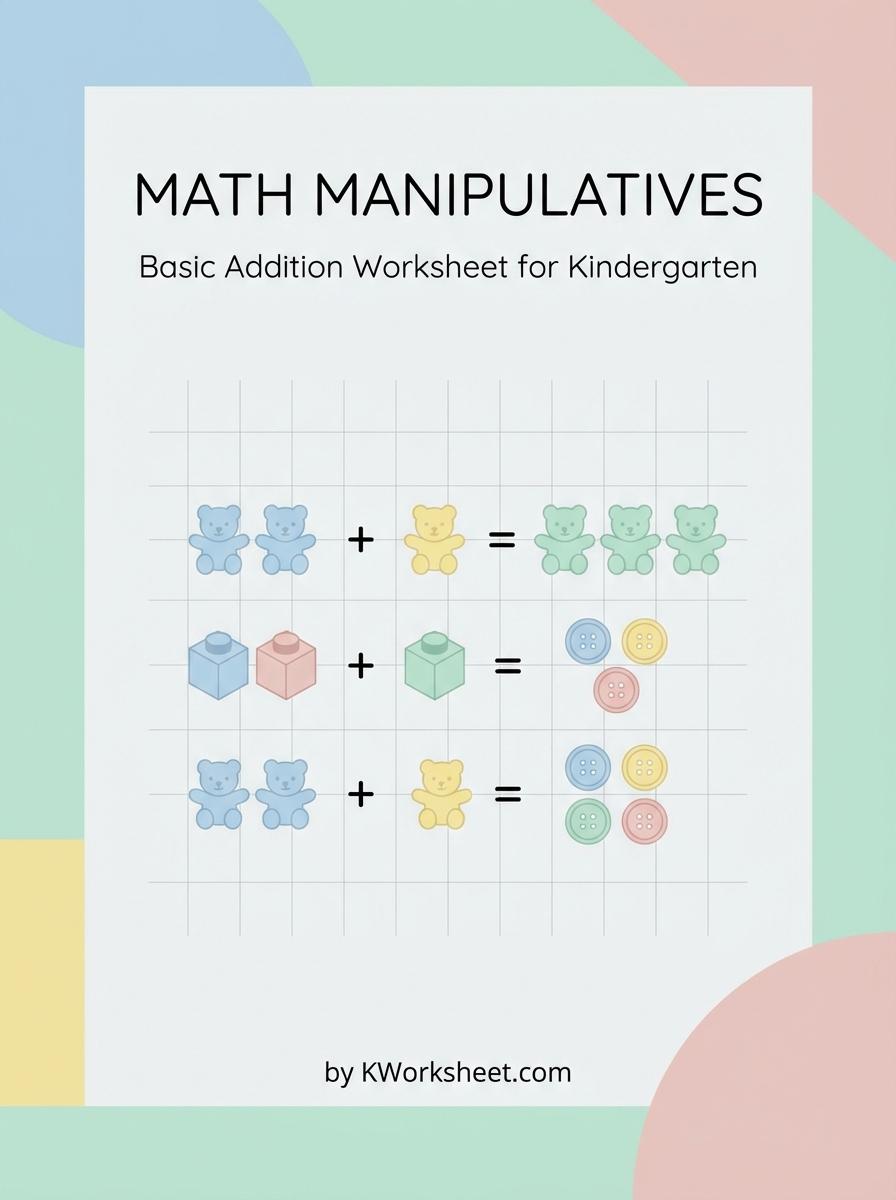
Hands On Basic Addition Worksheet for Kindergarten Learners

📅 Mar 13, 2025 👤 Nylen Smith

Kindergarten learners develop essential math skills by practicing basic addition through hands-on activities that build number recognition and counting confidence. Engaging with concrete objects and visual aids helps young students grasp addition concepts in an interactive way. Explore our collection of hands-on basic addition worksheets to support early math learning effectively.

Manipulative Based Addition Worksheet using counting blocks
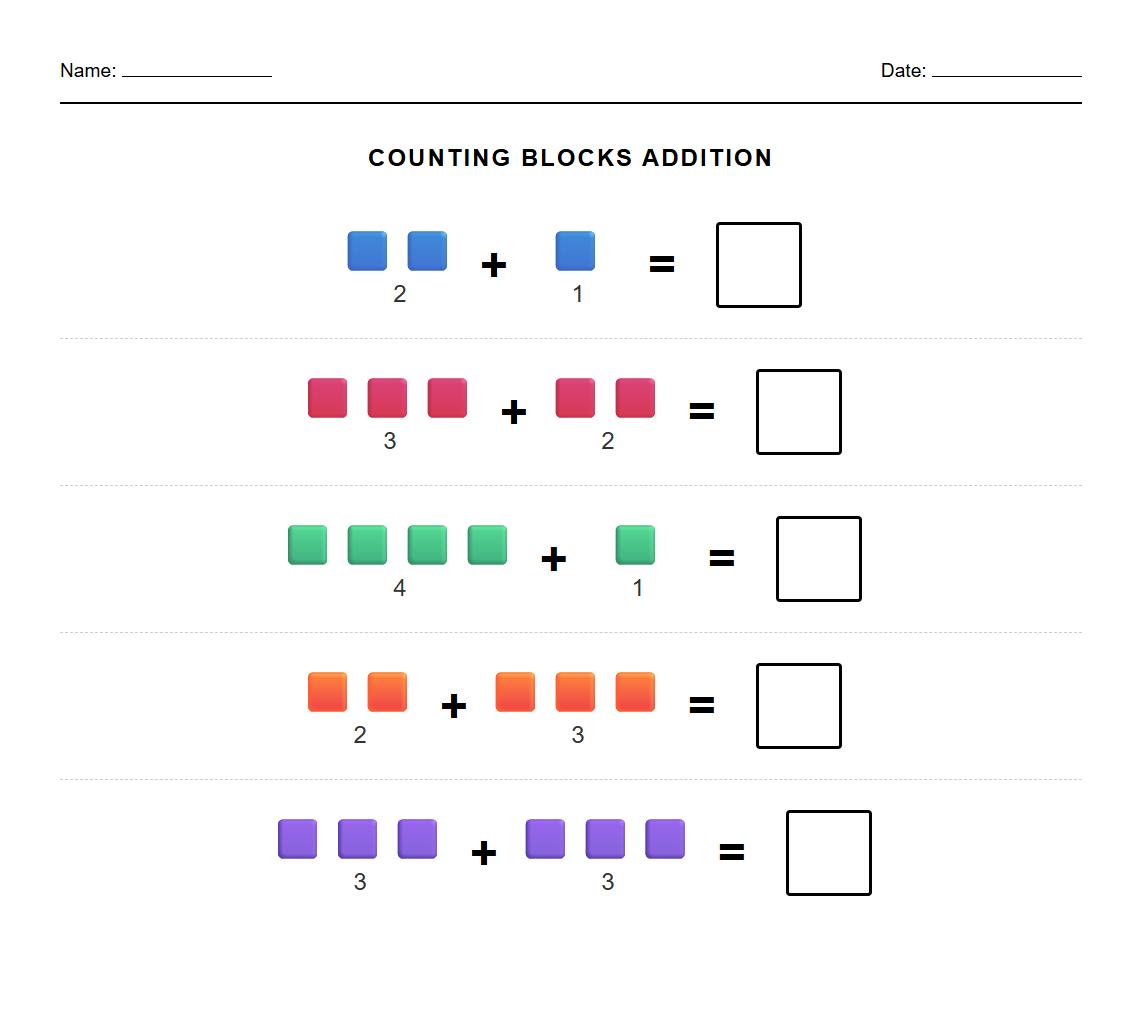
Manipulative Based Addition Worksheet using counting blocks

Download PDF     Pin it

Ten Frame Addition Worksheet for early math skills
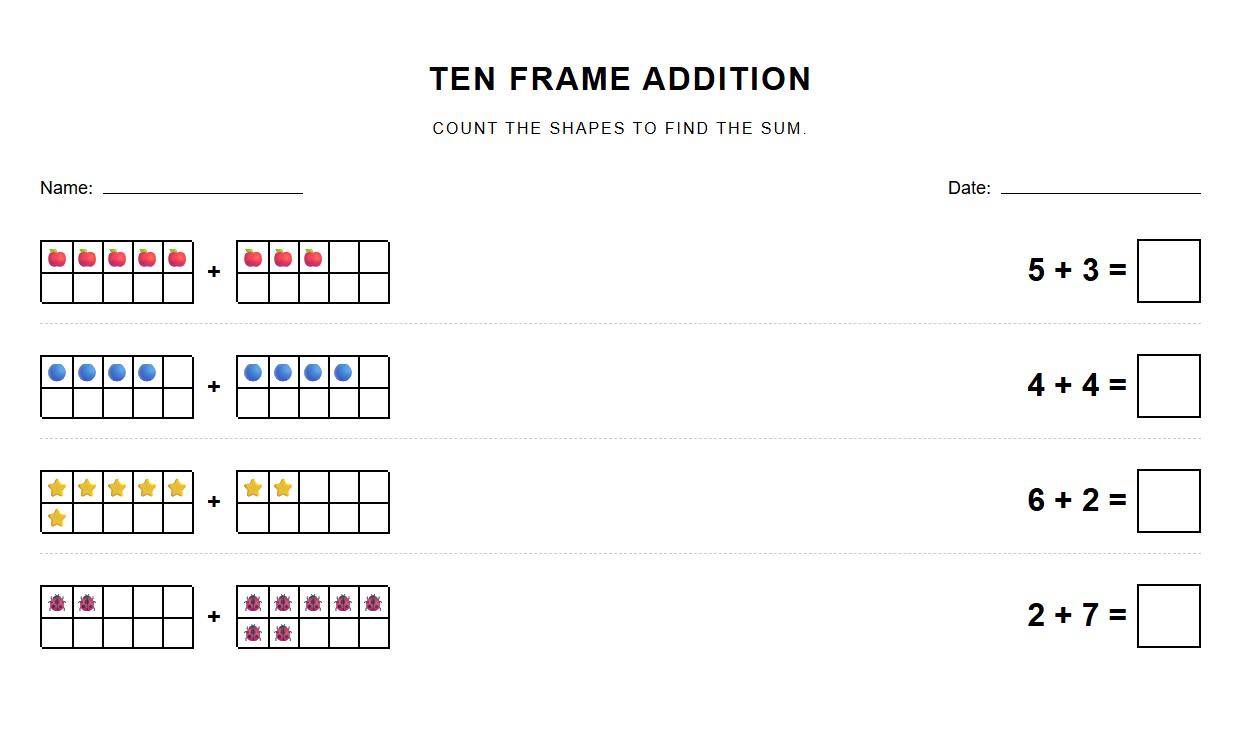
Ten Frame Addition Worksheet for early math skills

Download PDF     Pin it

Picture Addition Worksheet with visual objects
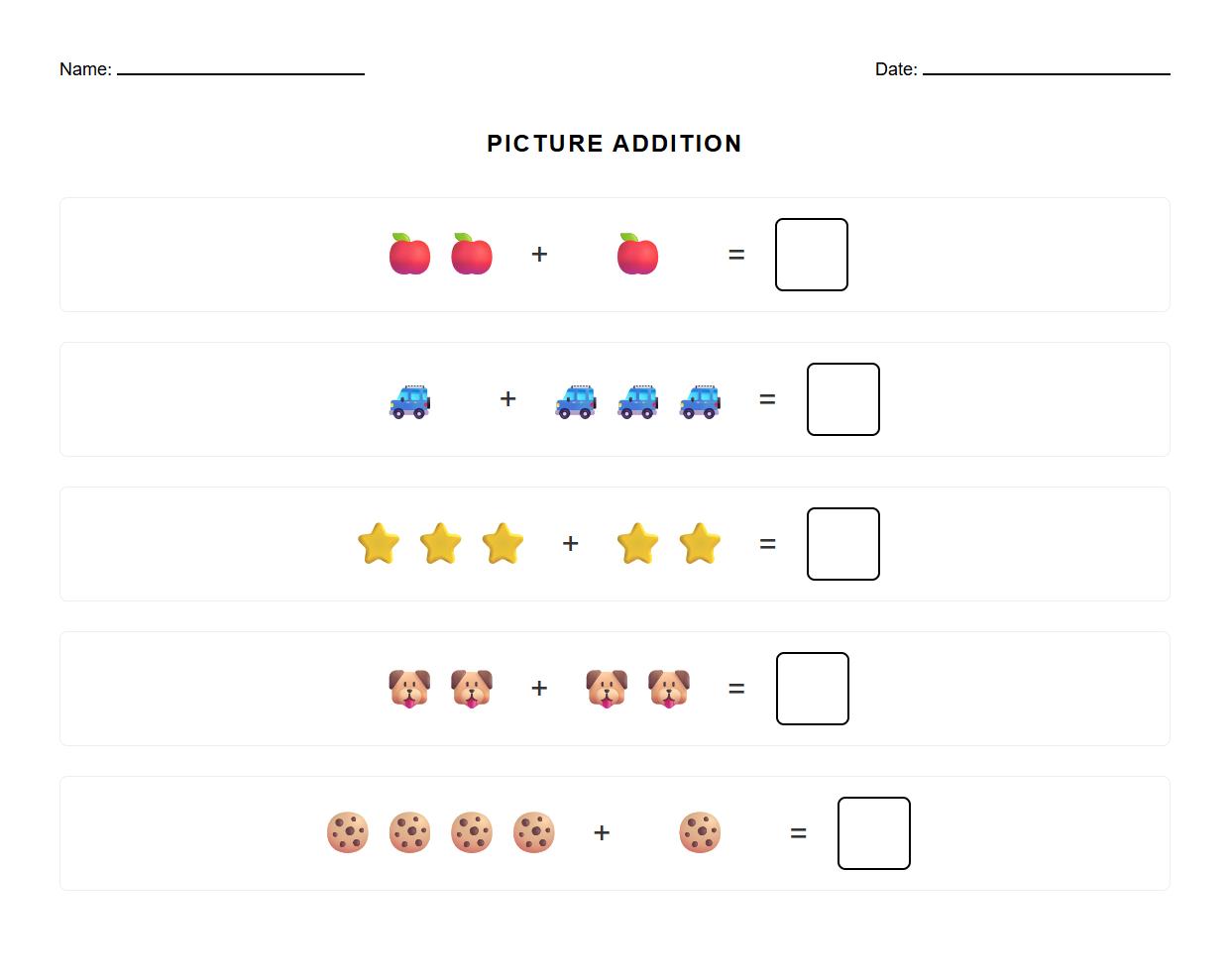
Picture Addition Worksheet with visual objects

Download PDF     Pin it

Number Line Addition Worksheet to support counting strategies
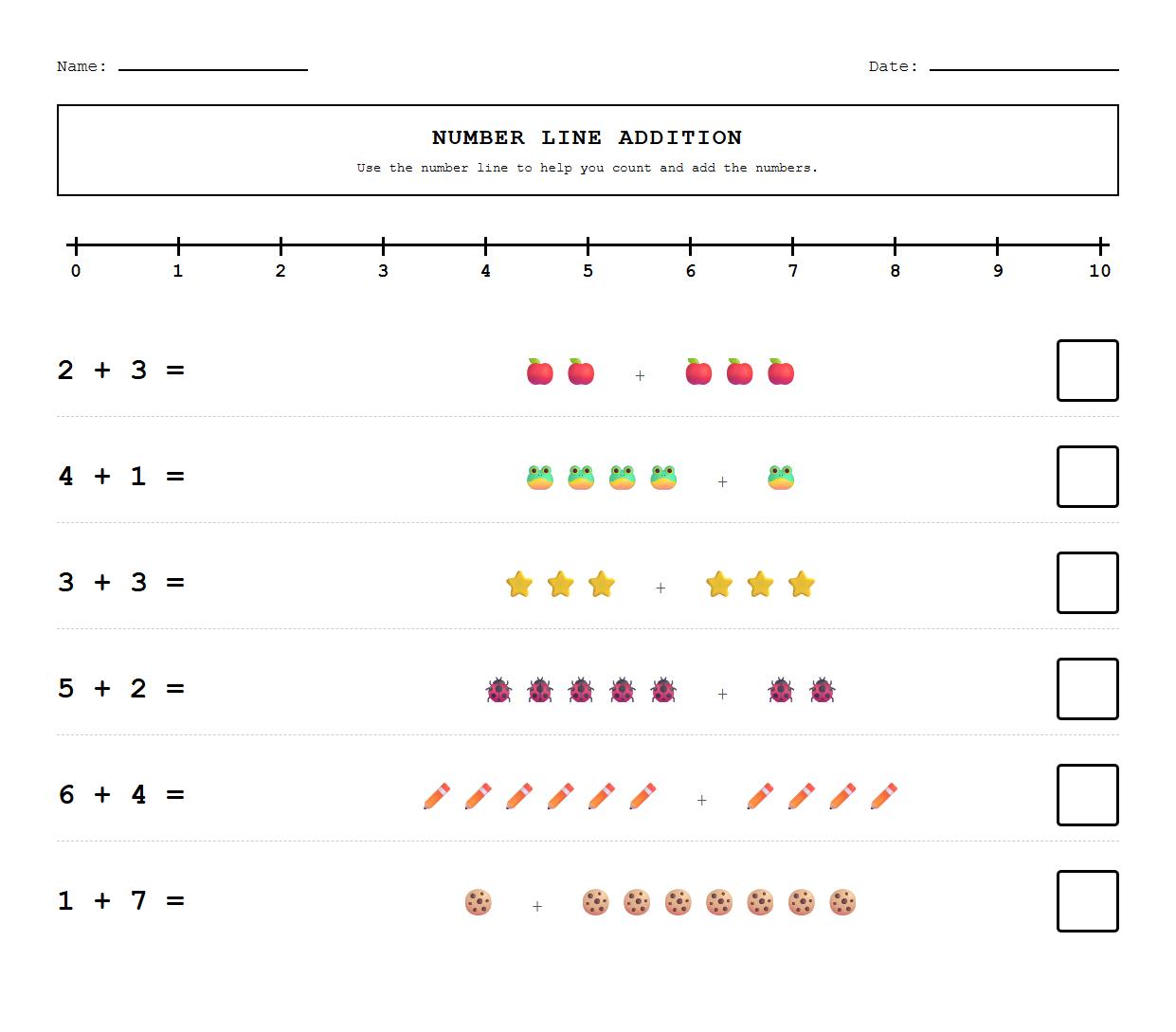
Number Line Addition Worksheet to support counting strategies

Download PDF     Pin it

Dice Roll Addition Worksheet integrating subitizing
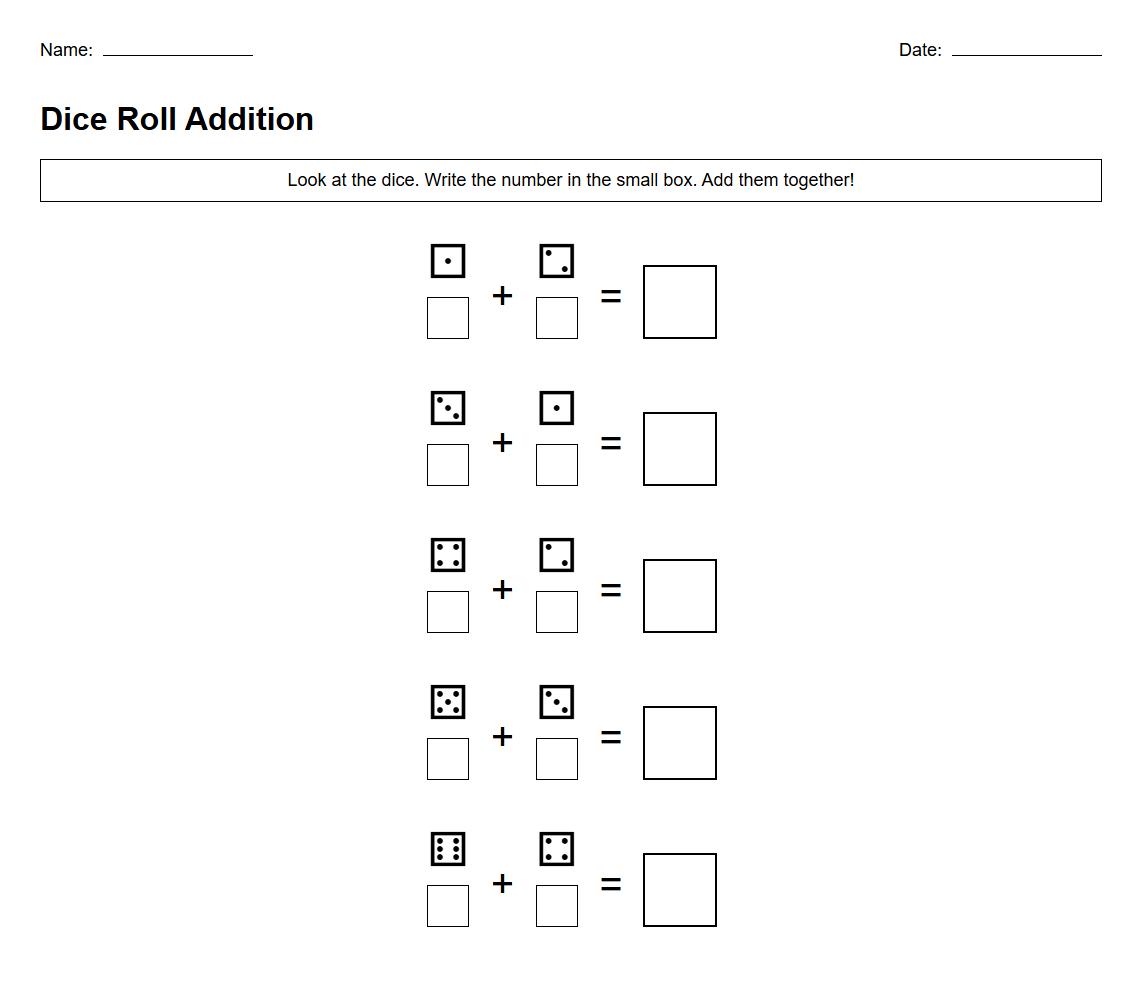
Dice Roll Addition Worksheet integrating subitizing

Download PDF     Pin it

Finger Counting Addition Worksheet for tactile learning
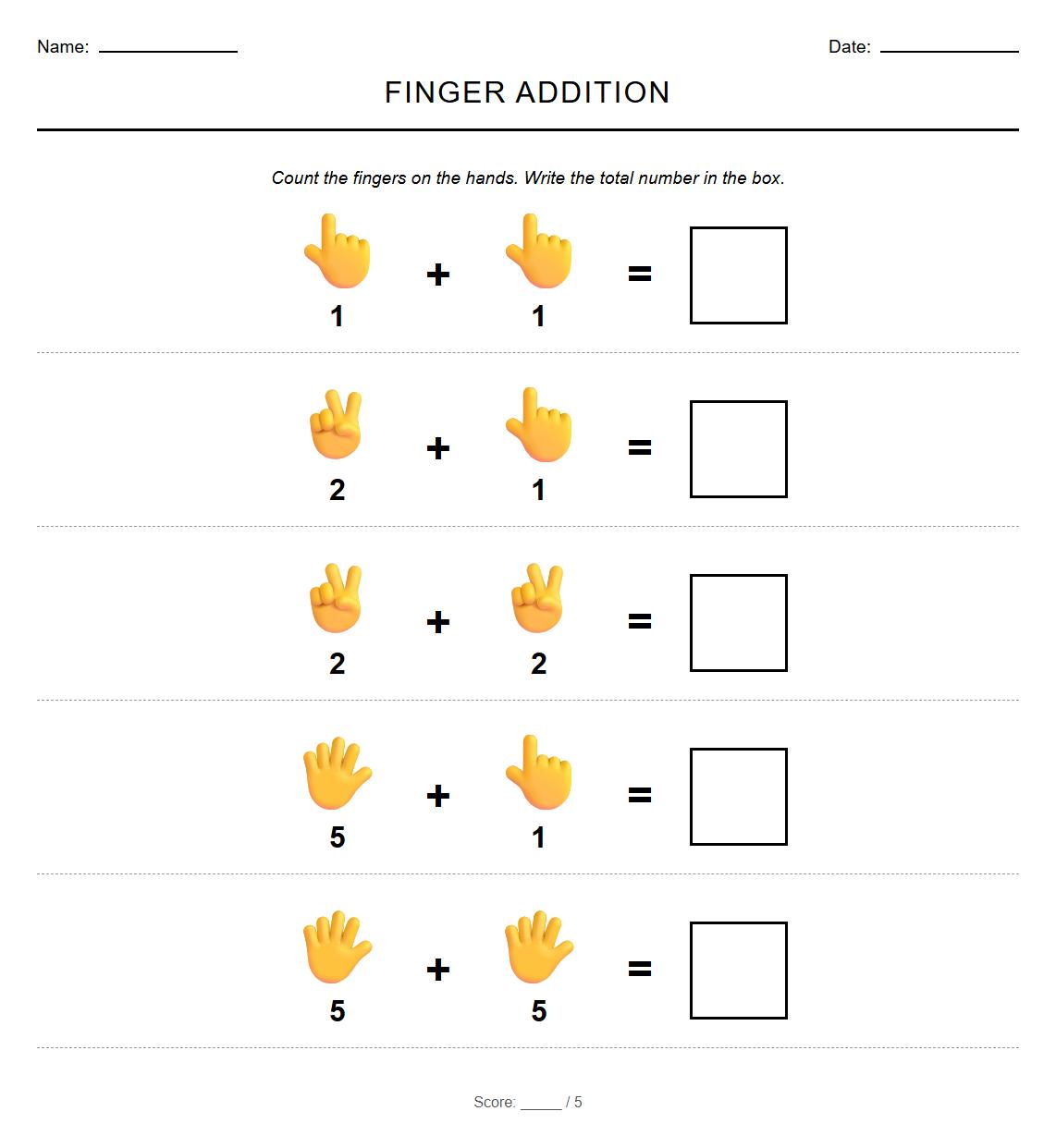
Finger Counting Addition Worksheet for tactile learning

Download PDF     Pin it

Addition with Dominos Worksheet to develop pattern recognition
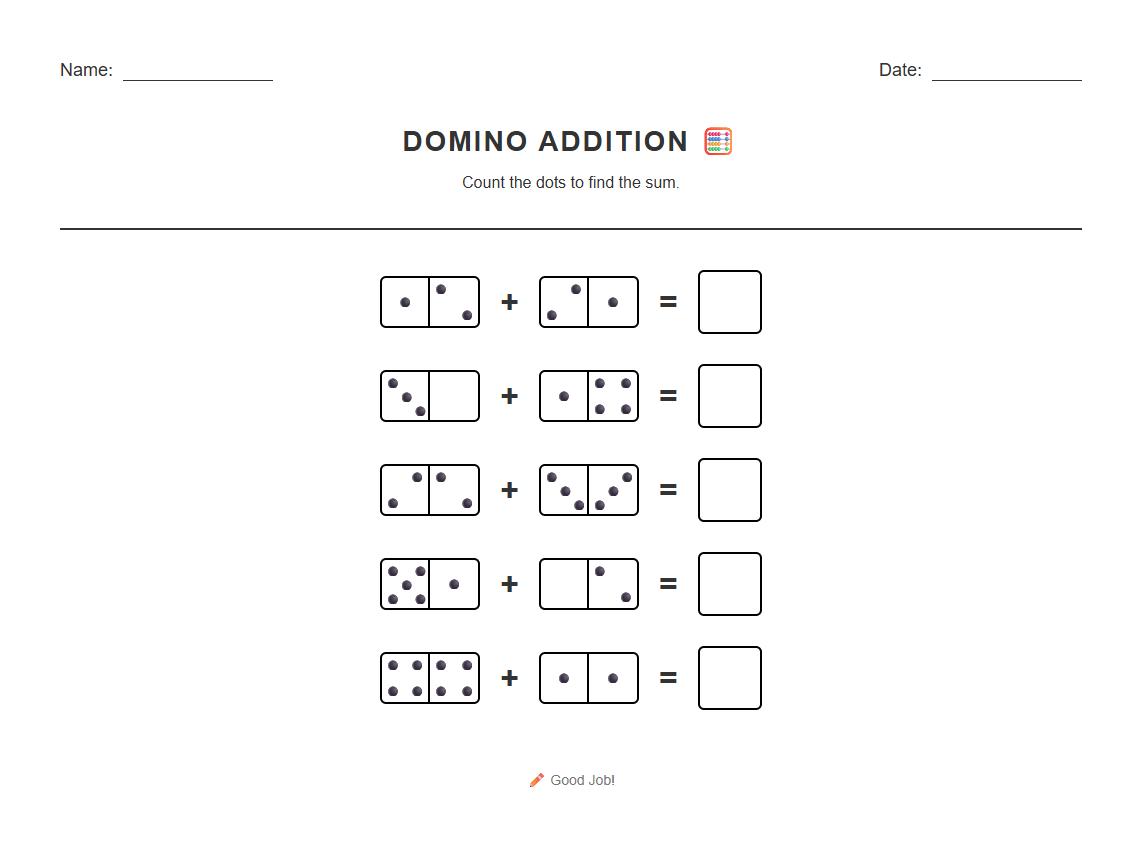
Addition with Dominos Worksheet to develop pattern recognition

Download PDF     Pin it

Cut and Paste Addition Activity Worksheet using math stories
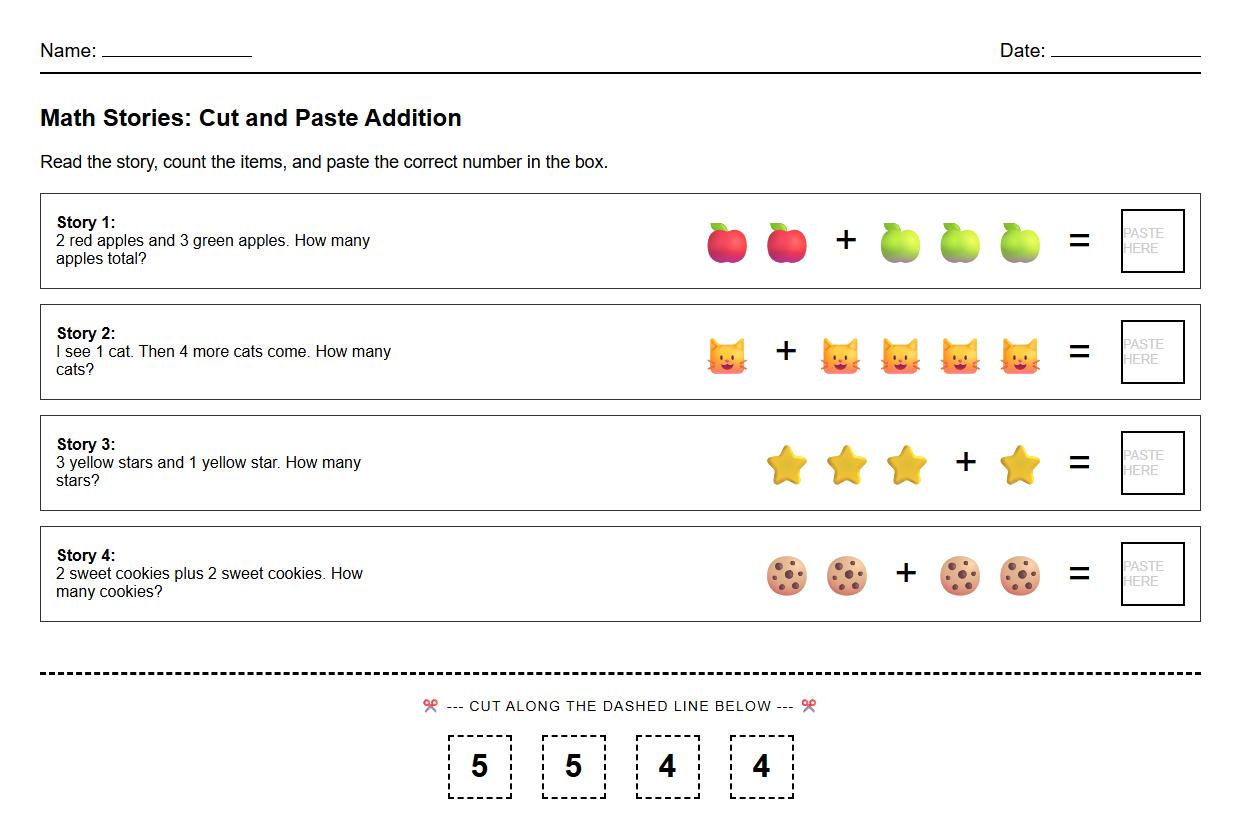
Cut and Paste Addition Activity Worksheet using math stories

Download PDF     Pin it

Missing Addend Worksheet for building algebraic thinking
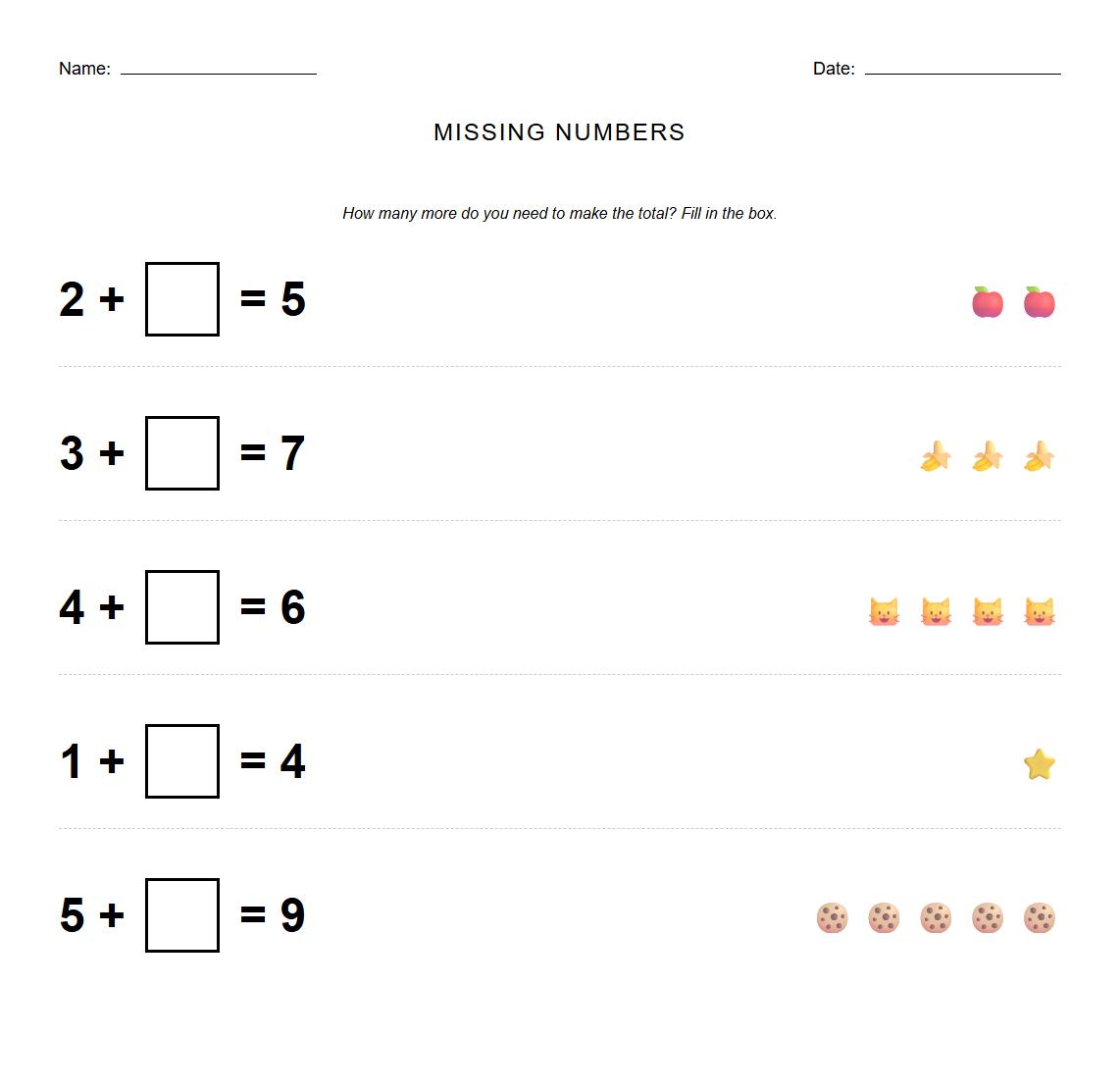
Missing Addend Worksheet for building algebraic thinking

Download PDF     Pin it

Phonics and Number Matching Addition Worksheet for cross curricular learning
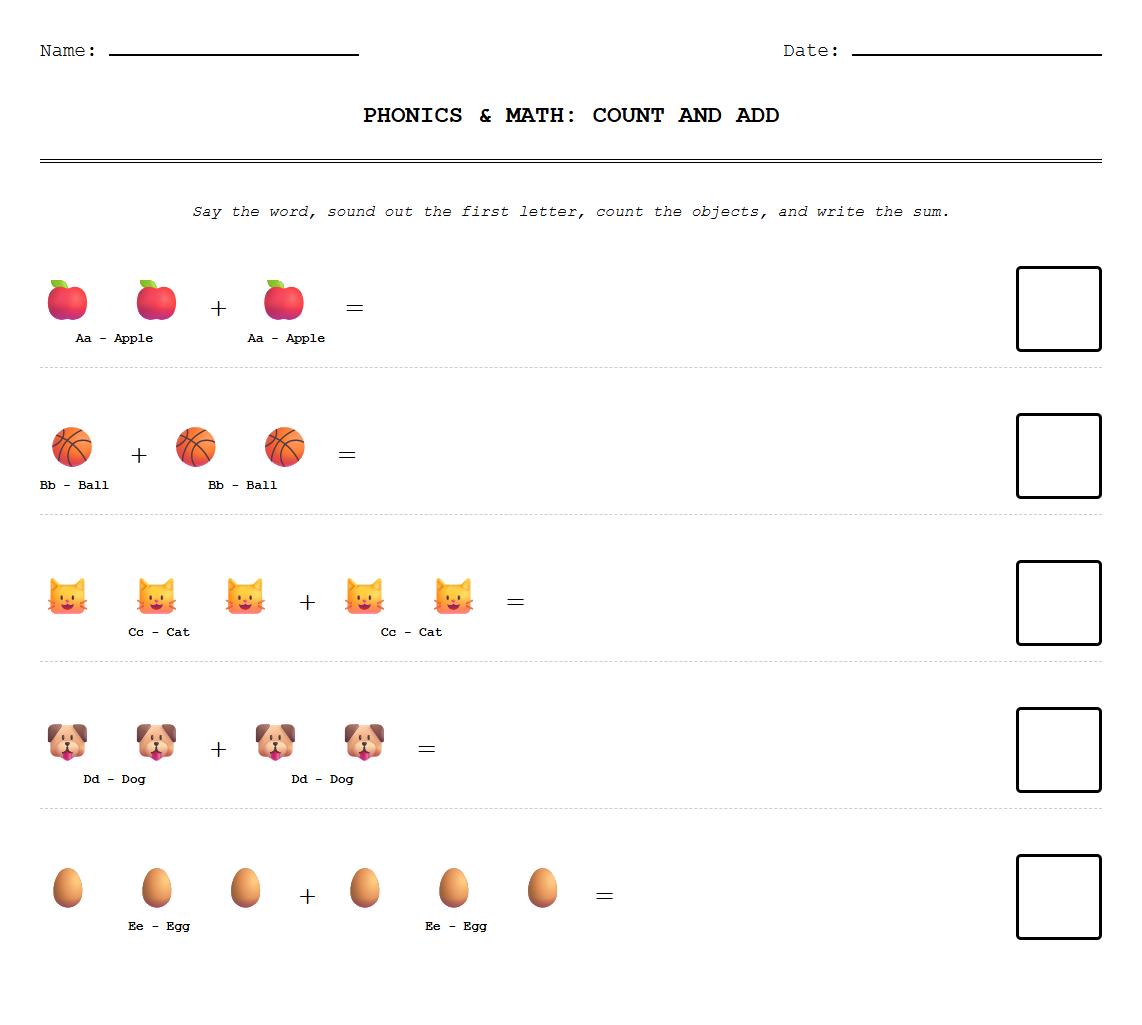
Phonics and Number Matching Addition Worksheet for cross curricular learning

Download PDF     Pin it

Objects for Solving Addition Problems

Using manipulatives like counters, blocks, or beads can help children visualize addition problems. These objects make abstract concepts concrete, allowing kids to physically combine groups. For young children, practicing with basic money and coin counting worksheets is an excellent hands-on activity. Teachers and parents should encourage hands-on learning to reinforce understanding. Simple, colorful items often capture children's interest best.

Adding Groups Together

Ask children to count how many items they have after combining the groups. This helps them grasp the concept of addition as joining sets. Using simple counting worksheets with clear groupings makes counting easier and more accurate. Reinforce the idea that addition answers the question, "How many now?"

Combining Two Numbers

Identify which two numbers are being combined in each problem. This step builds understanding of the parts that make a whole. Encourage children to say the numbers aloud as they add them together, for example, with number identification worksheets. This verbalization supports number recognition and addition fluency.

Drawing Sums Using Pictures or Counters

Ask children to draw pictures or use counters to represent the sum. Visual representation helps students internalize the addition process. Quantities recognition worksheets can creatively link numbers with real-world objects for better comprehension.

Counting All Blocks for the Total

Have children count all the blocks shown to find the total number. Counting every piece reinforces the accuracy of addition results. Comparing object quantities worksheets let teachers and parents check understanding effectively.

Showing the Answer Using Fingers

Encourage kids to use their fingers to show the answer to addition problems. Finger counting is a natural and accessible tool that supports number sense development and is complemented by activities like skip counting worksheets. It provides a physical way to verify sums, especially for younger learners and helps connect fingers to number quantities.

Matching Addition Sentences to Visuals

Ask children which addition sentence matches the visual they see. This builds associative skills between symbols and quantities. Graphing worksheets can help learners connect numeric expressions with concrete examples, strengthening understanding.

Changing the Order of Numbers

Discuss what happens if you change the order of the numbers in an addition problem. This introduces the commutative property of addition, showing that the sum stays the same. Subtraction worksheets can sometimes help compare and reinforce the understanding of properties in arithmetic.

Making Five in Addition Problems

Ask how many more items are needed to make five in a given example. This helps children learn about complements of five, an important early math skill. Activities such as coin recognition practice worksheets can reinforce combinations to five as a foundation for addition facts.

Finding Another Way to Make the Same Sum

Encourage children to find different pairs of numbers that make the same sum. This promotes number flexibility and understanding of addition relationships. Utilizing creative exercises like shape tracing worksheets can make exploring different combinations interactive and fun, strengthening mental math skills.


More in Mathematics Category


About the author. Nylen Smith is a dedicated educator and cofounder of KWorksheet.com, a popular platform specializing in high-quality kindergarten worksheets and printable activities.

Disclaimer. The information provided in this document is for general informational purposes and/or document sample only and is not guaranteed to be factually right or complete. Please report to us via contact-us page if you find and error in this page, thanks.

Comments

No comment yet