Early Numeracy Development Worksheet for Kindergarten 0 to 20

📅 Jan 19, 2025 👤 Nylen Smith

Early numeracy skills form the foundation for children's math success by helping them recognize numbers and understand counting concepts from 0 to 20. Interactive exercises and engaging activities in this worksheet support kindergarteners in developing number recognition, sequencing, and basic counting proficiency. Explore the variety of worksheets available to enhance your child's early numeracy development.

Counting Objects Worksheet using visual aids for Number Recognition 0 to 20
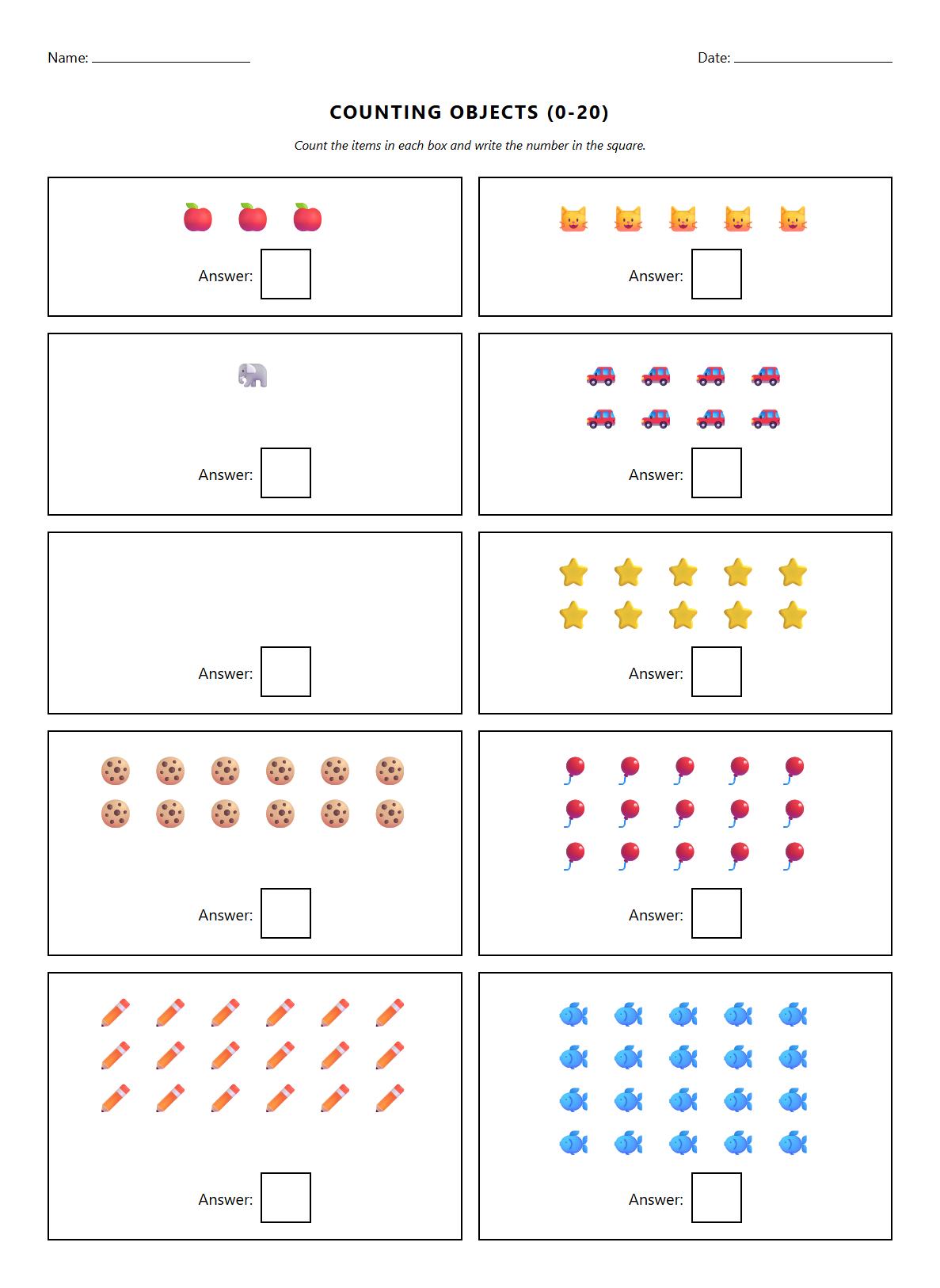
Counting Objects Worksheet using visual aids for Number Recognition 0 to 20

Download PDF     Pin it

Number Tracing Practice sheet for Handwriting and Fine Motor Skills
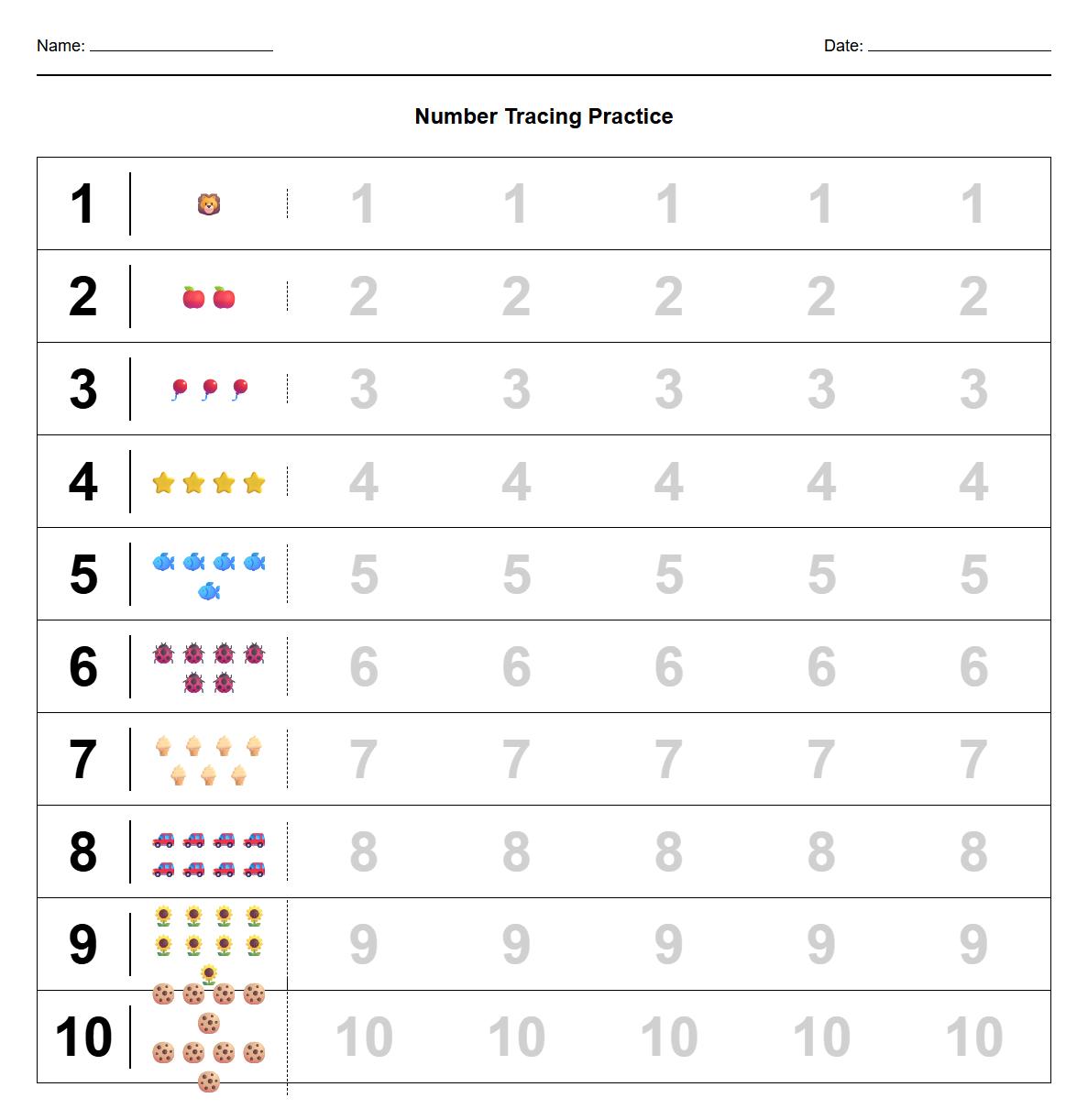
Number Tracing Practice sheet for Handwriting and Fine Motor Skills

Download PDF     Pin it

Ten Frames Activity worksheet for Early Numeracy Building
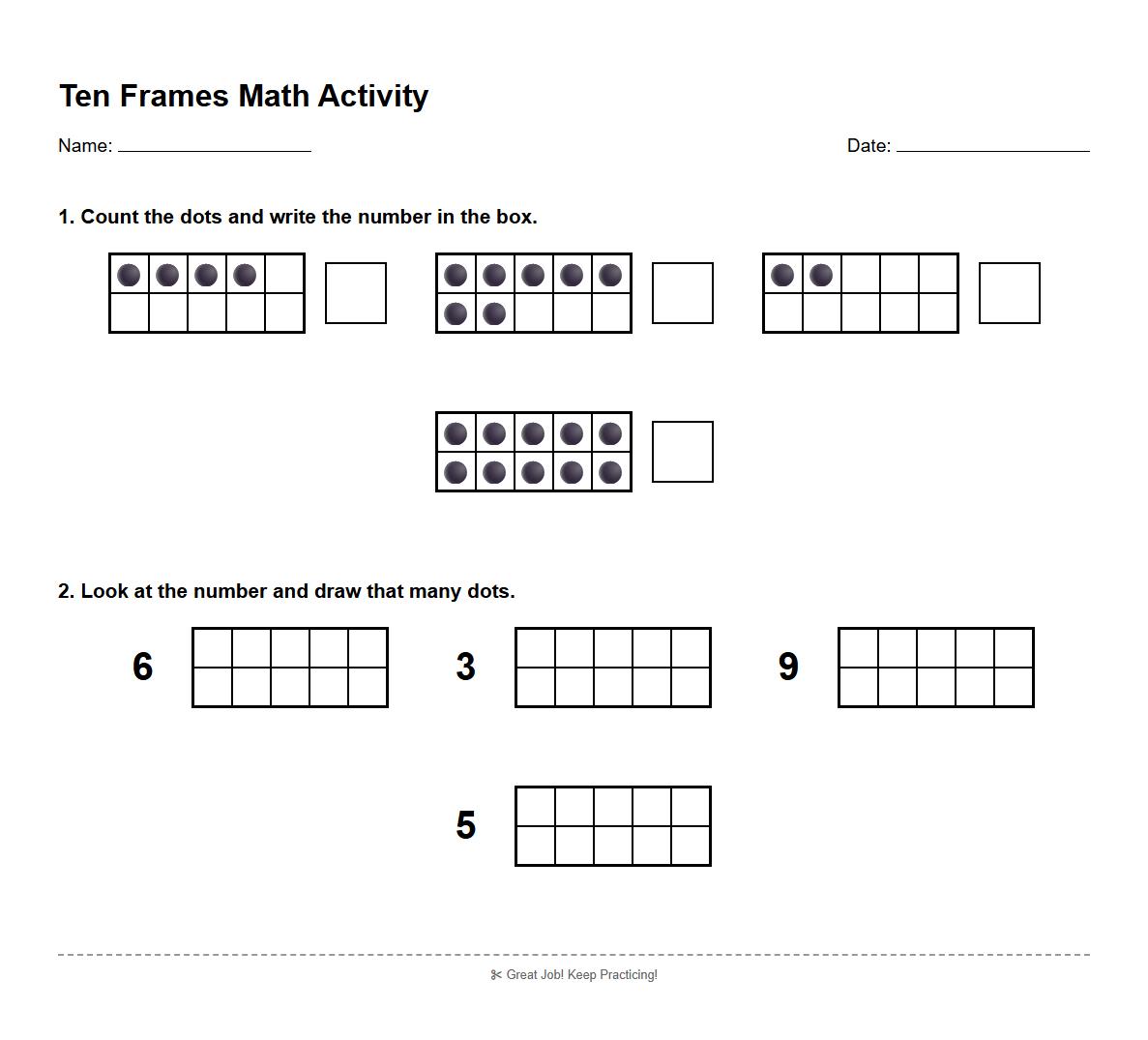
Ten Frames Activity worksheet for Early Numeracy Building

Download PDF     Pin it

Matching Numbers to Quantities task using Concrete Manipulatives
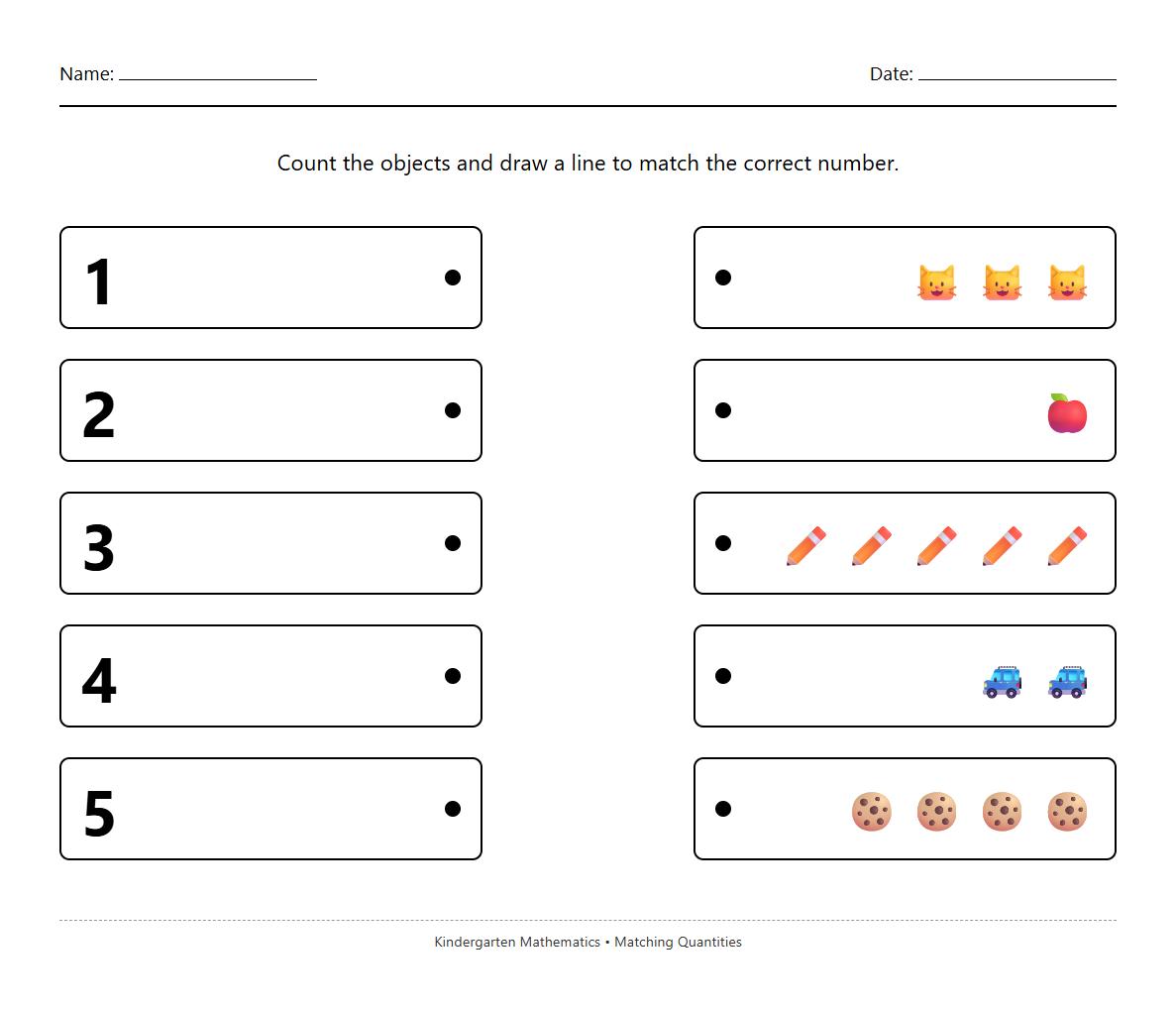
Matching Numbers to Quantities task using Concrete Manipulatives

Download PDF     Pin it

Number Sequencing Order Worksheet for Cognitive Development
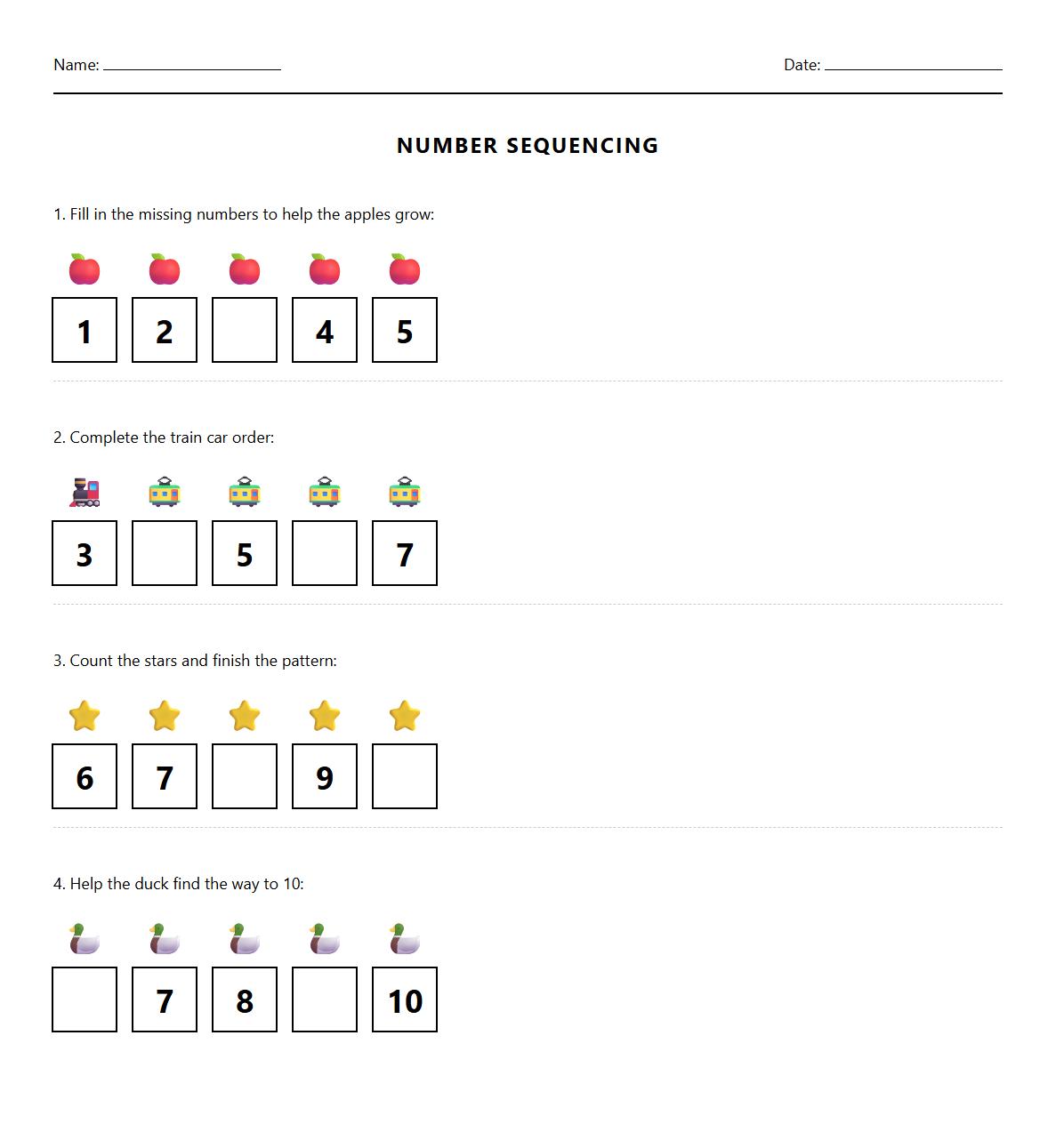
Number Sequencing Order Worksheet for Cognitive Development

Download PDF     Pin it

Missing Numbers Fill In exercise for Numerical Fluency
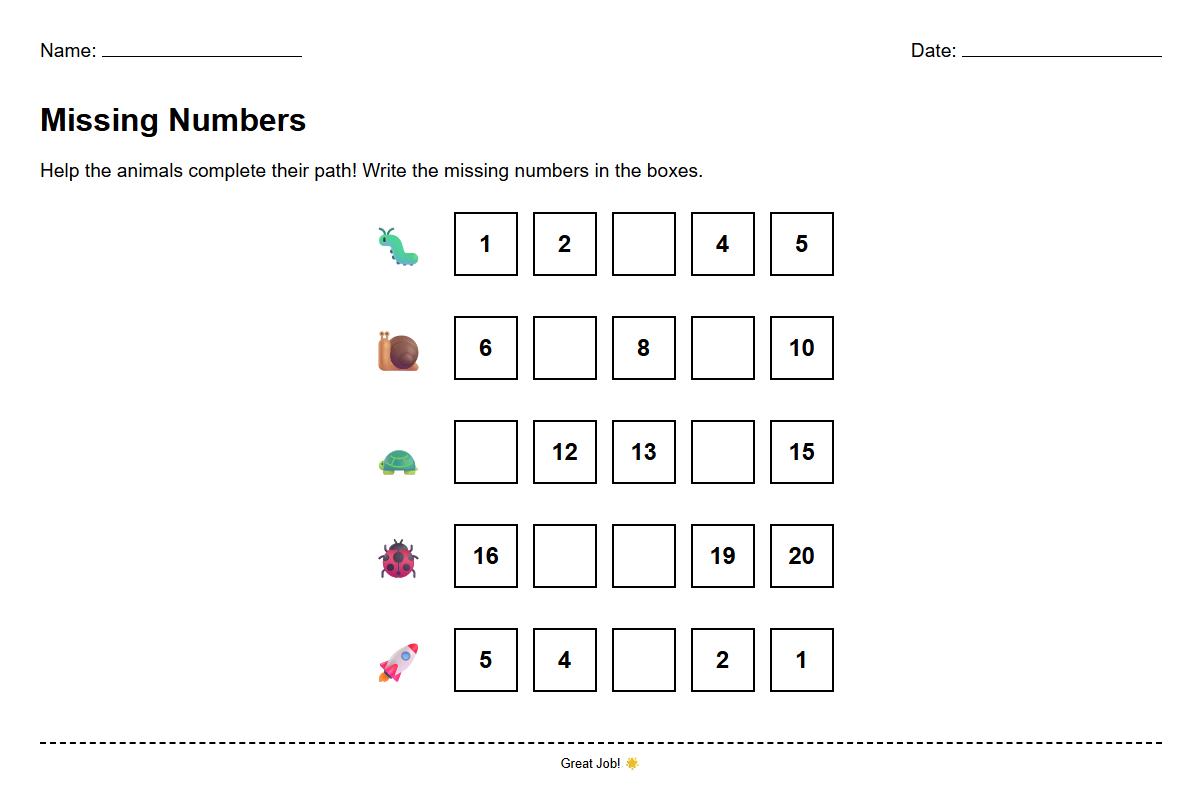
Missing Numbers Fill In exercise for Numerical Fluency

Download PDF     Pin it

Comparing Numbers Activity sheet using Greater Than and Less Than Symbols
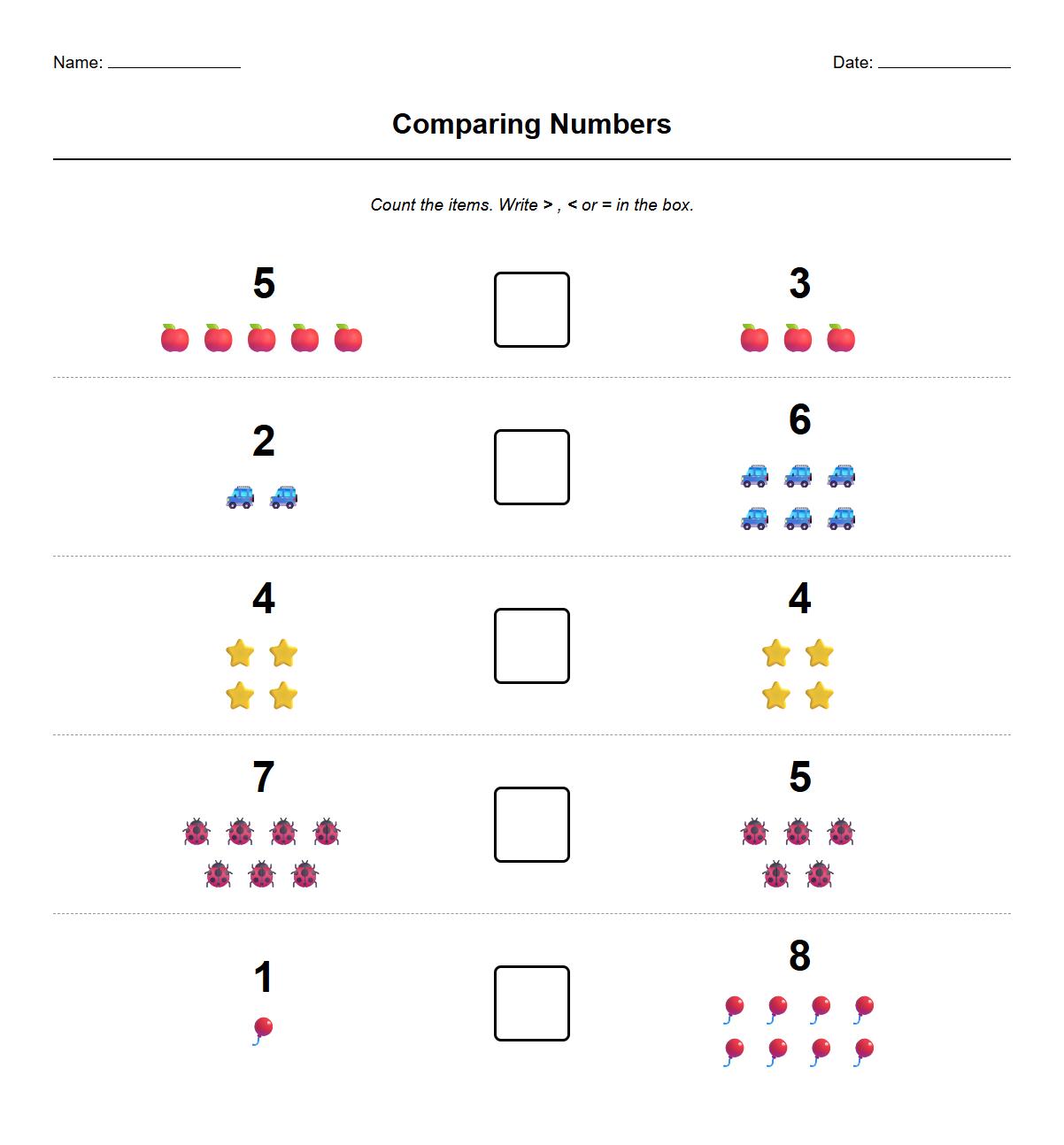
Comparing Numbers Activity sheet using Greater Than and Less Than Symbols

Download PDF     Pin it

Simple Addition with Pictures worksheet for Kindergarten Level
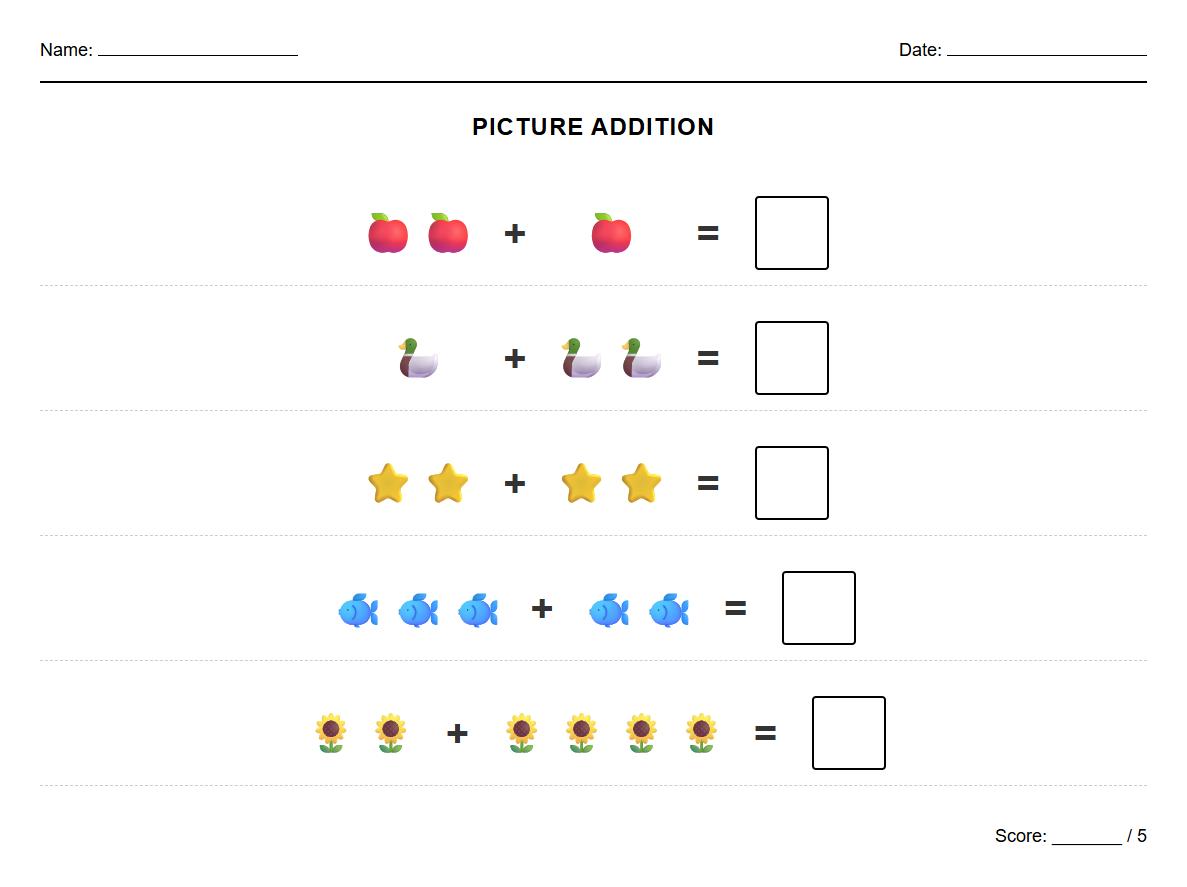
Simple Addition with Pictures worksheet for Kindergarten Level

Download PDF     Pin it

Odd and Even Number Identification task for Number Sense
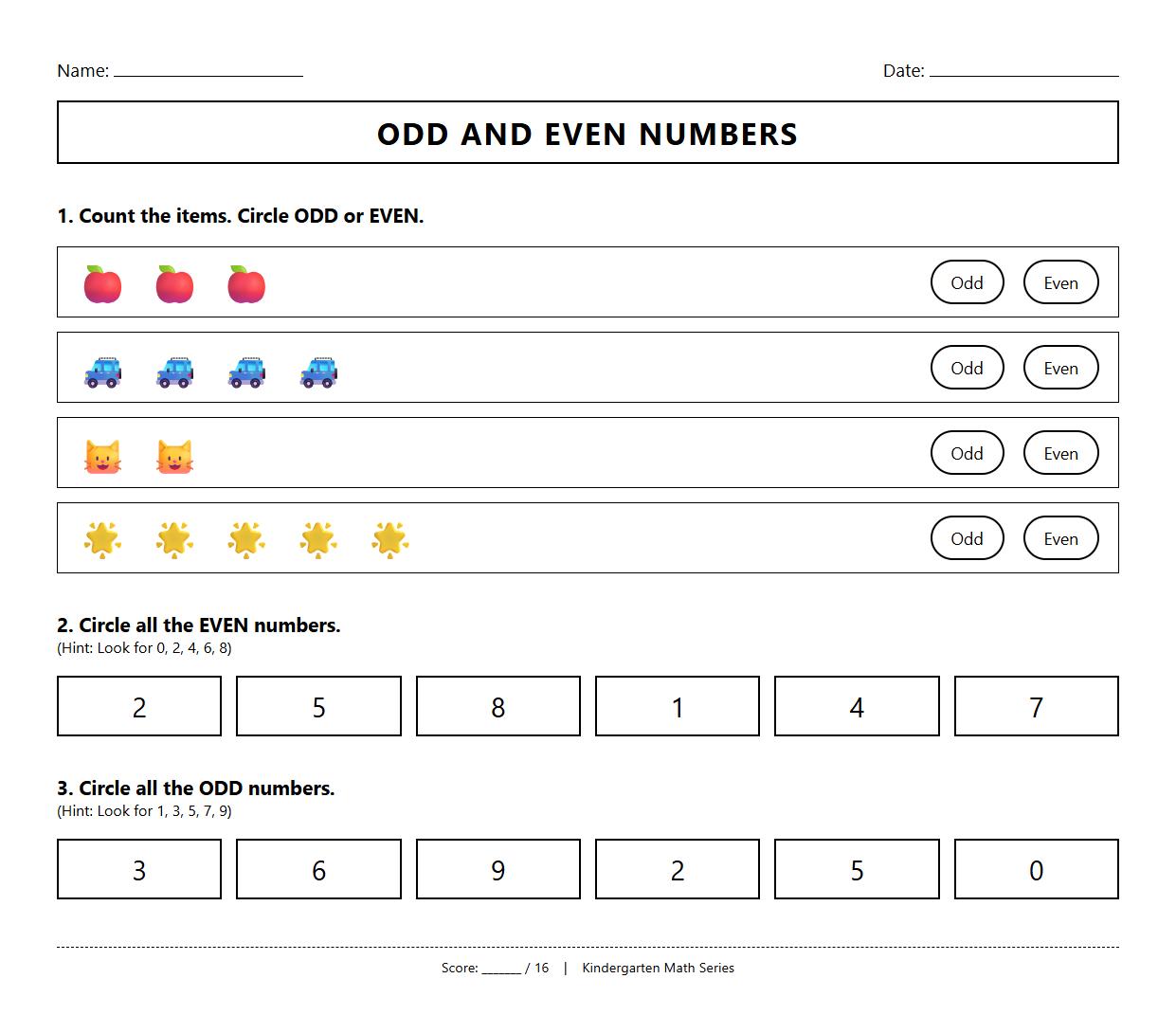
Odd and Even Number Identification task for Number Sense

Download PDF     Pin it

Number Line Jump Practice worksheet for Basic Math Skills
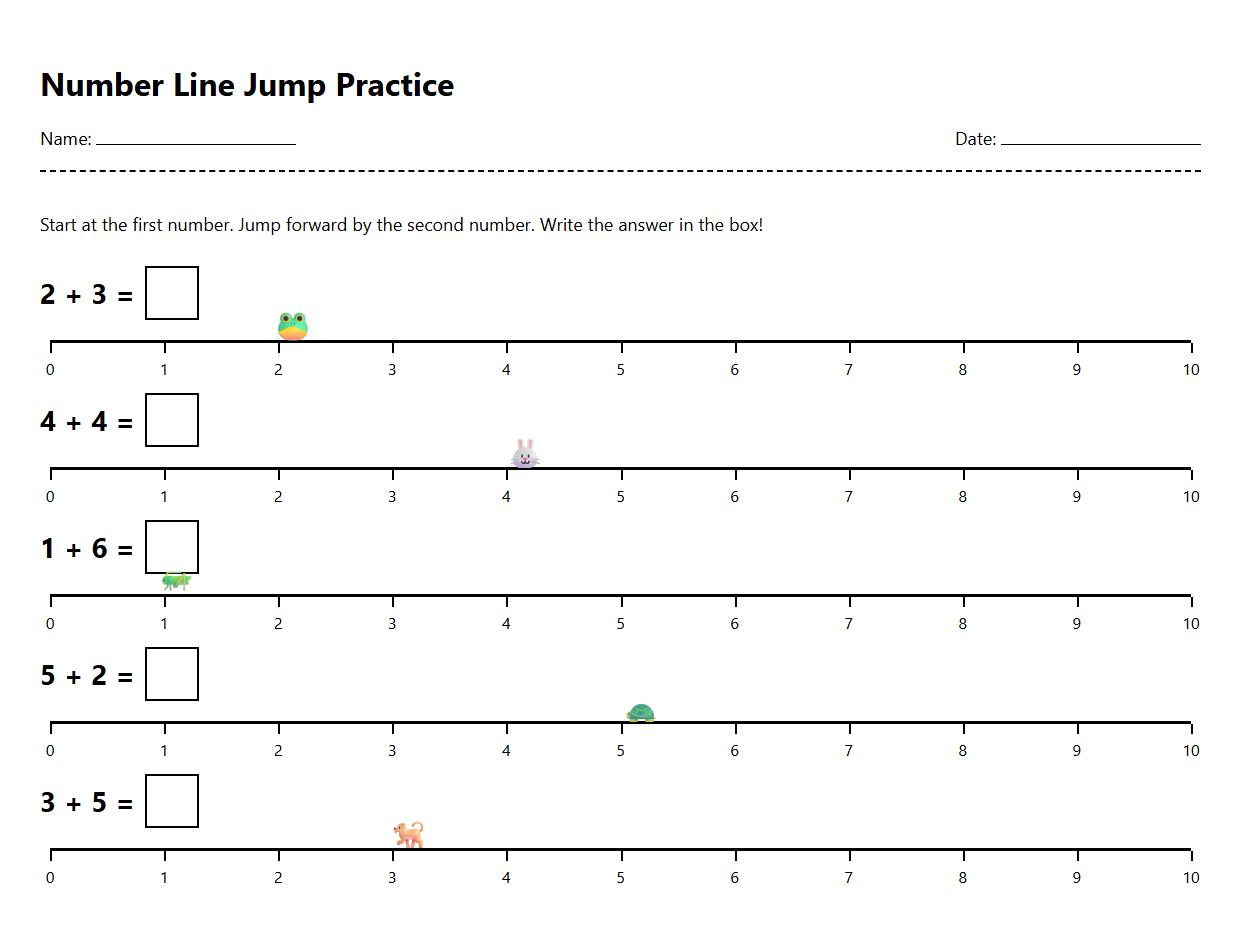
Number Line Jump Practice worksheet for Basic Math Skills

Download PDF     Pin it

What number comes after 7?

This question helps children understand the concept of number sequencing. After 7 comes 8, teaching children the next step in counting order. Encourage children to say the numbers aloud to reinforce learning. Use visual aids or number lines to support comprehension.

How many apples are there if you add 5 apples and 6 apples?

This addition problem introduces basic math skills to kindergarteners. By combining 5 and 6 apples, children learn that the total is 11 apples. Hands-on activities such as using real or pretend fruits can make learning more engaging. Reinforce addition as combining groups to find a total.

Circle the group that shows 12 objects

This task develops counting accuracy and visual discrimination skills. Children need to carefully count objects and identify the group with exactly 12 items. Using colorful images or stickers will help maintain interest. This exercise strengthens number recognition and attention to detail.

Fill in the missing number: 15 16 17 __ 19

This fill-in-the-blank activity boosts understanding of number order and sequences. Children recognize that the missing number is 18 by continuing the counting pattern. Encourage children to say the numbers aloud as they fill in the blank. This supports memory and logic skills in math.

Which number is less, 9 or 14?

This question introduces number comparison concepts to young learners. Children learn that 9 is less than 14 by comparing the size and value of numbers. Use number lines or object groups to visually show the difference. Emphasize vocabulary like "less than" and "greater than" for understanding.

Count and write the number of stars in the box

This activity encourages counting practice and number writing skills. Children count the stars carefully and write the correct number, reinforcing both numeracy and fine motor skills. Providing dotted or lined spaces for writing numbers helps young children form digits properly. Celebrate correct answers to boost confidence.

Draw 8 hearts in the space below

Drawing activities improve fine motor skills and shape recognition. Children practice drawing exactly 8 hearts, which also reinforces counting skills. Encourage neatness and creativity by coloring the hearts afterward. This task combines art with early math learning.

Match the number to the correct group of objects

This matching exercise strengthens number recognition and one-to-one correspondence. Children connect numbers to groups that represent the same quantity. Using colorful visuals and real-life objects makes the task engaging and relatable. Matching games build early math confidence.

Which number comes before 13?

This question reinforces understanding of the number sequence by identifying what comes right before 13. The answer is 12, teaching children to think backward in counting sequences. Use number lines or songs to help memorize this concept. It is an important skill for subtraction readiness.

Color 10 balloons red and the rest blue

This task combines counting with color recognition and following instructions. Children select 10 balloons to color red and the rest blue, enhancing number sense and attention to detail. Encourage accuracy to strengthen their ability to follow multi-step directions. This activity promotes both creativity and math skills.


More in Mathematics Category


About the author. Nylen Smith is a dedicated educator and cofounder of KWorksheet.com, a popular platform specializing in high-quality kindergarten worksheets and printable activities.

Disclaimer. The information provided in this document is for general informational purposes and/or document sample only and is not guaranteed to be factually right or complete. Please report to us via contact-us page if you find and error in this page, thanks.

Comments

No comment yet