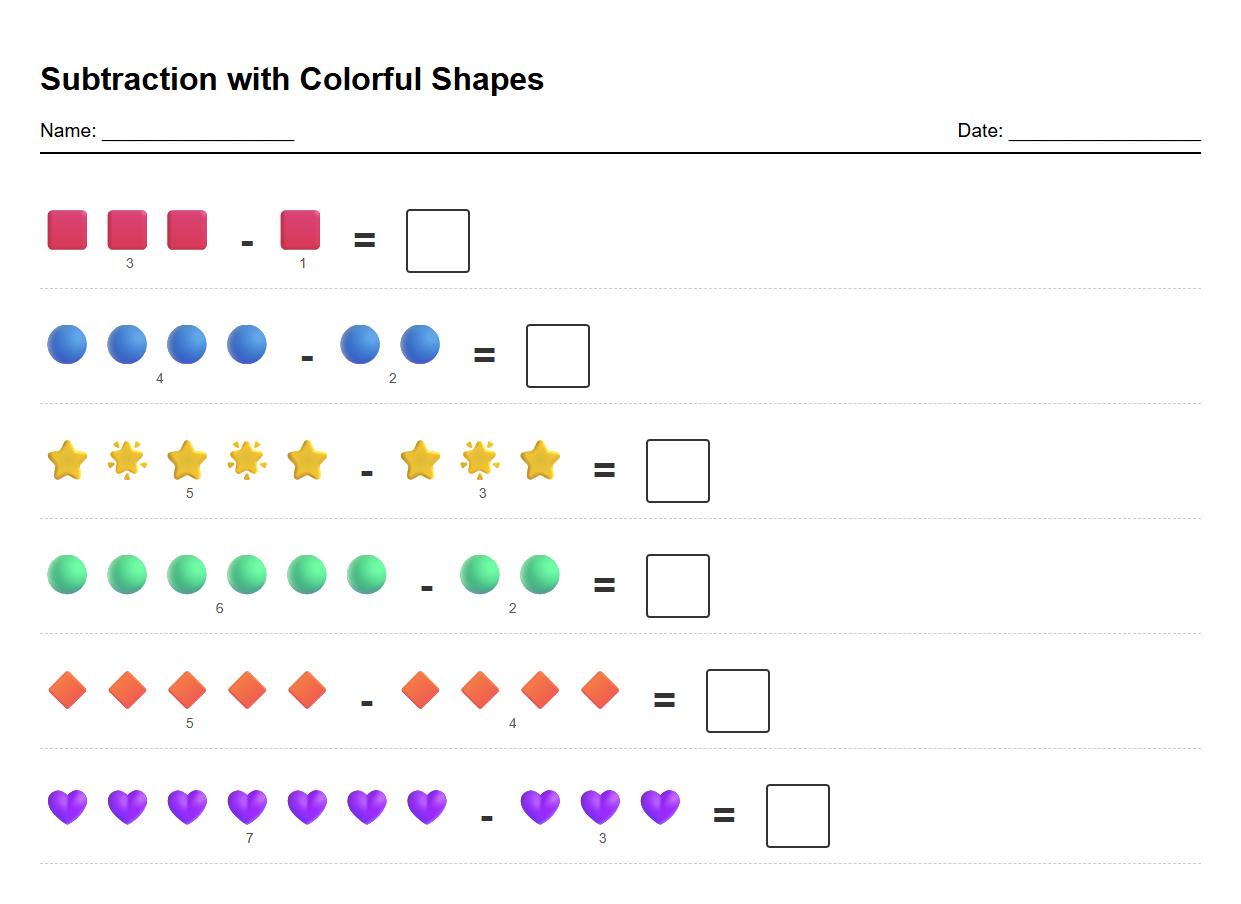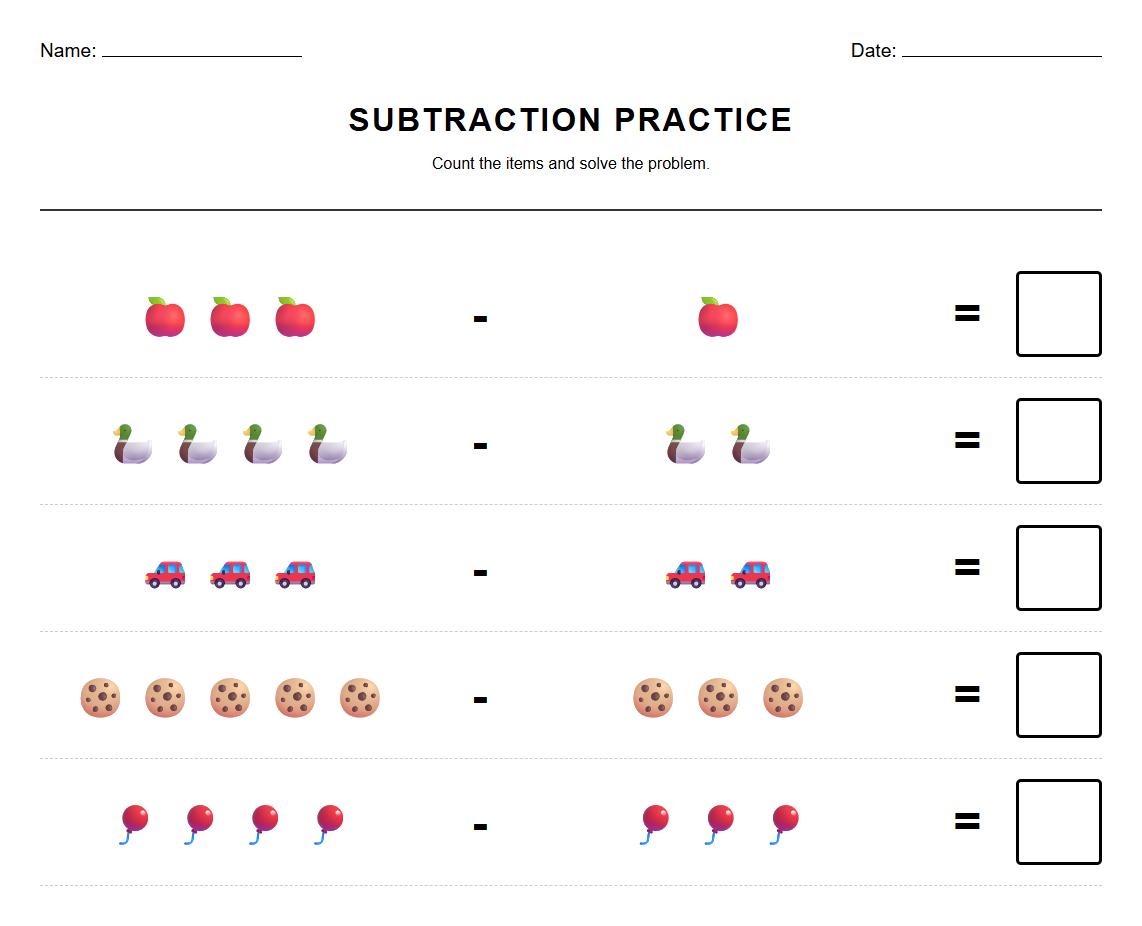
Kindergarten subtraction practice worksheets with visual aids help young learners grasp basic subtraction concepts through engaging images and hands-on activities. These tools support number recognition, counting skills, and the ability to solve simple subtraction problems by providing clear visual representations. Explore our collection of worksheets designed to make subtraction fun and accessible for kindergartners.
Visual Aids for Subtraction
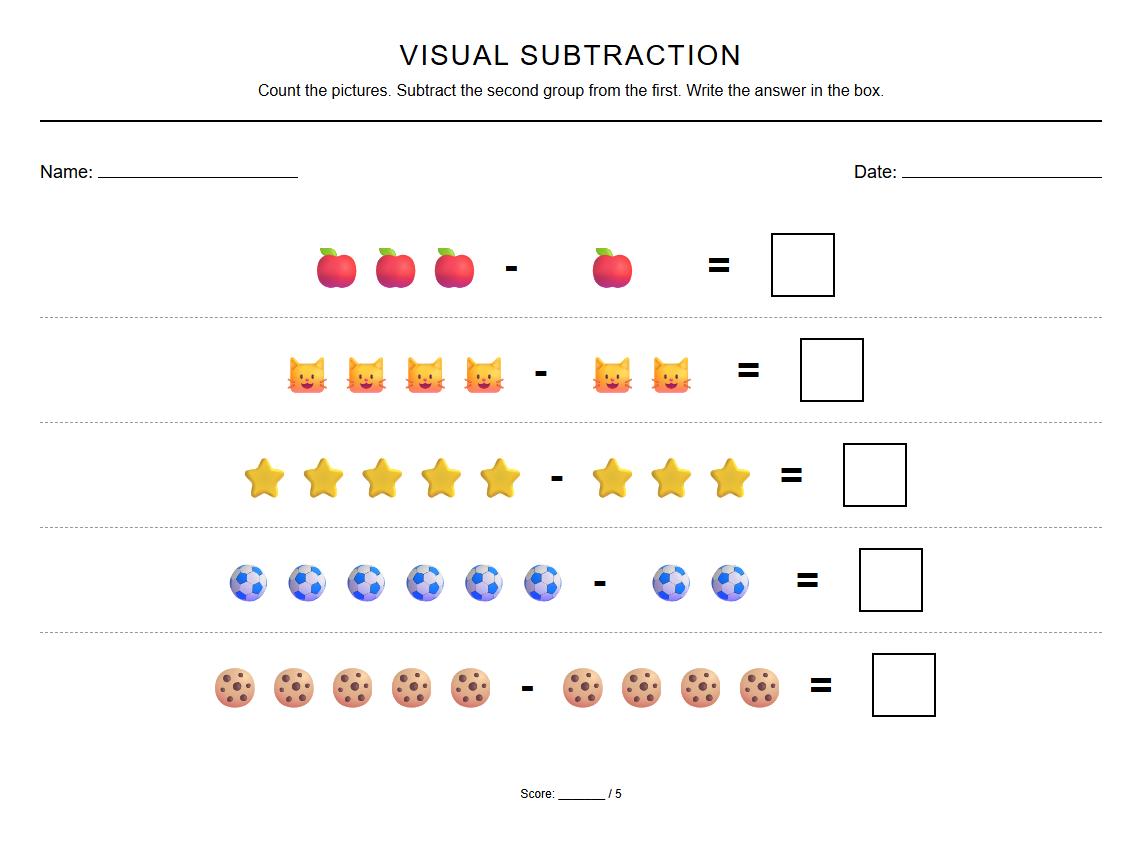
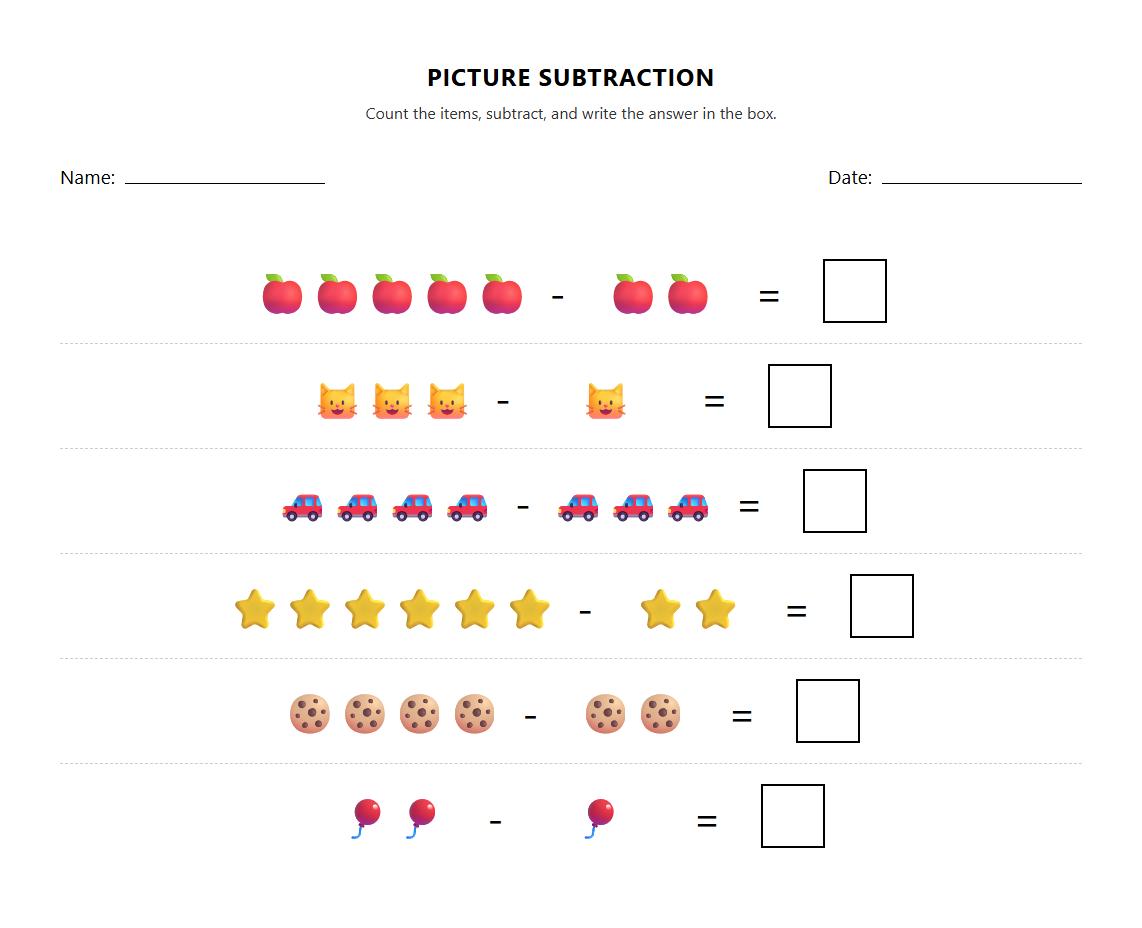
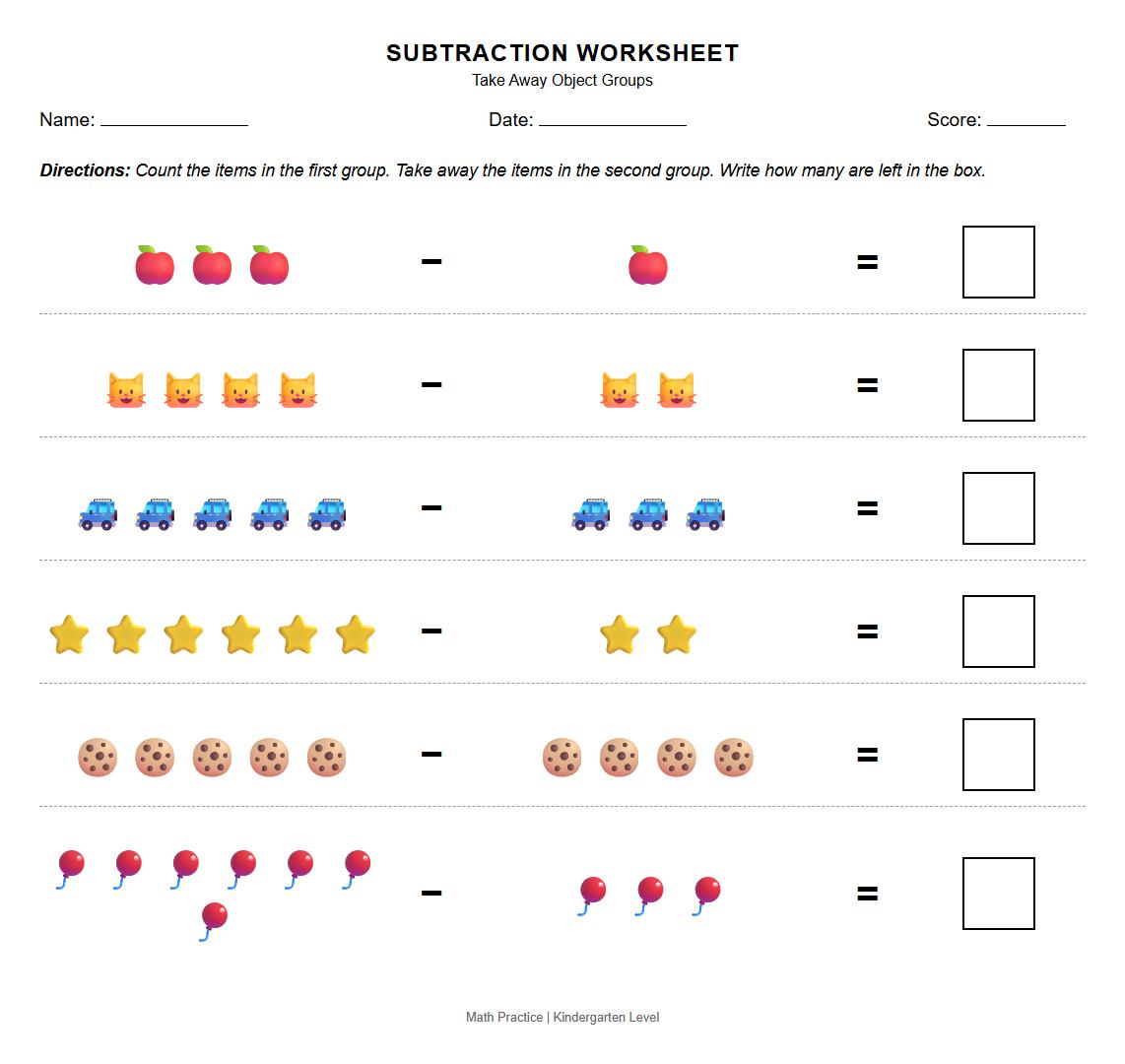
The worksheets feature familiar objects like fruits, animals, and toys to make subtraction relatable for young learners. These visuals help children understand the concept by associating numbers with tangible items. Each visual aid is clear and colorful, designed to engage kindergarten students. Using everyday objects ensures that children can connect learning with their daily experiences. For more on relatable objects in early math, see the Exploring Attributes: Sorting and Classifying Worksheets.
Crossing Out Items
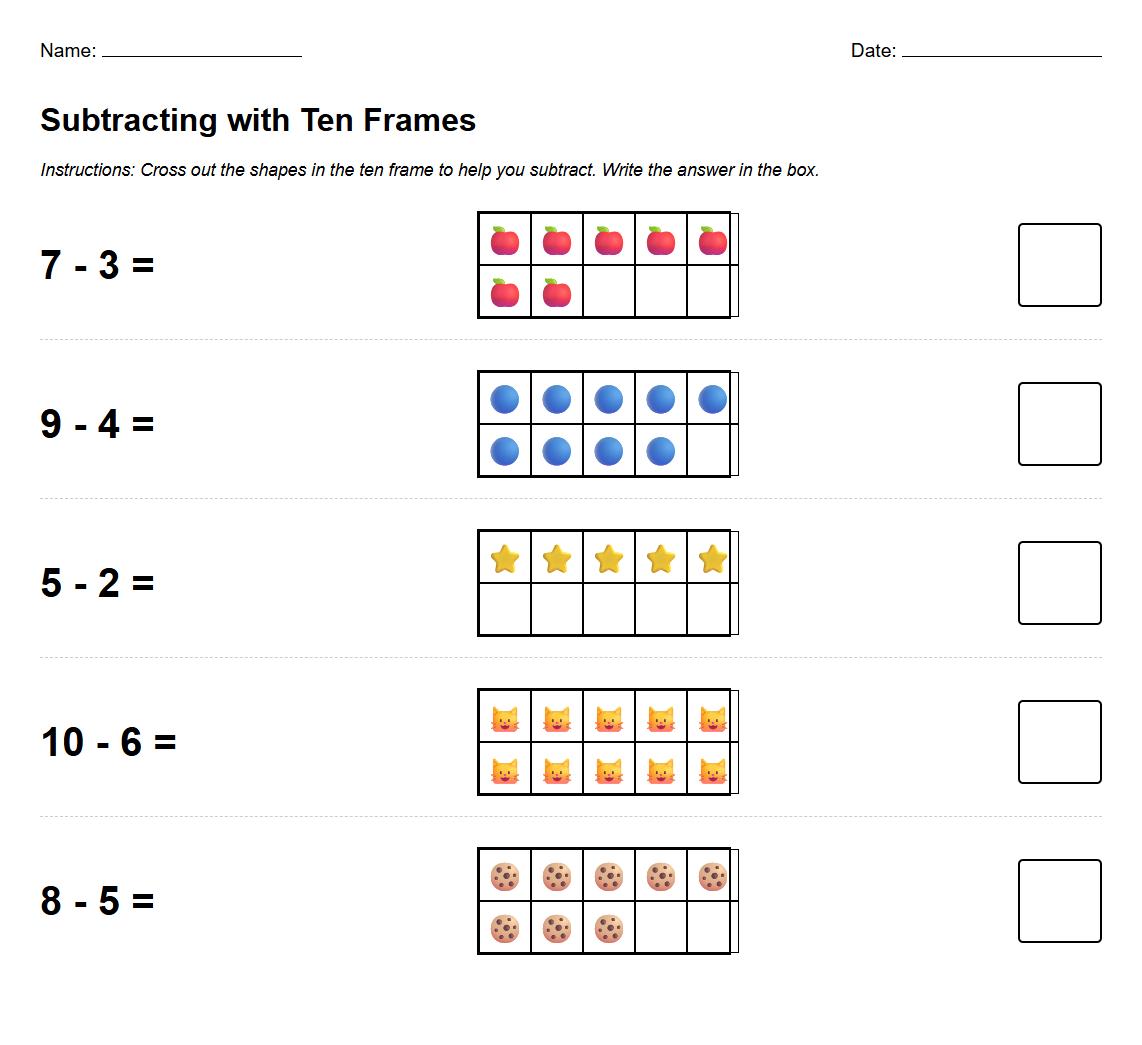
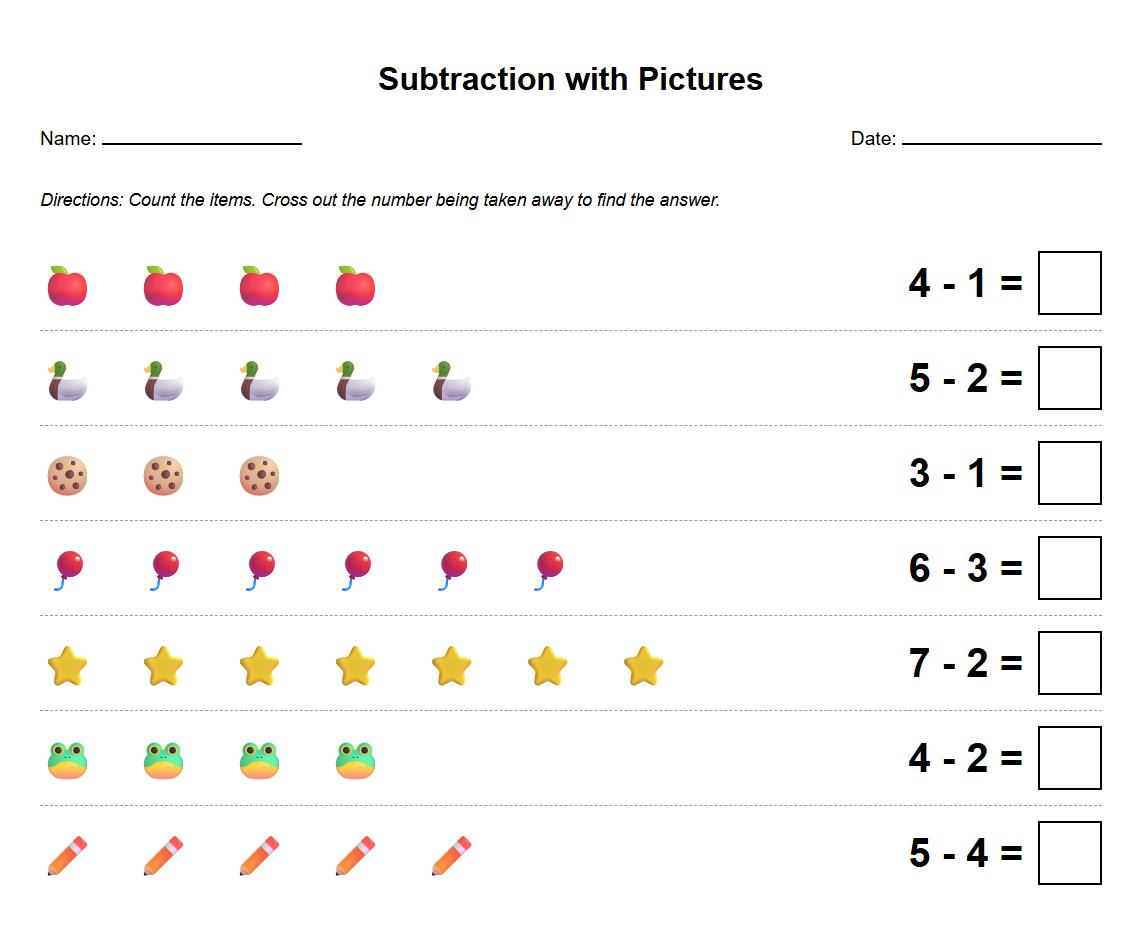
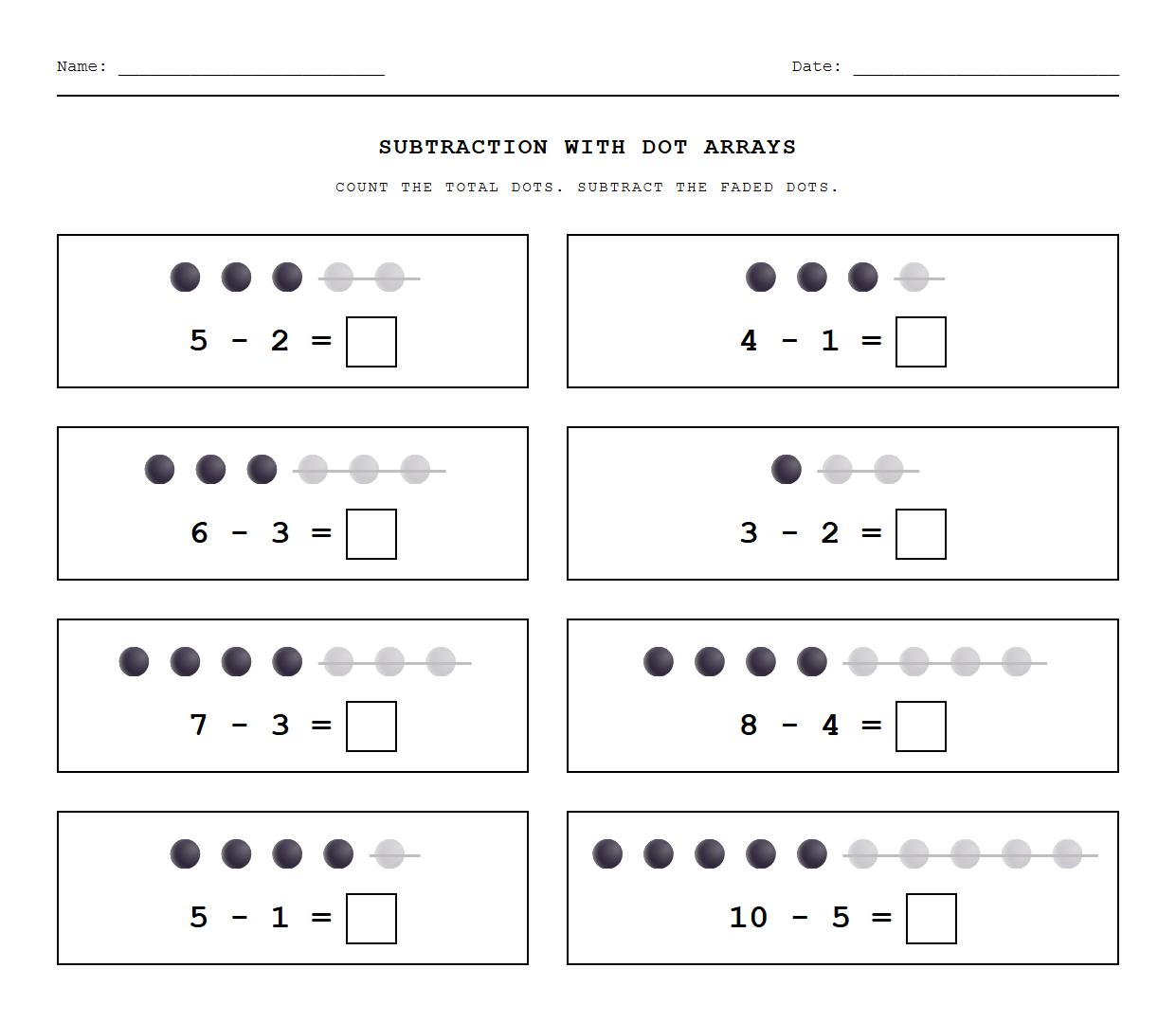
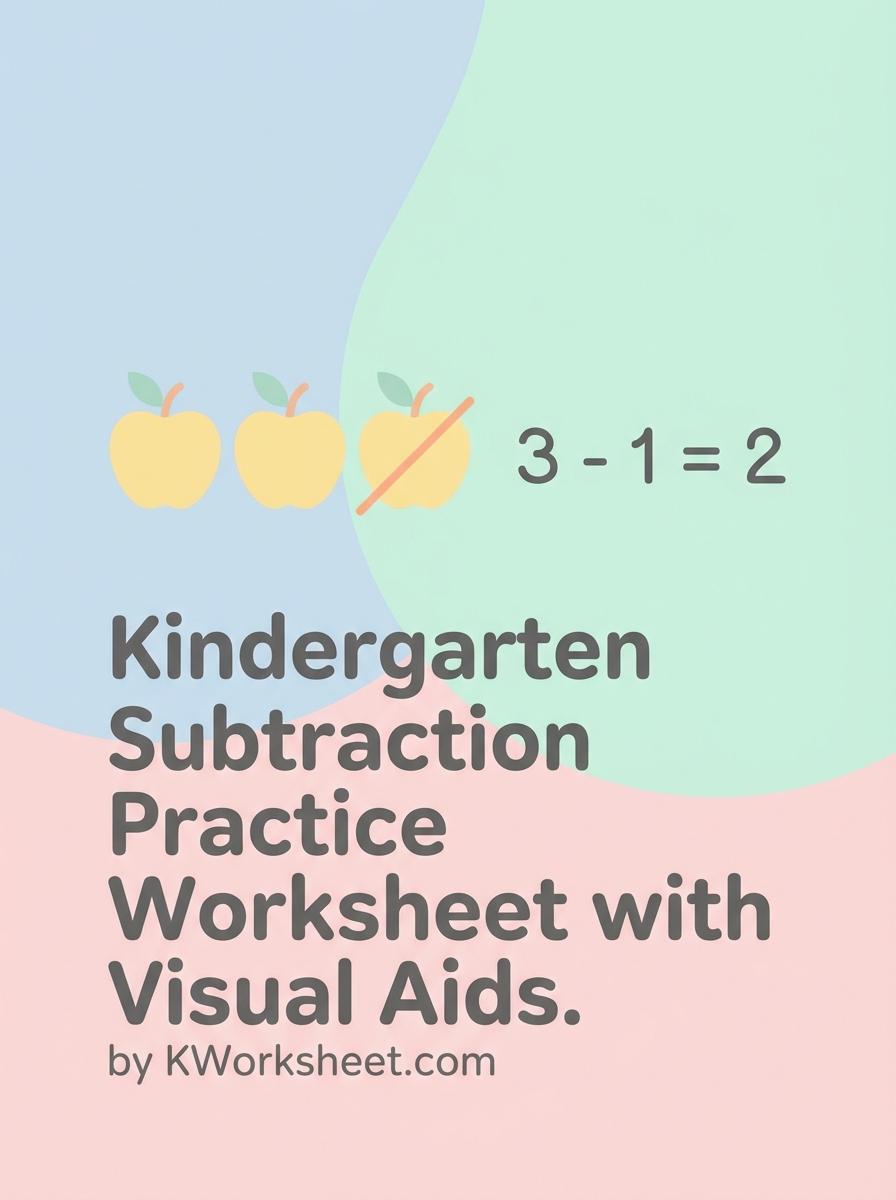
Students are instructed to cross out a specific number of items to represent subtraction practically. The number to cross out corresponds to the subtraction problem being solved, reinforcing the "taking away" concept. This hands-on approach helps children visualize subtraction actions. Typically, between 1 to 5 items are crossed out in each exercise, depending on the level. Similar hands-on methods are used in the Counting and Comparison Worksheet: Using More versus Less.
Inclusion of Number Lines
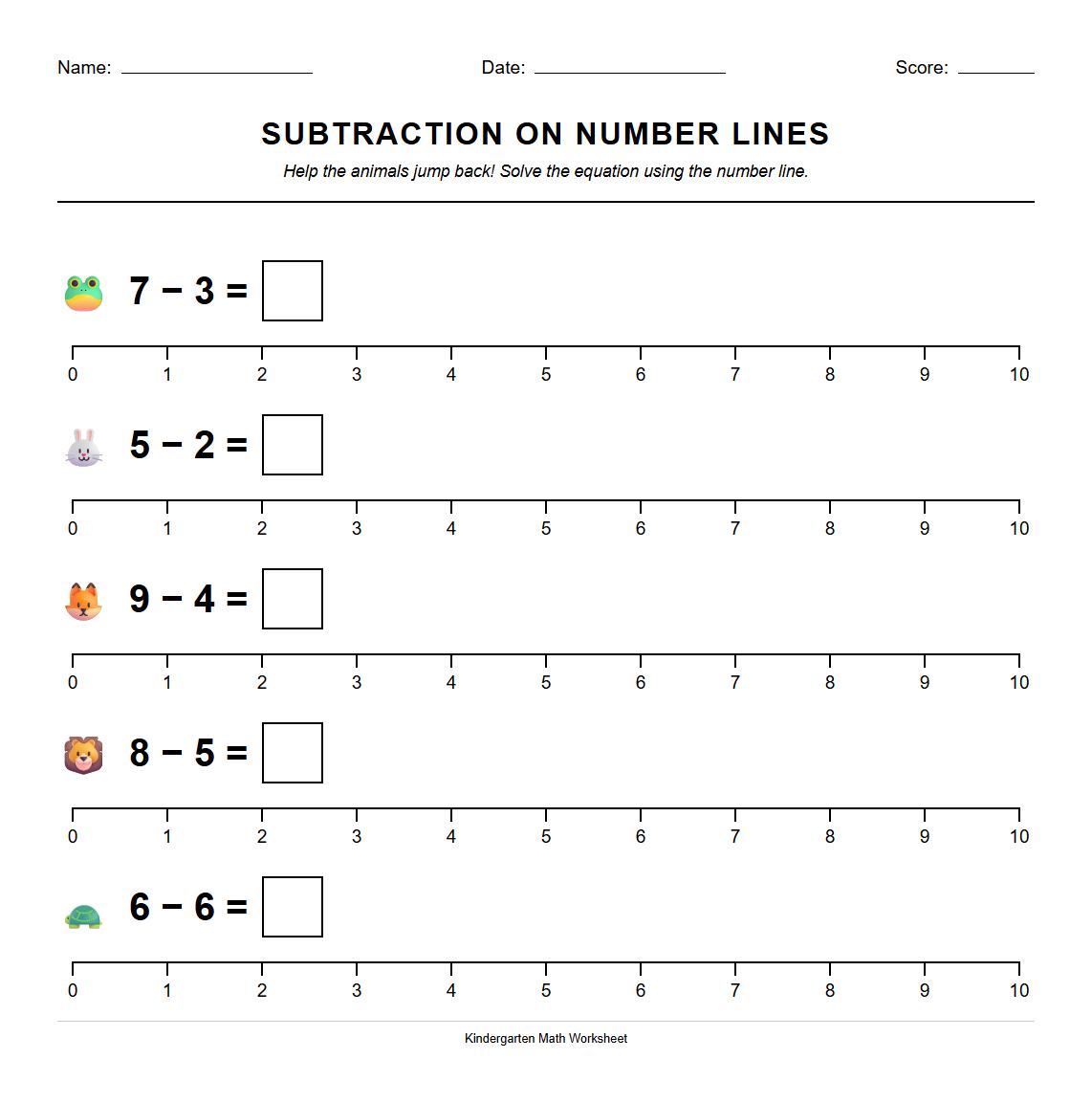
The worksheets include number lines to assist students in understanding subtraction sequentially. These lines visually demonstrate how numbers decrease step-by-step, supporting counting backward skills. Number lines serve as a useful tool for children who benefit from additional guidance beyond pictures. They ensure students grasp the fundamental idea of subtraction on a number scale. See their use in Number Recognition Worksheet 0-20.
Highest Number in Problems
Subtraction problems use numbers up to 10, keeping the exercises developmentally appropriate for kindergarteners. This range allows children to practice fundamental subtraction without being overwhelmed. It also aligns with common early math standards focused on numbers 1 through 10. Limiting the highest number ensures focused and manageable learning. For more practice with early numeracy, check the Early Numeracy: Building Basic Addition Worksheet.
Use of Familiar Pictures
Yes, the worksheets utilize pictures of familiar items such as apples, cars, and animals to make subtraction relatable and fun. These visuals support comprehension by linking abstract numbers to concrete objects. Familiar images encourage engagement and improve retention. They are carefully selected to resonate with young learners' everyday environments. For more activities with familiar images, view the Shape Hunt in Classroom: 2D and 3D Object Recognition.
Spaces for Student Answers
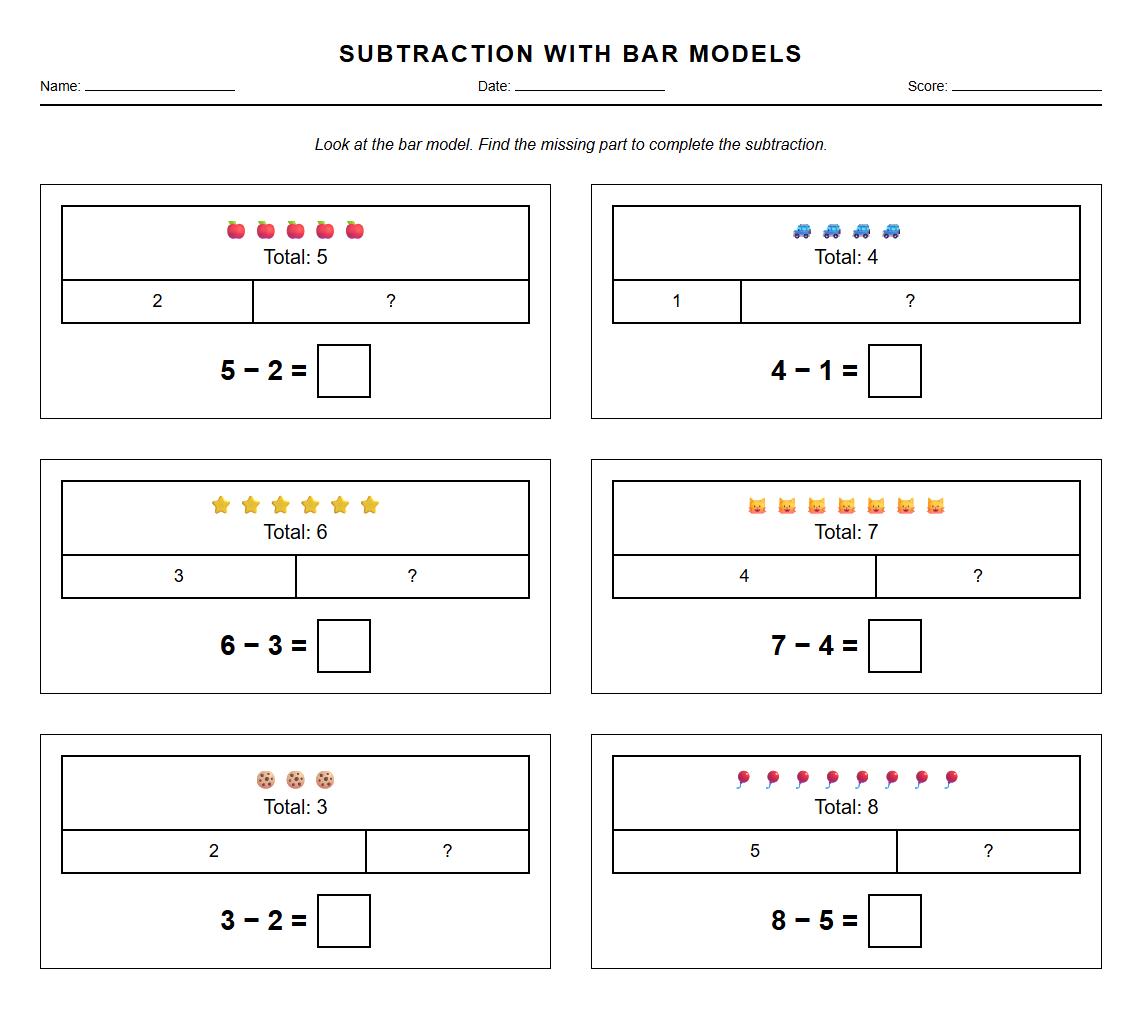
Each exercise includes blank spaces where students can write their answers. This encourages independent problem-solving and handwriting practice. The spaces are clearly marked and large enough for young children to write comfortably. Providing room for answers reinforces active participation in the learning process. This feature is also prominent in the Introduction to Data & Graphing Worksheets.
Word Problems with Visuals
The worksheet contains simple word problems accompanied by visuals that depict the scenarios. This integration helps students connect language with math concepts. The word problems are age-appropriate and encourage critical thinking. Visual aids support comprehension, making stories more accessible for beginning readers. A related approach is found in Phonics-Based Sorting and Classifying Worksheets.
Section for Drawing Visual Aids
There is a section where students can draw their own visual aids to illustrate subtraction problems. This creative activity deepens understanding by allowing children to personalize their learning. Drawing helps develop fine motor skills and reinforces number sense. It also provides a way for students to express their interpretation of subtraction. Explore similar creative options in the Phonics-Based Skip Counting by 5s Worksheets.
Subtraction Equations Formats
The worksheets present subtraction equations both vertically and horizontally to familiarize students with different formats. This dual presentation builds flexibility in understanding subtraction problems. It prepares young learners for varied math notations they will encounter. The varied layout keeps exercises interesting and diverse. Kindergartners also encounter various formats in the Kindergarten STEM Worksheets: Telling Time.
Answer Keys Provided
Answer keys are included for teachers and parents to easily check student work. This support helps adults guide children effectively and provide timely feedback. The keys are clear and correspond to each exercise for quick referencing. Having answer keys fosters confidence in monitoring progress and understanding results. See supporting resources on Time Concepts Worksheet Set: Kindergarten Hour and Half-Hour Mastery.


Phonics Integrated Basic Subtraction Worksheet for Early Learners