Counting and Comparison Worksheet Using More Versus Less for Early Math

📅 May 12, 2025 👤 Nylen Smith

Practice early math skills by comparing quantities using the concepts of more and less. These worksheets help children develop number sense through engaging counting exercises focused on identifying which group has more or fewer items. Explore the available worksheets to start enhancing your child's understanding of comparison and counting.

Counting and Comparison Worksheet with Visual Objects for More Versus Less using base ten blocks
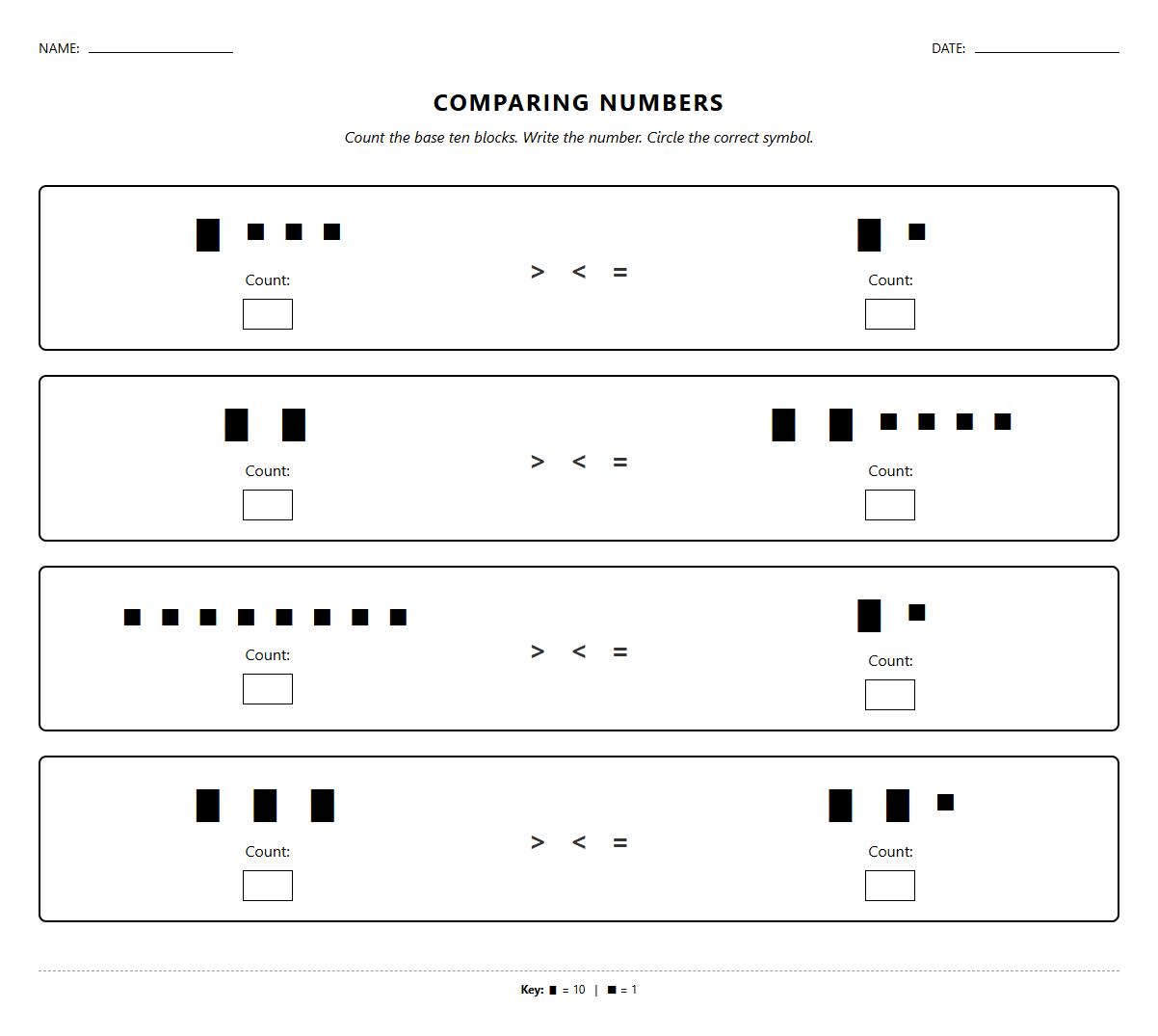
Counting and Comparison Worksheet with Visual Objects for More Versus Less using base ten blocks

Download PDF     Pin it

Phonics and Number Recognition Worksheet with More Versus Less in animal groups
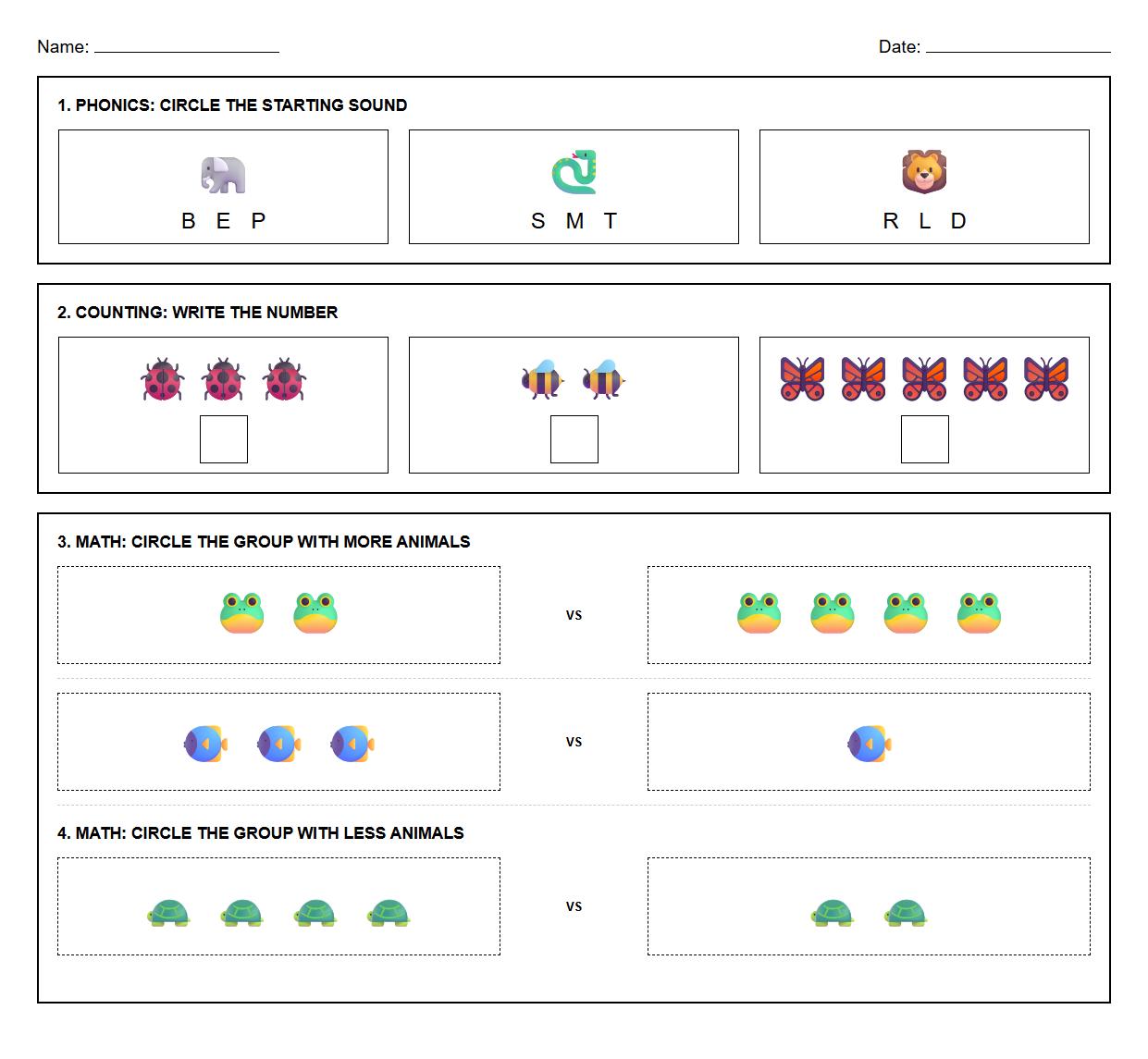
Phonics and Number Recognition Worksheet with More Versus Less in animal groups

Download PDF     Pin it

Counting Dots and Matching Numbers Worksheet for More Versus Less comparison
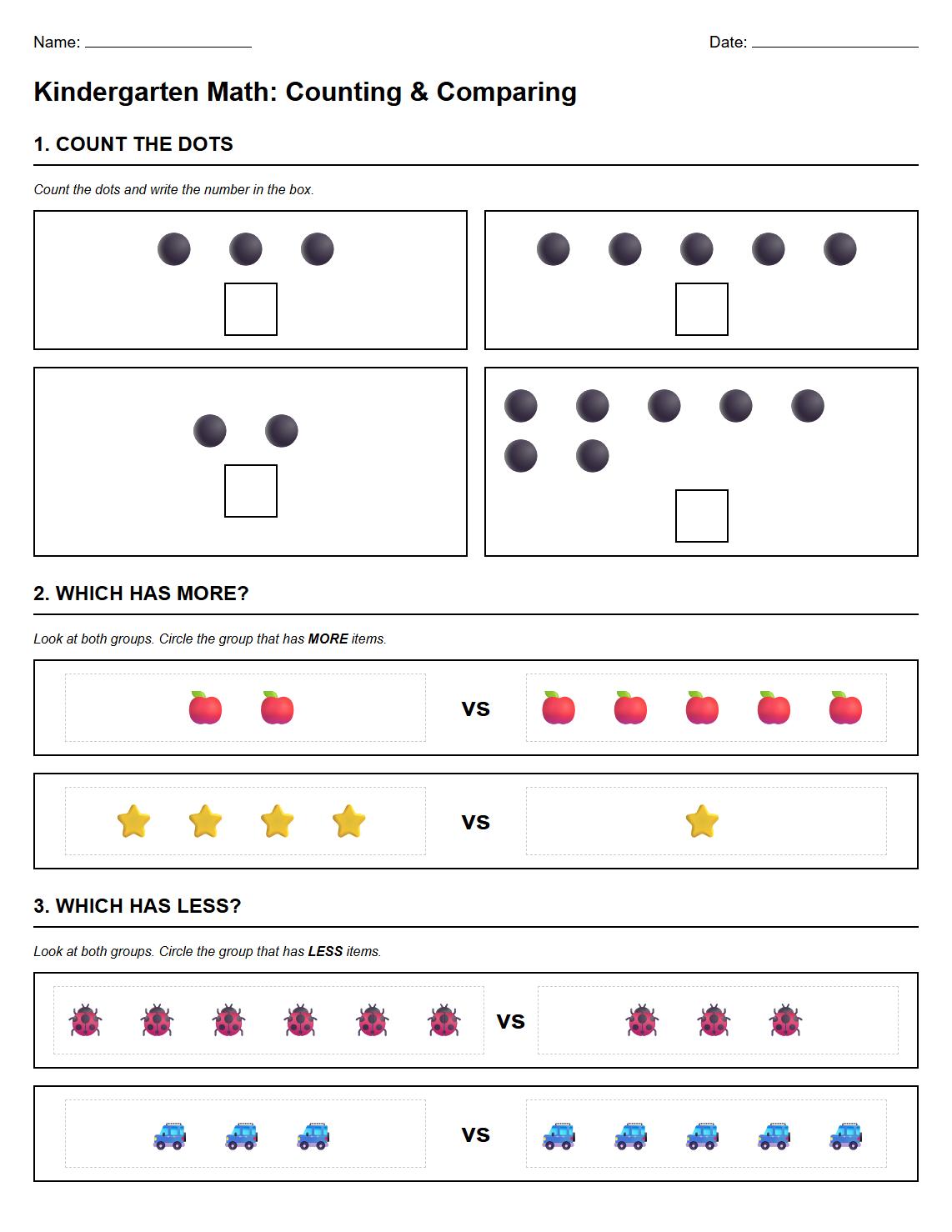
Counting Dots and Matching Numbers Worksheet for More Versus Less comparison

Download PDF     Pin it

Tally Marks Counting and Comparison Worksheet highlighting More Versus Less
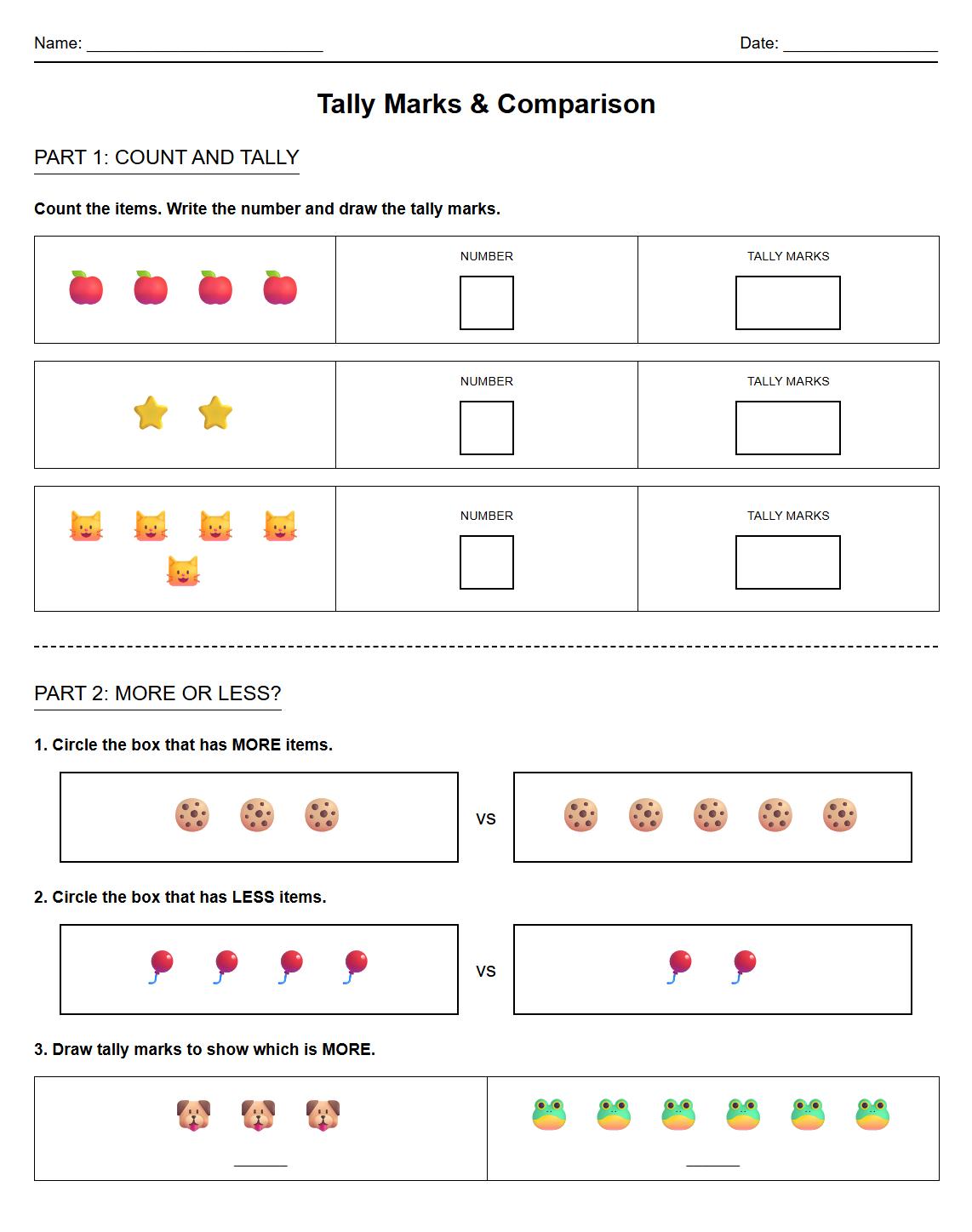
Tally Marks Counting and Comparison Worksheet highlighting More Versus Less

Download PDF     Pin it

More Versus Less Worksheet using Bar Graph Interpretation for early math
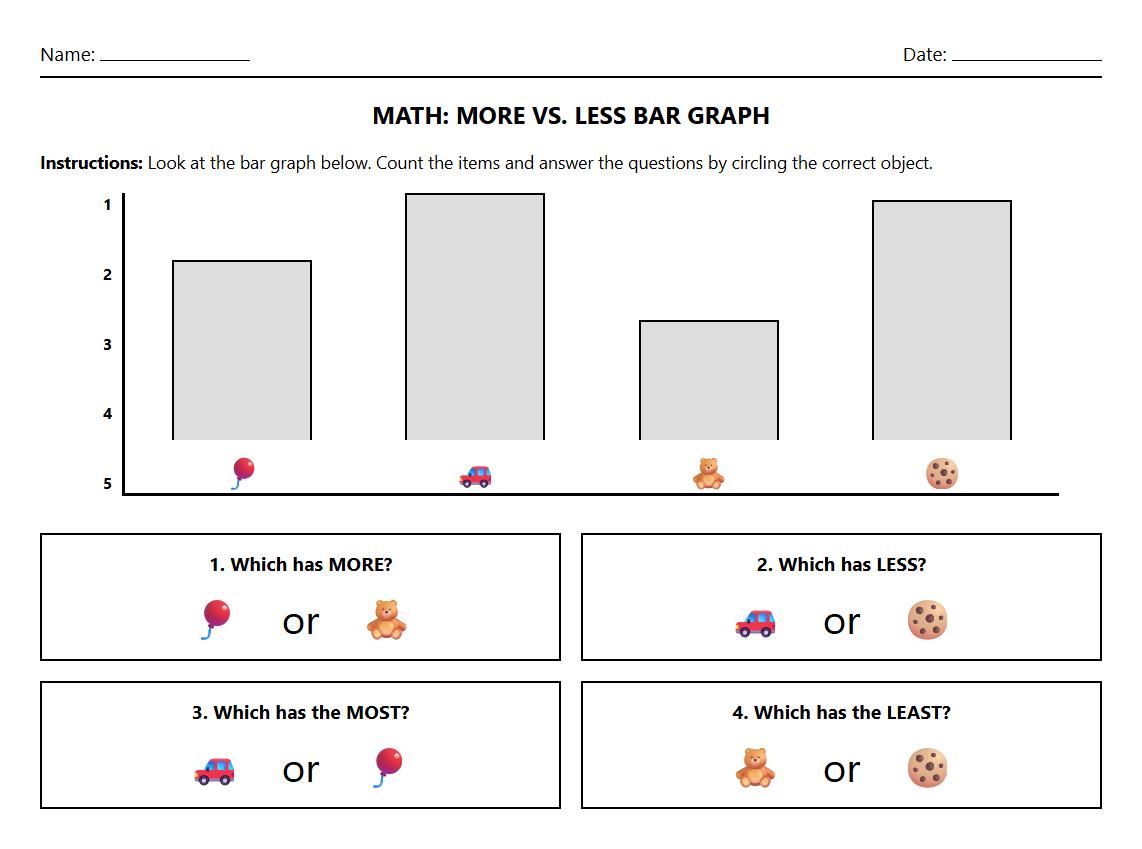
More Versus Less Worksheet using Bar Graph Interpretation for early math

Download PDF     Pin it

Number Line Counting and Comparison Worksheet for understanding More Versus Less
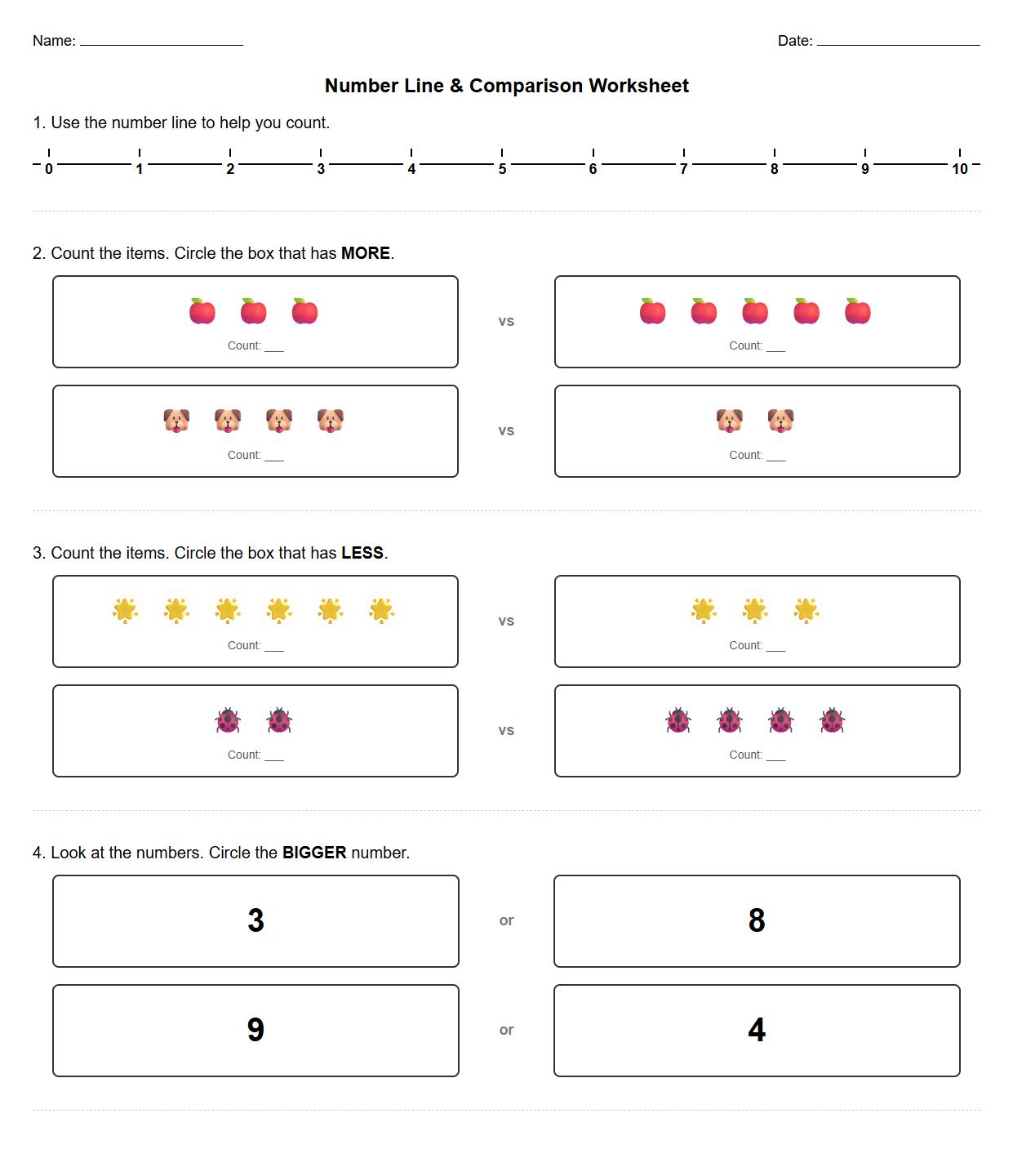
Number Line Counting and Comparison Worksheet for understanding More Versus Less

Download PDF     Pin it

Ten Frame Counting Worksheet focused on More Versus Less difference
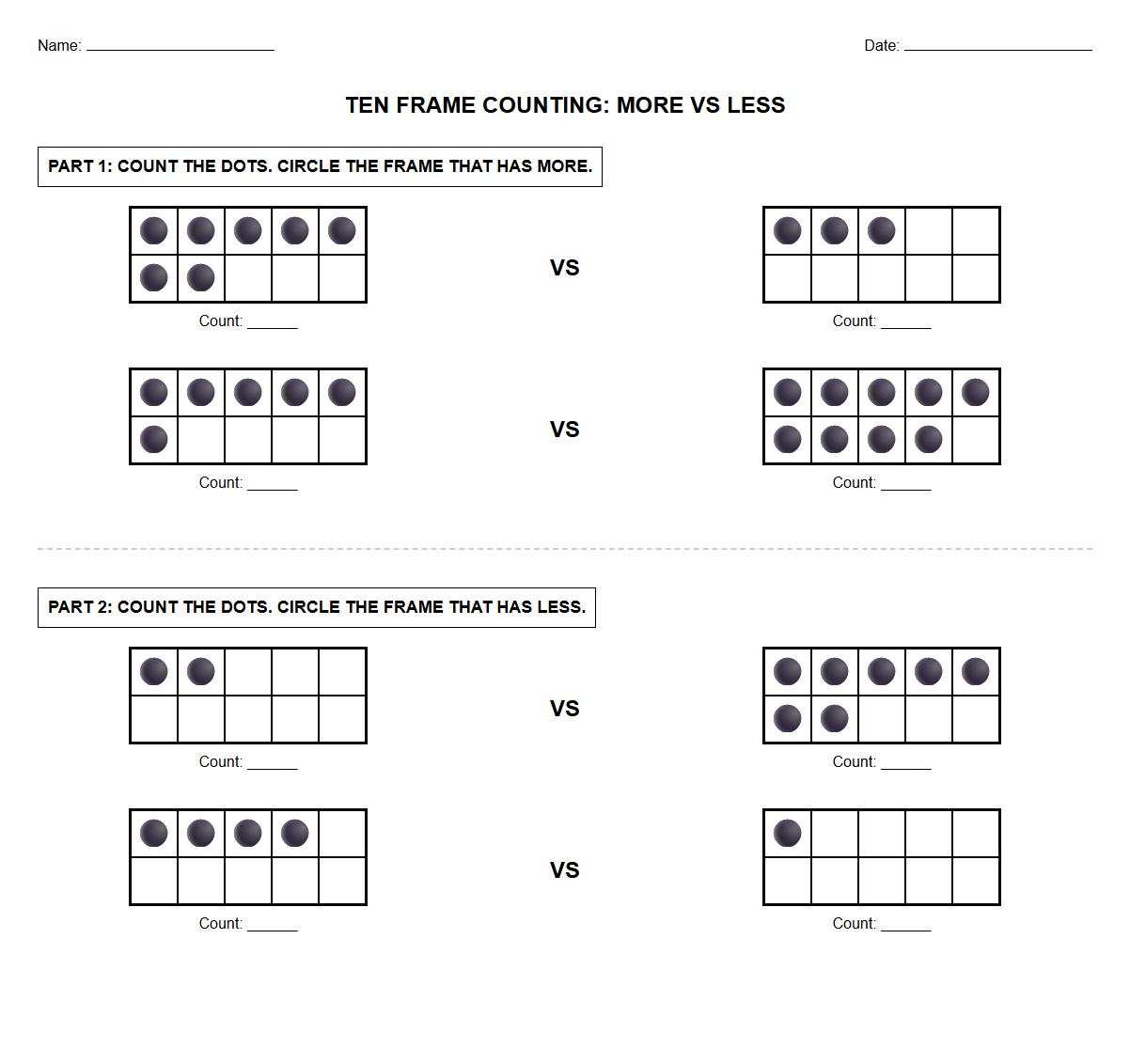
Ten Frame Counting Worksheet focused on More Versus Less difference

Download PDF     Pin it

Comparing Sets Worksheet with More Versus Less using everyday objects
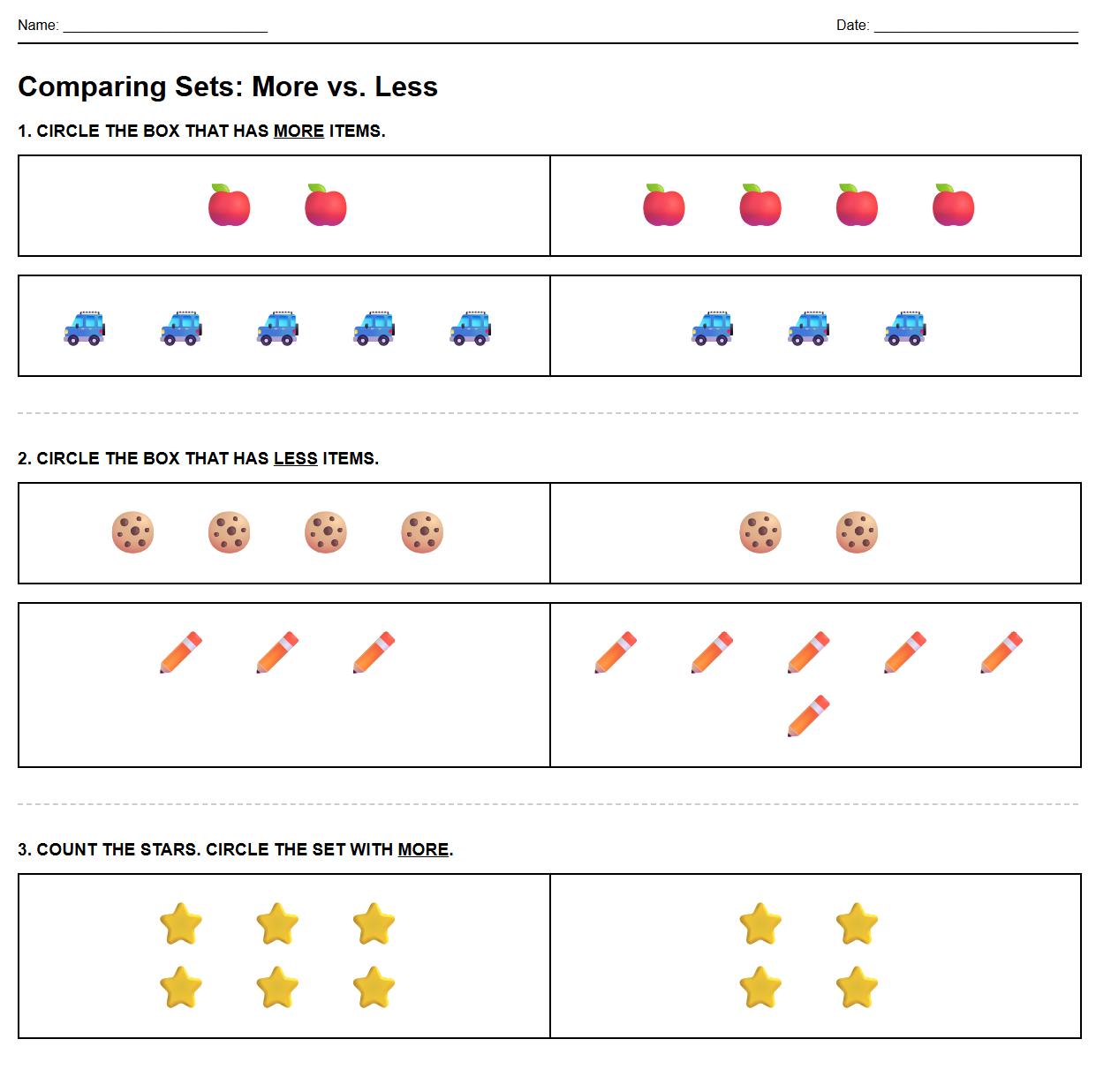
Comparing Sets Worksheet with More Versus Less using everyday objects

Download PDF     Pin it

Place Value Chart Counting and Comparison Worksheet for More Versus Less
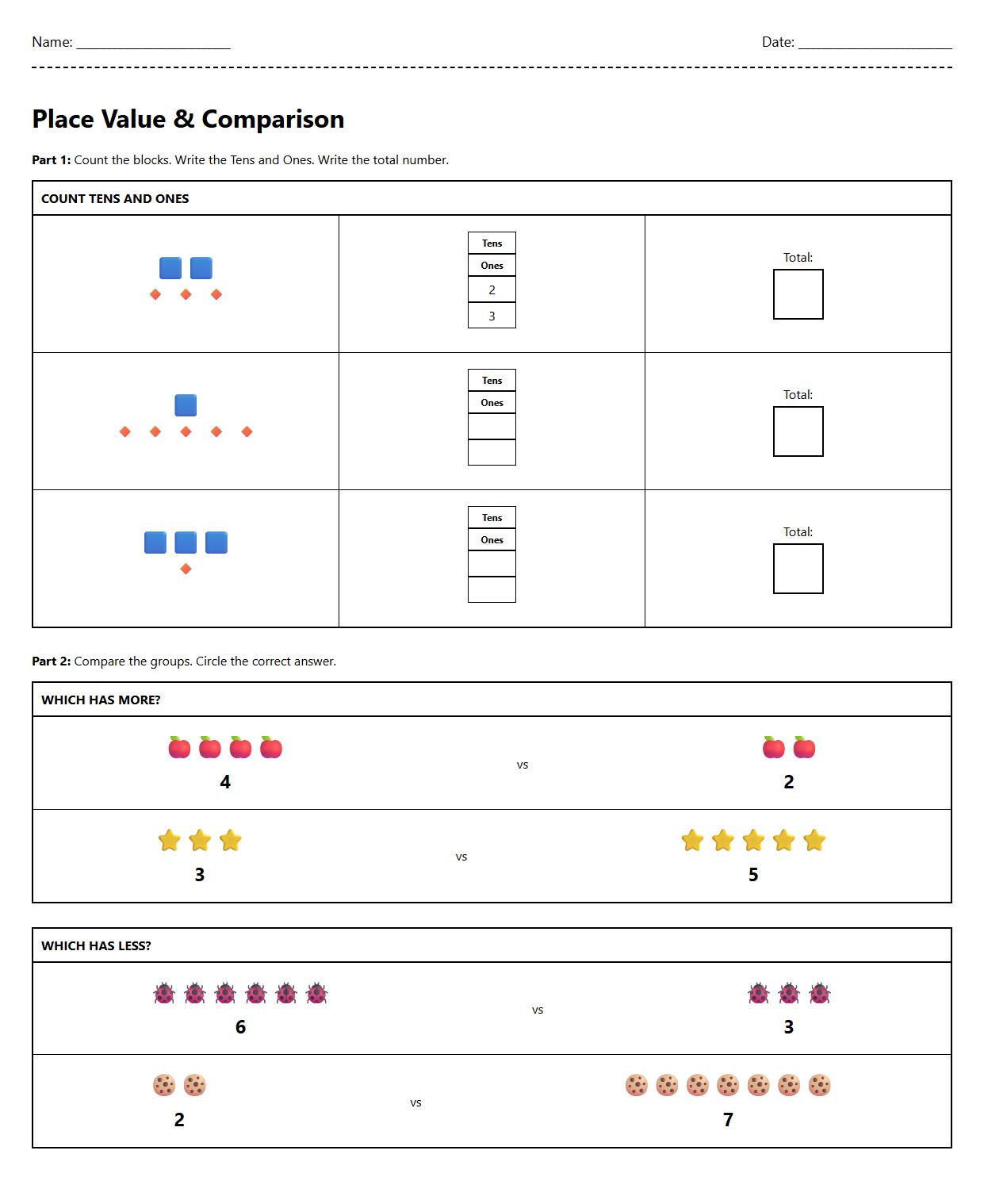
Place Value Chart Counting and Comparison Worksheet for More Versus Less

Download PDF     Pin it

Pictograph Analysis Worksheet for Counting and More Versus Less comparison
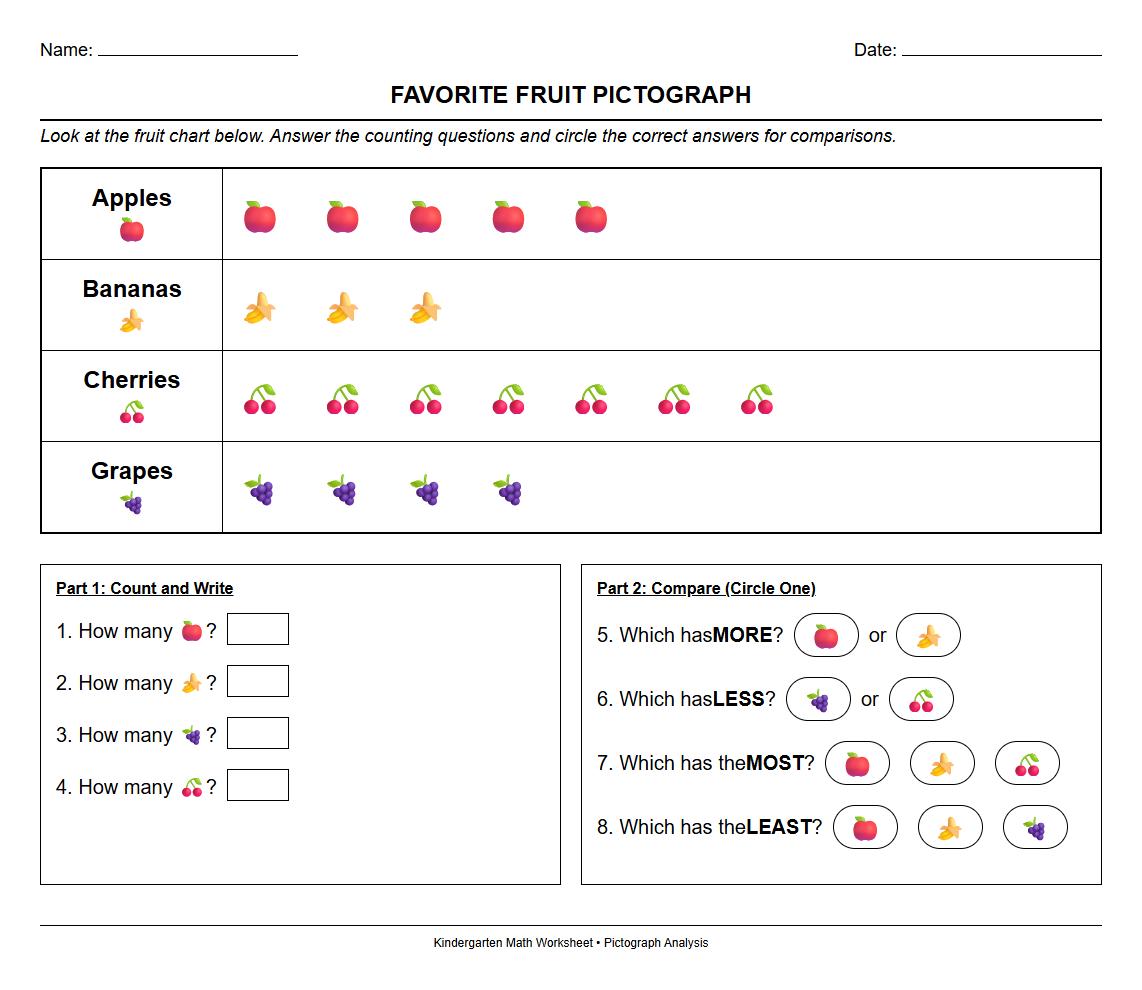
Pictograph Analysis Worksheet for Counting and More Versus Less comparison

Download PDF     Pin it

Comparing Quantities: More or Less

When asking "Which group has more apples?", encourage children to count each set carefully. This helps them develop skills in comparison and basic counting. Use hands-on items like picture cards or real objects to make learning interactive. The goal is to teach recognition of quantities and develop visual discrimination.

Understanding Fewer Items

Questions like "Which set has fewer blocks?" focus on identifying smaller quantities. This builds an early understanding of numbers and quantities by comparing two or more groups. Encourage children to count aloud and point to each block to reinforce learning. Emphasize the concept of "less than" in an engaging way.

Counting and Comparing Stars

Counting stars in each row promotes one-to-one correspondence and accurate counting skills. Asking "Which row has less stars?" helps children distinguish between different quantities visually. Use bright, clear images to maintain engagement and ensure children can easily count. This activity strengthens their ability to compare sets effectively.

Identifying More Animals in Pictures

"Point to the picture that shows more animals" encourages visual comparison in a fun context. This type of question helps children practice counting and comparing different groups quickly. Using colorful animal pictures captures their interest and supports vocabulary development. It also fosters decision-making based on quantity assessment.

Comparing Shapes: Circles vs Triangles

Asking "Are there more circles or triangles?" helps children distinguish differences in shapes while practicing counting. This builds recognition of geometric shapes along with quantity comparison skills. Use worksheets with varied shapes and encourage children to mark the counted items. Such activities combine counting and shape identification effectively.

Which Basket Has Less Fruit?

When focusing on "Which basket has less fruit?" children learn to compare amounts in a real-life context. This encourages practical understanding of quantity related to everyday objects. Provide colorful images of fruits and baskets to maintain engagement and clarity. The task supports critical thinking by having children assess visual data.

More Cars or More Buses?

Asking "Do you see more cars or more buses?" develops observational and comparison skills using familiar vehicles. This question helps children categorize and count different types of objects. Use engaging pictures showing both vehicles clearly for effective practice. It enhances children's ability to compare distinct groups visually.

Identifying Less Crayons

Worksheet questions like "Which group has less crayons?" promote an understanding of comparing smaller quantities. This task supports counting skills and the ability to determine differences between groups. Using colorful crayon images keeps children interested and aids in recognition. Encourage children to verbalize their counting process for better learning.

Counting Boys or Girls in Pictures

Asking "Are there more boys or girls in the picture?" combines counting with social recognition. It helps children observe and compare groups of people, fostering both numerical and social awareness. Use diverse, inclusive images to make the activity relatable. This also enhances vocabulary and comprehension.

Which Box Has More Candies?

The question "Which box has more candies?" focuses on comparing larger quantities in a fun way. Candy images are engaging and motivate children to count carefully. This activity reinforces recognition of numerical differences and visual comparisons. It also improves decision-making skills based on counting results.


More in Mathematics Category


About the author. Nylen Smith is a dedicated educator and cofounder of KWorksheet.com, a popular platform specializing in high-quality kindergarten worksheets and printable activities.

Disclaimer. The information provided in this document is for general informational purposes and/or document sample only and is not guaranteed to be factually right or complete. Please report to us via contact-us page if you find and error in this page, thanks.

Comments

No comment yet