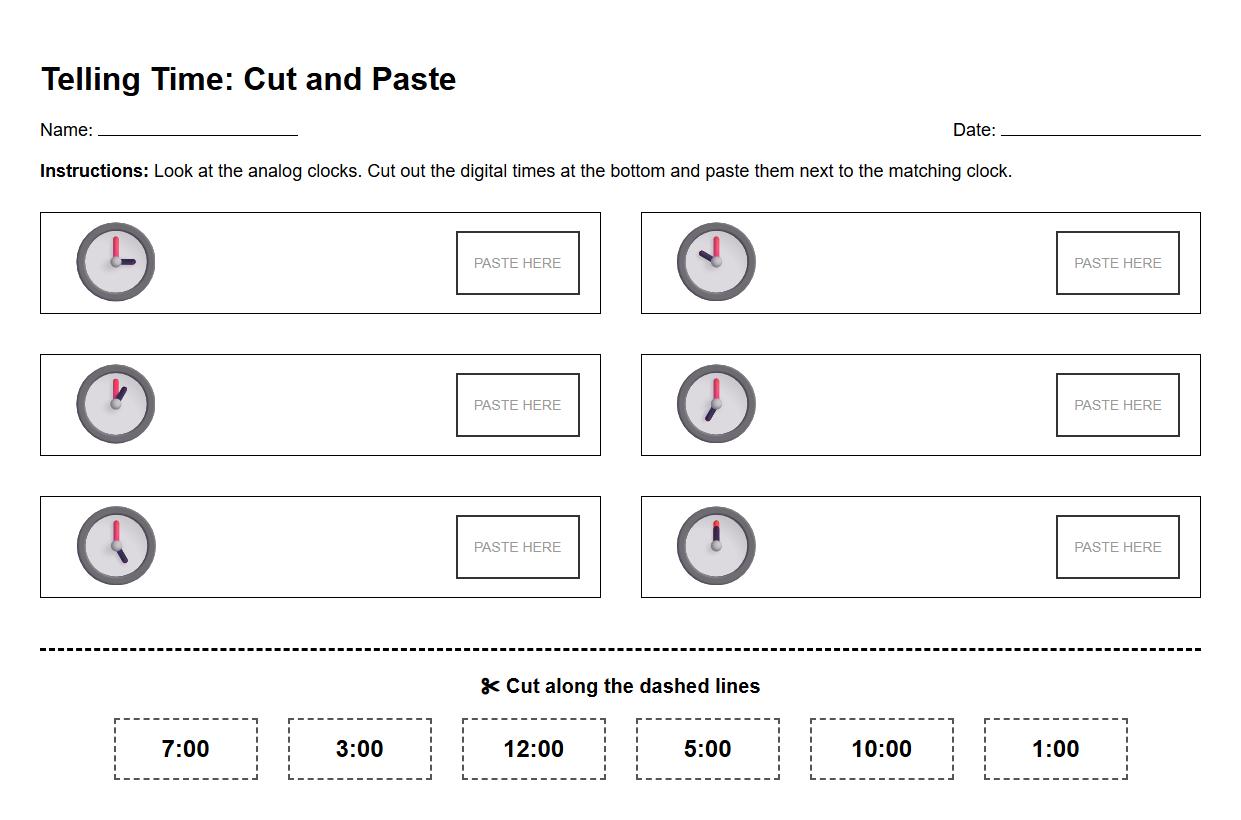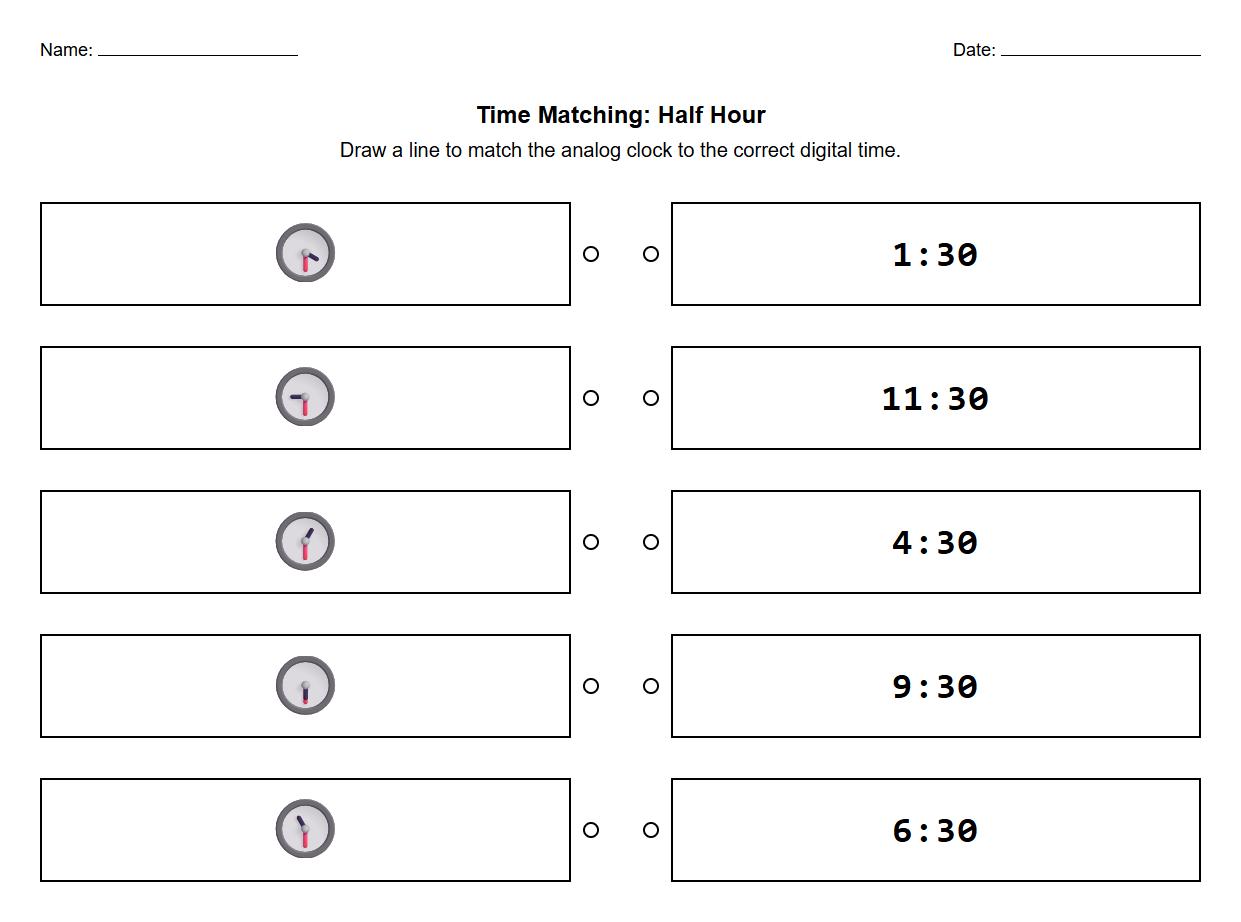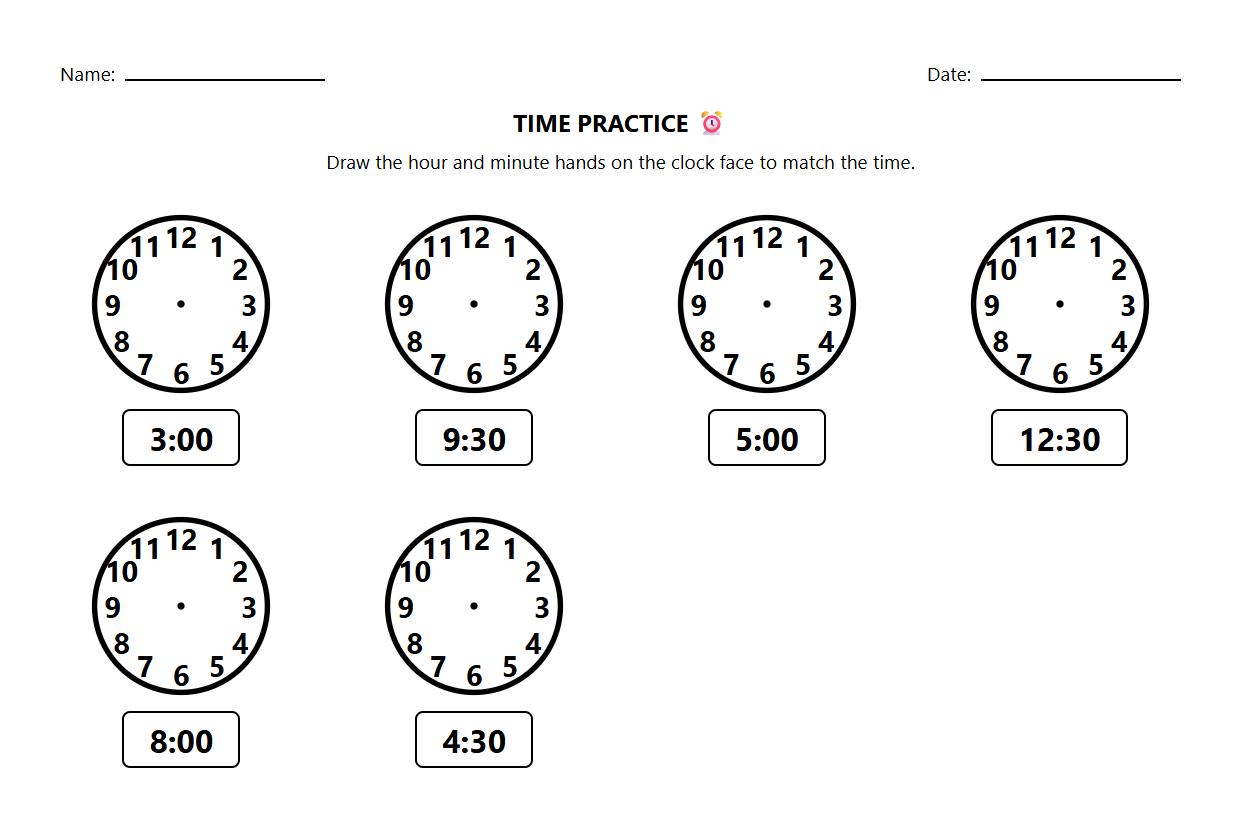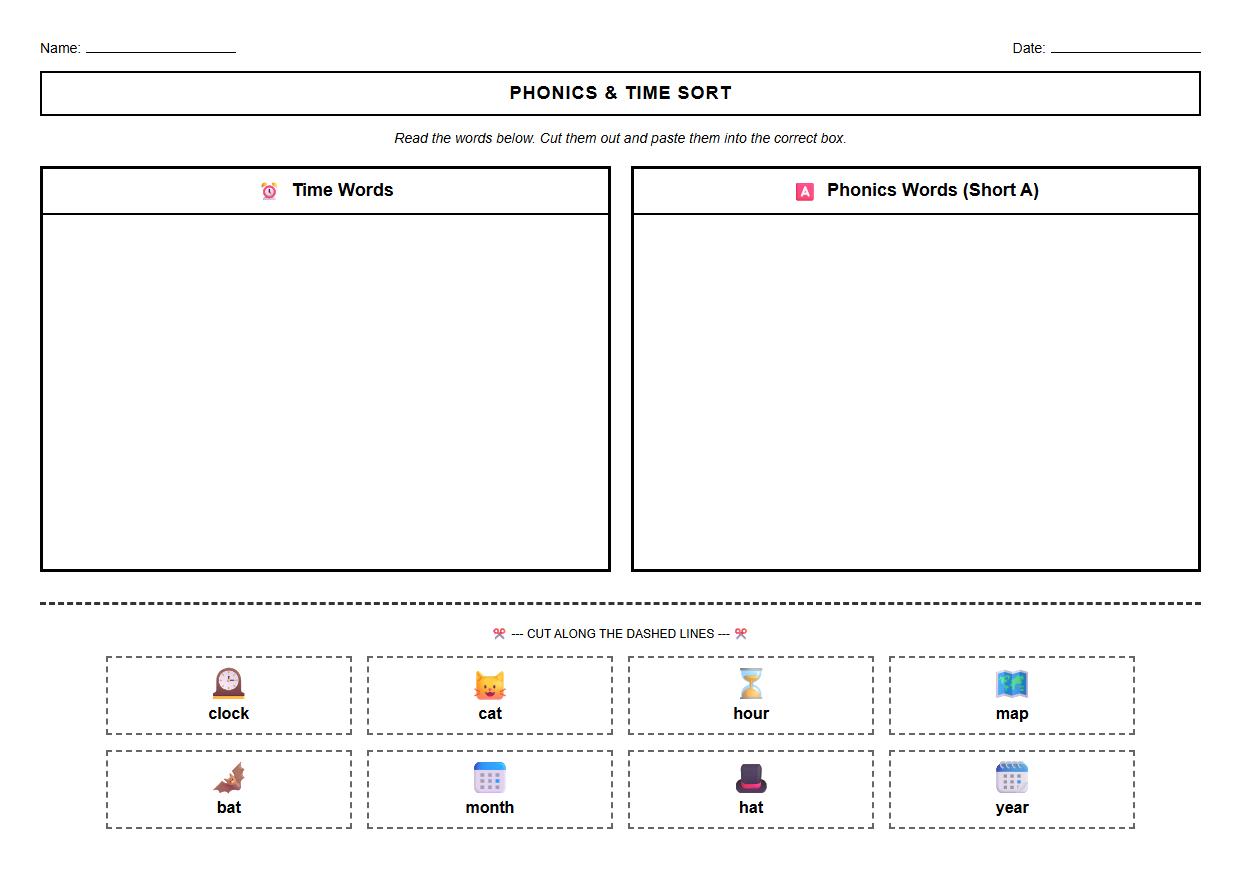
Kindergarten students develop crucial time-telling skills by practicing with interactive hour and half-hour worksheets tailored to their learning level. These engaging activities enhance their understanding of clock reading through hands-on exercises that reinforce concepts of time measurement. Explore the available worksheets to support your child's journey toward mastering telling time.
Understanding Clock Times: Big Hand on 12, Small Hand on 3
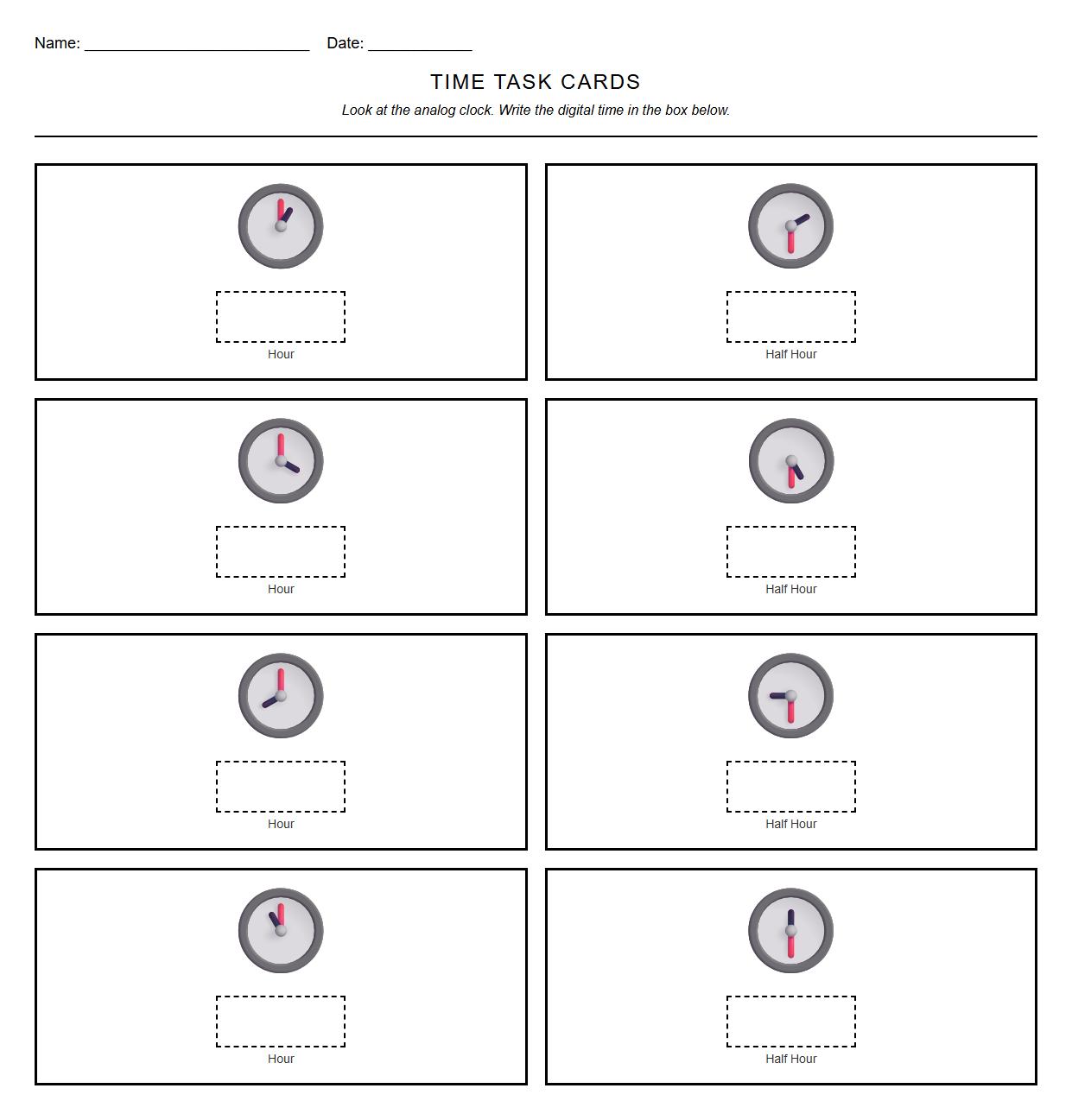
When the big hand is on 12 and the small hand is on 3, the time is exactly 3 o'clock. This is a fundamental concept for young learners, indicating the start of the hour. Teachers and parents can guide children to recognize that the big hand points to 12 at the start of every hour. This helps build a strong foundation in reading analog clocks. For more on this topic, try the Kindergarten Time Telling Worksheets.
Drawing Hands for Half Past 6
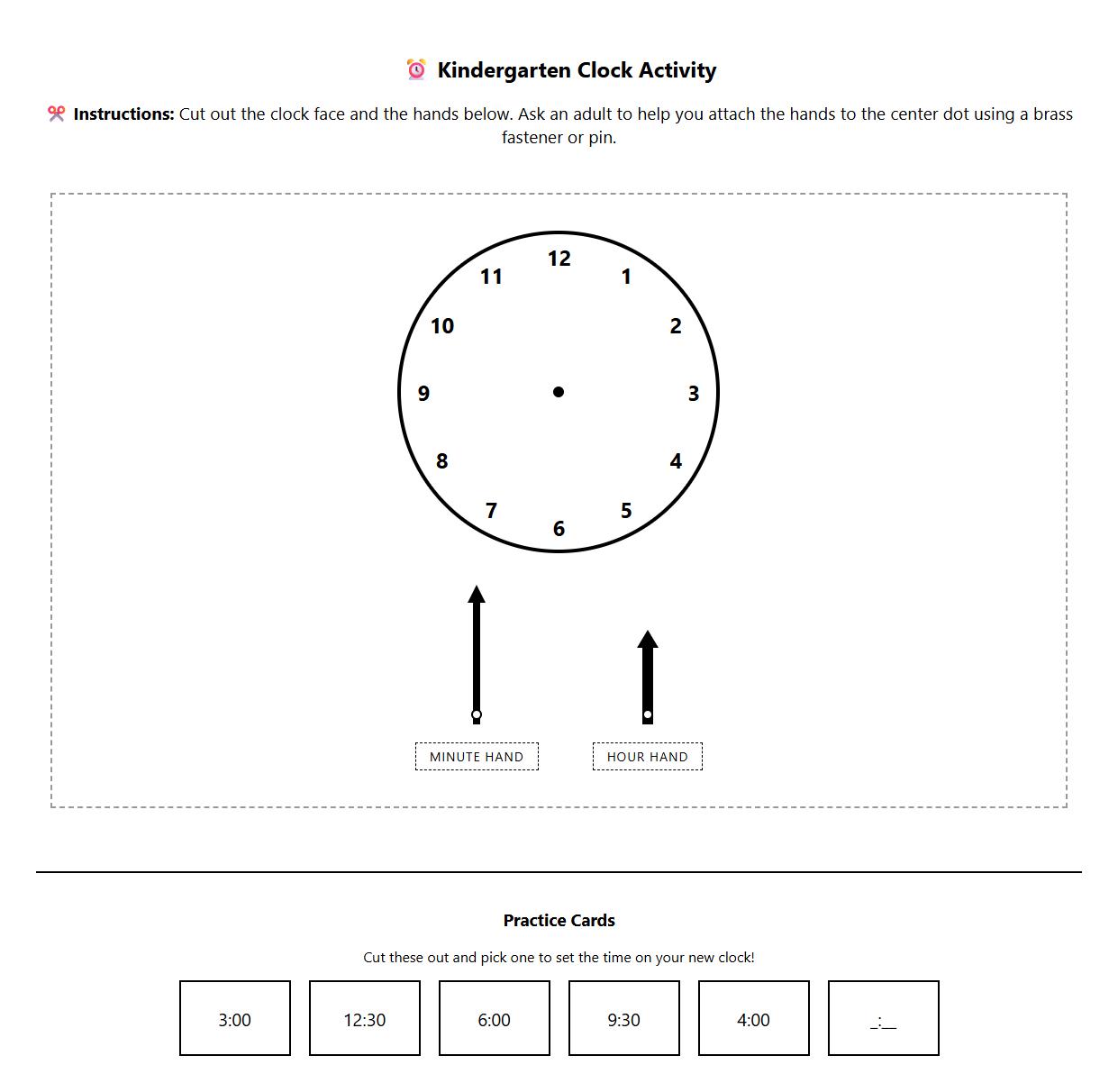
To show half past 6, the big hand should point to 6, representing 30 minutes past the hour. Meanwhile, the small hand should be positioned halfway between 6 and 7, indicating it is half past. This visual helps children understand how time progresses between hours. Encouraging them to draw the hands themselves reinforces clock reading skills.
Identifying the Clock Showing 5 O'clock
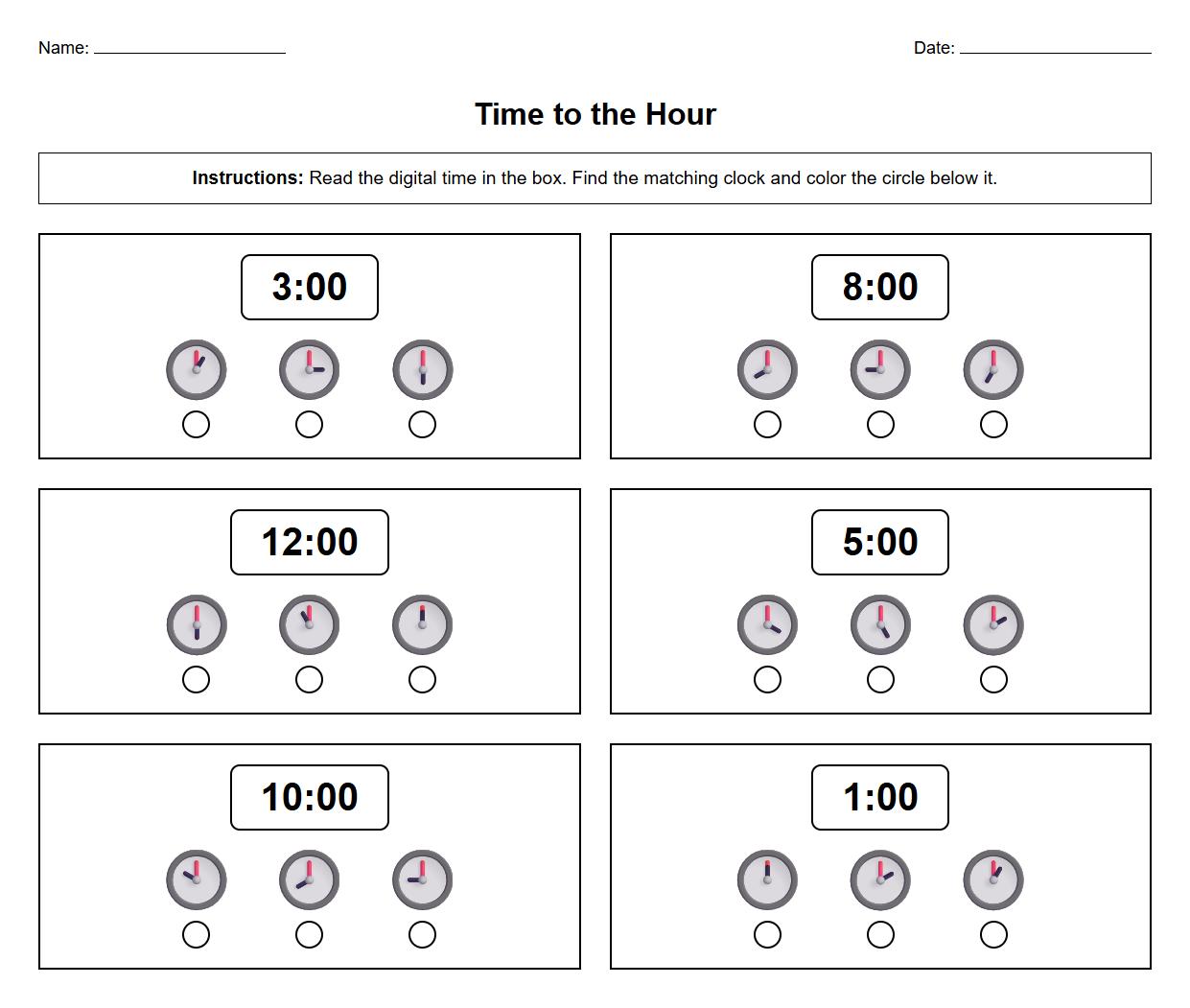
Look for the clock with the small hand on 5 and the big hand on 12, showing the start of 5 o'clock. This exercise improves children's ability to distinguish specific hours on analog clocks. It also strengthens their observational skills in recognizing clock hand positions. Teachers can use this activity to assess understanding of whole-hour times.
Matching Digital 2:00 to the Correct Analog Clock
Match the digital time 2:00 by finding the clock with the small hand on 2 and the big hand on 12. This task bridges comprehension between digital and analog time formats. Encouraging children to compare these helps develop a comprehensive understanding of different time representations. This matching exercise supports practical time-reading skills. For matching activities, explore the Coin Recognition Matching Worksheets.
Circling Clocks Showing Half Past 4
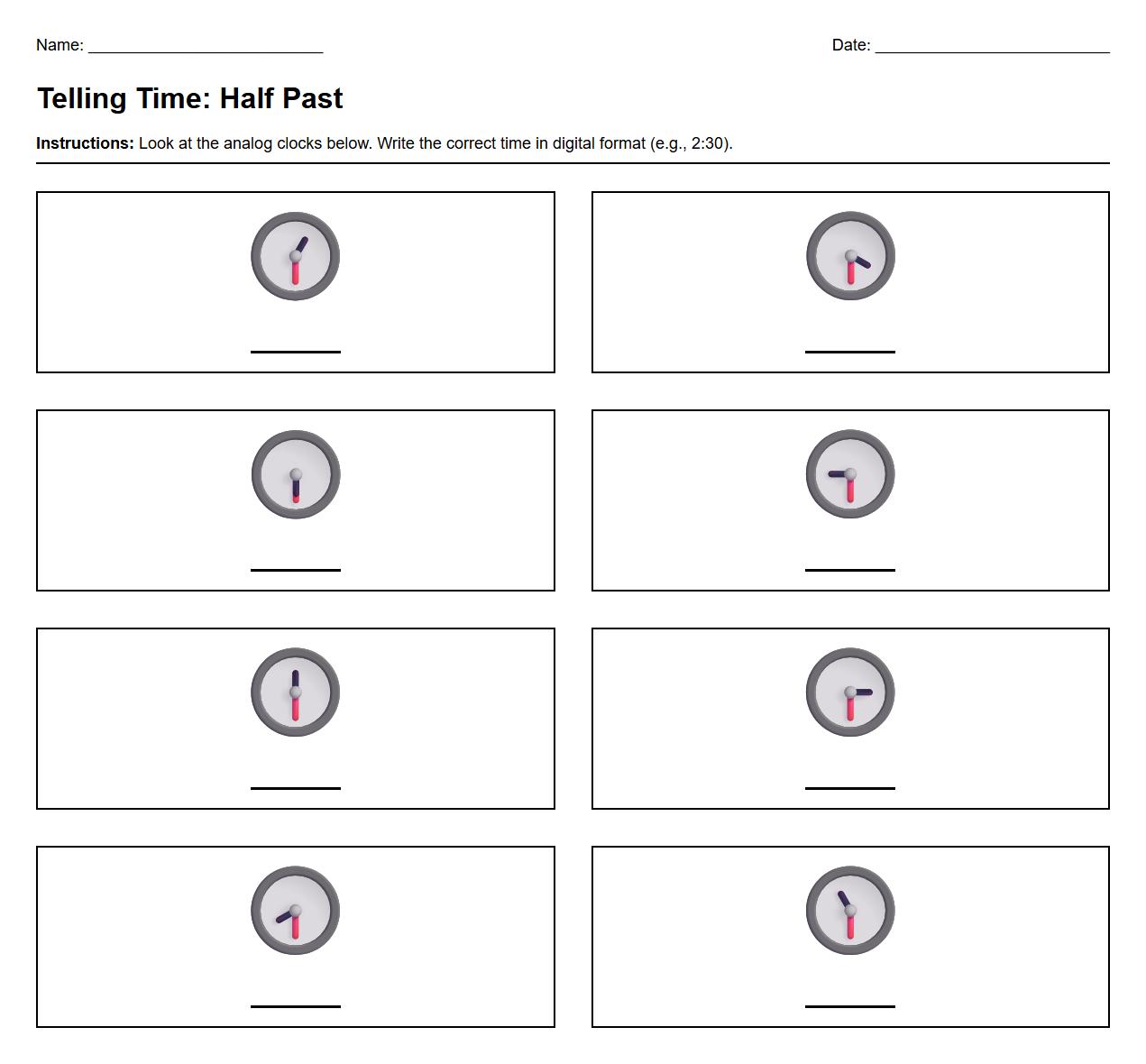
Have children circle all clocks where the big hand points to 6 and the small hand is between 4 and 5. This represents half past 4, or 4:30. This exercise refines their attention to detail in identifying half-hour increments. It is also useful for distinguishing between o'clock and half past times on clocks.
Time One Hour After 7 O'clock
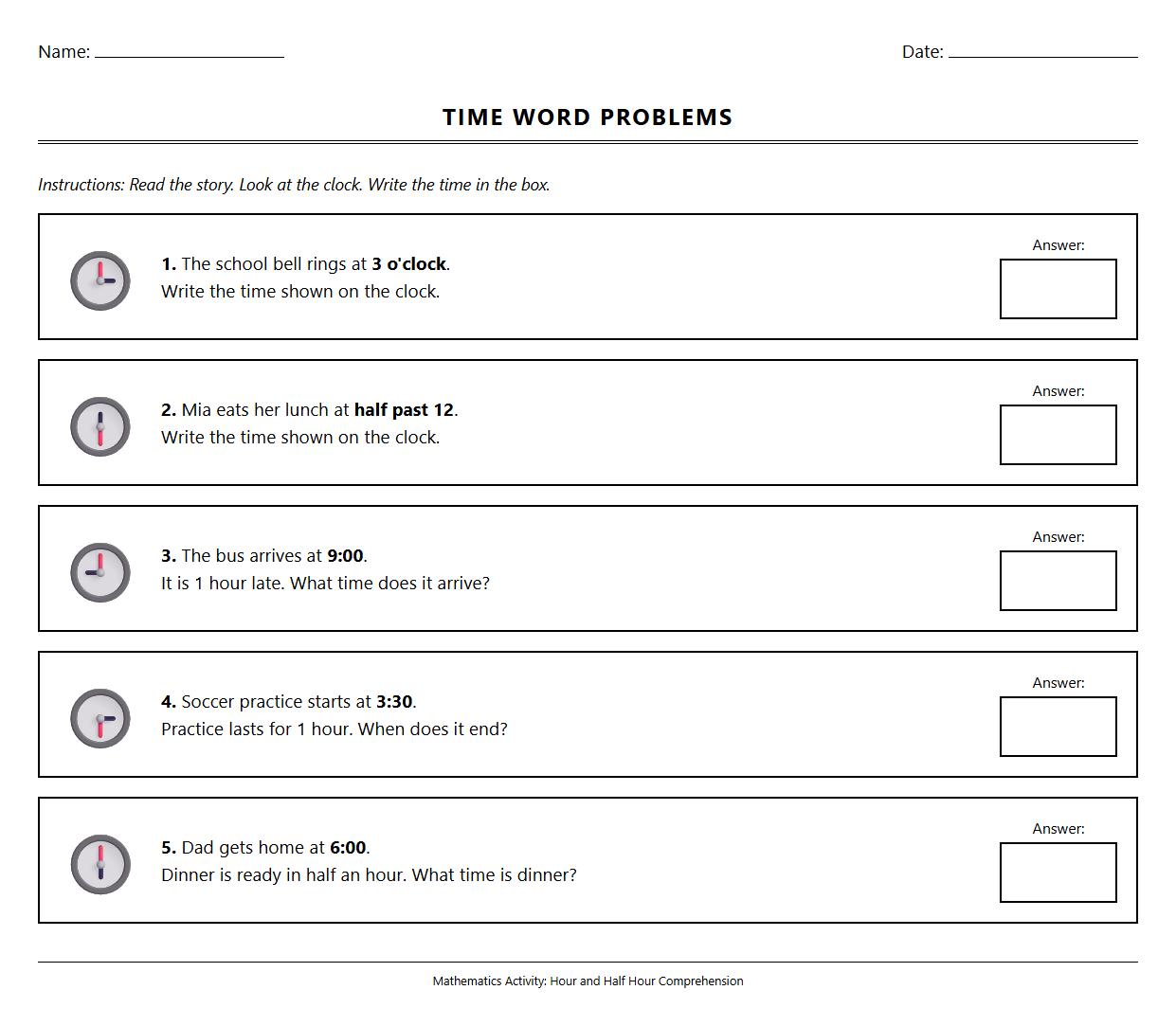
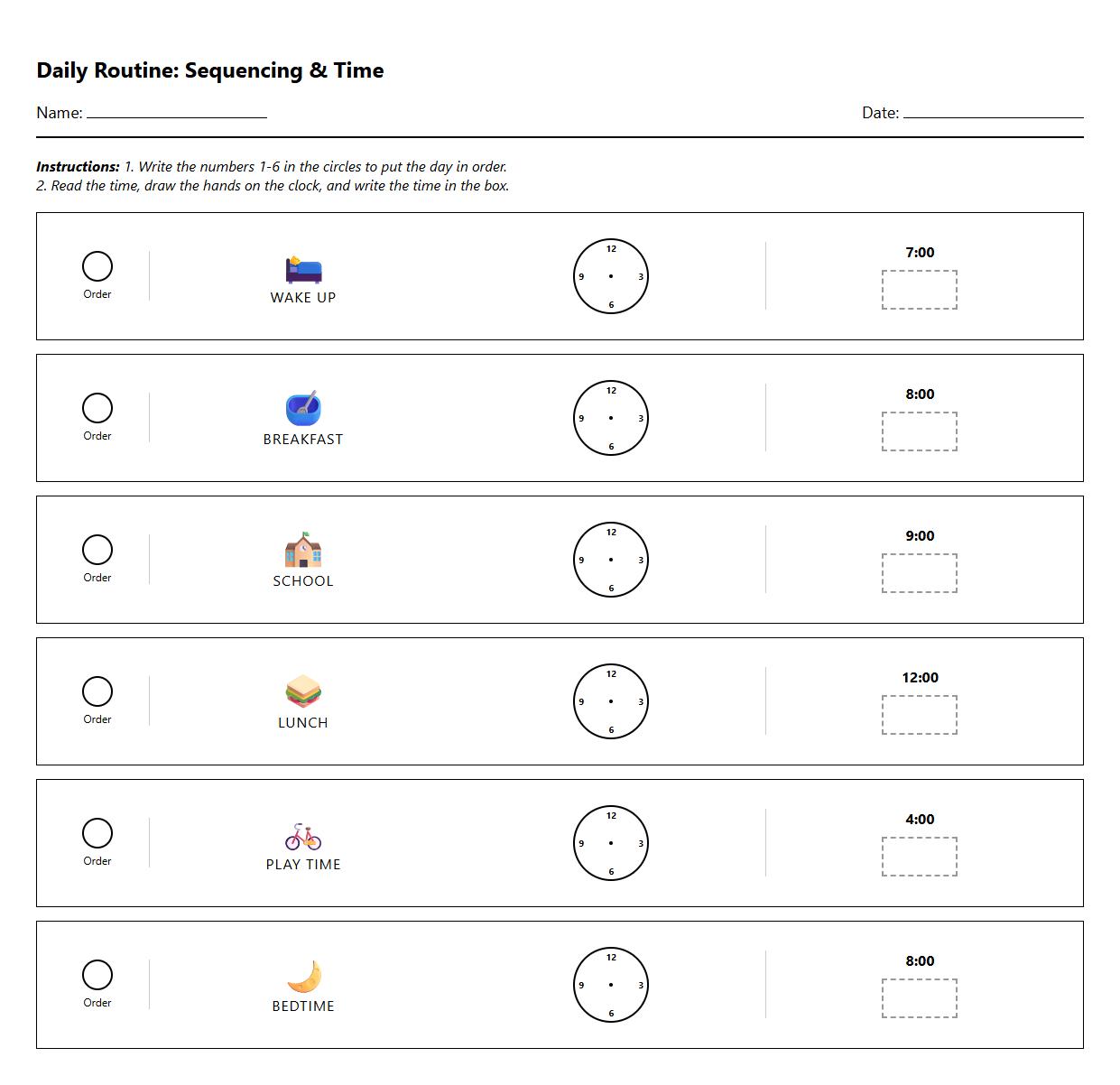
One hour after 7 o'clock is 8 o'clock, where the small hand moves to 8 and the big hand remains on 12. Teaching this helps children understand the concept of time increments and hour progression. It also fosters basic addition skills using time as context. Parents and teachers can use clocks as practical tools for learning.
Determining If the Time is 9 O'clock or Half Past 9
Check whether the big hand points to 12 or 6 to decide if the clock shows 9 o'clock or half past 9. Big hand on 12 means exactly 9:00, while on 6 indicates 9:30. This distinction is critical for accurate time reading and comprehension. Activities like this build precision in recognizing various clock times.
Writing the Time as Half Past 8
Write the time shown on the clock as half past 8 when the big hand is on 6 and small hand is between 8 and 9. This encourages children to translate visual information into words. It improves vocabulary related to time and enhances written expression. Parents and teachers can prompt this to solidify verbal and written clock skills.
Coloring Clocks by O'clock and Half Past Times
Color clocks showing o'clock times blue and those with half past times red to visually differentiate these two time types. This activity aids in pattern recognition and categorization. It makes learning interactive and visually engaging for young children. Such color coding supports better memory retention of time concepts. For more on categorizing and charting, see the Create Your Own Tally Chart Worksheet.
Drawing Lines from Time Words to Matching Clock Faces
Draw a line from each time in words to the matching clock face to connect verbal and visual time representations. This reinforces the link between reading, writing, and interpreting time. It also strengthens hand-eye coordination and fine motor skills through drawing. This integrative method enhances overall understanding of clock reading.


Time Concepts Worksheet Set for Kindergarten Hour and Half Hour Mastery