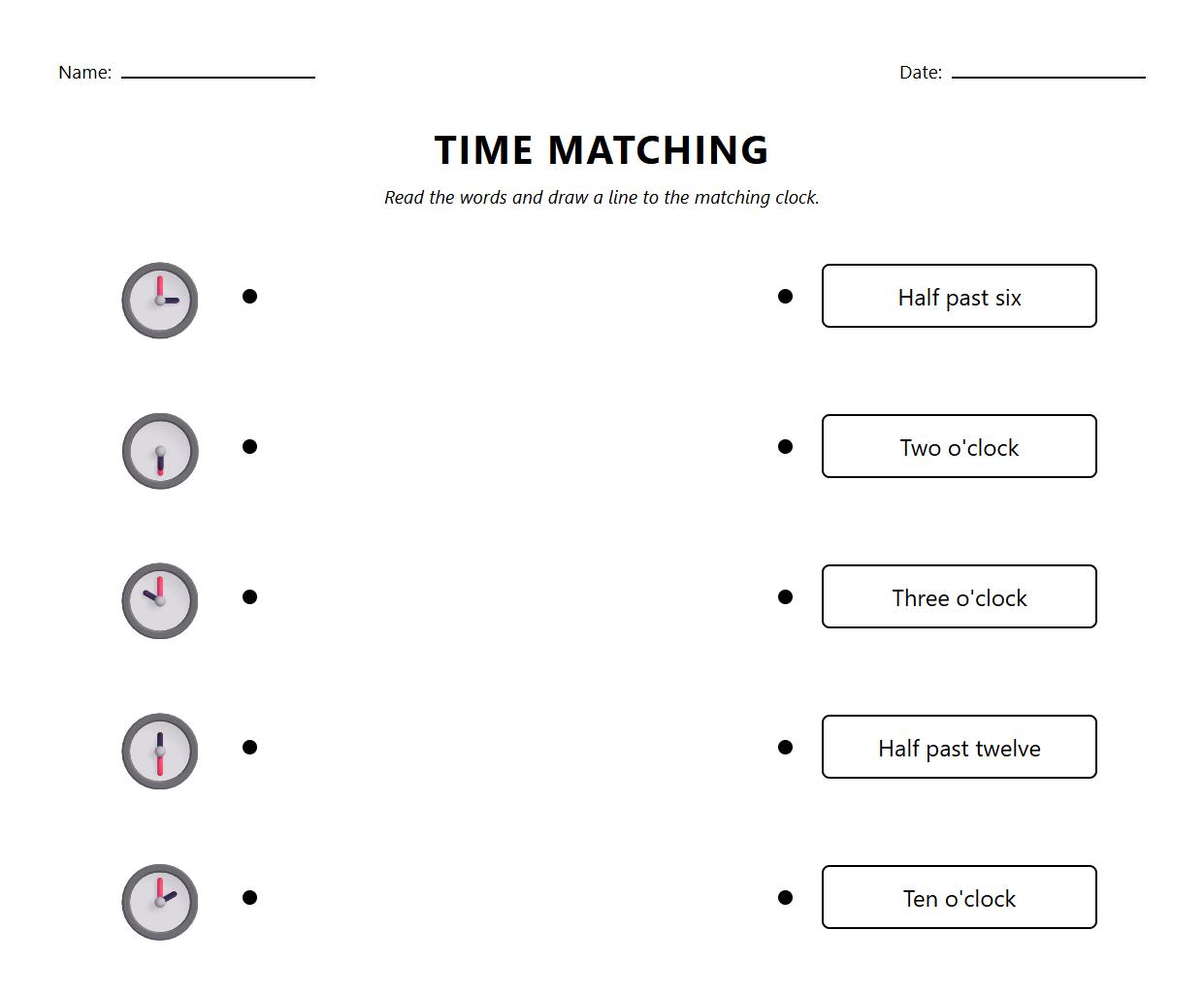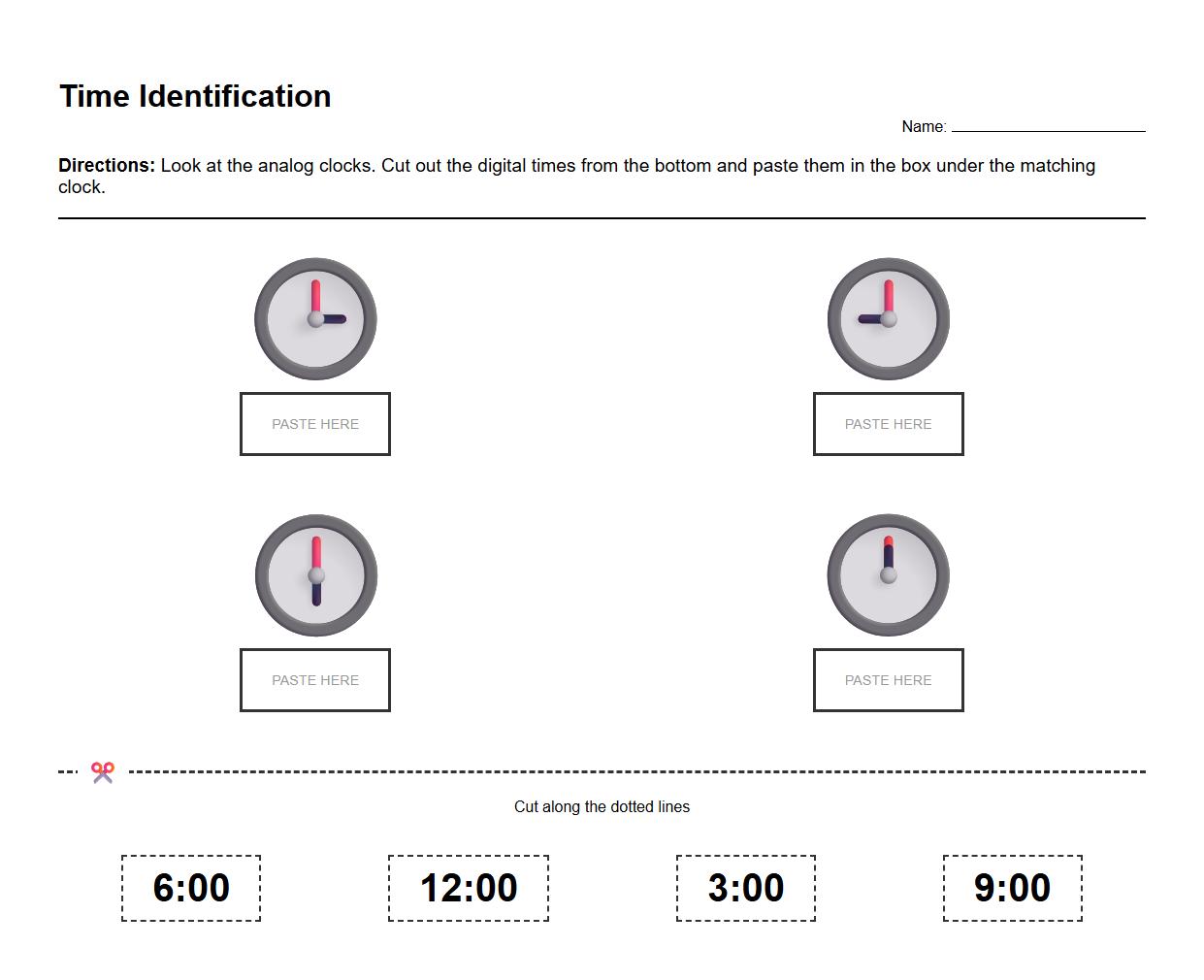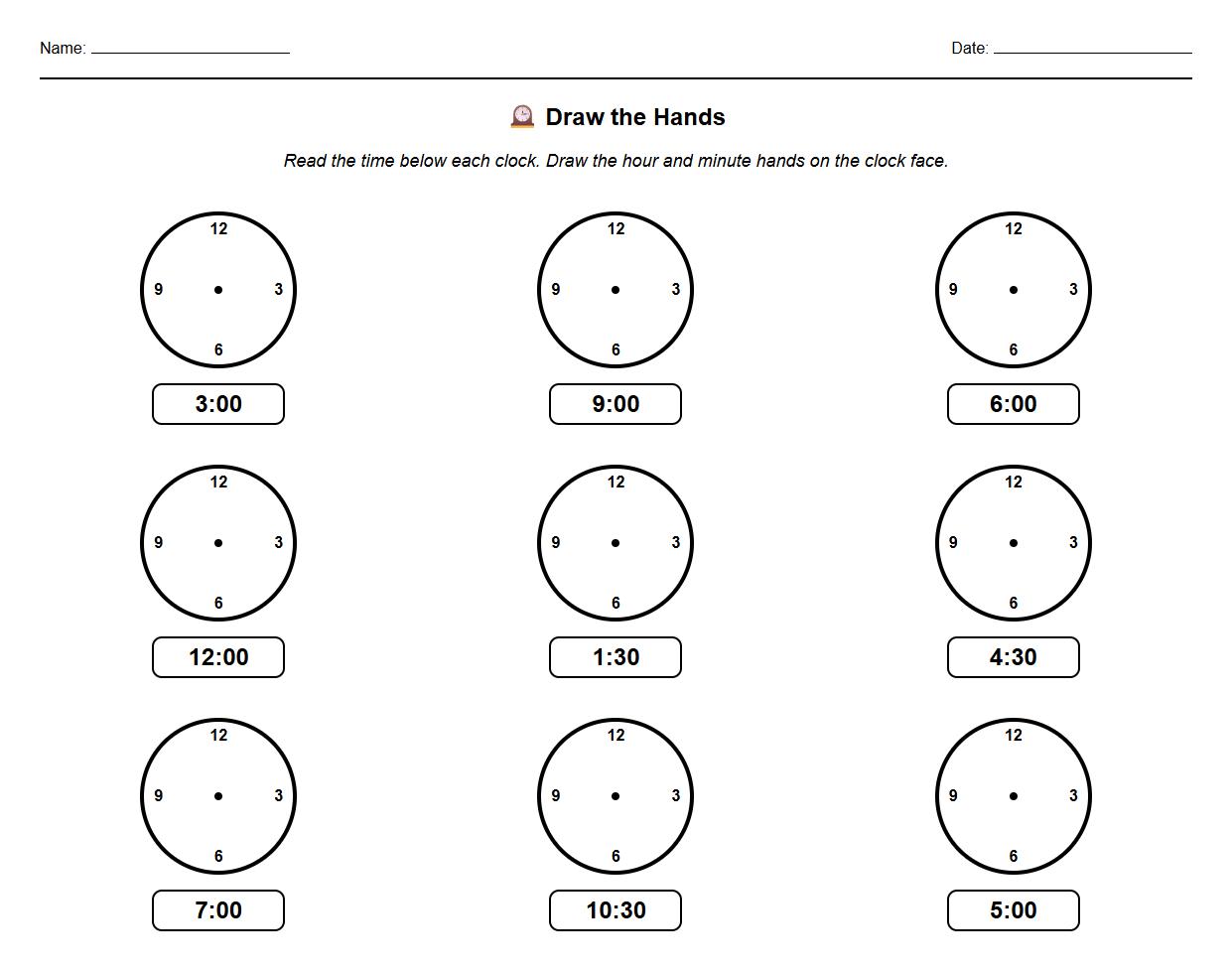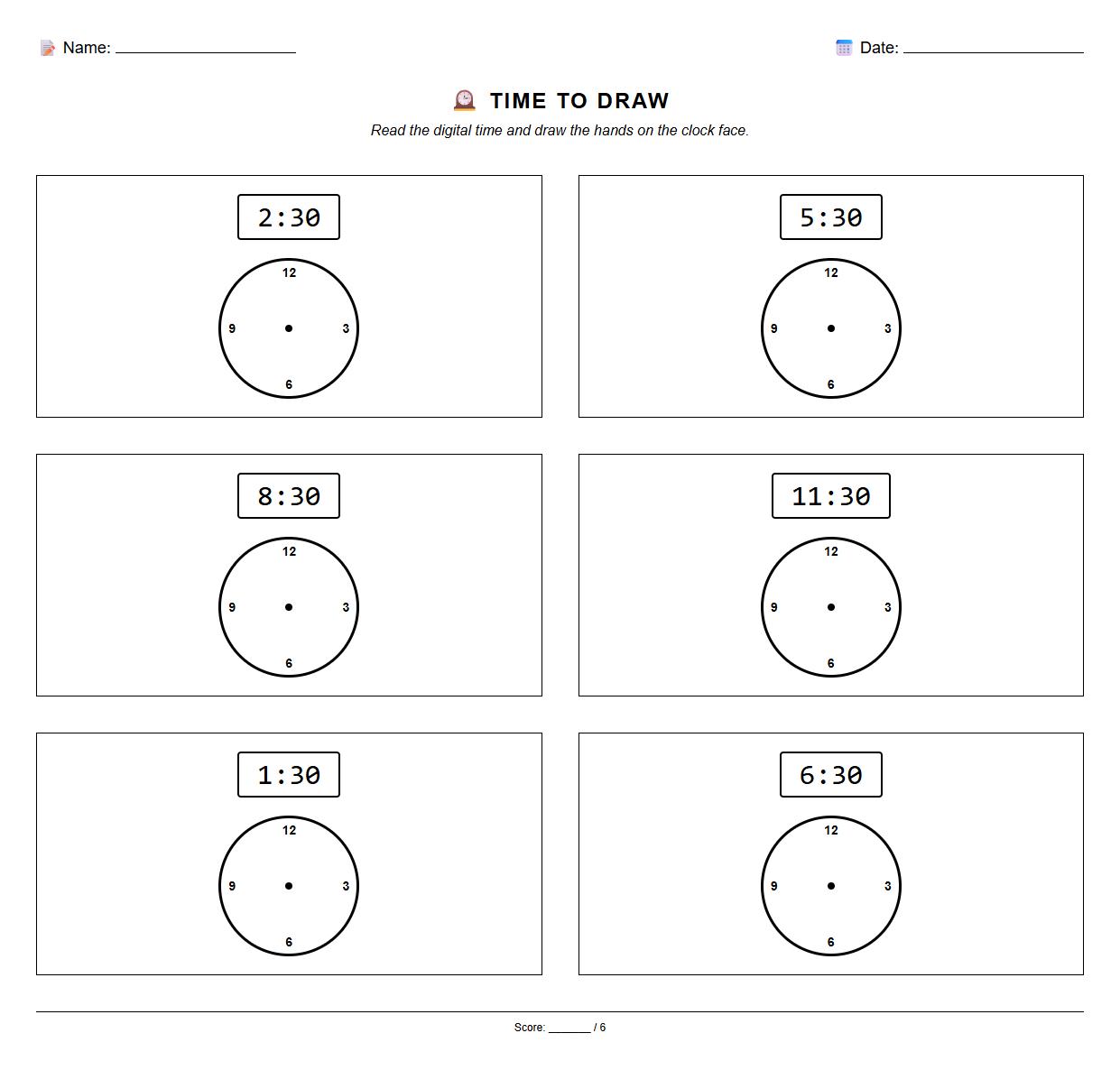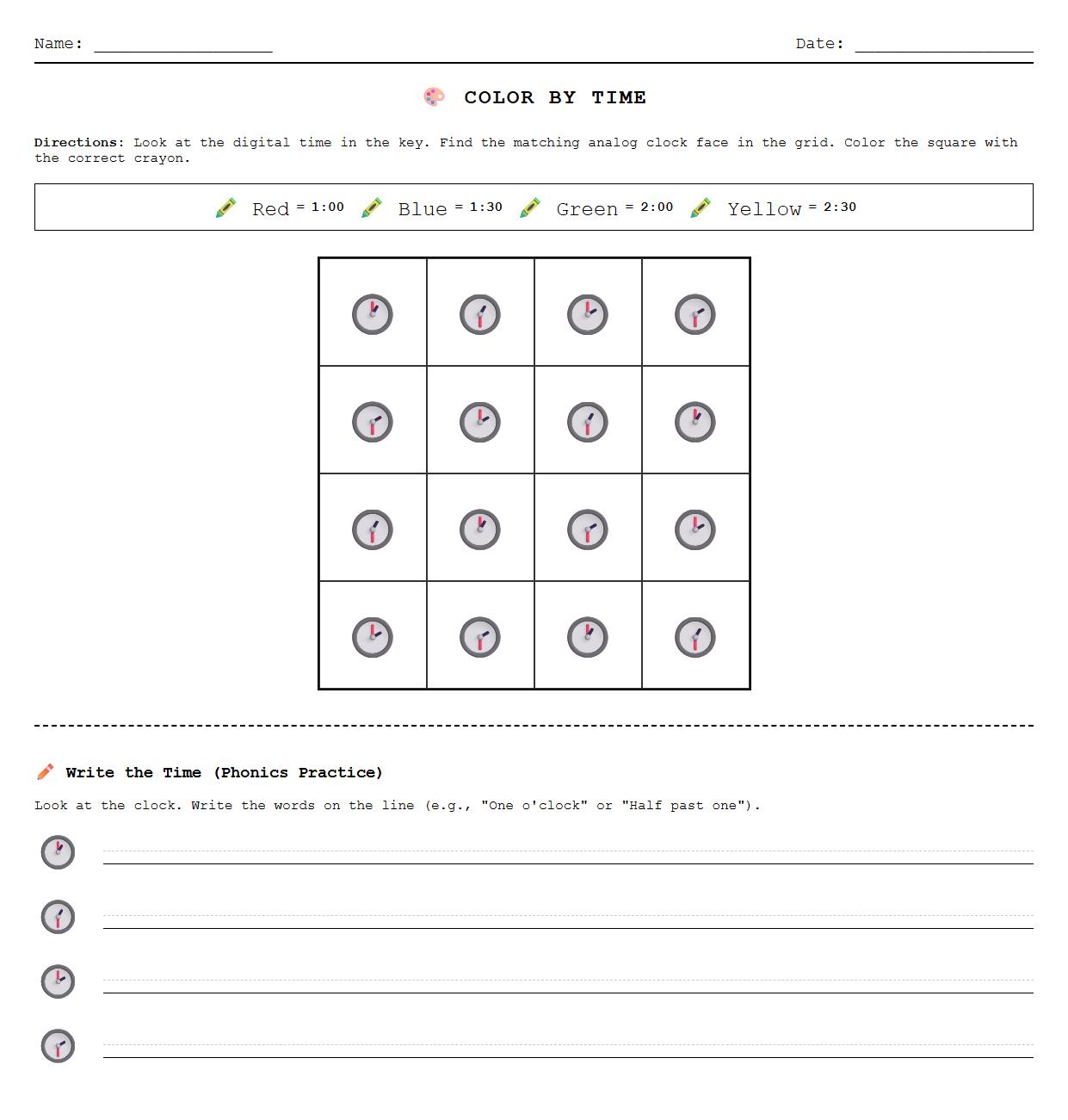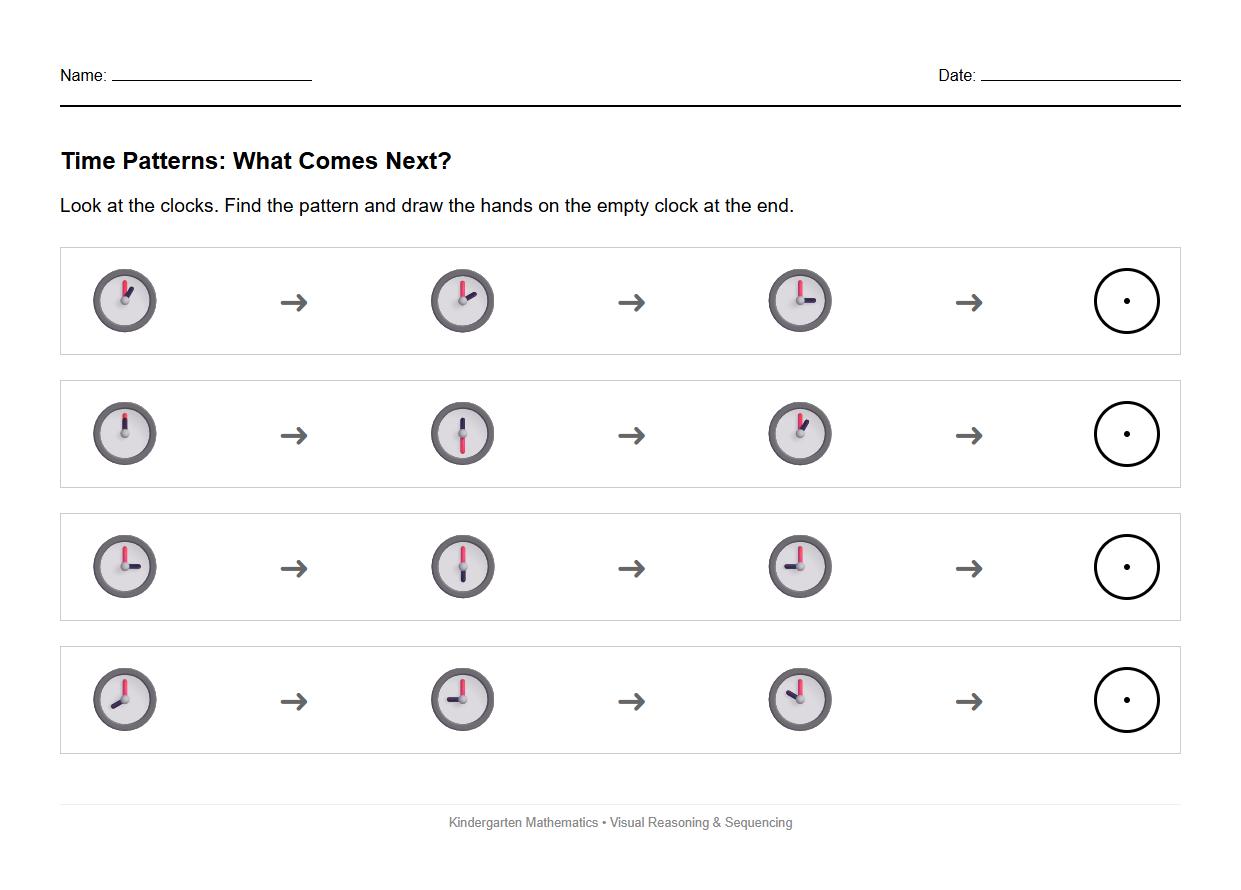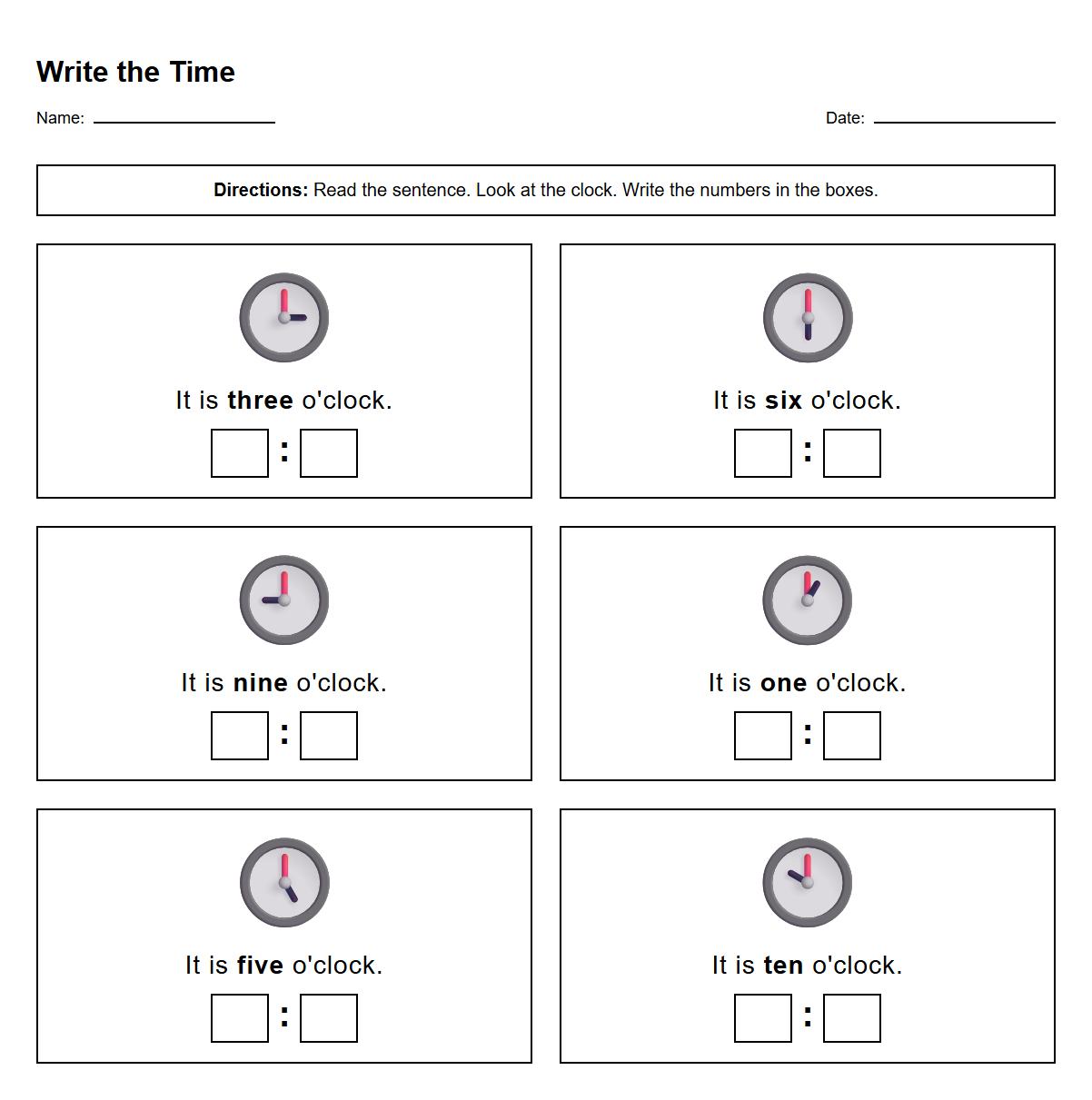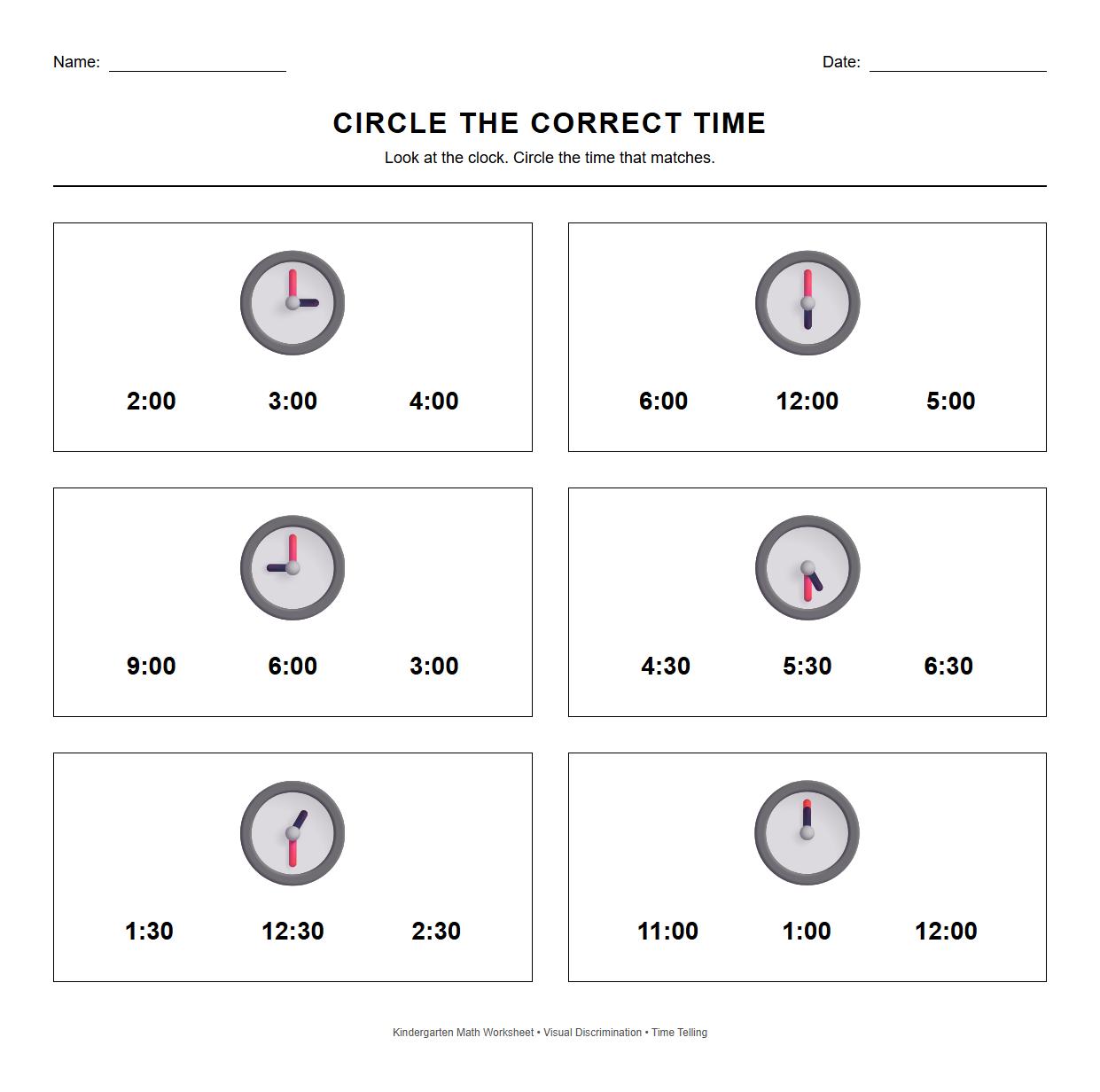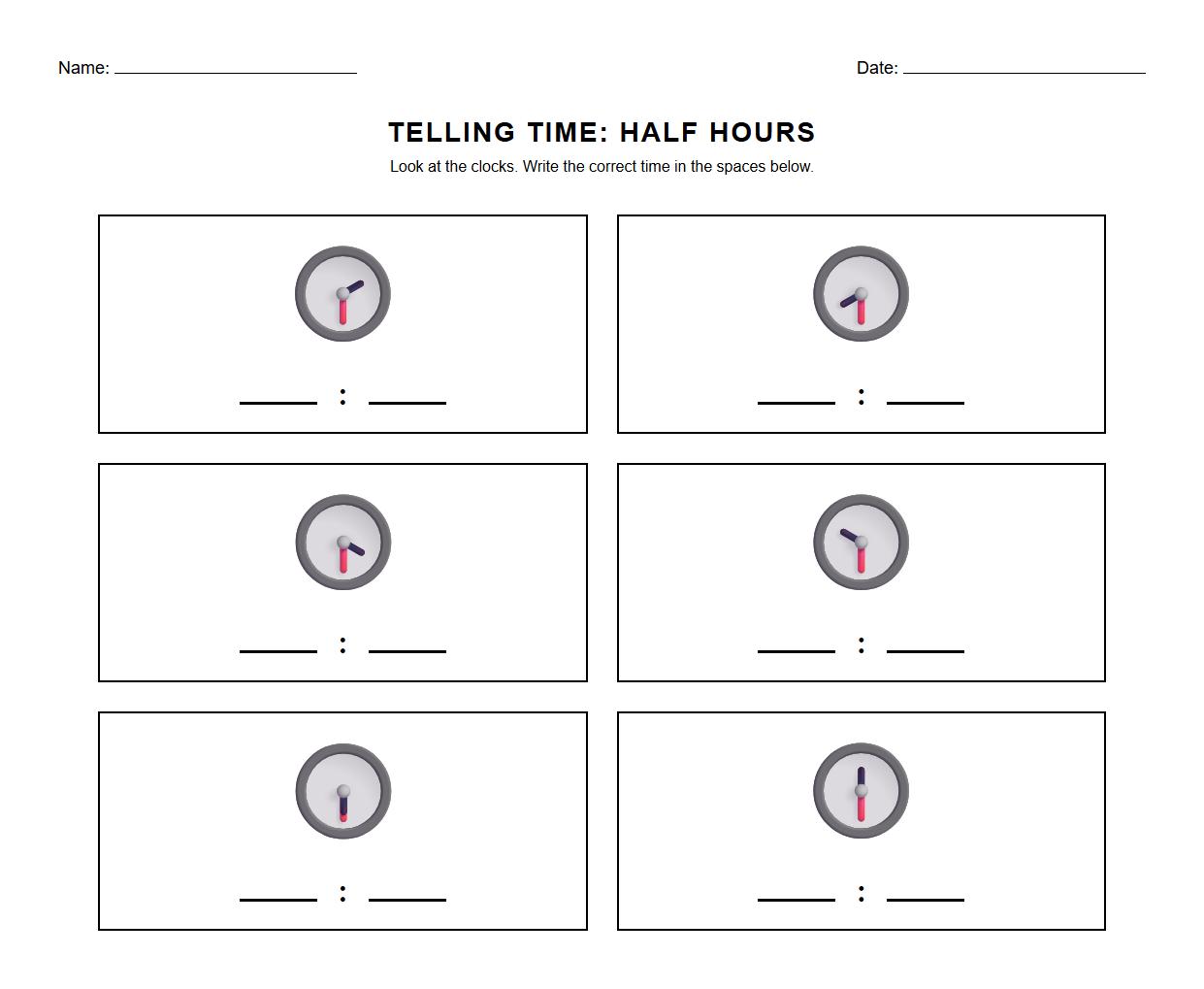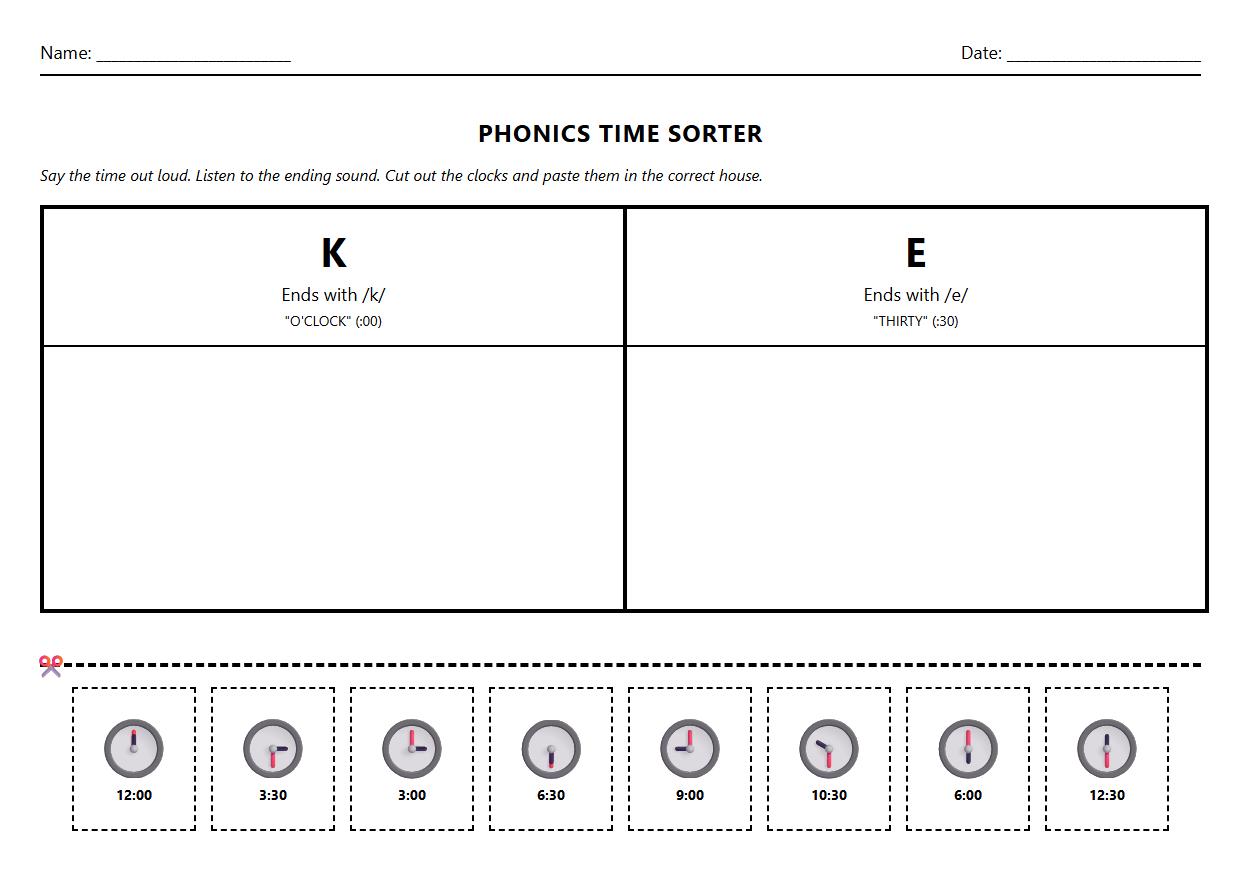
Kindergarten Visual Telling Time Worksheets focus on recognizing hours and half-hours through engaging clock face activities that build foundational time-telling skills. These worksheets develop students' ability to identify and differentiate between the hour and half-hour marks with clear, colorful visuals tailored to young learners. Explore our collection of worksheets to help your child master telling time confidently and enjoyably.
Activities to Recognize Clocks Showing the Hour and Half Hour
Hands-on clock activities using movable hour and minute hands help kindergarteners visualize time concepts. Matching exercises where children pair digital and analog times reinforce recognition of the hour and half hour. Story-based time-telling games engage young learners by contextualizing time in real-life events. Repeated practice with these activities enhances children's confidence in reading clocks.
Using Visual Telling Time Worksheets to Support Skills
Visual worksheets provide clear, structured practice for identifying time to the hour and half hour. They help students associate clock positions with numerical time in a fun, engaging way. Teachers can customize worksheets to include progressively challenging tasks that build skill step-by-step. Visual aids also allow for immediate feedback and independent learning during practice sessions.
Effective Visual Cues for Teaching Hour and Half Hour
Color-coded clock hands distinctly highlight hour and minute movements, aiding comprehension. Use of bold hour marks emphasizes the main reading points, while shaded segments can illustrate half-hour intervals. Clear visual separation helps students differentiate times easily, reducing confusion. Simple symbols like smiling faces or icons at key intervals increase engagement and memory retention.
Common Challenges Kindergarteners Face When Learning to Tell Time
Distinguishing hour from minute hands often confuses young learners due to size and position differences. Abstract number concepts related to time can be difficult without concrete examples. Students may struggle with understanding that the minute hand moves faster than the hour hand. Additionally, transferring analog clock reading skills to digital clock formats requires practice and guidance.
Strengthening Understanding of Daily Routines Through Time Worksheets
Linking time to daily activities helps children grasp the practical meaning behind clock reading. Worksheets that connect images of routine tasks with specific times promote contextual learning. Repetitive visual cues reinforce memory of what happens at each hour or half hour. This connection builds a natural framework for internalizing time concepts within familiar schedules.
How Illustrated Clocks Aid in Grasping Hour and Half Hour Differences
Illustrated clocks provide visual distinctions such as highlighted segments or character prompts that emphasize key time points. They make abstract time intervals tangible by showing hours and half hours clearly. Engaging images support cognitive links between clock reading and everyday scenarios. These visuals encourage active participation and improve retention during lessons.
Essential Elements of a Kindergarten Telling Time Worksheet
Clear numbering and labeled hands are crucial for guiding young learners through time reading steps. Large, simple fonts paired with uncluttered clock faces reduce distractions. Inclusion of both analog and digital representations supports comprehensive understanding. Worksheets should also feature varied exercises like matching, drawing hands, and selecting correct times.
Integrating Storytelling with Time-Telling Visual Worksheets
Stories provide context that make time concepts relatable and memorable for kindergarteners. Combining narrative with worksheet tasks engages imagination while reinforcing clock skills. Teachers can craft scenarios that require students to read times within the story's events. This approach fosters deeper cognitive connections and makes learning enjoyable.
Frequency of Using Visual Time Worksheets for Maximum Retention
Consistent daily or weekly practice maintains and strengthens time-telling skills over time. Short, focused sessions optimize attention and reduce fatigue. Frequent review ensures retention and gradual mastery of hour and half hour concepts. Integrating worksheets into routine classroom activities supports continuous reinforcement.
Assessment Methods to Measure Progress in Telling Time
Observation during practical clock activities allows teachers to evaluate accuracy and confidence. Simple quizzes and matching exercises on worksheets provide measurable results. Using both oral and written assessments caters to various learning styles. Progress tracking over multiple sessions helps identify areas needing additional support.


Kindergarten STEM Worksheets for Telling Time by the Hour and Half Hour