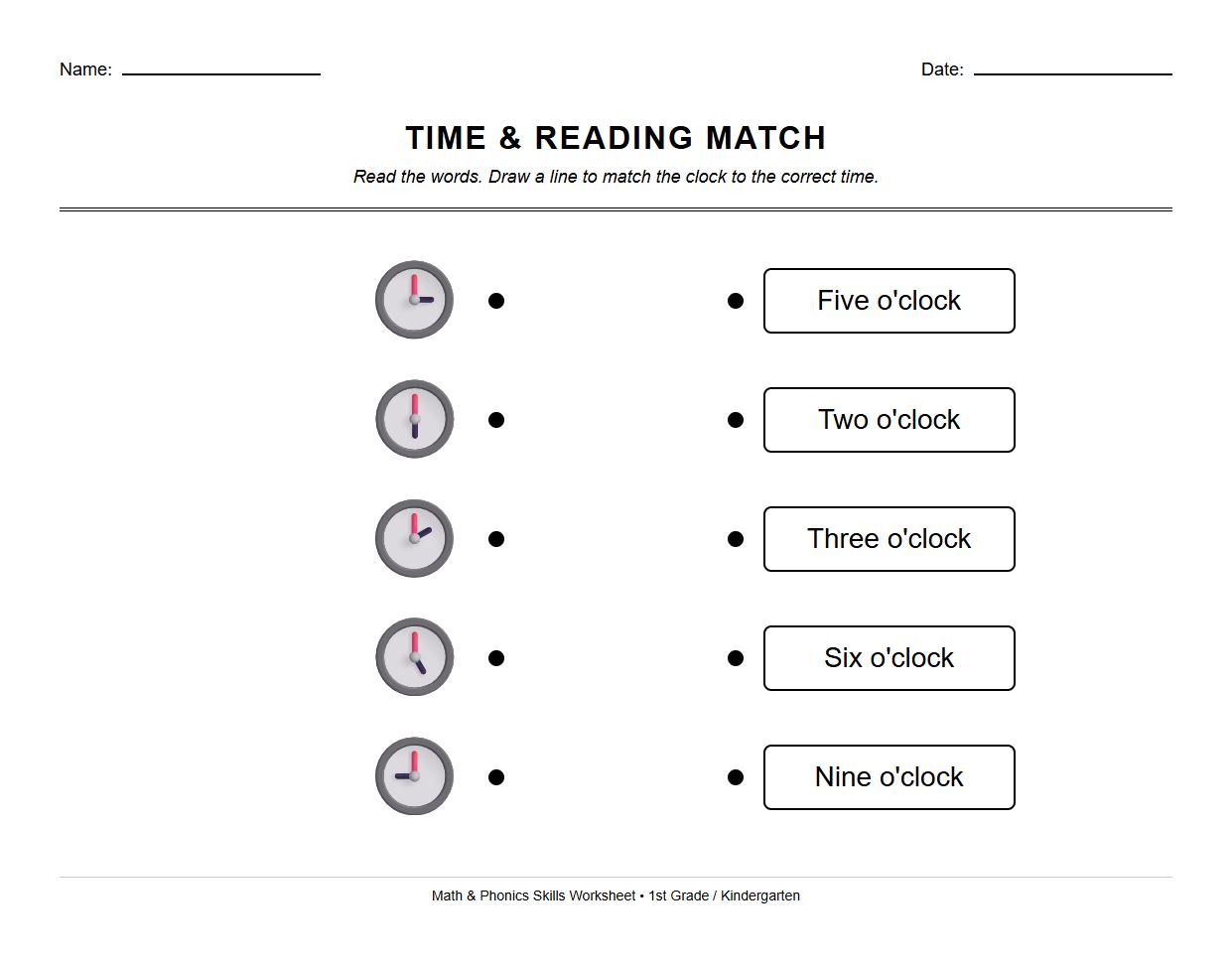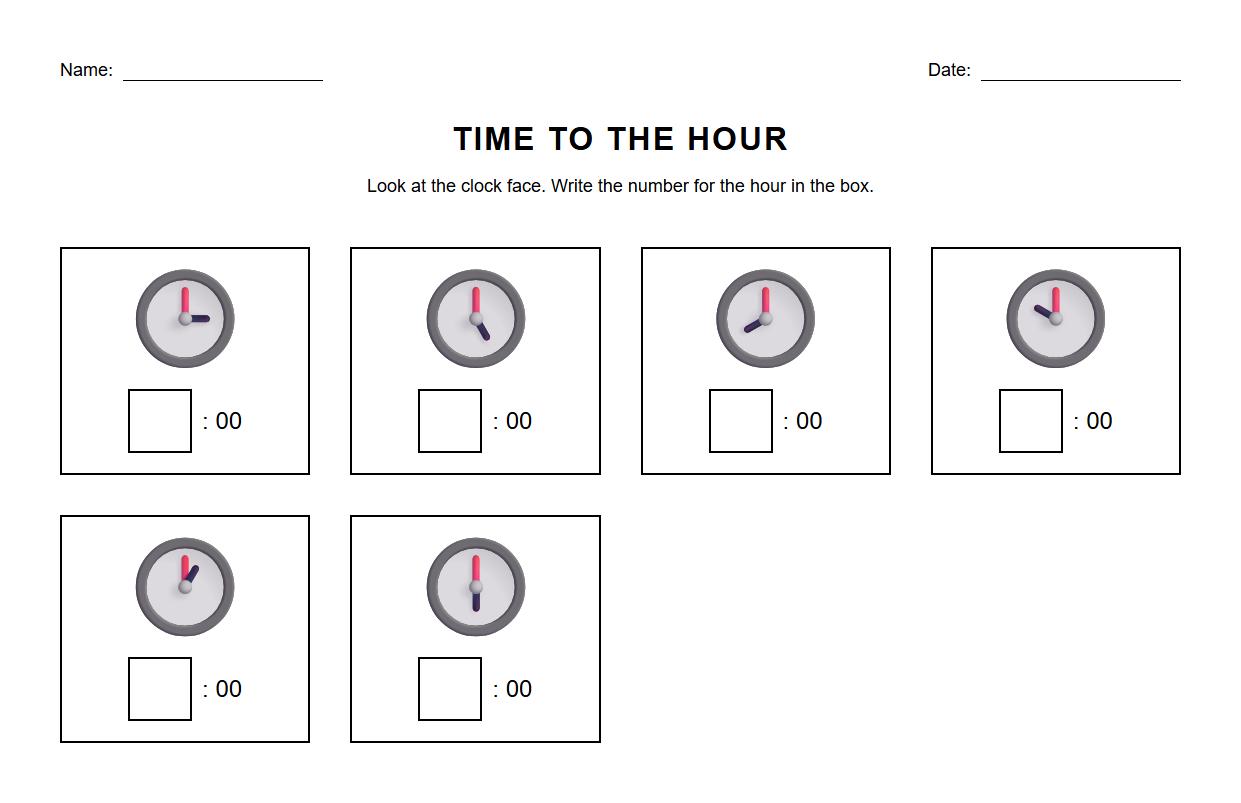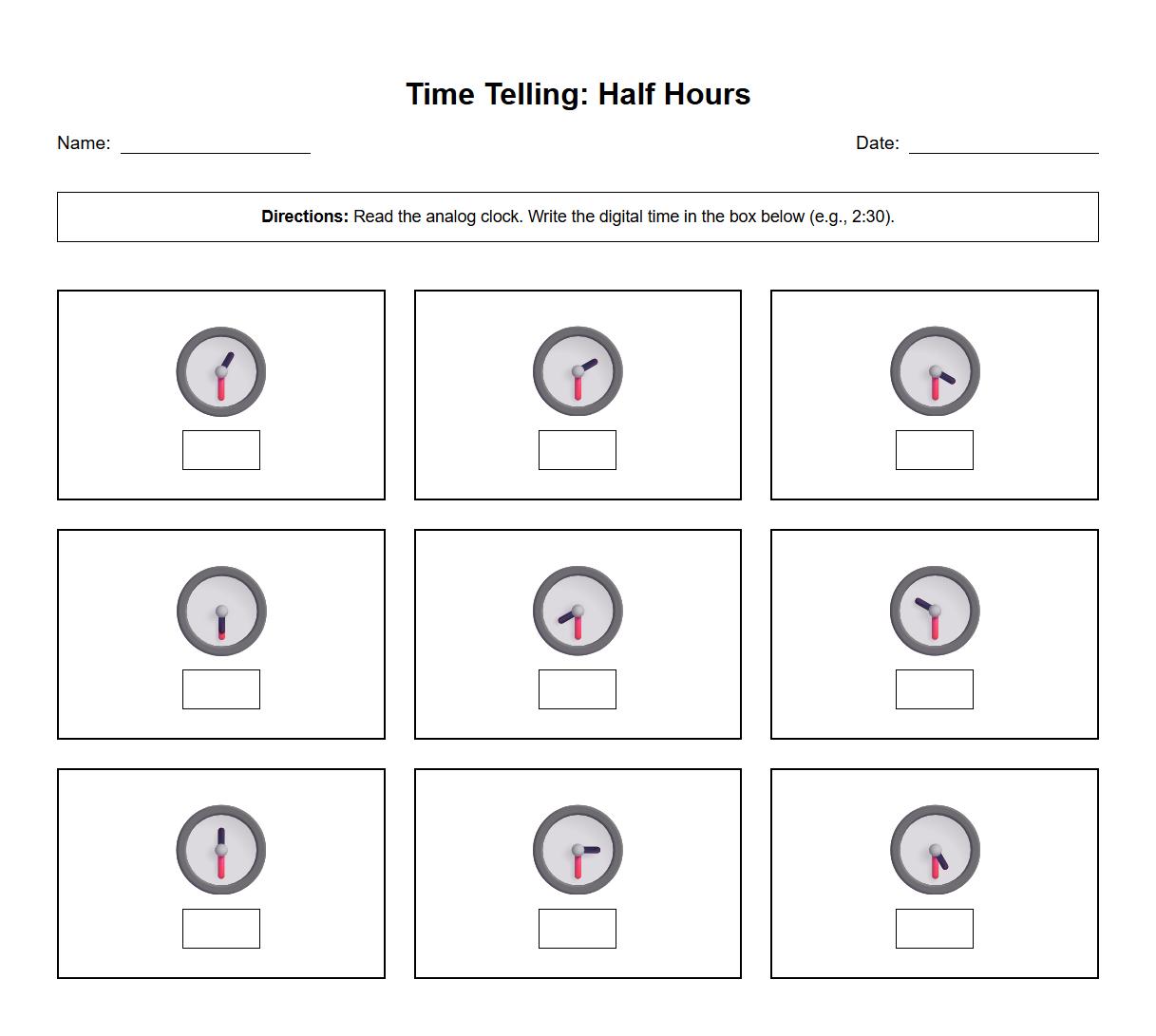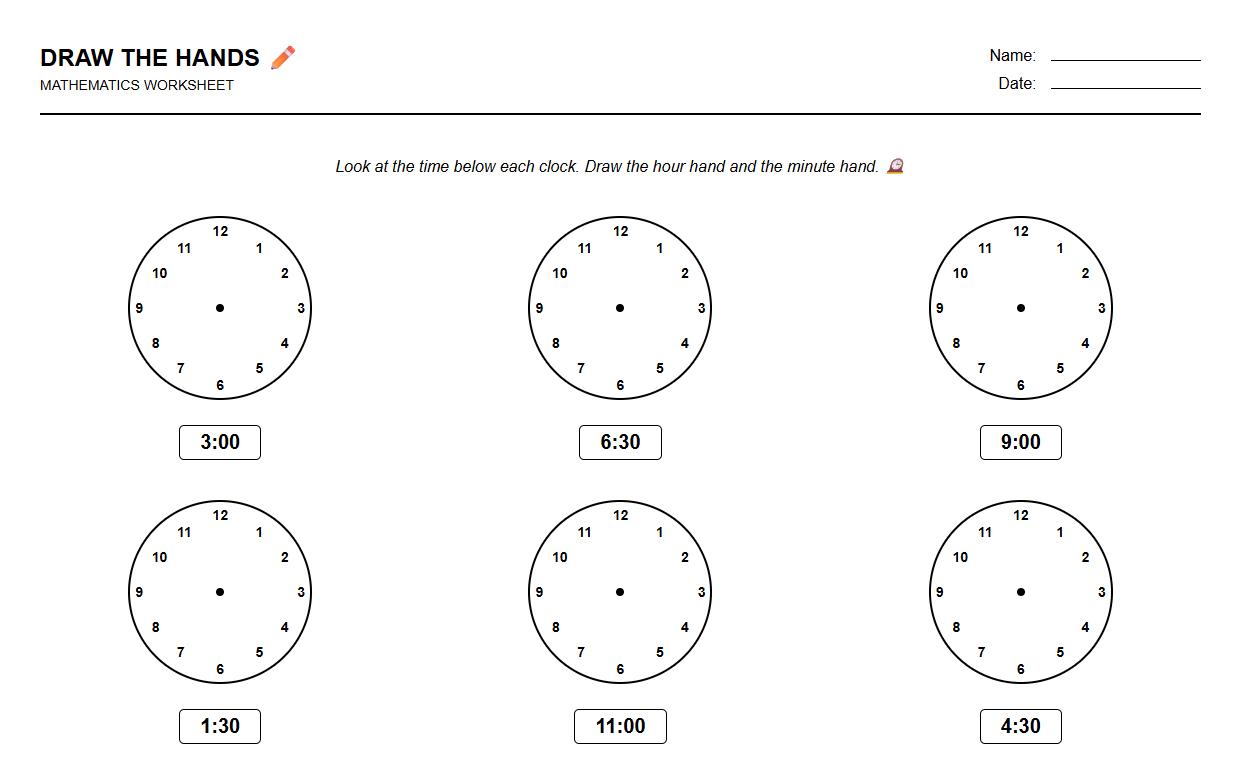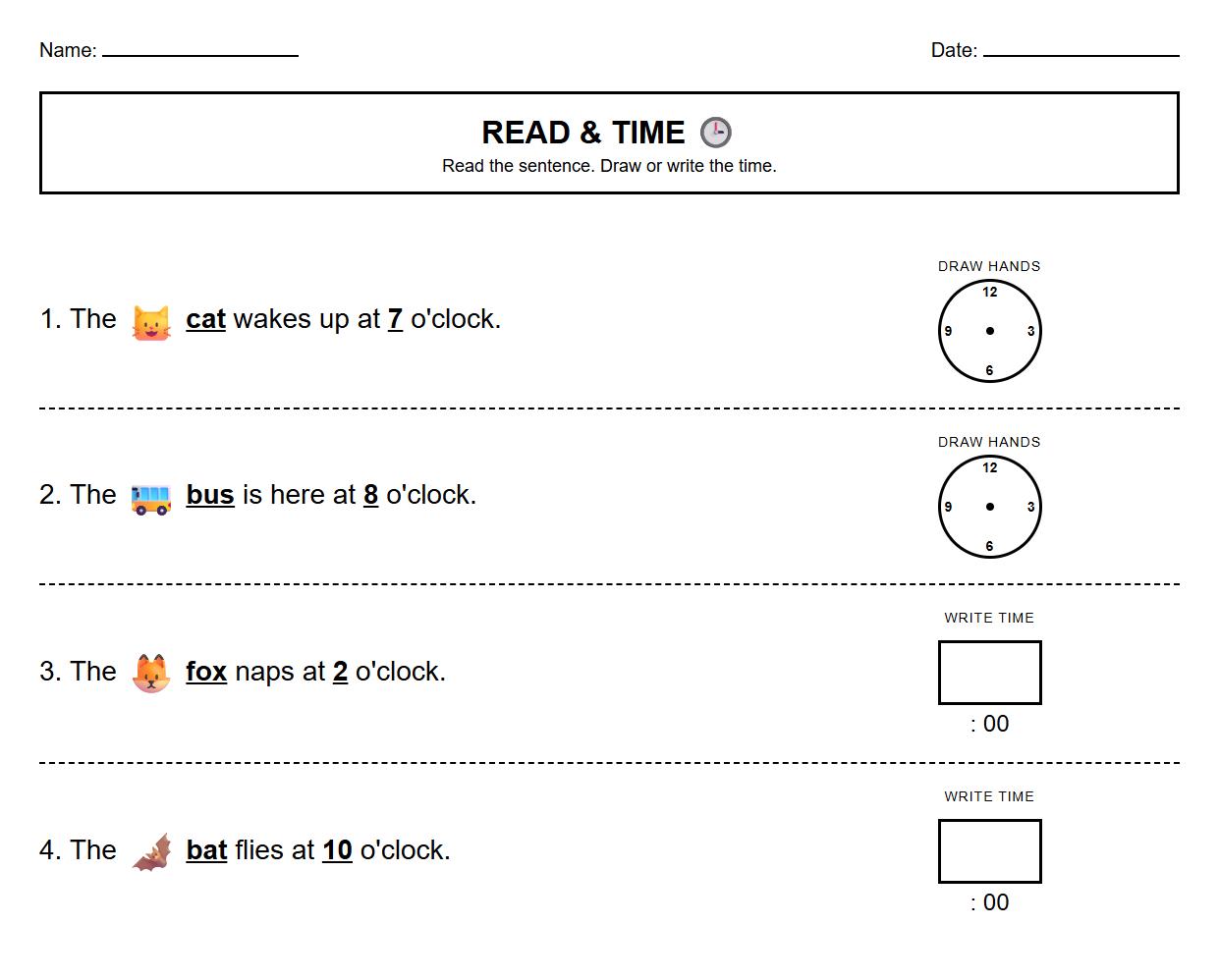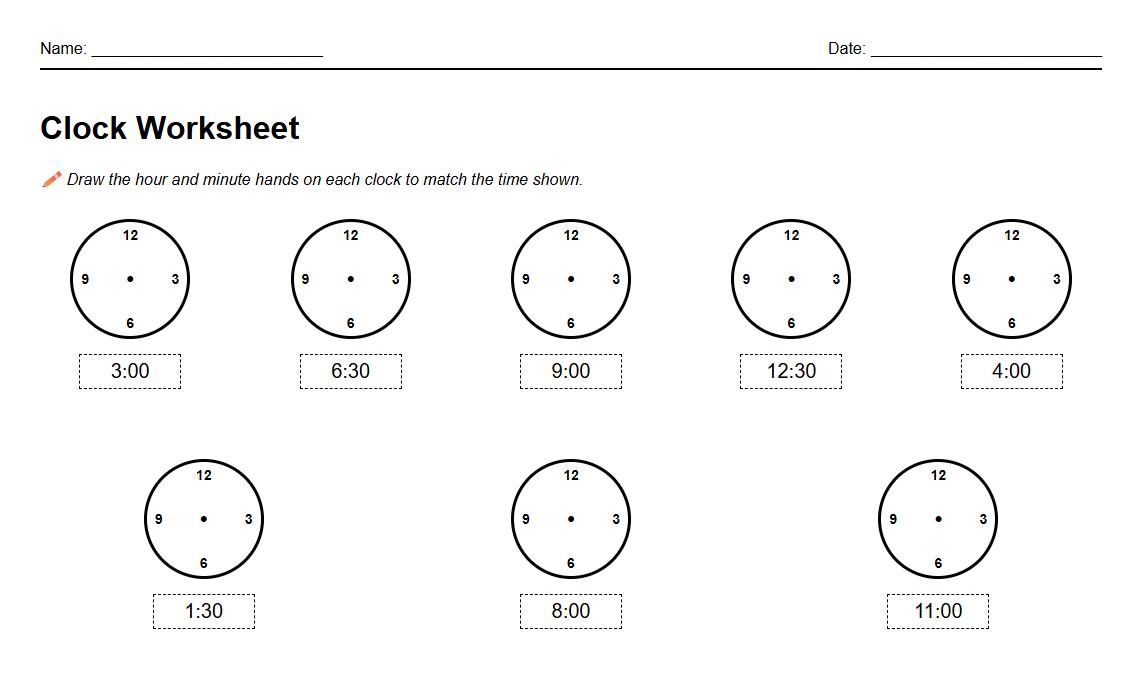
Mastering clock reading skills is essential for kindergarten students as it builds a foundation for understanding time and daily routines. These worksheets focus on recognizing and telling time to the hour and half-hour, using engaging visuals and simple exercises to enhance learning. Explore our collection of Clock Reading Worksheets to help your child practice and improve their time-telling abilities.
Understanding Time: Hour Hand on 3 and Minute Hand on 12
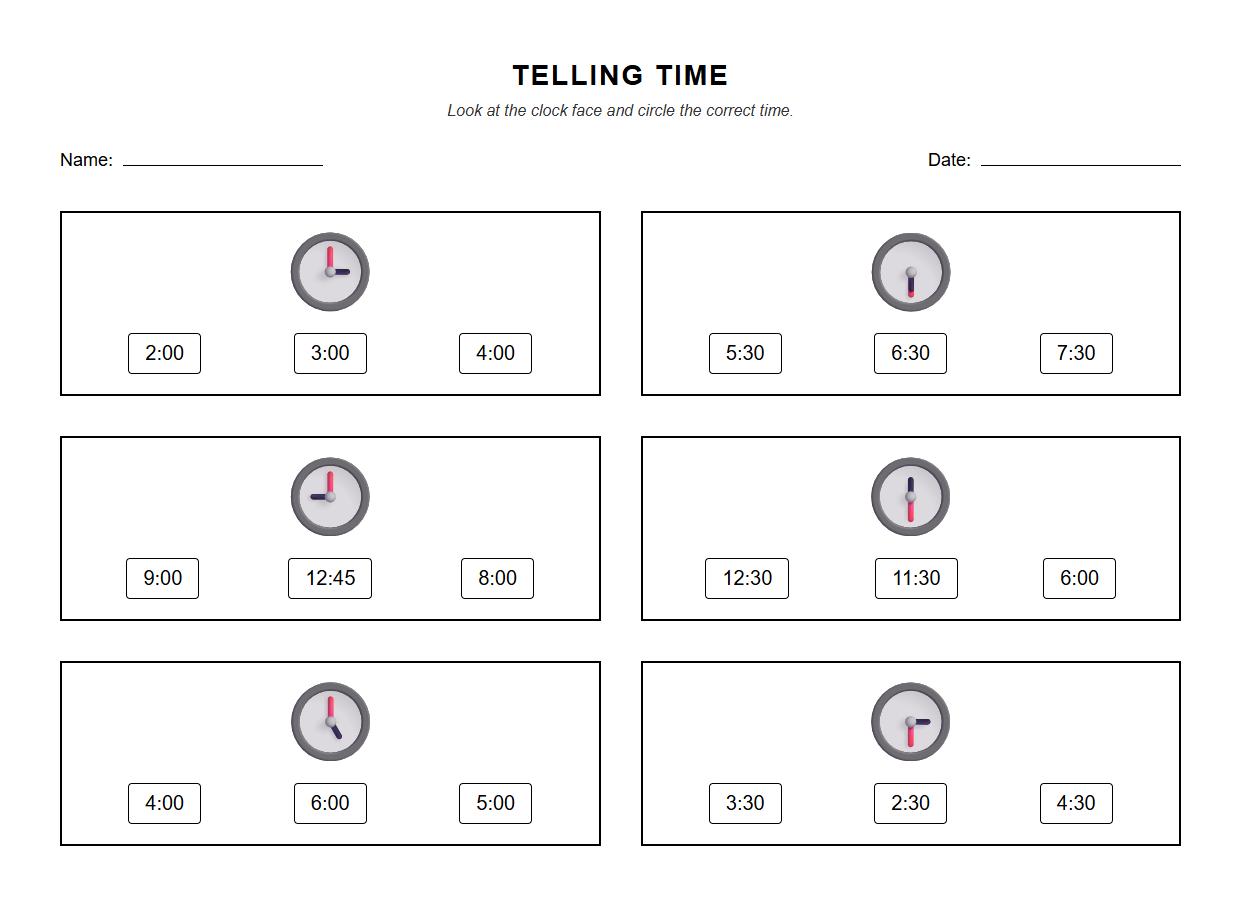
When the hour hand is on 3 and the minute hand is on 12, the time is exactly 3 o'clock. This means the full hour has just begun. Teaching kids to recognize this helps build foundational time-telling skills. Parents and teachers can use analog clocks to demonstrate this clearly. Try using interactive telling time worksheets for hands-on practice.
Identifying Half Past 6 on the Clock
The clock showing half past 6 has the hour hand slightly past 6 and the minute hand on 6, which represents 30 minutes. This time is often challenging but essential for understanding the concept of "half past." Encourage children to look carefully at both hands. Use worksheets with multiple clock images for practice.
Drawing Clock Hands for 5 O'clock
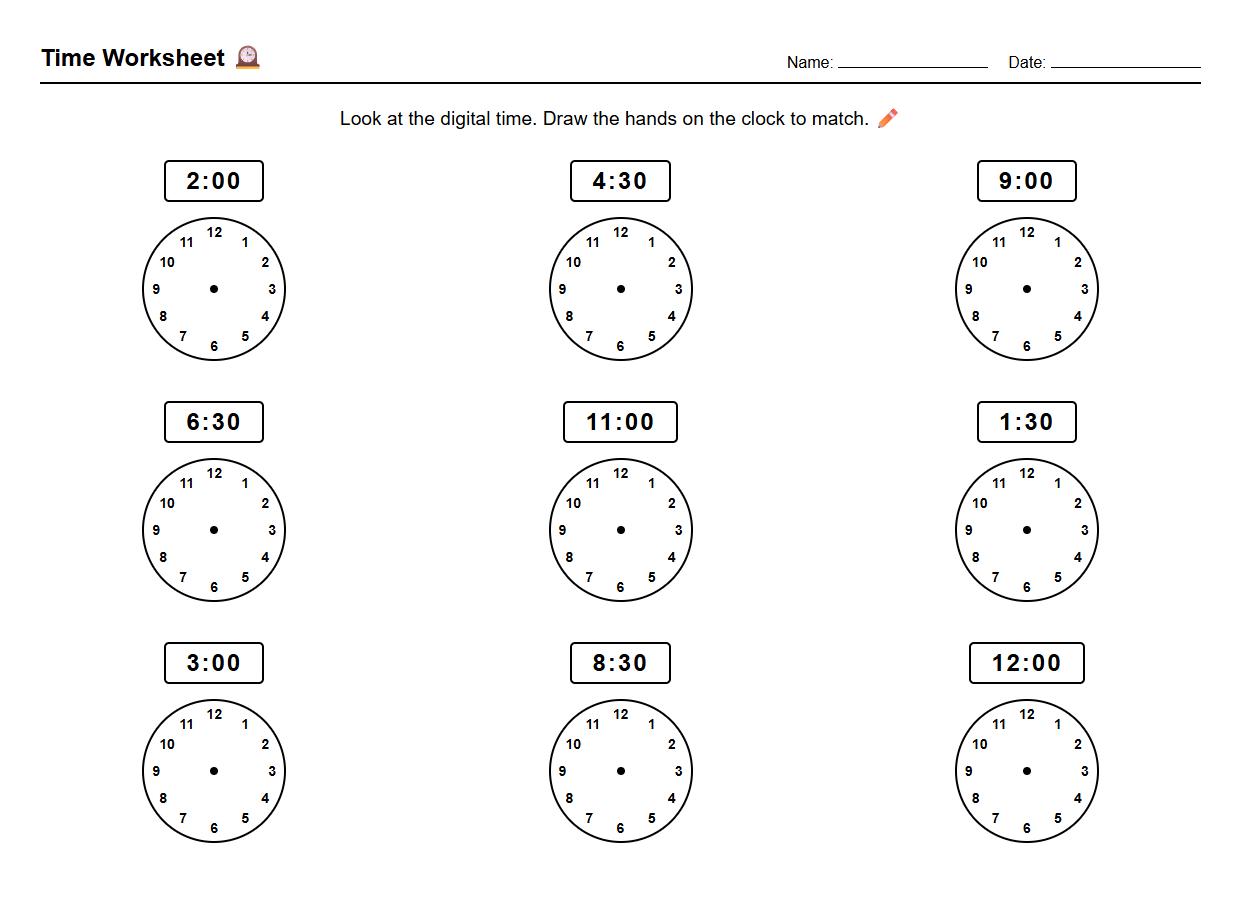
To show 5 o'clock, draw the hour hand pointing directly at 5 and the minute hand at 12. This demonstrates the start of the hour perfectly. Guides for kids should include step-by-step instructions for placing each hand correctly. Visual practice improves time recognition skills, especially when using number recognition worksheets for support.
Circled Clock Showing Half Past 2
The clock that requires circling shows the hour hand between 2 and 3 and the minute hand on 6. This indicates half past 2. Ask children to focus on the position of the hour hand to determine the exact time. Circling exercises enhance observation and understanding.
Matching Digital Time 7:30 to the Correct Clock
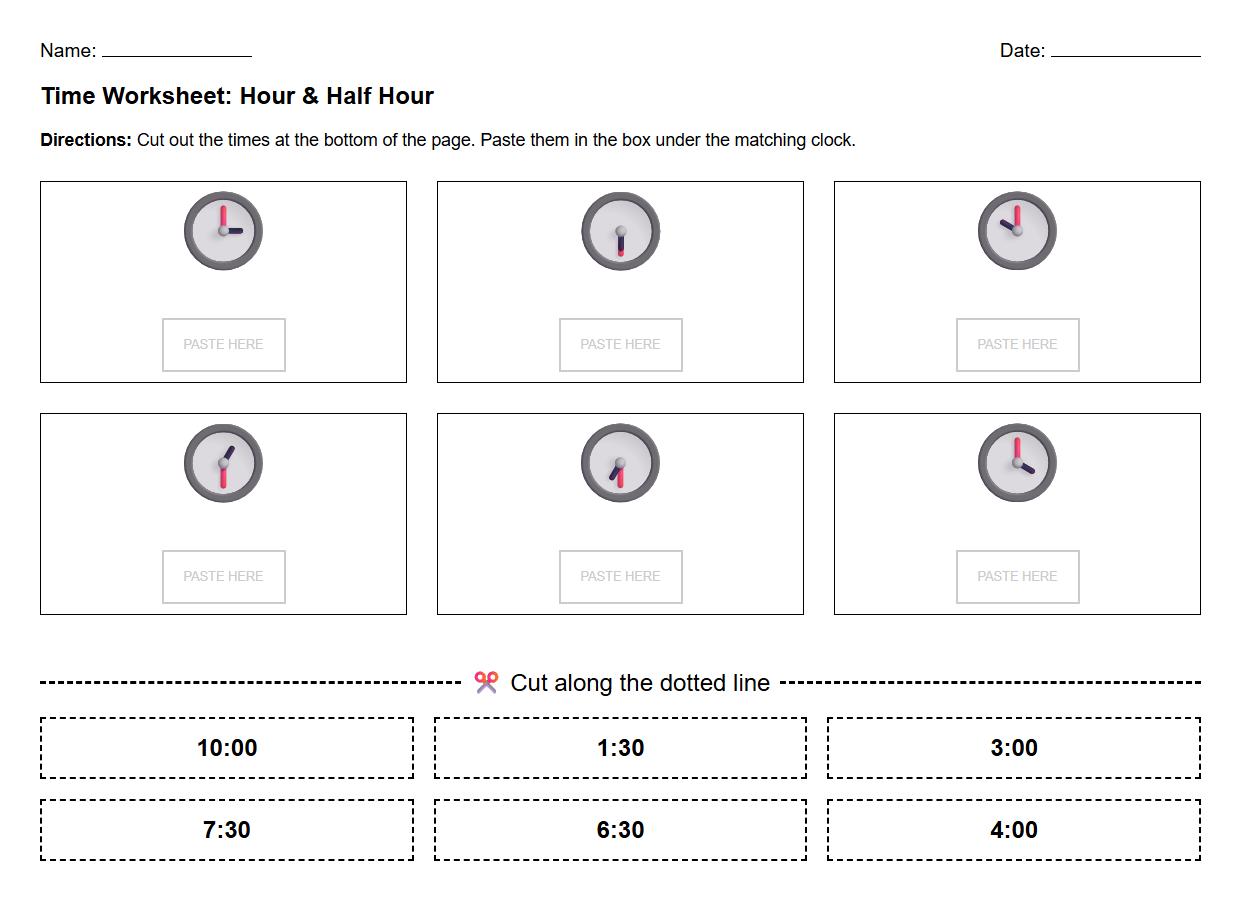
Match the digital time 7:30 to the clock with the hour hand slightly past 7 and the minute hand on 6. This reinforces the relationship between digital and analog clocks. Use matching games to help children associate numbers with clock positions. Visual aids are very effective in this learning process.
Time When Hour Hand is Between 8 and 9 and Minute Hand on 6
When the hour hand is between 8 and 9 and the minute hand is on 6, the time is 8:30. The half-hour mark is indicated by the minute hand on 6. Teaching this helps kids understand fractional parts of the hour. Use clocks with movable hands for hands-on learning.
Selecting the Clock Showing 10 O'clock
Choose the clock where the hour hand points exactly at 10 and the minute hand at 12. This shows the full hour of 10 o'clock. Emphasize the importance of both hands' positions in telling time. Use this exercise to boost identification skills and consider number line worksheets for broader math context.
Writing Time with Minute Hand on 12 and Hour Hand on 1
When the minute hand is on 12 and the hour hand is on 1, the time is 1 o'clock. This is the beginning of the hour. Writing exercises help children connect the analog time to written numbers. Reinforce concepts with writing and subtraction activities for comprehensive skill development.
Clock Appearance at Half Past 4
At half past 4, the hour hand is slightly past 4, and the minute hand is on 6. This halved hour position explains the concept of "half past." Visual demonstrations aid understanding and retention. Reinforce with drawing and coloring activities.
Coloring the Clock Showing 11:00
The clock to be colored shows the hour hand on 11 and the minute hand on 12, indicating 11 o'clock. Coloring tasks engage children and improve their time recognition skills. Use bright colors to make the activity fun and educational. Add value with money math worksheets for additional learning engagement.


Visual Telling Time Worksheets for Kindergarten Emphasizing Hour and Half Hour