Create Your Own Tally Chart Worksheet for Early Learners

📅 Feb 10, 2025 👤 Nylen Smith

Developing early math skills is essential, and creating tally charts helps young learners understand data collection and organization. This hands-on activity encourages counting, grouping, and visual representation of information, fostering analytical thinking from a young age. Explore our collection of Create Your Own Tally Chart Worksheets to engage early learners in interactive data practice.

Create Your Own Tally Chart Phonics Worksheet
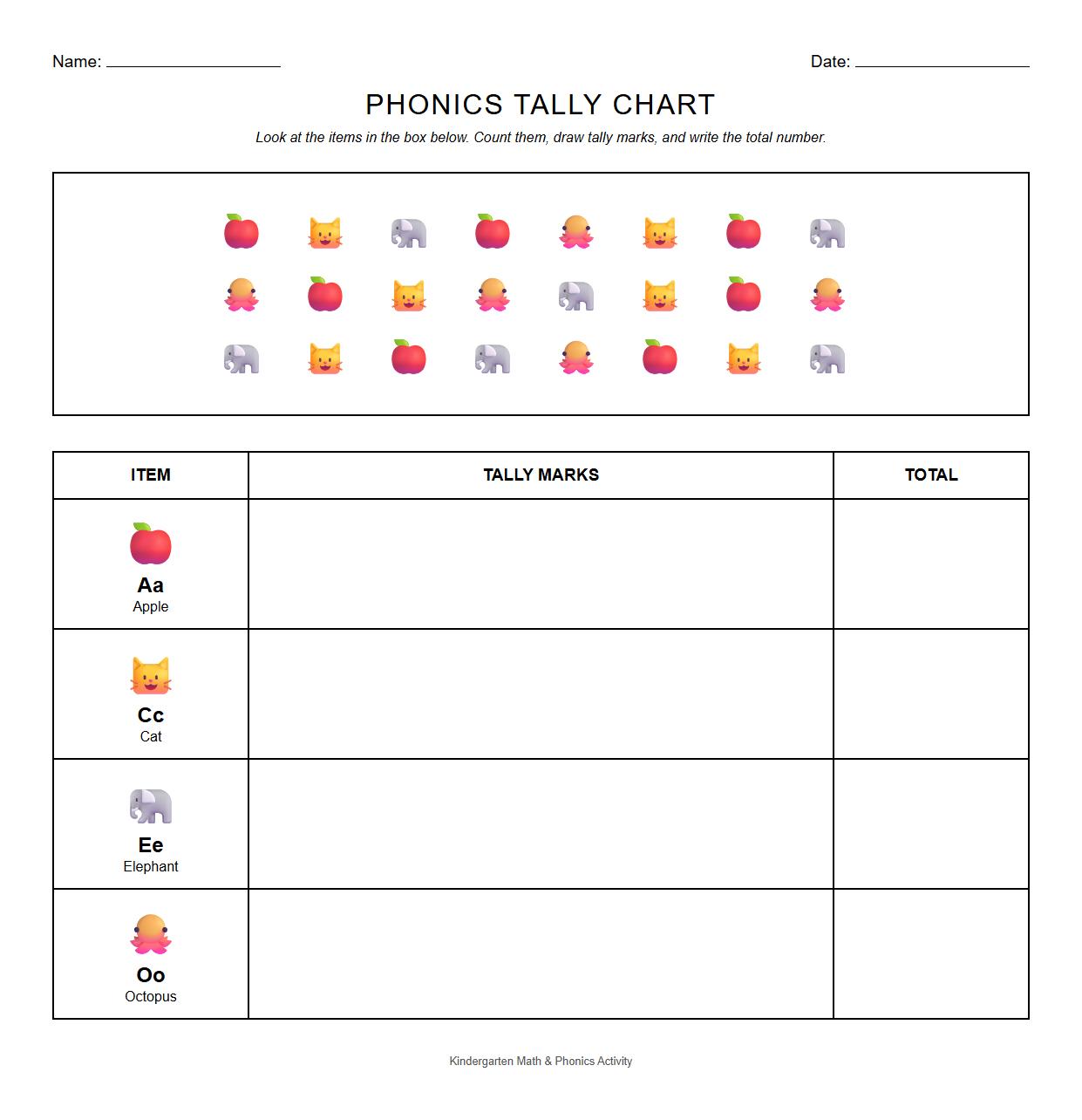
Create Your Own Tally Chart Phonics Worksheet

Download PDF     Pin it

Tally Chart Worksheet for Counting Objects Activity
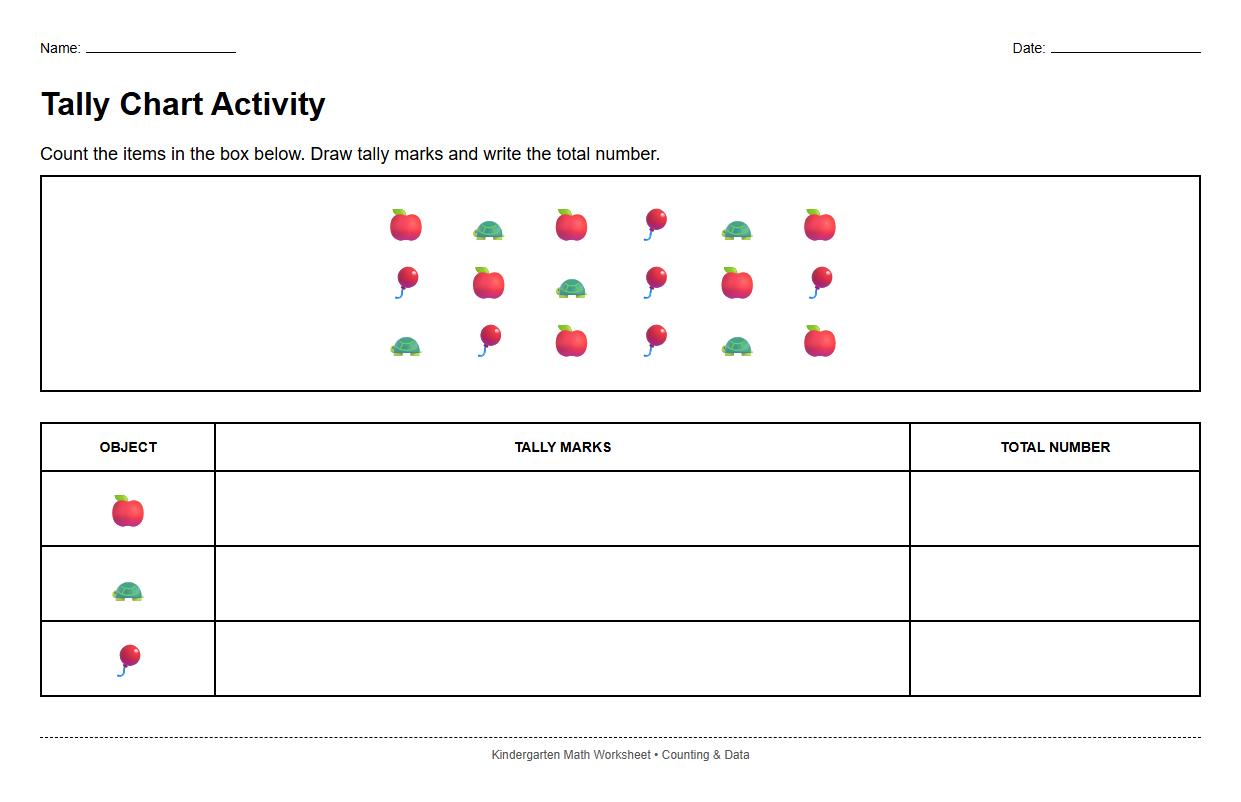
Tally Chart Worksheet for Counting Objects Activity

Download PDF     Pin it

Tally Chart Numbers and Quantities Math Exercise
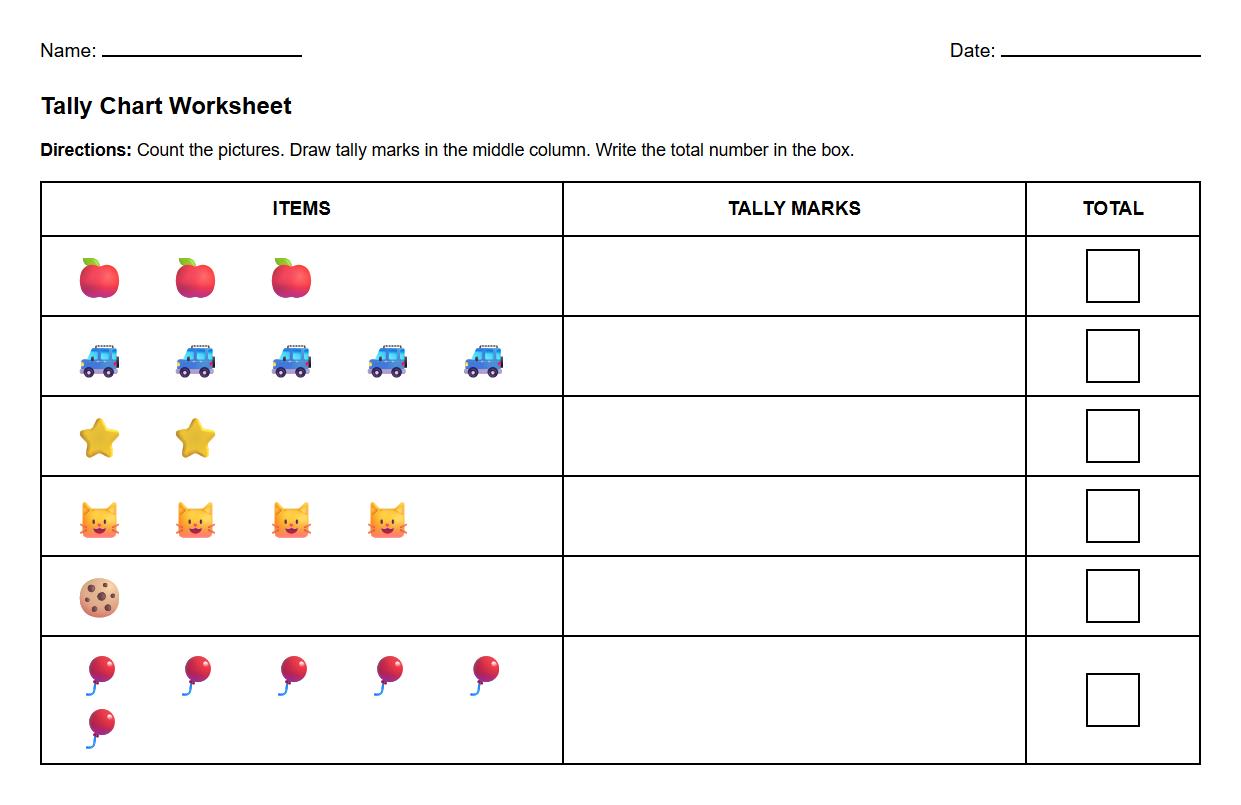
Tally Chart Numbers and Quantities Math Exercise

Download PDF     Pin it

Customizable Tally Chart for Color Sorting Task
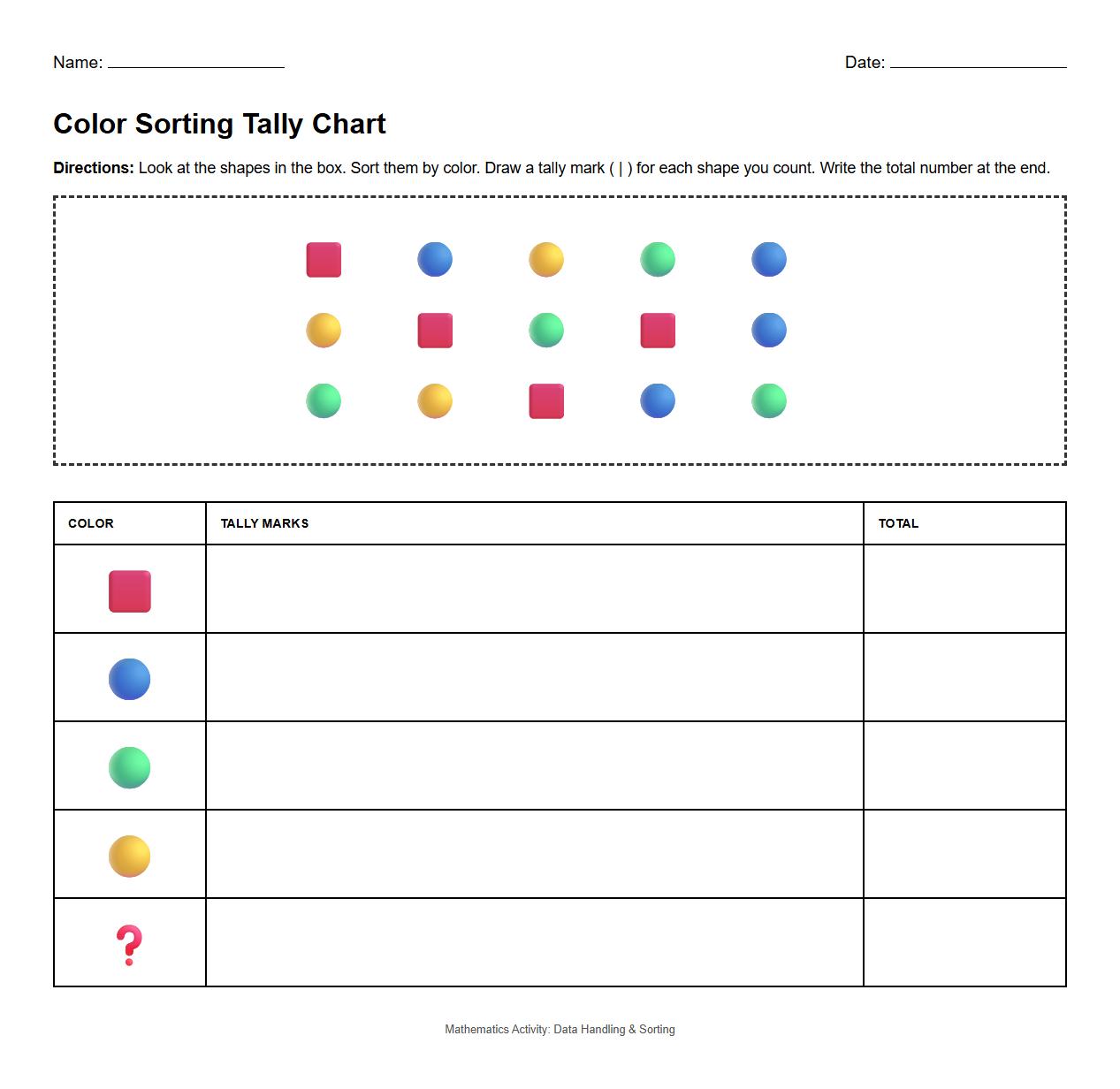
Customizable Tally Chart for Color Sorting Task

Download PDF     Pin it

Animal Picture Sorting Tally Chart Worksheet
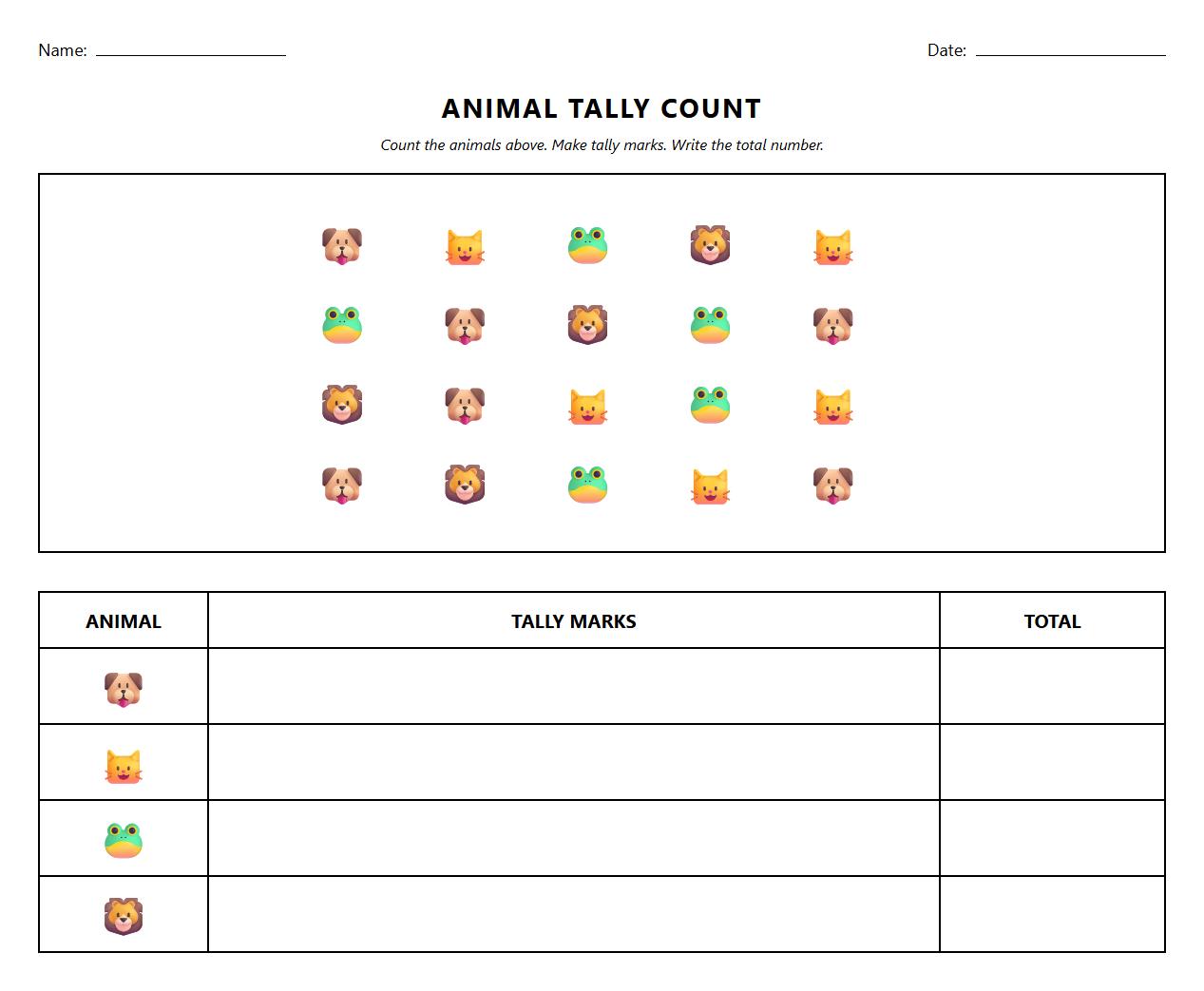
Animal Picture Sorting Tally Chart Worksheet

Download PDF     Pin it

Early Learner Tally Chart for Weather Data Collection
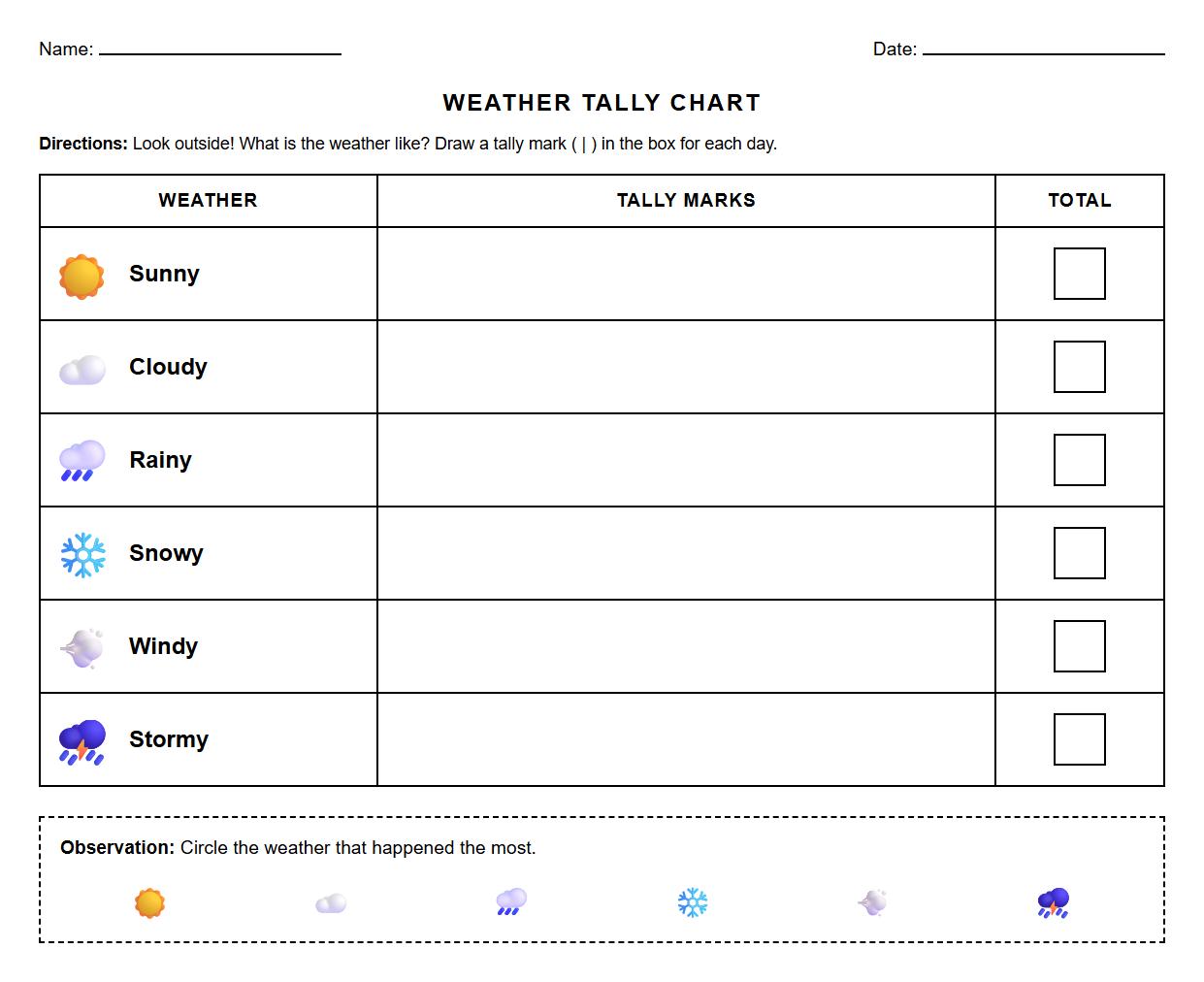
Early Learner Tally Chart for Weather Data Collection

Download PDF     Pin it

Food Item Tally Marks Worksheet for Classification Skills
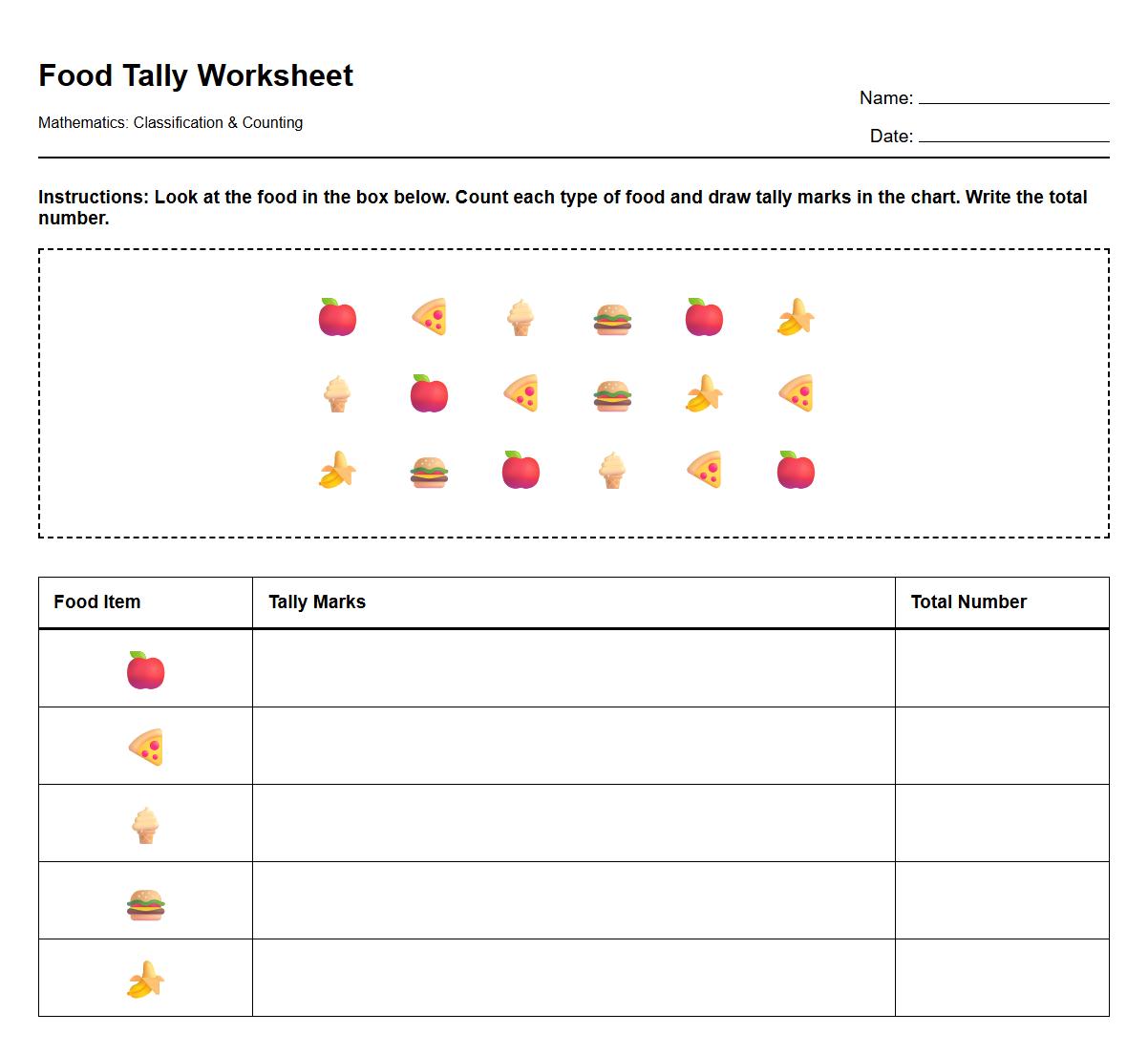
Food Item Tally Marks Worksheet for Classification Skills

Download PDF     Pin it

Tally Chart for Letter Recognition Phonics Practice
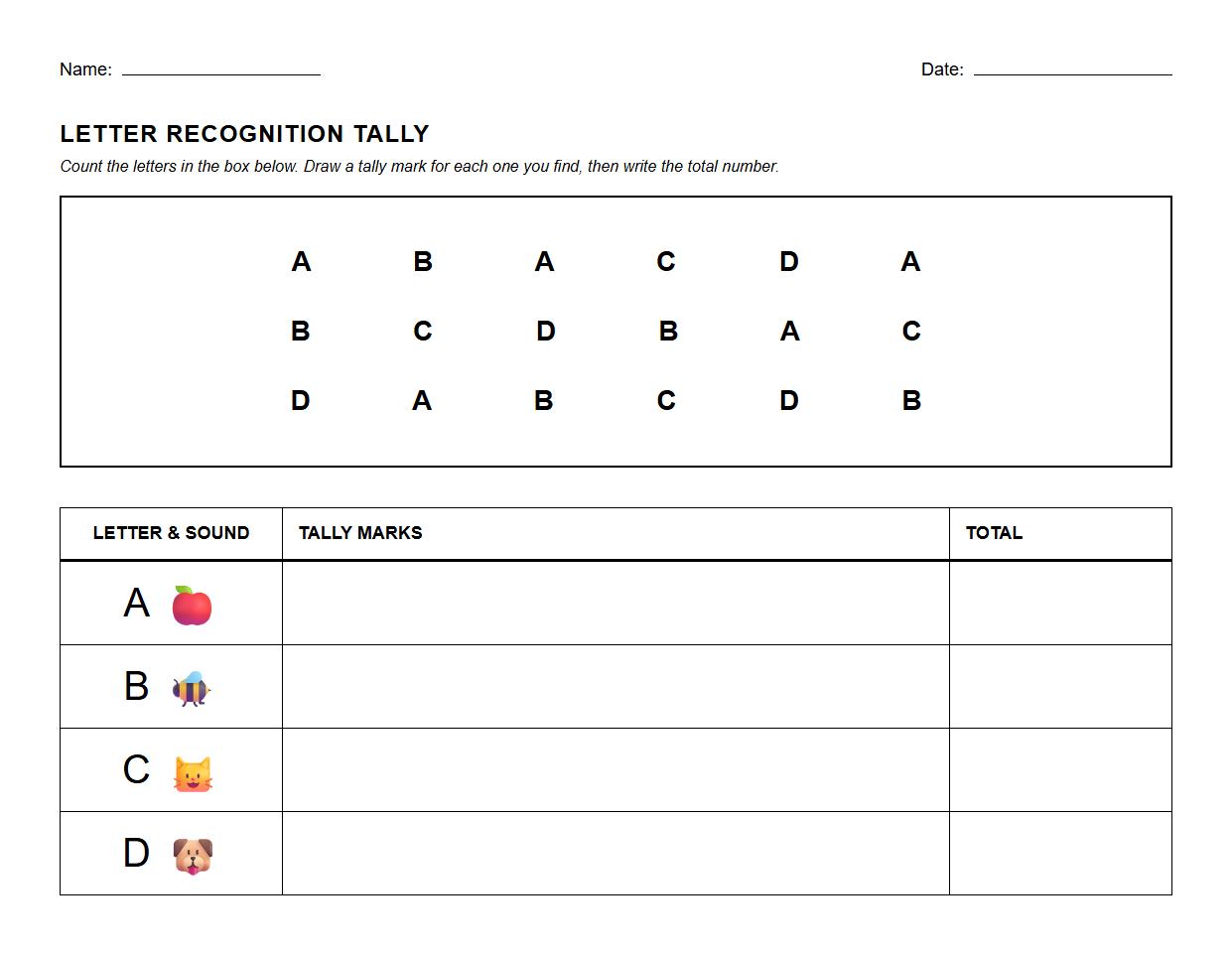
Tally Chart for Letter Recognition Phonics Practice

Download PDF     Pin it

Transportation Modes Tally Chart Counting Worksheet
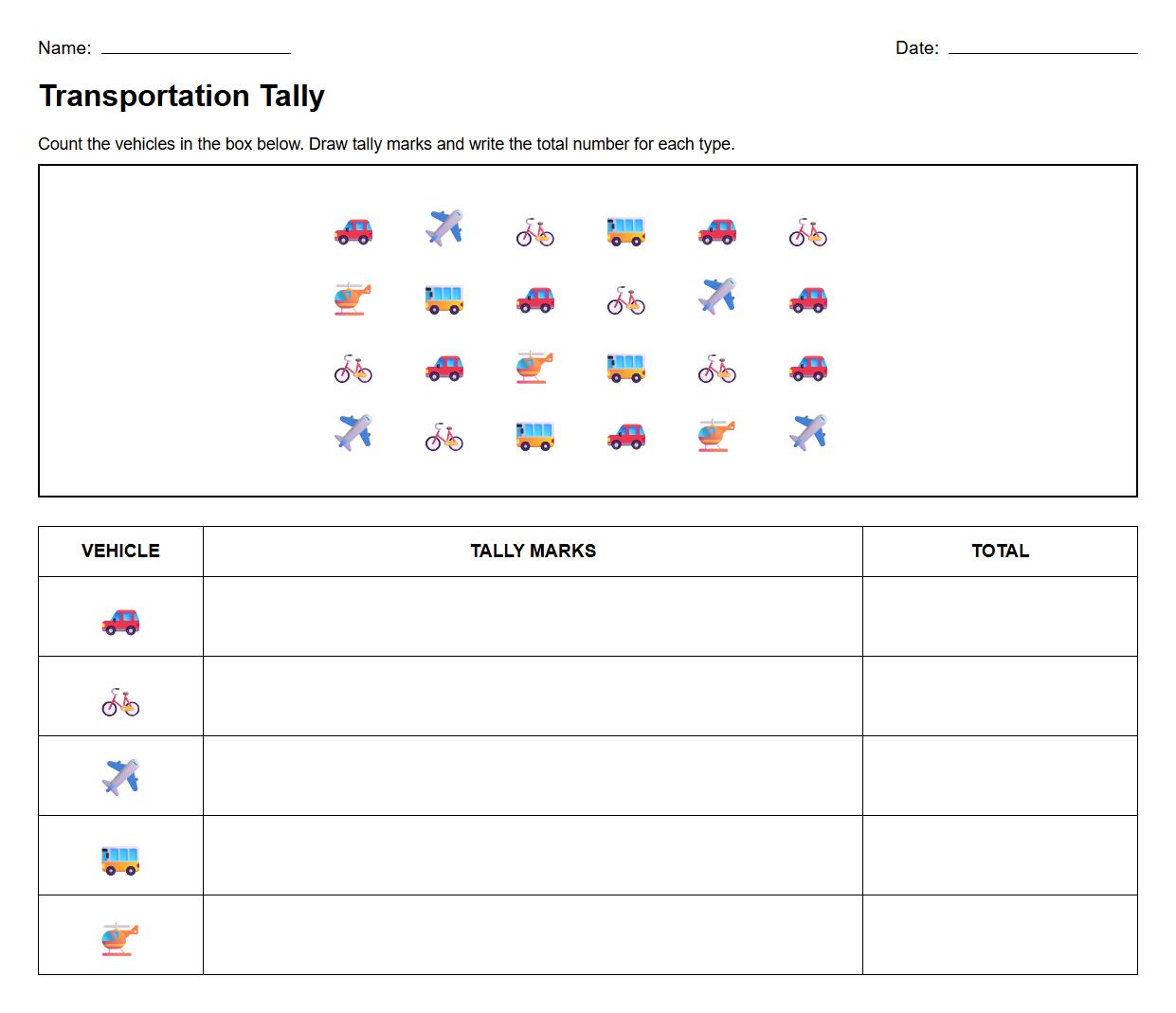
Transportation Modes Tally Chart Counting Worksheet

Download PDF     Pin it

Fruit Sorting Tally Chart Worksheet for Data Representation
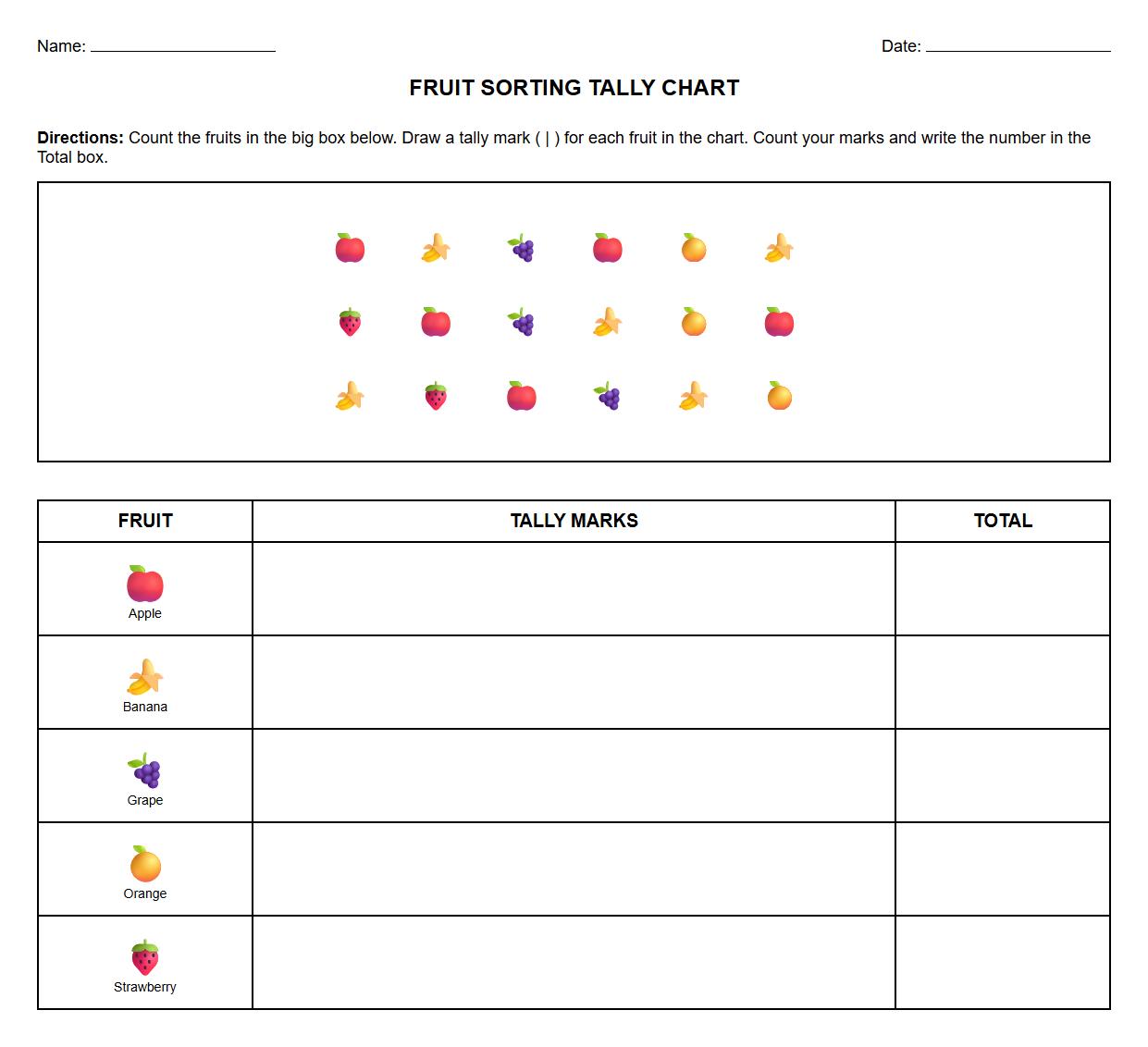
Fruit Sorting Tally Chart Worksheet for Data Representation

Download PDF     Pin it

Choosing Objects for Your Tally Chart

When creating a tally chart, select simple and familiar objects that kindergarten children can easily recognize, such as fruits, toys, or animals. Encourage teachers and parents to involve children in deciding which items to count to make the activity engaging. This helps children connect with the data collection process and improves their observational skills. Keeping the objects distinct ensures clarity in counting and representation.

Representing Objects with Tally Marks

Each object is represented using tally marks, with four vertical lines followed by a diagonal line for the fifth mark. This grouping helps children count in sets of five, making it easier and faster to read the data. Teachers and parents can demonstrate this method step-by-step during the activity. Using tally marks also introduces a fundamental math skill in a fun and visual way.

Deciding the Number of Groups in the Chart

Choose how many groups or categories to include based on the number of objects counted, typically between three to five groups for kindergarten-level worksheets. This keeps the chart manageable for young learners and avoids overwhelming them. Each group should represent a distinct type of object or category. Balancing the number of groups supports focused observation and comparison.

Selecting Colors for Tally Marks

Using different colors for tally marks can make the chart visually appealing and help distinguish between groups. Bright, contrasting colors like red, blue, green, and yellow work well for young children. Parents and teachers can involve kids in choosing the colors, increasing their engagement. Colored tally marks also support visual learning and memory retention.

Titling Your Tally Chart

Give your tally chart a clear and descriptive title that reflects the data collected, such as "Favorite Fruits" or "Types of Toys Counted." The title helps young learners understand the purpose of the chart. It also reinforces the habit of labeling data in math and science activities. A well-chosen title sets the context for analysis and storytelling.

Organizing Items in Rows or Columns

Arrange items in the tally chart neatly in rows or columns to enhance readability and organization. Teachers and parents should guide children to decide the layout that suits their data best, usually placing categories in rows and tally marks in columns. Consistent organization makes it easier for children to count and compare. Clear presentation supports early data interpretation skills.

Counting Tally Marks for Each Group

Help children accurately count the number of tally marks for each group by grouping every set of five first, then adding any extra marks. This practice emphasizes counting skills and the concept of grouping. Teachers can facilitate counting games or songs to reinforce learning. Accurate counting ensures meaningful data collection and analysis.

Comparing Groups Using Tally Marks

Encourage children to compare which groups have more or fewer tally marks by visually scanning the chart. This comparison helps develop early math reasoning skills and vocabulary such as "more," "less," or "equal." Parents and teachers can ask guiding questions to deepen understanding. Comparing groups teaches children to interpret and analyze data.

Recognizing Patterns in the Tally Chart

Discuss any patterns noticed in the data, like a group having consistently higher counts or a repeating sequence of colors. Recognizing patterns builds critical thinking and observation skills in young learners. Teachers and parents can create fun challenges to find and describe patterns together. Pattern recognition is foundational for math and logic development.

Telling a Story About the Data

Invite children to tell a story about the data they collected using the tally chart, such as which object is most or least popular. Storytelling makes data relatable and encourages communication skills. It also helps children internalize the meaning behind numbers and marks. This narrative approach combines math with language development effectively.


More in Mathematics Category


About the author. Nylen Smith is a dedicated educator and cofounder of KWorksheet.com, a popular platform specializing in high-quality kindergarten worksheets and printable activities.

Disclaimer. The information provided in this document is for general informational purposes and/or document sample only and is not guaranteed to be factually right or complete. Please report to us via contact-us page if you find and error in this page, thanks.

Comments

No comment yet