Kindergarten Math Centers Focused on Counting and Quantitative Reasoning

📅 May 11, 2025 👤 Nylen Smith

Kindergarten math centers designed for counting and quantitative reasoning develop early numeracy skills through engaging, hands-on activities that encourage children to explore numbers and their relationships. These centers support the foundation of mathematical thinking by promoting pattern recognition, number comparison, and basic addition or subtraction concepts. Explore our collection of carefully crafted worksheets to enhance your classroom math centers today.

Number Sequencing Worksheets featuring manipulatives
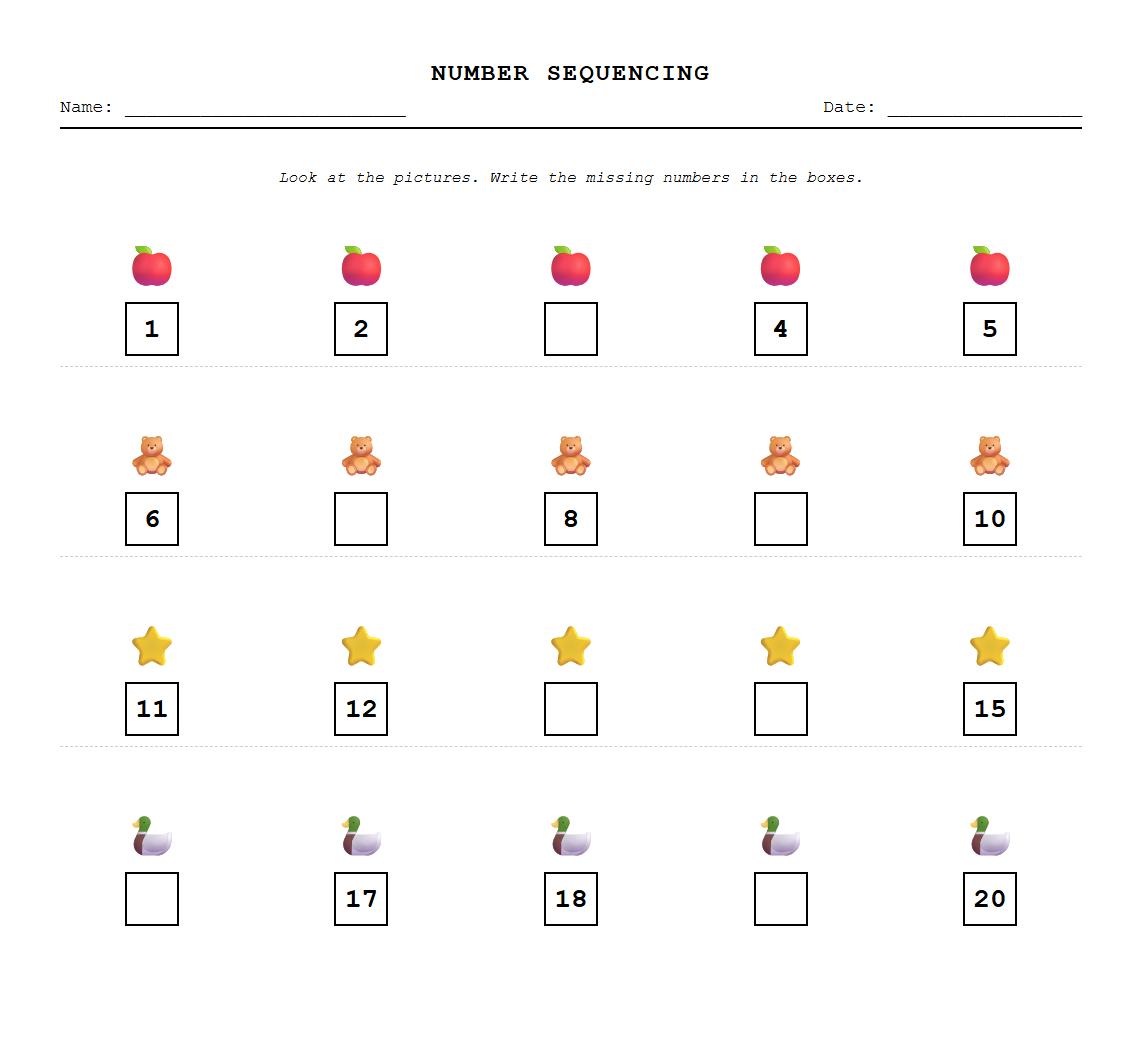
Number Sequencing Worksheets featuring manipulatives

Download PDF     Pin it

Counting Objects Using One to One Correspondence
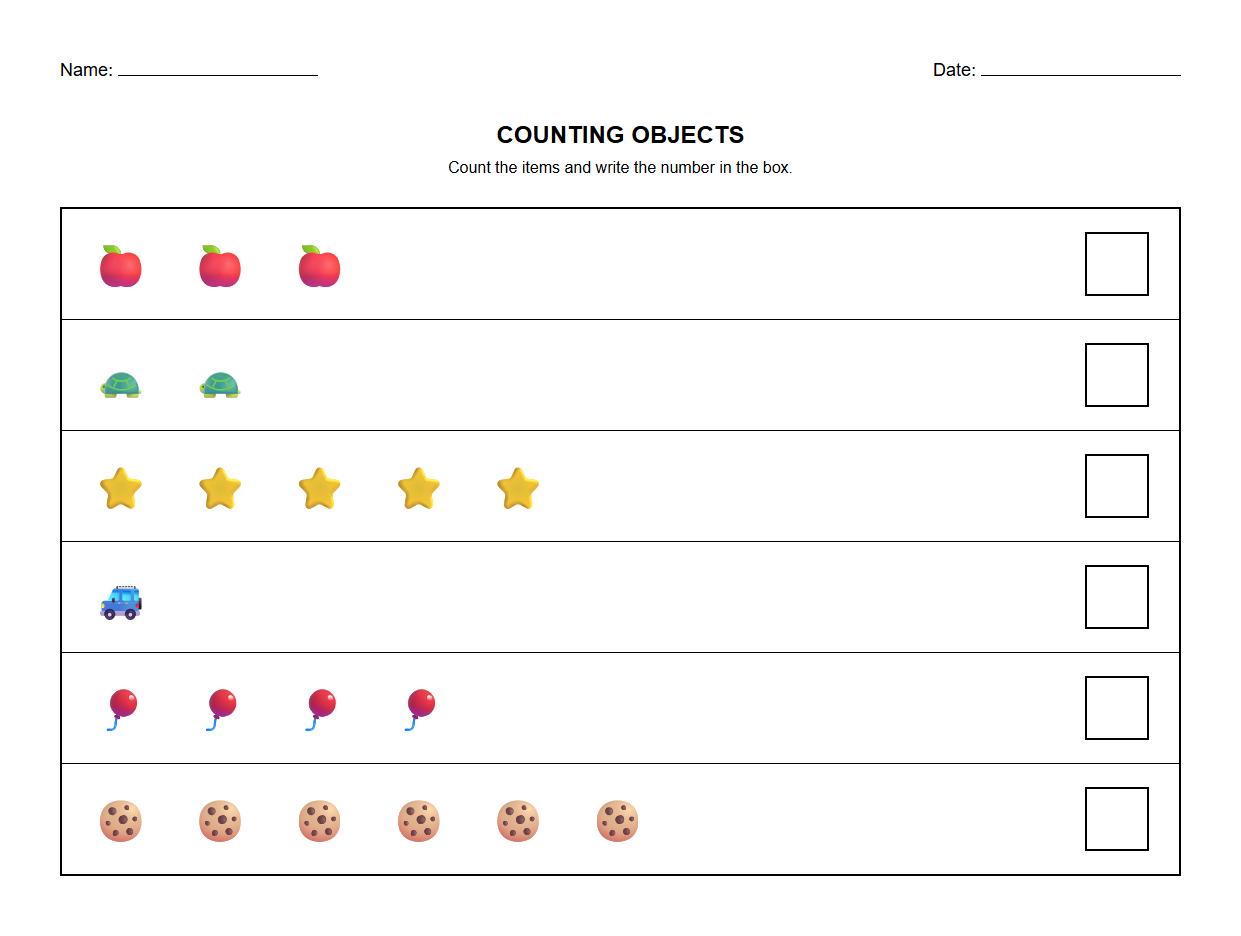
Counting Objects Using One to One Correspondence

Download PDF     Pin it

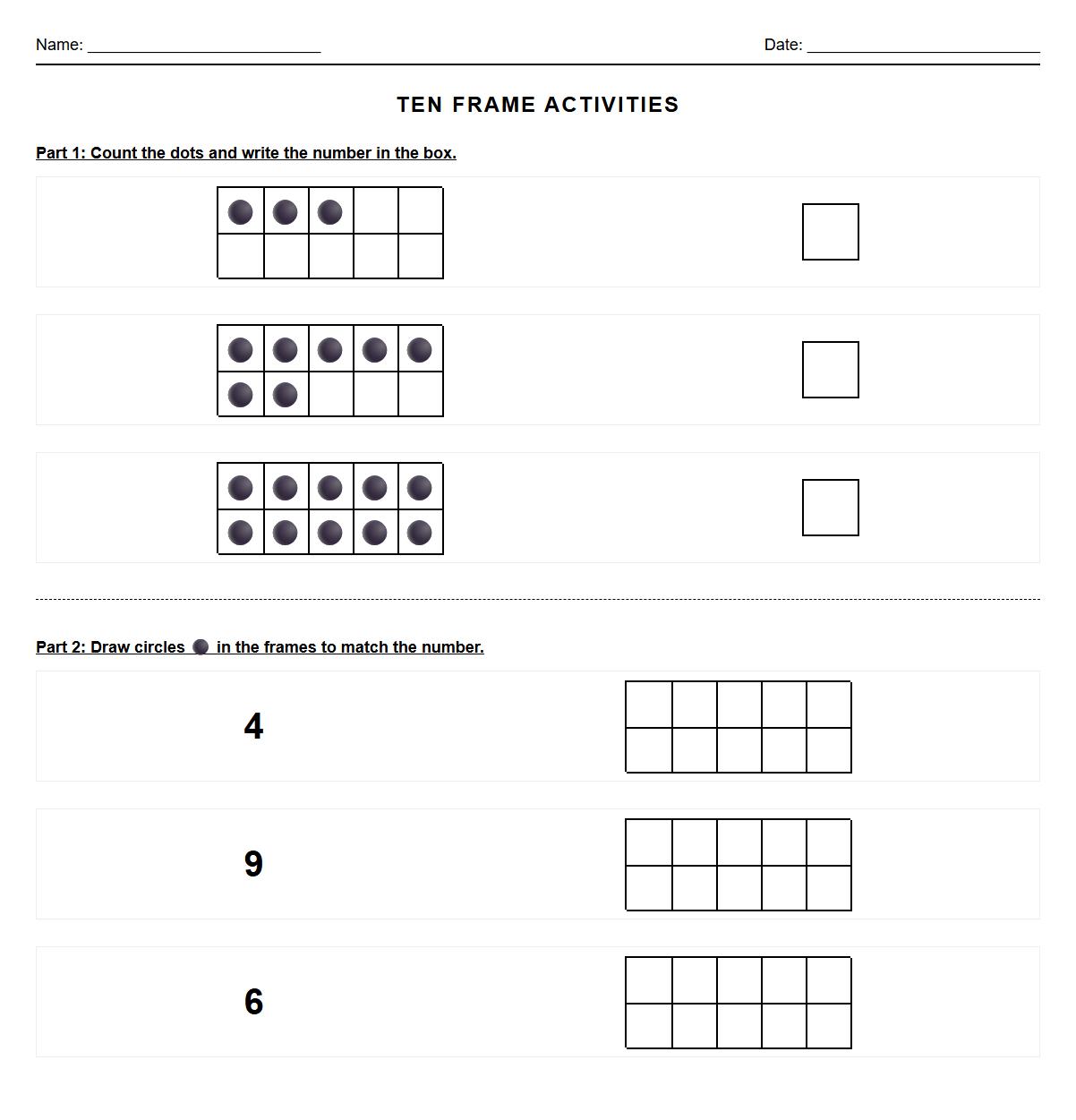
Ten Frame Representation Activities

Ten Frame Representation Activities

Download PDF     Pin it

Dot to Number Matching for Subitizing Practice
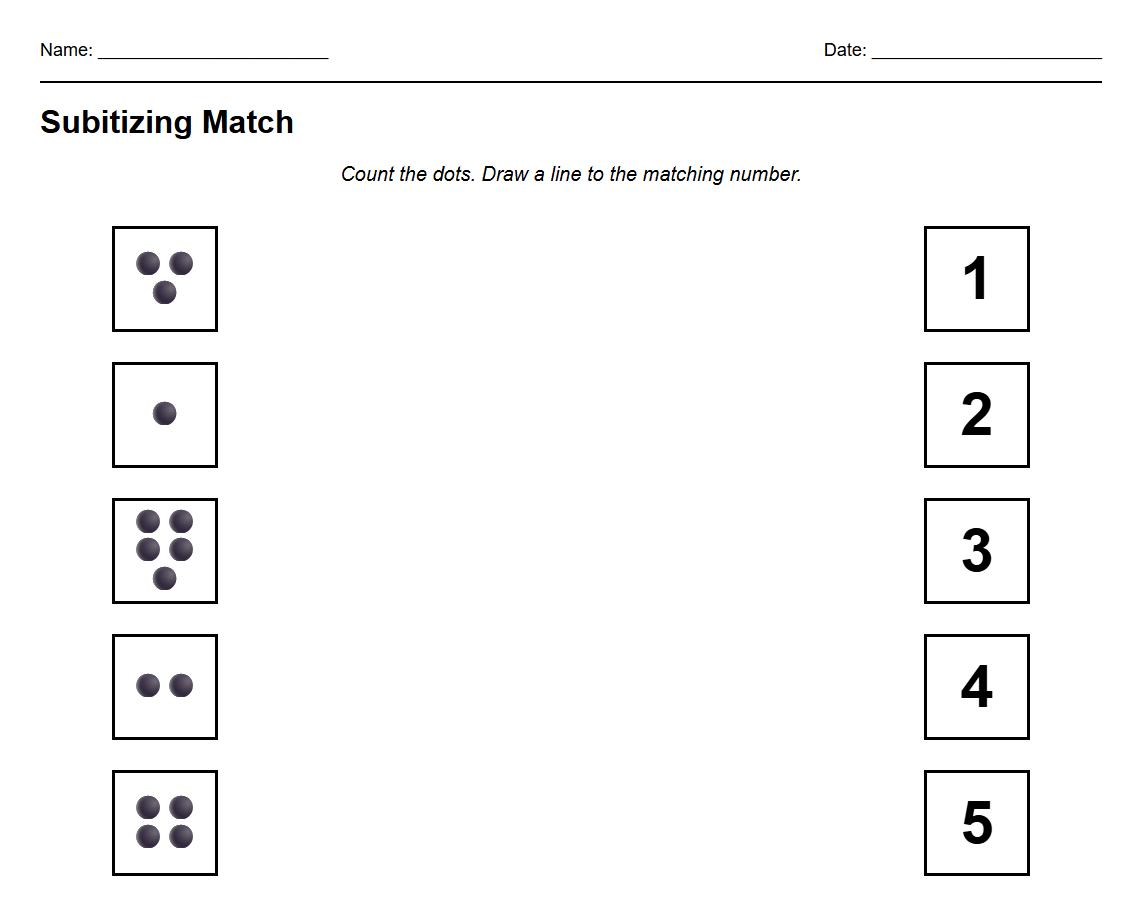
Dot to Number Matching for Subitizing Practice

Download PDF     Pin it

Tally Mark Recording Sheets for Quantitative Analysis
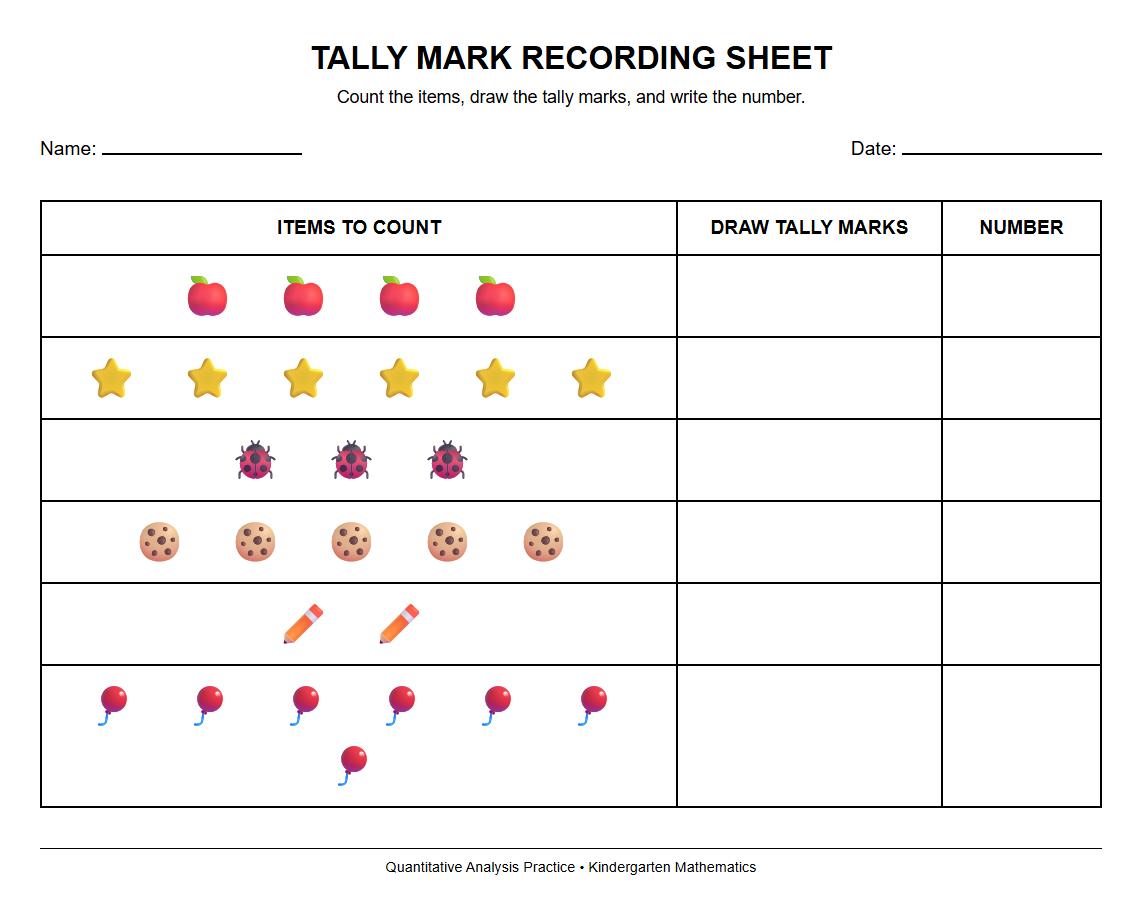
Tally Mark Recording Sheets for Quantitative Analysis

Download PDF     Pin it

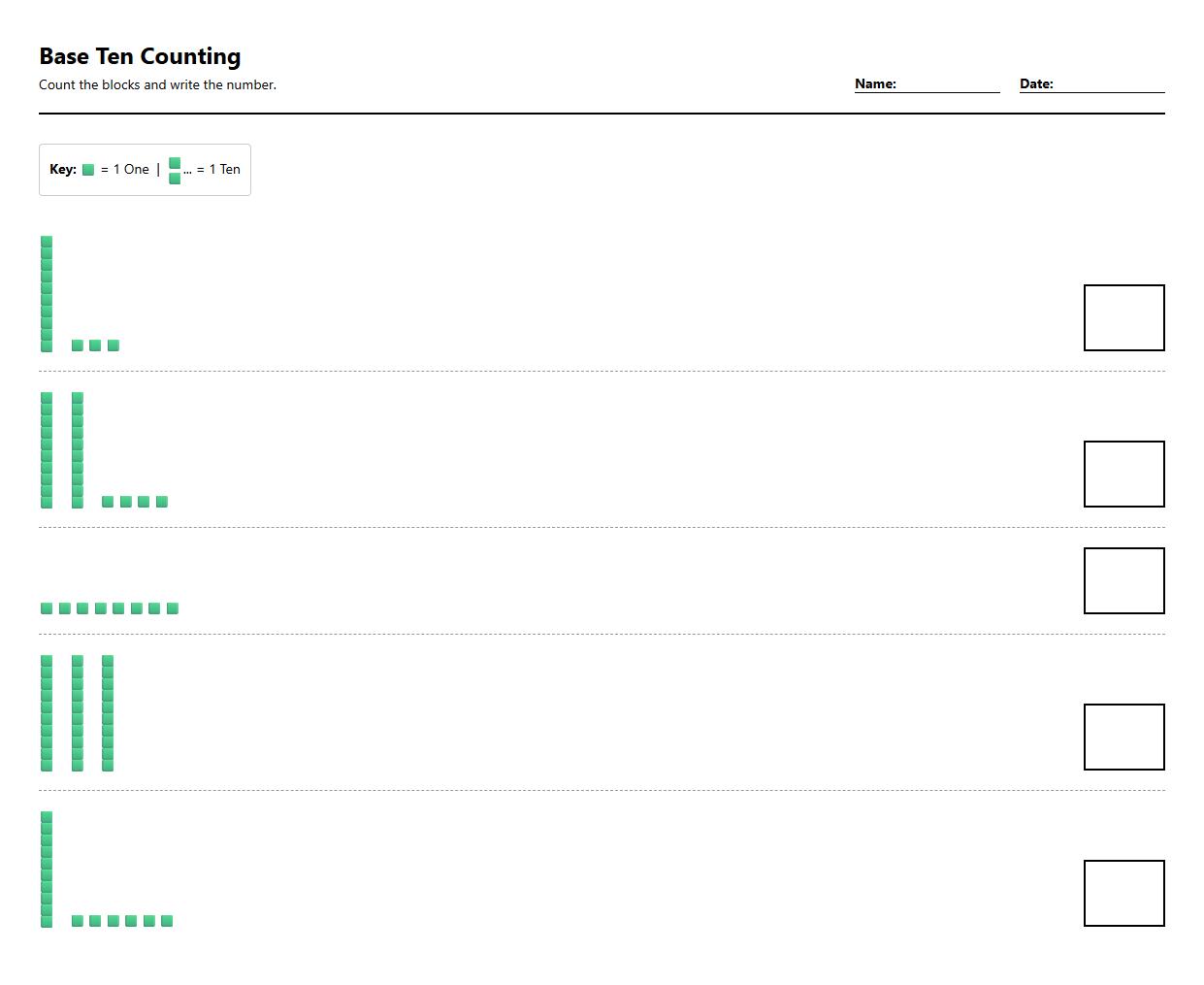
Base Ten Block Counting Exercises

Base Ten Block Counting Exercises

Download PDF     Pin it

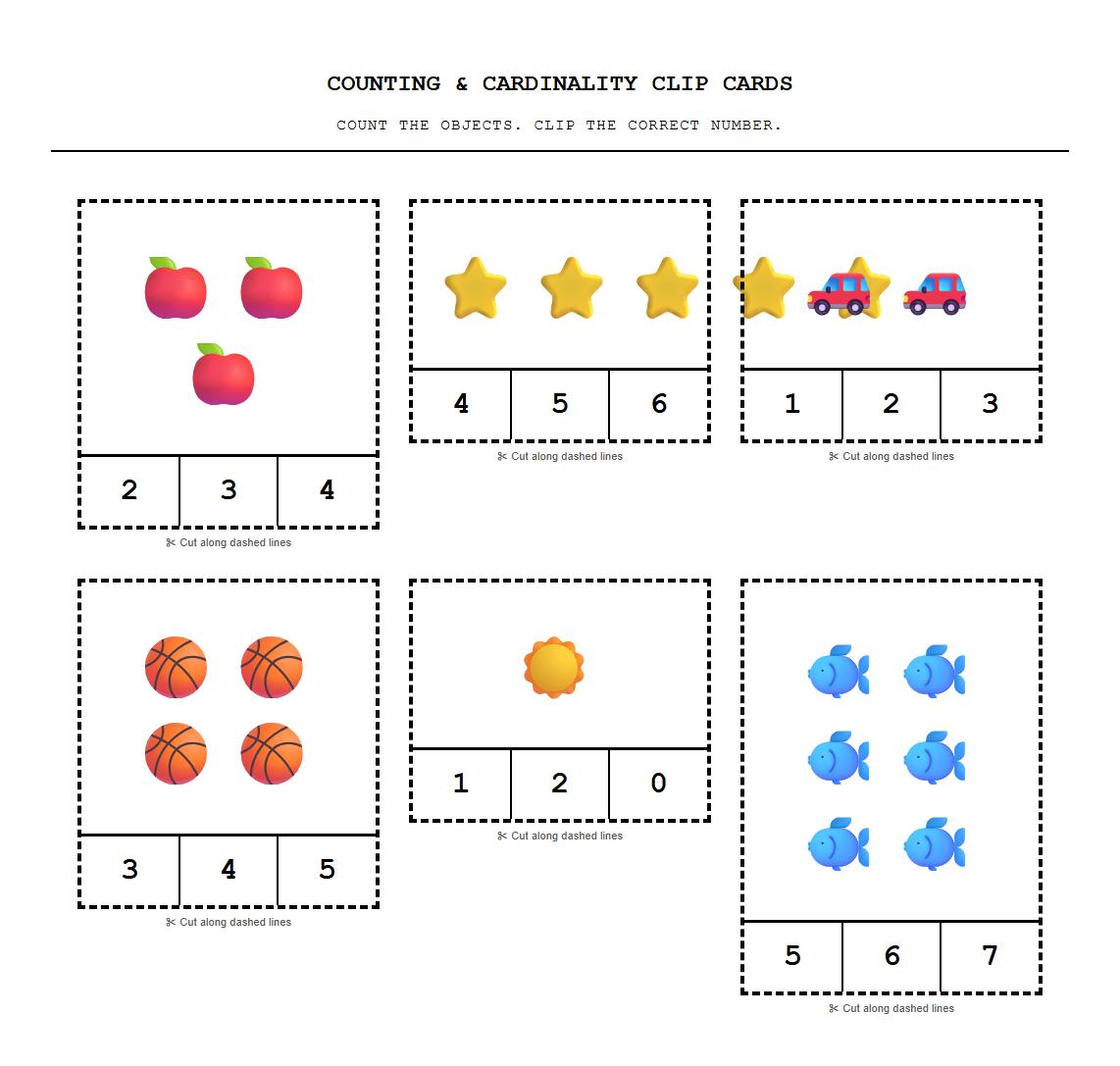
Counting and Cardinality Clip Cards

Counting and Cardinality Clip Cards
Download PDF     Pin it

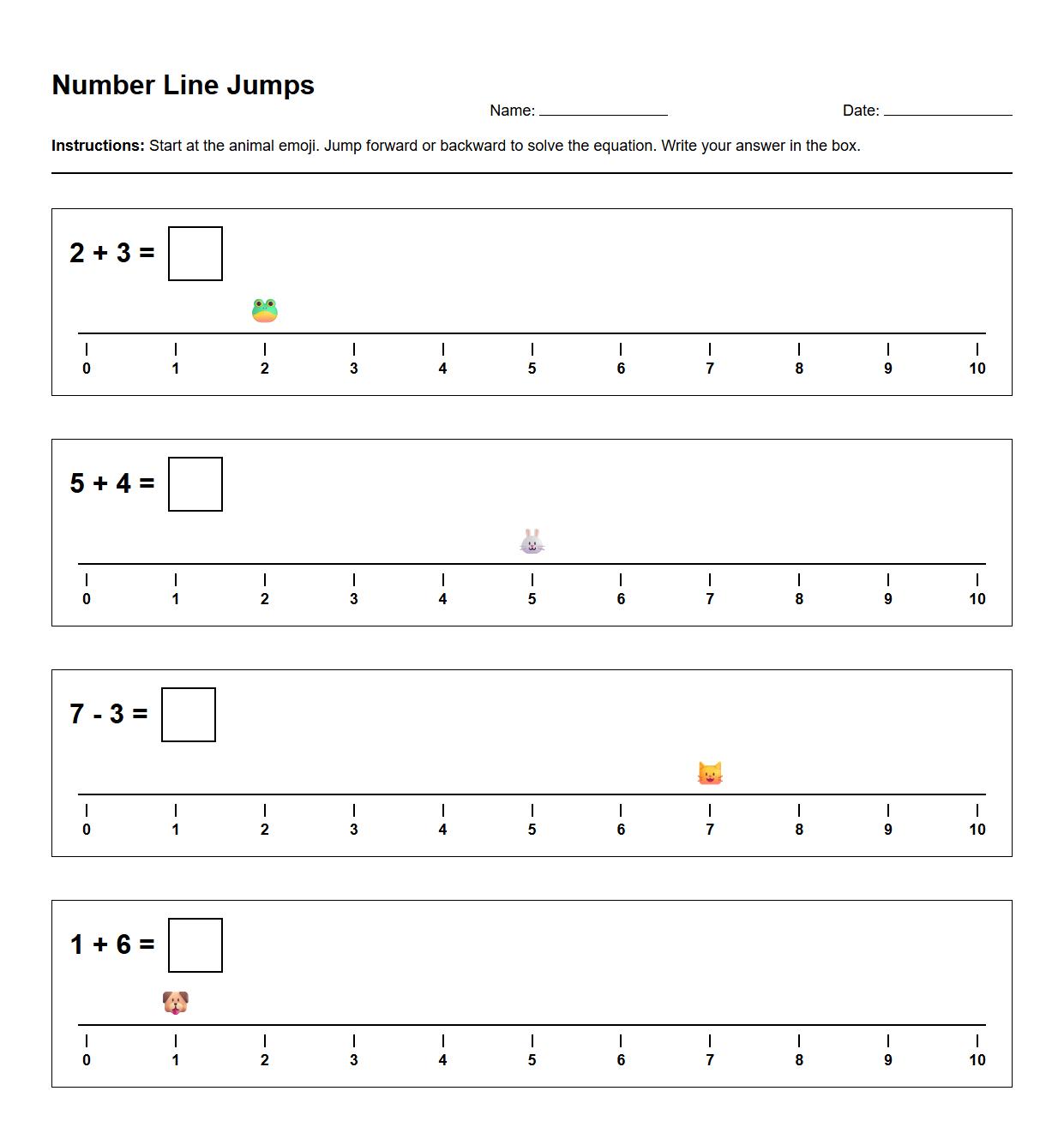
Number Line Jump Worksheets

Number Line Jump Worksheets

Download PDF     Pin it

Comparing Quantities with Greater and Less Than Symbols
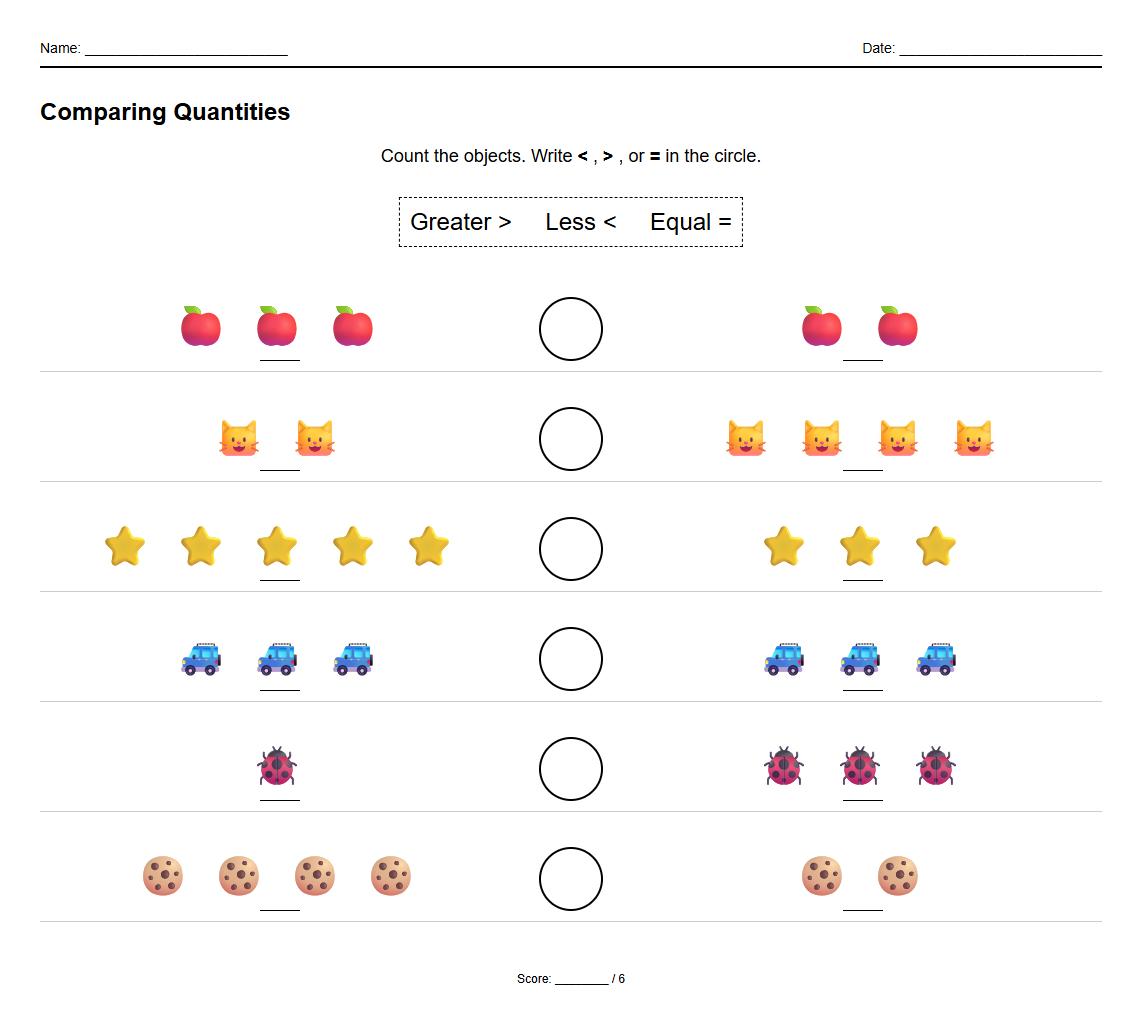
Comparing Quantities with Greater and Less Than Symbols

Download PDF     Pin it

Missing Number in Sequence Activities
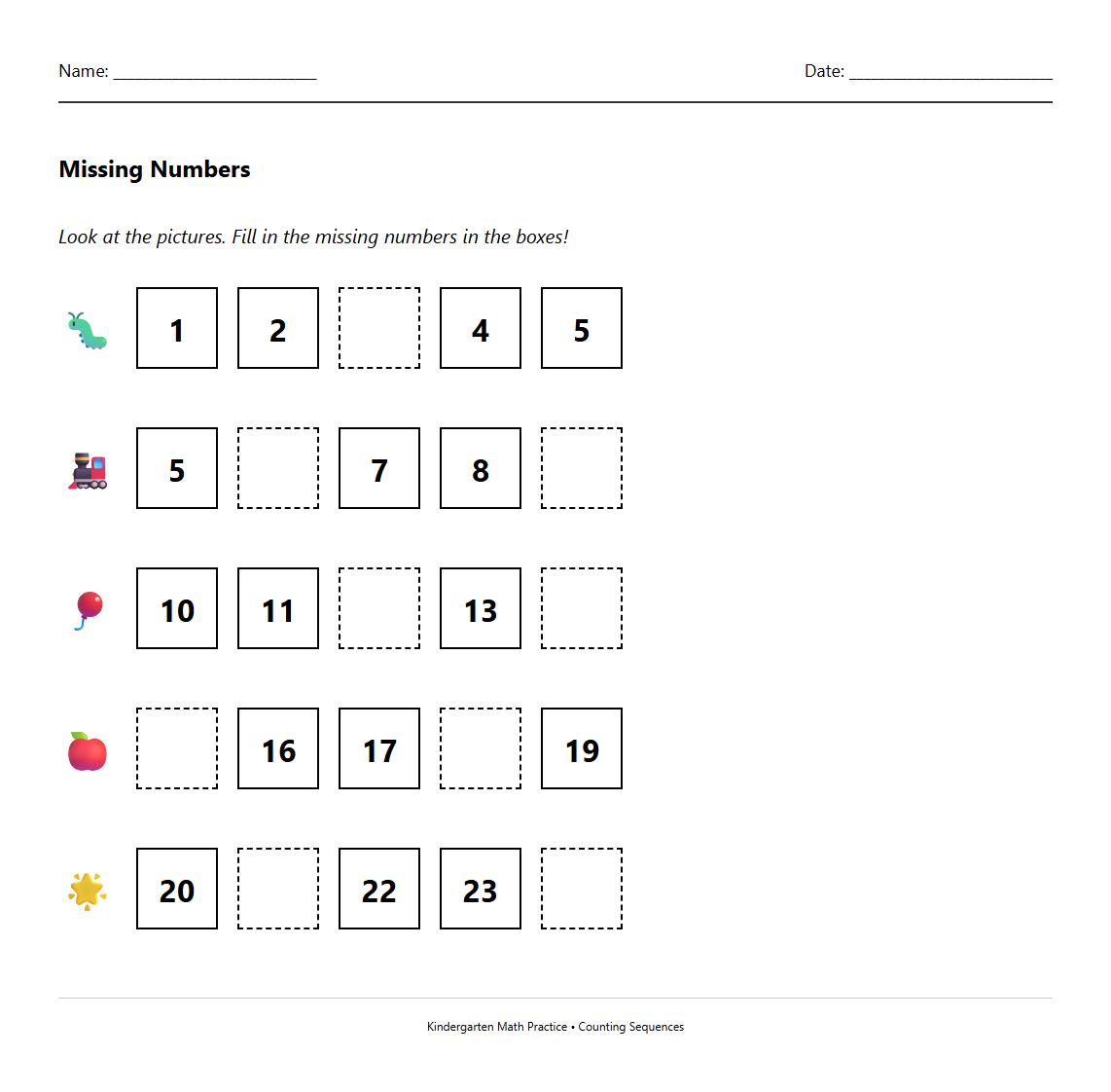
Missing Number in Sequence Activities

Download PDF     Pin it

How Math Centers Support Counting Skills in Kindergarten Students

Math centers create engaging environments where students practice counting through interactive and repetitive activities. These centers provide opportunities for individualized learning and peer collaboration, enhancing counting fluency. By incorporating playful and meaningful tasks, children develop a strong foundation in number recognition and sequence.

Activities That Help Children Recognize Numbers and Quantities

Hands-on activities such as number matching, counting objects, and using number cards help children connect symbols with quantities. Sorting games and pictorial representations reinforce number recognition and quantity understanding. These playful strategies make abstract concepts tangible and memorable for young learners.

Encouraging Hands-On Learning for Counting in Math Centers

Math centers encourage hands-on learning by using physical manipulatives like blocks, beads, and counters to represent numbers. This tactile approach allows children to physically count and manipulate items, enhancing comprehension. Hands-on tasks support active engagement and deeper retention of counting skills.

Effective Tools for Teaching Quantitative Reasoning at This Age

Tools such as counting bears, unifix cubes, number lines, and abacuses promote quantitative reasoning in young children. These manipulatives help visualize addition, subtraction, and comparison by concrete means. Using varied tools keeps the instruction dynamic and adaptable to different learning styles.

Assessing Counting Progress During Center Time

Teachers can assess progress through observation checklists, anecdotal notes, and quick informal quizzes during center activities. Monitoring how accurately and confidently children count objects and recognize numbers provides valuable feedback. This ongoing assessment informs instruction adjustments tailored to individual needs.

Games and Manipulatives That Promote Number Sense Development

Number puzzles, board games involving counting moves, and dominoes are excellent for building number sense. Manipulatives like pattern blocks and ten frames foster understanding of number relationships and quantities. These playful formats support cognitive development in an enjoyable way.

Strategies to Help Children Compare Quantities Using Math Centers

Math centers can include activities like sorting objects by size or quantity and using scales or balance boards to compare weights. Encouraging children to verbalize comparisons using terms like "more," "less," and "equal" strengthens their reasoning skills. Visual supports like charts and number lines deepen conceptual understanding.

Addressing Different Counting Abilities Among Students

Math centers provide differentiated tasks catering to varying skill levels, from simple counting to more advanced number operations. Small group settings and choice boards help tailor activities to individual needs. This inclusive approach ensures all children can progress at their own pace in developing counting skills.

Collaborative Activities Building Both Counting and Reasoning Skills

Group games where children count turns, share objects, or solve counting puzzles together foster collaborative learning and critical thinking. Cooperative endeavors promote social interaction alongside mathematical reasoning. These activities strengthen communication skills while reinforcing math concepts.

Integrating Counting with Other Early Math Concepts at Math Centers

Counting activities can be combined with sorting by attributes, pattern recognition, and simple addition or subtraction within math centers. This integration supports holistic math development and connects counting to broader quantitative reasoning. Such cross-concept learning builds a strong foundation for future math success.


More in Mathematics Category


About the author. Nylen Smith is a dedicated educator and cofounder of KWorksheet.com, a popular platform specializing in high-quality kindergarten worksheets and printable activities.

Disclaimer. The information provided in this document is for general informational purposes and/or document sample only and is not guaranteed to be factually right or complete. Please report to us via contact-us page if you find and error in this page, thanks.

Comments

No comment yet