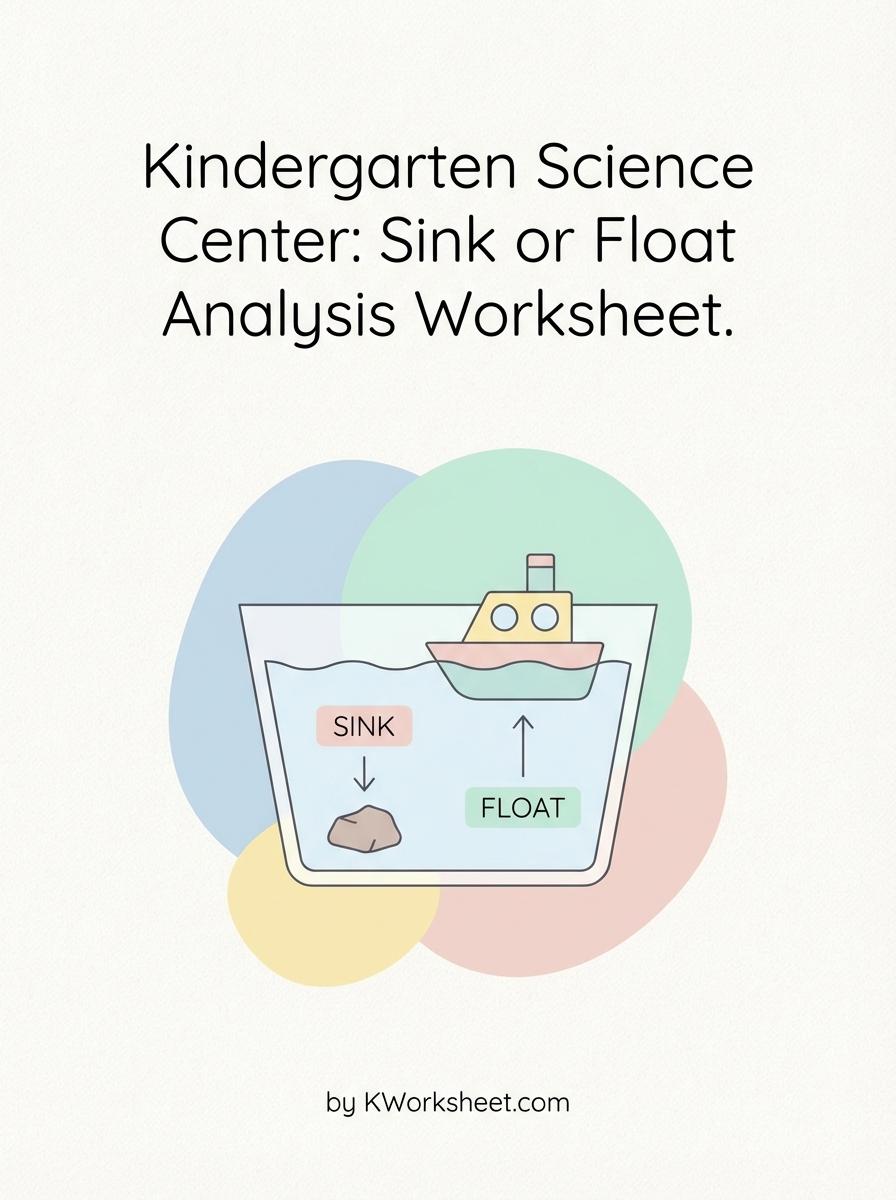
Kindergarten Science Center: Sink or Float Analysis Worksheet

📅 Jan 24, 2025 👤 Nylen Smith

Explore the fundamentals of buoyancy with the Sink or Float Analysis Worksheet designed for kindergarten students. This activity encourages young learners to predict and observe the behavior of various objects in water, fostering critical thinking and scientific inquiry. Discover engaging and educational worksheets by exploring our collection today.

Sink or Float Chart with Picture Sorting
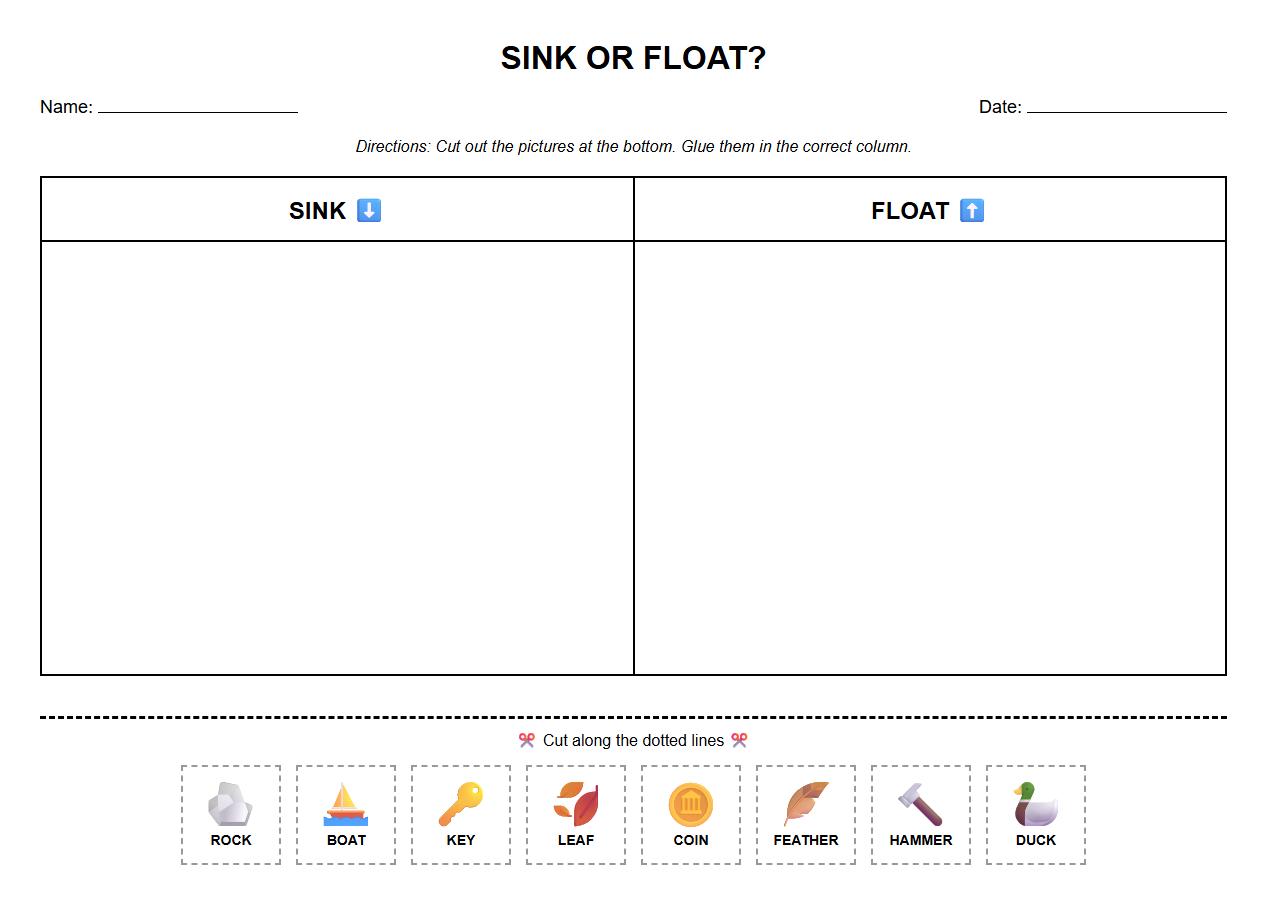
Sink or Float Chart with Picture Sorting

Download PDF     Pin it

Prediction and Observation Table for Objects Buoyancy
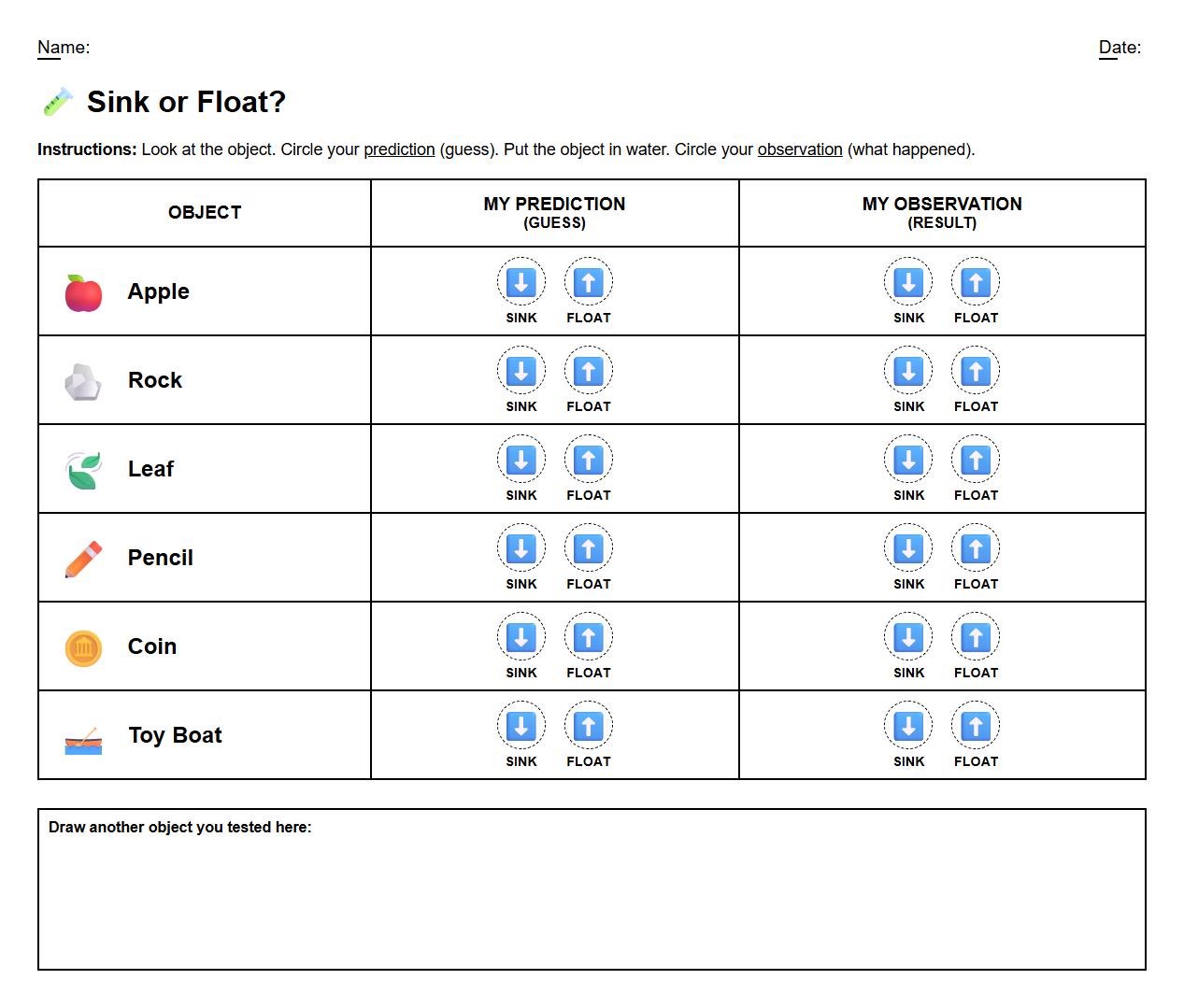
Prediction and Observation Table for Objects Buoyancy

Download PDF     Pin it

Phonics-based Object Name Matching for Sink or Float
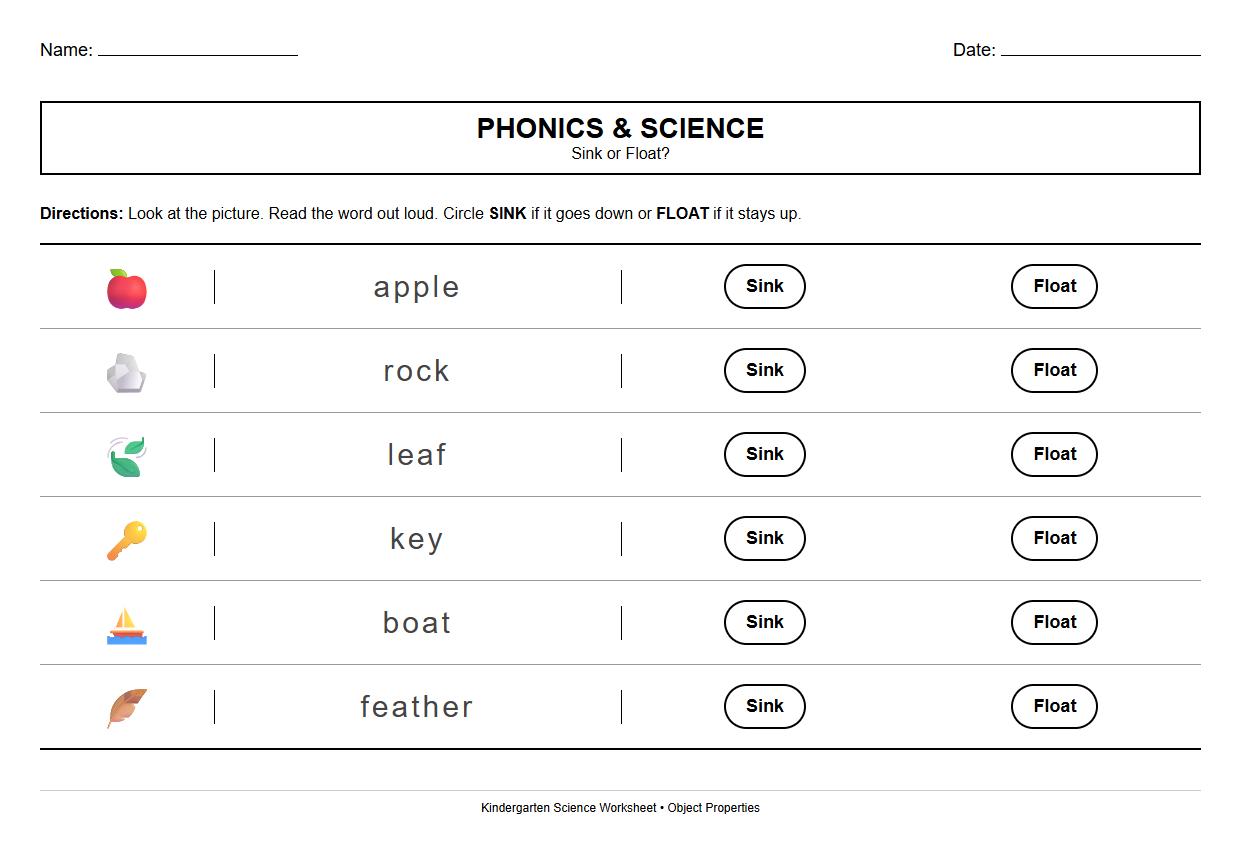
Phonics-based Object Name Matching for Sink or Float

Download PDF     Pin it

Cut and Paste Science Sorting: Sinking vs Floating
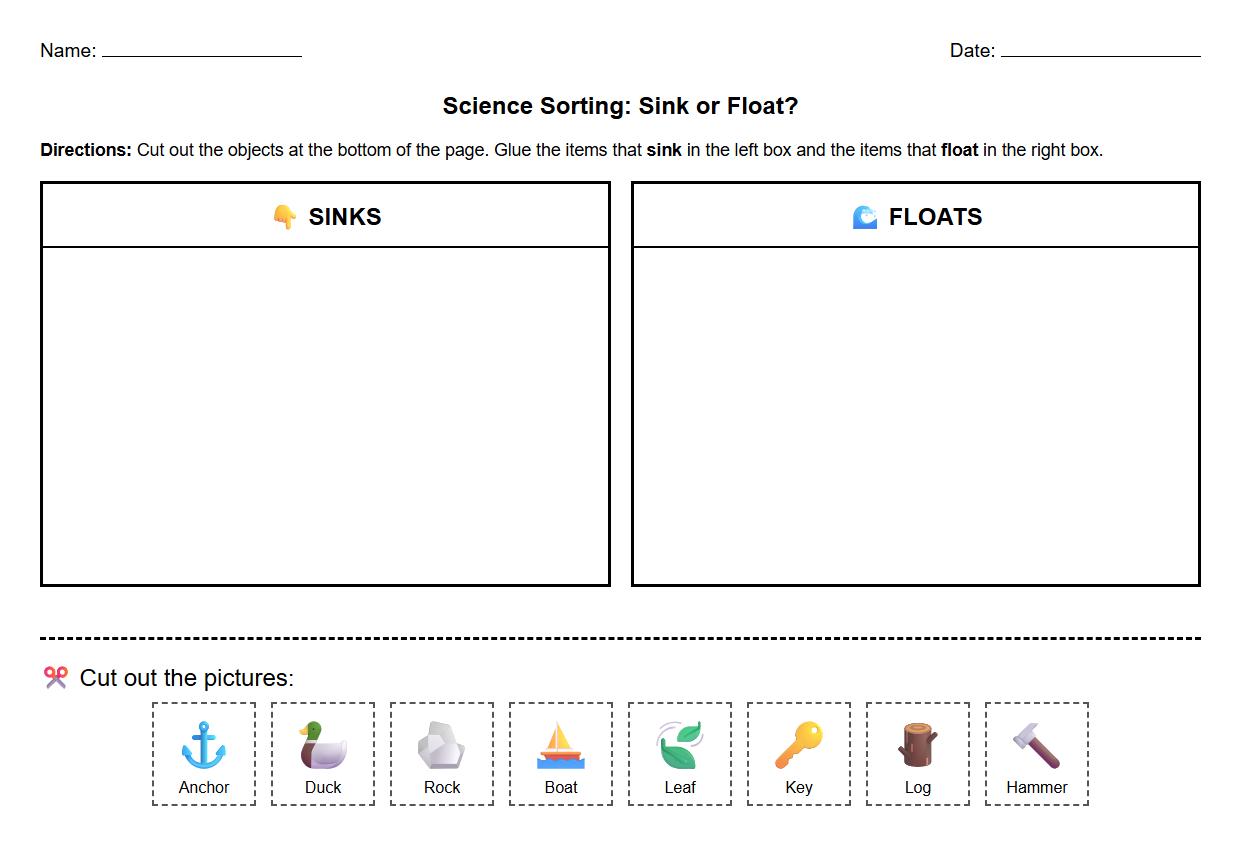
Cut and Paste Science Sorting: Sinking vs Floating

Download PDF     Pin it

Sink or Float Vocabulary Tracing Worksheet
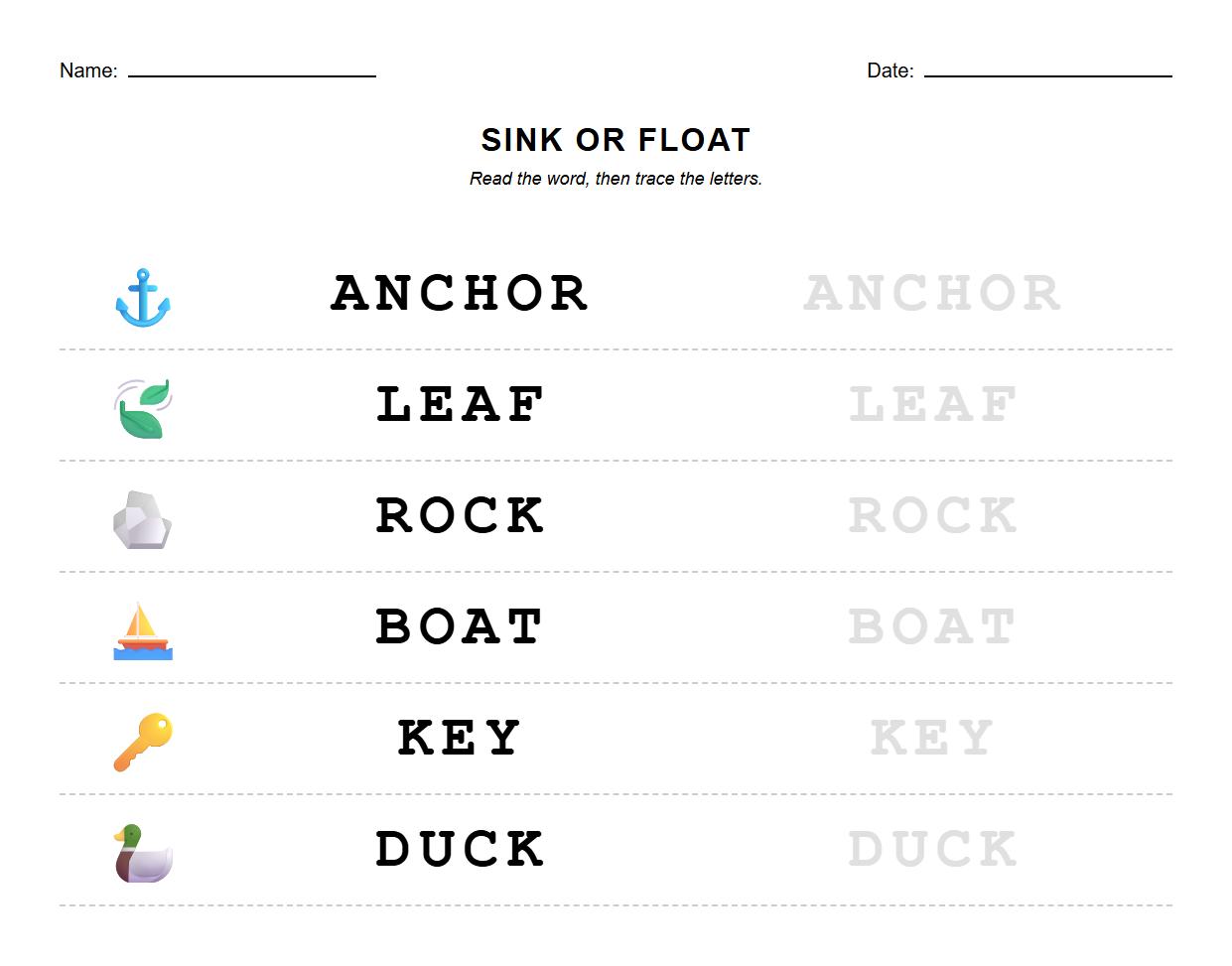
Sink or Float Vocabulary Tracing Worksheet

Download PDF     Pin it

Data Recording Sheet for Buoyancy Experimentation
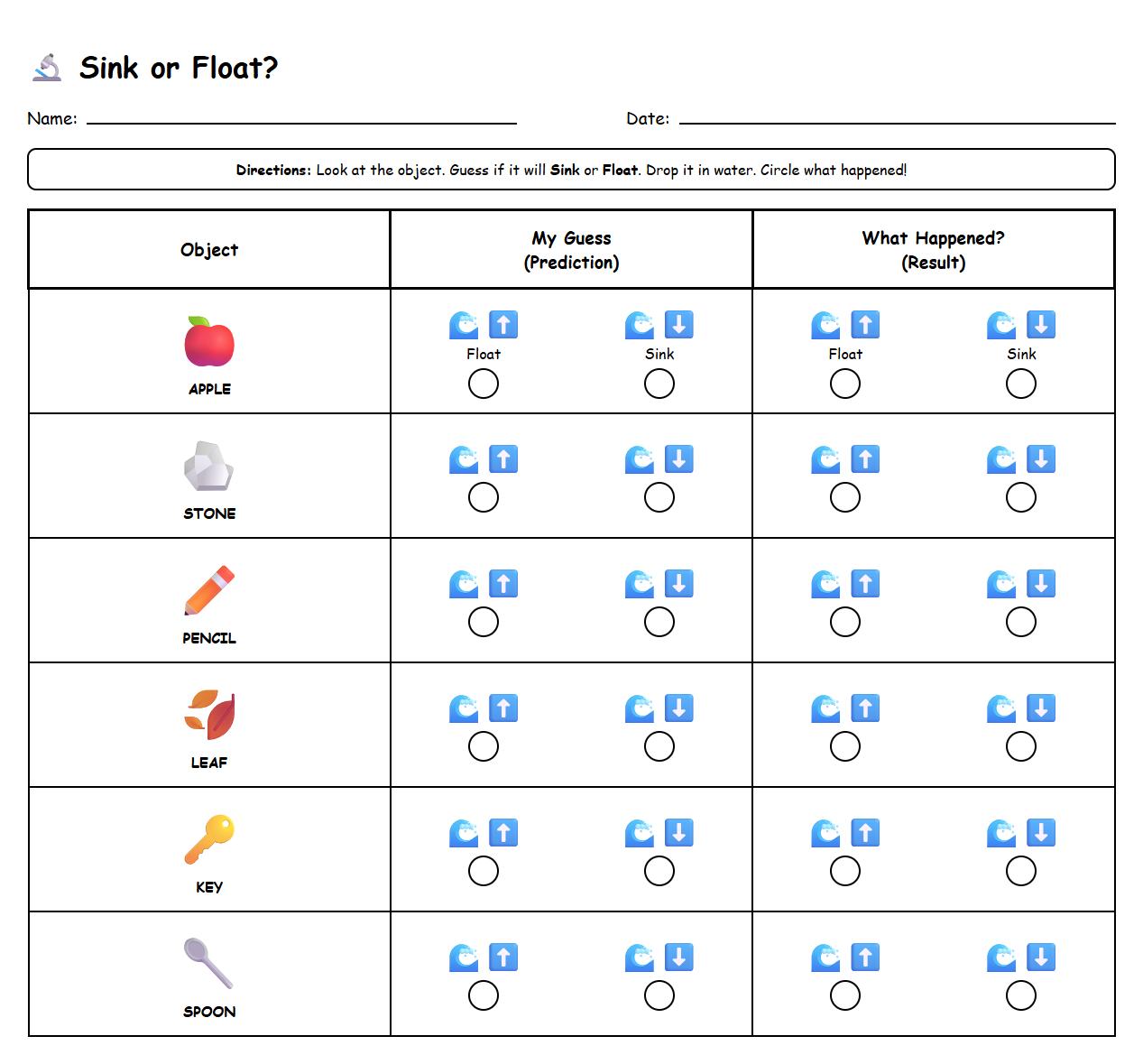
Data Recording Sheet for Buoyancy Experimentation

Download PDF     Pin it

Sink Float Tally Mark Analysis Printable
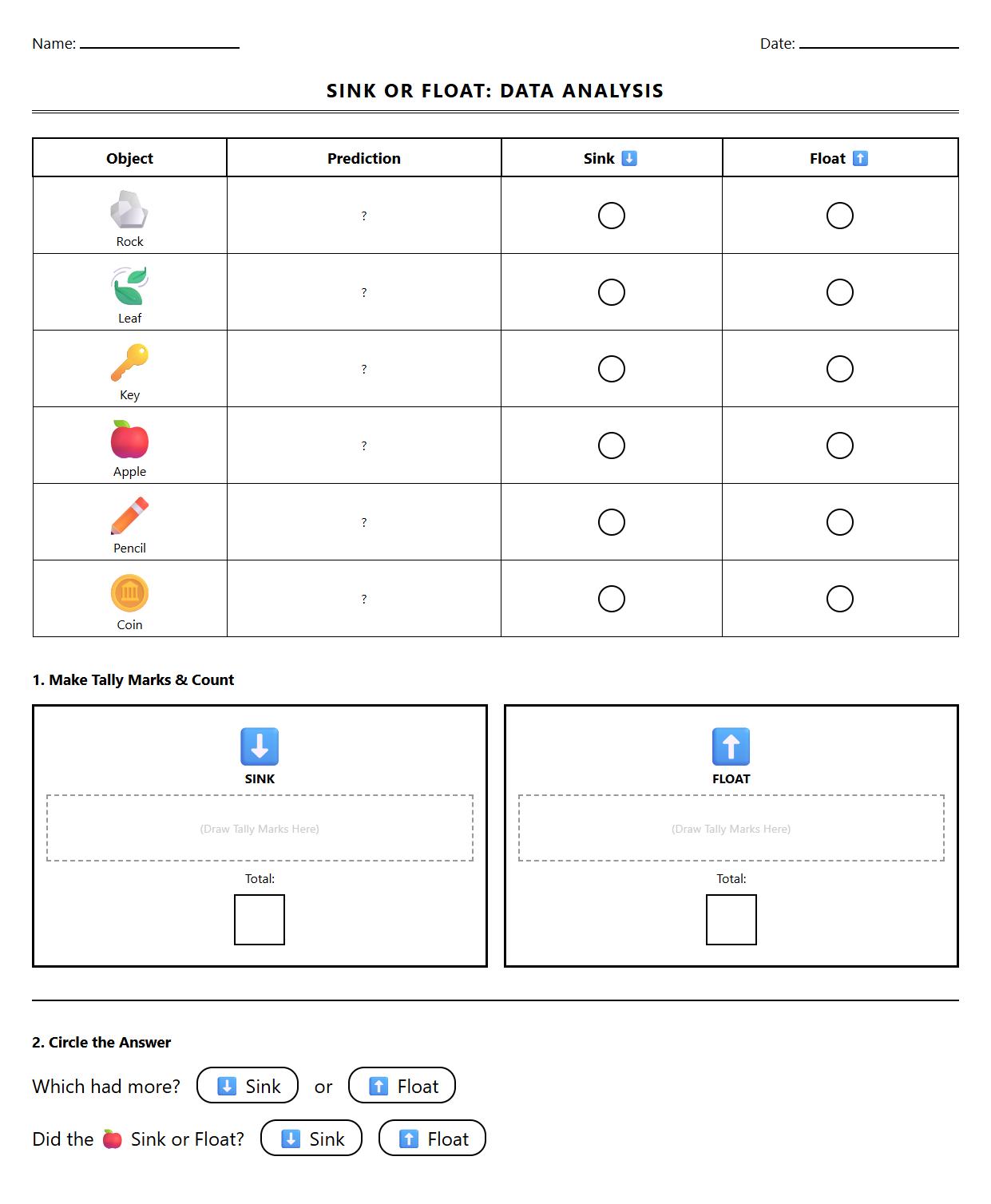
Sink Float Tally Mark Analysis Printable

Download PDF     Pin it

Scientific Method Recording for Sink and Float Test
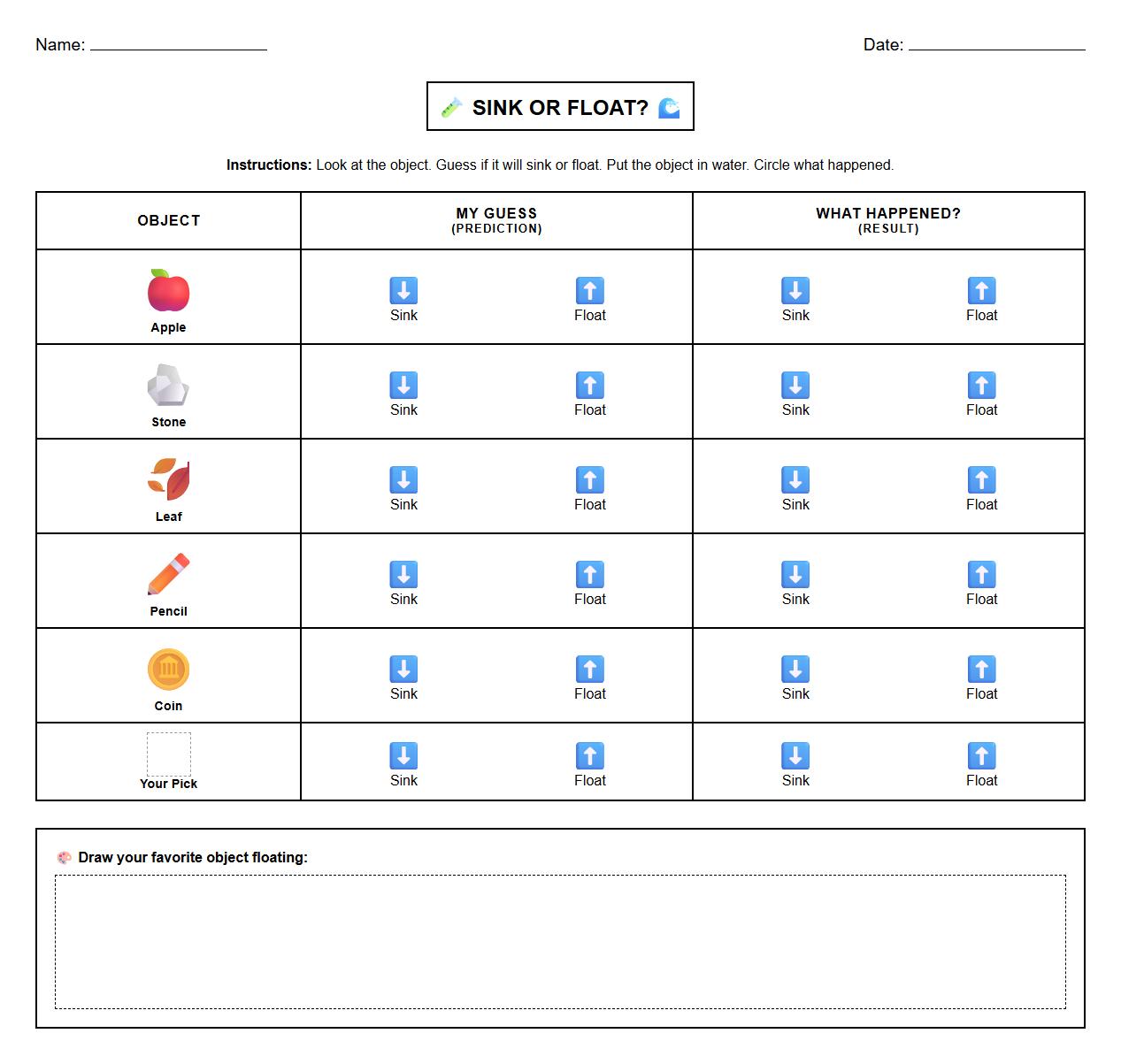
Scientific Method Recording for Sink and Float Test

Download PDF     Pin it

Object Property Checklist for Buoyant Analysis
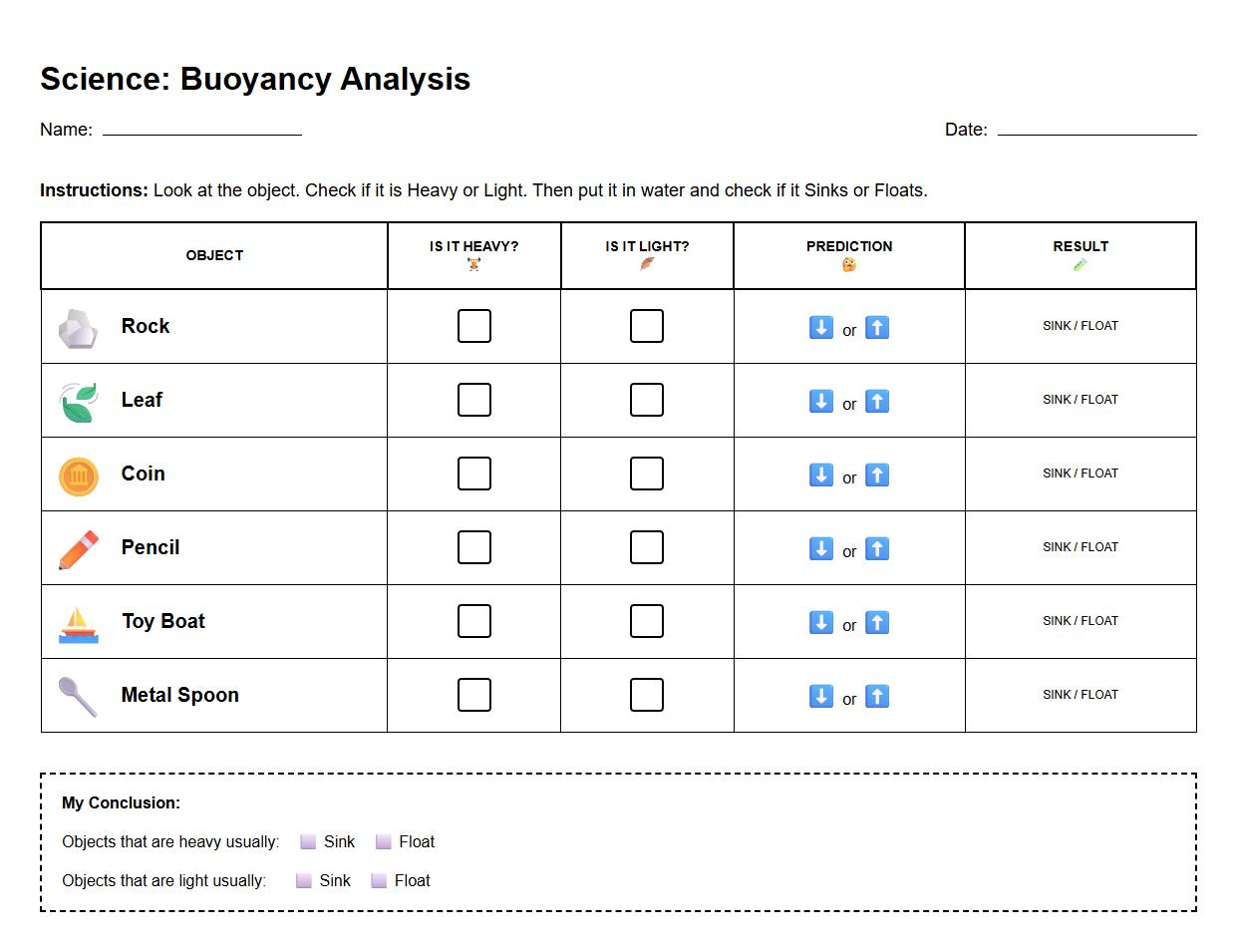
Object Property Checklist for Buoyant Analysis

Download PDF     Pin it

Sink or Float Class Survey Graphing Worksheet
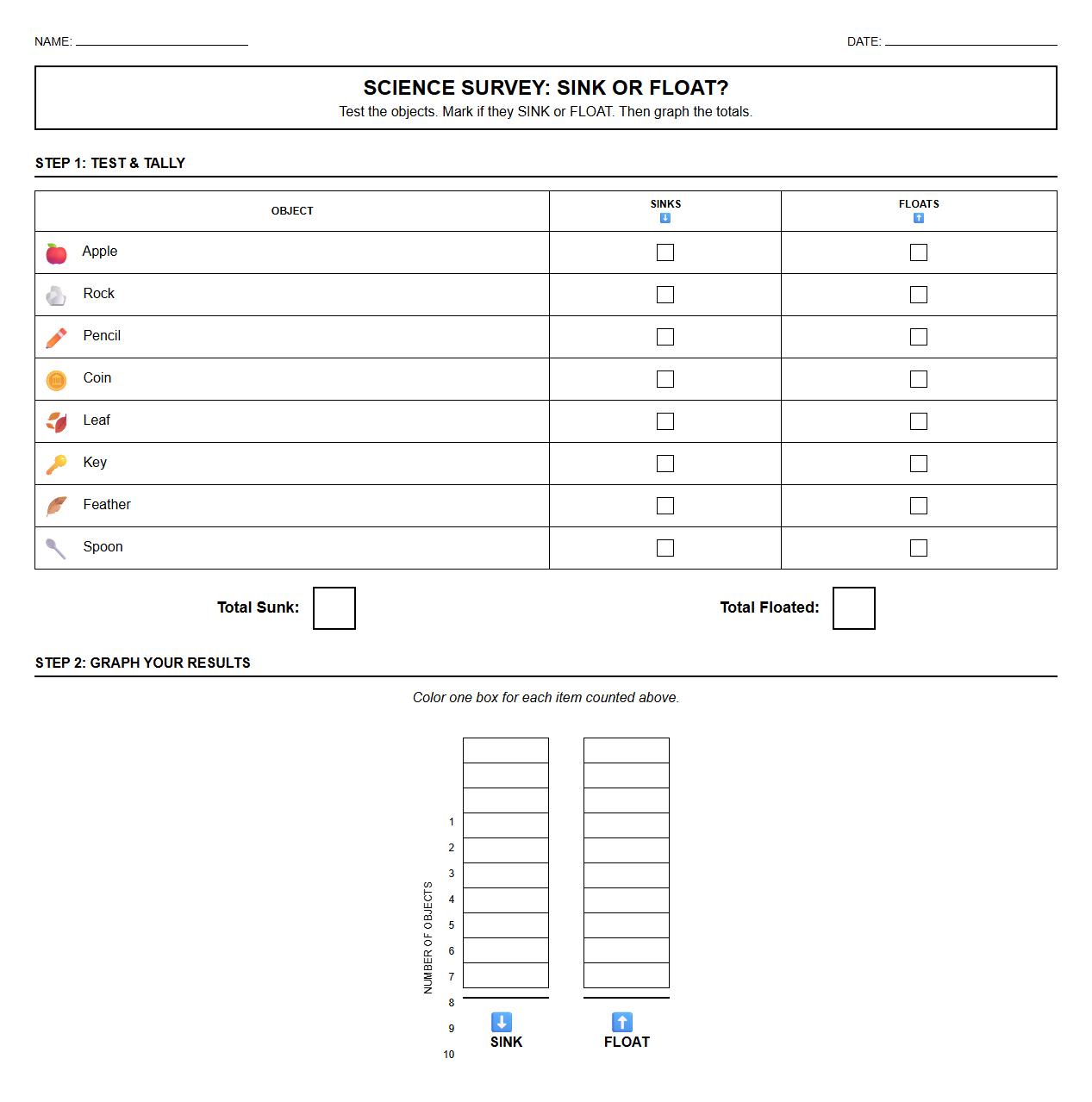
Sink or Float Class Survey Graphing Worksheet

Download PDF     Pin it

Objects That Floated During the Experiment

In the experiment, children observed various objects that floated on the water's surface. Items such as corks, leaves, and plastic toys typically floated due to their lower density than water. Observing these objects helps children understand the concept of buoyancy. Encouraging kids to describe why these floated promotes critical thinking.

Items That Sank in Water

Objects like metal spoons, stones, and coins usually sank when placed in water. These items have a higher density compared to water, causing them to sink. Identifying sinking objects introduces the idea of weight and material properties. Discussing this helps children relate everyday items to scientific concepts.

Surprising Sinking or Floating Results

Some children are often surprised when objects like plastic keys or wooden blocks sink or float unexpectedly. These surprises spark curiosity and encourage deeper questions about material properties. Highlighting these moments boosts engagement and learning through discovery. It also helps children learn about exceptions in natural phenomena.

Predicting Sink or Float Outcomes

Before testing, children make predictions based on their experience, imagining whether an object will sink or float. Predictions help develop critical thinking and hypothesis skills. Teachers and parents guide this process by asking children to explain their reasoning. This step is vital for scientific inquiry learning.

Common Materials Among Floating Objects

Most objects that floated were made of materials like wood, plastic, and cork. These materials generally have less density and trap air, aiding buoyancy. Understanding material types enhances children's knowledge about the properties influencing floatation. This awareness extends to everyday material recognition.

Heaviest Object and Its Behavior

The heaviest object in the experiment was often a metal item, such as a spoon or key, which typically sank. Weight and density both affect whether an object floats or sinks, but density plays a more crucial role. Identifying the heaviest items teaches children about mass and gravitational effects. This also relates to their sinking behavior in water.

Objects Partially Sinking or Staying in the Middle

Some objects partially sank or stayed suspended in the water, demonstrating neutral buoyancy. This happens when the object's density is close to that of water. It's an excellent concept for kids to visually grasp the balance of forces. Such observations deepen understanding of physics in a simple way.

Classroom Items That Could Float

Children can think of classroom items like plastic rulers, erasers, or rubber balls that are likely to float. This encourages them to apply their learning to real-world objects. Discussing classroom items also makes the activity relatable and fun. It fosters creativity and practical application of the concept.

Testing Plastic Versus Metal Objects

When comparing a plastic object and a metal one, children usually see plastic float while metal sinks. This highlights differences in material density and composition. The comparison helps reinforce the idea that not all items behave the same in water. Teachers can use this to explain material science basics effectively.

Reasons Why Items Sink or Float

Objects sink or float based on their density relative to water. Items less dense than water float, while denser ones sink. This fundamental principle helps children understand buoyancy and physical properties of materials. Exploring this concept encourages scientific thinking and observation skills.


More in Science Category


About the author. Nylen Smith is a dedicated educator and cofounder of KWorksheet.com, a popular platform specializing in high-quality kindergarten worksheets and printable activities.

Disclaimer. The information provided in this document is for general informational purposes and/or document sample only and is not guaranteed to be factually right or complete. Please report to us via contact-us page if you find and error in this page, thanks.

Comments

No comment yet