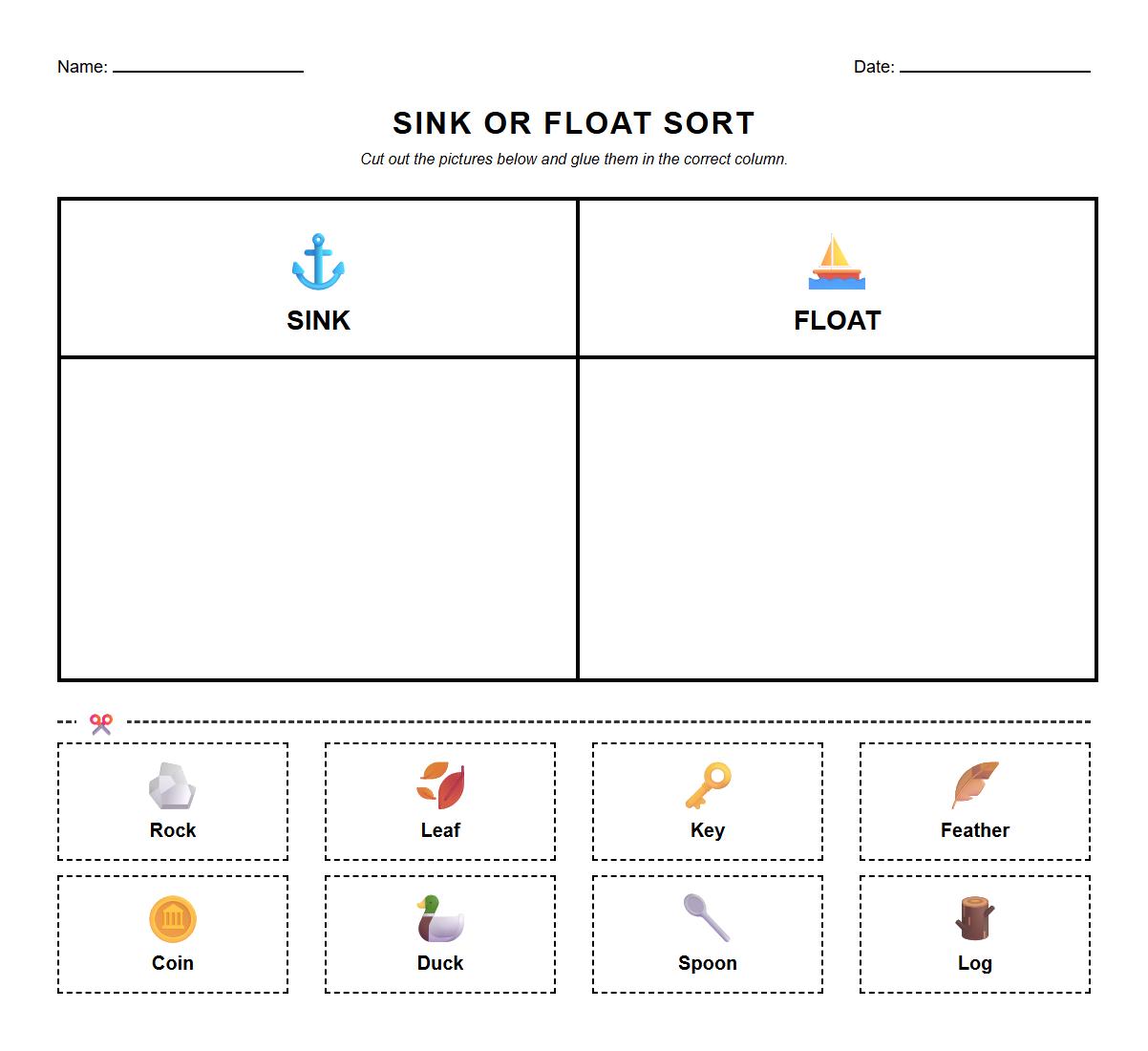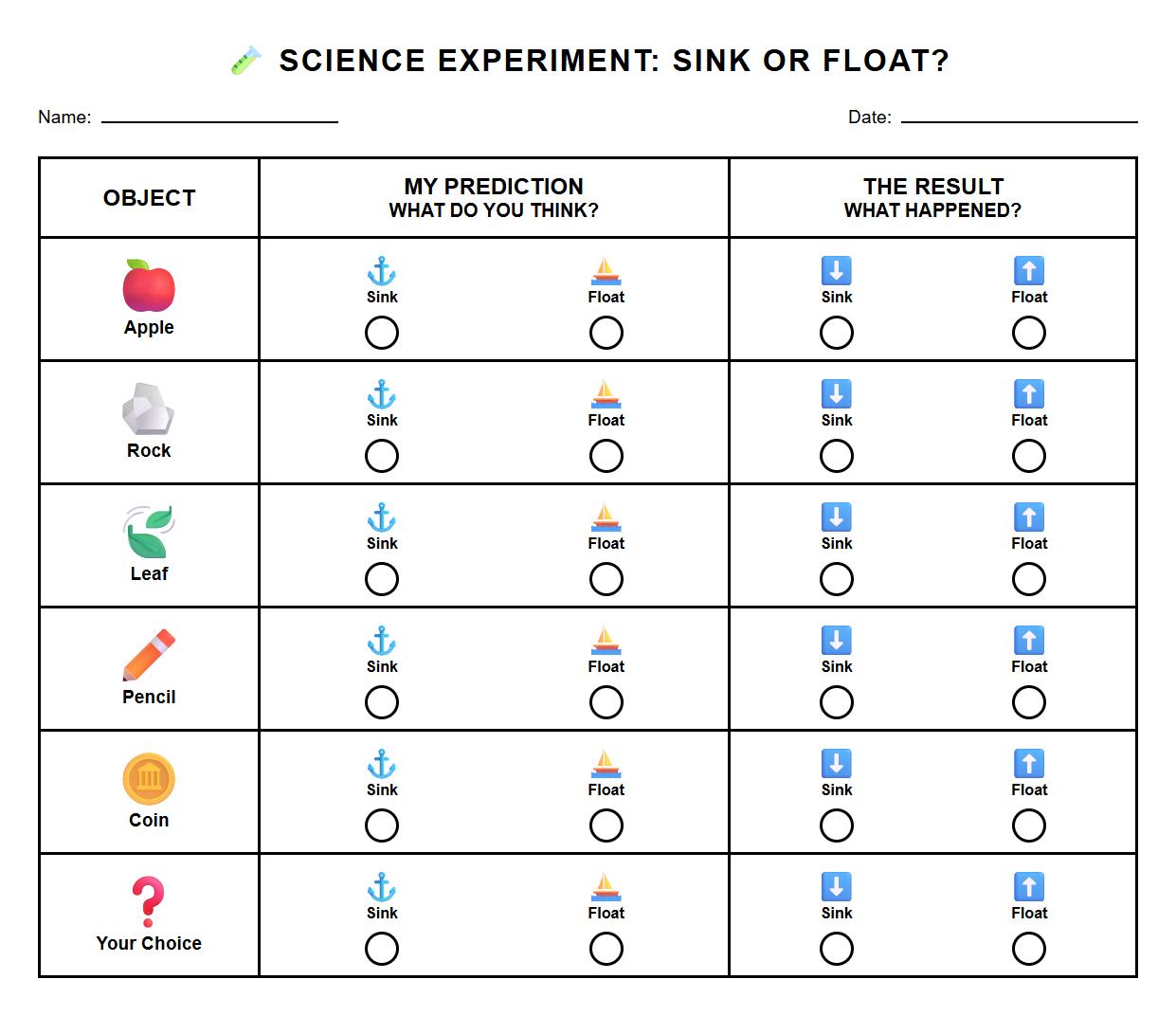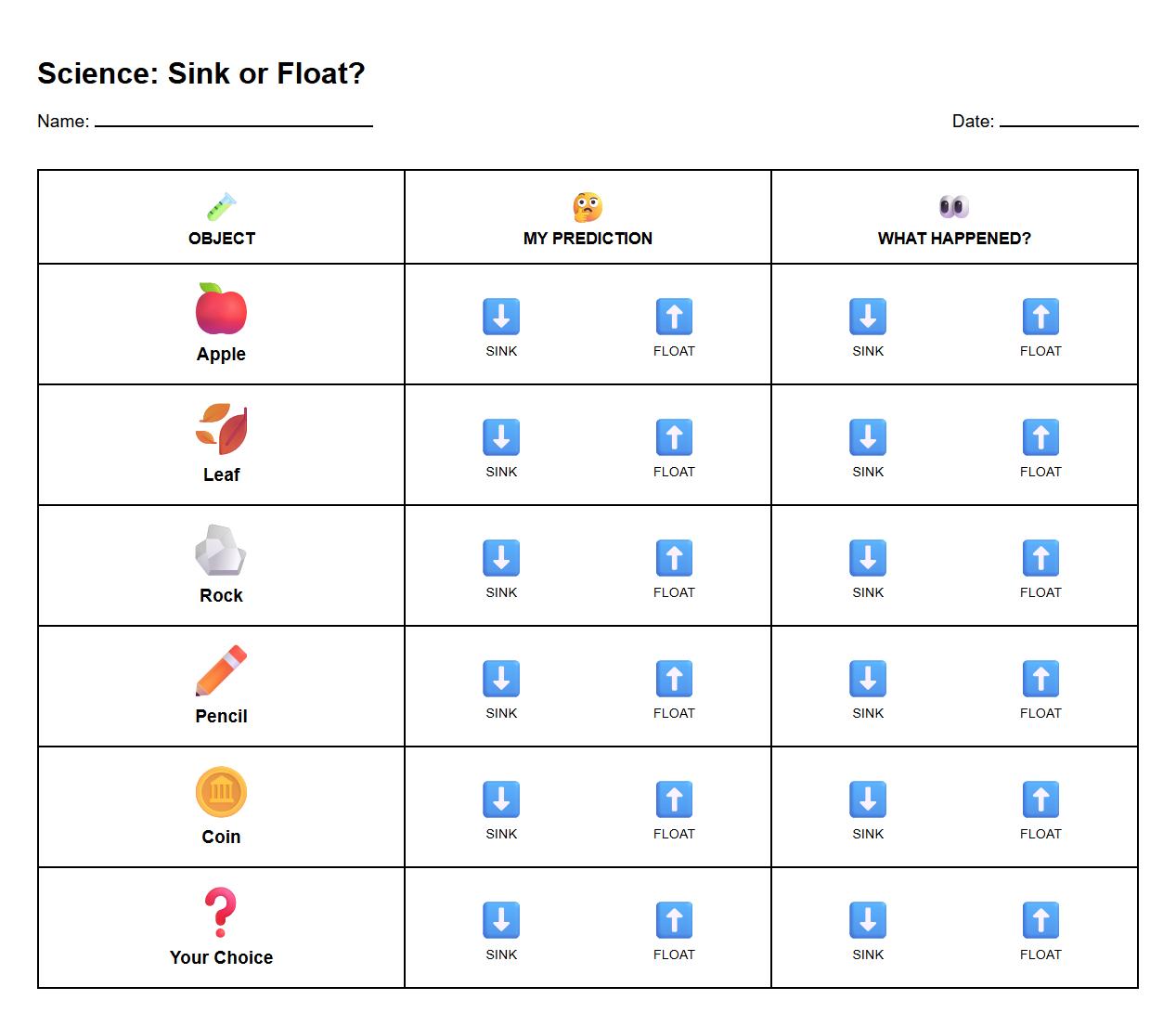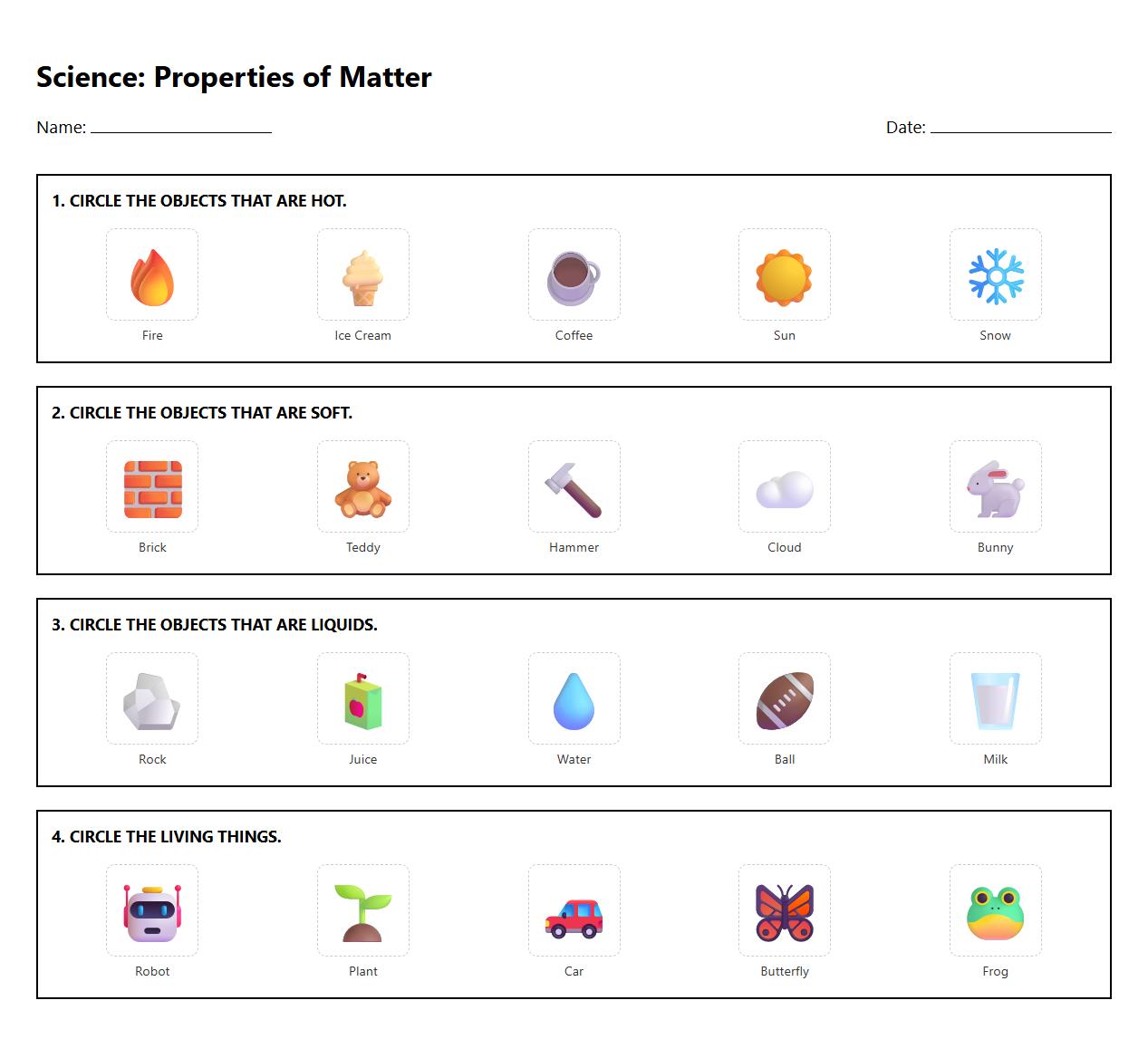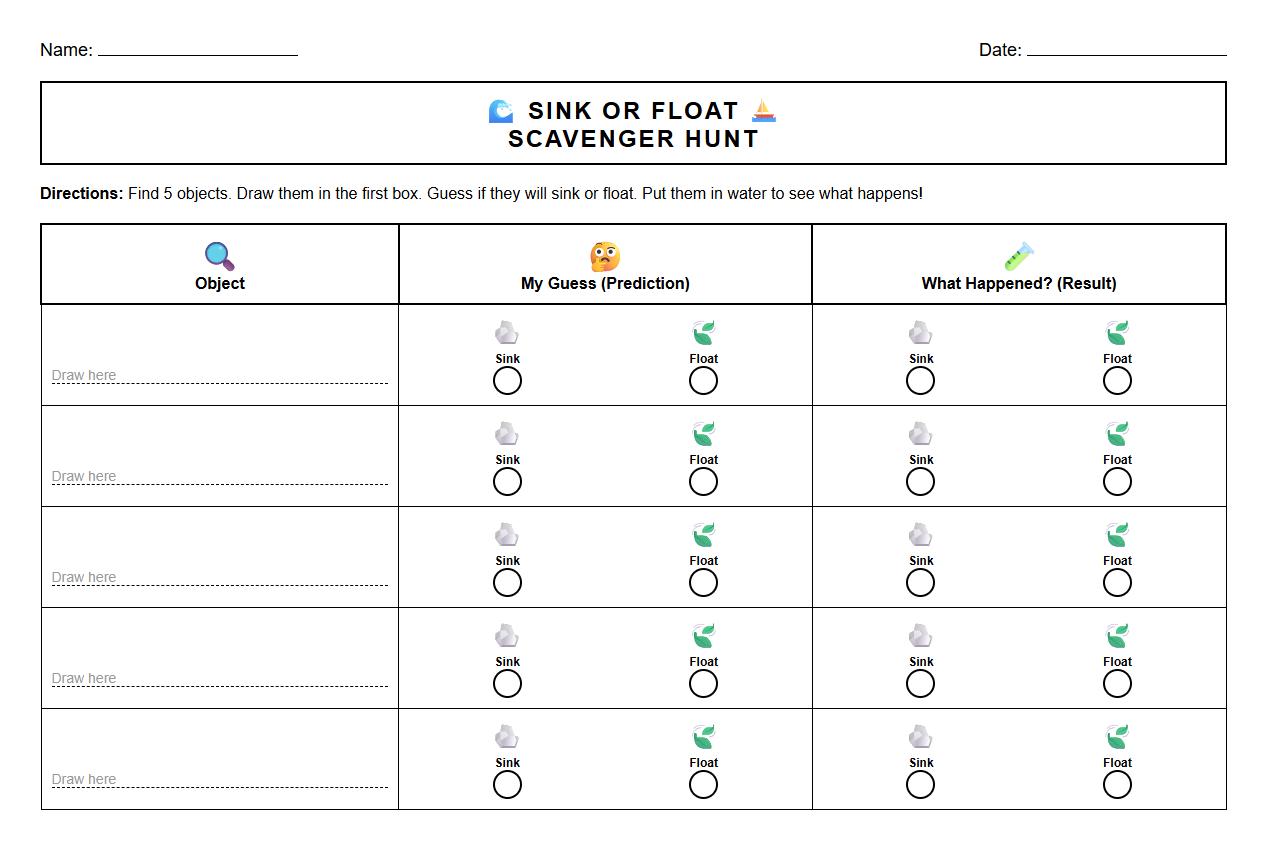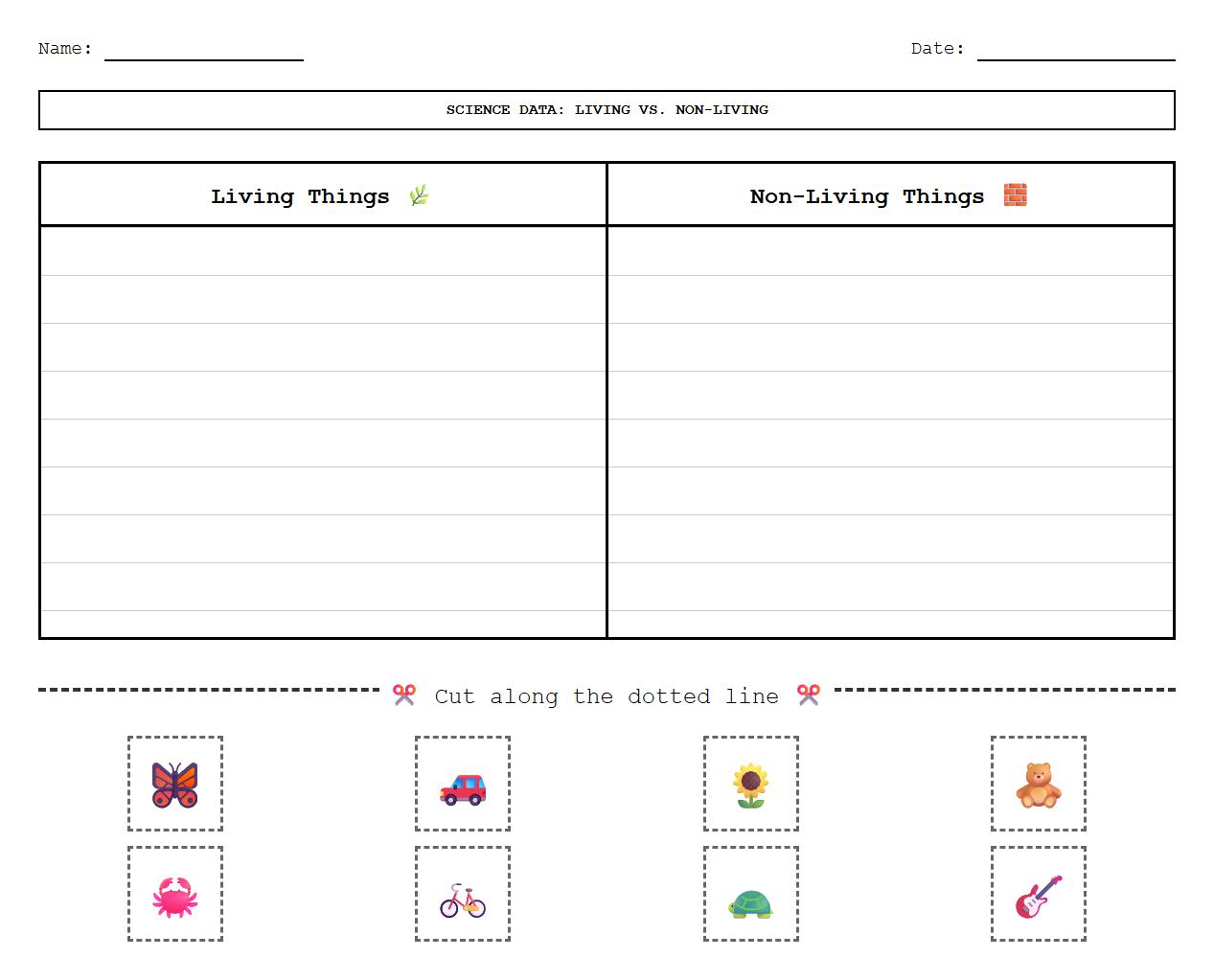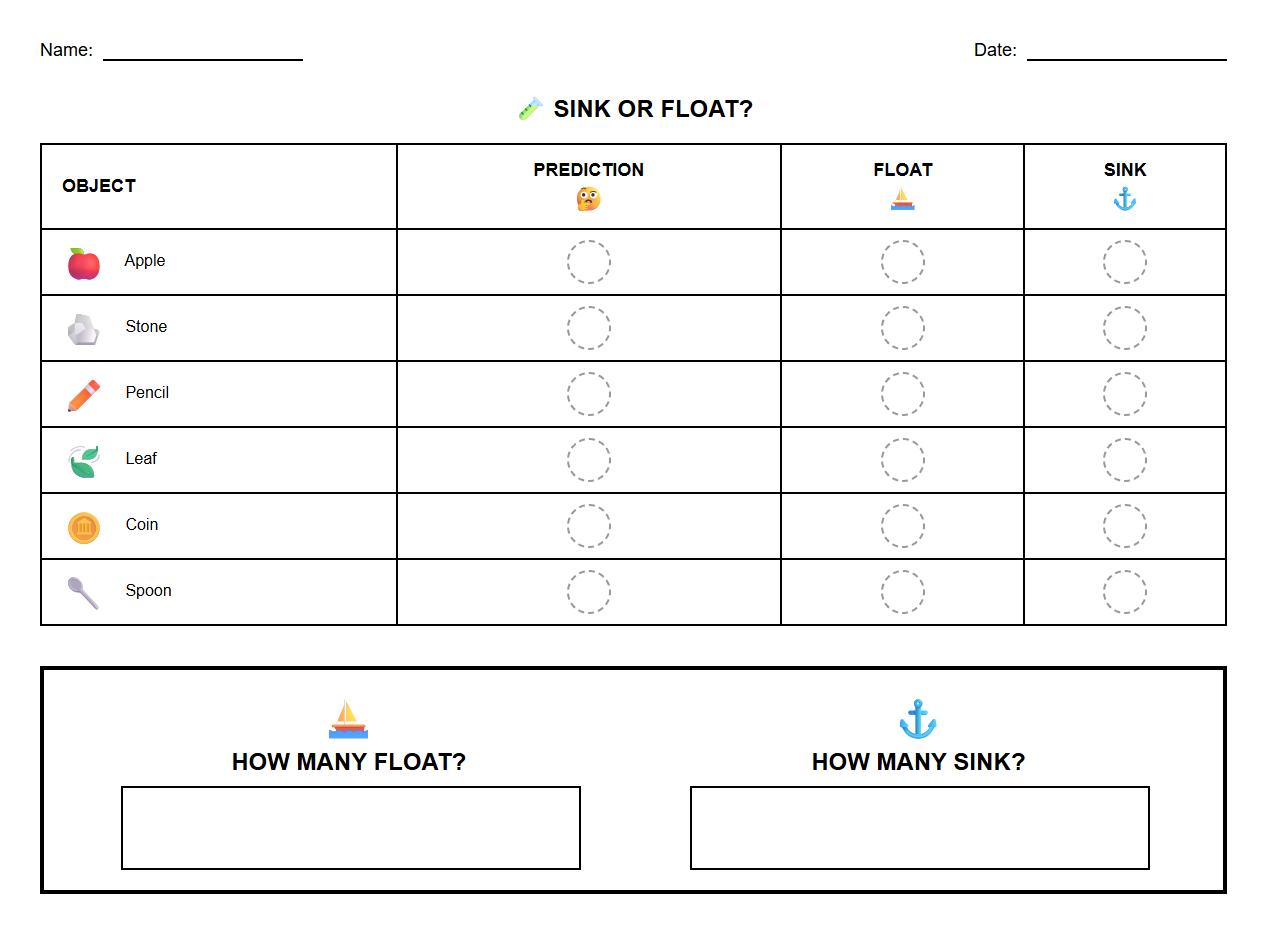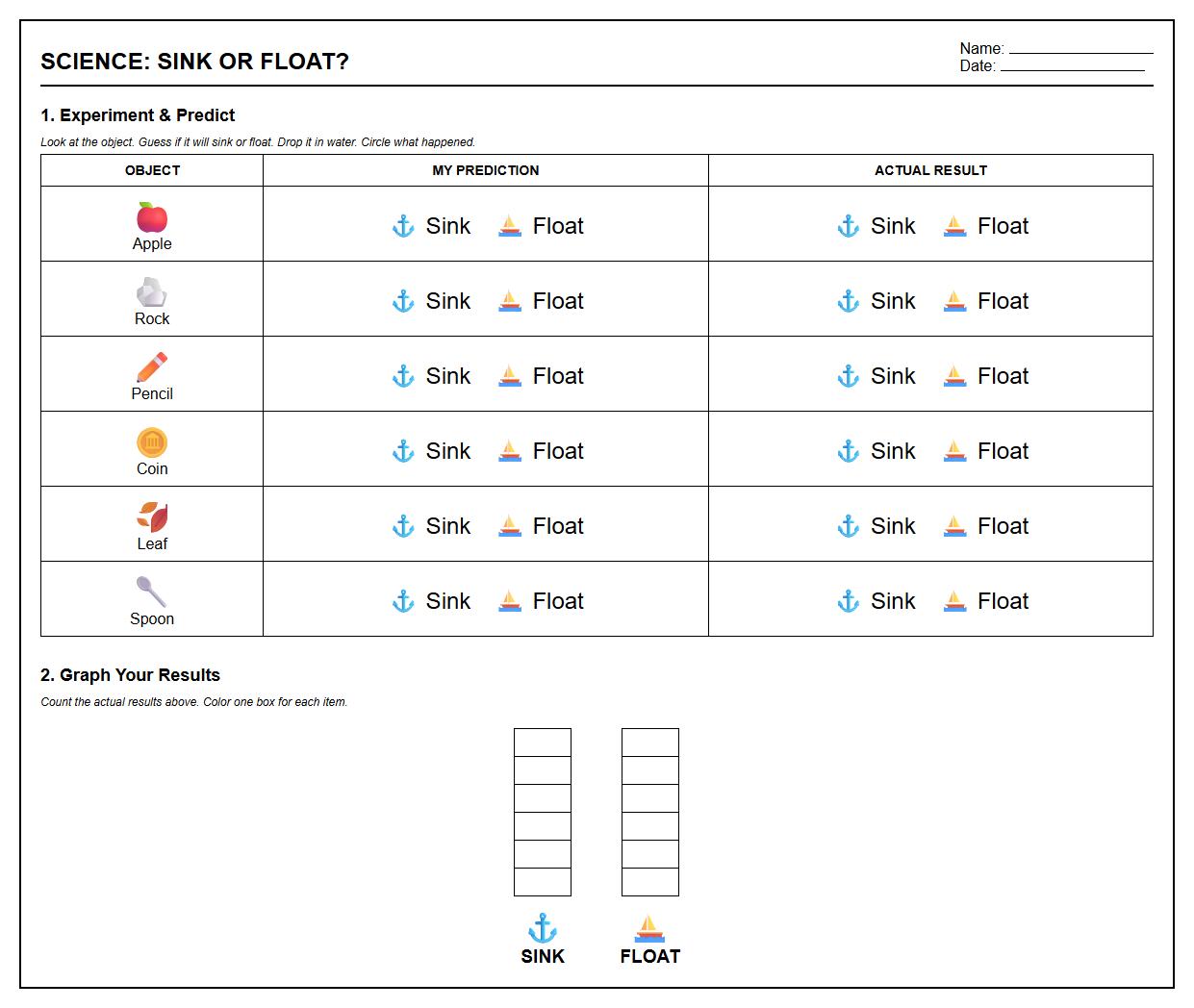
Kindergarten students develop critical observation and prediction skills through early STEM activities like the Sink or Float Data Recording Worksheet. Hands-on experiments encourage young learners to classify objects based on their buoyancy while practicing data recording and analysis. Explore the available worksheets to inspire curiosity and foundational scientific thinking in your classroom.
Materials Tested in the Sink or Float Activity
During the sink or float activity, we tested a variety of common household objects such as a plastic spoon, a metal coin, a cork, a rubber ball, and a small piece of sponge. These materials were chosen because they are safe and easy for kindergarten children to handle. This variety helps children explore different textures and densities. Using diverse materials sparks curiosity and engagement throughout the activity.
Objects That Sank in the Water
Objects that sank included the metal coin and the plastic spoon, which went to the bottom of the container quickly. Their materials are denser than water, causing them to sink. Identifying these objects helps children understand the concept of weight and density in a practical way. It also leads to discussions about why some materials are heavier than others.
Objects That Floated on the Water
The cork, rubber ball, and sponge all floated, staying on the surface of the water. These objects are less dense or have air trapped inside, which helps them stay afloat. Observing floating objects introduces children to buoyancy and how some materials interact differently with water. This hands-on experience encourages careful observation and prediction skills.
Recording Sink or Float Results
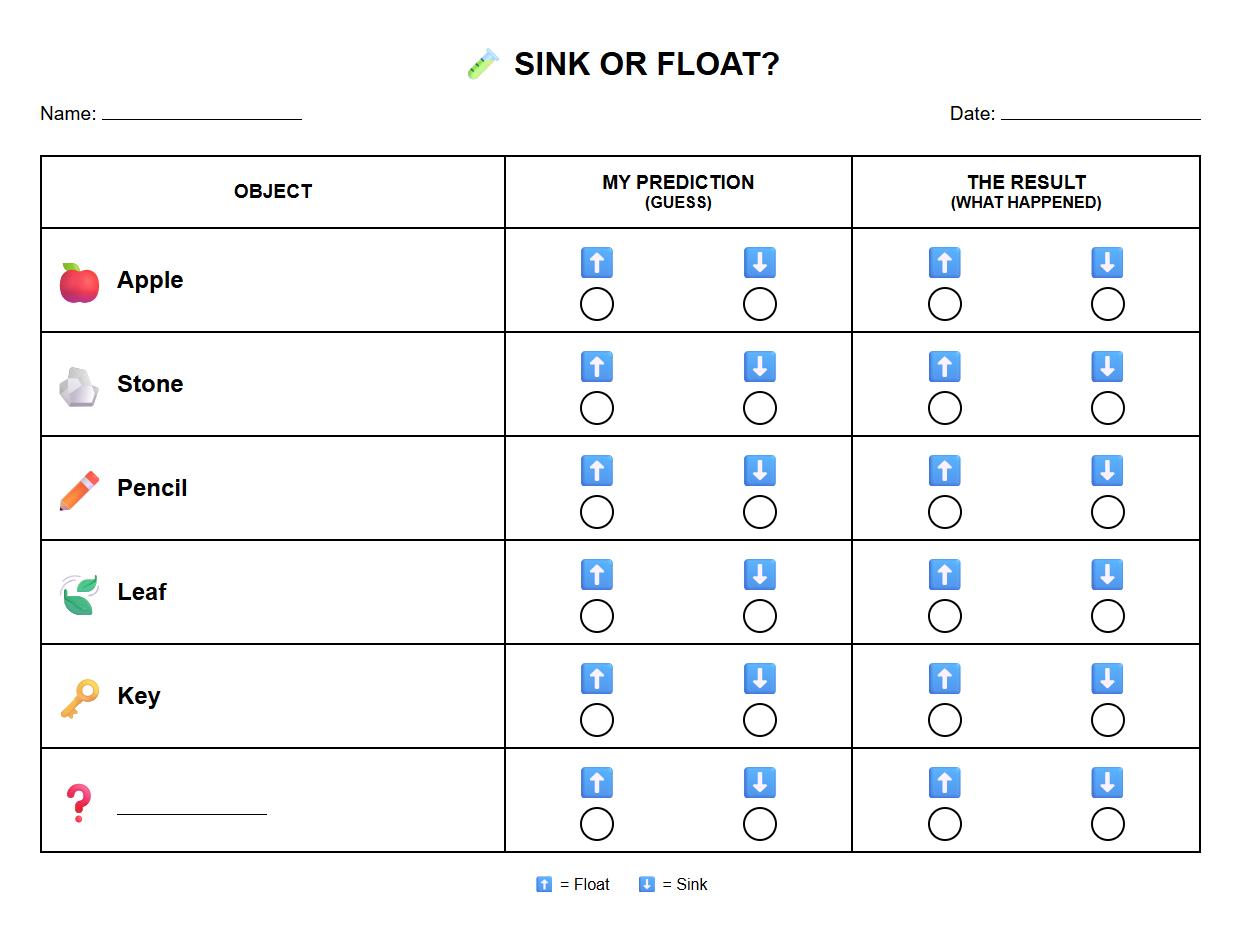
Results were recorded using a simple chart, with columns for the object name and whether it sank or floated. Children helped mark the results with stickers or coloring, making the documentation process interactive and fun. Using visual aids reinforces learning and helps parents and teachers track the experiment outcomes easily. Clear record-keeping also encourages scientific thinking and organization.
Surprising Results in the Sink or Float Activity
Some children were surprised that the sponge floated even though it feels heavy when dry. This shows how the material's structure and trapped air affect buoyancy. Discussing surprises creates excitement and helps deepen understanding by questioning assumptions. It also encourages children to think critically and ask more questions.
Meaning of an Object Floating
If an object floats, it means its density is less than that of water, or it displaces enough water to stay on the surface. Floating indicates that the object can support itself on the water without sinking. Understanding this concept introduces basic physics in a simple and relatable way. It helps children connect science to everyday experiences.
Reasons Why Some Objects Sink
Objects sink because they are heavier or denser than the water around them. Materials like metals and some plastics don't have enough buoyancy to stay afloat. Explaining this concept helps children grasp density and weight differences. This knowledge lays the groundwork for more complex scientific ideas later on.
Number of Objects That Floated in the Experiment
In our experiment, out of eight tested objects, four floated on the water's surface. This balanced result allowed children to compare sinking and floating behaviors easily. Counting and comparing results make learning measurable and concrete. It also highlights patterns in which types of objects tend to float.
Patterns Found in Items That Floated
The pattern showed that items with air inside or made of lightweight material like cork or sponge usually floated. Soft, porous materials tend to trap air, increasing buoyancy. Recognizing patterns strengthens observation skills and critical thinking. This helps children make predictions in future experiments.
New Questions After the Activity
After completing the activity, children often ask why some heavy objects can float, and why water itself doesn't sink. They might also wonder how boats stay afloat or what happens if an object is half in water and half out. Encouraging these questions fosters curiosity and a love of learning. It also opens opportunities for extending the science lesson further.


Kindergarten Science Journal: Sink or Float Hypothesis Worksheet