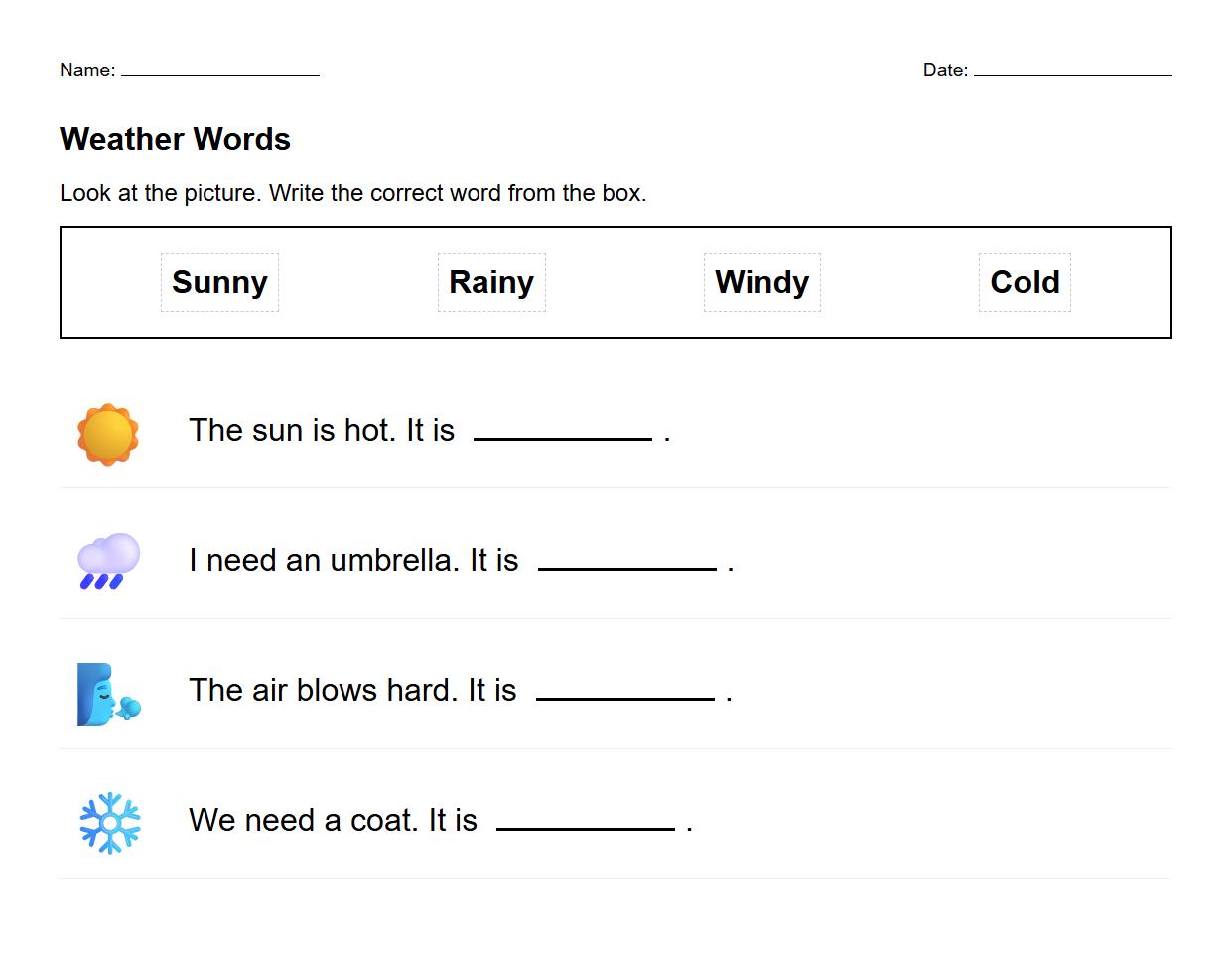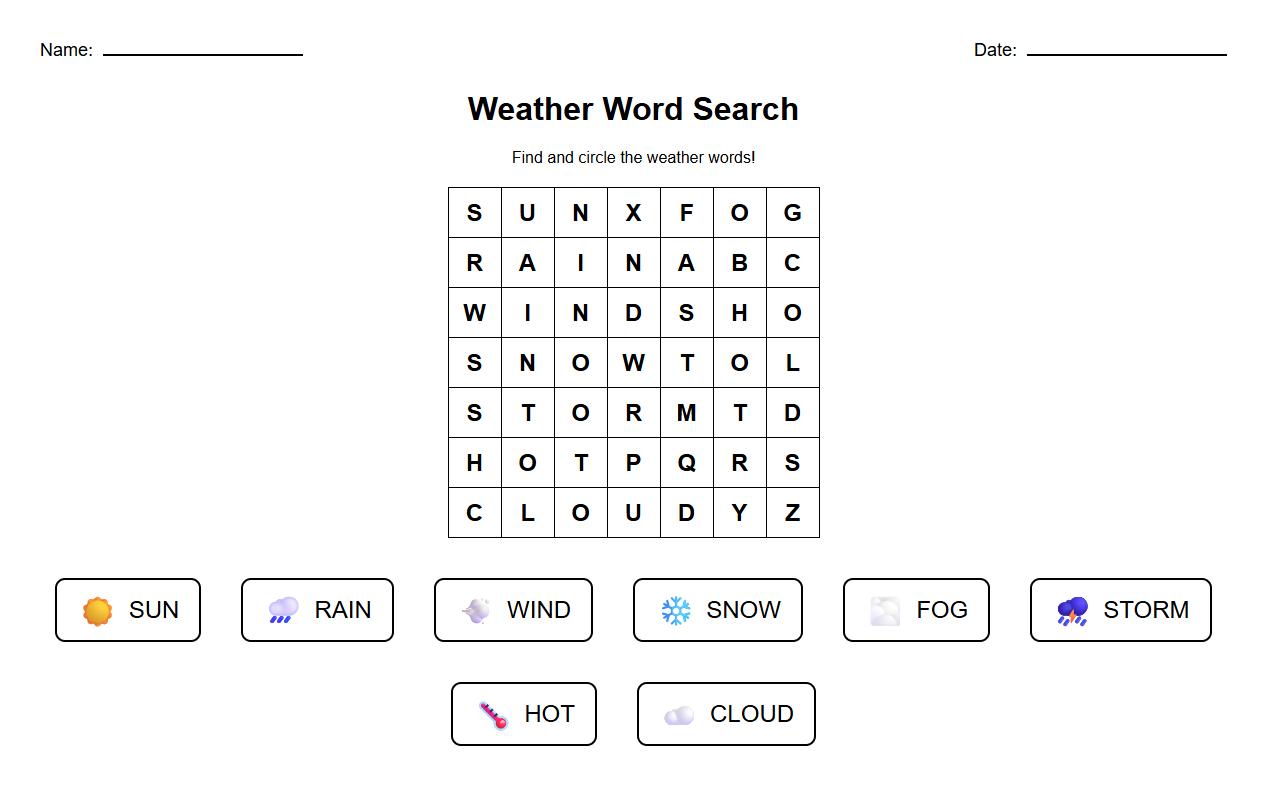
Expand your descriptive skills by mastering weather-related vocabulary with this engaging worksheet designed to enhance your language precision. Explore a variety of terms that vividly convey different weather conditions and improve your ability to express observations clearly. Check the available worksheets to start enriching your weather vocabulary today.
Describing a Clear Sky
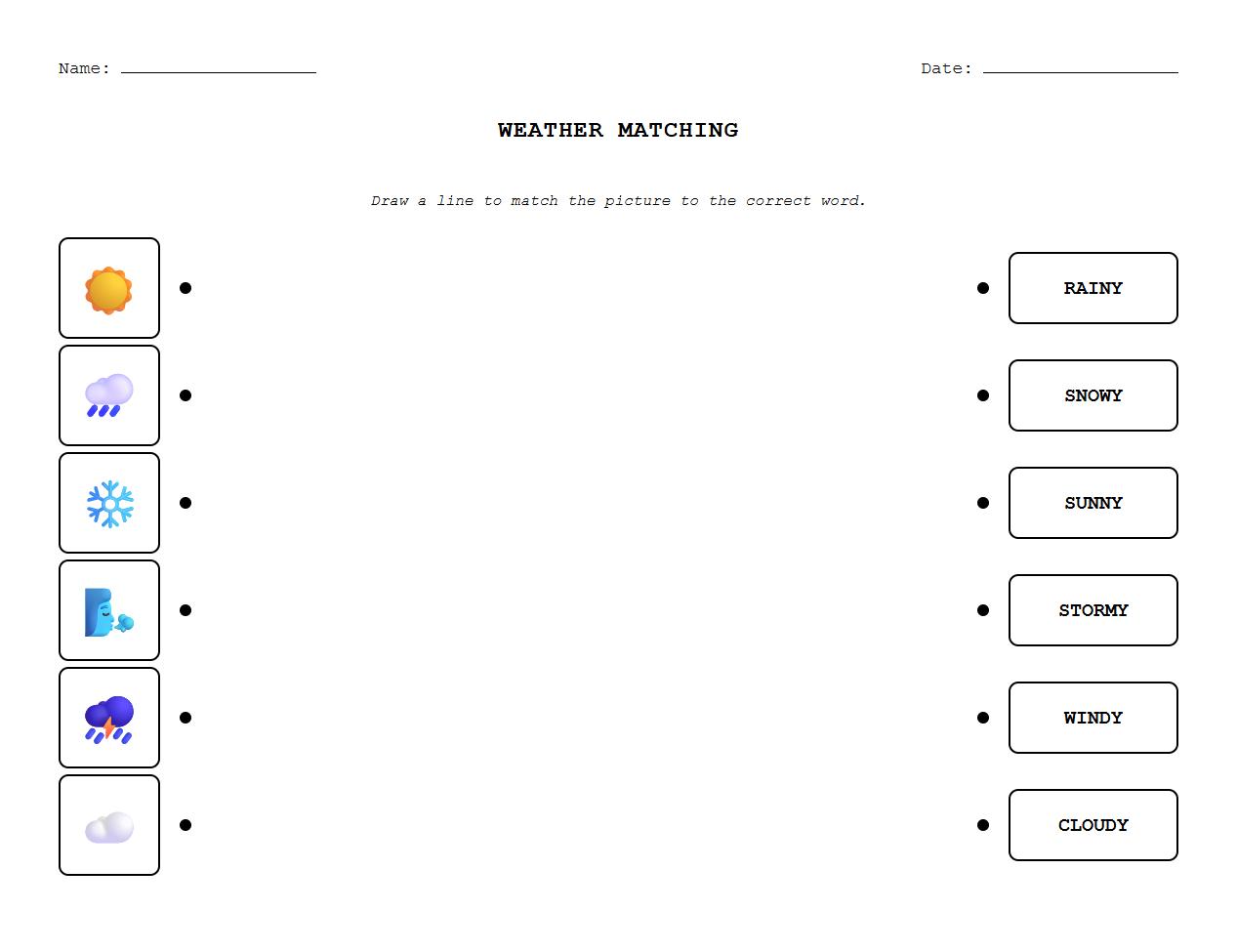
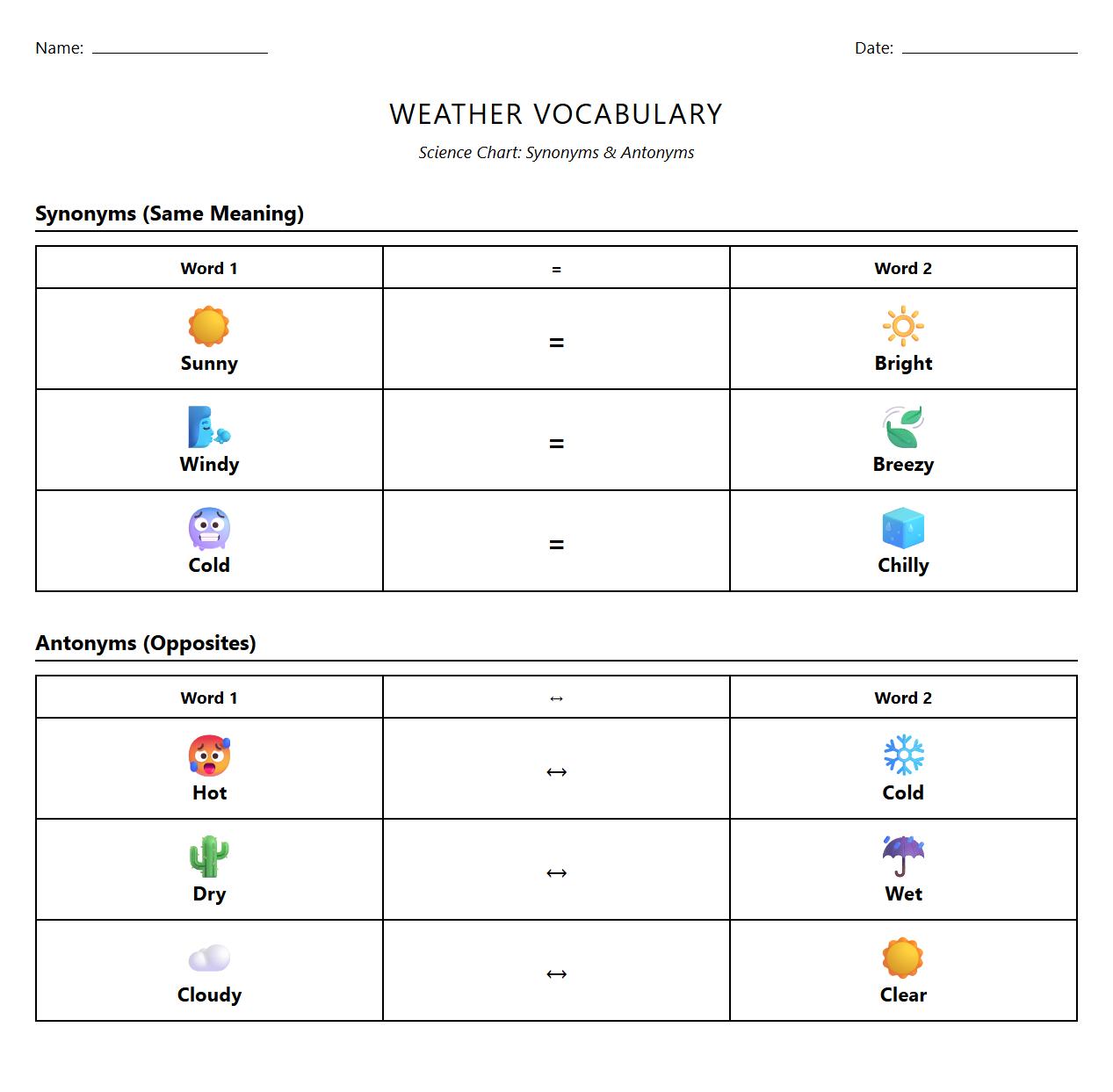
When the sky has no clouds, we say it is clear. This means the sun can shine brightly without anything blocking it. A clear sky often makes us feel happy and ready to play outdoors. Teachers and parents can encourage children to notice this type of weather to understand sky conditions.
Understanding Rain
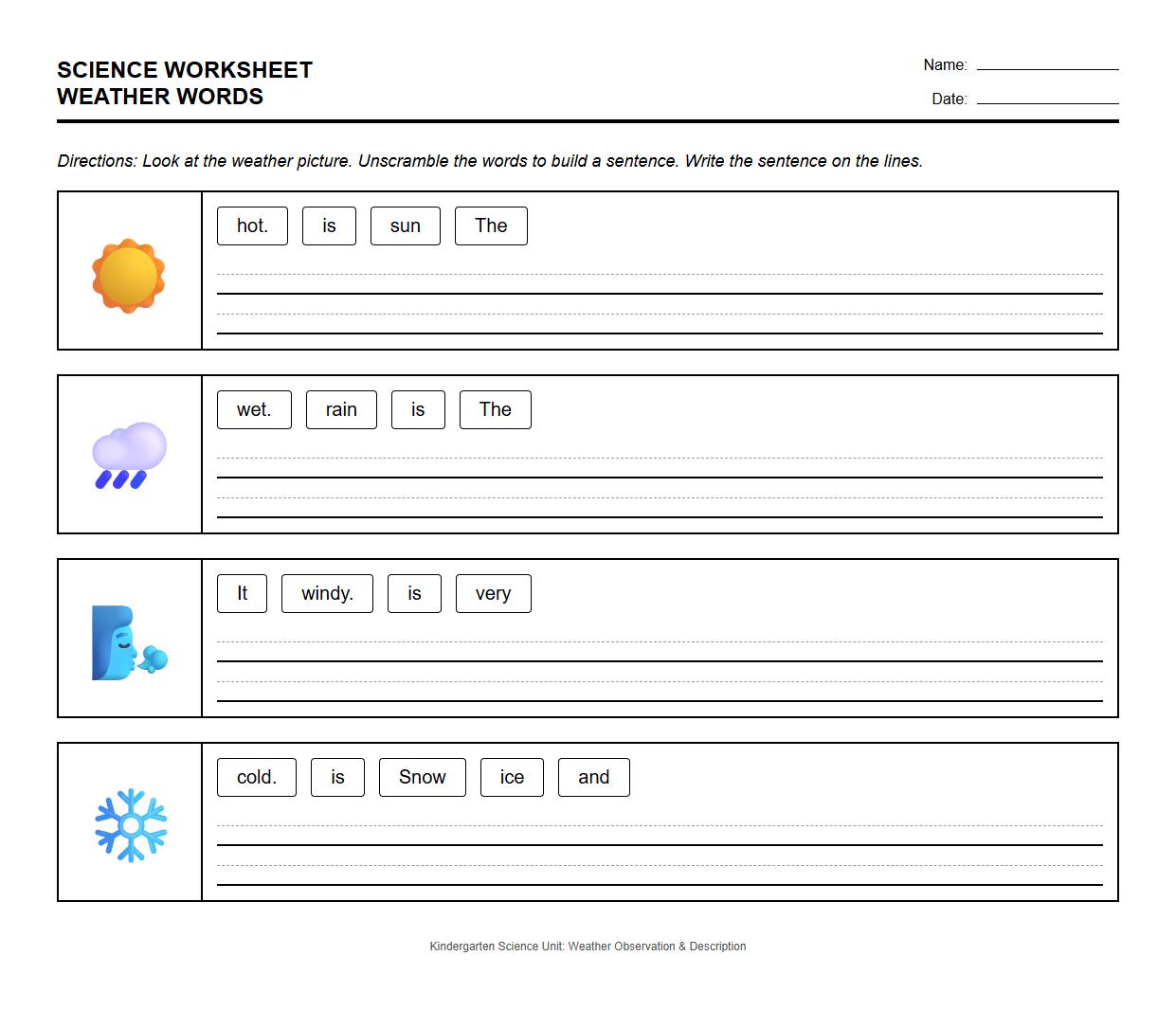
The word for water falling from the sky is rain. Rain is important because it helps plants grow and fills rivers. Children can observe rain and learn about the water cycle in simple terms. It's a great way to connect weather with nature.
Describing Snowy Weather
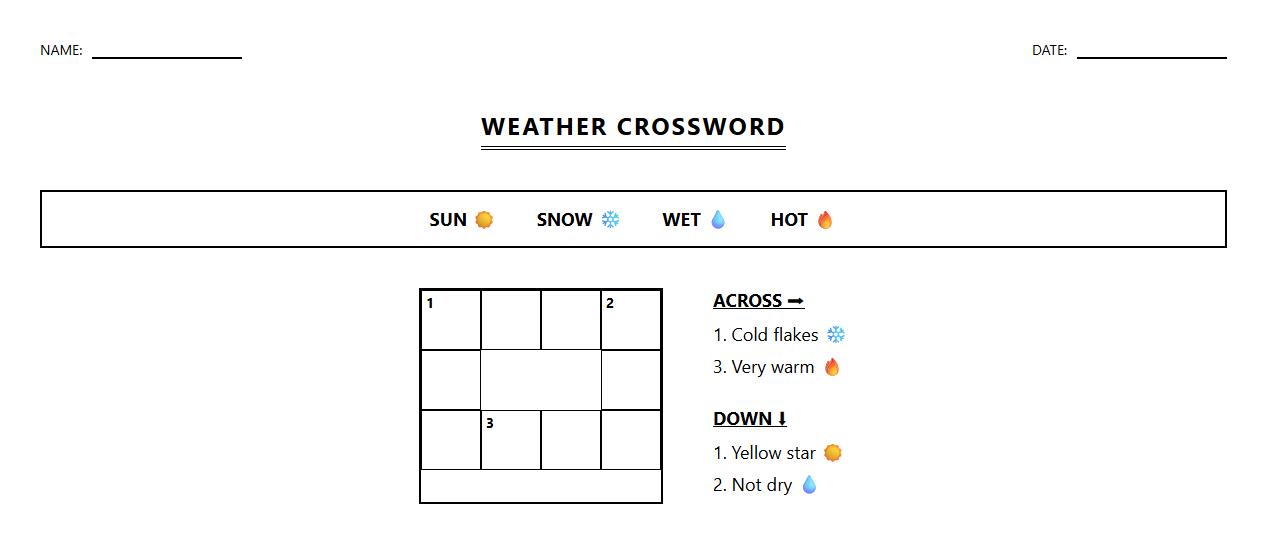
When it is very cold and white falls from the sky, we call it snow. Snow covers the ground and creates a beautiful winter scene. Kids love to play in the snow and learn about different weather conditions. Parents and teachers can use this to teach about seasons.
Bright Sunny Days
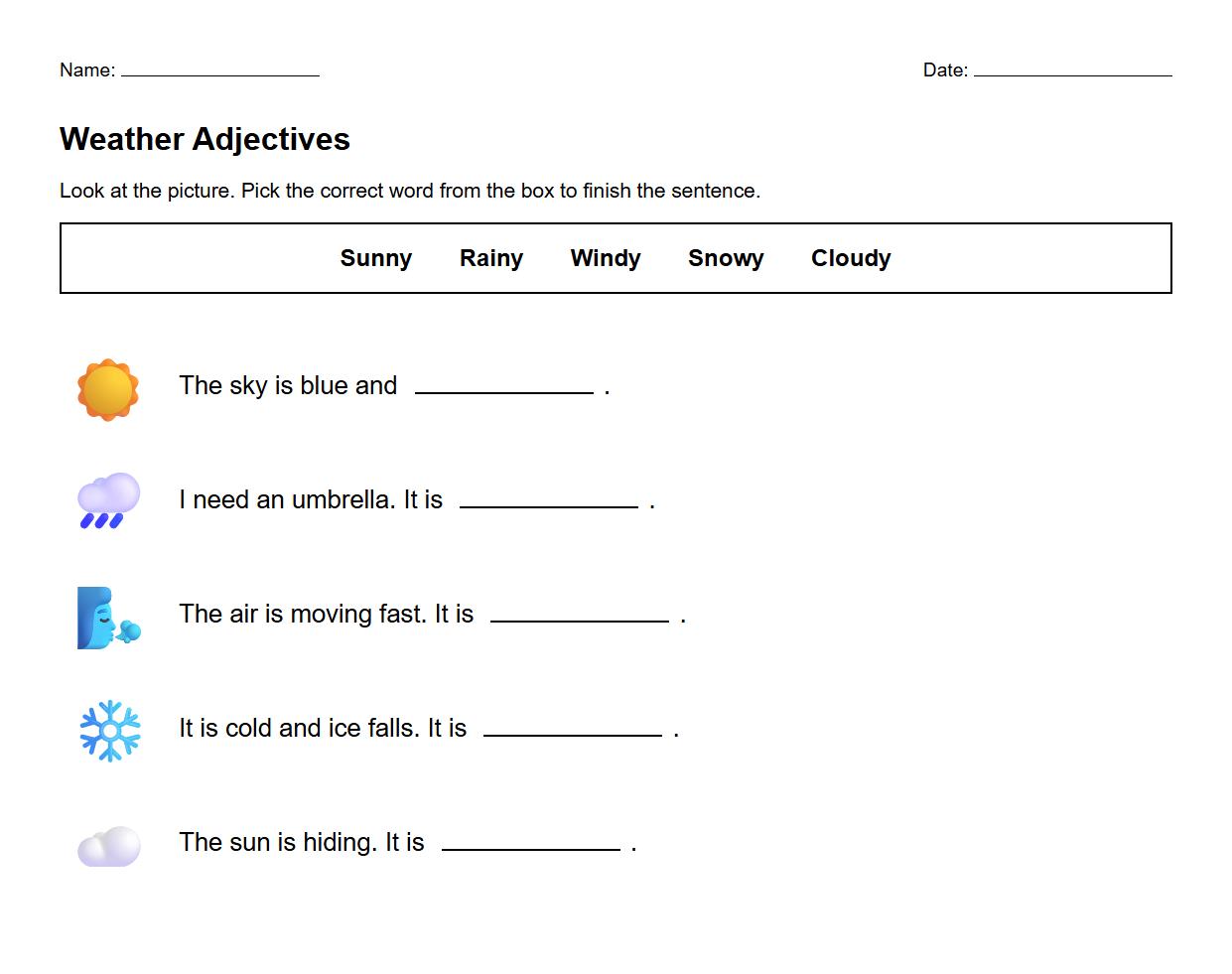
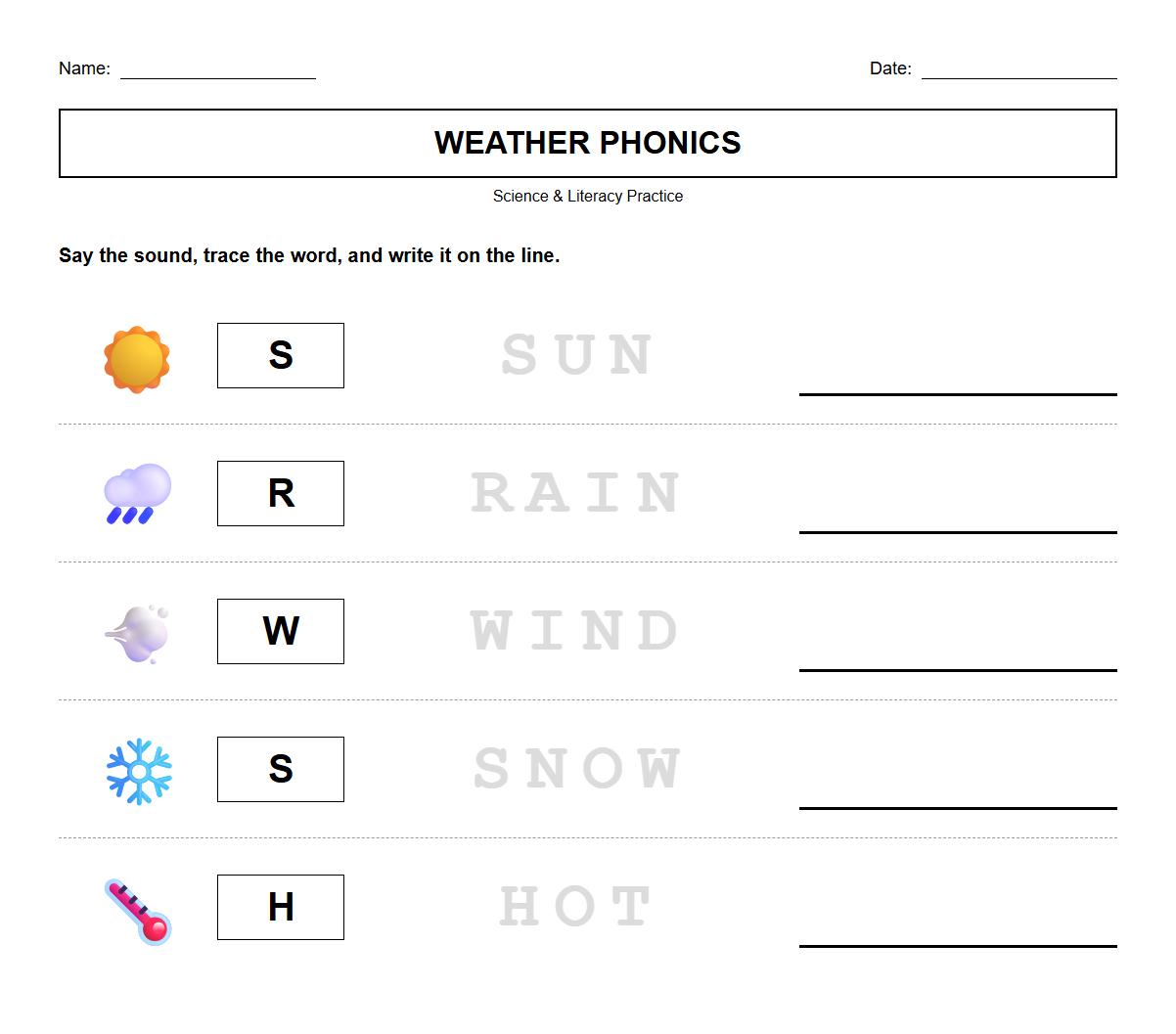
We say the sun is shining brightly on a sunny day. Sunny weather means it is warm and clear outside. This type of weather is perfect for outdoor activities and fun learning experiences. Encouraging children to describe sunny days helps build their weather vocabulary.
Strong Wind
When the wind is blowing hard, we call it windy. Windy weather can be fun or challenging depending on the strength. Children can learn to recognize windy days and how to dress accordingly. Understanding wind helps kids stay safe and comfortable outdoors.
Hot Weather
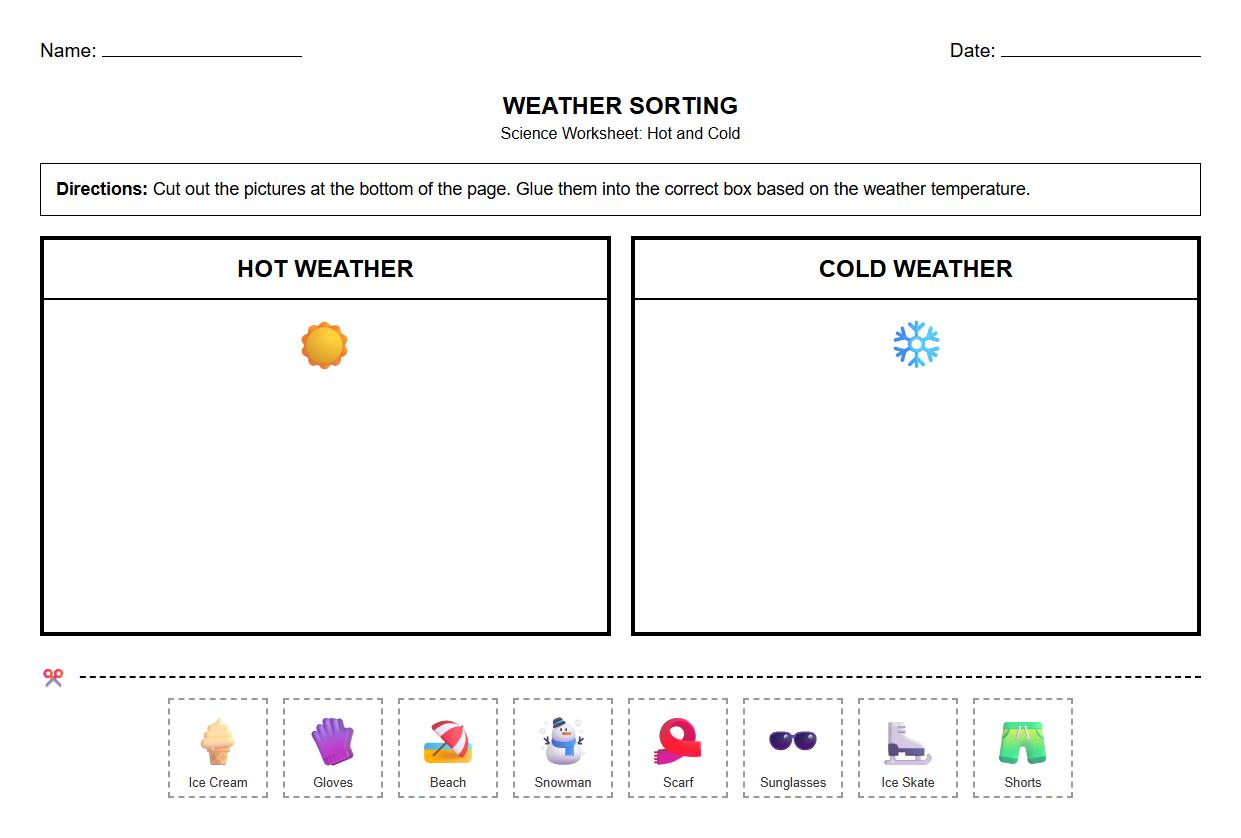
When the air feels hot outside, we describe the weather as hot. Hot weather often means it's time to drink water and play in the shade. Teaching children to recognize and respond to heat helps keep them healthy. It's important for teachers and parents to remind kids to stay cool.
Using an Umbrella
You need an umbrella when it is raining. Rainy weather means water is falling from the sky, and staying dry is important. Children learn to carry umbrellas as a practical skill in wet weather. This also helps them understand how to prepare for different weather conditions.
Cloudy Skies
When there are many clouds in the sky, we say it is cloudy. Cloudy weather can make the day look gray and darker. Teaching children to describe cloudy days helps them notice changes in the environment. It also prepares them for possible rain or cooler weather.
Raincoat Weather
Weather that makes you want to wear a raincoat is called rainy. Rainy days usually mean water is falling or the air is damp. Having a raincoat keeps children warm and dry outside. Parents and teachers can encourage children to dress for the weather to stay comfortable.
Mild Weather
A day when the weather is not too hot and not too cold is called mild. Mild weather is comfortable for playing outside and wearing light clothes. It's a great time for children to enjoy learning without weather disruptions. Understanding mild weather helps kids describe different temperature experiences.


Interactive Worksheet for Exploring Extreme Weather Types