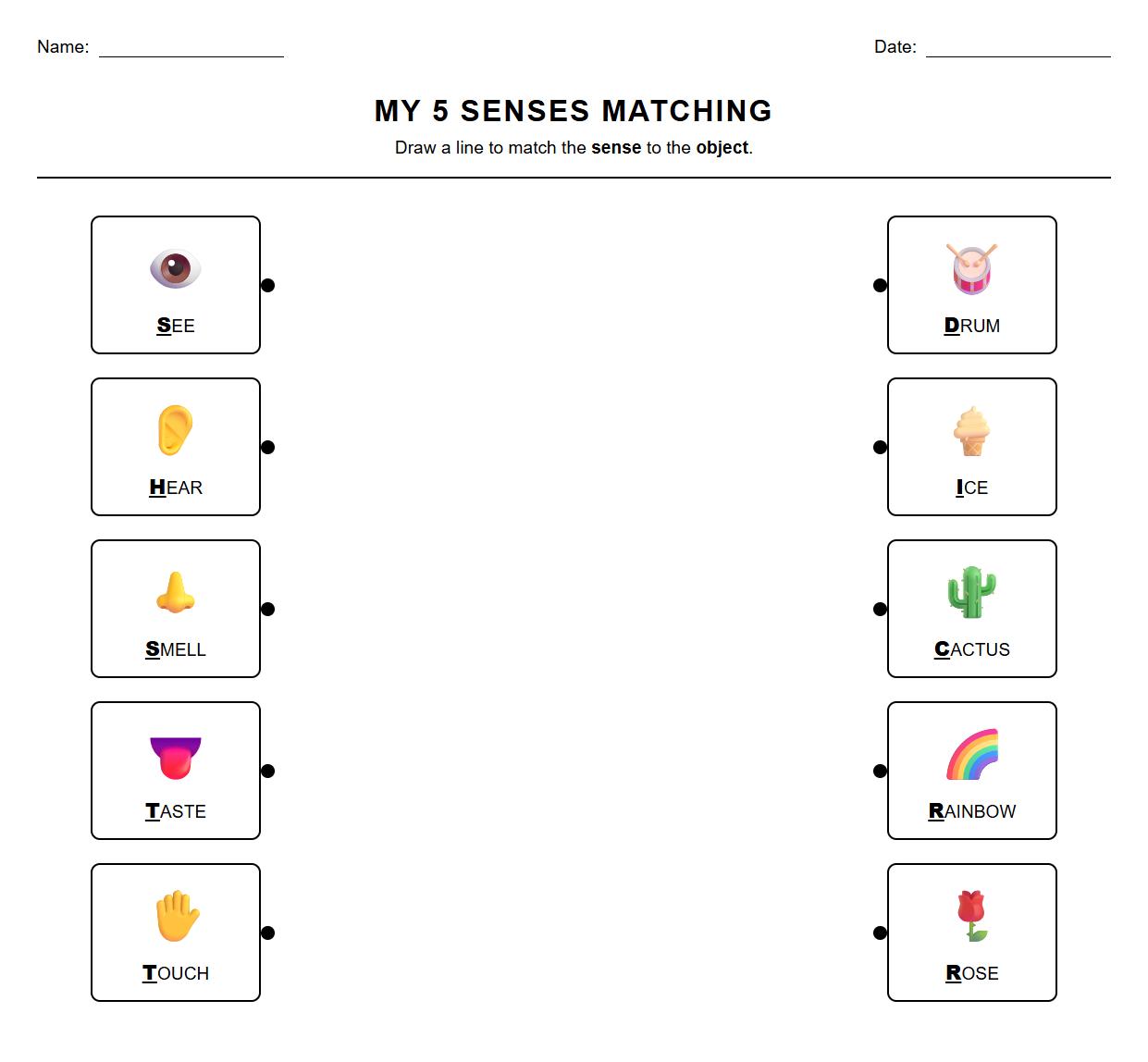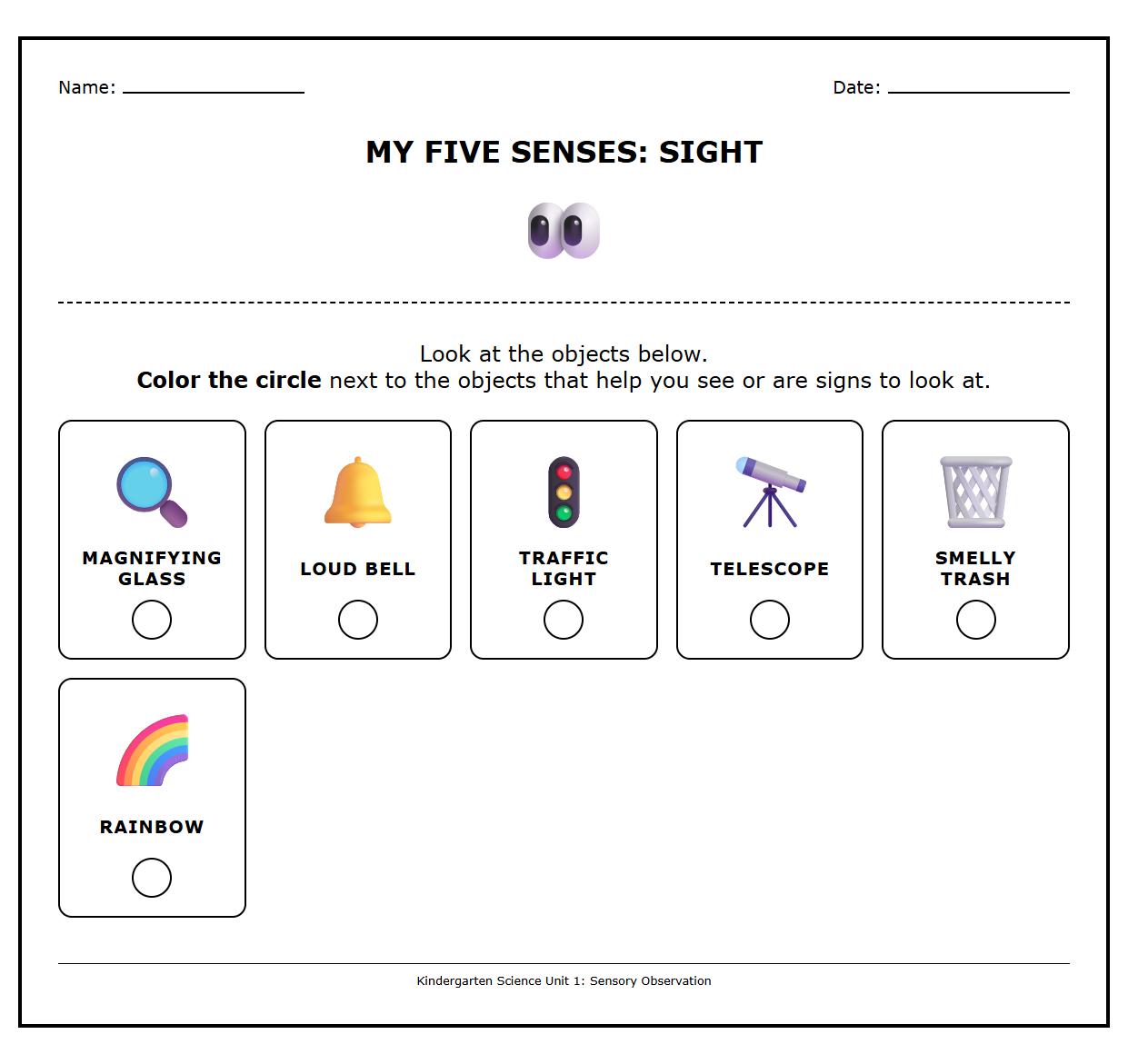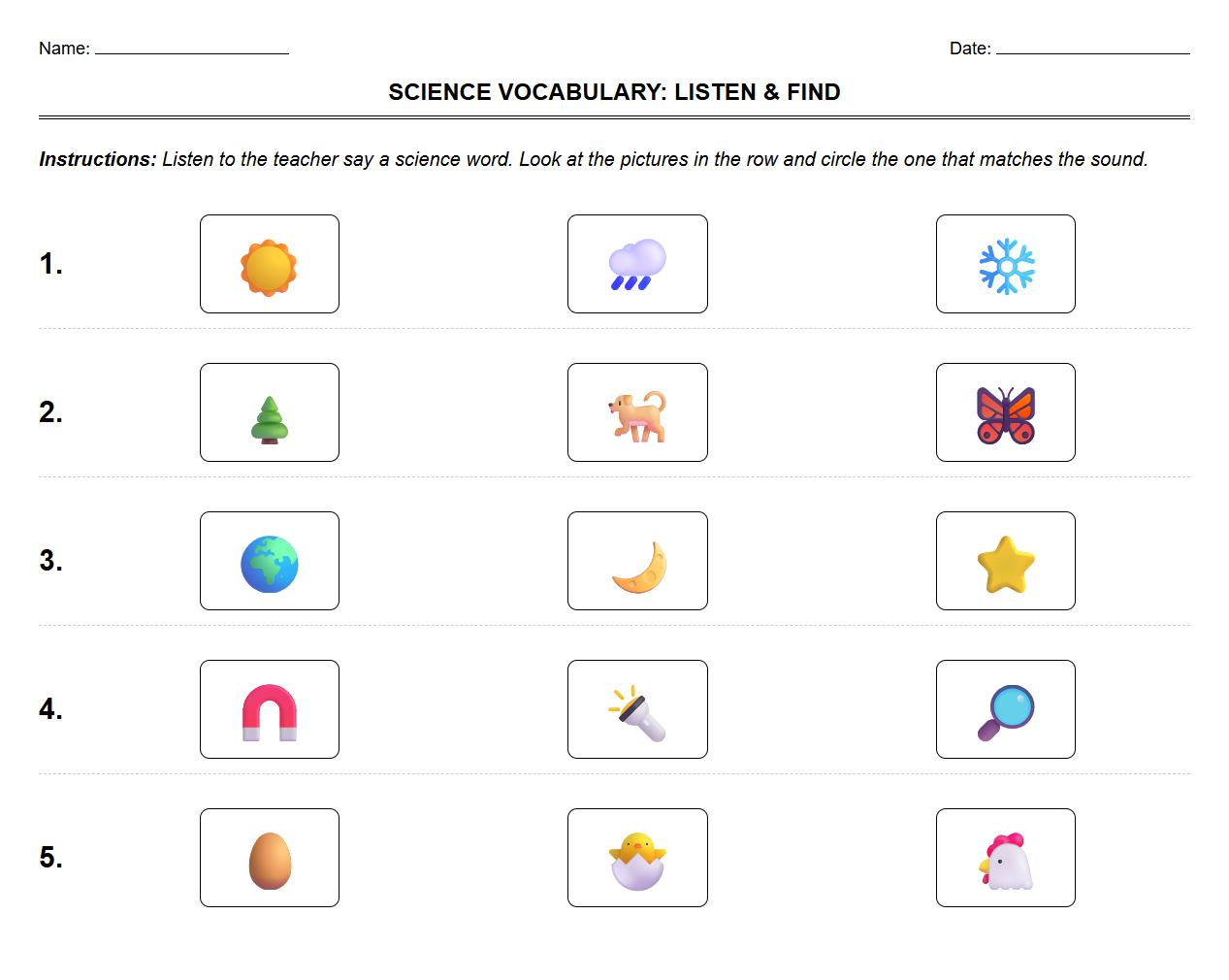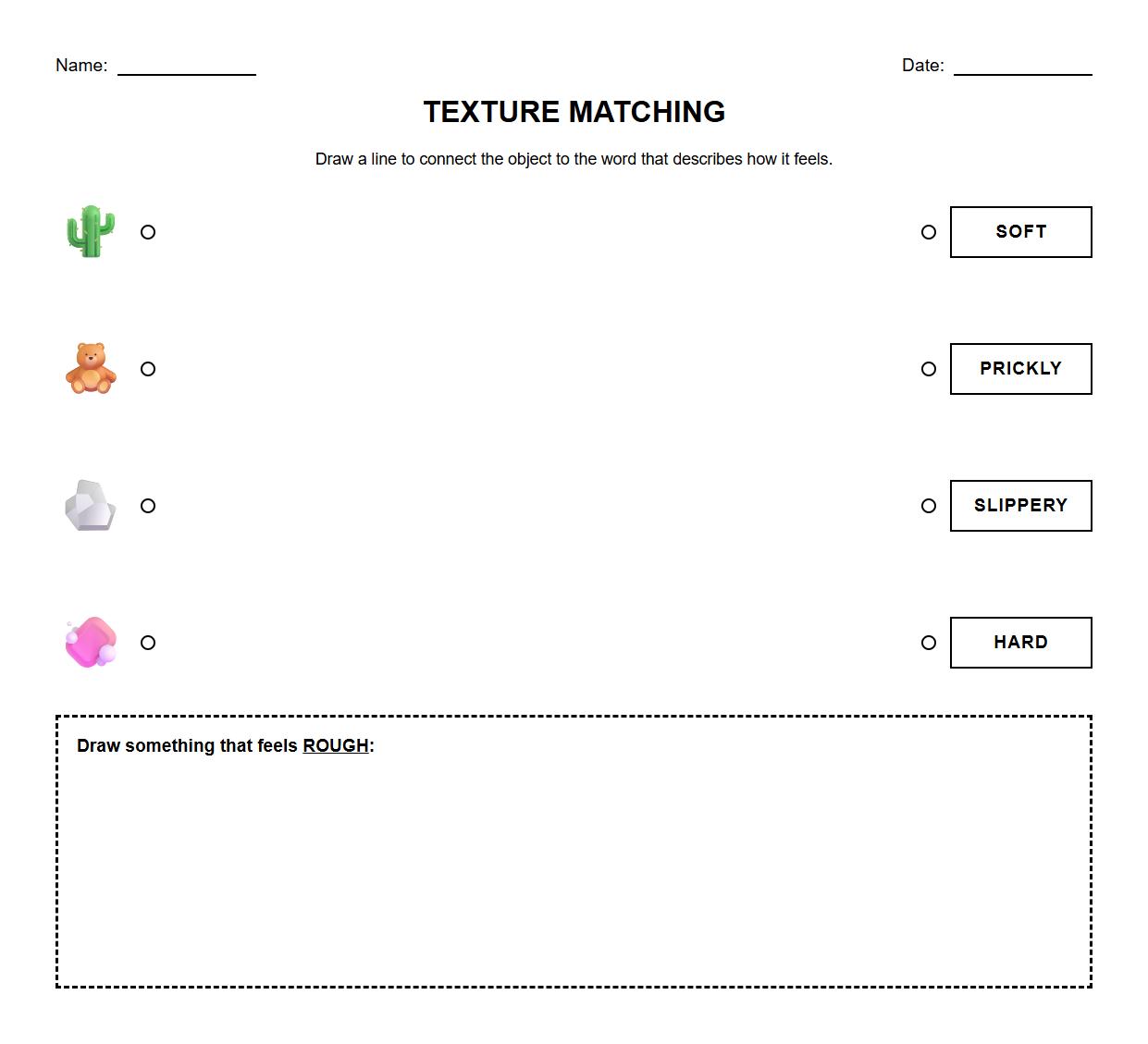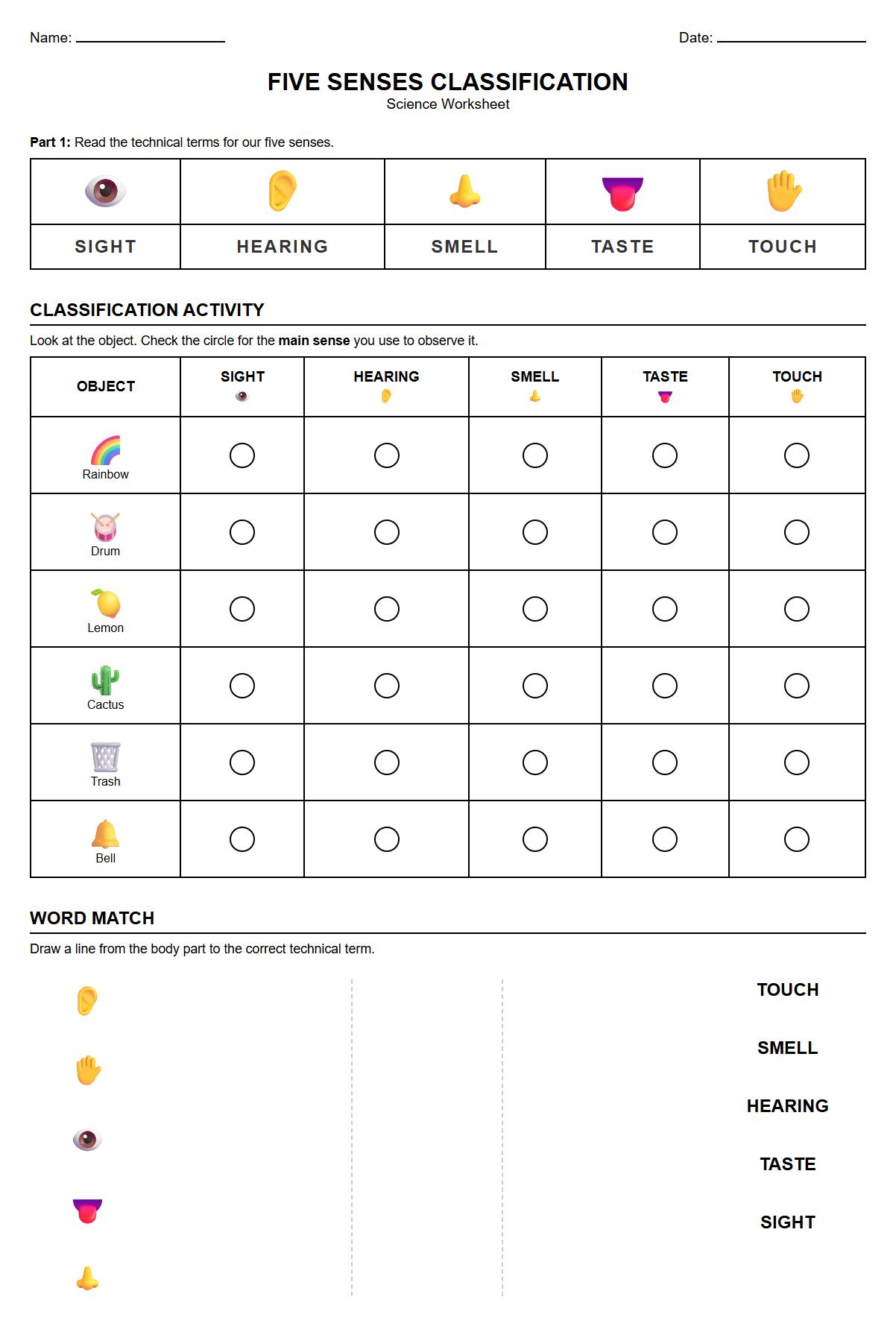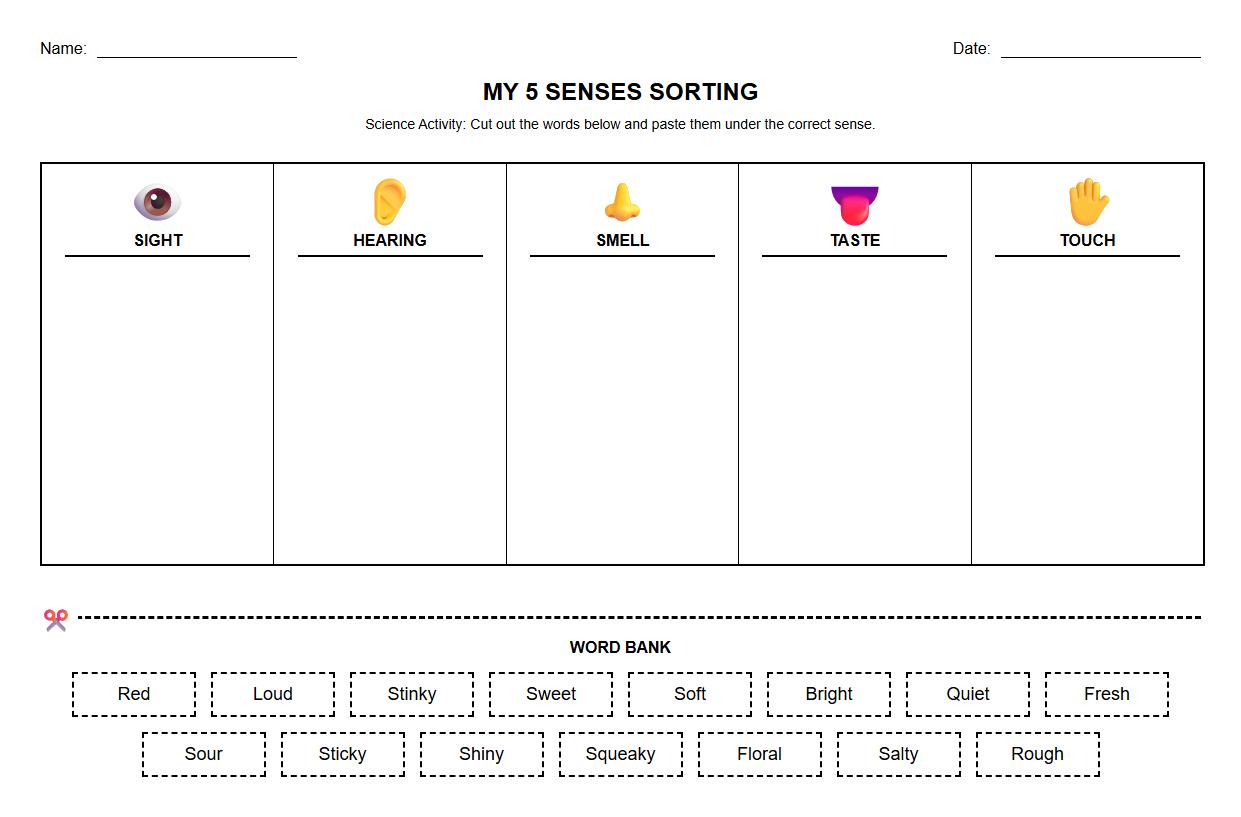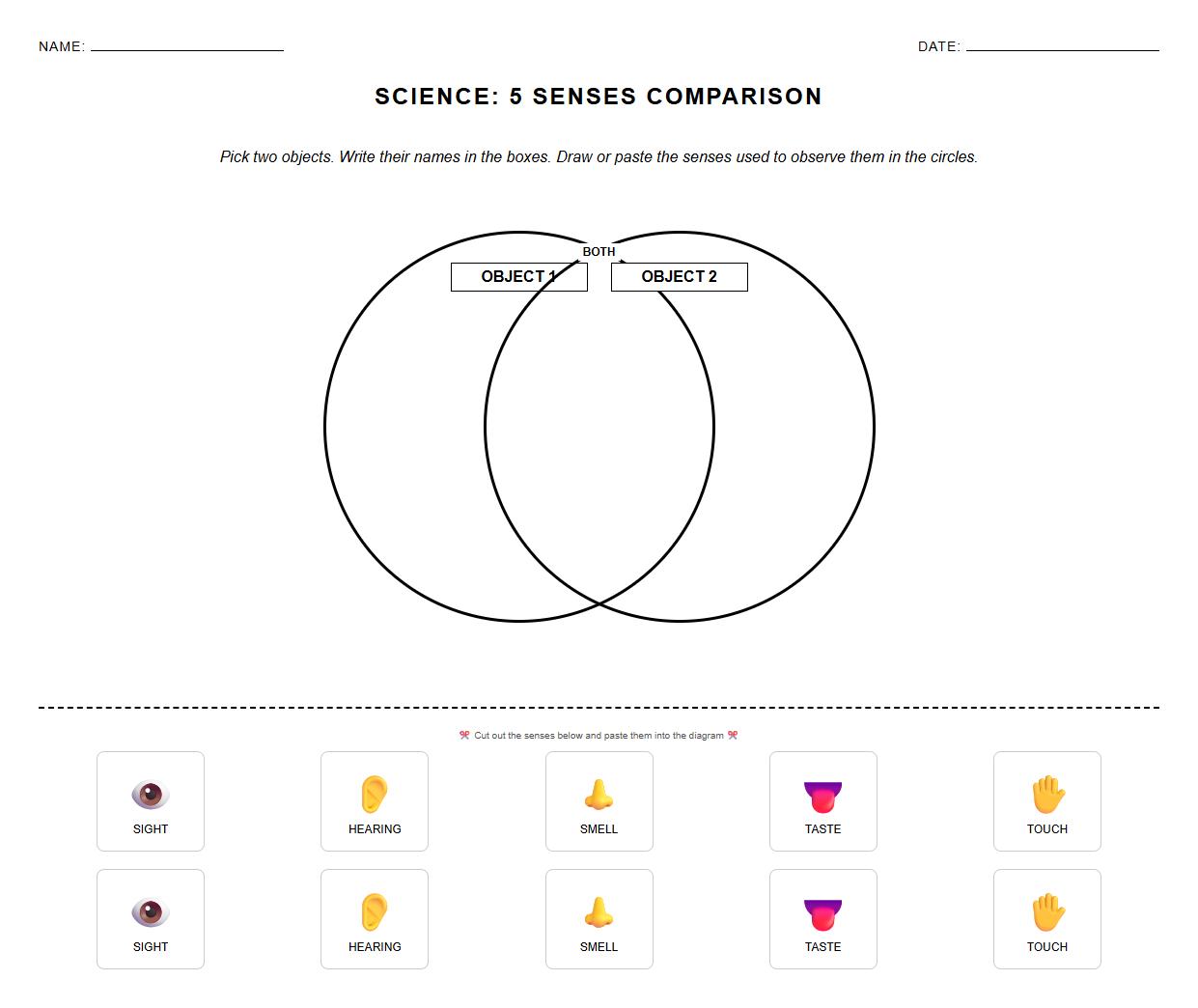
Developing sensory vocabulary enhances kindergarten students' ability to describe and understand the world through sight, sound, touch, taste, and smell. Engaging activities in this worksheet promote awareness of the five senses while expanding descriptive language skills. Explore the range of worksheets available to support sensory vocabulary development in young learners.
Which sense do we use to smell a flower?
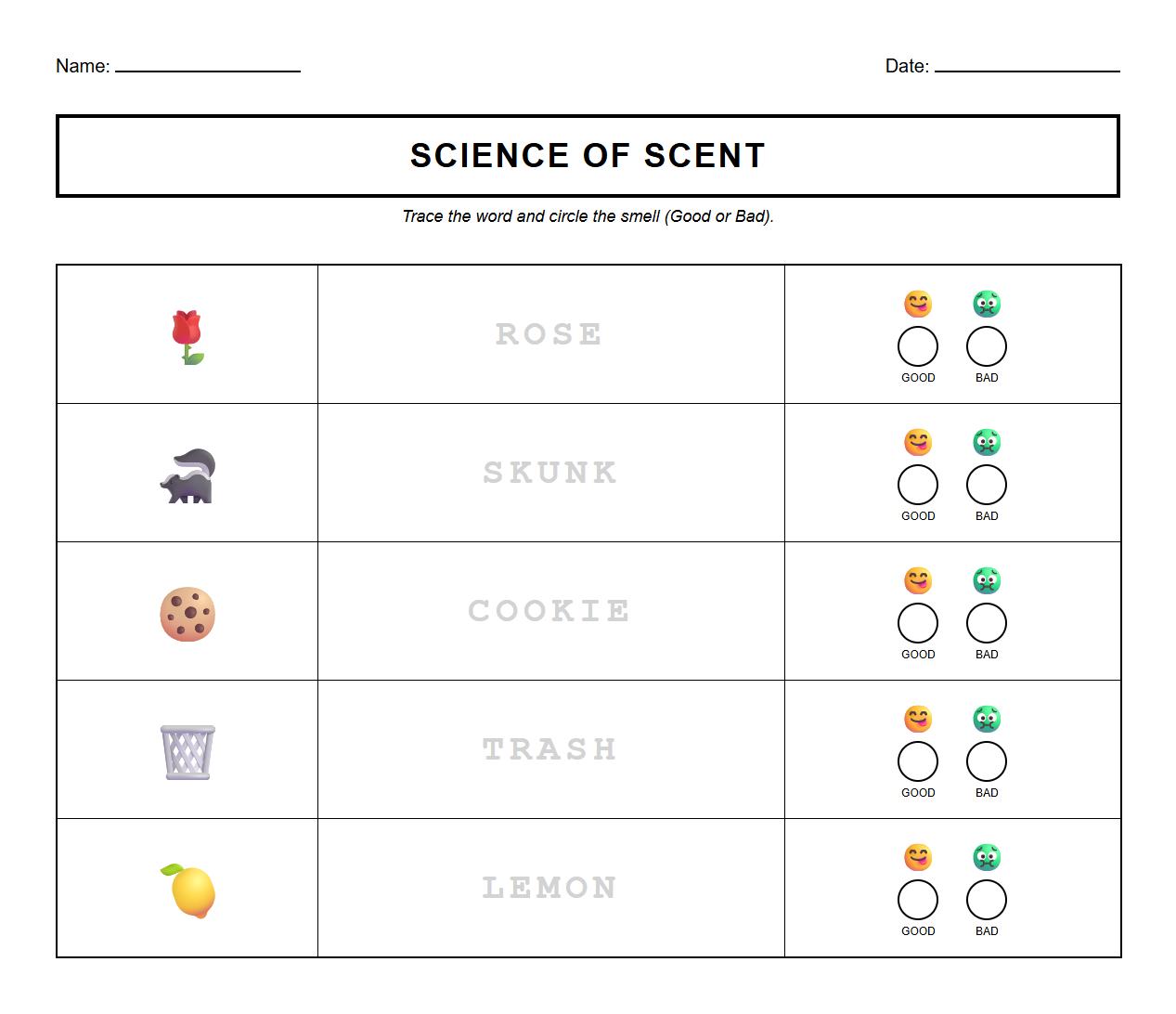
We use our sense of smell to enjoy the fragrance of a flower. This sense helps us detect different scents in the environment. Encourage children to smell flowers and describe the scent to enhance their awareness. It is a key part of exploring the world around them.
What do your eyes help you do?
Our eyes help us see and understand the world. They enable us to recognize colors, shapes, and movements. Teaching children to use their eyes to observe surroundings supports their learning and curiosity. Seeing is essential for daily activities and safety.
Which body part do you use to touch a soft pillow?
We use our hands to touch and feel different textures like a soft pillow. This sense of touch helps us identify whether something is soft, rough, warm, or cold. Activities that involve touching different materials improve sensory skills in children. It connects them physically and emotionally to their environment.
Name something you can hear in the classroom.
In the classroom, you might hear your teacher's voice, classmates talking, or the sound of pencils writing. Our sense of hearing helps us listen carefully and follow instructions. Identifying sounds develops attention and communication skills in young learners. It is important for creating a friendly learning atmosphere.
What taste do you get from eating a lemon?
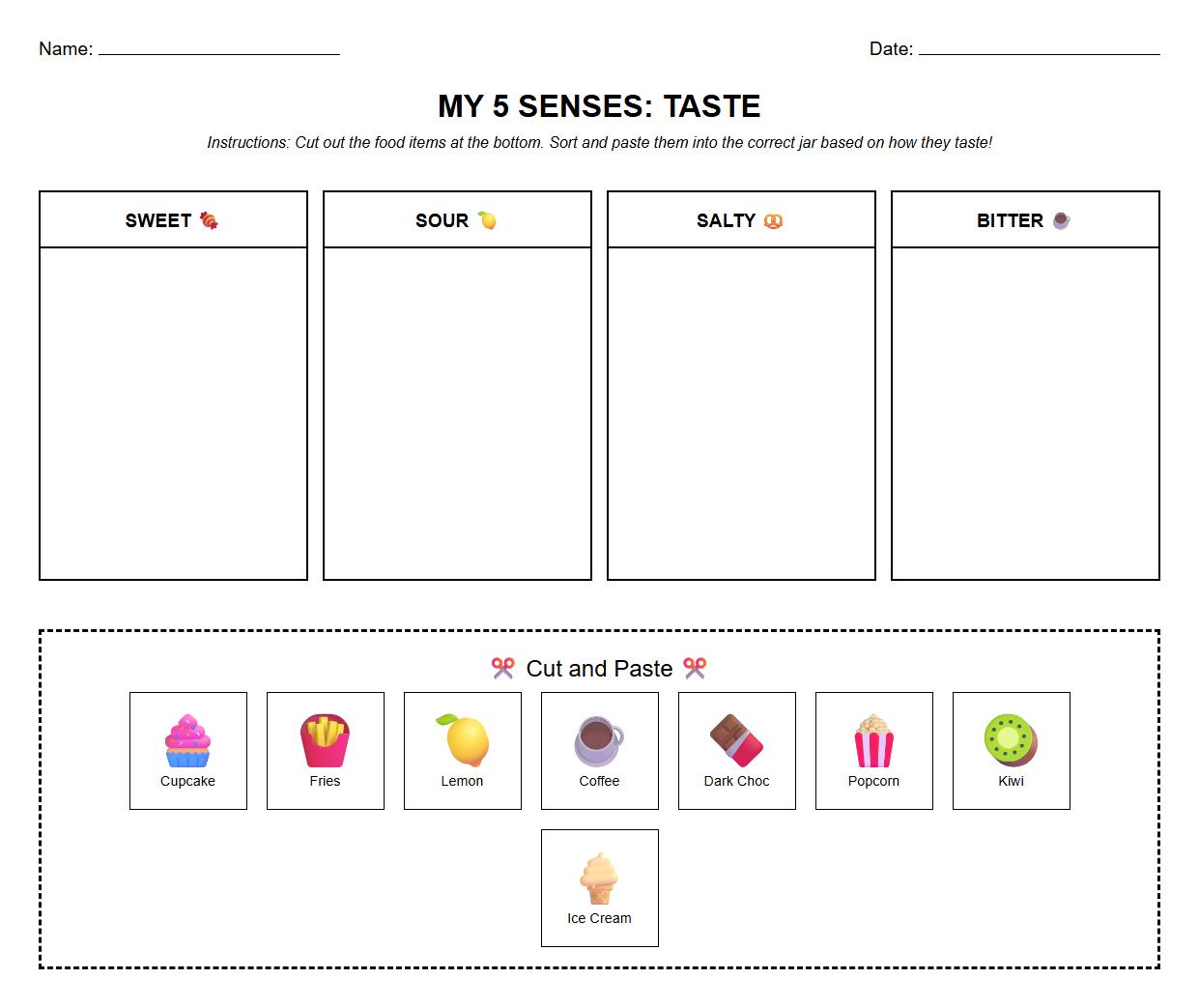
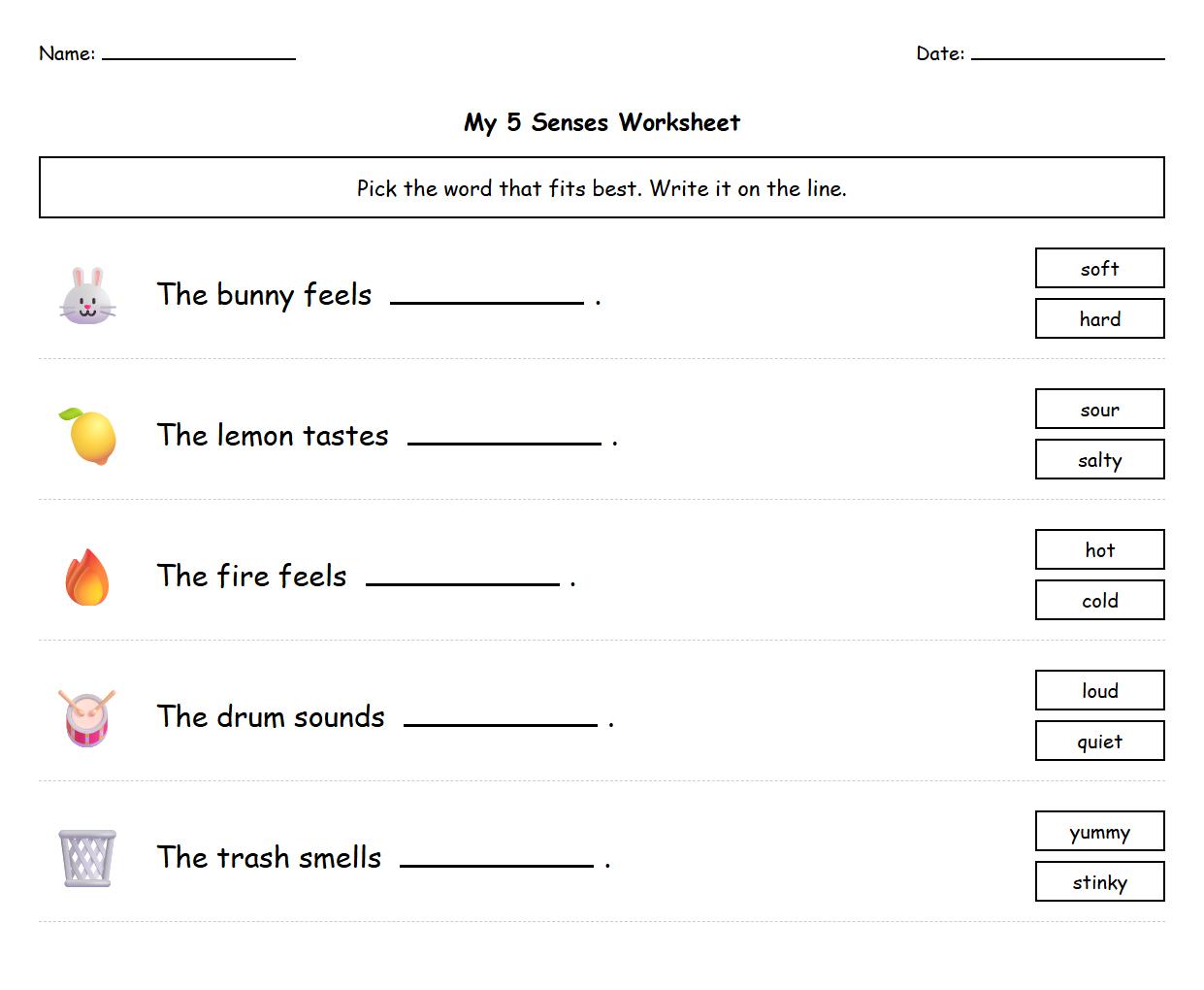
Eating a lemon gives a sour taste that awakens the taste buds. Our sense of taste helps us enjoy different flavors like sweet, sour, salty, and bitter. Introducing children to diverse tastes can broaden their food preferences and nutrition knowledge. Tasting activities are fun and educational.
Which sense helps you feel if something is hot or cold?
The sense of touch helps us feel temperature differences like hot or cold. Using hands or skin, we can protect ourselves from harm by recognizing dangerous heat or cold. Teaching children about temperature through touch encourages safety awareness. This sense is crucial for everyday comfort and care.
What sound does a dog make?
A dog makes a barking sound, which we can hear with our ears. Recognizing animal sounds helps children connect language and nature. It also promotes listening skills and imaginative play. Animal noises are an enjoyable way to learn sensory concepts.
What can you see when you look out the window?
Looking out the window, you might see trees, cars, people, and buildings. Using our eyes to observe the outside world builds curiosity and awareness. It offers opportunities to discuss seasons, weather, and community life with children. Visual exploration enriches learning experiences.
Name something you can taste at lunchtime.
At lunchtime, you can taste fruits, sandwiches, or soup. Our sense of taste helps us enjoy different foods and learn about healthy eating. Encouraging diverse and balanced meals supports children's growth and development. Taste is an important part of everyday life and culture.
How can you tell if a ball is rough or smooth?
You can tell if a ball is rough or smooth by using your sense of touch. Feeling with your hands allows you to identify texture and surface quality. This sensory activity promotes fine motor skills and descriptive language in children. Exploring textures enhances their understanding of objects.


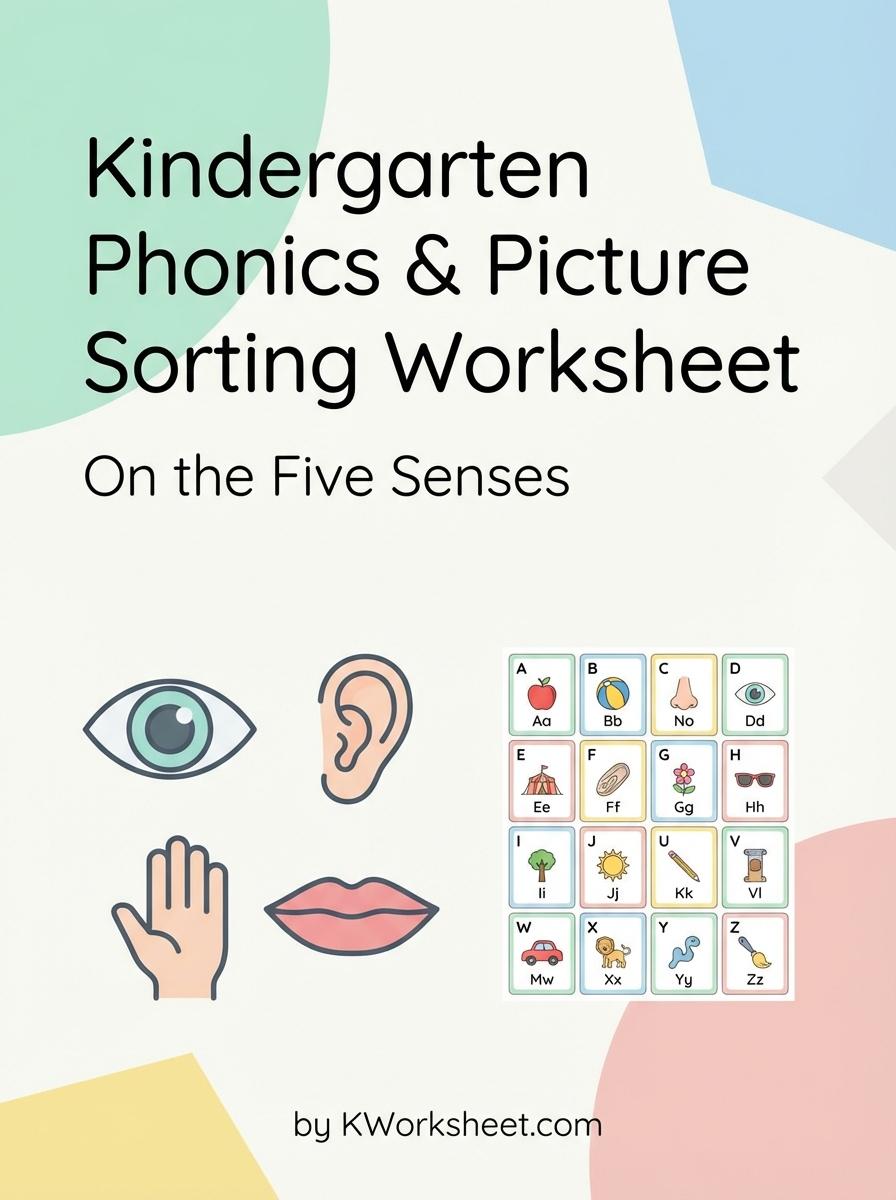
Kindergarten Phonics and Picture Sorting Worksheet on the Five Senses