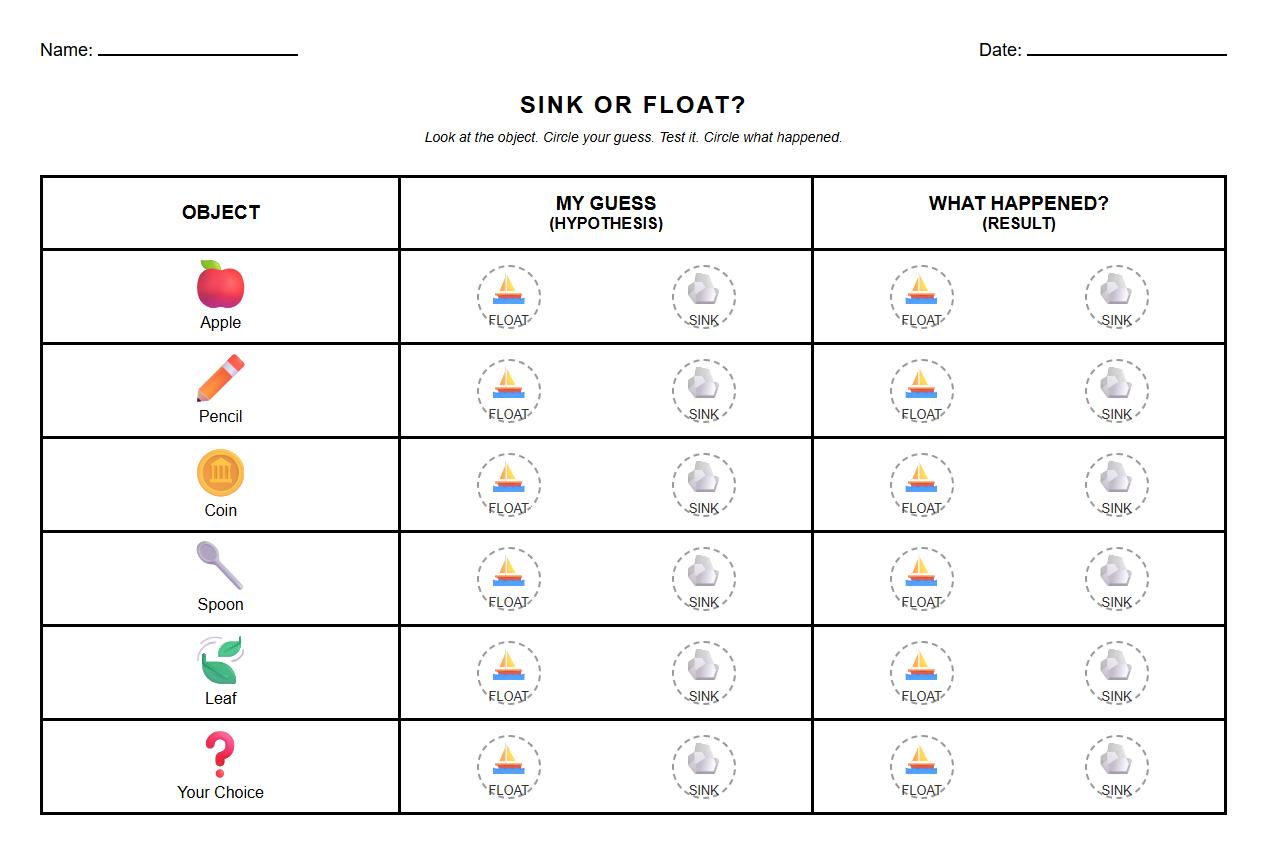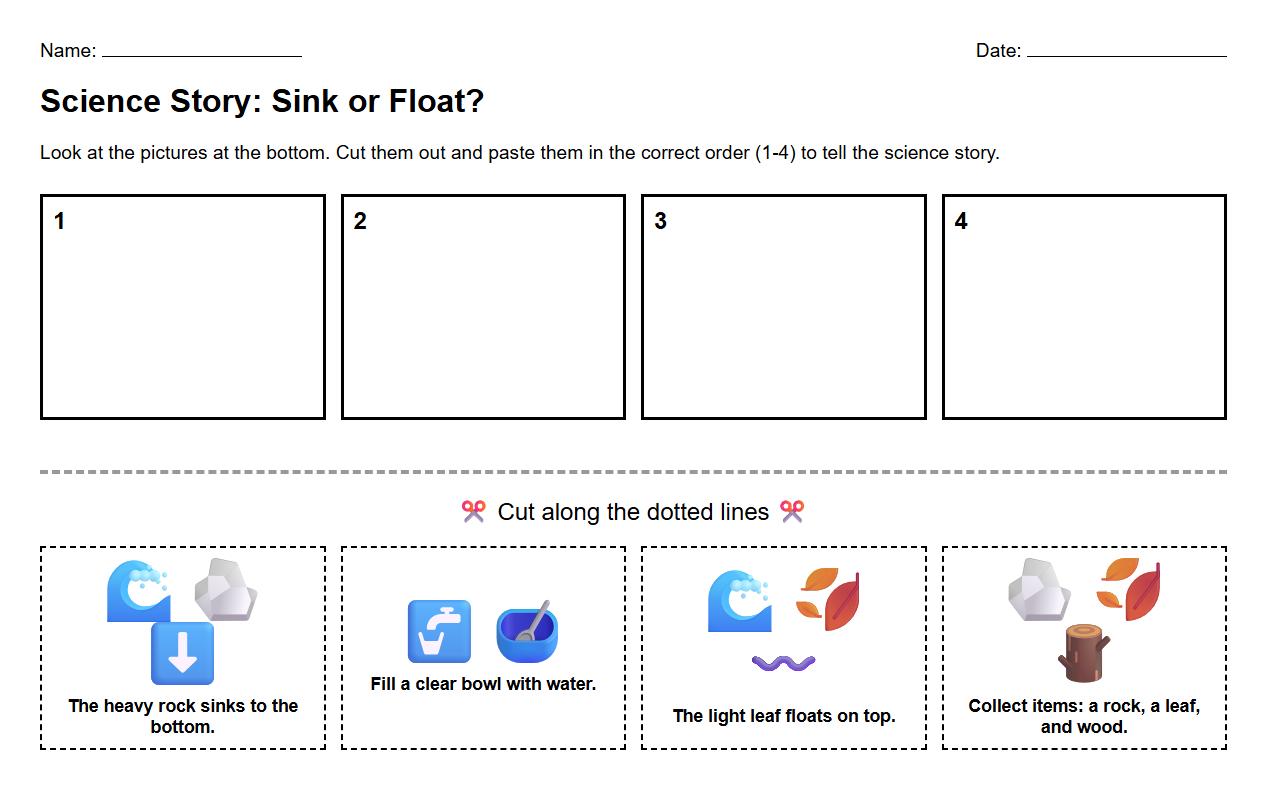
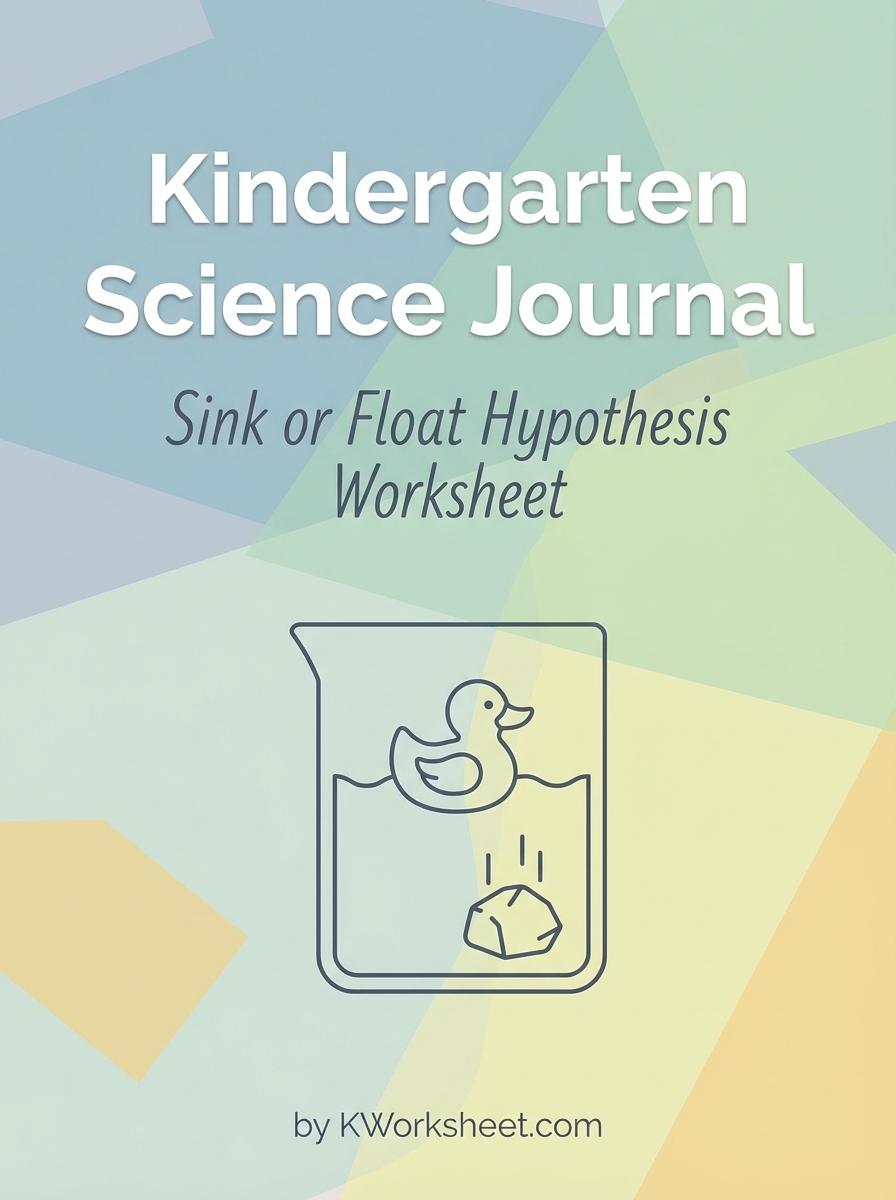
Kindergarten students explore basic physics concepts by predicting whether objects will sink or float in water through hands-on experiments. This exercise enhances observation skills and encourages scientific thinking by forming simple hypotheses based on everyday items. Discover a variety of engaging Sink or Float Hypothesis worksheets designed to inspire young learners' curiosity.
Objects Tested for Sinking and Floating
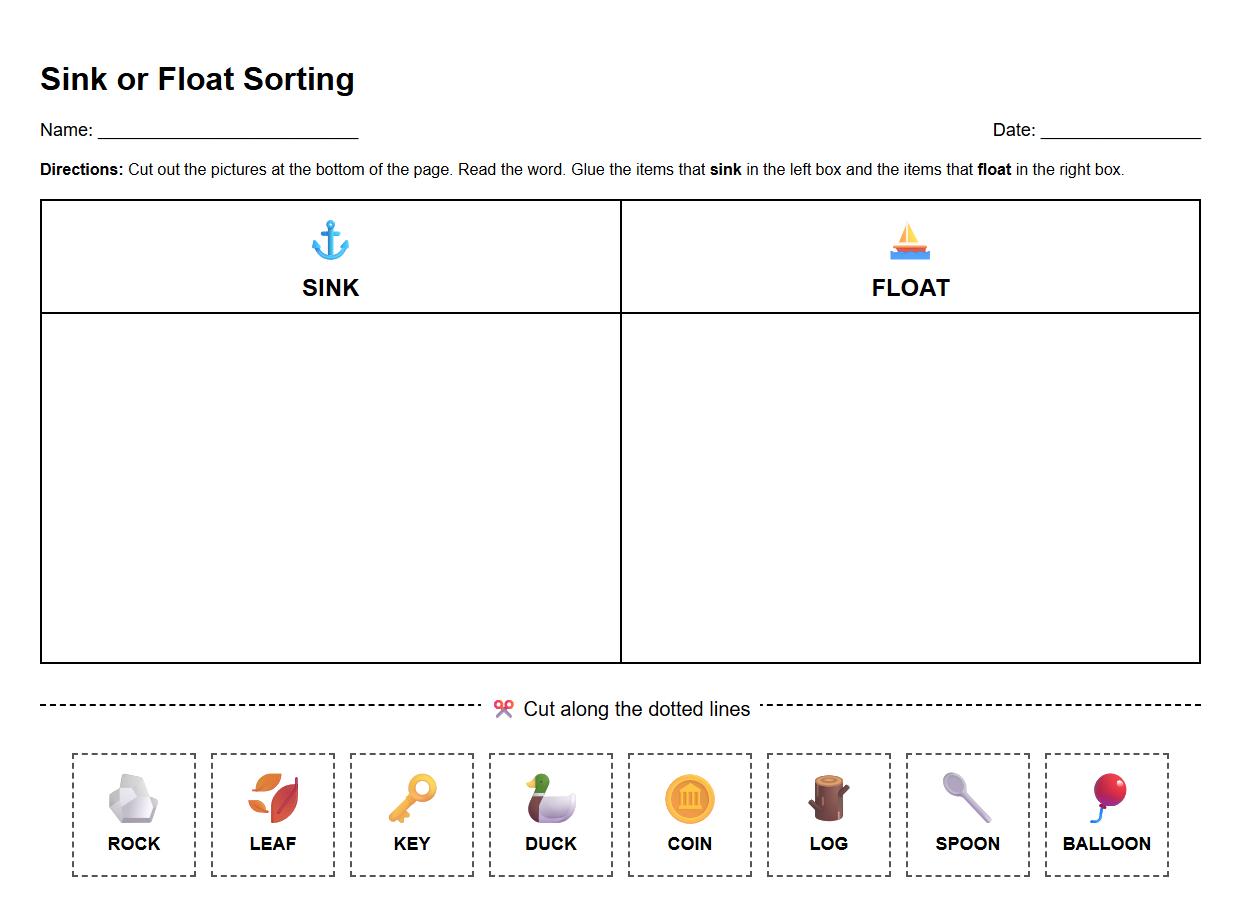
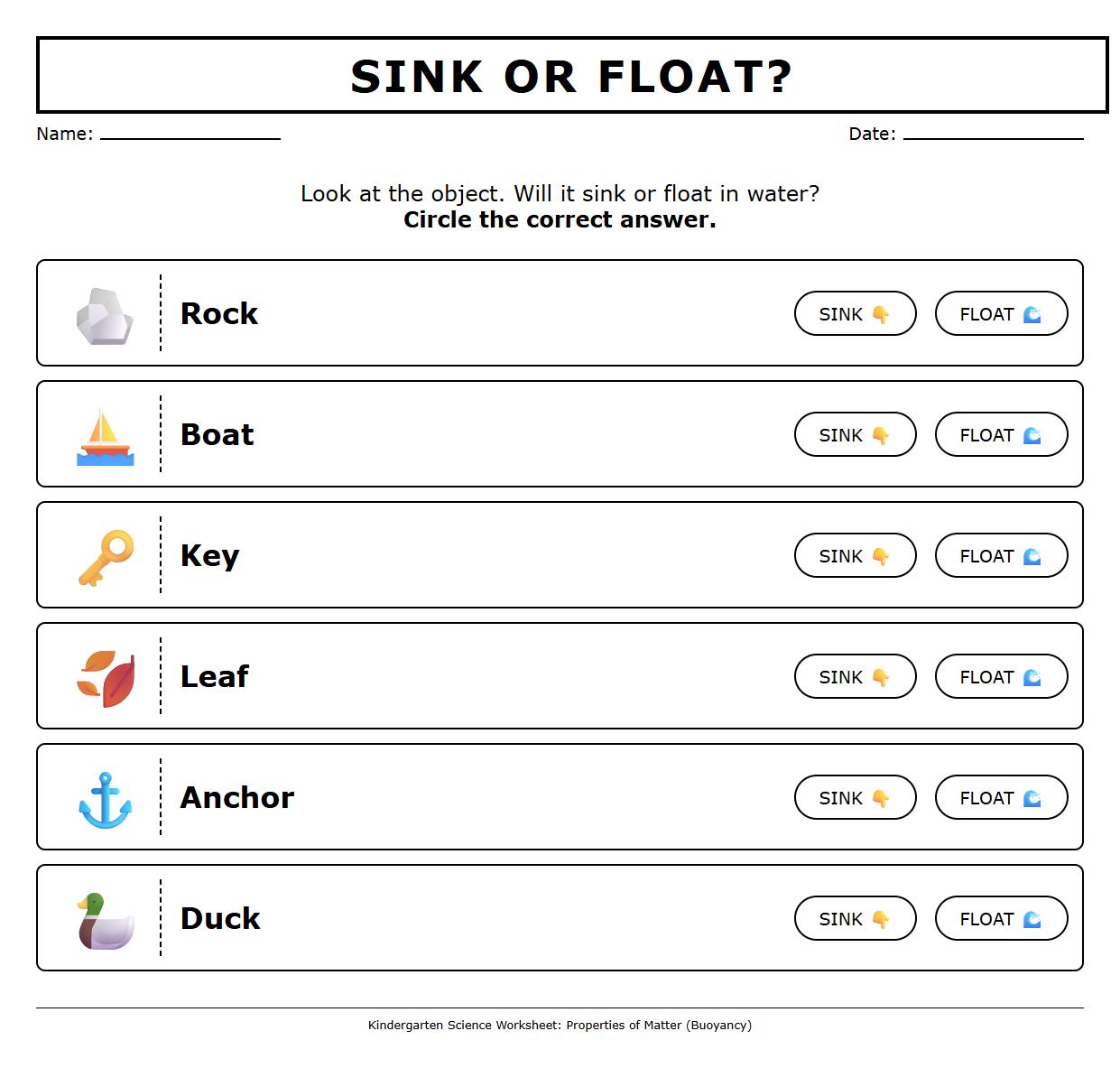
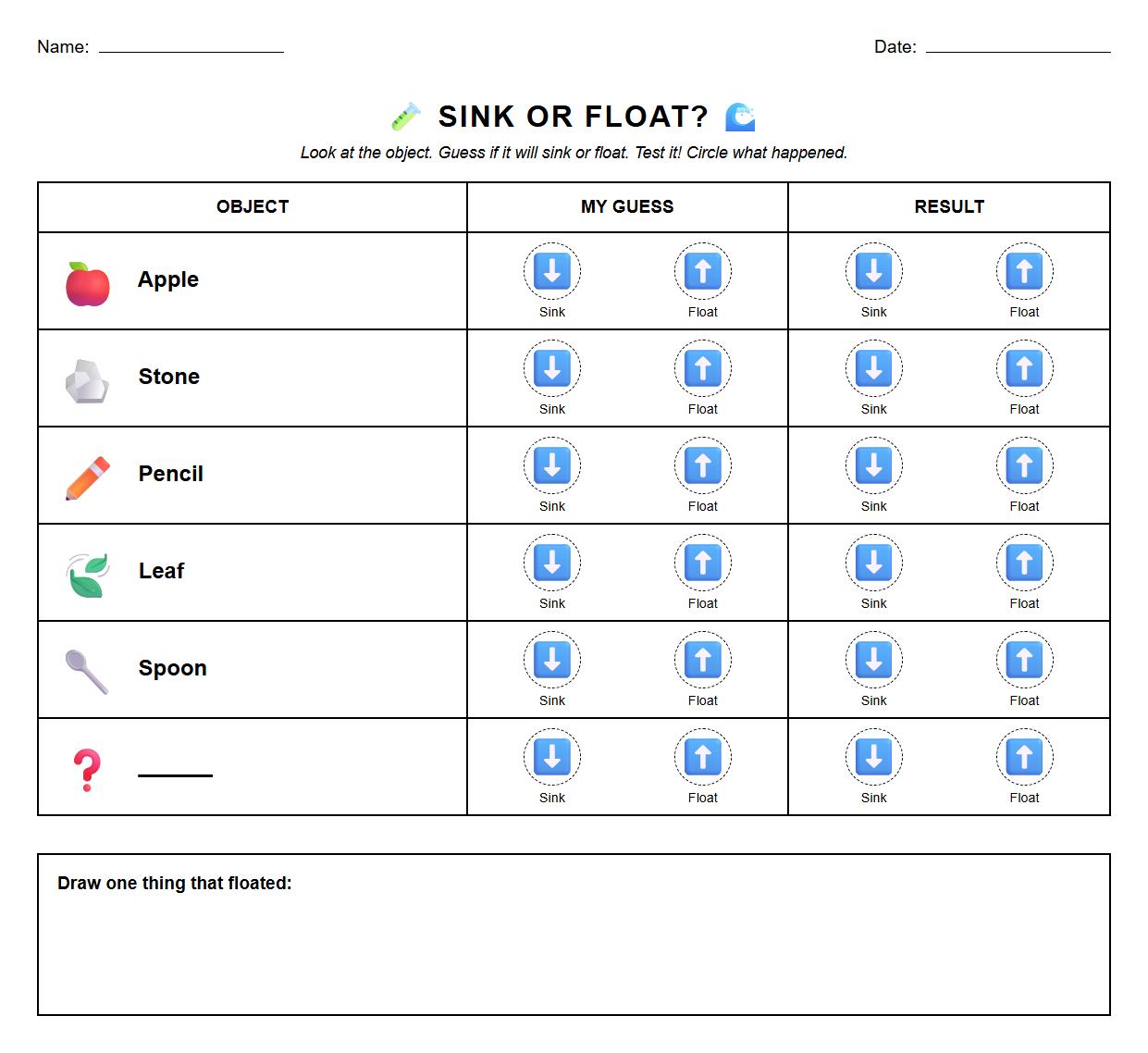
As part of the worksheet guide, children tested various common objects such as stones, plastic toys, leaves, and metal spoons to see if they would sink or float in water. Teachers and parents helped gather these items to encourage hands-on learning. These objects provide clear examples for understanding the concept of buoyancy. Testing a variety of items helps engage children's curiosity and observational skills. Explore related activities in the Magnetic and Nonmagnetic Item Semantic Sorting worksheet.
Making Hypotheses Before Testing
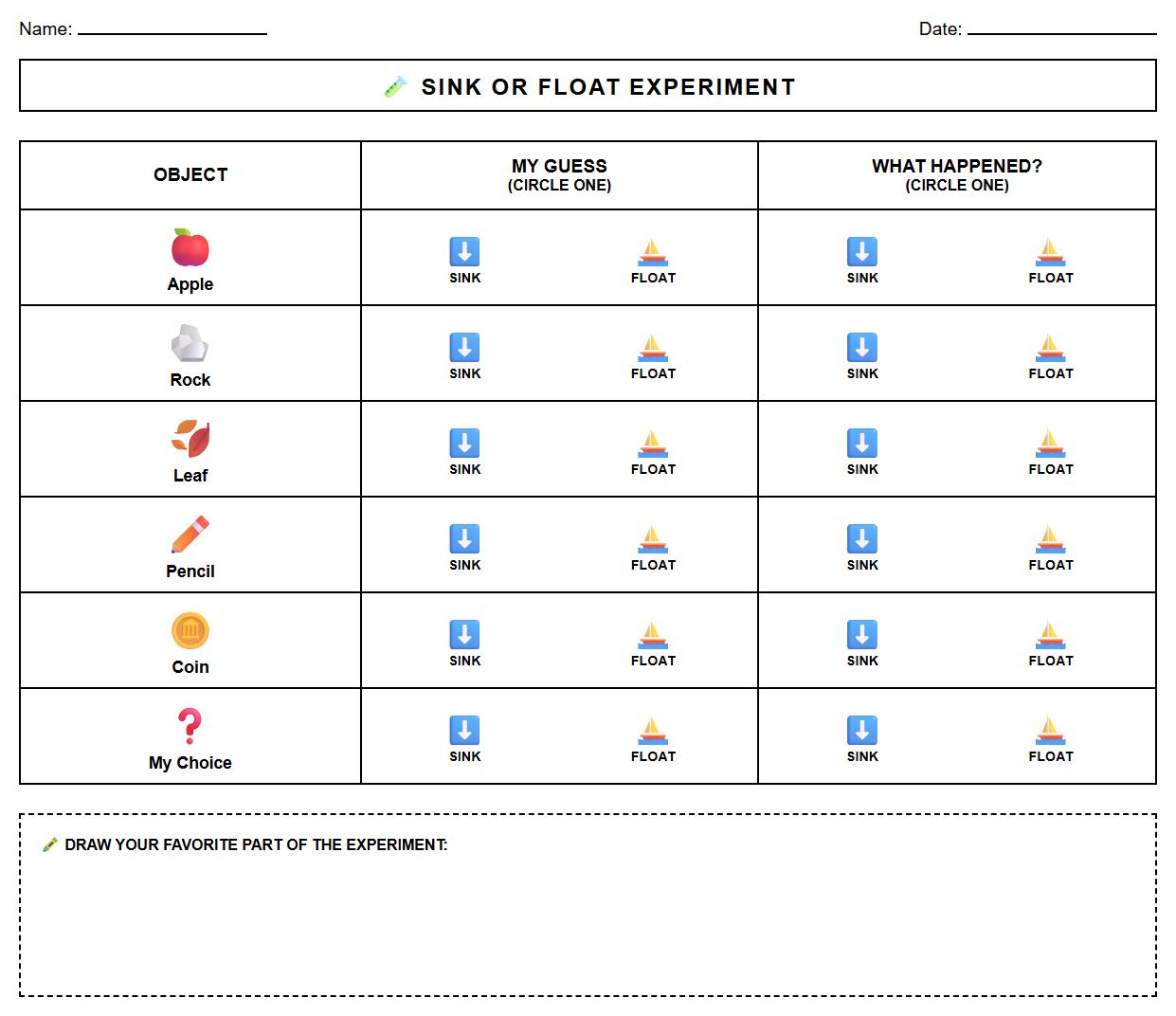
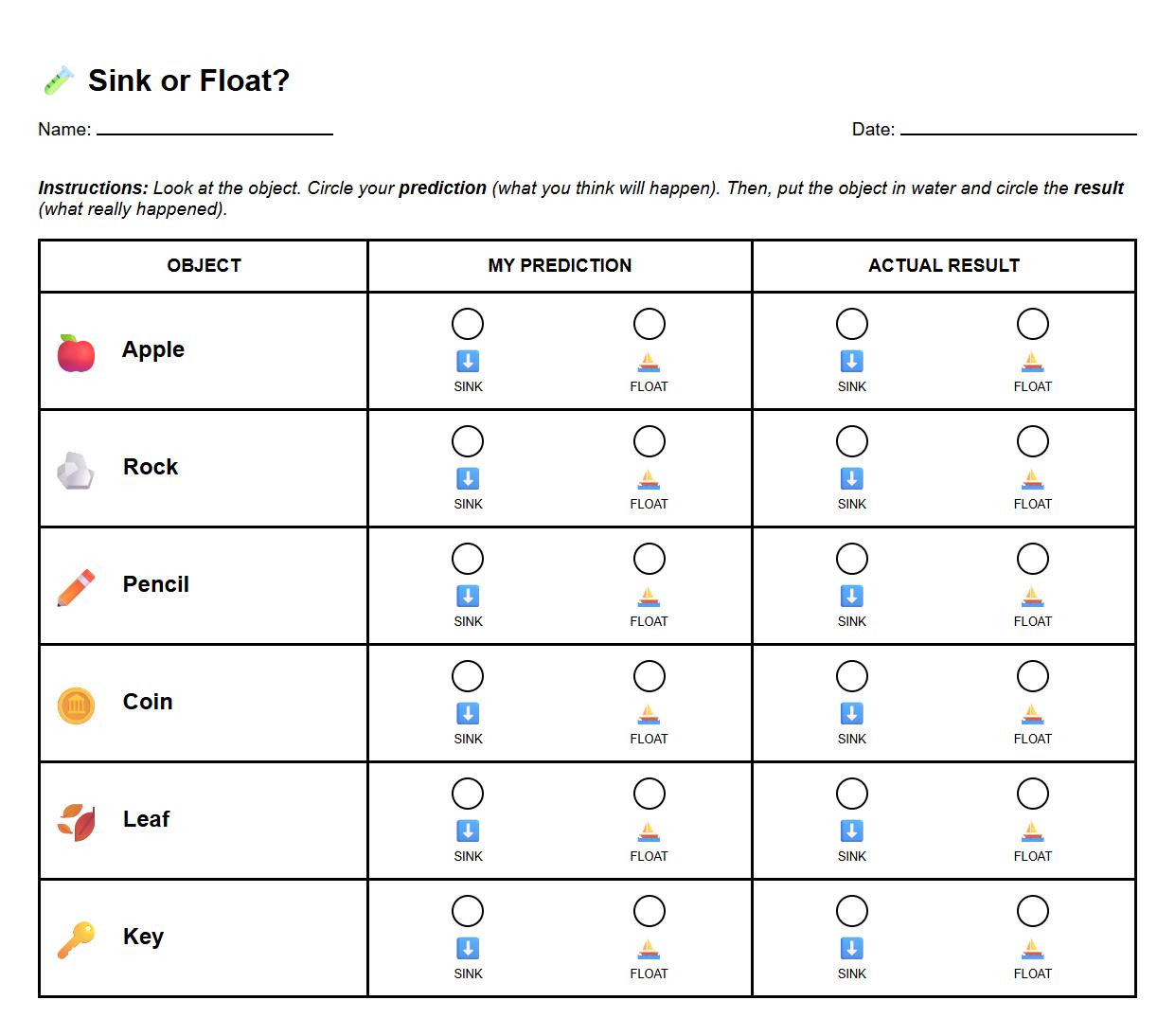
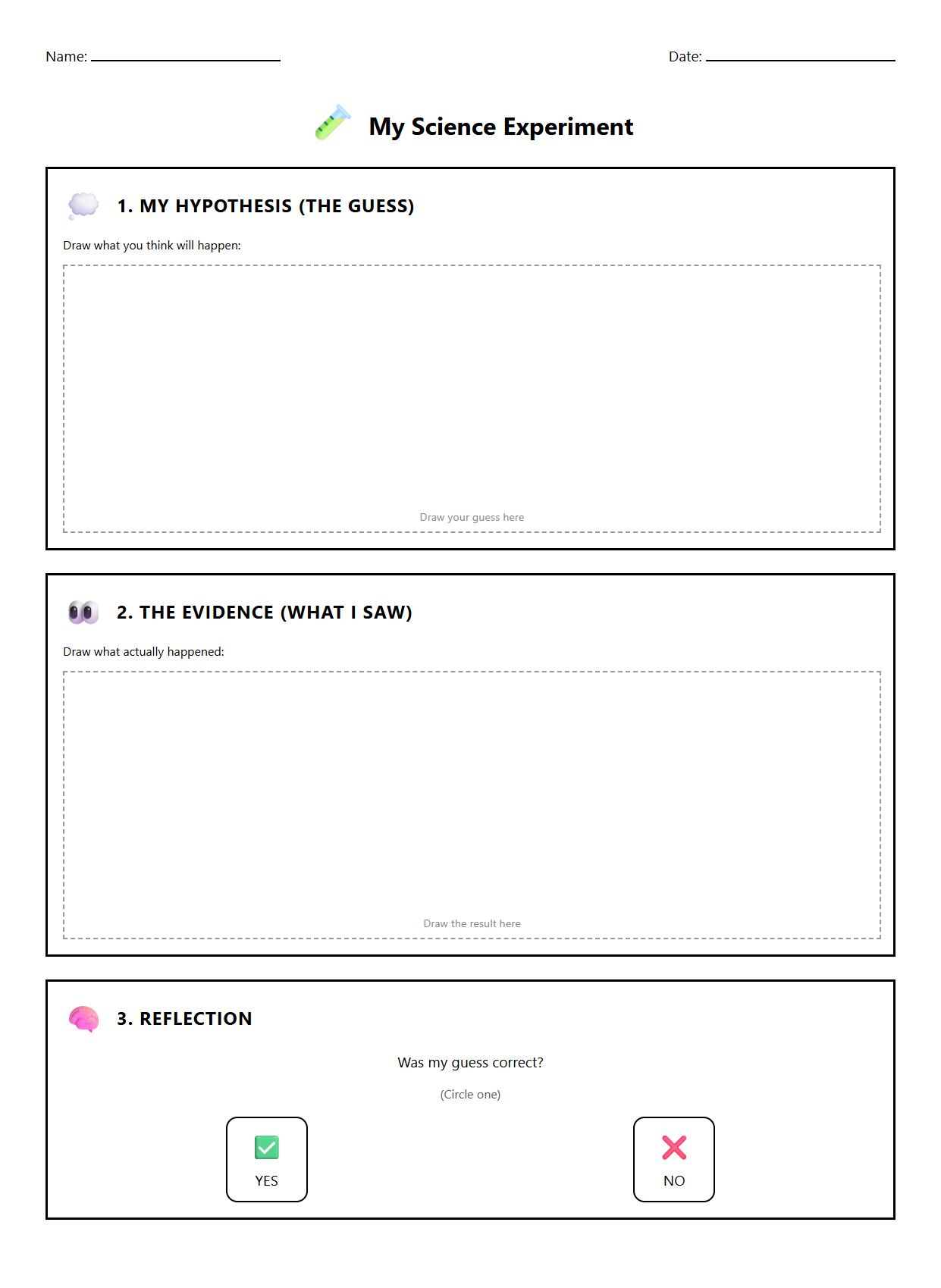
Before testing each object, children made a hypothesis about whether it would sink or float. This step encourages critical thinking and prediction skills. Hypotheses are based on prior knowledge or intuition, such as assuming heavier objects will sink. Recording these initial thoughts sets a foundation for comparing results after the experiment. See more hypothesis-related exercises in the Kindergarten Sequencing Worksheet on Phonics and Moon Cycle.
Surprising Results During the Experiment
Some objects produced unexpected results, surprising both children and adults. For example, a light object like a leaf might sink, while a heavier but hollow item like a plastic ball floated. These surprises prompt further questions and discussions about materials and shapes. It teaches children that appearances don't always predict outcomes-similar to findings in the Picture Sequencing Worksheet: Changes in Seasons.
Correlation Between Weight and Sinking
Heavier items did not always sink, showing that weight alone does not determine whether an object floats. Items made of certain materials or with specific shapes can displace enough water to stay afloat despite their weight. This helps introduce the idea of density and buoyancy in an age-appropriate way. Understanding this concept encourages curiosity about physical properties. Explore these concepts further with the Matching States of Matter Examples Worksheet.
Light Objects That Sank
Some lightweight objects sank due to their material composition or shape. For instance, a thin piece of paper might absorb water and become heavier, causing it to sink. This observation broadens understanding beyond simple weight assumptions. It promotes learning about how materials interact with water, a subject also touched on in the Kindergarten Science Worksheet: Exploring Animal Needs.
Materials of Floating Items
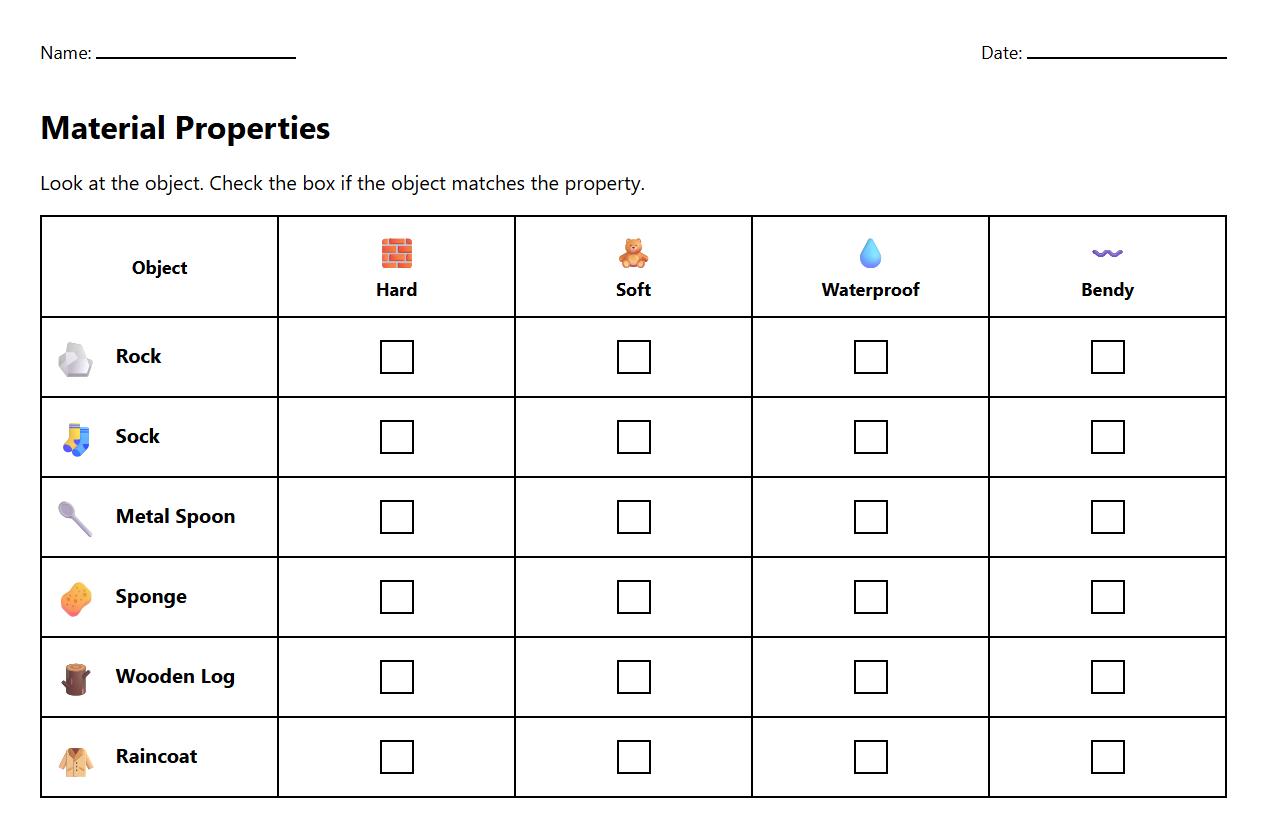
The items that floated were often made of materials such as plastic, foam, or hollow objects. These materials trap air and reduce overall density, making objects buoyant. Exploring materials helps children connect why some things float while others don't. It introduces the importance of material science in everyday life. Find related content in the Cut and Paste Phonics Practice: Sequencing Plant Growth Stages worksheet.
Recording Observations
Observations were recorded through drawings, checklists, or verbal notes to document each object's behavior. Using simple methods allows children to engage with the scientific process effectively. Teachers and parents can encourage kids to compare initial hypotheses with actual outcomes. This practice supports developing communication and analytical skills, which is also promoted in the Animal Habitats Worksheet: Kindergarten Using Phonics.
Changing Predictions After Testing
Many children changed their minds about their initial predictions after seeing the test results. This flexibility shows growth in understanding and openness to learning. It models the scientific process of revising ideas based on evidence. Encouraging this mindset nurtures lifelong curiosity and critical thinking. Enjoy more prediction-based activities in the Phonics Activity Worksheet: Identifying Weather Vocabulary.
Factors That Help Objects Float
Children learn that shape, material, and air content help something float. For example, flat shapes spread weight over water, and air trapped inside an object reduces density. These factors together explain why some objects remain on the surface. Discussing these helps build foundational science knowledge about buoyancy, just like the practice in the Circle Correct Season Worksheet Based on Description.
Questions About Sinking and Floating
Common questions include why some heavy things float, how water texture affects floating, and what happens with different liquids. Encouraging children to ask these questions promotes inquiry and deeper exploration. It also helps teachers and parents tailor future lessons to children's interests. Questions drive the learning process and make experiments more meaningful, as reflected in the Animal Needs and Care Worksheet Vocabulary.


Engaging Human Body Parts Identification Worksheet Activities for Kindergarten