Science Vocabulary Development: Sink or Float Kindergarten Worksheet

📅 May 27, 2025 👤 Nylen Smith

Kindergarten students explore basic physics concepts by learning key science vocabulary related to sinking and floating objects. Hands-on experiments reinforce understanding of terms like buoyancy, density, and float, fostering early scientific thinking. Explore the available worksheets to support your child's science vocabulary development.

Sink or Float Sorting Cards Worksheet
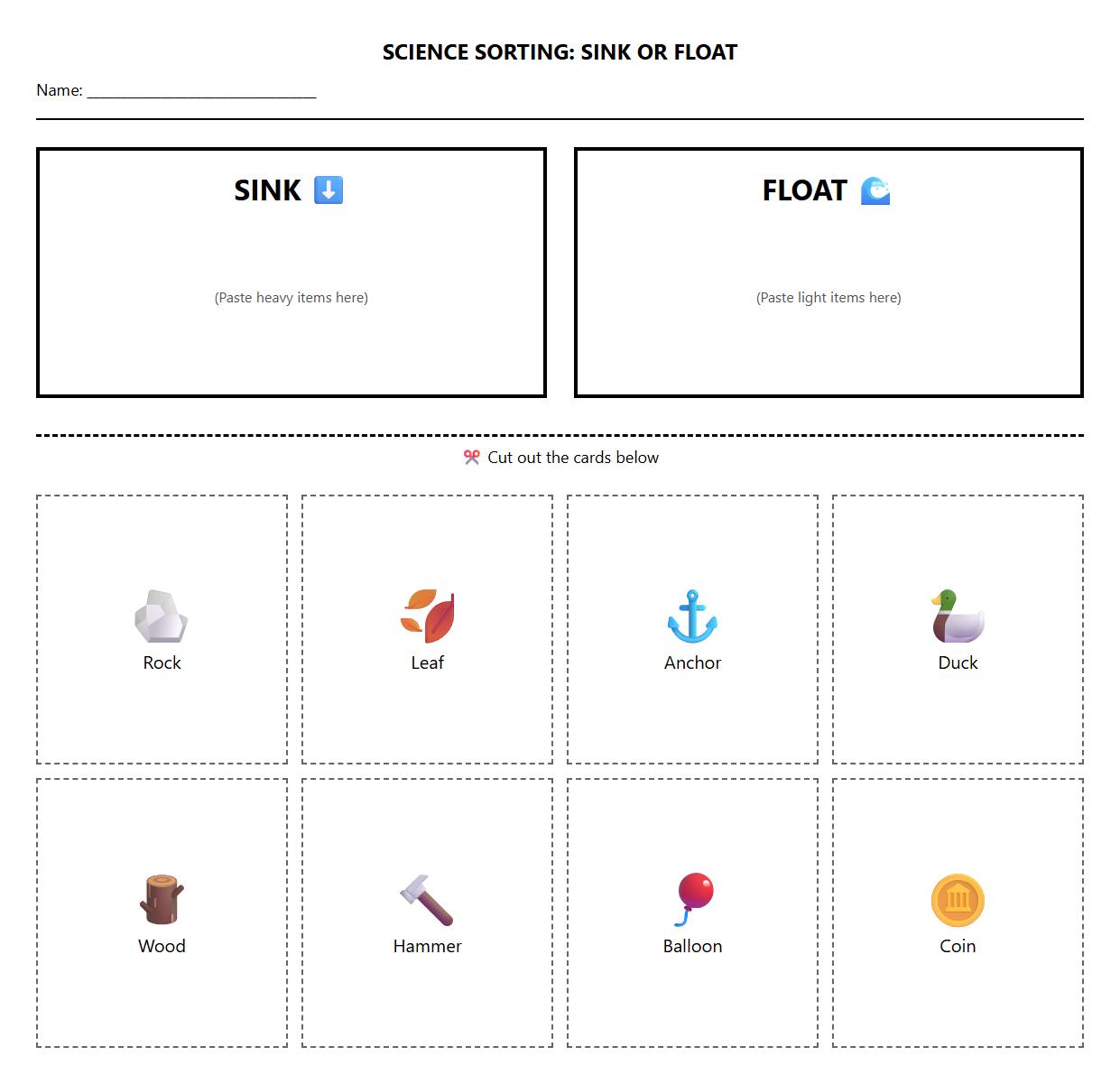
Sink or Float Sorting Cards Worksheet

Download PDF     Pin it

Science Vocabulary Matching Activity for Sink and Float
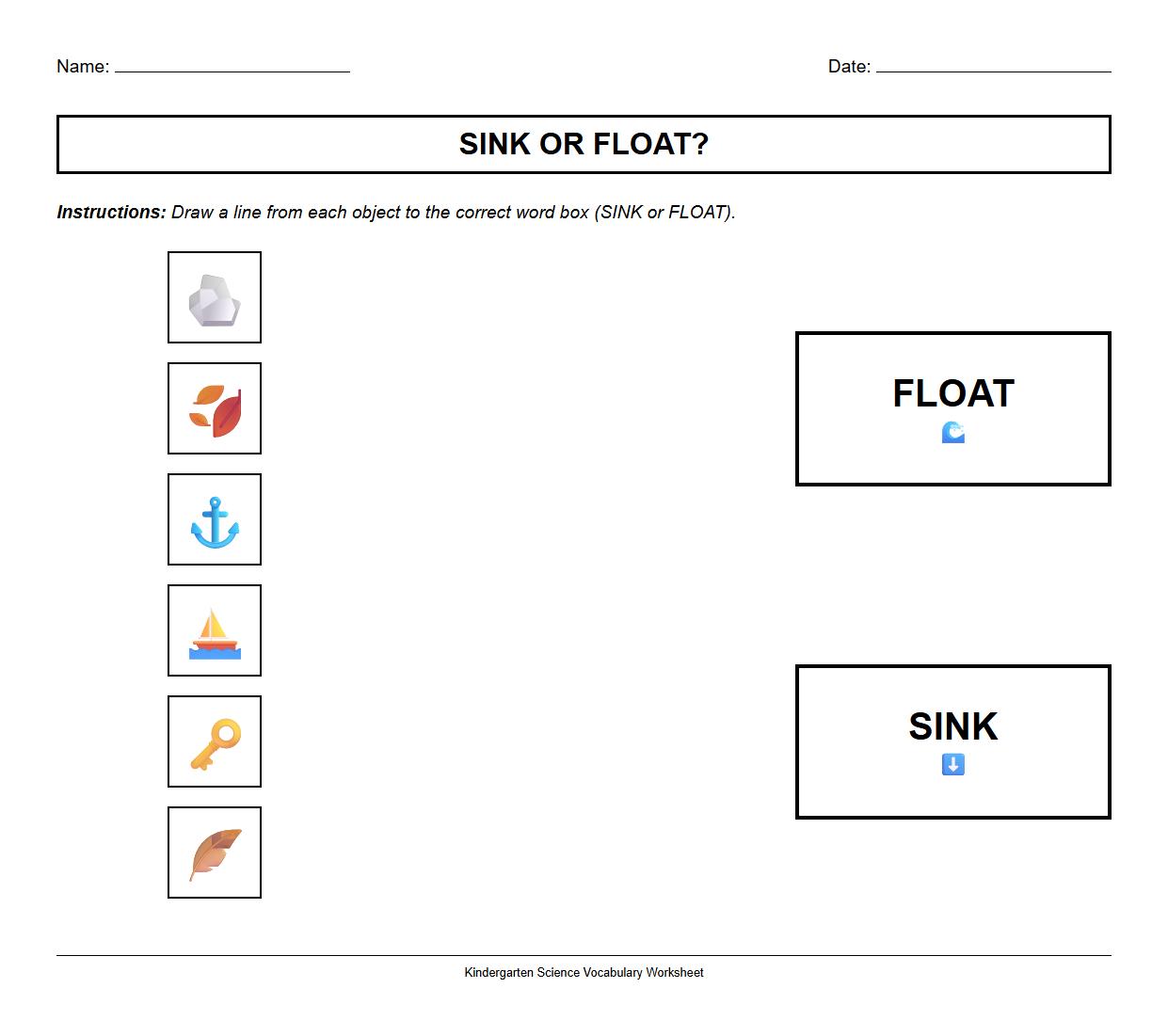
Science Vocabulary Matching Activity for Sink and Float

Download PDF     Pin it

Sink or Float Word Tracing Worksheet for Kindergarten
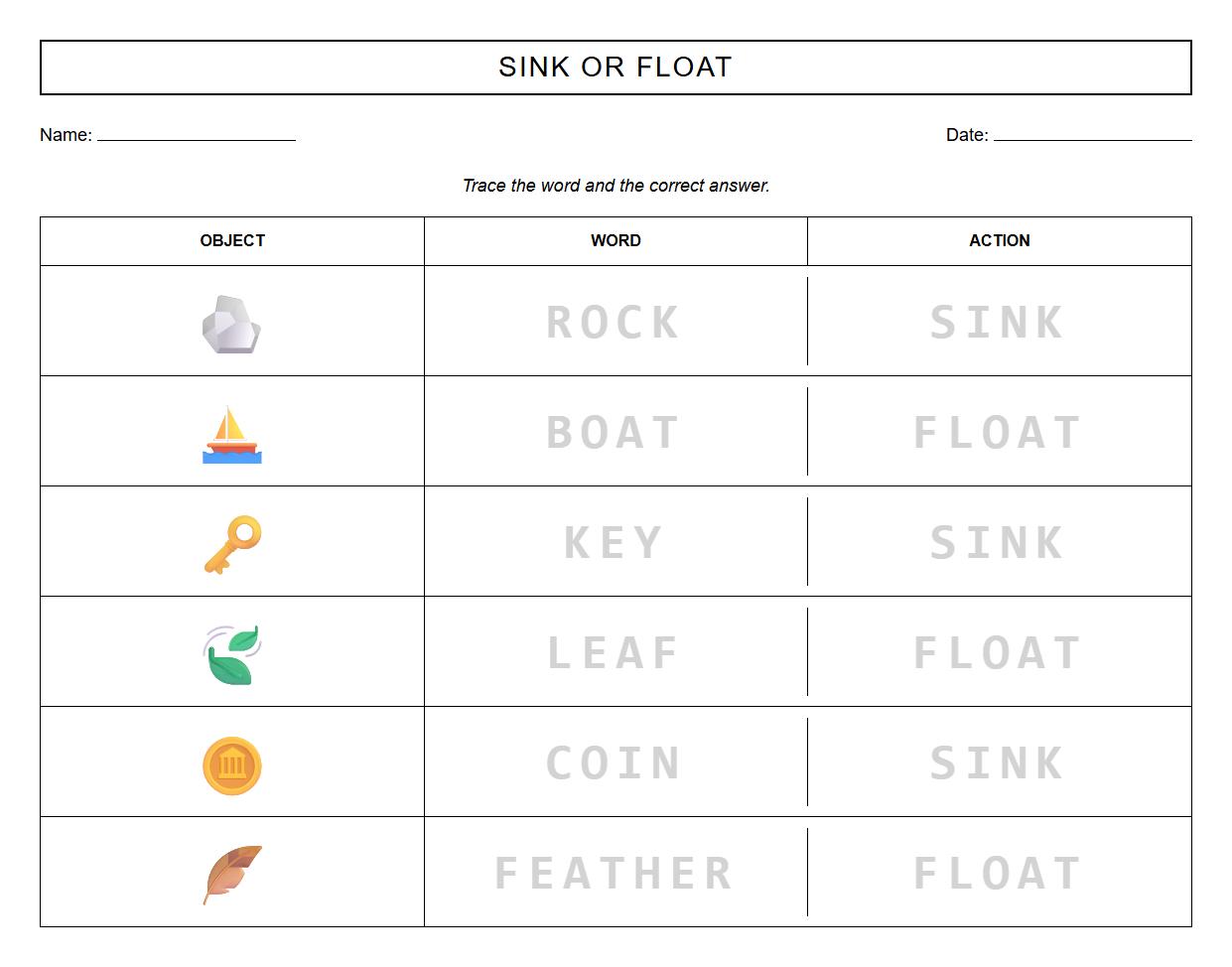
Sink or Float Word Tracing Worksheet for Kindergarten

Download PDF     Pin it

Scientific Method Observation Chart for Sink or Float
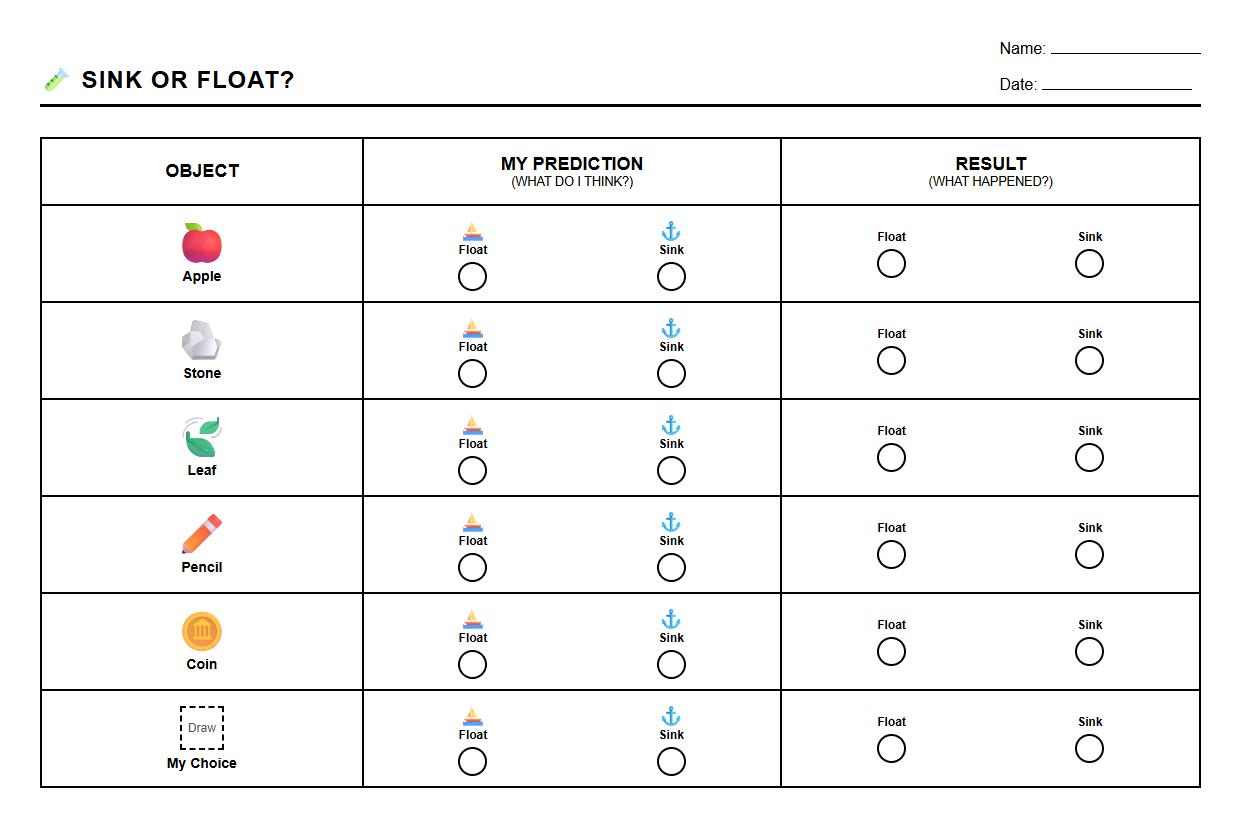
Scientific Method Observation Chart for Sink or Float

Download PDF     Pin it

Properties of Materials Worksheet with Sink or Float Terms
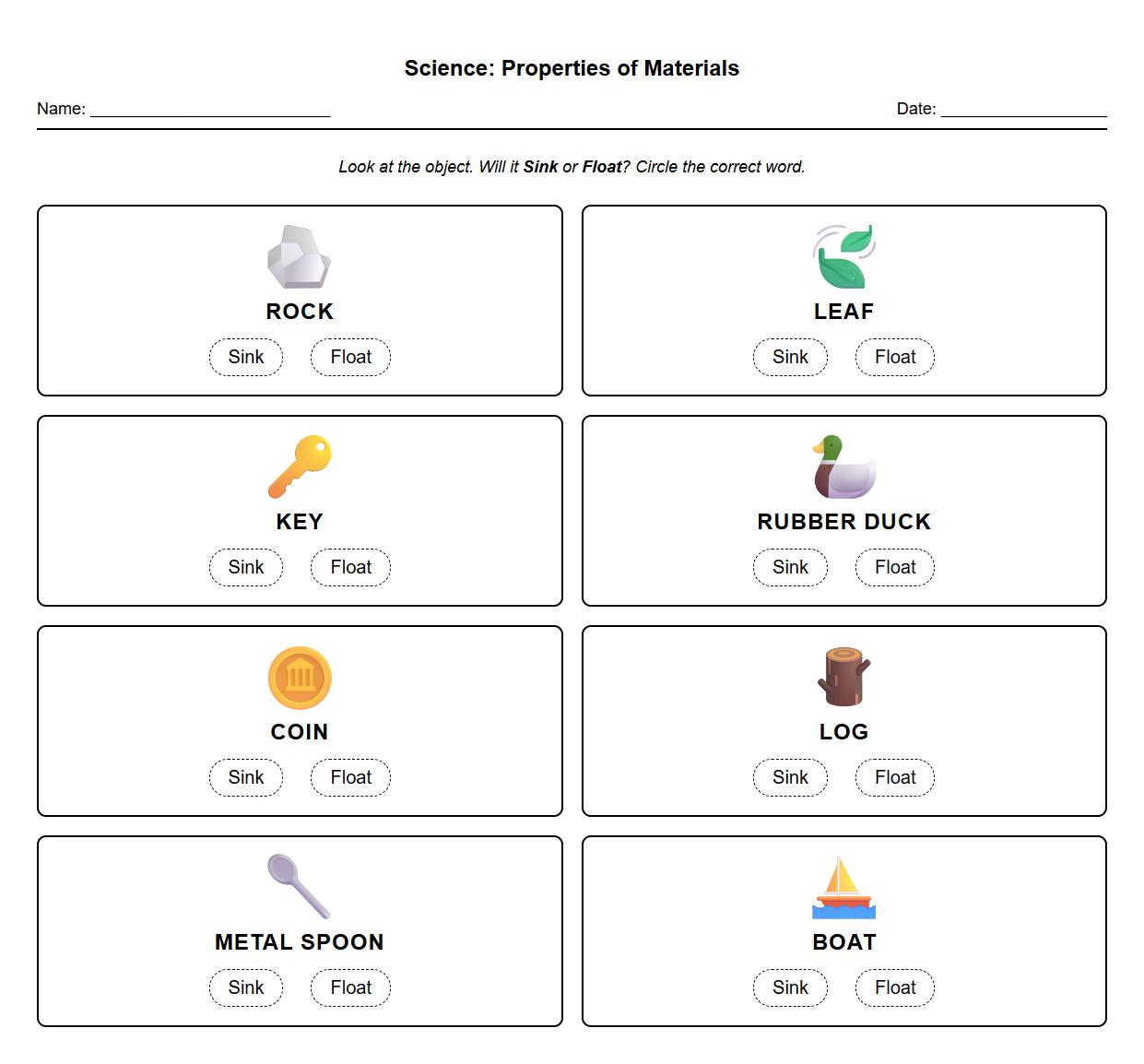
Properties of Materials Worksheet with Sink or Float Terms

Download PDF     Pin it

Sink or Float Prediction Recording Sheet
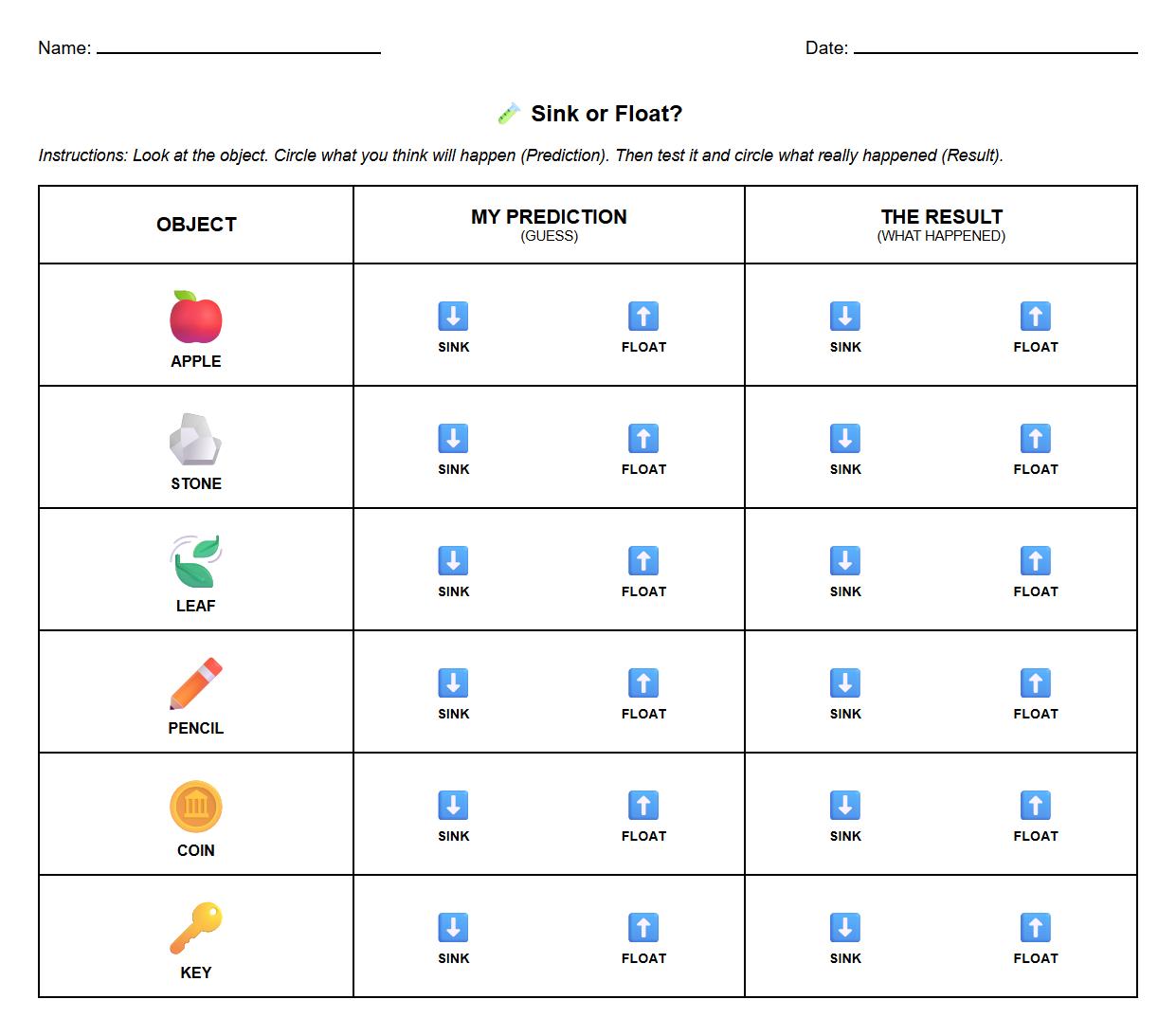
Sink or Float Prediction Recording Sheet

Download PDF     Pin it

Science Word Bank Fill in the Blank for Sink or Float
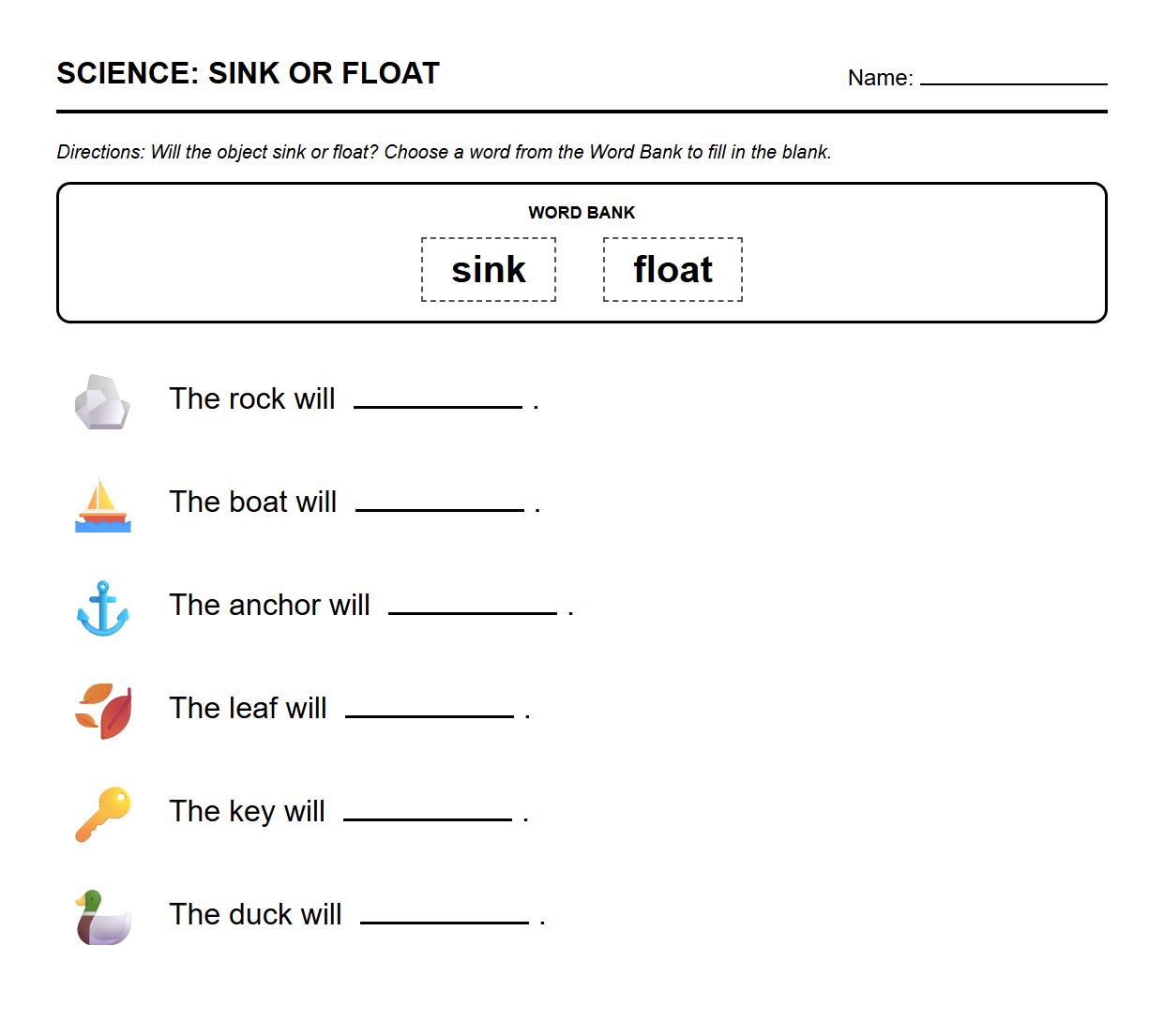
Science Word Bank Fill in the Blank for Sink or Float

Download PDF     Pin it

Vocabulary Picture Labeling Exercise on Sink or Float
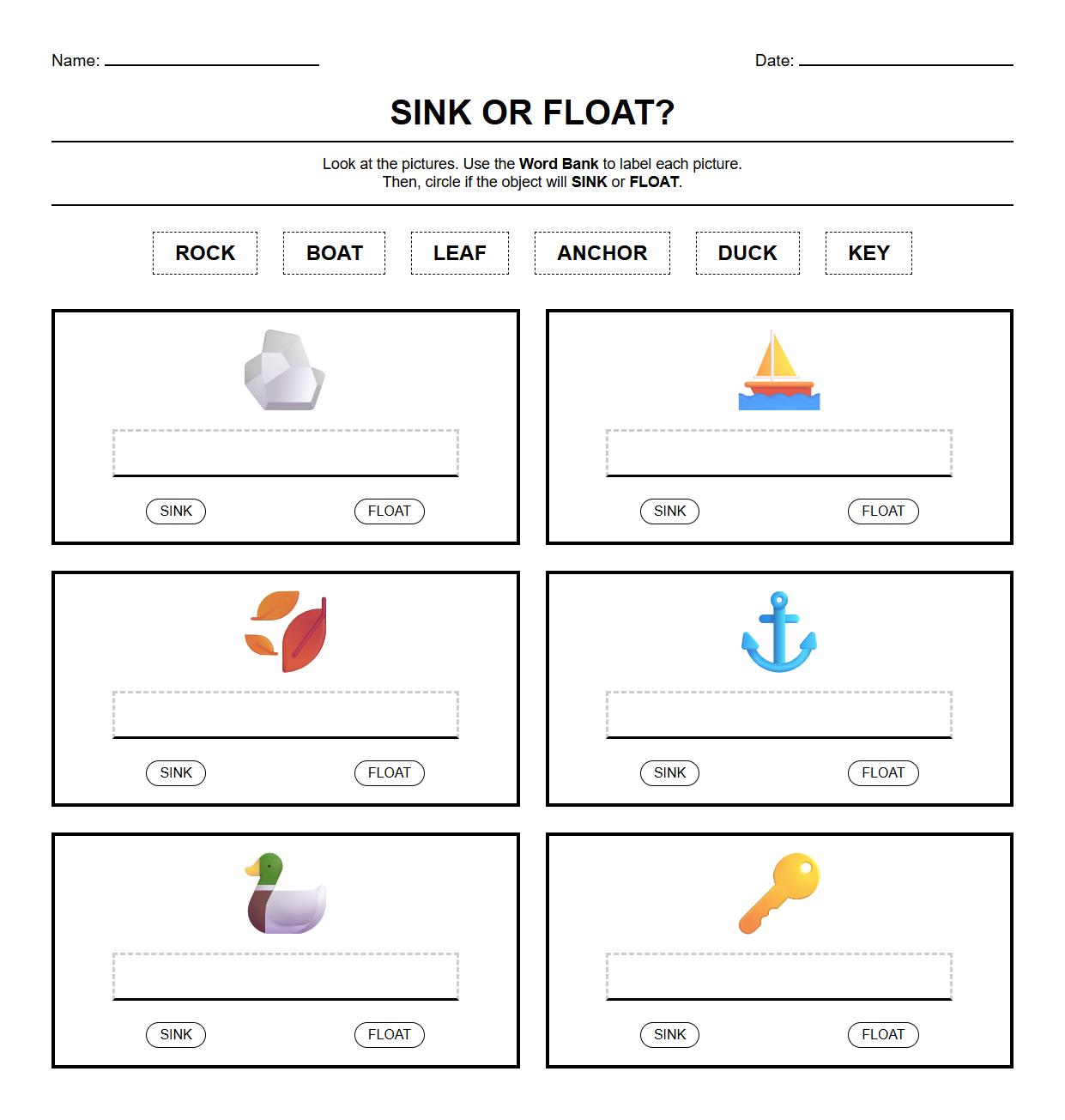
Vocabulary Picture Labeling Exercise on Sink or Float

Download PDF     Pin it

Sink or Float Word Search for Science Class
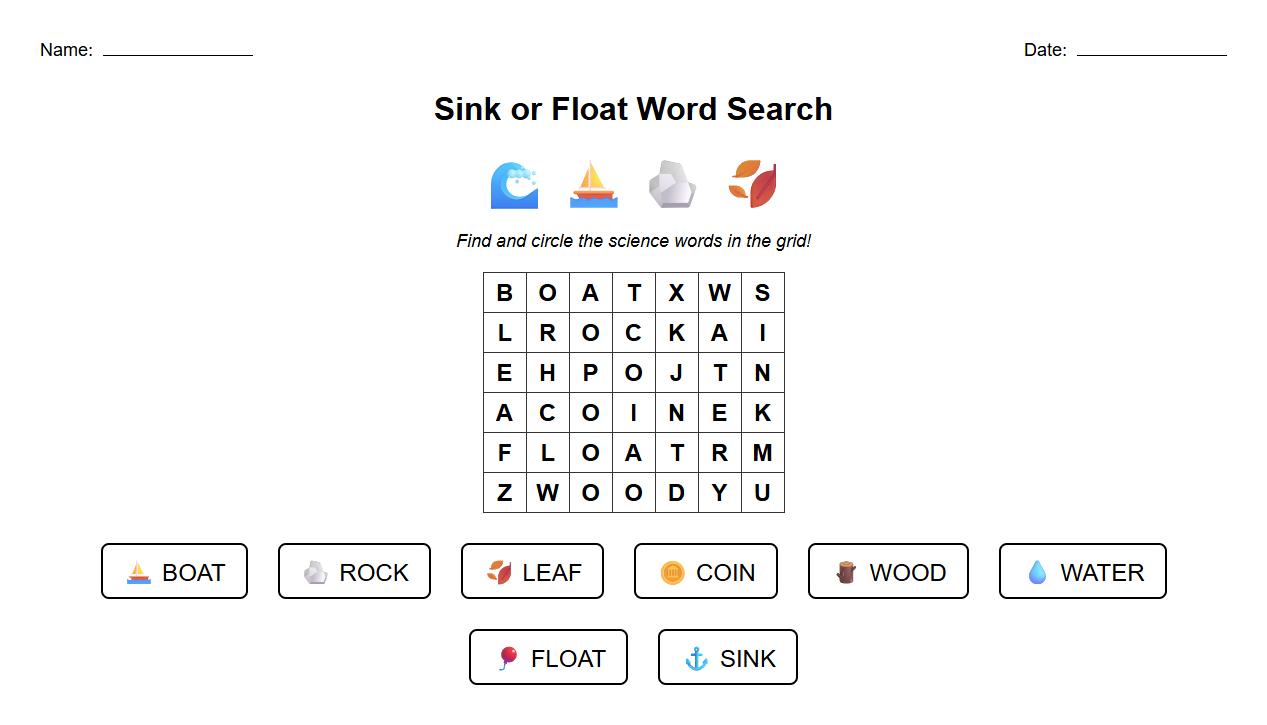
Sink or Float Word Search for Science Class

Download PDF     Pin it

Science Experiment Reflection Sheet for Sink or Float Phenomena
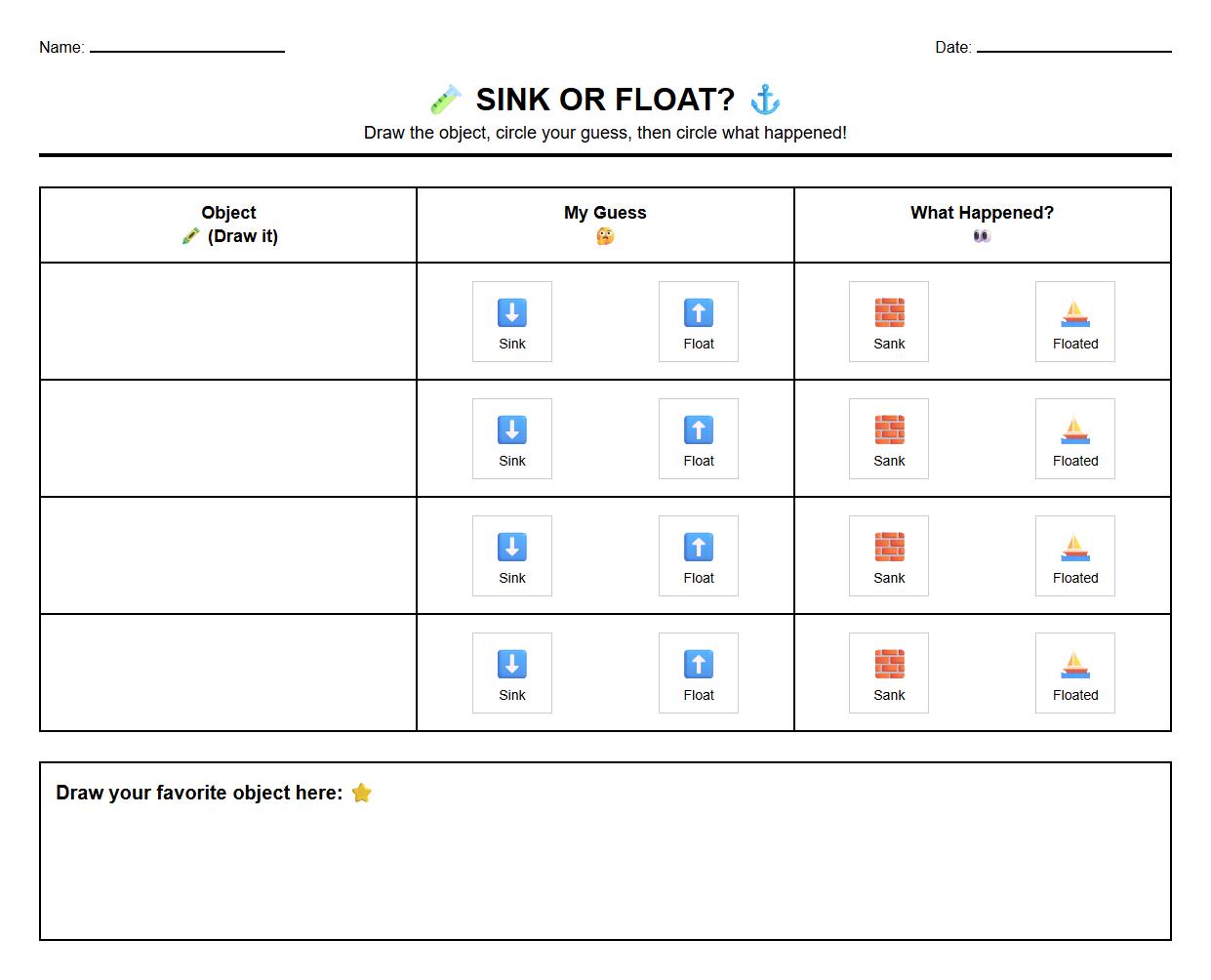
Science Experiment Reflection Sheet for Sink or Float Phenomena

Download PDF     Pin it

Understanding Sink and Float

In our worksheet, children explore which objects sink when placed in water. Common examples include coins, keys, and stones, which all move to the bottom. This helps young learners grasp the concept of density and weight in a fun, hands-on way. Teachers and parents can encourage curiosity by asking children to predict before testing.

Identifying Items That Float

Items like corks, leaves, and rubber balls usually float on top of the water. These lighter materials stay on the surface, demonstrating buoyancy in action. This worksheet guides children to observe and record their findings, strengthening their understanding of water interaction. The floating objects are perfect examples to discuss with kids in simple terms.

Learning Key Science Terms

The worksheet introduces essential science words such as sink and float. Sink means an object goes to the bottom of the water, while float means it stays on top. Children learn to use these terms correctly through matching activities with pictures. This makes the science vocabulary clear and memorable.

Explaining Why Objects Sink or Float

An object sinks when it is heavier than water or denser, causing it to descend. Conversely, objects that are lighter or less dense than water float on the surface. By experimenting with different materials, children discover these natural laws firsthand. This reasoning supports critical thinking and scientific observation.

Predicting Before Testing

Children can use visual clues like size, shape, and material to guess if an item will float. Before placing objects in water, they learn to make predictions based on experience or observation. This pre-experiment activity builds engagement and strengthens hypothesis skills early on. It's a valuable scientific habit encouraged by this worksheet.


More in Science Category


About the author. Nylen Smith is a dedicated educator and cofounder of KWorksheet.com, a popular platform specializing in high-quality kindergarten worksheets and printable activities.

Disclaimer. The information provided in this document is for general informational purposes and/or document sample only and is not guaranteed to be factually right or complete. Please report to us via contact-us page if you find and error in this page, thanks.

Comments

No comment yet