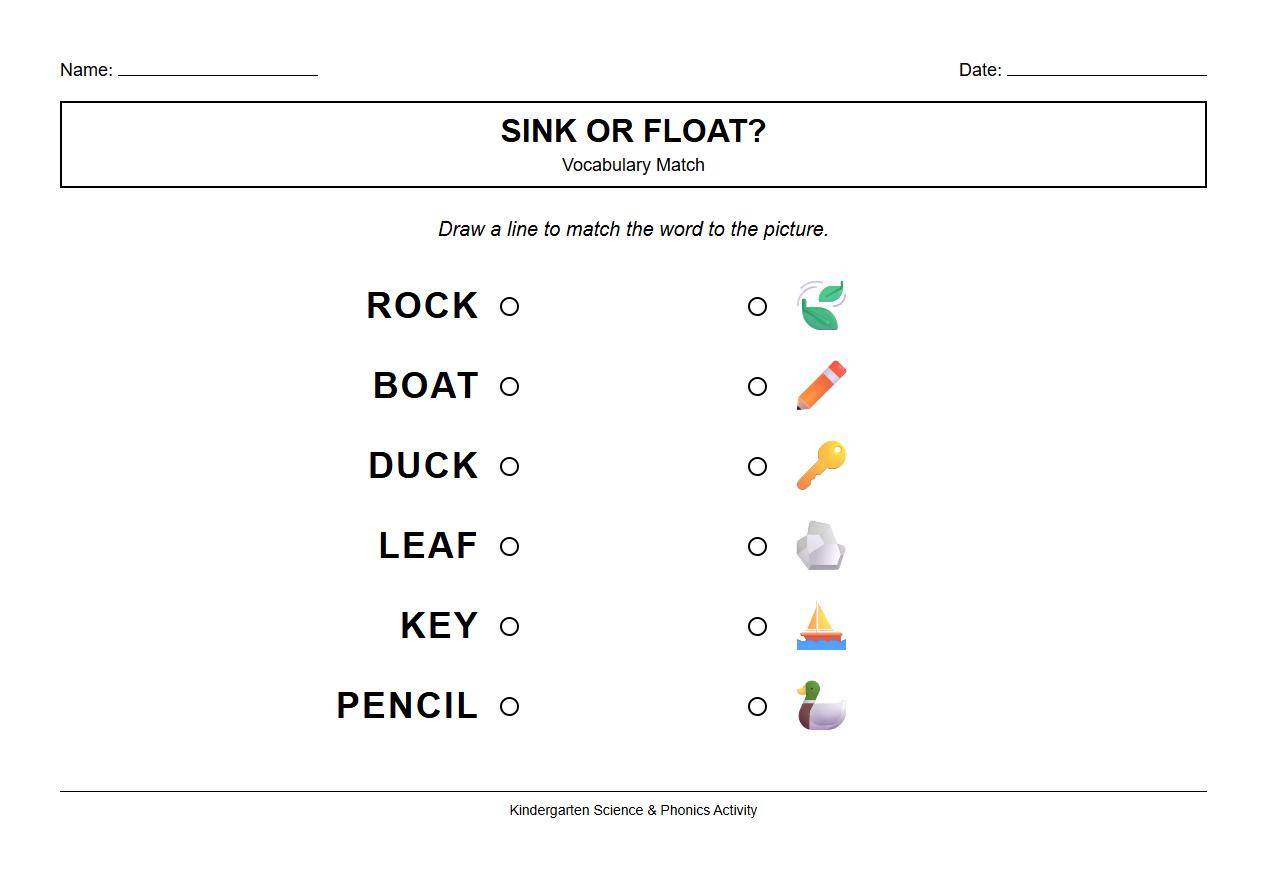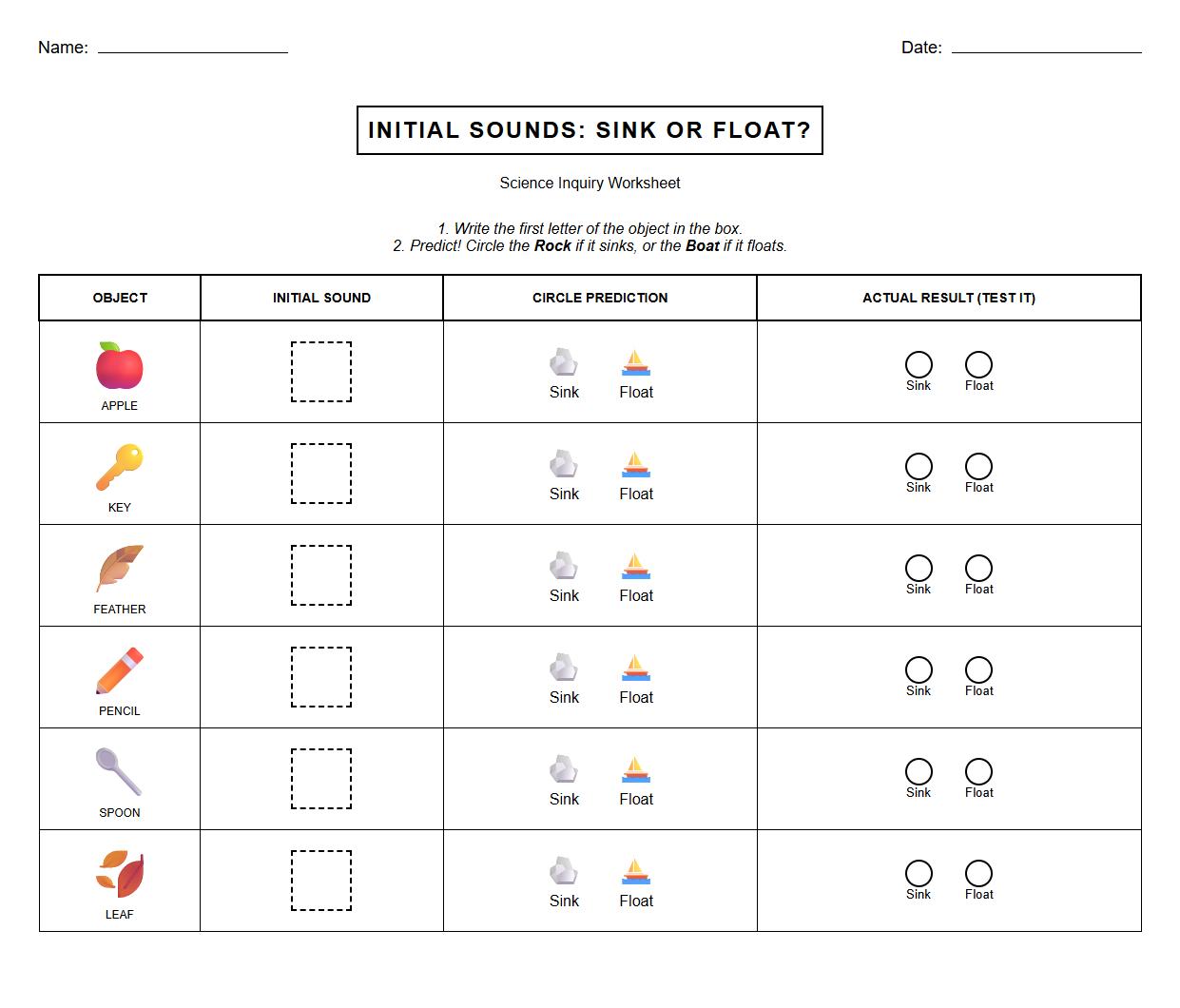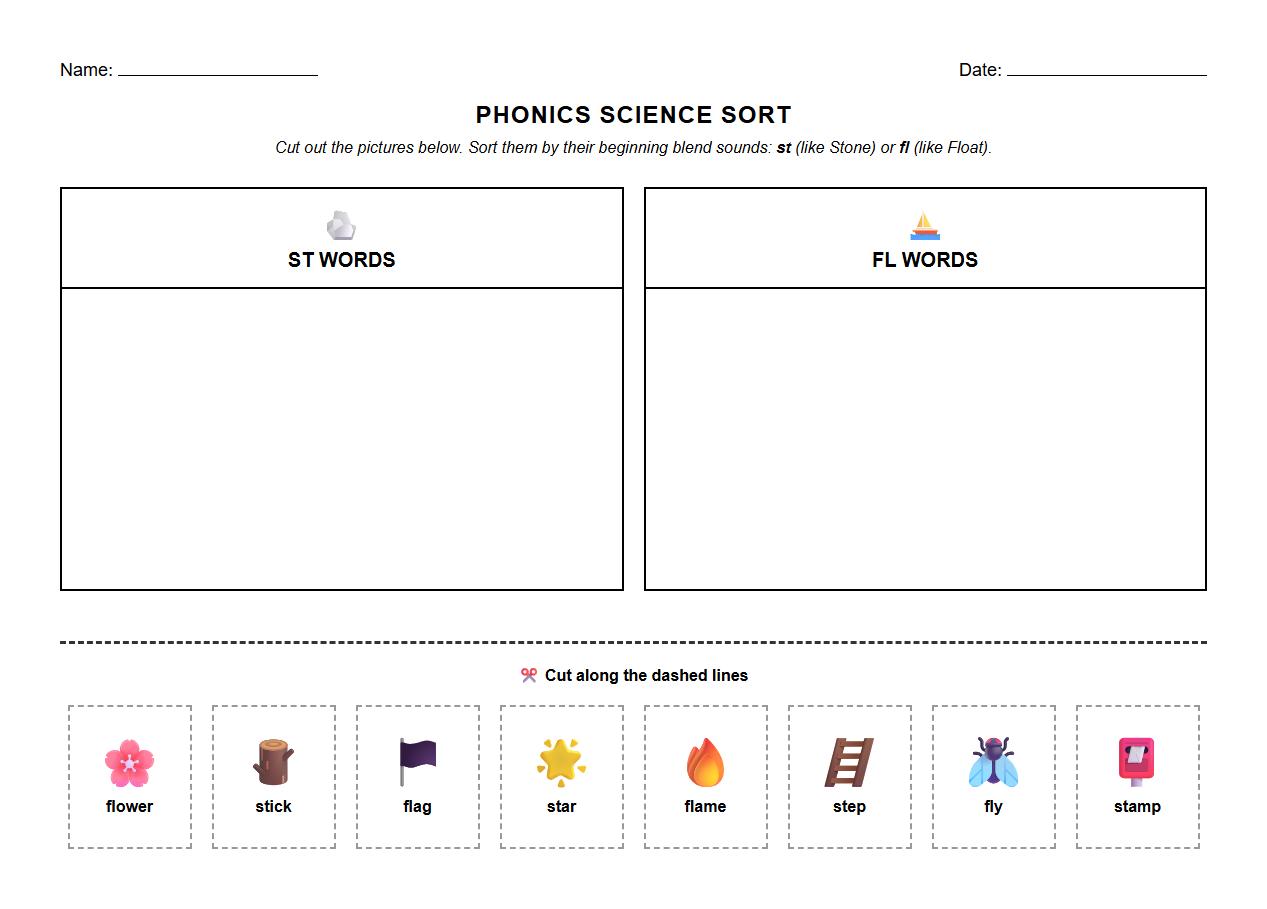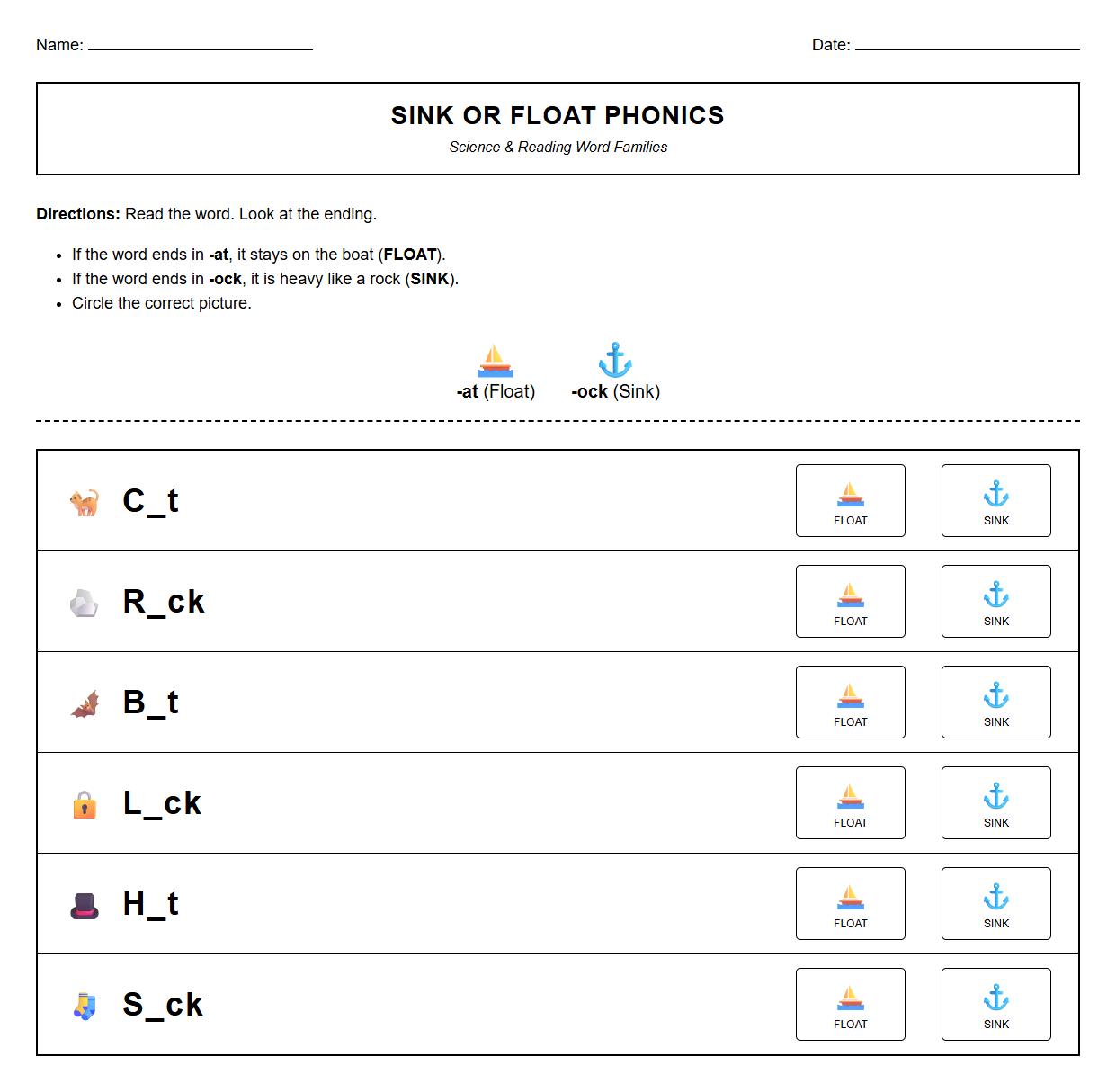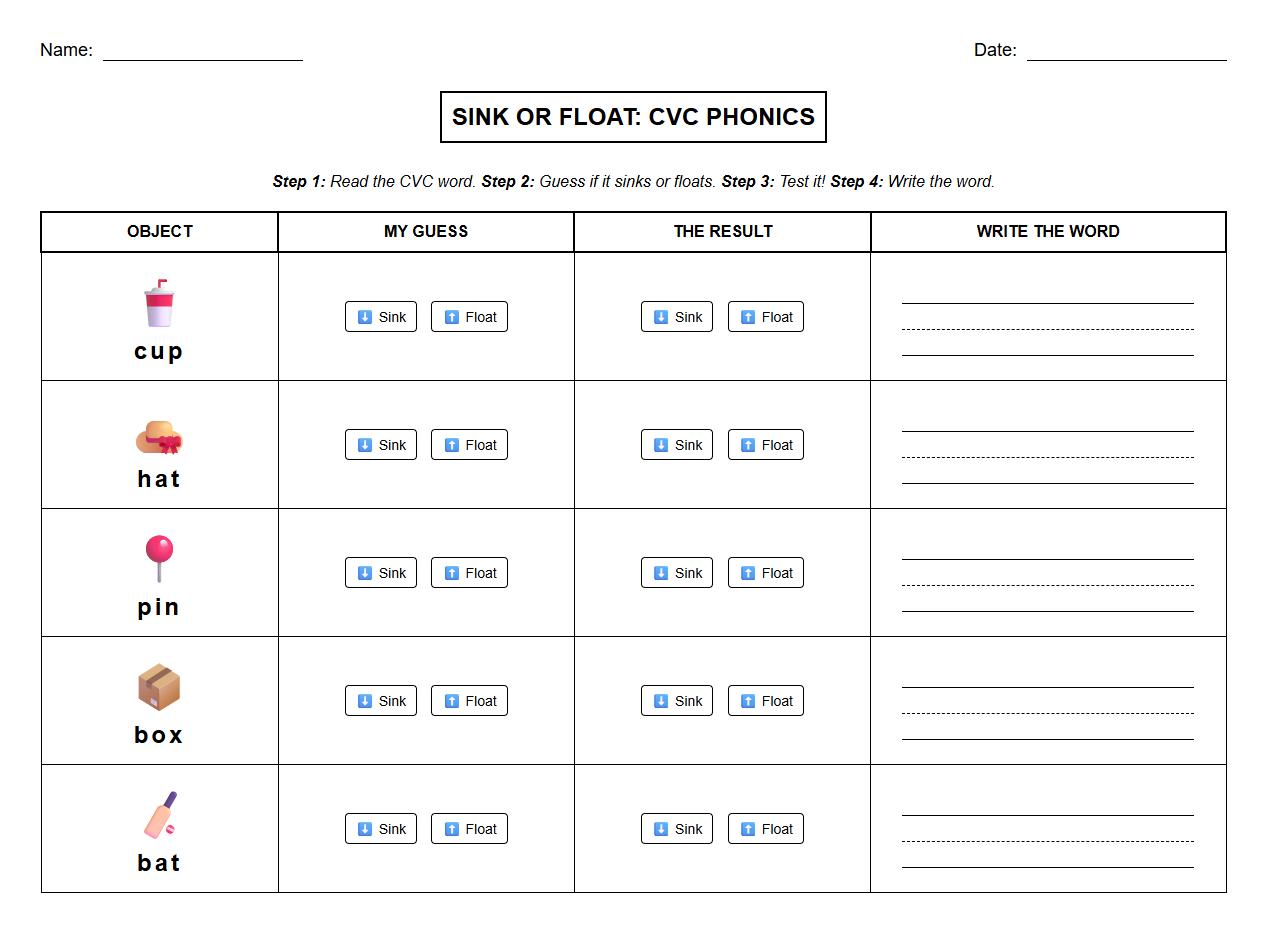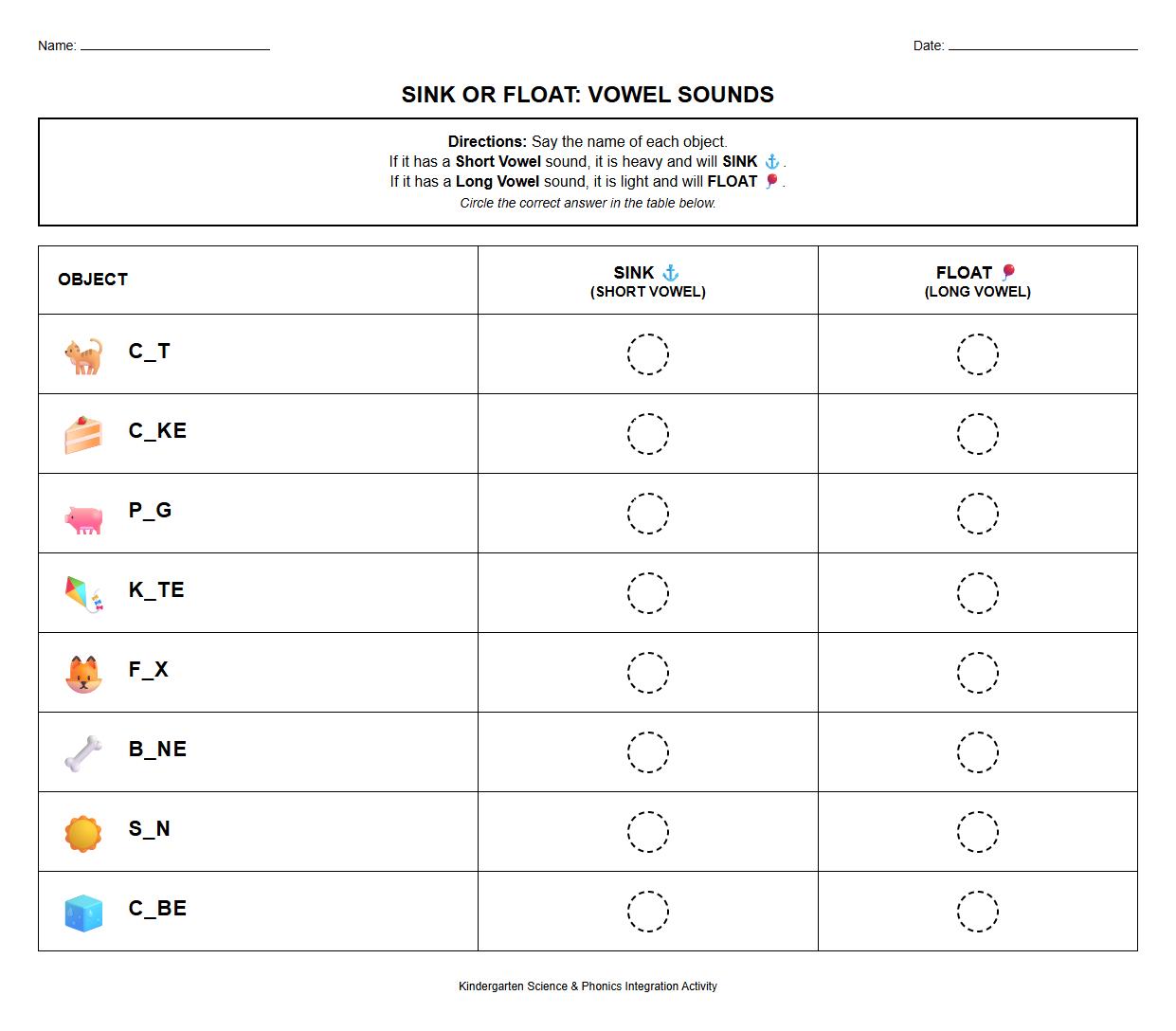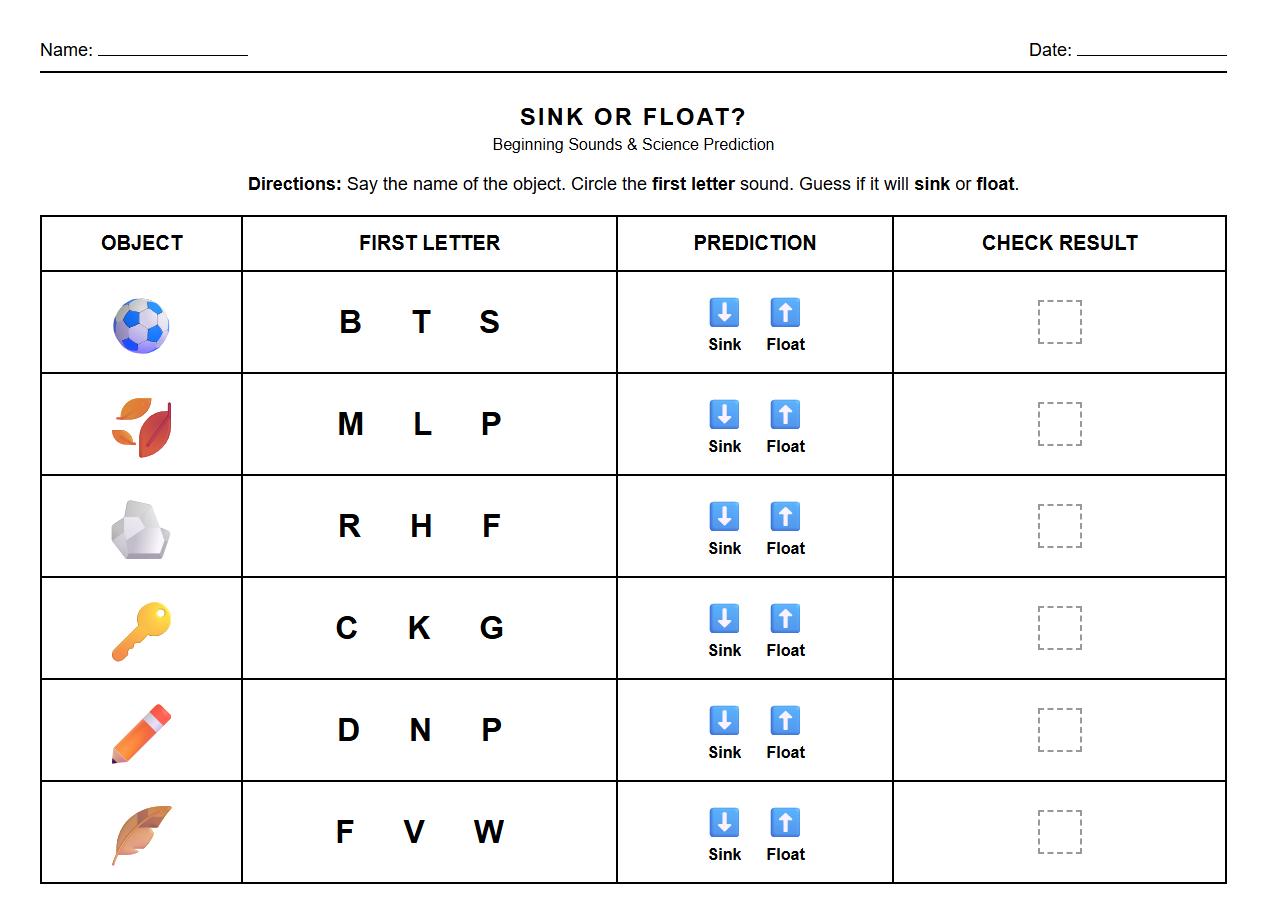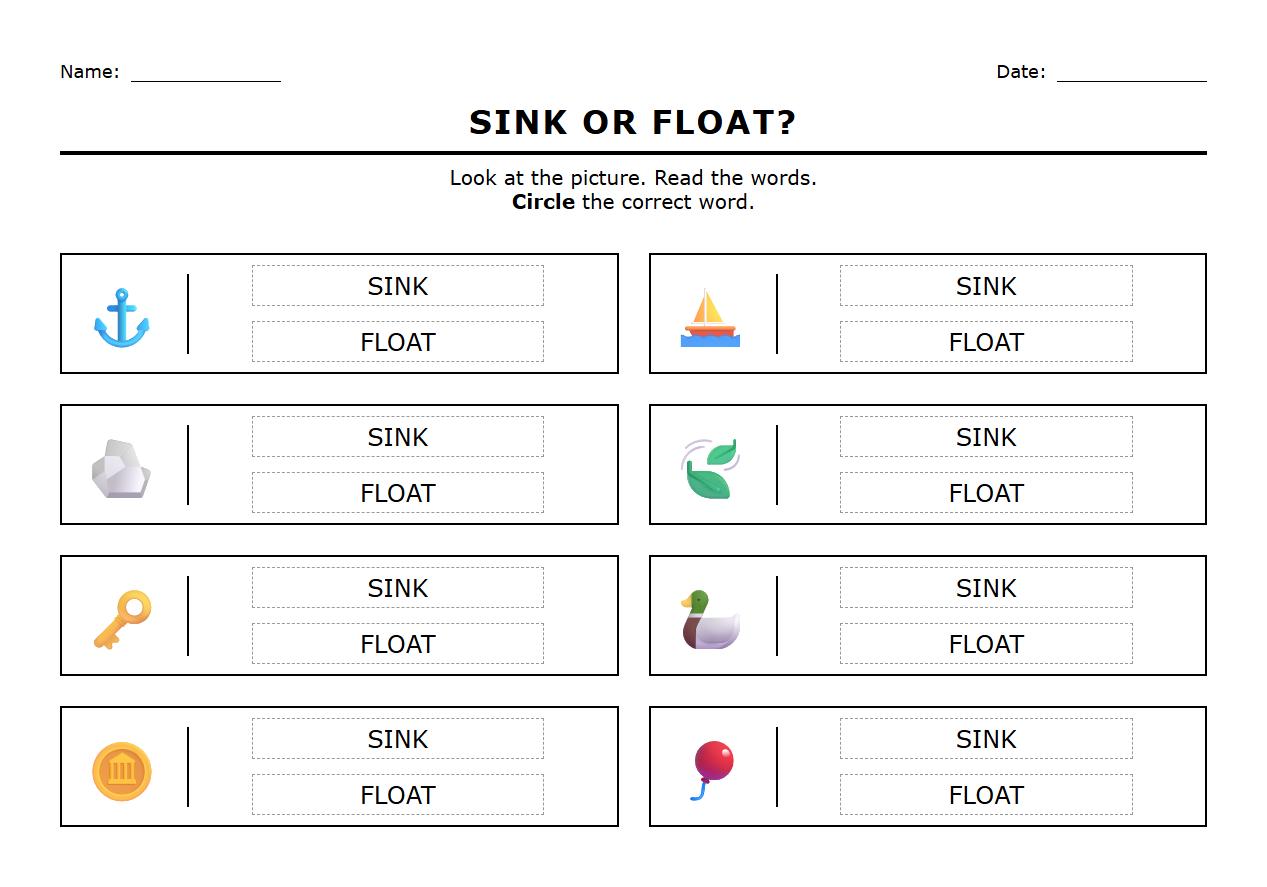
Inquiry-based learning encourages students to actively explore concepts by predicting and testing whether objects sink or float, integrating phonics skills through descriptive vocabulary and sound patterns. This hands-on approach enhances critical thinking and reinforces letter-sound relationships in a meaningful context. Explore the available worksheets to engage students with this interactive science and phonics activity.
Testing Objects to See if They Sink or Float
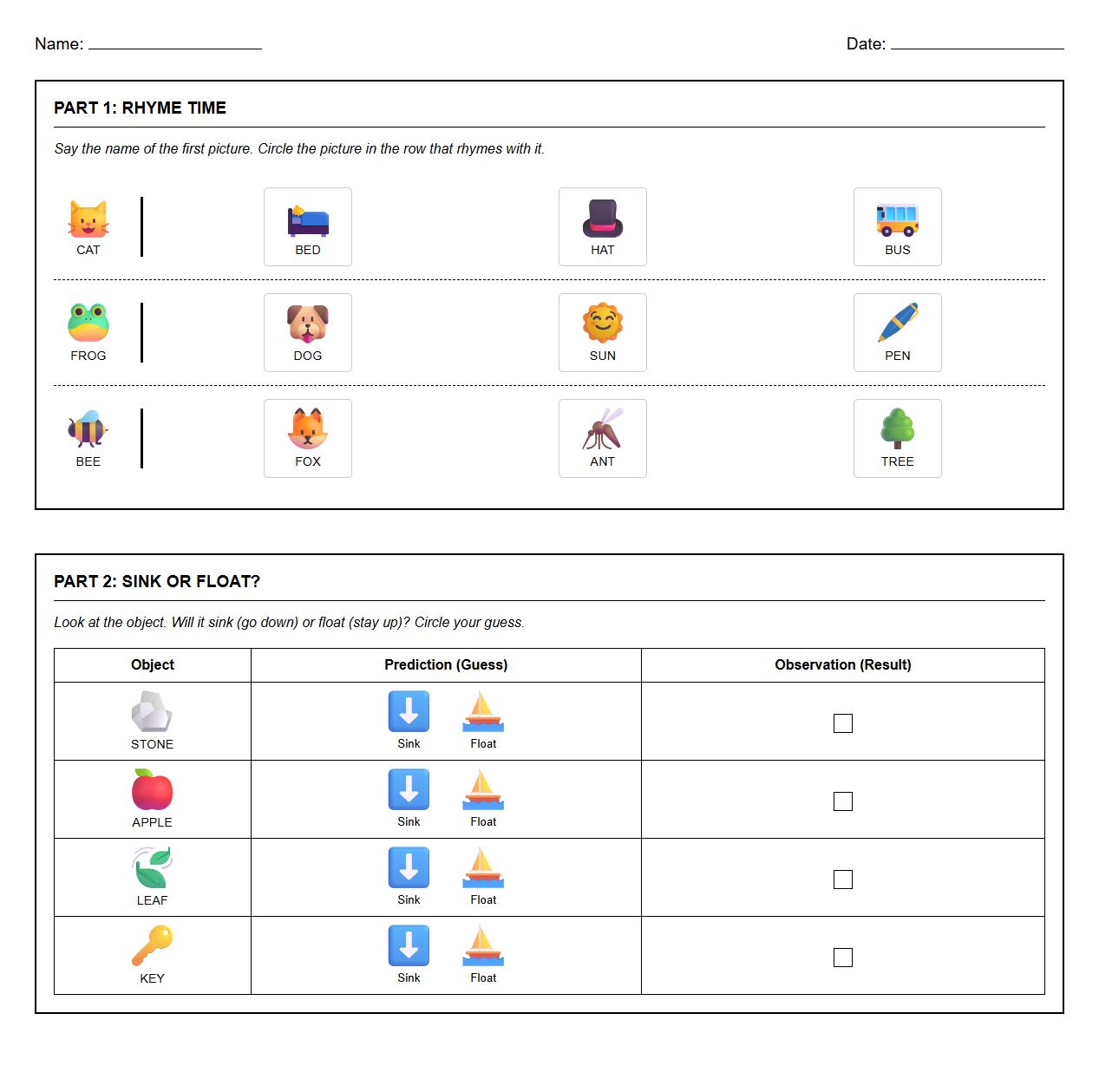
Choose common items like a coin, a plastic bottle cap, a small toy boat, and a piece of paper. Test each object in a container of water to observe whether it sinks or floats. This hands-on activity helps children understand buoyancy and water properties. Encourage adults to guide children in making predictions before the test.
Describing the Sound at the Beginning of "Sink"
The word "sink" starts with the /s/ sound, which is a soft hissing noise. You can explain this by asking children to listen carefully to the first sound they hear. This helps build phonemic awareness and supports early reading skills. Comparing it to other sounds like /b/ or /f/ enhances auditory discrimination.
Objects Starting with the Same Sound as "Float"
Find objects beginning with the /f/ sound, like a feather or a fruit. Matching items like these reinforces sound recognition and beginning letter sounds. This activity connects speech sounds with concrete examples from the environment. It aids phonics development in playful learning.
Sorting Objects by Their Beginning Sounds Before Testing
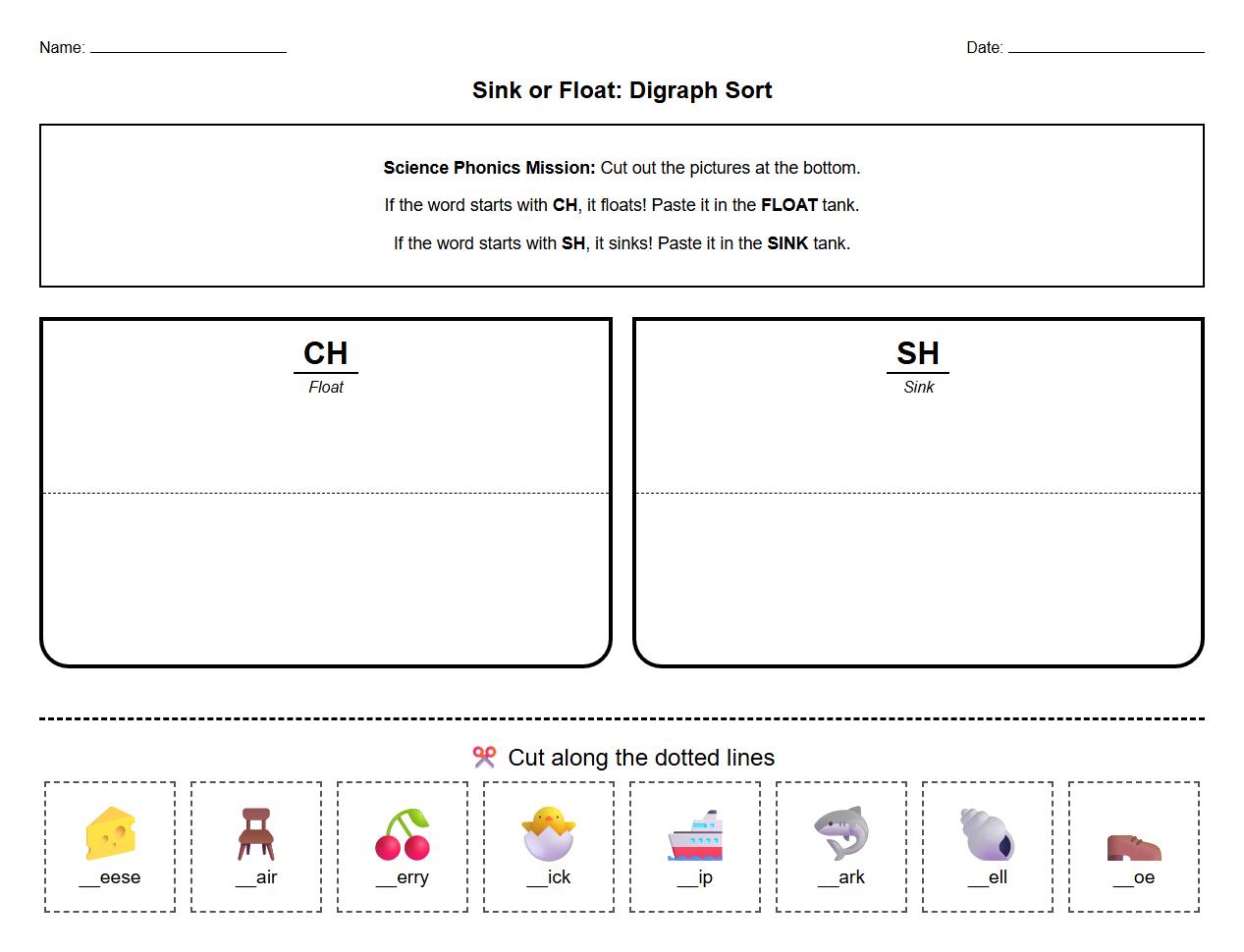
Before testing sink or float, group objects by their initial sounds, such as /c/, /f/, or /b/. Sorting encourages children to focus on phonological awareness alongside scientific exploration. It integrates language learning with hands-on science activities. Sorting also improves organizational and cognitive skills.
Comparing Syllables in "Water" and "Bubble"
The word "water" has two syllables: wa-ter, while "bubble" also has two: bub-ble. Counting syllables helps children develop phonological skills and understand word structure. Use clapping or tapping to make syllable counting fun and interactive. Recognizing syllable patterns supports early literacy.
Differences Between the Words "Plastic" and "Glass"
"Plastic" has two syllables with a soft "s" sound in the middle, while "glass" has one syllable with a "gl" blend. These differences affect how children perceive word sounds and shapes. Emphasizing the distinct sounds promotes better phonetic understanding. Comparing simple words boosts vocabulary and pronunciation skills.
Floating Object with the Most Syllables in Its Name
An example of a floating object with multiple syllables is "inflatable" (in-fla-ta-ble), which has four syllables. Identifying syllables in words of objects enhances linguistic awareness. This can be combined with the floating test to enrich multi-sensory learning. Complex vocabulary encourages language growth in young learners.
Rhyming with "Boat" Before Testing
Match rhyming words like "coat," "float," and "moat" with the word "boat." Rhyming activities promote phonological awareness and auditory discrimination. These early literacy skills are crucial for reading development. Engaging children with rhymes makes learning enjoyable and memorable.
Predicting What Happens to the Object That Starts with "C"
Ask children to guess if the object starting with the letter C, such as a coin, will sink or float. Prediction encourages critical thinking and hypothesis formulation. This invites participation and connects prior knowledge to new experiences. Encourage observation and reflection during the experiment.
Writing Words That Describe Each Object's Action After Testing
After testing, have children write simple words like "sink," "float," "drift," or "stay" to describe what each object did. This helps integrate literacy with science by linking actions to vocabulary. Writing about observations deepens understanding and communication skills. It also encourages children to express scientific concepts in their own words.


Science Vocabulary Development: Sink or Float Kindergarten Worksheet