Magnets have unique properties that allow them to attract certain materials while repelling others, making them a fascinating subject for young learners. Exploring magnet attraction and repulsion helps kindergarteners understand the basic principles of magnetic forces through hands-on activities. Check out the available worksheets to engage your child in discovering the magic of magnets.
Which Objects Will a Magnet Stick To?
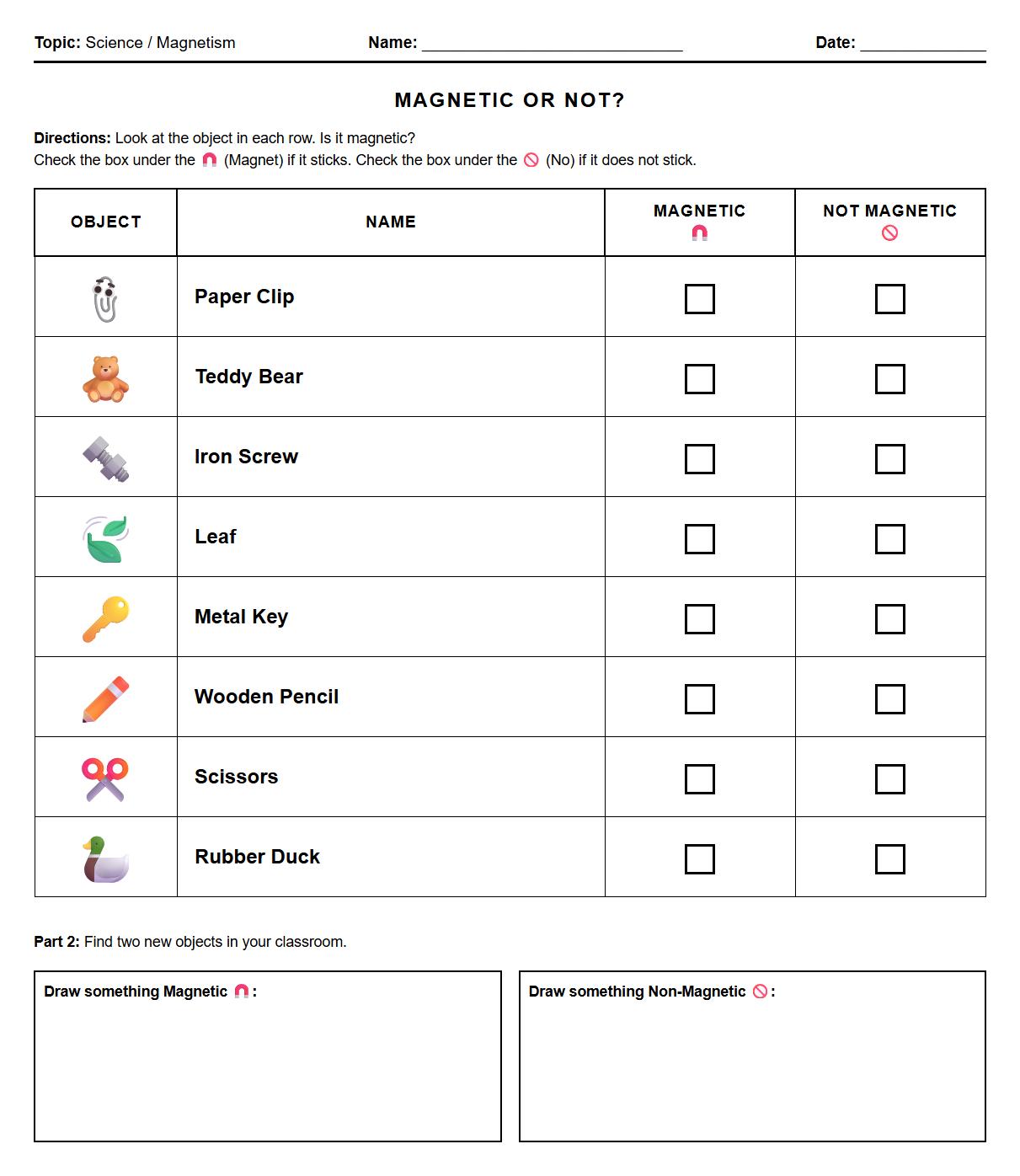
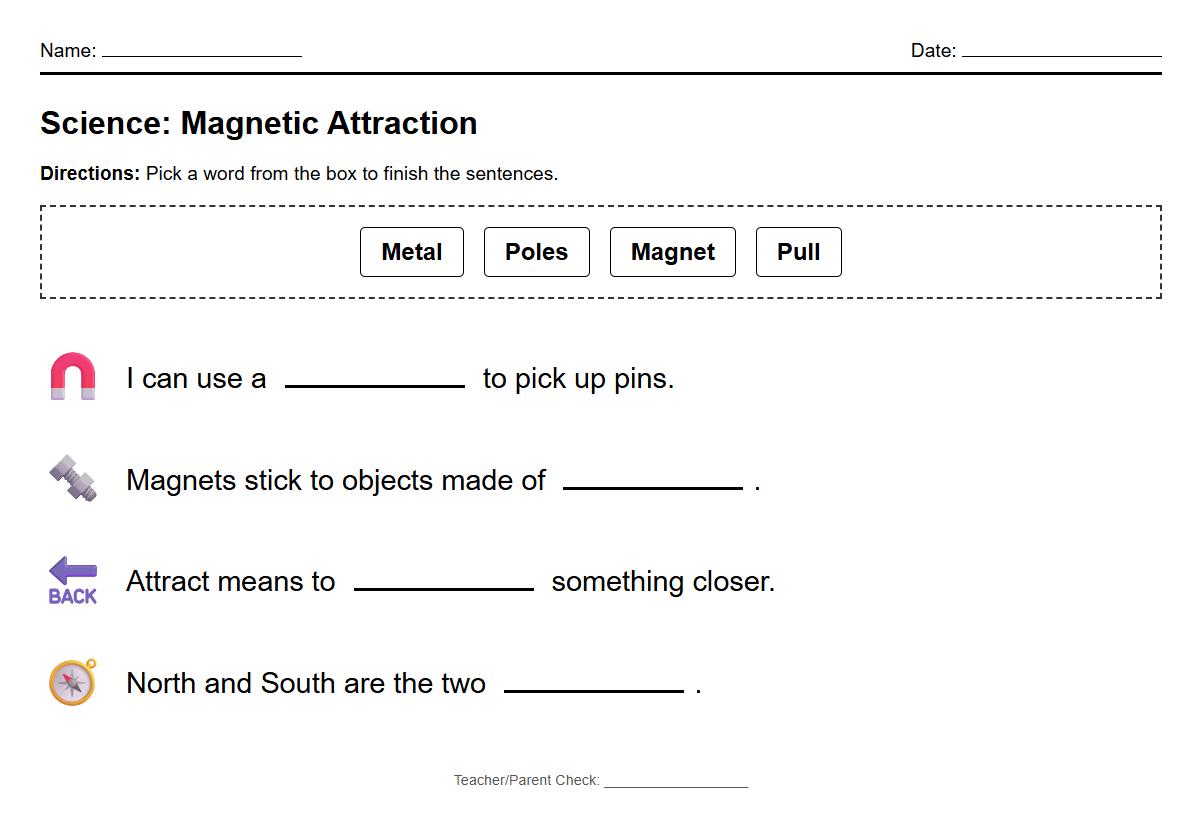
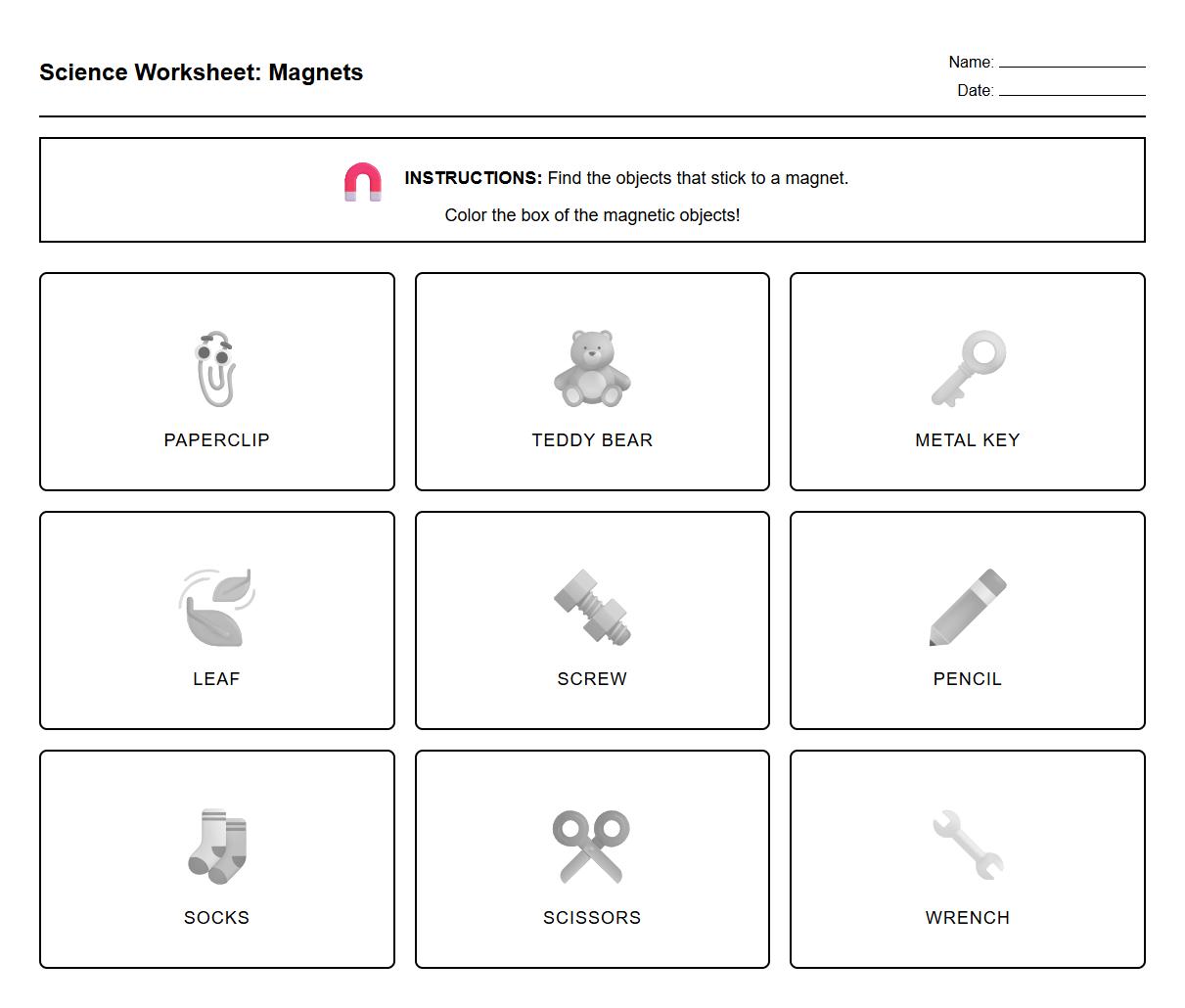
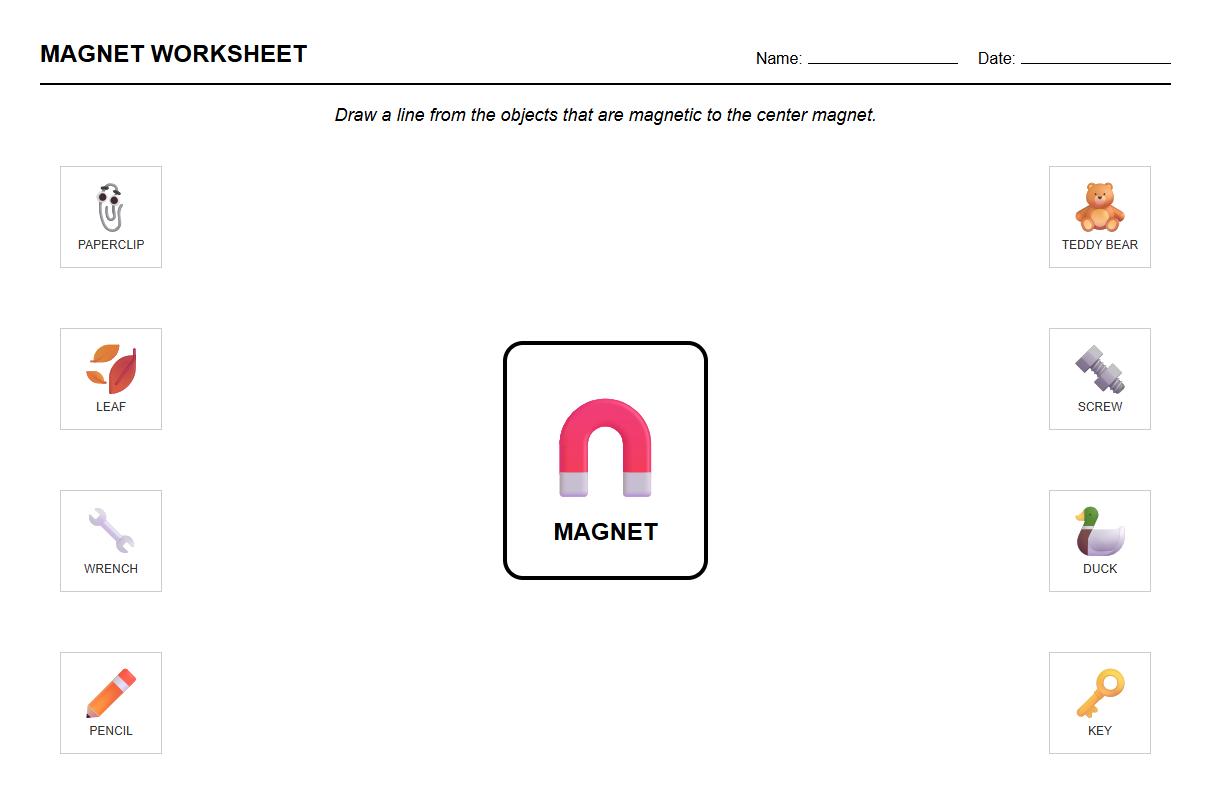
A magnet will stick to objects made of certain metals, especially iron, steel, nickel, and cobalt. Common magnetic objects include paperclips, fridge magnets, and some toys. Non-metallic or non-magnetic metals like aluminum and copper are not attracted by magnets. Teaching children to identify magnetic materials helps develop their observation skills.
What Does It Mean When Magnets Attract?
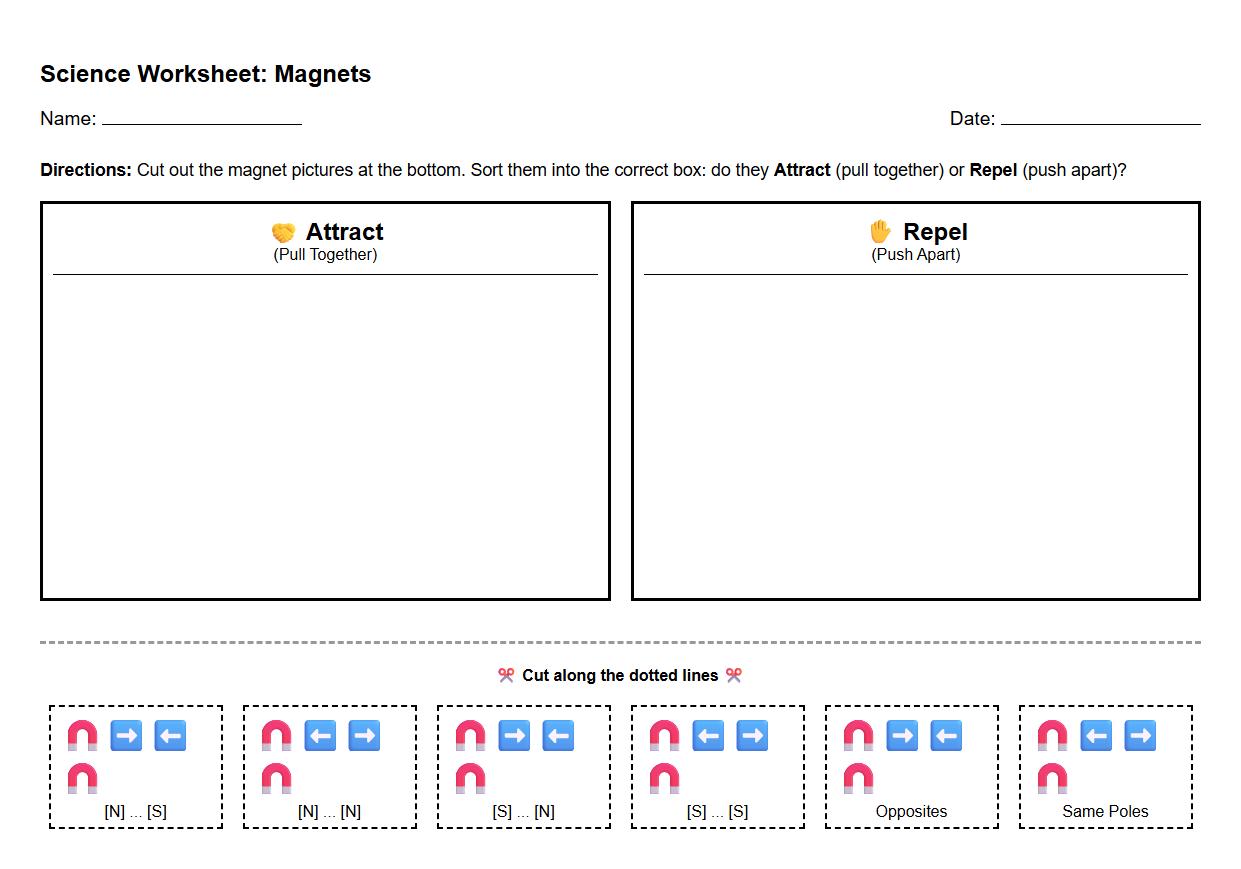
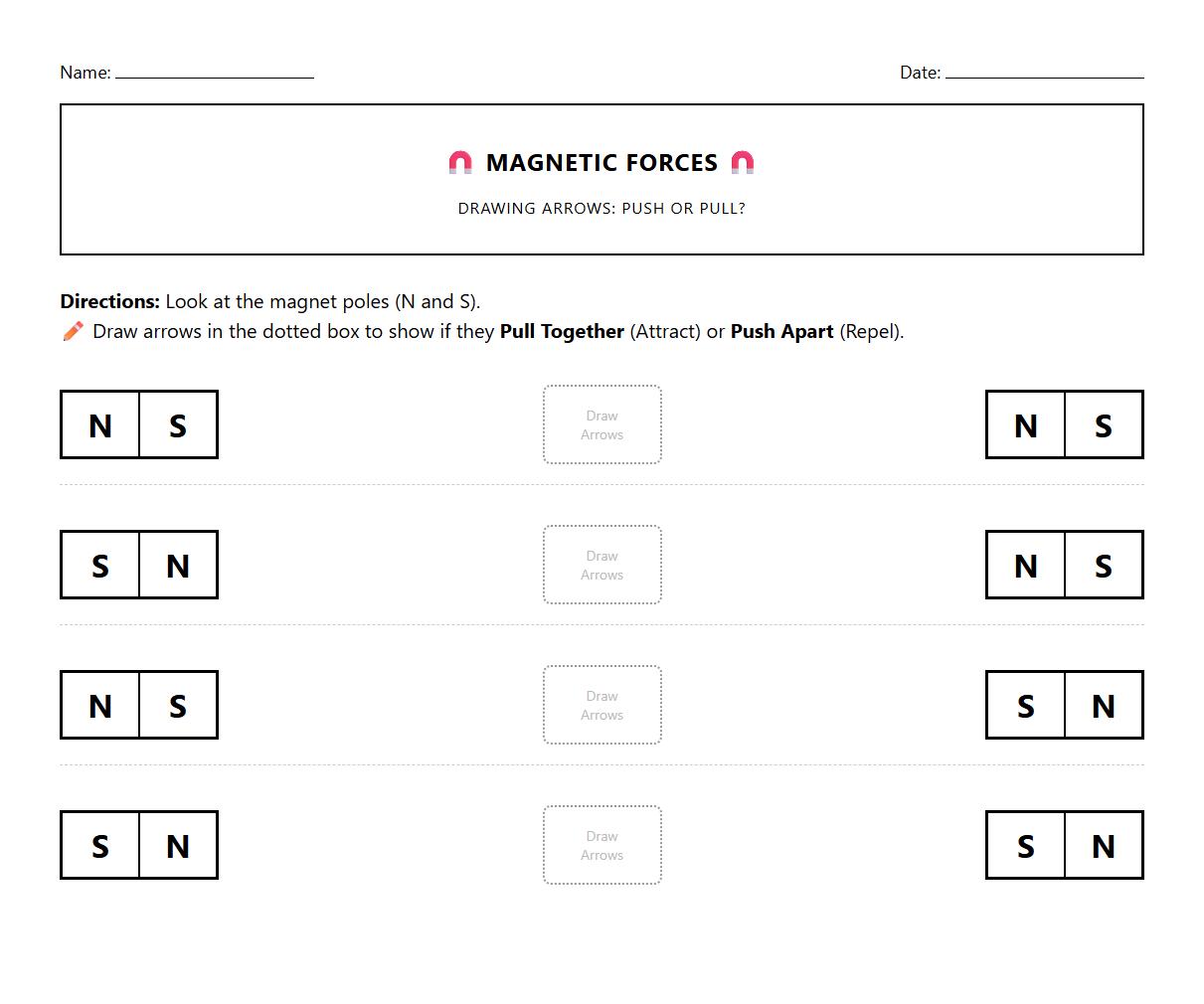
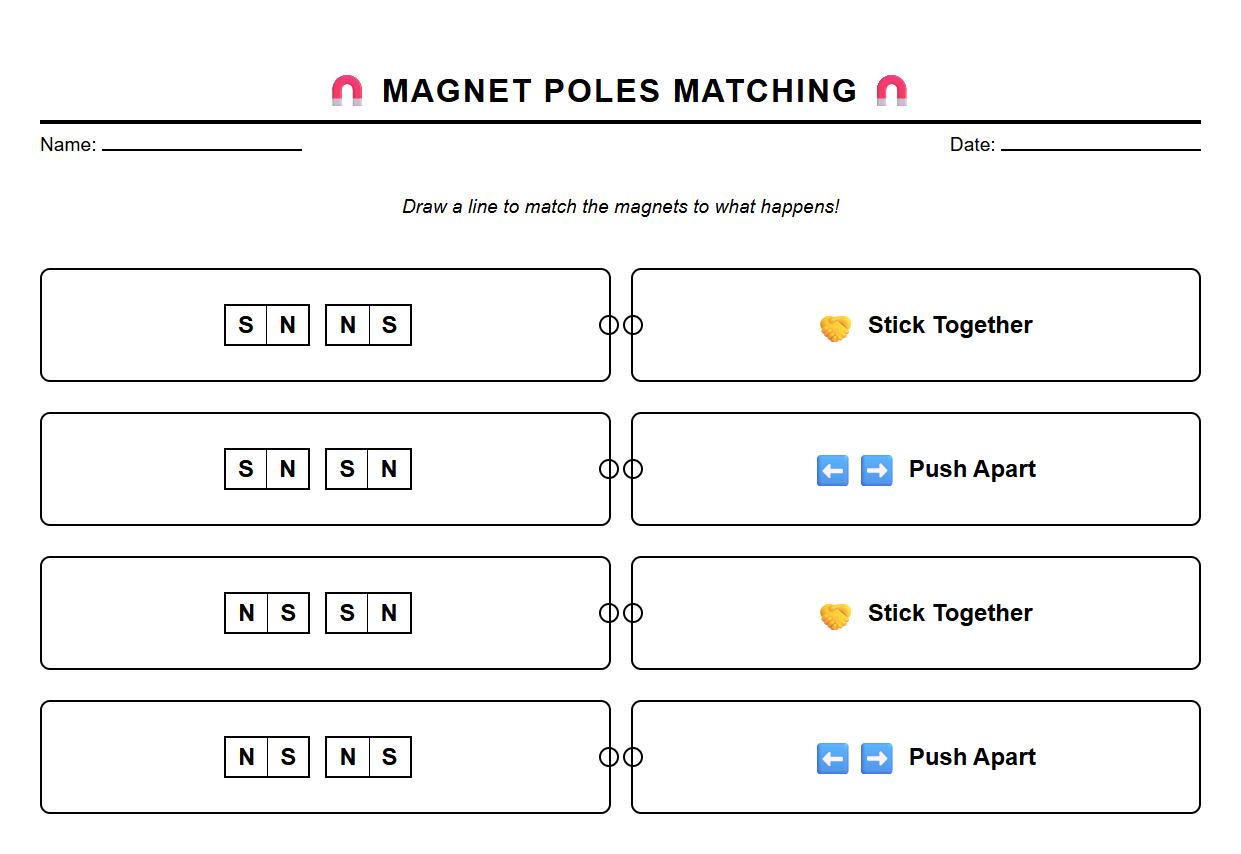
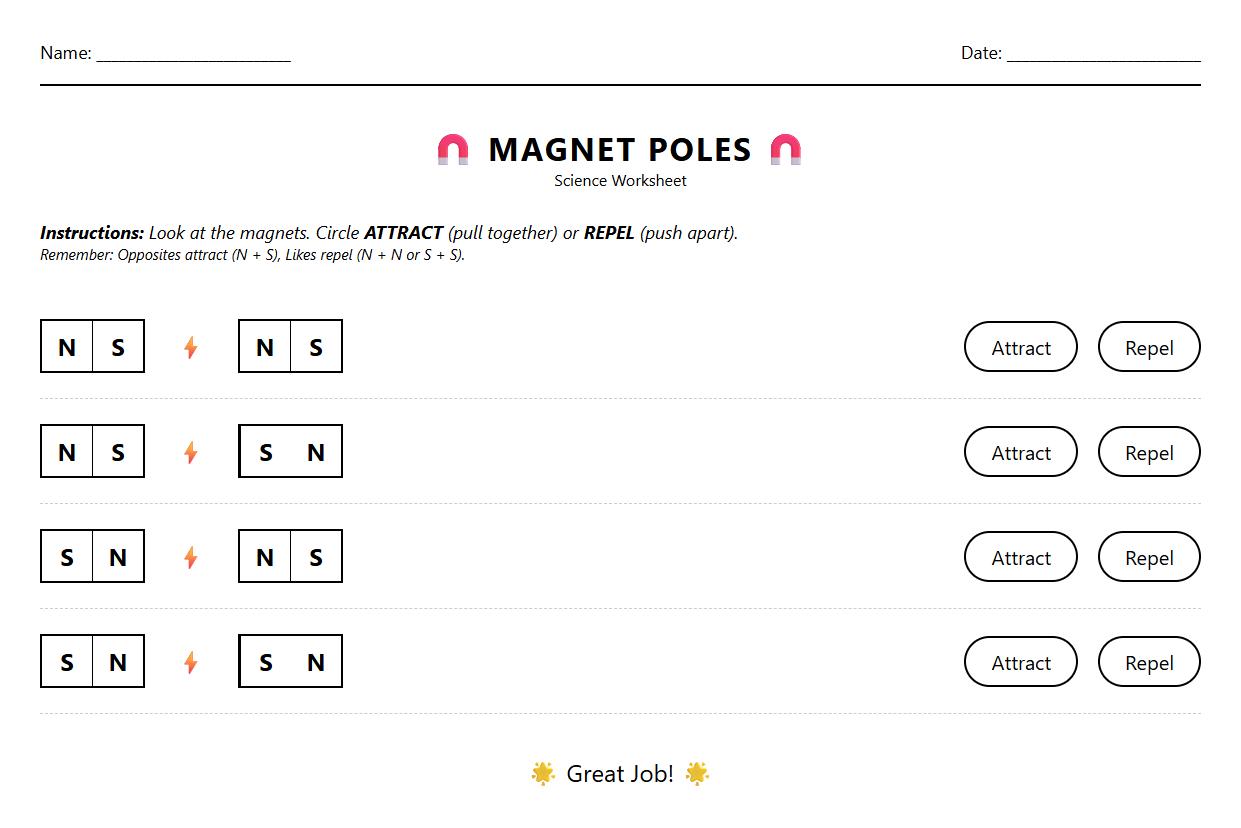
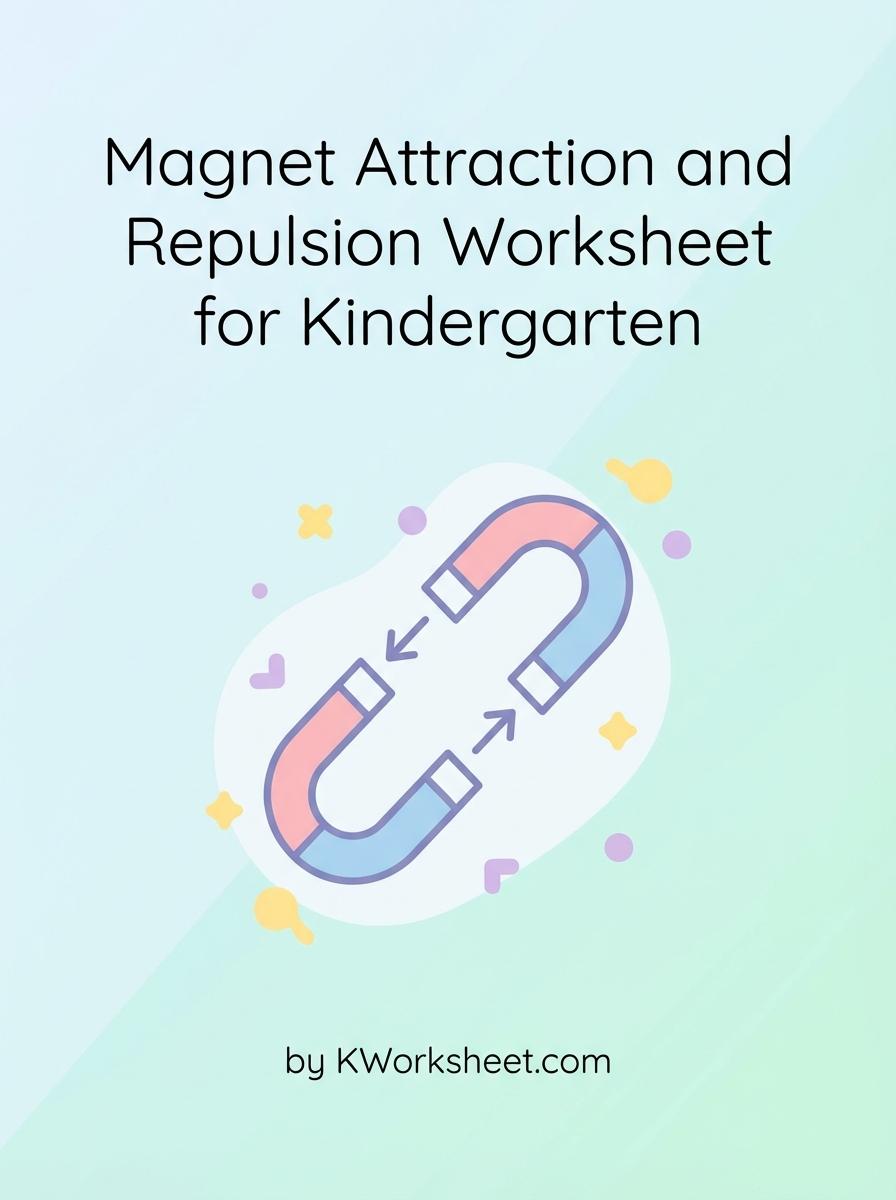
Attraction between magnets occurs when opposite poles (north and south) come close together. This attraction causes the magnets to pull towards each other or pull certain objects towards themselves. It's a fundamental magnetic force that helps explain why some things stick to magnets. Teachers can demonstrate this to show how invisible forces work.
What Does It Mean When Magnets Repel?
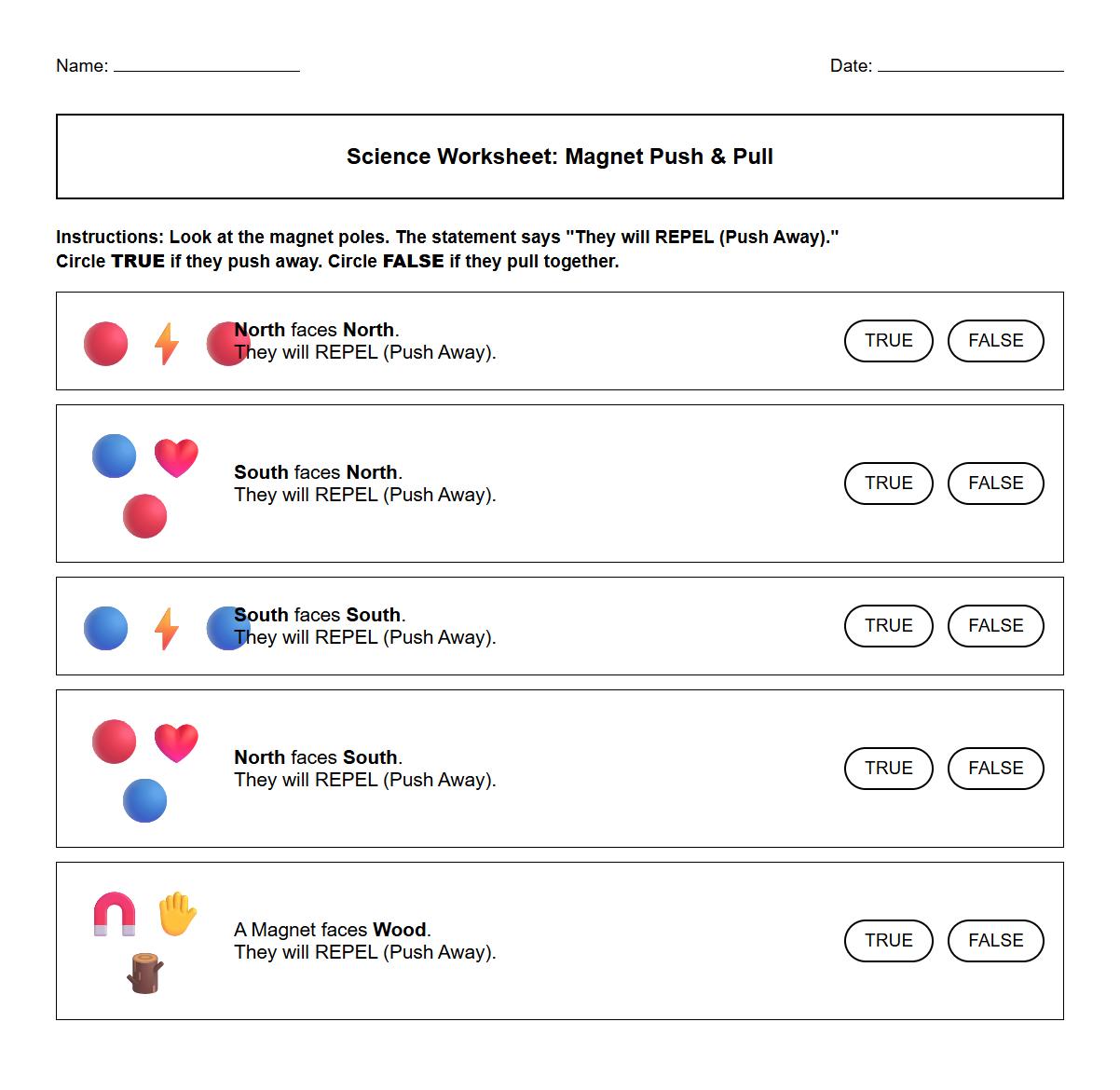
Repulsion happens when two magnets are brought near with the same poles facing each other, like north to north or south to south. Instead of pulling together, the magnets push away from each other. This force can be felt as a push and helps children understand magnetic forces better. Repelling magnets can be fun to explore in simple science experiments.
Can a Magnet Pick Up a Plastic Spoon?
No, a magnet cannot pick up a plastic spoon because plastic is not a magnetic material. Magnets only attract objects made of certain metals. This is a great way to teach kids about the difference between magnetic and non-magnetic items. Encouraging them to test different objects builds curiosity and critical thinking.
Which of These Items Is Magnetic?
Items like paperclips, nails, and steel keys are magnetic, meaning magnets will stick to them. In contrast, objects like plastic toys, wooden blocks, and aluminum foil are not magnetic. Sorting items into magnetic and non-magnetic groups is a practical activity for young learners. Understanding this helps kids categorize materials by their properties.
How Do Two Magnets Behave If You Put Like Poles Together?
When two magnets with the same poles are put together, they repel each other. This means they push away instead of sticking. Teaching this concept helps children grasp basic magnetic principles. It's a simple experiment that visually shows forces in action.
What Happens When You Put a Magnet Near a Paperclip?
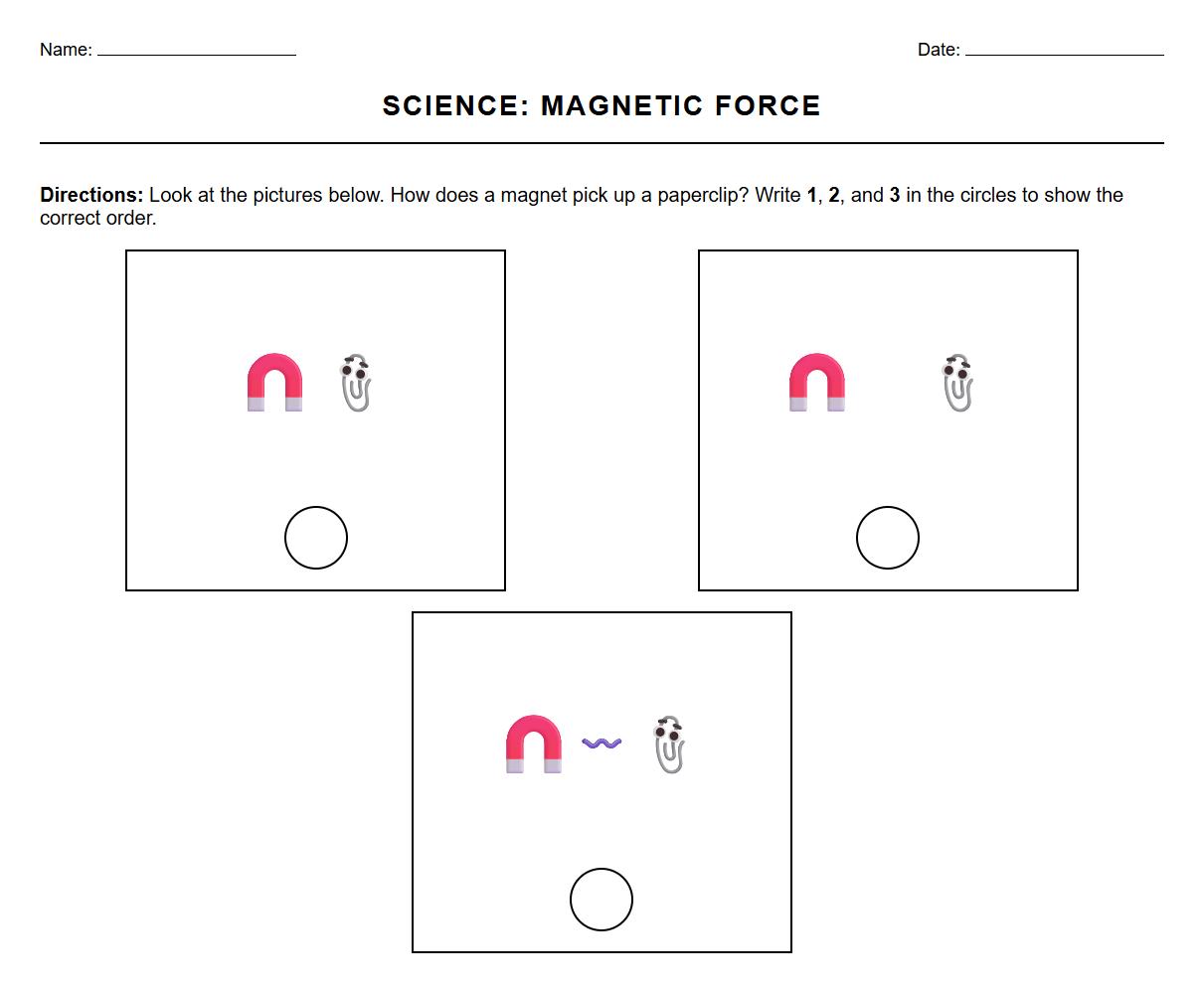
When a magnet is placed near a paperclip, the paperclip is attracted and will stick to the magnet. This happens because the paperclip is made of steel, a magnetic material. The magnet causes the paperclip to become temporarily magnetic too. This interaction is a fun way to introduce magnetic attraction to kids.
Can You Use a Magnet to Move an Object Without Touching It?
Yes, you can use a magnet to move a magnetic object without touching it. By bringing the magnet close, the object will move due to the magnetic force. This invisible force helps children understand how magnets work from a distance. Activities like this encourage hands-on learning and experimentation.
What Will Stick to a Refrigerator Magnet?
A refrigerator magnet will stick to metal surfaces made of iron or steel, such as the fridge door itself. Items made from these materials will also stick when placed near the magnet. Magnets do not stick to plastic, glass, or wooden surfaces. This helps explain why magnets hold notes and pictures on the fridge.
Why Do Some Things Not Stick to Magnets?
Some objects do not stick to magnets because they are made from non-magnetic materials like plastic, wood, glass, or certain metals like aluminum. The magnetic field cannot pull or attract these materials. Understanding this difference is key to learning about magnetism. Teachers and parents can use this to help children classify objects around them.


Forces All Around Us Worksheet for Kindergarten Understanding