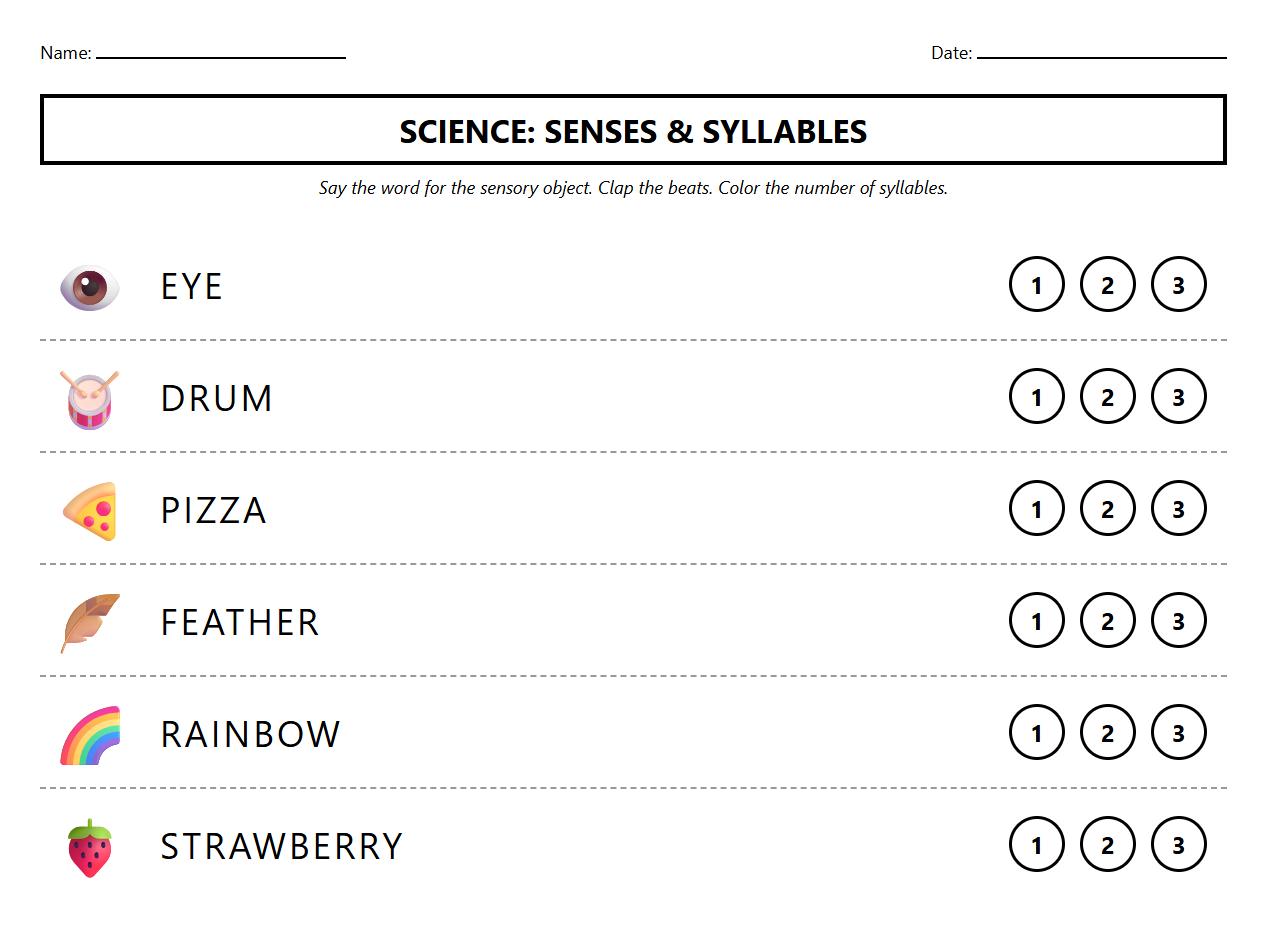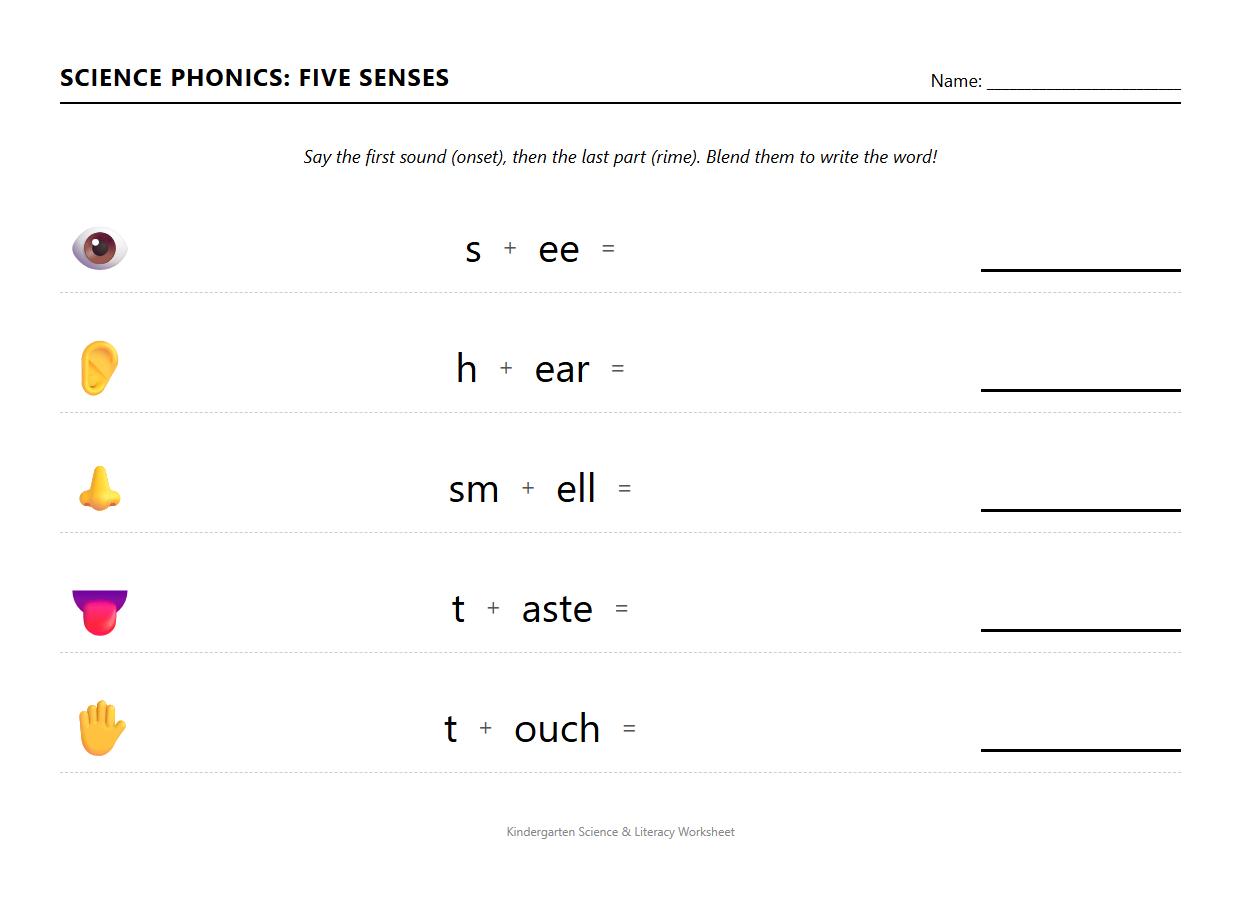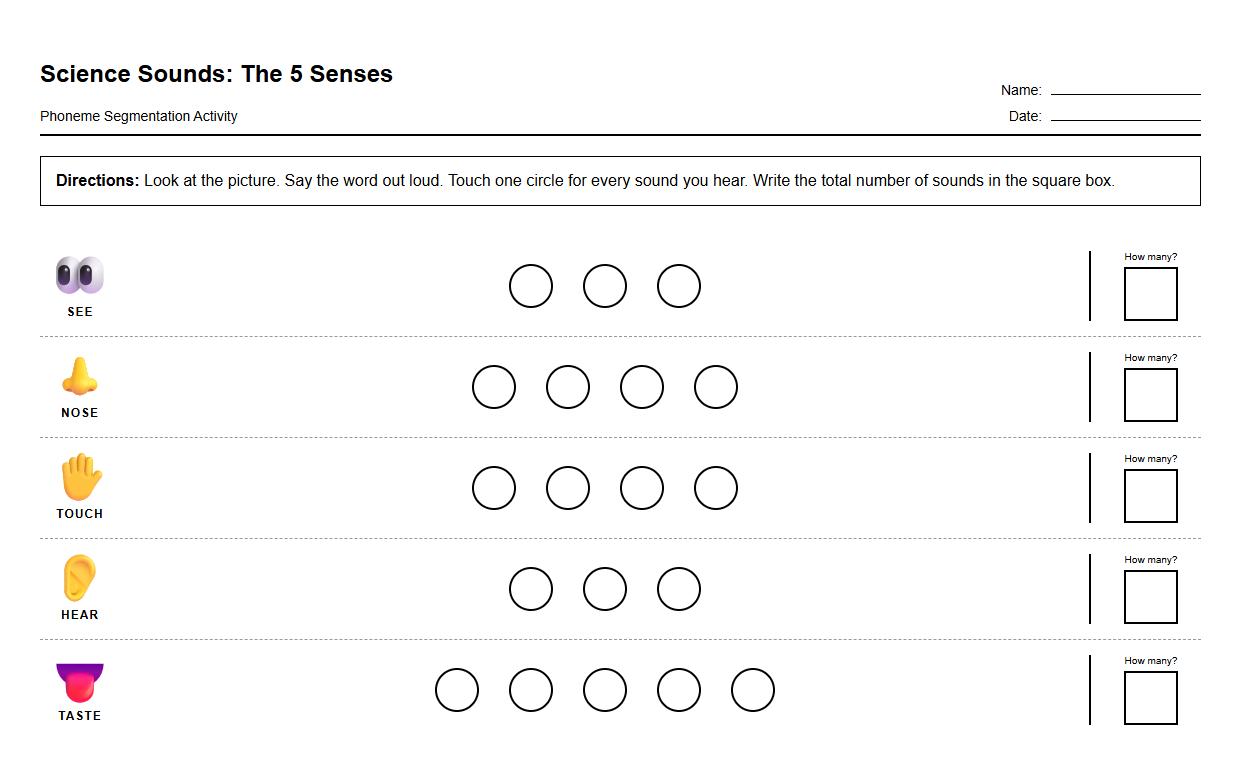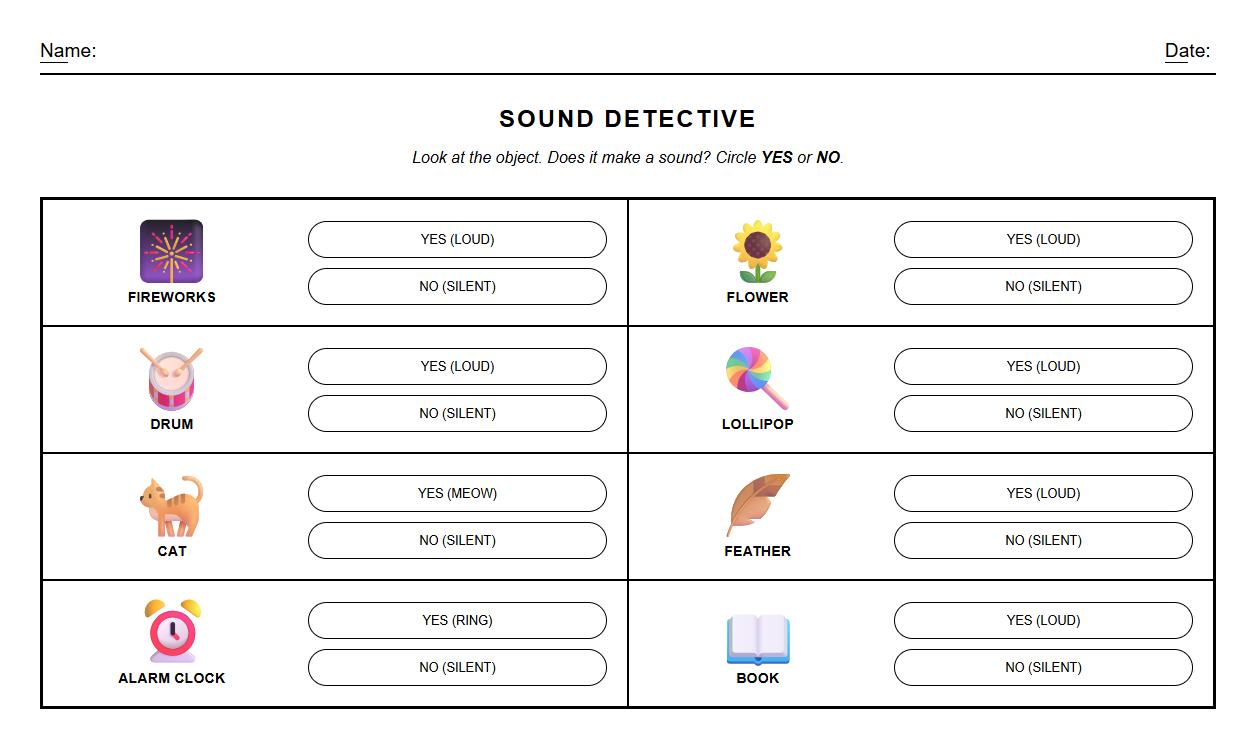
Kindergarten students develop foundational reading skills by exploring phonics through sensory experiences that connect sounds to the five senses. These engaging phonics worksheet activities encourage young learners to identify and match sounds with sight, sound, touch, taste, and smell, enhancing both literacy and sensory awareness. Explore the collection of worksheets designed to make phonics fun and interactive for early learners.
Fun Phonics Games for Beginning Letter Sounds
Engage kindergarteners with interactive phonics games like "Sound Hunt," where children find objects starting with a specific letter sound. "Letter Sound Bingo" helps reinforce recognition through playful competition. These games create a lively learning environment that motivates young learners to identify beginning letter sounds confidently.
Incorporating the Five Senses into Phonics Worksheets
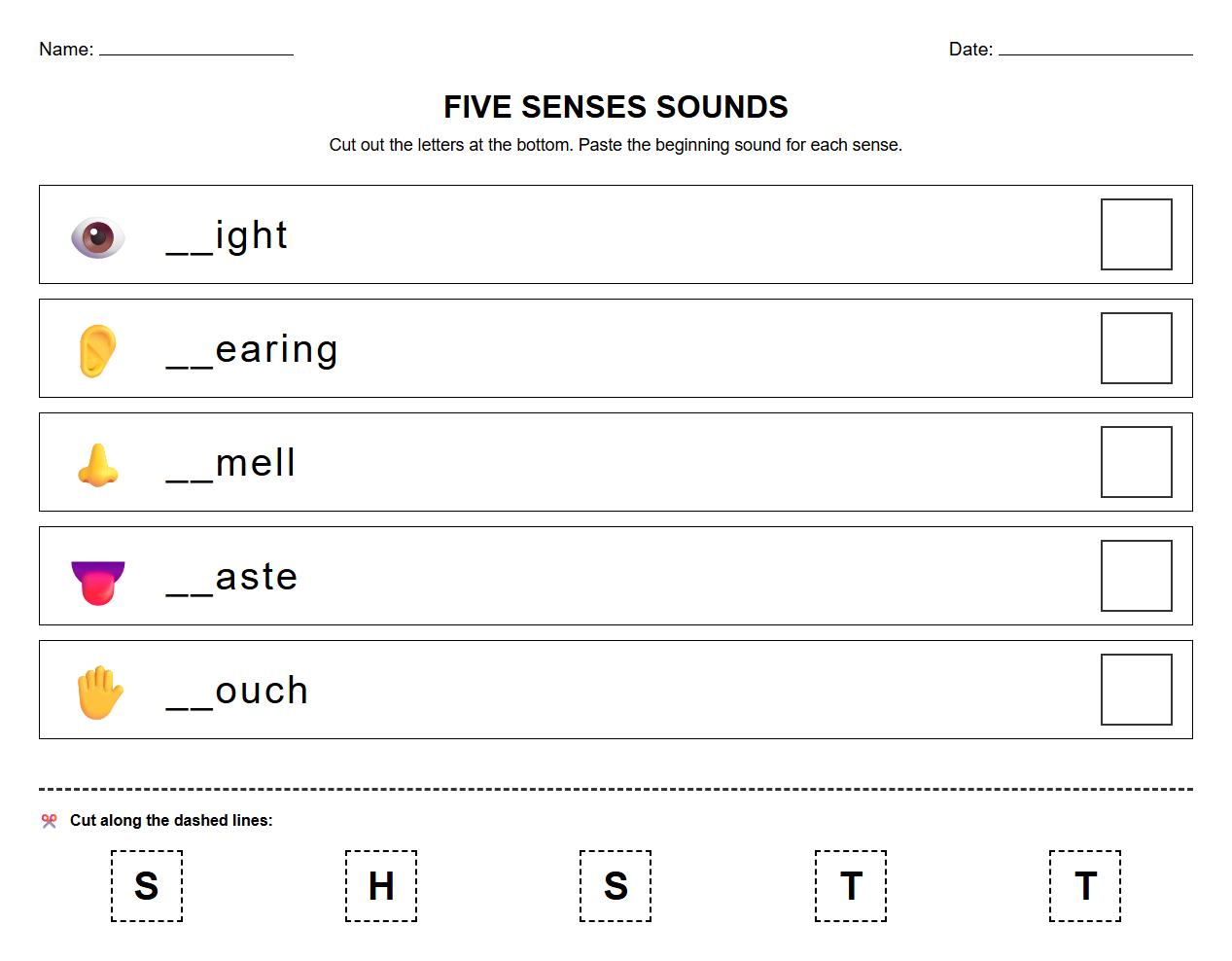
Teachers can design worksheets that integrate the five senses by associating letters with sensory experiences. For example, worksheets can include images and words related to taste, smell, sight, hearing, and touch to strengthen phonics connections. This multisensory approach enhances memory and engagement with letter sounds.
Easy Matching Activities for Sensory Words and Sounds
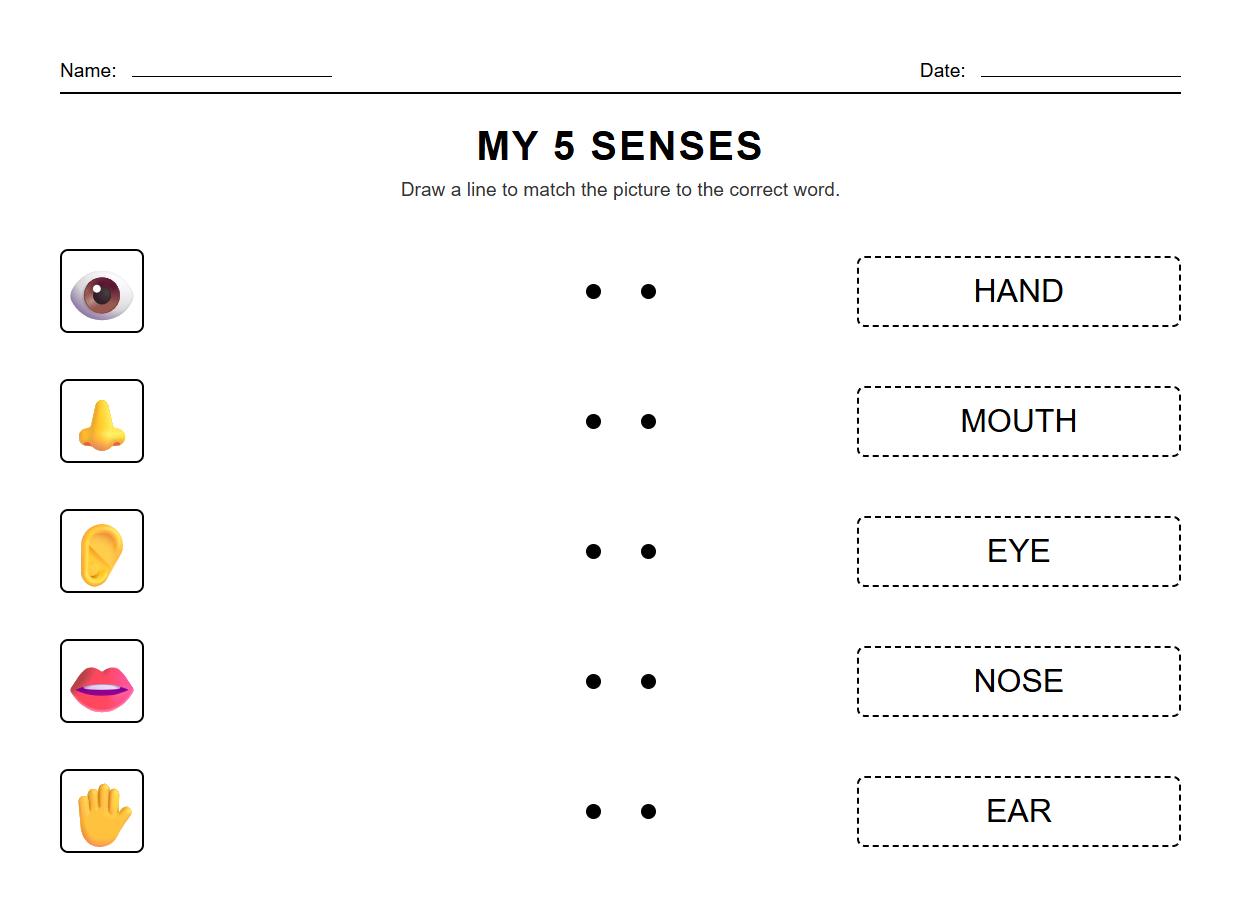
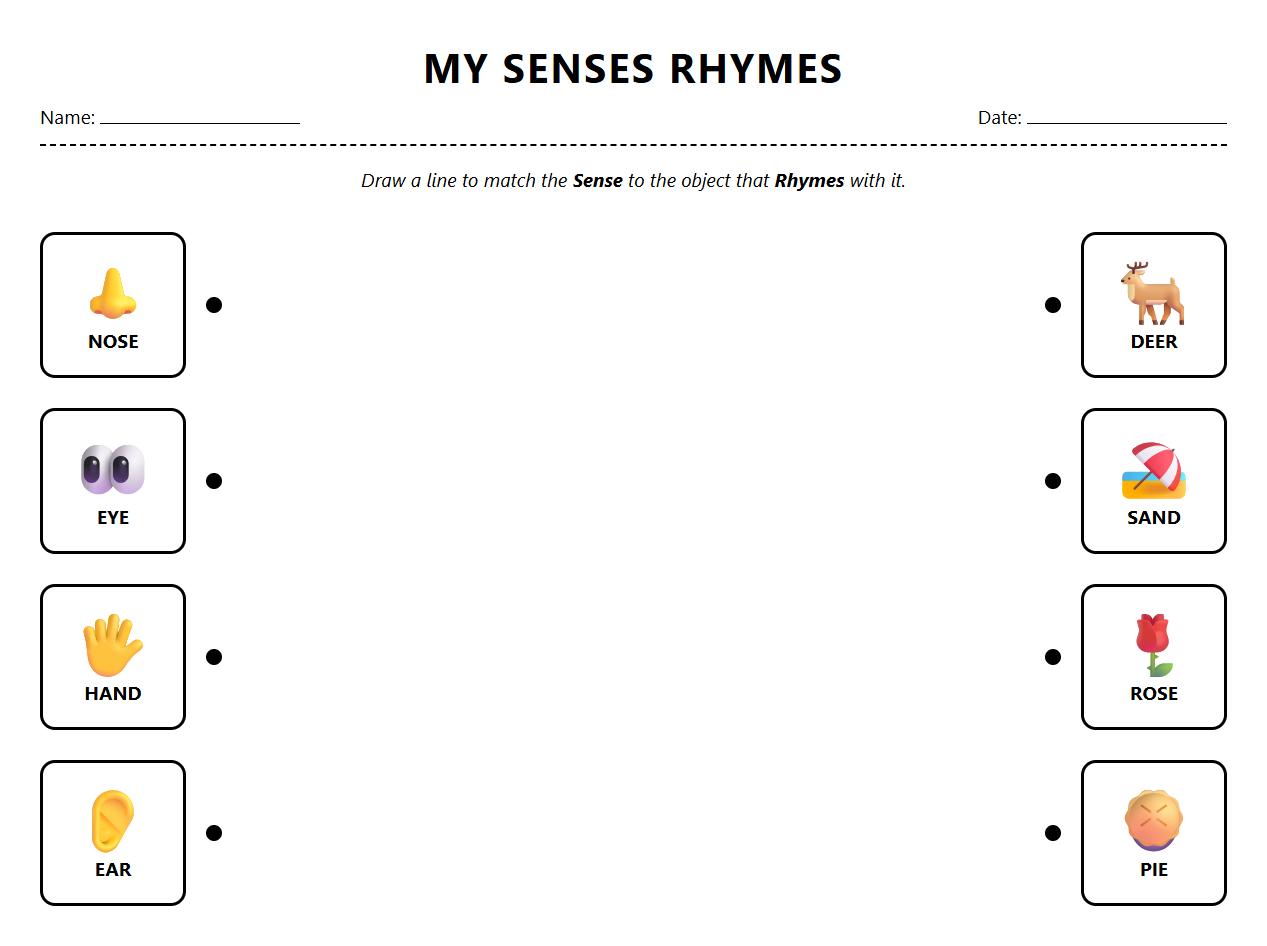
Matching pictures of sensory objects with their starting sounds is an effective activity. Worksheets can present pairs of images and letters for children to connect. This simple yet meaningful task supports both phonics skills and sensory vocabulary development.
Cut-and-Paste Activities for Senses and Phonics
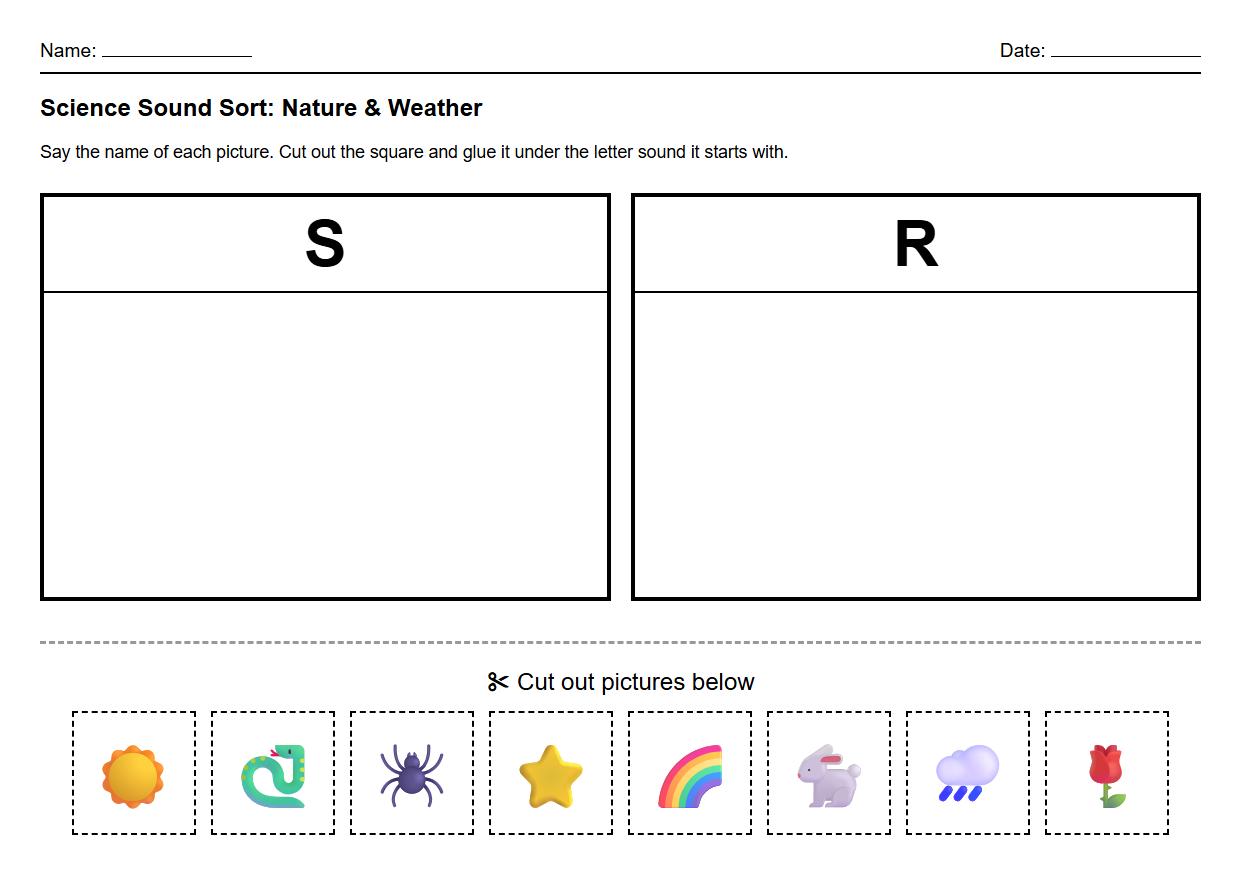
Cut-and-paste worksheets combining sensory words and letter sounds encourage hands-on learning. Kindergarteners cut out pictures and paste them next to the matching beginning letter. This tactile activity fosters fine motor skills while reinforcing understanding of senses and phonics.
Coloring Worksheets Combining Visual Cues and Letter Sounds
Coloring pages featuring images linked to the five senses and their corresponding letters help build visual and phonetic associations. Children color objects that start with specific sounds, reinforcing letter recognition. Such worksheets integrate creativity with phonics practice seamlessly.
Listening Exercises on Worksheets to Reinforce Phonics and Sensory Vocabulary
Listening activities prompt students to hear words related to the senses and identify their initial sounds. Worksheets can guide children to circle or mark letters corresponding to sounds they listen for. This auditory focus strengthens phonics alongside sensory word comprehension.
Simple Fill-in-the-Blank Tasks for Sense-Related CVC Words
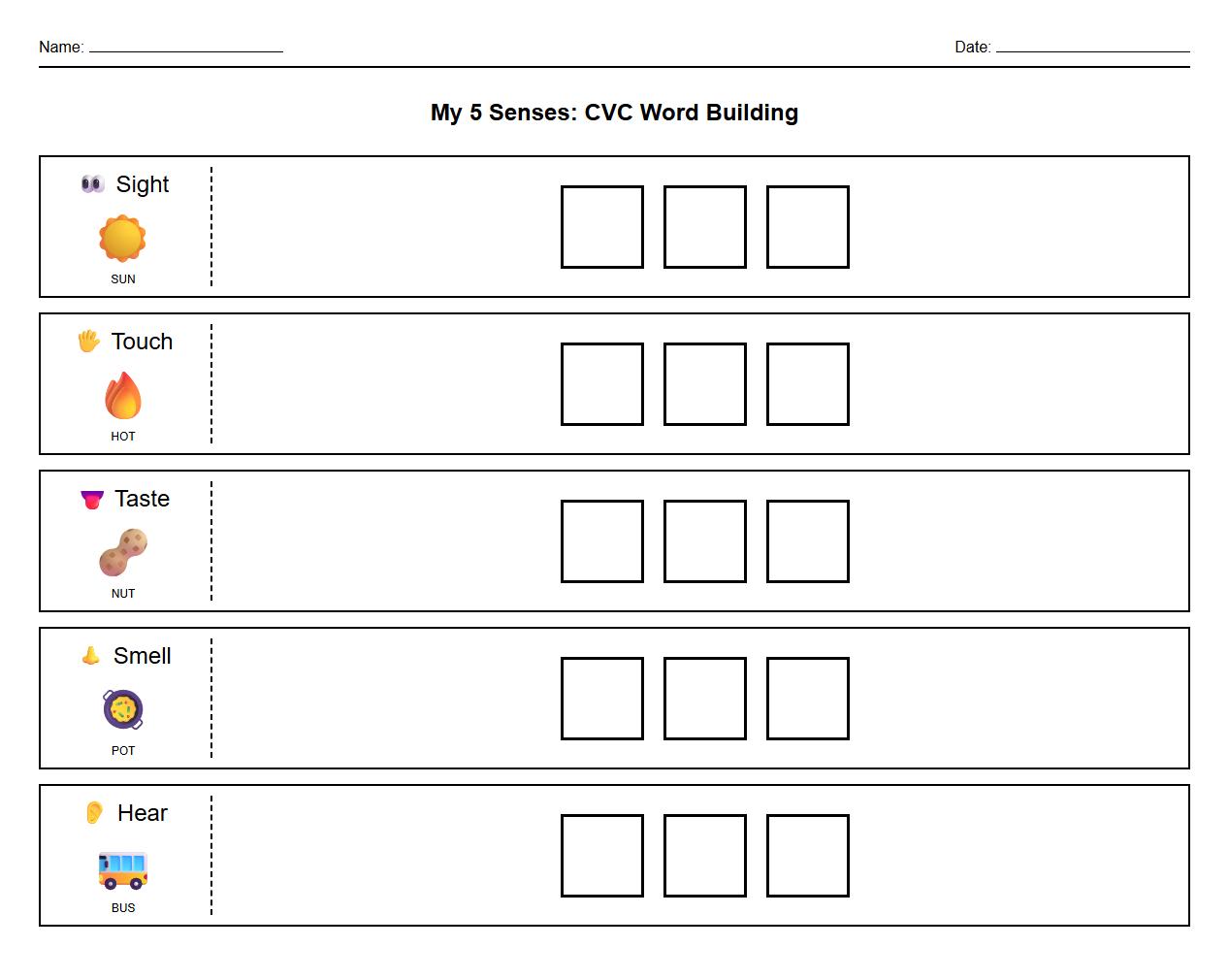
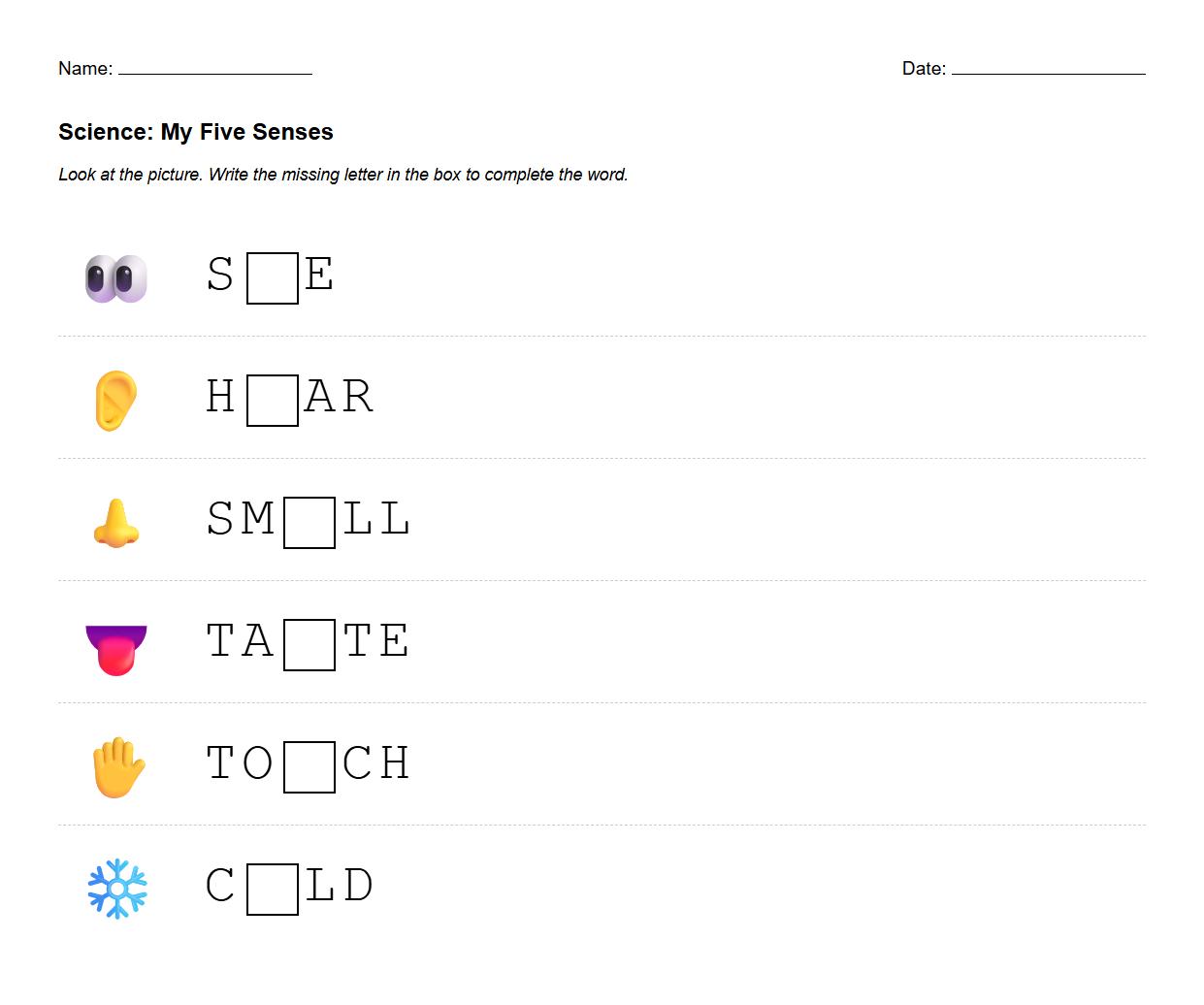
Fill-in-the-blank exercises featuring CVC words tied to the senses allow kindergarteners to practice spelling and phonics. For example, blank spaces in words like "sun," "bag," or "wet" encourage letter sound recognition. These activities build confidence in decoding and writing simple words.
Linking Letter Tracing to Sense-Themed Vocabulary
Worksheets combining letter tracing with sense-themed vocabulary invite children to practice handwriting while learning new words. Tracing letters linked to sensory objects (e.g., "s" for sun, "t" for tap) enhances both fine motor coordination and phonics understanding.
Sorting Activities Categorizing Words by Sense and Initial Sound
Sorting worksheets where students group words according to their starting letter and related sense encourage analytical thinking. Kids sort images or words into columns representing sound and sensory category. This dual sorting strengthens connections between phonics and sensory knowledge.
Picture-Word Matching to Identify Phonics Patterns and Senses
Picture-word matching exercises engage kindergarteners in linking images with their initial sounds and sensory context. By drawing lines between words and corresponding pictures, children develop phonics skills and familiarization with sensory vocabulary. This method promotes active participation and retention.


Interactive Science Worksheet Featuring the Five Senses for Early Learners