Simple Investigation of Magnets Worksheet for Early Learners

📅 Apr 23, 2025 👤 Nylen Smith

Magnets attract and repel certain materials, making them an exciting topic for early learners to explore through hands-on activities. This simple investigation encourages children to observe magnetic forces using everyday objects, fostering curiosity and foundational science skills. Check out the available worksheets to start your young scientist's magnetic discovery today.

Magnetic and Nonmagnetic Objects Sorting Worksheet using Visual Cues
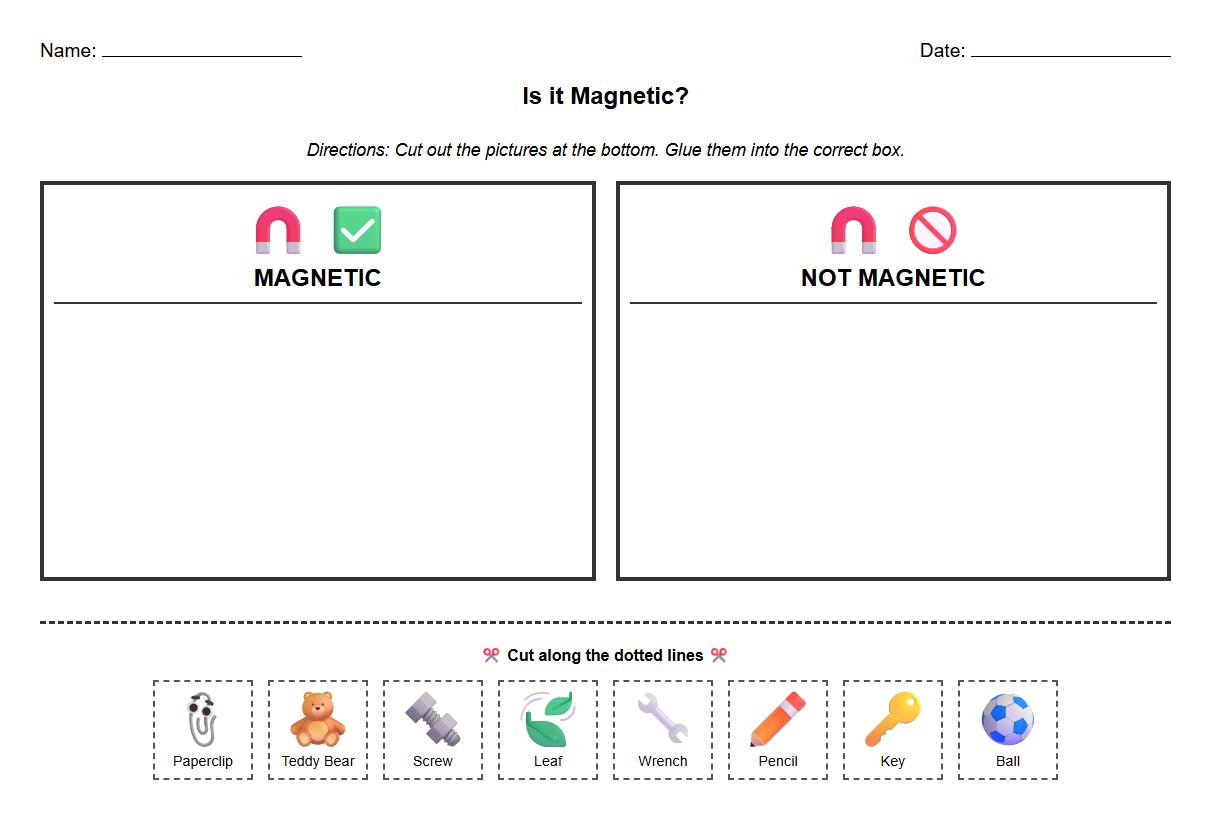
Magnetic and Nonmagnetic Objects Sorting Worksheet using Visual Cues

Download PDF     Pin it

Magnet Polarity Identification Worksheet with Symbol Matching
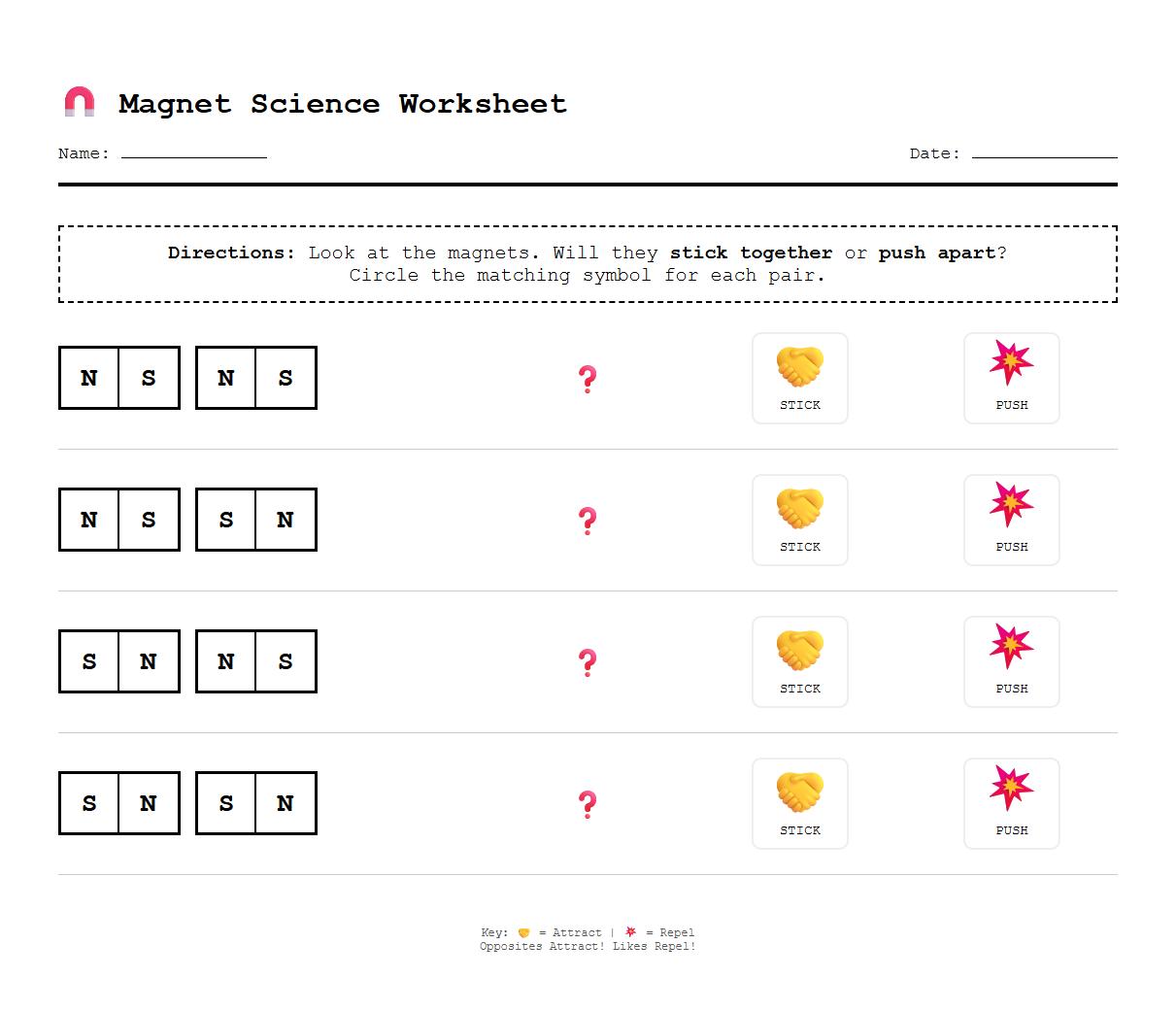
Magnet Polarity Identification Worksheet with Symbol Matching

Download PDF     Pin it

Magnetic Field Direction Tracing Worksheet for Early Learners
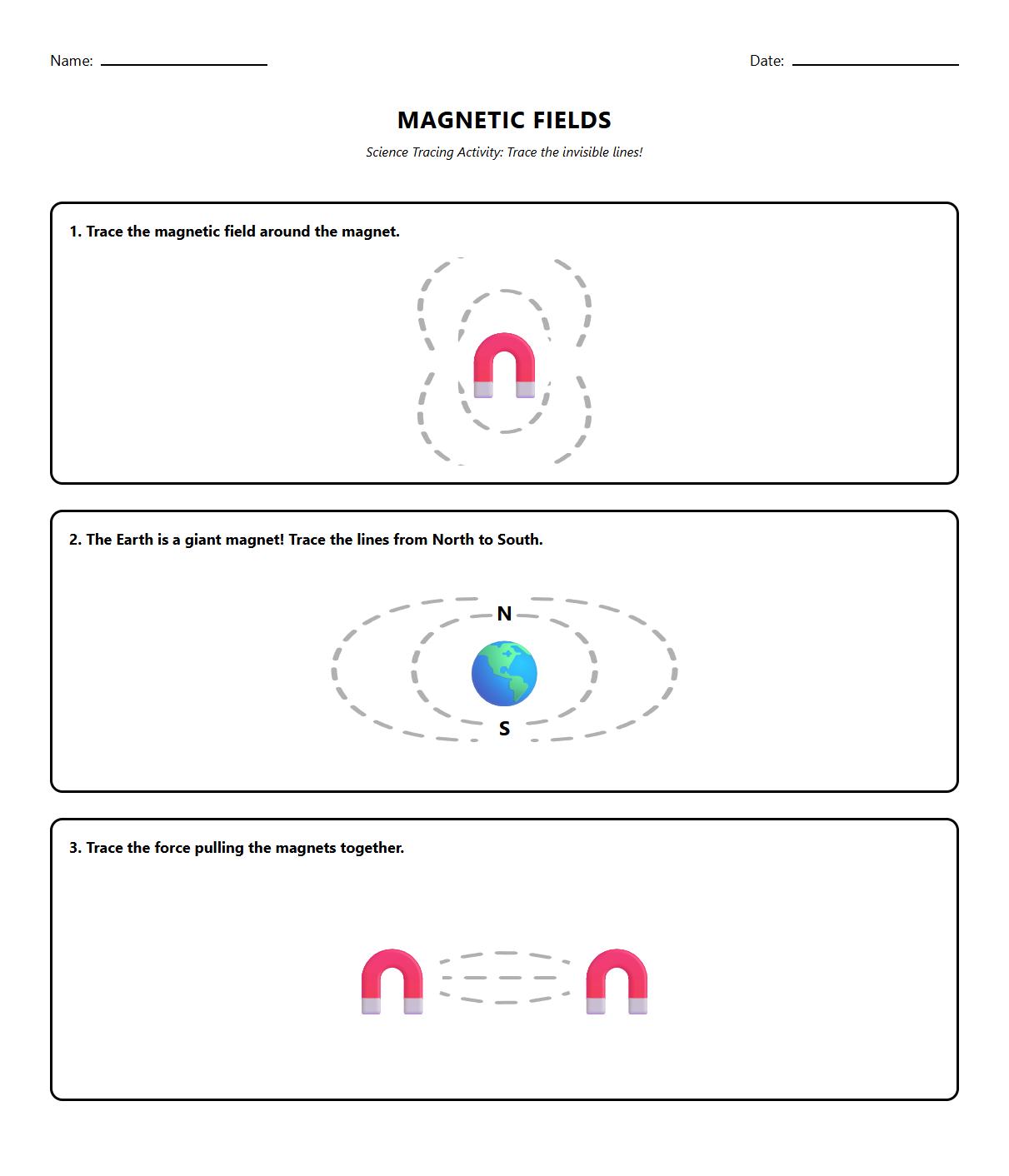
Magnetic Field Direction Tracing Worksheet for Early Learners

Download PDF     Pin it

Push and Pull Forces with Magnets Categorization Worksheet
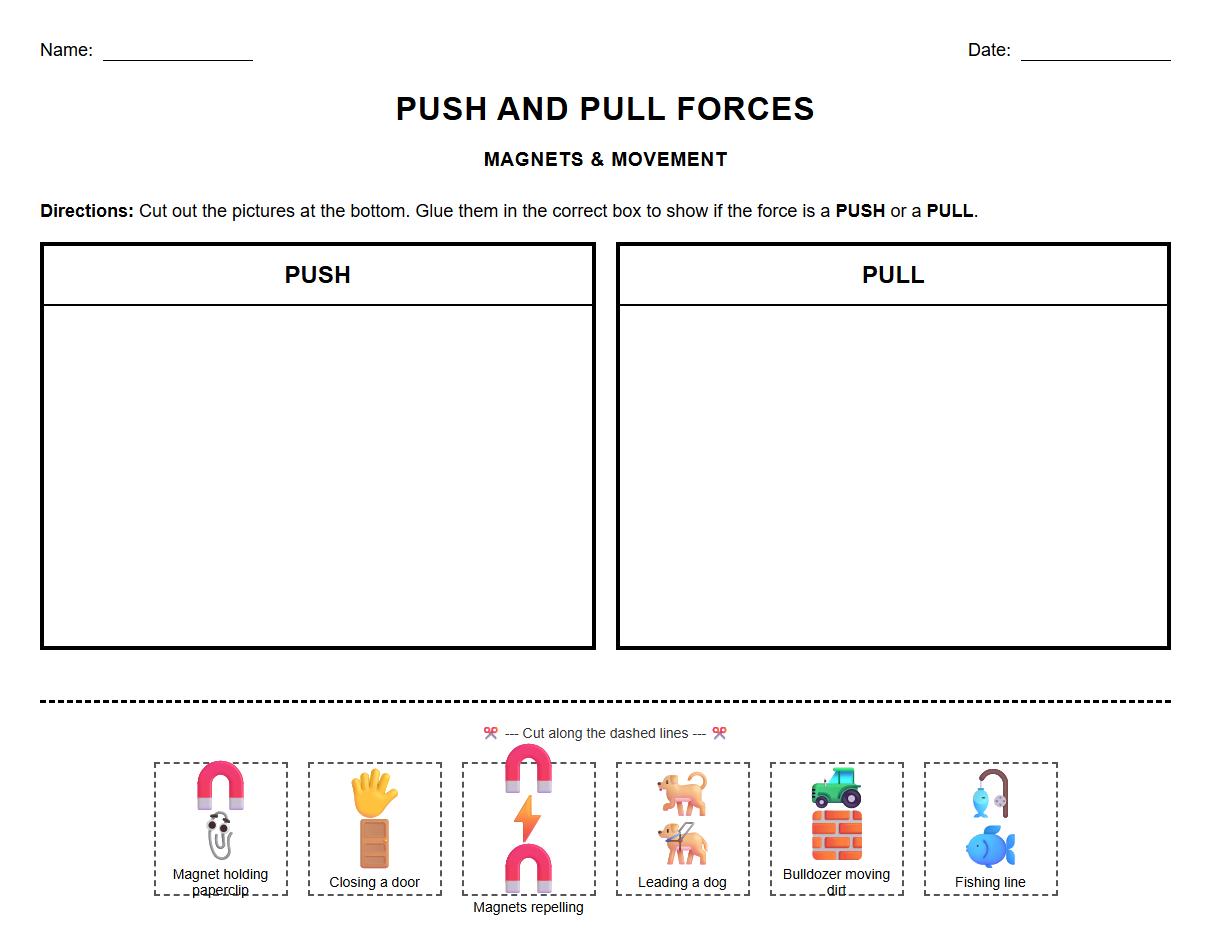
Push and Pull Forces with Magnets Categorization Worksheet

Download PDF     Pin it

Attract and Repel Experiment Prediction Chart for Magnetism
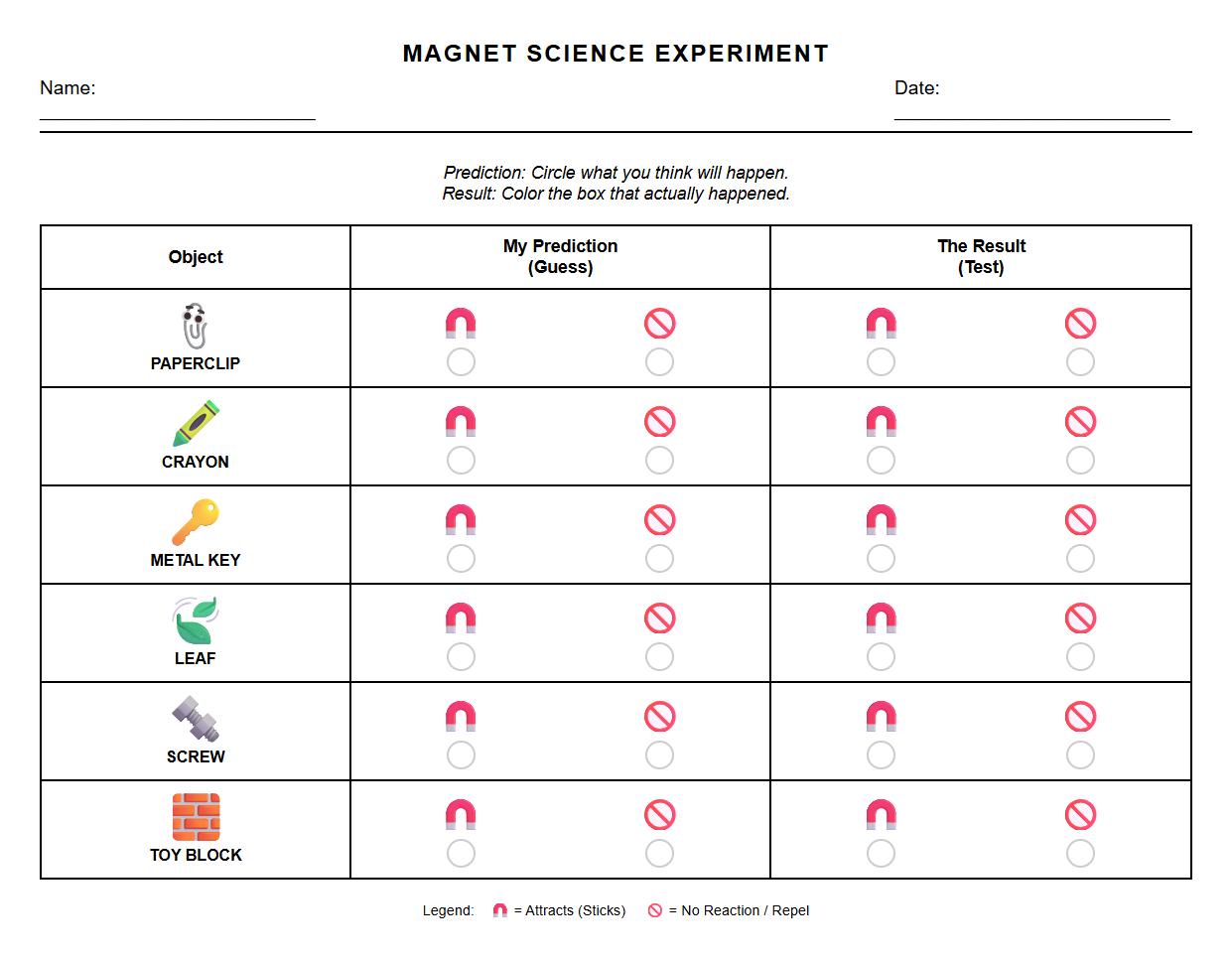
Attract and Repel Experiment Prediction Chart for Magnetism

Download PDF     Pin it

Everyday Magnetic Items Observation Sheet using Phonics Labels
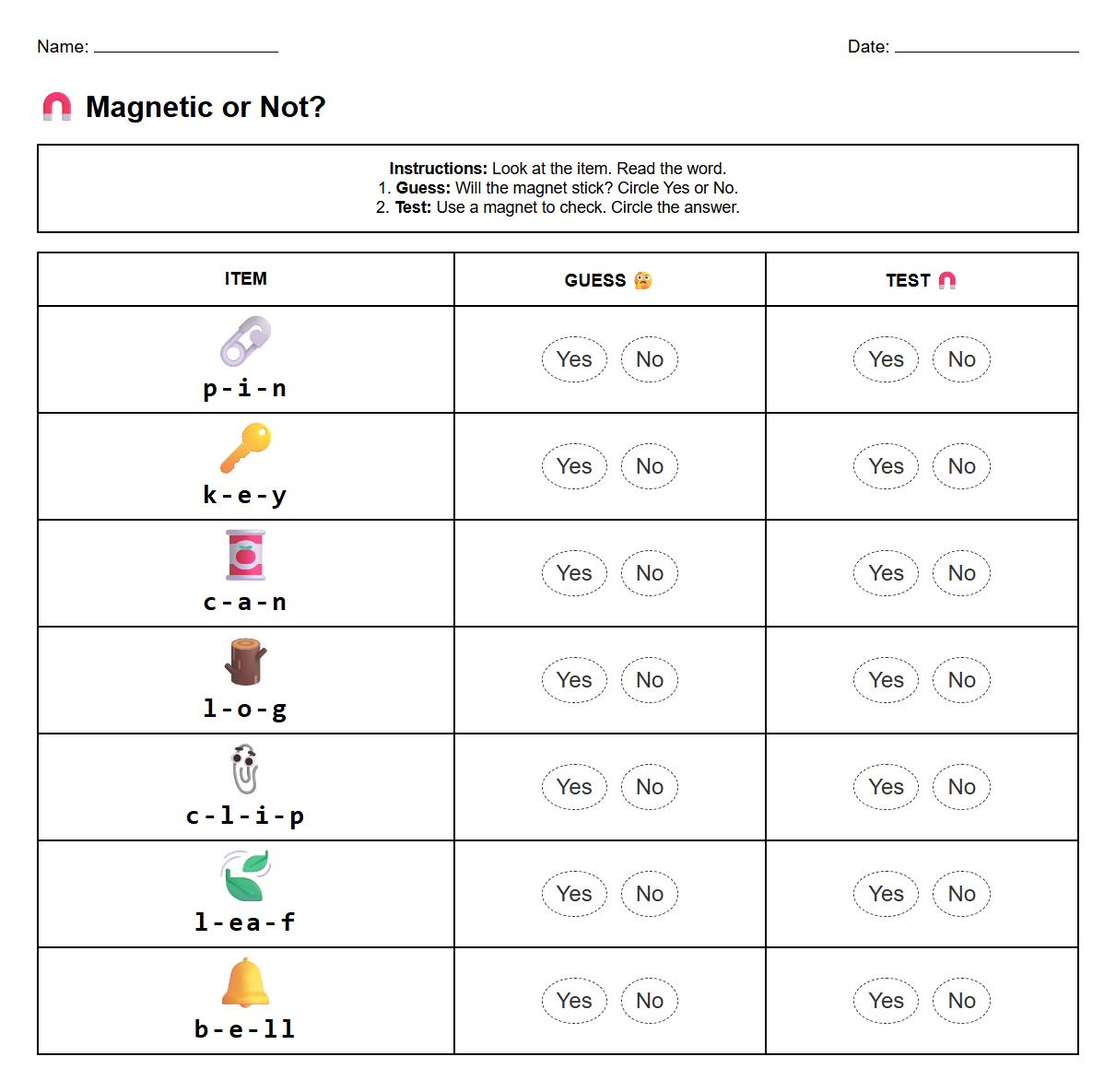
Everyday Magnetic Items Observation Sheet using Phonics Labels

Download PDF     Pin it

Magnetic Strength Comparison Worksheet with Picture Graphs
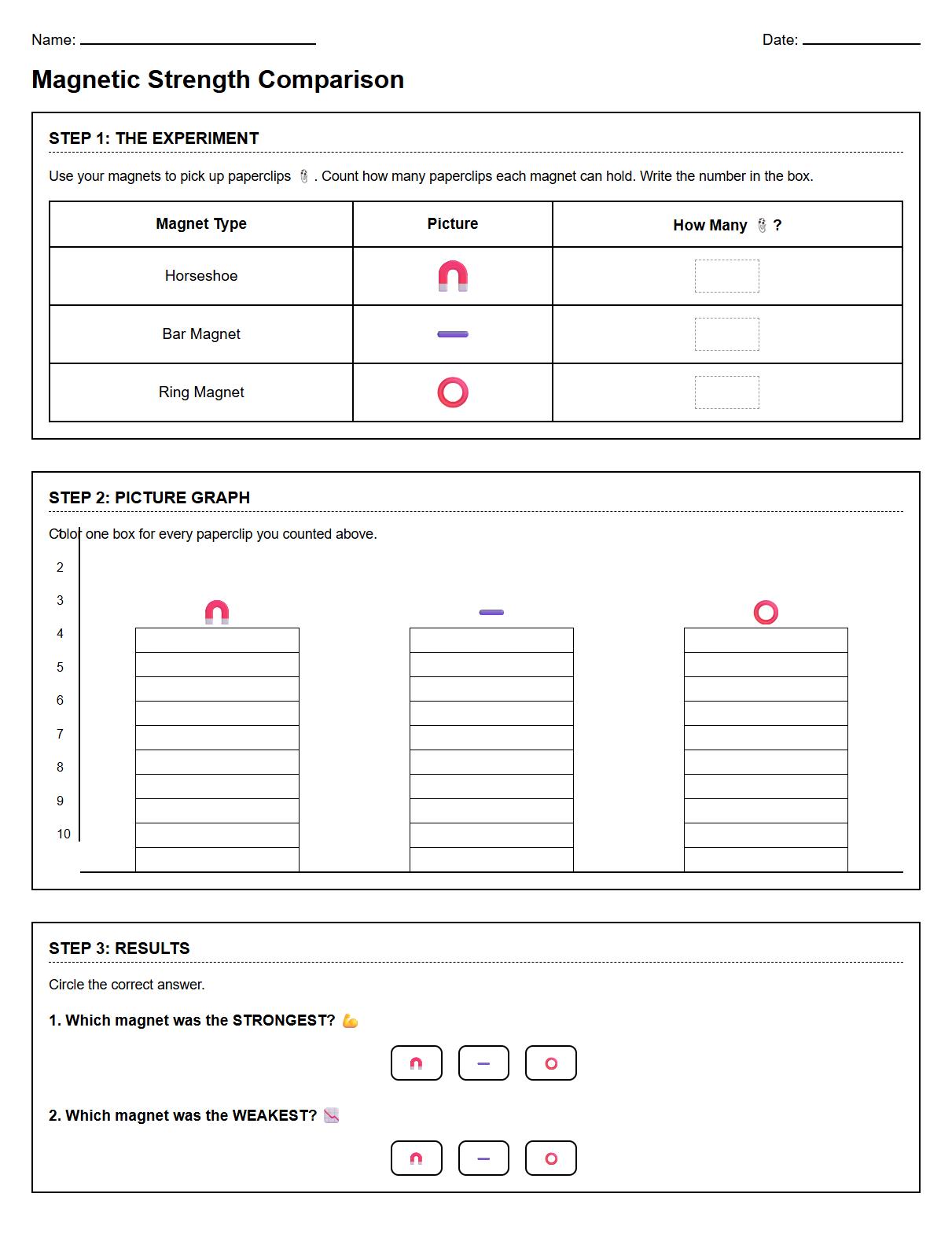
Magnetic Strength Comparison Worksheet with Picture Graphs

Download PDF     Pin it

Magnetic Hunt Checklist for Classroom and Home Exploration
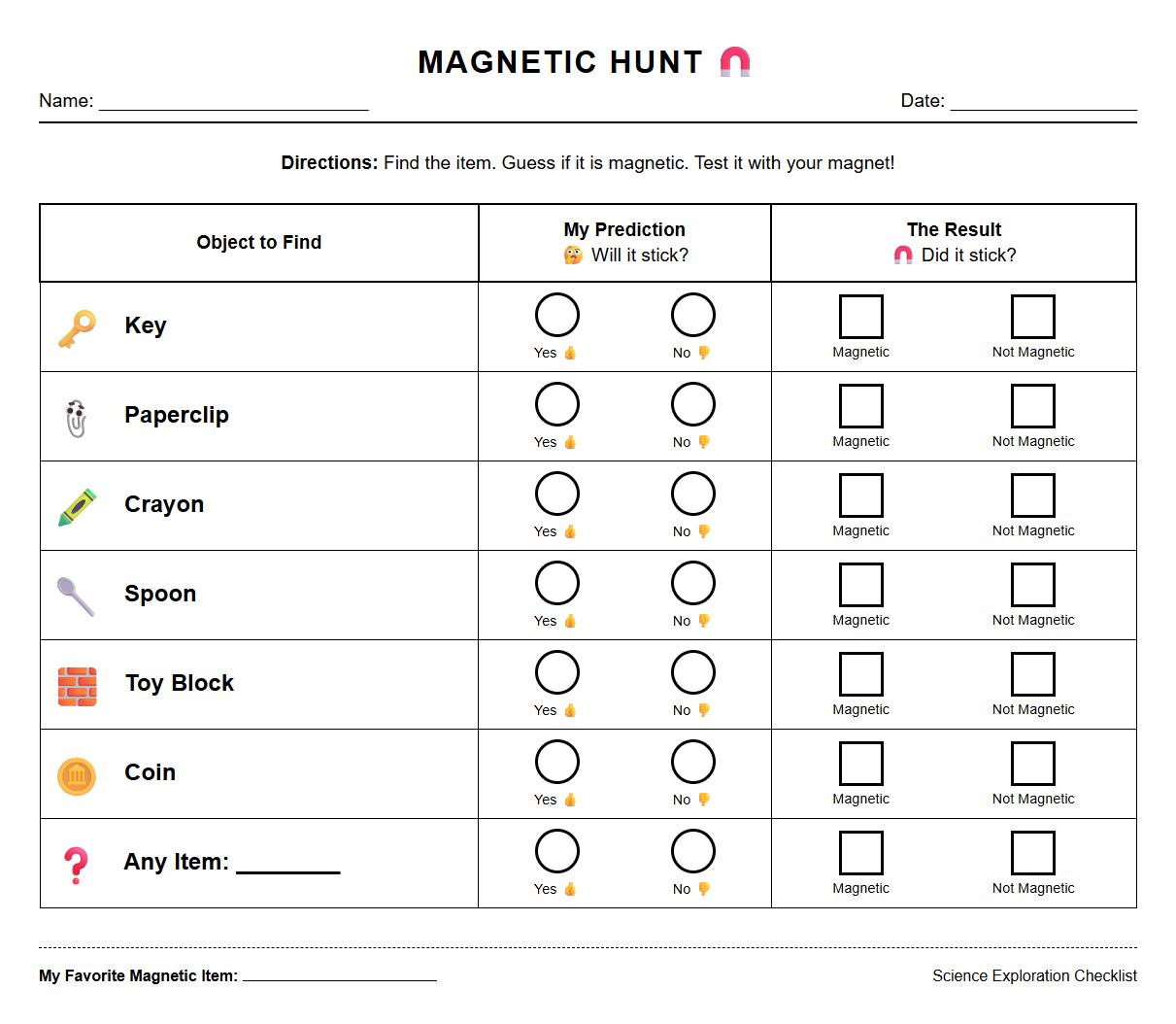
Magnetic Hunt Checklist for Classroom and Home Exploration

Download PDF     Pin it

Magnet Safety Symbols and Rules Recognition Worksheet
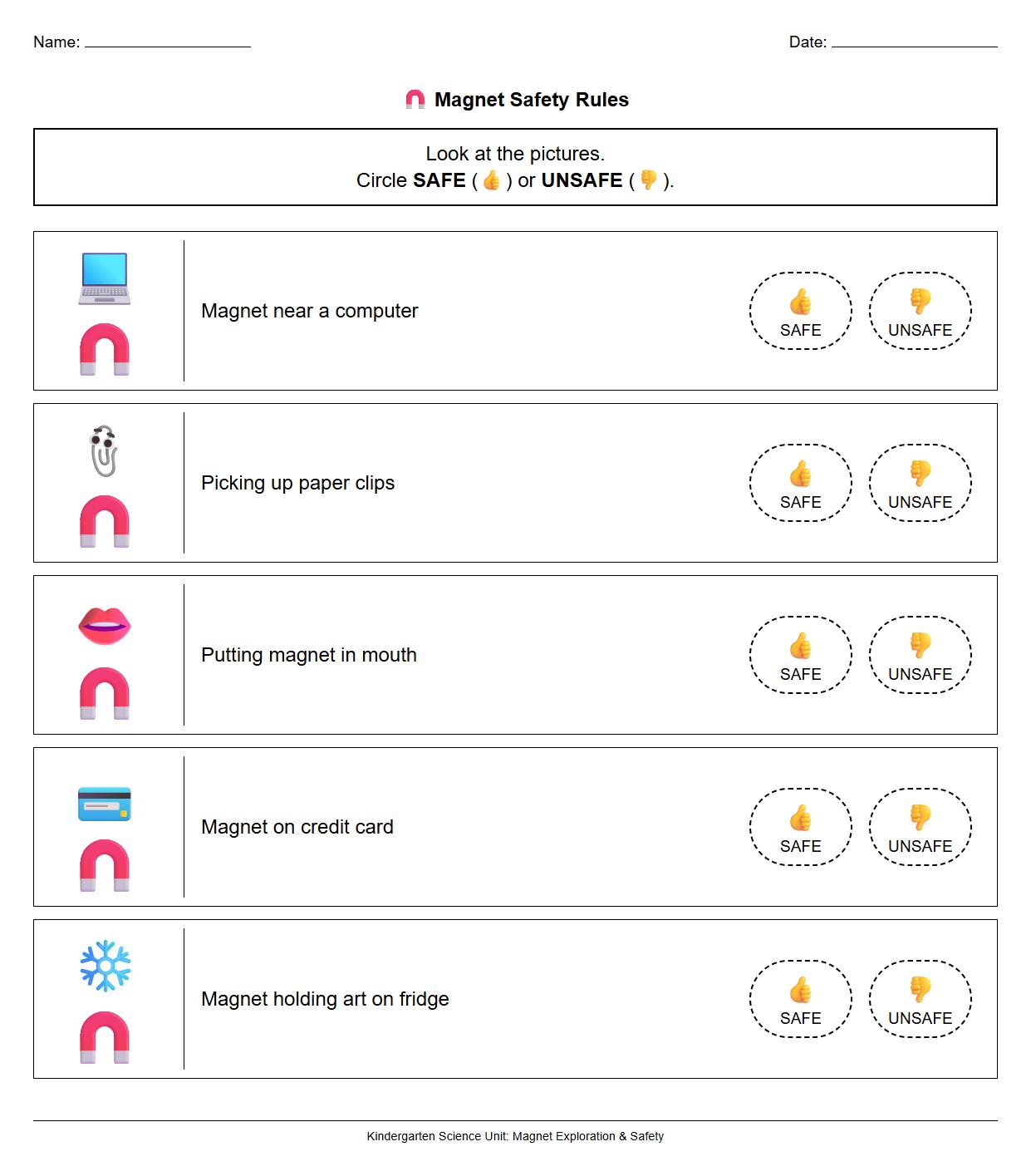
Magnet Safety Symbols and Rules Recognition Worksheet

Download PDF     Pin it

Sound Out and Match Magnetic Vocabulary Phonics Worksheet
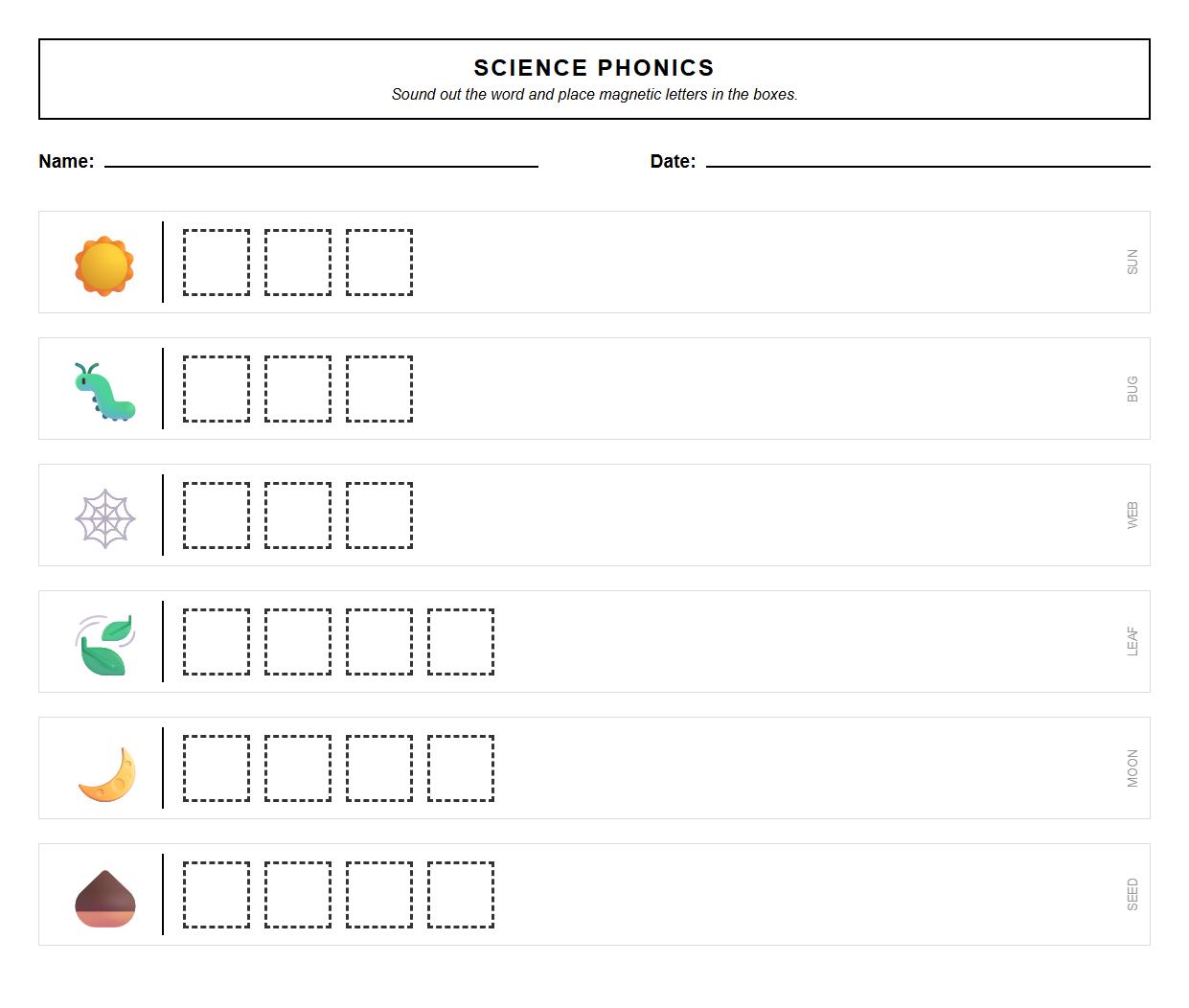
Sound Out and Match Magnetic Vocabulary Phonics Worksheet

Download PDF     Pin it

Objects Attracted to a Magnet in Your Classroom

In your classroom, look for objects that stick to a magnet. Common magnetic items include paperclips, metal scissors, and some toys. These objects contain metal, which is magnetically attracted. Identifying these helps children understand magnetism basics.

Finding Non-Magnetic Objects

Try to find things a magnet does not stick to, such as plastic toys, paper, or wooden blocks. These objects lack the metal properties that magnets attract. This activity teaches children to distinguish between magnetic and non-magnetic materials. It encourages observation skills.

Shapes of Magnets

Magnets come in different shapes like bars, horseshoes, or discs. Notice the shape of the magnet you are using in the activity. Different shapes can affect how magnets attract objects. Understanding this helps children learn about the variety of magnets.

Feeling a Magnet Near a Paperclip

When you move a magnet near a paperclip, it often clicks or snaps quickly to the magnet. This is because the magnet's force pulls on the paperclip. Children can feel this interaction as a magnetic attraction. It makes learning about magnets hands-on and engaging.

Magnets Found at Home

Magnets are used in many household items like refrigerator doors or cabinet latches. You can also find magnets in toys and electronic gadgets. Spotting magnets at home helps children connect classroom learning to the real world. This supports practical understanding.

What Happens When Two Magnets Come Close

When two magnets are placed close, they either attract or repel each other depending on their poles. Opposite poles attract, while similar poles push away. This simple experiment shows children the fundamental magnetic force interactions. It builds curiosity about science.

Magnets Attracting Through Paper or Cloth

Try placing a paperclip under paper or cloth and see if the magnet still pulls it up. Magnets can attract some objects through thin materials. This activity demonstrates how magnetic forces work without direct contact. It introduces the concept of magnetic fields.

Colors of Magnets

Magnets come in various colors such as red, blue, or silver. Noticing the colors can make the activity more fun and visually engaging. Colors do not affect magnetism but help children recognize and describe their tools. This supports language development.

Everyday Uses of Magnets

Magnets help people by keeping doors closed, holding items on refrigerators, and enabling electronics to work. They are part of many essential devices that make life easier. Teaching children about these uses connects learning to daily life. It encourages appreciation of science in the world.

Discovering Different-Sized Objects Picked Up by Magnets

When using magnets to pick up various objects, children notice size and weight affect attraction. Smaller paperclips are easier to pick up than larger or heavier metal items. This observation helps children understand magnetic strength and limitations. It promotes critical thinking and experimentation.


More in Science Category


About the author. Nylen Smith is a dedicated educator and cofounder of KWorksheet.com, a popular platform specializing in high-quality kindergarten worksheets and printable activities.

Disclaimer. The information provided in this document is for general informational purposes and/or document sample only and is not guaranteed to be factually right or complete. Please report to us via contact-us page if you find and error in this page, thanks.

Comments

No comment yet