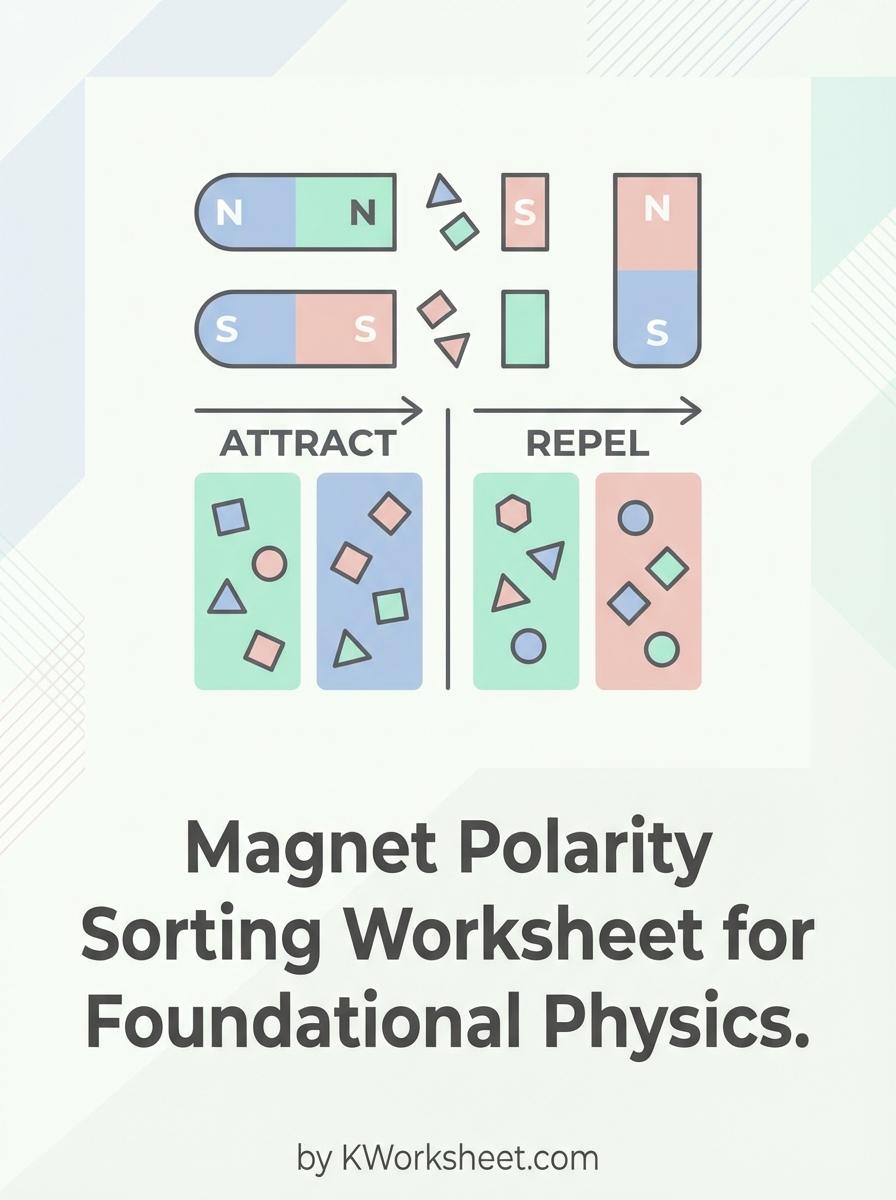
Magnet Polarity Sorting Worksheet for Foundational Physics

📅 Jan 23, 2025 👤 Nylen Smith

Sorting magnets by polarity helps reinforce understanding of magnetic fields and the concepts of attraction and repulsion between poles. This hands-on activity encourages learners to identify and classify the north and south poles of various magnets precisely. Explore the available worksheets to enhance your grasp of foundational physics through practical magnet polarity sorting exercises.

Magnetic Polarity Symbol Matching Worksheet
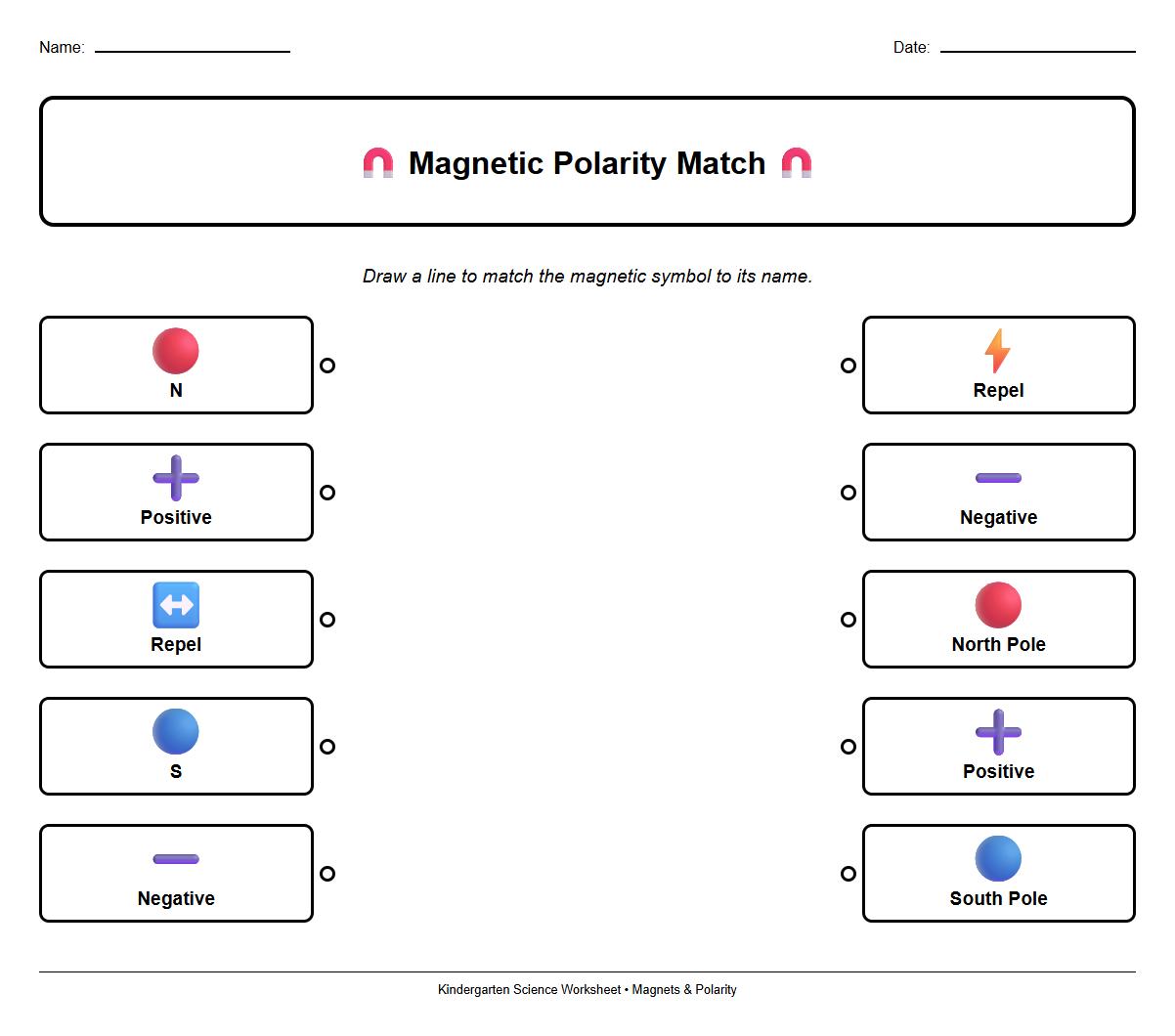
Magnetic Polarity Symbol Matching Worksheet

Download PDF     Pin it

Magnet North and South Pole Sorting Sheet
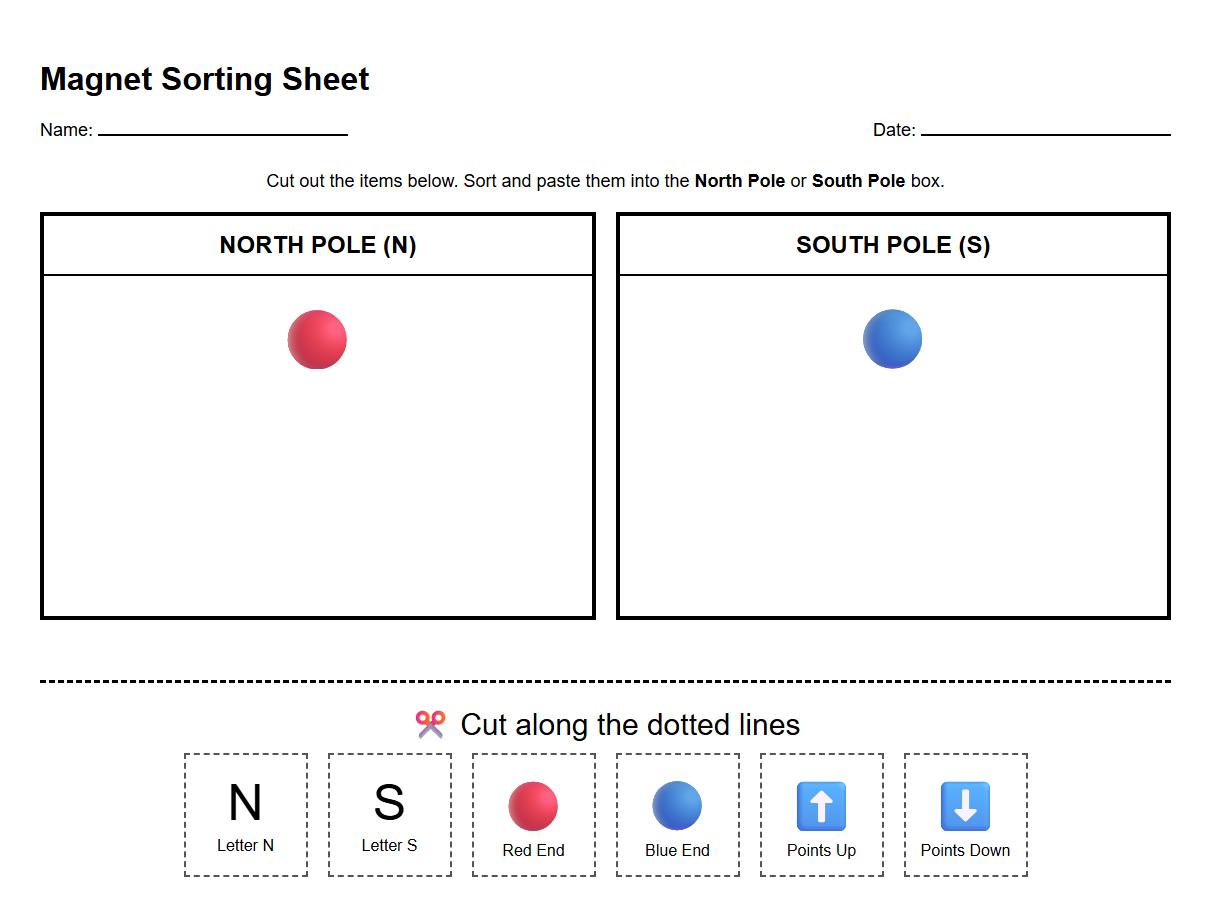
Magnet North and South Pole Sorting Sheet

Download PDF     Pin it

Magnetic Field Direction Identification Worksheet
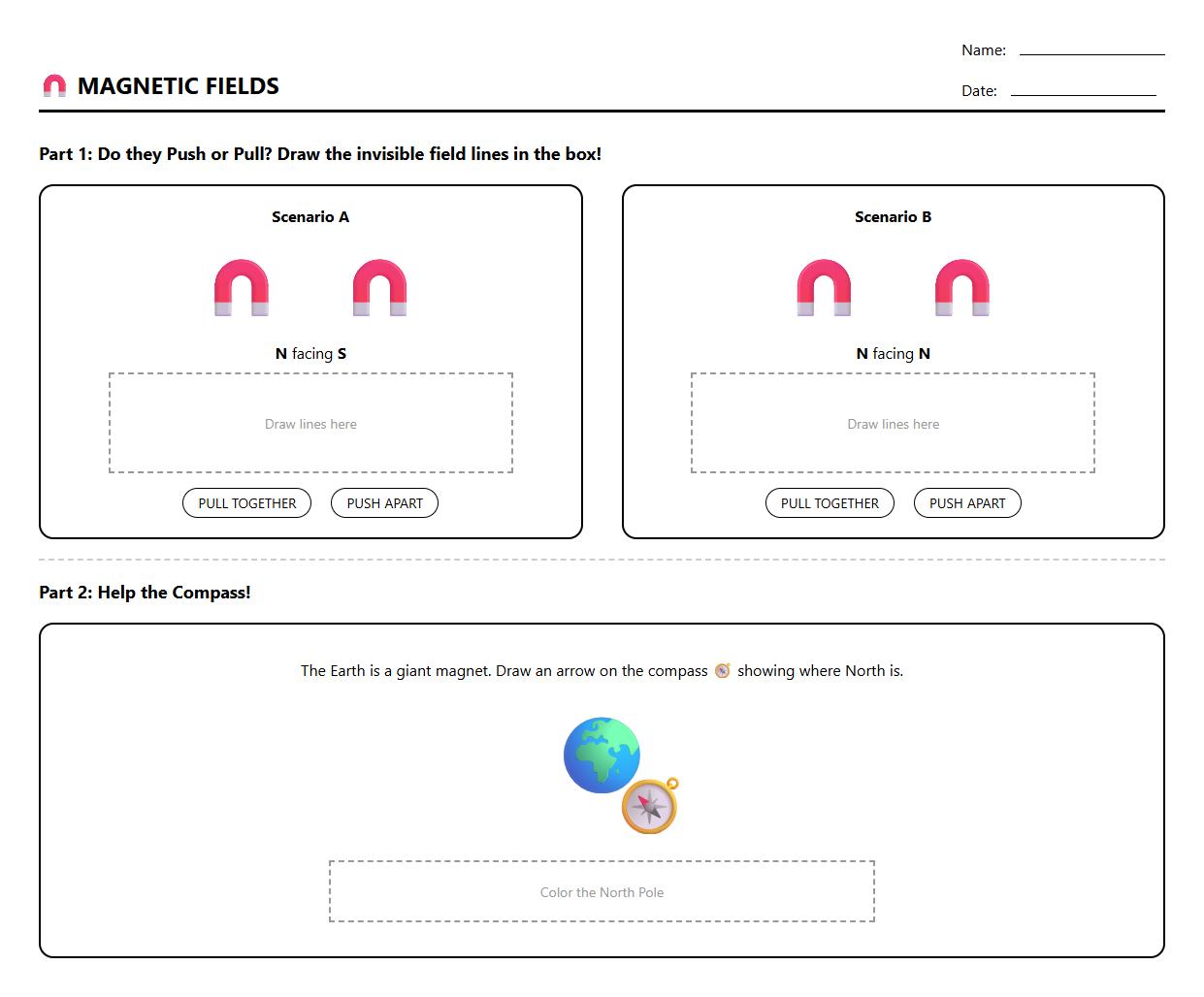
Magnetic Field Direction Identification Worksheet

Download PDF     Pin it

Bar Magnet Pole Labeling Activity Sheet
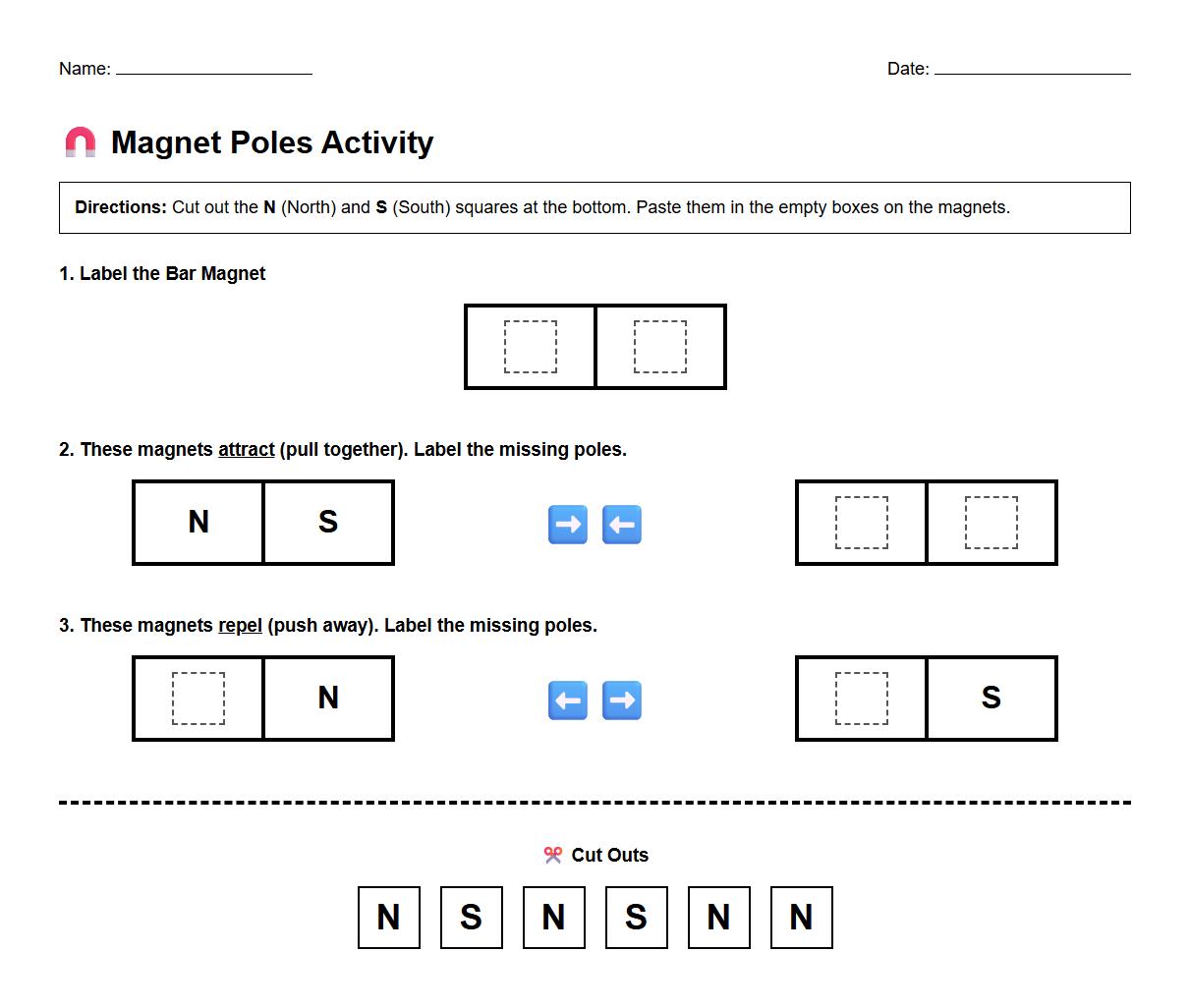
Bar Magnet Pole Labeling Activity Sheet

Download PDF     Pin it

Magnetic Attraction and Repulsion Sorting Worksheet
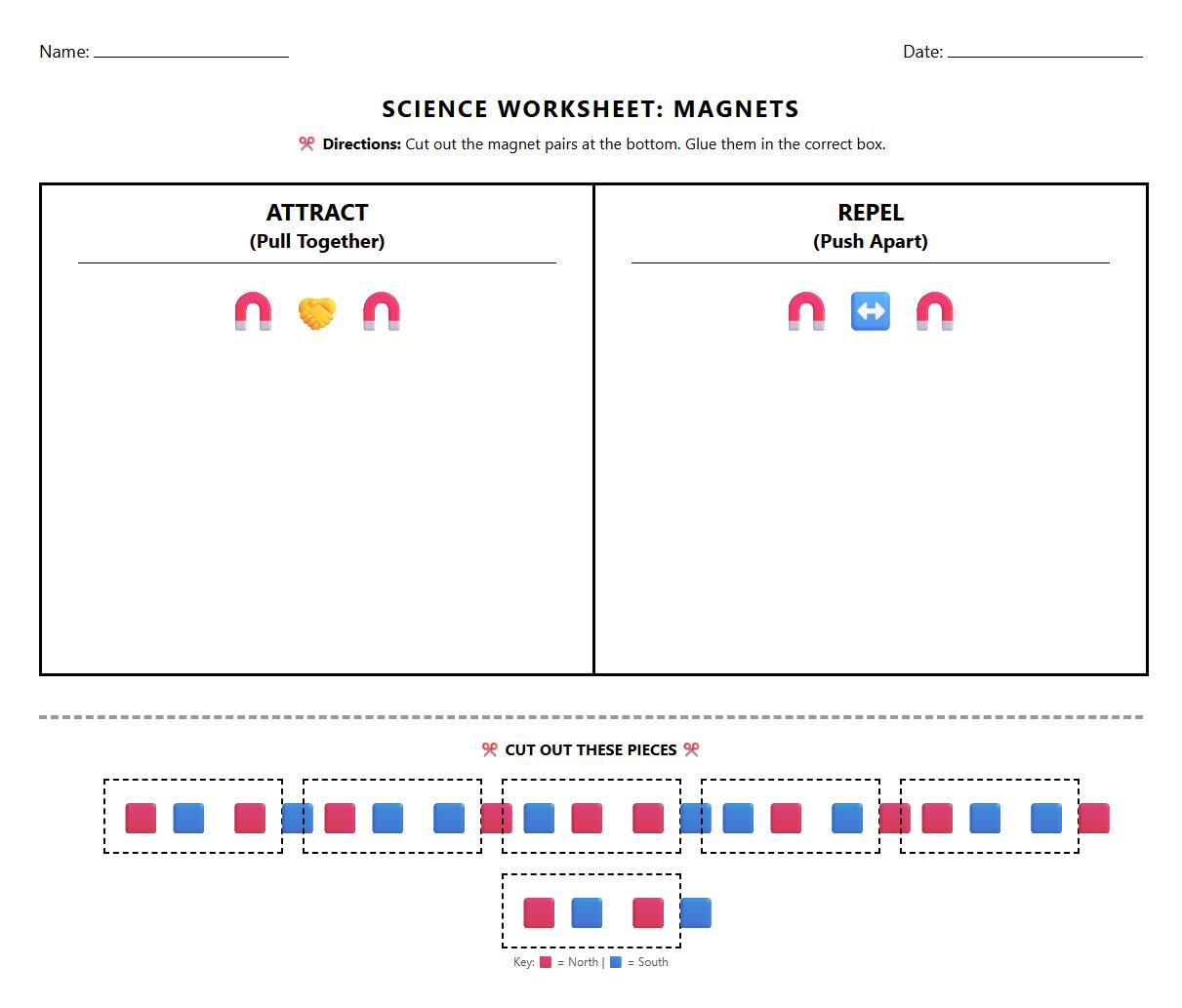
Magnetic Attraction and Repulsion Sorting Worksheet

Download PDF     Pin it

Magnetic Polarity Cut and Paste Exercise
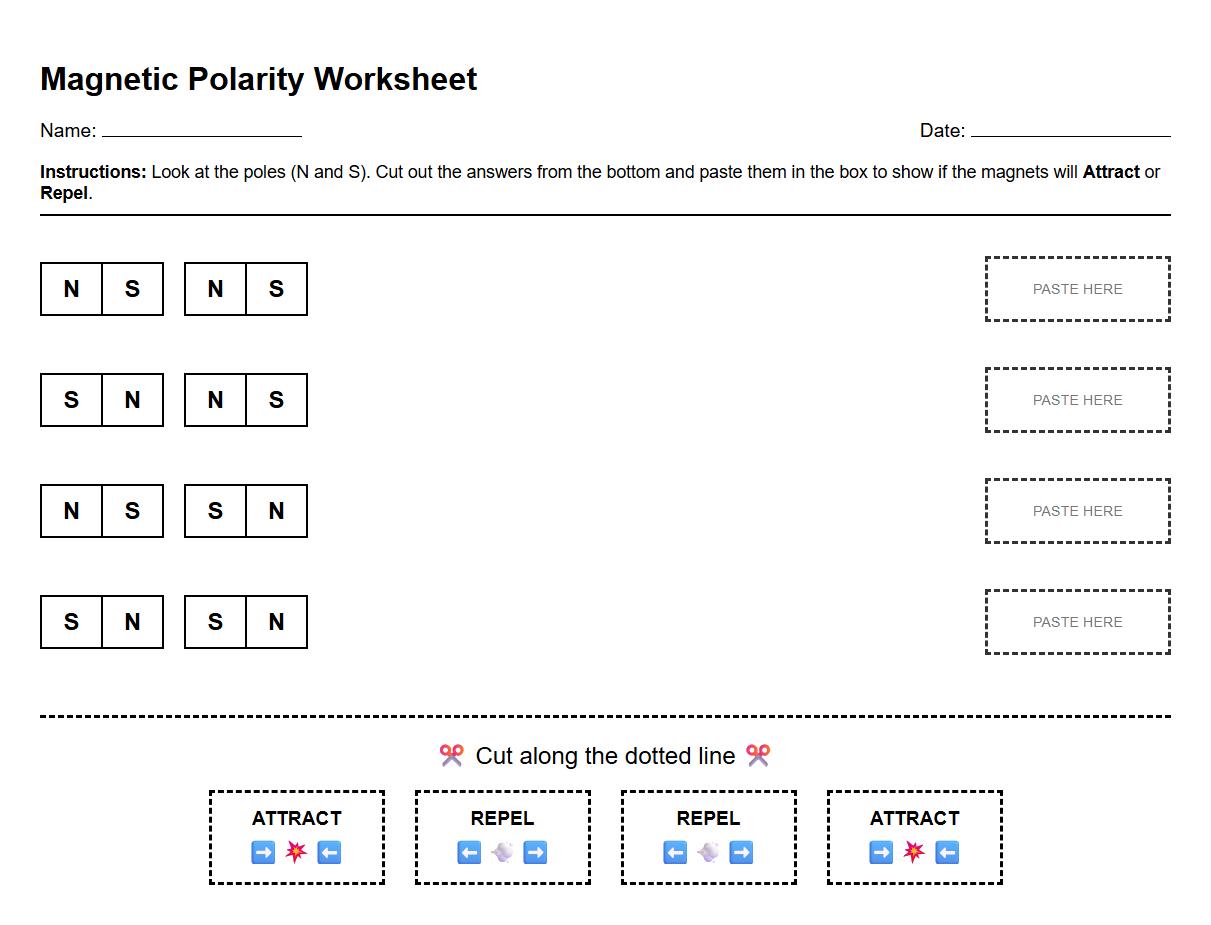
Magnetic Polarity Cut and Paste Exercise

Download PDF     Pin it

Magnetic Force Direction Diagram Worksheet
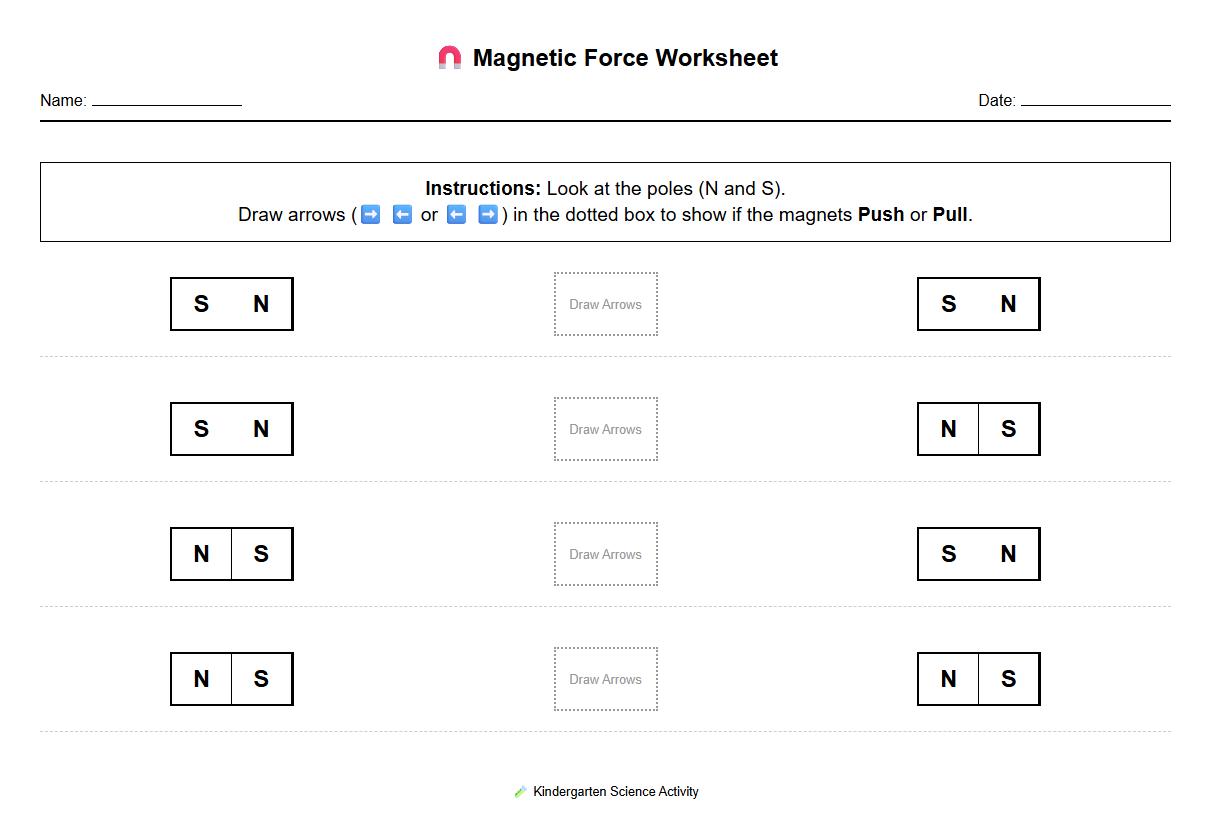
Magnetic Force Direction Diagram Worksheet

Download PDF     Pin it

Polarity Consistency Sorting Worksheet using Magnetic Diagrams
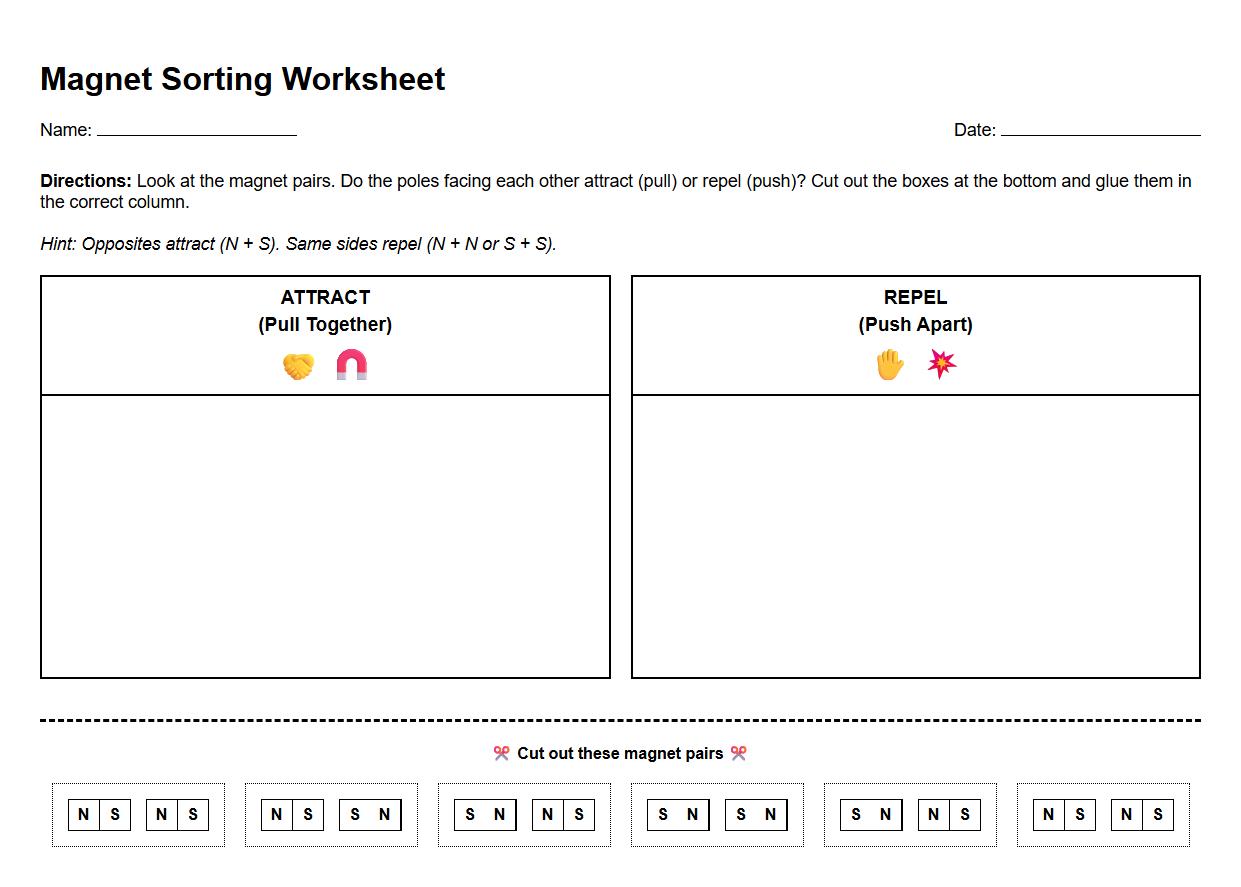
Polarity Consistency Sorting Worksheet using Magnetic Diagrams

Download PDF     Pin it

Opposite and Like Pole Sorting Activity Sheet
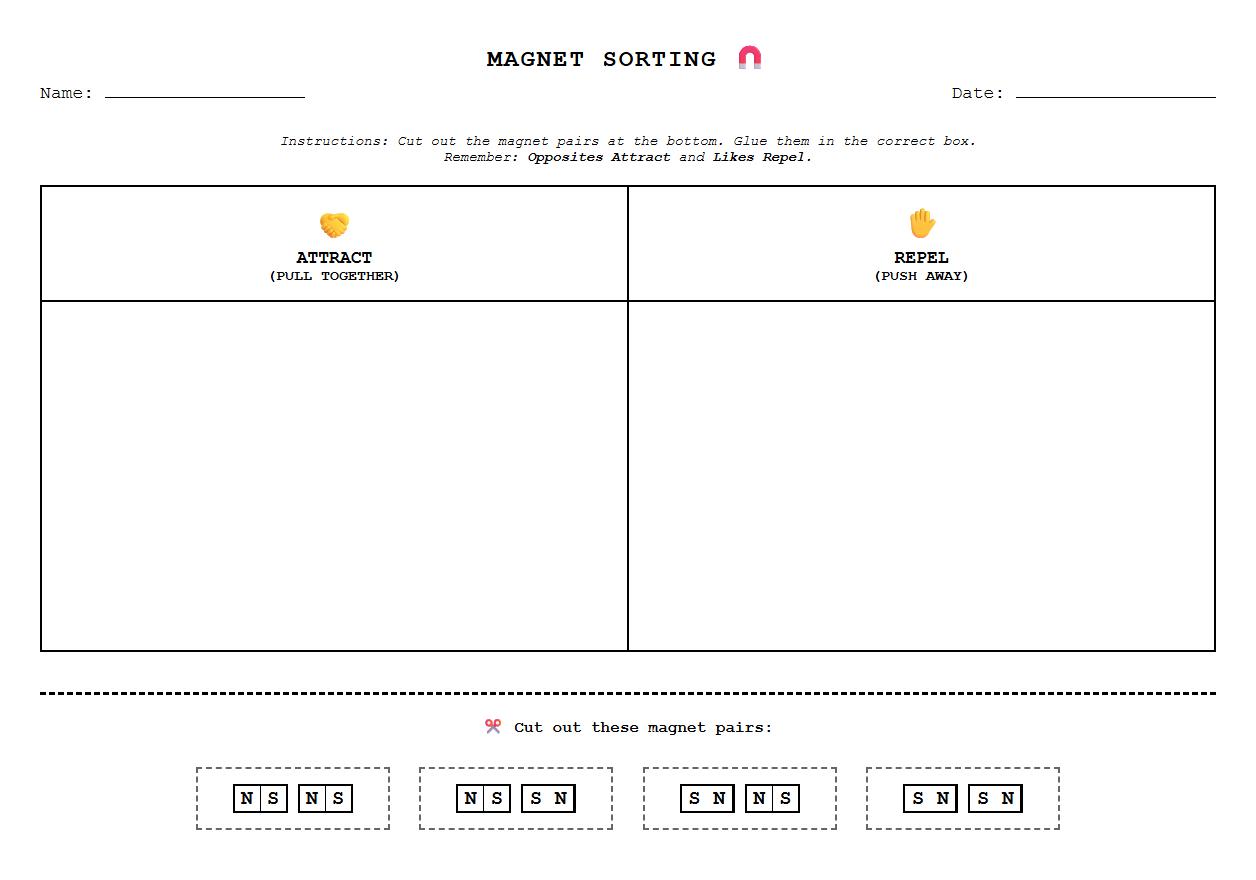
Opposite and Like Pole Sorting Activity Sheet

Download PDF     Pin it

Visual Discrimination of Magnetic Poles Worksheet
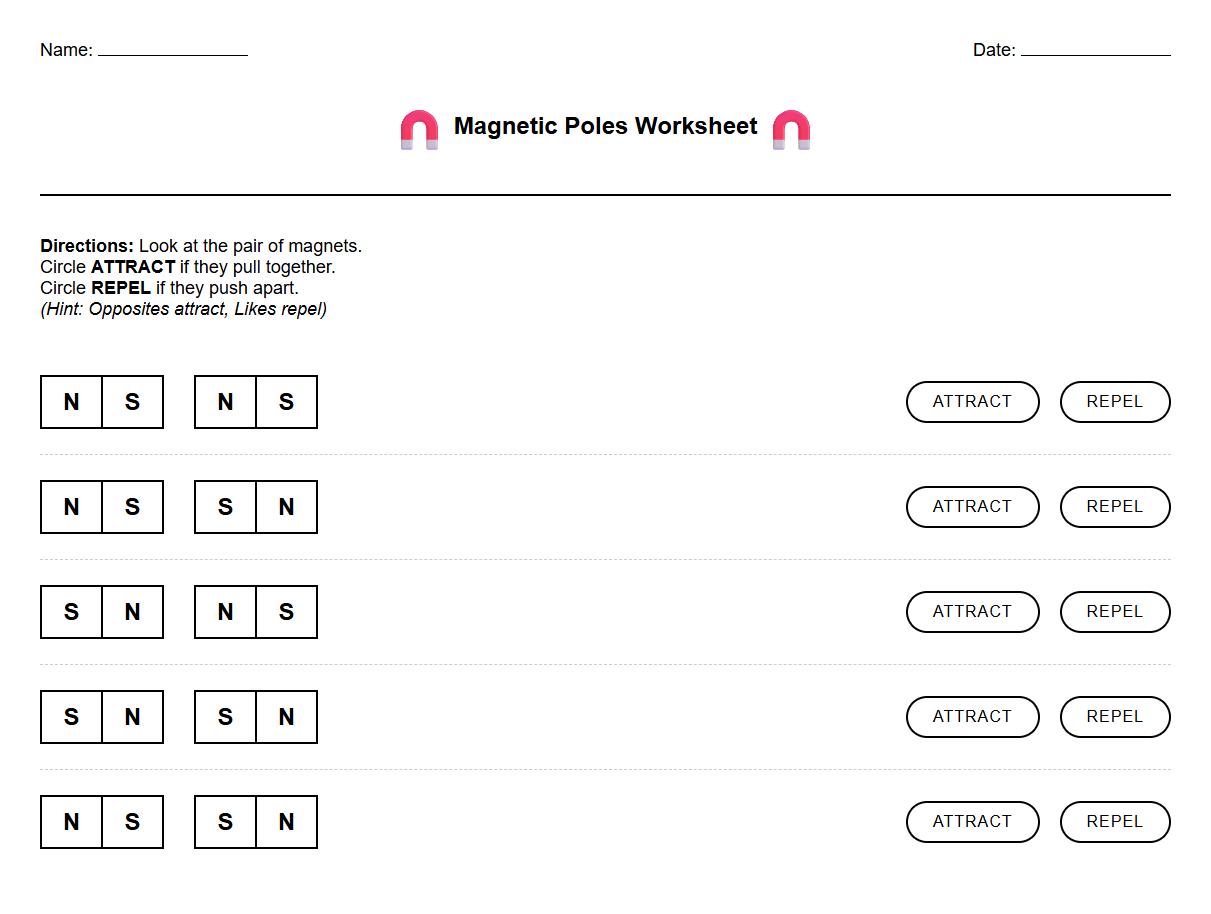
Visual Discrimination of Magnetic Poles Worksheet

Download PDF     Pin it

What Happens When You Push Two North Poles of Magnets Together

When you try to push two north poles of magnets together, they repel each other. This means they push away and do not stick. It helps children understand the basic concept of magnetic forces. Teaching this concept can encourage curiosity about magnets in young learners.

How Do You Know Which Sides of Two Magnets Will Attract Each Other

Two magnetic sides will attract each other if one side is a north pole and the other is a south pole. Opposite poles pull together, whereas like poles push apart. Showing children this in a hands-on activity supports their grasp of magnetism. This also introduces basic scientific observation skills.

What Is Meant by the Term Magnet Polarity

Magnet polarity refers to the two ends of a magnet: the north pole and the south pole. Each pole exhibits magnetic forces that affect other magnets. Teaching polarity helps children predict how magnets will interact. It is one of the fundamental concepts of magnetism.

Can You Sort Objects by Their Ability to Stick to a Magnet

Yes, you can sort objects based on whether they stick to a magnet or not. This activity helps identify magnetic materials like iron or steel. It also teaches children about magnetic and non-magnetic materials. Sorting enhances classification and observational skills.

Why Do Opposite Magnetic Poles Attract

Opposite poles attract because they have different magnetic charges that pull toward each other. The north and south poles create a magnetic field that encourages attraction. This phenomenon is a key magnetic property to understand. It explains why certain magnetic connections work.

What Classroom Objects Will Magnets Stick To

Magnets will stick to objects made of iron, steel, nickel, or cobalt. Common classroom items include paperclips, scissors, and some desks with metal parts. Demonstrating this helps children recognize magnetic materials in everyday life. It also promotes hands-on exploration.

How Can You Find the North and South Poles on a Magnet

You can find the north and south poles by using a compass or by observing magnetic attraction and repulsion. The end that points north aligns with Earth's magnetic north. Labeling poles teaches children about Earth's magnetic field. This simple method builds foundational magnetic knowledge.

What Materials Are Not Attracted to a Magnet

Materials such as plastic, wood, glass, and aluminum are not attracted to a magnet. This distinction helps children learn about different material properties. Identifying non-magnetic materials encourages scientific inquiry. It supports understanding the limits of magnetism.

How Do You Use Sorting Cards to Match Magnet Poles

Sorting cards with labels like "north" and "south" can help children match magnetic poles during hands-on activities. They can place magnets or pictures on the correct card to reinforce learning. This activity boosts recognition and memory skills. It makes abstract concepts tangible and fun.

What Might Happen If You Mix Up North and South Pole Sorting Labels

If you mix up the north and south labels, magnets may be matched incorrectly causing confusion in understanding magnetic attraction and repulsion. It can lead to mistakes in predicting how magnets interact. This highlights the importance of accurate labeling. Careful sorting ensures effective learning outcomes.


More in Science Category


About the author. Nylen Smith is a dedicated educator and cofounder of KWorksheet.com, a popular platform specializing in high-quality kindergarten worksheets and printable activities.

Disclaimer. The information provided in this document is for general informational purposes and/or document sample only and is not guaranteed to be factually right or complete. Please report to us via contact-us page if you find and error in this page, thanks.

Comments

No comment yet