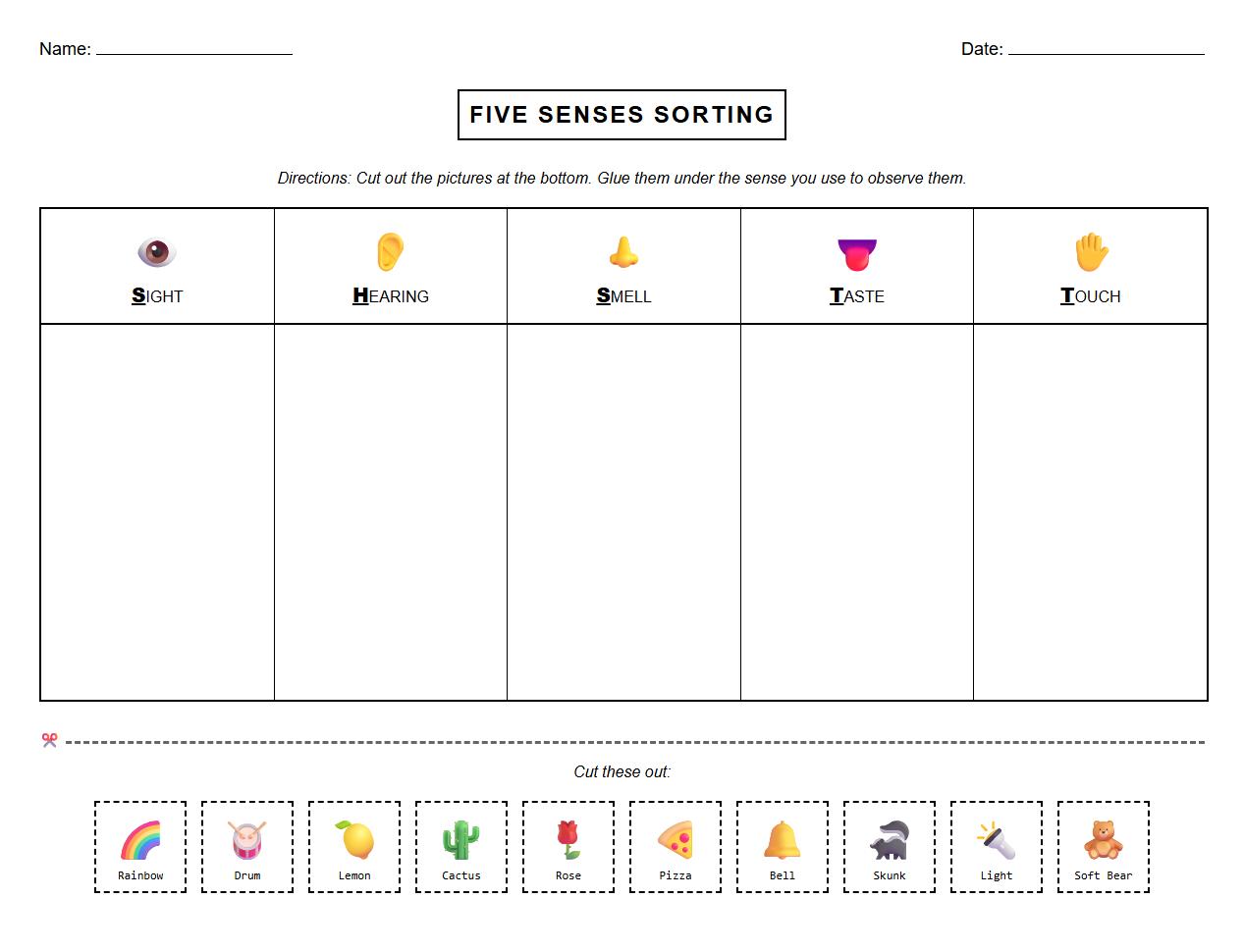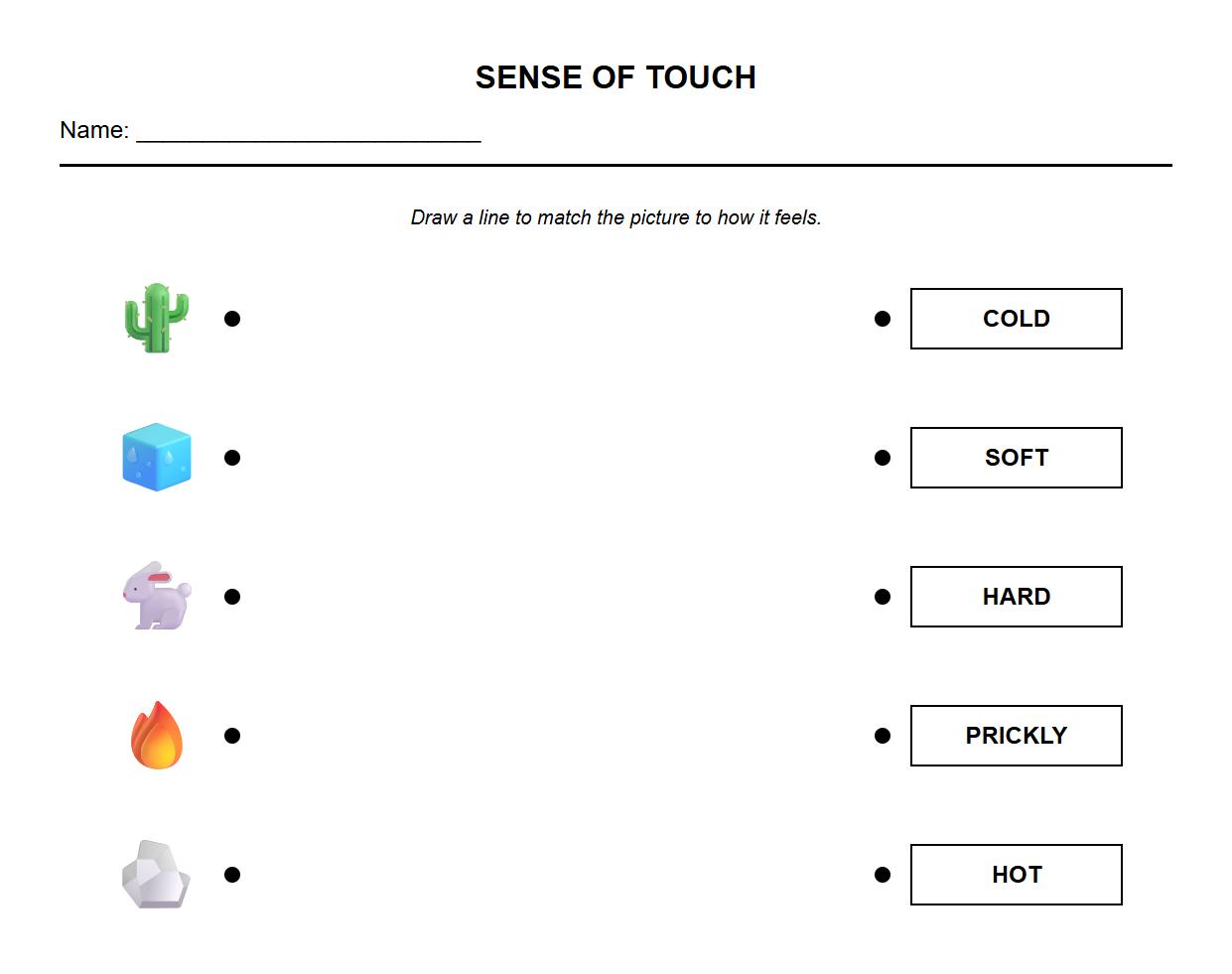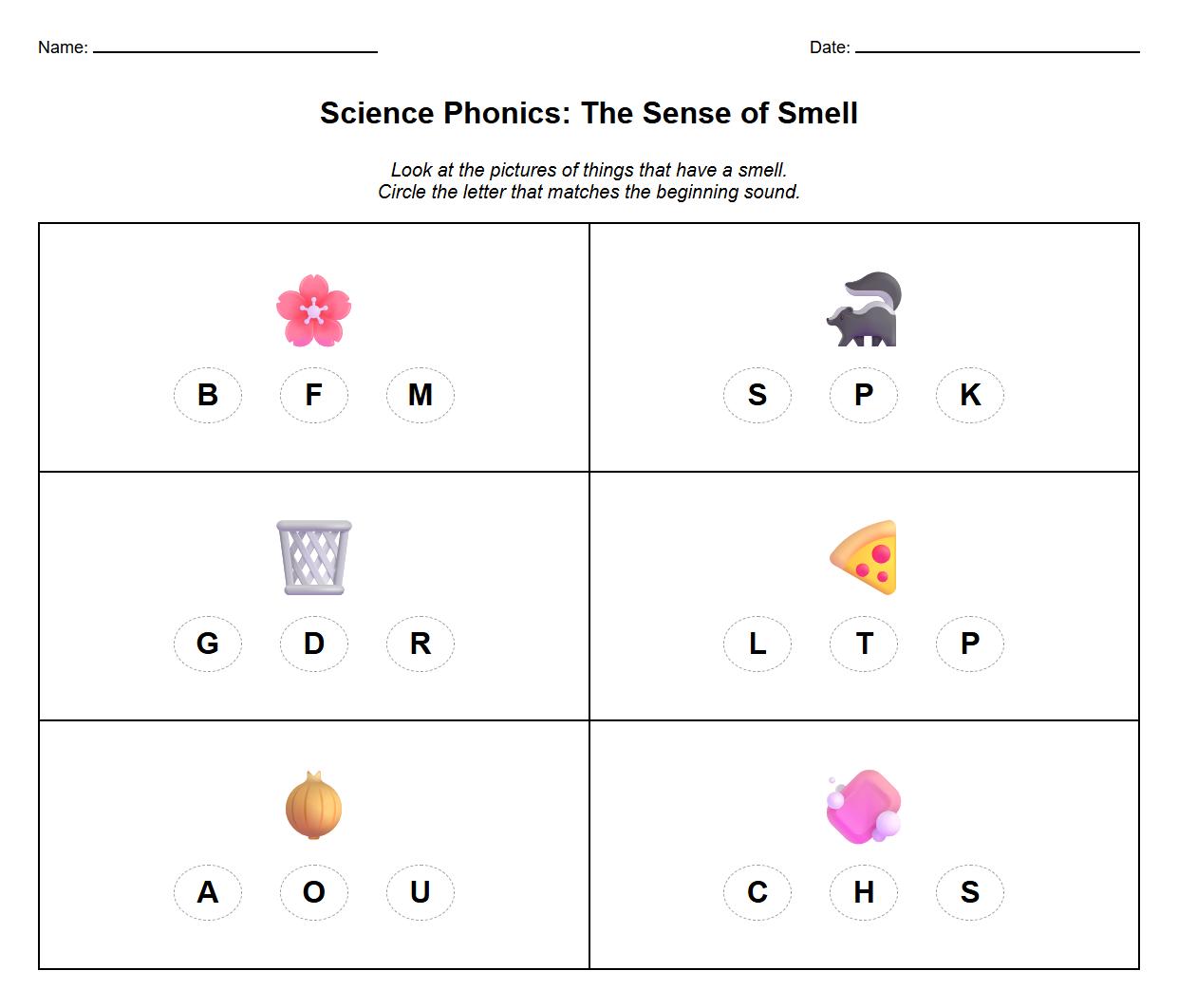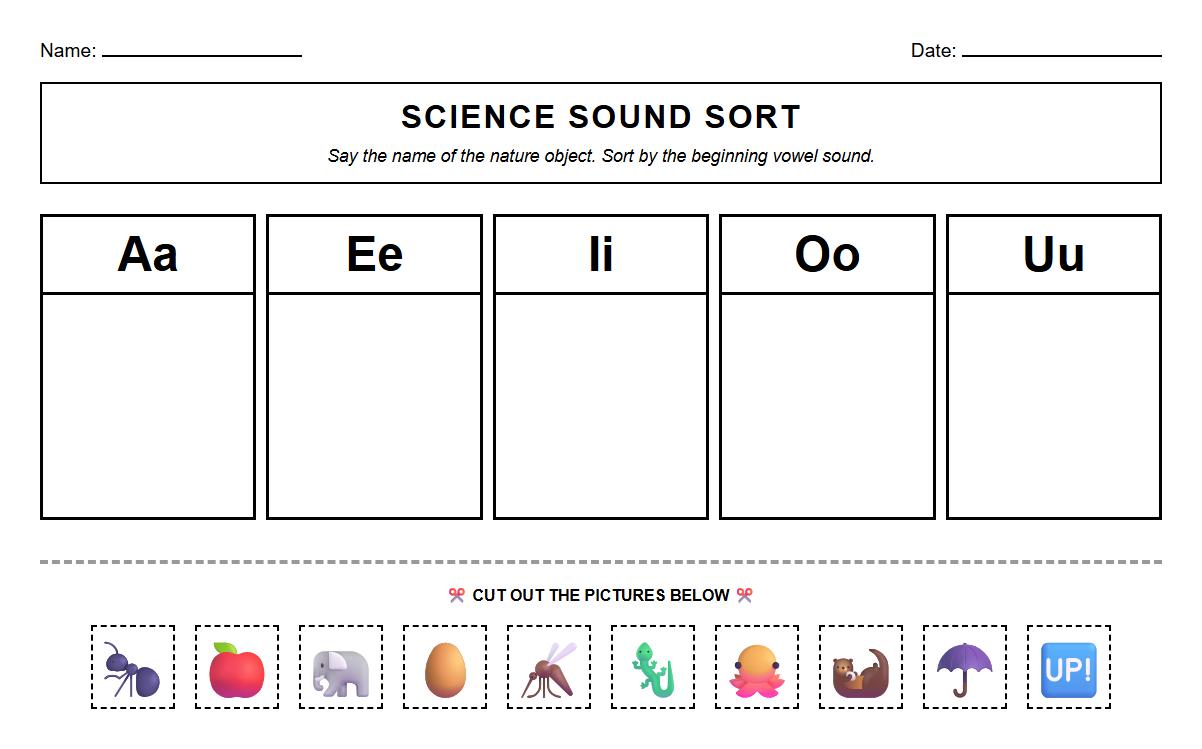
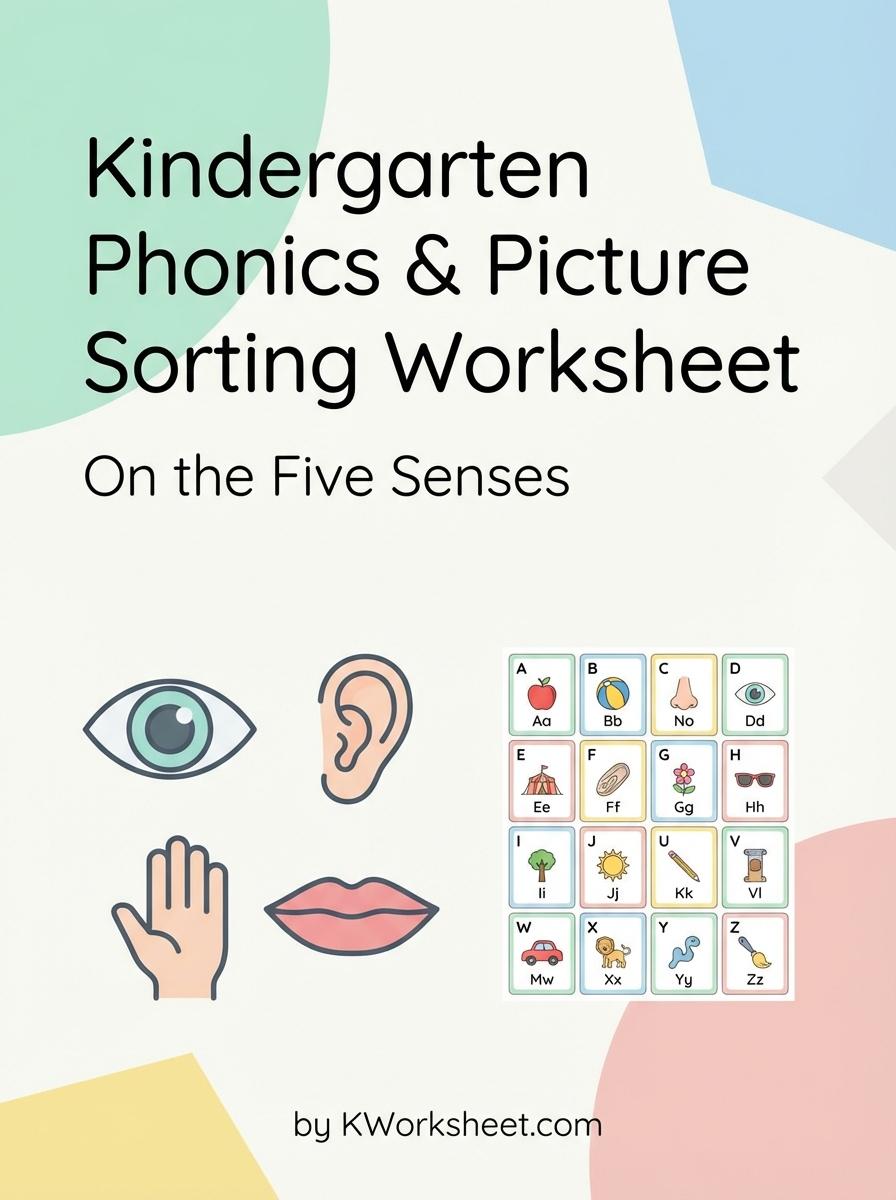
Kindergarten phonics and picture sorting activities focused on the five senses enhance early literacy and sensory recognition skills. These engaging exercises help children associate sounds with corresponding images, reinforcing vocabulary related to sight, sound, touch, taste, and smell. Explore our collection of worksheets designed to support your child's learning journey in phonics and sensory awareness.
Identifying Taste in Pictures
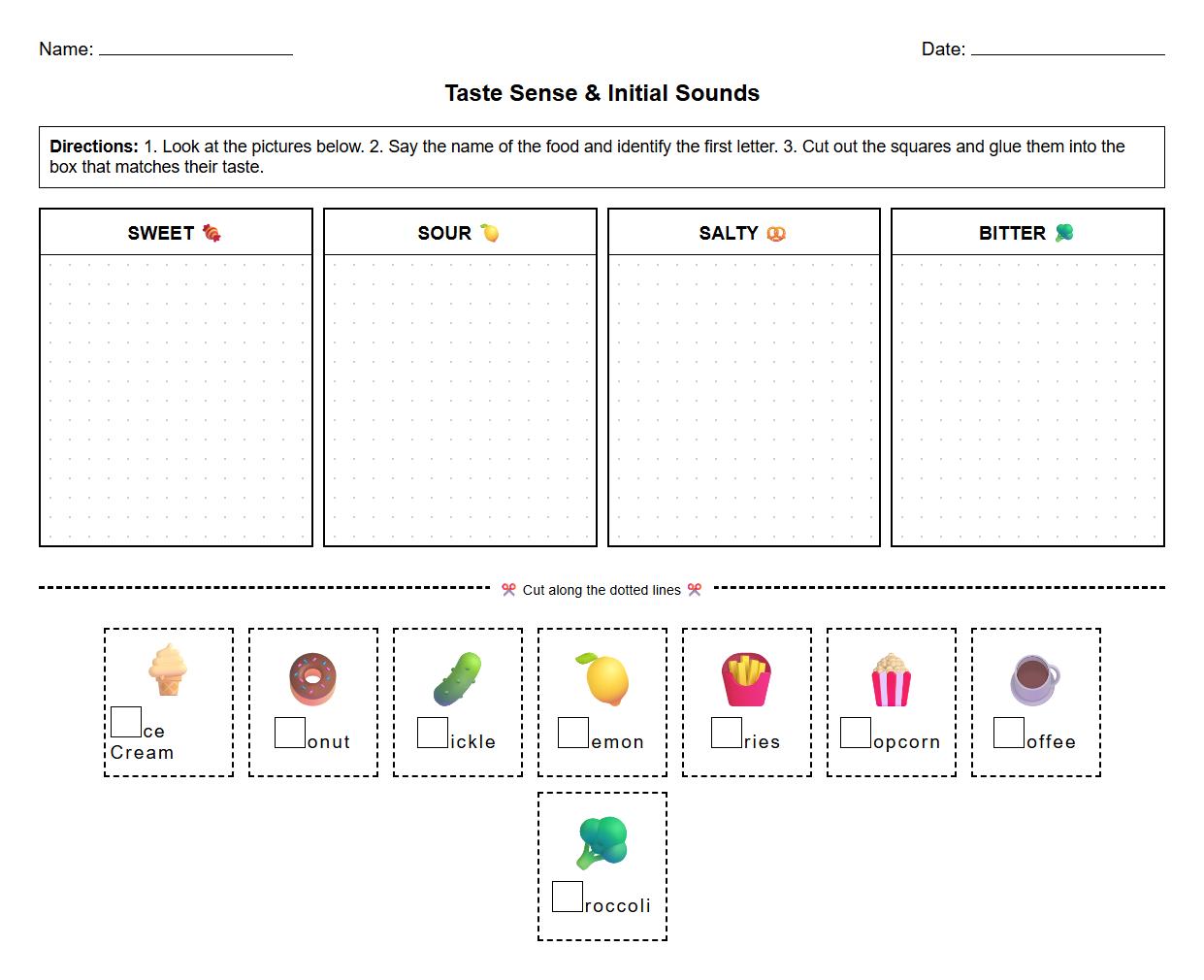
Teachers and parents can guide children to recognize the ability to taste by asking, "Which picture shows something you can taste?" This activity helps develop sensory awareness and vocabulary related to food and flavors. Use colorful, familiar images to engage young learners effectively. Encouraging kids to explain their choices supports language development.
Recognizing Initial Letter Sounds: "Sun"
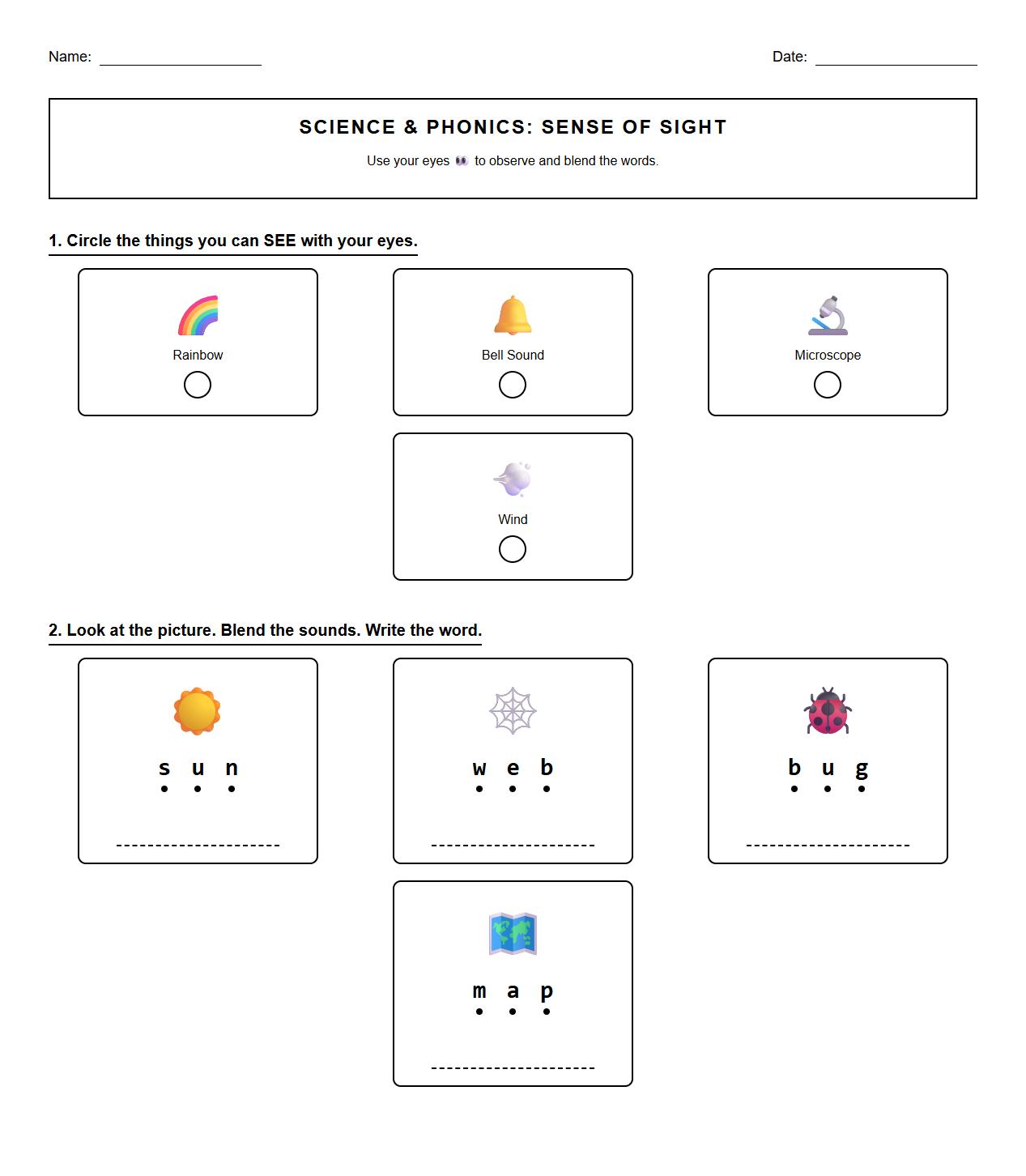
When asking, "What letter sound does the word 'sun' start with?" focus on the initial phoneme 's'. This exercise enhances phonemic awareness essential for early reading skills. Teachers and parents can model the sound and relate it to other words. Interactive discussions help solidify letter-sound connections.
Identifying Smell in Objects
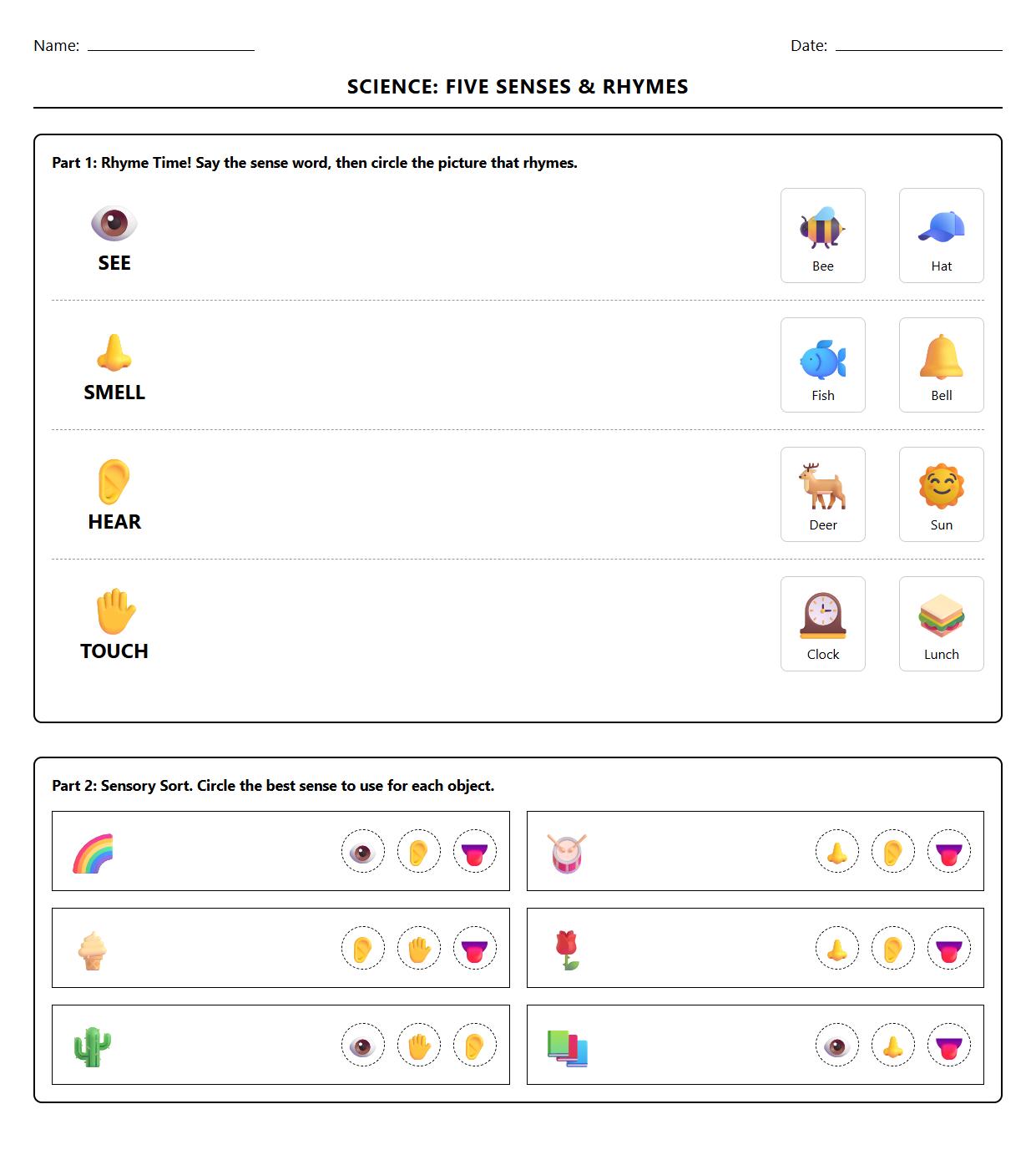
Ask children to "circle the item you can smell" to develop their understanding of the sense of smell. Use images of fragrant items like flowers or food to promote sensory recognition. This task encourages students to differentiate between senses effectively. Reinforcing sensory vocabulary aids comprehension.
Matching Words with Initial Sounds like "Dog"
Prompt children with "Which word begins with the same sound as 'dog'?" to strengthen phonological awareness. Focus on the initial /d/ sound and provide options for selection. This activity supports early literacy and sound discrimination skills. Repetition and positive feedback boost confidence.
Recognizing Sounds in Pictures
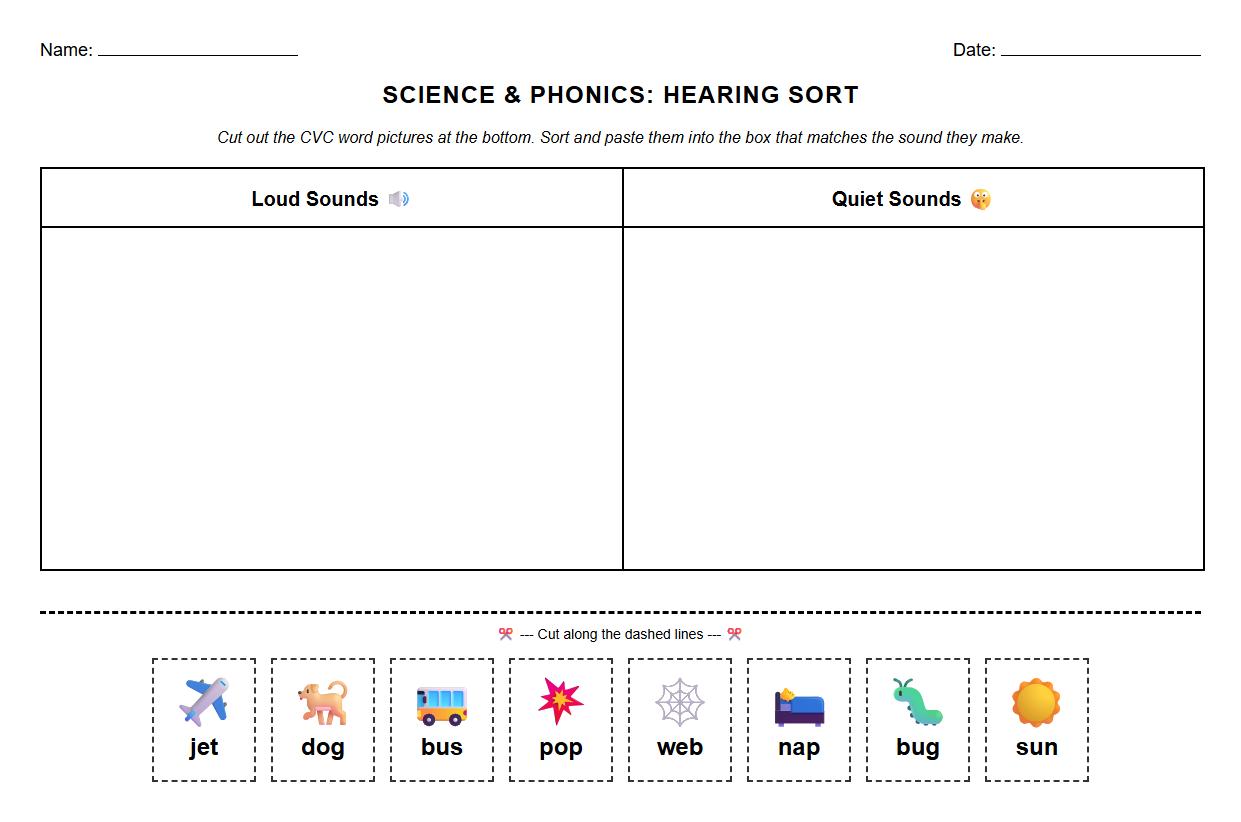
Guide children to "point to the picture that shows something you hear" to develop their understanding of the auditory sense. Use images depicting sounds like a bell or barking dog. This helps children connect objects with their corresponding sounds. Sensory identification enhances cognitive development.
Identifying Items Starting with "B" Sound
Ask, "Which item starts with the 'b' sound?" to help children focus on the initial consonant 'b'. Present objects such as ball, bird, or book for selection. This phonics practice supports letter-sound recognition vital for reading. Encourage verbalizing the sound for reinforcement.
Choosing Objects You Can Touch
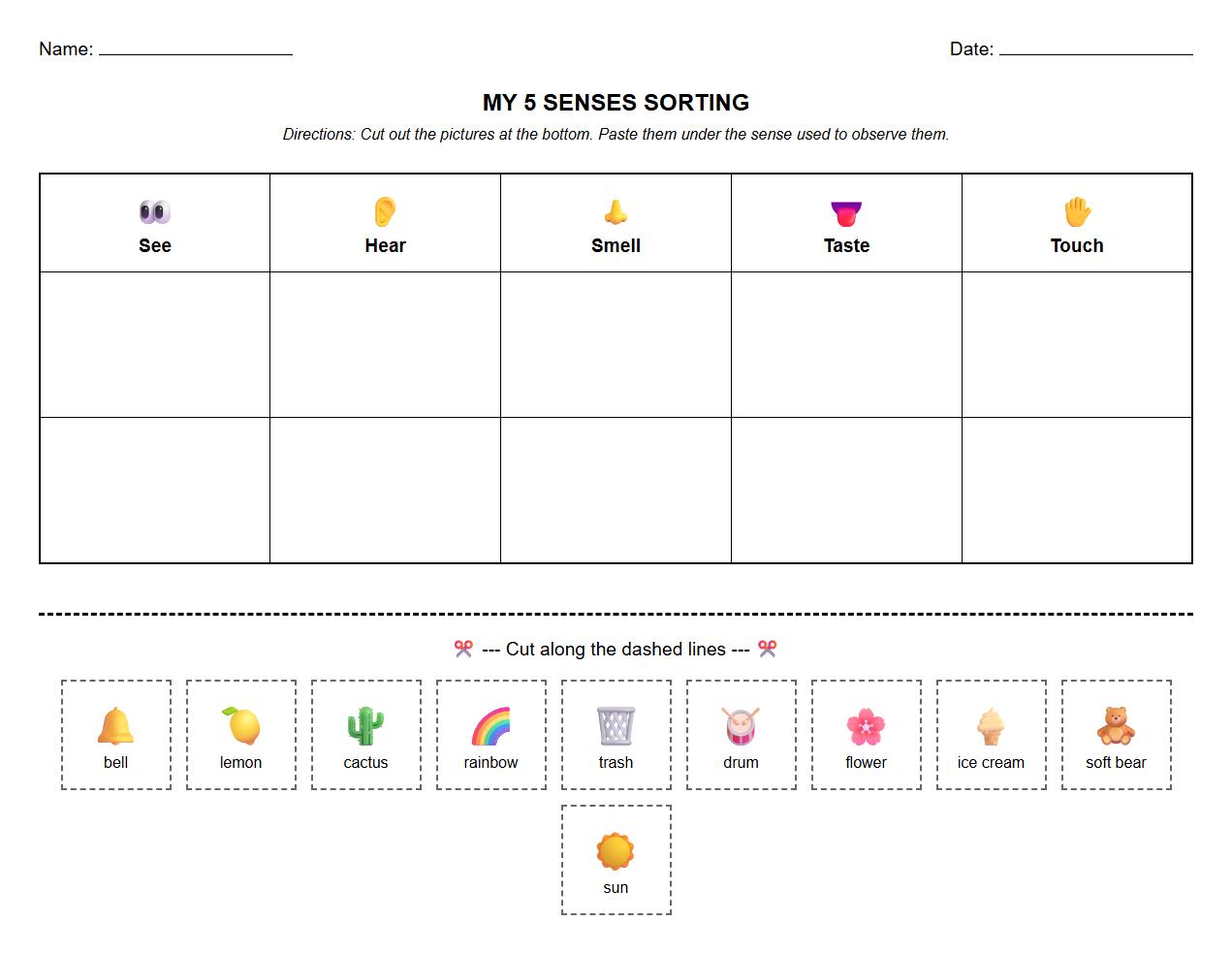
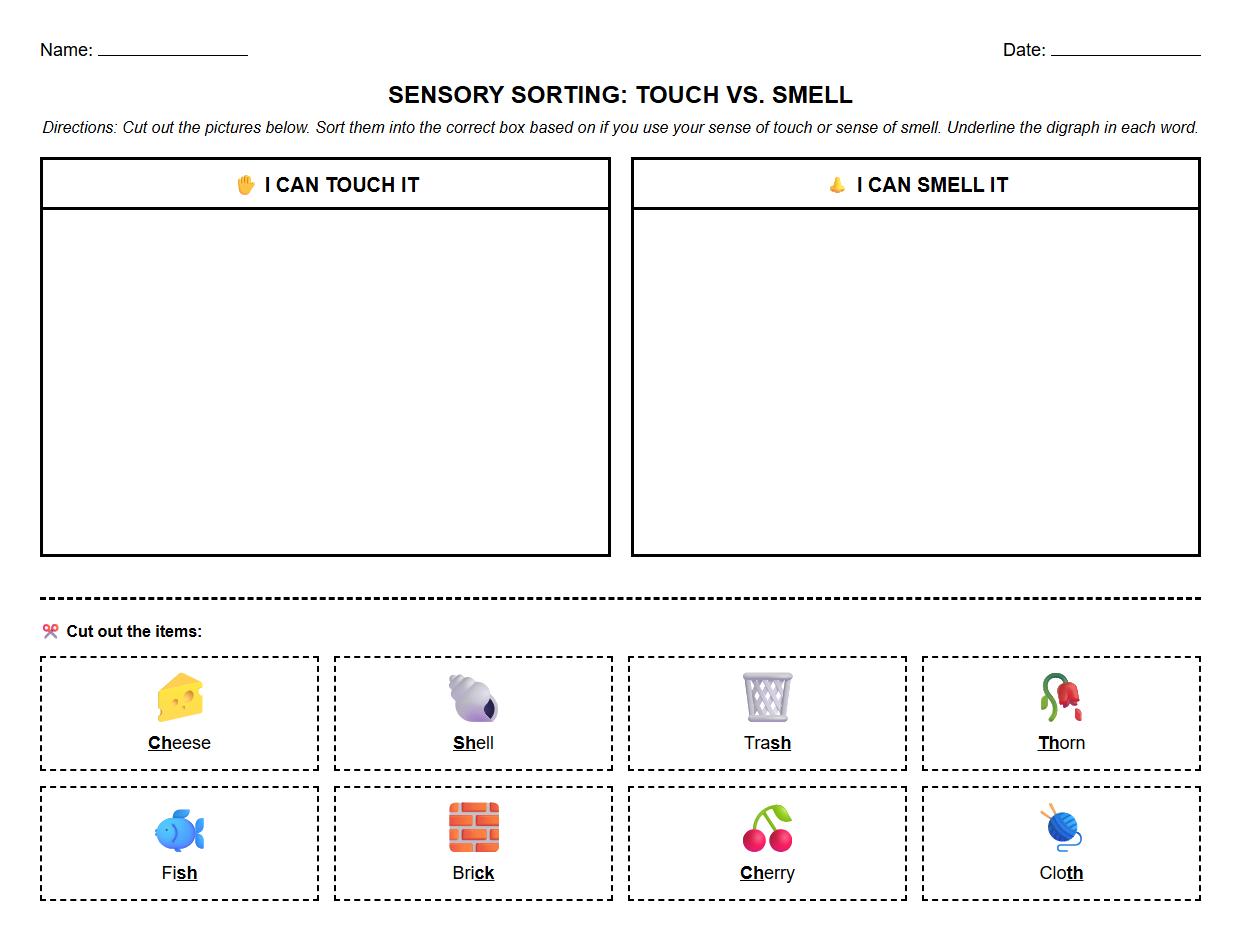
Encourage kids to "choose the object you can touch" to teach about the sense of touch. Use tangible items like a soft toy or rough rock in images. This activity fosters sensory exploration and vocabulary building. Discussing textures enriches descriptive language skills.
Finding Pictures Matching the "M" Sound
Ask children to "find the picture that matches with the 'm' sound" focusing on the initial /m/ phoneme. Include images like moon, mouse, or mitten for identification. This task enhances phonemic listening and early reading readiness. Use repetition to support mastery.
Selecting Images Showing Something You See
Instruct children to "select the image that shows something you see" to reinforce the sense of sight. Use clear, colorful pictures such as a rainbow or tree to engage visuals. This strengthens sensory understanding and observational skills. Discuss what they see to build descriptive language.
Identifying Words Starting with "T"
When asking, "Which word begins with the 't' sound?" focus children on the initial consonant 't'. Provide words like tiger, table, or tree for selection. This phonics activity enhances early literacy and sound recognition. Encourage children to say the words aloud for practice.


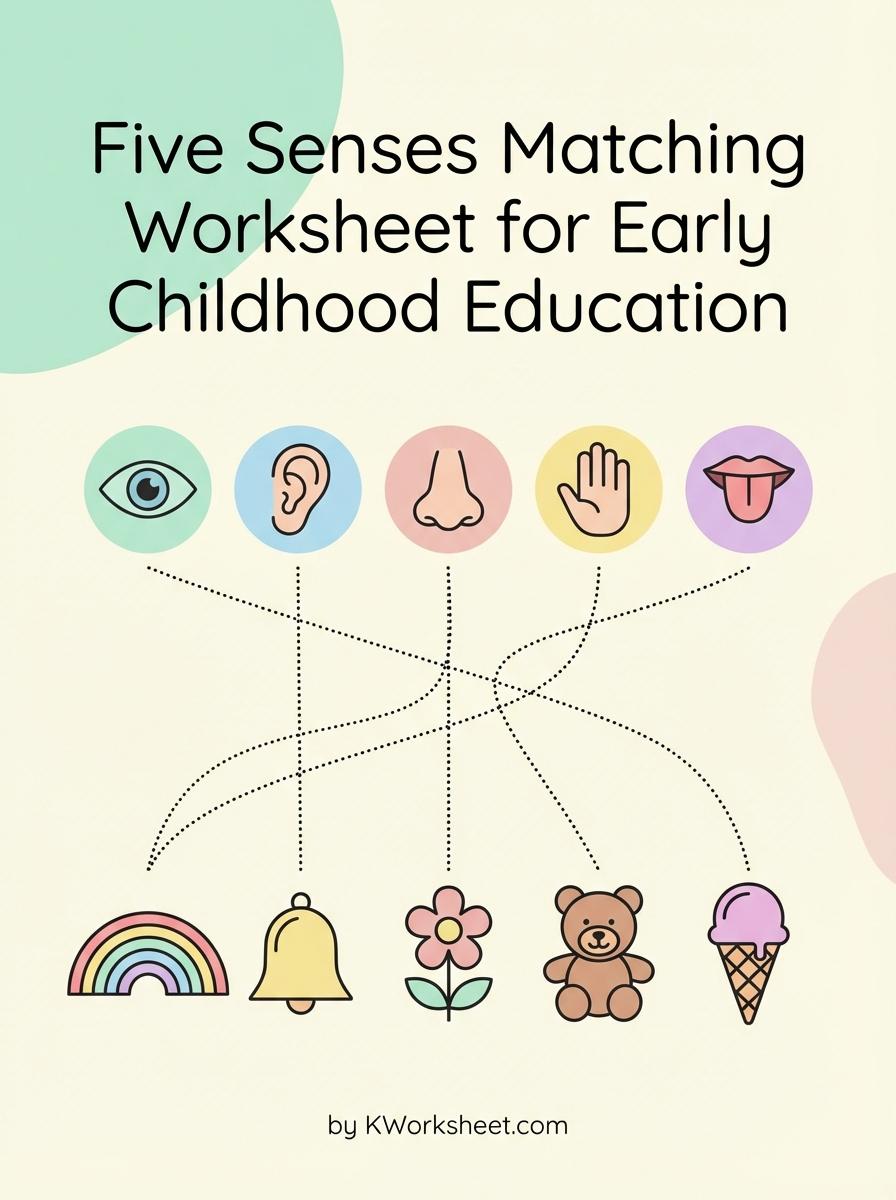
Five Senses Matching Worksheet for Early Childhood Education