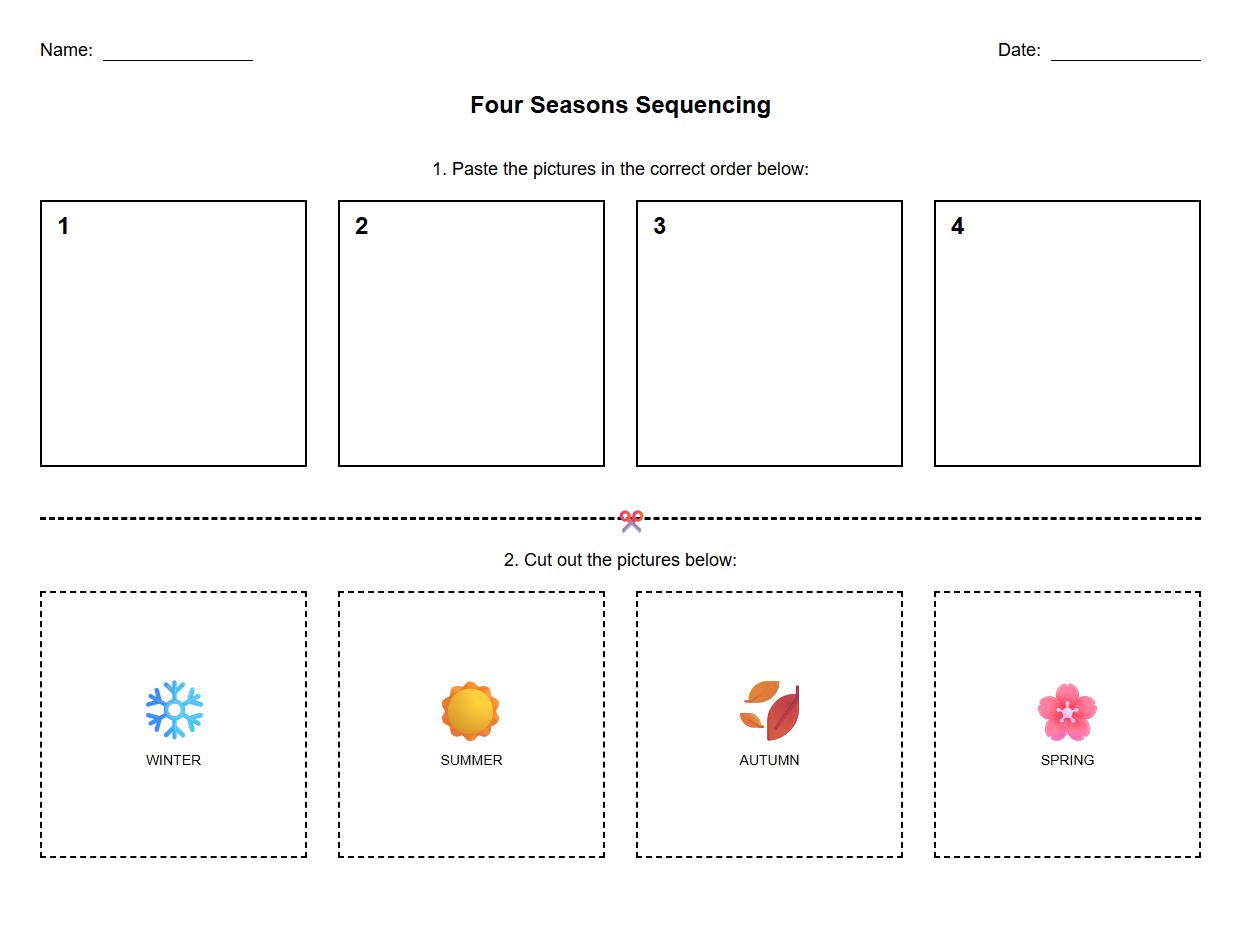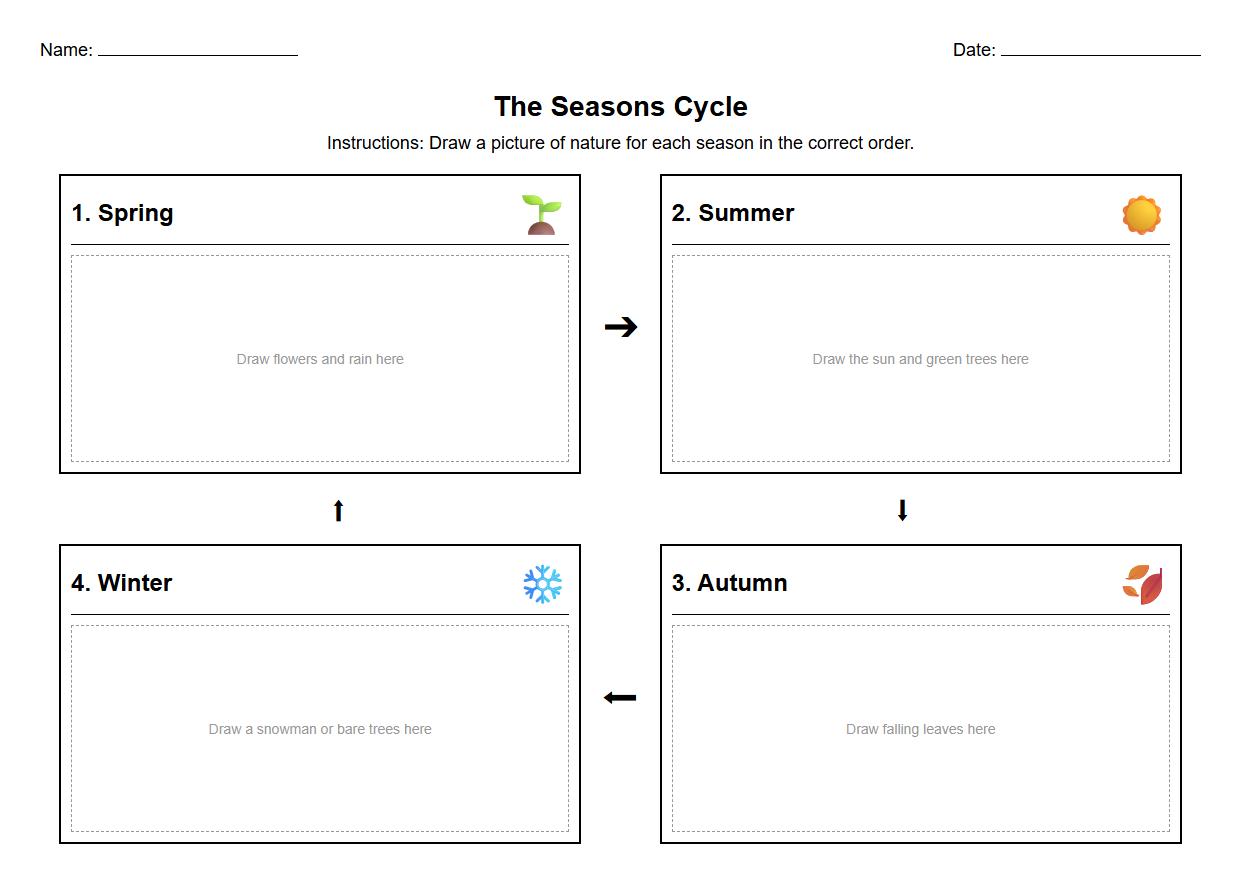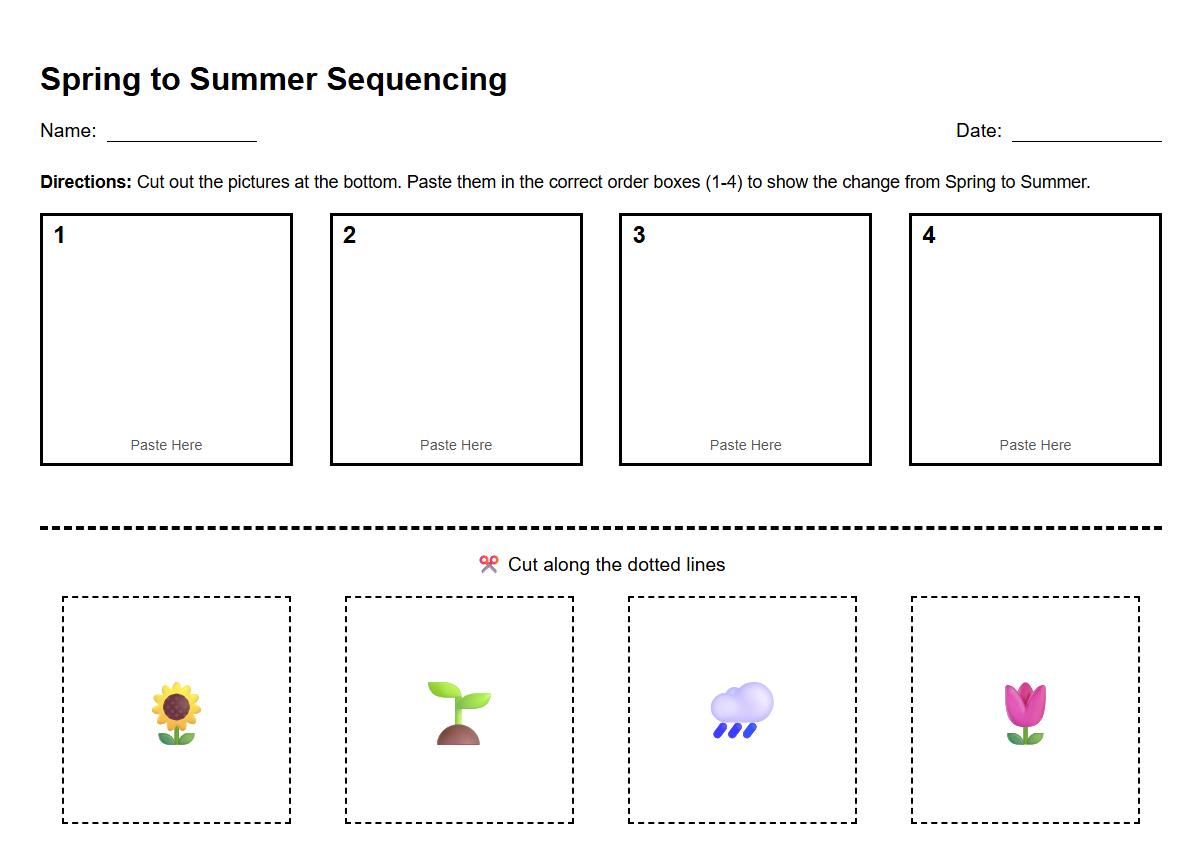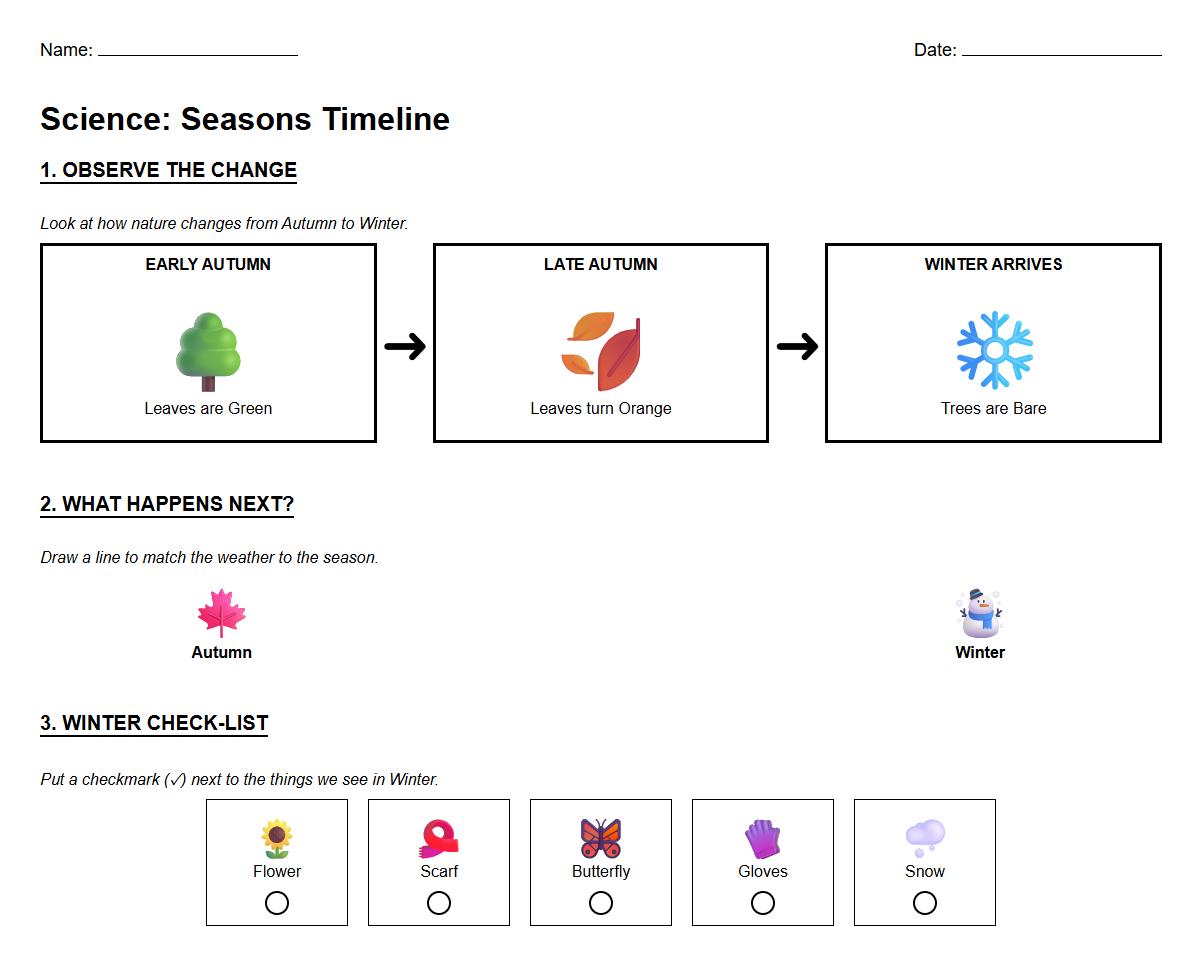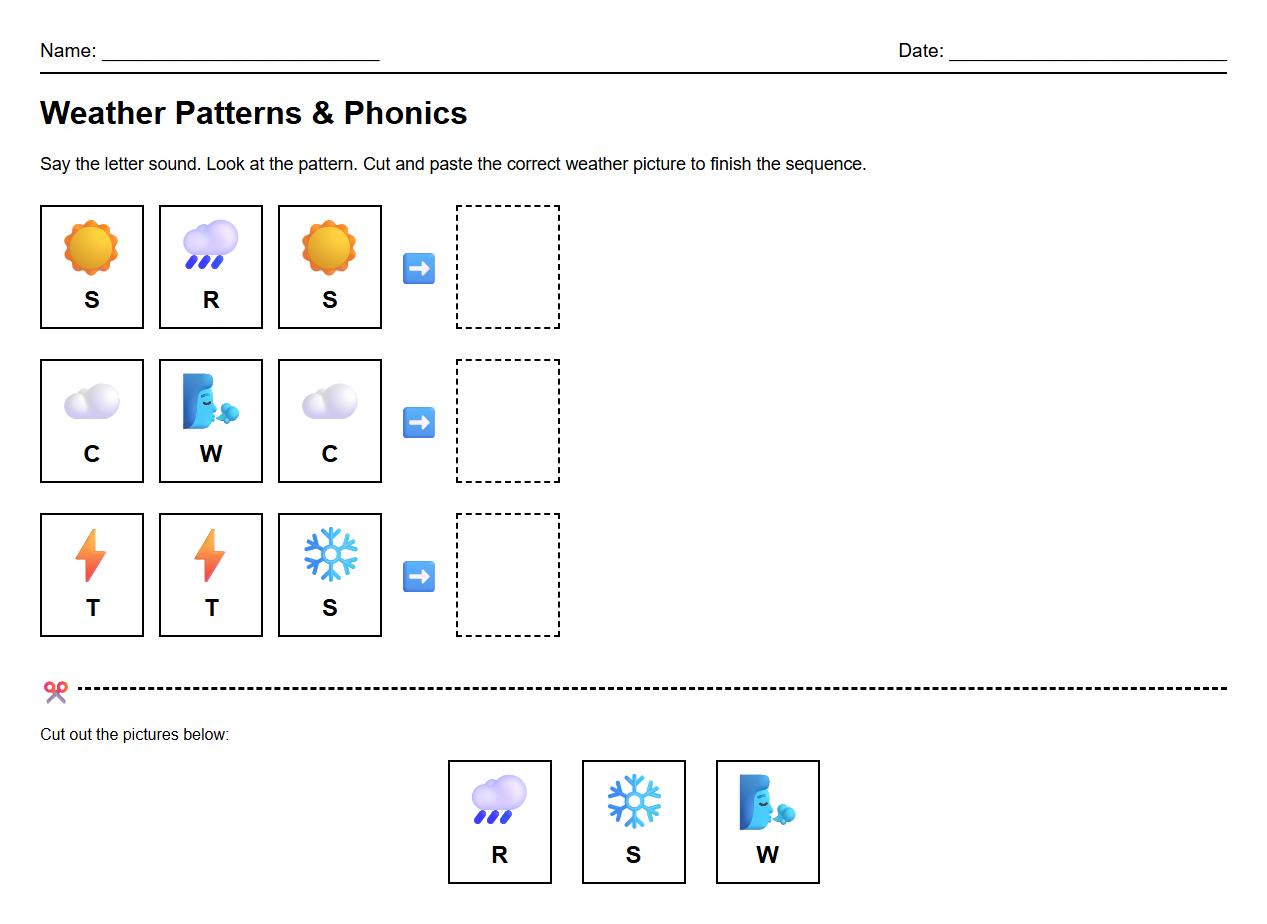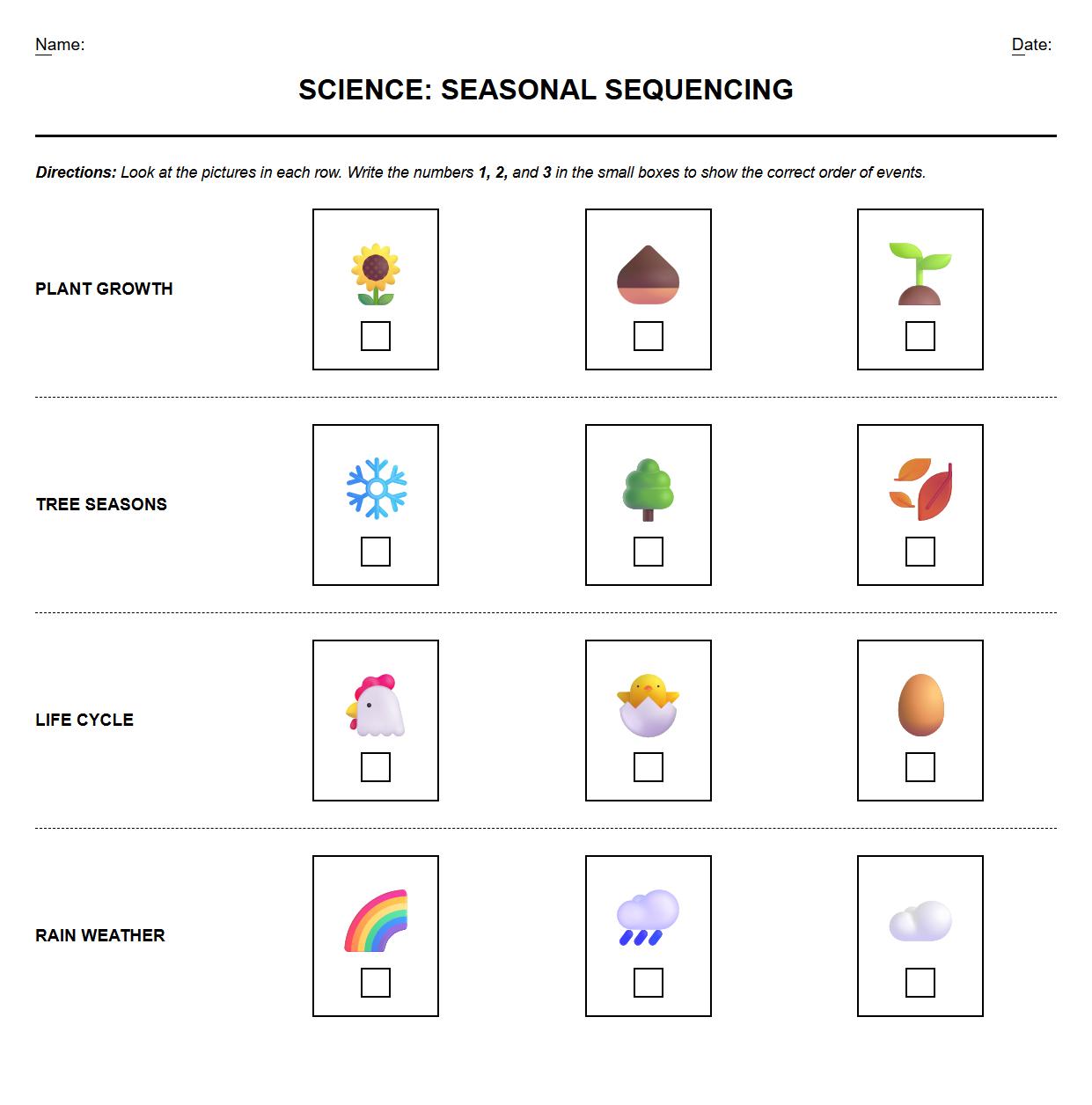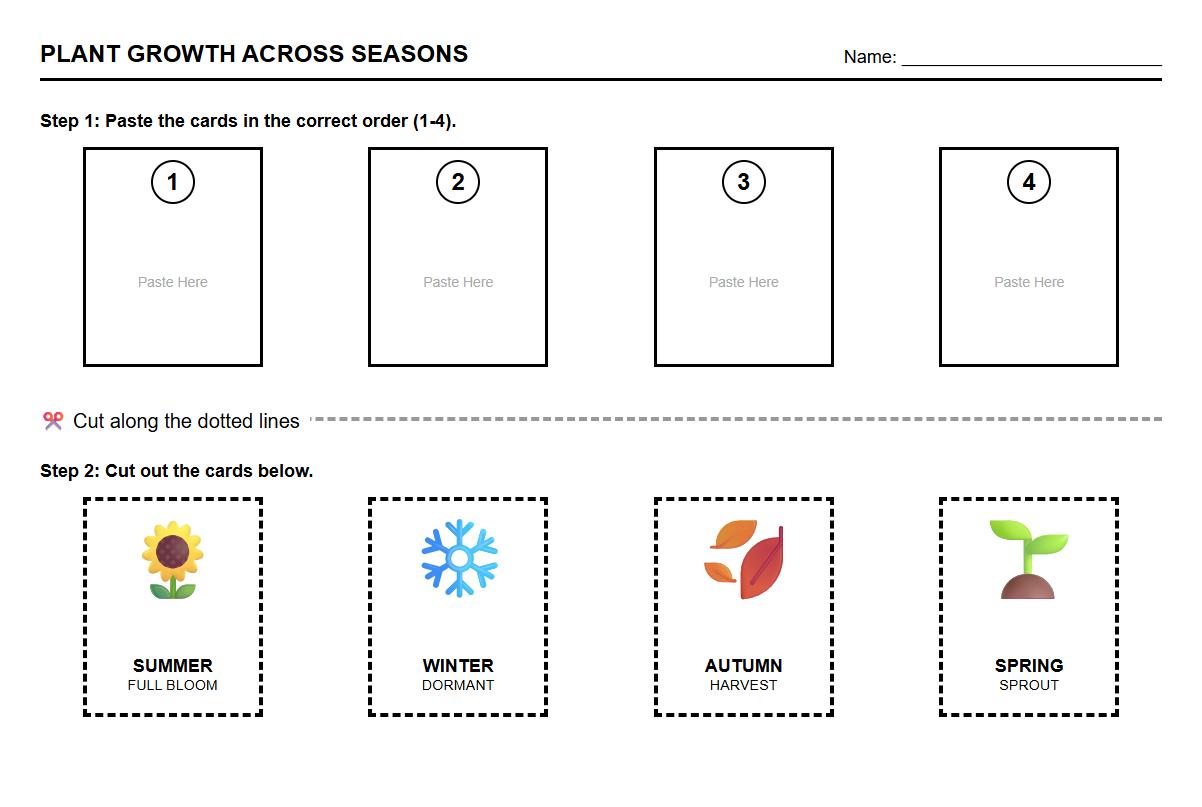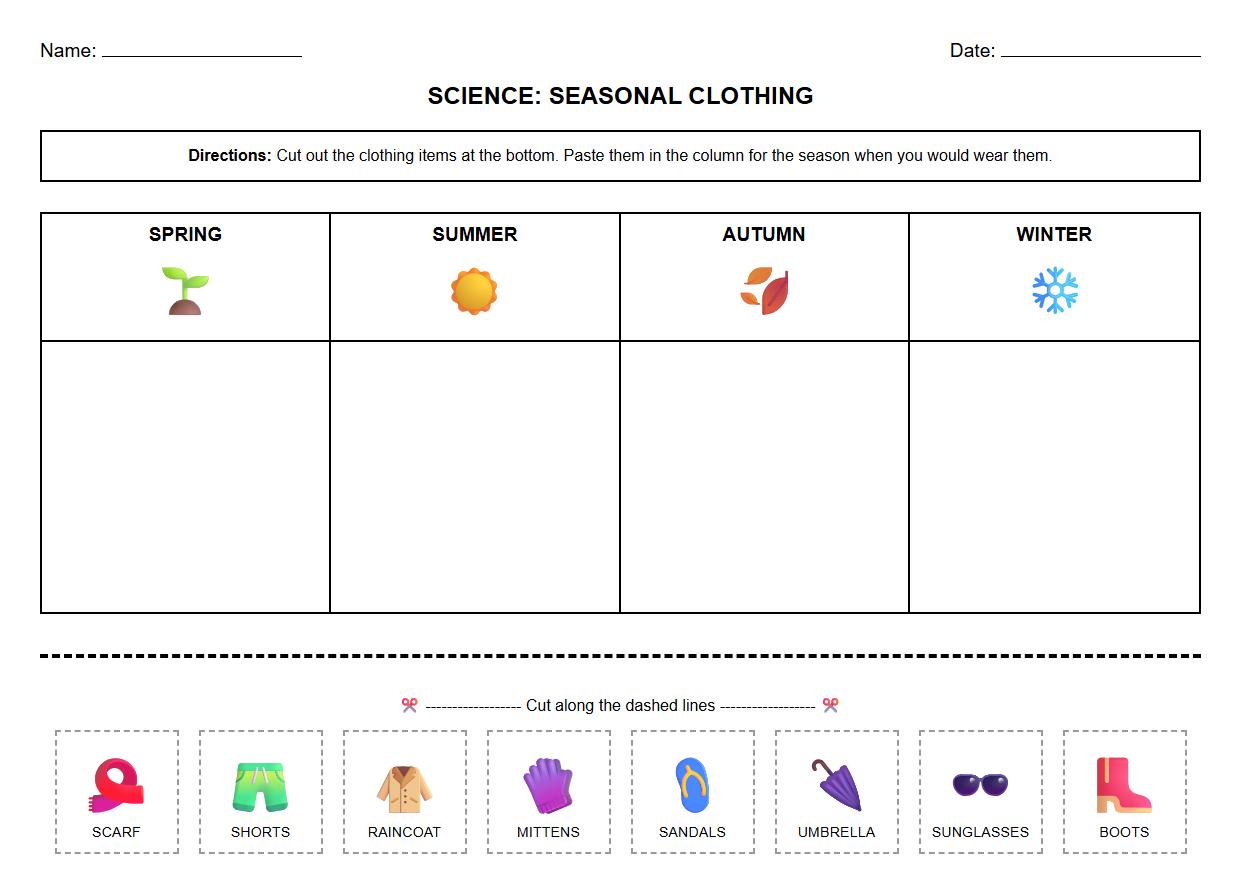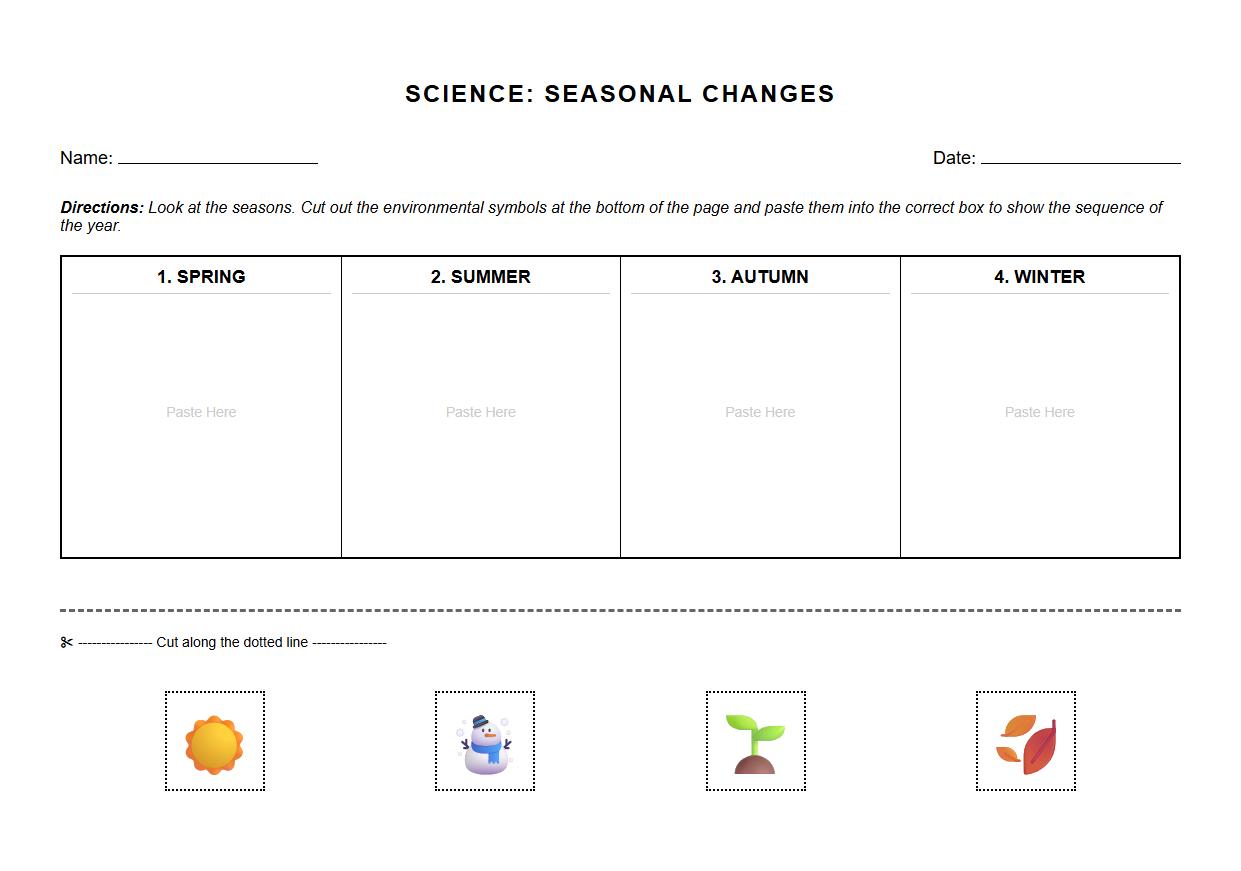
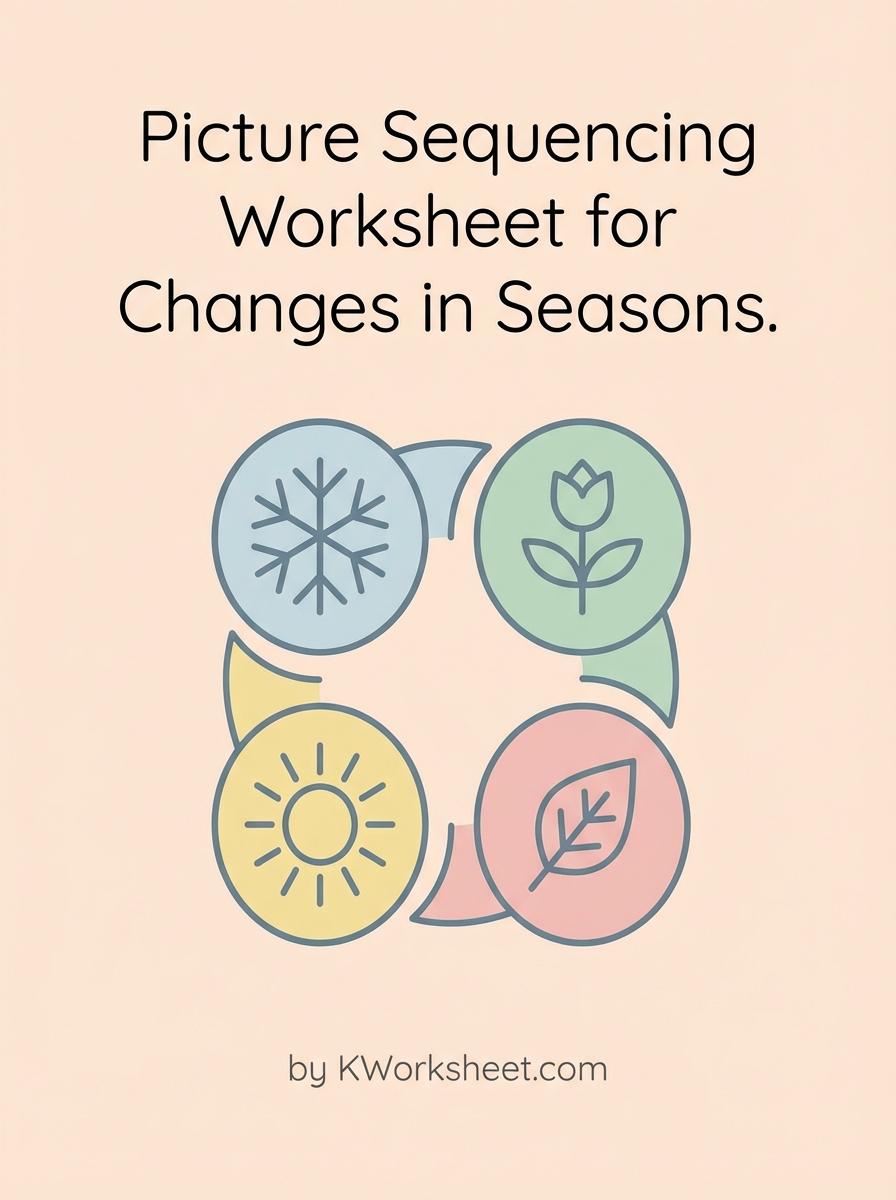
Picture sequencing worksheets for changes in seasons help children understand the natural progression of the year by arranging images that represent different seasonal activities and weather patterns. This tool enhances cognitive skills such as logical thinking and temporal awareness while reinforcing knowledge about spring, summer, autumn, and winter. Explore the available worksheets to engage learners in mastering seasonal changes through visual storytelling.
What Happens First in the Sequence of Seasons Shown in the Pictures?
The season that happens first in the sequence is winter. This is shown by the presence of snow and children dressed in warm clothing. Winter typically marks the beginning of the seasonal cycle in many educational charts for children. The cold atmosphere and bare trees also signify the start of the sequence. To further understand how to observe and identify weather and temperature differences, see this weather graphing worksheet.
Which Picture Shows the Season After Winter?
The season following winter is spring. In the spring picture, you can see blooming flowers and budding trees. The weather appears milder with children possibly wearing lighter jackets. This visual change helps identify the transition from winter to spring. For activities that help kids learn about observing the environment, you can explore this five senses matching worksheet.
How Can You Tell It Is Summer in One of the Images?
Summer is easily recognized by the bright sun and children wearing light clothing such as shorts and t-shirts. The trees are full of green leaves, and outdoor activities like playing or swimming are often visible. Warm weather and vibrant greenery highlight the summer scene. This helps differentiate summer from other seasons. Understanding the environment's states can be linked to this states of matter worksheet.
What Changes Do You Notice in the Trees from Autumn to Winter?
From autumn to winter, the trees lose their colorful leaves and become bare. Autumn shows trees with orange, yellow, and red leaves, while winter depicts branches without leaves. This change in foliage is a key seasonal indicator. It visually explains the natural preparation for colder months. For tracing and coloring exercises showing natural changes, see this trace and color worksheet.
Where Do You See Children Wearing Coats and Scarves?
Children wearing coats and scarves are mostly seen in the winter picture. This attire indicates cold weather conditions associated with winter. Heavy clothing helps convey the chilly atmosphere effectively. Parents and teachers can use this visual cue to discuss dressing appropriately for the season. Identifying clothing and weather can be practiced further using the senses worksheet.
Which Picture Shows Leaves Falling from the Trees?
The image with leaves falling depicts the autumn season. Leaves are shown in warm colors like orange, red, and yellow as they fall to the ground. This natural phenomenon is a clear sign of autumn's arrival. It aids children in recognizing seasonal changes outside. For sorting and classification practice, visit this animal classification worksheet.
How Does the Weather Look Different in the Spring Image?
Spring weather is shown as mild and fresh with blooming flowers and green grass. The sky is often bright but not as intense as in summer. There may be light rain, indicated by children possibly holding umbrellas or puddles on the ground. These elements suggest rejuvenation and growth after winter. To learn about parts of plants and their functions, try this plant parts worksheet.
What Activities Are Children Doing in the Summer Picture?
In summer, children are often shown playing outside, swimming, or eating ice cream. They wear shorts and hats to protect themselves from the sun. These activities symbolize fun and leisure during warm weather. Summer images encourage discussions about outdoor play and sun safety. Related to observing the world in different conditions, see this exploring day and night worksheet.
Which Season Comes Last in the Picture Sequence?
The season that comes last is autumn, following summer in the typical sequence. The image shows trees shedding leaves and cooler weather compared to summer. This season prepares the environment for the upcoming winter. Recognizing autumn as the final season helps in understanding the complete cycle. Visual sorting skills can be further developed with this sink or float sorting worksheet.
What Clues Help You Decide the Correct Order of the Seasons?
Key clues include changes in weather, clothing, and nature. Snow and heavy clothing indicate winter, blossoming plants show spring, green leaves and sun signal summer, and falling leaves represent autumn. Observing these visual details helps children and adults learn the correct season sequence. These clues make seasonal learning engaging and clear. For simple science vocabulary and sorting practice, check this science vocabulary worksheet.


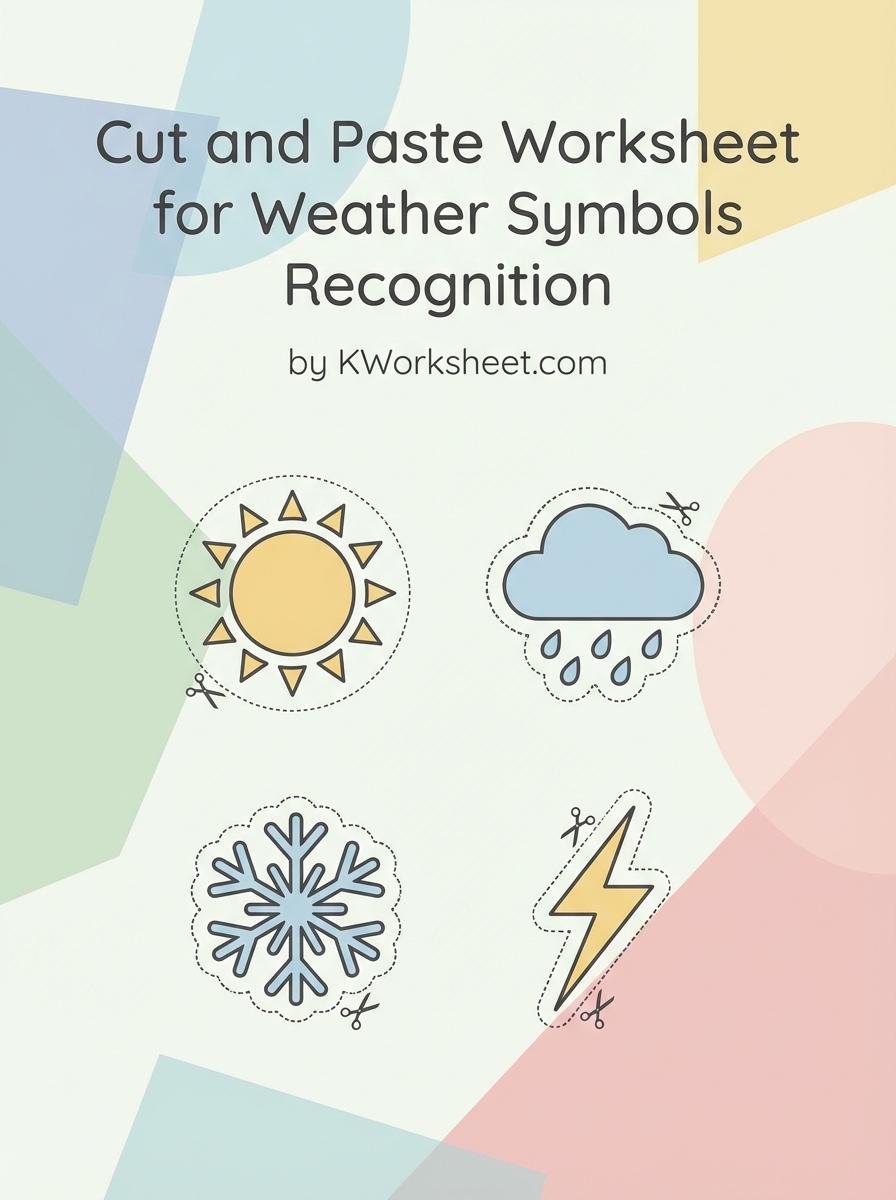
Cut and Paste Worksheet for Weather Symbols Recognition