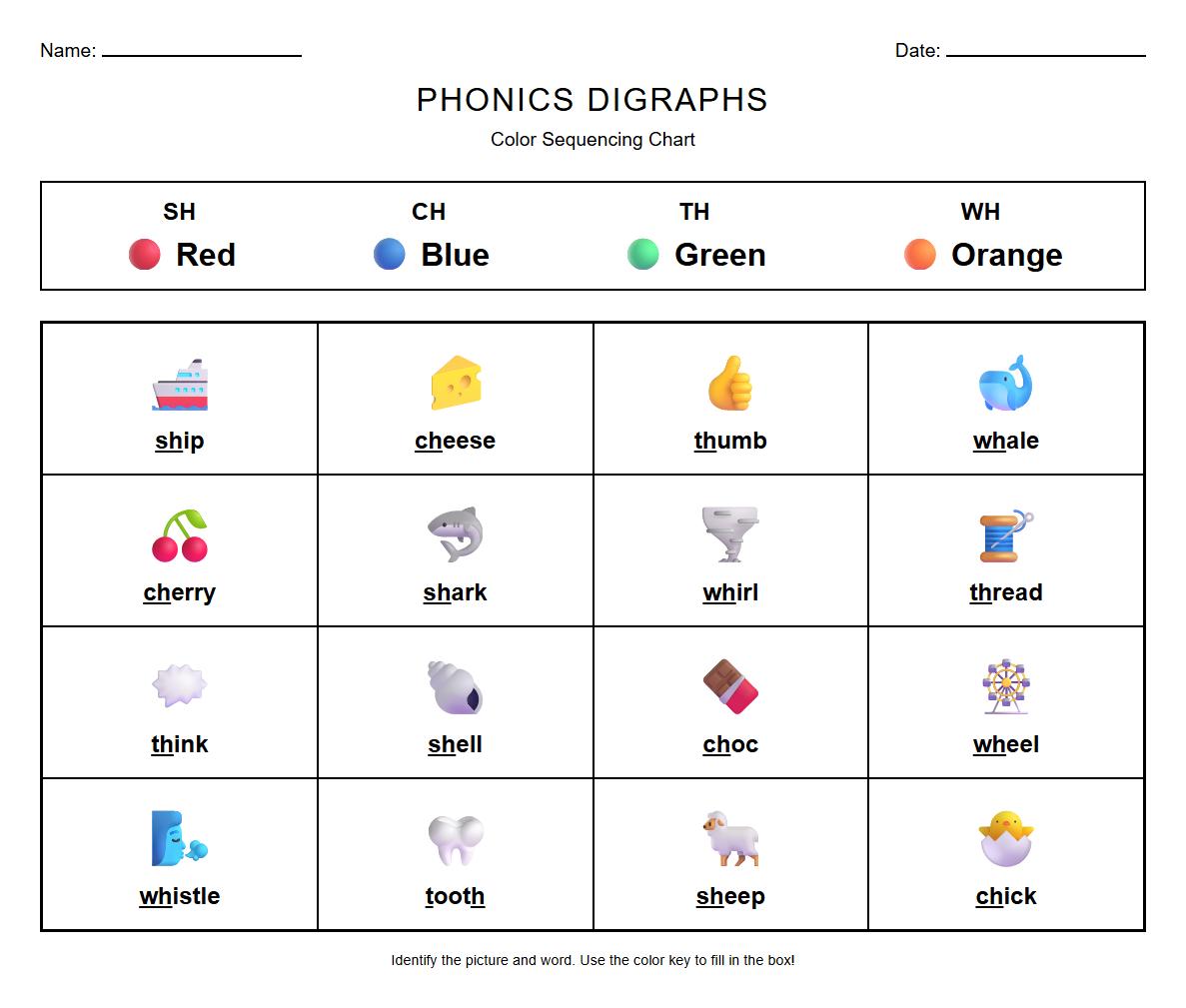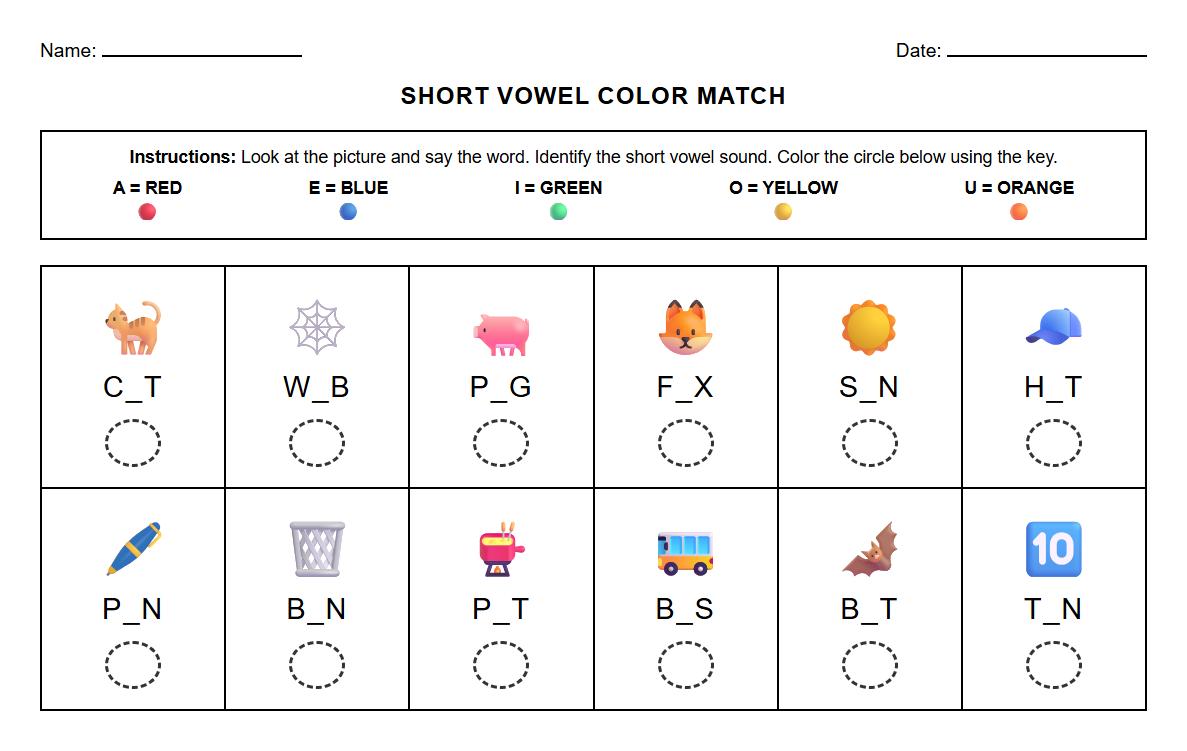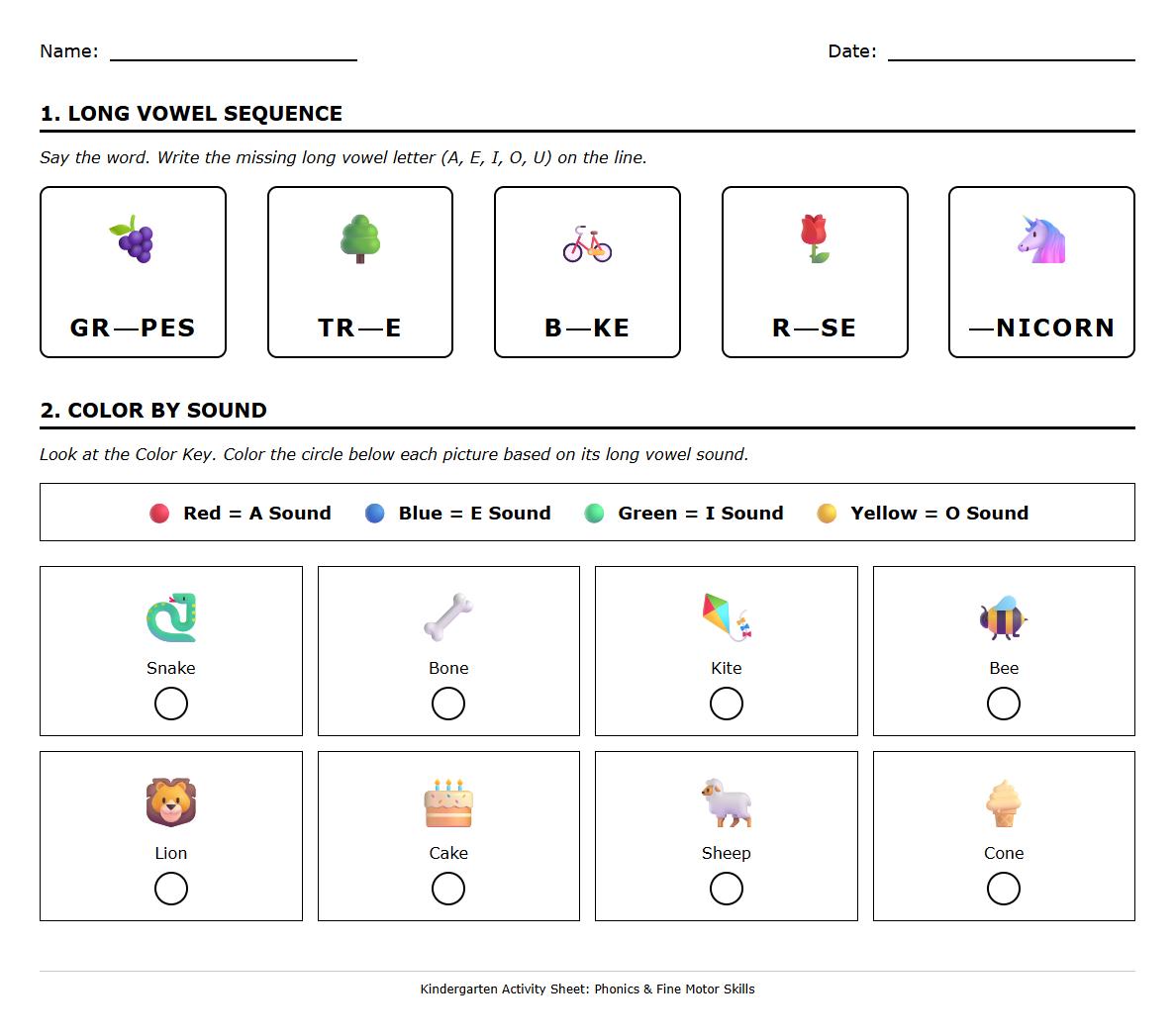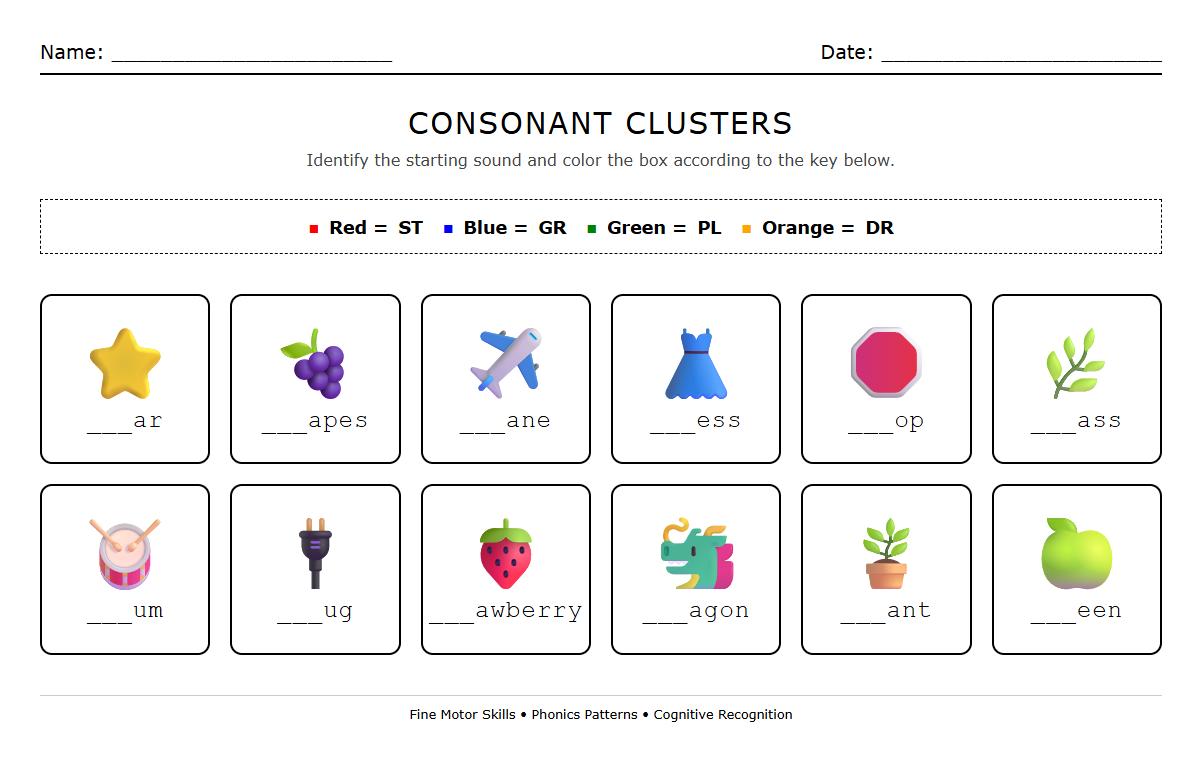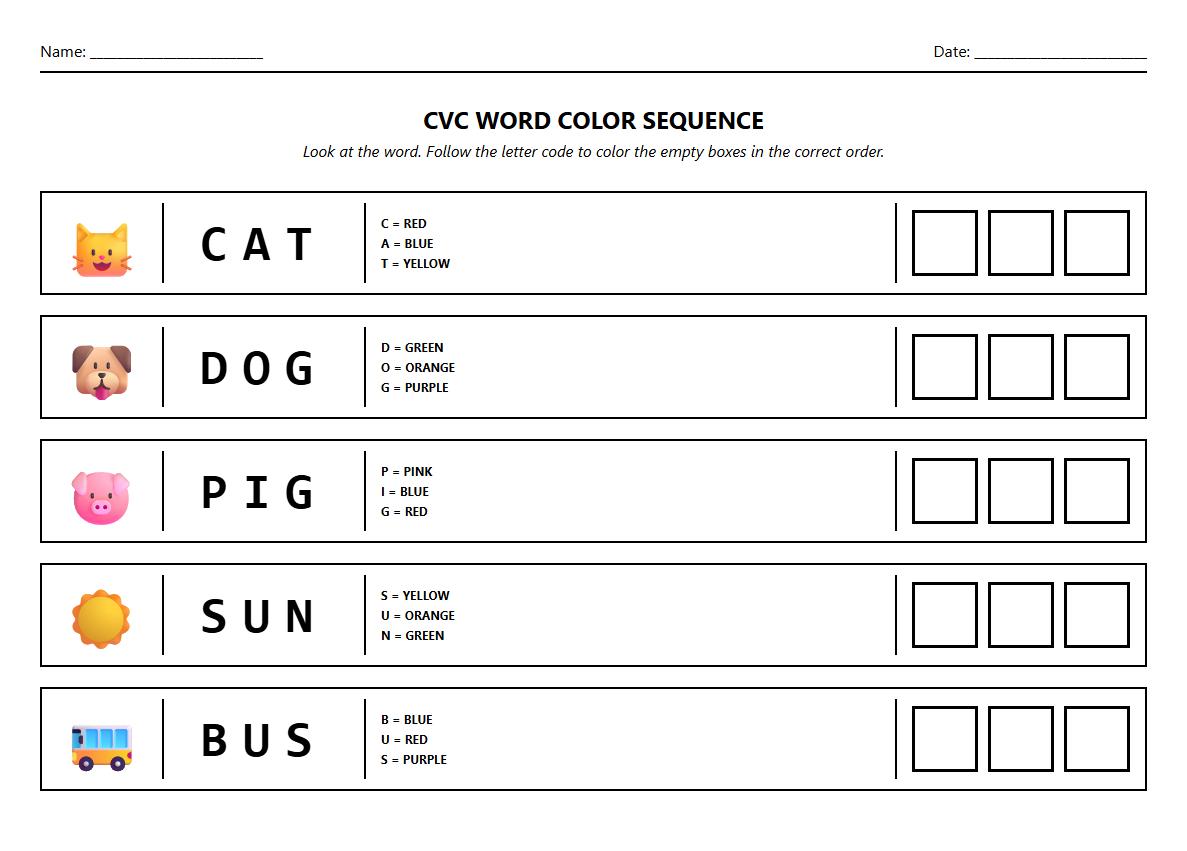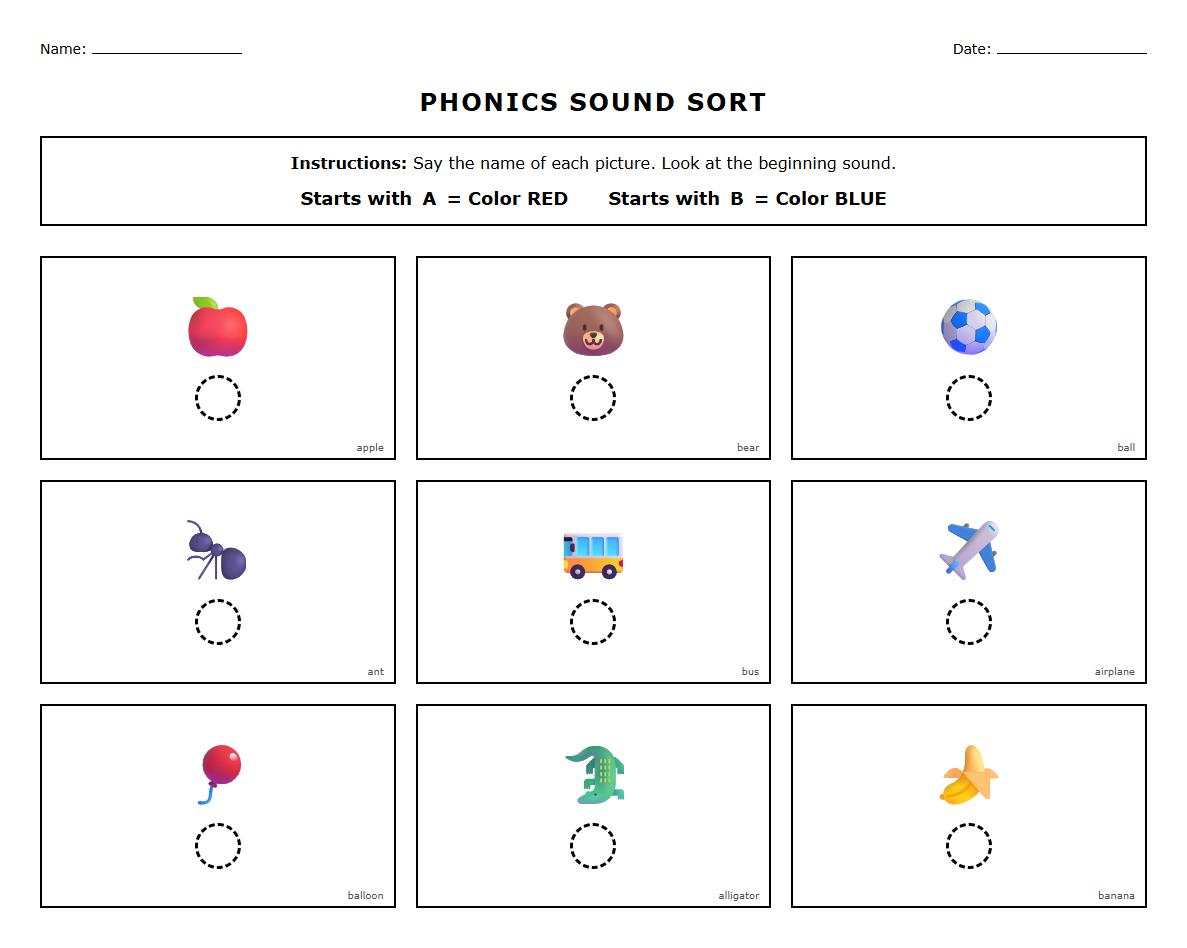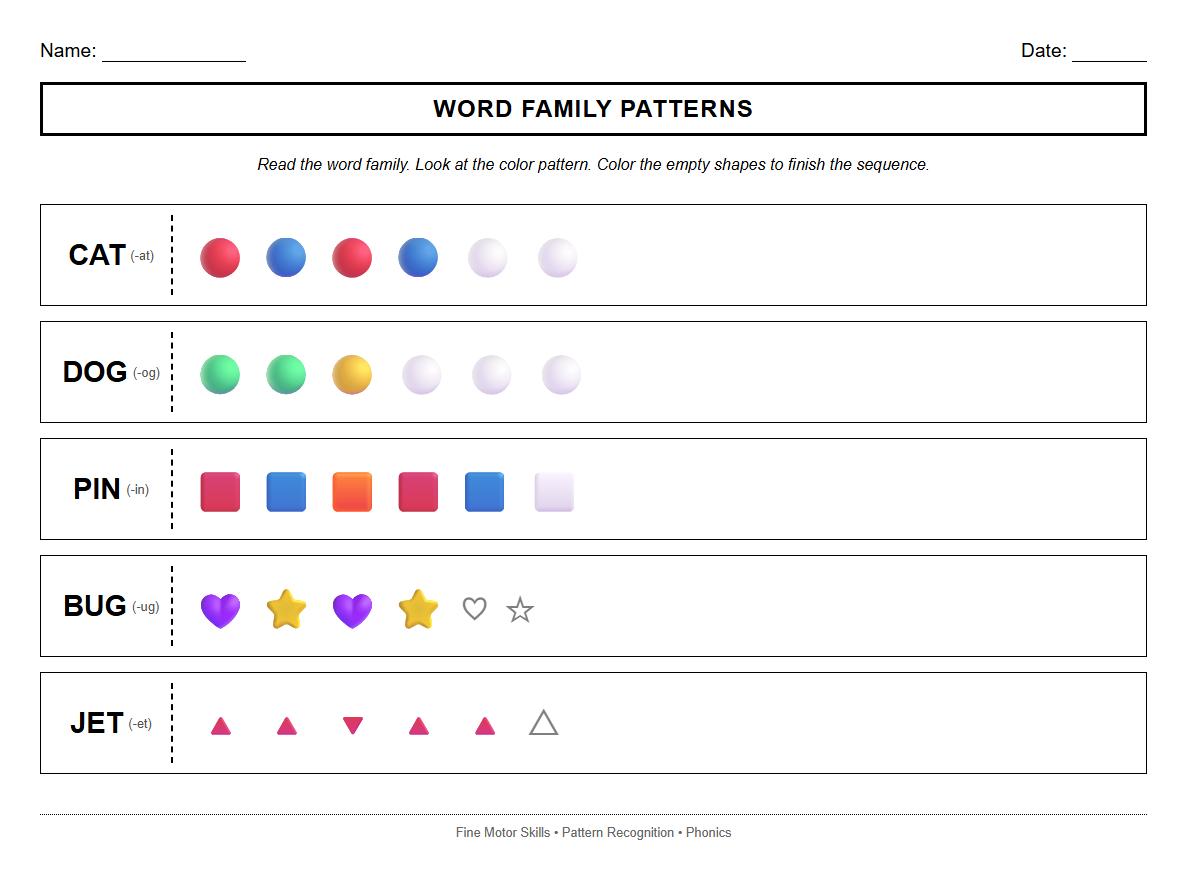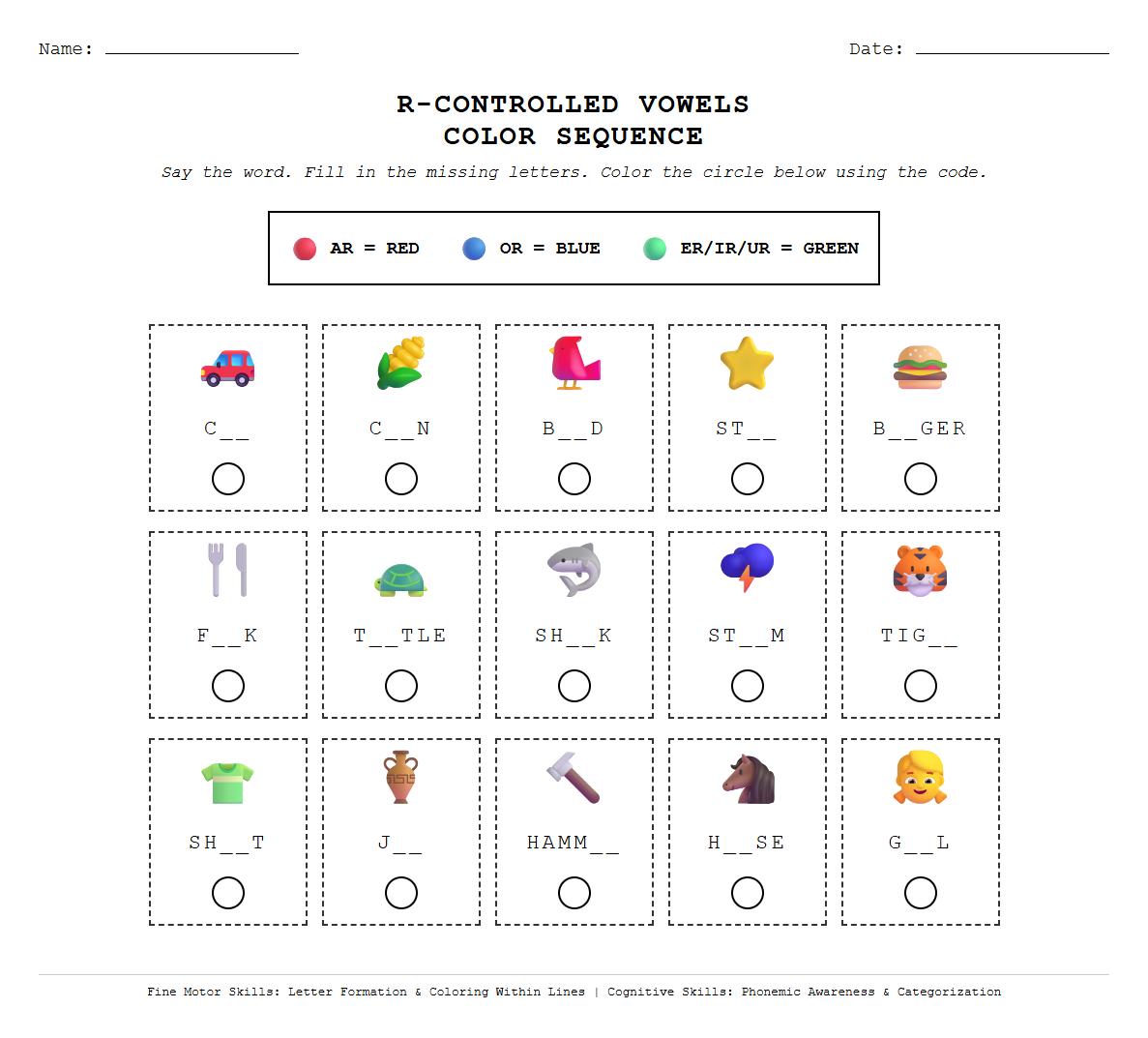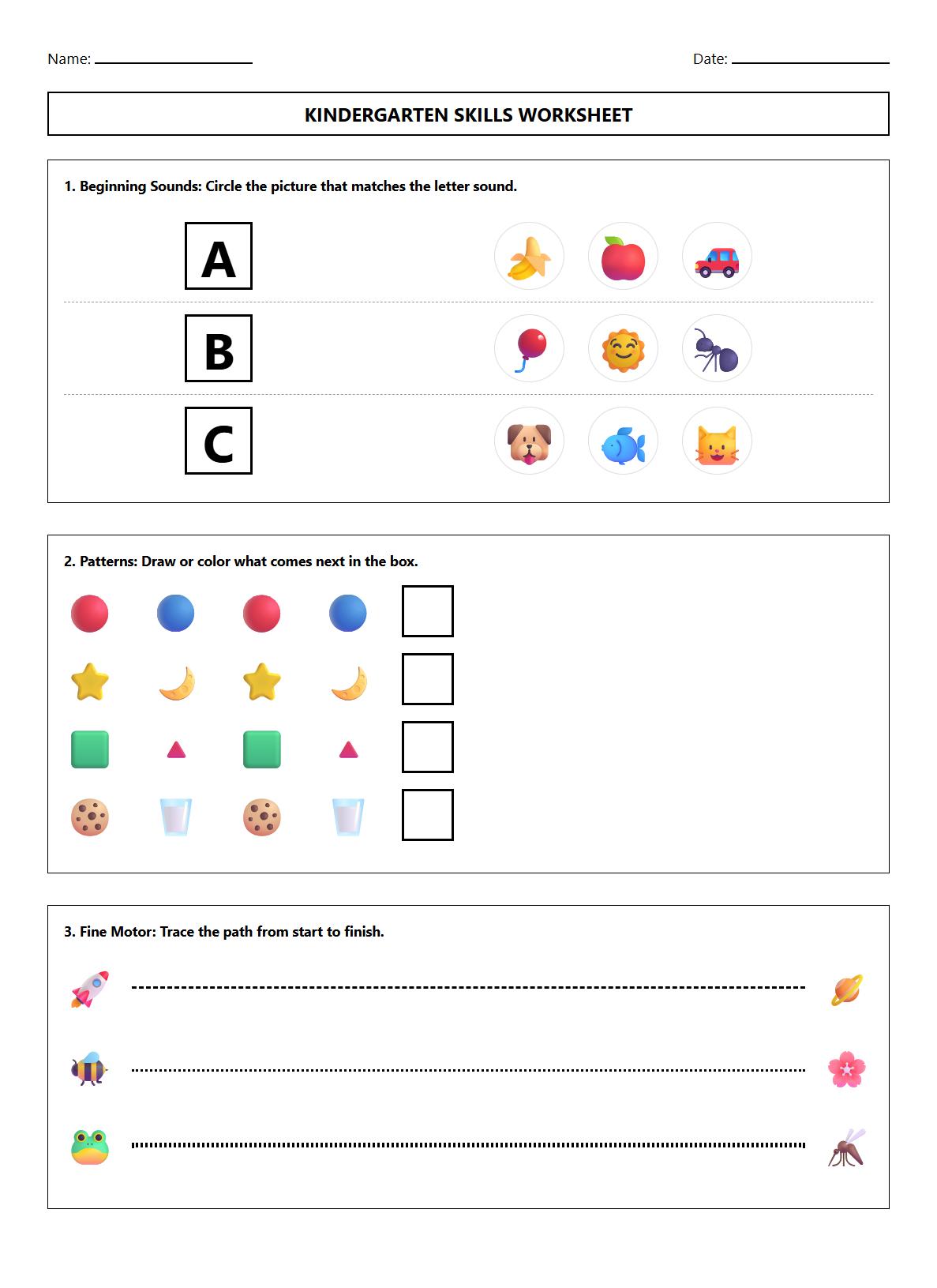
Color patterns and sequencing worksheets using phonics integration enhance early literacy skills by combining visual recognition with sound patterns. These exercises reinforce letter-sound relationships while encouraging pattern identification and logical reasoning. Explore our collection of worksheets to support phonics learning through engaging color pattern activities.
Using Phonics to Identify Color Names in Patterns
Students can apply phonics skills to recognize the beginning sounds of color names within a repeating pattern. By associating specific sounds with letters, children enhance their ability to predict and identify colors as they appear in sequence. Encourage them to listen carefully and say the color names aloud to reinforce sound-letter connections. This method supports early reading and phonological awareness in an engaging way.
Beginning Sound of "Yellow" in the Pattern
The word "yellow" begins with the /y/ sound, which is a consonant sound made by putting the tongue near the roof of the mouth. Identifying this initial sound helps students segment and blend phonemes for better word recognition. In patterns, noting such sounds strengthens auditory discrimination and vocabulary development.
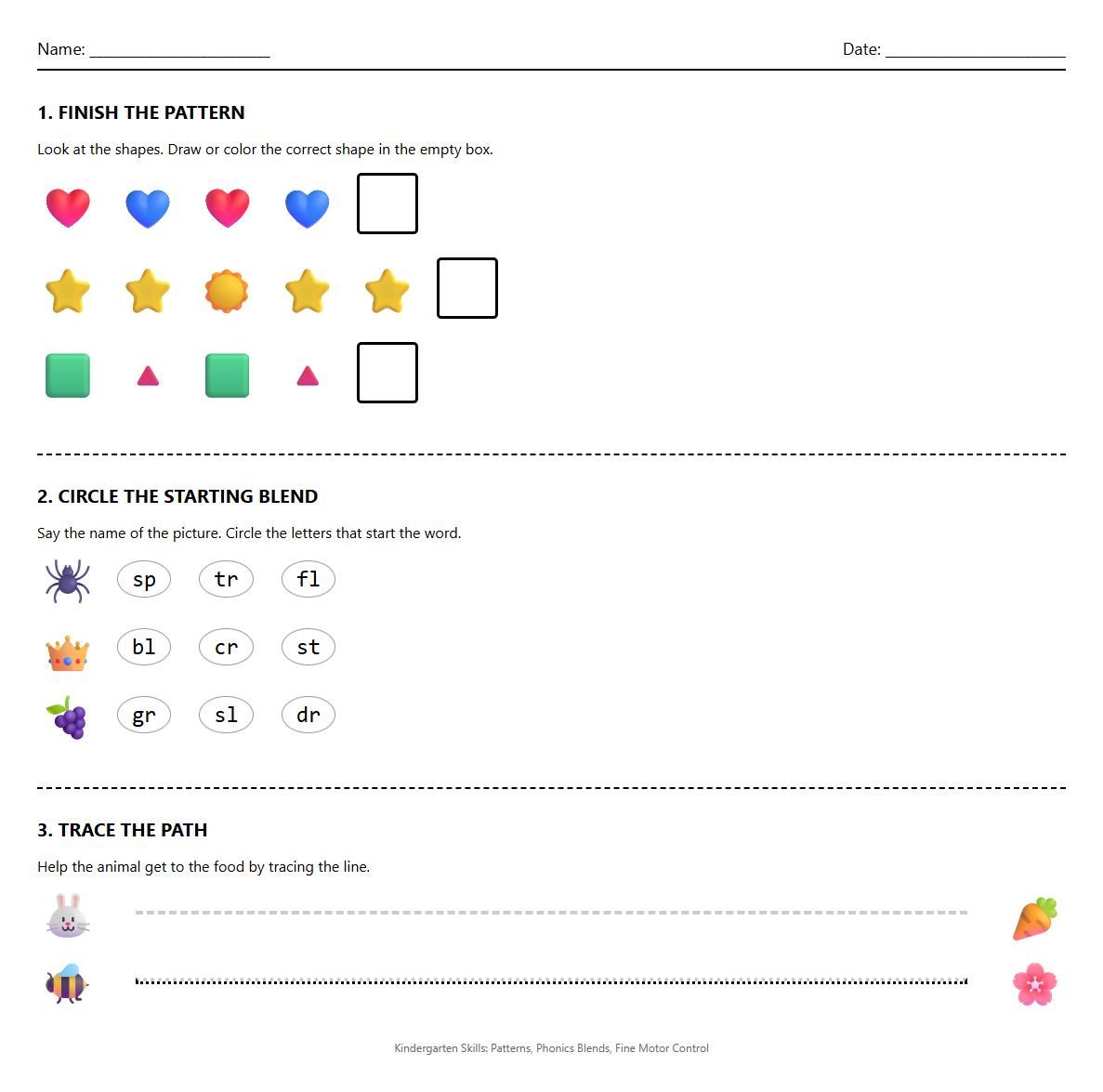
Next Color in the Sequence: Red Blue Red Blue
In the repeating pattern "red, blue, red, blue," the next color is red. Recognizing and predicting the next item in a sequence supports logical thinking and pattern recognition skills. Practice with color patterns promotes early math readiness alongside literacy.
Words that Rhyme with "Green" in the Color Sequence
Ask students to circle the color words that rhyme with "green," focusing on the "-een" sound at the end of words. Rhyming helps children notice sound similarities, which is an important skill for decoding and spelling. Identifying rhymes within color names reinforces auditory discrimination and phonemic awareness.
Ending Sound of "Orange" in the Color Pattern
The word "orange" ends with the /j/ sound, usually represented by the "ge" letter combination. Helping children hear the final sound in words enhances their ability to break down and spell words accurately. Paying attention to ending sounds also supports spelling and reading development.
Spelling the Color After "Purple" in the Pattern
To spell the color that comes after "purple," students should focus on sound-letter correspondence and phoneme segmentation. If the pattern continues with a color like "yellow," encourage children to break down the word into sounds and write each phoneme. This exercise promotes spelling skills aligned with phonics principles.
Finding the Color Word Starting with the /b/ Sound
Guide students to locate the color in their sequence that starts with the /b/ sound, such as "blue." Identifying initial sounds is a key phonics skill that supports early reading and spelling. Practicing this with familiar color words makes learning interactive and meaningful.
Noticing Patterns When Saying Color Names Out Loud
When students say the color names aloud, they can notice rhythmic and sound patterns in the sequence. This oral repetition reinforces phonological awareness and helps children predict what comes next. Recognizing these patterns enhances both language development and memory skills.
Color with the Same Beginning Sound as "Cat"
The color in the pattern that shares the beginning sound with the word "cat" is "cyan" or "crimson," depending on the list provided. This /k/ or hard "c" sound is an important phoneme for students to identify across words. Matching initial sounds builds phonemic awareness crucial for reading.
Pointing to the Color Word with Three Syllables
Encourage children to point to the color word that has three syllables, such as "orange" or "yellow." Breaking words into syllables supports decoding and pronunciation skills. This activity also aids in vocabulary building and listening abilities.


Engaging Color by Number Phonics Worksheet Activities for Kindergarten