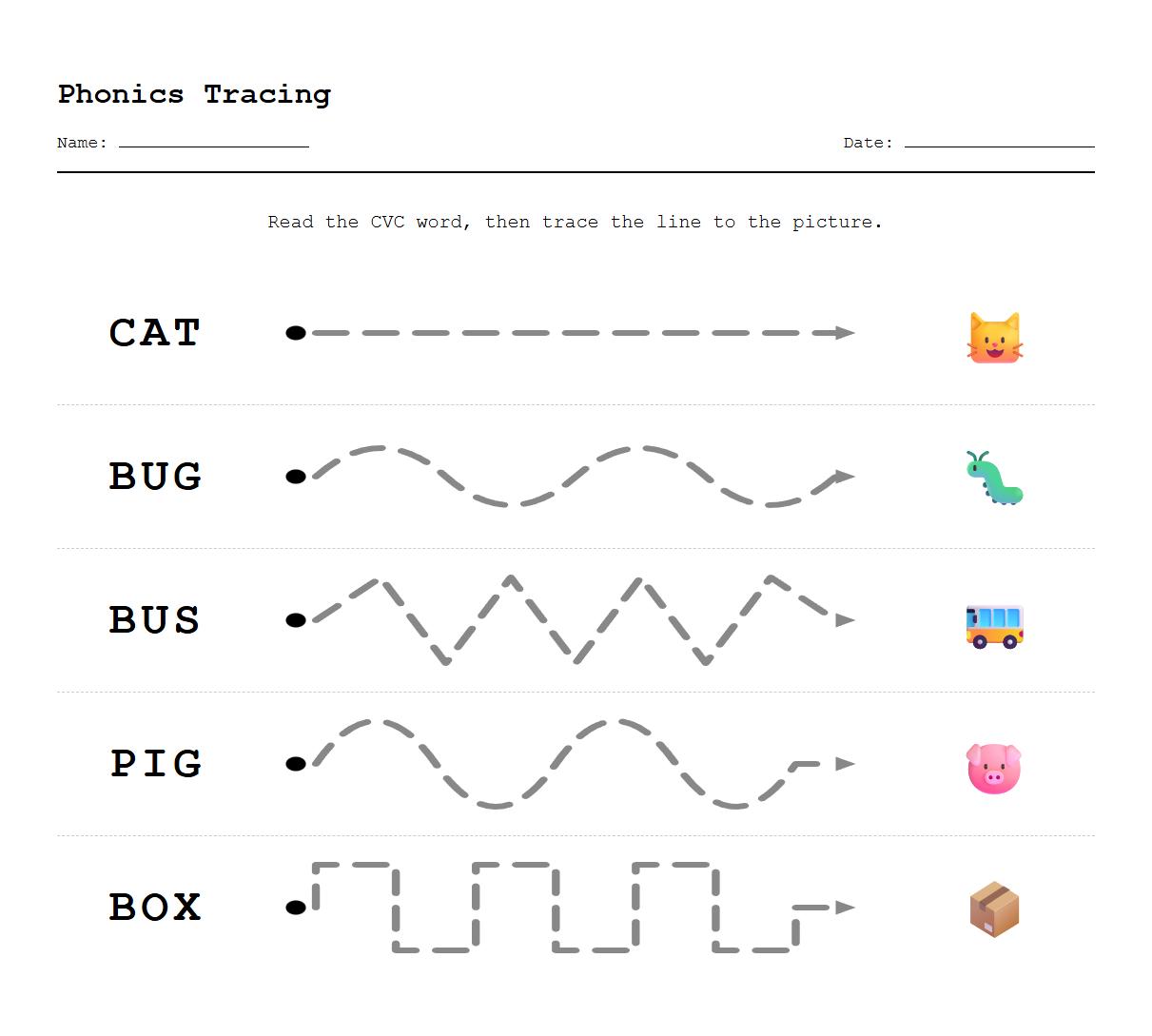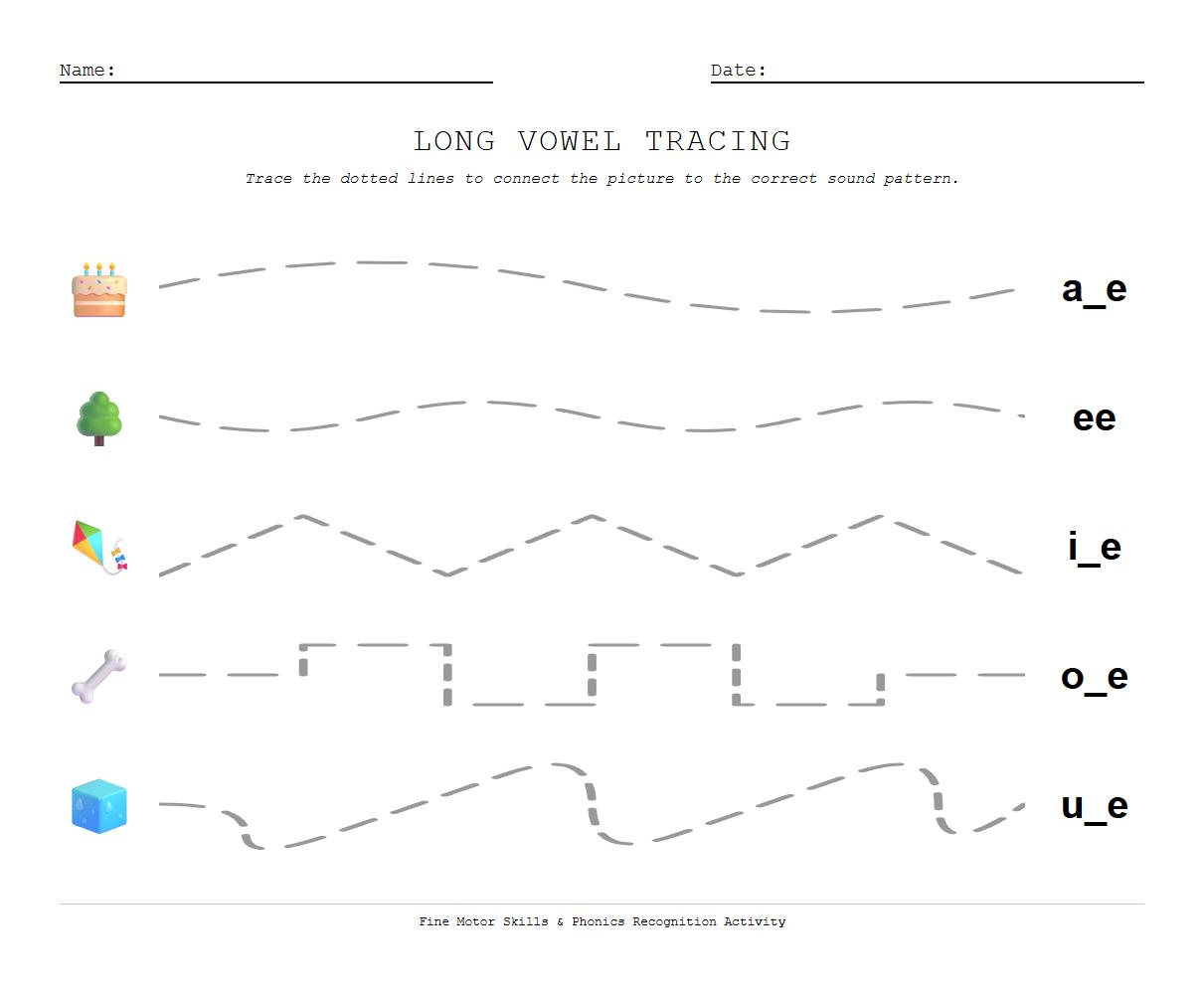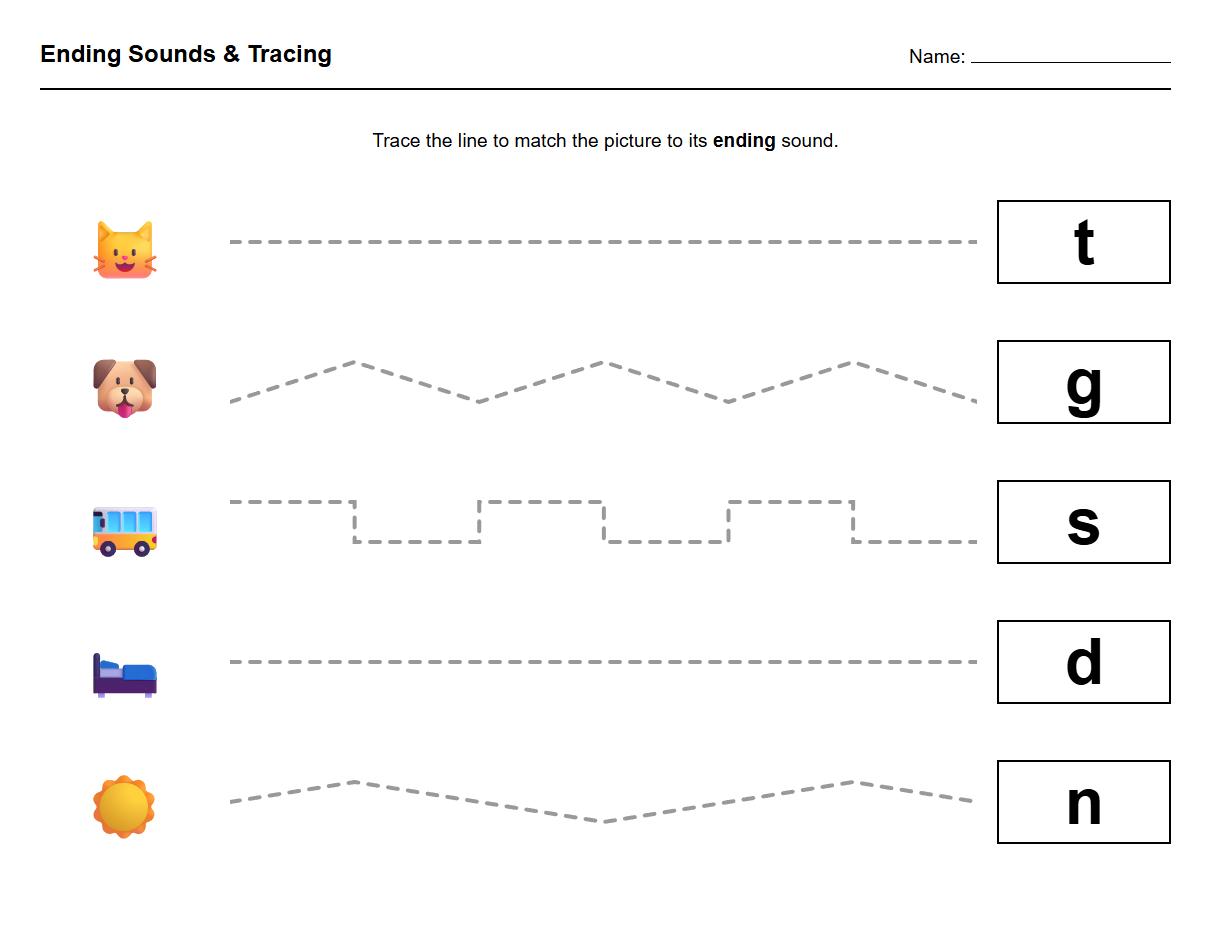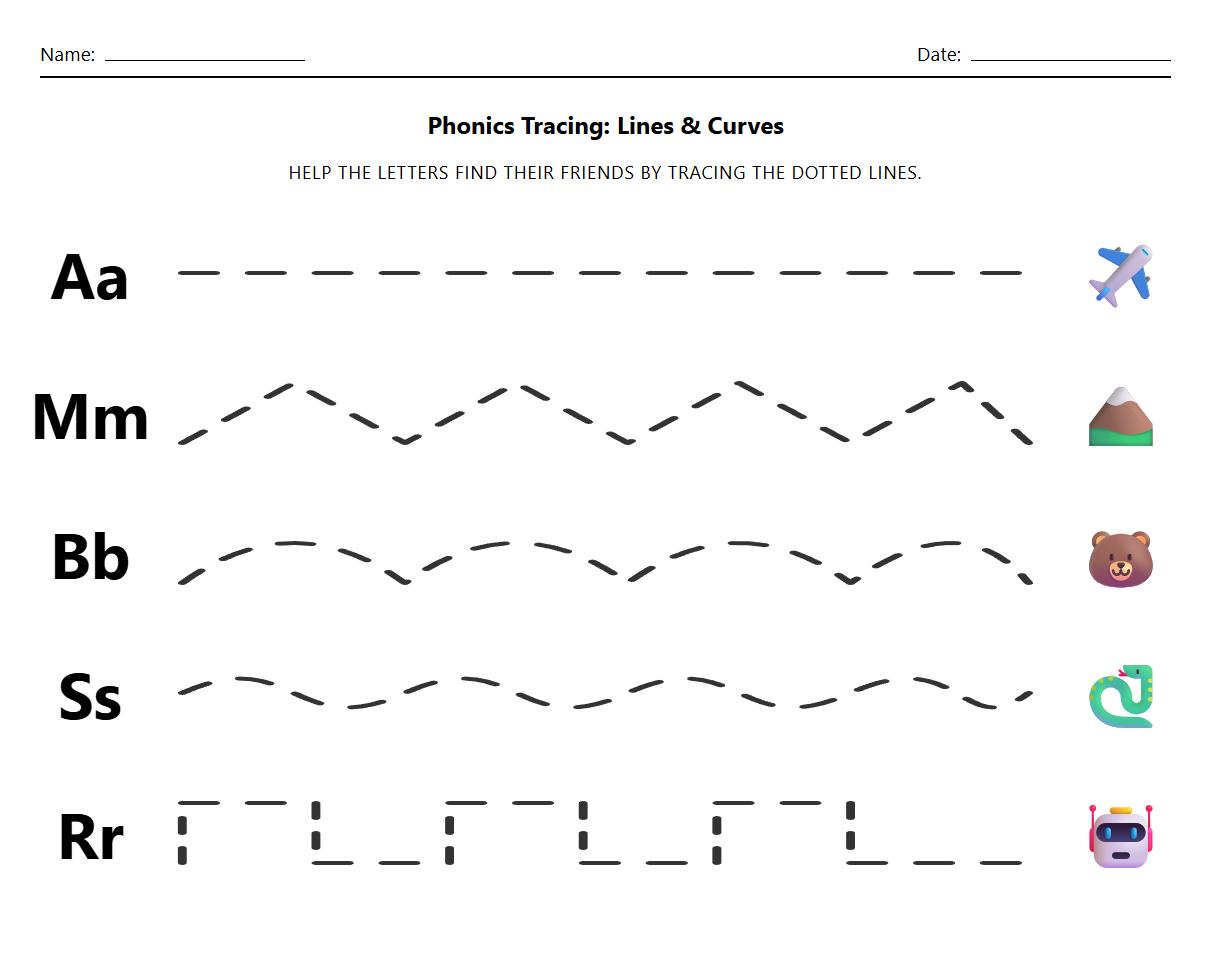
Phonics-based line and curve tracing worksheets help early learners develop essential pre-writing skills while reinforcing letter sounds and shapes. These engaging activities improve hand-eye coordination and fine motor control, supporting foundational literacy and writing readiness. Explore our collection of phonics tracing worksheets designed to boost your child's learning journey.
Understanding Letter Sounds
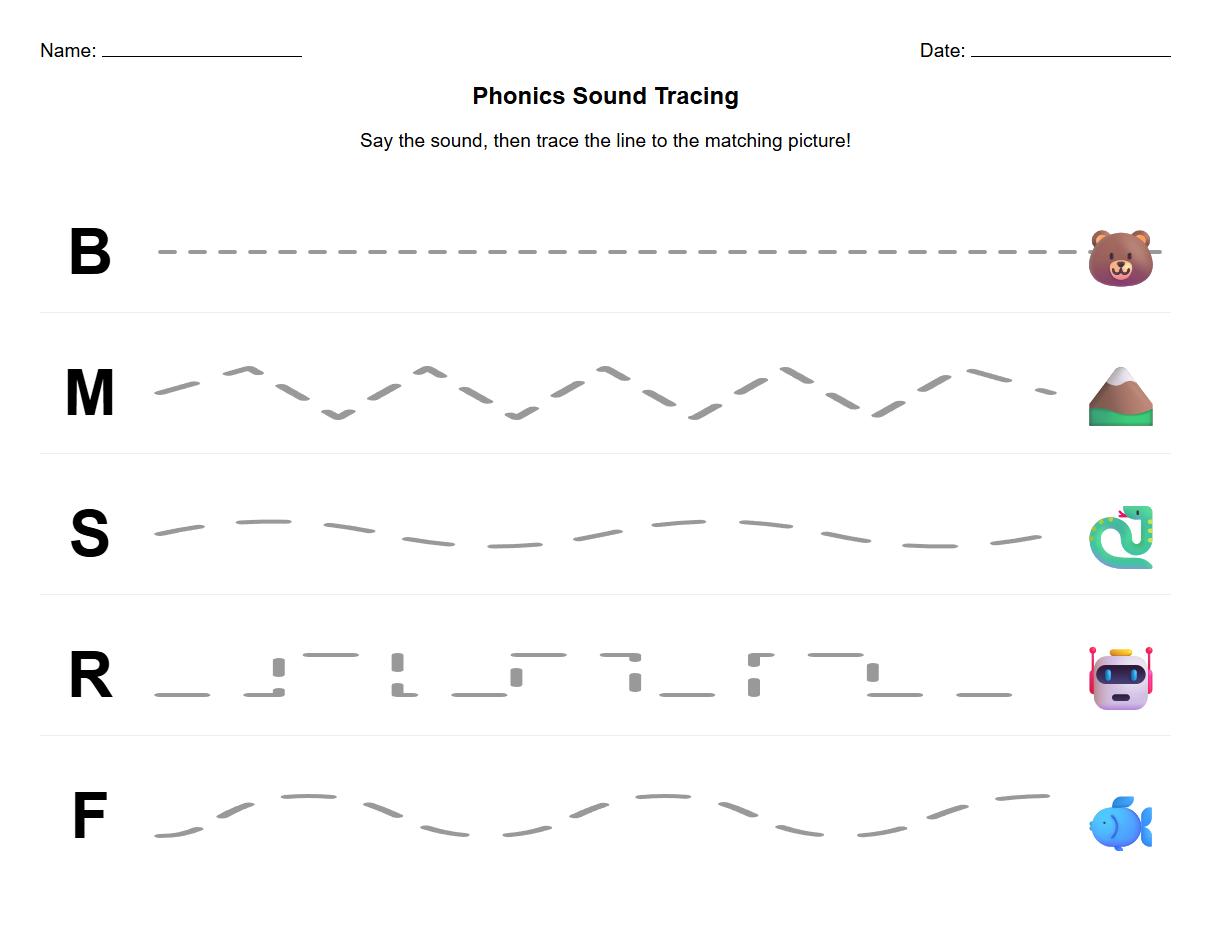
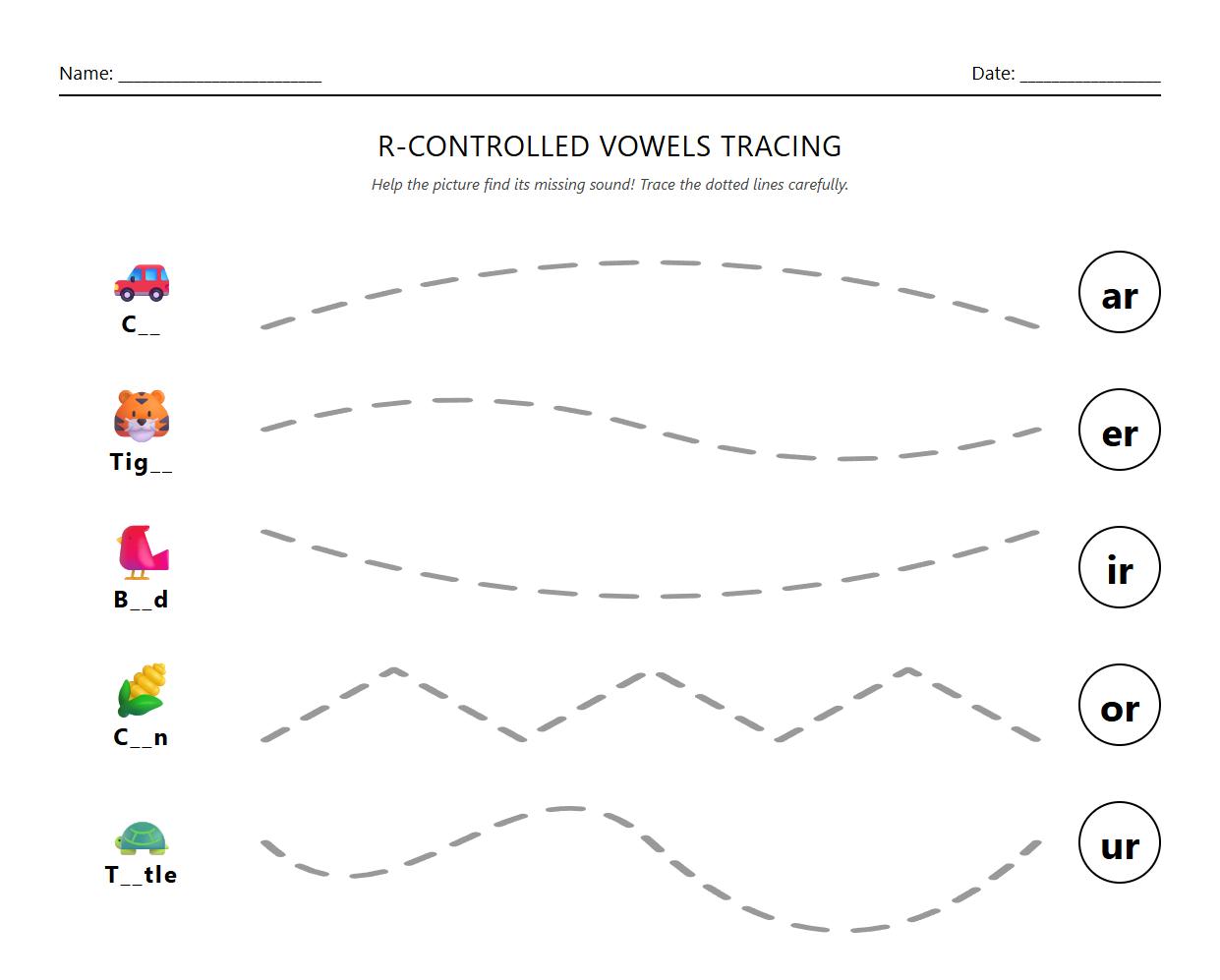
This tracing worksheet helps children recognize the sounds each letter makes. By associating letters with their sounds, young learners can easily start decoding words. Encourage your child to say the sound aloud as they trace each letter. This active learning boosts phonemic awareness.
Tracing the Letter B
To correctly trace the letter B, follow the guided line starting at the top vertical stroke. Then, trace the two curved humps connected to the straight line. Following the proper stroke order ensures neat handwriting and builds muscle memory for writing letters.
Tracing Curved Lines
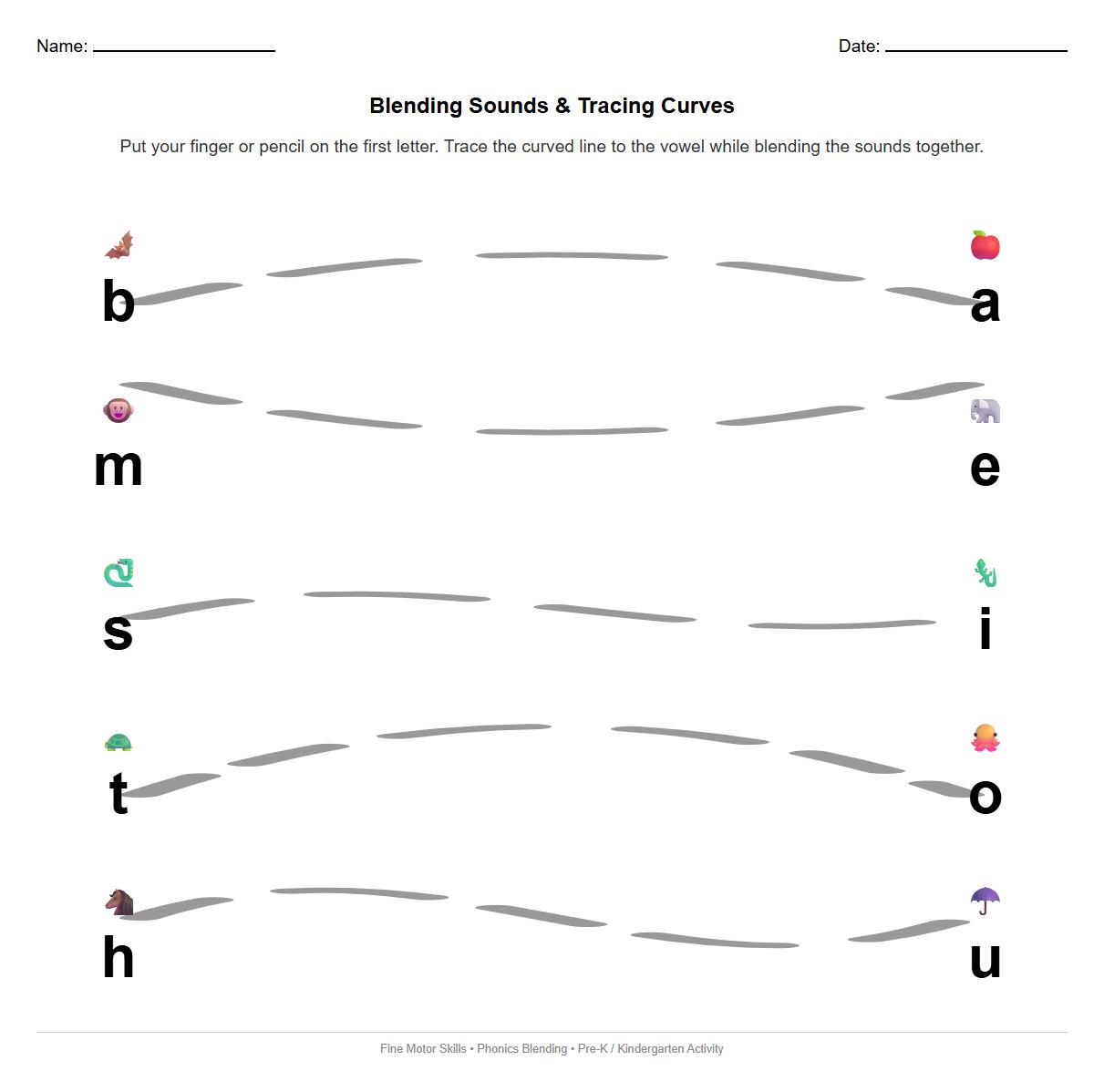
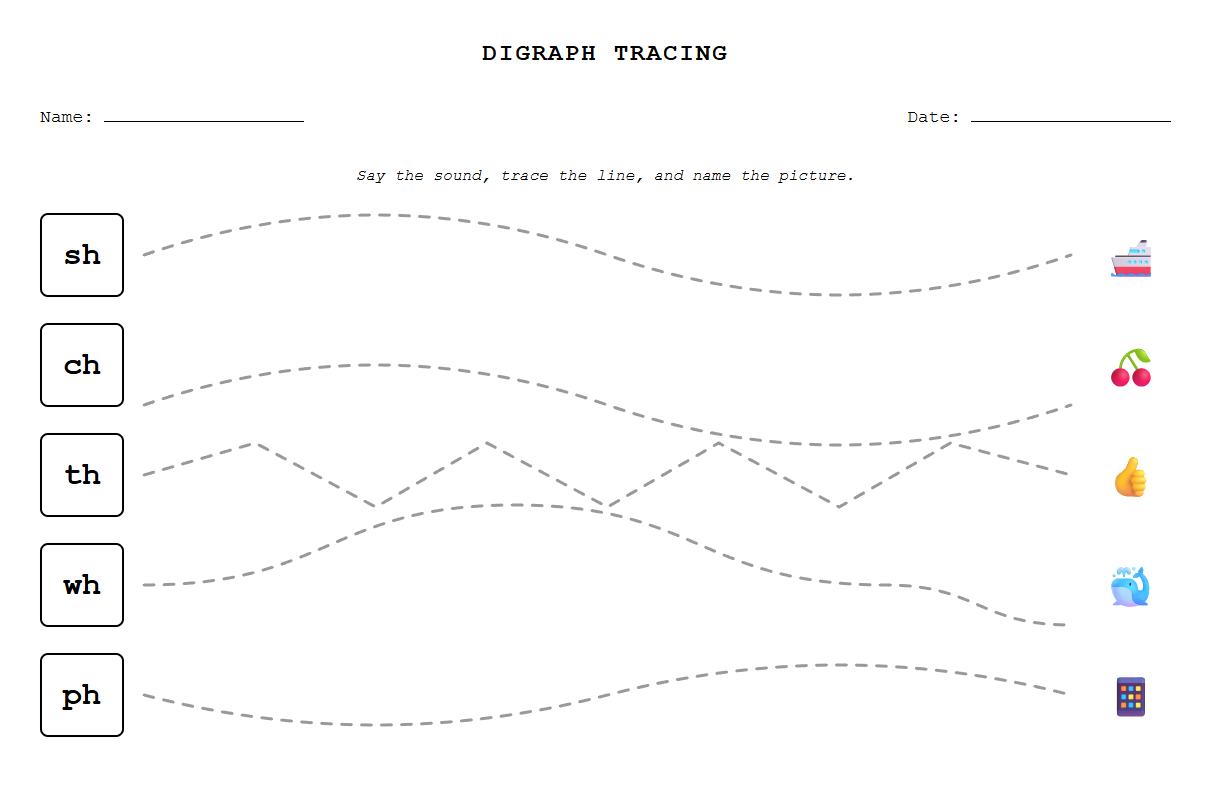
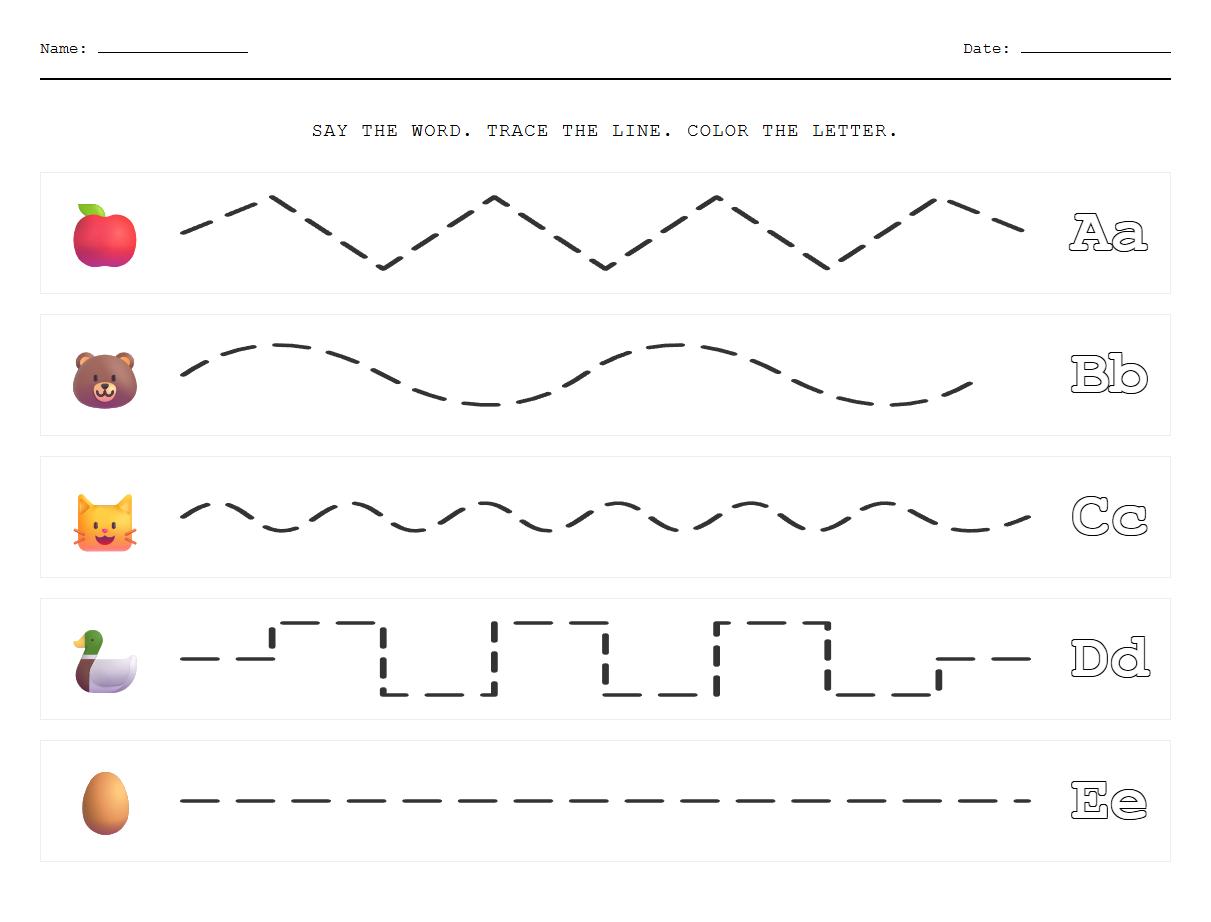
This worksheet includes multiple curved lines for learners to practice. Ask your child to find and trace all curved strokes carefully, helping them differentiate between curves and straight lines. This skill is essential for writing letters like S, B, and C. Developing visual perception aids in accurate tracing.
Letters with Straight Lines
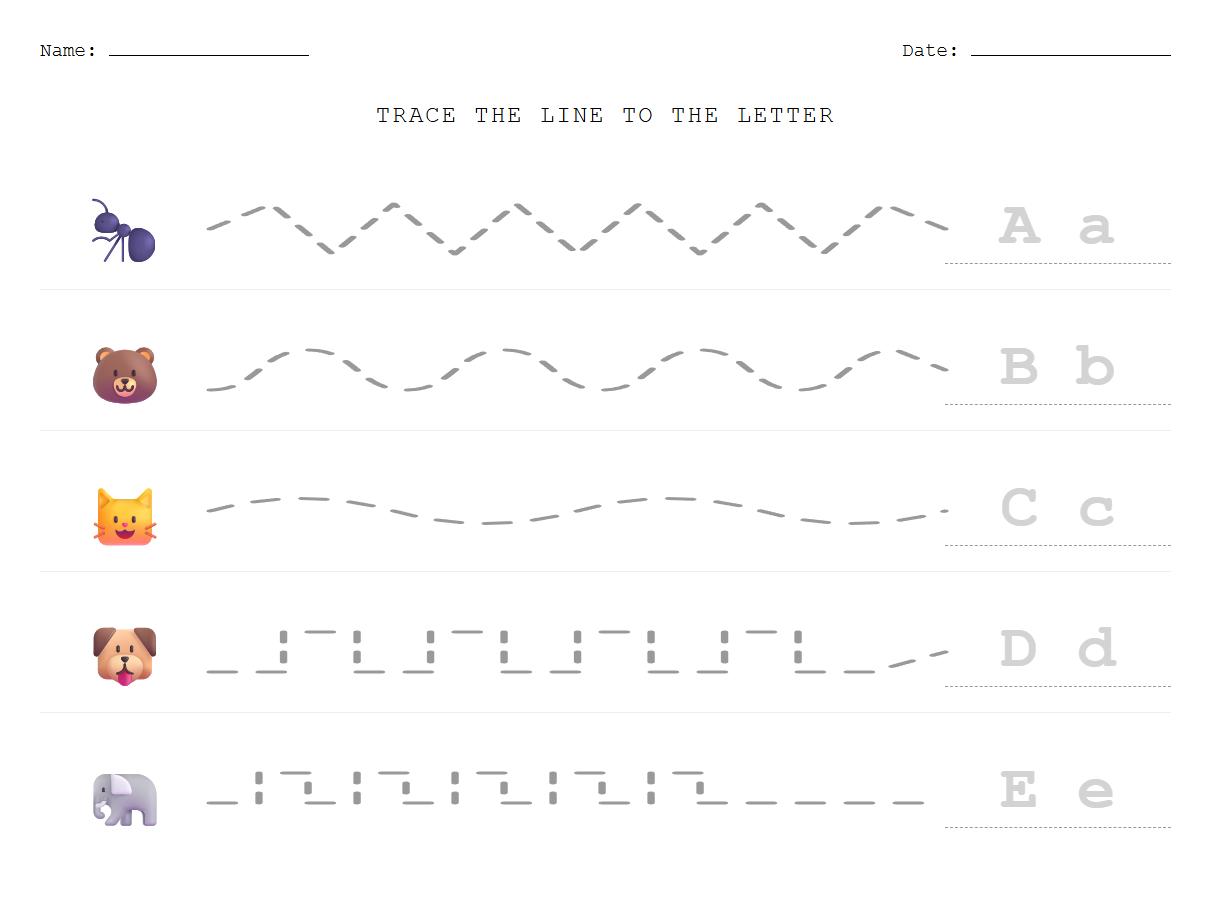
Some letters on the worksheet, such as A, E, and L, are made up entirely of straight lines. Identifying letters with straight lines supports fine motor skills and introduces children to basic geometric shapes within letters. Recognizing line types improves letter formation.
How Tracing Helps Reading
Tracing letters improves hand-eye coordination and muscle memory, which are critical for writing fluently. It also enhances letter recognition, preparing children to link letters to sounds when reading words. This multisensory approach creates a strong literacy foundation.
Letters Starting with a Curvy Line
Among the letters on the worksheet, the letter S starts with a smooth, curvy line. Tracing such letters allows children to practice curves, which often require more control than straight lines. Recognizing starting points helps with correct letter formation.
Pronouncing Sounds While Tracing
As your child traces each letter, encourage them to say the associated sound aloud. This practice reinforces the connection between the letter's shape and its sound, enhancing vocabulary building. It also makes the tracing activity interactive and educational.
Starting Point for Letter S
The letter S tracing begins at the top curve of the letter. Starting here ensures the letter flows smoothly in the correct shape. Emphasizing the starting point prevents confusion and supports neat handwriting development, much like activities in pattern recognition tasks.
Letters Combining Lines and Curves
The letter B on this worksheet requires both a straight vertical line and curved humps. Practicing these mixed shapes helps children develop better writing control. It introduces complexity gradually in letter formation skills.
Uppercase Letters on the Worksheet
This worksheet features several uppercase letters for tracing, typically around 5 to 7 letters depending on the worksheet version. Tracing uppercase letters forms the foundation for writing proper nouns and sentence starts. Repetition builds confidence and accuracy in writing capital letters.


Prewriting Practice Worksheet: Straight Lines and Curved Lines Tracing for Kindergarten