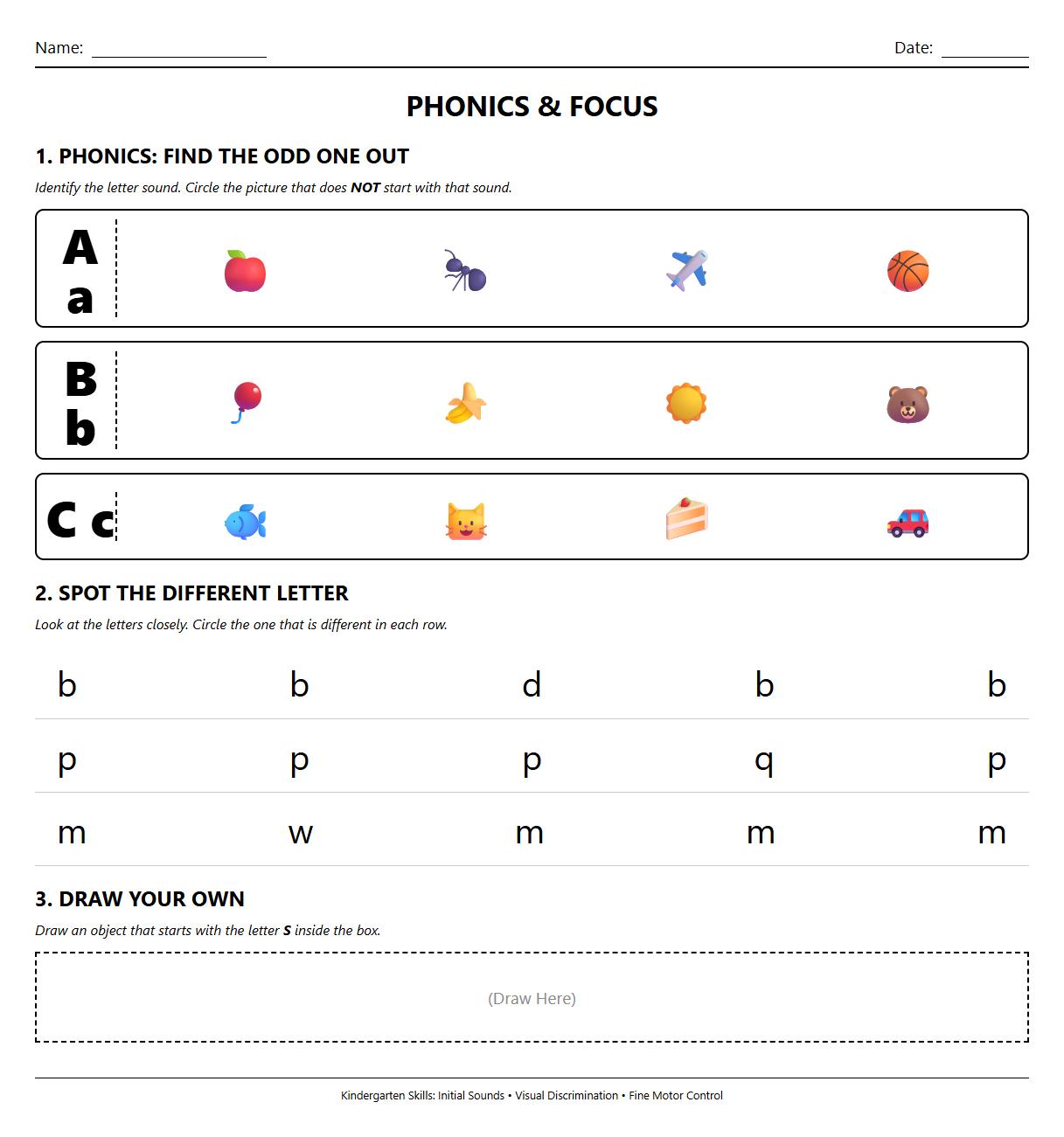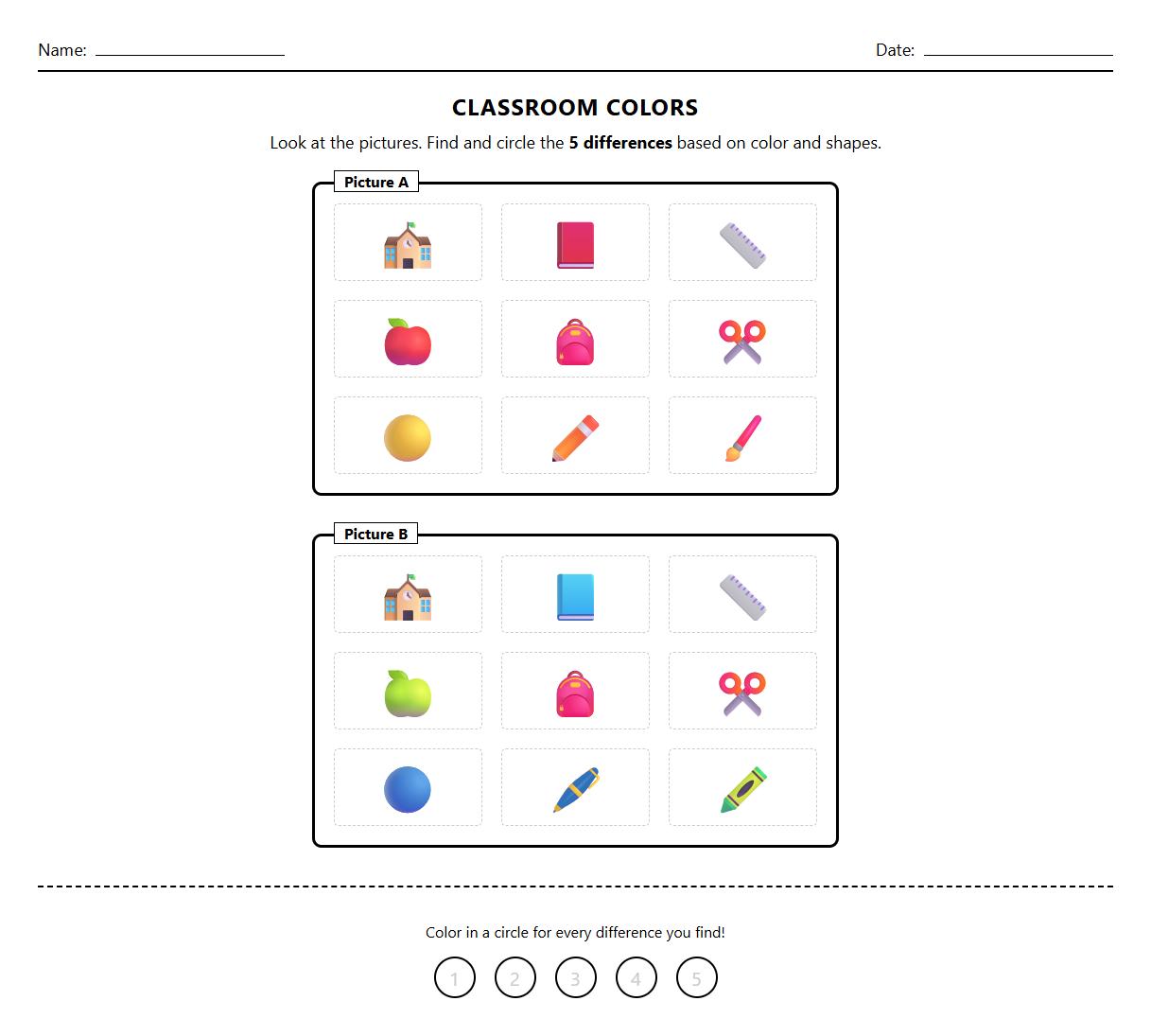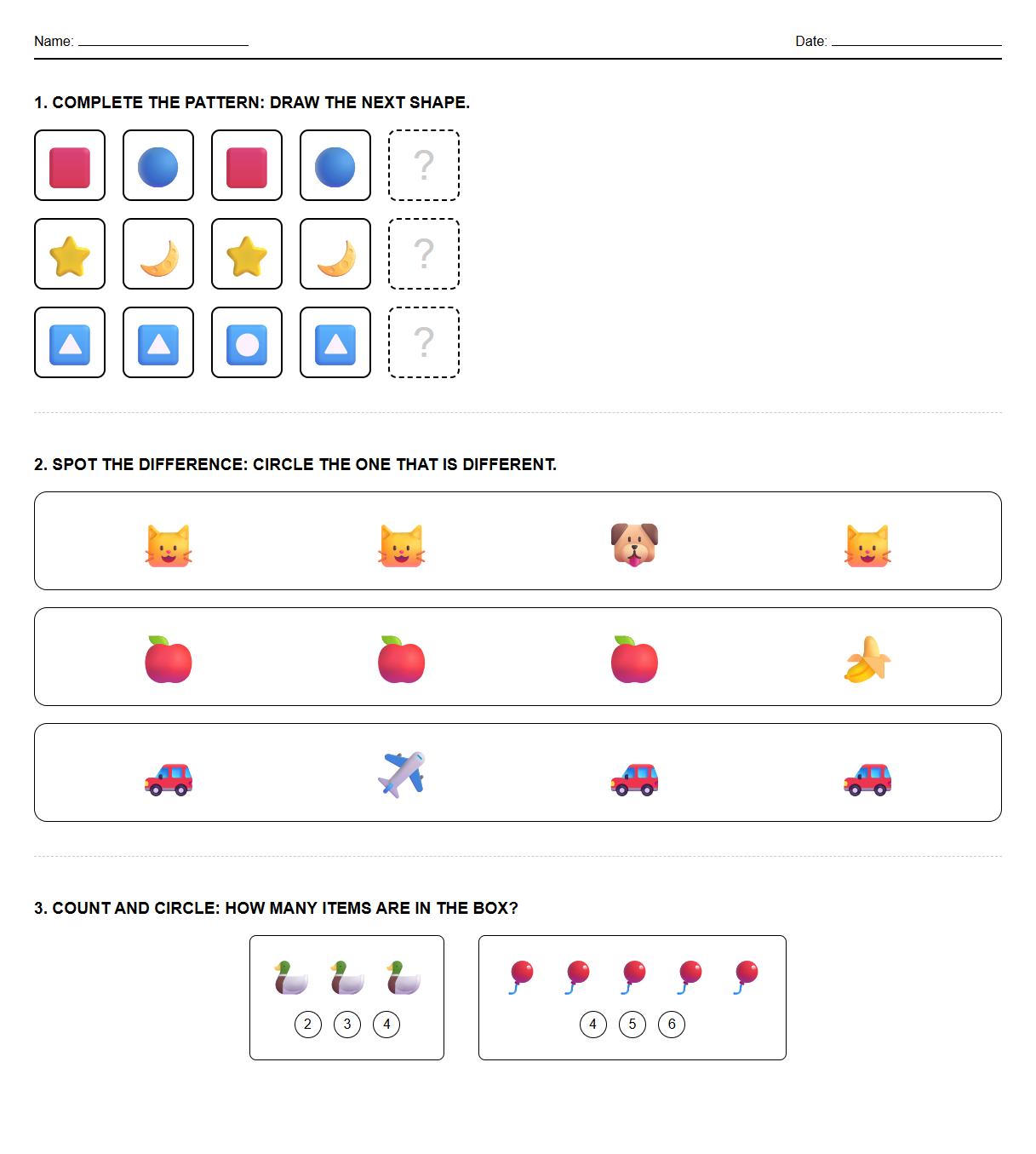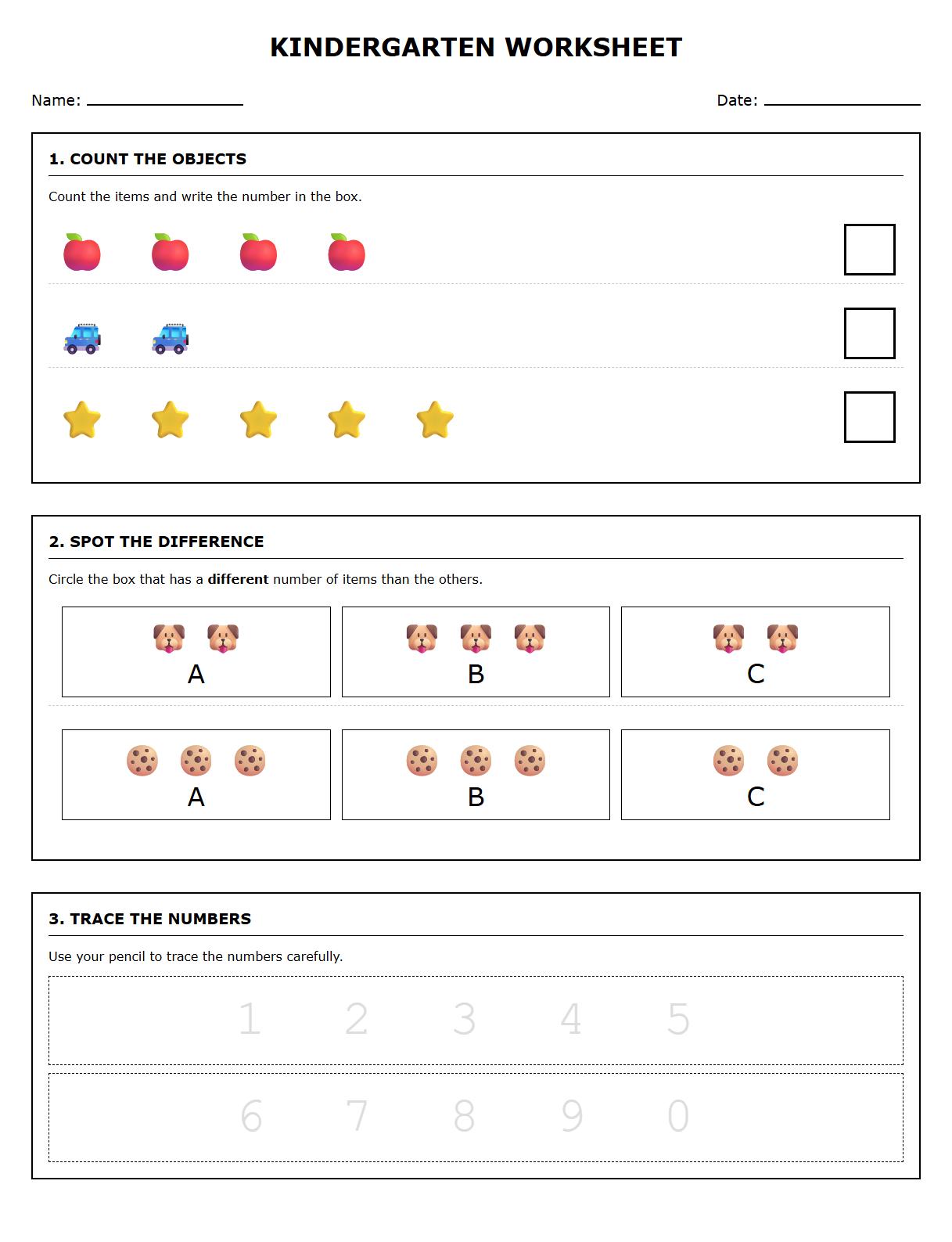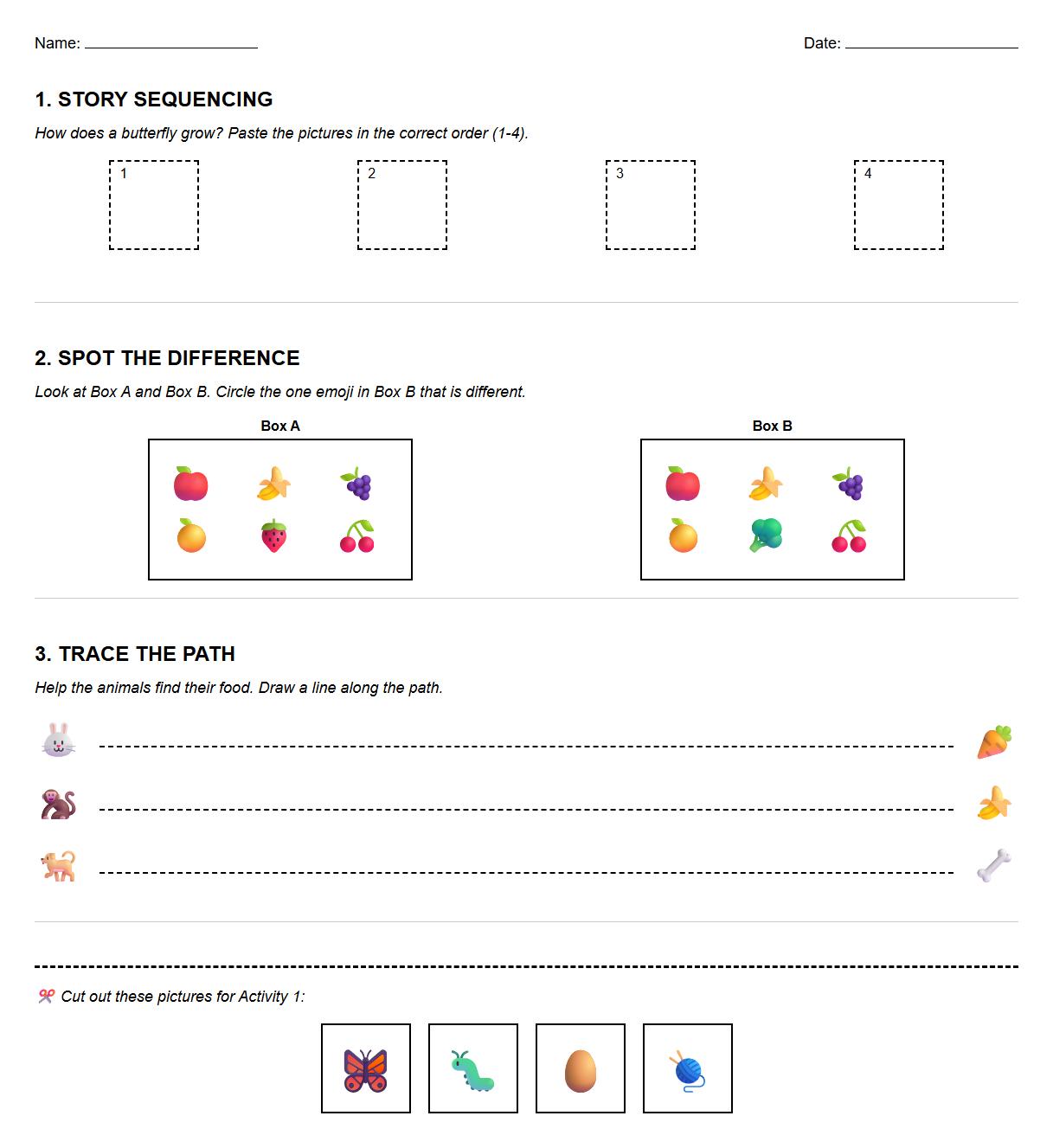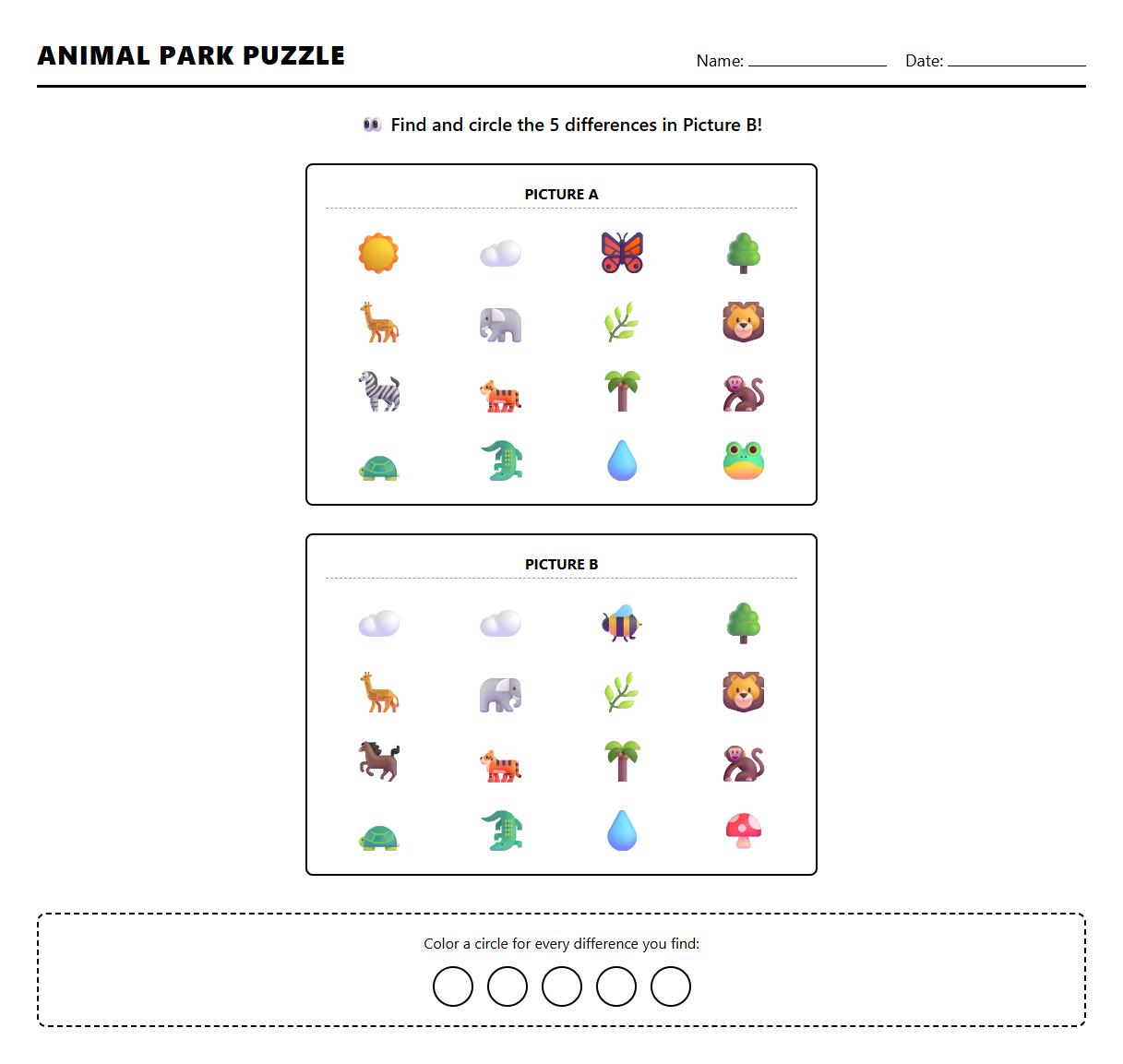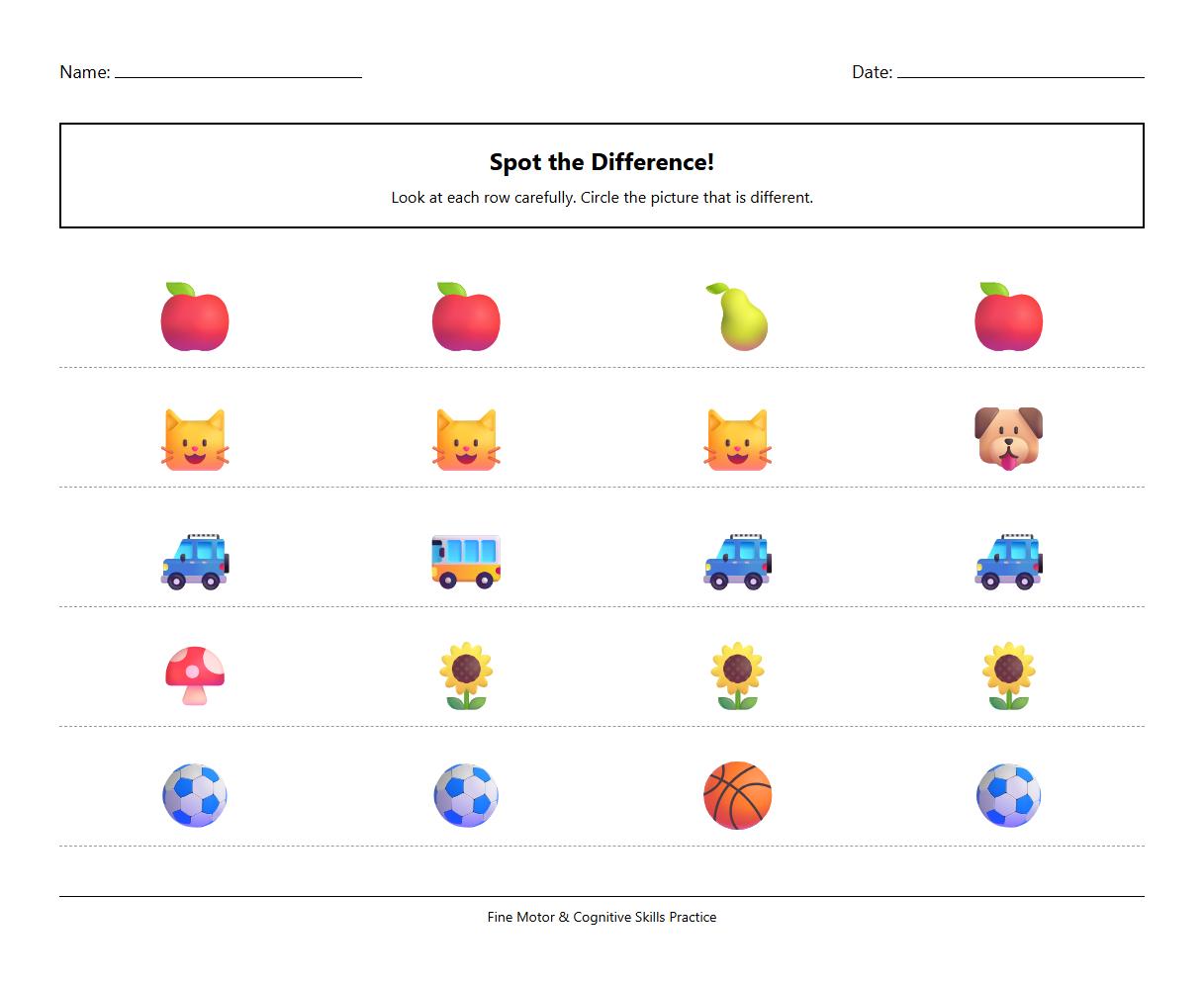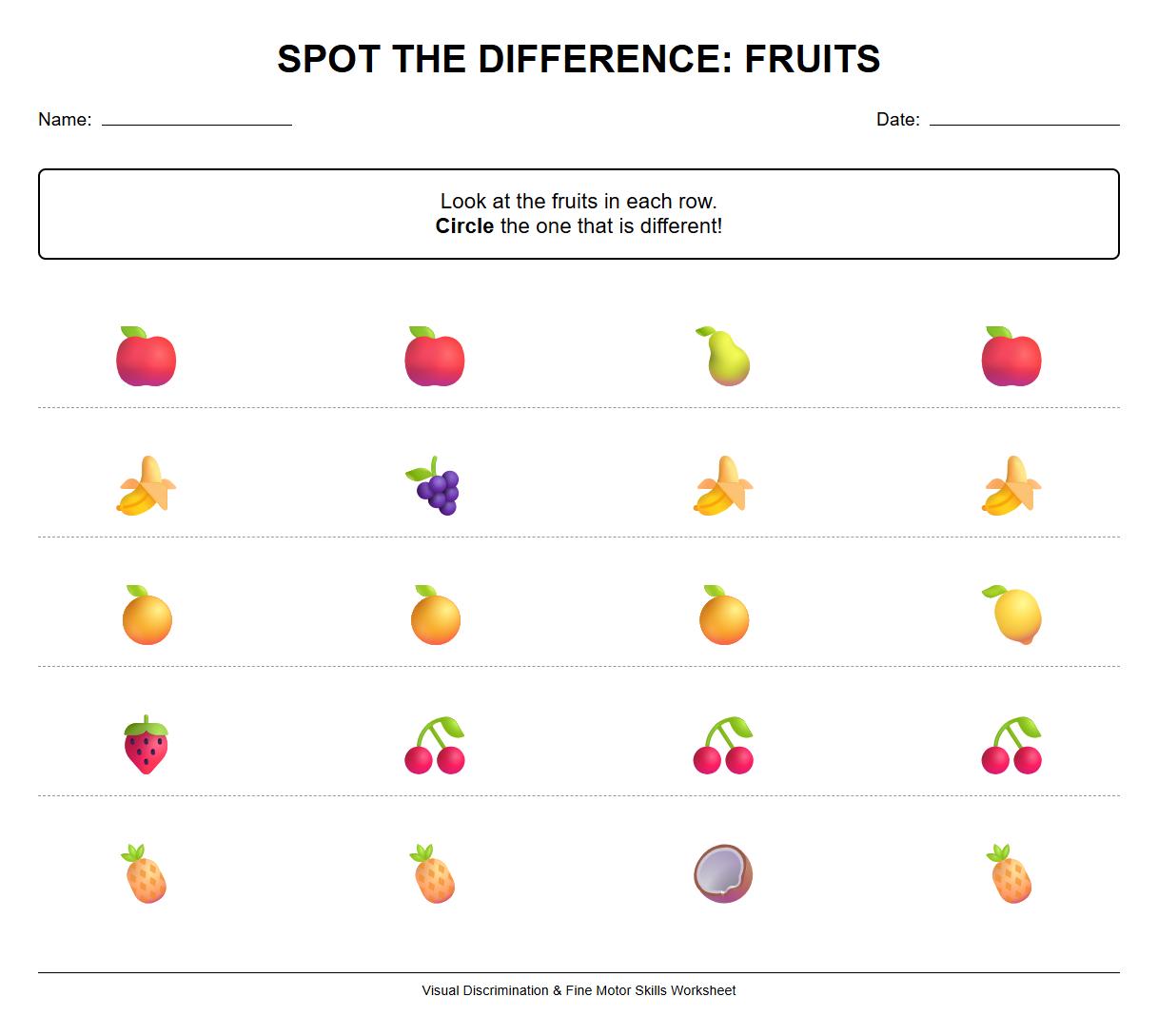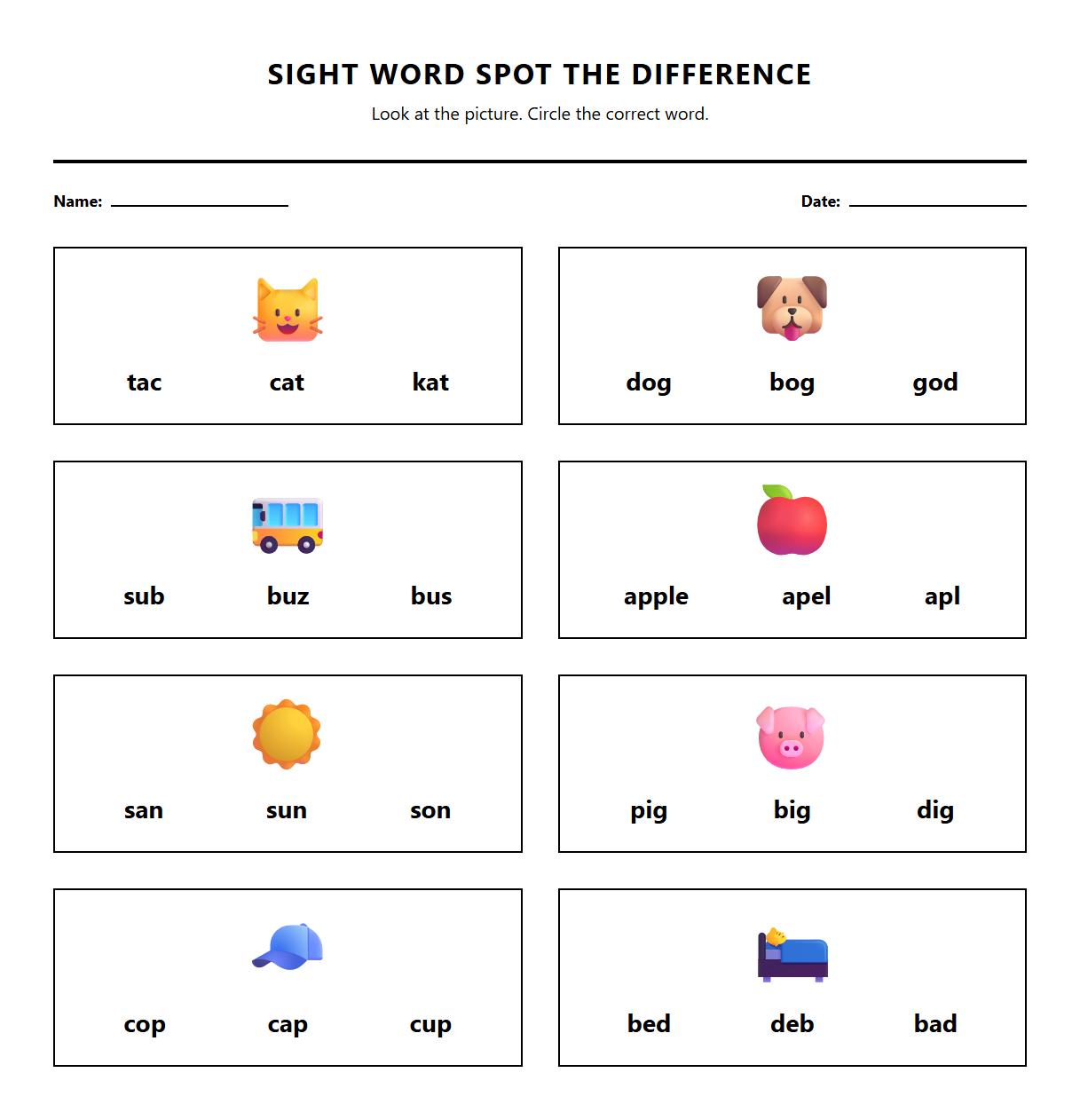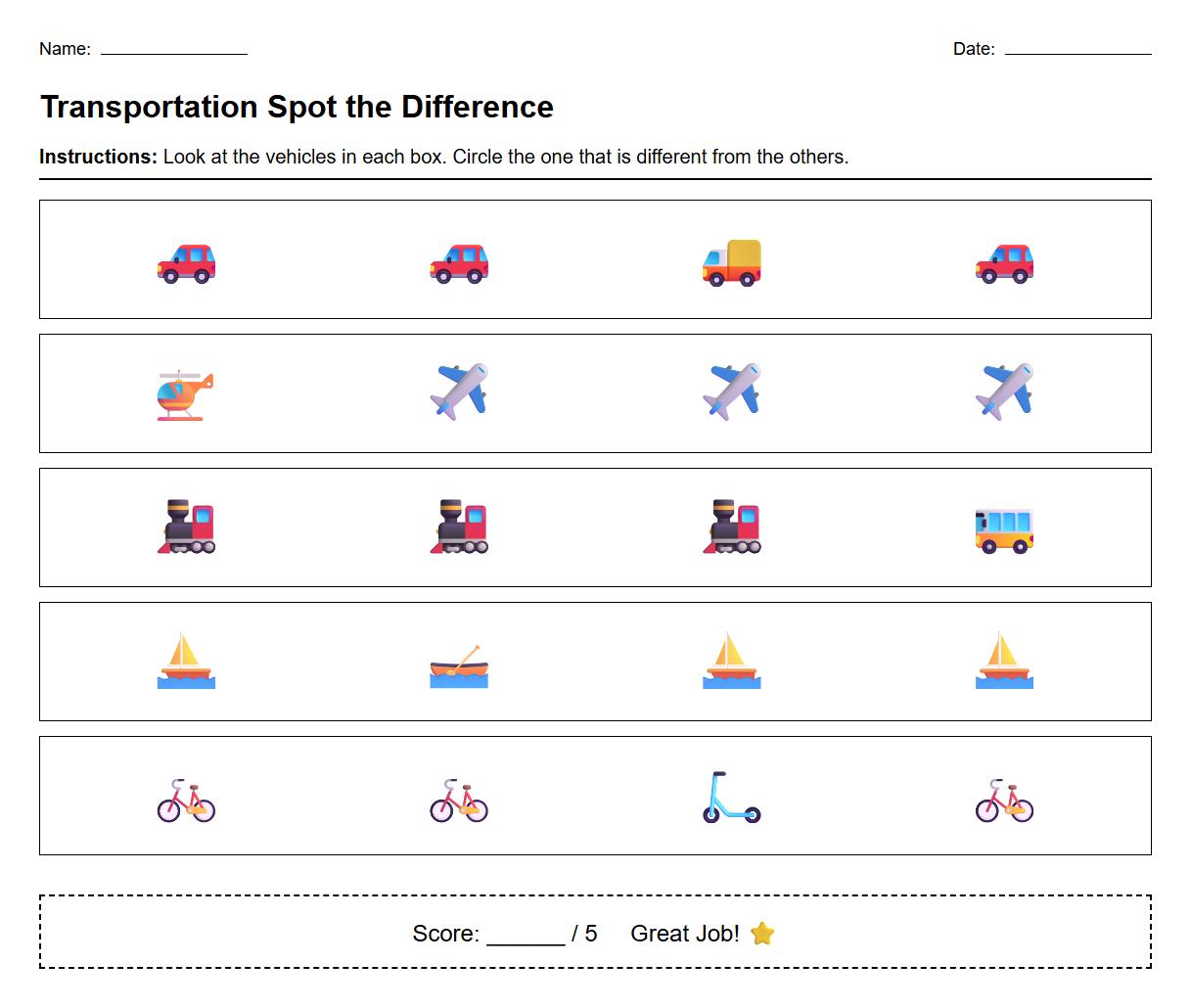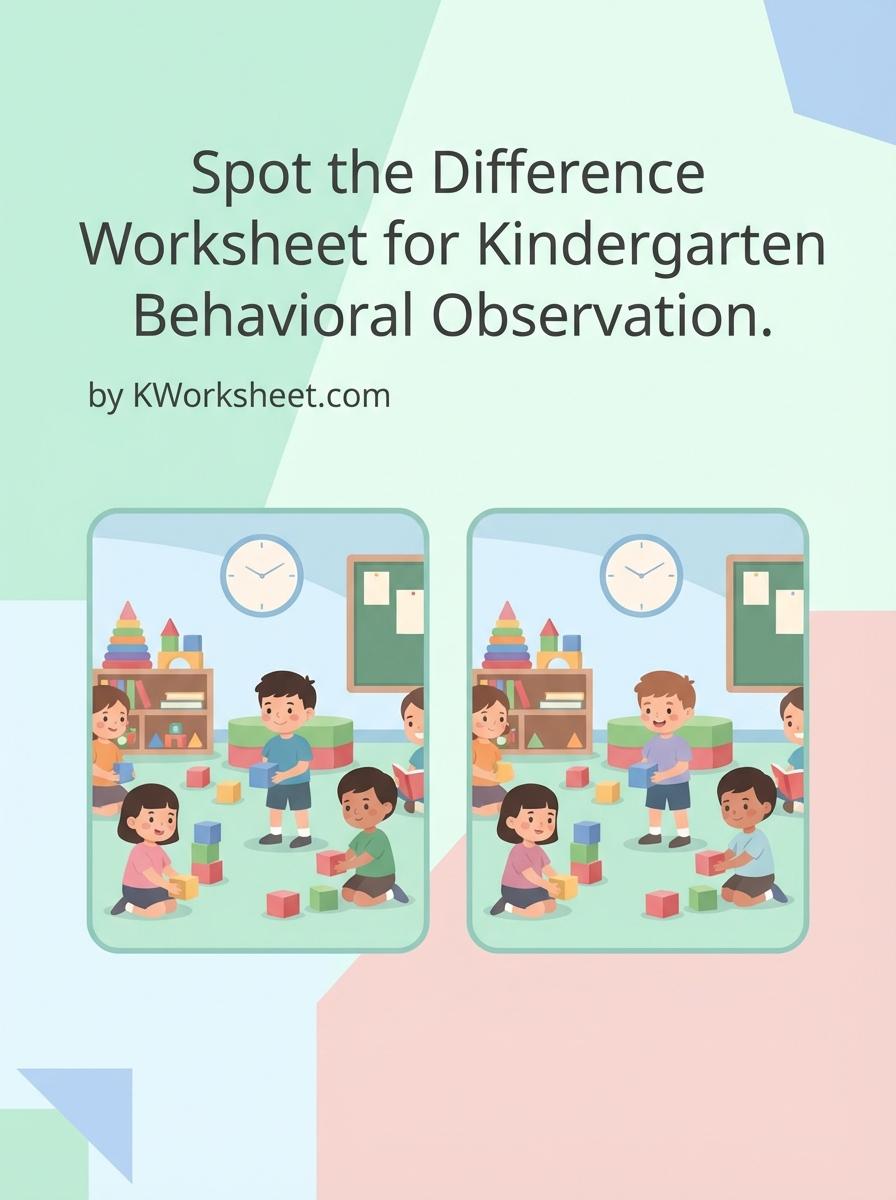
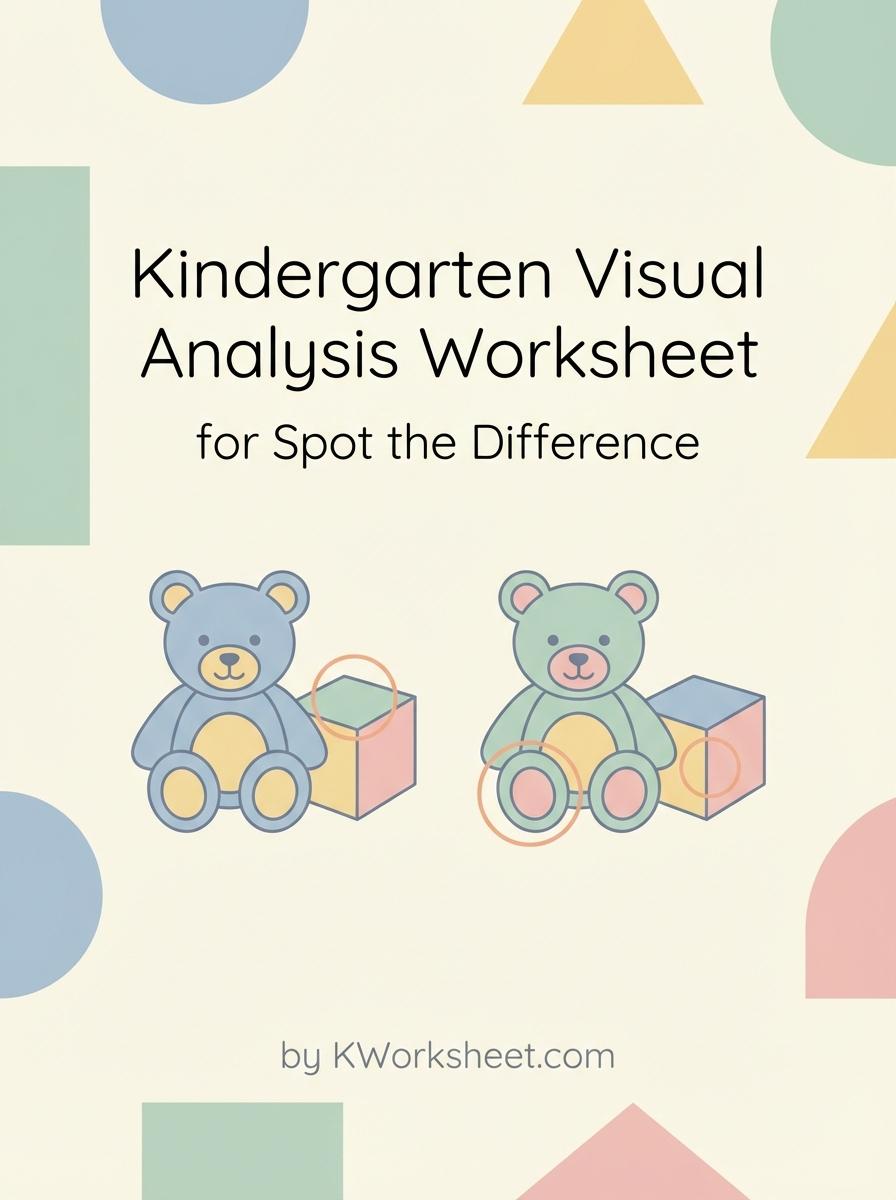
Spot the Difference worksheets for kindergarten enhance visual discrimination skills by encouraging children to carefully observe and compare images. These activities improve attention to detail and support cognitive development through engaging, playful challenges. Explore our collection of worksheets to help your child sharpen their visual analysis abilities effectively.
Identifying Main Pictures
The two main pictures on the worksheet typically feature a recognizable scene or characters, such as animals or children playing. These images are designed to engage young learners visually. Teachers and parents should focus on the central elements to help guide children in observation skills.
Spotting Differences
Children are encouraged to spot a set number of differences between the two images, often ranging from five to ten. This activity sharpens attention to detail. Teachers can support by gently prompting children to compare each part carefully.
Items Missing or Changed
One common question is identifying where an item is missing or changed in the second picture. This could be something like a hat removed from a character or a toy not present in the duplicate image. Highlighting this helps develop visual discrimination skills.
Color Variations
Noticing the color differences between the two pictures is key to the exercise. For example, a shirt might be yellow in one image and blue in the other. Discussing these variations enhances color recognition and vocabulary.
Object or Character Movement
Sometimes, a character or an object moves positions between the two pictures. This encourages children to focus on spatial awareness. Pointing out these shifts can also improve their memory and observational skills.
Differences in Clothing
A fun detail to spot is a difference in what someone is wearing, like a missing button or a different shoe. This subtle change teaches children to pay close attention to small details in their environment.
New Additions
One picture may have something newly added that isn't in the other, such as an extra flower or a bird. Identifying these additions builds curiosity and encourages careful comparison.
Background Changes
Changes in the background details, like a tree missing leaves or a cloud shape altered, deepen the challenge. These differences help children observe beyond the main subjects and understand context.
Number of Objects
Sometimes, the number of objects differs, such as three apples in one image and two in the other. Recognizing numerical differences supports early math skills through visual learning.
Funny or Unusual Differences
Finally, a funny or unusual difference might catch children's attention, like a character making a silly face or an object turned upside down. These playful changes engage learners and make the activity enjoyable.


Spot the Difference Worksheet for Kindergarten Behavioral Observation