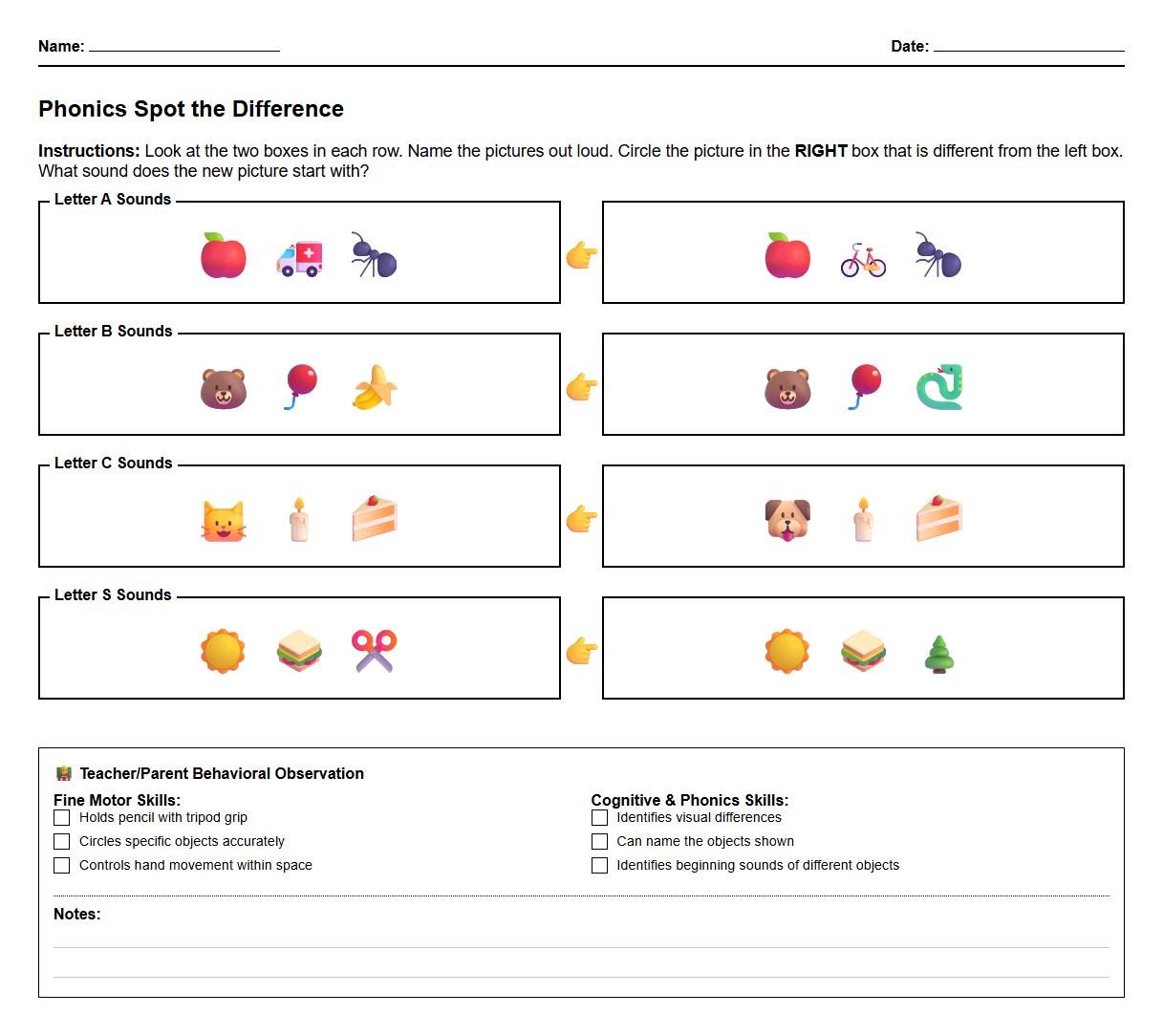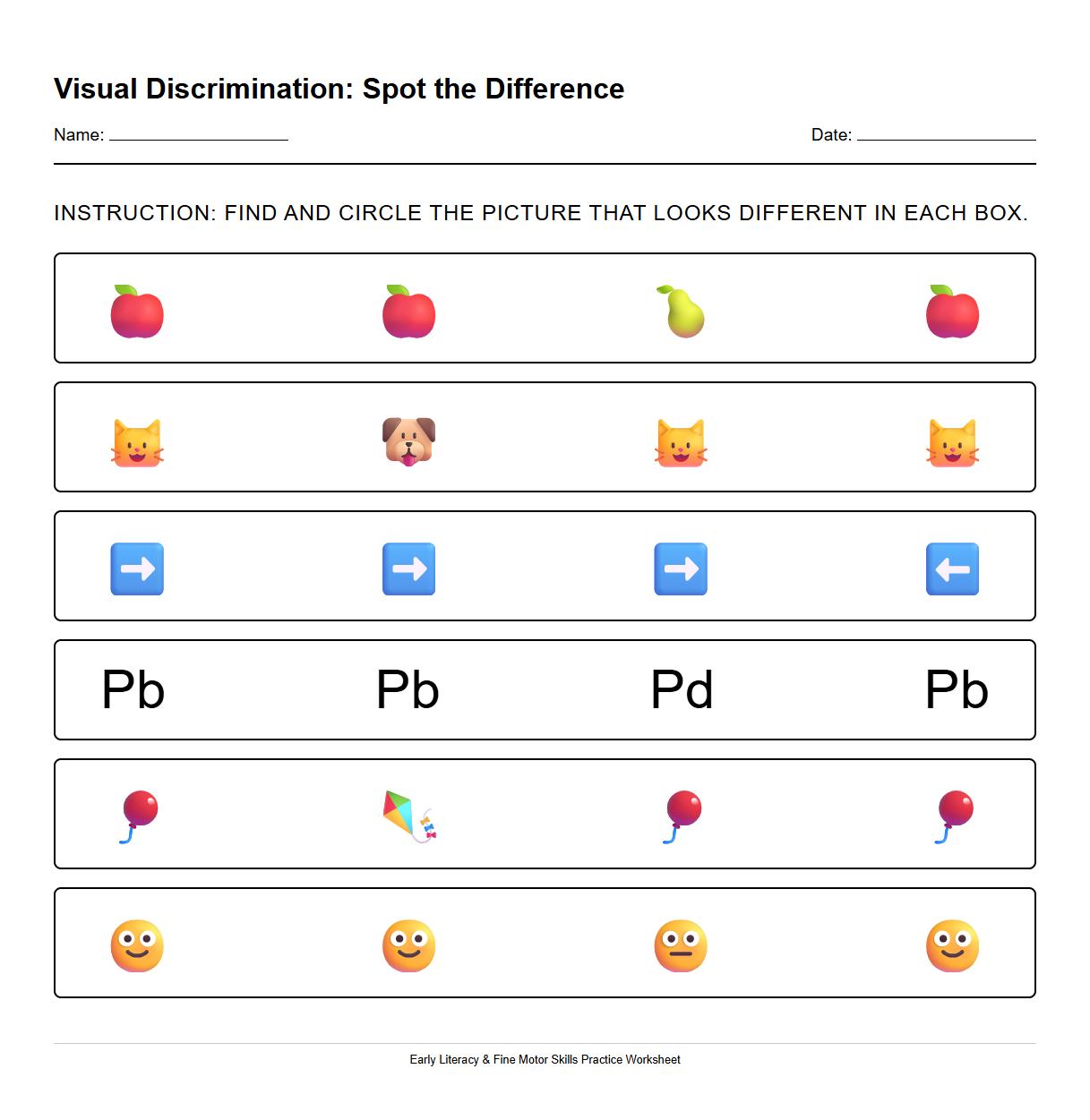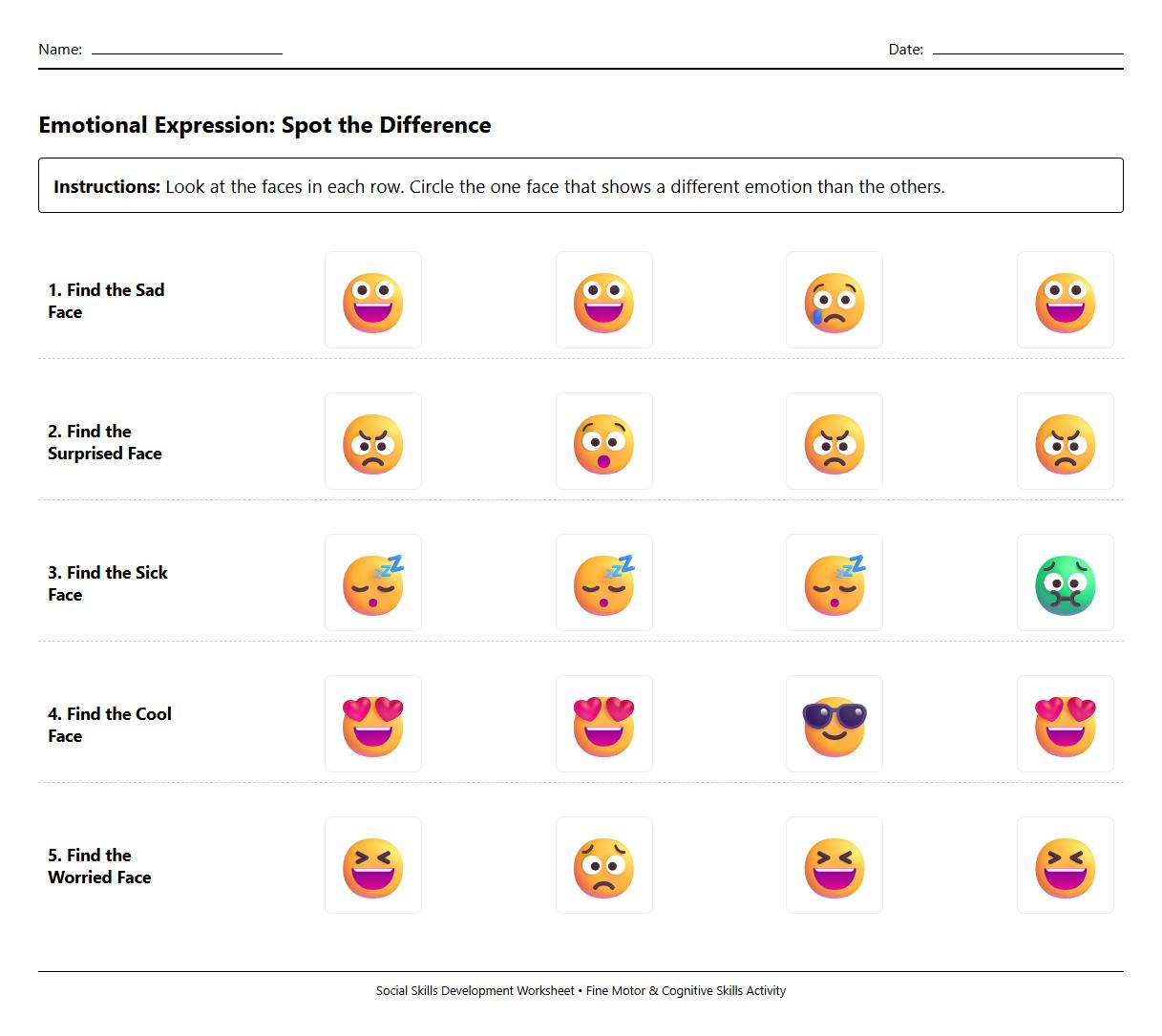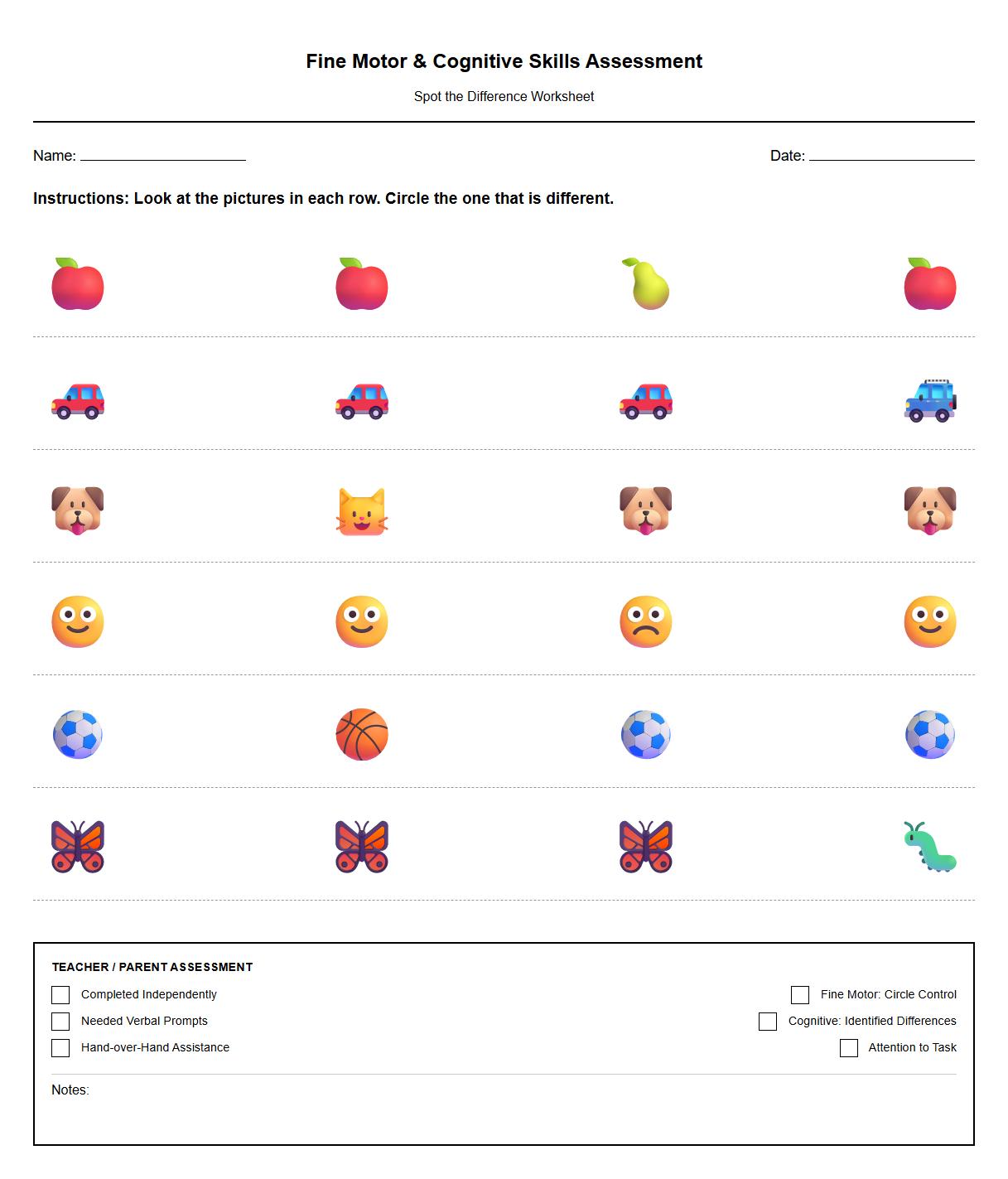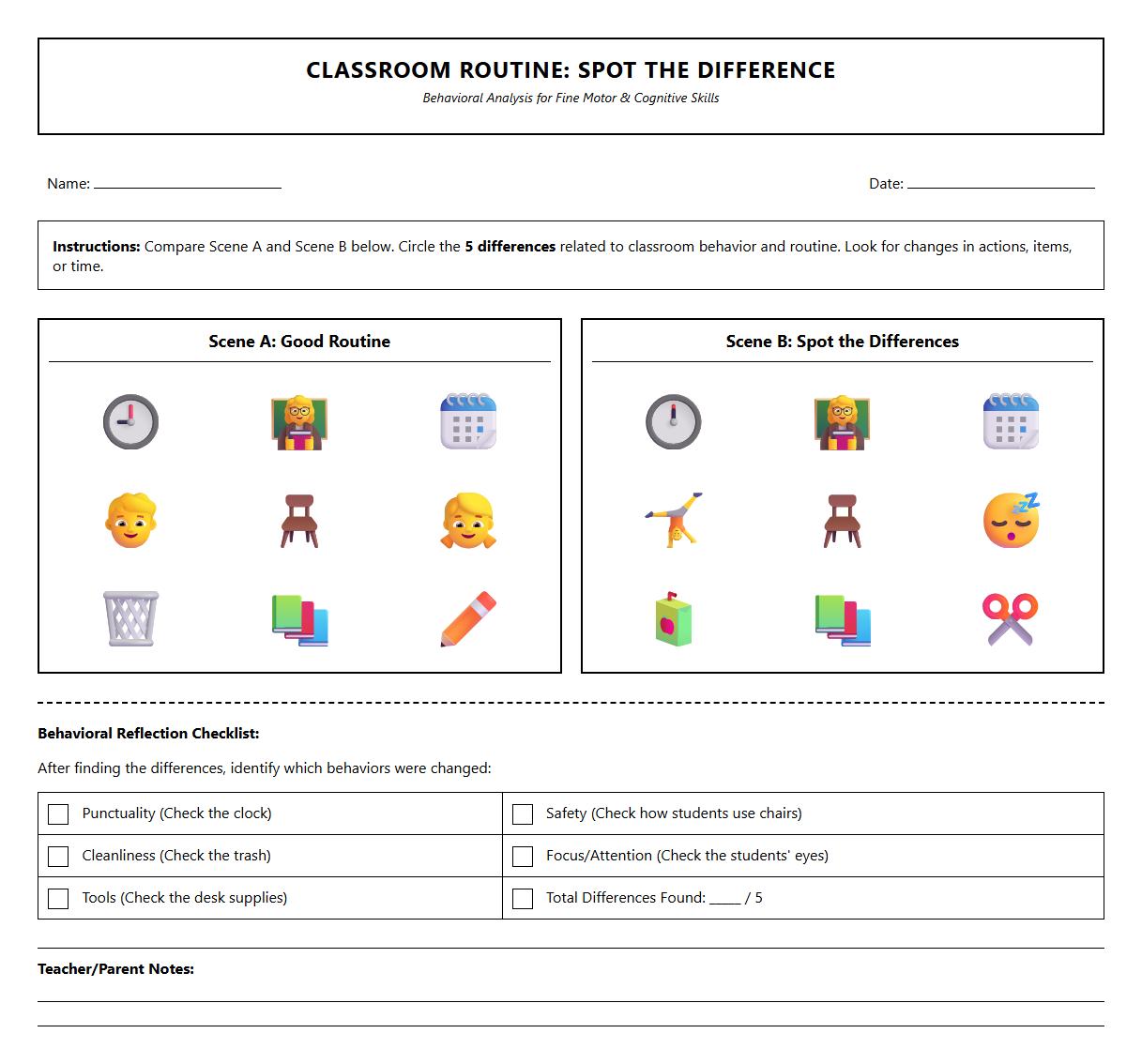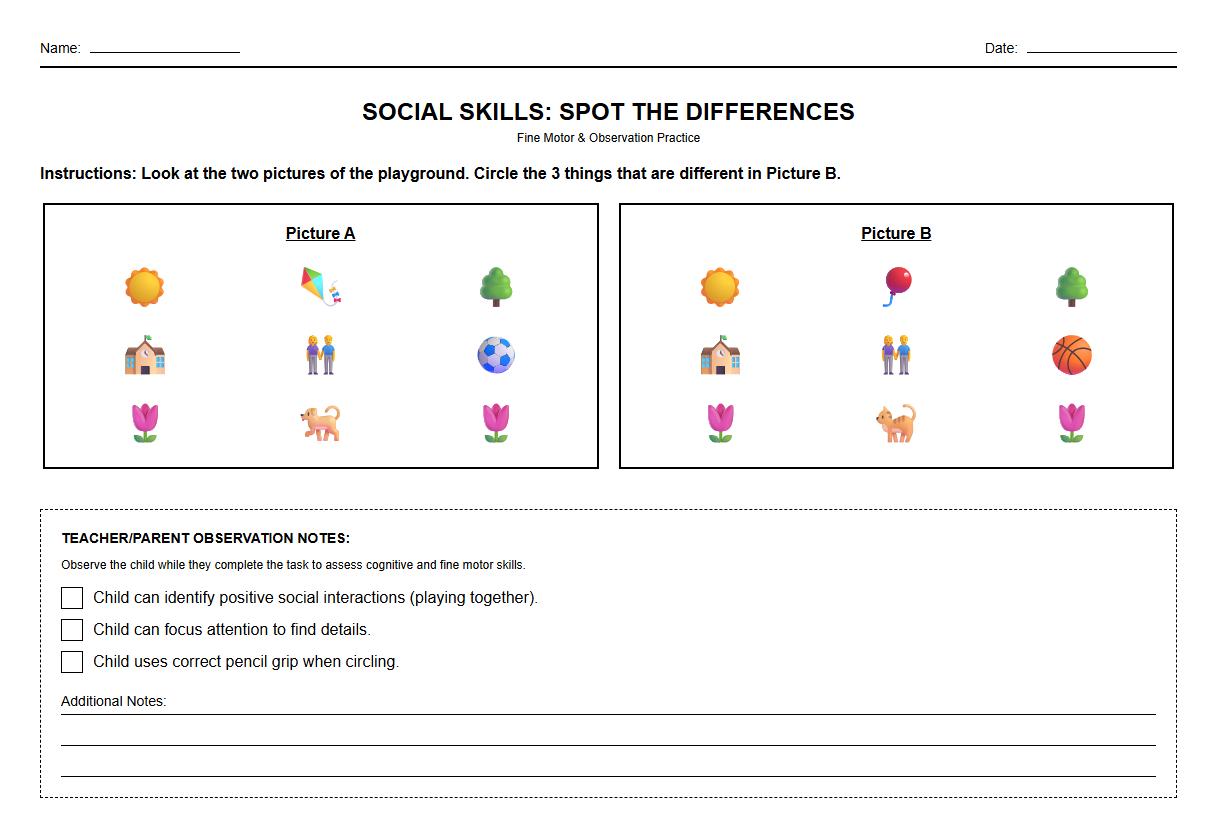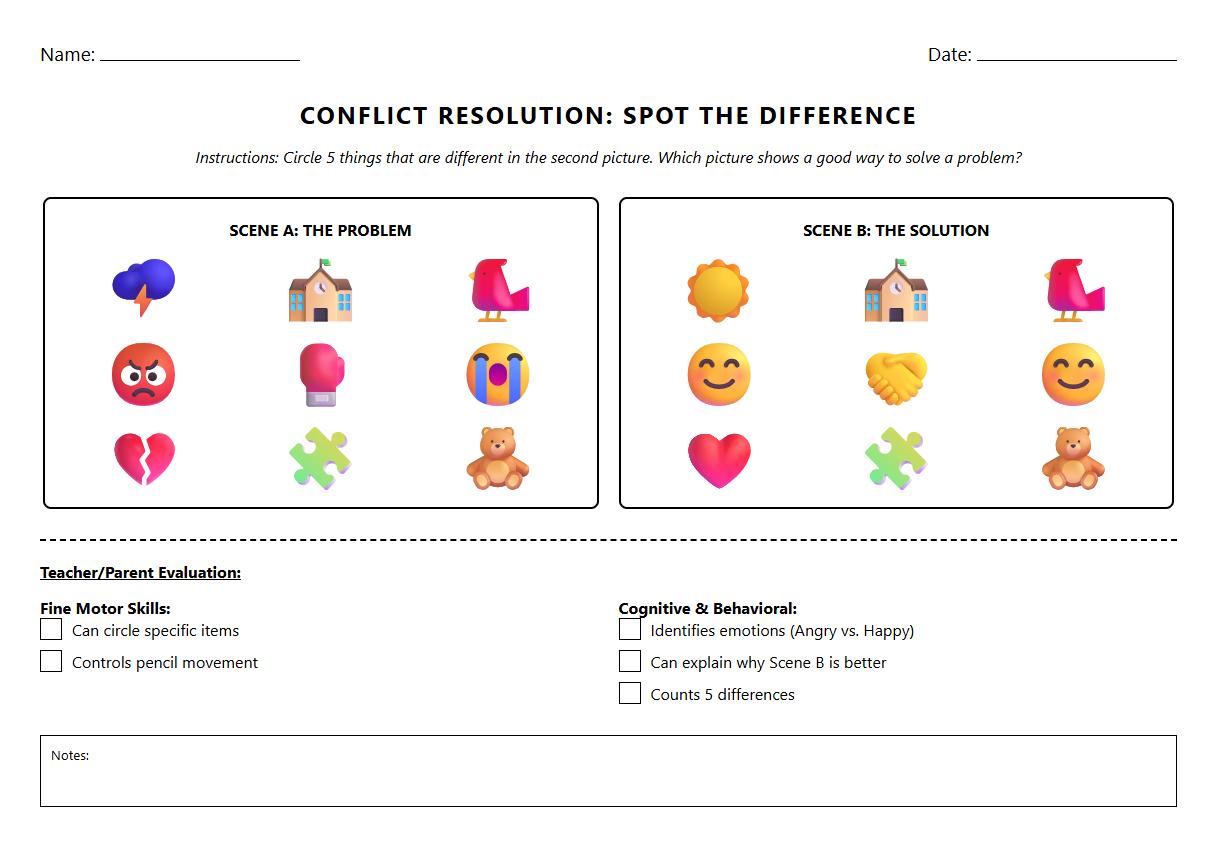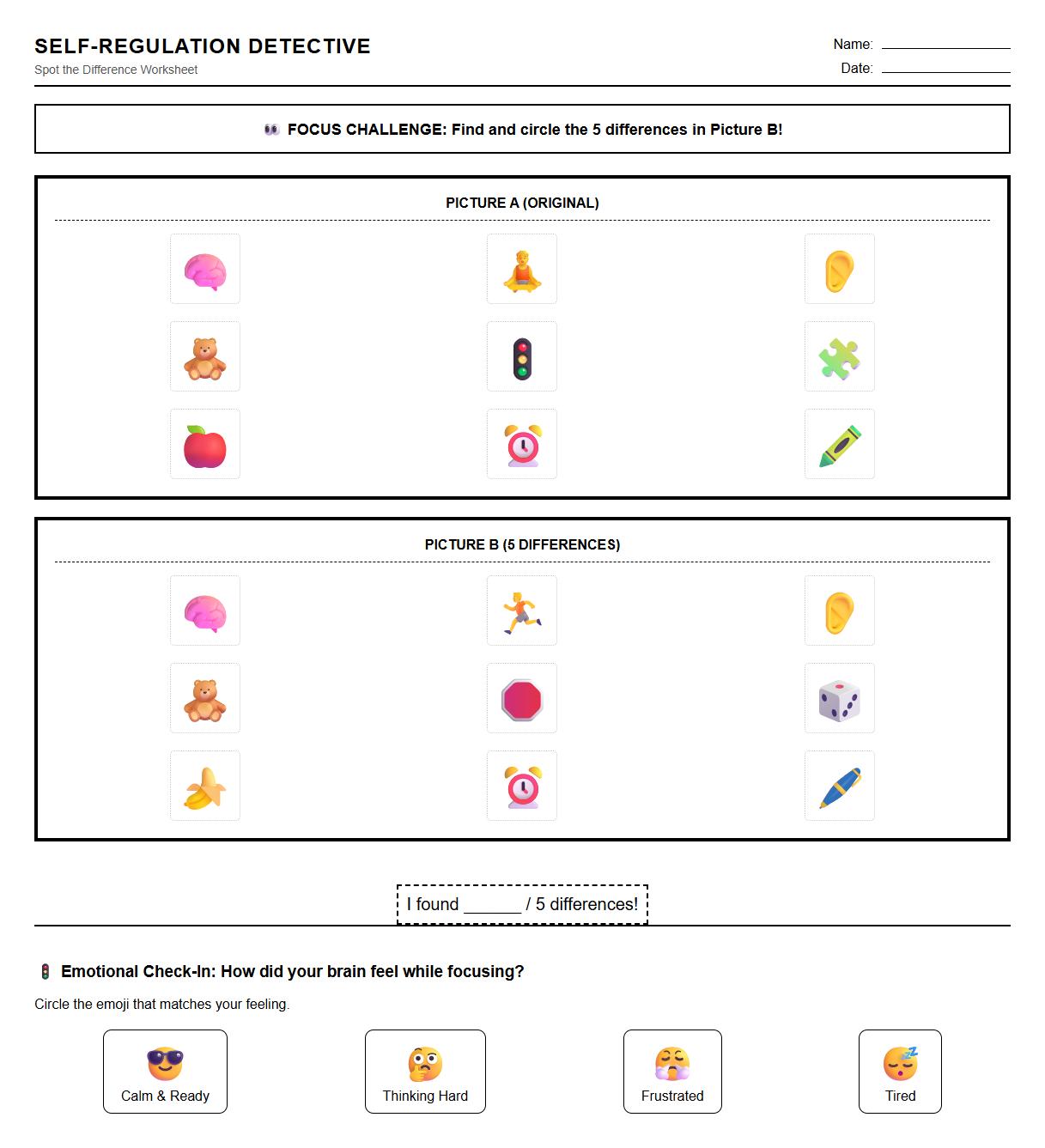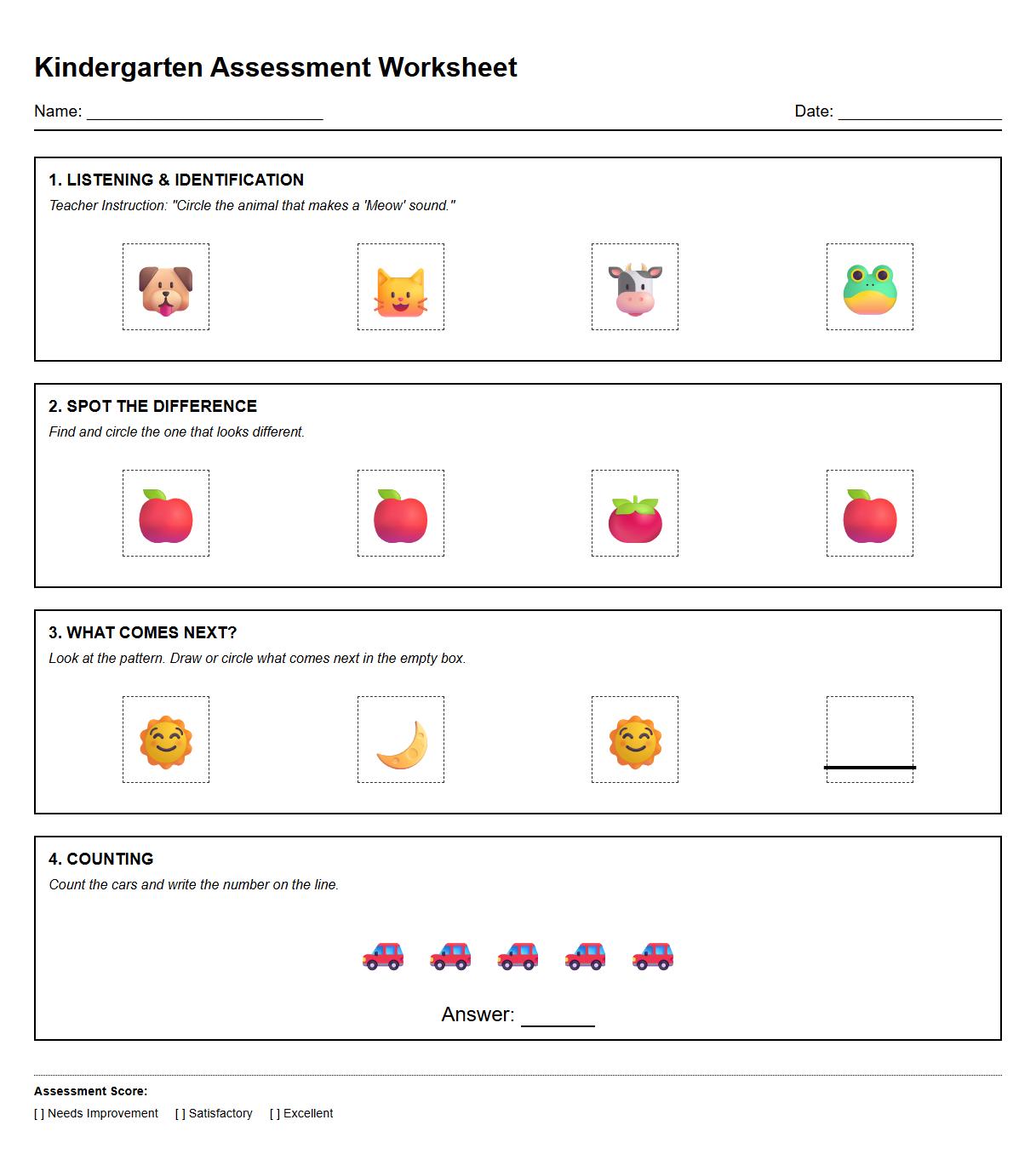
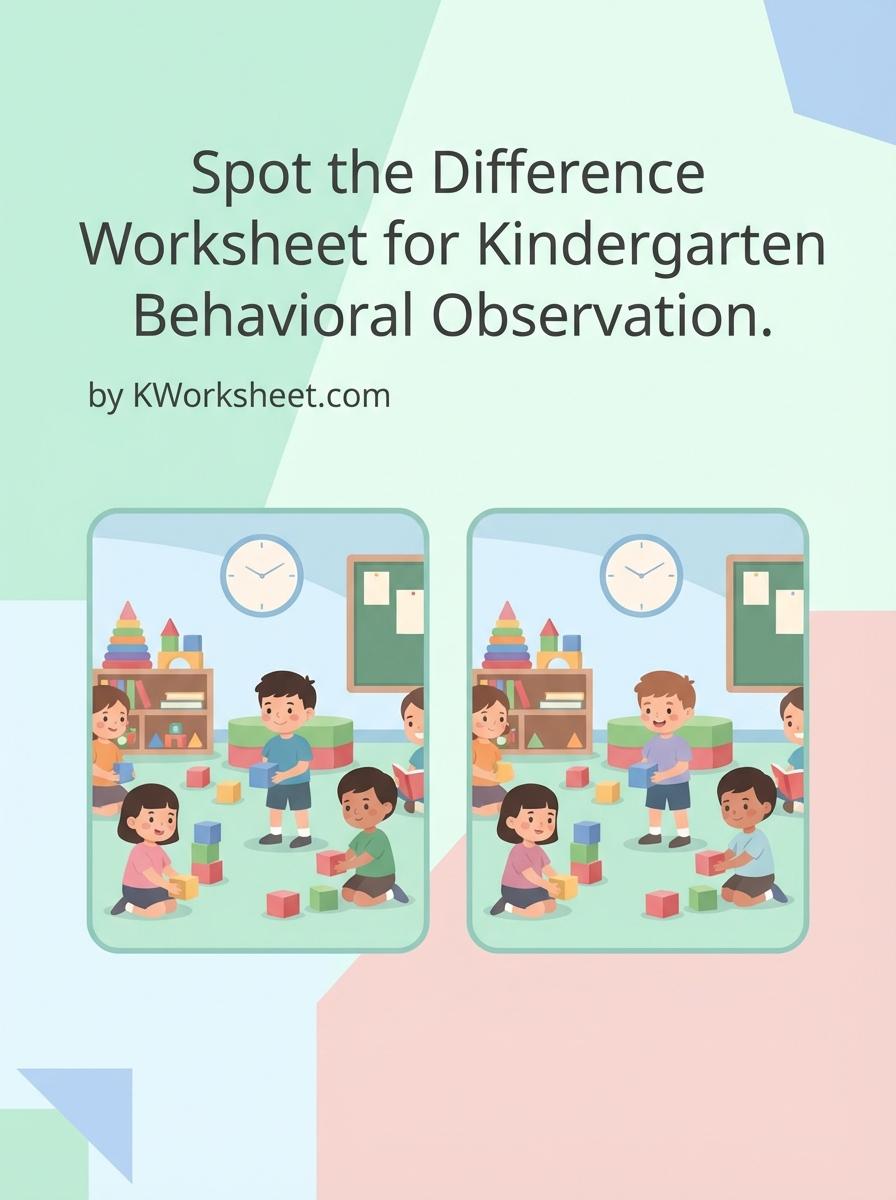
Spot the Difference worksheets enhance kindergarteners' attention to detail and improve their observation skills, essential for behavioral development. These activities promote focus, patience, and visual discrimination in young learners. Explore our collection of engaging worksheets designed to support behavioral observation in kindergarten students.
Behavioral Traits to Observe
Teachers and parents should look for attention to detail and persistence as children engage with this worksheet. Observing how students approach problem-solving and their ability to stay on task provides insight into their cognitive development. Additionally, noting any signs of frustration or excitement can help tailor future activities to their needs.
Children's Reactions to Differences
When children notice differences between pictures, many exhibit curiosity and excitement. Some may point out discrepancies loudly or eagerly share with peers, demonstrating engagement. Others might take a moment to process, showing thoughtful reflection before responding.
Participation and Enthusiasm
Typically, children who enjoy visual puzzles or games participate with enthusiasm and confidence. Teachers should observe who volunteers first and who remains hesitant, as this indicates varying levels of comfort and interest. Encouraging less active students can help boost their confidence and involvement.
Communication of Findings
Children communicate their observations through verbal explanations, gestures, or by pointing directly at the differences. Some may ask questions or seek affirmation from peers or teachers, fostering collaborative learning. Noticing these communication styles helps educators support effective interaction.
Frustration or Disinterest
It is important to recognize students who show signs of frustration or disinterest, such as fidgeting or avoiding the task. These children might need additional support or motivation to stay engaged. Adjusting the level of difficulty or offering encouragement can help maintain their interest.
Independent vs. Collaborative Work
Some children prefer to work independently, concentrating quietly on the worksheet, while others seek help or collaboration with classmates or adults. Understanding these preferences allows teachers and parents to provide the right balance of guidance and autonomy. Both approaches contribute uniquely to learning outcomes.
Handling Mistakes and Corrections
Watch how children respond to errors; some may quickly correct themselves, demonstrating resilience and adaptability. Others might require reassurance or assistance to overcome setbacks, highlighting the need for a supportive environment. Encouraging a positive attitude towards mistakes fosters growth mindset.
Strategies to Spot Differences
Children use various strategies such as scanning systematically, comparing colors, shapes, or sizes to find differences. Some may start from one side and move methodically, while others jump around the pictures. Recognizing these strategies helps in guiding children toward more effective problem-solving techniques.
Attention Span and Focus Patterns
Attention spans vary; some children maintain focus throughout, while others may require breaks or prompts to stay engaged. Observing how long children remain attentive can inform the pacing of future activities. Incorporating movement or interactive elements can enhance sustained concentration.
Displaying Understanding or Confusion
Indicators of understanding include complete tasks confidently and explaining their reasoning clearly. Conversely, confusion may show through hesitations, repetitive questioning, or incomplete answers. Teachers and parents should clarify instructions when necessary to ensure comprehension and successful completion.


Visual Discrimination Matching Worksheets for Kindergarten Grade Phonics Practice