Spot the Difference Worksheet for Kindergarten Early Problem Solving

📅 Mar 3, 2025 👤 Nylen Smith

Spot the Difference worksheets enhance early problem-solving skills by encouraging children to observe details and exercise critical thinking. These activities improve focus, visual discrimination, and cognitive development in kindergarten learners. Explore a variety of engaging Spot the Difference worksheets designed to support your child's growth.

Spot the Difference Worksheet with Phonics Vocabulary Pictures
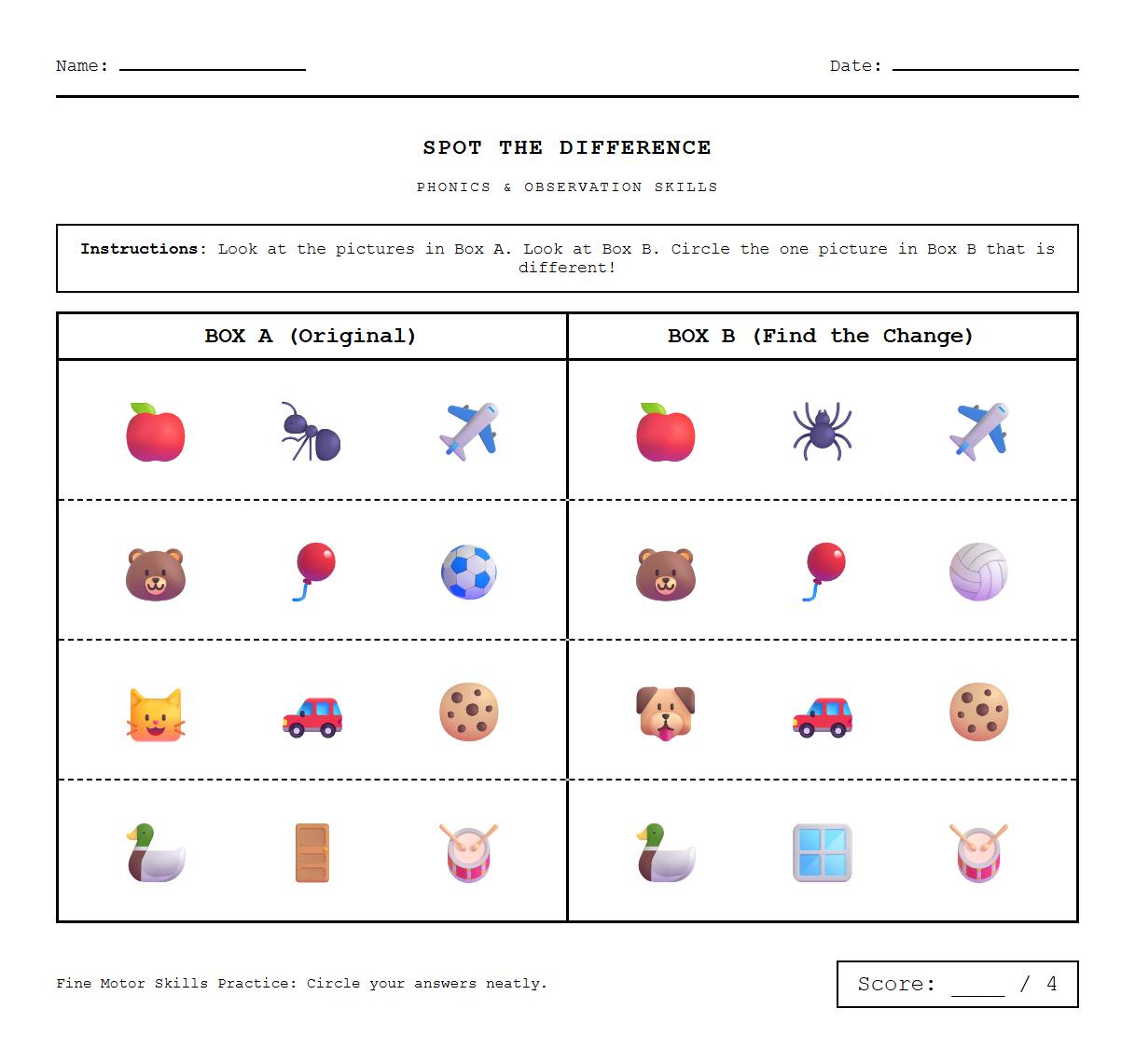
Spot the Difference Worksheet with Phonics Vocabulary Pictures

Download PDF     Pin it

Visual Discrimination Exercise using Seasonal Kindergarten Themes
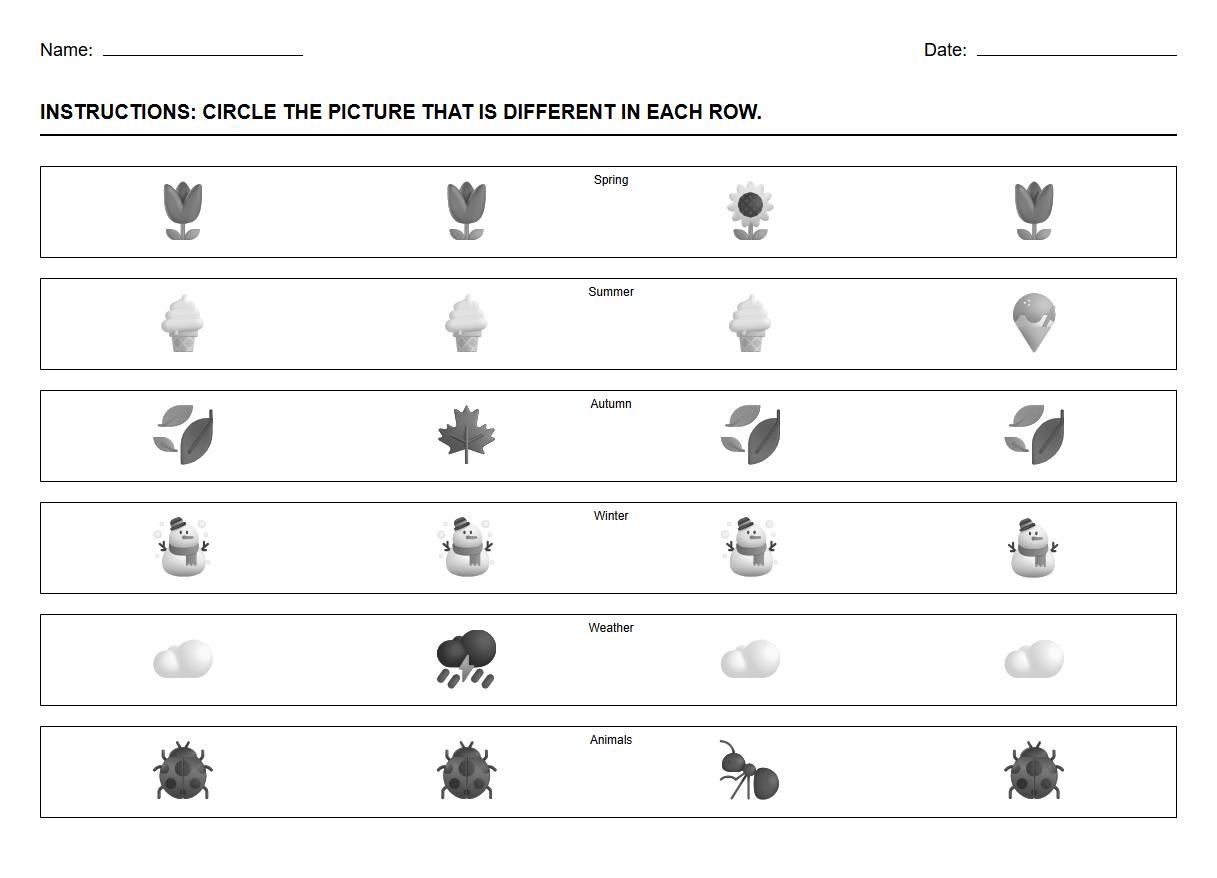
Visual Discrimination Exercise using Seasonal Kindergarten Themes

Download PDF     Pin it

Problem Solving Spot the Difference with Numbers and Counting Objects
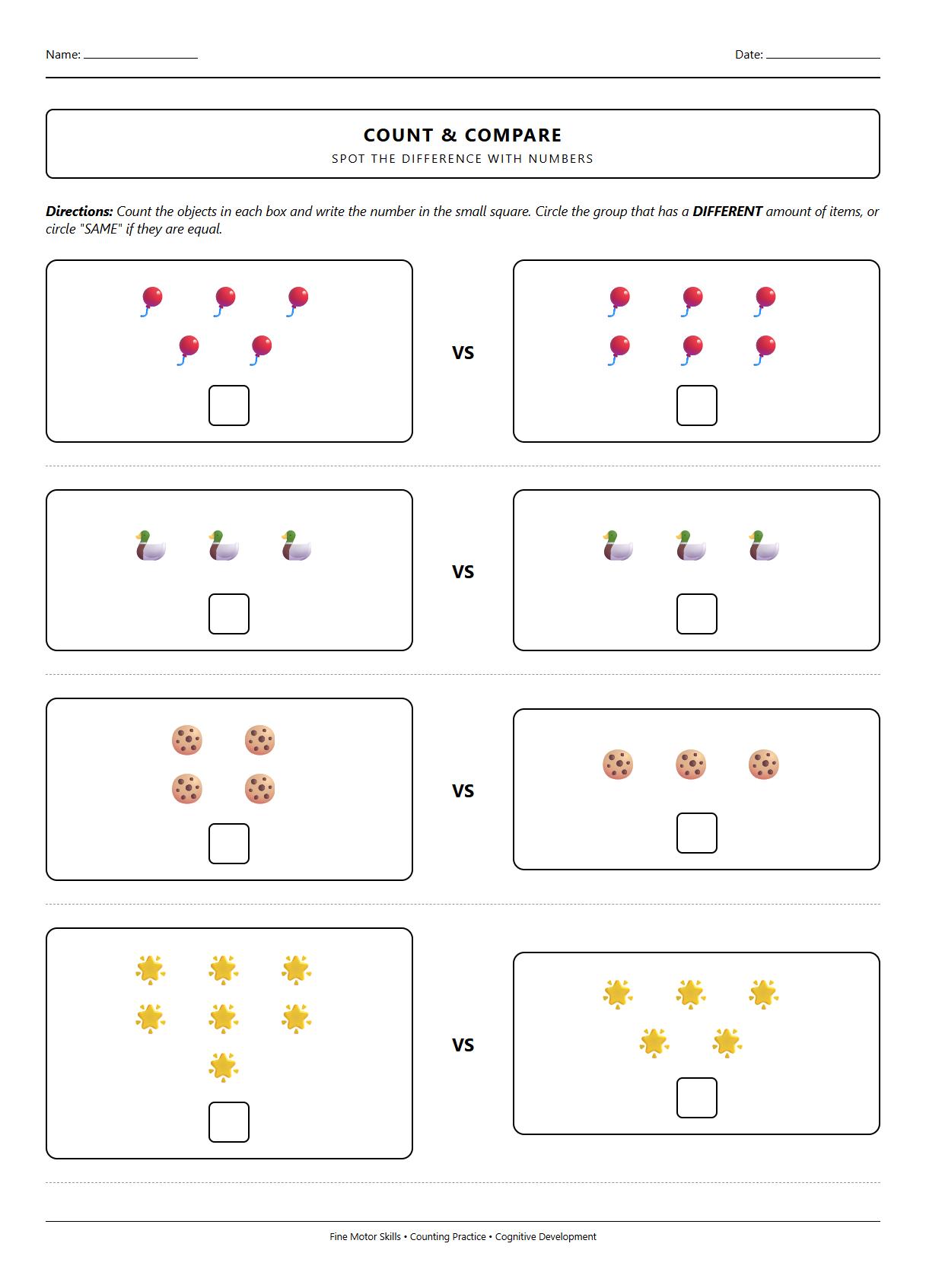
Problem Solving Spot the Difference with Numbers and Counting Objects

Download PDF     Pin it

Spatial Reasoning Worksheet with Simple Shape Differences
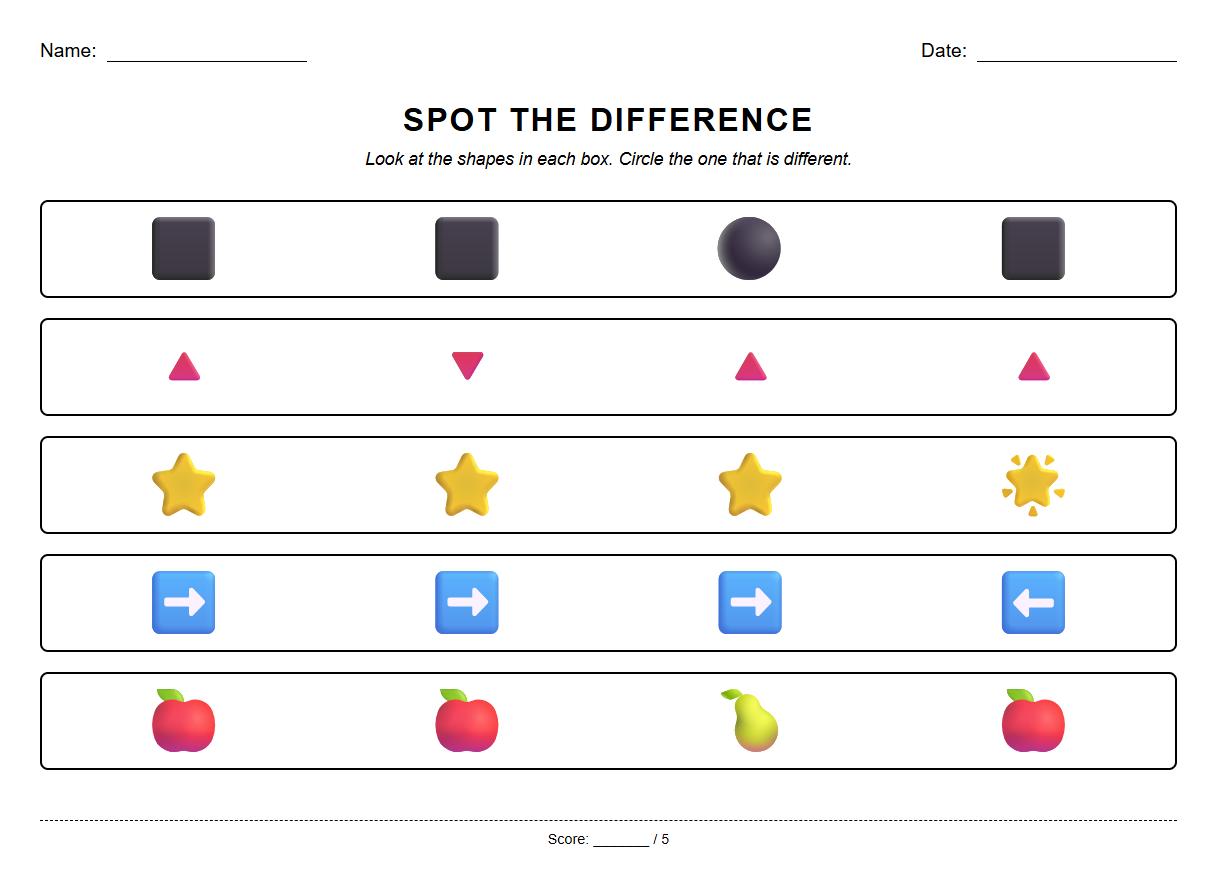
Spatial Reasoning Worksheet with Simple Shape Differences

Download PDF     Pin it

Spot the Difference Activity Featuring Letter Recognition
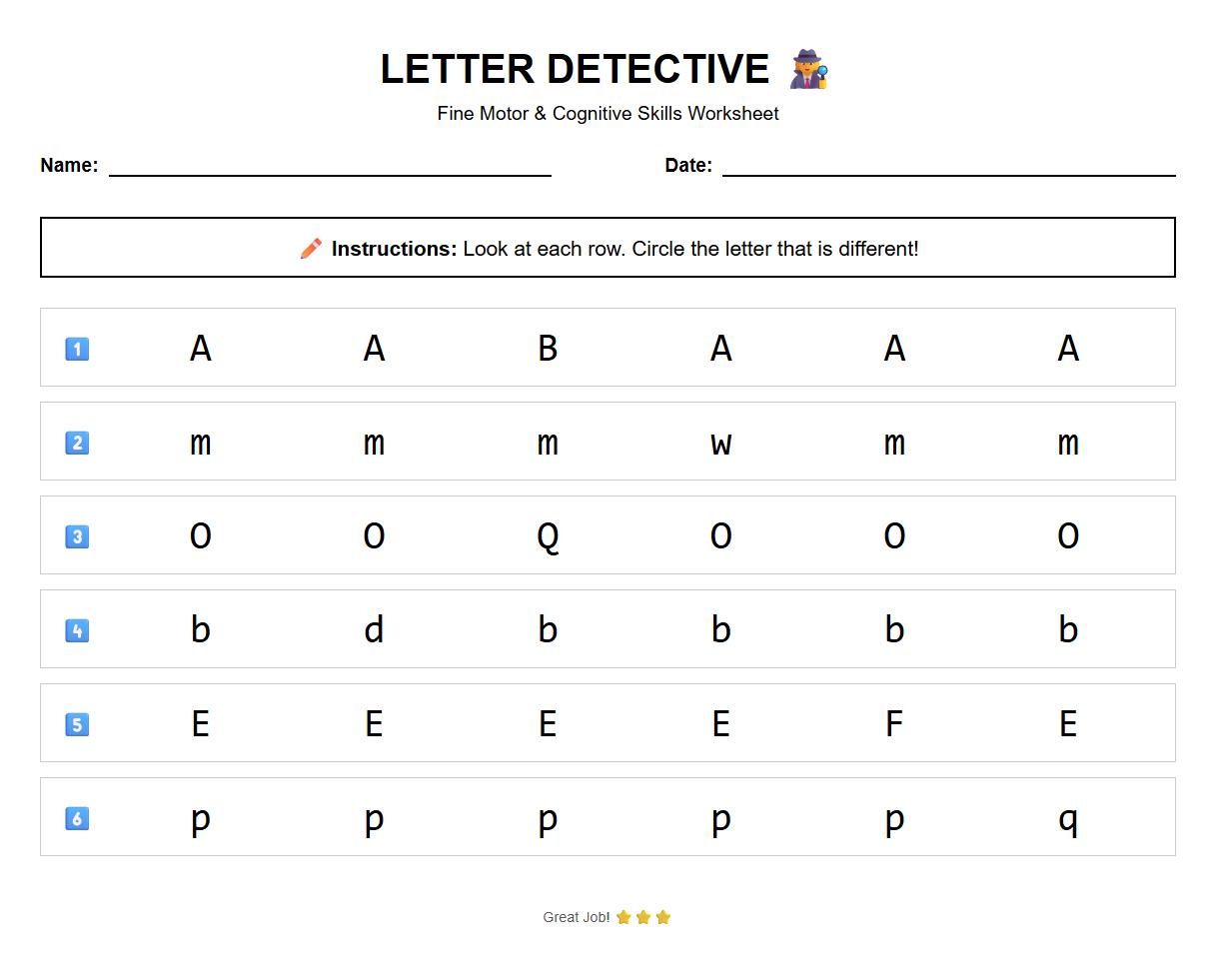
Spot the Difference Activity Featuring Letter Recognition

Download PDF     Pin it

Early Logic Development with Animal Themed Spot the Difference
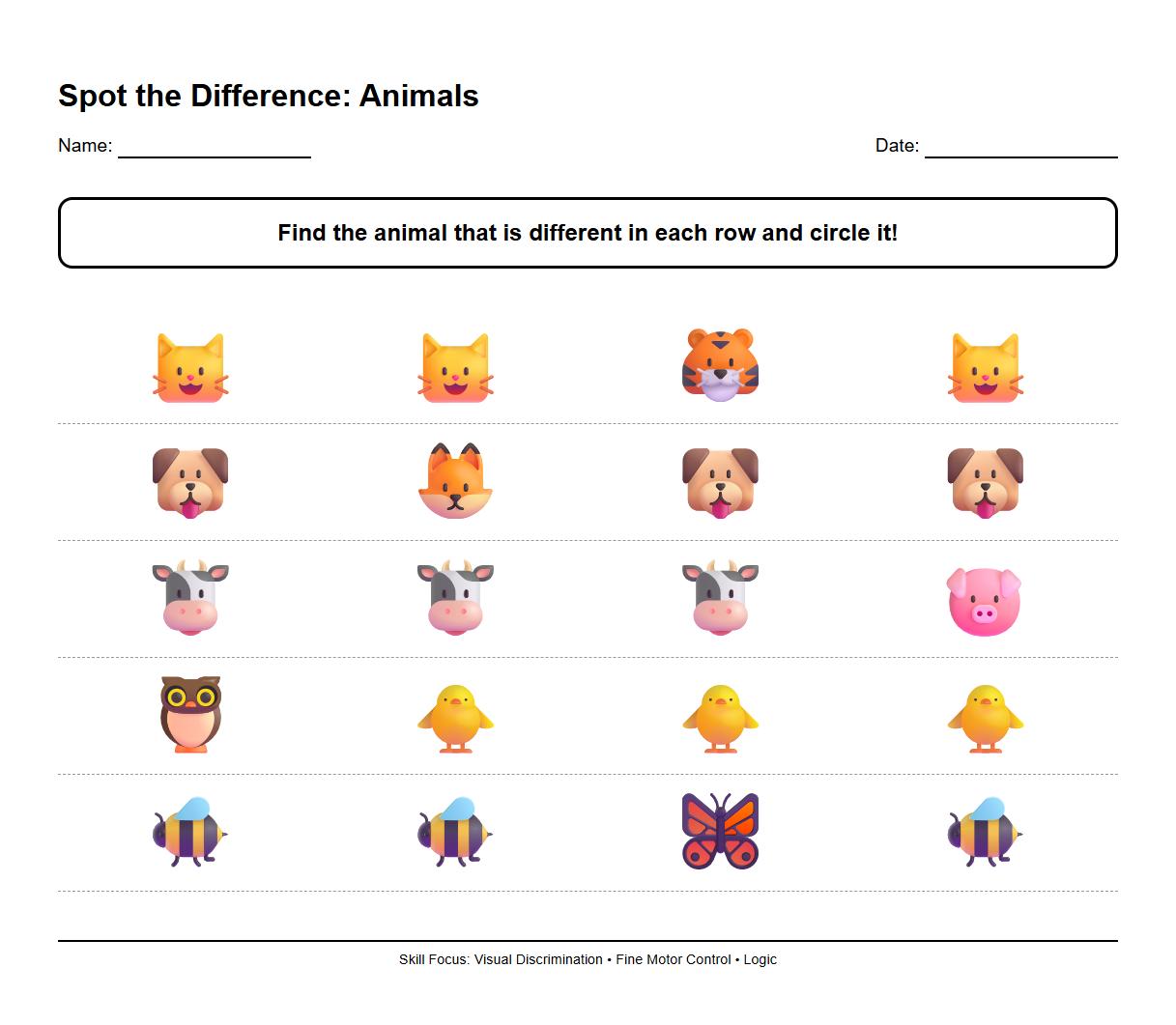
Early Logic Development with Animal Themed Spot the Difference

Download PDF     Pin it

Observation Skills Worksheet using Color and Pattern Variations
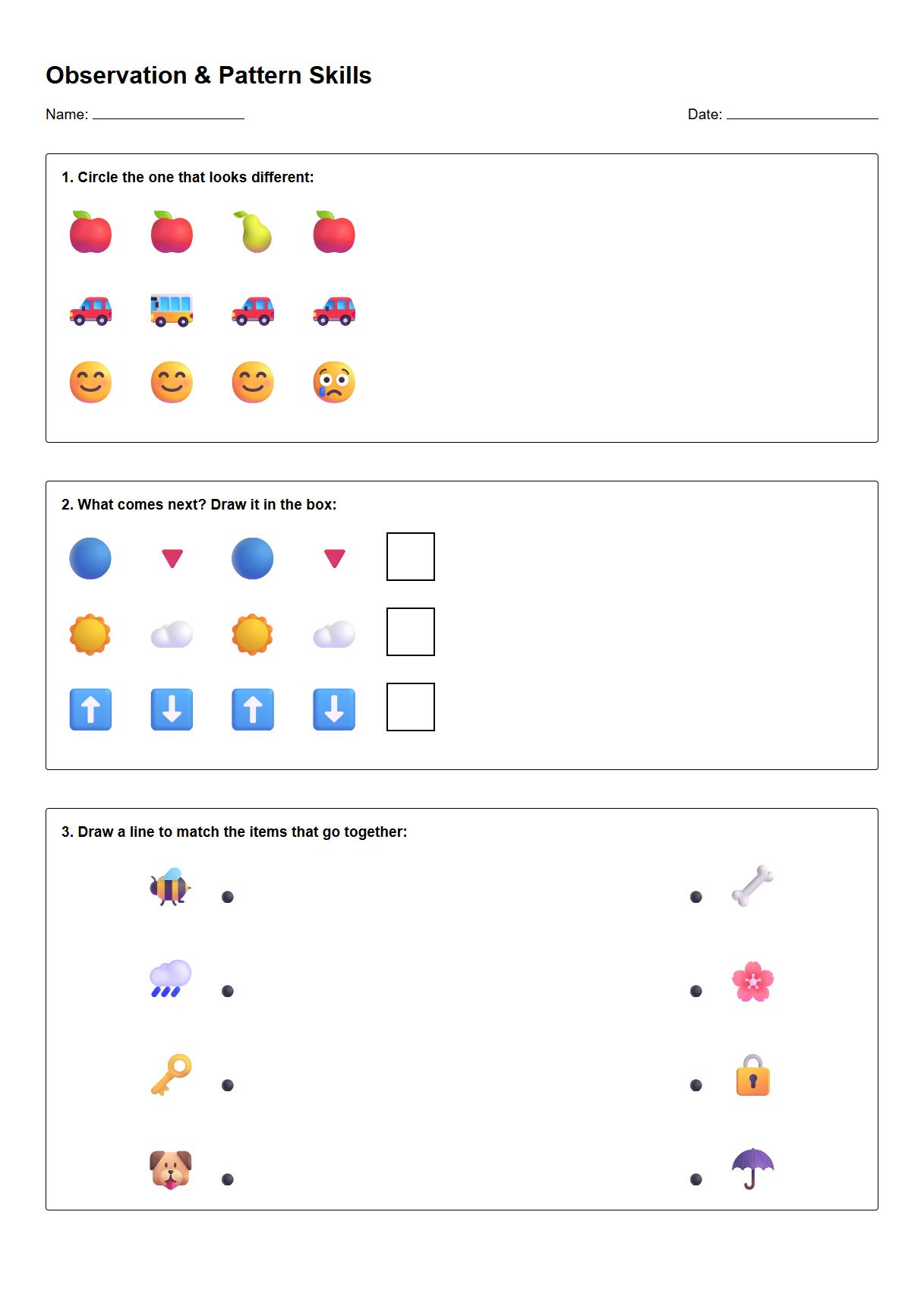
Observation Skills Worksheet using Color and Pattern Variations

Download PDF     Pin it

Kindergarten Cognitive Skills Spot the Difference with Everyday Scenes
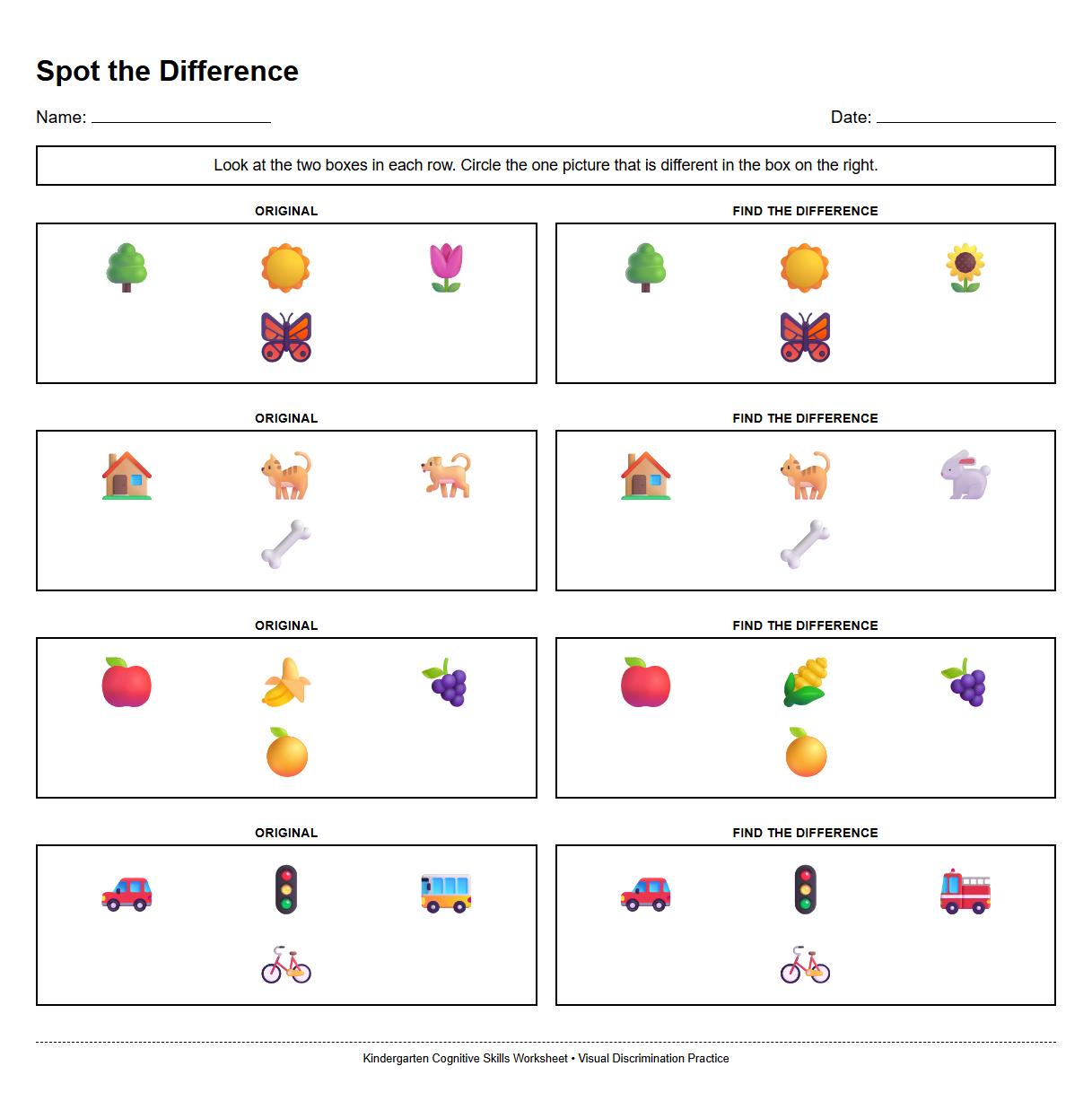
Kindergarten Cognitive Skills Spot the Difference with Everyday Scenes

Download PDF     Pin it

Spot the Difference Using Basic Sight Words Integration
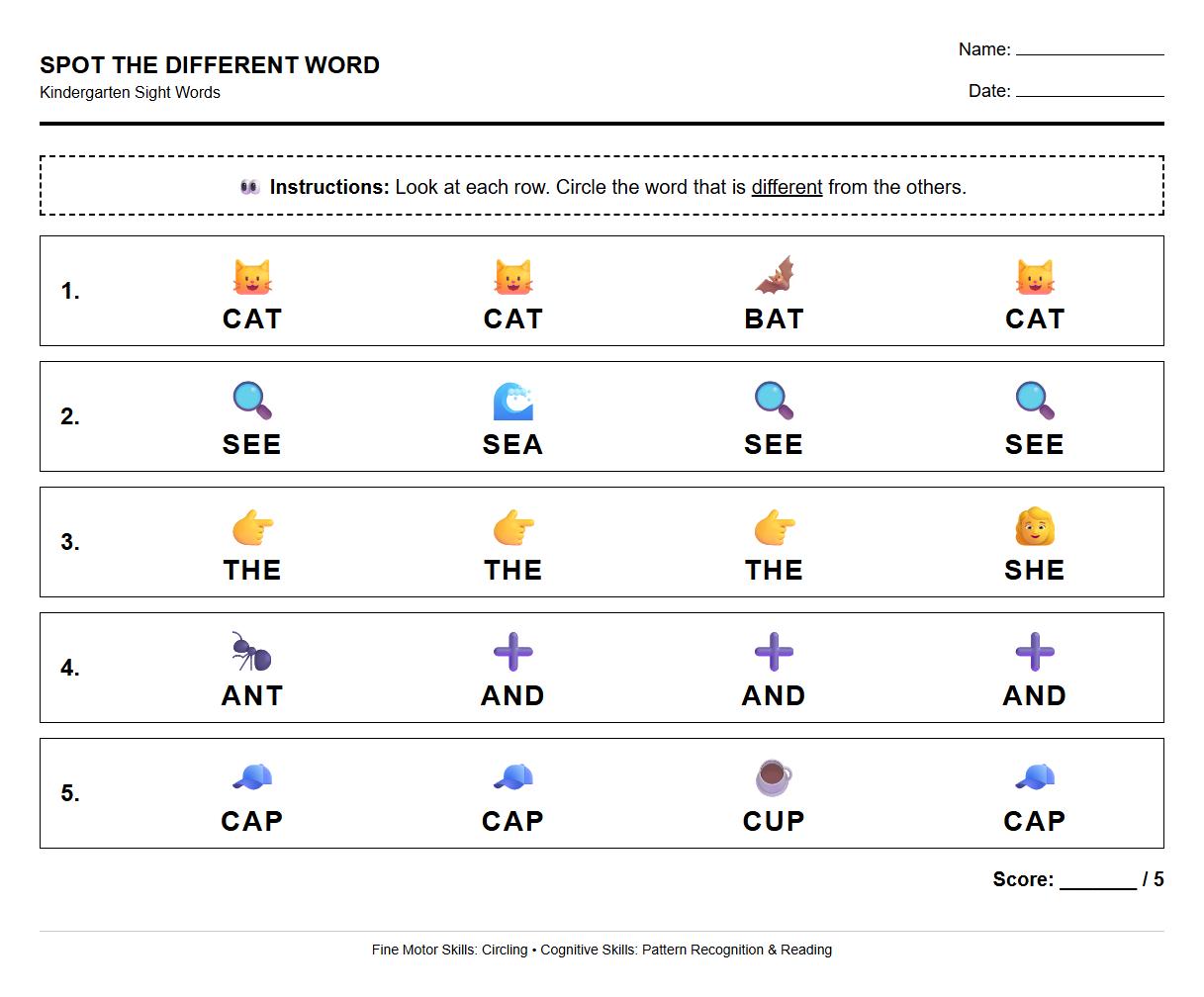
Spot the Difference Using Basic Sight Words Integration

Download PDF     Pin it

Memory Recognition Worksheet with Transportation Theme Spot the Difference
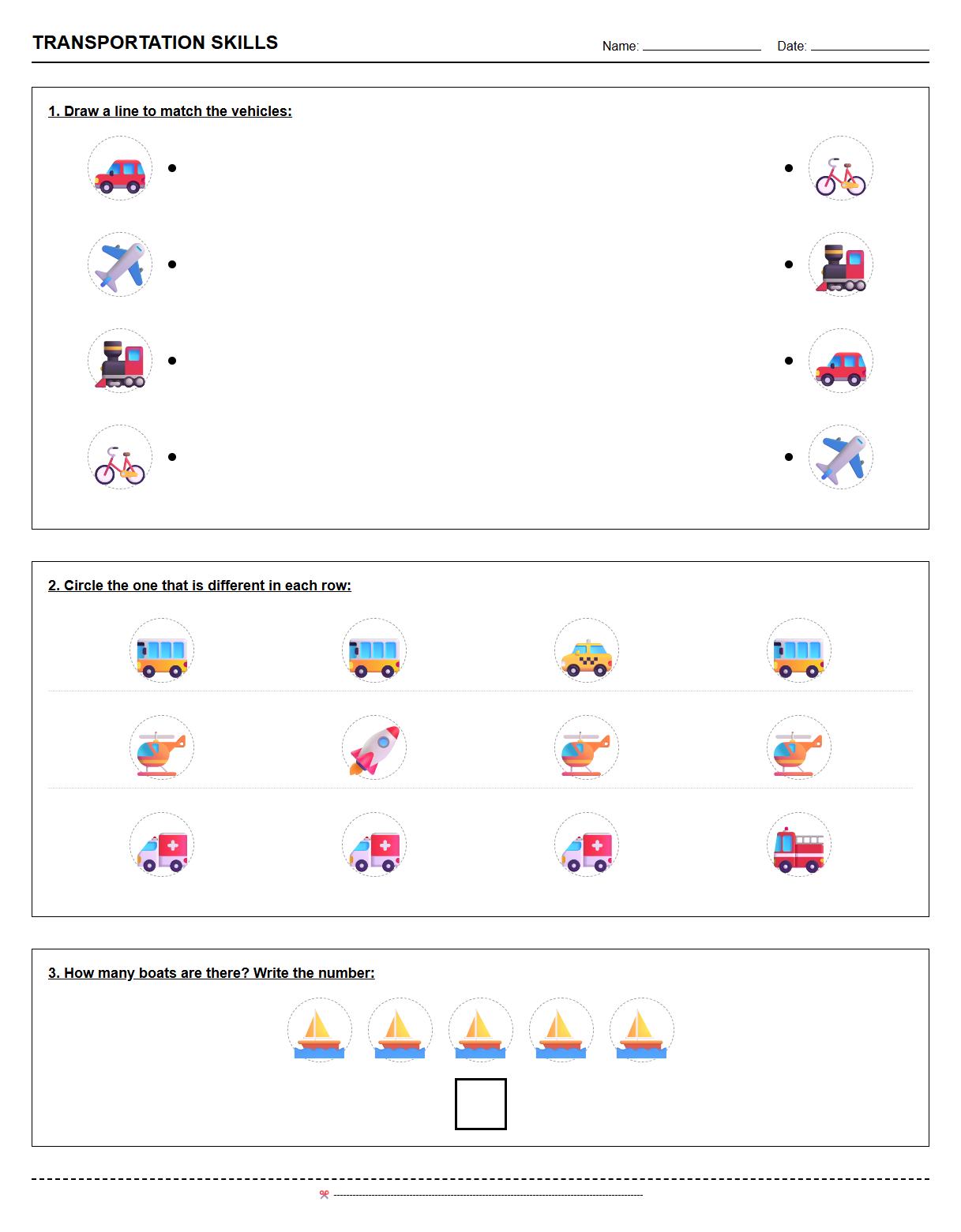
Memory Recognition Worksheet with Transportation Theme Spot the Difference

Download PDF     Pin it

Identifying Different Objects Between Two Pictures

Teachers and parents can help children develop observation skills by asking them to find objects that differ between two pictures. Encourage kids to focus on small details like colors, sizes, and shapes. This exercise promotes attention to detail and critical thinking. It's a fun way to engage young learners in visual discrimination activities.

Finding and Counting Differences in the Worksheet

The worksheet challenges children to identify and count all the differences between two images. This activity boosts numeracy and visual perception skills simultaneously. Counting differences helps kids focus on accuracy and improves concentration. Parents and teachers can assist by guiding children gently without giving away answers.

Comparing Missing Items in Each Picture

Ask children which picture has more items missing to encourage comparisons and reasoning. Children learn to observe not only what is present but also what is absent, enhancing their analytical thinking. Discussing missing items helps build vocabulary related to objects and positions. This step supports comprehensive learning beyond simple spotting.

Circular Identification of Differences

Encourage children to circle differences they spot on the worksheet, making the activity interactive and hands-on. Circling helps reinforce memory and visual tracking skills. Teachers and parents can provide colored pencils or markers for added fun. This method also allows easy review and discussion afterward.

Checking for Color Consistency Between Images

Colors are key to distinguishing differences, so ask if the colors in both images match. This enhances color recognition and attention to detail. Children practice comparing hues and tones, developing their visual discrimination further. Discussing color variations also encourages descriptive language use.

Identifying Non-Matching Shapes

Focus on which shapes are different between the two pictures to build shape recognition skills. Shapes form the foundation of early geometry learning and spatial awareness. Asking children to find shape discrepancies improves their ability to categorize and sort objects. It also prepares them for more advanced math concepts.

Spotting Added Objects in One Picture

Challenge kids to find objects that appear in one picture but not the other, boosting their attention to detail. Identifying added items develops memory and comparison skills. This task encourages children to explore differences beyond color and shape. It also promotes discussion about the purpose of these changes.

Noticing Background Changes

Ask children if there are any changes in the background, which trains them to observe the entire scene carefully. Background differences improve spatial awareness and context understanding. Observing background elements helps children recognize subtle details often overlooked. This enhances overall perception and cognitive skills.

Observing Position Changes of Animals or People

Discuss if animals or people are in the same position in both pictures to develop spatial and positional awareness. Understanding movement and position is key to grasping concepts of location and direction. This activity also encourages children to describe scenes verbally, boosting language skills. It enhances ability to notice dynamic elements in a setting.

Identifying Extra Objects or Items

Finally, ask which picture contains an extra object or item to encourage thorough comparison. Finding additional elements hones observational skills and reinforces the concept of quantity. It also teaches children to verify details carefully before concluding. This plays an important role in critical thinking and problem-solving development.


More in Fine Motor and Cognitive Skills Category


About the author. Nylen Smith is a dedicated educator and cofounder of KWorksheet.com, a popular platform specializing in high-quality kindergarten worksheets and printable activities.

Disclaimer. The information provided in this document is for general informational purposes and/or document sample only and is not guaranteed to be factually right or complete. Please report to us via contact-us page if you find and error in this page, thanks.

Comments

No comment yet