Line and Curve Tracing Worksheet for Visual Motor Integration in Kindergarten

📅 May 14, 2025 👤 Nylen Smith

Line and Curve Tracing worksheets enhance visual motor integration by helping kindergarteners develop hand-eye coordination and fine motor skills through guided practice. These exercises support early writing readiness by encouraging precise control and spatial awareness as children trace various lines and curves. Explore the available worksheets to reinforce your child's foundational motor abilities effectively.

Phonics Line Tracing Worksheet for Alphabet Formation
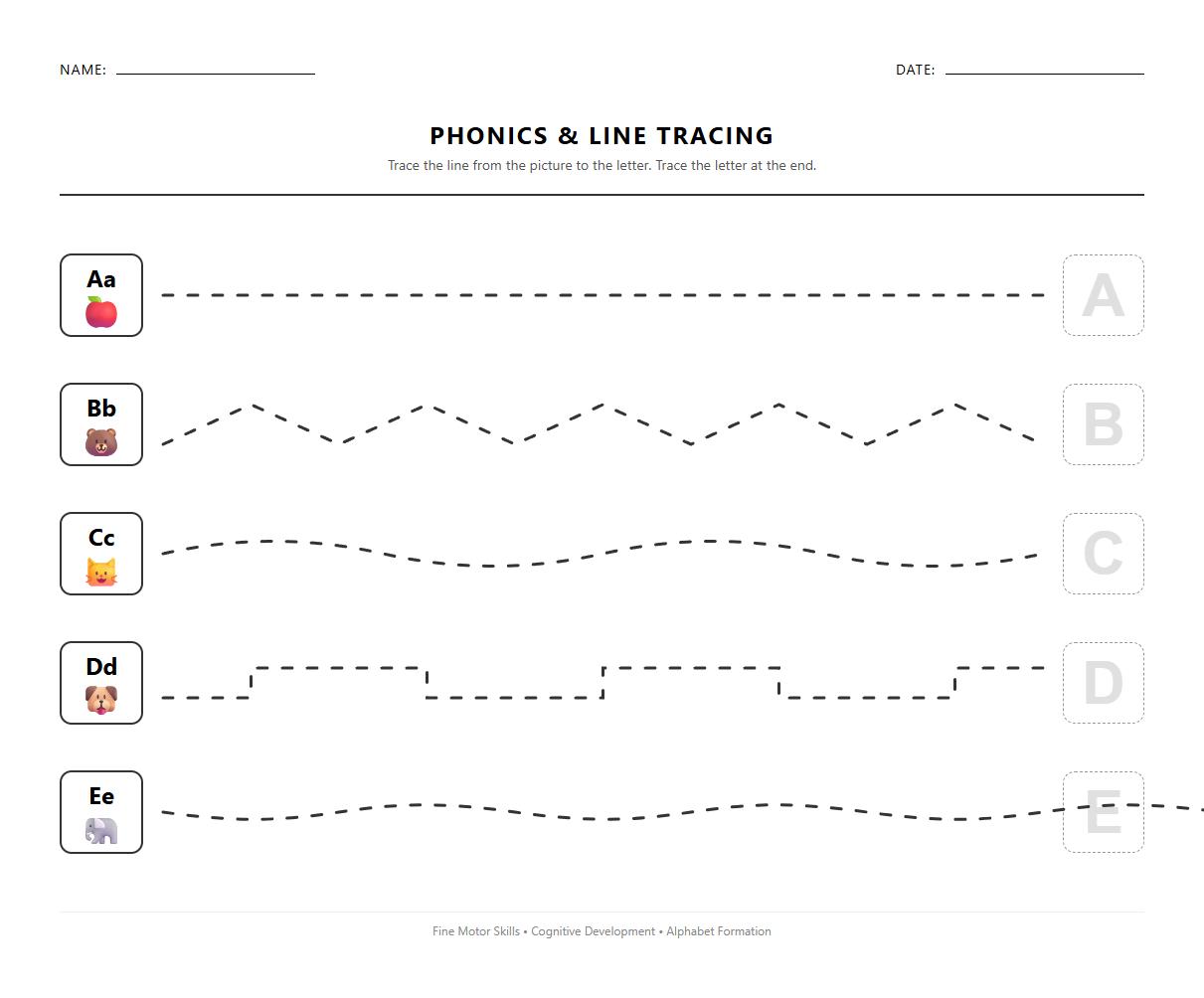
Phonics Line Tracing Worksheet for Alphabet Formation

Download PDF     Pin it

Curve Tracing Worksheet for Visual Motor Coordination
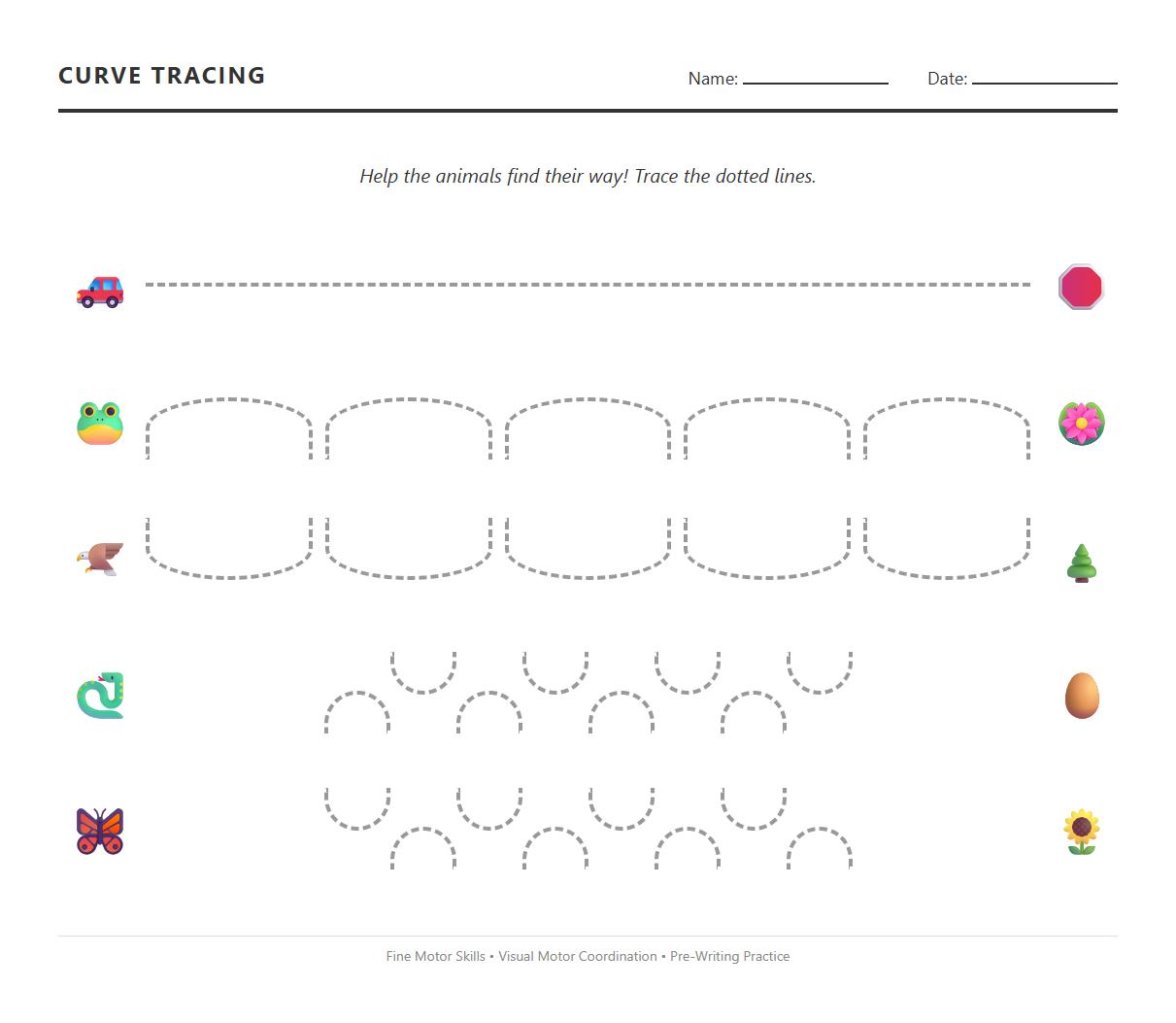
Curve Tracing Worksheet for Visual Motor Coordination

Download PDF     Pin it

Zigzag Line Tracing Worksheet for Fine Motor Development
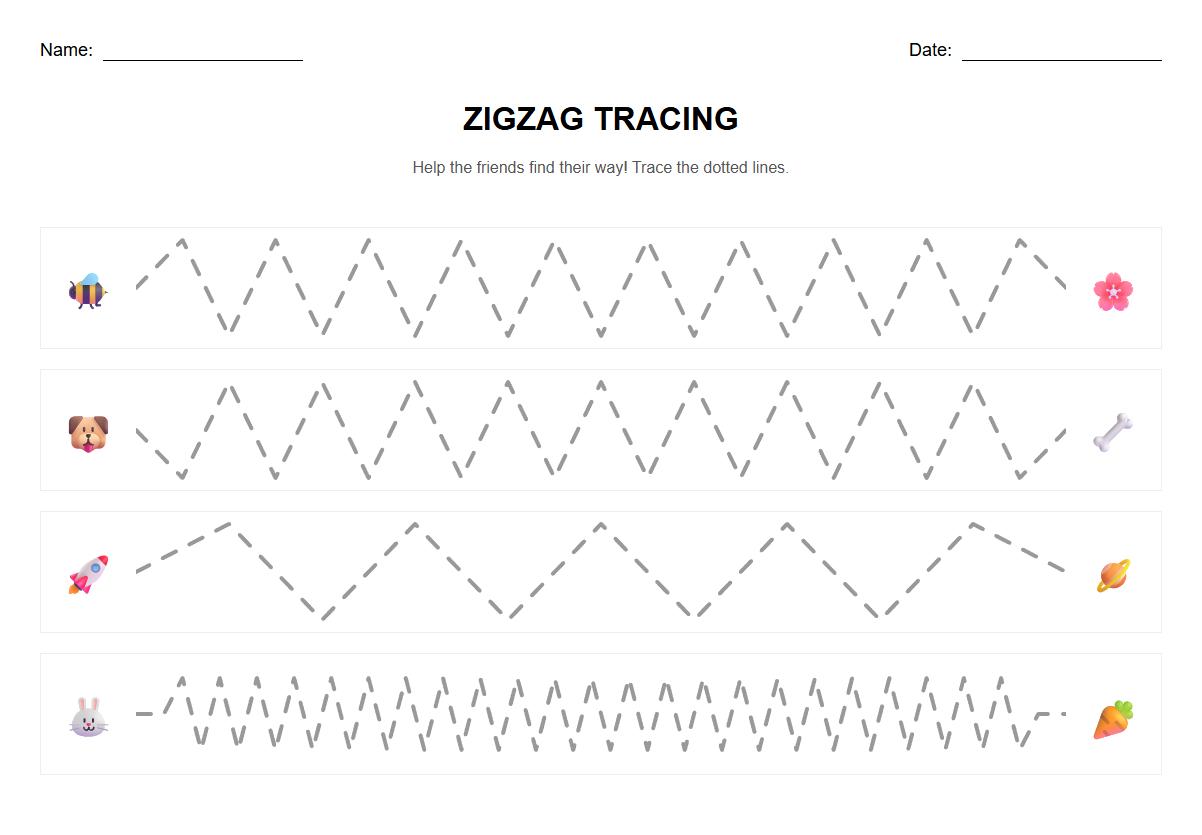
Zigzag Line Tracing Worksheet for Fine Motor Development

Download PDF     Pin it

Pre Writing Vertical Line Practice Worksheet for Kindergarten
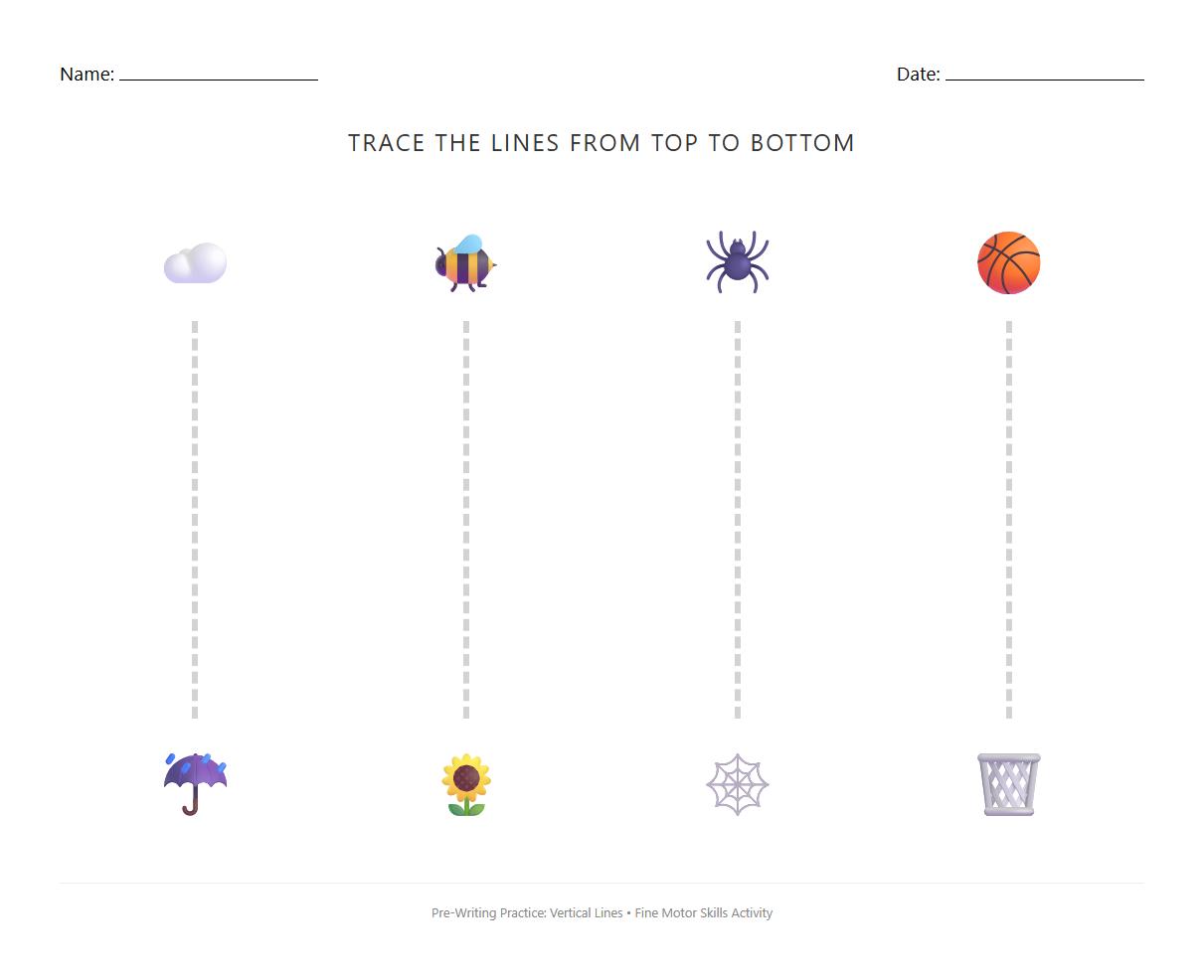
Pre Writing Vertical Line Practice Worksheet for Kindergarten

Download PDF     Pin it

Horizontal Line Tracing Worksheet for Early Handwriting Skills
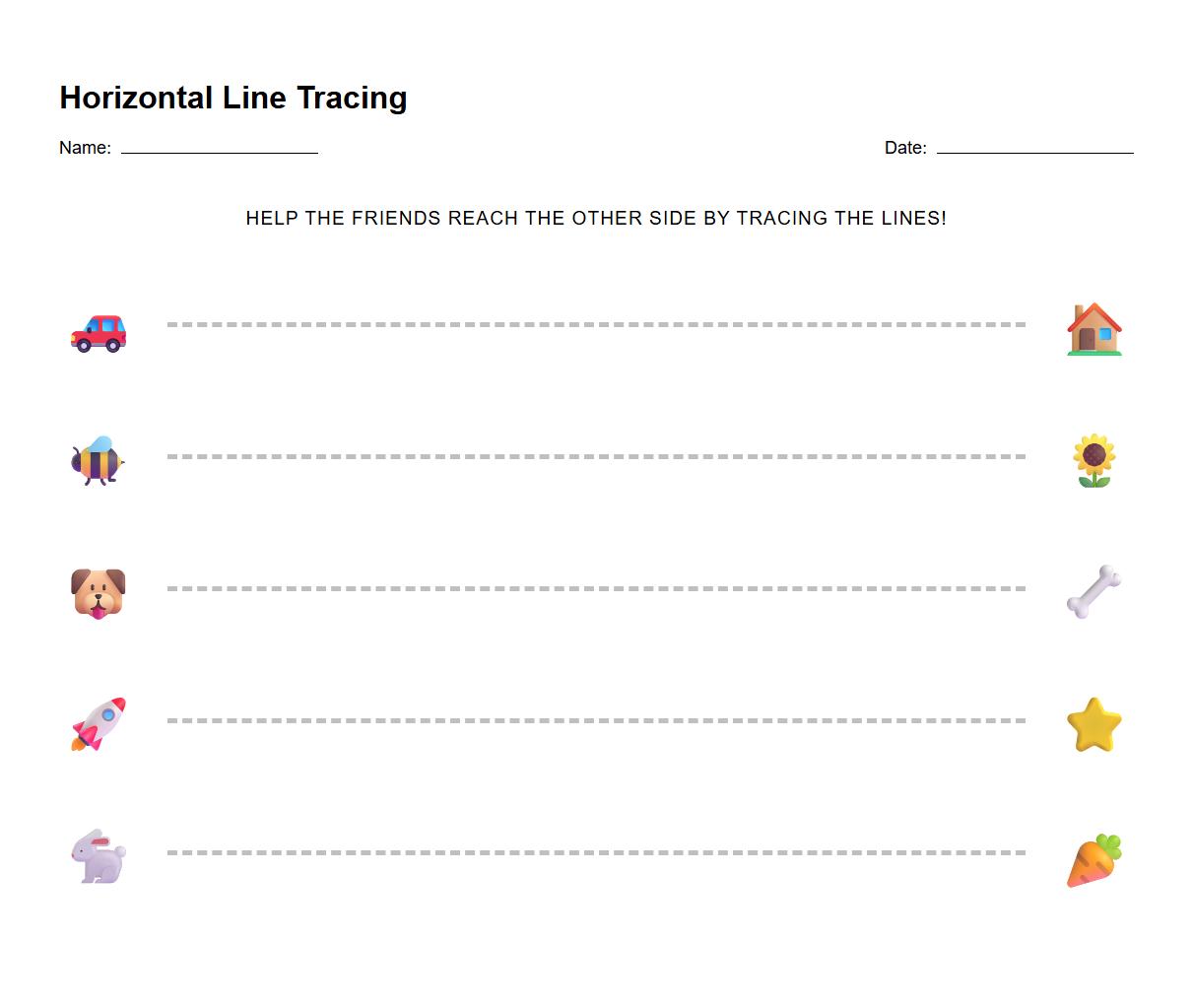
Horizontal Line Tracing Worksheet for Early Handwriting Skills

Download PDF     Pin it

Circle Curve Tracing Worksheet for Shape Recognition
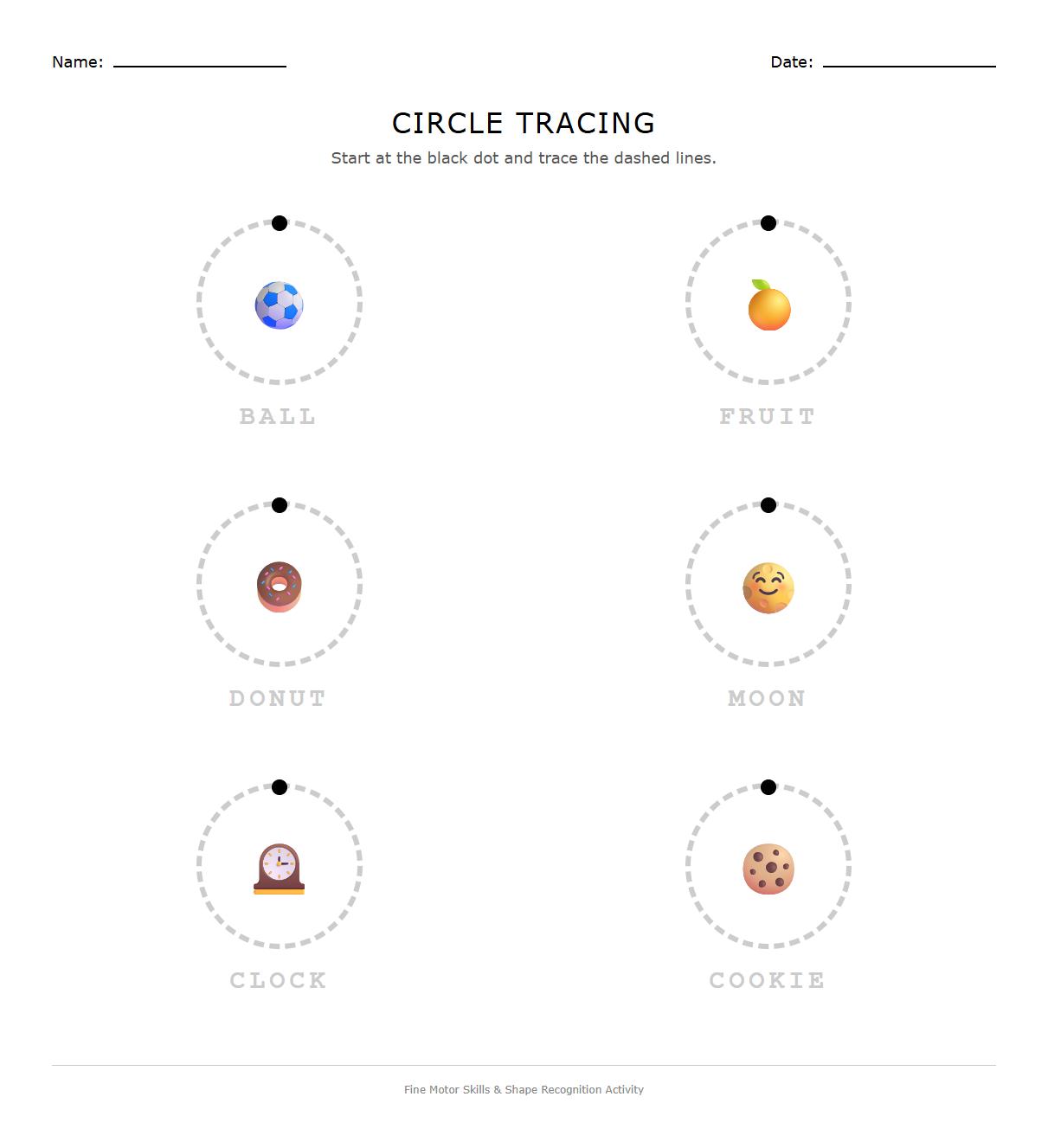
Circle Curve Tracing Worksheet for Shape Recognition

Download PDF     Pin it

Wavy Line Tracing Worksheet for Visual Perceptual Skills
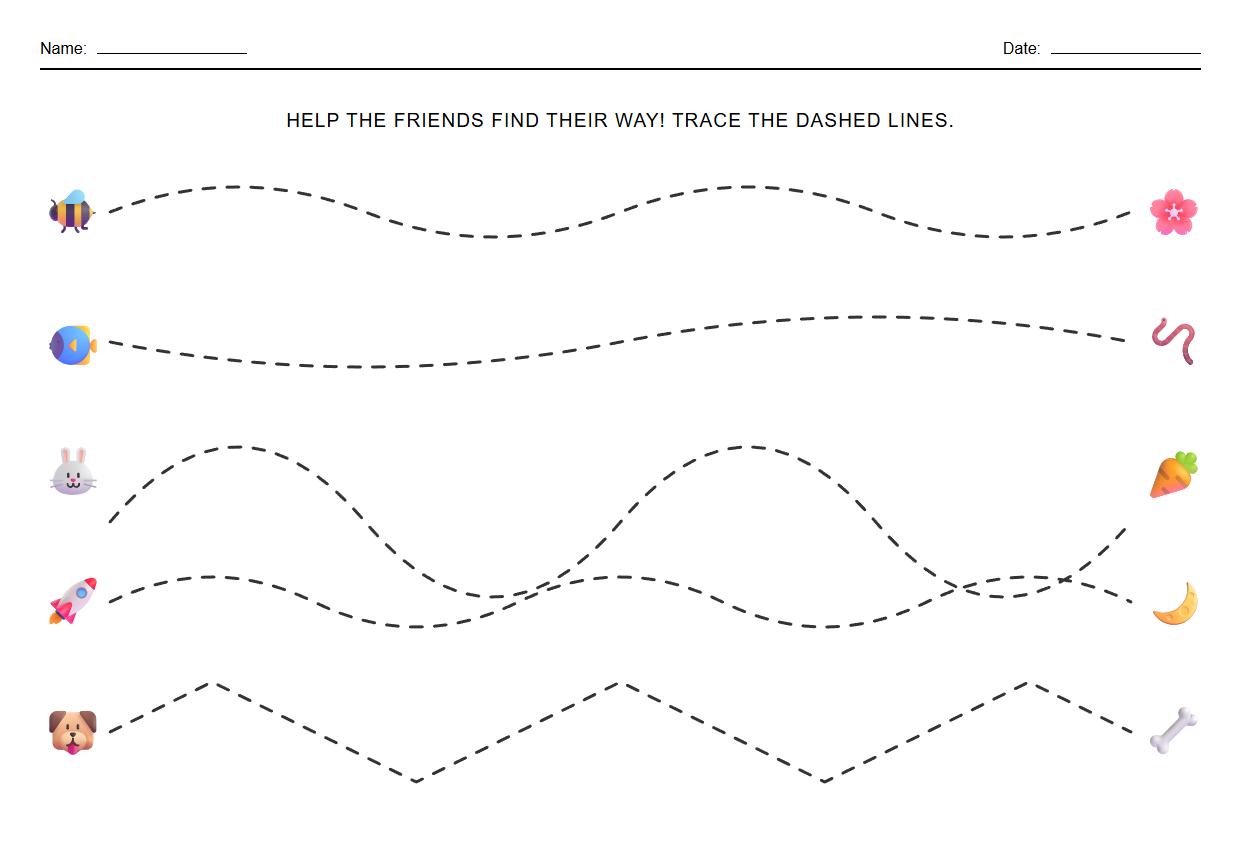
Wavy Line Tracing Worksheet for Visual Perceptual Skills

Download PDF     Pin it

Dotted Line and Curve Tracing Worksheet for Pencil Control
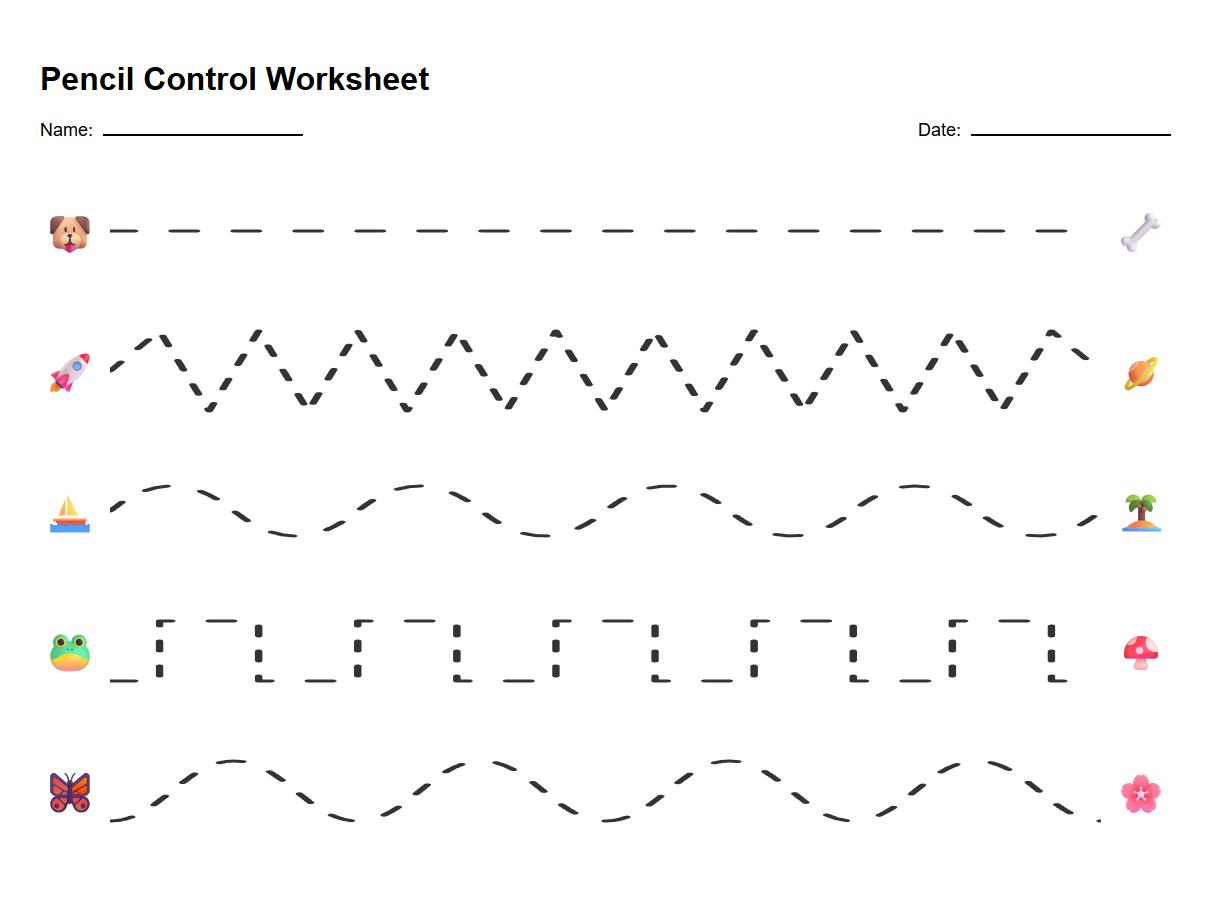
Dotted Line and Curve Tracing Worksheet for Pencil Control

Download PDF     Pin it

Multi Direction Line Tracing Worksheet for Eye Hand Coordination
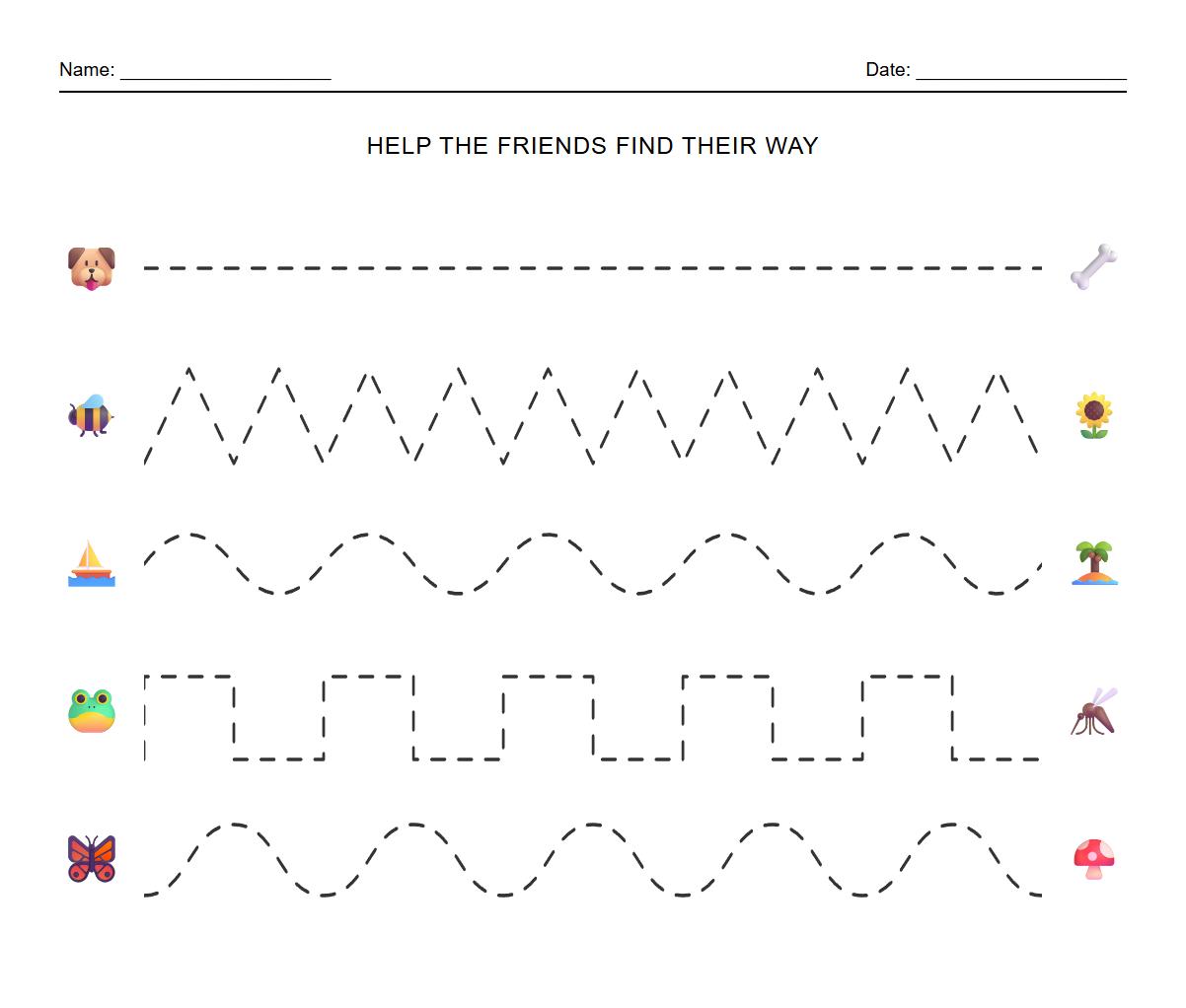
Multi Direction Line Tracing Worksheet for Eye Hand Coordination

Download PDF     Pin it

Continuous Curve Tracing Worksheet for Motor Planning Integration
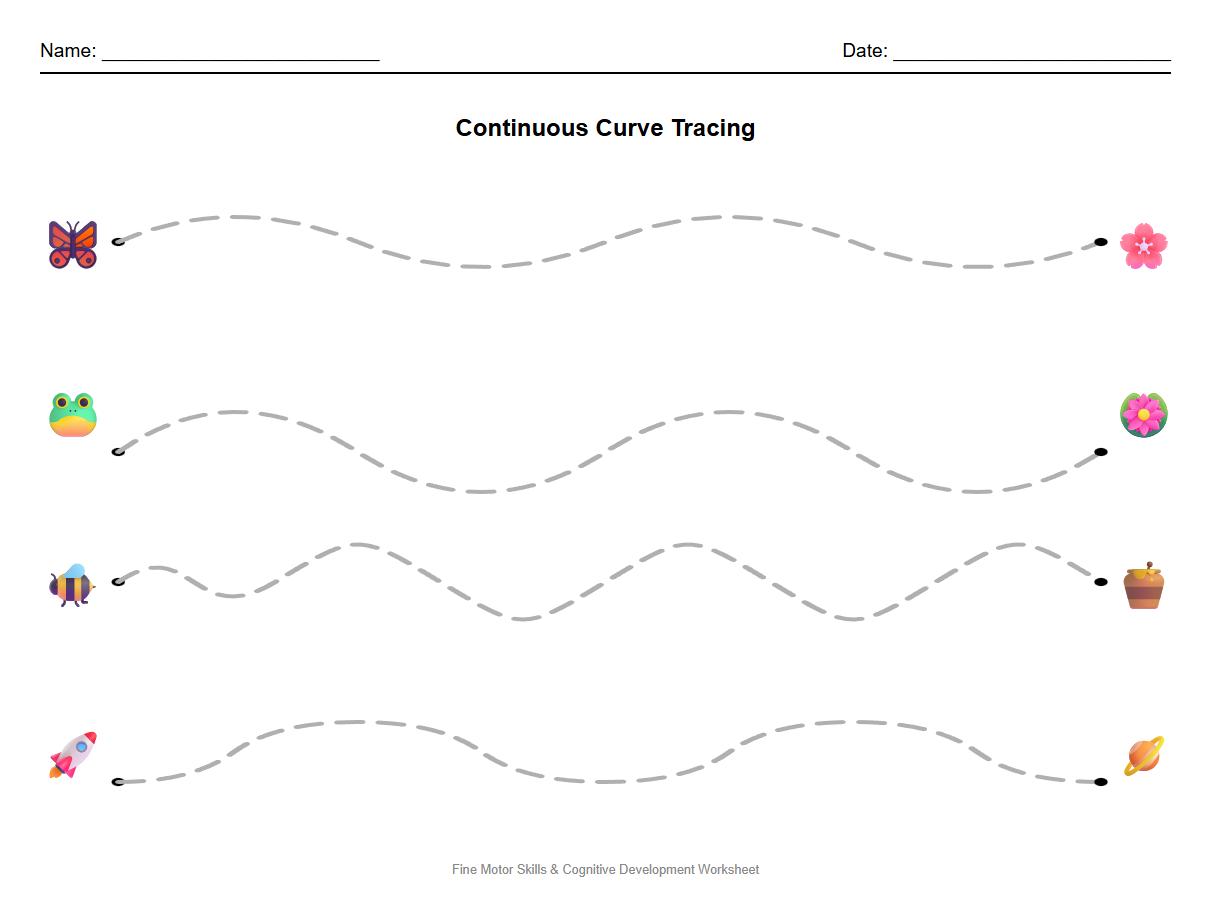
Continuous Curve Tracing Worksheet for Motor Planning Integration

Download PDF     Pin it

Skills Developed Through Line and Curve Tracing Worksheets in Kindergarten

Line and curve tracing worksheets primarily develop fine motor skills, hand-eye coordination, and concentration in young children. These activities also nurture early writing skills by enhancing the ability to control pencil movements. Additionally, tracing fosters visual perception and spatial awareness, which are crucial for academic success. Together, these skills form a foundation for more complex tasks like drawing and writing.

Improvement of Visual Motor Integration Through Line Tracing Activities

Line tracing activities improve visual motor integration by requiring children to coordinate what they see with precise hand movements. This synchronization strengthens neural pathways necessary for handwriting and other coordinated tasks. Enhanced visual motor integration supports better focus and accuracy in schoolwork. Regular practice helps children develop smoother and more controlled motor responses.

The Importance of Curve Tracing Exercises for Kindergarten Students

Curve tracing exercises are vital for developing control over circular and curved hand motions, which are essential in forming letters and numbers. They help children gain confidence in producing fluid and continuous strokes. Curves also challenge fine motor skills differently than straight lines, promoting versatility. Incorporating curve tracing prepares children for diverse handwriting tasks they will encounter later.

Fine Motor Skills Enhanced Through Tracing Worksheets

Tracing worksheets enhance several fine motor skills, including pencil grip, hand strength, and finger dexterity. They encourage precise finger and wrist movements required for tasks like buttoning and using scissors. Strengthening these skills early supports overall hand function and independence. This development is fundamental for academic and daily life activities.

How Tracing Lines Prepares Children for Handwriting

Tracing lines teaches children to control their hand movements and follow visual patterns, which is essential for handwriting. It introduces them to the concepts of line direction, spacing, and pressure control. These practices build muscle memory for letter formation. Consequently, tracing provides a structured and confidence-building approach to starting handwriting skills.

Effective Ways to Introduce Tracing Worksheets to Kindergarteners

Introduce tracing worksheets in a fun and interactive manner by incorporating colorful visuals and familiar themes. Start with simple lines and gradually increase complexity to maintain engagement and build confidence. Encourage children to use a variety of writing tools like crayons or markers to enhance sensory experiences. Positive reinforcement and praising effort help sustain interest and motivation. Try using shape recognition mazes or themed activities to make learning more appealing.

Assessing Progress in Visual Motor Integration Using Tracing Activities

Teachers can assess visual motor integration progress by observing accuracy, consistency, and fluidity in tracing patterns. Tracking improvements in speed and control over time provides measurable indicators. Incorporating informal checklists and one-on-one monitoring helps tailor instruction. Such assessments inform if additional support or challenges are needed for each child.

Types of Lines and Curves Included in Kindergarten Tracing Worksheets

Kindergarten tracing worksheets should include a variety of lines such as vertical, horizontal, diagonal, zigzag, and wavy lines. Curves should range from simple arcs to loops and spirals. This diversity challenges different muscle groups and prepares children for forming all letter shapes. Variation also keeps the activity engaging and comprehensive.

Frequency of Incorporating Tracing Activities into the Curriculum

For optimal results, tracing activities should be incorporated daily or several times a week to reinforce skill development. Short, consistent sessions prevent fatigue and maintain attention. Integrating tracing with other fine motor exercises, such as those in phonics mazes, enriches learning experiences. Regular practice ensures steady progress and skill retention.

Engaging Themes or Designs for Line and Curve Tracing Worksheets

Themes such as animals, nature, transportation, and holidays make tracing worksheets more appealing to children. Designs featuring favorite characters or simple objects motivate participation and enjoyment. Using thematic elements also supports vocabulary and concept learning alongside motor skills. Creative and colorful worksheets enhance engagement and learning outcomes.


More in Fine Motor and Cognitive Skills Category


About the author. Nylen Smith is a dedicated educator and cofounder of KWorksheet.com, a popular platform specializing in high-quality kindergarten worksheets and printable activities.

Disclaimer. The information provided in this document is for general informational purposes and/or document sample only and is not guaranteed to be factually right or complete. Please report to us via contact-us page if you find and error in this page, thanks.

Comments

No comment yet