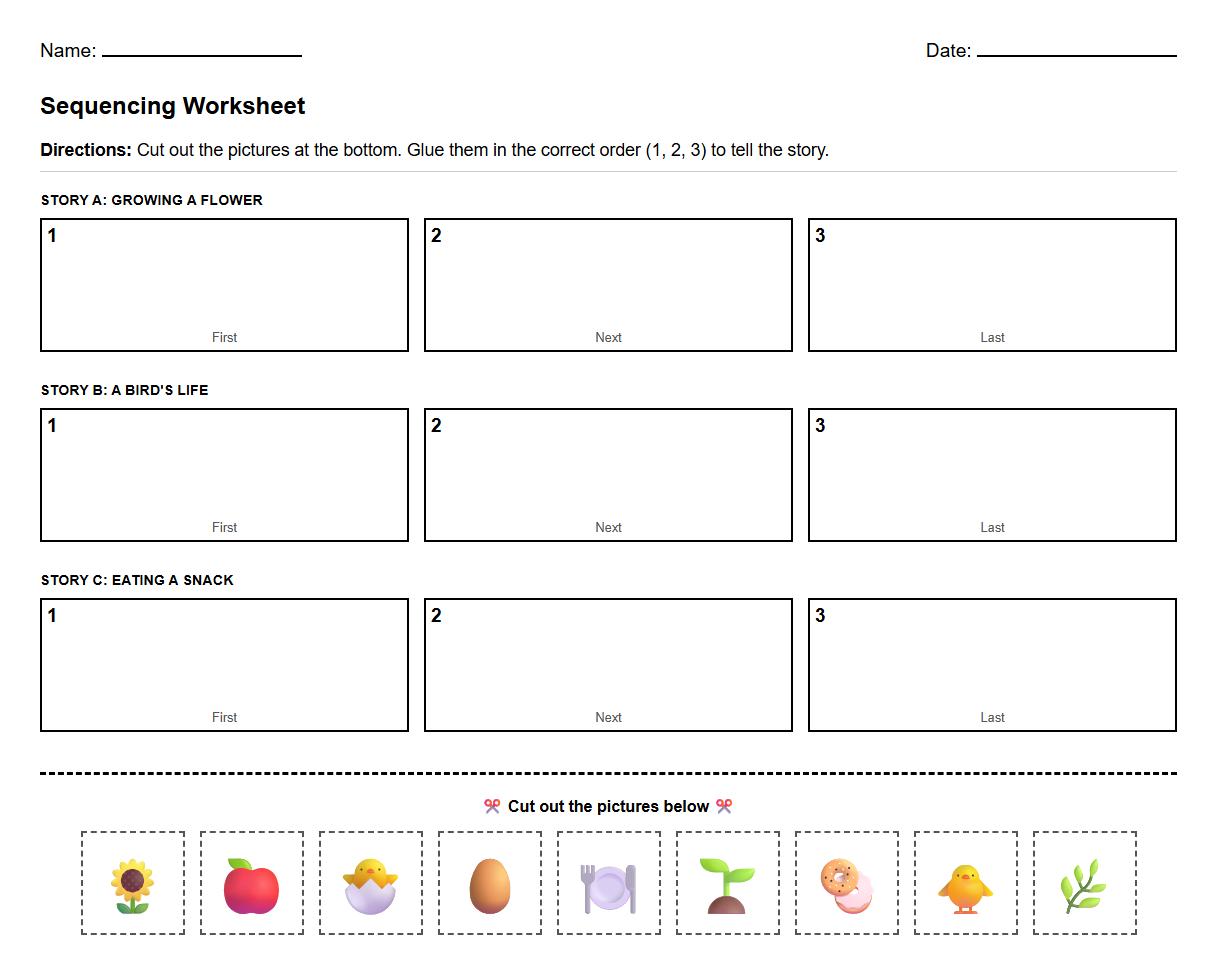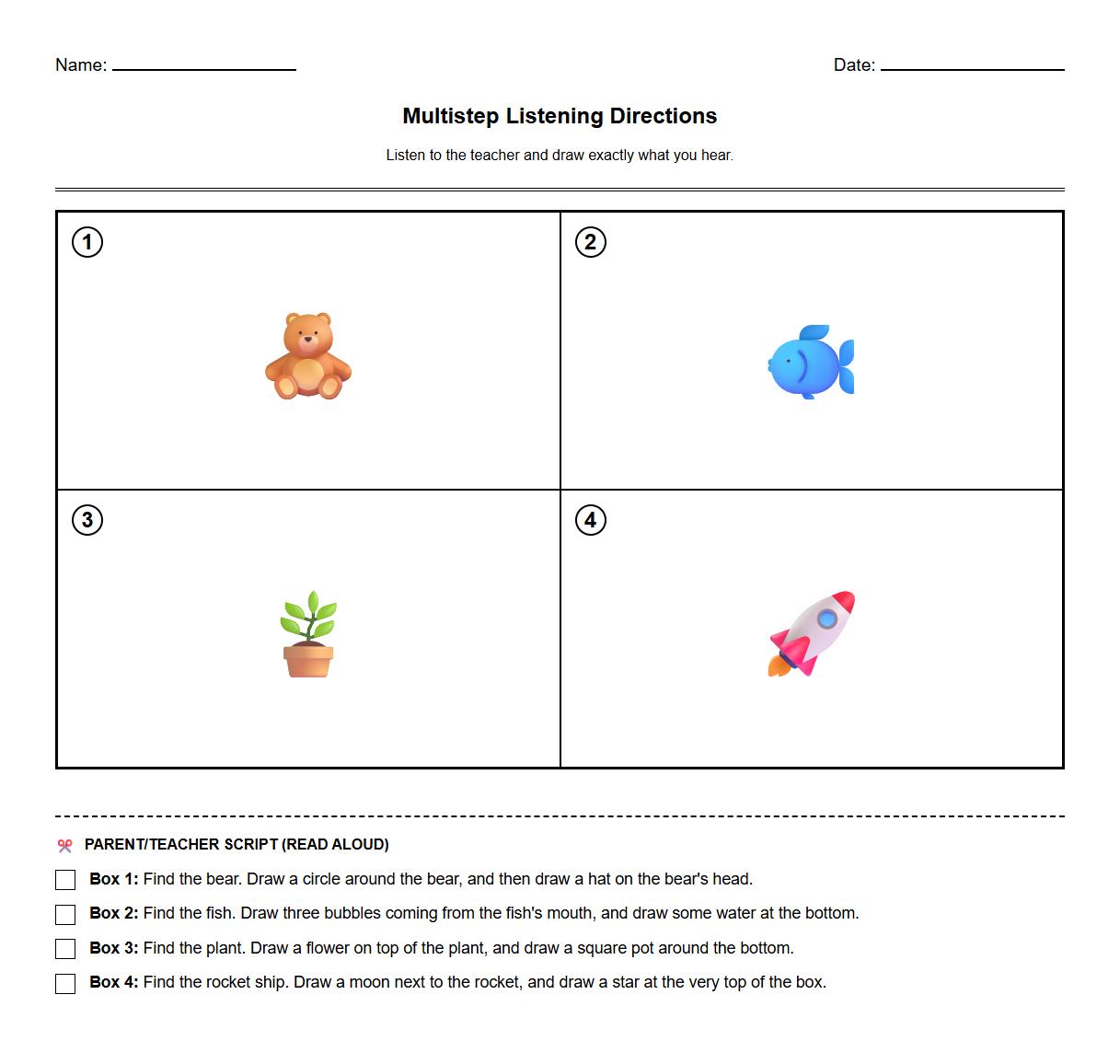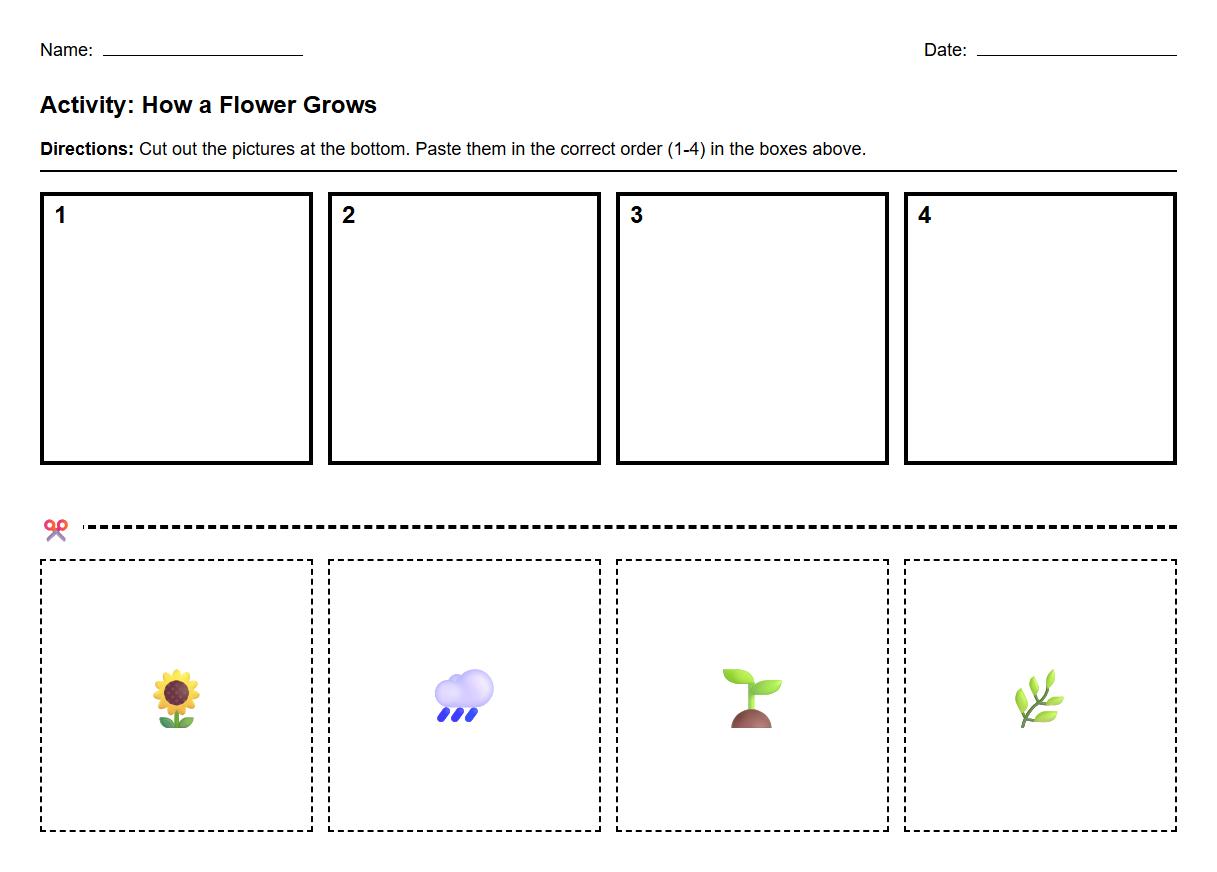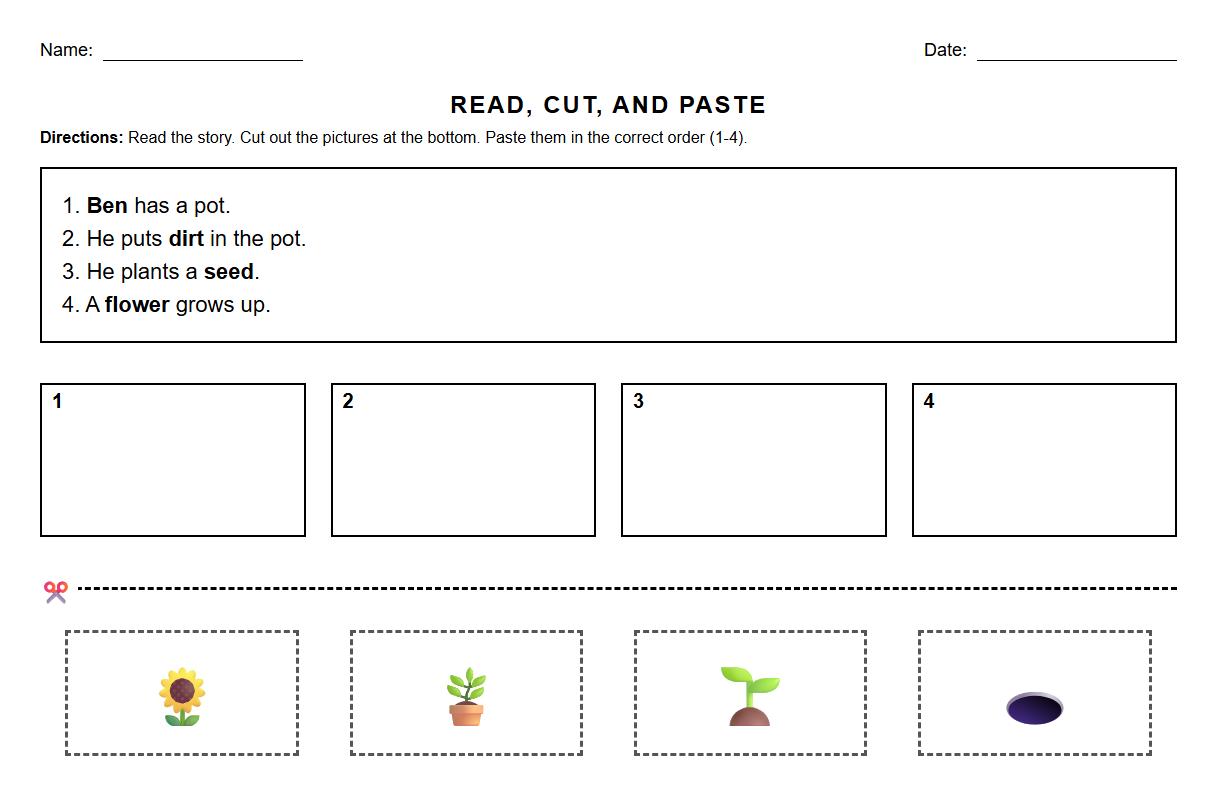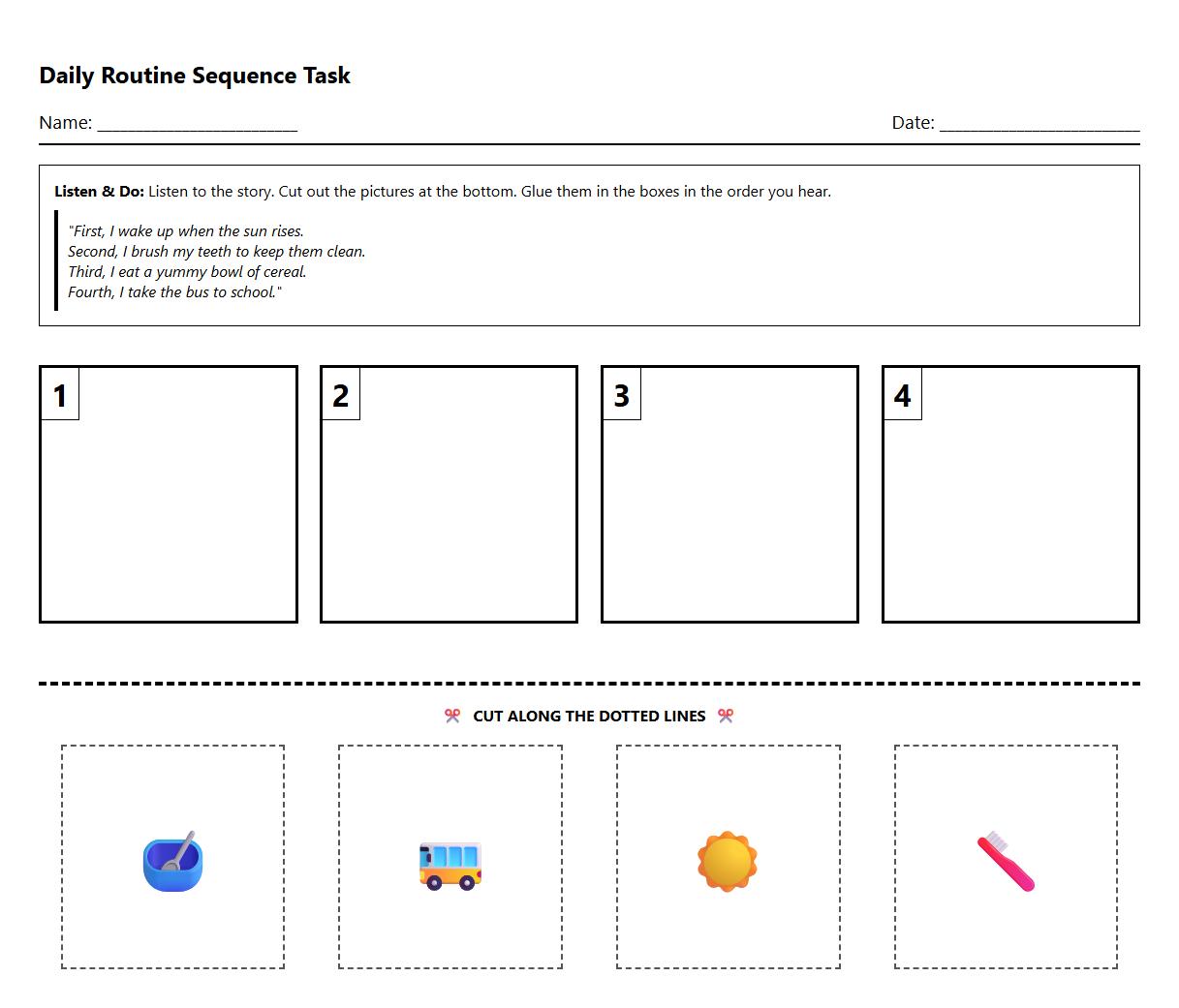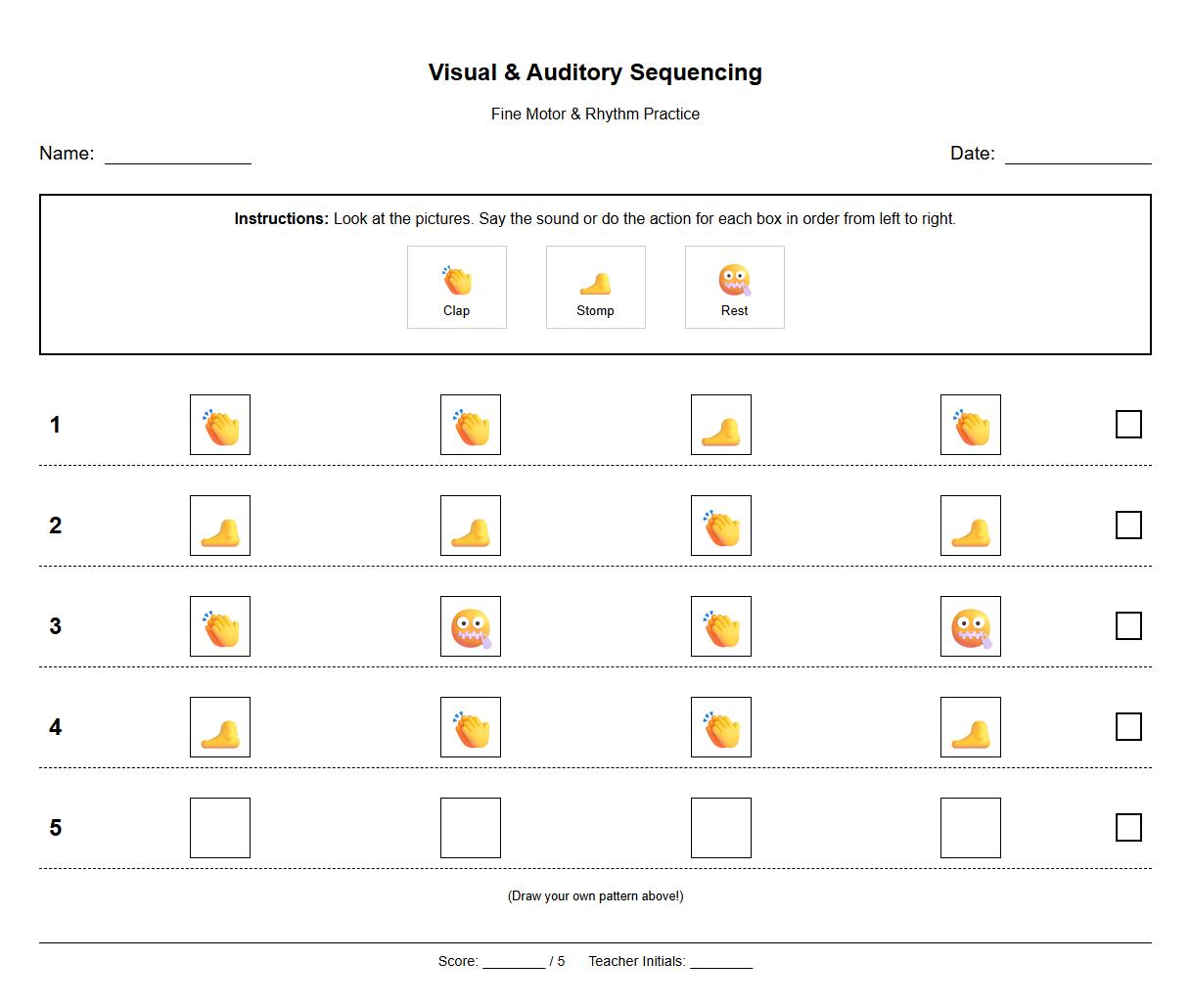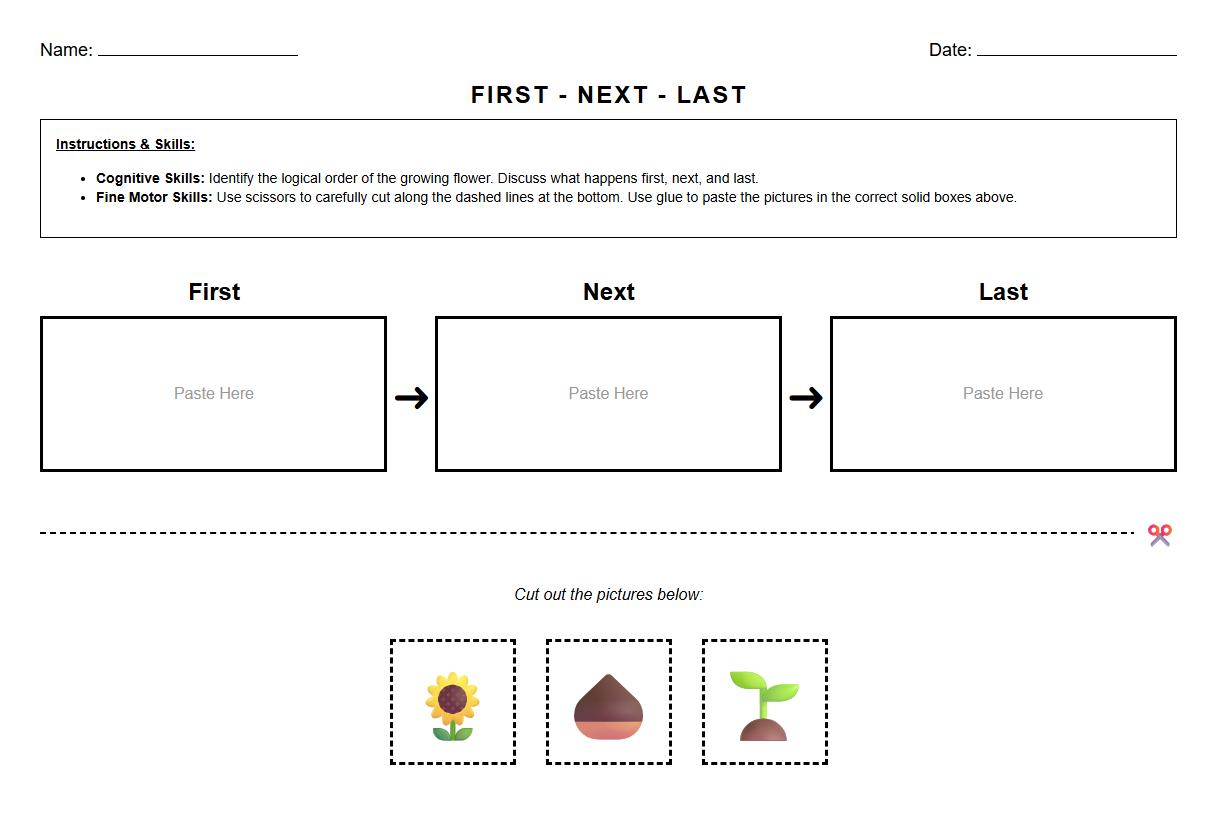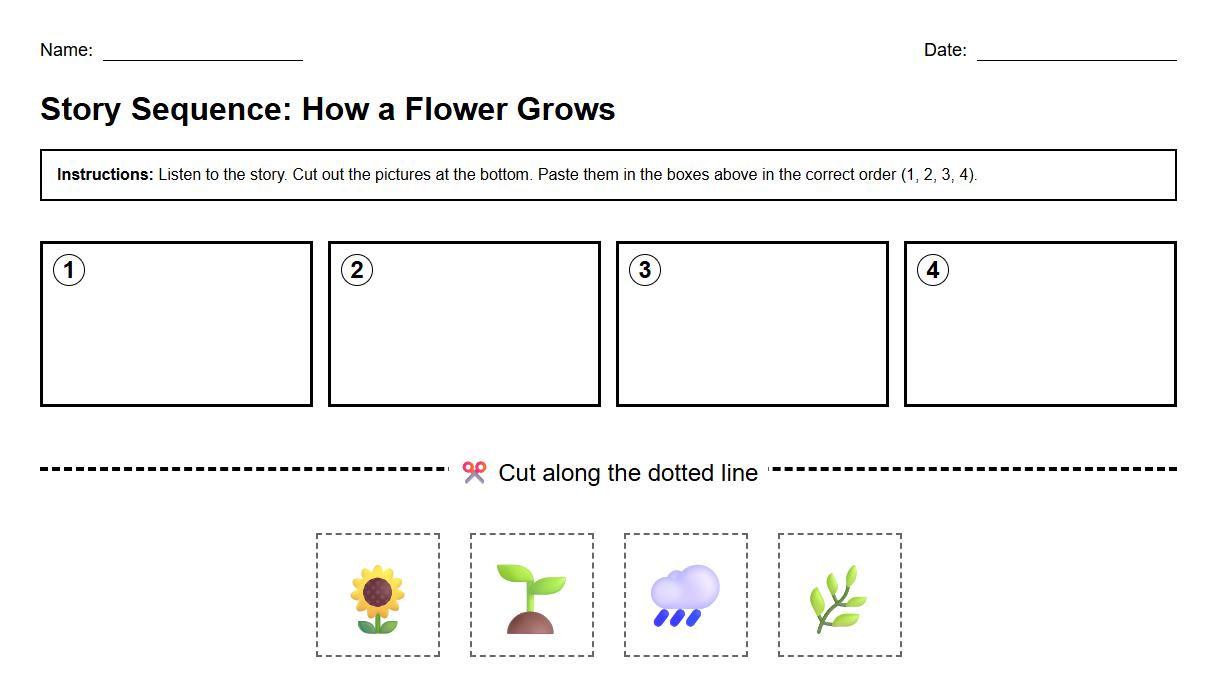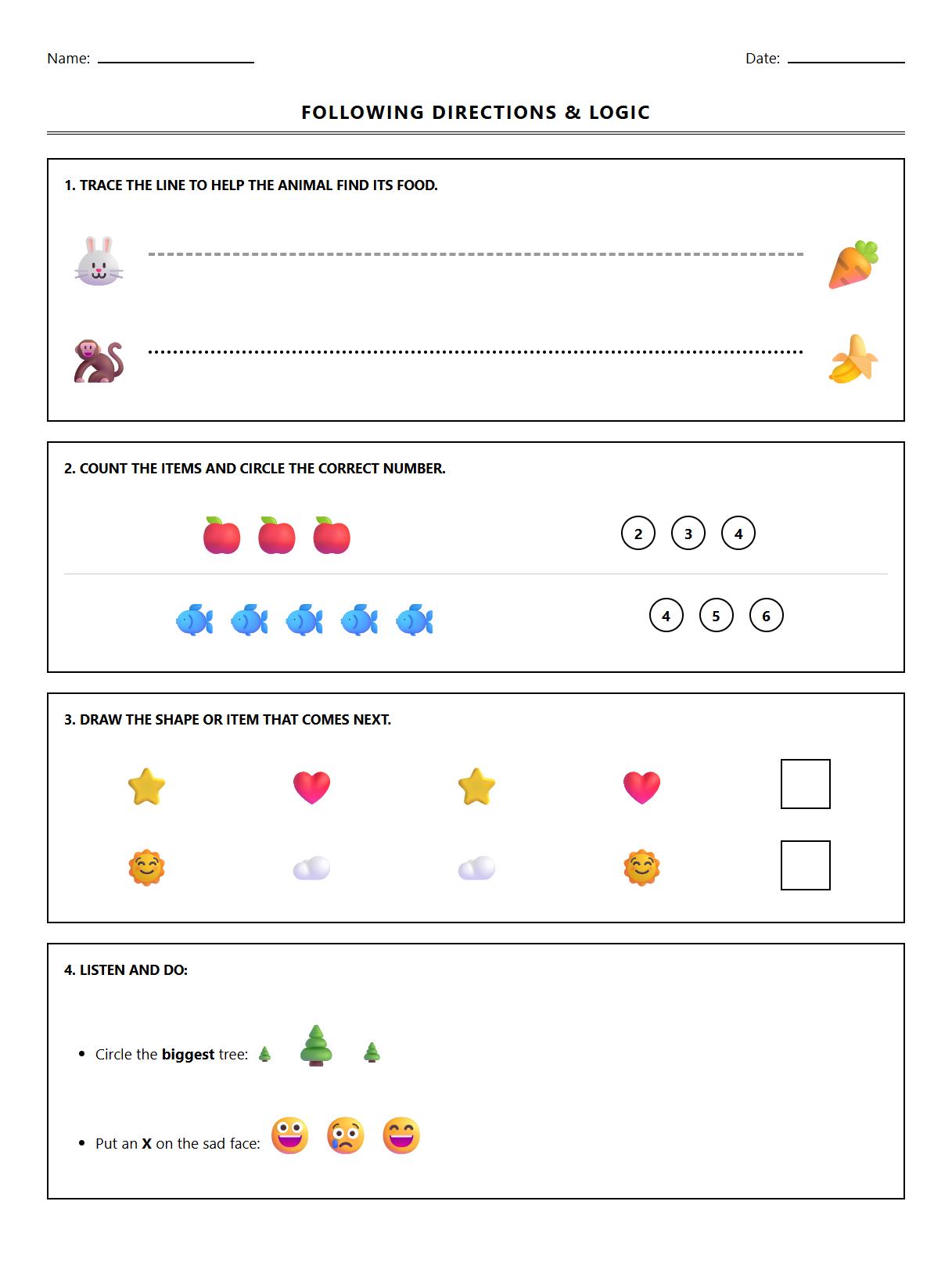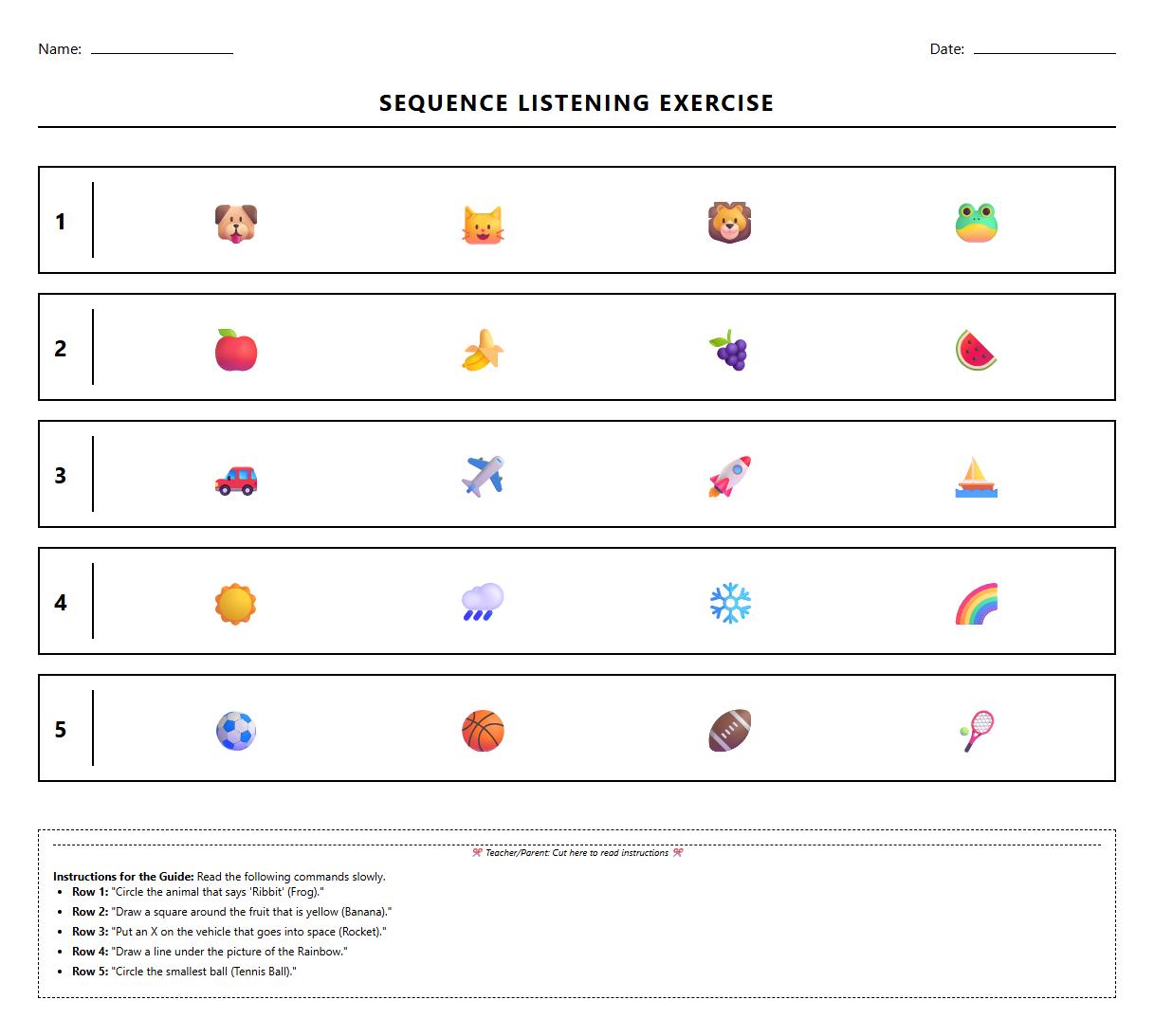
Kindergarten students enhance their auditory processing and comprehension skills through the Listening and Following Directions Sequencing Worksheet. This activity encourages children to listen carefully, understand the order of steps, and sequence actions correctly. Explore our collection of worksheets designed to boost your child's listening and sequencing abilities.
What Should You Do First When You Hear the Teacher's Instructions?
The first step is to stop what you are doing and listen carefully. Paying full attention helps you understand what to do next. Avoid talking or playing so you can hear every word. This shows respect and readiness to follow instructions.
Can You Put the Steps in the Correct Order?
It is important to follow the step-by-step process as the teacher explains. Arranging the actions in the right order helps you complete your task correctly. Talk through each step with a friend or adult. This practice improves memory and understanding.
Which Action Comes After You Listen Quietly?
After listening quietly, the next action is to ask questions if something is unclear. Clarifying instructions ensures you know exactly what to do. If everything is clear, you can start preparing your materials. This smooth transition helps keep the classroom calm and organized.
What Do You Do Before You Start Your Worksheet?
Before beginning your worksheet, make sure you have all the necessary supplies like pencils, erasers, and crayons. Review the instructions once more to be certain. Sitting properly and focusing shows you are ready. This preparation leads to successful completion.
How Do You Show That You Are Paying Attention to the Directions?
You show you are paying attention by looking at the teacher and not interrupting. Nod your head or give quiet signals to show understanding. Keeping your body still helps you stay focused. These actions tell the teacher you are ready to learn.
Which Picture Shows the First Step?
The picture that shows the first step usually depicts children listening or looking at the teacher. This image reminds students to be attentive before acting. Identifying the first step is crucial for understanding the sequence. Visual aids support better learning.
What Is the Last Thing You Do After Finishing Your Work?
After finishing, the last step is to check your work carefully for mistakes. Then, raise your hand or quietly tell the teacher you are done. Cleaning up your workspace shows responsibility. This final action completes the learning cycle.
How Many Steps Did the Teacher Ask You to Follow?
The teacher may ask you to follow a specific number of steps to complete the activity successfully. Counting and remembering these steps keeps you on track. Knowing the exact number helps you avoid missing any part. Always listen carefully to understand the full process.
What Do You Do If You Are Not Sure About the Directions?
If you are unsure, the best thing to do is ask the teacher or a trusted adult for help. Clarifying questions prevent mistakes and confusion. It shows you are responsible and eager to learn. Never be afraid to ask when in doubt.
Can You Tell a Friend the Steps in Order?
Explaining the steps in order to a friend helps reinforce your understanding. Use your own words and gestures to make it clear. This practice builds confidence and communication skills. Teaching others is a powerful way to learn.


Kindergarten Phonics Worksheet for Following Simple Instructions