Kindergarten Phonics Worksheet for Following Simple Instructions

📅 May 7, 2025 👤 Nylen Smith

Kindergarten phonics worksheets for following simple instructions enhance early reading skills by combining letter recognition with task completion. These activities improve listening abilities and reinforce phonetic awareness through engaging, step-by-step exercises. Explore the available worksheets to support your child's phonics and comprehension development.

Kindergarten Phonics Worksheet for Following Simple Instructions with Vowel Sounds
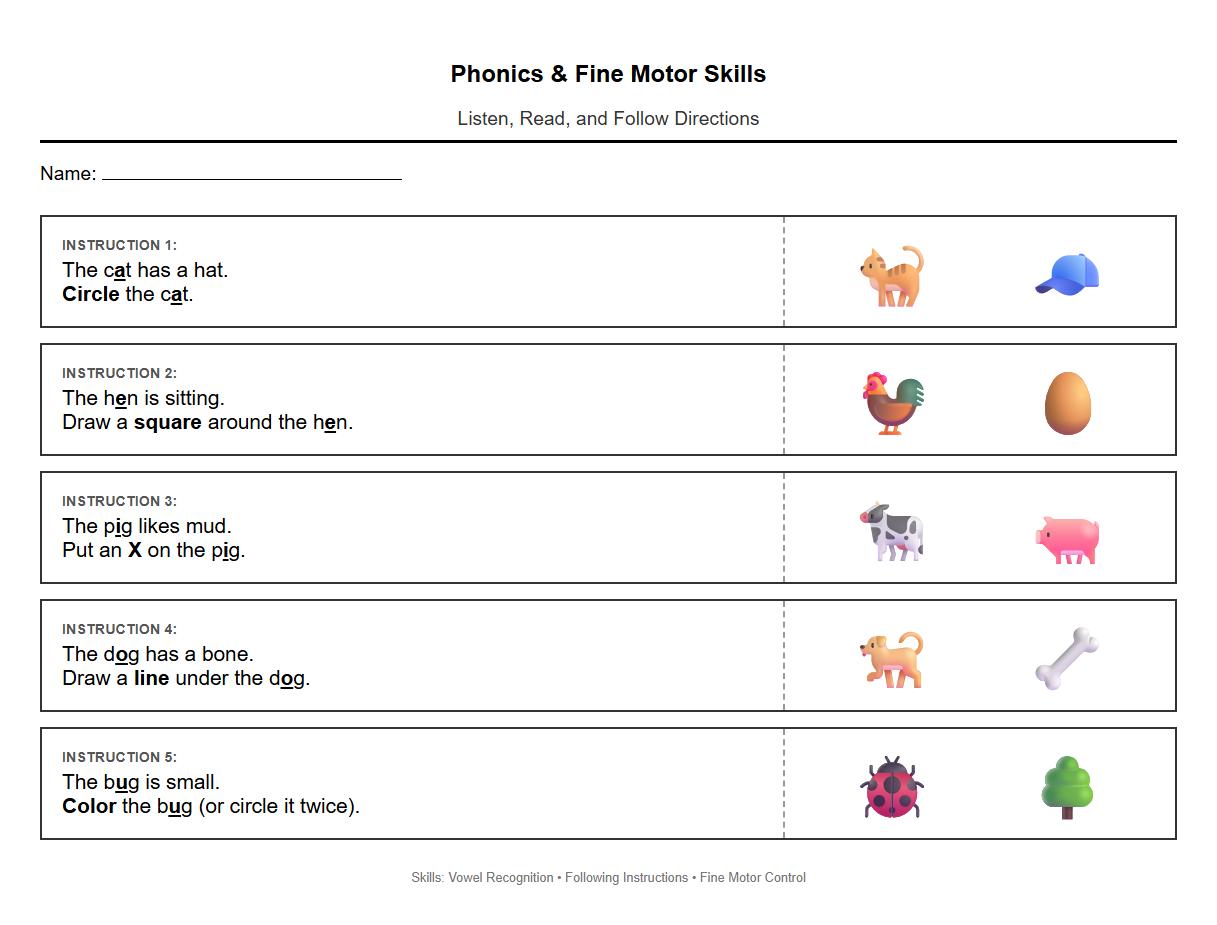
Kindergarten Phonics Worksheet for Following Simple Instructions with Vowel Sounds

Download PDF     Pin it

Consonant Blends Phonics Worksheet for Following Directions
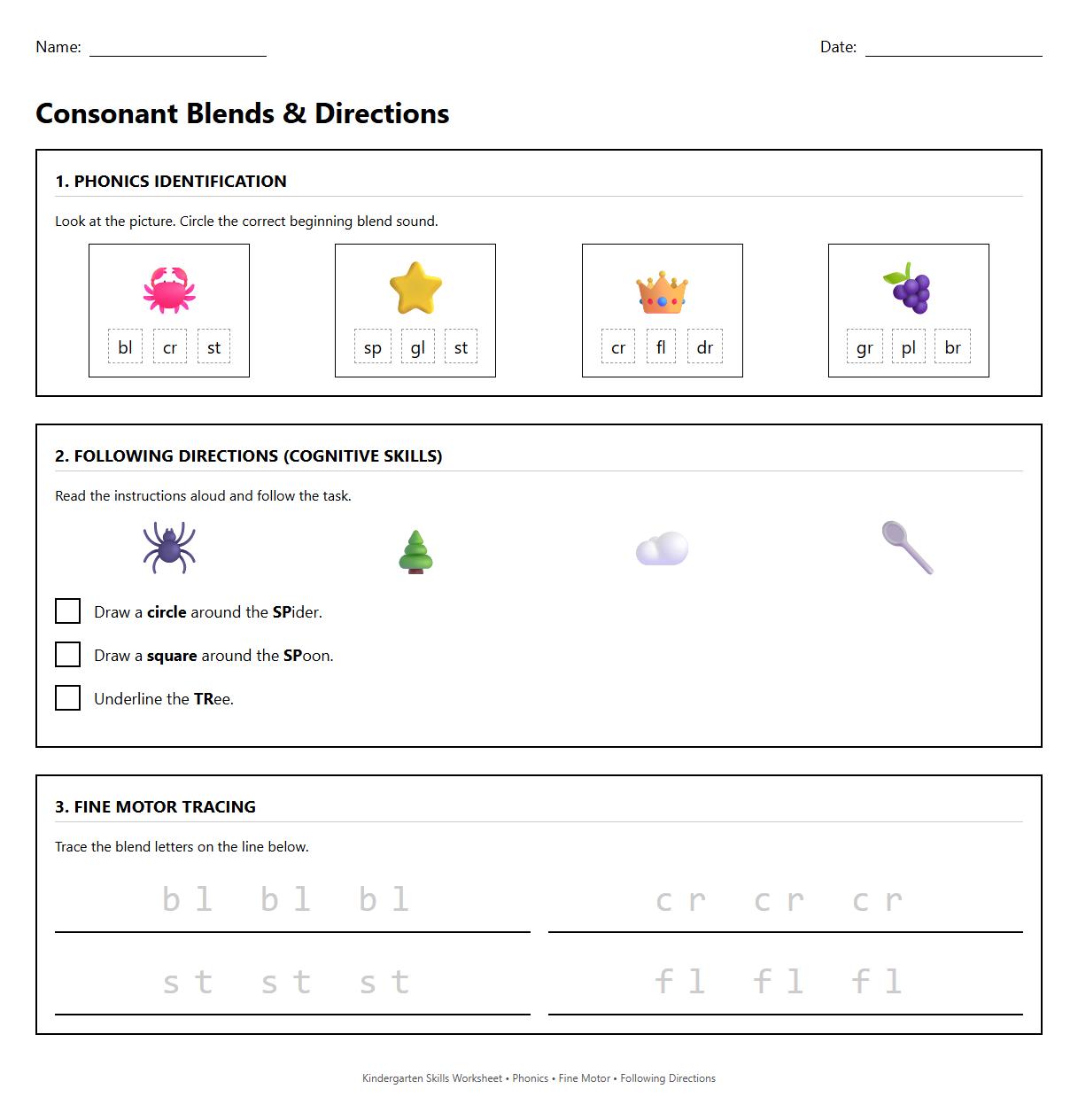
Consonant Blends Phonics Worksheet for Following Directions

Download PDF     Pin it

CVC Words Phonics Worksheet for Following Step by Step Instructions
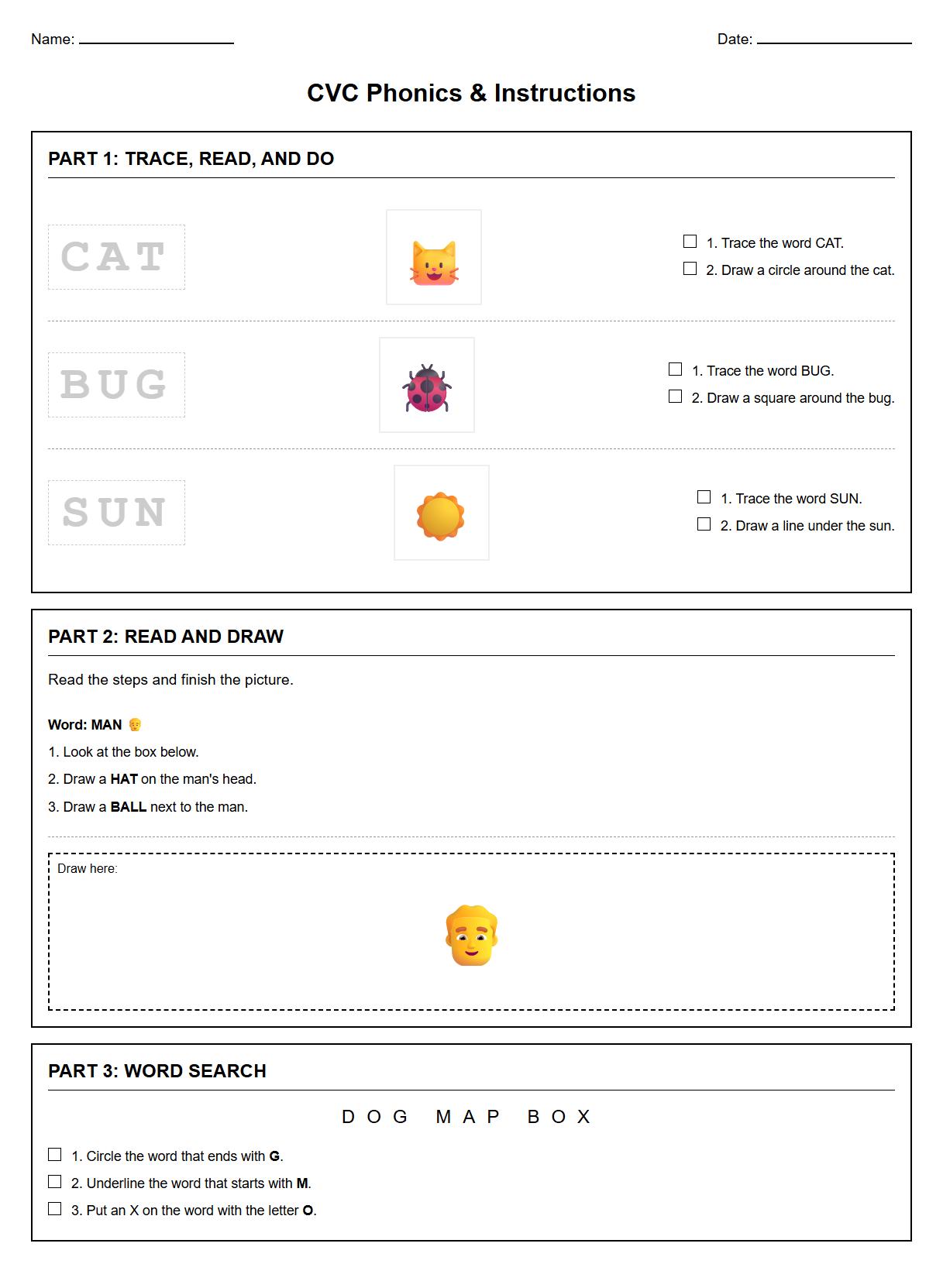
CVC Words Phonics Worksheet for Following Step by Step Instructions

Download PDF     Pin it

Kindergarten Phonics Worksheet for Following Instructions on Rhyming Words
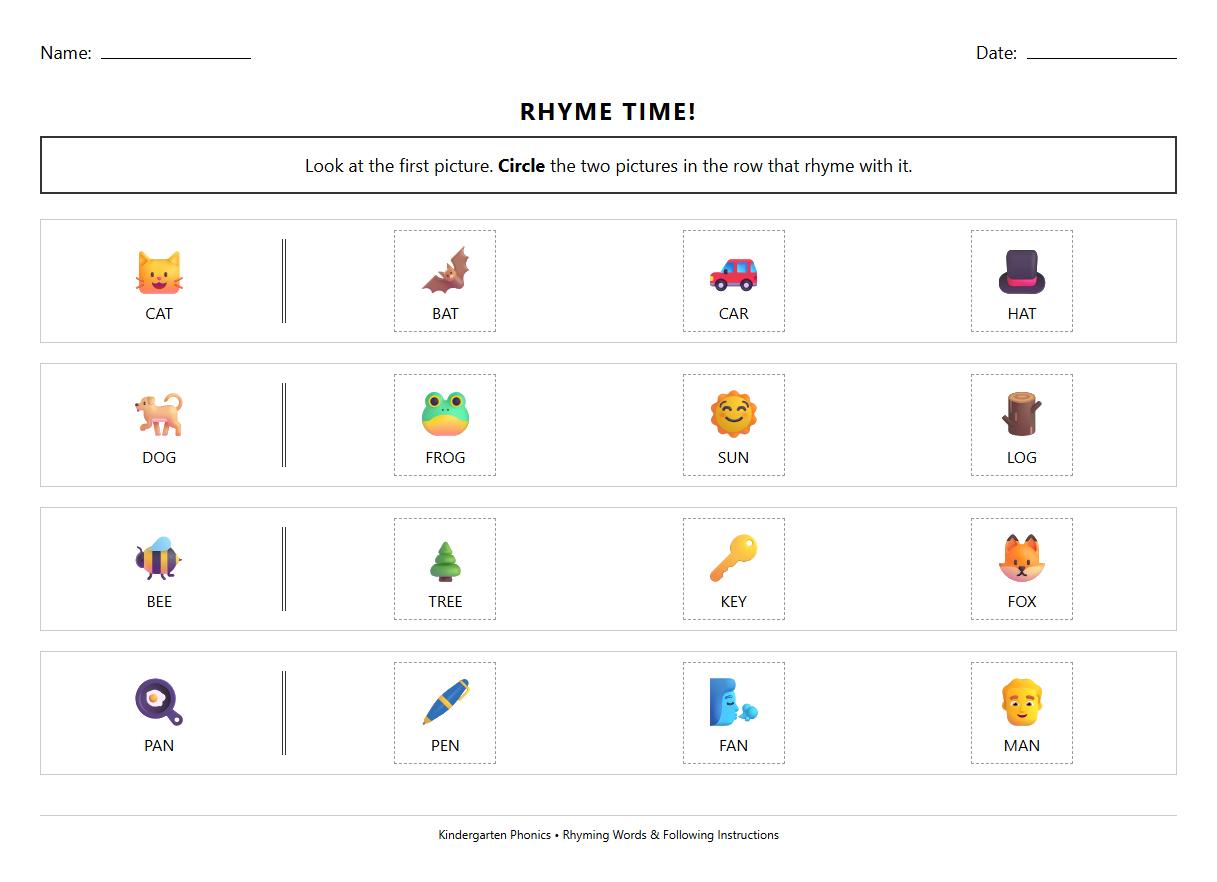
Kindergarten Phonics Worksheet for Following Instructions on Rhyming Words

Download PDF     Pin it

Phonics Worksheet for Identifying Beginning Sounds with Simple Instructions
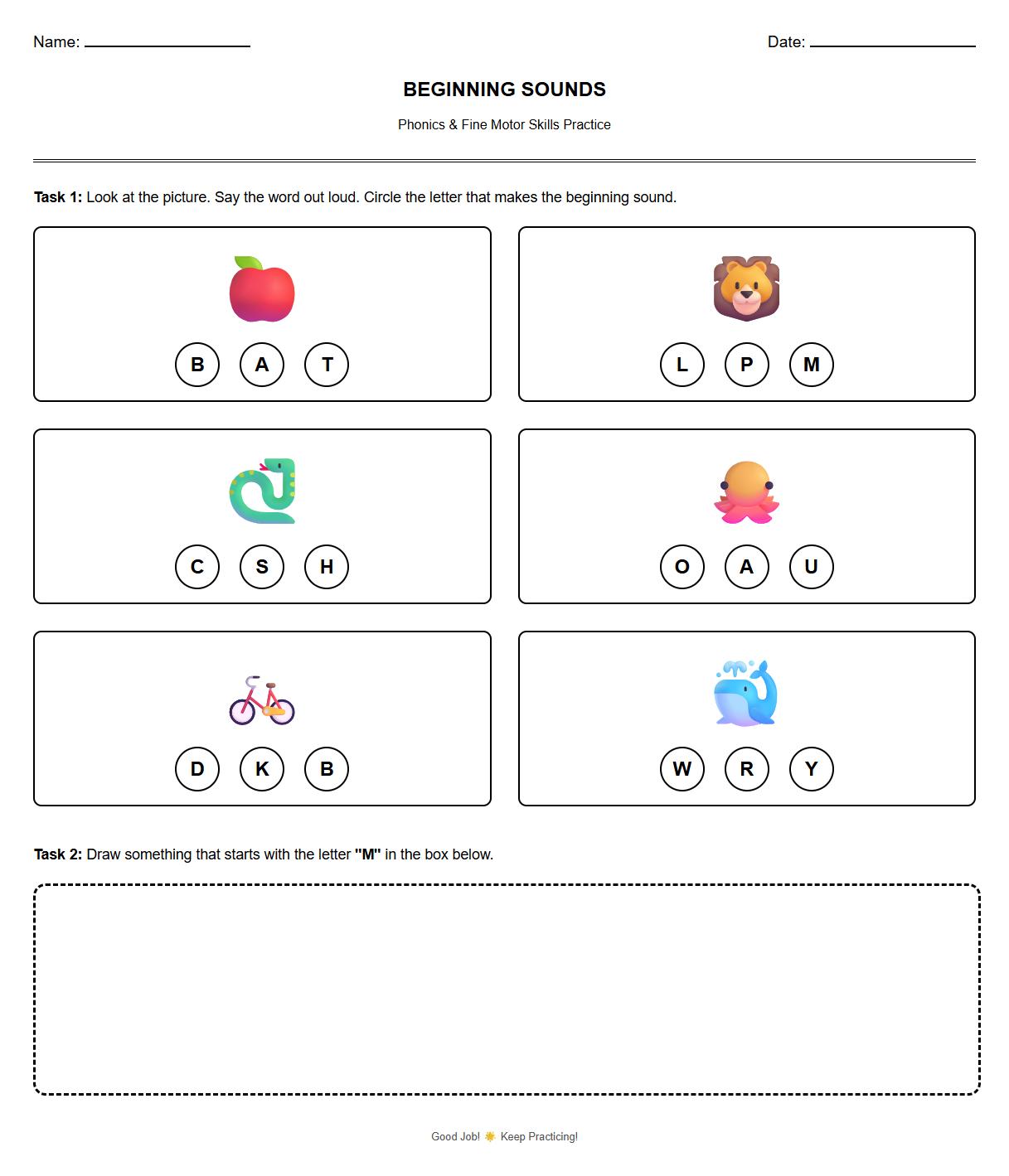
Phonics Worksheet for Identifying Beginning Sounds with Simple Instructions

Download PDF     Pin it

Phonics Worksheet for Sorting Letter Sounds by Following Instructions
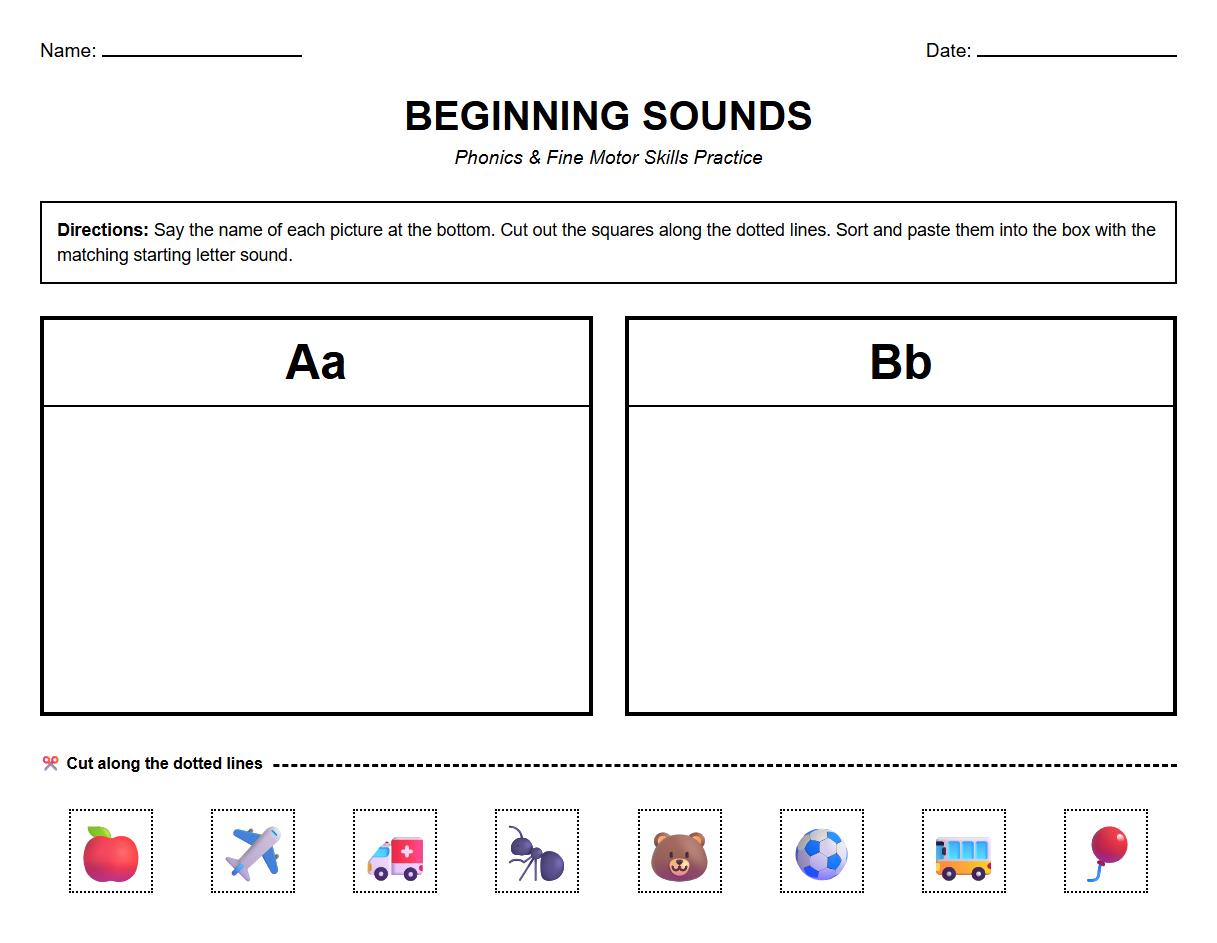
Phonics Worksheet for Sorting Letter Sounds by Following Instructions

Download PDF     Pin it

Digraphs Phonics Worksheet with Sequential Instructions
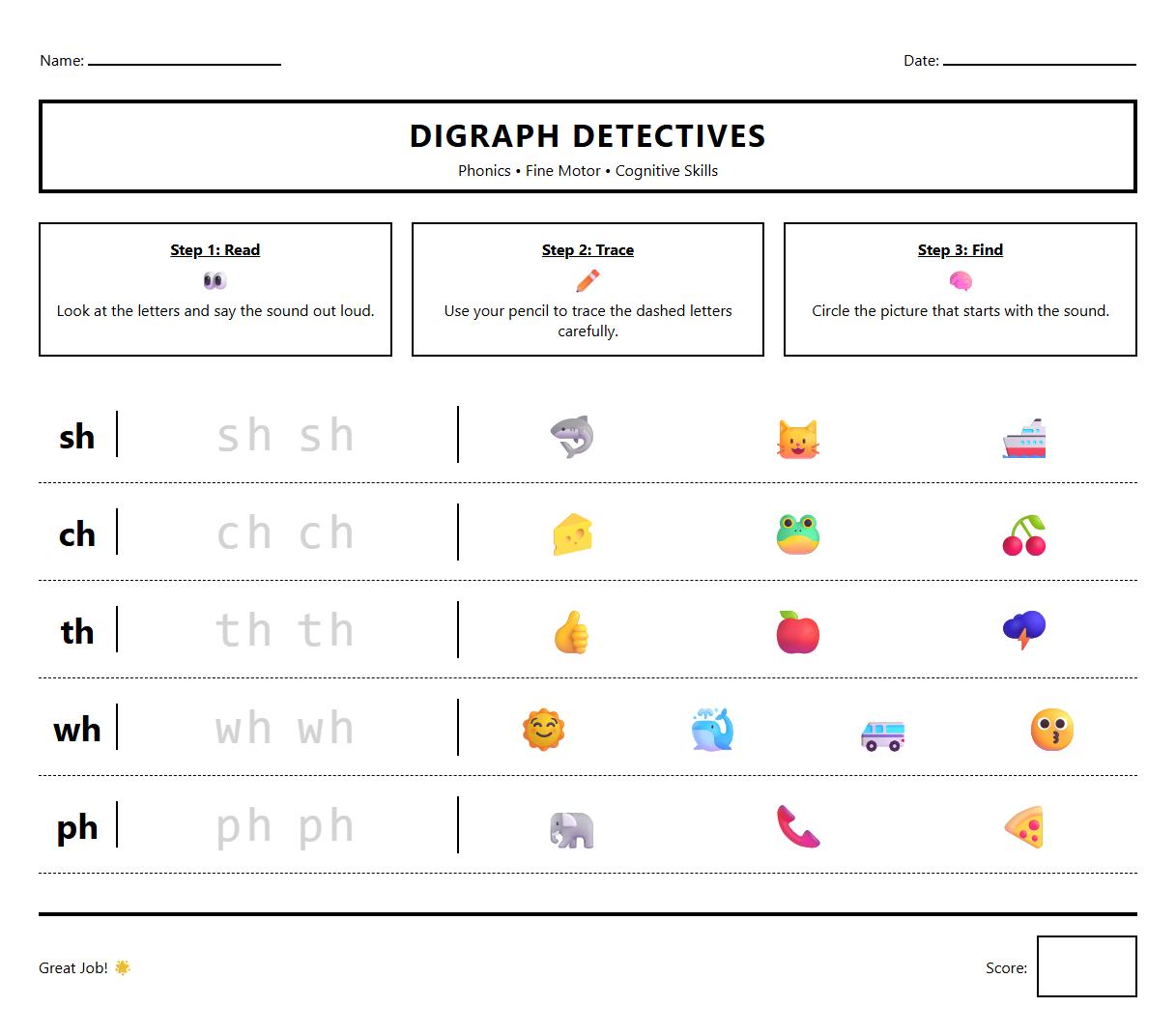
Digraphs Phonics Worksheet with Sequential Instructions

Download PDF     Pin it

Phonics Worksheet for Matching Pictures and Words by Following Instructions
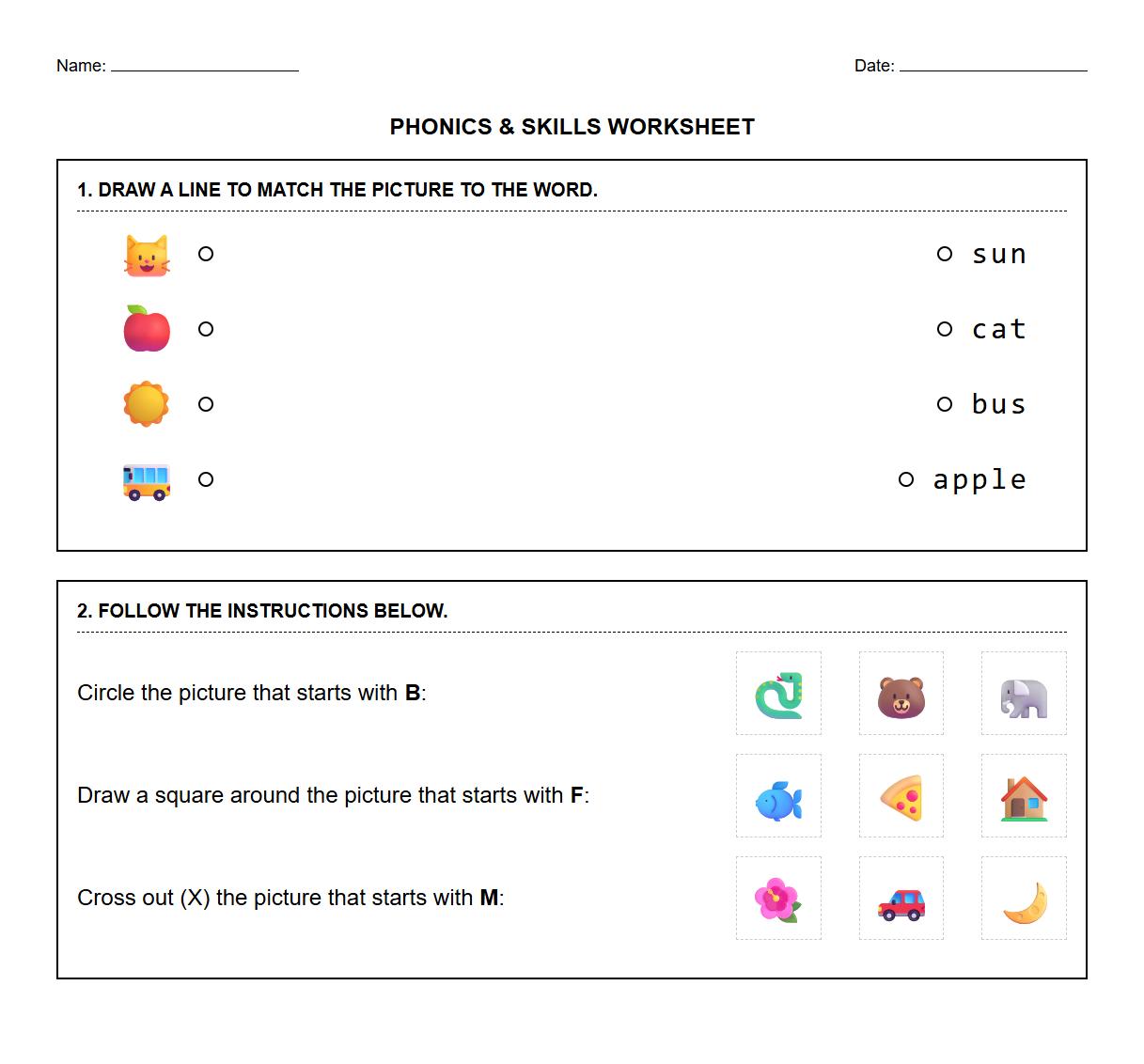
Phonics Worksheet for Matching Pictures and Words by Following Instructions

Download PDF     Pin it

Phonics Worksheet for Tracing Letters with Verbal Instructions
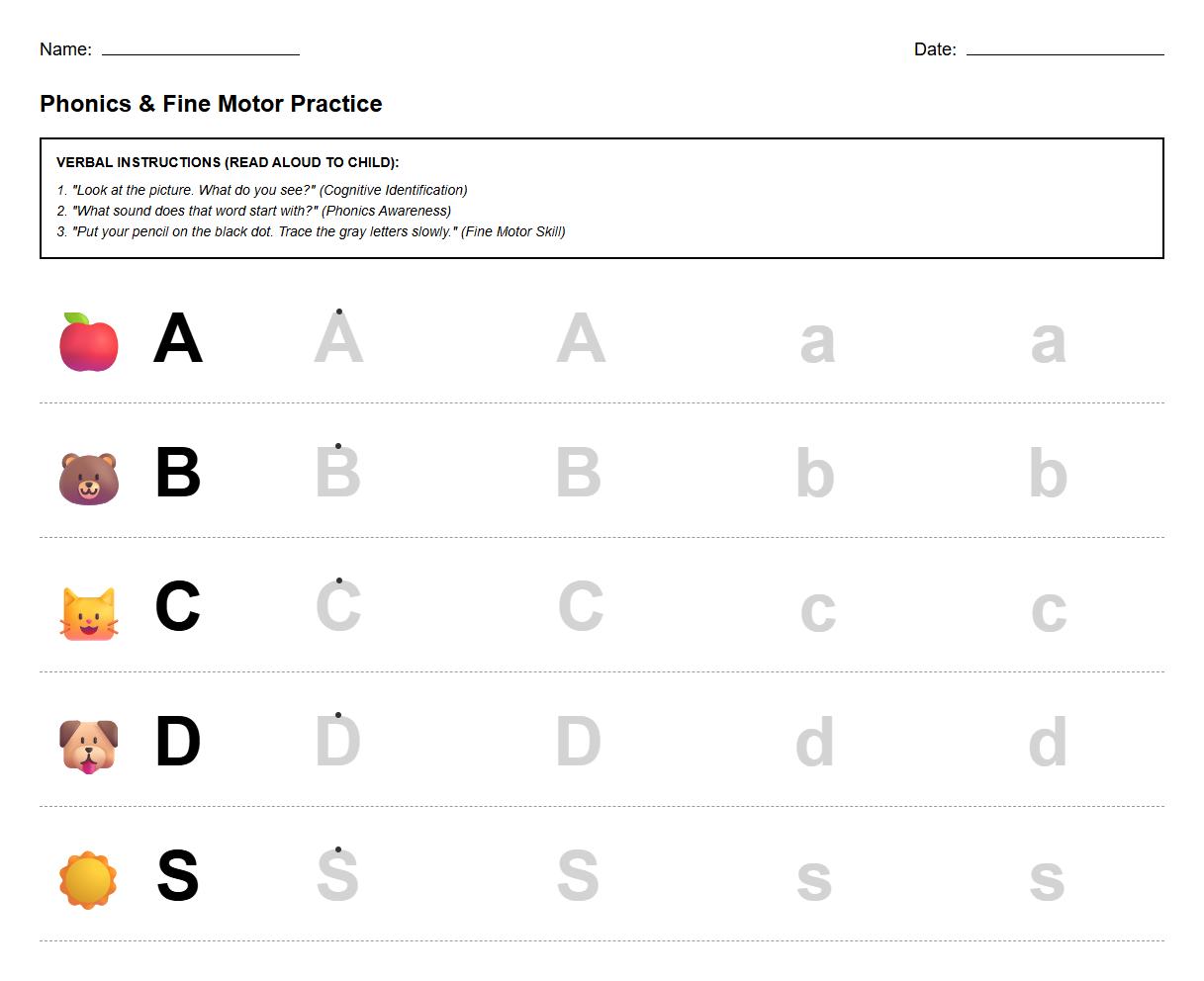
Phonics Worksheet for Tracing Letters with Verbal Instructions

Download PDF     Pin it

Phonics Worksheet for Segmenting and Blending Sounds with Instructional Prompts
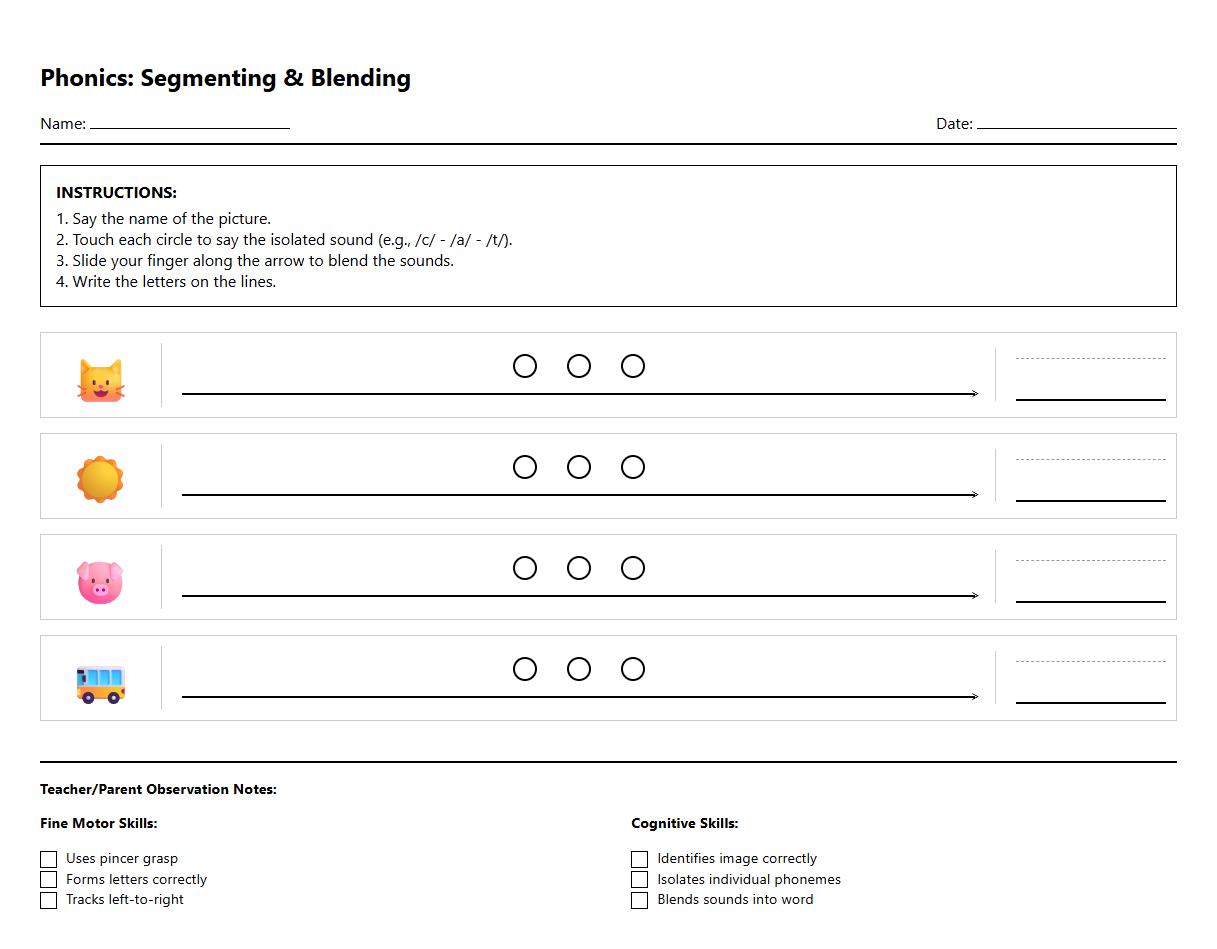
Phonics Worksheet for Segmenting and Blending Sounds with Instructional Prompts

Download PDF     Pin it

Identify Beginning Sounds

Ask children, "Which letter sound do you hear at the beginning of the word cat?" This activity helps young learners connect letters to their initial sounds, building their phonemic awareness. Encourage them to say the word slowly to isolate the starting sound. Reinforce learning by repeating similar examples.

Circle Pictures Starting with S

Present a worksheet with different pictures and instruct children to circle the ones that start with the letter S. This visual activity supports letter recognition and auditory discrimination skills. Use familiar images such as snake, sun, and sock to keep them engaged. Praise their effort to boost confidence.

Match Letters with Words

Have learners draw a line to match the letter M with a word that begins with M, such as "map" or "moon." This exercise reinforces letter-sound correspondence and vocabulary development. Encourage children to say the words aloud as they match. It also enhances their fine motor skills through drawing lines.

Color Boxes Ending with N

Ask children to color the box containing pictures that end with the sound N. This task sharpens their ability to identify ending sounds in words, a key pre-reading skill. Use simple words like "fan," "pan," or "ten." Coloring adds a fun, interactive element to learning.

Identify the "buh" Sound

Guide children to point to the letter that makes the "buh" sound, which is the letter B. This focused sound-letter relationship practice improves decoding skills essential for reading. Repeat this with other letters to build a strong phonetic foundation. Use clear pronunciation to aid understanding.

Rhyming Words Practice

Provide a list of words and ask, "Which word rhymes with bat: cat, dog, or pen?" Rhyming tasks help children develop phonological awareness by recognizing similar ending sounds. Encourage them to listen carefully and say the words out loud. This skill supports later spelling and reading fluency.

Trace Letters in the Alphabet

Encourage children to trace the letter that comes after H in the alphabet, which is I. Tracing improves letter formation and fine motor coordination. Use dotted or dashed lines to guide their hand movements. Repetition fosters memory retention of alphabet order.

Listen and Clap for Sound F

Ask children to listen and clap when they hear the sound F at the start of a word. This kinesthetic activity enhances auditory discrimination and keeps young learners actively engaged. Use words like "fish" or "fan" during the exercise. Clapping makes learning dynamic and fun.

Identify Middle Sound Letters

Help children choose the correct letter for the sound in the middle of the word sun, which is U. This task develops understanding of vowel sounds within words, crucial for reading development. Provide multiple-choice letters for easier decision-making. Say the word slowly to isolate the middle sound.

Find and Circle Words Starting with T

Have children find and circle all the words that start with the letter T on their worksheet. This reinforces initial letter recognition and encourages visual scanning skills. Use engaging words like "tree," "top," or "tiger." Celebrate their success to motivate further learning.


More in Fine Motor and Cognitive Skills Category


About the author. Nylen Smith is a dedicated educator and cofounder of KWorksheet.com, a popular platform specializing in high-quality kindergarten worksheets and printable activities.

Disclaimer. The information provided in this document is for general informational purposes and/or document sample only and is not guaranteed to be factually right or complete. Please report to us via contact-us page if you find and error in this page, thanks.

Comments

No comment yet