Visual Discrimination Mazes for Early Literacy Practice

📅 Jun 16, 2025 👤 Nylen Smith

Visual Discrimination Mazes enhance early literacy skills by helping children differentiate between shapes, letters, and patterns critical for reading development. These mazes promote attention to detail and reinforce letter recognition through engaging, hands-on activities. Explore our collection of Visual Discrimination Maze worksheets designed to boost early literacy practice.

Alphabet Visual Discrimination Maze Worksheet
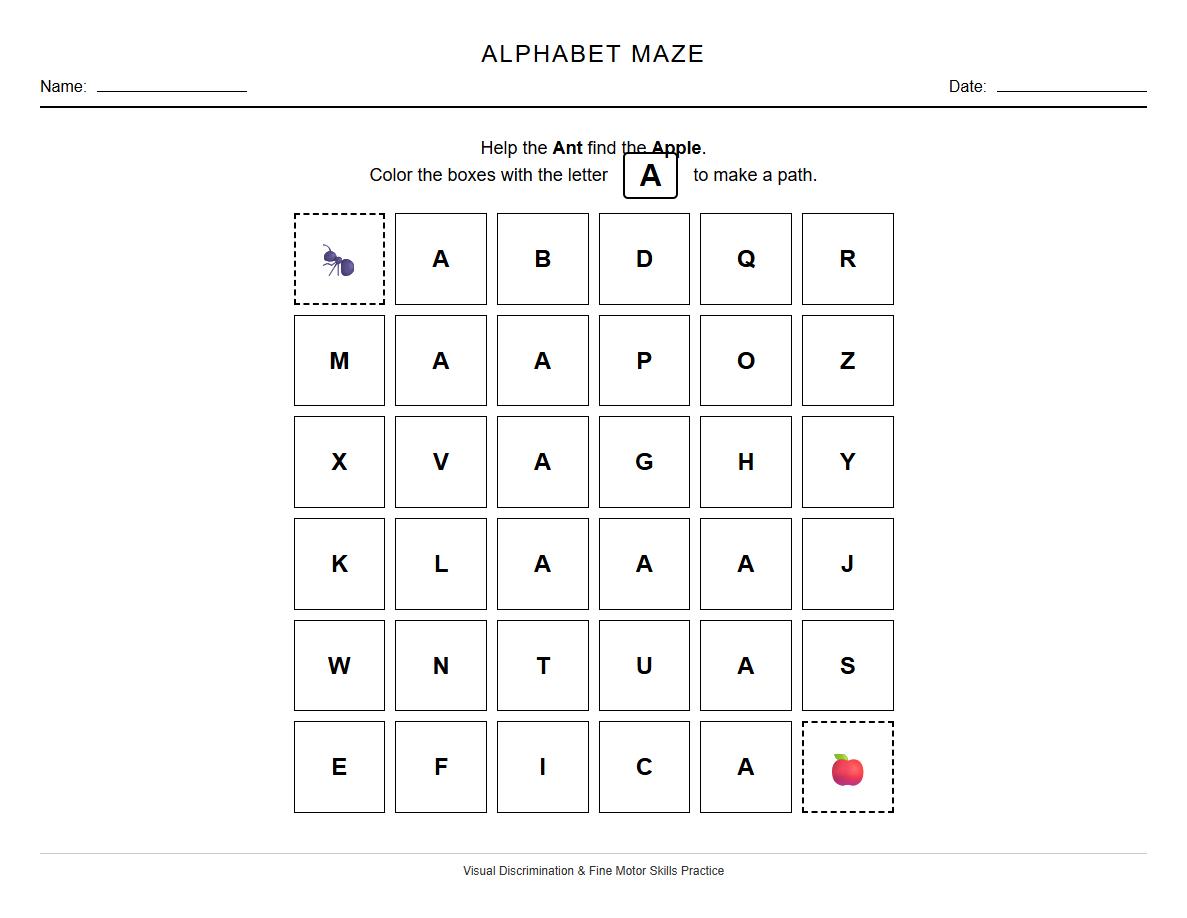
Alphabet Visual Discrimination Maze Worksheet

Download PDF     Pin it

Uppercase Lowercase Letter Mazes for Phonics Recognition
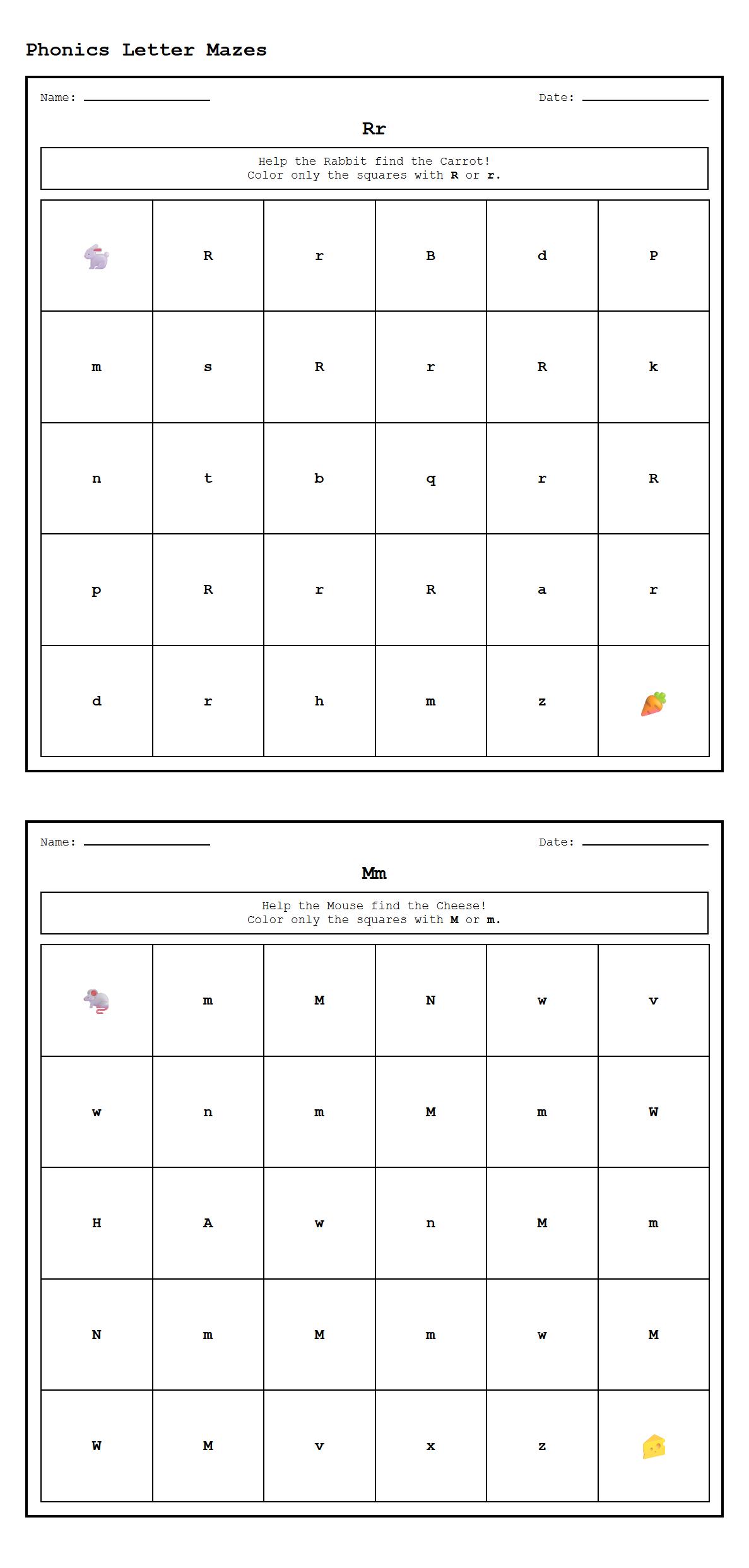
Uppercase Lowercase Letter Mazes for Phonics Recognition

Download PDF     Pin it

Beginning Sounds Visual Identification Mazes
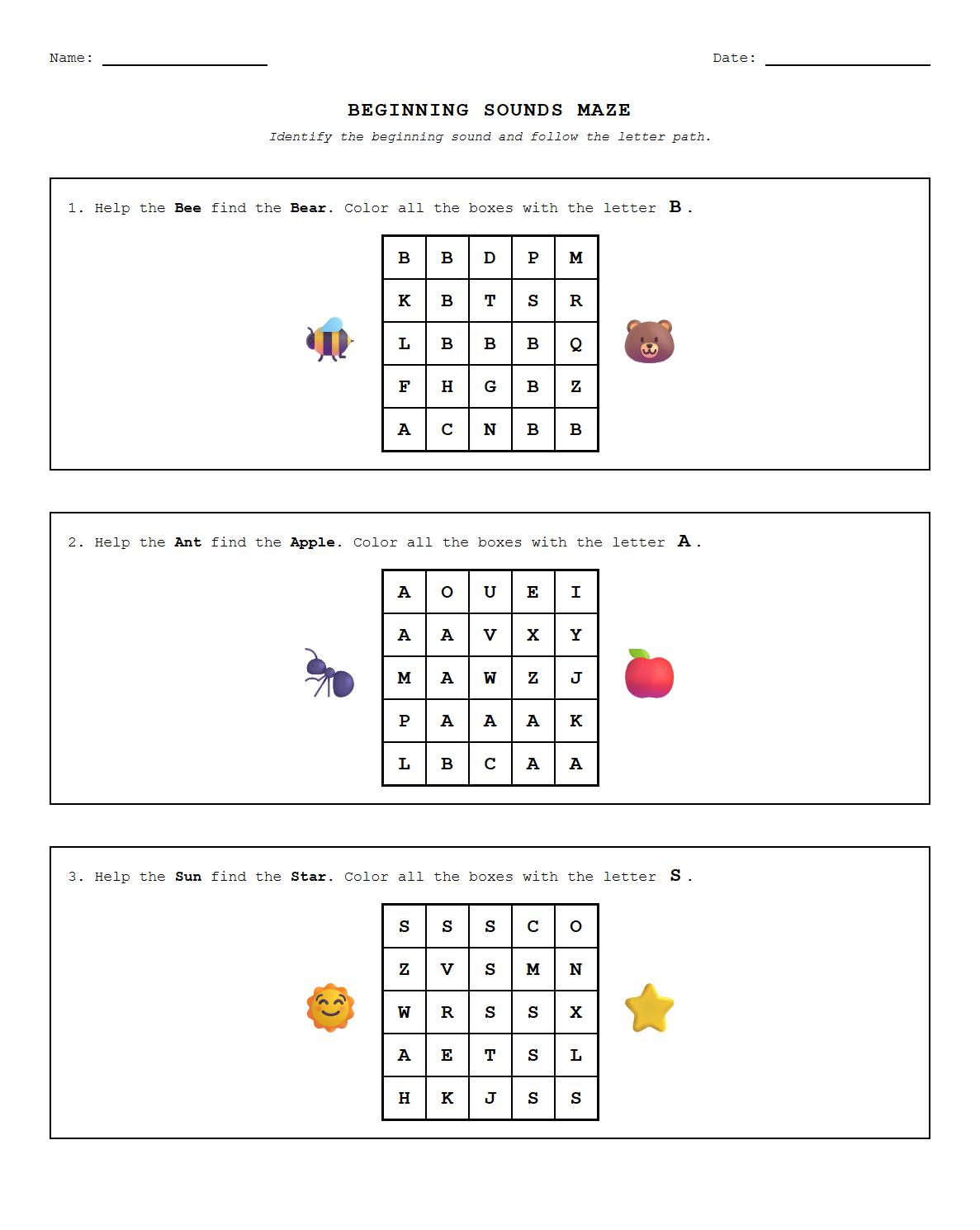
Beginning Sounds Visual Identification Mazes

Download PDF     Pin it

CVC Word Pattern Maze Worksheets for Early Reading
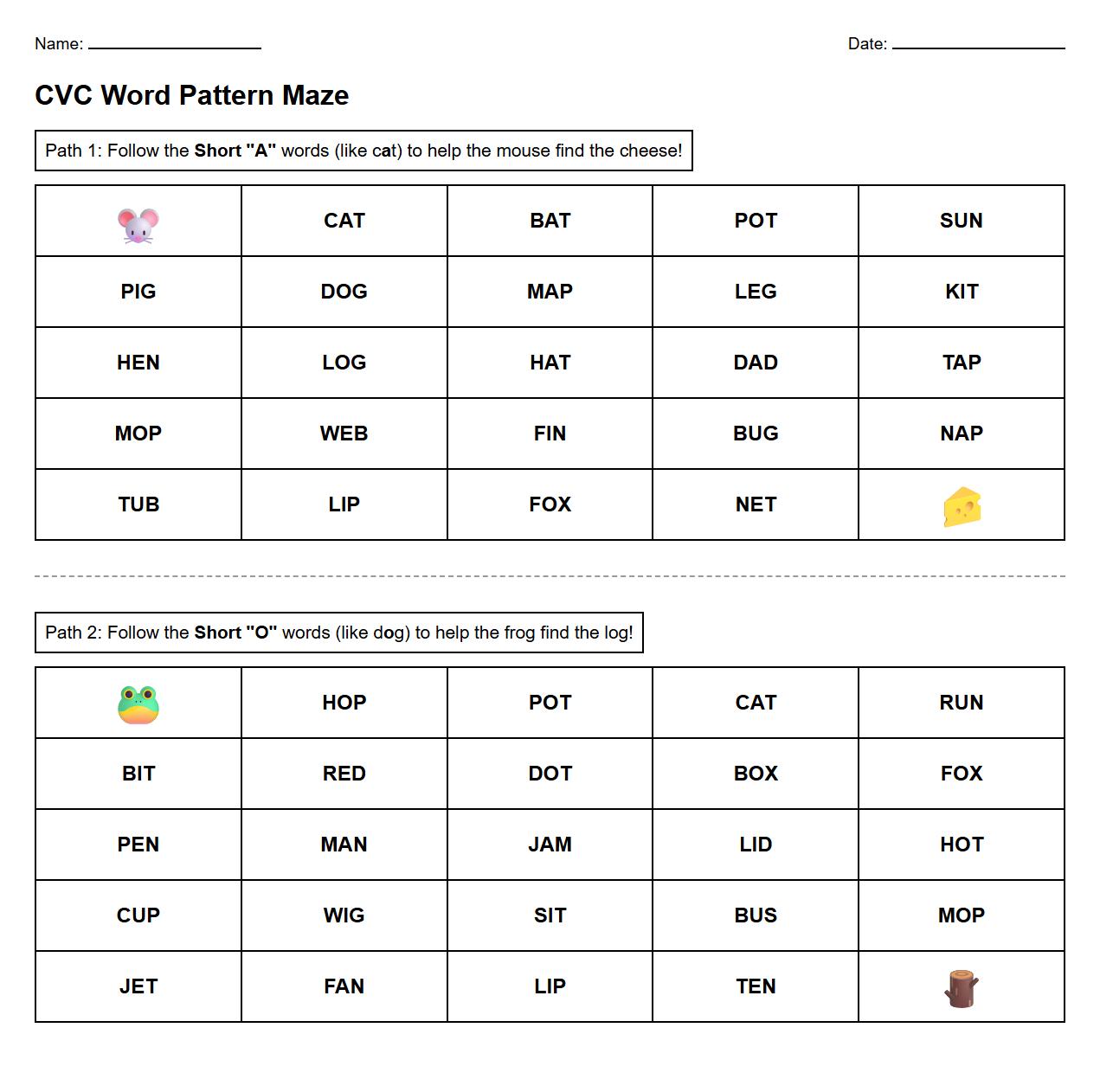
CVC Word Pattern Maze Worksheets for Early Reading

Download PDF     Pin it

Letter Shape Visual Discrimination Path Mazes
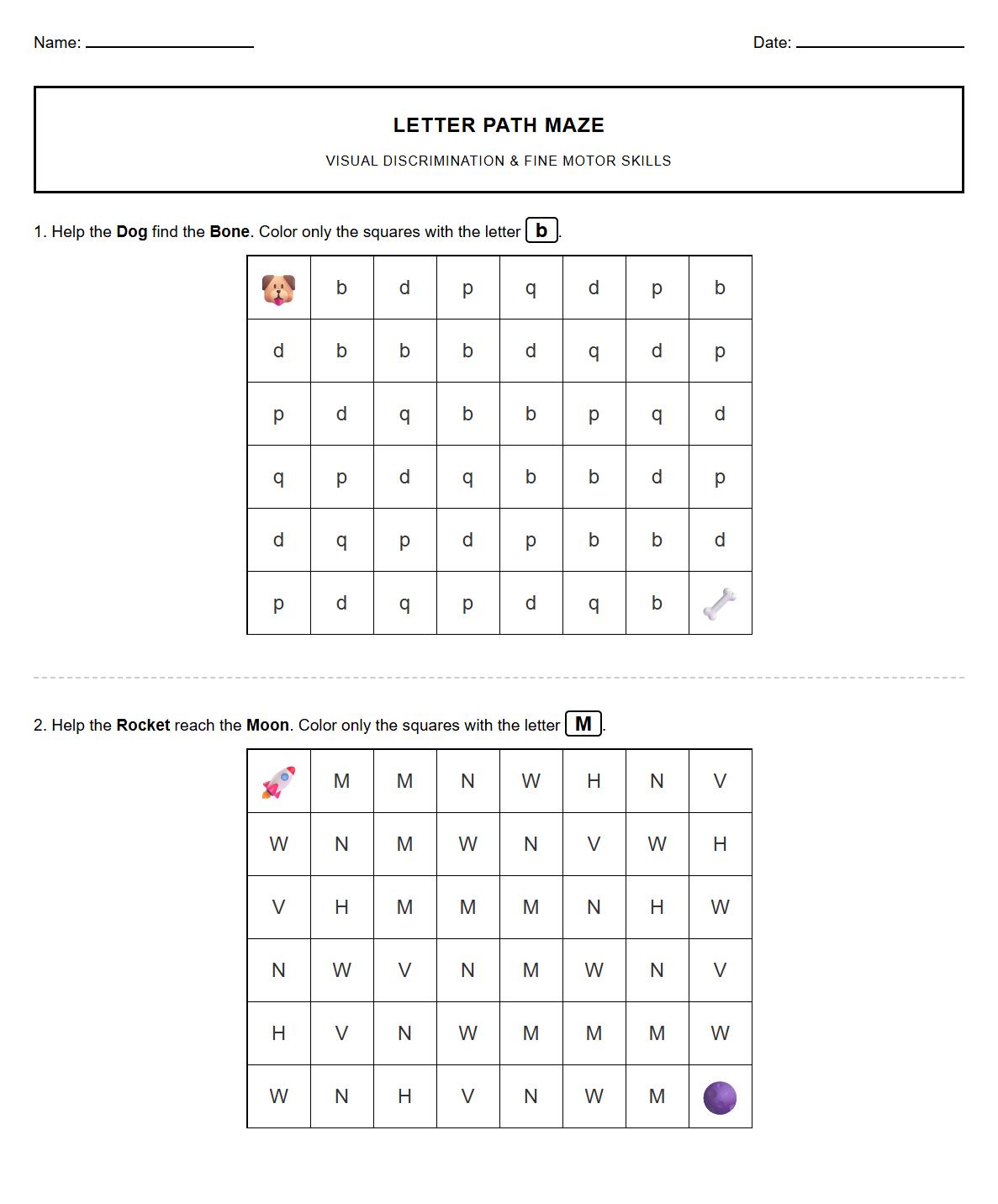
Letter Shape Visual Discrimination Path Mazes

Download PDF     Pin it

Sight Word Recognition Maze Worksheet
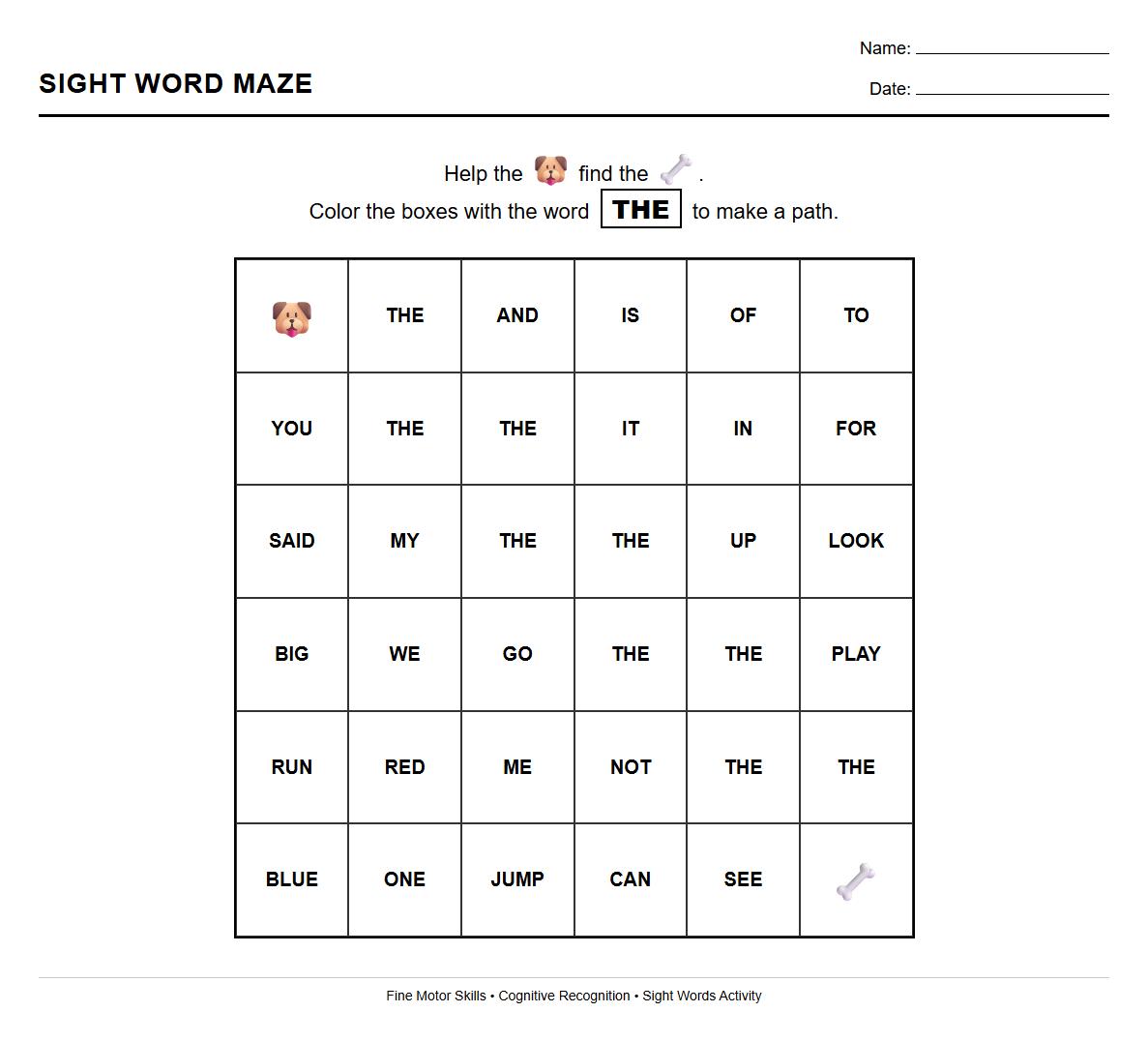
Sight Word Recognition Maze Worksheet

Download PDF     Pin it

Rhyming Word Family Visual Maze for Phonological Awareness
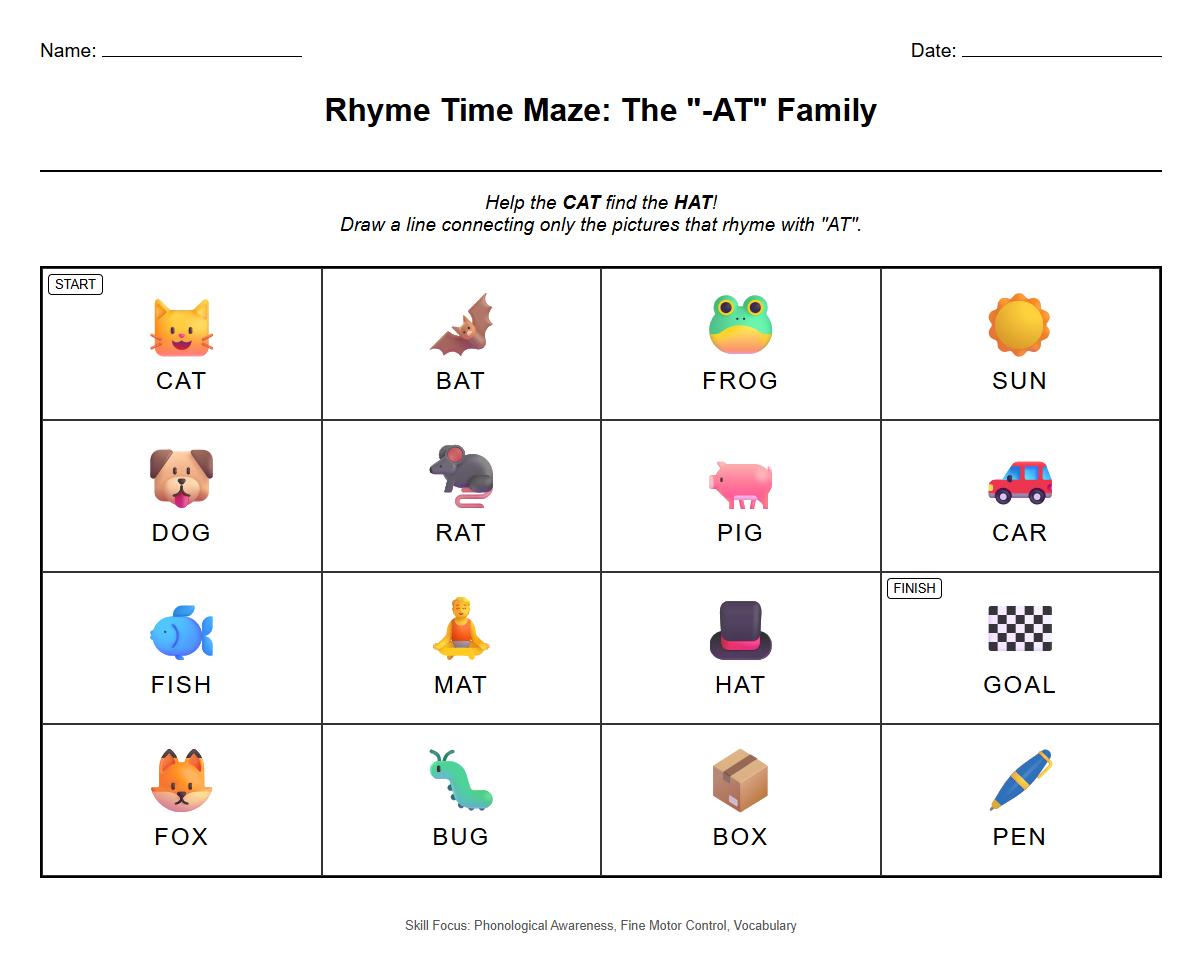
Rhyming Word Family Visual Maze for Phonological Awareness

Download PDF     Pin it

Matching Uppercase and Lowercase Letters Visual Maze
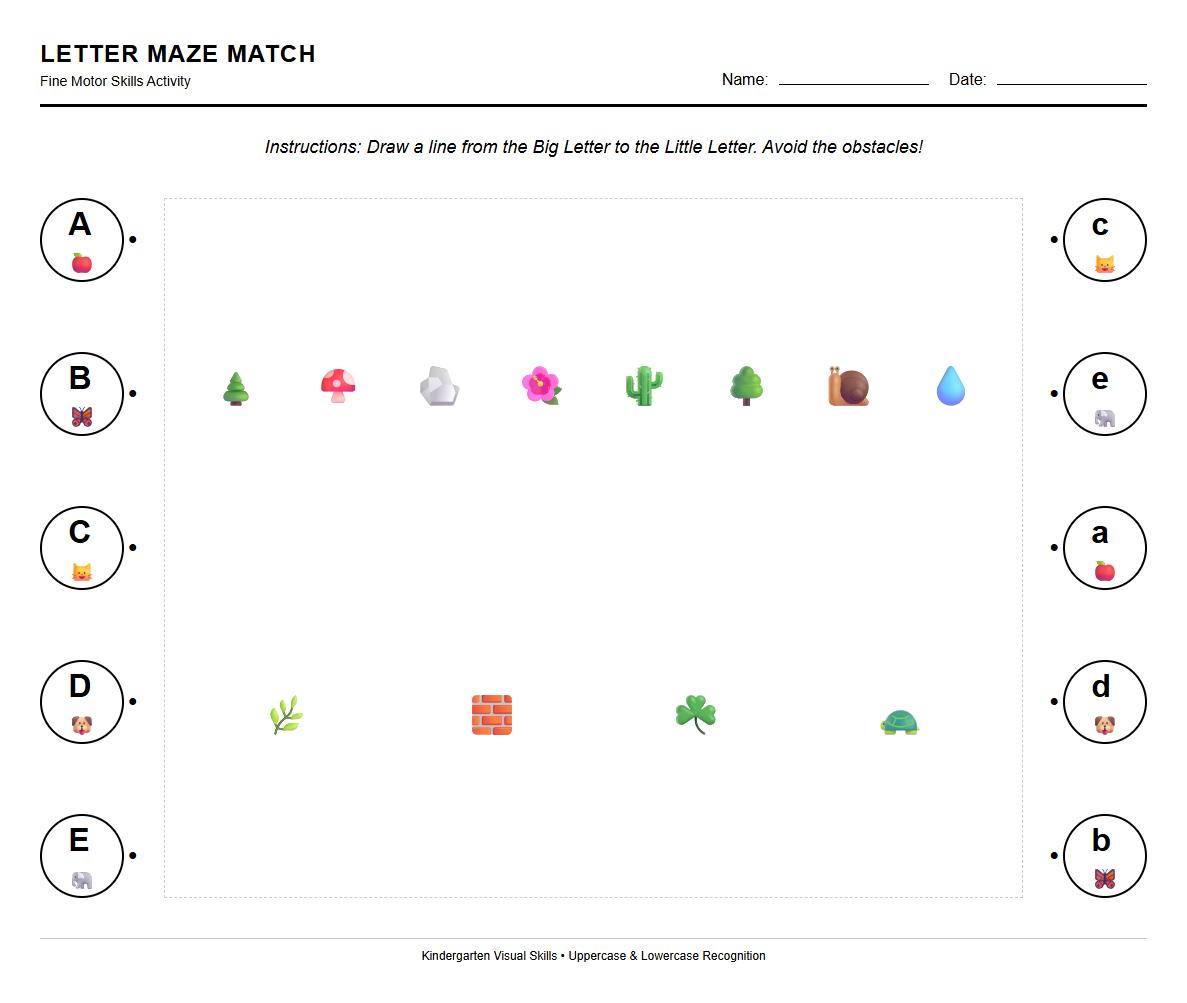
Matching Uppercase and Lowercase Letters Visual Maze

Download PDF     Pin it

Initial Letter Sound Sorting Maze for Early Literacy
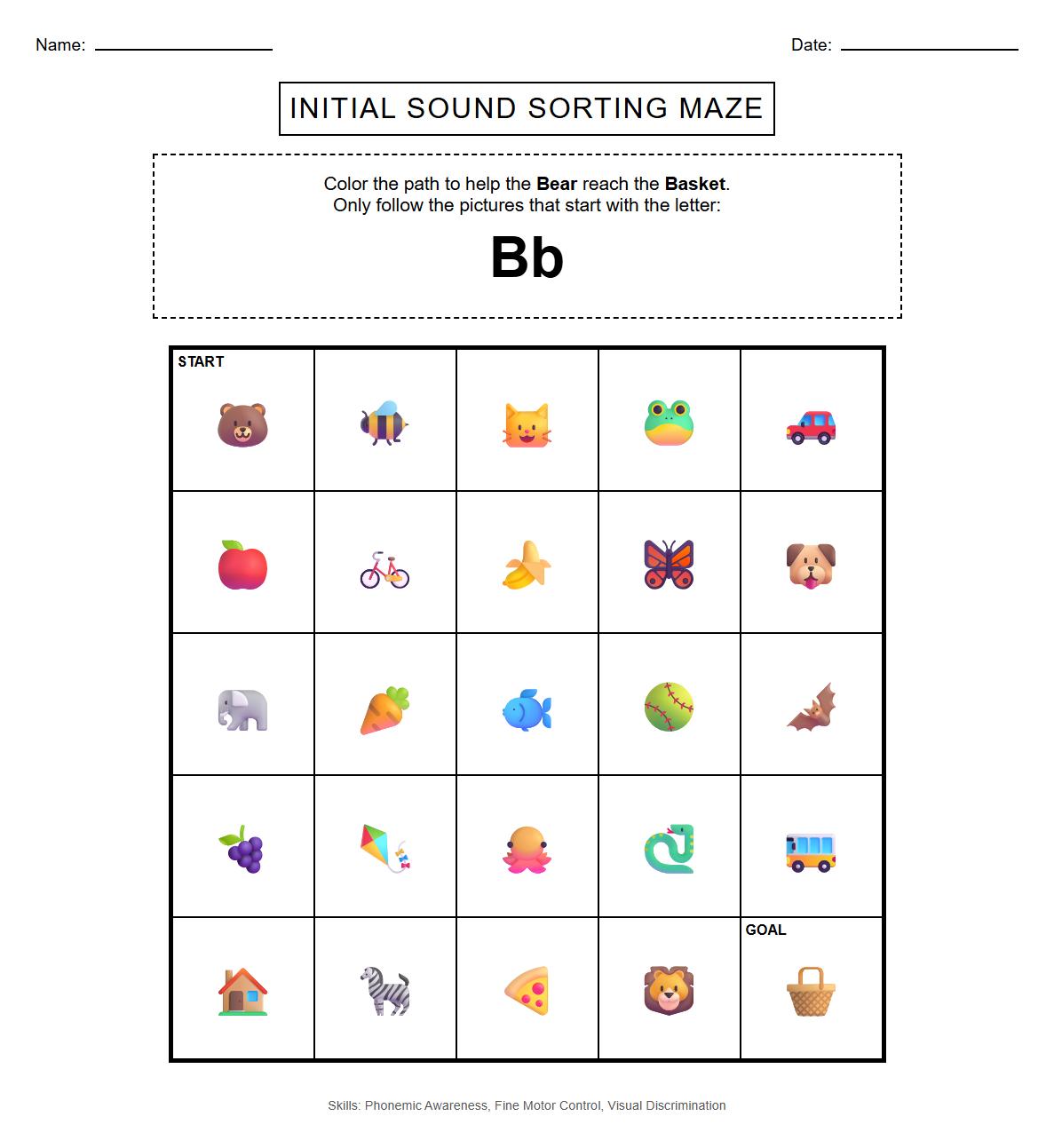
Initial Letter Sound Sorting Maze for Early Literacy

Download PDF     Pin it

Letter Reversal (b d p q) Visual Discrimination Maze
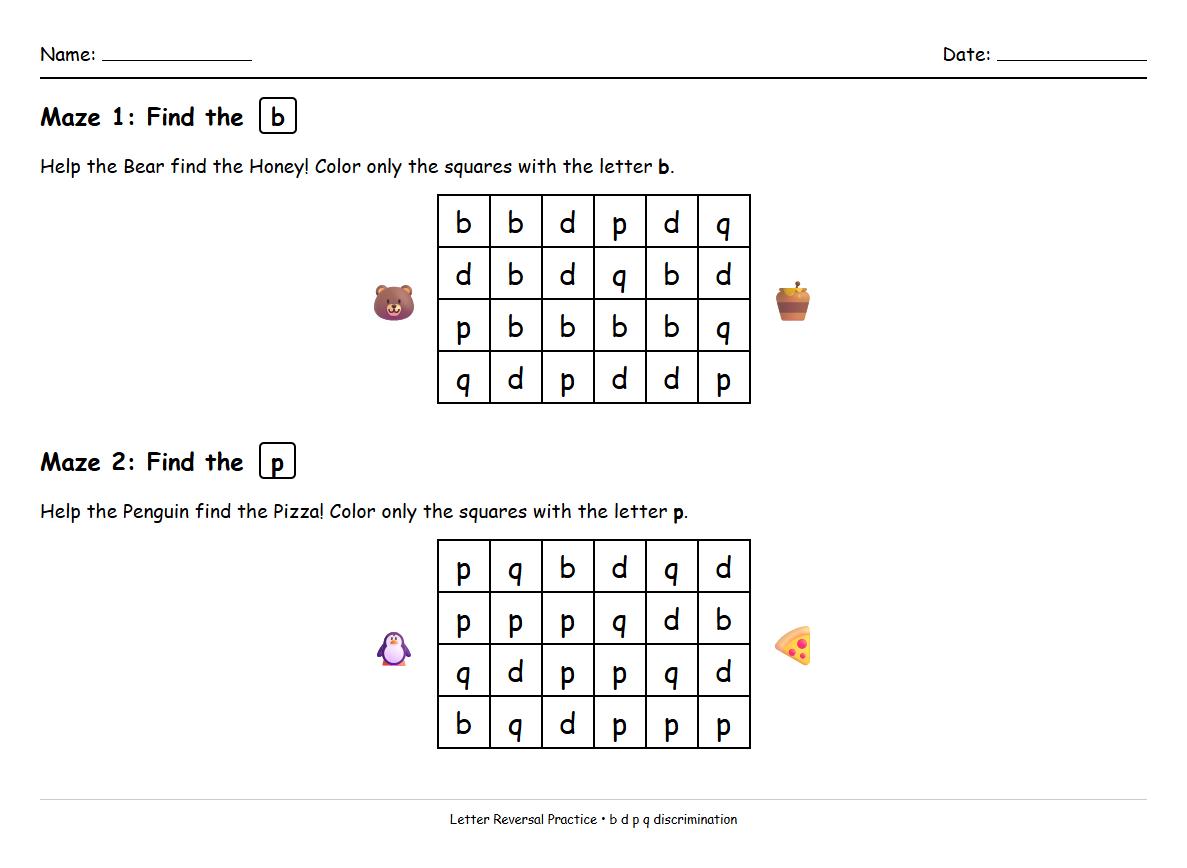
Letter Reversal (b d p q) Visual Discrimination Maze

Download PDF     Pin it

How do Visual Discrimination Mazes support letter recognition in young learners?

Visual Discrimination Mazes enhance letter recognition by encouraging students to visually differentiate between similar shapes. This activity requires close attention to detail, improving the ability to identify distinct letter features. As children navigate the maze, they reinforce their familiarity with letter forms in an engaging, hands-on way. This strengthens their foundational literacy skills crucial for early reading development. For additional practice with visual matching, see Visual Discrimination Matching Worksheets.

What skills are improved through practicing Visual Discrimination Mazes in kindergarten?

Practicing Visual Discrimination Mazes improves visual processing, attention to detail, and fine motor skills. Children develop better hand-eye coordination and problem-solving abilities while reinforcing letter and word recognition. These mazes also boost concentration and cognitive flexibility, essential for literacy learning. Together, these skills support overall academic success in young learners. Engaging with cut and paste activities, like the Shape Recognition Puzzle, also fosters similar skills.

How can Visual Discrimination Mazes be integrated into early literacy lessons?

Visual Discrimination Mazes can be integrated as a fun, interactive element in daily literacy routines. They complement activities like letter tracing and phonics instruction by focusing on visual differences. Teachers can use them as warm-ups, centers, or homework assignments to reinforce letter shapes and patterns. Incorporating these mazes helps maintain student engagement while supporting literacy objectives. Explore more integration options with this Color Code Following Directions Phonics Activity.

What visual cues should students look for when completing a literacy maze?

Students should focus on key letter features such as shape, size, orientation, and distinguishing marks. Recognizing subtle differences between letters like 'b' and 'd' or 'p' and 'q' is essential. They should also pay attention to line direction and spacing to navigate the maze correctly. Emphasizing these visual cues sharpens their discrimination skills during literacy tasks. For activities centering on these skills, view the Line and Curve Tracing Worksheet.

How do Visual Discrimination Mazes help differentiate between similar letters or words?

Visual Discrimination Mazes train students to identify minute differences by presenting letters or words in varied contexts within the maze. This challenges learners to distinguish between commonly confused characters through focused observation. By navigating paths with only correct letter matches, children reinforce their ability to differentiate similar symbols. These targeted practices aid in reducing letter reversals and reading errors. Reinforce these skills with a Color and Object Matching Worksheet.

What are some effective strategies for introducing Visual Discrimination Mazes to kindergarten students?

Start with simple, clear mazes featuring familiar letters to build confidence. Use guided practice by modeling the thought process and verbalizing visual cues. Gradually increase complexity as students master initial tasks, incorporating group discussions to enhance understanding. Positive reinforcement and encouragement motivate learners to engage with these activities independently. For further skill-building, try the Occupational Therapy Line and Curve Tracing Worksheet.

How can teachers assess progress using Visual Discrimination Mazes?

Teachers can assess progress by tracking accuracy and completion time of maze activities over time. Observations of how well students identify letter differences and navigate increasingly complex mazes offer insight into skill development. Additionally, informal assessments like quizzes or discussion questions reinforce learning outcomes. Progress monitoring helps tailor instruction to individual student needs. Assess related growth with Handwriting Foundation Worksheets.

What materials are needed to create effective Visual Discrimination Mazes for literacy practice?

Creating effective Visual Discrimination Mazes requires printed worksheets or digital platforms displaying clear letter patterns. Durable pencils, crayons, or markers enhance engagement and allow for easy corrections. Laminated sheets and dry-erase markers enable repeated use and practice. Incorporating colorful visuals can make the mazes more appealing to young learners. Explore a Color Mixing Experiment Worksheet for an engaging, hands-on component.

How often should Visual Discrimination Mazes be used in early literacy instruction?

Visual Discrimination Mazes should be included regularly, ideally 2-3 times per week, to reinforce letter recognition skills. Frequent practice helps solidify visual discrimination without causing fatigue or frustration. Integrating them alongside other literacy activities maintains variety and engagement. Consistent use ensures better retention of letter and word distinctions. For additional routine-building, try the Color Recognition Phonics Worksheet.

What challenges might students face when working with Visual Discrimination Mazes, and how can teachers help?

Students may struggle with distinguishing similar letters or become frustrated if mazes are too difficult. Teachers can provide scaffolding by breaking tasks into smaller steps and offering plenty of encouragement. Using hands-on manipulatives or pairing students for collaborative problem-solving can also support learning. Adjusting maze complexity to meet individual needs fosters confidence and success. For challenged learners, support with a Sight Word Puzzle Cut and Paste Exercise.


More in Fine Motor and Cognitive Skills Category


About the author. Nylen Smith is a dedicated educator and cofounder of KWorksheet.com, a popular platform specializing in high-quality kindergarten worksheets and printable activities.

Disclaimer. The information provided in this document is for general informational purposes and/or document sample only and is not guaranteed to be factually right or complete. Please report to us via contact-us page if you find and error in this page, thanks.

Comments

No comment yet