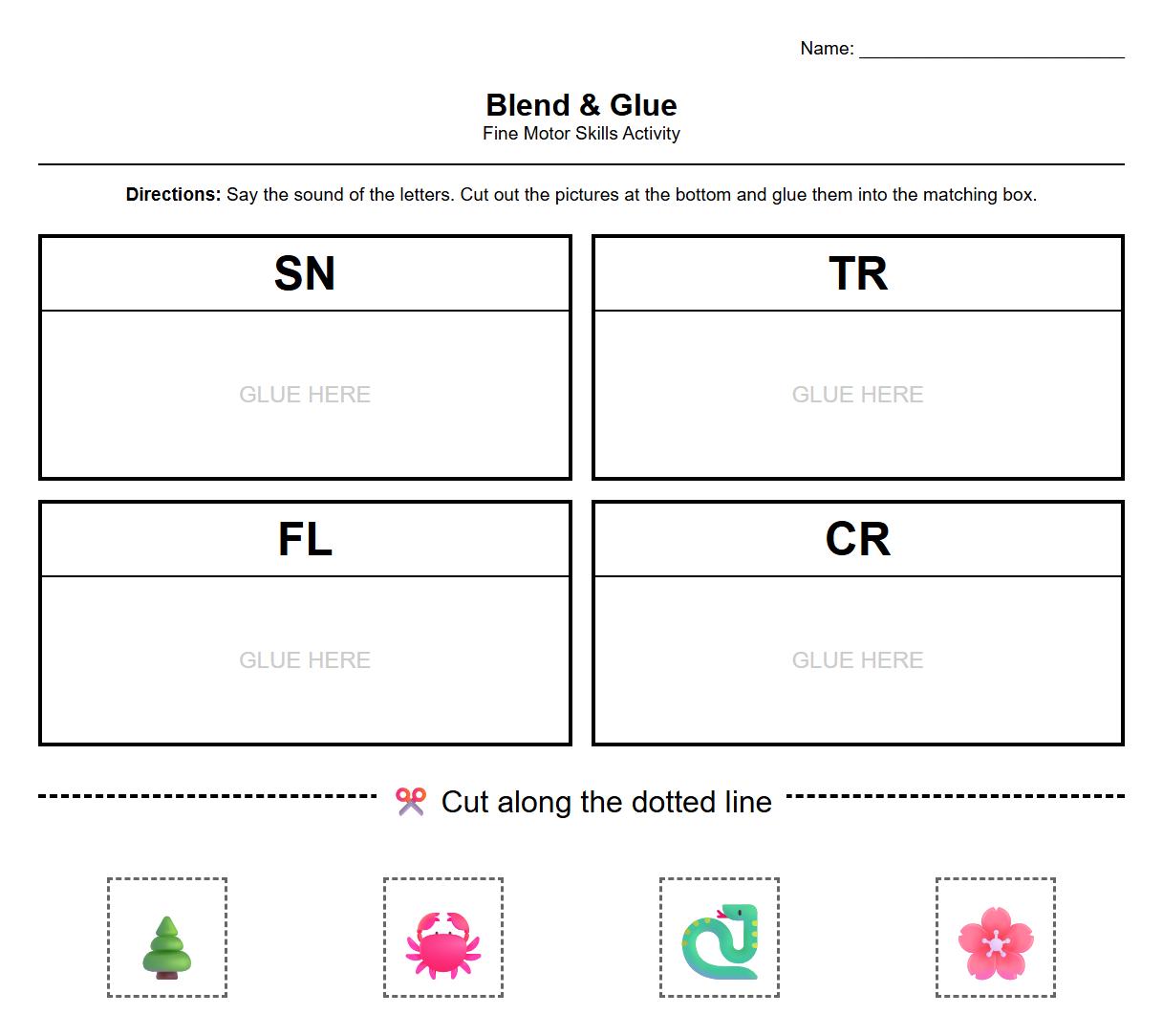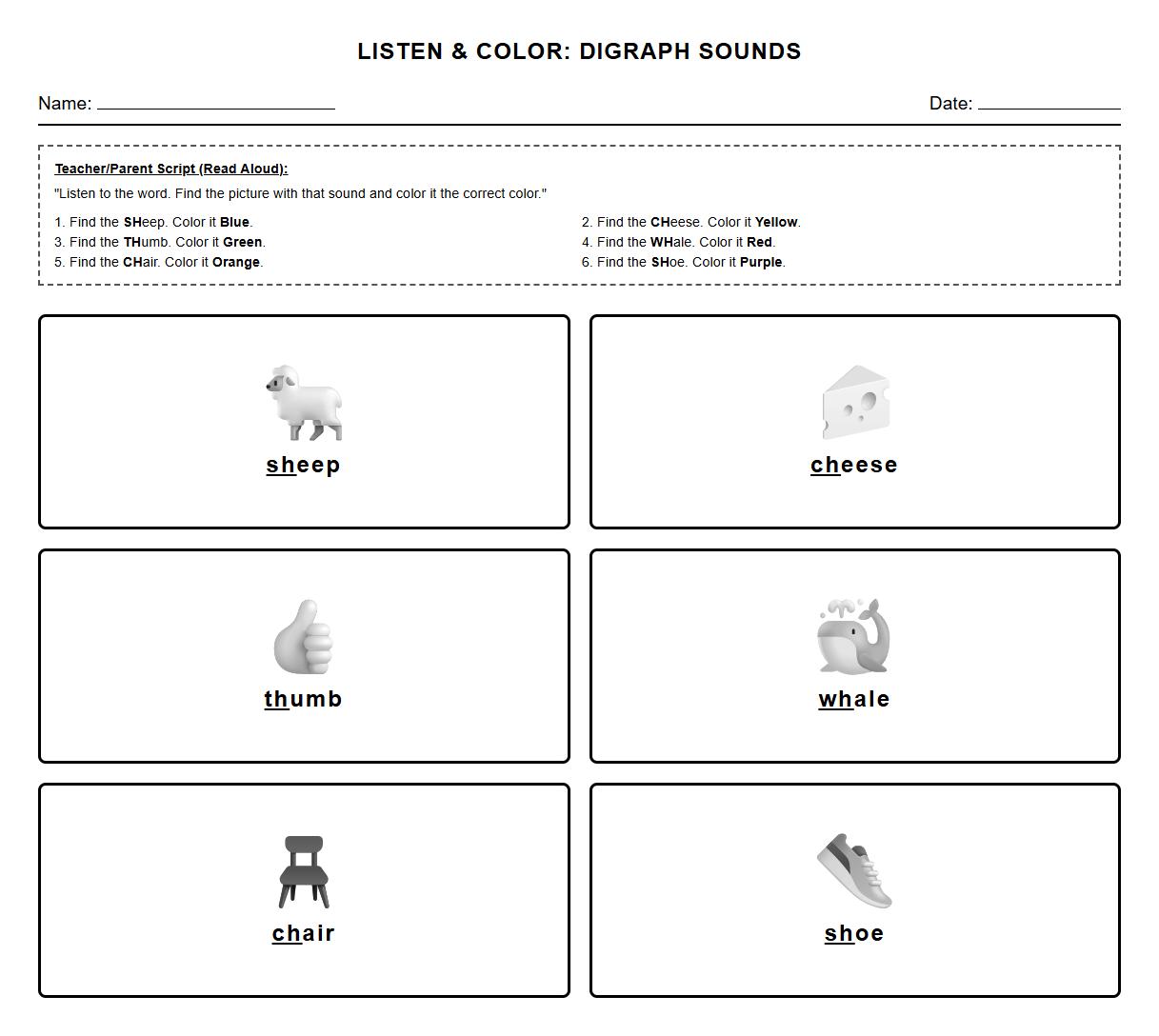
Kindergarten Following Directions Worksheets combine phonics practice with visual cues to enhance comprehension and listening skills in young learners. These resources support early childhood education by helping children follow multi-step instructions while reinforcing letter sounds and word recognition. Explore the collection of worksheets designed to boost your kindergartner's ability to follow directions effectively.
Listening and Sound Recognition
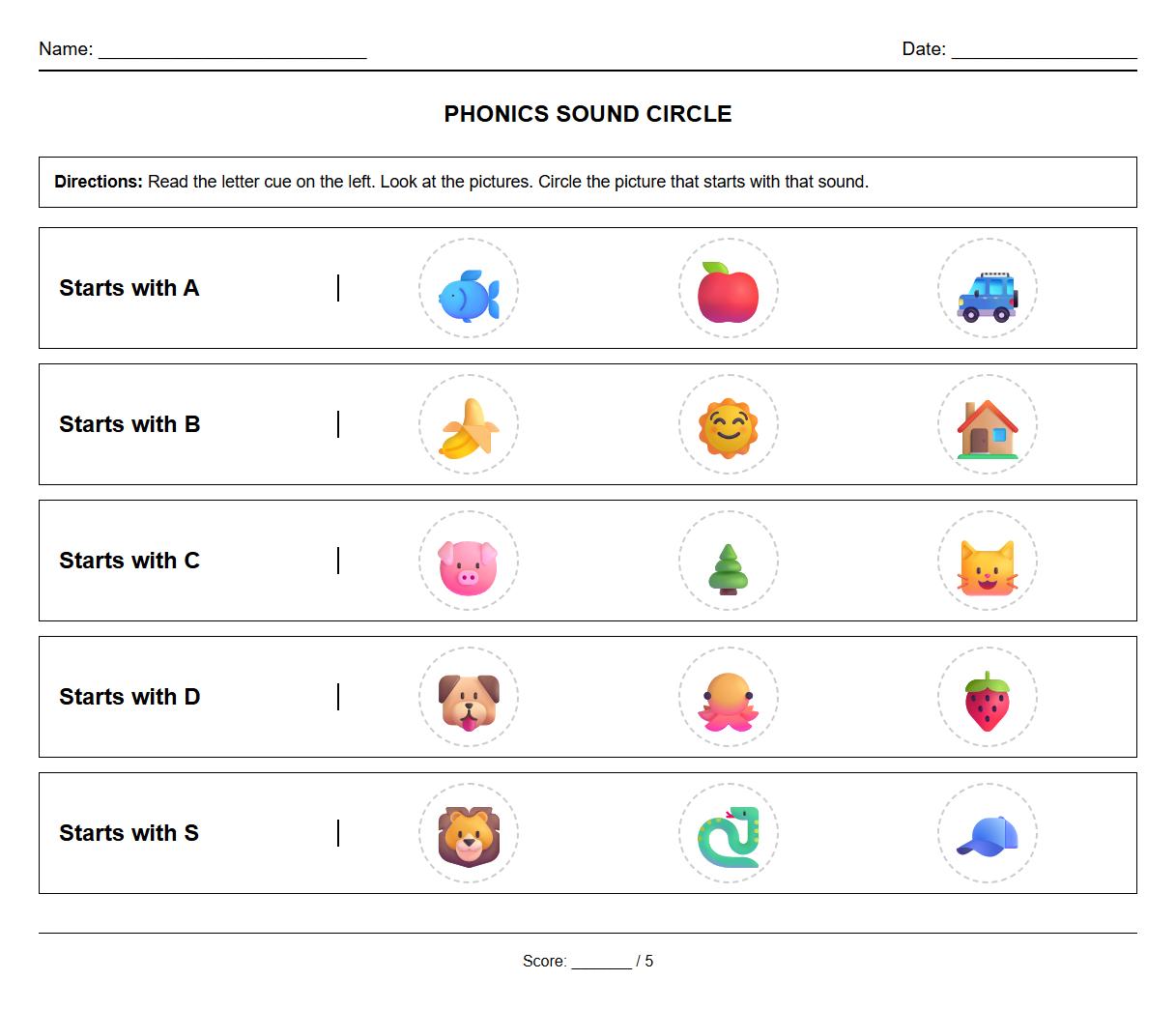
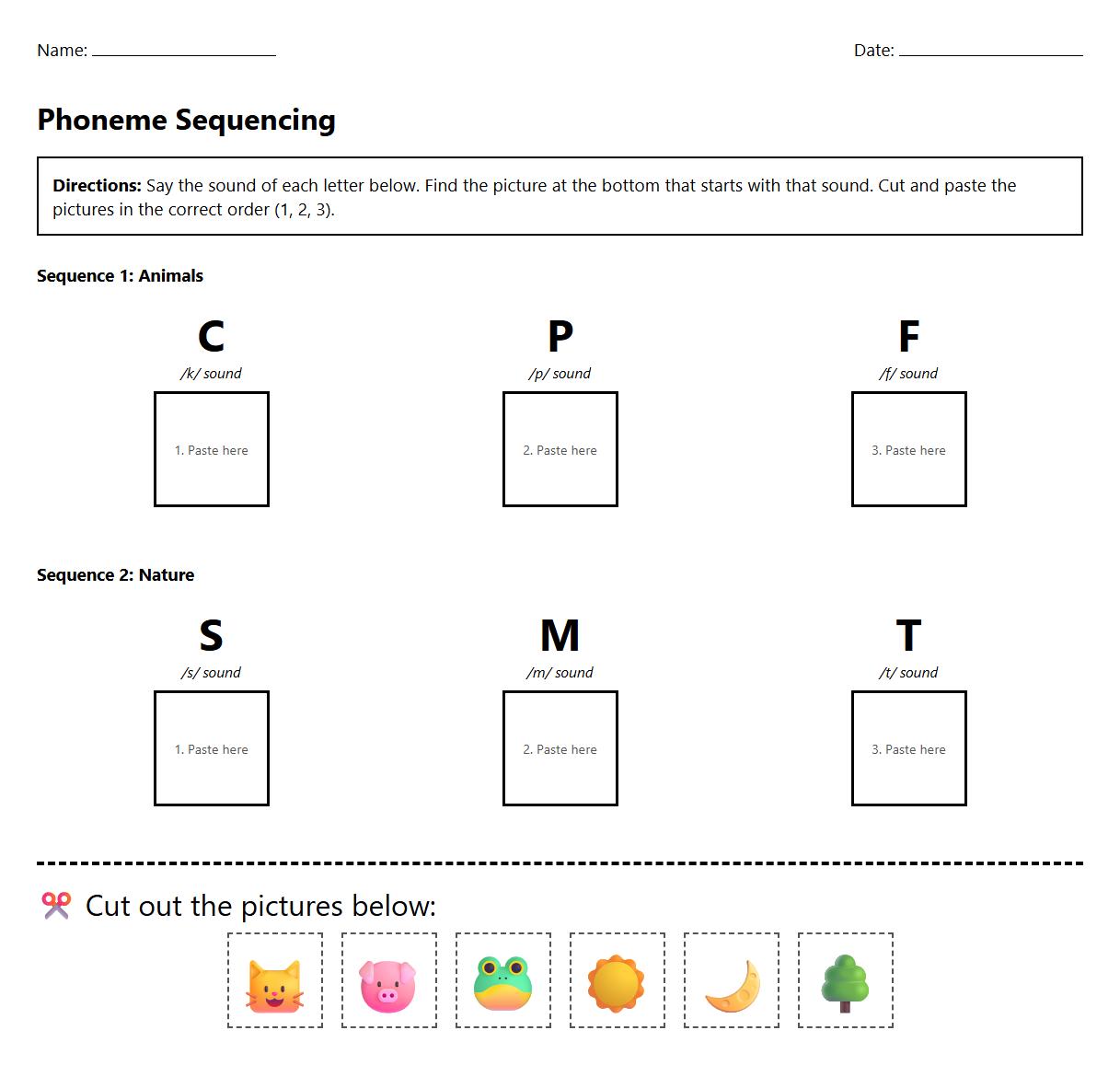
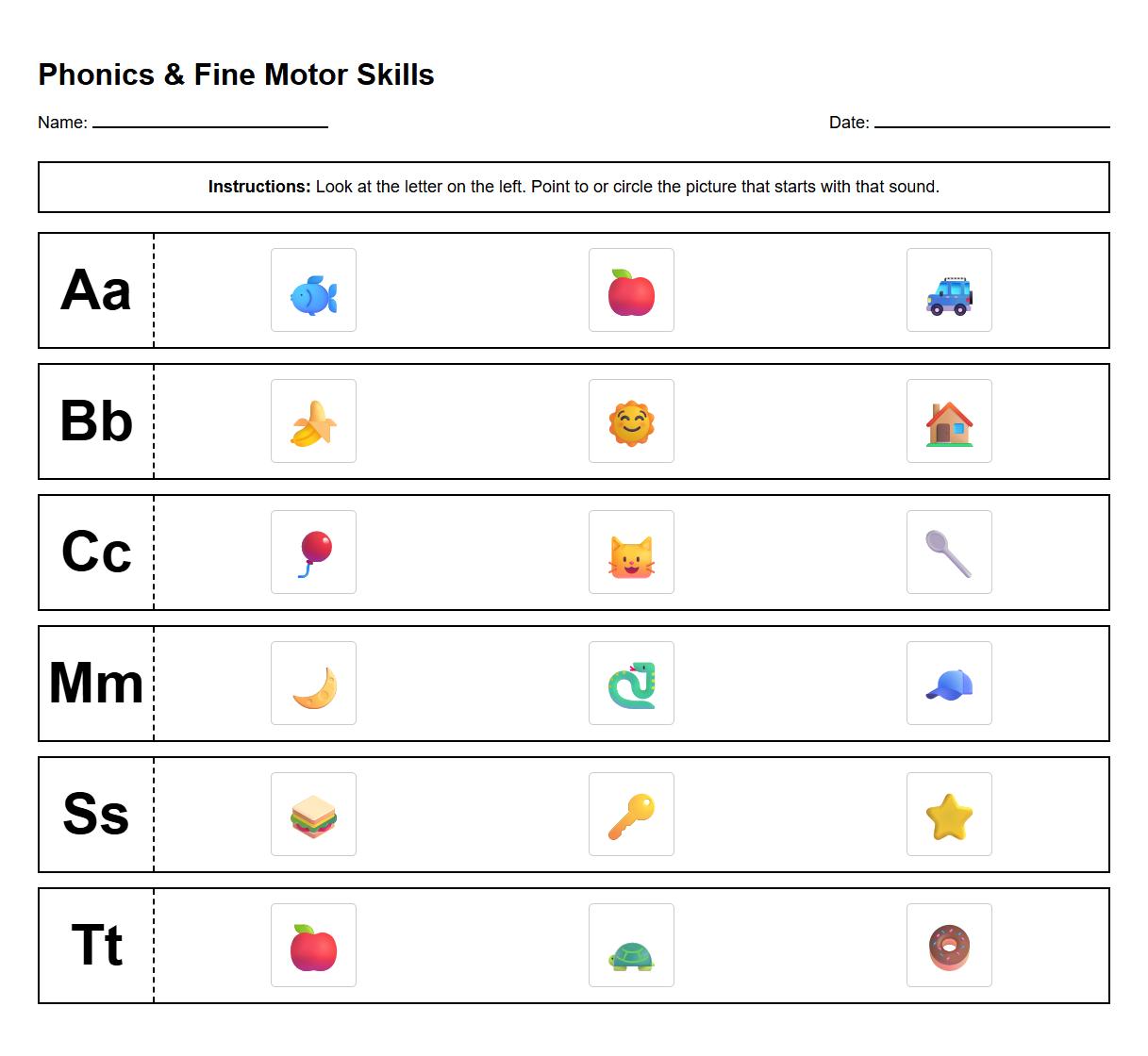
Encourage children to identify the picture that starts with the sound S to develop their auditory discrimination. This activity helps build phonemic awareness by focusing on initial sounds in words. Use clear and simple images to keep the task engaging and understandable for young learners. Repeating this exercise with different letters enhances early language skills effectively. Explore similar visual discrimination and picture matching activities for early literacy.
Letter Identification and Coloring
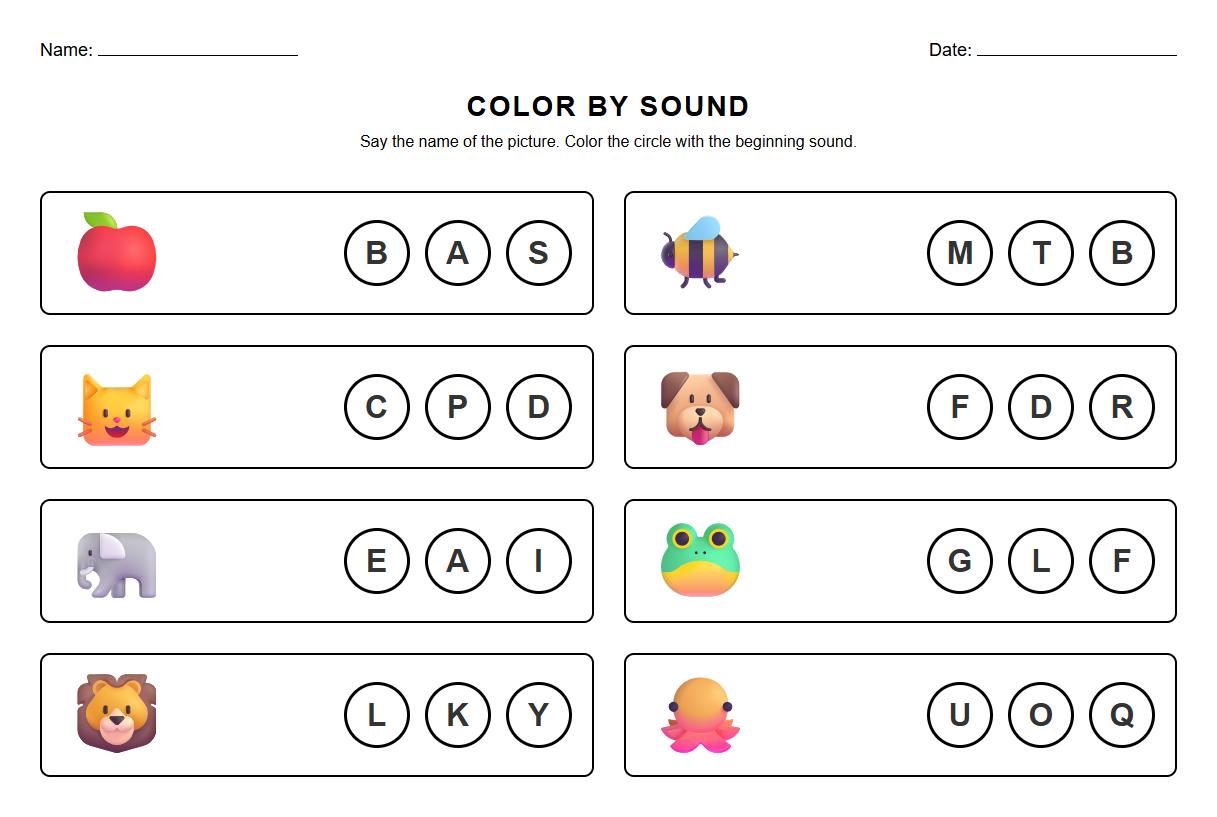
Ask children to color the circle with the letter M, reinforcing letter recognition through a fun, interactive method. This task supports visual discrimination between letters, a foundational skill for reading. Provide colorful markers or crayons to make the activity enjoyable and stimulating. Consistent practice improves their ability to differentiate letter shapes quickly. Try color and number worksheets for additional letter and shape recognition practice.
Tracing and Writing Practice
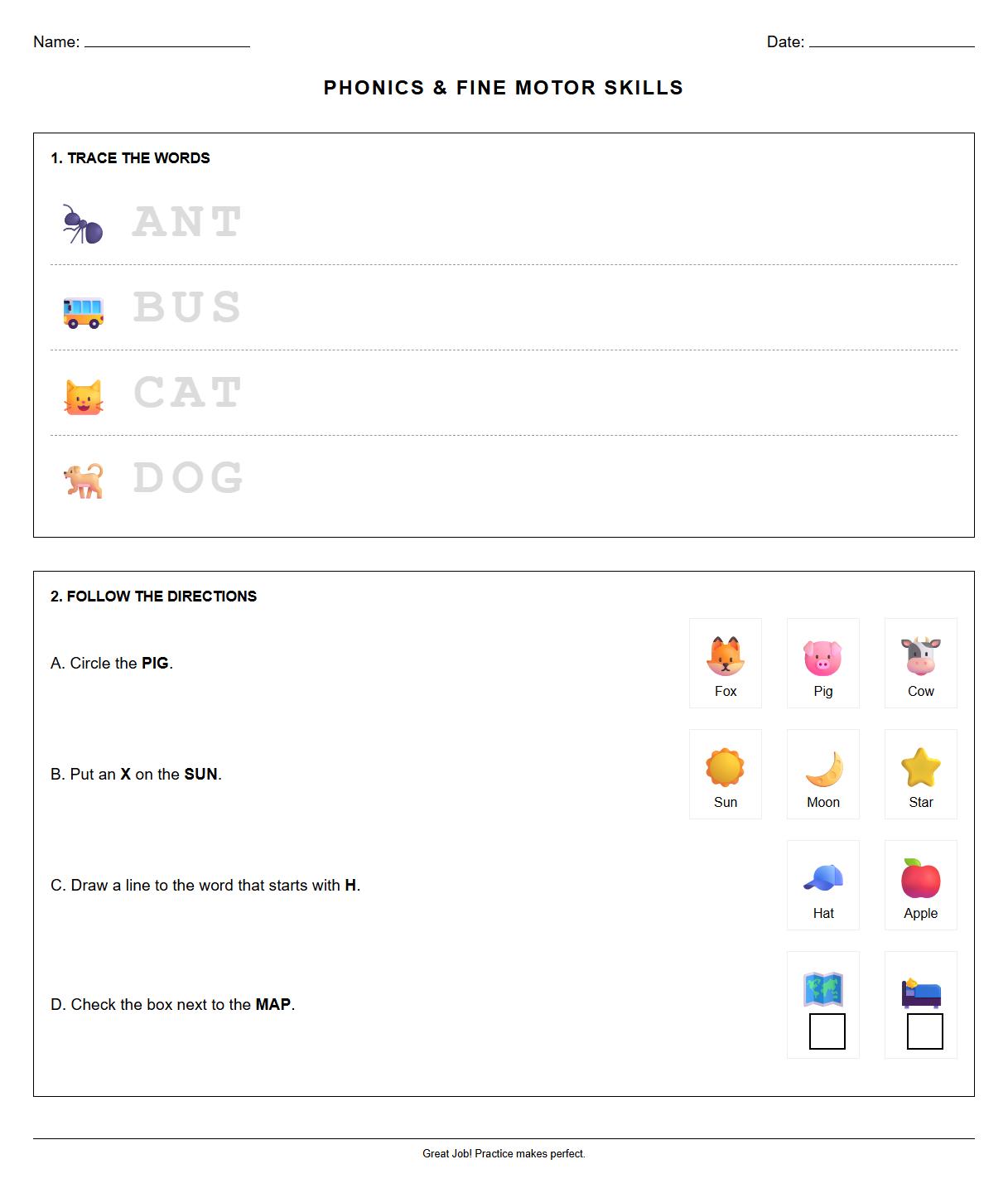
Guided tracing of words, like the one under the image of the sun, helps young learners develop fine motor skills and understand word formation. This activity connects visual cues with verbal vocabulary effectively. Encourage slow and careful tracing to build handwriting confidence. Pairing pictures with words strengthens word recognition and spelling abilities. View alphabet letter puzzle assembly worksheets to complement tracing practice.
Sound Matching and Animal Recognition
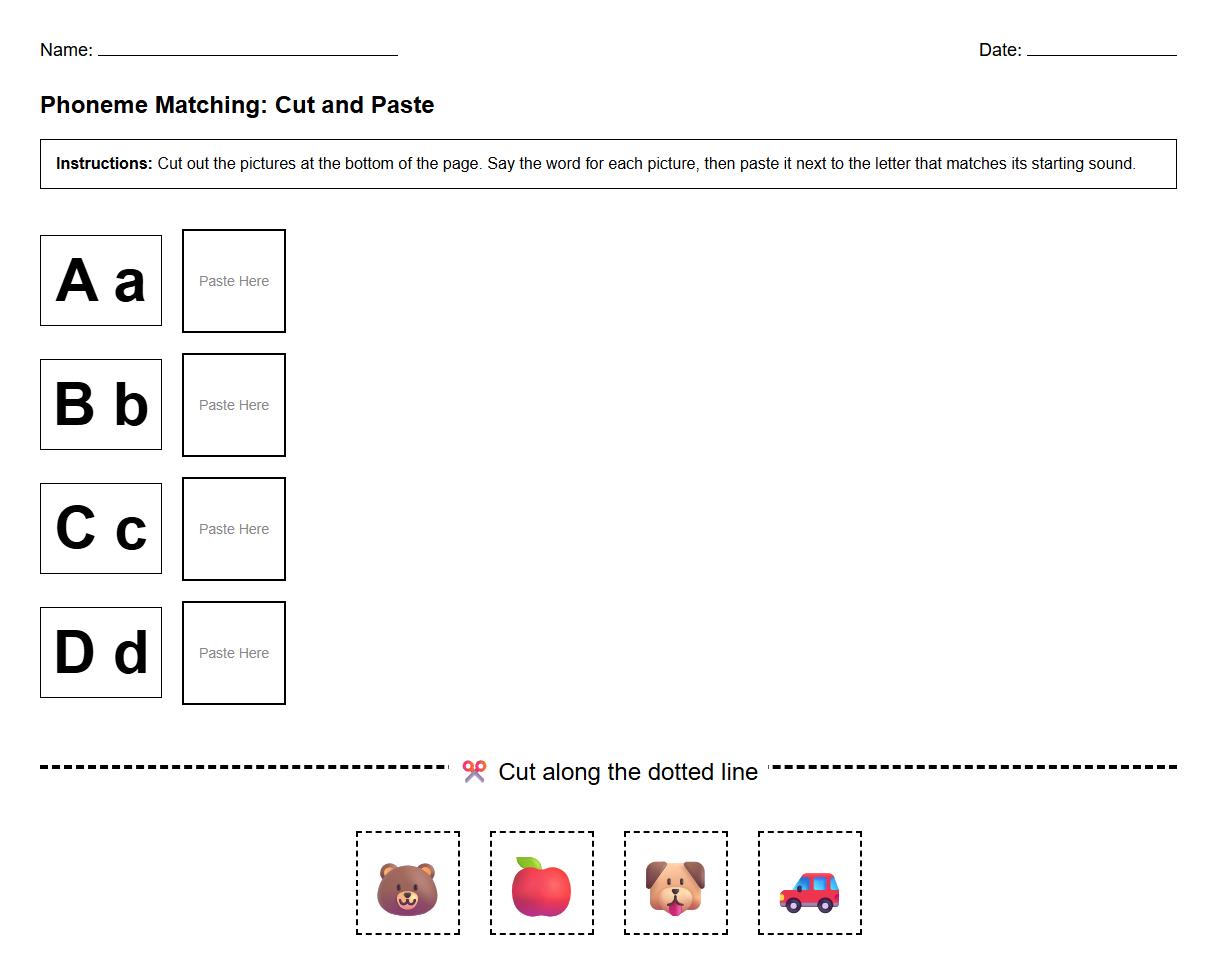
Invite children to point to the animal whose name starts with the letter D, combining letter sounds with familiar vocabulary. This exercise sharpens listening skills and letter-sound correspondence. Use engaging animal images to maintain interest and facilitate learning. Repeating with different letters supports comprehensive phonics mastery. Additional practice can be found with multi-step following directions and phonics recognition worksheets.
Matching Pictures with Words
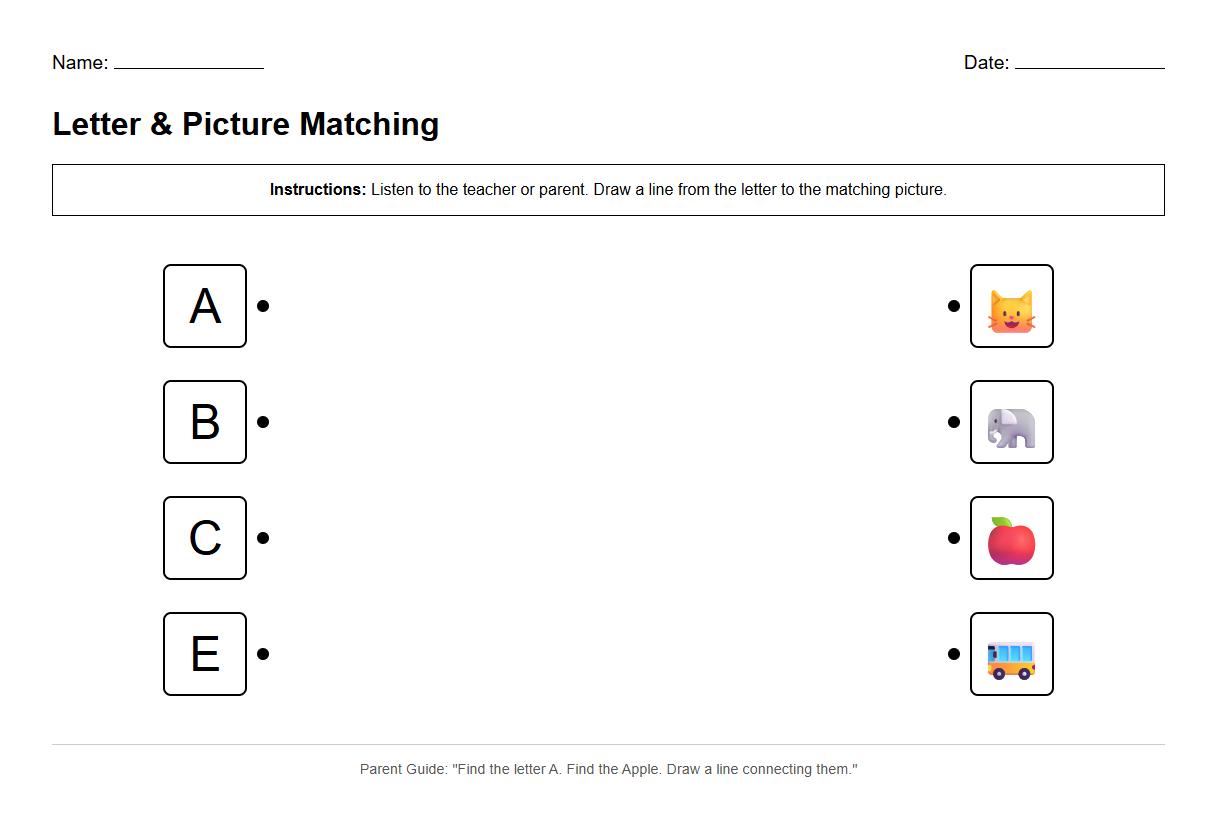
Match the picture of the apple to its word label to help children link visual images with written words. This activity enhances vocabulary and word recognition in a meaningful context. Use simple, clear images and labels to prevent confusion and support comprehension. Regular practice builds early reading skills through context clues. See alphabet matching and visual discrimination activities for more ideas.
Rhyming Awareness through Clapping
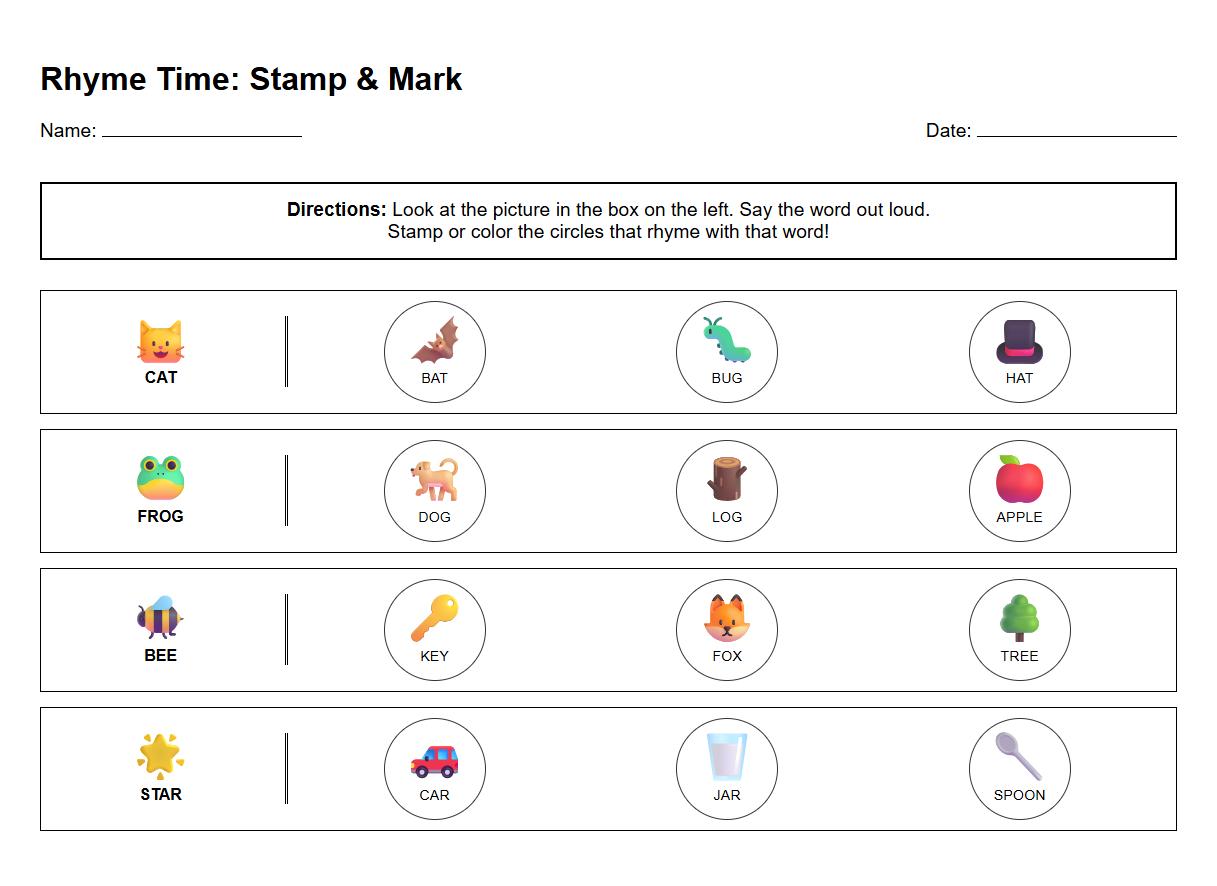
Clap whenever children hear the word that rhymes with cat to develop phonological awareness and rhythm. Rhyming games foster sound pattern recognition, crucial for reading development. Encourage enthusiasm and movement to keep the learning dynamic and enjoyable. Reinforcing rhymes prepares children for more complex language tasks. Pattern-based activities like pattern recognition puzzle assembly worksheets also support sound awareness.
Drawing Lines to Connect Sounds
Draw a line from the boy to the picture starting with B to practice initial sound identification and motor coordination. This visual matching task supports phonemic awareness and hand-eye coordination simultaneously. Keep the images large and distinct to avoid confusion. This interactive method strengthens letter-sound association effectively. Practice with matching uppercase and lowercase letters worksheets for added benefit.
Circular Identification of Sounds
Ask children to circle the object that begins with the k sound for targeted phonics practice. Circling activities enhance fine motor skills and visual discrimination of sounds. Make sure objects are familiar and clearly represent the target sound for success. This focused practice boosts confidence in sound recognition. Try color patterns and sequencing worksheets with phonics integration to reinforce these skills.
Sticker Placement for Sound Count
Put a sticker on each image whose name has three sounds to introduce basic syllable segmentation and sound counting. Using stickers adds a tactile and rewarding element to learning phonemes. This multisensory approach supports memory and sound awareness. Repeat with different words to deepen understanding of word structure. Consider spot the difference activities to further develop observation and auditory skills.
Underlining Words that Match Pictures
Encourage children to underline the word that matches the shown picture to bridge visual recognition and reading skills. This activity helps in identifying word-picture relationships critical for literacy. Use differentiated difficulty levels to cater to varied learning paces. Underlining also supports attention to detail and focus. Critical thinking can be practiced with spot the difference worksheets for kindergarten.


Matching Activity Worksheet for Kindergarten Following Directions