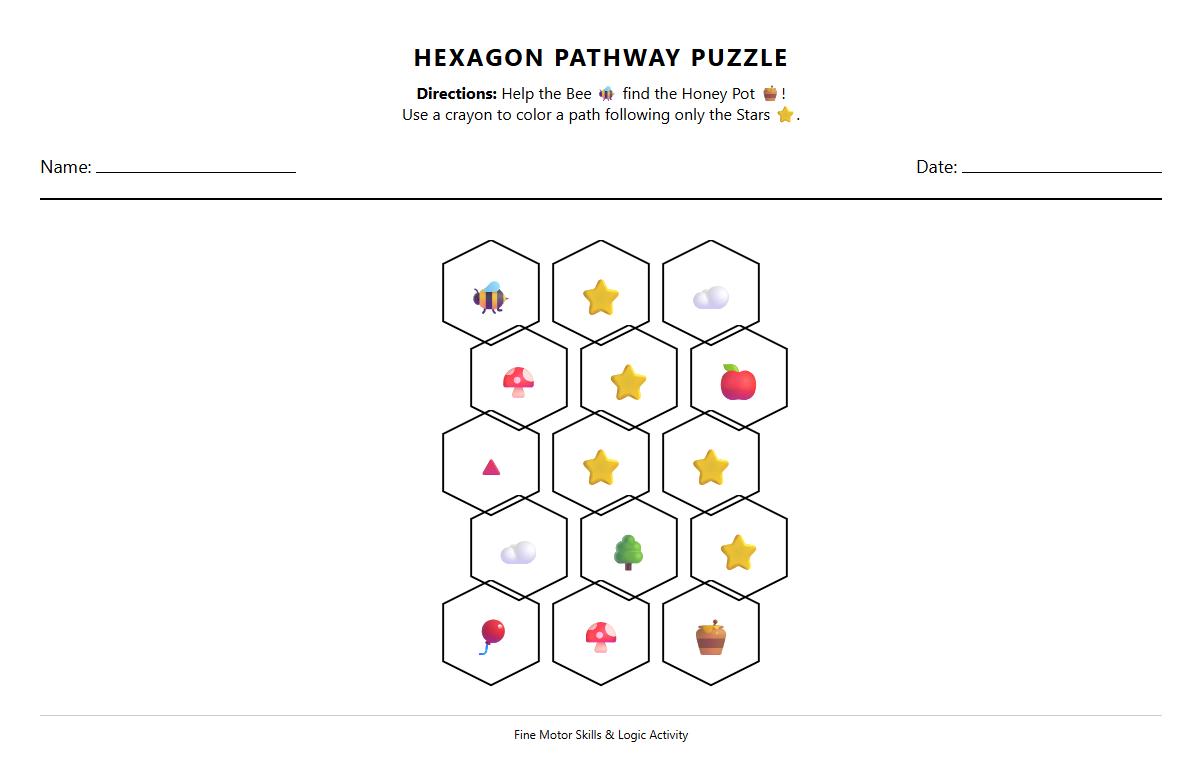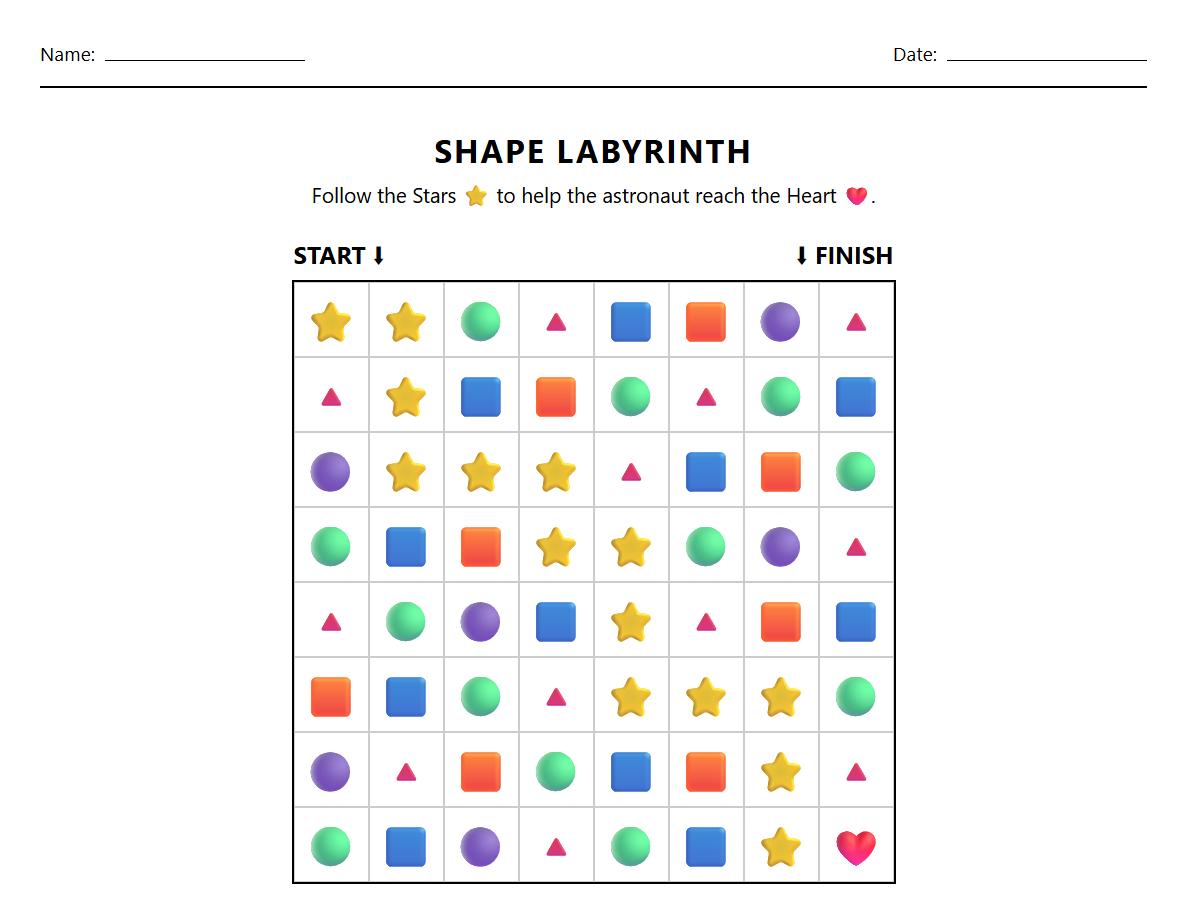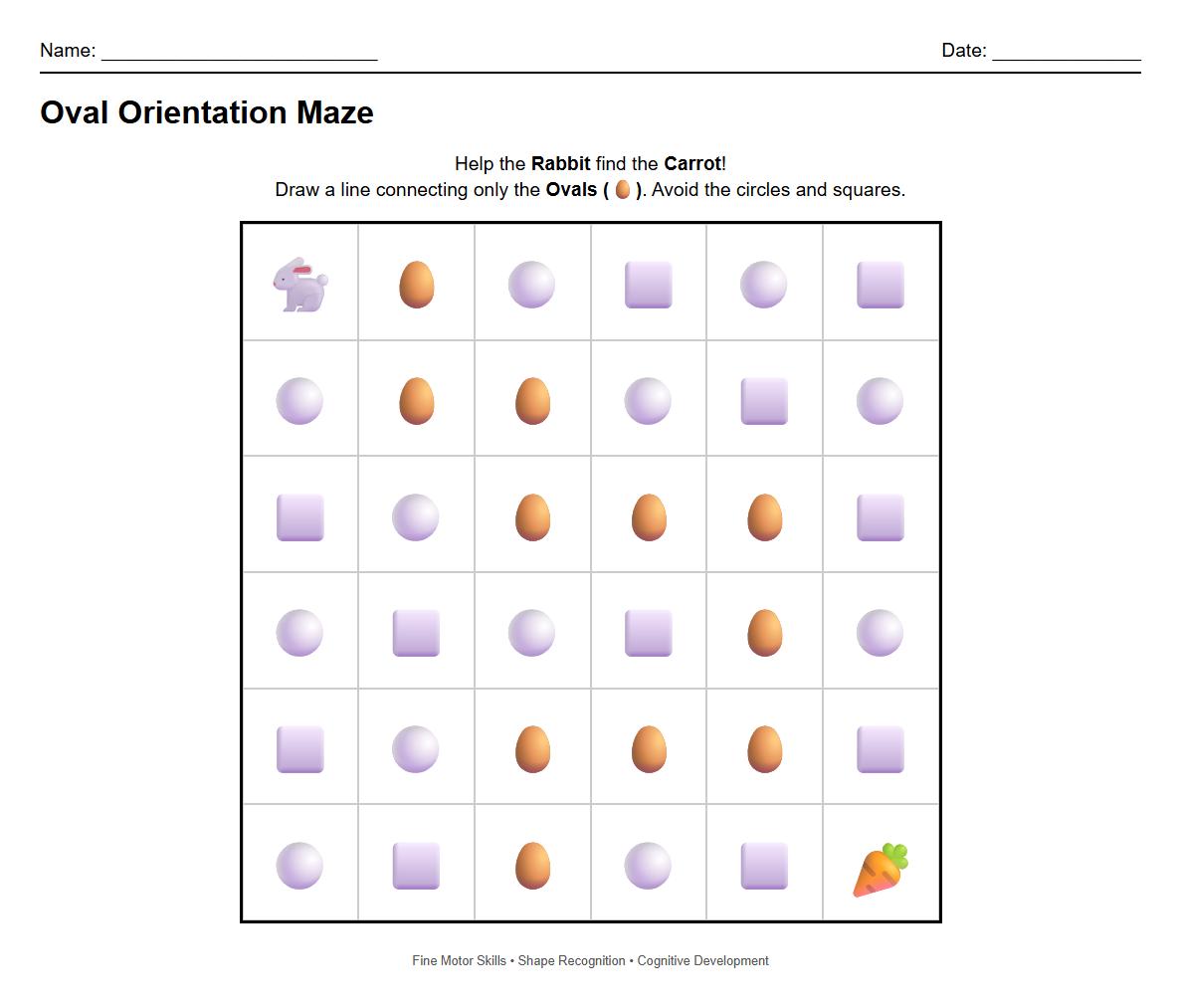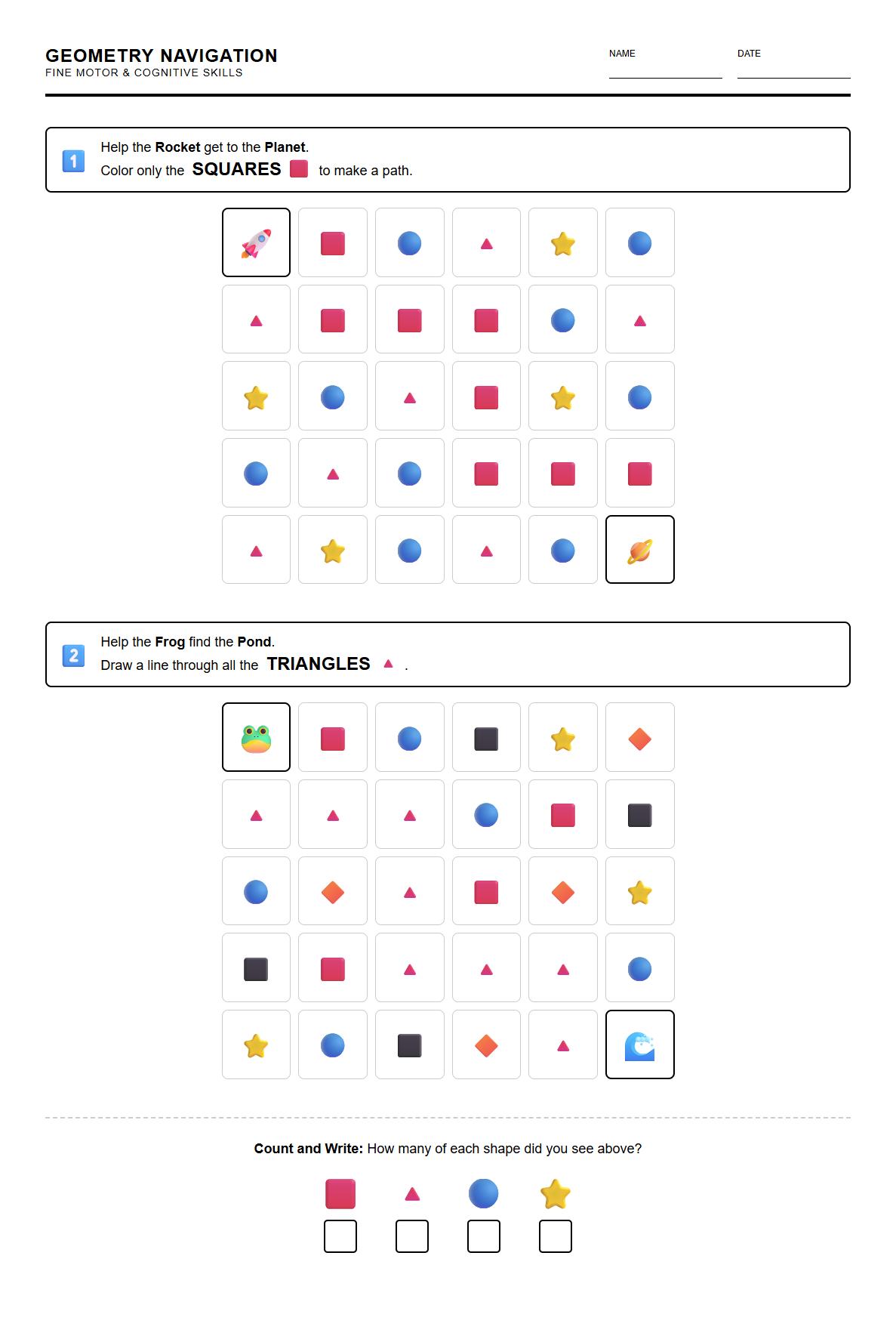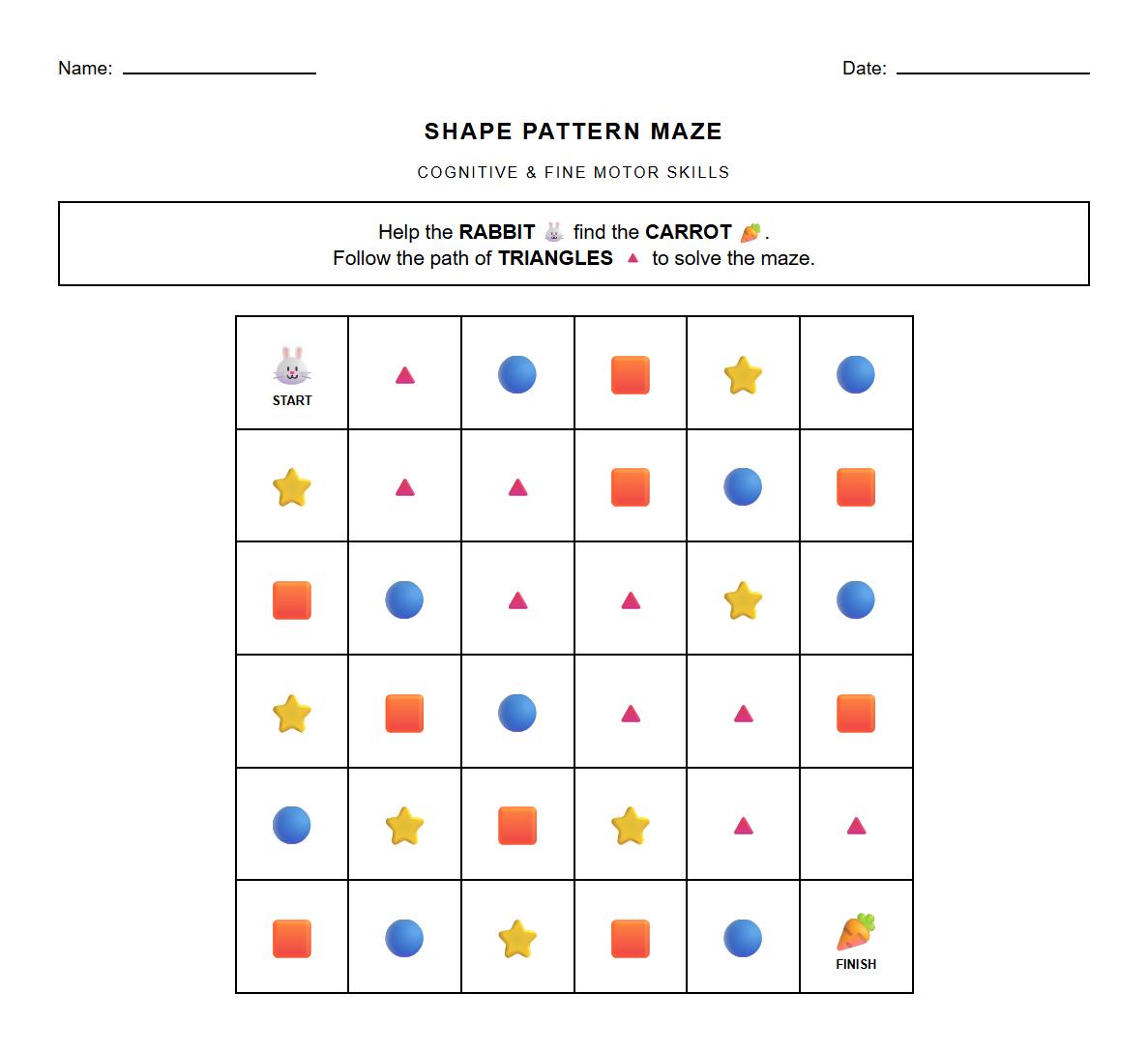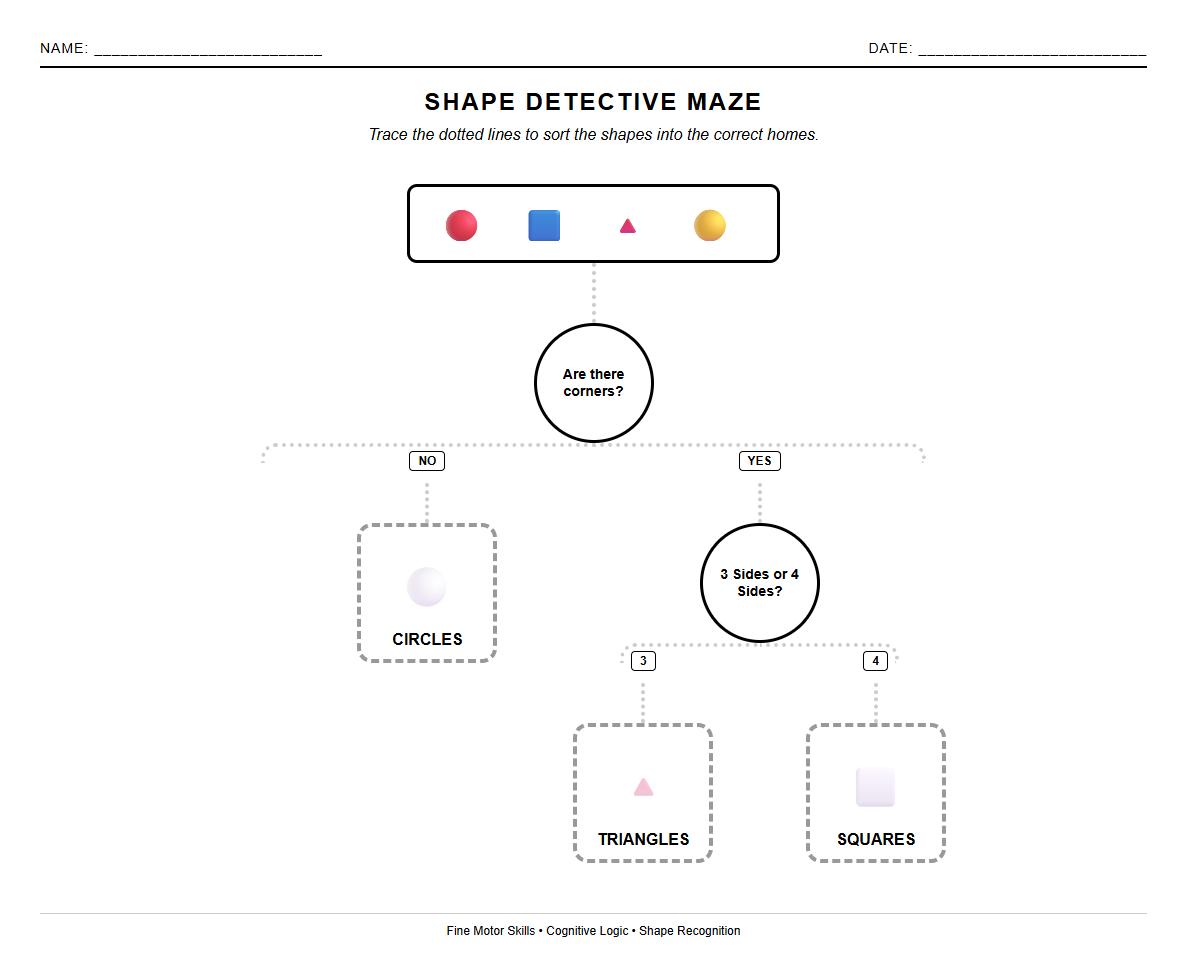
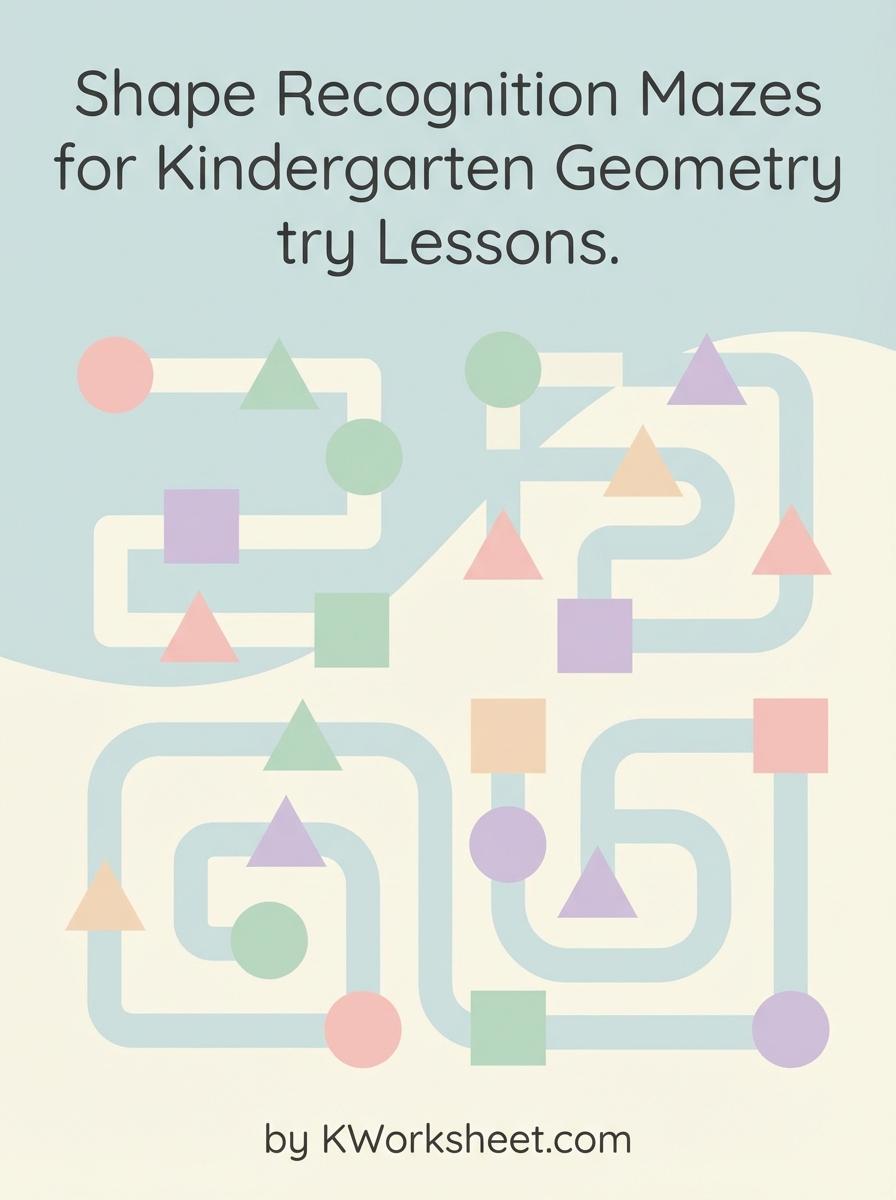
Shape Recognition Mazes engage kindergarten students in identifying and navigating through various geometric shapes, enhancing their spatial awareness and problem-solving skills. These mazes offer a hands-on approach to learning basic geometry concepts, helping children distinguish between circles, squares, triangles, and more. Explore our collection of Shape Recognition Mazes to support young learners in mastering essential geometry skills.
Identifying the Starting Shape in the Maze
At the beginning of the maze, you will find a distinct shape that marks the start point. Observing this shape carefully helps children understand the maze's entry. For activities that encourage shape recognition skills, visit this worksheet.
Encourage your students or children to say the name of this shape aloud to reinforce shape recognition skills. This simple activity blends fun with foundational learning.
Following Paths with Only Circles
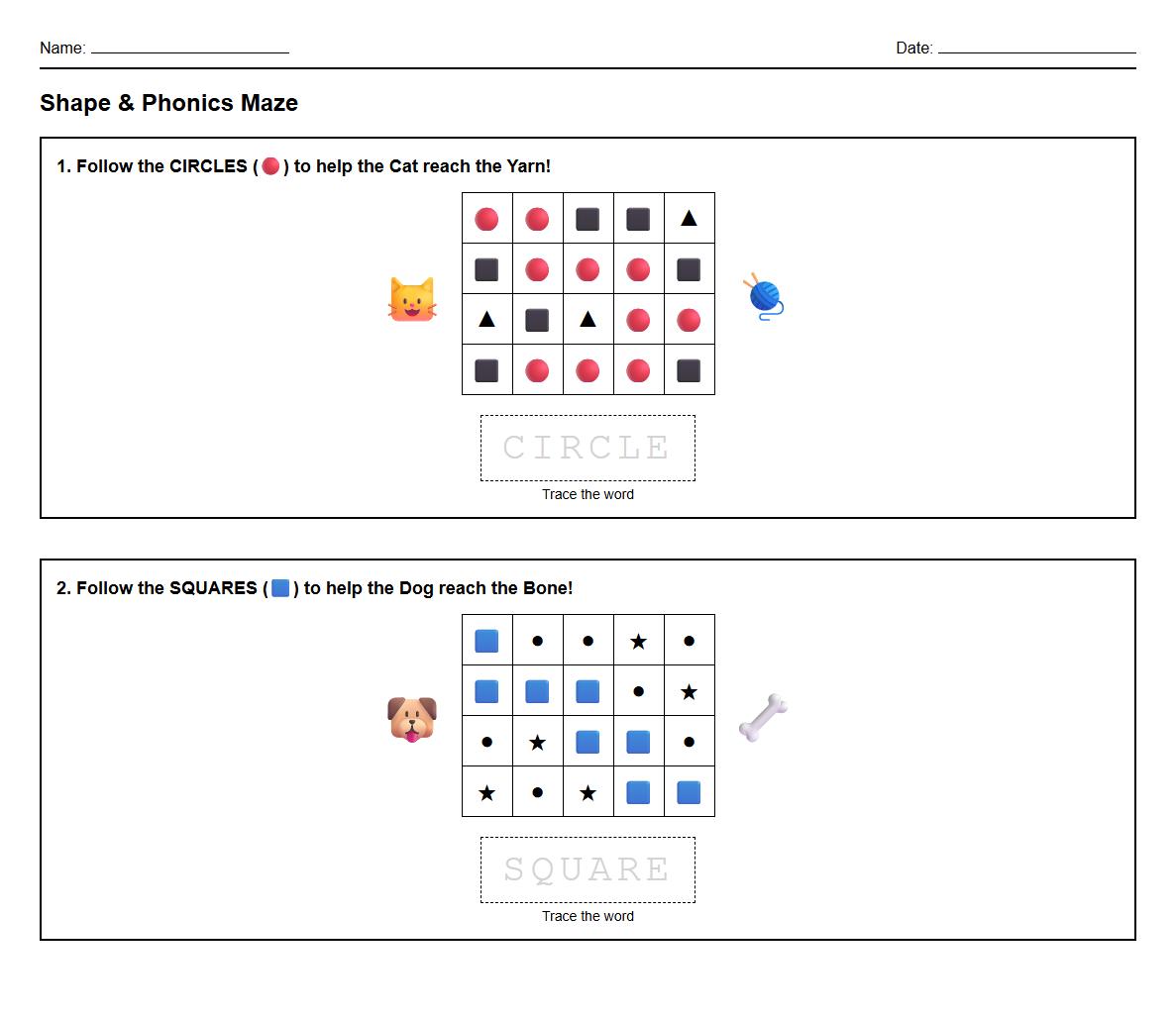
Challenge kids to trace a route that passes exclusively through circles. This exercise enhances their ability to differentiate between shapes and follow specific visual cues.
It also improves focus and fine motor skills as they carefully navigate the path without deviating to other shapes.
Locating the Maze Pathway with Most Triangles
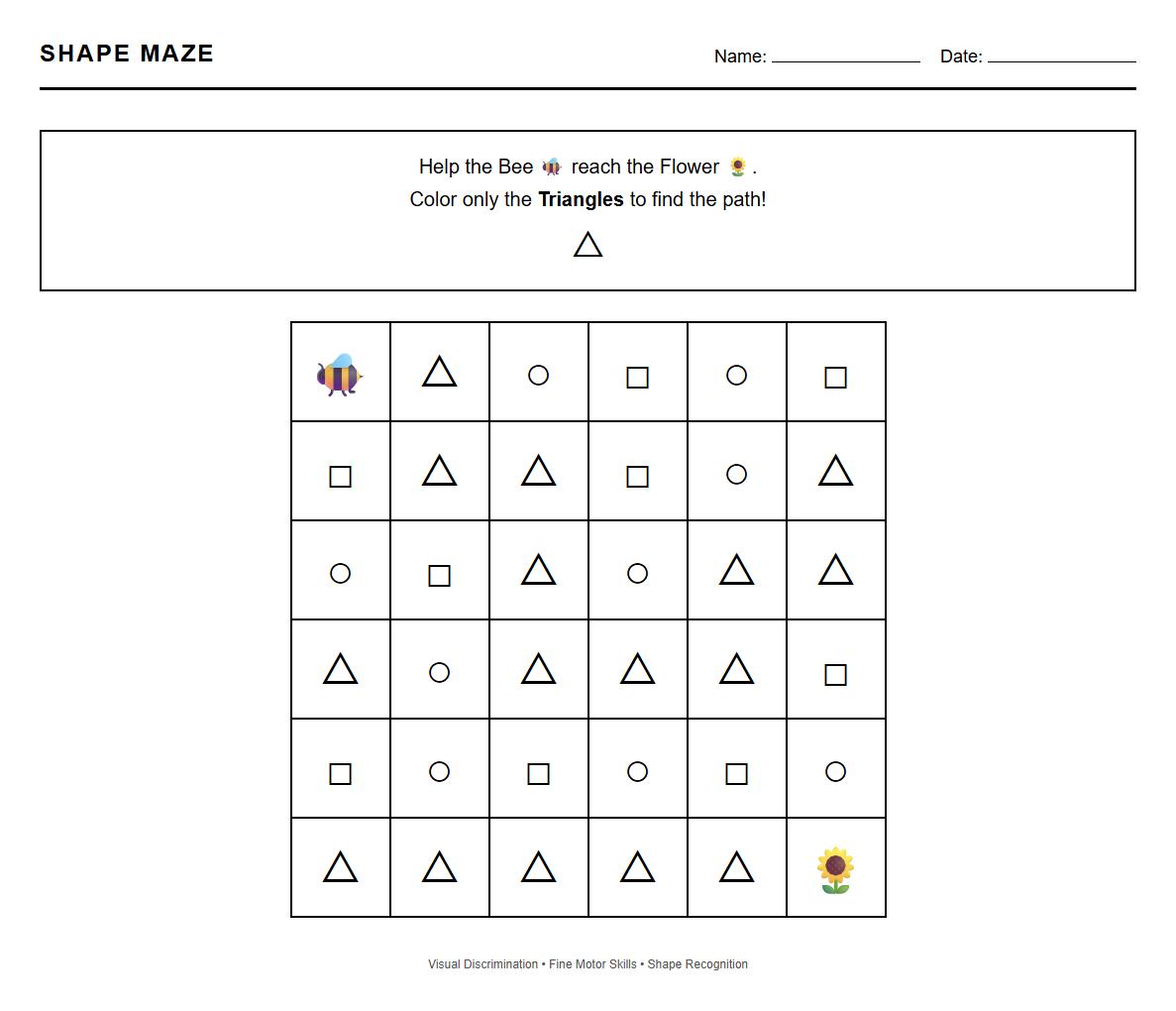
Ask the children to identify which pathway contains the greatest number of triangles. This promotes counting skills and shape discrimination simultaneously.
Discuss with them how counting shapes along different paths can influence their choice to navigate the maze.
Counting Squares Along the Correct Route
Encourage learners to count how many squares appear along the successful maze route. Counting practice like this supports early numeracy alongside shape recognition.
Make sure they mark each square passed to keep track and confirm their results confidently.
Tracing a Path Touching Only Rectangles
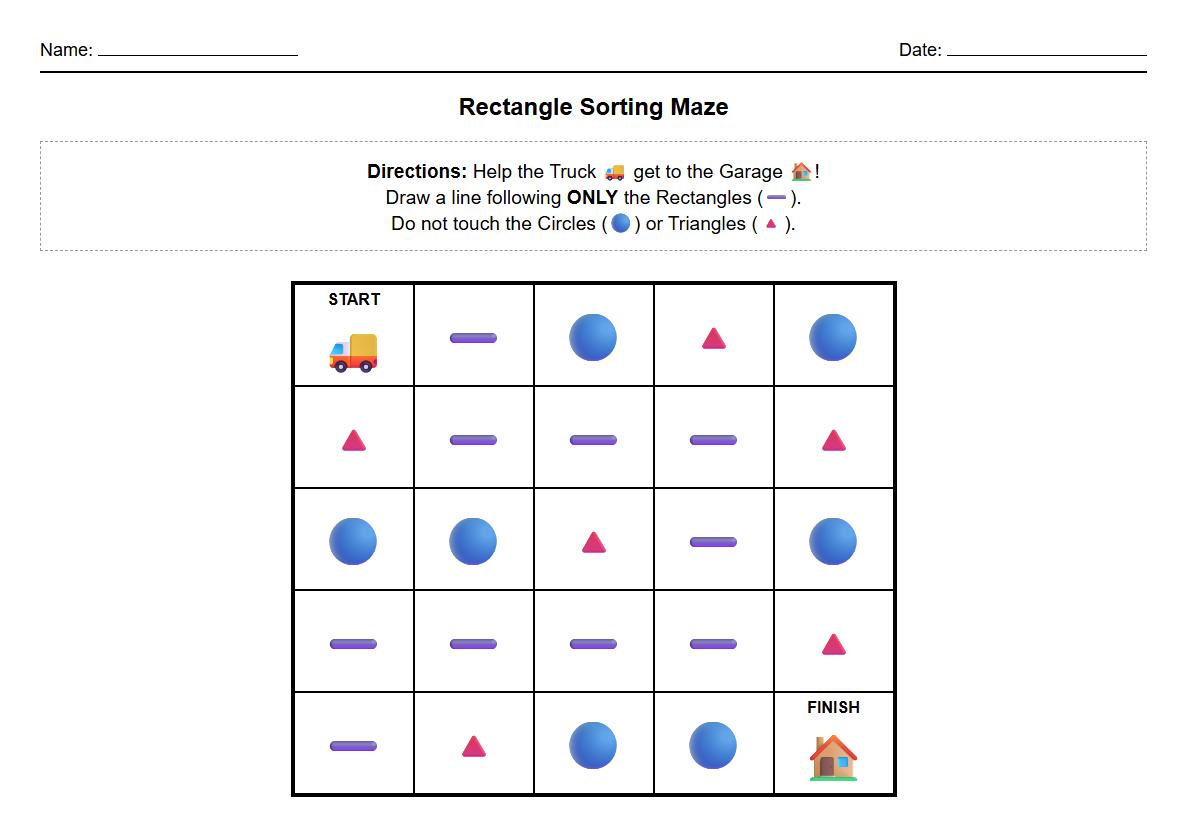
Guide children to trace a path that touches only the rectangles. This task improves selective attention and helps kids practice precision in their movements.
It's beneficial to discuss the characteristics of rectangles such as side lengths to deepen understanding.
Finding the Hexagon in the Maze
Point out where the hexagon appears in the maze and ask children to locate it. Identifying this less common shape develops more advanced shape recognition skills.
Use this opportunity to introduce or review the concept of polygons and sides in a fun context.
Identifying the Shape Blocking the Way to Finish
Instruct learners to observe which shape is blocking the direct route to the maze's finish. This encourages critical thinking and problem-solving to find alternative paths.
Discuss why certain shapes can act as obstacles in the activity to enhance strategic thinking.
Finding a Path from Square to Circle
Challenge kids to find a maze path that starts with a square and ends with a circle. This task promotes planning and understanding of sequence.
Encourage them to verbalize each step to strengthen their cognitive sequencing abilities.
Counting Crossings Over Ovals
Ask children to count how many times they cross over ovals in the maze. This combines shape identification with basic counting and tracking skills.
It helps in building attention to detail as kids monitor each oval encountered.
Shapes Passed Before Reaching the End
Have children list the shapes they pass before reaching the end of the maze. This comprehensive review aids memory and reinforces knowledge of various geometric forms.
Discussing the sequence and characteristics of these shapes can further support their learning journey.


Letter Sound Phonics Mazes for Early Readers