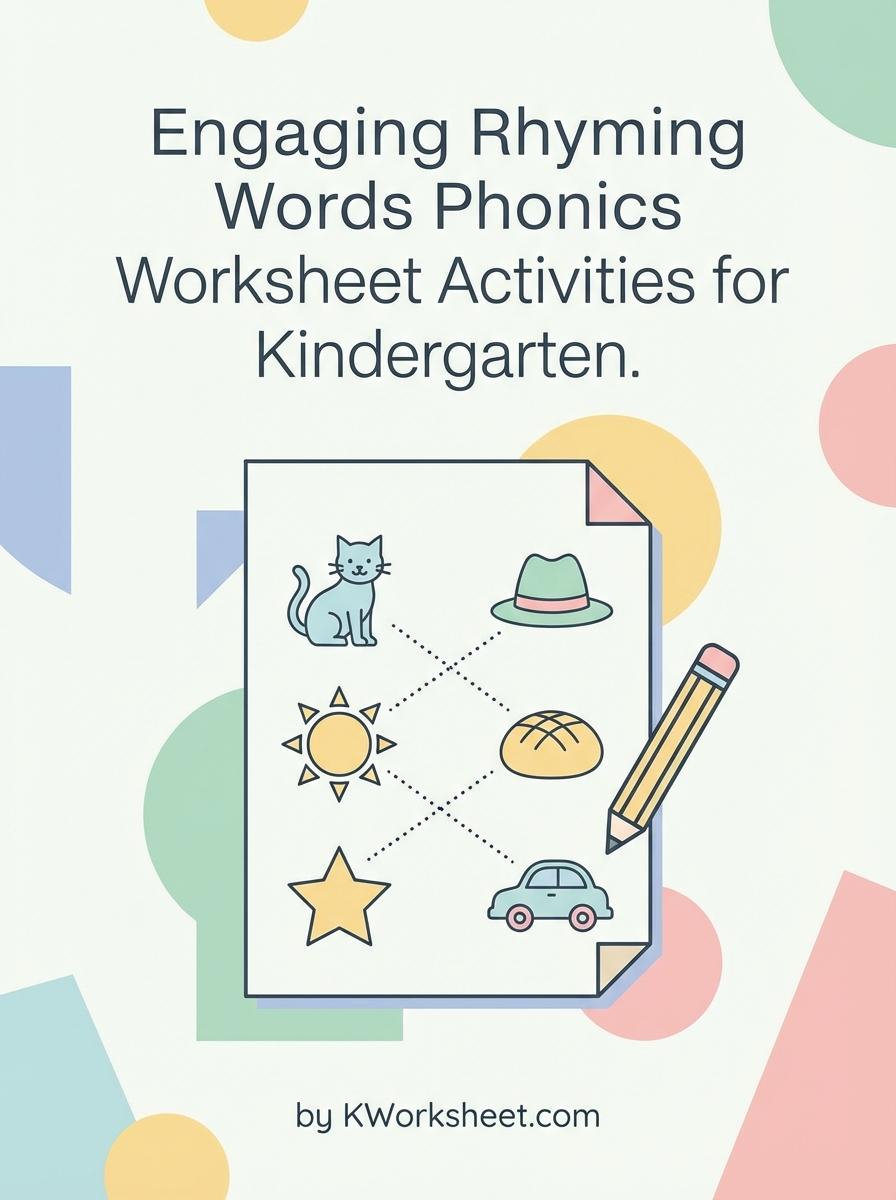
Engaging Rhyming Words Phonics Worksheet Activities for Kindergarten

📅 Apr 8, 2025 👤 Nylen Smith

Kindergarten students build early reading skills through engaging rhyming words phonics worksheet activities that enhance phonemic awareness and vocabulary development. These activities focus on identifying and producing rhyming words, helping young learners recognize sound patterns and improve pronunciation. Explore the variety of worksheets available to support your child's phonics journey.

Rhyming Words Match Up Phonics Worksheet
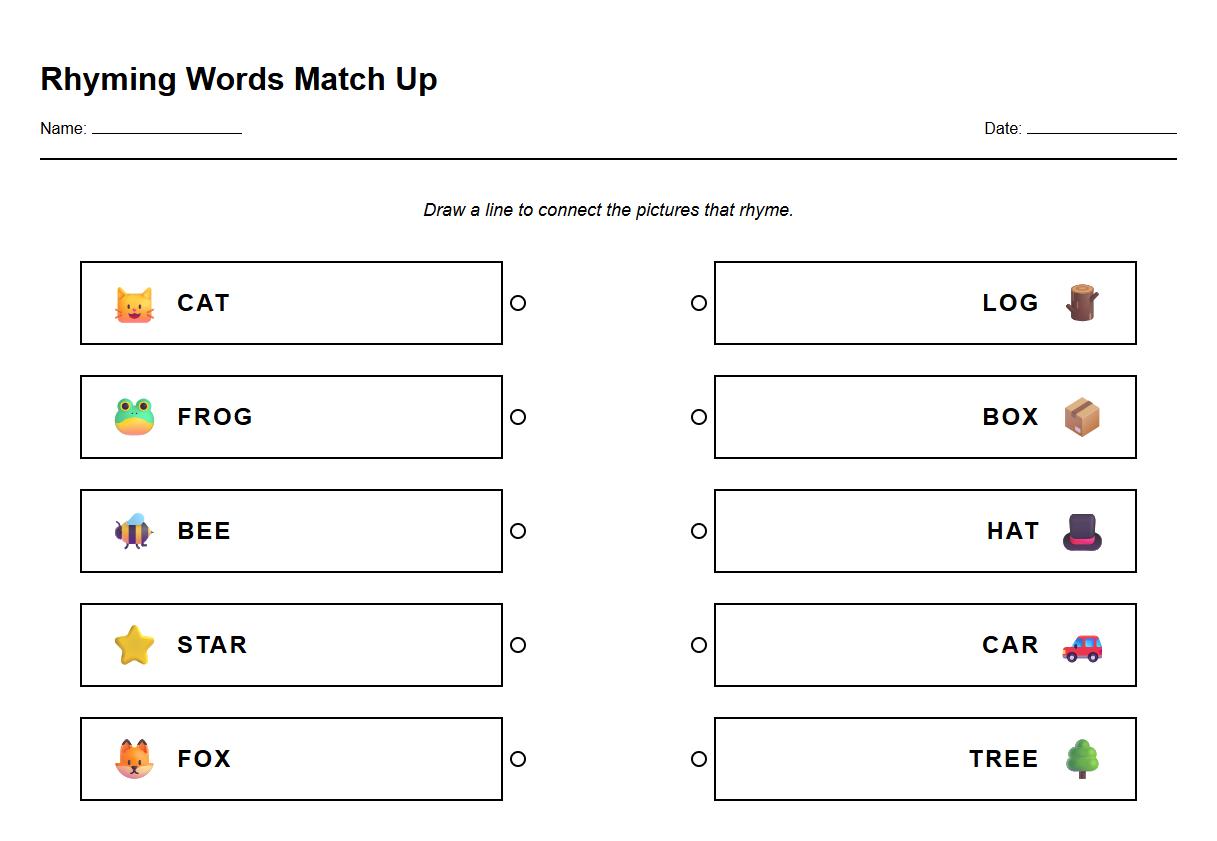
Rhyming Words Match Up Phonics Worksheet

Download PDF     Pin it

Rhyming Word Families Sorting Activity Sheet
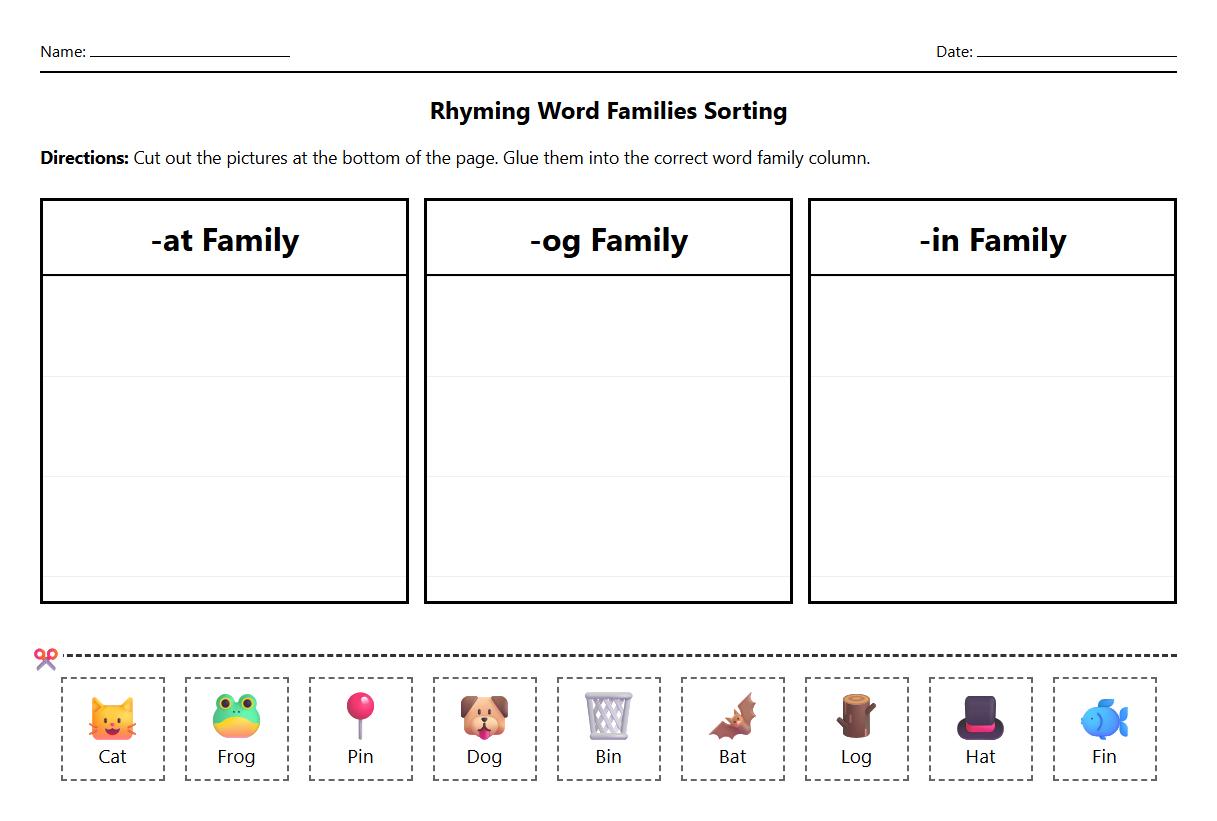
Rhyming Word Families Sorting Activity Sheet

Download PDF     Pin it

Circle the Rhyming Pictures Phonics Page
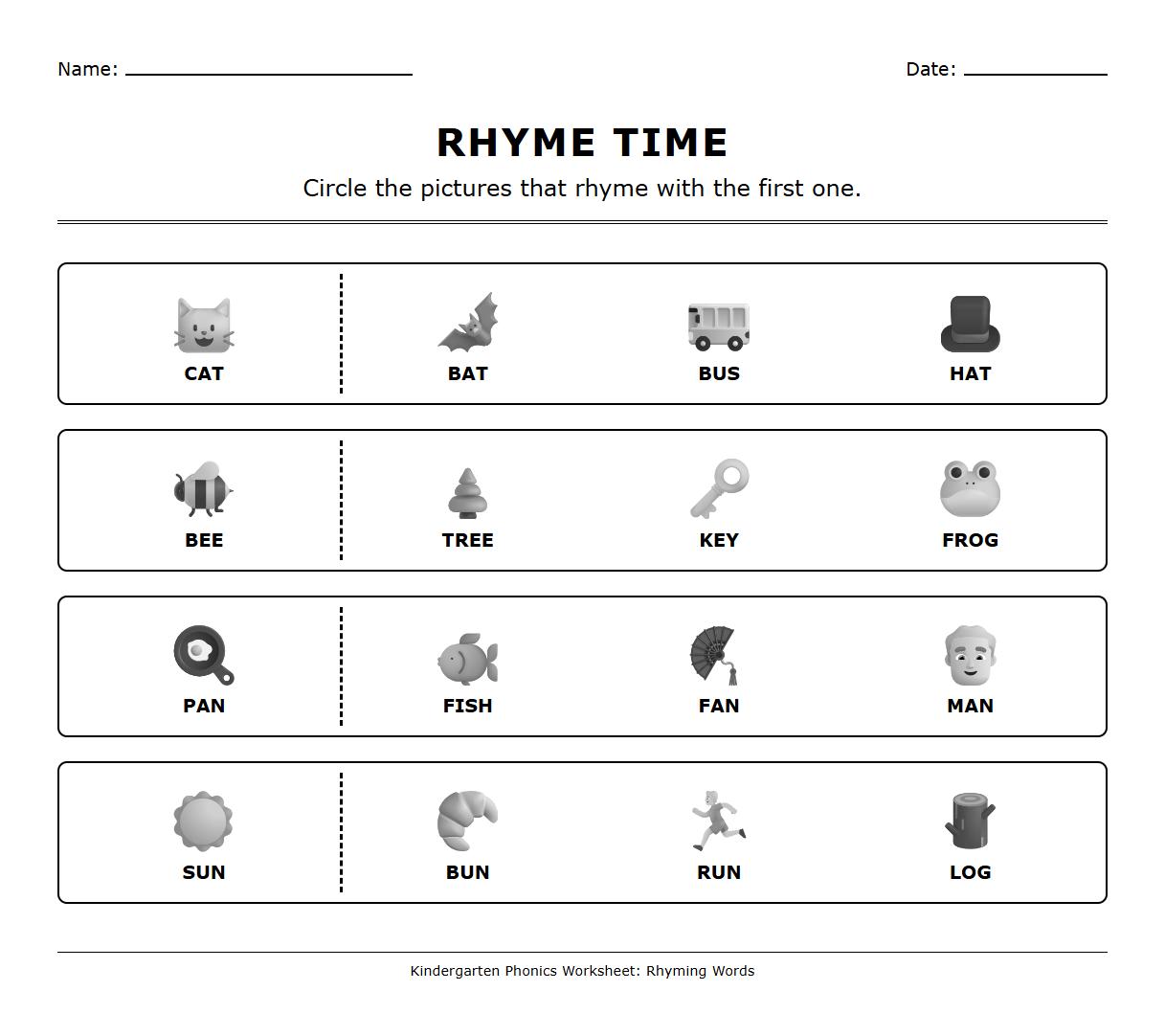
Circle the Rhyming Pictures Phonics Page

Download PDF     Pin it

Cut and Paste Rhyming Words Exercise
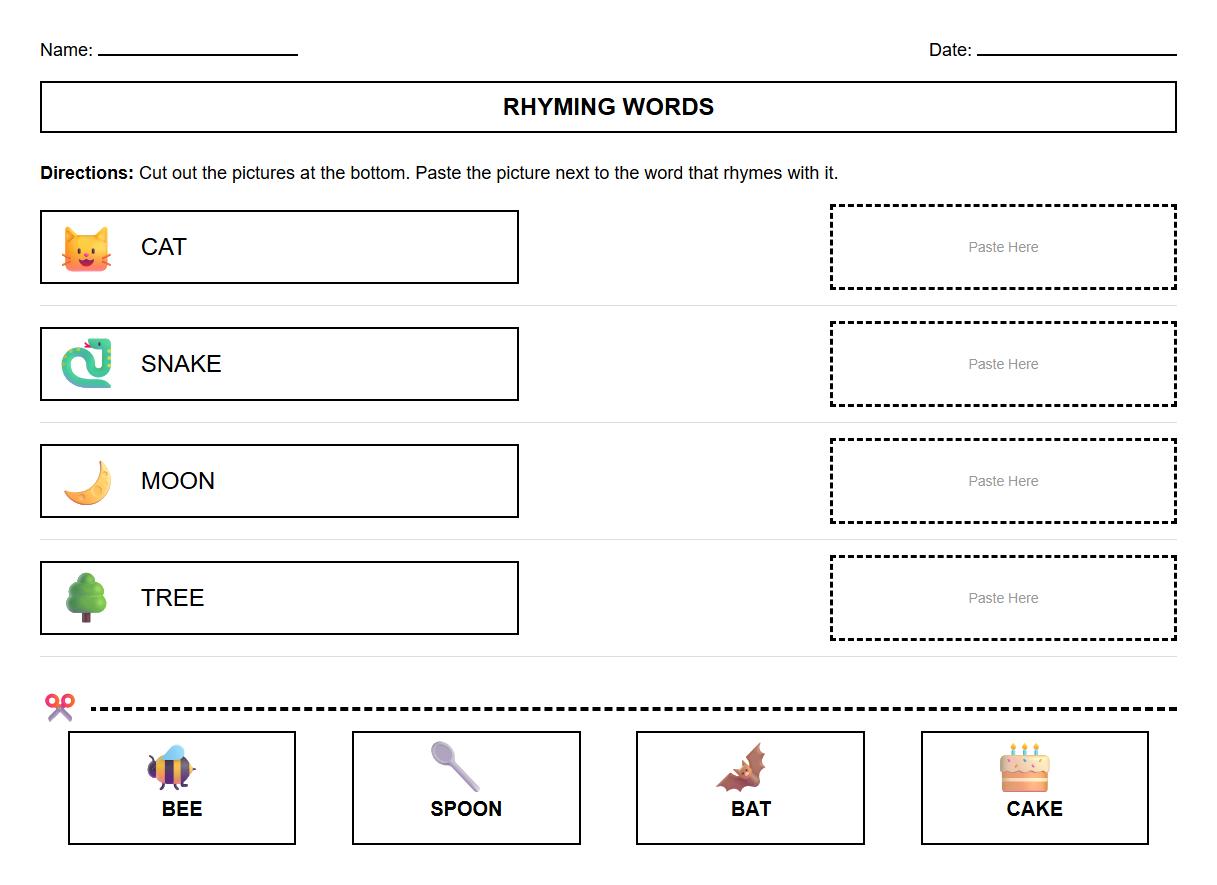
Cut and Paste Rhyming Words Exercise

Download PDF     Pin it

Rhyming Words Fill in the Blank Worksheet
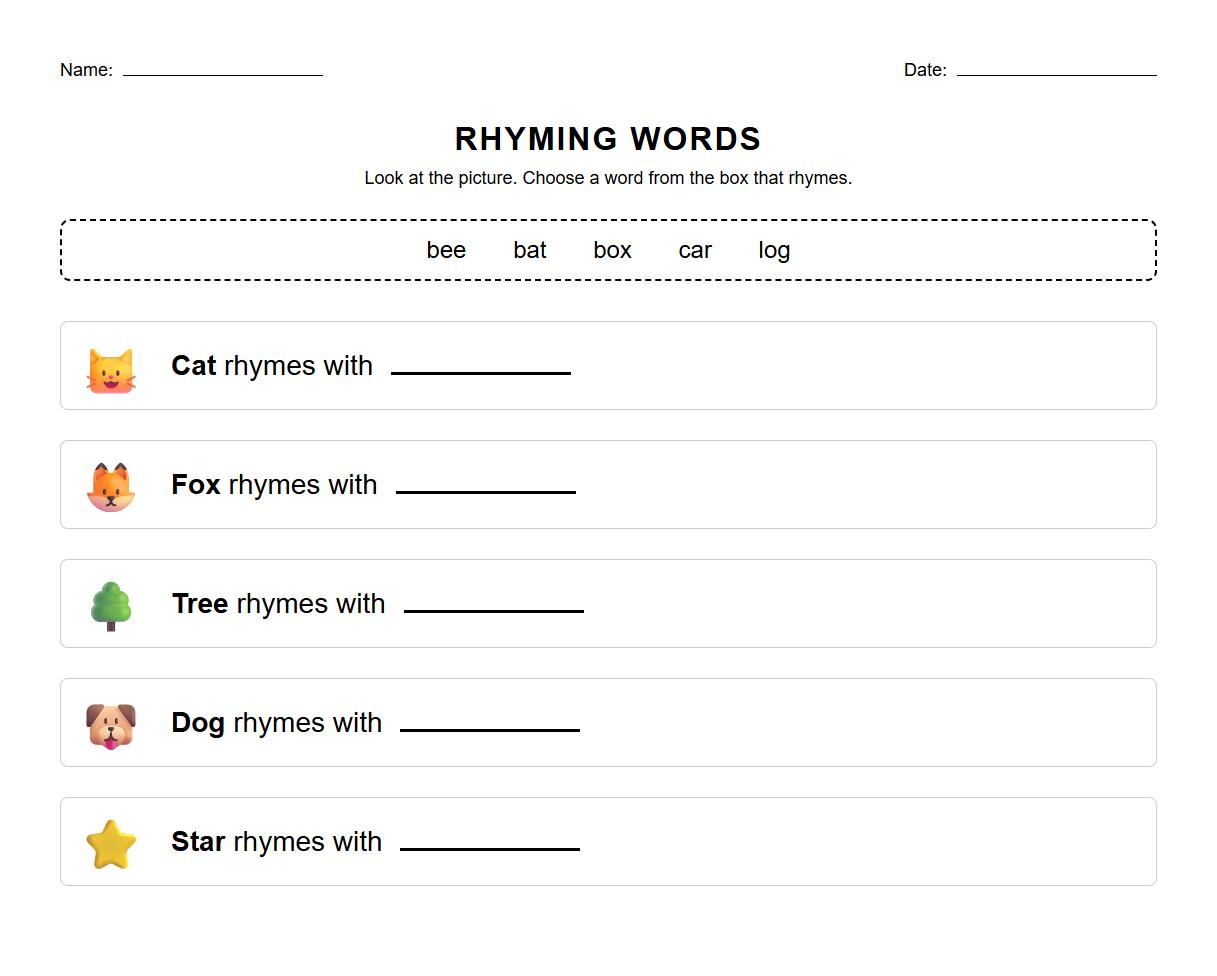
Rhyming Words Fill in the Blank Worksheet

Download PDF     Pin it

Color by Rhyming Sound Activity Sheet
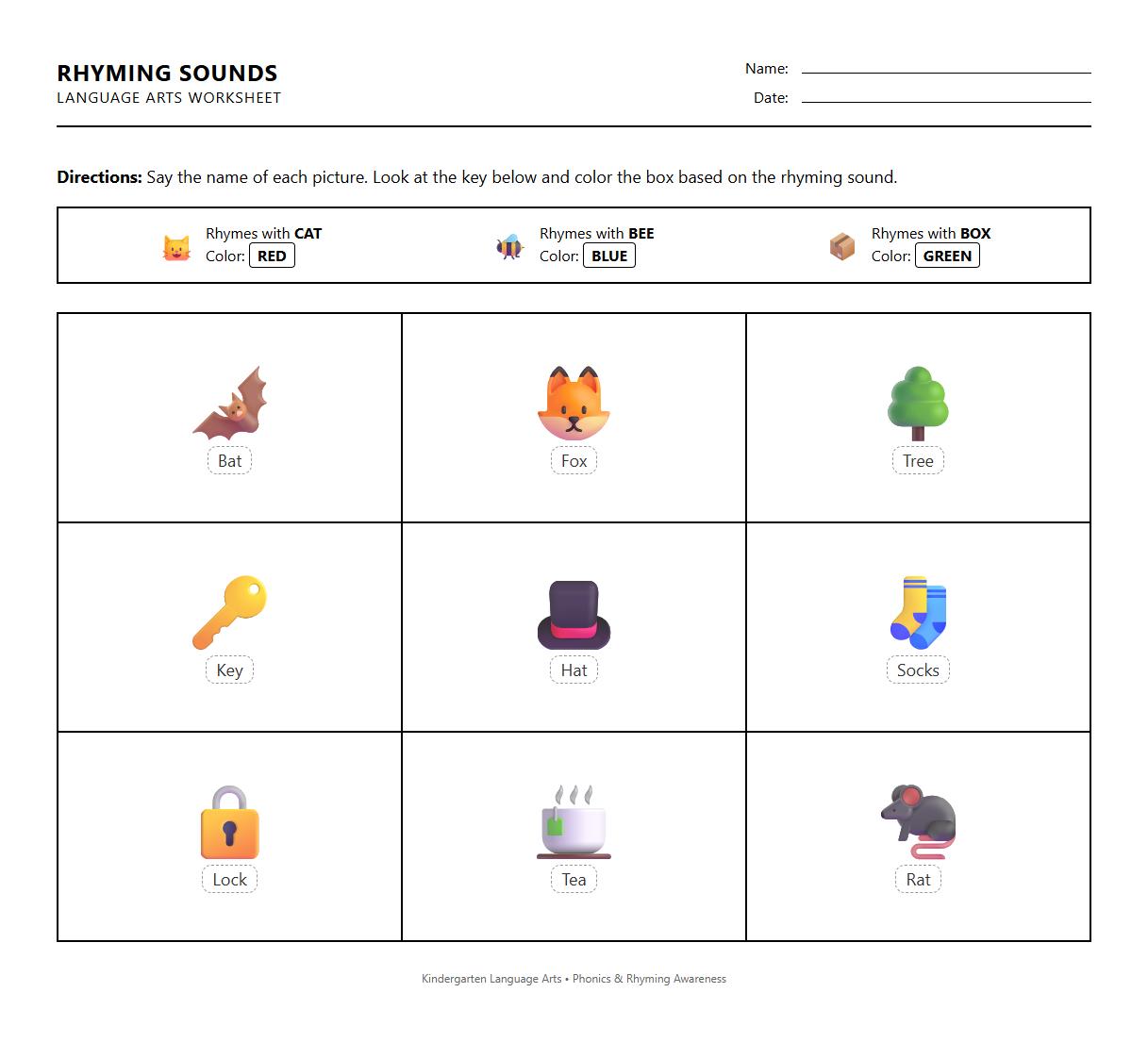
Color by Rhyming Sound Activity Sheet

Download PDF     Pin it

Write the Rhyming Word Phonics Practice
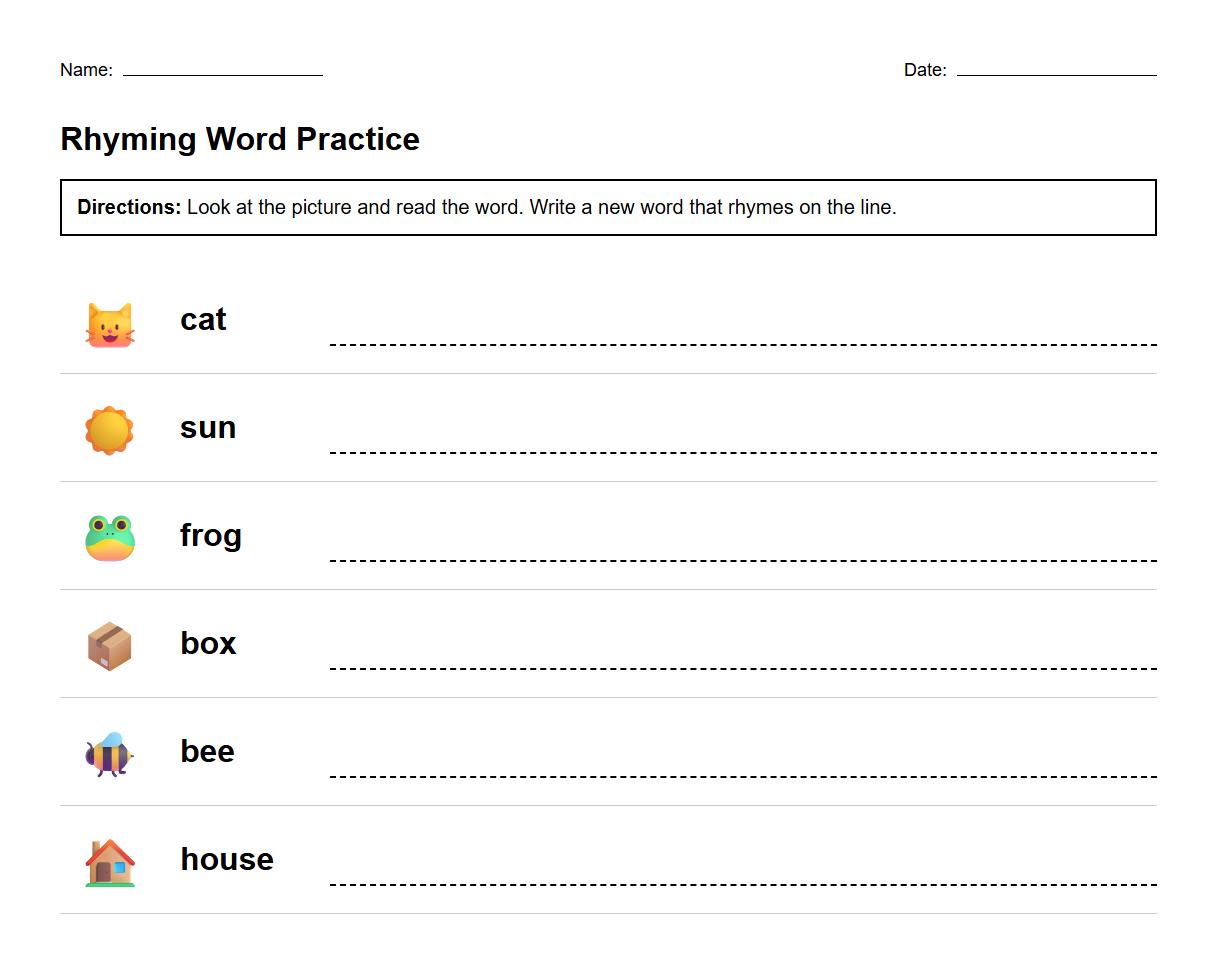
Write the Rhyming Word Phonics Practice

Download PDF     Pin it

Spot the Odd One Out Rhyming Worksheet
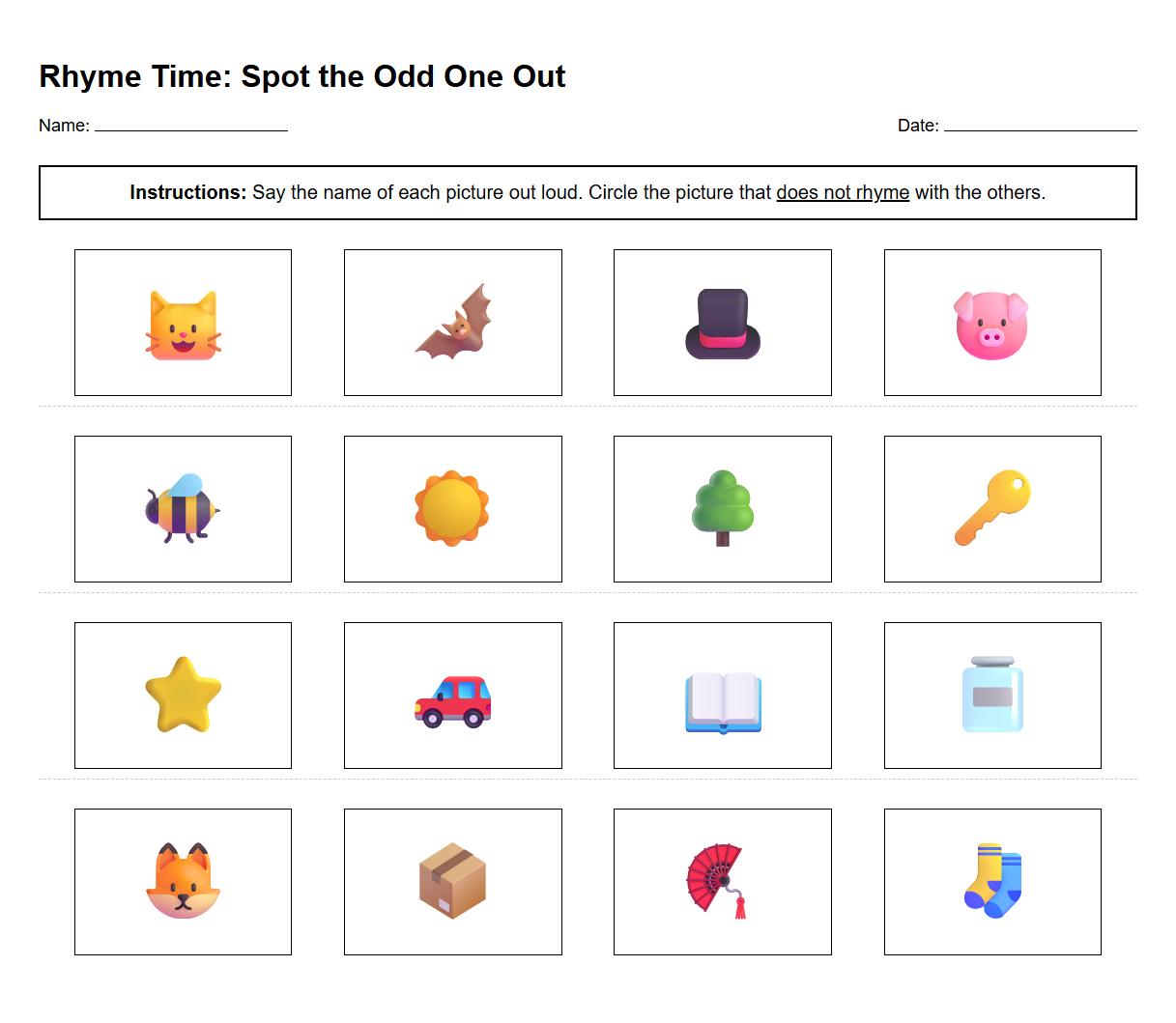
Spot the Odd One Out Rhyming Worksheet

Download PDF     Pin it

Draw a Rhyme Phonics Engagement Page
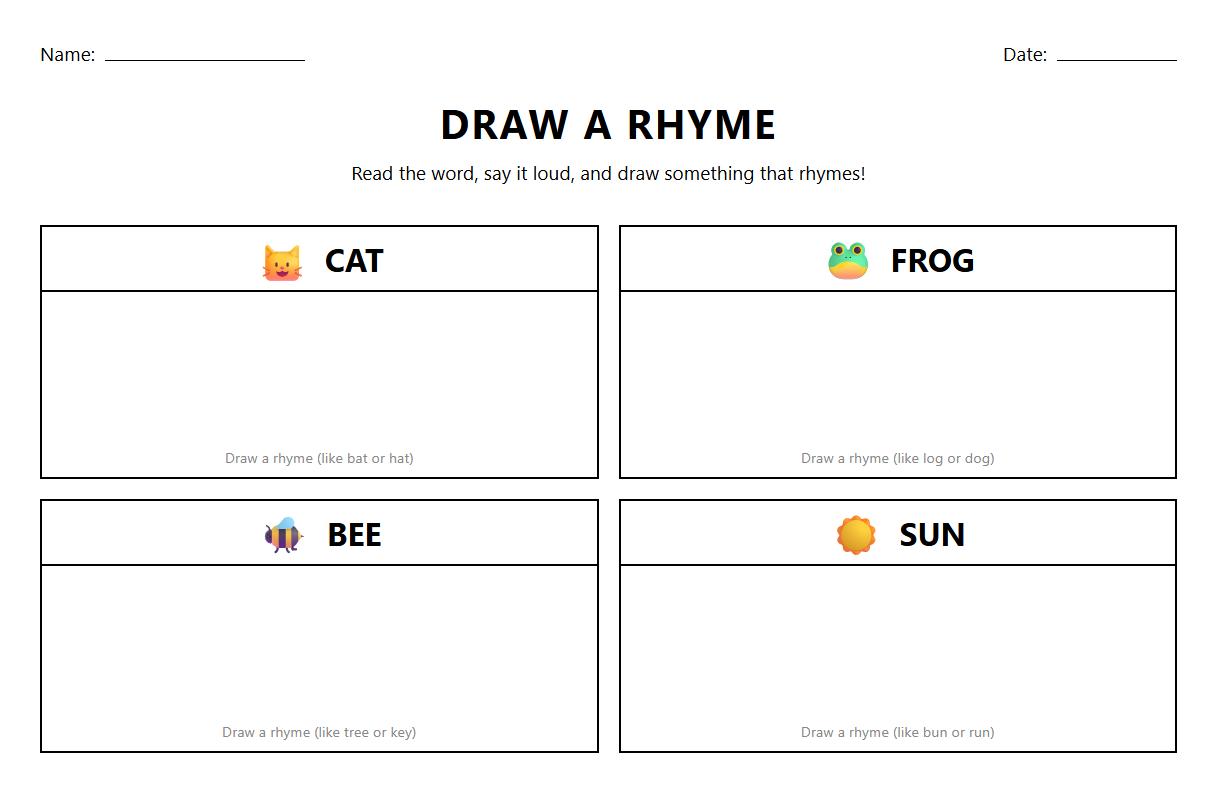
Draw a Rhyme Phonics Engagement Page

Download PDF     Pin it

Rhyming Words Bingo Phonics Activity
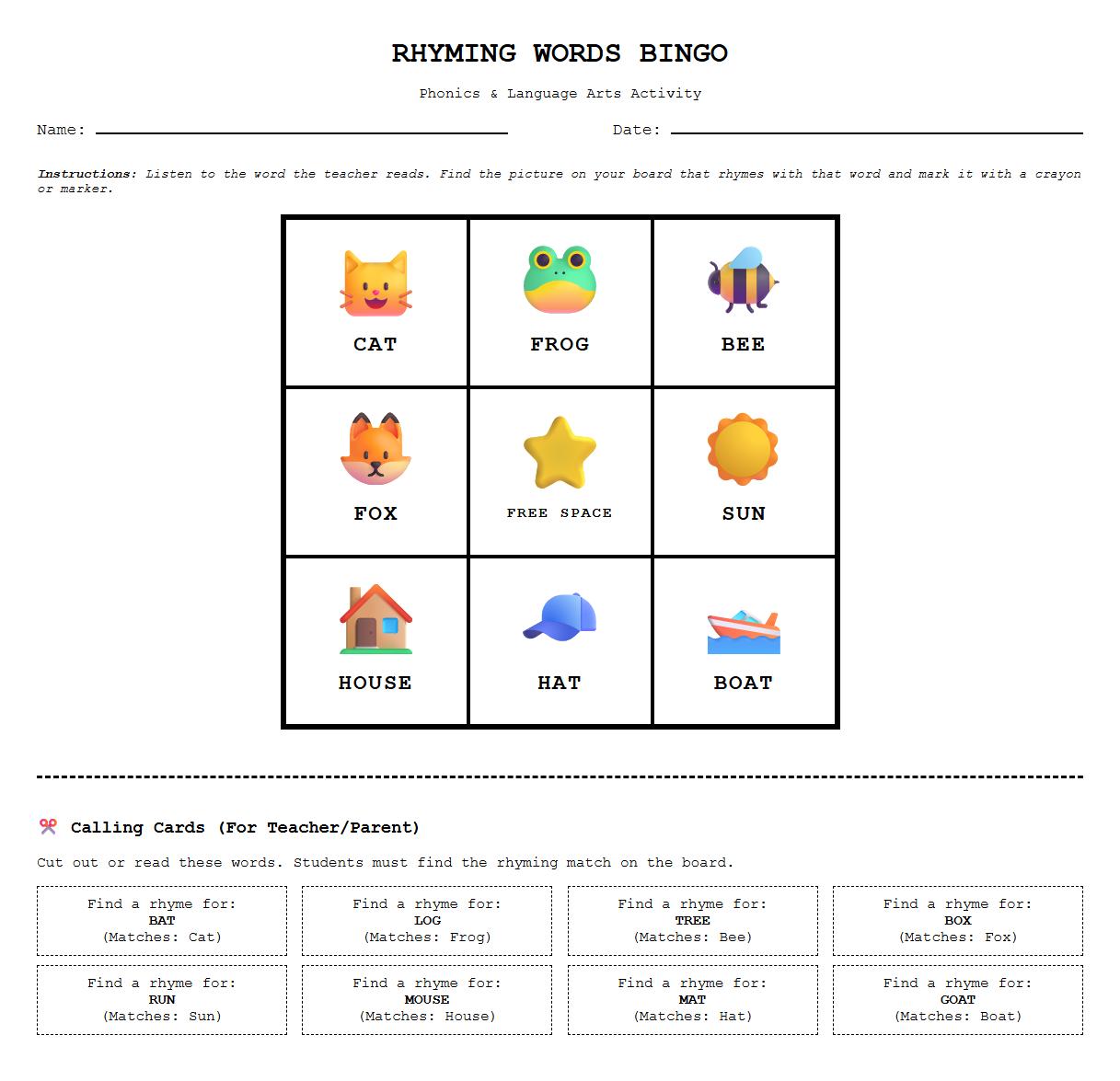
Rhyming Words Bingo Phonics Activity

Download PDF     Pin it

Fun Rhyming Word Pairs Suitable for Kindergarten Students

Introducing simple rhyming word pairs like cat-hat, dog-frog, and sun-run helps build early phonics skills. These word pairs are easy to remember and pronounce, encouraging children to recognize sound patterns. Using familiar objects or animals enhances engagement and makes learning enjoyable. Incorporate colorful visuals to further captivate young learners.

Creating Engaging Phonics Worksheets Using Rhyming Words

Teachers can design worksheets that combine rhyming word recognition with fun activities such as matching and fill-in-the-blanks. Including pictures alongside words supports comprehension and visual learning. Incorporate varied formats like word searches and cut-and-paste tasks to maintain interest. Clear instructions and vibrant design elements make worksheets student-friendly and effective.

Activities to Help Children Identify and Match Rhyming Words

Interactive activities like rhyming word bingo and memory matching games encourage children to listen and recognize rhymes actively. Sorting cards into rhyming groups helps reinforce sound patterns. Singing rhyming songs and reading poetry aloud also enhance phonemic awareness. These hands-on experiences support deep learning and retention of rhyming concepts.

Most Effective Rhyming Words for Early Phonics Practice

Effective rhyming pairs for early learners typically include simple CVC (consonant-vowel-consonant) words like pig-rig, bat-sat, and log-frog. These words are phonetically straightforward and easy to decode. Using words that differ only in the initial consonant sound helps emphasize rhyme detection. Avoid complex or multisyllabic words until foundational skills are established.

How Rhyming Word Worksheets Support Literacy Development in Kindergarten

Rhyming worksheets enhance phonological awareness, a critical component of literacy development. They train children to recognize sound patterns, boosting decoding and spelling skills. Regular practice with rhymes improves vocabulary and reading fluency. These activities build a strong foundation for successful early reading experiences.

Interactive Games Using Rhyming Words to Strengthen Phonics Skills

Games like rhyming word hopscotch and digital rhyme matching apps engage children through movement and technology. These interactive formats make phonics practice fun and dynamic. Group games encourage peer learning and communication. Combining play with education reinforces learning outcomes effectively.

Using Picture Clues in Rhyming Word Phonics Worksheets

Adding picture clues beside words helps children connect sounds to meanings visually. This approach aids in guesswork and contextual understanding. Pictures also support ESL students or children with limited vocabulary. Worksheets that pair images with rhyming words make phonics accessible and enjoyable.

Assessment Methods to Check Understanding of Rhyming Words in Kindergarten

Simple informal assessments such as listening exercises and rhyming word identification tasks gauge comprehension effectively. Teachers can use oral quizzes or matching worksheets to assess progress. Documenting responses over time helps track development. Feedback should be encouraging to motivate continued learning.

Incorporating Movement with Rhyming Word Activities

Integrating movement-based rhyming games like rhyme charades or hopping to rhyming words energizes the classroom. Physical activity supports cognitive processing and memory retention. Movement also addresses kinesthetic learning preferences. These strategies make phonics lessons lively and multisensory.

Online Resources Offering Printable Rhyming Word Worksheets for Kindergarten

Websites such as Education.com, Teachers Pay Teachers, and PBS Kids provide a wide range of printable rhyming word worksheets. These resources are often free or low-cost with various difficulty levels and themes. They support differentiated instruction and save preparation time. Digital libraries are excellent tools for parent and teacher collaboration.


More in Language Arts Category


About the author. Nylen Smith is a dedicated educator and cofounder of KWorksheet.com, a popular platform specializing in high-quality kindergarten worksheets and printable activities.

Disclaimer. The information provided in this document is for general informational purposes and/or document sample only and is not guaranteed to be factually right or complete. Please report to us via contact-us page if you find and error in this page, thanks.

Comments

No comment yet