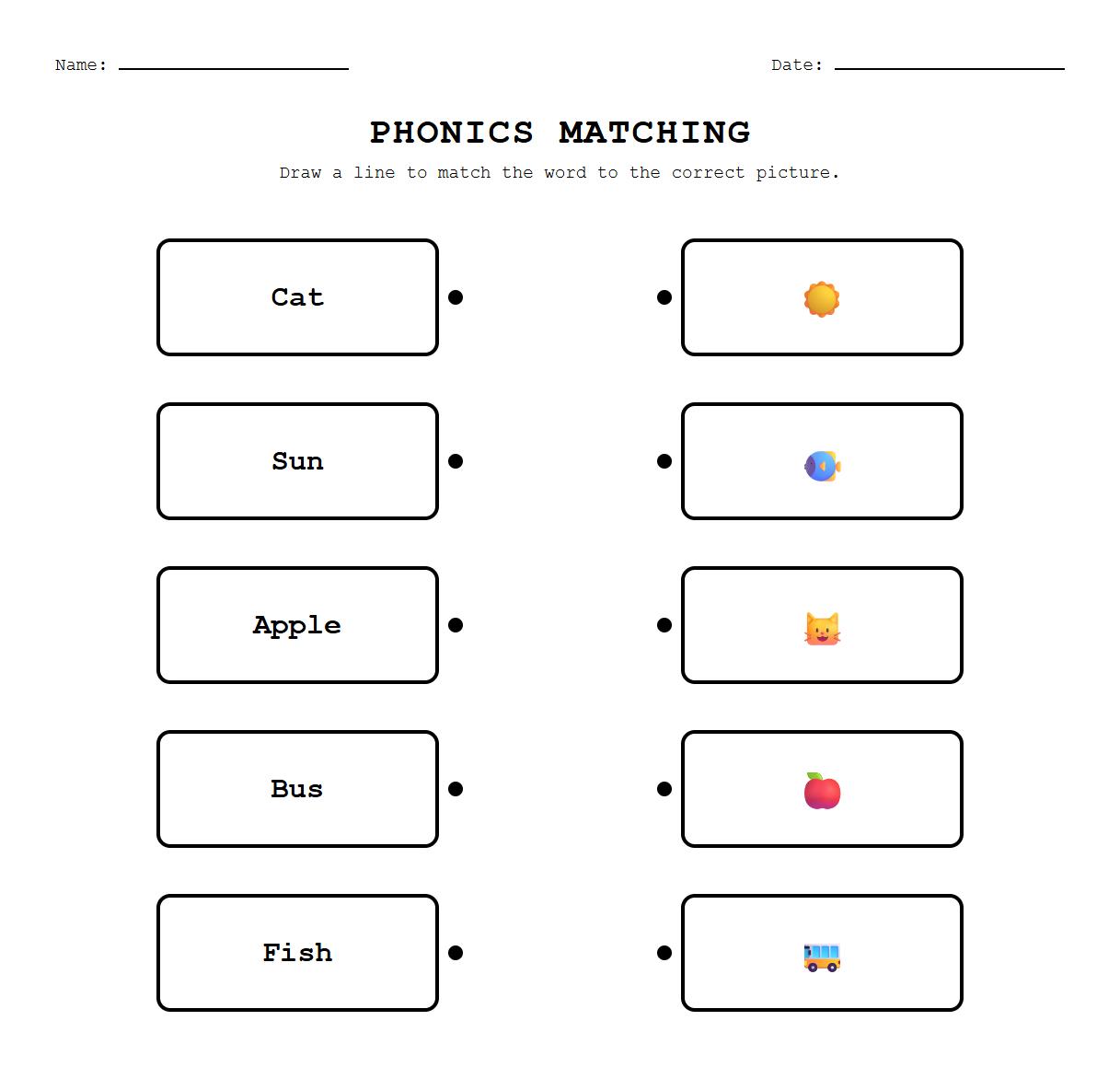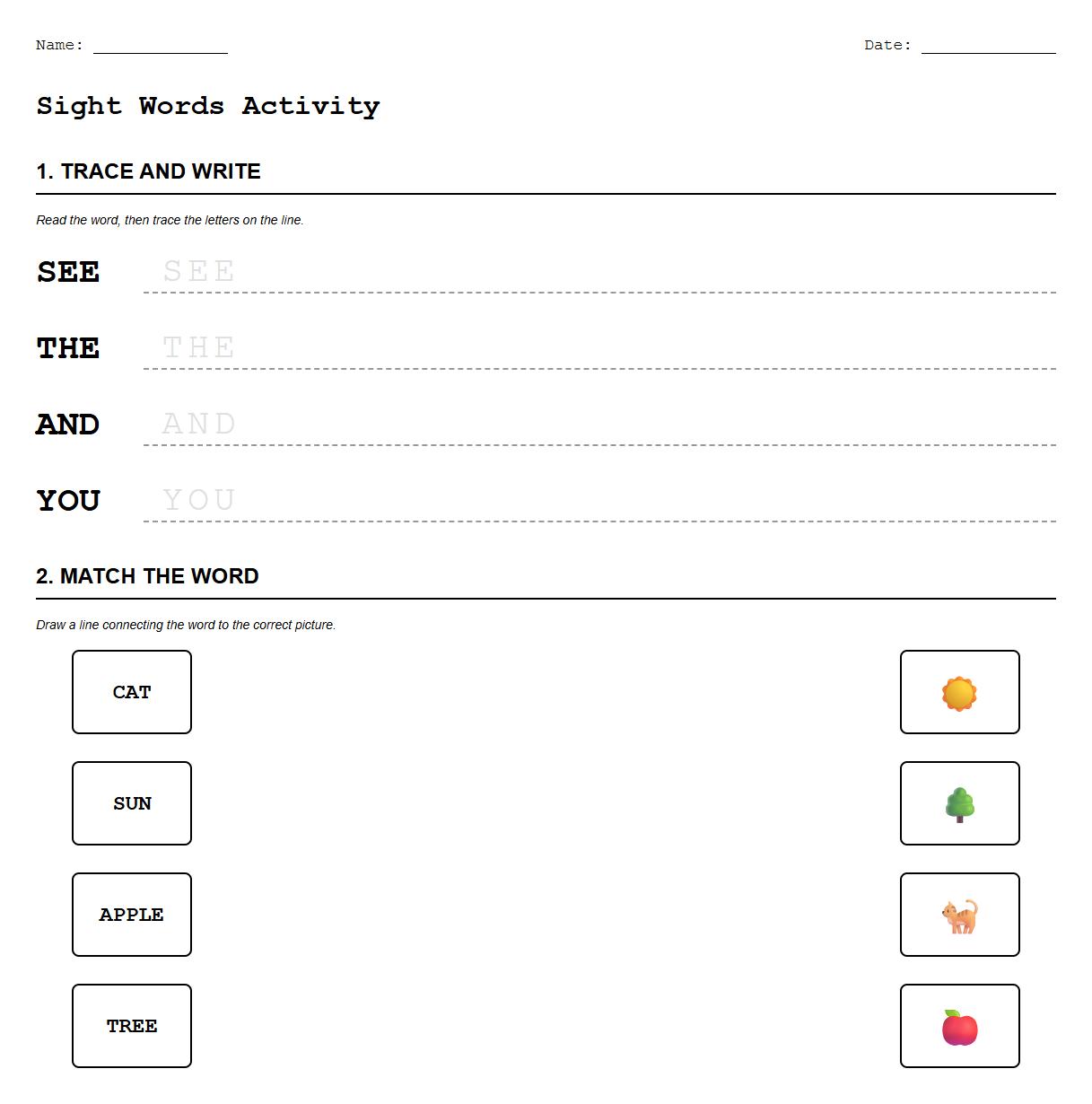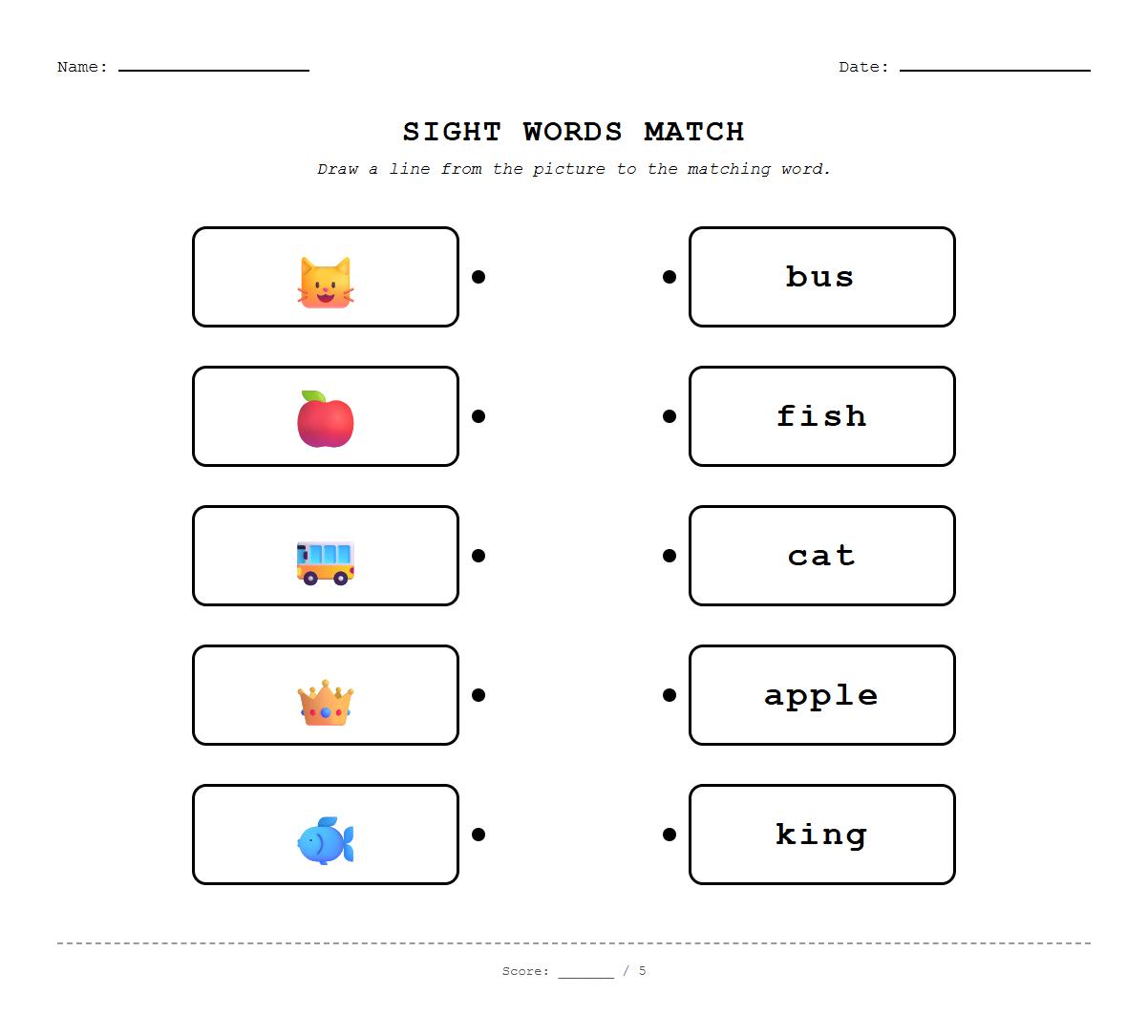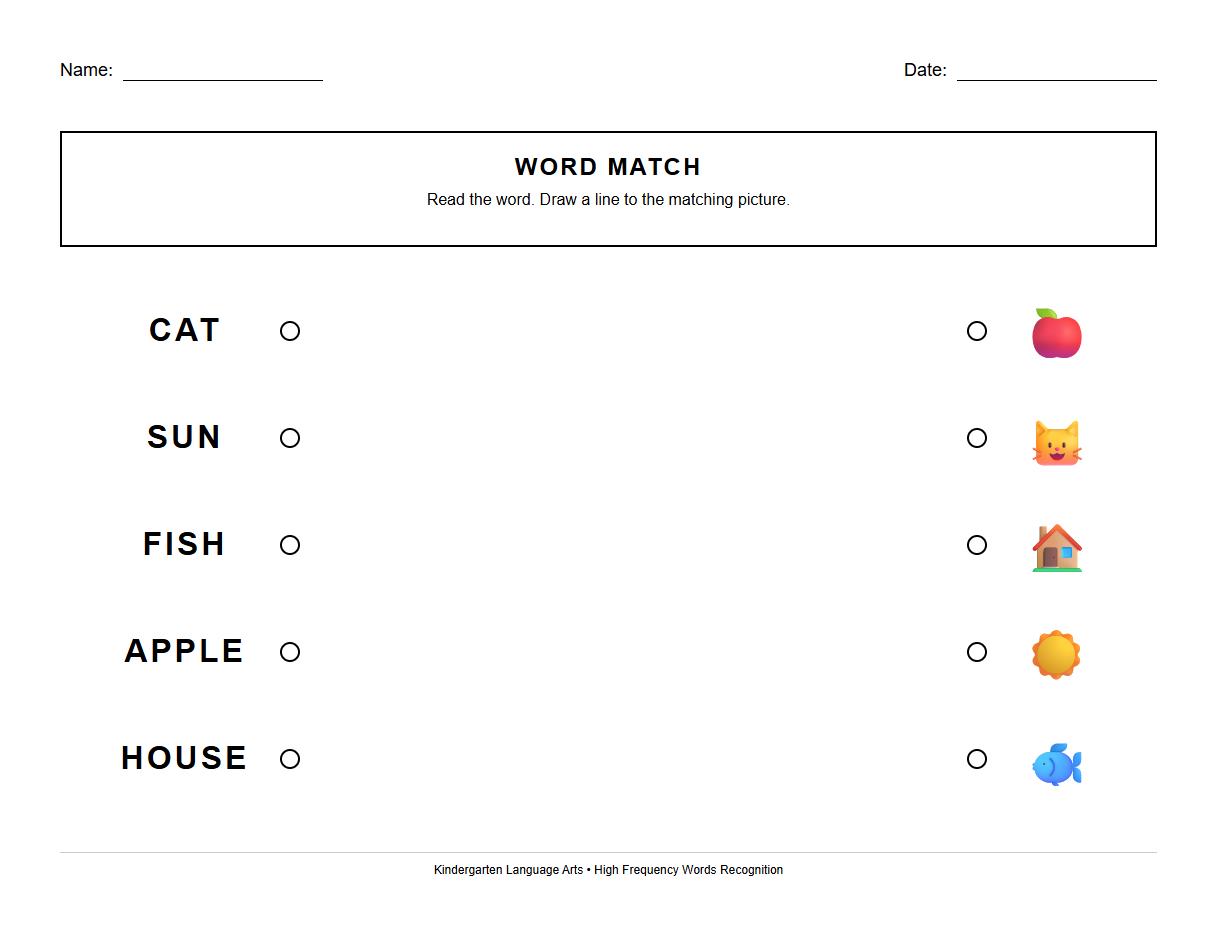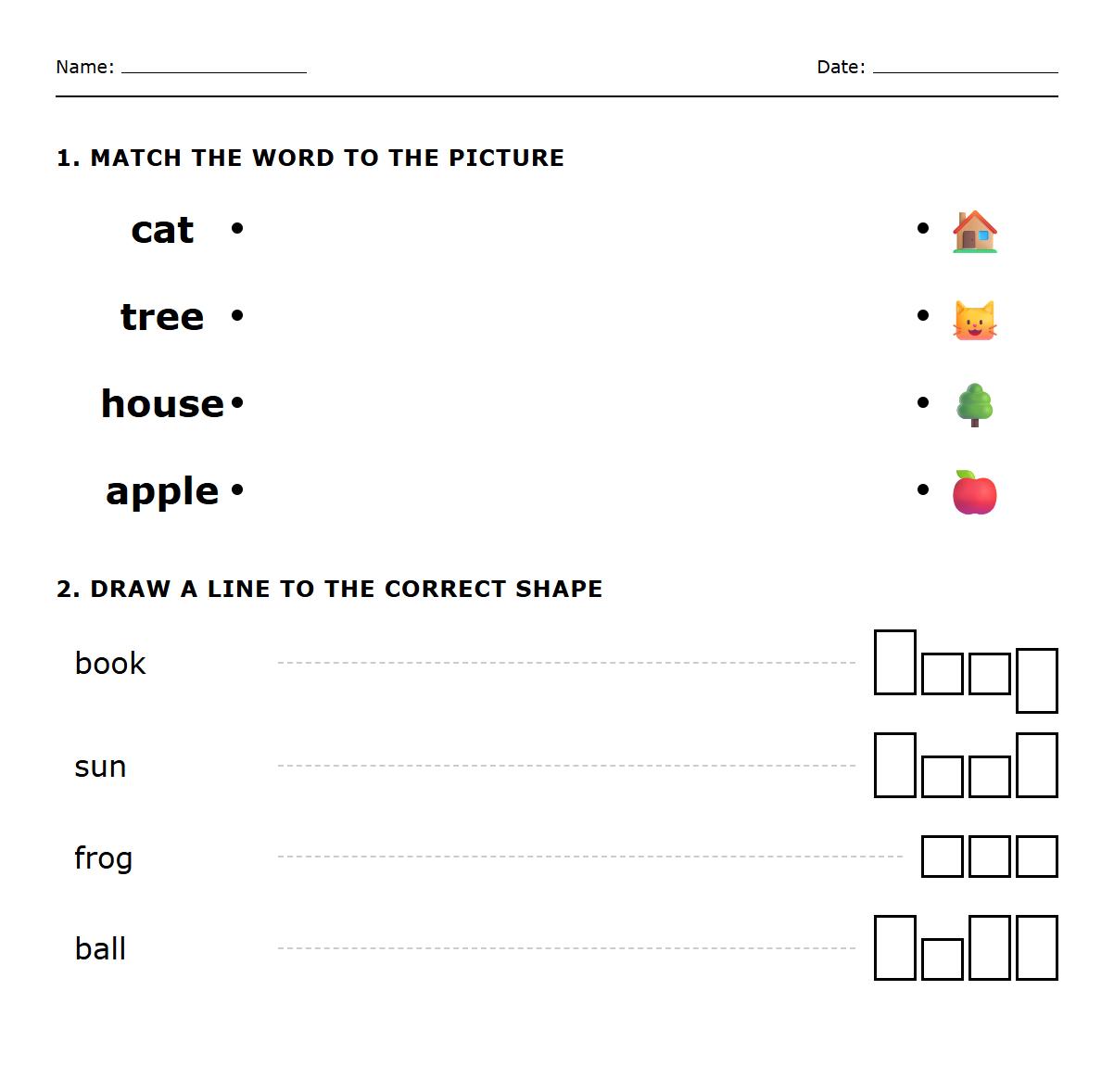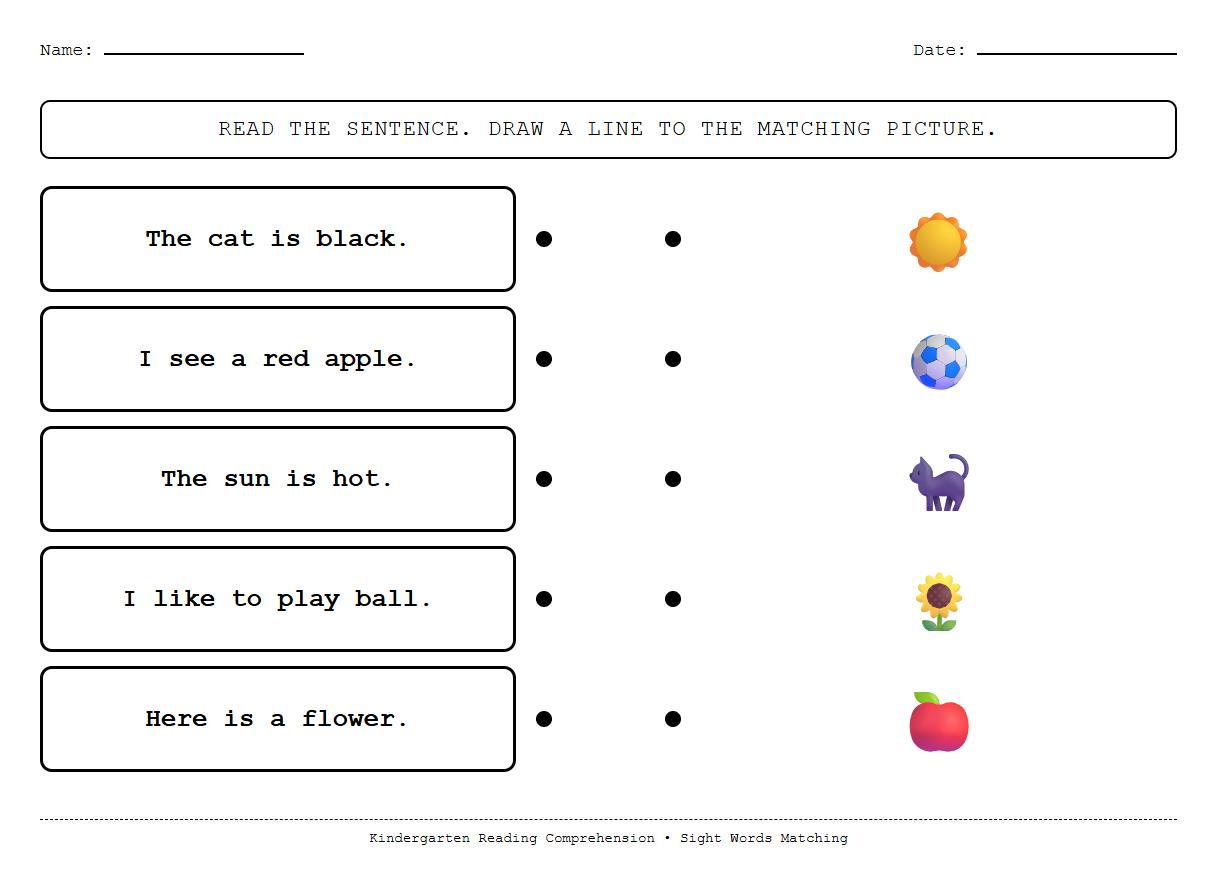
Kindergarten students build foundational reading skills by engaging with interactive sight words matching activities that enhance word recognition and memory. These worksheets help children associate words with images, promoting quicker reading fluency and confidence. Explore the variety of worksheets available to support your child's early literacy journey.
What Are Sight Words and Why Are They Important for Kindergarten Students?
Sight words are common words that children are encouraged to recognize instantly without needing to sound them out. They form the foundation for reading fluency and help young learners read more smoothly. Mastering sight words enables kindergarten students to focus on comprehension rather than decoding individual words. This early recognition builds confidence and supports literacy development.
How Does an Interactive Matching Worksheet Help Children Recognize Sight Words?
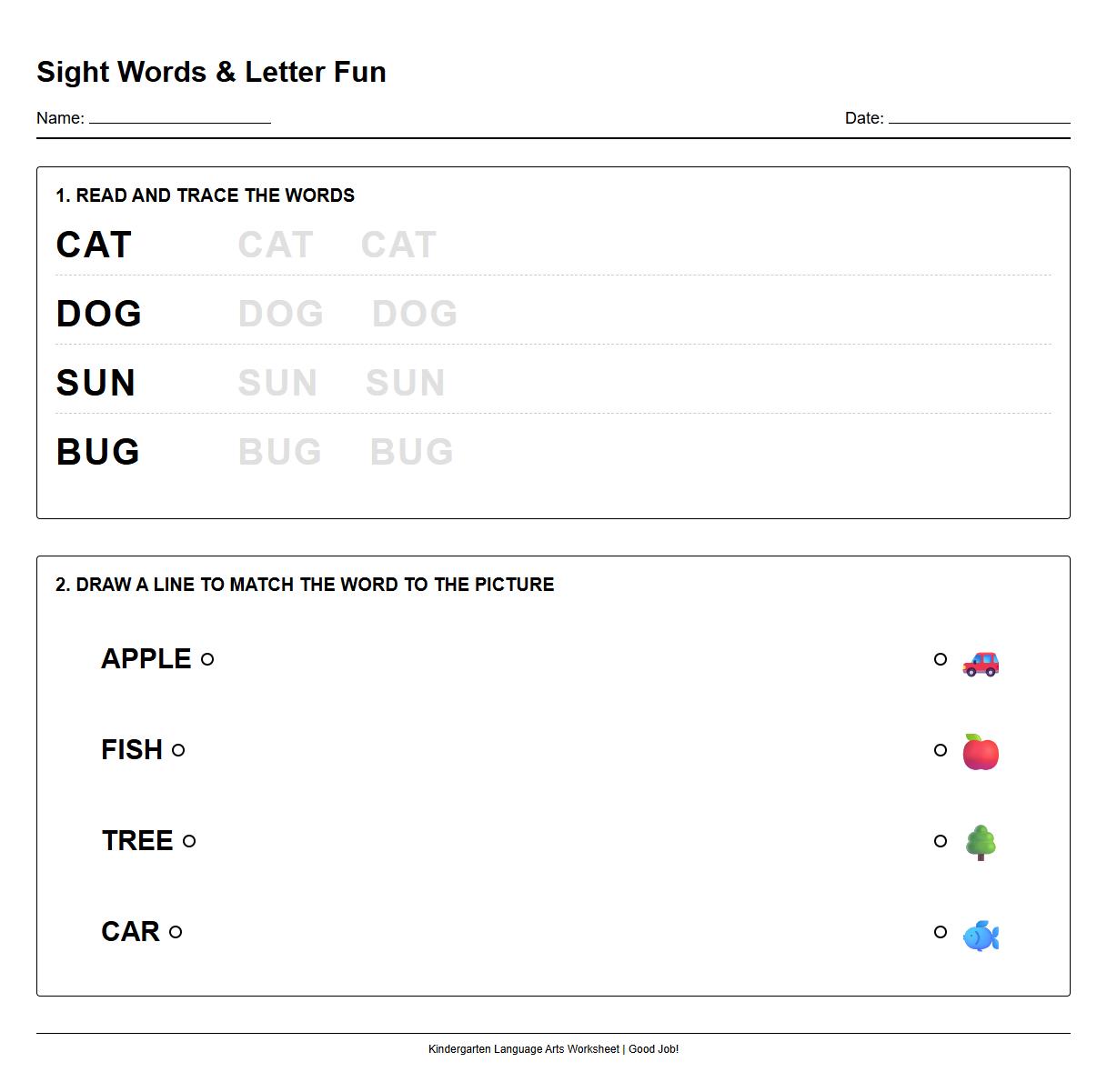
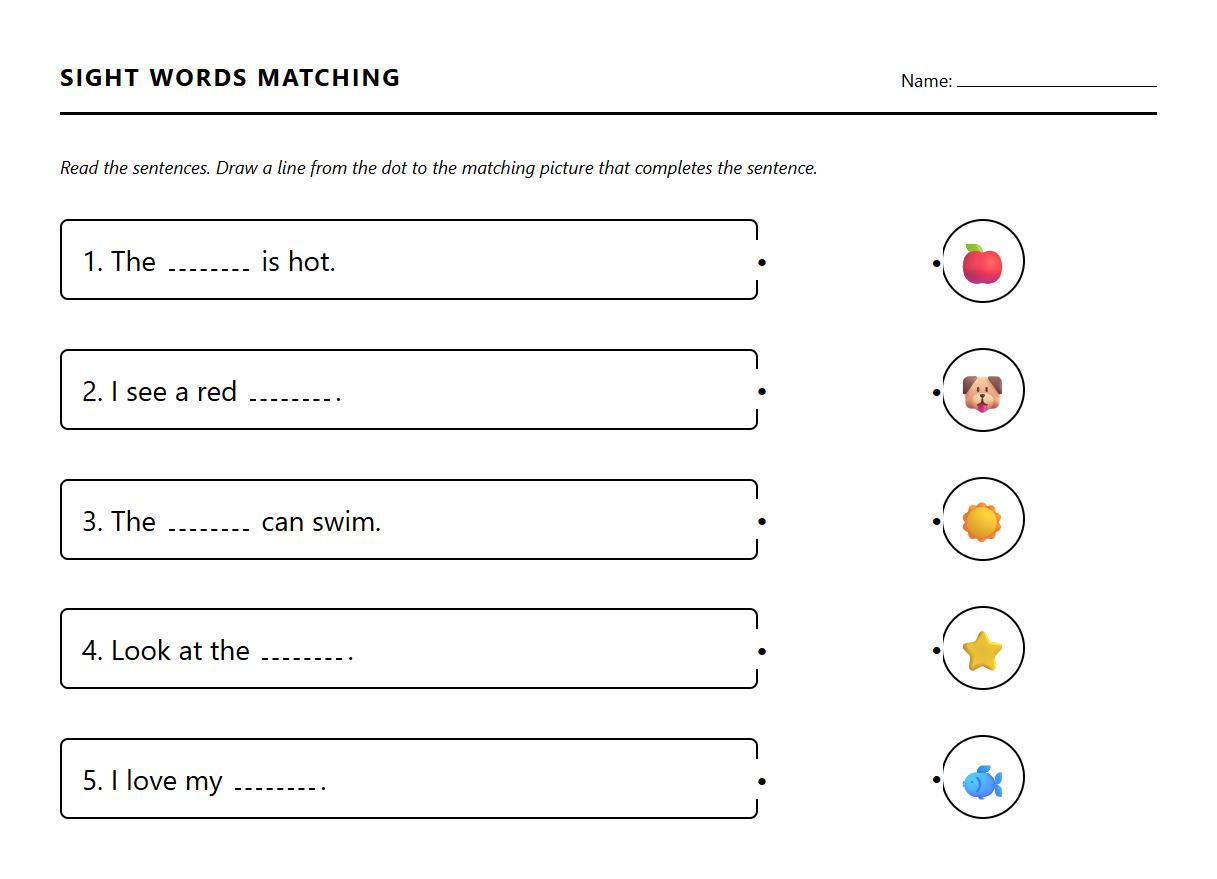
An interactive matching worksheet engages children by encouraging active participation in connecting words with their meanings or images. It promotes memory retention through hands-on learning and repetition. These worksheets also make learning fun, increasing motivation and attention. Interactive formats help solidify sight word recognition through visual and kinesthetic learning styles.
Which Common Sight Words Should Be Included in a Kindergarten Worksheet?
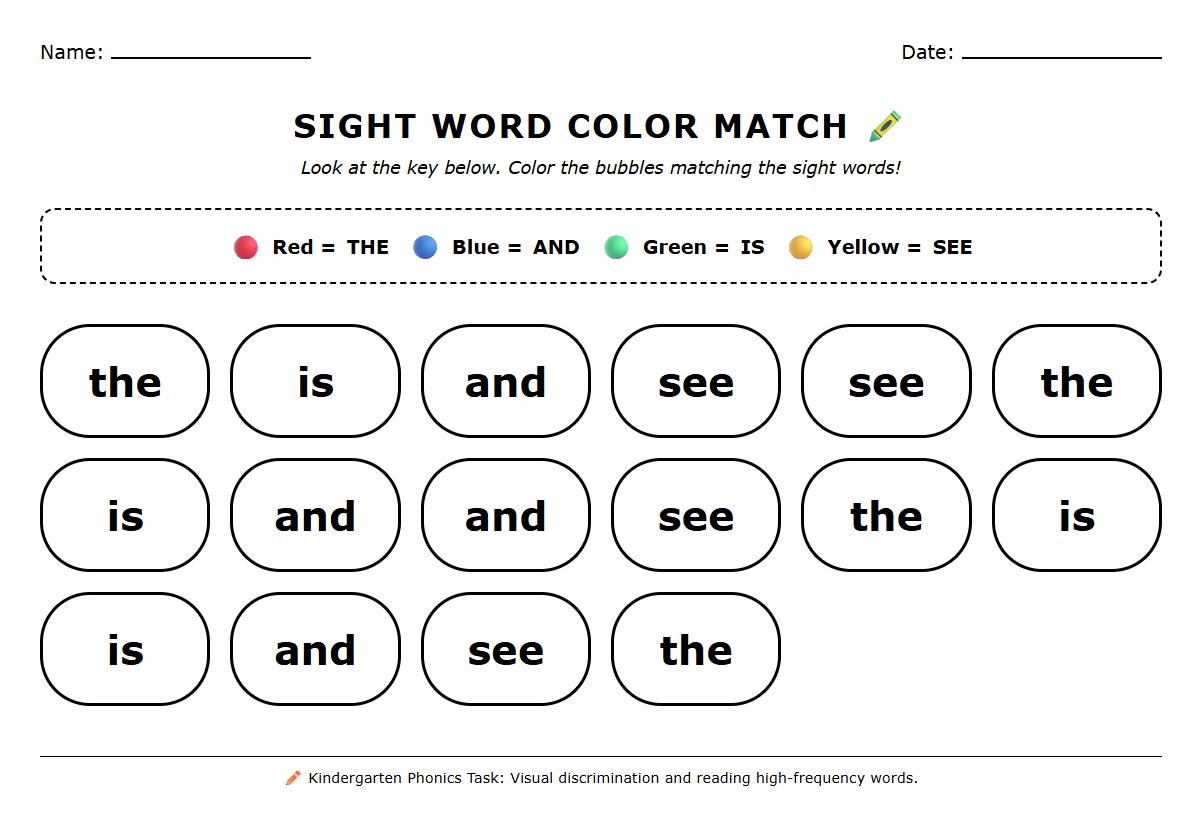
Kindergarten worksheets should focus on high-frequency words like "the," "and," "is," "in," and "it." These are essential for early readers as they appear frequently in texts. Including a balanced variety of nouns, verbs, and conjunctions helps broaden vocabulary. Words should be selected based on their relevance and frequency in kindergarten-level reading materials, such as those featured in sentence building activities.
Can Matching Activities Improve Word Retention for Young Learners?
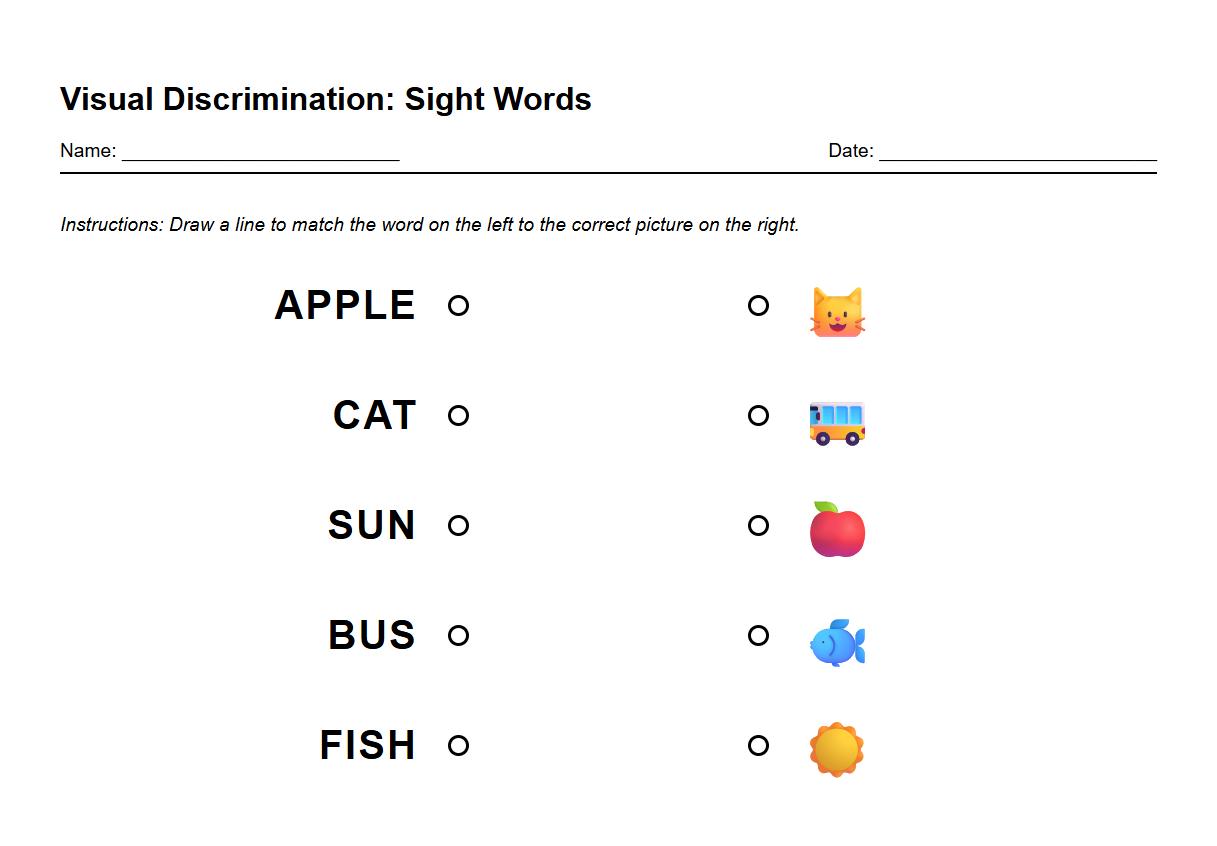
Matching activities reinforce memory by pairing words with images or related words, which enhances recall. They provide visual cues that support long-term retention of sight words. These exercises encourage repetition in a fun, game-like setting, increasing engagement. Consequently, matching activities are effective tools for improving word retention in young learners.
How Many Sight Words Should Each Worksheet Focus on for Effective Learning?
For optimal learning, each worksheet should concentrate on 5 to 8 sight words. This range balances challenge with accessibility, preventing overload during practice. Focusing on a small set allows students to master words thoroughly before moving on. It also supports repeated exposure and reinforcement without overwhelming young learners, as seen in many phonics worksheets.
What Interactive Features Can Be Added to a Sight Words Worksheet for Engagement?
Adding drag-and-drop elements, color-coded matching, and clickable sounds can boost engagement in sight words worksheets. Visual timers and feedback animations provide encouragement and immediate results. Incorporating interactive elements supports varied learning styles and maintains interest. These features make learning dynamic and enjoyable for kindergarten students.
Are Printable or Digital Sight Word Matching Worksheets More Effective for Kindergartners?
Both printable and digital worksheets have unique advantages; printable versions offer tactile interaction, while digital formats allow for interactive features. Digital worksheets can adapt to individual learning paces and provide instant feedback. Printable worksheets encourage fine motor skills through writing and cutting activities. The choice depends on the learning environment and available resources.
How Can Teachers Assess Progress Using a Sight Words Matching Worksheet?
Teachers can assess progress by tracking accuracy and completion speed on sight word matching worksheets. Observing students' confidence and ability to recognize words without prompts provides insight. Repeated use over time reveals retention and mastery levels. Worksheets can also be used as informal assessments to guide instruction adjustments.
Should Worksheets Include Images to Aid in Sight Word Recognition?
Including images helps link words to meanings, making recognition easier for young learners. Pictures provide context clues that support comprehension and memory. Visual aids also engage different learning styles and keep children interested. Therefore, incorporating images is highly beneficial in sight word worksheets.
How Often Should Sight Word Matching Worksheets Be Used in the Kindergarten Curriculum?
Sight word matching worksheets should be used regularly, ideally 2-3 times per week, to reinforce learning. Consistent practice supports steady progress and mastery. Integrating these activities into daily routines keeps sight words fresh in students' minds. Regular use also allows timely intervention when difficulties arise, similar to the routine in digraphs practice worksheets.


High-Frequency Words Phonics Worksheet for Young Learners