Developing Sequencing Skills with Reading Comprehension Worksheets

📅 Jan 5, 2025 👤 Nylen Smith

Developing sequencing skills enhances the ability to understand and organize events in a logical order, which is crucial for reading comprehension. These skills help readers make sense of narratives and improve retention of information. Explore our collection of reading comprehension worksheets designed to strengthen sequencing abilities and boost reading proficiency.

Story Sequencing with Picture Cards and Short Passages
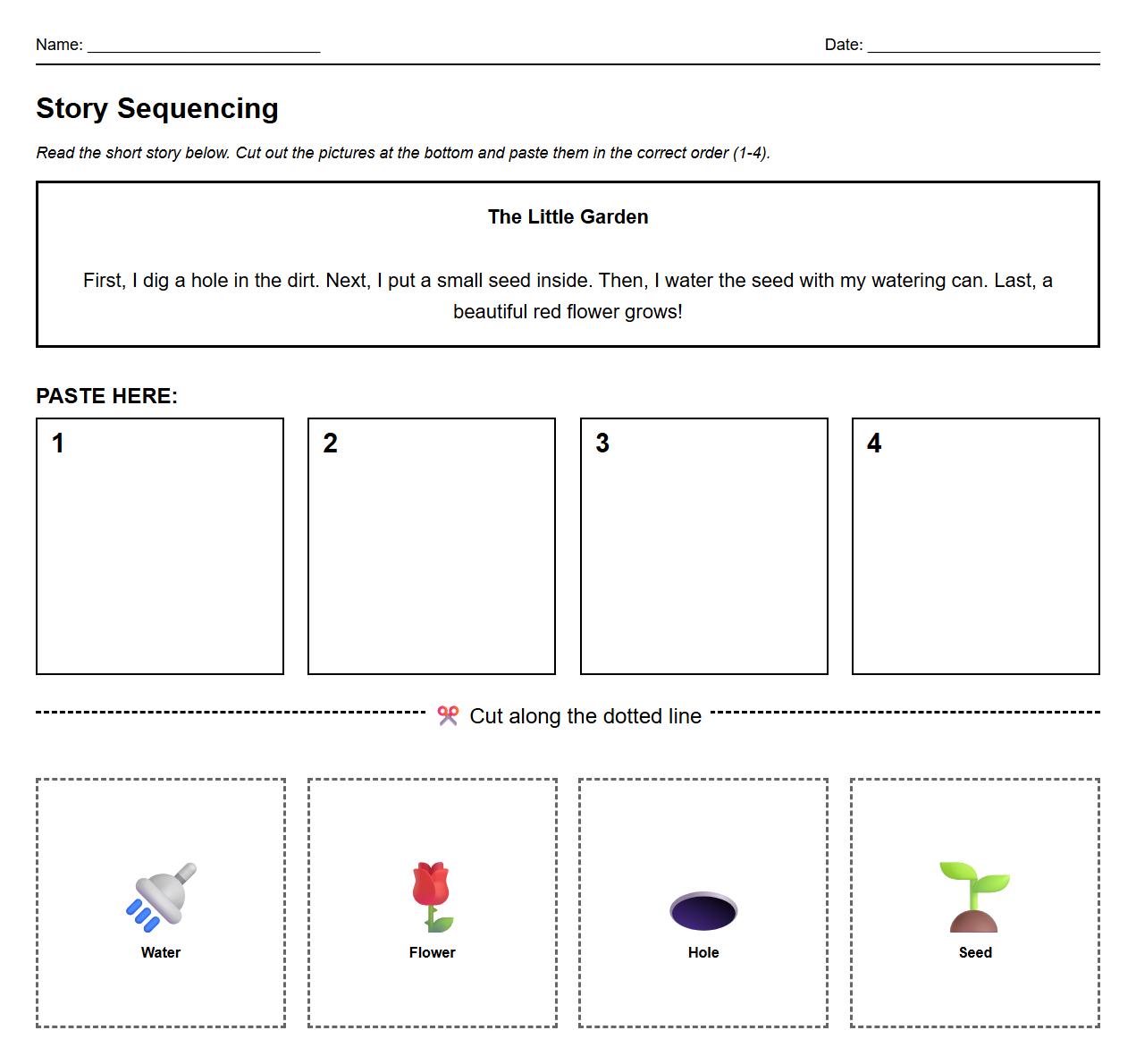
Story Sequencing with Picture Cards and Short Passages

Download PDF     Pin it

Phonics-Based Sentence Ordering Worksheet
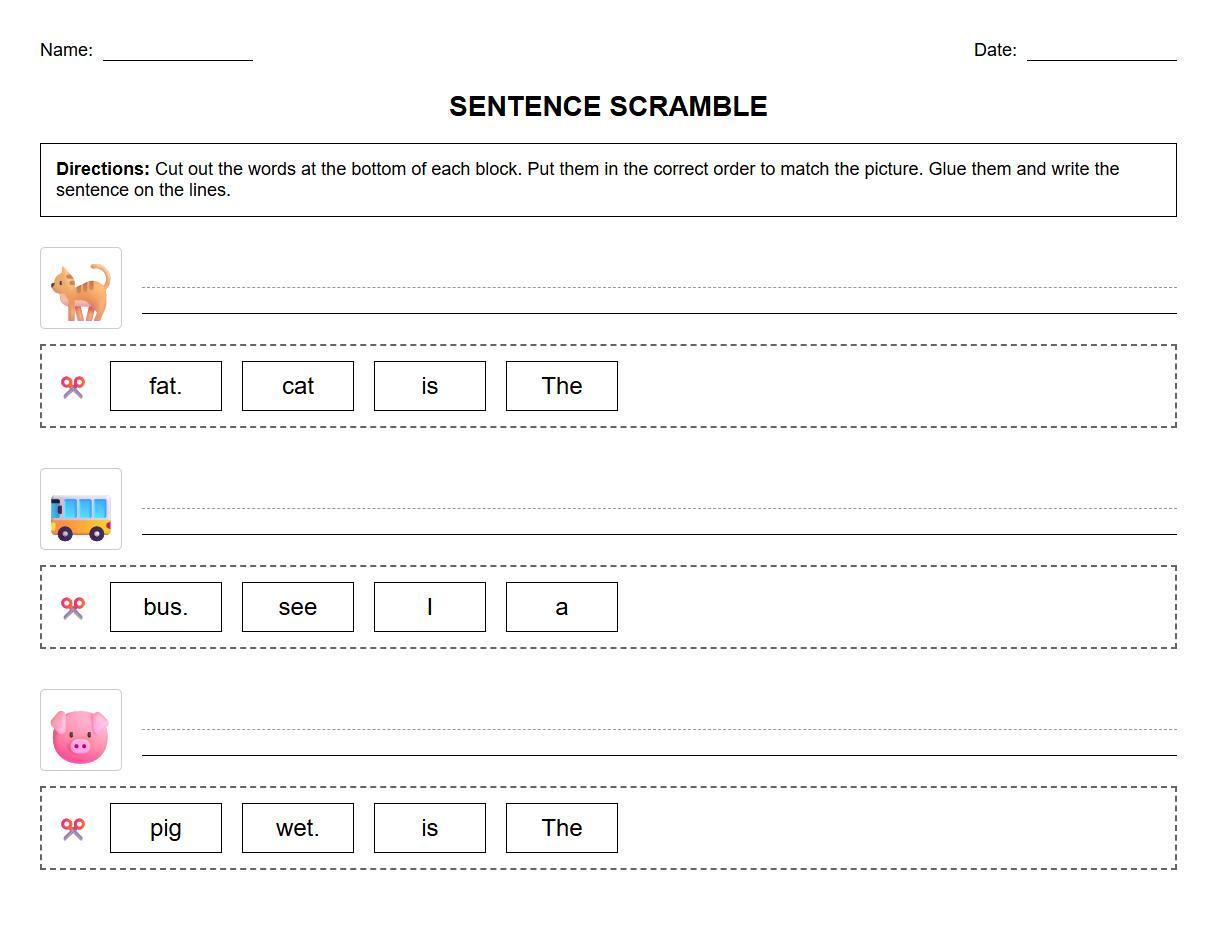
Phonics-Based Sentence Ordering Worksheet

Download PDF     Pin it

Timeline Sequencing Activities Using Historical Texts
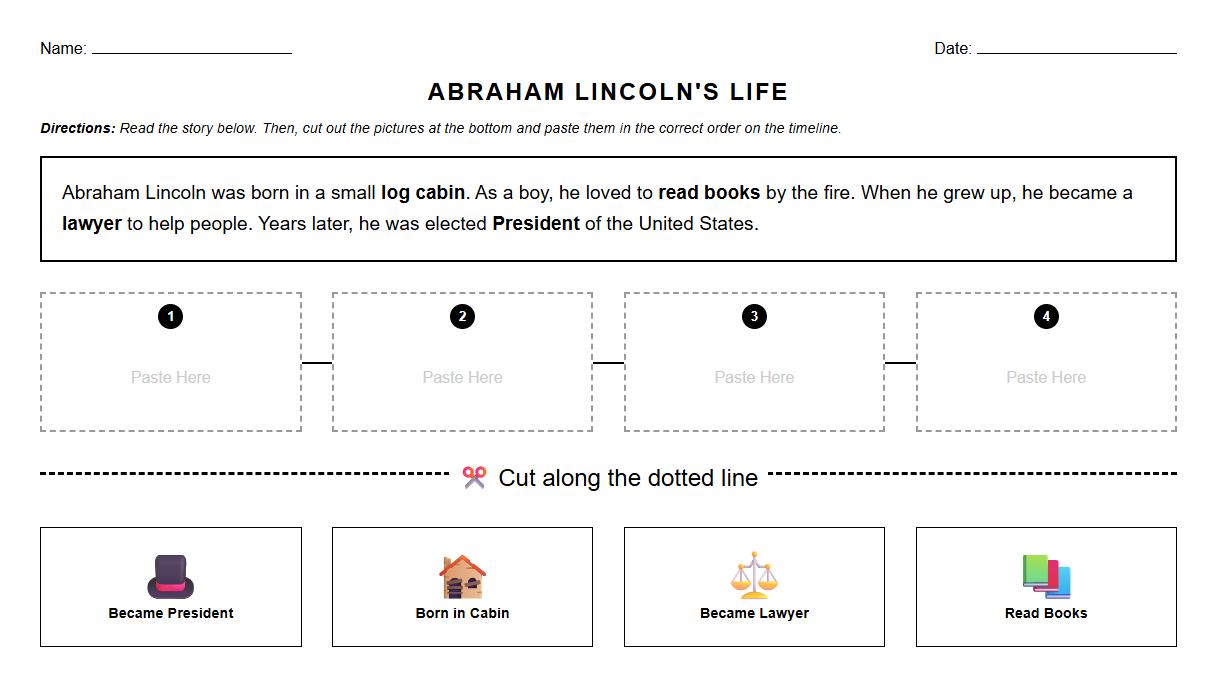
Timeline Sequencing Activities Using Historical Texts

Download PDF     Pin it

Sequencing with Cause and Effect Reading Comprehension
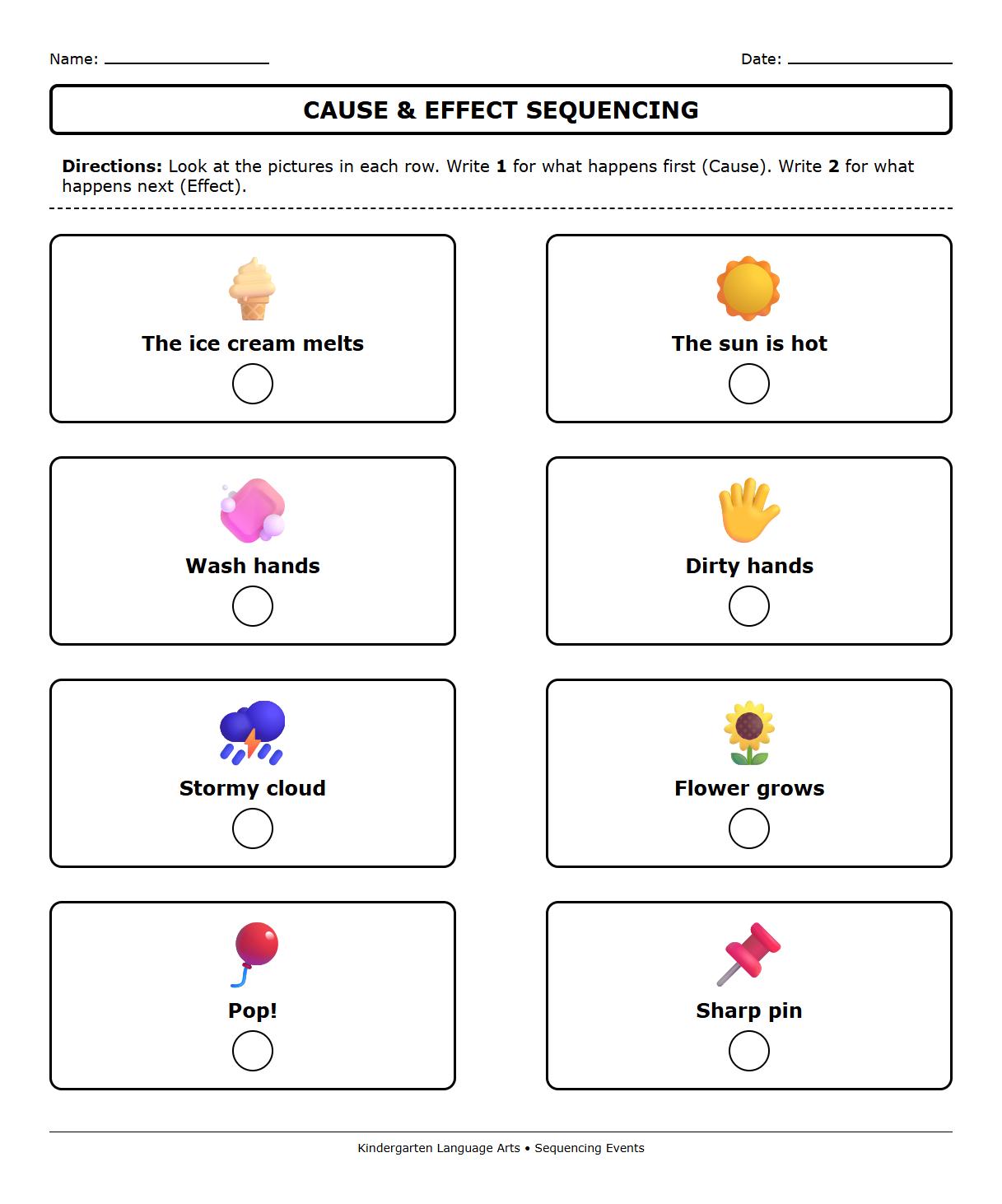
Sequencing with Cause and Effect Reading Comprehension

Download PDF     Pin it

Step-by-Step Instruction Sequencing Worksheet
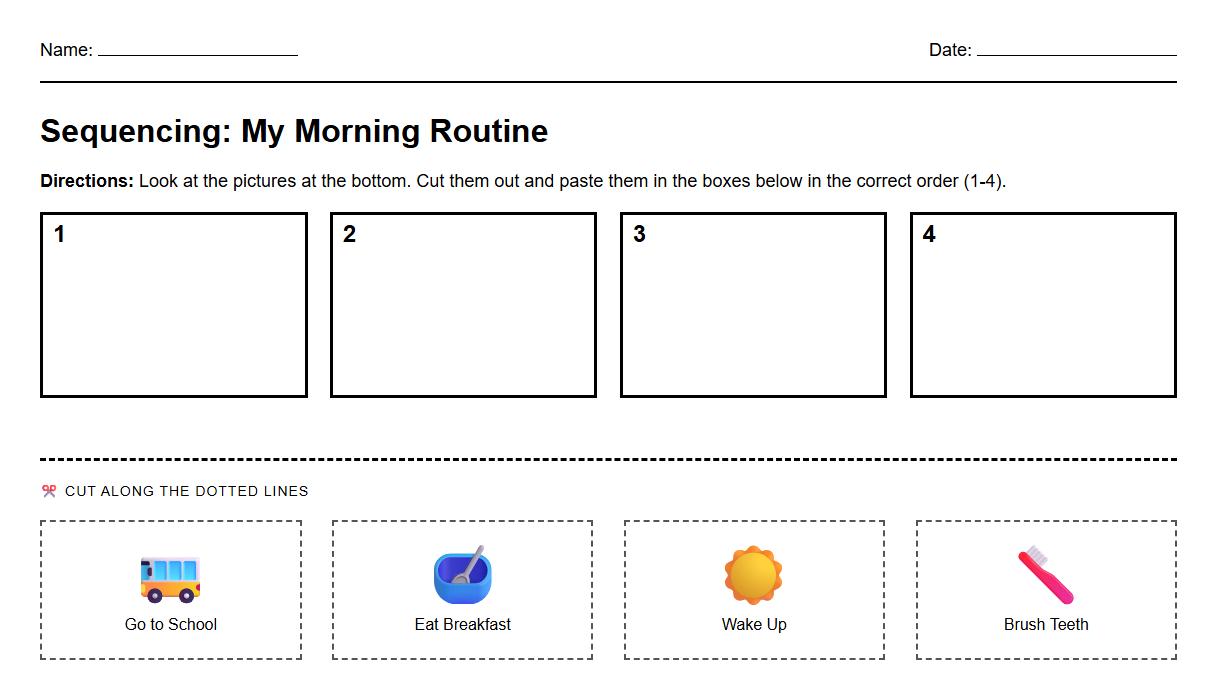
Step-by-Step Instruction Sequencing Worksheet

Download PDF     Pin it

Paragraph Scramble for Narrative Structure Practice
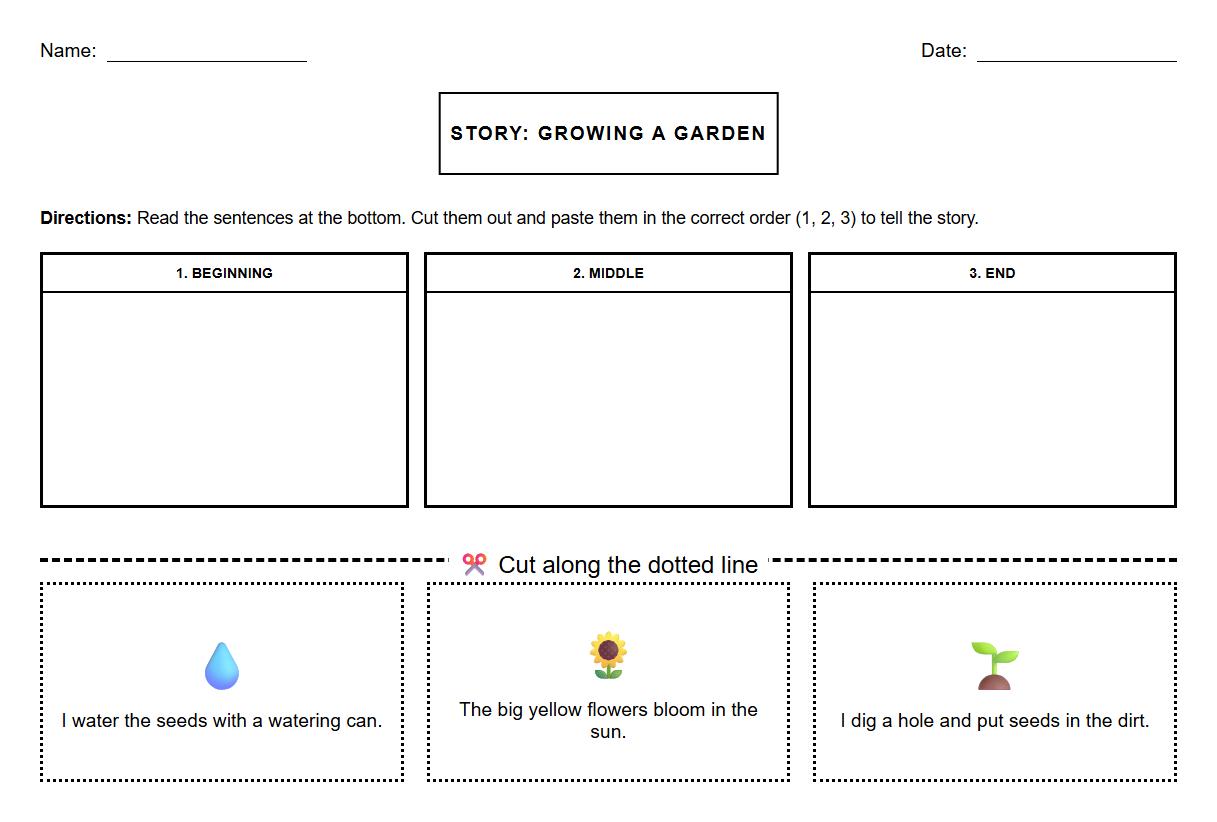
Paragraph Scramble for Narrative Structure Practice

Download PDF     Pin it

Sequencing Events with Fiction and Nonfiction Passages
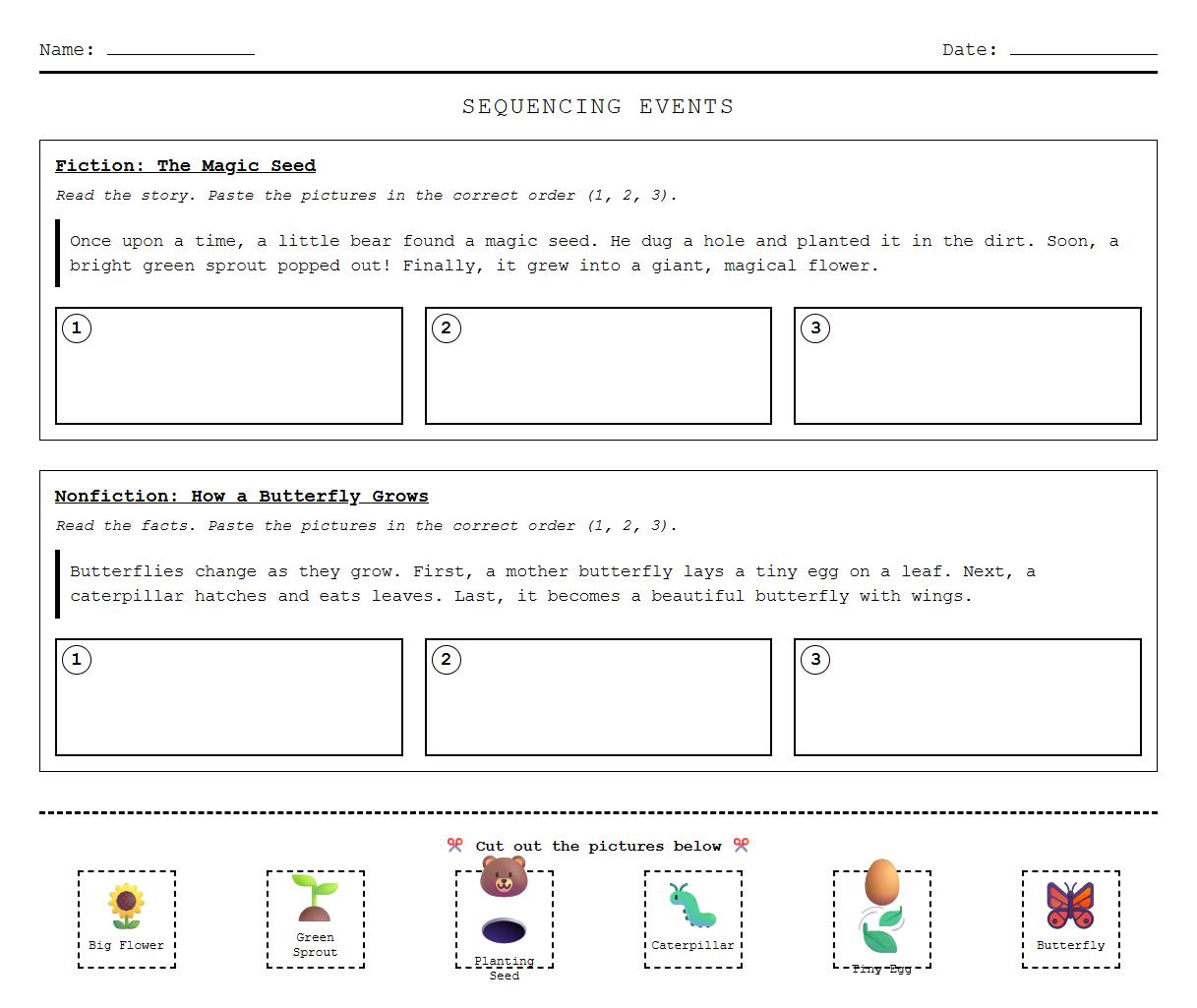
Sequencing Events with Fiction and Nonfiction Passages

Download PDF     Pin it

Interactive Cloze Passage for Logical Sentence Order
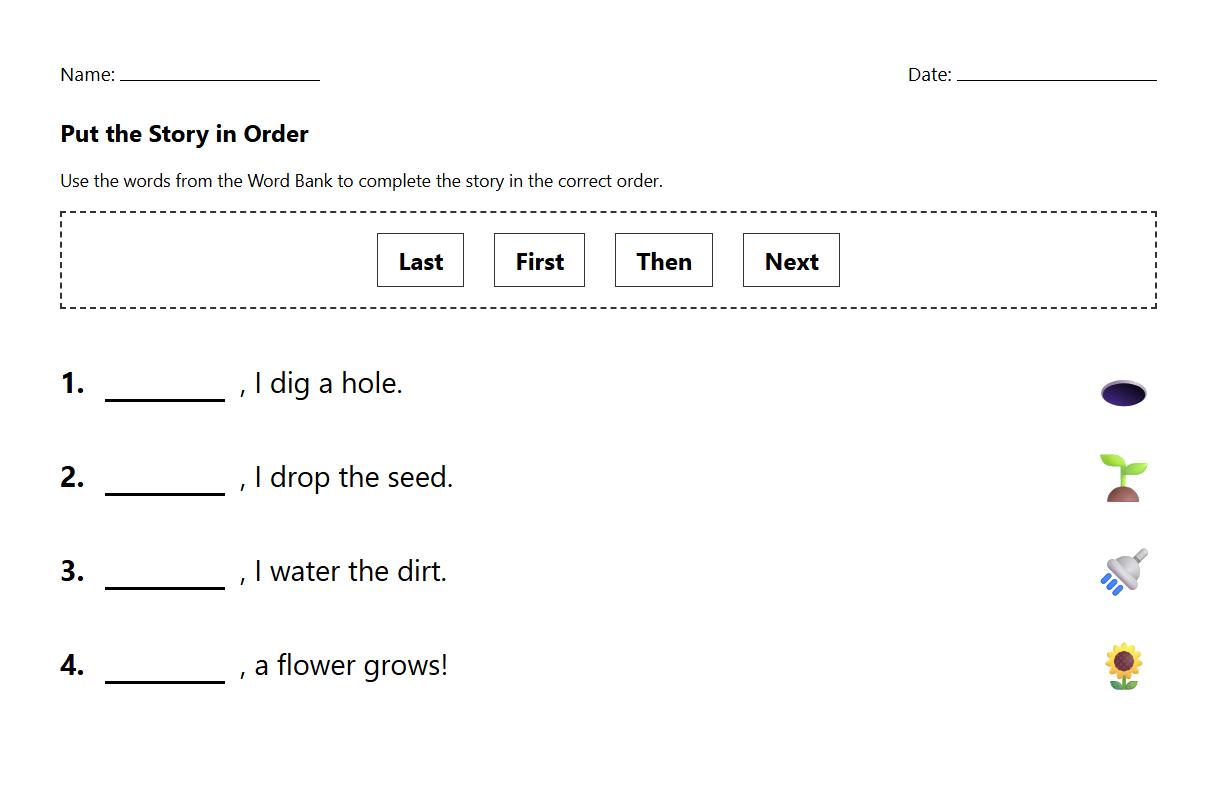
Interactive Cloze Passage for Logical Sentence Order

Download PDF     Pin it

Sequencing Graphic Organizer Integrated with Main Idea
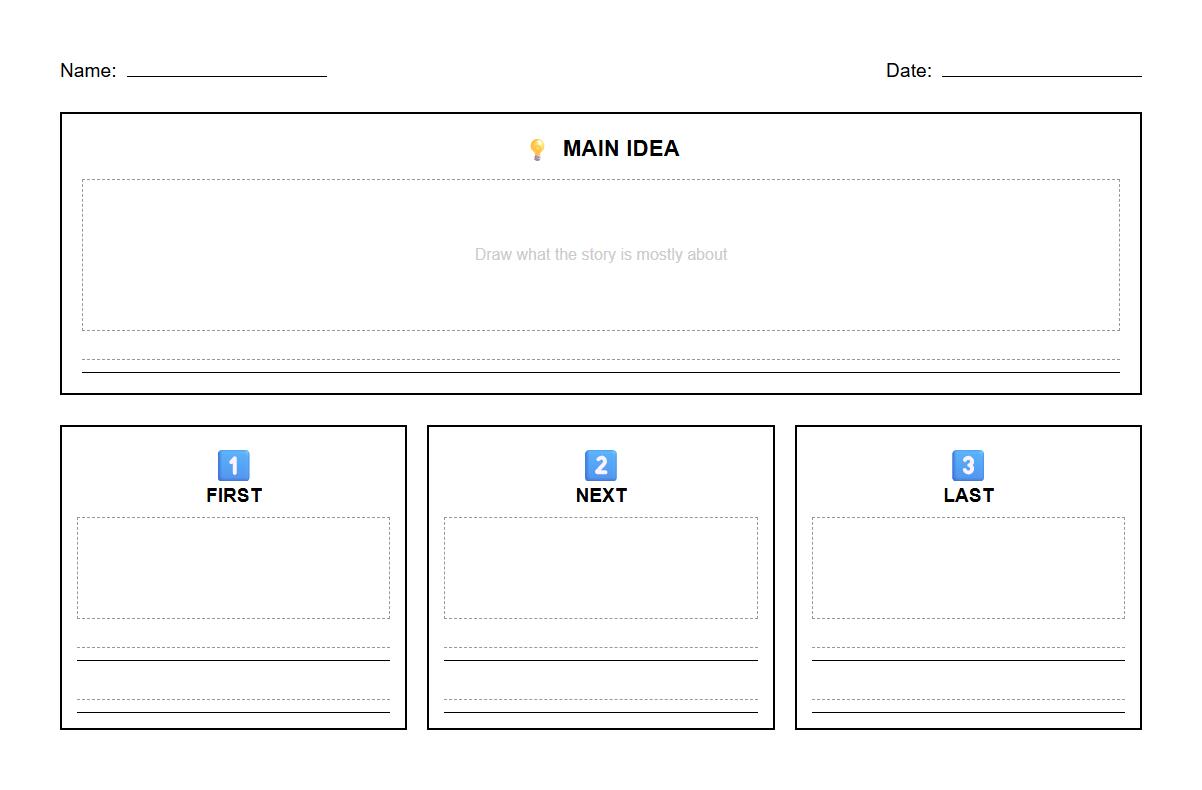
Sequencing Graphic Organizer Integrated with Main Idea

Download PDF     Pin it

Mixed-Media Sequencing with Text and Visual Cues
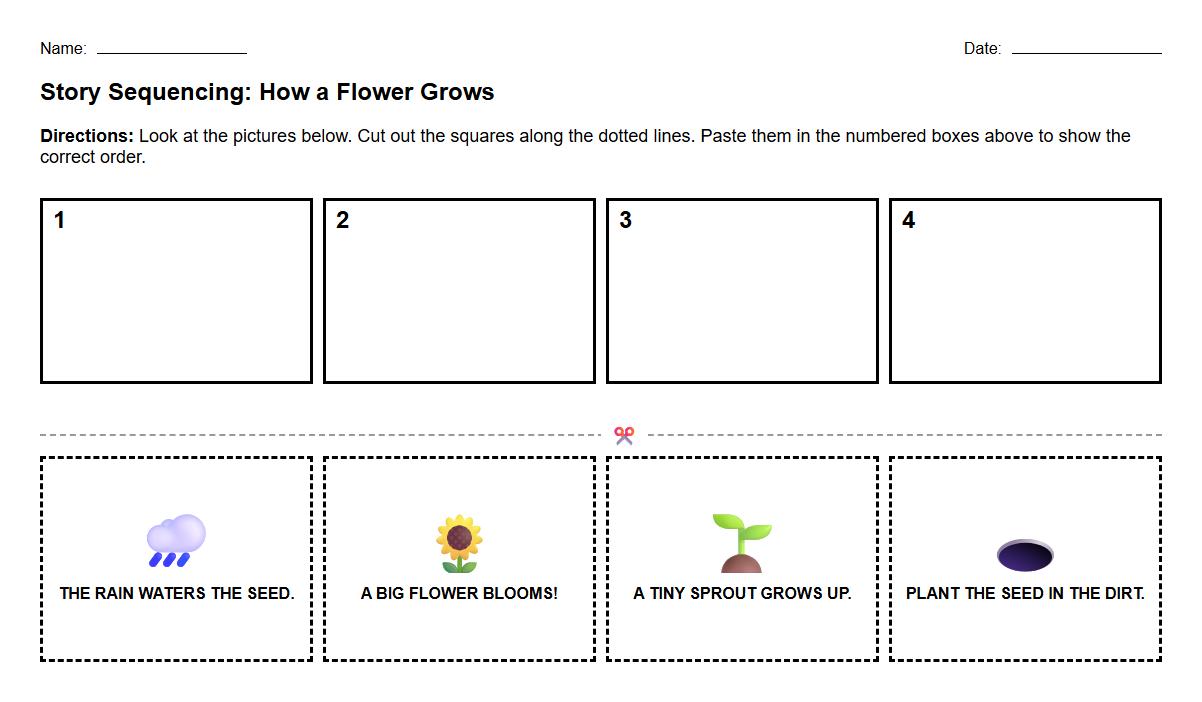
Mixed-Media Sequencing with Text and Visual Cues

Download PDF     Pin it

Understanding Story Sequence: What Happened First?

Teaching children to identify the first event in a story builds a foundation for understanding story structure. Encourage kids to listen carefully and think about what happened at the beginning. Using visual aids like picture cards can help them pinpoint the initial action. This skill enhances comprehension and sequencing ability.

Following Actions: What Did the Character Do After Finding the Toy?

After discovering the toy, the character's next steps drive the story forward. Guide children to describe actions taken after a key event, reinforcing the concept of cause and effect. Discussing these actions supports logical thinking and narrative understanding. Use questions to prompt detailed responses.

Identifying Event Order: Which Event Came Next?

Sequencing events helps young learners grasp the flow of a story. Prompt them to recognize what comes after a specific event, focusing on the chronological order. Activities like arranging sentence strips or storyboards can make this exercise interactive. This strengthens both memory and storytelling skills.

Visual Sequencing: Can You Put These Pictures in Order?

Using pictures to sequence a story reinforces comprehension through visual learning. Encourage children to arrange images that depict story events in correct order. This hands-on activity boosts critical thinking and attention to detail. It also supports communication as they explain their choices.

Retelling Events: What Happened Before the Dog Barked?

Asking about events preceding a key moment, like a dog's bark, helps children practice retelling skills. It guides them to focus on cause and effect within the narrative. This approach strengthens their ability to recall and sequence details accurately. Encourage children to use their own words for better engagement.

Character Interactions: Who Did the Character Meet Last?

Understanding the order of character interactions deepens story analysis. Discussing who was met last helps children track relationships and narrative progression. Highlighting these details fosters greater engagement and memory retention. Role-playing can make this learning more fun.

Story Endings: What Was the Ending of the Story?

Recognizing the story's ending is essential for grasping the complete narrative. Help children identify the conclusion and discuss how problems are resolved or how the story wraps up. This builds predictive skills and understanding of story arcs. Summarizing the ending promotes expressive language development.

Middle Events: Can You Tell What Happened in the Middle?

The middle of a story contains important details that connect beginning and end. Encourage children to focus on key events in the middle to understand plot development. Discussing these parts aids in sequencing and comprehension. Use guided questions and visual aids to support this learning.

Daily Routines: What Is the First Thing the Character Did in the Morning?

Identifying the character's first morning action relates stories to familiar routines. This connection helps children relate to narratives and sequence daily events. It introduces the concept of time order and habits. Activities can include drawing or acting out morning routines.

Story Beginnings: How Did the Story Begin?

Understanding how a story begins sets the stage for comprehension. Focus on the starting point to establish context and characters. This foundation supports predicting and retelling. Encourage children to describe openings in their own words for deeper understanding.


More in Language Arts Category


About the author. Nylen Smith is a dedicated educator and cofounder of KWorksheet.com, a popular platform specializing in high-quality kindergarten worksheets and printable activities.

Disclaimer. The information provided in this document is for general informational purposes and/or document sample only and is not guaranteed to be factually right or complete. Please report to us via contact-us page if you find and error in this page, thanks.

Comments

No comment yet