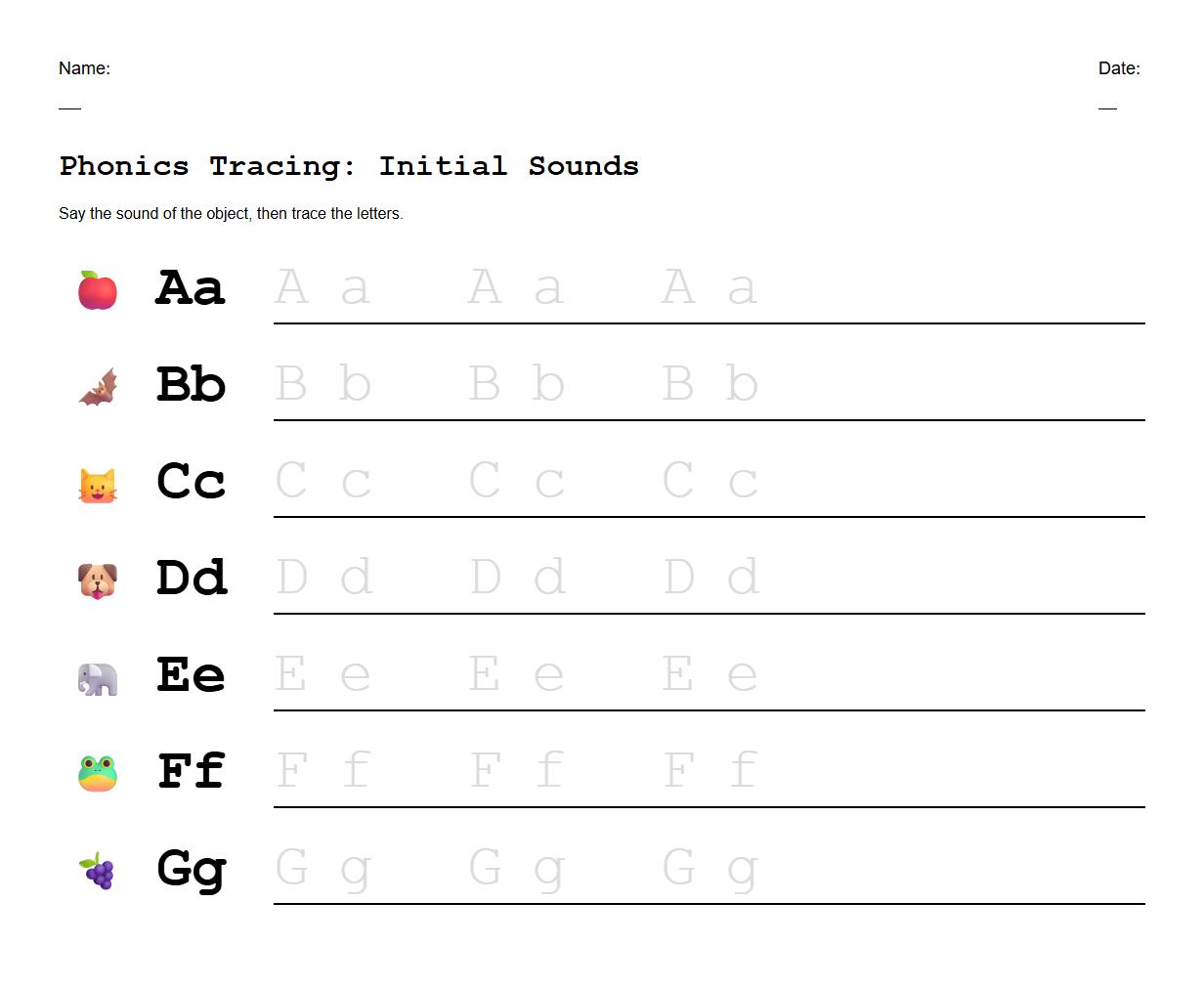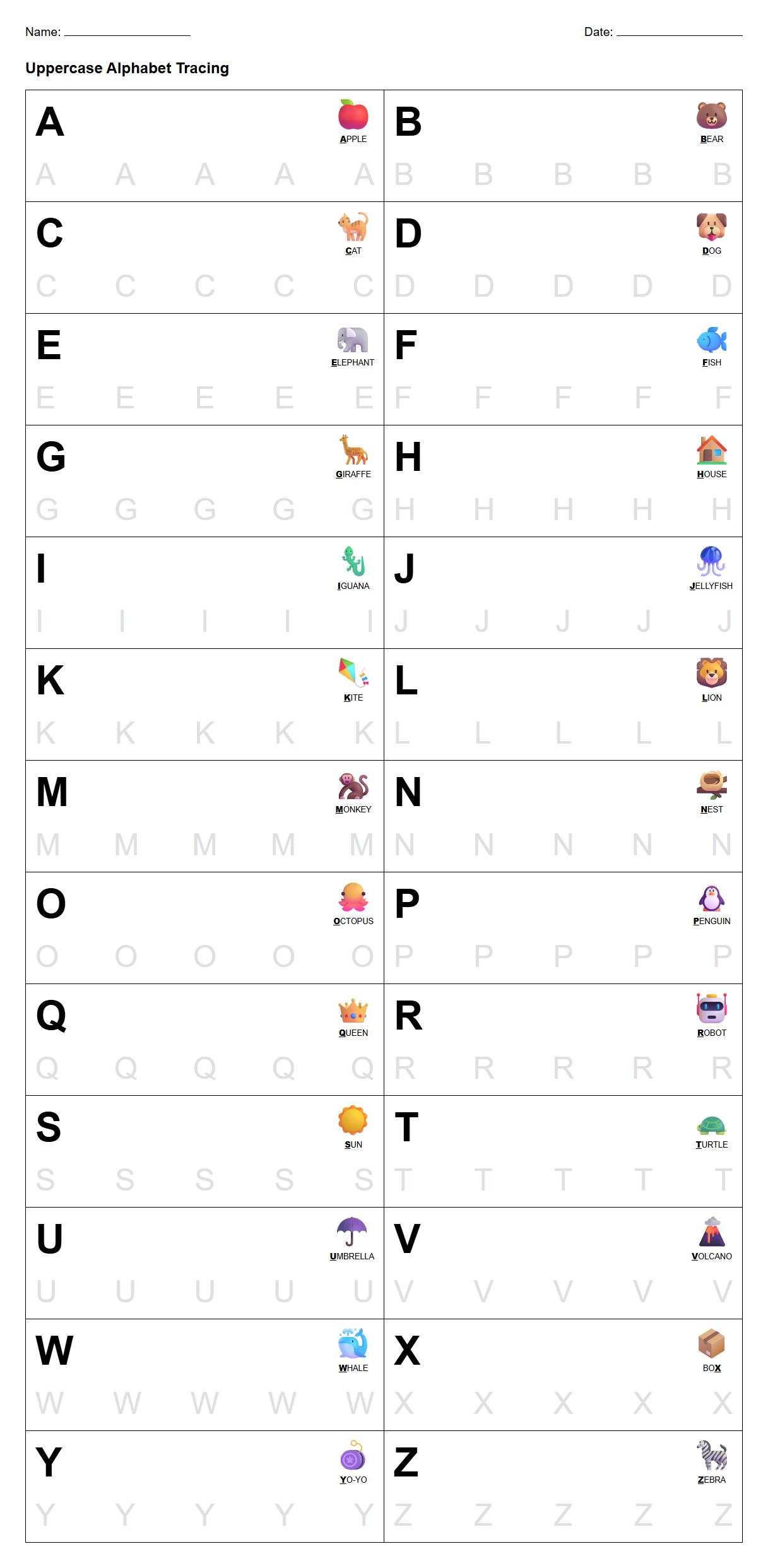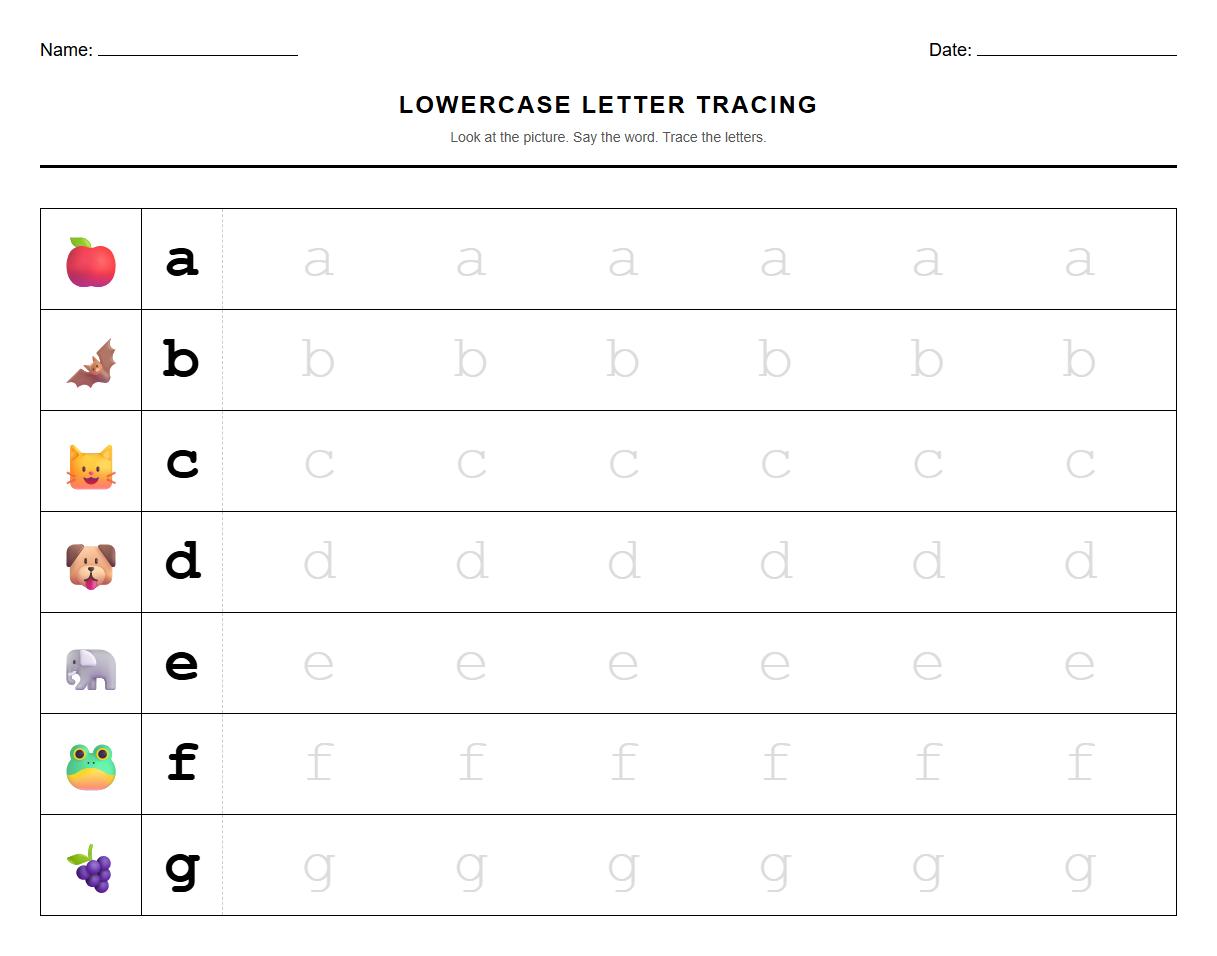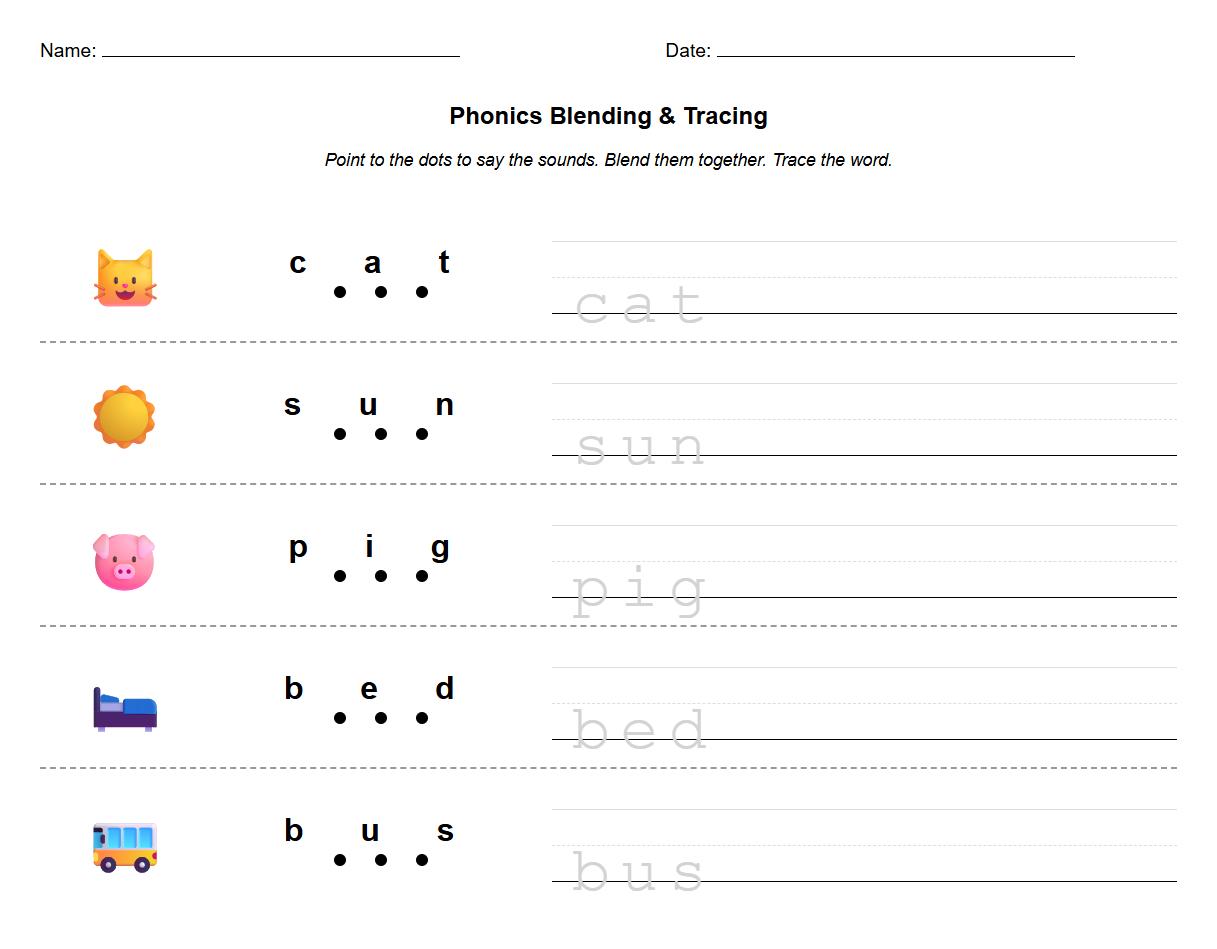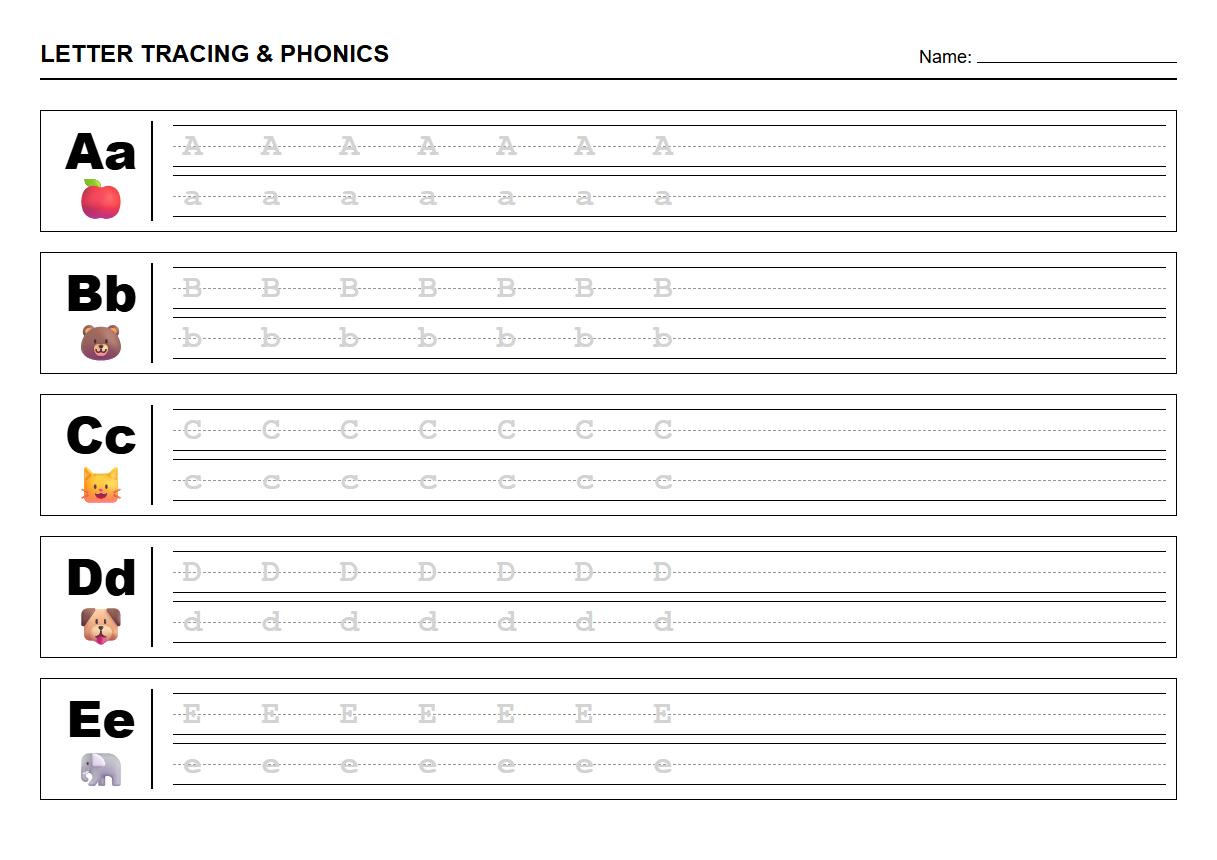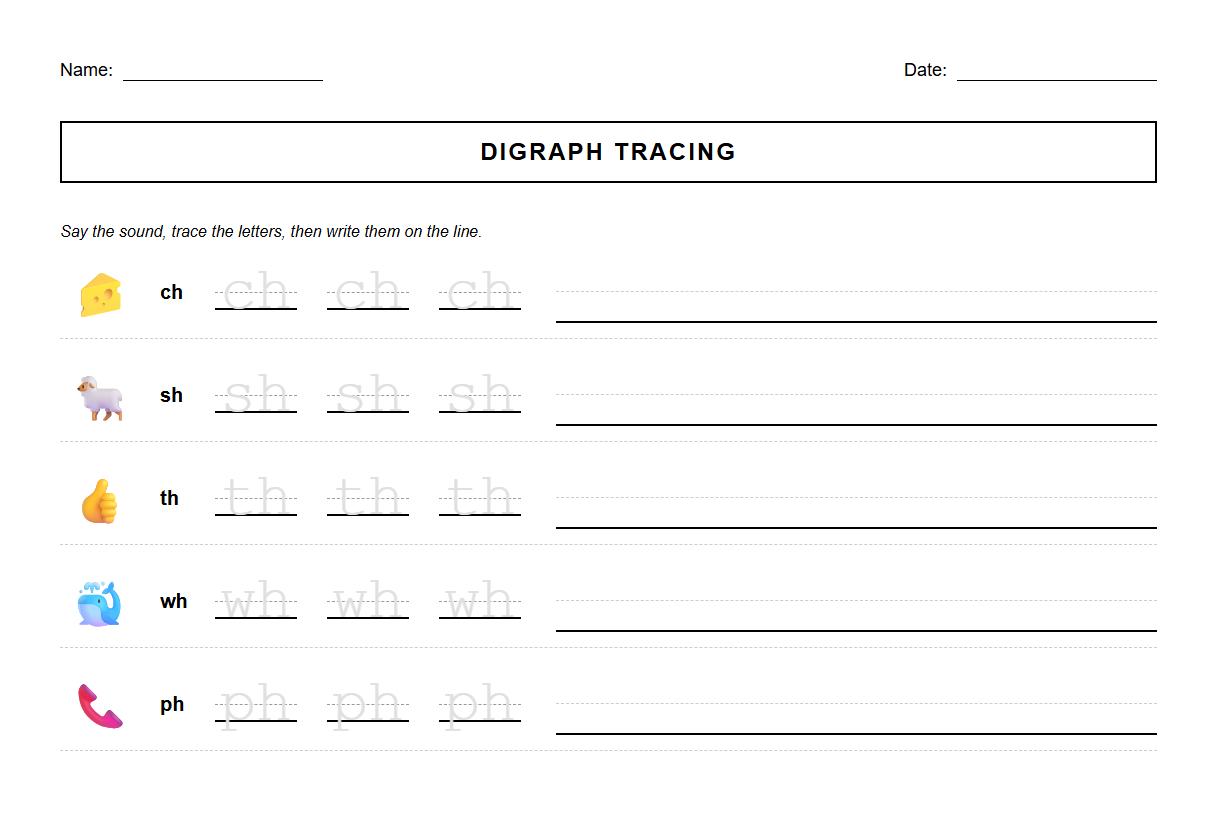
Phonics-focused alphabet tracing activities enhance letter recognition by engaging children in hands-on practice that strengthens fine motor skills and reinforces the connection between letter shapes and sounds. These exercises build foundational literacy skills essential for reading and writing development. Explore the available worksheets to support your child's learning journey.
Featured Letter in Today's Tracing Activity
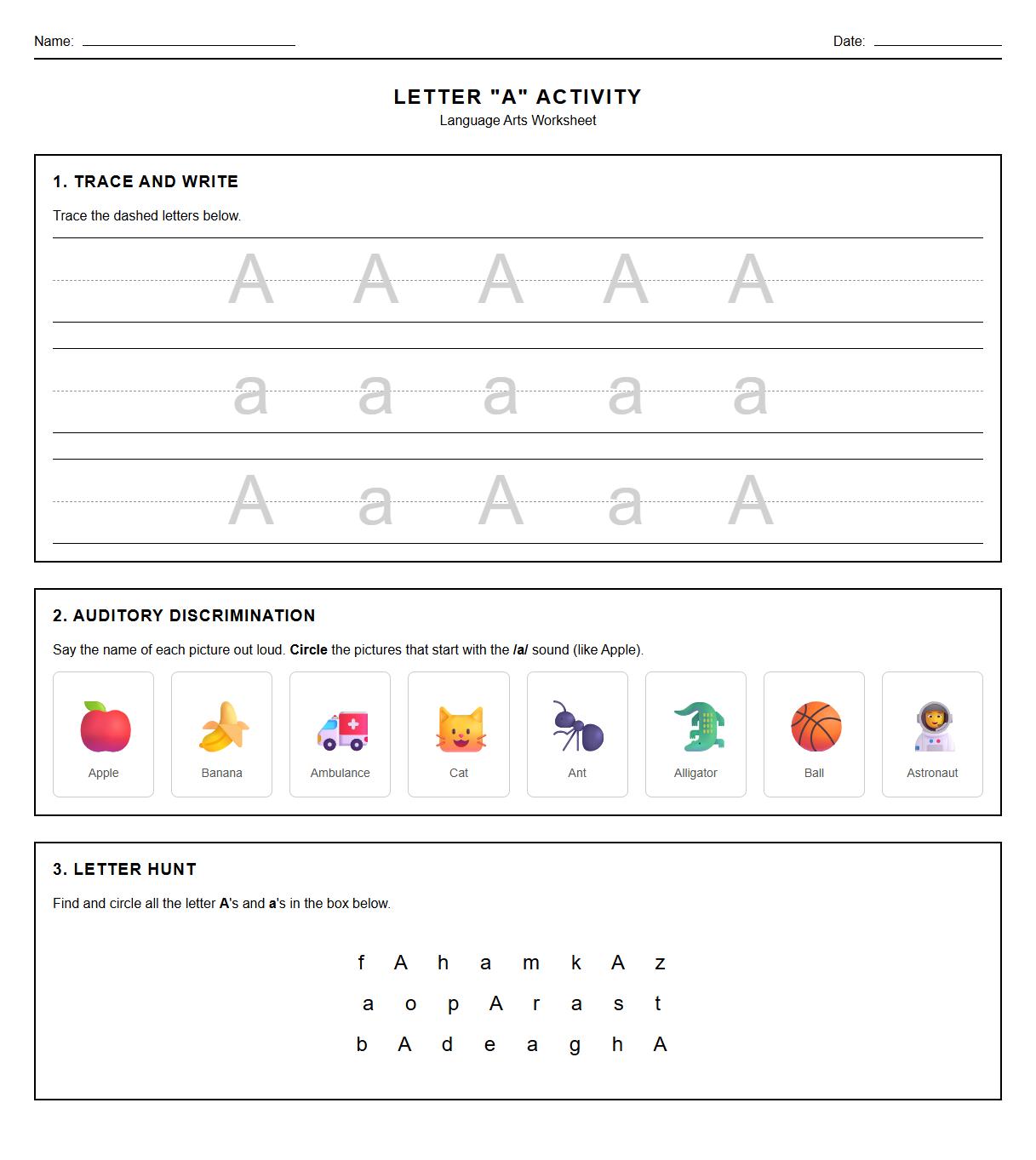
Today's tracing activity focuses on the letter "A". This letter is important as it is the first letter in the alphabet and forms the starting point for many essential words. Recognizing and practicing this letter builds foundational literacy skills. For more on letter recognition and tracing, see the alphabet recognition and tracing worksheet.
Sound of the Letter
The letter "A" makes the short vowel sound /ae/ as in "apple." Encouraging children to say the sound aloud helps them connect the letter with its phonetic pronunciation. This auditory recognition is key in early reading development. Explore phonics worksheet activities for short vowels for additional support.
Words Beginning with the Letter
Words like apple, ant, and airplane all begin with the letter "A." Using familiar and engaging words helps children remember the letter and associate it with real-world objects. This makes the learning process enjoyable and effective. Practice with sight words tracing and reading practice to reinforce learning.
Proper Pencil Grip for Tracing
Teach children to hold their pencil with the tripod grip, using their thumb, index, and middle finger. This grip provides control and comfort while tracing letters. Proper pencil holding supports neat handwriting and fine motor skill development.
Tracing Uppercase and Lowercase Forms
Encourage tracing both the uppercase "A" and the lowercase "a." Familiarity with both forms prepares children for reading and writing in various contexts. Repetition through tracing strengthens muscle memory. For structured activities, use the long vowel and tracing worksheet.
Similar Looking Letters
Letters like "H" and "V" may look somewhat similar due to their straight lines. Discussing these comparisons helps children visually differentiate letters and avoid confusion. Visual discrimination supports stronger letter recognition.
Finding Classroom Objects Starting with the Letter
Identify objects around the classroom that start with "A", such as an apple, art supplies, or an atlas. This activity connects learning with the child's environment, reinforcing the letter's presence in daily life. It also encourages observational skills and vocabulary expansion. Additional ideas can be found in beginning reader comprehension exercises.
Tracing Without Lifting the Pencil
Challenge children to trace the letter "A" multiple times without lifting their pencil. This improves hand-eye coordination and builds control. Repetition enhances confidence and tracing accuracy.
Making Letter Sounds While Tracing
Encourage children to say the "A" sound while tracing the letter. Combining auditory and kinesthetic learning strengthens memory retention. It also fosters a multisensory approach to letter recognition. For more interactive practice, see these interactive sequencing worksheets.
Writing Letter Independently
Once confident with tracing, let children write the letter "A" freehand without dotted guidelines. This promotes independence and reinforces motor skills. Providing positive feedback encourages continued practice and improvement. For further grammar skills, try these kindergarten grammar worksheets.


Comprehensive Worksheet for Alphabet Recognition and Tracing for Beginners