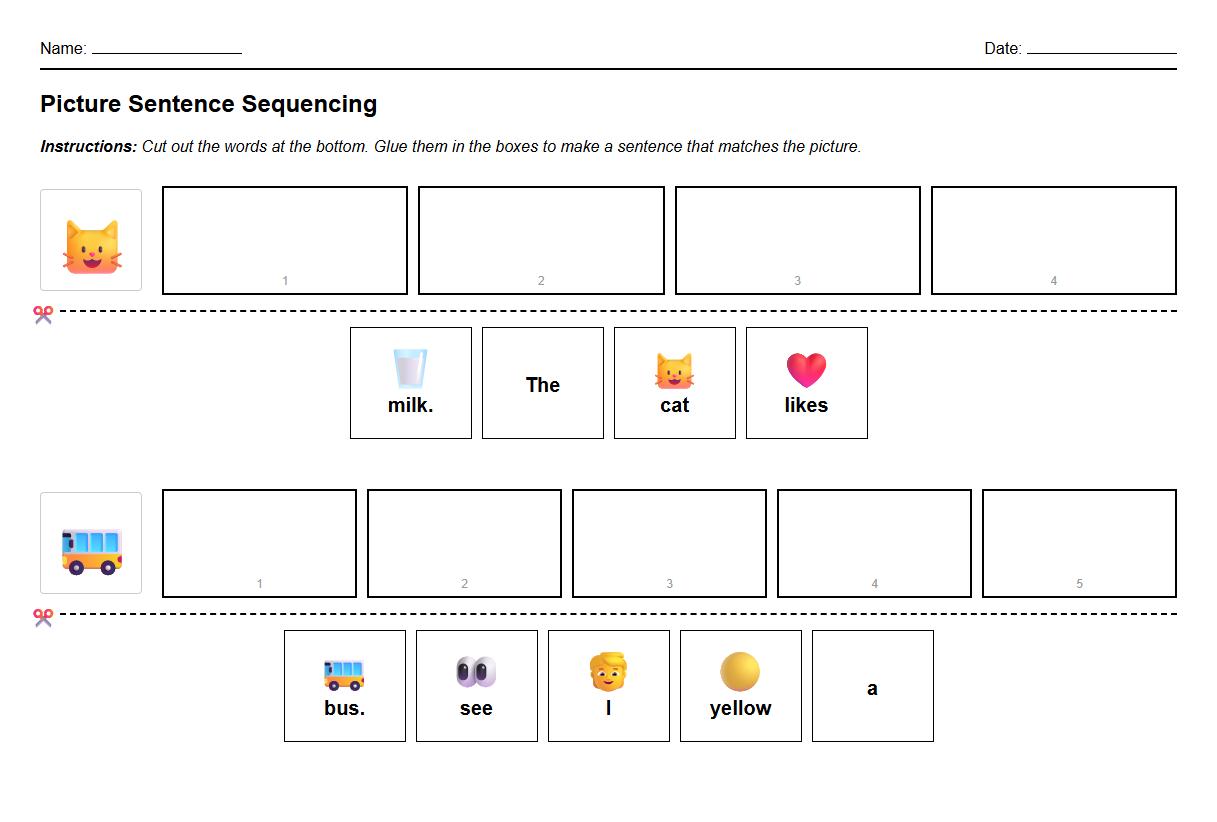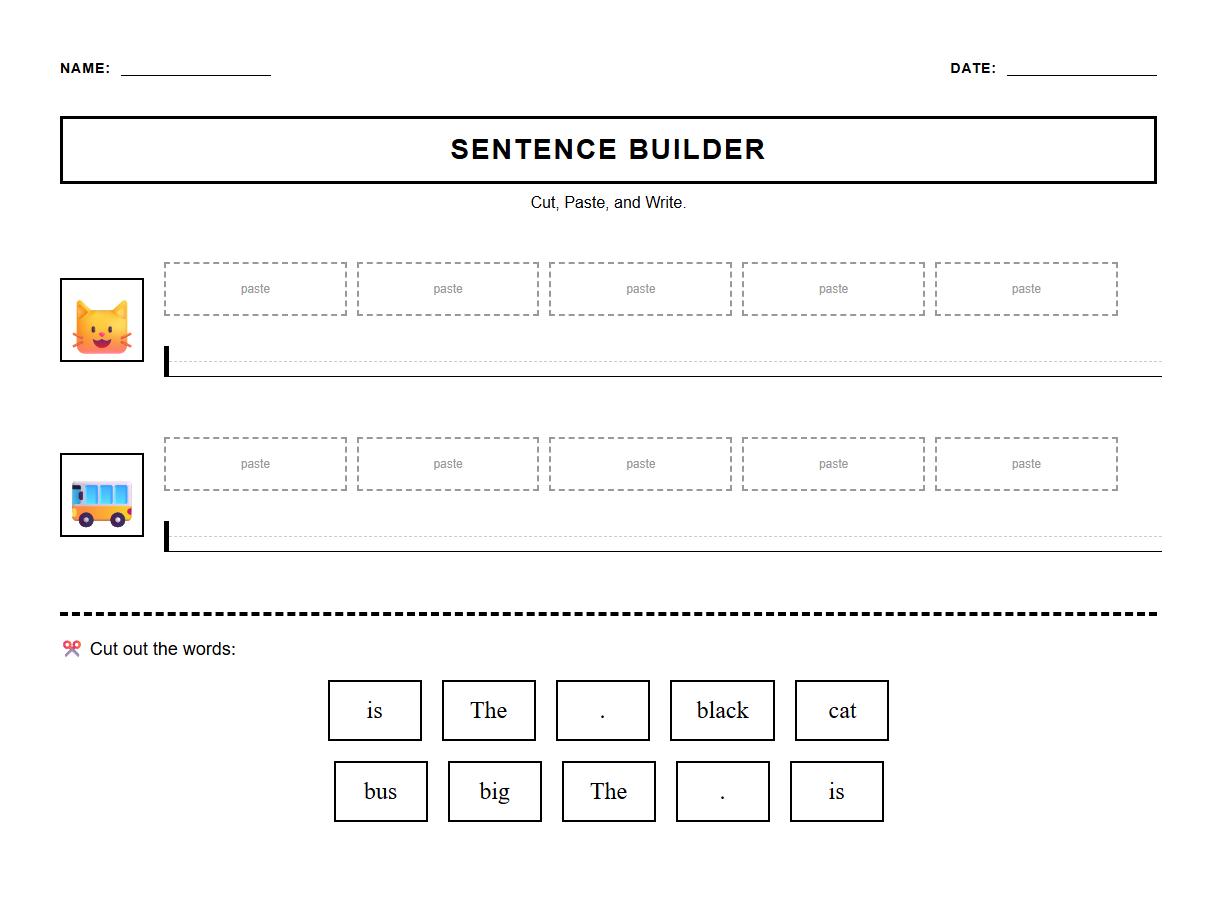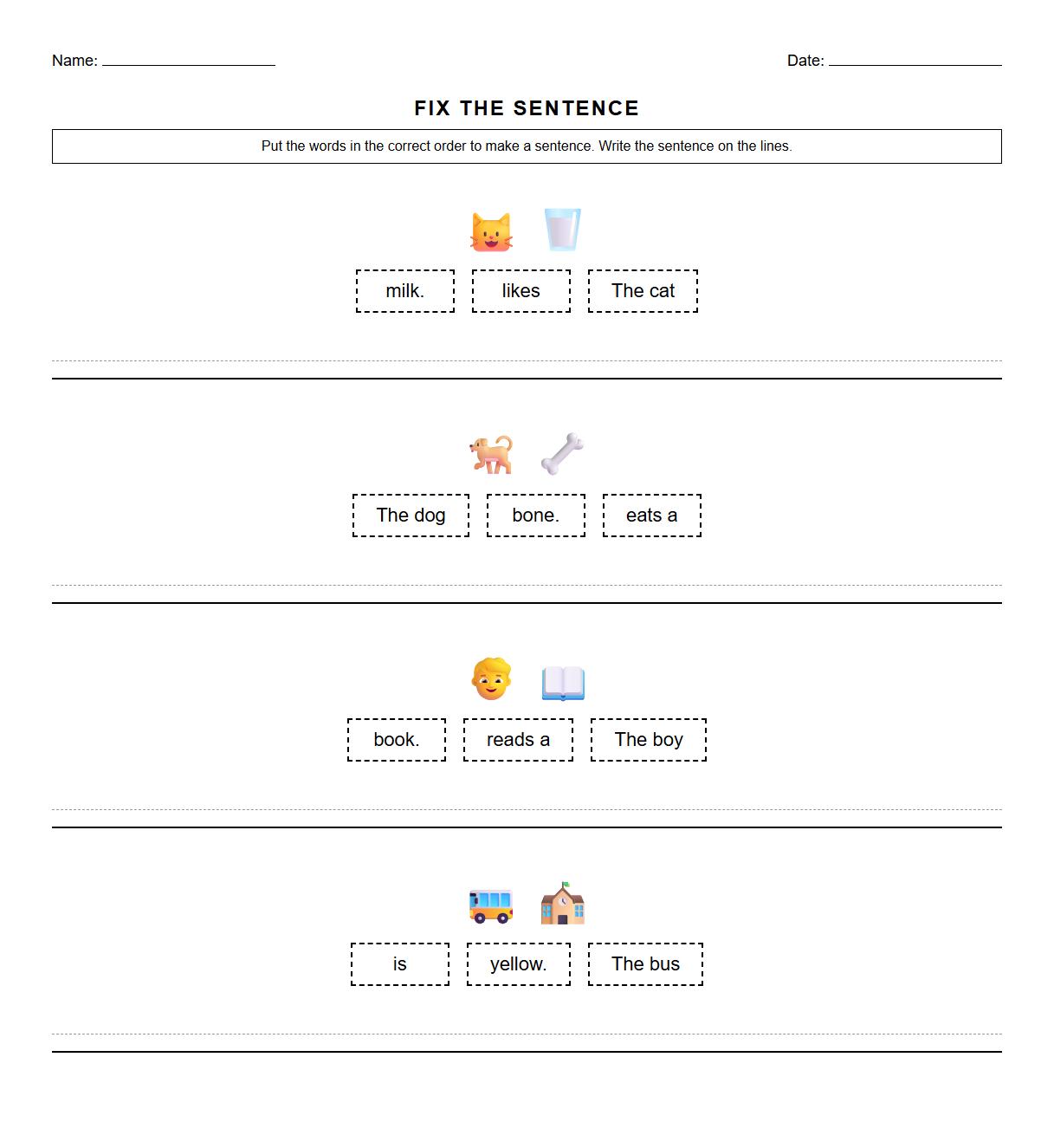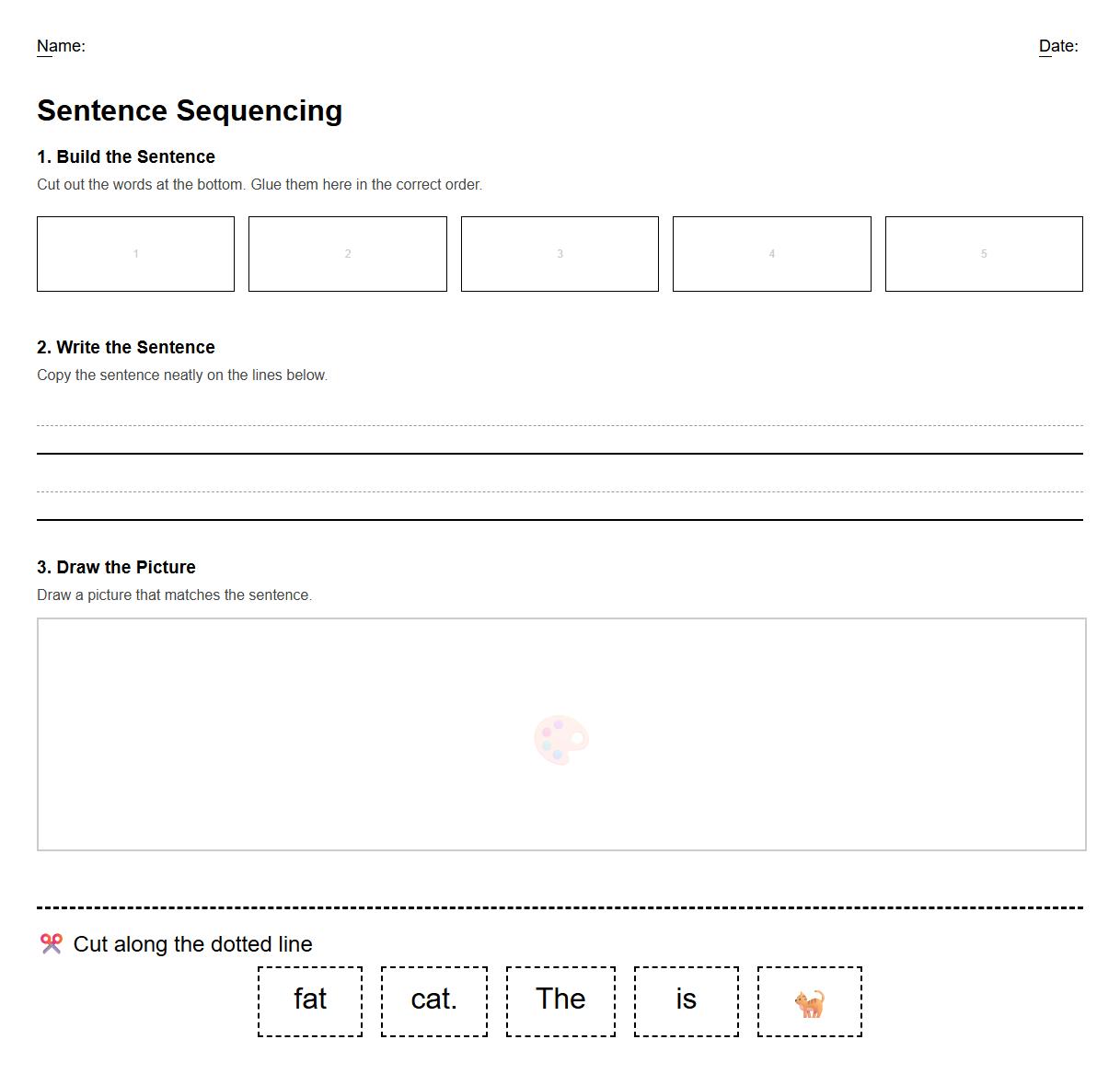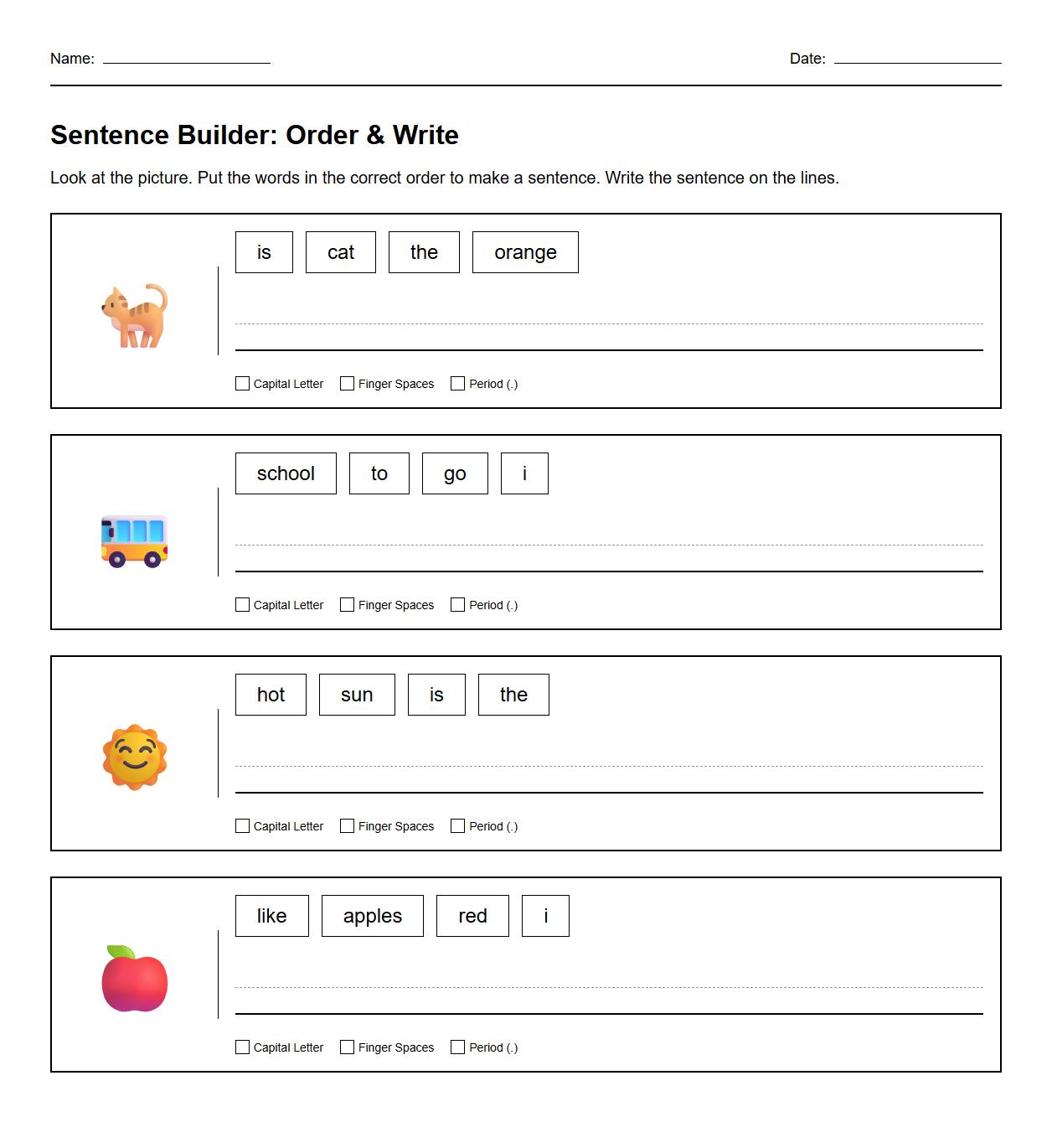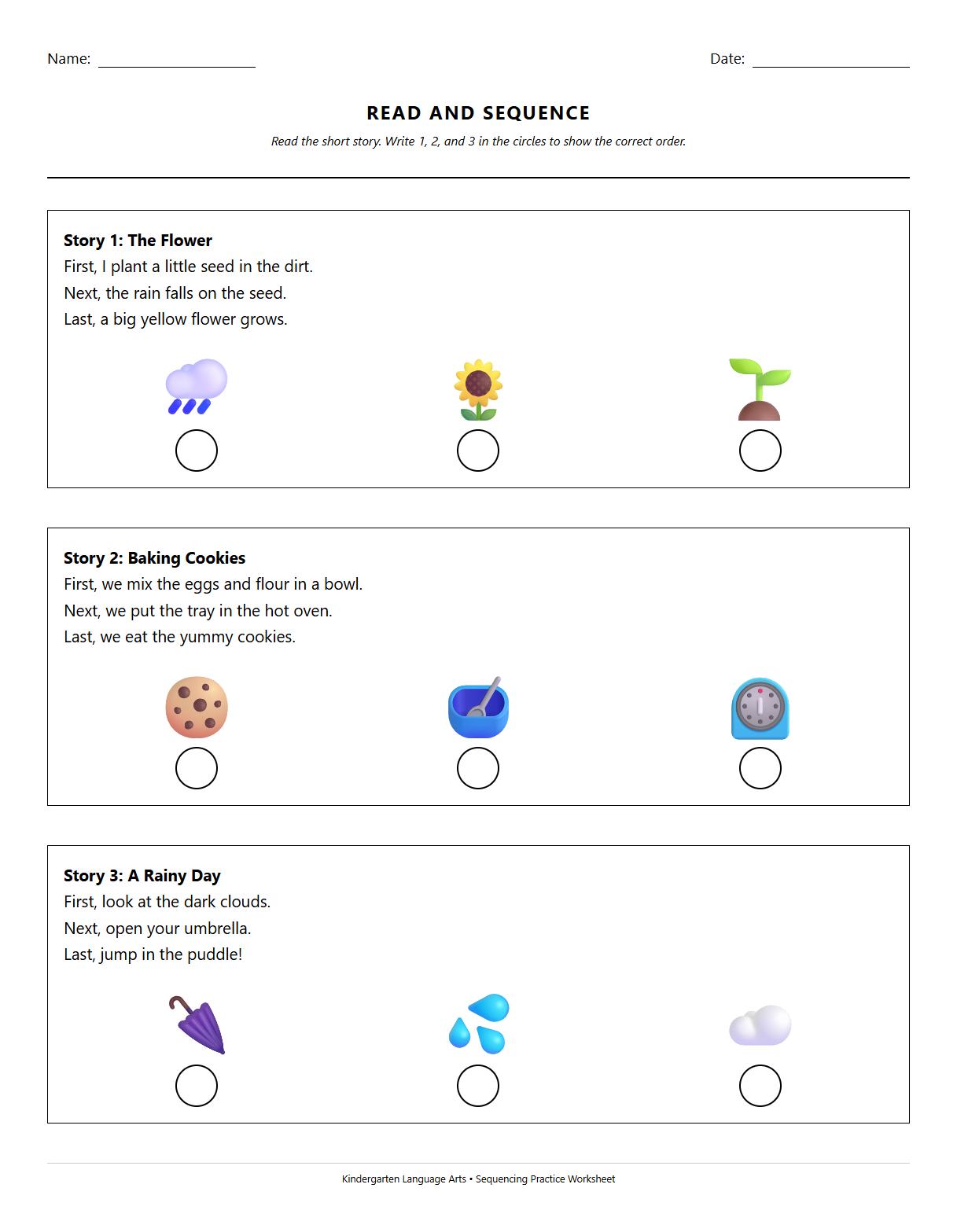
Sentence sequencing worksheets help kindergarten students develop critical reading and writing skills by organizing words and ideas in logical order. These exercises improve comprehension, sentence structure, and narrative flow, fostering early literacy growth. Explore the available worksheets to support your child's learning journey effectively.
What are Sentence Sequencing Worksheets in Kindergarten Education?
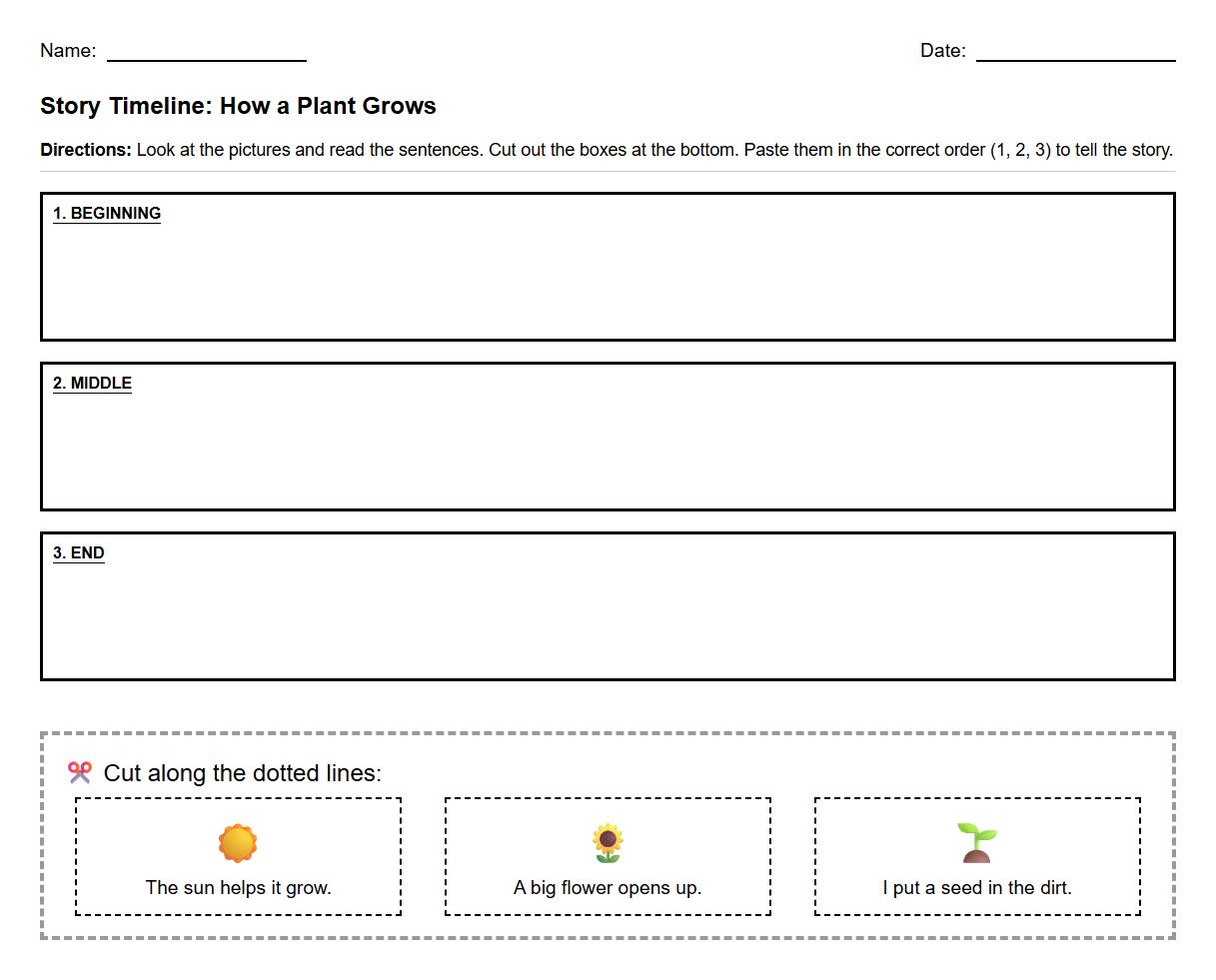
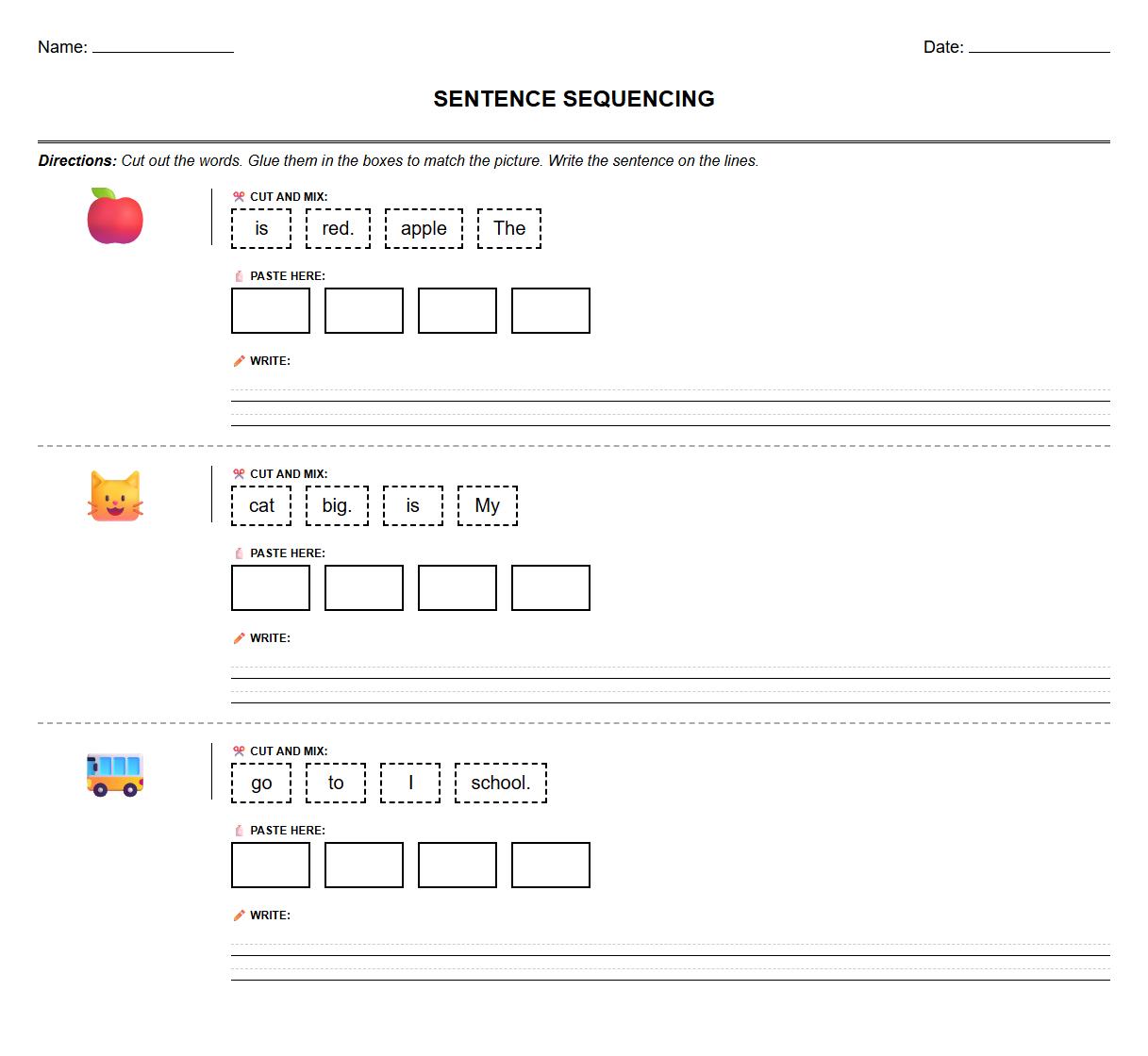
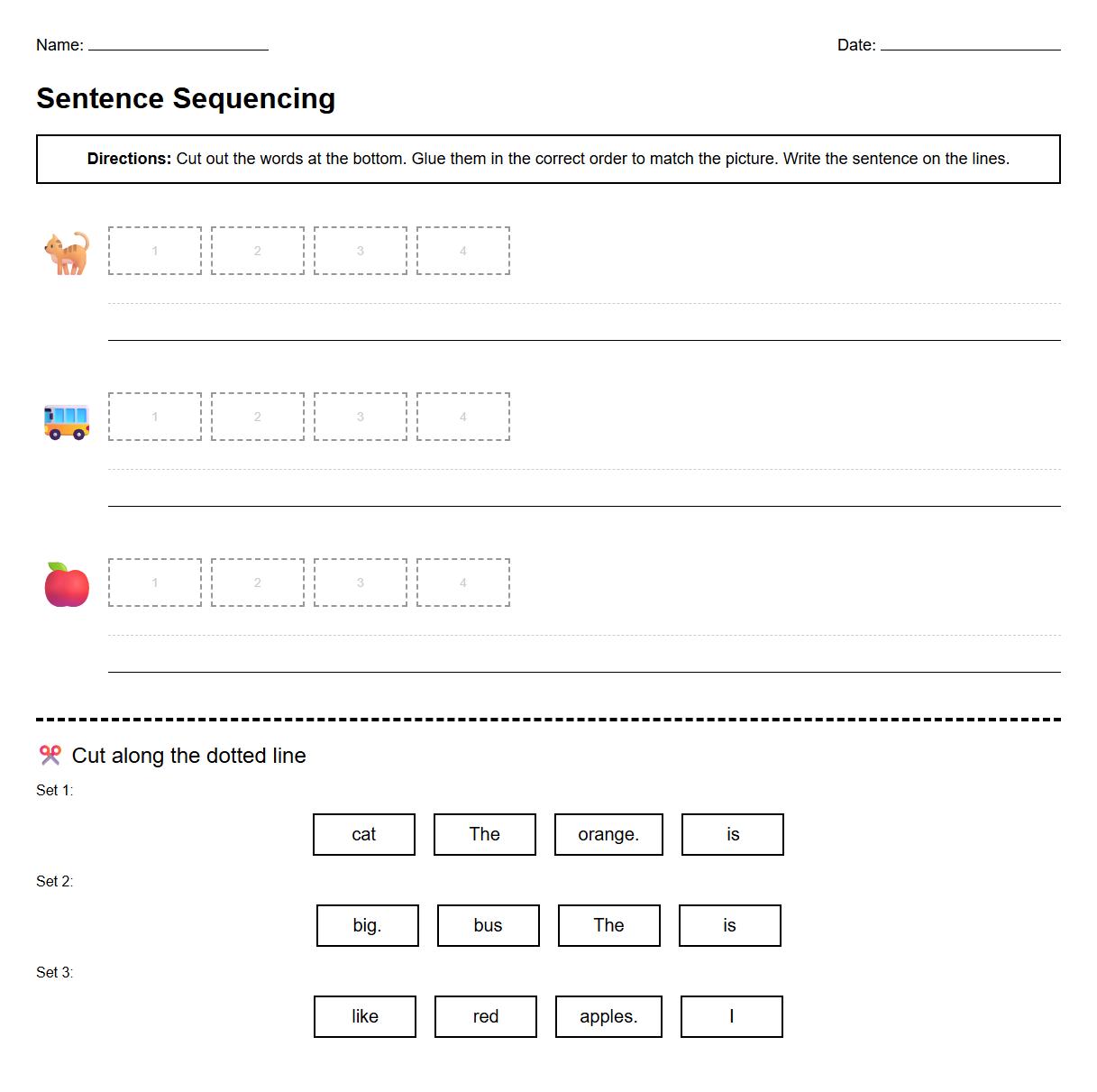
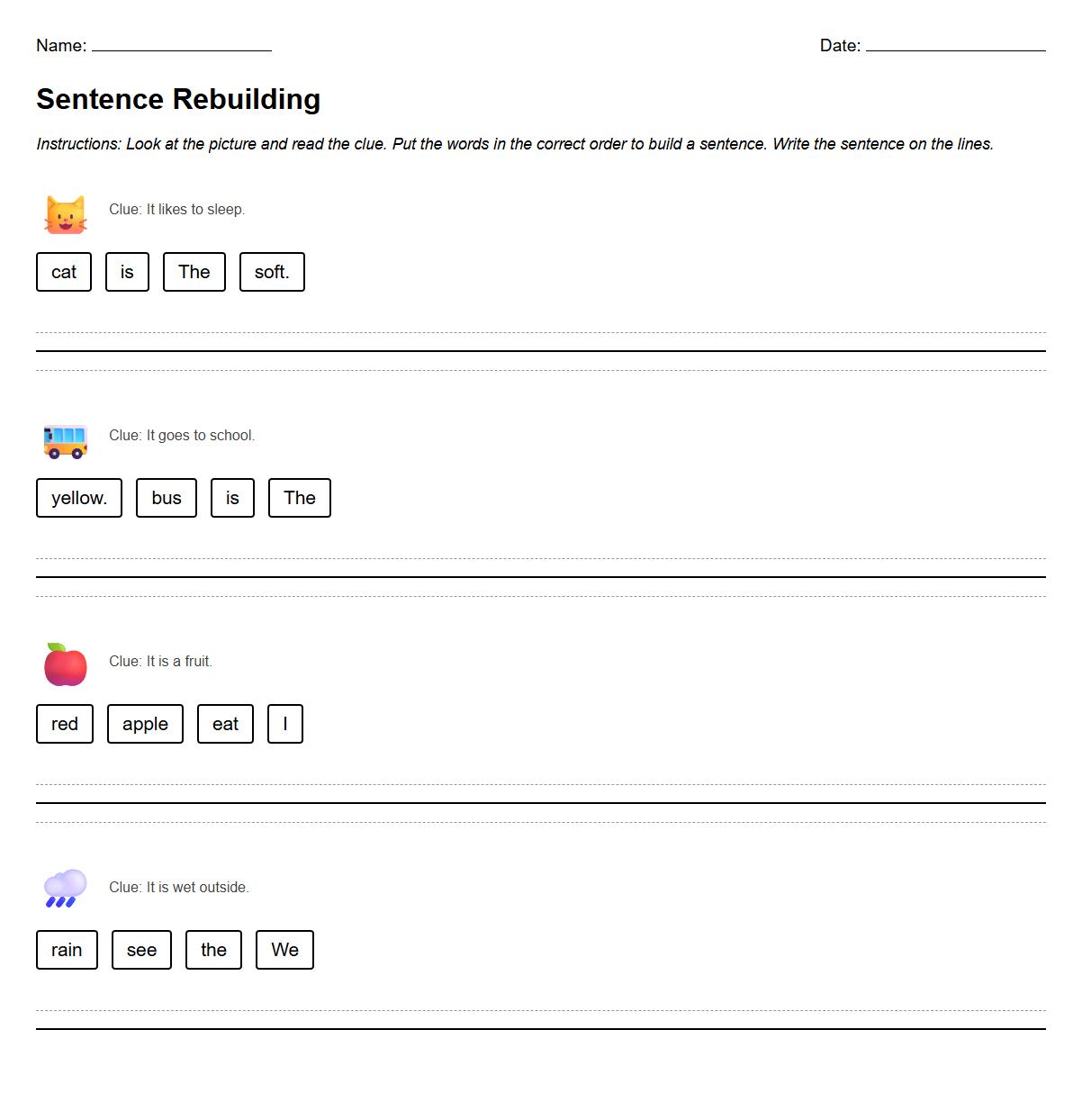
Sentence sequencing worksheets are educational tools designed to help young children arrange words or pictures in a logical order to form coherent sentences. These worksheets encourage children to understand the flow of events or ideas, which is essential for communication. They typically include cut-and-paste activities, picture cards, or sentences broken into parts. These exercises support foundational language skills by making sentence structure visible and interactive.
How Do Sentence Sequencing Activities Support Early Literacy Skills?
Sentence sequencing activities improve early literacy by enhancing children's understanding of syntax and story flow. They help learners recognize how words fit together to create meaning, boosting vocabulary and grammar awareness. These tasks also develop memory and attention to detail, crucial for decoding and comprehension. Overall, they build a strong base for reading and writing skills in young learners.
What Types of Pictures or Words Are Best for Kindergarten Sentence Sequencing?
Using clear, relatable pictures or simple words that depict everyday actions or familiar objects works best for kindergarten sentence sequencing. Visuals should be colorful and straightforward to engage children while aiding comprehension. Familiar vocabulary and short sentences promote ease of understanding and confidence. This approach aligns with children's experiences and vocabulary level.
How Often Should Teachers Use Sentence Sequencing Worksheets in Class?
Teachers should incorporate sentence sequencing worksheets regularly, about 2-3 times per week, to reinforce learning without causing fatigue. Consistent practice helps solidify sequencing skills and supports ongoing literacy development. Integrating these activities with other literacy lessons maximizes their effectiveness. Balancing frequency with diverse instructional methods keeps students motivated.
What Are the Developmental Benefits of Sentence Sequencing for Young Children?
Sentence sequencing enhances cognitive abilities such as logical thinking, memory, and language processing. It fosters narrative skills by helping children understand story order and cause-effect relationships. These benefits support broader academic success and social communication. Sequencing also encourages attention to detail and patience, important traits for early learners.
How Can Sentence Sequencing Worksheets Be Differentiated for Varying Skill Levels?
Worksheets can be tailored by varying the complexity of sentences and the number of sequencing steps for different skill levels. Beginners might use picture sequences with 3-4 elements, while advanced students handle 5-6 word-based sentences. Using visuals for support or prompts can help struggling learners. Differentiation ensures all children remain challenged yet successful.
What Common Mistakes Do Students Make with Sentence Sequencing?
Common errors include placing events out of logical order, confusing pronoun references, or omitting key words. Young learners may also struggle with understanding temporal words like "first" or "then." Misinterpretation of pictures or sentences can lead to incorrect sequences. Identifying these mistakes allows targeted support to improve comprehension.
How Can Teachers Assess Student Progress Using Sentence Sequencing Worksheets?
Assessment can be done by reviewing students' ability to correctly order sequences and explain their choices. Teachers can use checklists or rubrics focusing on accuracy, vocabulary usage, and narrative understanding. Observing verbal explanations during activities provides insight into comprehension. Regular assessment guides instruction and addresses individual needs.
What Are Some Engaging Sentence Sequencing Worksheet Themes for Kindergarteners?
Popular themes include daily routines, animal stories, seasons, and familiar fairy tales. Using topics related to students' interests increases motivation and connection to the material. Seasonal holidays or community helpers also provide rich, contextual content. Engaging themes make learning enjoyable and memorable.
How Do Sentence Sequencing Worksheets Prepare Children for Reading Comprehension?
These worksheets develop critical skills like understanding story structure, recognizing cause and effect, and predicting outcomes. They teach children to follow logical progressions, a key component of reading comprehension. By mastering sequencing, children become better prepared to grasp narrative texts and informational materials. This solid foundation supports future academic success in literacy.


Story Retelling and Sequencing Worksheet for Reading Comprehension