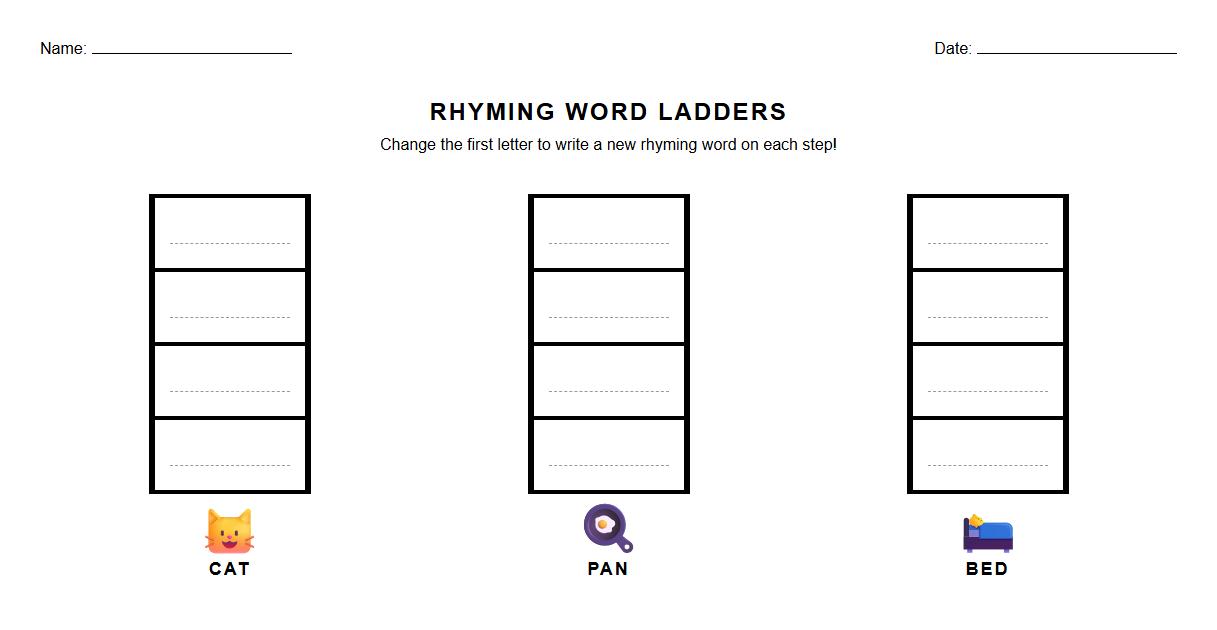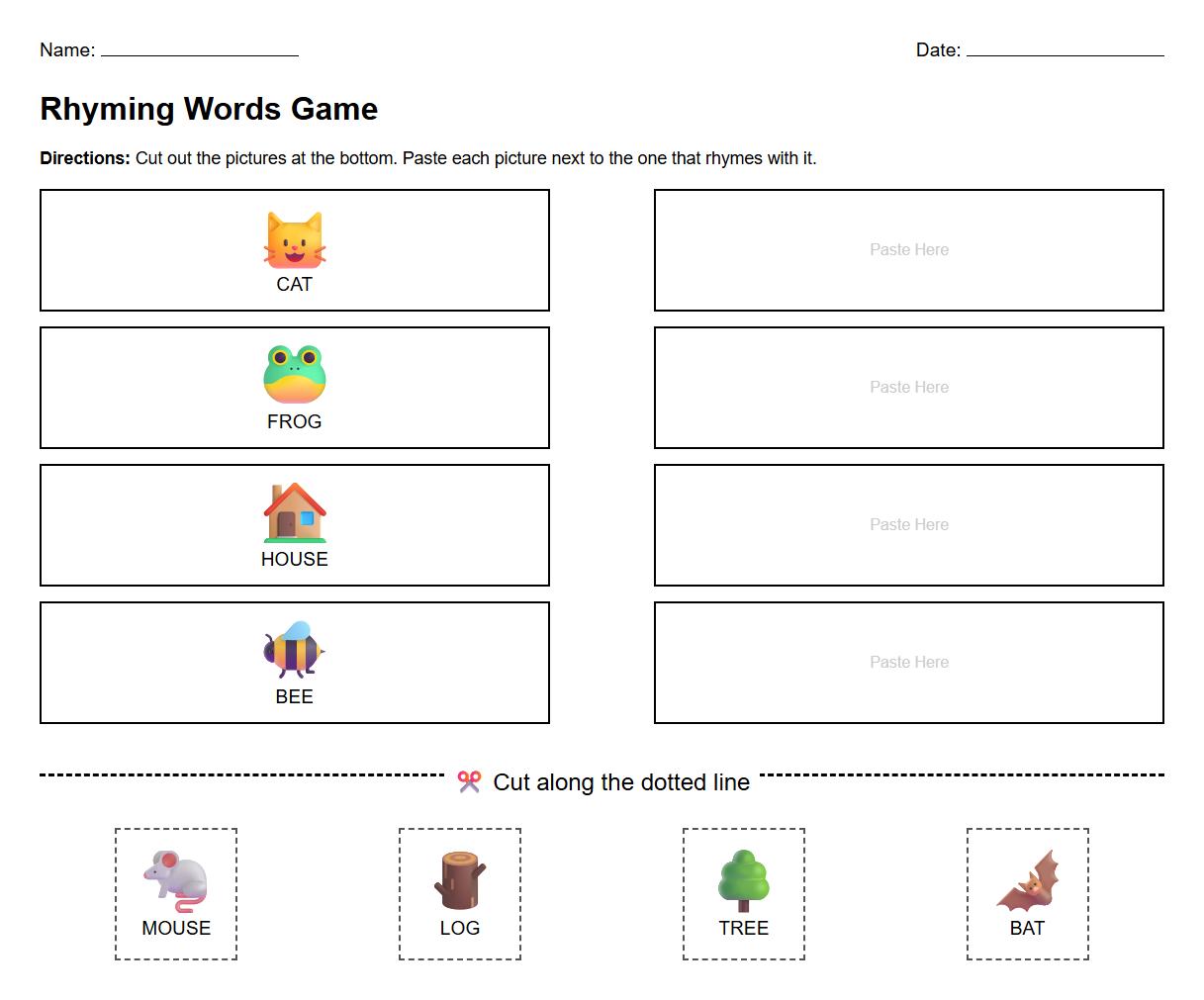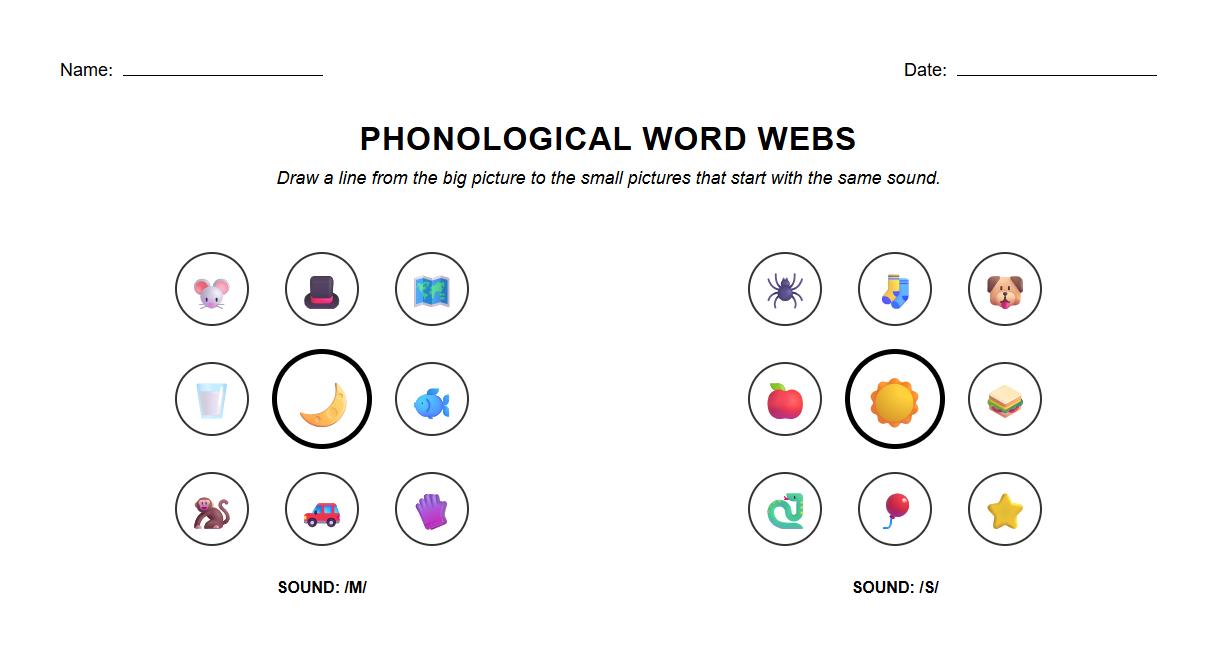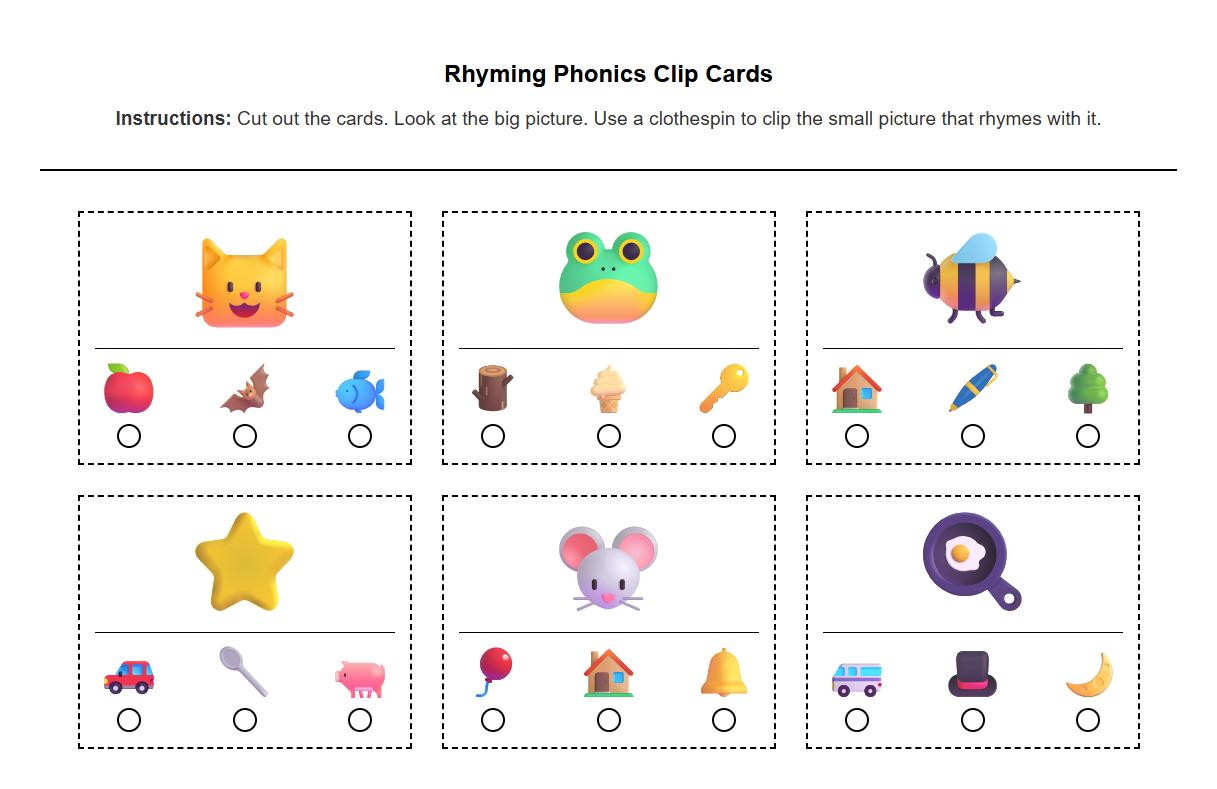
Phonics-based rhyming word worksheets help kindergarten students develop early reading skills by recognizing sound patterns and enhancing vocabulary. These activities engage young learners in identifying and matching words with similar ending sounds, fostering phonemic awareness. Explore our collection of worksheets designed to make rhyming practice both fun and educational.
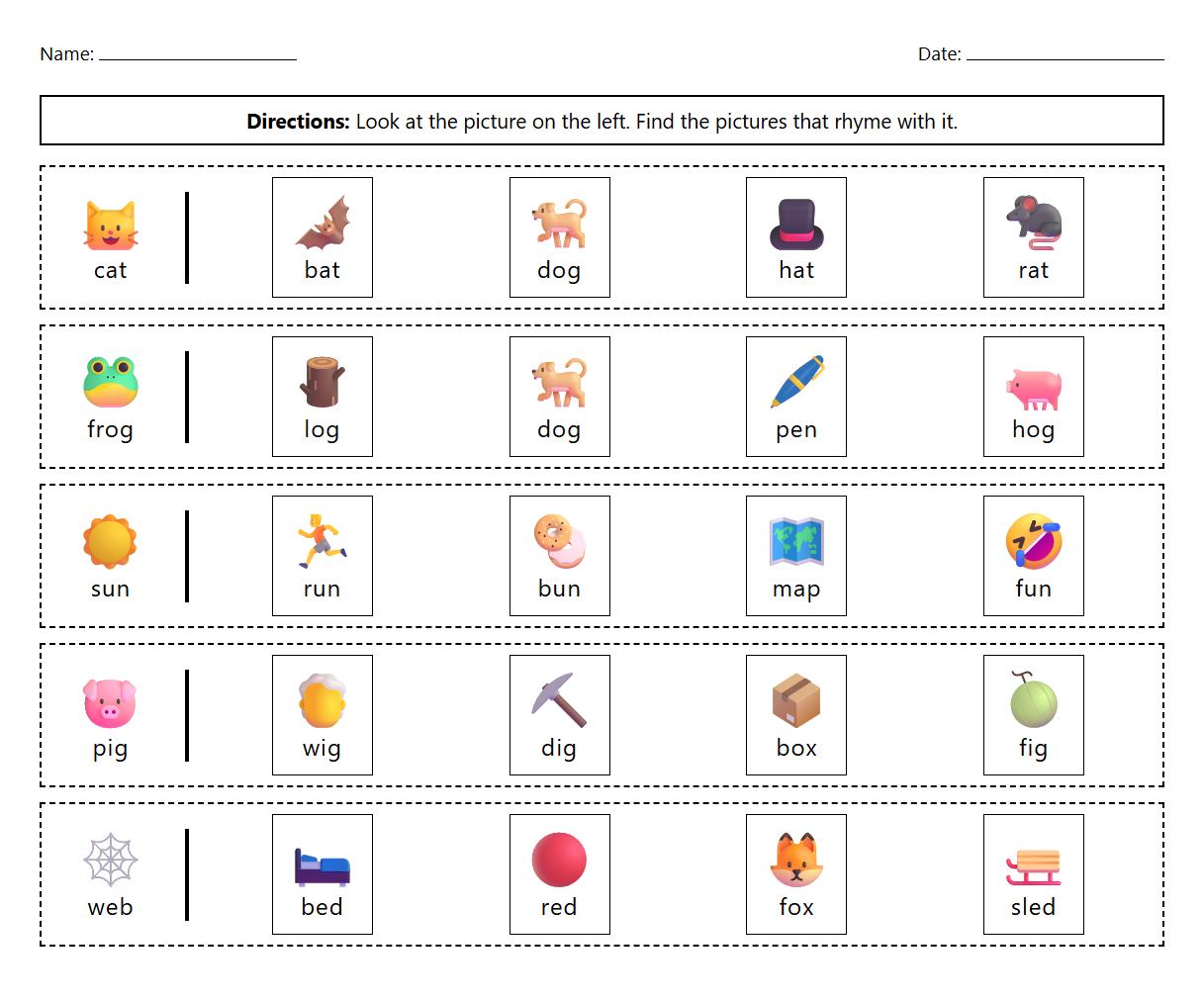
Which word rhymes with cat?
This activity helps children identify rhyming words by focusing on sounds. Teachers and parents can provide choices such as "bat" or "dog" to prompt kids to select the correct rhyming word. It strengthens phonemic awareness and listening skills important for early literacy. Encourage children to say the words aloud to notice rhymes clearly.
Circle the word that rhymes with dog
Circling the rhyming word promotes visual recognition and concentration. Present options like "log," "cat," and "sun" to find the correct rhyme. This task supports sound matching abilities by connecting spoken and written language. Use colorful worksheets to make the activity engaging for young learners.
Match the pictures with rhyming words
Matching images with rhyming words makes learning interactive and fun. Kids practice associating sounds with corresponding visual cues, enhancing both vocabulary and phonological skills. Encourage children to say each word slowly to hear the rhyming parts. This hands-on task develops early reading readiness effectively.
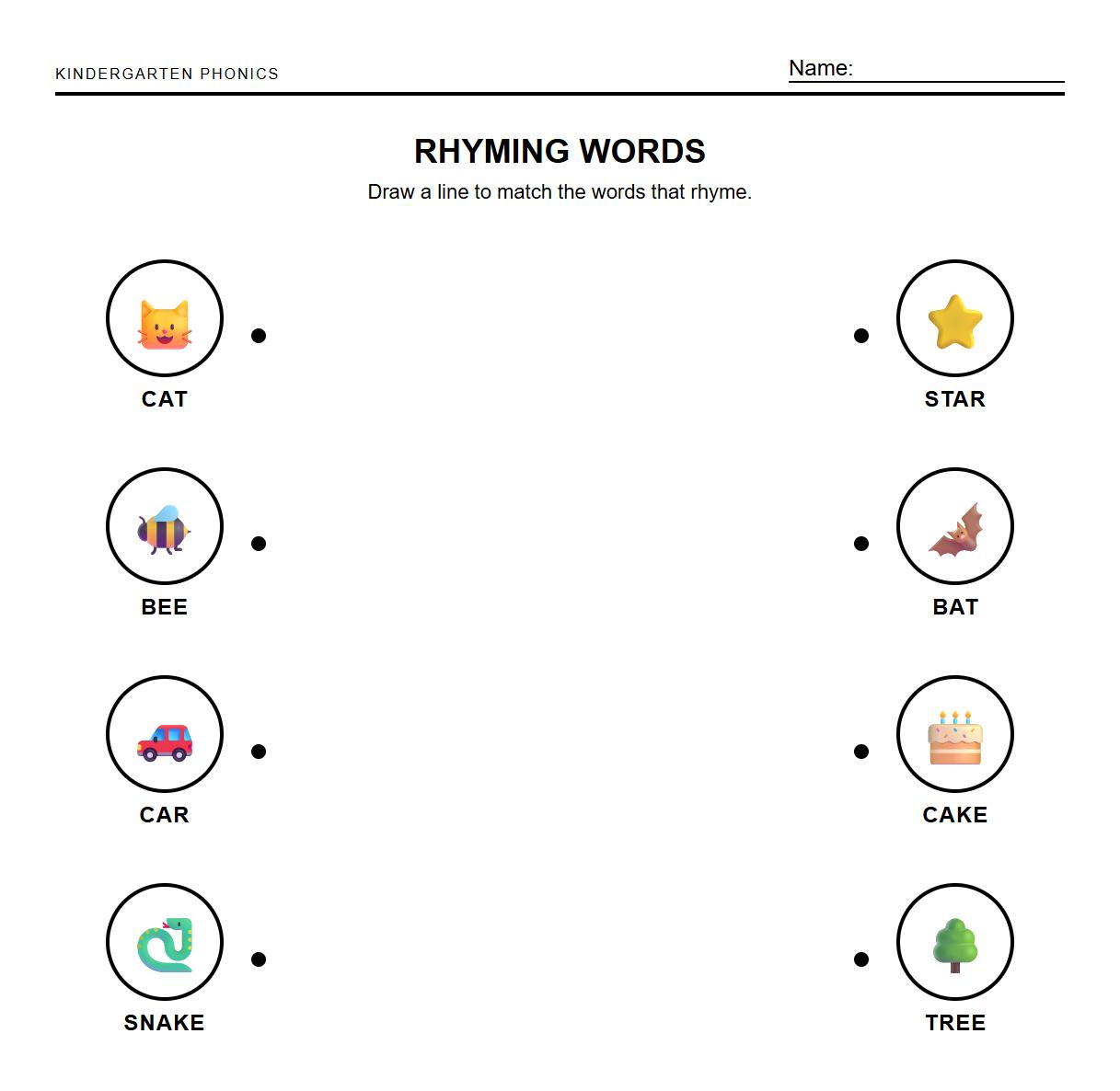
Draw a line to connect words that rhyme
Connecting words by drawing lines reinforces pattern recognition in rhymes. Use simple pairs like "hat" and "bat" or "sun" and "fun" to get started. This kinesthetic activity helps retain sound patterns through movement and visual tracing. It also supports fine motor skills alongside phonemic learning.
Color the rhyming word in each row
Coloring the rhyming words adds an artistic element to phonics practice. Rows of words with one rhyming word each encourage careful listening and observation. Children develop auditory discrimination by focusing on sounds in different words. Use bright crayons or markers to maintain engagement and excitement.
Which word rhymes with hat: bat or pig?
Offering two clear choices helps children practice making decisions based on sound similarities. "Bat" rhymes with "hat," whereas "pig" does not, teaching the concept of rhyme discrimination. Asking questions like this boosts vocabulary and phonological awareness. Repeat with other pairs to reinforce learning.
Find and underline all words that rhyme with sun
This exercise improves reading skills by requiring children to search through text for rhyming words like "fun," "run," and "bun." Underlining promotes active engagement with printed material and fine motor development. It encourages children to become more attentive to word patterns and sounds. Integrate this activity in storytime or literacy centers.
Fill in the blank with a rhyming word for log
Filling blanks with rhyming words fosters creative thinking and application of phonics rules. Words like "dog" or "frog" are good rhyming options to complete sentences. This task helps children link meaning with sounds, enhancing vocabulary expansion. Parents and teachers can model examples to support understanding.
Listen and mark the picture that rhymes with man
Listening activities improve auditory discrimination and phoneme identification skills. Children hear words like "pan," "cat," and "sun," then mark the rhyming picture, encouraging focused listening. This multisensory approach supports both hearing and visual reinforcement. It's great for group learning or individual practice.
Choose two words from the list that rhyme
Selecting rhyming word pairs from a list enhances both recognition and critical thinking. Children analyze multiple options such as "hat," "bat," "log," and "dog" to find matches. This exercise hones phonological awareness while supporting vocabulary growth. Use this as a fun challenge in classroom or home settings.


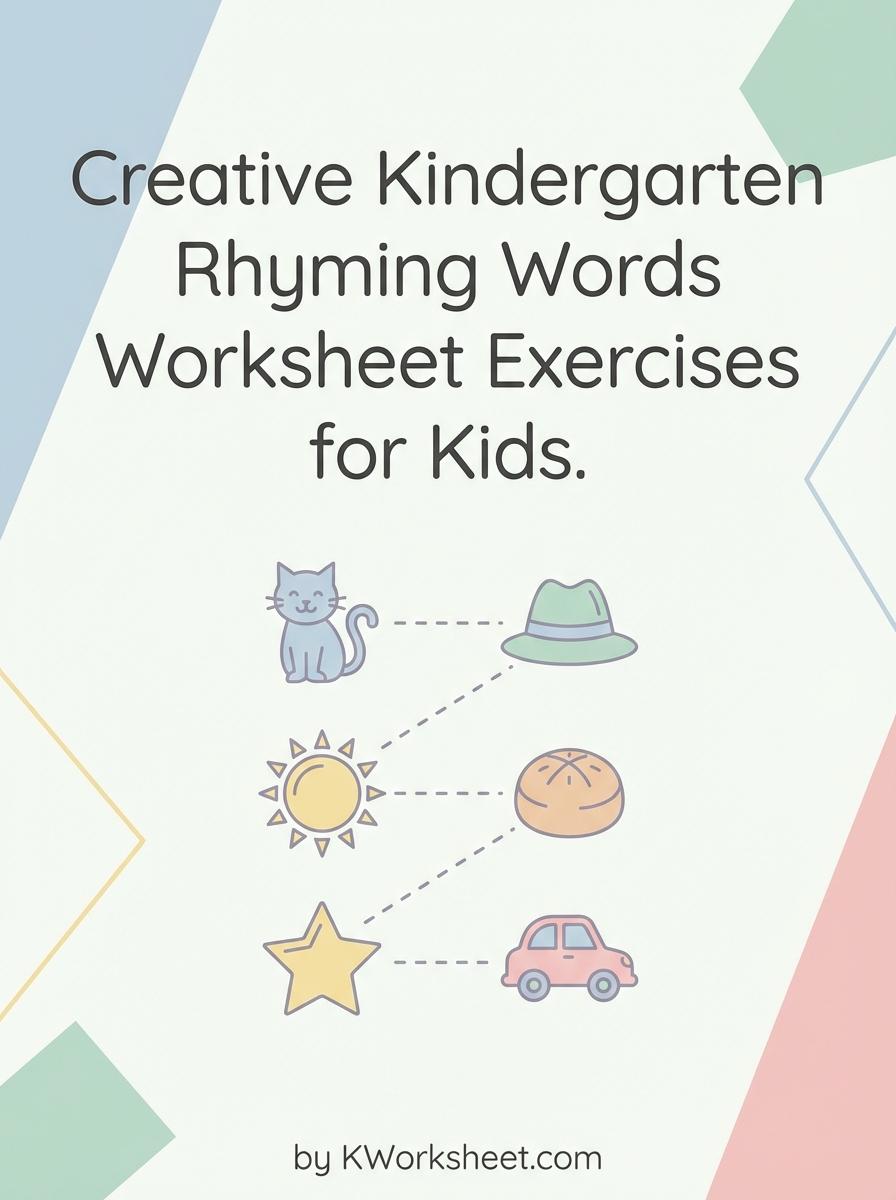
Creative Kindergarten Rhyming Words Worksheet Exercises for Kids