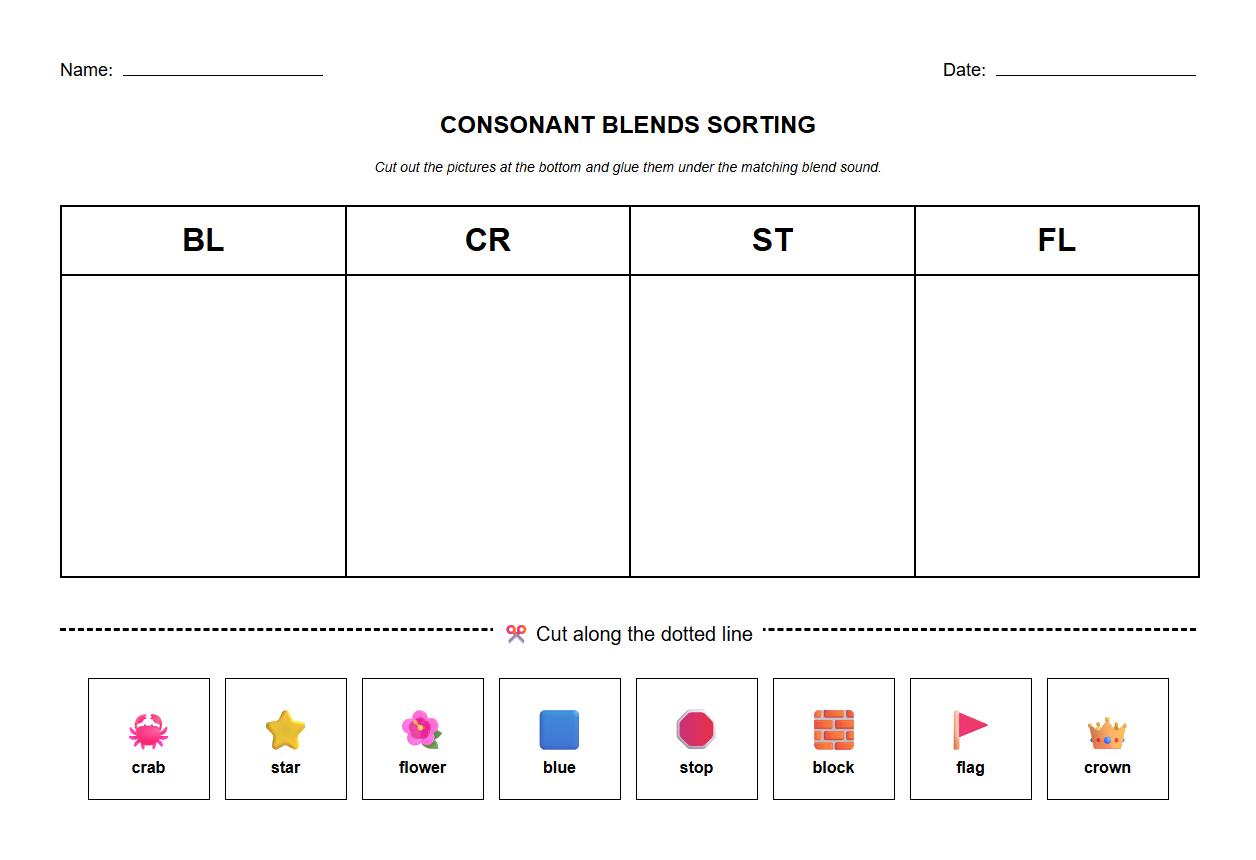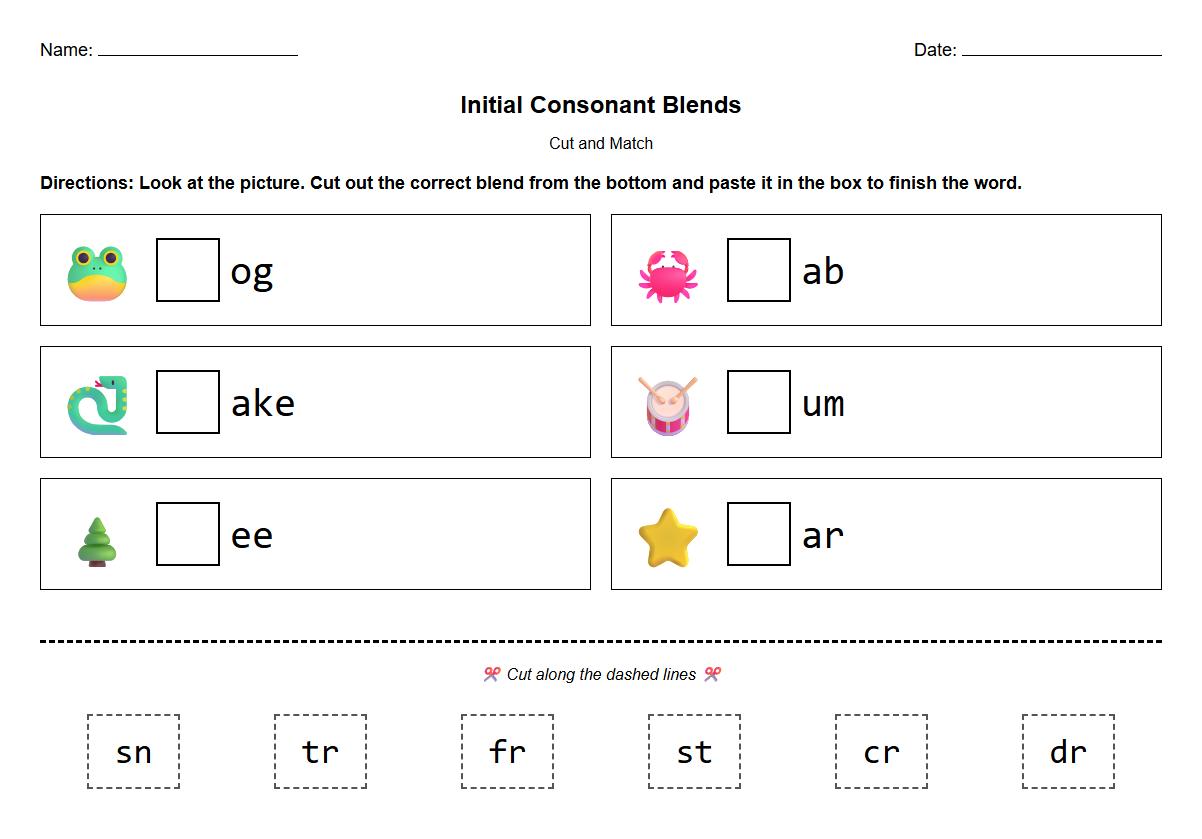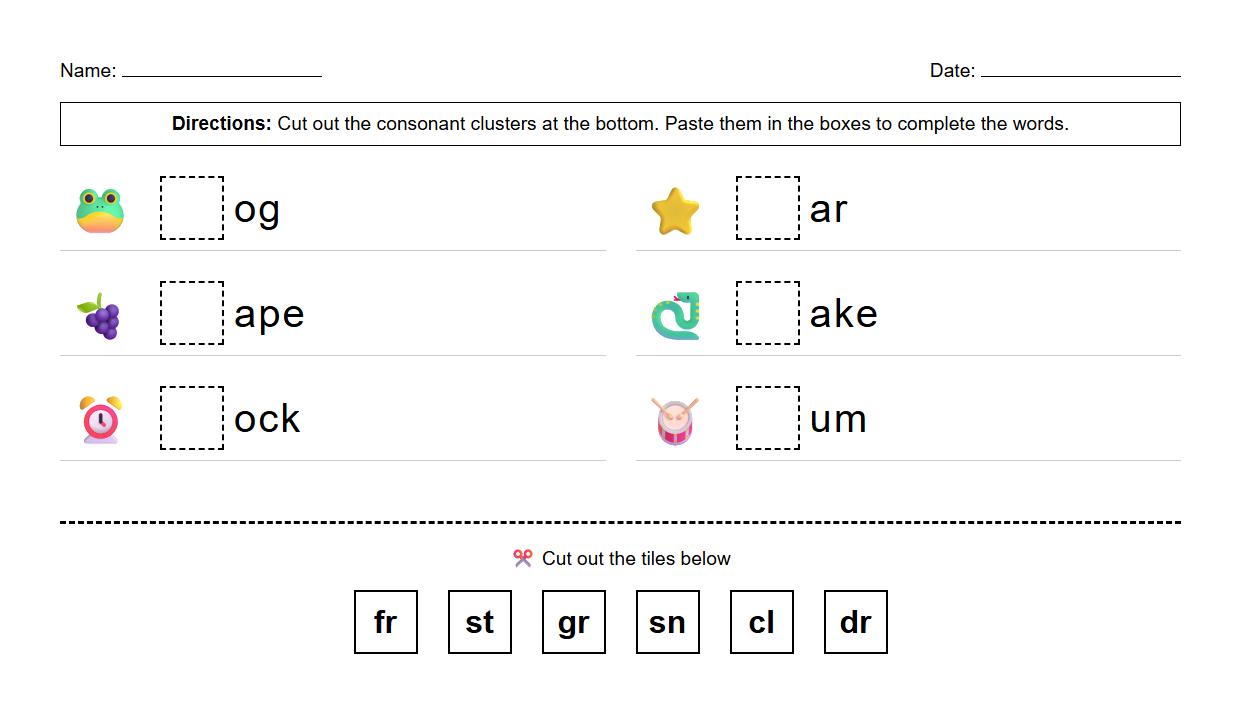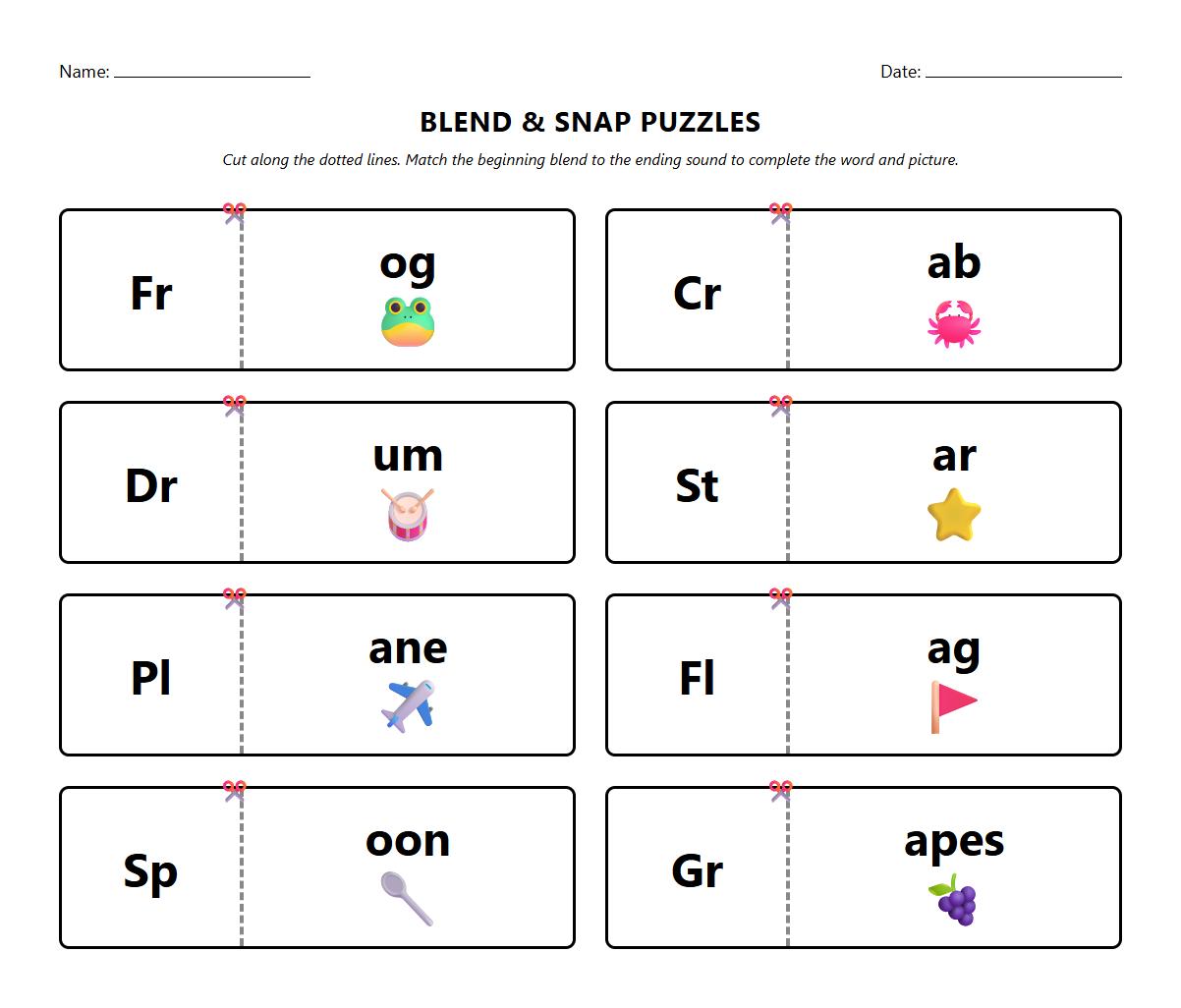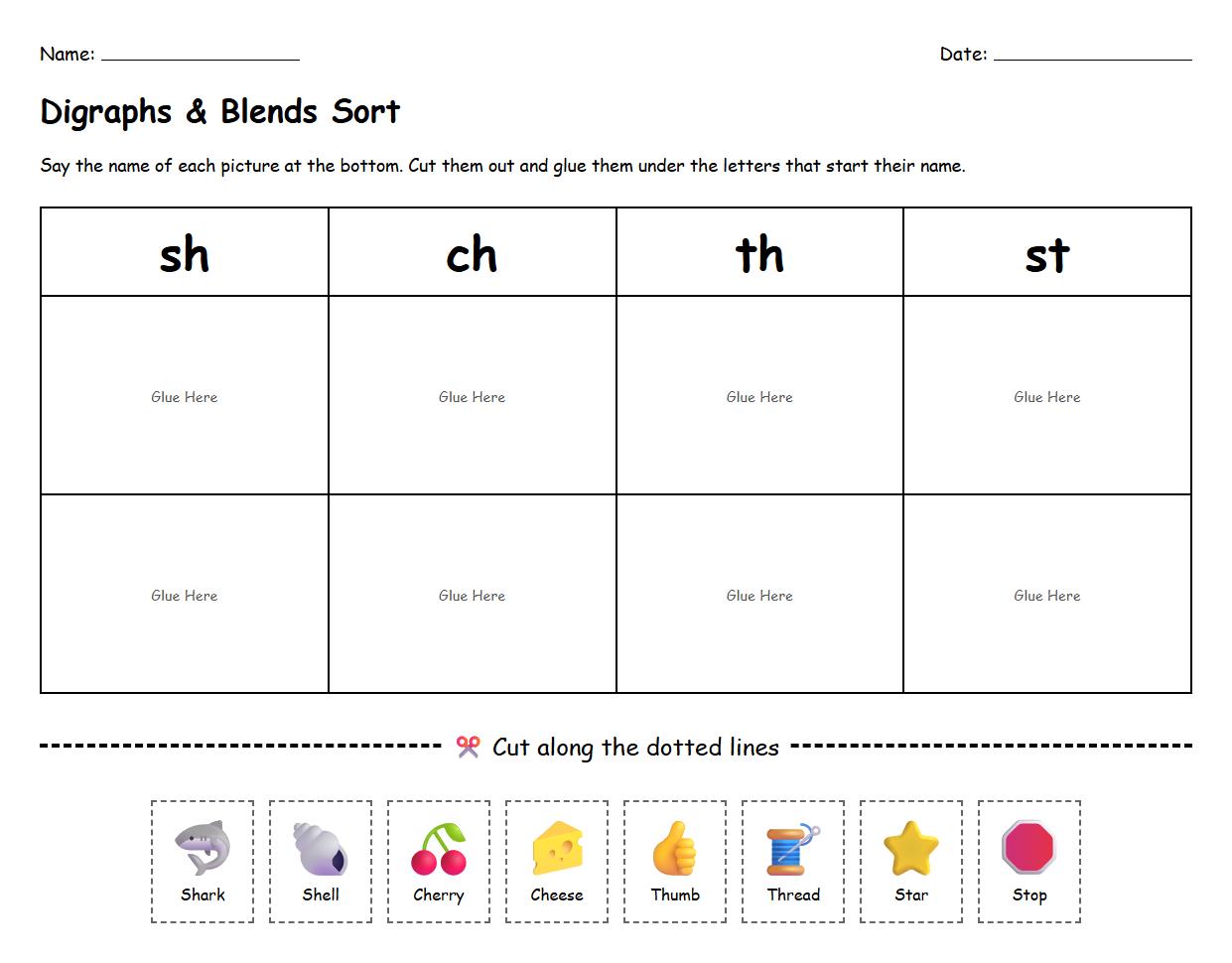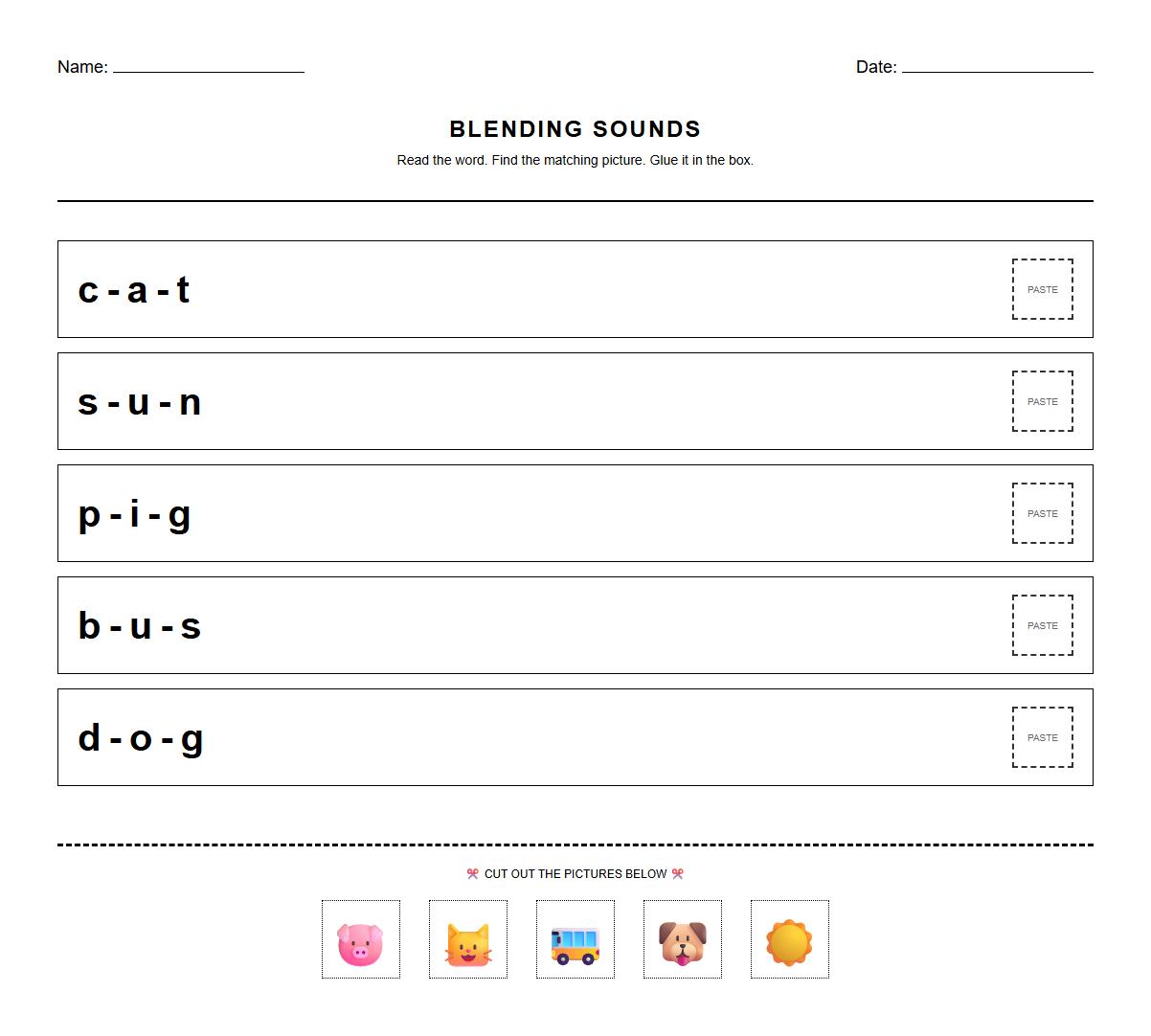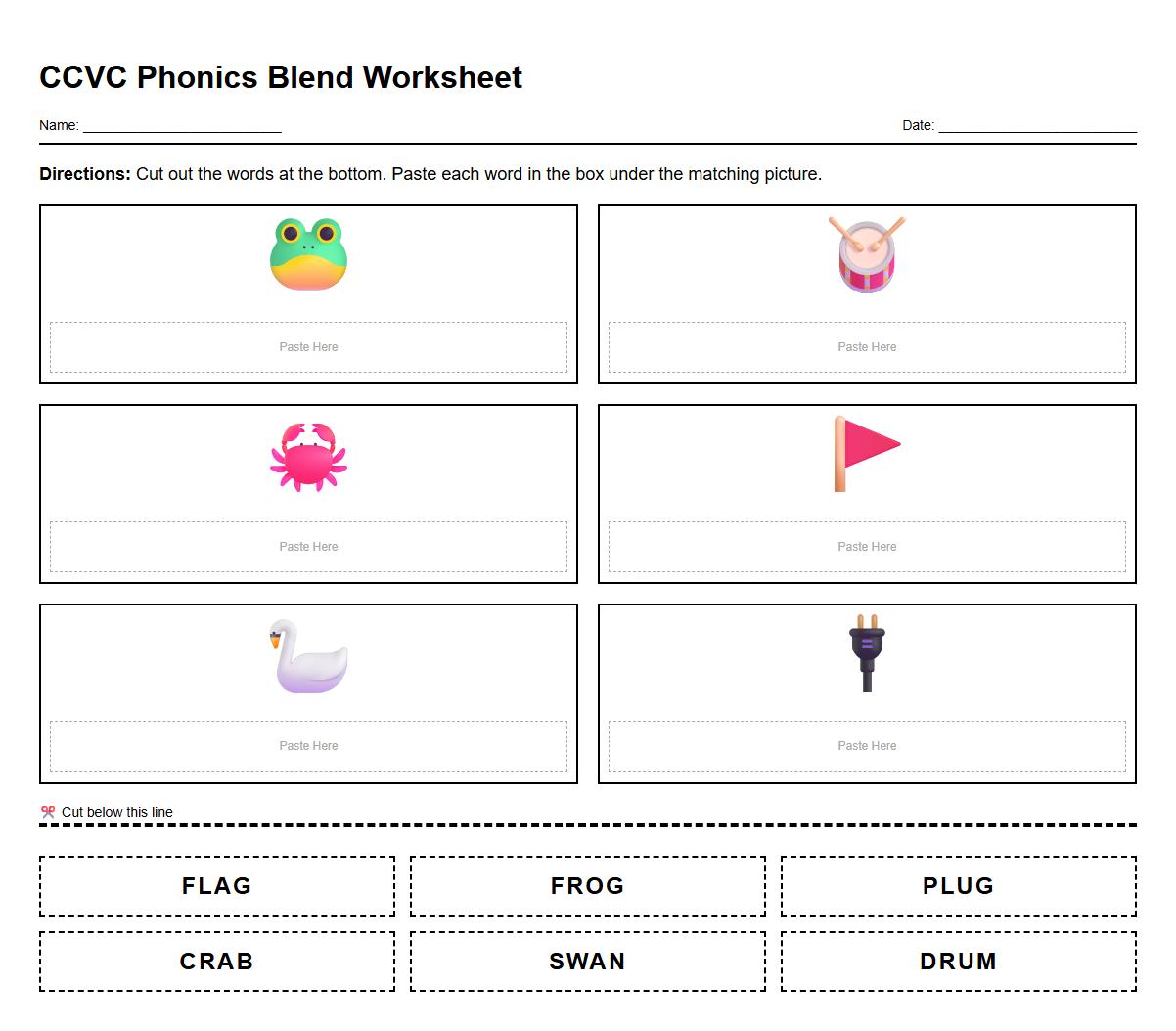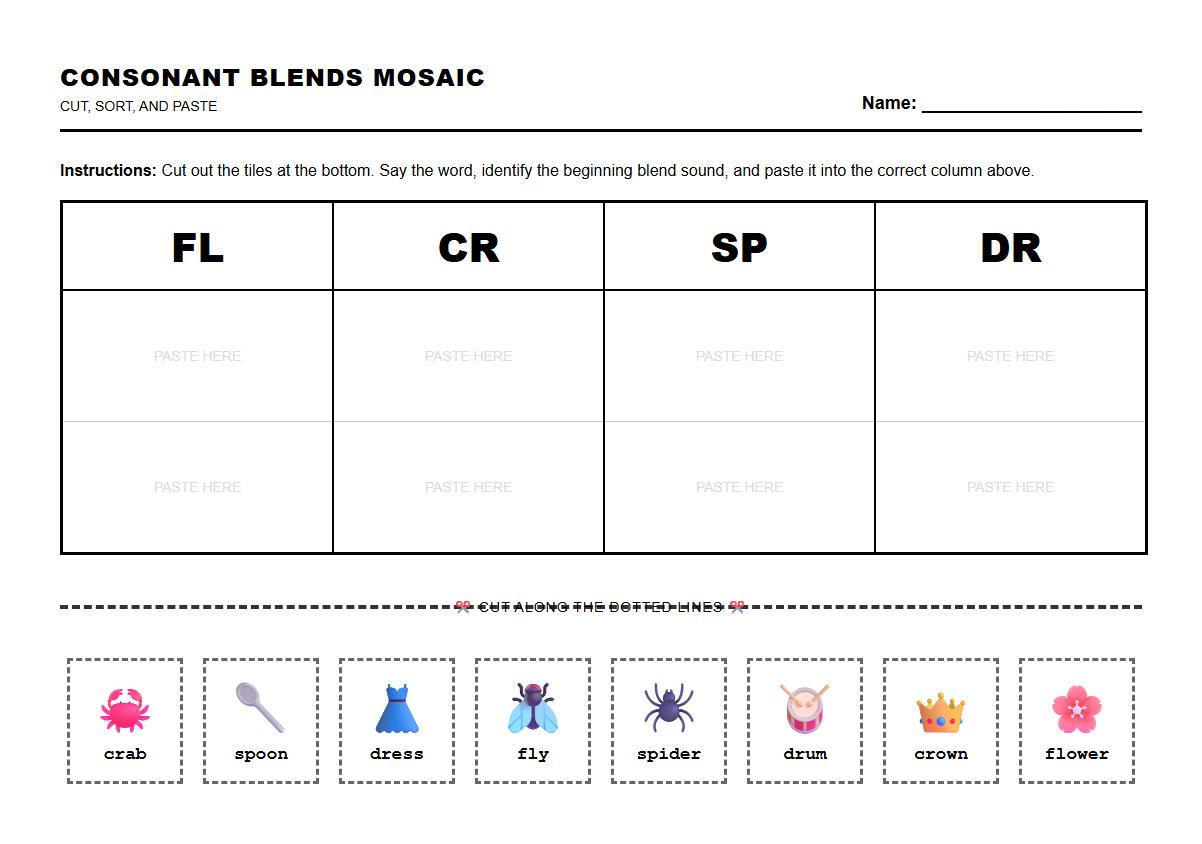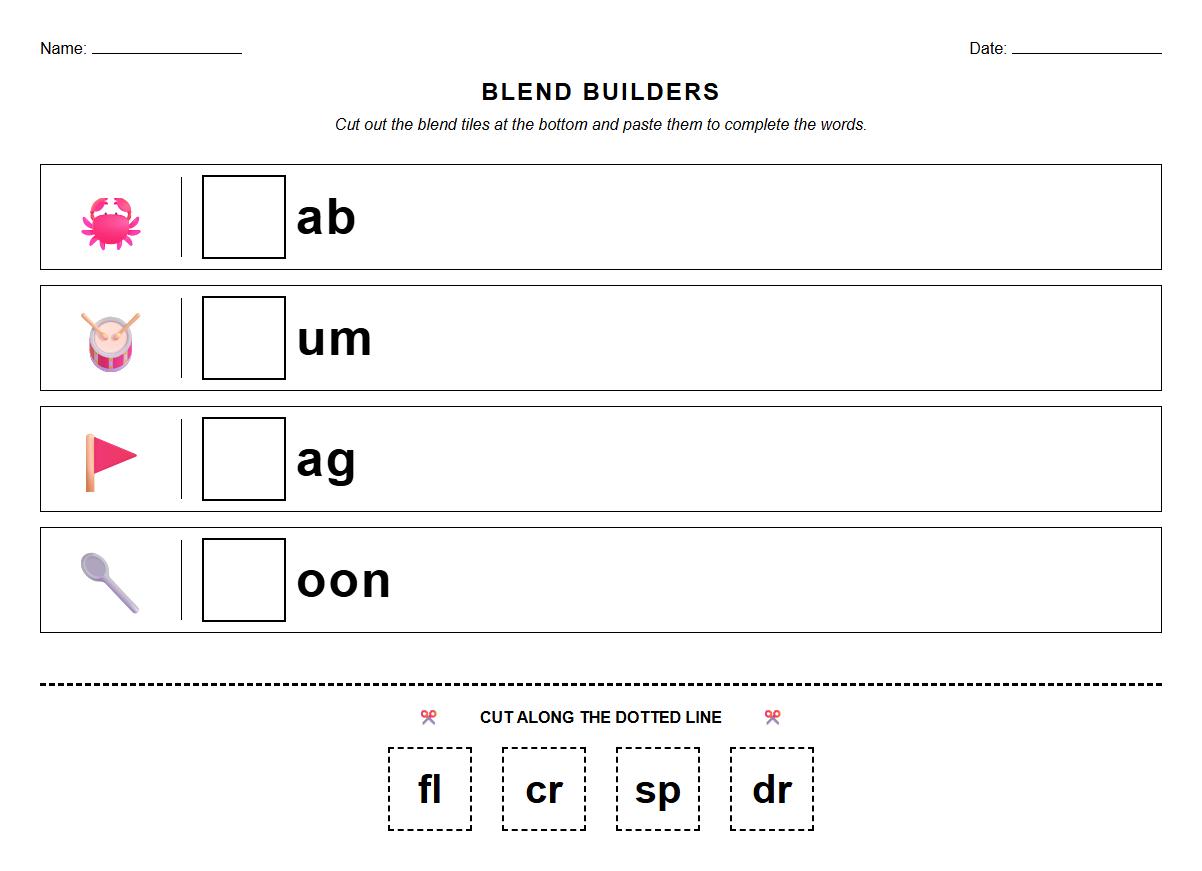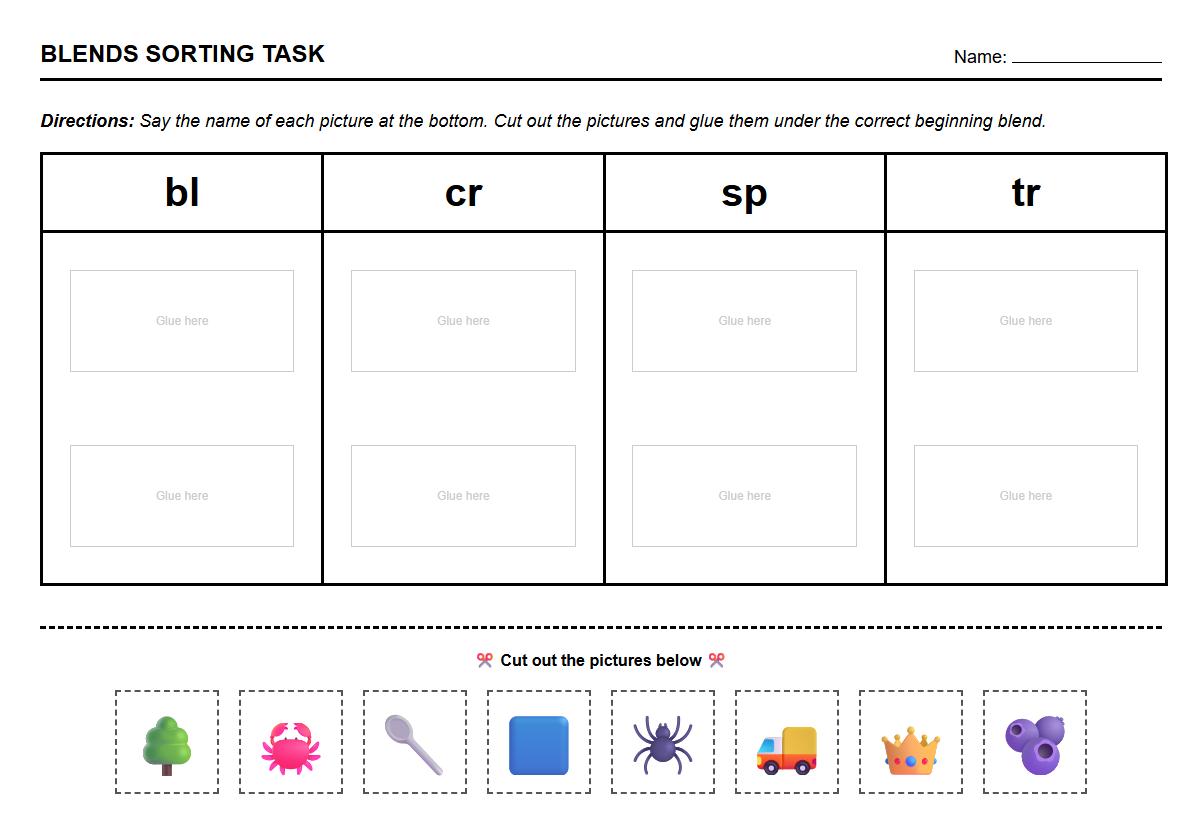
Enhance your child's phonics skills with the Hands On Consonant Blends Cut and Paste Worksheet, designed to reinforce recognition and pronunciation of common consonant blends through engaging, hands-on activities. This worksheet promotes fine motor development while encouraging learners to identify blends in a fun and interactive way. Explore the available worksheets to support your child's language journey and boost their reading confidence.
What are consonant blends in the English language?
Consonant blends are groups of two or three consonants that appear together in words, where each consonant's sound can be heard clearly. These blends help children develop decoding skills essential for reading. Examples include "bl," "st," and "tr." Understanding blends supports early literacy by building phonemic awareness.
How do hands-on activities help kindergartners learn consonant blends?
Hands-on activities engage multiple senses, making learning memorable for kindergartners. Manipulating letters and blending sounds promotes active participation and reinforces sound recognition. These activities also build fine motor skills, which are essential for writing. Interactive learning fosters confidence and curiosity in young learners.
Which common consonant blends are included in this worksheet?
This worksheet features frequently used consonant blends such as "ch," "sh," "bl," "gr," and "st." These blends form the foundation for many simple words in early reading. By practicing these blends, children develop stronger word recognition and pronunciation skills. The selection supports gradual learning progression.
How does cutting and pasting letters improve phonics skills?
Cutting and pasting letters supports phonics by linking visual recognition with tactile movement. This multisensory approach helps children remember letter shapes and sounds effectively. It also encourages focus and hand-eye coordination, vital for writing development. This kinesthetic activity complements auditory learning.
What materials are needed for this worksheet activity?
Teachers and parents will need the worksheet printout, safety scissors, glue sticks, and crayons or markers. Optional items include letter tiles or flashcards for extended practice. These simple materials make the activity accessible and easy to manage at home or in class. Preparation ensures smooth and engaging learning sessions.
How does this worksheet support letter-sound recognition?
The worksheet reinforces letter-sound recognition by encouraging children to identify and blend individual consonant sounds. Matching letters with pictures helps solidify the connection between sounds and words. Repetitive practice builds automaticity and improves reading fluency. It also aids in distinguishing different sounds within blends.
Can this worksheet be used for group or individual work?
This worksheet is versatile and suitable for both group and individual learning settings. Individually, children can work at their own pace and receive focused attention. In groups, it promotes collaboration and peer learning through shared activities. Teachers can adjust support based on group dynamics and individual needs.
How is student progress measured with this worksheet?
Progress is monitored by observing students' ability to correctly blend sounds and complete the cutting and pasting tasks. Teachers can use informal assessments, such as listening to oral reading and checking worksheet accuracy. Consistent practice and review help track improvements in phonics skills. This approach ensures timely intervention when needed.
Are there visual aids or pictures included with each blend?
Yes, the worksheet includes visual aids such as pictures corresponding to each consonant blend. These images support vocabulary development and reinforce the sound-letter relationship. Visual cues help maintain engagement and assist learners who benefit from imagery. Together, they enhance comprehension and retention.
How can teachers adapt this activity for different learning styles?
Teachers can tailor the worksheet to auditory, visual, and kinesthetic learners by incorporating sounds, images, and movement-based tasks. For auditory learners, emphasizing spoken blending helps. Visual learners benefit from colorful images and written words, while kinesthetic learners thrive with hands-on cutting and manipulation. Differentiation ensures all students access learning effectively.


Digraph Identification Activity for Kindergarten Phonics